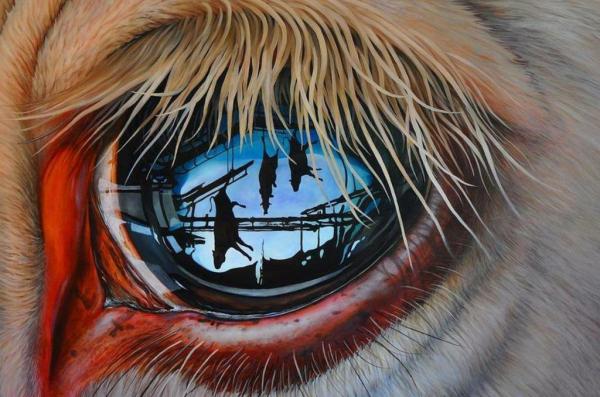
HighestWelfare.Humane.Assured.GoodPractices.Vegetarian. Regenerative.Flexitarian.Lies...
What is the difference between No Welfare, High Welfare, and Highest Welfare when they all require animals to die? Only human comfort, NONE protect the actual animals. The most humane, ethical, and honest Webster-defined "welfare" is NOT exploiting animals - not using, not wearing, not eating, not killing - animals. The only meaningful position is vegan, everything else is just how humans euphemize animals' required suffering and violent deaths: no human exploits animals because they honestly believe that NOT exploiting animals is UNethical or INhumane.
The Term “Factory Farming” is Not Vegan

Wikimedia Commons; cage-free
Source Free From Harm
By Hope Bohanec
Advocates fighting for farmed animals should be proud as we have come a long way in educating the public about the horrors of animal agriculture. Just a couple of decades ago, the only soy milk was in powder form; if you wanted a vegan cookie, you had to bake it yourself; and vegans often ventured into restaurants with trepidation for fear of their sanity– and leave hungry. Now, there are vegan chain restaurants and vegan doughnuts alongside national media stories about caged hens, immobilized sows, and overcrowded cows. The number of animals killed in the U.S. is going down by the hundreds of thousands and the fact that animals suffer to produce meat, dairy and eggs is quickly becoming common knowledge. Vegan is now a household word.
Much of this progress is the result of the strategic denouncement expressed by the powerful term, “Factory Farming.” For decades, animal activists have inscribed the motto “End Factory Farming” into brochures and splattered “Stop Factory Farming” on protest signs with red letters dripping like blood. This incriminating term conjures images of endless rows of animals in barren cages; filthy, windowless warehouses; and animals suffering and dying on manure covered concrete floors —images that are increasingly familiar and available to us via social media.
The ubiquity of these images and conditions associated with “factory farming” has spawned a pervasive condemnation. Everyone, it seems, can rally together and agree that we must stop “factory farming.” But this rallying cry has created an unforeseen consequence, one that animal exploiters are taking full advantage of. Producers who sell the flesh and fluids of animals can simply state that their product is not factory farmed; it’s organic . . . local . . . humane . . . cage-free . . . (insert any number of misleading labels here). Likewise, when consumers hear these offensive two words, they are now thinking, “Oh, but my meat (or dairy or eggs) isn’t factory farmed, I buy it at Whole Foods” (or “it’s organic,” or “it’s free-range,” etc.).
Read more HERE
Order a FREE vegan kit: http://www.peta.org/living/food/free-vegan-starter-kit/
Take PETA’s Cruelty-Free Shopping Guide along with you next time you head to the store! The handy guide will help you find humane products at a glance. Order a FREE copy HERE
Want to do more than go vegan? Help others to do so! Click on the below for nominal, or no, fees to vegan literature that you can use to convince others that veganism is the only compassionate route to being an animal friend.
PETA: http://www.petacatalog.com/catalog/Literature-39-1.html
Looking for merchandise? Action for Animals has a very good sele : http://store.afa-online.org/home.php?cat=284
Have questions? Click HERE
Read more…
Are Vegans Vegetarians? Part 1

Wikimedia Commons
Source This is Hope, the Book
By Will Anderson
Part1:
The content of this multi-part blog is based on one of my presentations at the 2015 NAVS Summerfest last week.
The debate over the meaning of vegetarianism is not new. People have deliberated whether dietary vegetarianism was entirely plant-based or included animal products like milk, eggs, and honey since the founding of the first Vegetarian Society in 1847. What I am proposing is not new, though the reasons (environmental, social justice) have grown. Here we are continuing a conversation about what the meaning of vegetarianism should be. We are part of a debate that has been going on most recently since the 1830s.
In a break with tradition, I offer that veganism is not vegetarianism except in our minds by what we inherited as artifacts from vegetarianism’s history. The word vegetarian was first used in print in 1842. Practitioners of “the vegetable diet” of that era ate a largely raw vegan diet that often was associated with self-improvement, church congregations seeking to enhance their spiritual beliefs, and improving the higher self and that of humankind. However, the first Vegetarian Society at its 1847 founding allowed egg and dairy consumption as part of the vegetarian movement to accommodate its members.
The definition and our understanding of what the term “vegetarian(-ism)” means is inconsistently applied by organizations, food manufacturers, the media, vegetarians and the public. As we will see, this causes constant confusion and makes attaining a vegan planet unnecessarily difficult. How often should we be forced by this confusion to explain the “types” of vegetarianism and tag veganism into the mix? The violence and injustice waged against other animals, ecosystems and people will be reduced when we restore clarity to our language regarding vegetarianism and veganism.
Today, interpretations of vegetarianism range from veganism as an expression of justice, nonviolence and nonexploitation of others that we apply to everything we do in our lives—all the way to it being a practice that concerns itself solely with a dietary choice that can include all foods except “meat”. I will demonstrate the misunderstandings this creates and the harm it causes to our progress as a movement. Pointedly, the confusion in our messaging about veganism and its association with vegetarianism is our responsibility. We can take cues from the Vegan Society, founded by the creators of “vegan,” but must also respond to a world that has changed since the term was first used.
Perhaps what most of us can agree on is that the term vegetarian has meant many different things to different people, eras, and cultures. The core definition of vegan has not changed. Unlike vegetarianism, there is no confusion about veganism being the clearer, more effective and comprehensive approach to end the harms in our relationships with other beings. In fact, veganism reflects the original “vegetable dietarians” as they were called before the term vegetarian took hold. I will provide you with links to the history of our movement with the last installment of the blog series.
We must own the language if we are to communicate the vegan message effectively. The more clear and concise we can make it, the more powerful it will be for our advocacy. Veganism states itself exactly; vegetarianism is all over the place as to what it means.
NEXT: History – A review of the historical circumstances when vegetarianism lost its vegan meaning, and the events that led Donald Watson and others to create the term, “vegan.”
Order a FREE vegan kit: http://www.peta.org/living/food/free-vegan-starter-kit/
Take PETA’s Cruelty-Free Shopping Guide along with you next time you head to the store! The handy guide will help you find humane products at a glance. Order a FREE copy HERE
Want to do more than go vegan? Help others to do so! Click on the below for nominal, or no, fees to vegan literature that you can use to convince others that veganism is the only compassionate route to being an animal friend.
PETA: http://www.petacatalog.com/catalog/Literature-39-1.html
Looking for merchandise? Action for Animals has a very good sele : http://store.afa-online.org/home.php?cat=284
Have questions? Click HERE
the schisms of isms
what we are or
are not.
if we live by kindness,
that is the
best that
we got!!!!
Karen Lyons Kalmenson
My position on Veganism in a Nutshell
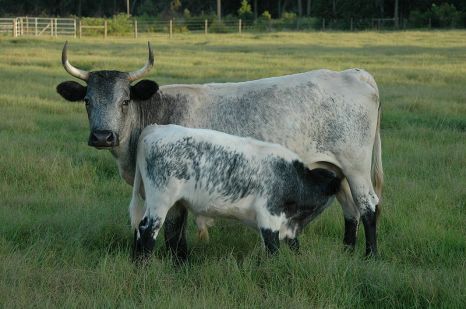
Wikimedia Commons
Source Veganism: A Truth Whose Time Has Come
By Butterflies Katz
I would be vegan even if animals were exploited on green pastures rather than factory farms. My position is not about horrific treatment in factory farms or on the way to being slaughtered, (of course that’s despicable), but about any animal’s birthright under any conditions not to be objectified for human use. Animals should not be made slaves to humans any more than humans should be made slaves to other humans. I am pro-rights; fundamental rights of anyone who can feel and has consciousness, not to be harmed in my name. My educational efforts and campaigns are based in RIGHTS of anyone sentient not to be enslaved, exploited, sexually-violated, and/or violently assaulted by humans; who can live vegan.
I am anti-violence to any being; human or other animal. It is my life’s stance. I have been successful for nearly 4 decades through vegan living.
I use my advocacy time to educate people about the vegan ethic. Veganism is comprehensive and inclusive of all species of animals and all ways they are harmed by humans.
I tend to focus my energies towards those who are already interested. I hold FREE public vegan educational events, admin groups where people who are interested can join, etc. I have found that there are plenty interested already, so I focus on them; with the ultimate goal of reaching a “tipping point” in human consciousness. I believe the Golden Rule and treating anyone sentient (human or other animal) with basic respect. Therefore, I like to offer welcoming, FREE public-service events with a FREE vegan meal and education. I also like the written word; because I became vegan from someone’s writing.
I don’t have to use graphic shocking imagery which is unnecessary when you are talking from an animal rights-based position; as it is not about “treatment” or poor welfare standards in certain situations, but about any being’s birthright not to be violently assaulted and used at all, by humans. I prefer to use imagery that depicts “the way it should be”; beautiful images of humans being friendly to other animals.
I don’t ask others to follow my personal form of advocacy. I realize we all come from unique perceptions and people want to campaign from what they feel is true to their beliefs. I only mind if they misappropriate the very definition of veganism – a non-hypocritical way of life that seeks to exclude all forms of cruelty and exploitation of animals for food, clothing, entertainment, experimentation, labor, breeding, etc.
I look up to veganism. I don’t put other activists on a pedestal. I put the vegan ideal on a pedestal. I consider the vegan ethic and the Light from the Sun to be my leaders and what I follow.
I realize that many humans are conditioned by society where it is socially accepted to abuse animals; eat and wear them, buy products that were tested on them, etc. I try to alter the perceptions of humanity and lift them up to seeing the vegan ideal, rather than lowering the literal meaning of veganism to meet “where people are at”. I would not feel right diluting the vegan message; it’s a Great Truth and we should be cultivating the vegan in everyone. I don’t see vegan living as the “end-all-point” or that we should “take baby steps to get there” -but- “the first step” or “the least we can do”.
I never confuse the meaning of veganism with a plant-based diet or a plant-powered diet. Eating a plant-powered diet is a big part of being vegan, but only a part. One can eat a plant-based diet for many reasons other than non participation in animal exploitation. There is one reason to be vegan. It is clearly in the definition. Veganism is always about not exploiting animals for food, clothing, products, and practices, to the furthest we are capable.
Since veganism is not really about YOU – but about THEM, I don’t tend to try to get someone to go vegan for their own personal benefit. I do mention that there are personal benefits. It is freeing to our spirit that we are living our life with the knowing that we don’t harm animals. It is uplifting to our soul and enhances our life to live according to what we know is right. And if someone does not know that it’s right not to hurt animals; my role is to help them to empathize, to care, and not to infringe on animal’s inherent rights.
Since we can live vegan, I believe veganism is for everybody – a Universal Truth. It’s something everyone needs to evolve to seeing and doing. If humanity embraced vegan living; we could save the world from environmental devastation caused by farming animals, and the violence that plagues this planet. We could attain Peace on Earth quite literally, if humans evolve to the vegan way of life. Many long term vegans have proven that vegan living is a viable and preferable alternative to what is now considered the norm. I believe becoming vegan evolves us and helps us become who we are meant to be. If I try to get you to go vegan, I am not asking you something that will harm you or anyone.
Vegans are the pioneers ushering humanity into a more civilized way of living on Earth that has far reaching benefits to the planet and all its inhabitants. Helping others to become vegan and making it easier for everybody to become vegan – is the perhaps the most important work we can do.
I have made certain “vegan stands” through my nearly 37 years of vegan living. I am vegan-sexual and have been for 3.5 decades. I don’t desire to be intimate with someone who has no issue with animal abuse. I won’t eat in a non-vegan restaurant. I try to support and promote vegan-owned businesses, as they will make it easier for others to be vegan. At age 25 (3 years after I became vegan) I saw that I was still participating by being employed by restaurants, and so I made a stand to stop working for animal exploiters.
When I do live with nonvegans, at times, they are fed vegan and educated about veganism. If I rescue animals that do not want to eat vegan, I find them a more suitable home. No one is going to get me to participate in nonveganism.
I don’t believe in buying animals ever, as I don’t see animals as objects that can be bought and sold like slaves. I don’t believe in breeding other animals or anyone but yourself (and I don’t believe in that either). I see it as sexual violation to breed animals, and unethical. I only rescue animals. I feed them a balanced and supplemented vegan diet and instill in them not to kill other animals. I don’t recommend to “adopt/foster” without saying feed these rescues a vegan diet, simply because I don’t believe in rescuing animals to feed them other tortured and murdered animals. I don’t participate in feedings carnivorous animals.
I prefer certain species of animals – and humans are not the top of the list. I often prefer living with dogs (fed a plant-powered diet), deer, bunnies, ducks, birds – over humans. However, I would not ever harm or kill any species of animal (including humans) intentionally or pay someone else to do it for me (by being nonvegan). I show basic decency to anyone.
I try to rid myself of all indoctrinated speciesism, sexism, racism, ageism, nationalism or any discrimination based on irrelevant criterion. That is a part of my vegan advocacy and personal growth.
I have a strong stand against “wrongful conviction” in humans and the same for imprisoning victims of other species….capturing animals from the wild and forcing them to entertain humans and live in prison, purposely breeding animals to bring harm to them, etc. I have a strong stand against “breeding” or sexually violating individuals, of any species. I have a strong stand on using a someone like they are a something; turning the bodies of animals into a reproductive machine for human use. I have a strong anti-slavery stand; whether humans or other animals. I only would purchase fair-trade chocolate, coffee, etc. Anyone against slavery must be vegan.
When it comes to animals in the environment that are introduced or so called “pest animals” – I don’t kill or harm them. I believe in sterilization bates, not poison bates. I’m an environmentalist, but I’m vegan first. So I won’t kill or harm animals that may be bad for an environment. If I did, humans would surely be targets, as there is no species of animal that is more a pest to the planet. I am not humancentric. I see the big picture that includes humans, all other animals, and the planet we all share.
I believe in helping animals living in the wild. Even if they are not exploited, some of the most horrific torture I’ve seen on film is predator animals horrifically killing a baby animal; eating them alive. Animals in the wild need help too. And we should help anyone who needs help, if we can. Also, my dog friend Kisses was rescued from living a free life in the surrounding woods where she had been abandoned. I believe she lived a longer and better life with me than free-living in the woods without human intervention. She obviously agreed, since she was able to run away into the surrounding forest at any point, but she never did. So living free of human intervention is not always better.
I do believe in hunt-sabotage. I do believe in peaceful protests and standing outside animal exploiting businesses to voice objection to their marketing lies and violence. I do believe in nonviolent civil disobedience and protest. I do believe in public activism and educational stalls and events. I don’t believe in any violence to anyone; so no arson to animal exploiting buildings. Someones can be in that building; birds, rodents, and other small animals. Plus you are adding to air pollution for those in the neighborhood. (And they will just set up business somewhere else.) I do believe in rescuing and saving animals from animal harmers; if you can and if you have a good home for these rescues. They can’t generally be freed into the environment. It’s not stealing. Animals should not be property of humans so they can torture them. The law does not have right on its side, at all times. I follow the laws of my conscience above the laws of government. If I somehow can rescue someone from a life of misery, I will and I think that is right – even if the law considers them someone’s property. I don’t. If I could have “stolen” an African-American slave during the time of legal slavery, I would have. If I could have stolen “a Jew” from a Nazi concentration camp, I would have. Hitler was an elected official. A hunter walked through my campsite and killed a deer that I befriended; he was perfectly within his legal rights. Sometimes the legal laws are not what is REALLY RIGHT.
Order a FREE vegan kit: http://www.peta.org/living/vegetarian-living/free-vegetarian-starter-kit.aspx
Take PETA’s Cruelty-Free Shopping Guide along with you next time you head to the store! The handy guide will help you find humane products at a glance. Order a FREE copy HERE
Want to do more than go vegan? Help others to do so! Click on the below for nominal, or no, fees to vegan literature that you can use to convince others that veganism is the only compassionate route to being an animal friend.
PETA: http://www.petacatalog.com/catalog/Literature-39-1.html
Looking for merchandise? Action for Animals has a very good sele : http://store.afa-online.org/home.php?cat=284
Have questions? Click HERE
Read more…
‘Cowspiracy’: Inspiration for a Fallen Vegan
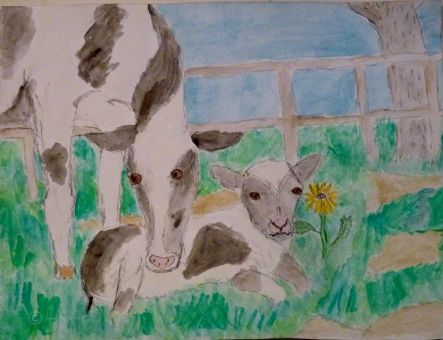
Karen Lyons Kalmenson
Source Huffington Post
By Michelle Weiss
Admittedly, over the last year I have slowly but surely become less of a vegan and more of a vegetarian. What used to be a bite of a blueberry muffin once in a while somehow turned into cheese quesadillas every weekend, and rather than try to reestablish my desire to be and identity as a vegan, I continued to let myself travel down a path of dairy consumption.
Then one day on my way to work I got a call from my older brother, a person who has never been vegan or vegetarian, and in fact was one of the staunchest carnivores I have ever met. The first words out of his mouth on our phone call were: “Dude. I think I’m going vegan.” There have been plenty of people over the last 6 years that have told me this or something similar, like that they wanted to cut back on their meat consumption, but never would I have ever imagined I would hear these words come out of my brother’s mouth. He told me he had watched the documentary Cowspiracythe night before and it completely changed his perspective on food, specifically on meat and dairy products. Without having to even watch the film, I was inspired by my brother’s words and actions. If someone who refused to give up meat for any reason could suddenly alter their entire diet in a drastic way, why couldn’t I make a simple change and cease eating dairy again? Something deep inside of me felt strange, perhaps even a little guilty every time I ate dairy but I suppressed it, telling myself I was being too hard on myself and that I couldn’t expect to be a hero or to be perfect. However, after talking to my brother I was encouraged and energized to return to a completely animal free diet. But I still needed a little bit of a push, so I watched the film.
Cowspiracy is a documentary that follows the adventures of a man named Kip as he searches for the leading cause of climate change and the overall decrease in our environment’s health. What he found was that meat consumption was the number one factor related to global warming, deforestation, and starvation across the world. With facts on top of data on top of UN reports that all definitively show that animal agriculture is detrimental to our atmosphere, Kip shows the viewer that you cannot eat meat and think you aren’t harming the earth. A few facts from the film’s website:
- Animal agriculture is responsible for 18 percent of greenhouse gas emissions, more than the combined exhaust from all transportation.
- Animal agriculture water consumption ranges from 34-76 trillion gallons annually.
- Animal agriculture is the leading cause of species extinction, ocean dead zones, water pollution, and habitat destruction.
The documentary is filled with statistics similar to the above three. It’s almost overwhelming to watch and you feel like you need to be taking notes. That said, the thing I liked most about this film was that it showed a side of veganism that I think everyone can relate to. I appreciated that this documentary was really geared towards people who care about the environment and who are concerned about climate change — and that’s just about everyone I know. Touching on the drought in my home state California to wild life and rain forests disappearing across the world, this documentary presents information that will speak to viewers from every culture, country, and continent.
Another part I liked about the film (that I understand some people may not like) is that there was a small portion dedicated to slaughter and animal cruelty. At one point, Kip explores whether or not raising meat at home is more sustainable than factory farming. He visits a man who raises and slaughters ducks in his own backyard and becomes very disturbed by watching the man chop off the ducks heads and then feather and skin them. Kip even says in an interview afterwards: “When it gets to this point it’s not even about sustainability. I don’t feel real good inside.” I went vegan because of animal cruelty and was excited to learn along the way that being vegan was also good for my health and the environment as well. For my brother, the environmental side was the sticking point for him. Though I have never pushed my views on others or ever considered myself an “evangelist vegan” I do think the population needs to be much more educated so everyone can find their sticking point.
In conjunction with my brother’s epiphany, this film has helped me to revisit the reason I went vegan, to remember why I maintained a vegan diet for so long, and to reset my eating habits to return to a 100% animal free diet. I’ve seen several videos, have read endless books, and have watched countless documentaries, but this was the first one that made me want to spread the word that going vegan is vital because not only will it stop harming animals, not only will it improve our health, but it will save the planet – and that would be a feat for all of human kind.
You can download “Cowspiracy,” order the DVD, and also watch it on Netflix.
Follow Michelle Weiss on Twitter: http://www.twitter.com/michellebweiss
Order a FREE vegan kit: http://www.peta.org/living/vegetarian-living/free-vegetarian-starter-kit.aspx
Take PETA’s Cruelty-Free Shopping Guide along with you next time you head to the store! The handy guide will help you find humane products at a glance. Order a FREE copy HERE
Want to do more than go vegan? Help others to do so! Click on the below for nominal, or no, fees to vegan literature that you can use to convince others that veganism is the only compassionate route to being an animal friend.
PETA: http://www.petacatalog.com/catalog/Literature-39-1.html
Looking for merchandise? Action for Animals has a very good sele : http://store.afa-online.org/home.php?cat=284
Have questions? Click HERE
Read more…
The Problem: “Animal Advocates” Who Promote Animal Exploitation
Source Animal Rights: The Abolitionist Approach
By Gary L. Francione
Mercy for Animals, an animal welfare organization, claims that “The Problem” is “Animals suffering miserably on factory farms.”
Wrong.
The problem is identifying the problem as “factory farms” and not animal use or exploitation–wherever it occurs andhowever supposedly “humane” or “compassionate” or “merciful” it is.
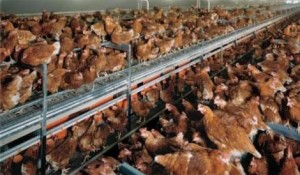
Misidentifying the problem has absurd and speciesist consequences, such as declaring the McDonald’s “cage-free” egg announcement as a “victory” and identifying this:
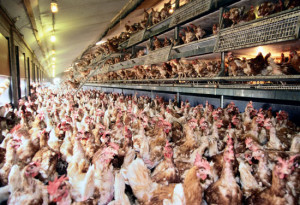
and this
as “Progress!” and as representing “meaningful changes.”
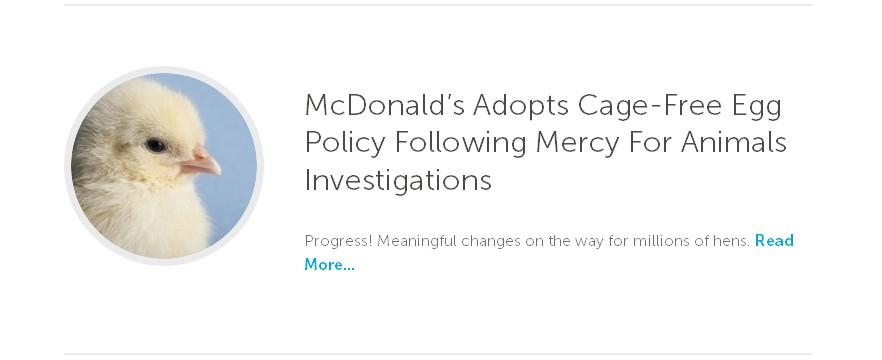
McDonald’s sells the suffering and death of animals.
Groups like the Humane Society of the United States and Mercy for Animals act as partners with McDonald’s in selling that suffering and death.
McDonald’s gets “animal advocates” to promote them and their products.
In return, McDonald’s gives these “animal advocates” meaningless “victories” to use in fundraising.
HSUS declares the McDonald’s “cage-free” egg announcement as a “watershed moment.”
That statement is breathtaking.
Here’s a screenshot (click to enlarge) of the MFA statement in case you simply cannot believe that “animal advocates” would “applaud” animal exploitation.
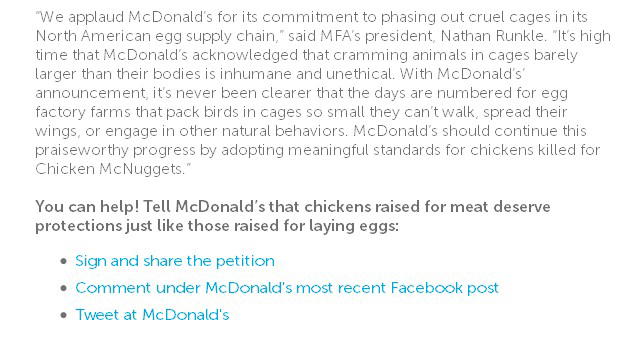
Notice that, in addition to “applaud[ing]” the McDonald’s “cage-free” egg announcement, MFA tells its supporters to ask McDonald’s to continue it’s “praiseworthy progress by adopting meaningful standards for chickens killed for Chicken McNuggets.”
And that’s the problem.
Supporting these groups is supporting animal exploitation just as much as consuming a McDonald’s animal product is.
If animals matter morally, then we are obligated morally to embrace and promote veganism as a moral imperative and we are equally obligated to oppose the speciesist idea that imposing suffering and death on animals can ever be “praiseworthy.”
**********
If you are not vegan, please go vegan. Veganism is about nonviolence. First and foremost, it’s about nonviolence to other sentient beings. But it’s also about nonviolence to the earth and nonviolence to yourself.
If animals matter morally, veganism is not an option — it is a necessity. Anything that claims to be an animal rights movement must make clear that veganism is a moral imperative.
The World is Vegan! If you want it.
Learn more about veganism at www.HowDoIGoVegan.com.
Gary L. Francione
Board of Governors Distinguished Professor, Rutgers University
©2015 Gary L. Francione
Order a FREE vegan kit: http://www.peta.org/living/vegetarian-living/free-vegetarian-starter-kit.aspx
Take PETA’s Cruelty-Free Shopping Guide along with you next time you head to the store! The handy guide will help you find humane products at a glance. Order a FREE copy HERE
Want to do more than go vegan? Help others to do so! Click on the below for nominal, or no, fees to vegan literature that you can use to convince others that veganism is the only compassionate route to being an animal friend.
PETA: http://www.petacatalog.com/catalog/Literature-39-1.html
Looking for merchandise? Action for Animals has a very good sele : http://store.afa-online.org/home.php?cat=284
Have questions? Click HERE
Read more…
A CALL TO FEMINISTS: Dairy and the Subjugation of Women

Source Animal Action of Greater Reading
By
The thing about dairy is…
I want to talk about what a “rape rack” is again. Some of you may notice I throw the rape word around a lot when I’m talking about animal abuse. Please know that this is very intentional and not a word I take OR use lightly. Its really important to know that “rape rack” is the industry word for the device used to artificially inseminate female cows so that they become pregnant and can eventually produce milk for human consumption. GROSS. And the fact that the industry doesn’t even attempt to hide that it is in fact RAPE is beyond disgusting and disrespectful to these beautiful mamas.
When a human mother has a baby, she will continue to produce milk as long as a child is drinking from her breast. Female cows however, can only produce milk for up to one year. So the raping process happens year after year until she is about three or four years old. Once she stops producing “optimum” milk, she is sent to slaughter. Women PLEASE, imagine being born a prisoner, abused daily, raped annually, impregnated, having each of your children stolen from you year after year until you are so weak and sick that they send you to be slaughtered and your body ends up in hotdogs and hamburgers and cat food.
Nothing could be more disrespectful to a mother. She’s done nothing wrong, and then you eat her? Really? Does that sound alright with you? In my prior non vegan life i loved cheese, milk, cream…you name it. If it was dairy I really genuinely enjoyed it. Then I found out where its coming from, who its coming from and the horrors behind the dairy industry. It stopped me dead in my tracks and the more I researched the more I knew that this just wasn’t right.
People have argued that feminism and veganism do not have to go hand in hand. My response is this: They NEED to go hand in hand and that is the only point here. Things change, we evolve and grow and learn from our mistakes and we’re usually proven wrong about a lot of things and evolve to a higher, more compassionate lifestyle. The “concrete information” you all seem to stand by is being proven scientifically, medically and morally wrong. Those foundational and ignorant thoughts and ideas are crumbling more and more everyday. Laws being passed to ban wild animals from the circus, fucking sea world getting shut down, dairy sales are down, West Hollywood passed a ban against the selling of fur, the UK, Australia and Croatia have banned fur farming completely, there’s more vegan options than ever before. Stop fighting it and and open your eyes, hearts and minds. Make no mistake their blood is on your hands and maybe you don’t see it but we see it clearly. Do better, be better. Evolve.
As women we need to stand and fight for all of our female sisters. Not just humans. It is hypocritical to call yourself a feminist if you are still ingesting dairy. Whether its cheese, yogurt, milk etc., their rape, abuse and murder is what your dollar is supporting. The line between humans and non-humans is arbitrary. Rape does not apply to humans only. Know that. Get it in your head. Rape is happening on these farms and it should make you very uncomfortable.
I’ll wrap this up with a quote from muh grrrl, the Vegan Feminist. “Challenge the category of the human just like feminists challenged sex and gender. This is all constructed to keep some group in power and it’s disturbing to realize we have the power in this case and we are the ones with privilege. Openly saying rape rack when I talk about cows is one of the most vegan feminist acts I can participate in; I look across an arbitrary boundary and I refuse the suffering of my sisters. Even if they are not your sisters, know that they were violated. Refuse to let anyone think anything less.”
Order a FREE vegan kit: http://www.peta.org/living/vegetarian-living/free-vegetarian-starter-kit.aspx
Take PETA’s Cruelty-Free Shopping Guide along with you next time you head to the store! The handy guide will help you find humane products at a glance. Order a FREE copy HERE
Want to do more than go vegan? Help others to do so! Click on the below for nominal, or no, fees to vegan literature that you can use to convince others that veganism is the only compassionate route to being an animal friend.
PETA: http://www.petacatalog.com/catalog/Literature-39-1.html
Looking for merchandise? Action for Animals has a very good sele : http://store.afa-online.org/home.php?cat=284
Have questions? Click HERE
Read more…
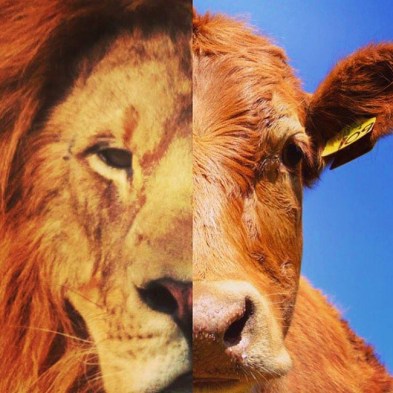
They Are All Cecil
Courtesy of Warrior of Light Facebook page
Source Free from Harm
By Lorelei Plotczyk
Cecil reveals our glaring moral inconsistencies
Few issues cause more discomfort and hostility than openly questioning the practice of breeding, feeding, watering, and slaughtering tens of billions of sentient animals annually, which we do today in the total absence of necessity.
I want to be liked as much as the next gal, so when posting on my personal social media accounts, I try not to alienate myself from friends and family, the majority of whom love animals — or at least wouldn’t intentionally hurt one — but who have not (yet!) peeled back the layers that normalize the pervasive atrocities of animal agriculture affecting animals, people, and planet. For better or worse, I mostly compartmentalize these issues for discussions with like-minded folks. I’m working on that.
But the public’s justifiably outraged reaction to a lion named Cecil being killed by a hunter who paid $50,000 to do so makes it difficult to remain silent about the glaring moral inconsistencies that recently plastered many Facebook feeds.
Animal Rights BC (Before Cecil)
Here’s the deal. A man paid someone to allow him to kill an animal for pleasure.
Most people, on the other hand, pay people to kill animals for them, also for their pleasure.
Yes, in our society today, we eat animals for pleasure, not necessity. More on that in a minute.
It’s a wonderful thing when people speak up for human rights concerning specific races, genders, or sexualities. Most likely, someone who does so is not then proceeding to intentionally exploit humans outside of the group they’re defending at that particular moment. That would just be ridiculous and incredibly hypocritical. Can you imagine, for example, someone with a rainbow profile picture enthusiastically posting a racist photo?
Yet when most people speak up for the rights of certain animals — often dogs, particularly those left in hot cars — they then turn around and proceed to intentionally exploit animals outside of the group they’re defending at that moment, particularly those species they’ve been hypnotized by society to assign little to no moral consideration. This is equally ridiculous and hypocritical as the above example.

Courtesy of Brain on Hugs
See more at: http://freefromharm.org/animal-products-and-culture/they-are-all-cecil/#sthash.9XjG1vFz.dpuf
Order a FREE vegan kit: http://www.peta.org/living/vegetarian-living/free-vegetarian-starter-kit.aspx
Take PETA’s Cruelty-Free Shopping Guide along with you next time you head to the store! The handy guide will help you find humane products at a glance. Order a FREE copy HERE
Want to do more than go vegan? Help others to do so! Click on the below for nominal, or no, fees to vegan literature that you can use to convince others that veganism is the only compassionate route to being an animal friend.
PETA: http://www.petacatalog.com/catalog/Literature-39-1.html
Looking for merchandise? Action for Animals has a very good sele : http://store.afa-online.org/home.php?cat=284
Have questions? Click HERE
Read more…
Old Goat

Old Goat: Indraloka Animal Sanctuary
Source Indraloka Animal Santuary
Please don’t turn away.
I know it’s hard to look at me. But I am someone. I matter. And I didn’t always look this way. I was young and carefree and healthy once. People thought I was cute and funny and took videos of my antics. Please hear my story. Please acknowledge that I matter, that my life matters, even if I am just an old goat.
I was born a 4-H project– raised by a little girl who loved me, coddled me, kept me clean and fed me well. We used to pretend that she was a pilot, and I’d leap and jump…a passenger flying in her plane. She told me all of her secrets. I knew the names the kids at school called her. I knew how her mother scolded her for being “scraggly”, and warned her she’d never find a husband if she didn’t learn to clean house. She cried into my fur when one of her classmates had a birthday party and invited everyone but her.
I loved her so much! I loved listening to her problems. I loved to comfort her and make her smile. I thought we’d be together forever, best friends. But then one day there was a big contest. I didn’t win, but she sold me. She was crying the whole time, her mother admonishing her to grow up. Her father told her, “That’s just the way things are.”
I was taken to a clean, pretty farm, and put in a pasture with other goats. They all had horns, but mine had been cut off by the little girls’ father. I thought of my little girl as they bullied me. Finally, I understood what she had been through. I learned to stay out of the way, to be quiet and unassuming. As long as I didn’t sit somewhere they wanted to sit, or try to eat something they wanted to eat, they ignored me.
The farmer was nice. He gave me cookies and banana peels when the others weren’t looking. But then something happened.
I got pregnant. Oh! Finally I would have someone of my own, someone to love and care for! Someone who would never leave me!
Things got really good for a while. The farmer separated me from the bullies and fed me special food. Then my baby was born and he was a beauty! Long lashes, chocolate brown eyes, ears way too big for his little head! We frolicked and played and I thought I’d never be happier.
I was right.
One day the farmer came and took him away, and then put me back in the pasture with the bullies. I cried for my baby and did everything I could to get the farmer to give him back, but he was gone. I never heard from him again. At least in those days I was too naive to know where the babies went when the farmer took them from us.
Every year after that, I got pregnant. I usually had two babies. One year I even had four babies. I tried not to love them, I knew they’d just be taken away and killed. But I failed. I loved every one of them. And every time they were taken from me, a piece of my soul went with them.
One day, I realized I was an old woman. My body was worn out. My feet couldn’t hold me up anymore, my ankles were too weak. It hurt to walk, but I had to walk to graze and browse. I had become so skinny, there was nothing to me but my rumen and some bones. But still I pressed on, grazing when the sun went down, staying out of the other goats’ way. I thought of my babies and my little girl. The memories sustained me.
I thought for sure, now that I was too old to have babies, that the farmer would send me away to the place all the others have gone. But instead, something happened. I think it might be something good, but I’m not entirely sure yet.
I did get sent away, and now I am at a place they call a sanctuary. None of the other animals are frightened here, and none of them are bullies. I made a friend, sort of. A woman comes and sits with me. She sings songs and strokes my fur, and keeps trying to get me to eat. Part of me wants to melt into her and let her hold me. I want to cry into her hair like my little girl did with me all those years ago. I want someone to love me like I loved that little girl, and like I thought she loved me.
I don’t know, though. Maybe she’ll send me away like the little girl did. Maybe she’ll kill me and eat me, although she doesn’t smell like a person who would do that. I just don’t know. I’m an old goat now. If they are not going to kill me, what could they want from me?
Could it be possible, after all these years? Have I found someone to love me? Might I even make friends here? Maybe I am finally safe…
Maddie’s road to recovery will be long, involving a great deal of expensive veterinary care. Please share her story and please donate towards her care. Every dollar is matched, and every bit makes a difference.
Order a FREE vegan kit: http://www.peta.org/living/vegetarian-living/free-vegetarian-starter-kit.aspx
Take PETA’s Cruelty-Free Shopping Guide along with you next time you head to the store! The handy guide will help you find humane products at a glance. Order a FREE copy HERE
Want to do more than go vegan? Help others to do so! Click on the below for nominal, or no, fees to vegan literature that you can use to convince others that veganism is the only compassionate route to being an animal friend.
PETA: http://www.petacatalog.com/catalog/Literature-39-1.html
Looking for merchandise? Action for Animals has a very good sele : http://store.afa-online.org/home.php?cat=284
Have questions? Click HERE
Read more…
Nepal Temple Bans Animal Sacrifices as Offerings

Shutterstock
Note: While this is an important and imperative change, saving countless innocent lives from misery, suffering, torture, and murder, please remember that 60 BILLION other innocent lives are maliciously, needlessly, and cruelly stolen for food every year. Please go vegan for ALL animals. SL
Source Ecorazzi
A Hindu temple in Nepal has banned the sacrifice of animals as offerings at the traditional Gadhimai festival.
Taking place every five years for two and a half centuries at the Gadhimai Temple in Nepal, the festival brings in thousands of pilgrims that slaughter animals in hopes it will bring them well-being and prosperity. This year, however, the temple has put a stop to the needless killing.
“For generations, pilgrims have sacrificed animals to the Goddess Gadhimai, in the hope of a better life,” said Ram Chandra Shah, chairman of the Gadhimai Temple Trust. “The time has come to replace killing and violence with peaceful worship and celebration.”
In 2009, approximately 500,000 buffalos, goats, chickens and other animals were sacrificed for the festival.
The temple stated is was “motivated” by animal rights advocates who made their disagreement with the practice very clear to them.
In 2014, animal rights activists petitioned the Supreme Court of India, where many pilgrims come from, to stop allowing the export of animals from the country into Nepal for slaughter at the festival. The court, which banned animal sacrifices within the country that year, then ordered the government to stop the export of all animals without a license and as a result, the number of animals killed at the festival was significantly lower than years before.
The goal for the next festival in 2019 is to bring that number to zero.
“This is a tremendous victory for compassion that will save the lives of countless animals,” said Gauri Maulekhi, a consultant for the Indian office of Humane Society International. “We commend the temple committee but acknowledge that a huge task lies ahead of us in educating the public so that they are fully aware.”
Photo Credit: Shutterstock
Order a FREE vegan kit: http://www.peta.org/living/vegetarian-living/free-vegetarian-starter-kit.aspx
Take PETA’s Cruelty-Free Shopping Guide along with you next time you head to the store! The handy guide will help you find humane products at a glance. Order a FREE copy HERE
Want to do more than go vegan? Help others to do so! Click on the below for nominal, or no, fees to vegan literature that you can use to convince others that veganism is the only compassionate route to being an animal friend.
PETA: http://www.petacatalog.com/catalog/Literature-39-1.html
Looking for merchandise? Action for Animals has a very good sele : http://store.afa-online.org/home.php?cat=284
Have questions? Click HERE
Read more…
Veganism without Animal Rights

Wikimedia Commons
By Gary L. Francione 13.07.2015
This article was co-authored with Anna Charlton.
In less than five minutes, we will show you that you are committed to veganism:
We are going to defend what may appear to be a controversial position: that our moral rejection of meat, dairy, eggs, and all other animal products as food is required according to our conventional morality concerning animals. That is, if you reject the idea that animals are things that have no moral value whatsoever, you are morally committed to adopting a vegan diet. And you don’t even need to embrace a theory of animal rights.
Let’s start with a hypothetical: You encounter Fred, who enjoys imposing pain and suffering on animals. Fred keeps a number of animals in his basement and goes down regularly and causes them to suffer physical pain, fear, and distress, and he then kills them. Fred is otherwise a lovely person; his penchant for killing animals does not affect his dealings with other humans in any way. When asked about why he does this, Fred explains that he derives pleasure and amusement from these actions.
Would anyone not regard what Fred was doing as morally objectionable and, indeed, as morally odious? Of course not. Would such a reaction assume that the objector accepted the equality of humans and nonhumans? No. Even if we think that animals have a lesser moral value than humans do, we would still object to Fred’s fetish, as long as we believe that animals have some moral value.
We kill almost 60 billion animals a year worldwide
Most people believe that animals have some moral value but that it is not objectionable per se to use and kill animals for human purposes as long as we do not impose unnecessary suffering on them. And necessity must exclude suffering imposed for the reason of pleasure, amusement, or convenience. If imposing pain for pleasure, amusement, or convenience may be considered as necessary, then there is nothing that can be considered as unnecessary. If pleasure, amusement, or convenience can be considered as “necessary,” then the conventional wisdom about animals is that we can use animals as long as we don’t impose unnecessary unnecessary suffering, or gratuitous suffering. So in Fred’s case, conventional wisdom would say that Fred should not impose more harm than is necessary for him to derive the pleasure and amusement he seeks. But no one would anyone regard that as a plausible understanding of “necessity.”
This is precisely why most people object to blood sports such as fox hunting and bull fighting: they involve imposing suffering and death on animals for the purposes of pleasure and amusement.
So the question becomes: on what basis can we justifiably kill almost 60 billion animals a year worldwide (not counting fish)? Under the best – the most “humane” of circumstances – the amount of suffering we impose on animals in the process of using them for food is staggering. If we believe that unnecessary suffering is wrong, how can we justify that level of suffering? Indeed, even if we made animal agriculture much more “humane” than it presently is, there will still be suffering, fear, distress, and death. And there is no morally coherent distinction between meat and other animal products, such as dairy and eggs. They all involve suffering, distress, and death.
Animal agriculture is an ecological disaster
Given that we have criticized Fred, what do we have to say in our defense if Fred points to his critics as hypocrites who consume animal products? Until recently, most people have believed that it was necessary to consume animal foods and that, without those foods, humans would shrivel up and die. Many people still believe that today.
This belief is not justifiable. We’ve known for centuries that humans can live without consuming any animal protein. To the extent that anyone holds that belief today, it is a testament to the combined power of advertising and a corporate-controlled media reinforcing our desire for eating what we are used to and what tastes good to us in light of our past experience.
The view that we need animal foods for human nutrition is clearly and unequivocally false. It is now acknowledged by just about every respected professional organization, including the American Heart Association and the Mayo Clinic, as well as by governmental agencies all over the world, that a diet consisting only of plant foods can not only be perfectly healthy, but is almost certainly more healthy than a diet heavy in meat, dairy, and eggs. But whether a vegan diet is more healthy, it is certainly not less healthy and animal foods cannot be considered necessary for human health. There is also broad consensus that animal agriculture is an ecological disaster.
So, in the end, what’s the best justification that we have for imposing suffering and death on many billions of animals?
Animal foods taste good.
We enjoy the taste of animal flesh and animal products.
We find eating animal foods to be convenient. It’s a habit.
How, then, is our consumption of animal products any different from Fred’s situation? It’s not. Palate pleasure is no different morally from any other sort of pleasure.
You are committed to veganism
The usual response at this point is to say that there is a moral difference between Fred and someone who goes to the store and buys animal products. There may be a psychological difference but there is no moral one – any more than there is a difference between someone who commits a murder and someone who pays to have the murder committed. And there is no difference – psychological or moral – between Fred and a hunter.
So if we object to what Fred does, we are acting inconsistently if we don’t stop eating animal foods and go vegan at least in those cases where we are not starving to death on the proverbial desert island or lifeboat. In those situations, different considerations obtain. Indeed, there have been instances where humans have eaten other humans in those situations and we have regarded that conduct as immoral (and illegal) but as excusable under the circumstances.
Some argue that our consumption of animal foods is traditional and that many animal foods are culturally significant. If something is morally wrong, the fact that it is a tradition or culturally significant cannot rescue it. There is no more enduring a tradition than sexism and misogyny, aspects of which are accorded considerable social significance.
What about plants? This is the very first question that every vegan gets at a dinner party. Plants are alive; they are not sentient. They do not have the subjective experiences that the animals we consume as food do. They react to stimulation; they do not respond. They do not have interests; there is nothing that they want, desire, or prefer. And even if plants were sentient, veganism would still be a moral imperative given that it takes many pounds of plants to produce one pound of flesh.
Please note that we have showed you that, unless you embrace the idea that animals are merely things that are outside the moral community, you are committed to veganism. And we never even mentioned animal rights. That is because we don’t need that concept unless we are talking about situations in which there is a plausible claim of necessity and we need a rights analysis to understand and resolve the conflict. But 99% of our uses of animals, including our numerically most significant use of them for food, do not involve any sort of necessity or any real conflict between human and nonhuman interests. If animals matter morally at all, then, even without accepting a theory of animal rights, those uses of animals cannot be morally justified.
Read more in this debate: Alice Crary, Michael Allen Gillespie, William Egginton.
Order a FREE vegan kit: http://www.peta.org/living/vegetarian-living/free-vegetarian-starter-kit.aspx
Take PETA’s Cruelty-Free Shopping Guide along with you next time you head to the store! The handy guide will help you find humane products at a glance. Order a FREE copy HERE
Want to do more than go vegan? Help others to do so! Click on the below for nominal, or no, fees to vegan literature that you can use to convince others that veganism is the only compassionate route to being an animal friend.
PETA: http://www.petacatalog.com/catalog/Literature-39-1.html
Looking for merchandise? Action for Animals has a very good sele : http://store.afa-online.org/home.php?cat=284
Have questions? Click HERE
Read more…
SENZAPAROLE (WORDLESS) by Roger Olmos
SENZAPAROLE (WORDLESS)
By Roger Olmos
Logos edizioni / http://faada.org/
Music by MOBY, Hope is gone.
The book: http://www.libri.it/senza-parole-roge…
A book for the friends of animals, with no age limits.
“All over the world there is a mounting sense of unease about the way in which we human beings have been mistreating and exploiting other living beings. In the most admirable way, Wordless encourages us to look at our fellow creatures with new eyes.” — J.M. Coetzee, Nobel Prize in Literature 2003
Logos edizioni, in collaboration with FAADA (Foundation for the Adoption, Sponsorship and Defense of Animals ) and Roger Olmos, have given birth to a book that through its images and only few words aims at sensitizing the human beings of all ages to the conditions of the other animals, their fellow creatures: in order to know them instead of exploiting them, to love them instead of abandoning them, to protect them instead of massacring them.
A book that leads us to think about our choices, sometimes simply dictated by the “ignorance” of what lies behind fashion, food, and entertainment…
“In an increasingly urbanized world, more and more alienated from nature, it is no surprise that we also distance ourselves from animals. From “other” animals. “Other” because — although we happen to do it quite often — we shouldn’t forget that we are animals too. Maybe intentionally or perhaps because that’s the way it was, animals have been historically presented to us as food, clothes, objects of experimentation, and even sources of entertainment. Do we really see all that’s behind the uses of these animals or do we just see what is shown to us? Do we really want to see it? Do we want to be consistent with the consequences of our actions? SENZAPAROLE (WORDLESS) invites you to embrace a wider perspective, to look and think beyond the bounds that have been marked for us, outside the world in which we feel comfortable. We invite you to widen the focus, to adopt a more global view of what surrounds and amuses us, of what we use and what we eat. Do we really have the right to do whatever we want to the other animals with which we share the Planet?” –J. Berengueras, FAADA
Roger Olmos : “When I was a child I was fascinated by the illustrated books my father used to keep in his studio, which I found more interesting than the ones he use to buy for me. Those pictures are engraved in my mind and always will be, in such a strong way that the personal imaginary I have been developing since then has always been shrouded in those unusual atmospheres. This is also what I’m trying to do with my works: to recreate those early stimuli that trained me ‘imagemotionally’ also on the other things.”
Roger Olmos Pastor was born in Barcelona on the 23rd December 1975. He attended the Llotja Avinyó School of Arts and Crafts, where he specialized in illustration.
In the years 1999, 2002, and 2005 he was selected for the Illustrator’s Exhibition at the Bologna Children’s Book Fair.
– Selected for The White Raven 2002 (Tío Lobo, kalandraka)
– Selected for The White Raven 2004 (El Libro de las Fábulas, Ediciones B)
– Special Mention, The White Raven 2006 (The Thing That Hurts Most in the World, OQO /Logos)
– Premio Llibreter de Álbum Ilustrado 2006 (The Thing That Hurts Most in the World, OQO /Logos)
– Premio Lazarillo de Álbum Ilustrado 2008 (El príncipe de los enredos, Edelvives)
FAADA, the Fundación para el Asesoramiento y Acción en Defensa de los Animales (FAADA, Foundation for the Counselling and Action in Defense of Animals) is a non-profit organisation for the protection of animals, based in Barcelona, Spain. FAADA provides information and advice with the aim of promoting respect towards animals in the social, legal and educational fields. It works to improve the living conditions and legislations concerning pets, wildlife and exotic wildlife, and animals used for consumption and entertainment.” faada.org
Order a FREE vegan kit: http://www.peta.org/living/vegetarian-living/free-vegetarian-starter-kit.aspx
Take PETA’s Cruelty-Free Shopping Guide along with you next time you head to the store! The handy guide will help you find humane products at a glance. Order a FREE copy HERE
Want to do more than go vegan? Help others to do so! Click on the below for nominal, or no, fees to vegan literature that you can use to convince others that veganism is the only compassionate route to being an animal friend.
PETA: http://www.petacatalog.com/catalog/Literature-39-1.html
Looking for merchandise? Action for Animals has a very good sele : http://store.afa-online.org/home.php?cat=284
Have questions? Click HERE
Read more…
Choices, Choices

Wikimedia Commons
Source There’s an Elephant in the Room Blog
As this is a vegan page, I’m assuming that you have concern for animals. I also expect that you do not like to think of them suffering and that you would like to do something to alleviate any suffering they may experience. So far, I hope I’ve not lost anyone.
Imagine that you are given a number of choices.
- Sign petitions against the use of fur/ the killing of dolphins/ the consumption of animals that you consider to be ‘pets’, in countries other than your own;
- Write to national TV stations explaining why they should not air cooking shows promoting veal/ foie gras;
- Send emails to protest against battery farming of chickens/ factory farming/ live transport conditions;
- Write letters of opposition to planning applications by companies proposing to build facilities to breed animals for chemical and drug testing;
- Write to politicians to demand that they support bans on fox hunting/ badger/ wolf/ seal culling;
- Spend an hour each day signing petitions against individuals and organisations calling for punishment for ‘animal abuse’;
- Share numerous petitions, asking all friends and acquaintances to help out by signing and sharing;
- Donate to organisations that profess to have concern for ‘animal welfare’ and need your money to make more videos showing ‘cruelty’;
- Participate in ‘meat-free Mondays’;
- Eat a vegetarian diet.
I expect some readers are going through the list, mentally ticking and adding new points….
Please let me tell you a bit about me. For as long as I can remember, I have had ‘concern for animals’. No one who has ever known me would ever deny my outspoken criticism of ‘cruelty to animals’; my misery and despair at the outrages that were perpetrated without justification upon them.
So would you like to guess which one(s) I chose? Yes, you’re right, I chose them all; living it 24/7, racking my brains to come up with eloquent and effective ways to communicate my condemnation.
Just one choice. It was on its own. There was no lengthy list of alternatives.
A wake-up call
Then, one day, I came across a site on newly-discovered ‘Facebook’ that spelled out the truth about the dairy and egg ‘industries’. This site declared that there was no moral difference between one type of unnecessary use of other sentient individuals and any other type of unnecessary use, that all caused suffering and death. This site gave me a newchoice.
So first of all, how did I know it was the truth? I think we all know the truth when we encounter it, even when it is unpleasant and not what we want to know. It was a slap in the face, a bucket of cold water and a wake up call for me. I had thought myself so ethical, so clever, so enlightened and moral. But all of that was swept away in an instant, and I felt all the more of a fool for having had such a high opinion of myself. And what was the new choice? It was:
- Be vegan and educate others about veganism.
Just one choice. It was on its own. There was no lengthy list of alternatives.
Epiphany
Laid out before me in the harsh spotlight of a new understanding were all the ‘actions’ I had taken, all the moral high ground I had thought I was occupying. As I sat there in my leather boots, wearing my woollen sweater and silk scarf, with my fridge packed with free range, welfare approved, organic, dismembered carcasses which now seemed to me to be more akin to corpses, cadavers, than the euphemisms I had been taught. That same fridge now recognised as harbouring eggs and dairy products that reeked of uncounted deaths that in my ignorance I had told myself were not part of the production process.
And I wept. And when I stopped, I became vegan and I shall always be vegan.
Aftermath
Anyone who is vegan will have their own version of this tale, but the general outline will probably be quite similar. My awakening occurred almost three years ago and not a day has passed since then, that I have not thought back to it, and resolved anew to do everything I can think of to encourage others not to make the same mistakes I made.
The general view of society is that it is:
- necessary to use and consume the bodies of other sentient individuals;
- our right to ‘own’ the lives of other sentient individuals, bringing them into the world solely to be used as our resources, ingredients and commodities;
- our entitlement as some kind of ‘superior beings’ to put our own convenience first and disregard the harm done to satisfy our indulgence.
The key thing, the one that that causes me the most distress, is that although the list of actions at the start of this post is long and varied, the sum total of their lasting effect on the view of animals as property, a view shared by most of our society, was zero.
On the other hand, it was undeniably clear to me that becoming vegan instantly aligned my actions with the person that I had thought I was all along – but obviously wasn’t. Suddenly there were no more ‘necessary evils’ to be glossed over, there was only being true to myself.
Why did it take me so long?
If veganism was ever mentioned by groups seeking donations, it was at the end of the list of ‘things you can do’, or else it was in the small print as an optional extra. I didn’t notice it at the time and have since gone back to look. Human nature being what it is – and this is not criticism, it’s simply casting my memory back – when presented with a list of options, we all tend to choose the ones that will cause us least inconvenience. This is particularly true when the list is offered in a way that suggests that any or all of the options would be a great help, would be ‘doing something useful’.
What these other ‘actions’ that I undertook so diligently actually did, in my own case and in the case of almost everyone I have discussed the matter with, was to make me feel that I was ‘involved in activism’. In short, participating in these actions reassured me that I was being effective and ethical. But more dangerously, by keeping me focused on howhumanity’s victims were being treated, they fed my complacency and actually prevented me from taking the necessary step back and asking the more honest question which is why we had victims in the first place.
I still find it incredible that I actually thought that I was doing the right thing, pointing a finger of blame in so many directions while failing to recognise the trail of blood I was leaving in my own wake, but this memory is why I no longer support or promote single issue campaigns or petitions.
There is only one course of action really tackles the roots of our speciesism. Only onecourse of action challenges the myths we were taught as infants about ”needing’ to eat animals, ‘and-while-we’re-doing-that-we-may-as-well-use-their-body-parts-because-it’s-not-respectful-to-waste-them”. There is only one action that works – not to regulate the torture that we inflict on those who cannot defend themselves against our brutality – but to end their torture altogether.
That course of action is to become vegan and educate others about veganism. If you are not vegan, find out about veganism here: HowDoIGoVegan
Order a FREE vegan kit: http://www.peta.org/living/vegetarian-living/free-vegetarian-starter-kit.aspx
Take PETA’s Cruelty-Free Shopping Guide along with you next time you head to the store! The handy guide will help you find humane products at a glance. Order a FREE copy HERE
Want to do more than go vegan? Help others to do so! Click on the below for nominal, or no, fees to vegan literature that you can use to convince others that veganism is the only compassionate route to being an animal friend.
PETA: http://www.petacatalog.com/catalog/Literature-39-1.html
Looking for merchandise? Action for Animals has a very good sele : http://store.afa-online.org/home.php?cat=284
Have questions? Click HERE
Read more…
Hidden & Unexpected Identities; A Call to Reflection!
Source The Identity-Story Project
By Beth Levine (Story Teller) & Dr. Jeffrey Zacko-Smith (Editor)
One thing I’ve learned as a diversity educator (and as a researcher who has been investigating the power of our identities to affect our lives, relationships and world) is that we all carry many identities (chosen and provided for us) that are not obvious to others and/or are not identities we think of when we are discussing these issues — but that does not negate their importance!
Please enjoy Beth’s story (our first guest authored post), and I thank her for sharing it with us; it’s a wonderful example of the importance of reflection.
My Chosen Identity
I am vegan and an animal rights activist. It is a not an identity that I was born into, but one that I actively chose. I became vegan after reading “The Inner World of Farm Animals: Their Amazing Social, Emotional, and Intellectual Capacities” by Amy Hatkoff. There wasn’t one particular section that was pivotal for me. But as a psychotherapist whose work is based on Attachment Theory, I probably was most affected by how powerful relationship bonds are in the lives of other animals.
I will never forget the story about Maya, a former dairy cow. Maya never got to raise any of her own children since calves are by-products of the dairy industry and are taken away from their mothers on the first or second day of birth. All dairy cows end up in the slaughterhouse when they become so worn down and produce less milk: after about four to six forced pregnancies. Maya somehow became a resident at Farm Sanctuary, a farm animal rescue organization. Maya’s longings to nurture her babies were deep-rooted and at this safe haven for farmed animals, when calves also miraculously found their way to the sanctuary instead of a slaughterhouse, Maya welcomed and nurtured the babies. Farm Sanctuary looked for families to adopt the calves. When they found loving homes, Gene Bauer, Farm Sanctuary’s co-founder, would lead the calves away from Maya, who became inconsolable, “rolling on her back and wailing.” Hatkoff writes that Maya has never forgiven Gene and will not allow him to come anywhere near her, her grudge lasting 15 years.
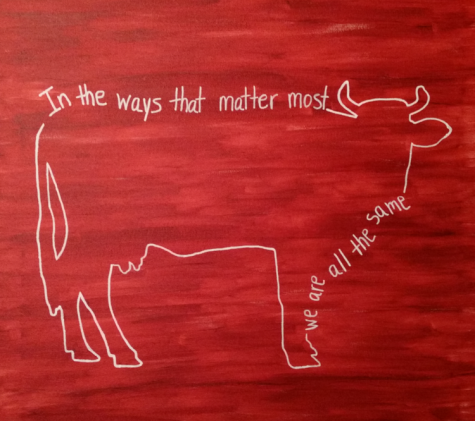
In reading about the intellectual, emotional and social lives of animals who had previously been invisible to my heart, it became clear to me that we animals are all the same in the ways that matter most. We all have feelings, we are all aware of what is happening to us and around us, we all experience fear, we all care about our lives, friends and family. An internal moral compass took shape: if I wouldn’t do “it” to a human, I could no longer do “it” to another sentient being.
By the time I finished the book, I no longer looked at the world only through my perspective or another human being’s perspective. I now always included the perspective of nonhuman animals. The world was never an innocent place, but including nonhuman animals in my moral community makes the world an even darker place. When I walk into a supermarket and have to pass by the “meat” department, I hear the sounds of squealing pigs desperate to get away from the mechanical arm that will take them to their violent death. This is a sensation etched in my soul. When I go to a non-vegan restaurant with friends or family who are not yet vegan and look at the menu, I see the fear in a cow’s eyes and hear her fast breath, her panic to find a way out of a metal box before she is bolted with a stun gun and hung up by one leg until her throat is slit. Going to a conference and sitting near someone wearing a fur coat, I see the terror in a bobcat’s eyes, her paw crushed and bleeding in a metal trap. At a zoo, filming for an animal rights organization the elephants’ repetitive movements that indicate boredom to advocate for the end of zoos, I over hear a mother say, “Seeing these elephants make me want to go to a circus.” I see baby elephants, ripped from their homes and families, tied up and beaten with bullhooks to break their spirit and force them to perform tricks for our entertainment.
By including the perspective of other animals, I became painfully and acutely aware that behind the civilized façade of our lives there lurks a dark and sinister system throughout the world of violence and exploitation toward nonhuman animals. I felt, and can feel, a great shame in being human. I was aghast at how up to this point in my life, I had been unaware of this atrocity and how I had been participating in this horror.
A part of me, strong and resolved, knew I would never again participate in this system of exploitation. And an equally steadfast part of me grew to be an advocate for the rights of these helpless and wordless victims to not to be used as commodities, but to have their inherent worth as subjects of their lives respected and valued. I purposefully use the term “wordless” and not “voiceless” because these animals have voices. They speak their sorrow, their fear, their terror, their pain, their longings. The question is whether we humans hear and respond to their cries.
Being vegan defines how I see the world and how I am in the world. I have to disconnect from all that I see and know to get through a day. My relationships have changed. I go through mental gymnastics/mental weight lifting exercises to remember the power of cultural norms to help me stay connected to people who I love and care about and who continue to participate in this insanity of treating other sentient beings as widgets.
Despite choosing a way of life that is outside the mainstream, I have never felt surer of something nor more grounded in who I am. I’ve always been an anxious person, but I am less anxious since becoming vegan. I am more integrated, making conscious choices to live a life according to my values of compassion and justice. I’m nicer to sales people, telemarketers, my neighbors, and others. I go out of my way to help revive a mouse who was left on the sidewalk by a startled cat. I watch my friend commit to feeding birds and squirrels and it inspires me to do the same. I purposefully carry a spider back outside from a corner in my basement. I choose vegan, fair-trade chocolate so as not to support slavery in any of its forms.
Veganism and animal rights activism has given me a purpose, a meaning that fulfills and drives me. The lives of billions of innocent, vulnerable nonhuman animals depend on me and other animal rights activists to advocate for their lives.
I feel a part of something bigger than myself and I feel a part of a tribe of fellow vegans and animal rights activists. I have never been happier. I was answering questions designed to get to know someone with a friend and fellow vegan. Question Number Nine (out of 36): For what in your life do you feel most grateful? Independently of each other, we both responded that it was being vegan. This choice says we respect the lives of other beings and we work for a world in which individuals and society do not treat others, be they human or nonhuman, as objects to be used and enslaved. Choosing to become vegan and an activist is the part of my identity I am not only most grateful for, but also most proud.
Beth can be contacted at: dancingbl@aol.com
Order a FREE vegan kit: http://www.peta.org/living/vegetarian-living/free-vegetarian-starter-kit.aspx
Take PETA’s Cruelty-Free Shopping Guide along with you next time you head to the store! The handy guide will help you find humane products at a glance. Order a FREE copy HERE
Want to do more than go vegan? Help others to do so! Click on the below for nominal, or no, fees to vegan literature that you can use to convince others that veganism is the only compassionate route to being an animal friend.
PETA: http://www.petacatalog.com/catalog/Literature-39-1.html
Looking for merchandise? Action for Animals has a very good sele : http://store.afa-online.org/home.php?cat=284
Have questions? Click HERE
Read more…
The Species Barrier – Sandra Higgins Interview
Source VOLE
Sandra Higgins of Eden Farmed Animal Sanctuary is back on The Species Barrier to discuss The International Respect for Chickens event.
Support her work at: http://www.edenfarmanimalsanctuary.com/
https://www.facebook.com/TheSpeciesBarrier/
Welcome To The Species Barrier… where two vegan, environmentalists question how we interact with the planet and the other animals who call it home. Prepare to have your preconceptions challenged and explore that barrier in place which separates the human animal from other species.
Listen locally on Lincoln’s first community radio station 107.3 Siren FM or internationally on the website at: http://www.sirenonline.co.uk/
Subscribe on Itunes at: https://itunes.apple.com/gb/podcast/the-species-barrier/id807610635
Contact us: thespeciesbarrier@gmail.com
Order a FREE vegan kit: http://www.peta.org/living/vegetarian-living/free-vegetarian-starter-kit.aspx
Take PETA’s Cruelty-Free Shopping Guide along with you next time you head to the store! The handy guide will help you find humane products at a glance. Order a FREE copy HERE
Want to do more than go vegan? Help others to do so! Click on the below for nominal, or no, fees to vegan literature that you can use to convince others that veganism is the only compassionate route to being an animal friend.
PETA: http://www.petacatalog.com/catalog/Literature-39-1.html
Action for Animals has a very low price : http://store.afa-online.org/home.php?cat=284
Have questions? Click HERE
Read more…
Source Cruelty-Cutter
Cruelty-Cutter is cruelty-free shopping made simple! Cast away any doubts when purchasing items by using Cruelty-Cutter to scan an item and have an immediate response about its animal testing status. Share your results with friends on social media and also share your concern or praise with the company itself. Companies that still choose to test on animals will get the message that Cruelty-Cutter users are against what they are doing! This will help collect data to bring to these companies in the future to show that the public is not interested in supporting companies that continue to use animals when it is not needed.
The more shares, the more Doggie Dollars you earn towards coupons for cruelty-free items!
Boycott companies that test and tell them how you feel about their testing policies with a simple click, using our Bite-Back feature. Encourage others to shop cruelty-free by sharing, and perpetuate cruelty-free shopping by supporting ethical companies!
To learn more about how the app works, please visit our FAQ page and to read more about how we determine the status of a company in the Cruelty-Cutter app, check out our Research Methods and Criteria.
Download to donate! Your app purchase helps raise funds for Beagle Freedom Project, a non-profit organization dedicated to freeing beagles and other animals from testing labs and giving them a second chance at life!


Q. How does the app work?
A. The Cruelty-Cutter app allows users to simply scan a product barcode and find out instantly if that company is cruelty-free. It’s ethical shopping made easy!
Q. Will the app tell me about specific products vs. companies?
A. The Cruelty-Cutter app links product barcodes to overall company profiles and reports whether the manufacturing company tests on animals for any of their products. So while a single product may not have undergone animal testing, you’ll know if that company is profiting from other products tested on animals.
Q. What kinds of products are covered in the app?
A. We provide information on a wide variety of personal-care items, cosmetics, and household products. Please Note: We do NOT report on food, beverage, or prescription medications as they are all under the purview of the US FDA.
Q. Is animal testing required or necessary?
A. NO! The U.S. does not require animal testing for personal care items, cosmetics, and household products. Furthermore, many other countries have completely banned these types of tests, including Israel, India, Norway, and the entire European Union! To find out more about animal testing and policies, please click HERE
Q. How do you determine a company’s cruelty-free status?
A. We realize that individuals and organizations draw the line in different places regarding animal testing. Most discrepancies involve citing a parent company who tests or sells products in countries like China where testing is mandatory. For a complete description of our research methods and criteria, please click HERE.
Q. Why are there more companies listed here than on PETA or Leaping Bunny’s list?
A. While PETA and Leaping Bunny are amazing resources, use of their logos and lists often require a fee from participating companies. Many smaller cruelty-free companies have not yet joined these groups. The Cruelty-Cutter app provides the most comprehensive list available and is constantly expanding!
Q. The app says a certain product is NOT cruelty-free, yet the bottle or website says “not tested animals.” Who is right?
A. Unfortunately, many companies are misleading in their statements. There are certain countries (like China and Brazil) that mandate animal testing on all imported cosmetics and any company who chooses to sell products there is agreeing to third-party animal testing. While they may not test here in the U.S., they’re condoning and profiting off of animal testing in certain foreign markets. You can read more HERE
Q.I just found out a company TESTS on animals. What can I do?
A. There are many ways you can Take Action! You can start by using our Bite-Back feature within the app. This allows users to easily post to their own social media circles to publicly condemn those cruel companies (or to praise great compassionate ones). The methods of Biting-Back depend on which social media networks you have enabled on your phone. Whenever possible, we include actual email addresses for companies and you can send them a pre-written email to let them know you won’t be spending your money on their products. For more information on the Bite-Back feature, please click HERE
Q.What are Doggie Dollars and How do I use them?
A. Throughout the Cruelty-Cutter app there are actions you can take to earn “Doggie Dollars”, such as sharing product info on various social media via the Bite-Back and Share features. Once you’ve accumulated 100 Doggie Dollars, you will receive a coupon for 10% discounts on products from that month’s cruelty-free sponsor! To read more about Doggie Dollars, click HERE and to read more about our current and past Sponsors, click HERE
Q. Will the app tell me if a product is vegan?
A. No, not yet. The Cruelty-Cutter app currently reports only if a company engages in animal testing. But we are gathering this information and hope to eventually add a feature where users can see if a given company is fully vegan!
Q. Is there a searchable list of companies or products in the app?
A. YES! We have a searchable feature called the Cruelty-Free Directory within the app that allows users to search either by Company Name or by Category (just type the name of the company or scroll through). You can find these list here:
For iPhone: Go to > More> Cruelty-Free Directory;
For Android: Go to > Menu> Settings> Cruelty-Free Directory
Q.Does the app work in countries outside of the US?
A. YES!!! The app works worldwide and we already have many users in countries all over the map! Since we rely on universal barcodes, we can create international company profiles and link them to products.
Q.I just scanned a product and it’s not in the app database. Will this be updated?
A. YES! A screen will appear after scanning a product telling you the company’s testing status. If the product is not yet in our database OR if the status is unknown, users have the option to submit a request for data. Once you’ve clicked that button, we get an email alerting us and we get to work researching! This process can take some time depending on the company response time, but we’re definitely working on it for you!
Q. What devices are compatible with the app?
A. The Cruelty-Cutter app works with most Apple and Android products. The main requirements are an auto-focusing camera and internet connection.
Apple: [Specifically requires iOS 6.0 or later. iPhone, iPad Wi-Fi (3rd generation), iPad Wi-Fi + Cellular (3rd generation), iPad Wi-Fi (4rd generation), iPad Wi-Fi + Cellular (4rd generation), iPad mini Wi-Fi, iPad mini Wi-Fi + Cellular, iPad Air, iPad Air Wi-Fi + Cellular, iPad mini 2 Wi-Fi, iPad mini 2 Wi-Fi + Cellular, iPad Air 2, iPad Air 2 Wi-Fi + Cellular, iPad mini 3 Wi-Fi, iPad mini 3 Wi-Fi + Cellular, and iPod touch (5th generation)]
Android: Check with the Google PlayStore before downloading for compatible devices.
Q. Why does the app cost money?
A. The Cruelty-Cutter app is available to download for $2.99. Proceeds from this one-time fee go directly to saving the lives of the very research animals who have suffered for our products via the non-profit organization: ARME’s Beagle Freedom Project. A small amount goes to iTunes and Google PlayStore for app distribution.
Q. I’m having trouble with the app?
A. Please visit our Troubleshooting page and you’ll find many simple fixes to common issues, as well as contact information for additional support!
Order a FREE vegan kit: http://www.peta.org/living/vegetarian-living/free-vegetarian-starter-kit.aspx
Take PETA’s Cruelty-Free Shopping Guide along with you next time you head to the store! The handy guide will help you find humane products at a glance. Order a FREE copy HERE
Want to do more than go vegan? Help others to do so! Click on the below for nominal, or no, fees to vegan literature that you can use to convince others that veganism is the only compassionate route to being an animal friend.
PETA: http://www.petacatalog.com/catalog/Literature-39-1.html
Action for Animals has a very low price : http://store.afa-online.org/home.php?cat=284
Have questions? Click HERE
Read more…