Skip to content

HighestWelfare.Humane.Assured.GoodPractices.Vegetarian. Regenerative.Flexitarian.Lies...

What is the difference between No Welfare, High Welfare, and Highest Welfare when they all require animals to die? Only human comfort, NONE protect the actual animals. The most humane, ethical, and honest Webster-defined "welfare" is NOT exploiting animals - not using, not wearing, not eating, not killing - animals. The only meaningful position is vegan, everything else is just how humans euphemize animals' required suffering and violent deaths: no human exploits animals because they honestly believe that NOT exploiting animals is UNethical or INhumane.

Slaughterhouses Prey on the Most Vulnerable Humans and Nonhumans Alike

August 26, 2019
by
slaughter_house-oaxaca-mexico-stun_gun-red_hat-blue_gloves-man-cow-invisible_man_photography-david_m_m_taffet

Photo by David Taffet, Source Free From Harm

Source Free From Harm
By Ashley Capps

Slaughterhouses prey on the most vulnerable beings in our society; this includes not only the billions of helpless animals trapped in our violent food system, but also millions of vulnerable humans trapped in the only jobs they can secure. What many don’t know is that slaughterhouses deliberately and knowingly employ — often even recruit — high rates of undocumented workers in order to fill low-paying jobs that entail such undignified and dangerous working conditions, and require such horrific routine violence toward animals, that only humans in the most vulnerable and desperate of circumstances will typically take them.

The recent ICE raids in Mississippi are a devastating case in point. For the 700 undocumented workers arrested by ICE at chicken slaughterhouses across Mississippi, “the trouble is just beginning,” writes Gaby Del Valle. “They don’t just have to fight to stay in the country. They also need to figure out how to afford rent, bills, and groceries for their families while they wait for their cases to be completed. That could take months or even years.”

In 2013, an estimated 38 percent of slaughterhouse workers were born outside the U.S. According to author Mark Hawthorne, most of these are economic refugees in desperate circumstances, usually with families to feed, “and the ever-present threat of deportation keeps many of them, for whom even a bad job is a job, silent and disempowered… they do not understand they have rights, such as workers’ compensation benefits to cover work-related injuries.”

Dr. Michelle Martin, professor of Social Work at California State University, asserts that as many as 70% of the roughly 2.5 million farm workers in the U.S. are estimated to be undocumented Mexican and Central American immigrants who were recruited by U.S. agricultural companies from across the border:

“Most undocumented Mexican immigrants came to the United States about 15 to 20 years ago during what’s called the “Chicken Boom” – a time when people cut back on eating red meat and started eating more chicken…

Please read rest HERE


Order a FREE vegan kit: http://www.peta.org/living/food/free-vegan-starter-kit/

Take PETA’s Cruelty-Free Shopping Guide along with you next time you head to the store! The handy guide will help you find humane products at a glance. Order a FREE copy HERE

Searching for Cruelty-Free Cosmetics, Personal-Care Products, Vegan Products, or more?
Click HERE to search.

Click HERE to find out How to Wear Vegan!

Want to do more than go vegan? Help others to do so! Click below for nominal, or no, fees to vegan literature that you can use to convince others that veganism is the only compassionate route to being an animal friend:

PETA: https://www.petaliterature.com/

Vegan Outreach: https://veganoutreach.org/order-form/

Get your FREE Activist Kit from PETA, including stickers, leaflets, and guide HERE

Have questions? Click HERE


A bloodsoaked broken metaphor
For the all too many horrors
That we abhor

Karen Lyons Kalmenson


We Animals Media

August 19, 2019
by

Source We Animals Media


2018 marked the 20th anniversary of the first We Animals photo and a year of tremendous achievement in the world of animal photojournalism.


We Animals Media Mission

We Animals Media recognizes the invisibility of animals in our world and seeks to give their lives and stories a place in the public conscience.

Through compelling photography, journalism, and filmmaking, We Animals Media illuminates the lives of animals used for food, fashion, entertainment, work, religion, and experimentation. We are committed to telling these stories through an empathic lens – collectively widening our circle of compassion to include all animals.

We Animals Media also seeks to mentor the next generation of media makers, create bridges between social movements, and inspire solutions that will result in a kinder and healthier world for all.

Thousands of photographs and videos are available to individuals, organizations, and media outlets around the world via our We Animals Archive.


See more

Our Work
We Animals Archive
Learning


Order a FREE vegan kit: http://www.peta.org/living/food/free-vegan-starter-kit/

Take PETA’s Cruelty-Free Shopping Guide along with you next time you head to the store! The handy guide will help you find humane products at a glance. Order a FREE copy HERE

Searching for Cruelty-Free Cosmetics, Personal-Care Products, Vegan Products, or more?
Click HERE to search.

Click HERE to find out How to Wear Vegan!

Want to do more than go vegan? Help others to do so! Click below for nominal, or no, fees to vegan literature that you can use to convince others that veganism is the only compassionate route to being an animal friend:

PETA: https://www.petaliterature.com/

Vegan Outreach: https://veganoutreach.org/order-form/

Get your FREE Activist Kit from PETA, including stickers, leaflets, and guide HERE

Have questions? Click HERE


Our world could really be an eden
A magic place where other species
Are not eaten.
An orb of beauty, hope,
Peace and feelings.
Time is now to
Start the healing

Karen Lyons Kalmenson

Millions of Babies Are Being Stolen From Their Mothers. Does It Only Matter When They Look Like Us?

August 12, 2019
by

Please watch, not “physically” graphic: Watch this baby fight to get back to his mother. Source Kinder World, YouTube

Source Free From Harm
By Ashley Capps


“It would be funny,” writes Colleen Patrick-Goudreau, “if it weren’t so sad – to continually witness how desperately we try to paint a happy picture of what is inherently violent and utterly unnecessary.

Exploit females’ reproductive systems and breed them at our will, but look! They’re happy! Take away their babies, but look! They’re happy! Take the milk of the females and kill them when they’re no longer “profitable,” but look! They’re happy!

The nutrients we need are plant-based; we get calcium from cows’ milk because they eat calcium-rich greens. We can stop going through the “middle cow” and go directly to the source ourselves: calcium-rich greens.

And we skip the saturated fat, dietary cholesterol, animal protein, and lactose, which we’re not supposed to be consuming into adulthood anyway! We’re supposed to be weaned – just like the calves get weaned – and move onto solid foods. We don’t drink our own human milk into adulthood, and we – just like every other animal on the planet – have NO physiological need for human OR non-human milk once we’re weaned.

When we stop trying to go backwards and actually move forwards, we’ll stop seeing desperate attempts to make the ugly palatable. I look forward to that day.”

Dairy Farming is Based On The Destruction of Motherhood


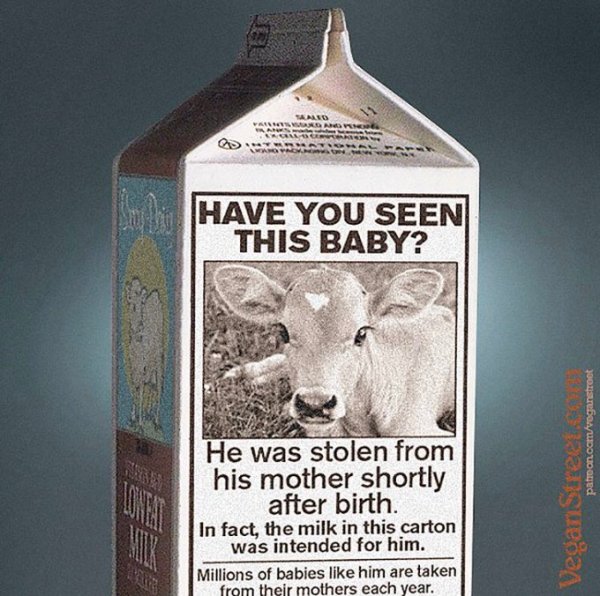
Profitable dairy production depends on a constant cycle of forcibly impregnating cows to keep them at peak lactation, then stealing the calves for whom the milk is intended, typically within the first few hours of birth. Many dairy farmers like to say that mother cows don’t care if their calves are taken, but off the record, workers report that cows cry and search desperately for their stolen babies. Researchers who have studied cow-calf relationships in semi-wild herds and in domestic cattle observe the same pattern: the strongest and most lasting social bonds among cows are between mothers and their offspring, and these relationships persist long after the calves have matured.

Please read rest HERE


Order a FREE vegan kit: http://www.peta.org/living/food/free-vegan-starter-kit/

Take PETA’s Cruelty-Free Shopping Guide along with you next time you head to the store! The handy guide will help you find humane products at a glance. Order a FREE copy HERE

Searching for Cruelty-Free Cosmetics, Personal-Care Products, Vegan Products, or more?
Click HERE to search.

Click HERE to find out How to Wear Vegan!

Want to do more than go vegan? Help others to do so! Click below for nominal, or no, fees to vegan literature that you can use to convince others that veganism is the only compassionate route to being an animal friend:

PETA: https://www.petaliterature.com/

Vegan Outreach: https://veganoutreach.org/order-form/

Get your FREE Activist Kit from PETA, including stickers, leaflets, and guide HERE

Have questions? Click HERE


a mother is a heart that beats a soul that lasts a life that cares a silent comfort only she can give.
a mother is not defined by blood but by the nurturing blanket that is she.

Karen Lyons Kalmenson


The Foul Truth

July 29, 2019
by


Source The Foul Truth, Animal Justice Project
Act HERE


There are more chickens than any other farmed animal on the planet. Their suffering on intensive farms continues to be widely exposed, yet the free-range broiler industry has been relatively hidden from scrutiny. Until now…

Animal Justice Project spent three months inside free-range and so-called ‘high welfare’ broiler chicken farms. It is a shocking reminder that you can’t trust The RSPCA, Red Tractor, the government, or the supermarkets when it comes to protecting animals.

Abusive treatment of chicks

We filmed day-old chicks being thrown out of crates from four foot in the air and onto the hard floor.

On the same day, the worker walked through the shed, kicking and treading on chicks as she walked. Our cameras documented a baby chick suffering for over eight hours on the floor before finally succumbing to its injuries. Chicks who were found by the worker were killed by having their necks broken on feeder lines.

In one week alone, almost 500 chicks died. Chicks often die within the first few days at farms due to stress, neglect or maltreatment.

Chickens left to suffer

We found lame and injured chickens in the sheds during the investigation – some of whom were left to die over a period of days which indicates negligence by workers, going against Red Tractor standards. One bird we found had been clearly left stuck inside a feeder for some time. Our investigators said that she appeared to have “grown into it”. We filmed birds dehydrated, exhausted, and clearly in a lot of pain. It is standard on chicken farms to kill sick birds – none are afforded medical treatment. Birds on the farms we visited were forgotten amid careless and insufficient “welfare checks” by workers, whilst dead, lame, deformed, injured and dying birds lay on the shed floor. Workers were filmed daily on their phones, sitting down, and urinating on shed floors when they should have been health checking the birds. One lame and clearly sick chicken was left to suffer for at least two days, unable to access food and water, before finally dying.

The RSPCA Assured Guidelines state birds must be given access to natural light as soon as possible and at least within seven days.

During the entire 28 days chickens were inside one farm we visited, no natural light was provided. The RSPCA state that chickens should have natural daylight from at least seven days old. On the converse, periods of 6-12 hours of darkness must also be given yet our cameras revealed that the artificial lighting was kept on for a period of over 52 hours, which also counters Red Tractor standards. This means chickens are not able to adequately rest.

Keeping lights on unnaturally stimulates chickens to eat more food and grow even faster.

Chickens were afforded scattered wooden structures and bales of chopped straw (often left still in their plastic wrapping). Food and water sources were broken or contaminated with sodden litter and ‘enrichment’ was in the form of old plastic bottles hanging on feeder lines, some with ‘cola’ drink still inside.

This is a huge contrast to the picture painted by Red Tractor, The RSPCA and other ‘high welfare’ labels.

Inadequate enrichment means chickens – who are highly sensitive and intelligent animals – become bored, frustrated and unable to carry out natural behaviours. This can lead to an epidemic of feather pecking inside sheds.

The ‘slow growing breeds’ on the farms we documented – in other words chickens that go to slaughter at around nine weeks – are promoted as being ‘high welfare’ by NGOs and the industry alike, but still suffer the same health problems as faster-growing breeds. They experience lameness, heart problems, leg deformities and hock burns.

As birds grow, the sheds become even more crowded. Excrement and burning ammonia levels rise. The increasing concentration of ammonia causes respiratory, skin and hock burns. The litter, which should be kept fresh, quickly became heavily soiled and damp. The inability of birds to find clean, fresh bedding caused them to lay in their own faeces, which causes the health problems mentioned.

During the investigation, one worker carried up to a dozen injured and sick live chickens upside down in his hands by their legs as he walked through the sheds before finally breaking their necks and throwing them still conscious onto the floor. These chickens were not checked afterwards to see if they were still alive which is against RSPCA Assured Guidelines. We filmed birds convulsing on the ground, flapping around in circles. One worker even threw a live but seriously impaired chicken into a bucket of his urine.

High welfare’, free-range and organic chickens are not transported any differently to standard intensively-reared birds. We do not believe our investigation shows anything out-of-the-ordinary with regards to the extreme abuse and cruelty towards chickens being caught for slaughter.

The catching of chickens caught on our cameras was disturbing and abhorrent.

Workers grabbed many birds by their feet before throwing them into crates so hard they were pushed out of the top. Chickens had their heads, legs and wings trapped which would have caused great distress and likely severe injuries. The stress continued as workers kicked, swore at and yelled at the chickens who desperately fought to upright themselves and escape the crowded plastic crates. All in full view of others waiting for their turn. Both RSPCA Assured and Red Tractor guidelines were broken with regards to sound levels being kept to a minimum and just a few workers, 4,750 chickens were caught in one hour – there was nothing “humane” happening at these speeds.

After an agonising ordeal of being thrown into plastic crates, the crates were forklifted out. The uneven shed floor caused crates to knock around, further prolonging the chickens’ stress. Around 45 birds have been crammed into each crate at the farm we filmed at.

After the horrendous and terrifying ordeal, the chickens were transported in a large lorry to Traditional Norfolk Poultry where they will be gassed to death. Transportation is highly stressful for chickens, especially when they have been injured by catching teams like those we filmed at the RSPCA Assured farm.

A brutal and shocking end for ‘high welfare’ chickens.

This is The Foul Truth.

‘Higher welfare’, free-range chickens lead stressful and painful lives. The Foul Truth is an industrialised secret; it is 100% Harm Assured. YOU can help us end this abuse: Broaden your compassion to ALL animals by choosing vegan!

Whether factory-farmed, free-range or organic, we can guarantee it is 100% Harm Assured.

Choose Compassion. Choose Vegan!


Order a FREE vegan kit: http://www.peta.org/living/food/free-vegan-starter-kit/

Take PETA’s Cruelty-Free Shopping Guide along with you next time you head to the store! The handy guide will help you find humane products at a glance. Order a FREE copy HERE

Searching for Cruelty-Free Cosmetics, Personal-Care Products, Vegan Products, or more?
Click HERE to search.

Click HERE to find out How to Wear Vegan!

Want to do more than go vegan? Help others to do so! Click below for nominal, or no, fees to vegan literature that you can use to convince others that veganism is the only compassionate route to being an animal friend:

PETA: https://www.petaliterature.com/

Vegan Outreach: https://veganoutreach.org/order-form/

Get your FREE Activist Kit from PETA, including stickers, leaflets, and guide HERE

Have questions? Click HERE


animals are here WITH us, not for us.
wake up humans because soon there
will be no more us!!!

Karen Lyons Kalmenson


12 Important Reasons To Go Vegan Today

July 22, 2019
by


Source Free From Harm
By Ashley Capps


1. Animals Want to Live; They Love Life and Fear Death.

We’re taught to think of animals raised for food — if we think of them at all — as an abstract category: “farm animals”— the nameless, faceless herds and flocks whose generic characteristics are merely recycled through an endless stream of indistinct entities. But farmed animals are individuals with unique personalities and emotions, just like cats and dogs. They feel joy, affection, and pleasure, as well as fear, grief, and pain. Like us, they form deep friendships and emotional bonds and like us they seek to preserve their only lives, which they cherish.

2. The Egg and Dairy Industries Also Cause Immense Suffering and Death

It is a common misconception that animals are not harmed in the production of eggs and dairy. In fact, the egg and dairy industries cause enormous suffering and kill billions of hens and baby chicks, and millions of cows and calves, every year.

In nature, wild hens lay only 12 to 20 eggs per year. But domesticated chickens have been genetically manipulated to produce between 250 and 300 eggs annually, leading to painful and often fatal reproductive disorders. More than 95% of chickens used for eggs are confined in cages so small they cannot even spread their wings, and the majority of “cage-free” and “free range” eggs come from miserable hens packed inside filthy warehouses by the thousands. Most hens used for eggs have a portion of their beaks painfully cut off to prevent nervous pecking in overcrowded conditions, and at the hatcheries where new hens are hatched to be sent to egg farms — including humane label farms, small farms, and backyard hen operations — 6 billion male chicks are destroyed every year by being suffocated or ground up alive.

Similarly, all dairy farming depends on the exploitation of female reproduction, and on the destruction of motherhood. Like all mammals, cows only make milk to feed their babies. On dairy farms, including small and humane label farms, calves are permanently removed from their mothers within hours of birth so that humans can take the milk intended for them. Male calves are slaughtered for veal or raised for cheap beef. Female calves spend their first 2 to 3 months of life isolated in lonely hutches, with no maternal nurturing during the time they seek it most.

Hens used for eggs and cows used for milk are also slaughtered when their production declines, at only a fraction of their natural lifespans.

Learn more about the hidden harms of eggs and dairy, even on so-called humane farms, at our features Eggs: What Are you Really Eating? and 10 Dairy Facts the Industry Doesn’t Want You to Know.

3. Science Confirms: We Have No Need to Consume Animal Products

A well-balanced vegan diet can easily provide all the nutrients we need to thrive. Government health experts worldwide are finally catching up with the large body of scientific evidence demonstrating that a vegan diet is not only a viable option for people of any age, but that eating plant foods instead of animal-based foods can confer significant health benefits, including reduction in incidence of obesity, diabetes, high blood pressure, high cholesterol, heart attack, stroke, and some types of cancer.

In their official position paper on vegetarian and vegan diets, the American Dietetic Association— the U.S.’s oldest, largest and foremost authority on diet and nutrition— states that well-balanced vegan diets “are healthful, nutritionally adequate, and may provide health benefits in the prevention and treatment of certain diseases,” and that they are “appropriate for individuals during all stages of the life cycle, including pregnancy, lactation, infancy, childhood, and adolescence, and for athletes.”

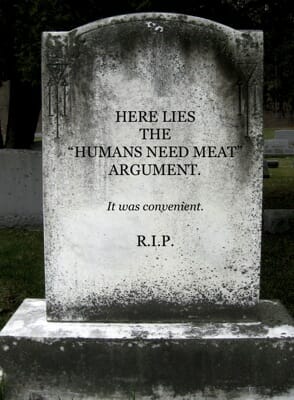
Learn more at our features Catching Up With Science: Burying the “Humans Need Meat” Argument and Vegan Diets: Sorting Through the Nutritional Myths.

Please see rest HERE


Order a FREE vegan kit: http://www.peta.org/living/food/free-vegan-starter-kit/

Take PETA’s Cruelty-Free Shopping Guide along with you next time you head to the store! The handy guide will help you find humane products at a glance. Order a FREE copy HERE

Searching for Cruelty-Free Cosmetics, Personal-Care Products, Vegan Products, or more?
Click HERE to search.

Click HERE to find out How to Wear Vegan!

Want to do more than go vegan? Help others to do so! Click below for nominal, or no, fees to vegan literature that you can use to convince others that veganism is the only compassionate route to being an animal friend:

PETA: https://www.petaliterature.com/

Vegan Outreach: https://veganoutreach.org/order-form/

Get your FREE Activist Kit from PETA, including stickers, leaflets, and guide HERE

Have questions? Click HERE


ALL lives matter
ALL have a right to live
animals are our heartbeats
and each beat has so much
to give!

Karen Lyons Kalmenson


Humane Exploitation?

July 15, 2019
by
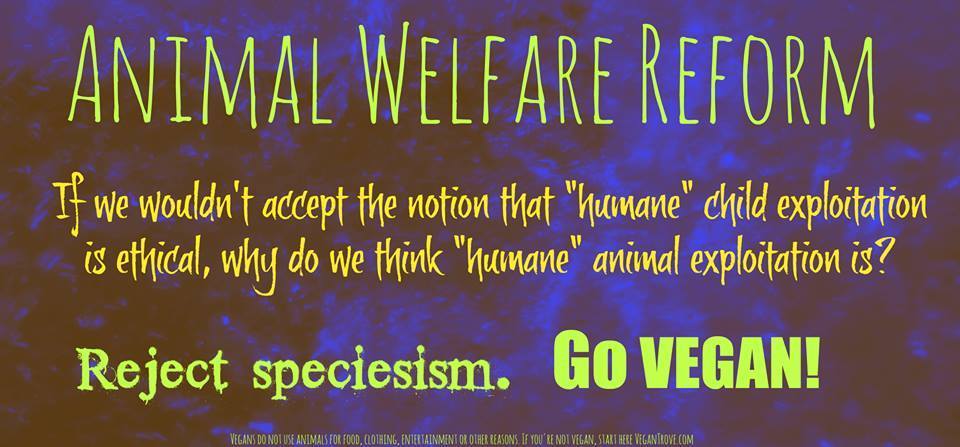
Vegan-animal-welfare-reform
Source Vegan Education Group


Source Species Revolution
See Who Are We?


Over the last few decades, there has been an general increase in our compassion towards other animals. Animal-exploiting industries have tried to capitalize on our empathy and awareness by attempting to sell us the myth of humane animal exploitation.

The very existence of the concepts of “humane slaughter” and “humane animal products” is testimony to the increasing awareness about nonhuman welfare and suffering. Industries are responding to the fact that more and more humans are starting to care about other animals. However, this form of exploitation, however “humane,” falls short of providing any meaningful welfare reforms to enslaved animals for the reasons discussed below.

1. Humane exploitation is betrayal

Even if we assume that some exploiters treat nonhuman animals compassionately before killing them, it does not make the concept any less cruel. Imagine a guardian or a parent killing a human child after giving them a very happy life – would we consider that humane? Killing someone who trusts you to take provide them care and love is a violation of that trust. “Humane slaughter” is not loving or kind, it’s betrayal.

2. Humane exploitation is speciesist

Speciesism, like other forms of bigotry and discrimination, is unjust and unethical. If we would not enslave humans for food, there is no rational reason to do it to beings of other species. All sentient beings deserve the right to not be treated as objects.

3. Humane exploitation is mostly a marketing ploy

Multiple investigations into “humane farms” have shown widespread cruelty and abuse. It is very clear that many corporations use the humane myth to exploit our empathy and compassion towards other animals. If corporations really cared about animals, they would completely stop exploiting them for food.

4. The problem is use, not just cruelty

The root cause of animal abuse in “farms,” labs, circuses, and zoos is that animals are there in the first place. Whenever we see other animals as commodities to be used, abuse naturally follows. Why should we expect animal exploiters to be kind to those they profit off of? Why should we expect anything but abuse from those who imprison and murder animals?

5. There is no such thing as the humane exploitation of sentient beings

Animals are sentient beings who want to live free with their friends and family. There simply isn’t a humane way of killing someone who does not want to die. And there isn’t a humane way of enslaving someone who wants to be free. Animals deserve more than “humane” exploitation. All animals deserve to be happy, safe, and free.


We can keep trying to find right ways to do the wrong thing or we can reject nonhuman exploitation completely. The answer to the widespread and systemic abuse of animals does not lie in bigger cages, longer chains, or larger tanks; it lies in the absolute rejection of nonhuman commodification. It lies in the total liberation of nonhumans animals.


Order a FREE vegan kit: http://www.peta.org/living/food/free-vegan-starter-kit/

Take PETA’s Cruelty-Free Shopping Guide along with you next time you head to the store! The handy guide will help you find humane products at a glance. Order a FREE copy HERE

Searching for Cruelty-Free Cosmetics, Personal-Care Products, Vegan Products, or more?
Click HERE to search.

Click HERE to find out How to Wear Vegan!

Want to do more than go vegan? Help others to do so! Click below for nominal, or no, fees to vegan literature that you can use to convince others that veganism is the only compassionate route to being an animal friend:

PETA: https://www.petaliterature.com/

Vegan Outreach: https://veganoutreach.org/order-form/

Get your FREE Activist Kit from PETA, including stickers, leaflets, and guide HERE

Have questions? Click HERE


just by its definition
exploitation is not humane
and anyone who thinks so
is really quite insane!!!!

Karen Lyons Kalmenson


Watch: Unprecedented Animal Rights Protest at Pig Farm

July 1, 2019
by


Source Sentient Media
By Matthew Zampa


A sign posted inside the farm read, “What happens in the barn, stays in the barn,” an explicit reminder of the industry’s aversion to transparency.

At 6 a.m. on Sunday, April 28, a group of 50 Meat the Victims animal rights activists entered Excelsior Hog Farm, owned and operated by a board member of the British Columbia Pork Producers Association in Canada. Once activists were inside, Meat the Victims organizers reported that the facility promptly went on lockdown. The activists didn’t budge. They stayed to bear witness, pleading with farmers to help the distressed animals, many of which were found pregnant and dehydrated.

Meat the Victims protests are part of the animal rights movement’s effort to create more transparency and accountability in the animal agriculture industry, not just in Canada, but the United States, Australia, Britain, and anywhere there are farm animals suffering. Check out footage of the unprecedented demonstration at Excelsior Hog Farm here.

Nearly 200 animal rights activists gathered outside of an industry-leading pig farm in an industry-leading country: to bring awareness to the crimes of animal agriculture. On the back of the shirts worn by the demonstrators, Meat the Victims adorned this simple truth, “One has a moral responsibility to disobey unjust laws.”

In a sweeping act of defiance, activists can be seen sprinting past the “No Trespassing” signs and attempting to gain access to the pig farm. In doing so, they put themselves at certain risk of facing criminal trespassing and breaking and entering charges. “That’s okay,” said Amy Soranno, a spokesperson for the group of activists who made it inside the facility. “We’re challenging the law. That’s what we came here to do.”

Soranno was later taken into custody. The rest of the activists walked peacefully off the property, many with tears streaming down their faces, holding peace signs and white flowers in their hands.

Excelsior Hog Farm is located in Abbotsford, British Columbia, a community that earns a higher dollar per acre of agricultural land than any other city in Canada. More than 1,000 pigs are currently being held at the facility.


The following excerpt is from a statement released by Meat the Victims activists (May 4, 2019):

“Once we arrived at the farm and began filing out of buses, we could hear dogs barking and sirens blazing in the distance,” stated a Meat The Victims participant. The group jogged down a long path, heading for the back of the farm, stating what they saw when they arrived was just the beginning of a “horrific nightmare.” “The first thing we saw was dumpsters full of dead rotting pig carcasses, my heart was racing, and hands were shaking, I didn’t have any fear of being caught, but was so terrified of what we were about to witness inside.” Due to the secrecy of animal agriculture, many people have never seen inside an industrial animal farm. The group’s goal was to bring the truth to light.

Soon after the group arrived, around 140 activists formed a protest outside of the facility, and 65 activists (fully dressed in biosecurity suits, masks, and booties) attempted to go inside. Of the 65 activists, 50 successfully gained access into the farm. “As I stepped inside, at first all I saw was darkness, but as my eyes adjusted, I began to see hundreds of eyes curiously looking at me, my stomach sunk.”

The activists inside occupied a room full of gestation crates. “Gestation crates are used to immobilize pregnant pigs for weeks on end,” stated an activist, continuing “we occupied an entire row of crates and documented the animals’ heartbreaking existence. The air was nauseating, the concrete slatted floors were cold and filthy, many of the pigs could barely fit into the crates–with their legs, tails, and noses hanging out, pushed against the metal bars. All of these pigs had various cuts and sores, and were conducting unnatural repetitive behaviors, showing signs of insanity.” At least one pig appeared to be lying in a pool of her own blood, with a severely bruised face, and the group witnessed a pig having a miscarriage. “The hundreds of pregnant mothers had a variety of different markings spray painted on their bodies, one row of females in particular really struck me–the pigs were all facing the concrete wall, unable to turn around,” stated an activist.

“This just goes to show that there is no right way to do the wrong thing. This farm is as good as it gets.”

The activists refused to leave the facility until the owner of the farm agreed to allow accredited media inside, to which the farm eventually agreed. Based on information passed between the outside and inside groups, the media tour was delayed by three hours while the farm cleaned-up specific areas and decided who would be allowed in. Eventually, five out of the 11 news outlets were approved. The investigative outlet The Intercept and CTV News were of the group who were removed from the tour. We had full bio suits available for anyone entering the barn, but the farmers were not concerned about this. Therefore media, farmers, police, and even the vet went in without any protection.

Throughout this delay, activists begged the farm to help the most distressed animals. “In exchange for immediate veterinary care, we agreed to leave the gestation room, but the vets who arrived only took a brief look at any animals,” stated an activist who was inside. The activists also pleaded with the farmers to give the pigs water, of which their trough was empty upon the activist’s arrival. “These pregnant pigs were so dehydrated, desperately nudging their trough and frothing at the mouth.” The farmers eventually agreed to give the pigs water.

The media tour went roughly as the Pork Producers Association wanted it to go, but nothing could hide the cruel reality of animal agriculture. Excelsior hog farm is owned and operated by a board member of the BC Pork Producers Association, and Excelsior is considered an industry leader. “This just goes to show that there is no right way to do the wrong thing,” stated an activist. “This farm is as good as it gets.”

A sign posted inside read, “What happens in the barn, stays in the barn,” an explicit reminder of the industry’s aversion to transparency.

Since the negotiations had been met, the group of activists inside agreed to leave. The police informed them that they were all under arrest for trespassing and breaking and entering and that they could possibly be charged eventually, but would otherwise be free to go.

“We celebrated our accomplishments,” stated one of the activists. “But none of us will forget those we left behind.”

Read Sentient Media’s breaking news coverage from Excelsior Hog Farm.


Order a FREE vegan kit: http://www.peta.org/living/food/free-vegan-starter-kit/

Take PETA’s Cruelty-Free Shopping Guide along with you next time you head to the store! The handy guide will help you find humane products at a glance. Order a FREE copy HERE

Searching for Cruelty-Free Cosmetics, Personal-Care Products, Vegan Products, or more?
Click HERE to search.

Want to do more than go vegan? Help others to do so! Click below for nominal, or no, fees to vegan literature that you can use to convince others that veganism is the only compassionate route to being an animal friend:

PETA: https://www.petaliterature.com/

Vegan Outreach: https://veganoutreach.org/order-form/

Get your FREE Activist Kit from PETA, including stickers, leaflets, and guide HERE

Have questions? Click HERE


pigs are pigs but man is the swine!

Karen Lyons Kalmenson


Open Rescue Day 2019

June 24, 2019
by


Source Direct Action Everywhere (DxE) , YouTube


For its third consecutive year, animal liberation groups around the world have coordinated the release of a brand new video giving you a look into the growing movement for animal rescue – and introducing you to nine animals whose lives have just changed forever.


See more:

Exposing the Truth

Rescuing Animals

Blog


Order a FREE vegan kit: http://www.peta.org/living/food/free-vegan-starter-kit/

Take PETA’s Cruelty-Free Shopping Guide along with you next time you head to the store! The handy guide will help you find humane products at a glance. Order a FREE copy HERE

Searching for Cruelty-Free Cosmetics, Personal-Care Products, Vegan Products, or more?
Click HERE to search.

Want to do more than go vegan? Help others to do so! Click below for nominal, or no, fees to vegan literature that you can use to convince others that veganism is the only compassionate route to being an animal friend:

PETA: https://www.petaliterature.com/

Vegan Outreach: https://veganoutreach.org/order-form/

Get your FREE Activist Kit from PETA, including stickers, leaflets, and guide HERE

Have questions? Click HERE


can you feel our hearts
see our fear
as in sorrow
we sit here
can you see our lives
broken and shattered
will you save us
ALL lives matter

Karen Lyons Kalmenson


Fair Oaks Farms: This is the rule, not the exception

June 17, 2019
by


Source Animal Recovery Mission (ARM)
Please sign petition HERE


On June 4th, 2019, ARM released disturbing footage of one of its most grueling factory farm investigations to date. Initiating in 2018, an ARM undercover investigator captured surveillance evidence of the systematic and horrific animal abuse that is occurring at the Fair Oaks Farm’s Dairy Farm Adventures, located in Indiana, USA.

Owned and operated by Mike and Sue McCloskey, under the Fair Life Corporation, Fair Oaks Farms not only stands as one of the largest dairy farm corporations in the United States, but it has also repeatedly and publicly, prided itself as ‘acting as a window to the agriculture world’  by providing complete transparency into the everyday operations of a dairy farm.

Every year, Fair Oak Farms educates millions of people and provides public tours of the entire process dairy process of farm to table. On the Fair Life website, it states that (the animals are) “Always in Good Hands”. Despite these claims, ARM revealed what it considers to be, the first realistic and honest audit of the Fair Oaks Farm and Fair Life Corporation’s operations, including the daily mistreatment of the resident farm animals. Information that has been hidden from the public.

ARM’s investigation of Fair Oaks Farms Dairy Adventures also exposed a connection to the cruel and inhumane veal industry where male calves are transported to locations in North Manchester from Fair Oaks Farms.

Fair Oaks Farms is one of several dairies belonging to Select Milk Producers Inc, who is also the producer of the Fairlife label. Fair Life and Coco-Cola additionally have a joint venture with Select Milk including Fair Life Milk, Core Power and YUP dairy products which are sold in major grocery chains nationwide.

Click HERE to read ARM’s Entire report to learn more about the animal cruelty and abuse that the dairy cows of Fair Oaks Farms are subjected to on a daily basis (or see below).

As consumers, you can make your voices heard by contacting Fair Oaks Farms, Publix and Coca Cola and demand that these products, and companies cease supporting this incredibly cruel treatment upon dairy cows.

One of the most significant ways that the public can contribute to change in this industry is to choose plant-based choices and discontinue the consumption of dairy products.

Click HERE for dairy-free alternatives.


View this document on Scribd


Order a FREE vegan kit: http://www.peta.org/living/food/free-vegan-starter-kit/

Take PETA’s Cruelty-Free Shopping Guide along with you next time you head to the store! The handy guide will help you find humane products at a glance. Order a FREE copy HERE

Searching for Cruelty-Free Cosmetics, Personal-Care Products, Vegan Products, or more?
Click HERE to search.

Want to do more than go vegan? Help others to do so! Click below for nominal, or no, fees to vegan literature that you can use to convince others that veganism is the only compassionate route to being an animal friend:

PETA: https://www.petaliterature.com/

Vegan Outreach: https://veganoutreach.org/order-form/

Get your FREE Activist Kit from PETA, including stickers, leaflets, and guide HERE

Have questions? Click HERE


please we pray
pain go away
we want to live
another day.

ALL animals facing slaughter

Karen Lyons Kalmenson


Earthling Ed’s The Ostrich Effect: The truth we hide from ourselves

June 10, 2019
by


Source TEDx Talks, YouTube


Why do we hide our heads in the sand when we get confronted with a challenging reality? Ed explores what truths we hide from ourselves by drawing on his experience as a documentary maker and activist. Ed Winters or “Earthling Ed” devotes his life to be a voice for the voiceless as an animal rights activist. He went from a meat-eater to vegan, and as a social media phenomenon, regular visitor on major new channels such as BBC, he advocates for animals using discussion and debate.


Order a FREE vegan kit: http://www.peta.org/living/food/free-vegan-starter-kit/

Take PETA’s Cruelty-Free Shopping Guide along with you next time you head to the store! The handy guide will help you find humane products at a glance. Order a FREE copy HERE

Searching for Cruelty-Free Cosmetics, Personal-Care Products, Vegan Products, or more?
Click HERE to search.

Want to do more than go vegan? Help others to do so! Click below for nominal, or no, fees to vegan literature that you can use to convince others that veganism is the only compassionate route to being an animal friend:

PETA: https://www.petaliterature.com/

Vegan Outreach: https://veganoutreach.org/order-form/

Get your FREE Activist Kit from PETA, including stickers, leaflets, and guide HERE

Have questions? Click HERE


we try to hide,
under cover we run
we try to deny
lifetimes go by
but eyes of the
heart,
when open
can see
and know that which
is reality!!!

Karen Lyons Kalmenson


From Shepherd to Advocate: Why I Focus on Animal Suffering

May 28, 2019
by

sheep-in-lappeenranta-2014fall-1024x834

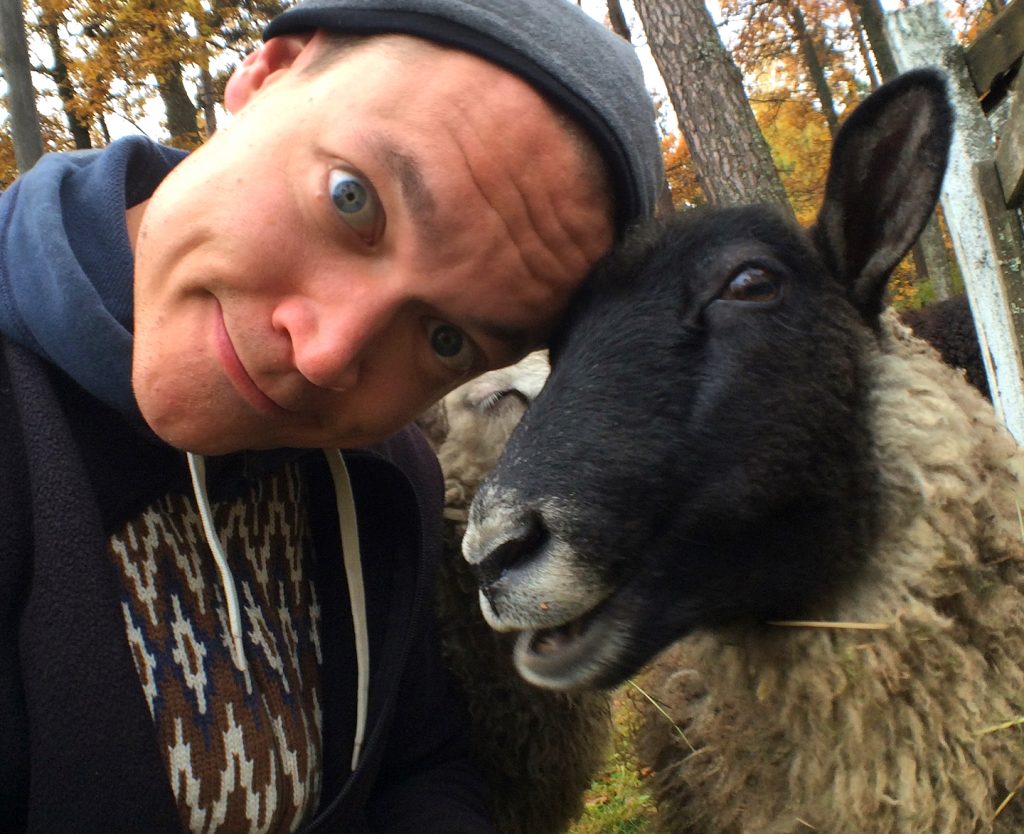
Source Mikko Jarvenpaa / Sentient Media. Author (on the left) with a friend.


Source Sentient Media
By Mikko Jarvenpaa, Founder


In a world rife with human suffering and problems, why should one focus on animal rights and animal suffering? My answer is at once moral, emotional, and rational.

In retrospect my personal path to animal rights has been both obvious and meandering. It consists of both emotionally charged experiences and cool-headed rational thought.

But it has been far from obvious to many of my friends why I would make the change from tech entrepreneurship into something that has a more positive impact on the world, and end up dedicating my efforts to animal rights. For their and my benefit, I wanted to chart my course briefly, lest my friends explain this all away with my never-too-latent rebellious tendencies, or by just having stayed in Northern California for too long.

Friends with sheep

I was born and grew up in Eastern Finland. As long as I can remember, my father had the hobby of keeping sheep. I call it a hobby because it wasn’t for economic gain but for reasons of self-reliance with meat – and wool, which my mother used as materials for her art. For me, the sheep were at least as good as pets, nearly friends.

Sheep are actually pretty amazing. The common misconception is that sheep are stupid, easily freaked out, and just, in general, pretty sheepish animals. But that’s before you get to know them. Yes, they certainly have strong herd instincts and can all bolt pretty easily if even one sheep feels threatened. But once you get to know them and they accept you into their herd, you learn their individual characteristics. Some are more playful than others. Some are entirely food-motivated while some will just want to get scratches. Some are devious and try to come up with different ways of escaping. They often collaborate, for example, by leaning against bushes to push them lower for others to eat.

I didn’t have too many human friends growing up. There were no kids within walking distance until I was seven or so. So the sheep were doubly important to me. We’d sometimes keep them over the winter, and my brother and I would often be responsible for bringing them fresh water and feed in their winter shelter. I took part in all parts of their lives, except the very last.

In the fall, the men would come. I don’t remember what they looked like, but I remember what I felt like. My dad told me not to come over to the sheep enclosure that day. I stayed indoors and played the radio loud to drown any sounds. Whether there were sounds from the slaughter, I don’t know.

After the men left, I would sometimes sneak into the small garage in the enclosure where the slaughter had taken place. The floor was always stained with blood and I seem to remember seeing the implements of violence, though I don’t remember exactly what they were.

What I do remember, though, is the tremendous sense of loss. Loss of lives that didn’t want to die. Loss of beings that were close to me and that I was close to. And most harrowingly, the palpably present sense of loss by the animals still left behind to kept over the winter. They had lost their young, their parents, their friends, the only other beings that could give them a sense of safety. The sheep I remember well, huddled together at a safe distance, all tense, staring at me, the person who used to be there for them.

Betraying the trust of the innocent is the worst feeling I know.

Thinking rationally about animal suffering

Since the age of 15, I was vegetarian, on and off, for a long time. Even in my off-times, I never felt right about eating mammals: cows, pigs, and sheep always felt too close to human, too close to eat. For a long time, I tried to consider birds and fish more biological robots than sentient beings (and I was badly wrong in this). It took nearly 20 years from first going vegetarian for me to piece the puzzle together and take action that was consistent with my ethics.

The key to taking that action is suffering – realizing that it is suffering that I most oppose, not the loss of life, or the act of killing, or even the system of speciesist exploitation.

I had to go deep for this realization. I went back to school at the ripe age of 30 and completed my Master’s in Philosophy of Social Sciences at the London School of Economics and Political Science. I focused on the philosophy of biological and cognitive sciences with an interest in ethics and the evolution of morality.

To summarize in three very broad strokes: first, understanding the suffering of others makes evolutionary sense for any animals that live in groups and have the capacity to do so (assume this holds at least for all vertebrates: mammals, birds, and fish, to mention the most exploited classes of the animal kingdom). The subjective experience of suffering is more obvious, but that also makes a lot of evolutionary sense: pain is a harm-reduction mechanism. Practically all animals with a spine feel and “understand” each others’ pain (quotes only to emphasize that their understanding may be very different from our verbal understanding). Considering a non-human animal’s mental suffering is just as valid as considering the mental suffering of a human animal.

Second, reduction and elimination of involuntary suffering is perhaps the most universally appealing goal across most ethical frameworks. Some moral codes allow for causing harm or having a neutral stance on it, but in my view none of them are intuitively or rationally appealing. Everybody wants good things, and involuntary suffering is not a good thing.

And third, to have an impact one needs to focus on things that are most neglected. This idea stems from utilitarianism, though I’m not a total utilitarian in my views. This is also what lead me to put theory into practice.

Based on these premises, though considered in much more detail, I realized there is an urgent need to focus on the suffering of animals. We keep producing more animals into lives systematically filled with physical and mental suffering. In factory farming for meat, eggs, and dairy, we do this to billions of beings and we cause them to suffer. We do this needlessly, and we do it willfully. Importantly, we do it as a part of a self-enforcing system of economic and cultural structures.

Ok, you may say, animals suffer, but why would someone concerned with suffering focus on animals in a world with so much human suffering to go around? Surely human suffering ought to be addressed before taking up the fight against animal suffering?

Personally, I subscribe to the view that human life and human experience is indeed more valuable and more desirable than a non-human animal experience of life – but not incomparably so, and certainly not indefinitely so. This doesn’t mean there has to be a certain number of animals that are morally equivalent to a human. I believe comparisons can be made even though they be theoretical and uncomfortable, while at the same time I do not desire there to be a moral calculus that would tell us how many B-lives are worth one A-life.

For example, if I was forced to cause a proportionally similar amount of suffering to a chicken or to a pig, say, suffering equivalent to that of a lost limb, I would choose to cause the suffering to the chicken because I assume that action to cause less suffering both in quantity and – perhaps more controversially – in quality. This disagreeable example (and there are much worse thought experiments used by experimental philosophers) may seem intuitively sensible, but in addition to pure intuition we may also attempt to approximate the probability of the volume of suffering experienced by things like the complexity of the animal’s neural and cognitive systems. Yet even this is done not ever knowing the subjective experience of suffering of another being. And, yes, I may well be wrong with this example and future evidence shows that avian suffering is actually more intense and severe than the suffering of large mammals, in which case I ought to adjust my response to this thought experiment accordingly.

Extending comparisons from animal suffering to human suffering seems like a very bad idea. Almost taboo. Surely some things are black and white – animals are animals and humans are humans? The same person who finds that intuition to be common sense may also be a dog owner who loves their canine companion dearly. That person may well value the life of their pet much higher than that of a human stranger on the other side of the world. In doing so, they are actively making cross-species ethical comparisons that they intuitively agree with. But we are experts at living with moral inconsistency. We are forced to be such experts because human intelligence is limited.

Without going into detail of how comparisons should or even could be made, let’s just assume that sentient suffering is somehow comparable, contrastable, even if human suffering should be orders of magnitude more important than the suffering of the next most intelligent exploited animal. Which is the pig, rather uncontroversially. Yes: bacon, ham, pork chops – all made of intelligent, socially complex, family-centered animals who suffer insanely in the process. Hundreds of millions of such sentient beings every year.

The sinews of suffering

Before taking a closer look at animals, consider just a sampling of the dizzying extent of human suffering in the world today.

There are 70 million forcibly displaced people in the world according to the UNHCR due to wars, persecution, and other upheavals. In 2015, 736 million people lived in extreme poverty (under $1.90 per day), and 3.4 billion people still struggle to meet basic needs, living on less than $3.20 per day in lower-middle-income countries or under $5.50 in upper-middle-income countries according to the World Bank. In the US, more than 10 million women and men are subjects of domestic violence every year. The WHO estimates that over 200 million women have been subjected to female genital mutilation. And I could continue this list for hours.

It’s not that I don’t care about human suffering. The degrees and types of cruelty, neglect, inequality, terror, and other sources of human suffering are mind-boggling and too frequently horrifying.

So the question remains, now stronger than ever – why animal rights? My answer is the proportional neglectedness of farmed animals: no matter how you look at things, animal suffering is incredibly neglected.

Let’s take a couple of proxies to quantify neglectedness. In 2017, Americans gave $410 billion dollars to charitable causes. For 2015, Animal Charity Evaluators estimated the top 10 farmed animal outreach organizations to have budgets of $20 million. Let’s assume they count for 50% of the total budgets, and call it $40 million in total to get a conservative overestimate. Note that this would also include governmental grants which are not included in the $410 billion giving figure. Yet to remain conservative, other causes (which are primarily human causes) get approximately 10,250 times the donations that farmed animals do in the US.

There are over 9 billion farmed land animals killed every year in the US (and probably tens of billion of fish). Without exaggeration, 99% of these farmed land animals are born into the factory farming system where suffering is the norm, not the exception, and where cruelty is sanctioned.

Therefore, if we accept that animals can suffer (they can), that we are causing their suffering (we are), and that we should focus our efforts on targets that need the most help (and as I’ve argued, yes, we should), then focusing on animal rights is rational. Even if you wanted to claim that human experience of suffering is 100,000 times more valuable than an animal experience of suffering for purposes of allocating resources, you’d still be left with the equivalent of 90,000 violent human deaths that capped lives of near-constant suffering. As violent and unequal as the US is, there are less than 20,000 violent human deaths per year with billions of dollars in private and public funding aimed at addressing those deaths, as opposed to the $40 million for the suffering of farmed animals.

And very importantly, there are many powerful people and well-funded organizations seeking to eradicate diseases, to alleviate poverty, and to put an end to cruel traditions where humans suffer. Animals have very few such friends, especially in proportion to the problem. While human suffering is very real and horrible, human suffering is not nearly as neglected as animal suffering.

For another angle of how neglected animal suffering is, consider how often you see animal rights discussed in the media. We should be surprised that the constant suffering of billions of our fellow Earth-dwellers in the hands of our fellow humans is not perpetually in the news. But still today the opposite holds: people are surprised and even dismayed that they are asked to question their beliefs and behavior when it comes to their lunch. The rare occasions that animal suffering is discussed in media, it is mostly on topics of outright animal abuse and neglect (usually of dogs, cats, or horses), or the use of animals in entertainment or laboratory testing. As horrible as those cases are, they pale in volume to the suffering on factory farms: in the US, there are 500 animals used and killed on factory farms for every one animal used in a laboratory.

No matter how you dice things, it is especially farmed animals who are neglected and whose suffering challenges us with its moral urgency.

The power in animals

My reasons for focusing on animal rights are both emotional and rational. There is much more to my personal experience and rationale than what I presented here. And I didn’t even get to mention the climate impact of animal agriculture (at least as big as that of all global transport), human health (from carcinogenic meat to health risks of dairy), or existential threats of animal agriculture (a promising breeding ground for antibiotic-resistant pathogens).

But there is one more thing to mention when focusing on animal rights: tractability.

I believe we can make a major positive difference for farmed animals within my lifetime. We may not eliminate animal farming within decades, but it will become undesirable, unprofitable, and widely morally questionable. Within one generation, eating animals and animal products like dairy and eggs will be viewed like smoking is generally viewed in the US today – pretty disgusting but somewhat tolerable. Within two generations, the same practices will be viewed like public executions are viewed today – morally reprehensible, barbaric, still done in some places in the world, but something that ought to be confined into the annals of history.

The issue is tractable because people care. Animals are powerful allies. They are relatable, cute, friendly, and wholesome. They are our link to nature and natural things. They give us support and happiness while our social ties erode and become fewer.

The vast majority of meat eaters care about animals. Many are even a little annoyed by suggestions that they are doing something wrong, because they know they well might be. I know I was.

And back in Finland, on some years there are still sheep at the house I grew up in. If I go, I still meet them and watch them play, graze, and socialize. But I don’t stay for the fall.

Please reach out to me on Twitter with any comments or questions.


Order a FREE vegan kit: http://www.peta.org/living/food/free-vegan-starter-kit/

Take PETA’s Cruelty-Free Shopping Guide along with you next time you head to the store! The handy guide will help you find humane products at a glance. Order a FREE copy HERE

Searching for Cruelty-Free Cosmetics, Personal-Care Products, Vegan Products, or more?
Click HERE to search.

Want to do more than go vegan? Help others to do so! Click below for nominal, or no, fees to vegan literature that you can use to convince others that veganism is the only compassionate route to being an animal friend:

PETA: https://www.petaliterature.com/

Vegan Outreach: https://veganoutreach.org/order-form/

Have questions? Click HERE


Our animal brothers are not menu choices
We the compassionate will be their voices

Karen Lyons Kalmenson


Vegan Calculator

May 20, 2019
by


personal
Source Carnism Debunked


Please click HERE for a vegan calculator
Source Vegan Calculator


Use this calculator to see the impact you have made being vegan. A vegan lifestyle requires less resources like water, food, and oil; it contributes less CO2 to the atmosphere; and animals are not killed for your consumption.

Raising livestock contributes more to global warming than automobiles, and it is the second-leading cause of global warming behind industrial pollution.

Choosing to become vegan is one of the best things you can do for the environment.

Choosing to become vegan is the best thing you can do for animals.


Order a FREE vegan kit: http://www.peta.org/living/food/free-vegan-starter-kit/

Take PETA’s Cruelty-Free Shopping Guide along with you next time you head to the store! The handy guide will help you find humane products at a glance. Order a FREE copy HERE

Searching for Cruelty-Free Cosmetics, Personal-Care Products, Vegan Products, or more?
Click HERE to search.

Want to do more than go vegan? Help others to do so! Click below for nominal, or no, fees to vegan literature that you can use to convince others that veganism is the only compassionate route to being an animal friend:

PETA: https://www.petaliterature.com/

Vegan Outreach: https://veganoutreach.org/order-form/

Have questions? Click HERE


❤ the sum of kindness is even greater than our hearts ❤

Karen Lyons Kalmenson


‘Family Dairy Farms’ Destroy Families: My Dairy Tour

May 13, 2019
by

Not graphic, one minute, please watch.

Source Free From Harm
By Calen Otto


The town of Asheville, North Carolina, has been called the “Progressive Mecca of the South”. And while it is home to a lot of liberal-minded people and activists, there’s one form of oppression that many of the most left-leaning advocates still happily support and celebrate, and that is animal exploitation and slaughter.

Sure, Asheville has a large vegan community and lots of vegan-friendly restaurants, but, as Free from Harm has previously written, it is also a hotbed for the humane animal farming myth. The town’s cafés, restaurants and farmer’s markets regularly boast of their “ethical meat” and milk and cheese from “happy cows” on “family farms.”

I recently had occasion to visit one such celebrated “family dairy farm,” Maple View Farm, just outside of Chapel Hill, NC. Maple View supplies many local businesses in the Triangle area, and it also supplies the Asheville milk delivery company, Farm to Home. The Farm to Home “milk man” describes his job of delivering this milk as doing something “ethically” and with “integrity.”

As I walked through this esteemed family dairy that is favorably known in the community, I was astonished by what I saw and heard. In the dairy industry, female cows must be lactating to produce milk. That means that they are forcefully impregnated over and over through artificial insemination, without their consent, so they will give birth and begin lactating at optimal yields. Their bodies are pushed through this stressful and wearing cycle every year so that they will produce as much breast milk as possible. I learned that on this farm, mother cows are slaughtered after several years once their milk production declines. This is true of most cows in the dairy industry, who are killed at only a fraction of their natural lifespan when their output slows down and they become less profitable.

In addition to this tragedy, once cows used for dairy give birth, their babies are taken away from them. The farmer himself told me that the babies on his farm do not once drink the milk straight from their mothers’ udders, and never will. Instead, they receive their first life-giving fluids from a human hand and plastic bottle.

Please read rest HERE


Order a FREE vegan kit: http://www.peta.org/living/food/free-vegan-starter-kit/

Take PETA’s Cruelty-Free Shopping Guide along with you next time you head to the store! The handy guide will help you find humane products at a glance. Order a FREE copy HERE

Searching for Cruelty-Free Cosmetics, Personal-Care Products, Vegan Products, or more?
Click HERE to search.

Want to do more than go vegan? Help others to do so! Click below for nominal, or no, fees to vegan literature that you can use to convince others that veganism is the only compassionate route to being an animal friend.
PETA: http://www.petacatalog.com/catalog/Literature-39-1.html

Vegan Outreach: https://veganoutreach.org/order-form/

Have questions? Click HERE


a truth denied
is a truth that remains.
no amount of denial
can end the suffering
and pain!

Karen Lyons Kalmenson


Ninth Circuit Affirms Dismissal of Almond Milk Labeling Lawsuit

May 6, 2019
by

Hamburgers don’t have ham. Hot dogs don’t have dog. But calling it a ‘veggie burger’ is misleading?

Paul Shapiro, Twitter


Source Animal Legal Defense Fund
Written by Nicole Pallotta, Academic Outreach Manager


In an unpublished opinion issued December 20, 2018, the Ninth Circuit Court of Appeals affirmed the of a against Blue Diamond Growers.

The lawsuit alleged that the company’s almond milk products were mislabeled under Food and Drug Administration (FDA) law, and use of the term “almond milk” misled consumers into thinking the products were nutritionally equivalent to dairy milk. The claimed that almond milk should be labeled “imitation milk” to prevent consumers from being confused about the differences between almond milk and dairy milk.

The appellate court affirmed the district court’s dismissal on preemption grounds. The court found that “almond milk is not a ‘substitute’ for dairy milk . . . because almond milk does not involve literally substituting inferior ingredients for those in dairy milk.”

Thus, the federal Food, Drug, and Cosmetic Act (FDCA) does not require almond milk to stop using the term “milk,” include a nutritional comparison of almond milk to dairy milk, or use the words “imitation milk.” The ‘s claims, which sought to impose these additional requirements, were “not identical to” federal law and were thus preempted.

The appellate court also agreed with the lower court that no reasonable consumer would “assume that two distinct products have the same nutritional content” and affirmed the dismissal of the plaintiff’s claims under California’s consumer protection laws.

Further Reading:


Order a FREE vegan kit: http://www.peta.org/living/food/free-vegan-starter-kit/

Take PETA’s Cruelty-Free Shopping Guide along with you next time you head to the store! The handy guide will help you find humane products at a glance. Order a FREE copy HERE

Searching for Cruelty-Free Cosmetics, Personal-Care Products, Vegan Products, or more?
Click HERE to search.

Want to do more than go vegan? Help others to do so! Click below for nominal, or no, fees to vegan literature that you can use to convince others that veganism is the only compassionate route to being an animal friend.
PETA: http://www.petacatalog.com/catalog/Literature-39-1.html

Vegan Outreach: https://veganoutreach.org/order-form/

Have questions? Click HERE


The dairy industry cowers,
As it reaches its final hours!

Karen Lyons Kalmenson


Death Row

April 29, 2019
by


Source YouTube , Kinder World


Please note that this video is not “visually” graphic; it depicts the moments before a cow is killed. He waits for his death in fear, sadness, and terror, not knowing or understanding what he did to deserve such a painful existence and indifferent death. I wonder that, too.


Order a FREE vegan kit: http://www.peta.org/living/food/free-vegan-starter-kit/

Take PETA’s Cruelty-Free Shopping Guide along with you next time you head to the store! The handy guide will help you find humane products at a glance. Order a FREE copy HERE

Searching for Cruelty-Free Cosmetics, Personal-Care Products, Vegan Products, or more?
Click HERE to search.
Want to do more than go vegan? Help others to do so! Click below for nominal, or no, fees to vegan literature that you can use to convince others that veganism is the only compassionate route to being an animal friend.
PETA: http://www.petacatalog.com/catalog/Literature-39-1.html

Vegan Outreach: https://veganoutreach.org/order-form/

Have questions? Click HERE


Please we do not want to die
We want a chance at life’s great
Dance,
Please see the terror in our eyes
It would be yours too if
You were I.
A heart is all it really takes
Cruelties cause the worst
Mistakes

Karen Lyons Kalmenson