HighestWelfare.Humane.Assured.GoodPractices.Vegetarian. Regenerative.Flexitarian.Lies...
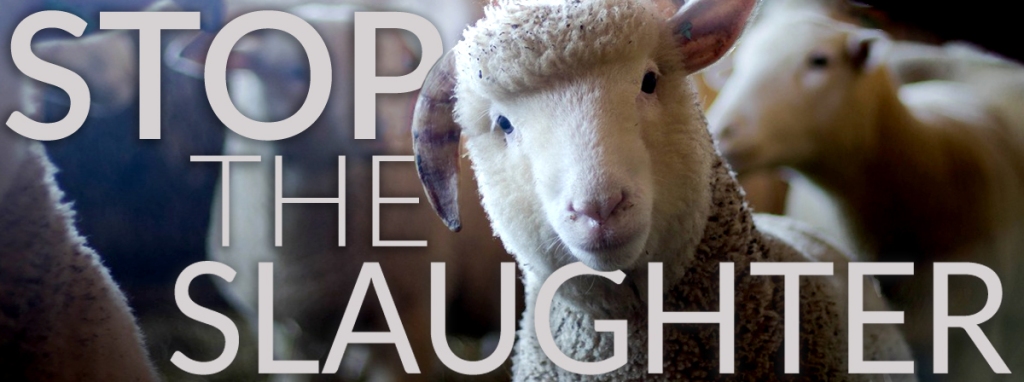
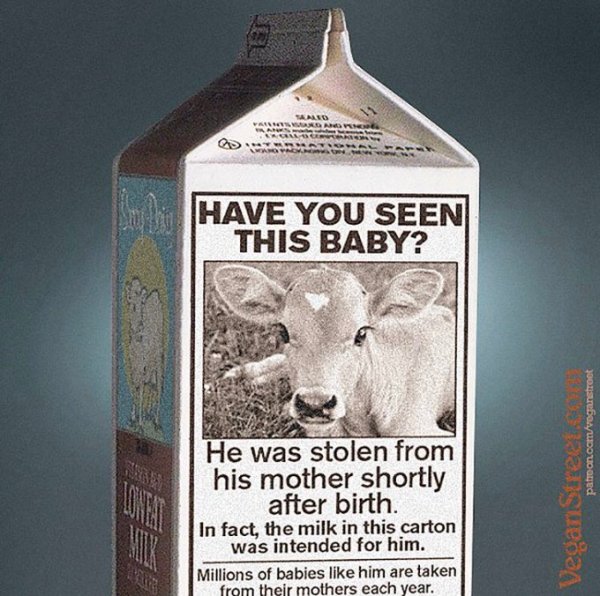
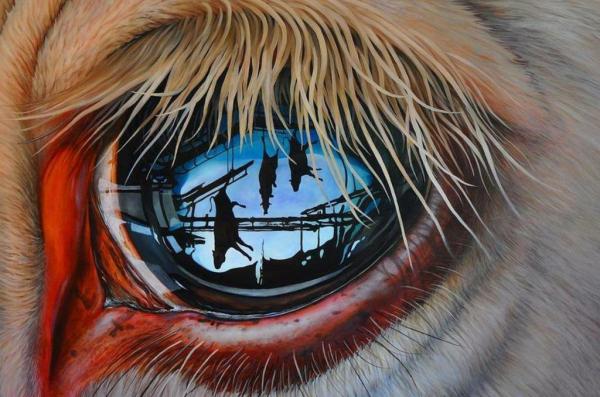
What is the difference between No Welfare, High Welfare, and Highest Welfare when they all require animals to die? Only human comfort, NONE protect the actual animals. The most humane, ethical, and honest Webster-defined "welfare" is NOT exploiting animals - not using, not wearing, not eating, not killing - animals. The only meaningful position is vegan, everything else is just how humans euphemize animals' required suffering and violent deaths: no human exploits animals because they honestly believe that NOT exploiting animals is UNethical or INhumane.
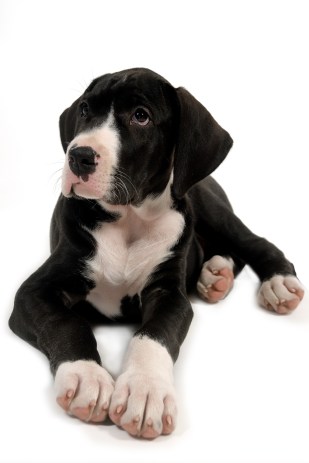
Image | MRIS Blog, Stock Photo
UPDATE: Baggage worker offered job back after dog debacle
Please click on and sign:
Demand Justice for Baggage Handler Who Reported Animal Abuse!
Background | From Change
Lynn Jones, a baggage handler at Reno-Tahoe Airport for the past five years was terminated last month after she refused to load an abused, bleeding, malnourished dog into a cargo hold, fearing it would die in transport. Jones, reported the abused animal to her supervisor who supposedly told her “the dog’s condition isn’t your concern.”
When Jones reported the abuse to Washoe County Regional Animal Services and the dog was seized for examination, treatment and documentation, Lynn Jones didn’t get a thank you – she got fired.
The dog in question was kept and treated for weeks by WCRAS and the case has apparently been forwarded to the District Attorney, but Lynn Jones still has no job.
According to www.ilovedogs.com “ATS posted a message on its website, saying the company is taking this matter “extremely seriously and commends this employee’s situational awareness and her desire to raise the concern on behalf of the canine involved and relieved to hear that the canine will fully recover.” It stated the company is currently “reviewing the actions of all employees involved to determine if the appropriate action was taken.”
Airport Terminal Services has a legal and ethical obligation to report cases of animal abuse. Lynn Jones is a hero, and deserves to not only have her position back, but to be issued a public apology and be given her full wages for the time period that she was terminated for doing the RIGHT THING
ATS can be contacted by going to http://www.atsstl.com/contact.asp
DEMAND justice for local hero, Lynn Jones.
Read more…
Help Brown Pelicans in the Gulf

Please click on and sign: Use BP’s fines to restore the Gulf!
Background | From NWF Action Fund
More than 800 dead and injured pelicans were found in the months following the BP oil disaster in the Gulf, and it’s likely many more pelicans were never found.
Biologists remain concerned about the long-term impacts of the dispersed and submerged oil on the bird’s food chain and nesting grounds. Scientists who study pelicans are also concerned about an additional threat to the bird–habitat loss.
BP and the other oil companies responsible for the disaster will pay significant fines to the federal government for their recklessness, but it will take legislation from Congress to ensure these fines are used to help restore Brown Pelicans, and many more Gulf wildlife.
Indeed, BP and the other oil companies will pay serious fines for their recklessness. However, unless Congress passes legislation directing how these penalties should be spent, the money from these fines may not be used to restore the Gulf.
These next two weeks are critical for putting the pressure on the U.S. Senate to pass legislation to help restore the Gulf. When Congress returns in January to the start of an election year, the chance that they will take up this legislation again will be lower.
Take Action! Help protect the Gulf’s brown pelicans by editing and sending a message, urging Congress to pass legislation to help restore the Gulf today.
Message | Please personalize
The Clean Water Act fines resulting from the oil spill should be used to restore the Gulf Coast and the Gulf of Mexico. The RESTORE Act is a sensible piece of legislation that has strong public support and backers on both sides of the aisle.
As the Senate majority leader, please take advantage of this opportunity to end 2011 on a positive note by making the bipartisan RESTORE Act a priority for passage before end of the year.
Unfairly Prosecuted Animal Activist: Please Sign Petition

Please click on and sign Unfairly Prosecuted Animal Activist
Background | From The Petition Site
In a day in age when murderers are allowed to go free within our judicial system, it seems absurd to punish Arnold Christopher Lagergren so harshly. We have a community wanting answers as to why such harsh punishment has been implemented for taking pictures and trespassing. Arnold Christopher Lagergren does not derserve to be made an example for merely attempting to save a life.
Update!
Lagergren faces a prison sentence of up to five years if convicted of a felony under the Florida Animal Enterprise Protection Act. Each of the misdemeanor charges he faces could add a year to that sentence.
Lagergren was “charged with four misdemeanor counts of trespass and vandalism for alleged incidents at the Marine Mammal Conservancy. Police reports describe him as affiliated with the international Animal Liberation Front organization, which advocates ‘direct action’ against animal captivity. … Monroe County Court Judge Regan Ptomey set bonds totaling $30,000 on the four charges, according to court records.” ~The Miami Herald
For full article:
Animal-Rights Activist Charged with Felony
Additional Articles:
New Information in Case of Man Arrested Trying to Free Whale
Animal Rights Activist Arrested After Photographing Whale Conservancy Workers
Read more…
Need emails by noon Wednesday for raped Chihuahua
BACKGROUND | From Facebook Alert,Dom Osh
Long story short, Robert Edward De Shields anally raped a 9-month old Chihuahua in March of this year. He has been in jail off and on since 1992 – the longest he has NOT been in prison or on parole was 5 months. He is in a wheelchair and was turned in by a family member. The dog had severe damage to his rectum and internal organs. Surgery was performed and the dog survived, but is still frightened and traumatized. De Shields was convicted of felony animal cruelty and of one misdemeanor cruelty charge as well.
Some of us are going to attend the sentencing of this sick, perverted criminal on Friday at 9am (Sacramento, California, Courthouse, Dept 15); we hope that our presence will reinforce how serious the crime is and how strong the sentence should be. Please attend if you can!
Emails can also have an impact on the sentencing, but they must be received by NOON TOMORROW, Wednesday Dec 7.
Emails should be sent to LorigaB@saccourt.ca.gov.
I’ve included a sample email below – if you don’t have time to create one yourself feel free to cut and paste the info.
WHOM TO CONTACT
LorigaB@saccourt.ca.gov
Please note you will receive an “out of office” response but she returns December 7.
SAMPLE EMAIL
Subject – Robert De Shields, case #11F02689
This is in regards to Robert Edward De Shields, who was recently convicted of felony animal cruelty. His sentencing hearing is on Friday, December 9, 20111 at 9:00am in Department 15.
As an advocate for the humane treatment of both animals and people, I strongly urge the court to give Mr. De Shields the maximum possible sentence for his horrific crime.
The small puppy that he so cruelly molested is still suffering from the effects of the experience and will continue to do so for a long time to come. As with human children who are raped and otherwise violated, the fear and emotional scars last long after the body has healed.
I appreciate that the court takes cruelty to animals as a serious crime and for holding De Shields accountable for his actions.
Thank you for taking the time to read this important message.
NAME
RITUAL HORSE SACRIFICE in SUMBA – Please Sign Petition

Image | Tribudragon
PLEASE CLICK HERE TO SIGN PETITION.
BACKGROUND FROM | CHANGE.ORG
The video below, filming Ritual Horse Sacrifice, speaks for itself. It occurred on the island of Sumba in Eastern Indonesia which has numerous other equally barbaric religious sacrifice traditions and events. Religious animal sacrifice is not yet banned throughout Indonesia and many different religions and belief systems still exist where the participants believe that violence towards animals will make gods and sprits happy with them.
The animals are killed in a variety of cruel and brutal ways which include stabbing them to death, slowly slitting shallow cuts to the throat, beheading, being torn apart alive by frenzied mobs, having their throat slit and head slowly torn off, burning alive, suffocation, live skinning, and removal of hearts whilst fully conscious. Body parts such as limbs are often also removed whilst the animals are still alive and fully conscious. They are normally beaten and roughly handled by impatient “priests” and bound in painful ways before the actual sacrifice. Transport to the sacrifice is also horrendous and can involve tying and suspending large animals such as bovines by their feet from the roof of vehicles. Many animals are injured or die during the transport. Despite this outrageous abuse and blatant cruelty the Indonesian government subsidises and funds many of the sacrifices and events.
Children are taken to these events and subjected to terrifying scenes of violence and abuse. They are visibly frightened and traumatised by what they see. Being exposed to such violence at such a young age can cause mental instability and pathological conditions and disorders.
Animal sacrifice is abhorrent, barbaric, pointless and cruel, we call on the government of Indonesia to ban all animal sacrifice, of all species of animal and involving all religious beliefs and traditions. It is 2011 and there is no place in the modern world for such vicious and mindless cruelty.
Read more…
Stop Horse Slaughter Nationwide
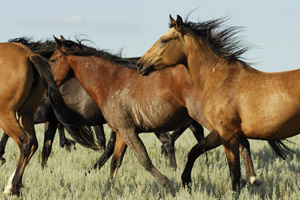
Please click on and sign the following to ask your Congressperson to support proposed legislation to end horse slaughter in the United States once and for all:
Stop Horse Slaughter Nationwide
Background | From Best Friends Animal Society
A recent agriculture spending bill, passed by Congress and signed by the President, renewed funding to onsite inspectors, which effectively re-opens horse slaughterhouses in the United States. (They had been closed since 2006.)
But you have the power to help save hundreds of thousands of horses by asking your Congressperson to support the American Horse Slaughter Prevention Act (H.R. 2966/S. 1176). The legislation will outlaw horse slaughter on US soil, and also prevent horses from being shipped across American borders for human consumption. Please make your voice heard by sending a letter to your members of Congress.
Message text: modify if you want
I am writing to ask you to support the American Horse Slaughter Prevention Act. This piece of legislation will not only shut down horse slaughterhouses on American soil; it will also prevent horses from traveling across American borders to meet the very same fate in Mexico or Canada.
Horses have played an important role in American history, and occupy a place in our national consciousness akin to that of the bald eagle, our national emblem. Like the eagle, the horse is a symbol of freedom, strength, grace, and beauty.
These horses deserve more than to be slaughtered for consumption, and that’s why I hope you’ll support the American Horse Slaughter Prevention Act. Thank you for standing up for kindness to animals, and thank you for all of your hard work.
Heroic Dog Rescues Kittens Left For Dead On Roadside
Vodpod videos no longer available.
From Huffington Post
In a heroic story beyond reason, a yellow lab named Reagan made a discovery on an Iowa roadside that saved two precious lives.
Two kittens had been sealed into a bag of Meow Mix, left on a roadside and run over by traffic on a rural Iowa highway about three months ago, WHOTV.com reports.
It was Reagan the dog who dragged the bag home and whined until his owner opened it. Reagan’s owner discovered two kittens barely hanging onto life, while the rest of the litter hadn’t survived, prompting a call to the Raccoon Valley Animal Sanctuary.
“There was a litter of four or five of them and you couldn’t tell if there were two or three [in the bag]…they had been run over by a vehicle. It was not a pretty sight,” Linda Blakely of the animal shelter told WHOTV.com.
The Raccoon Valley Animal Sanctuary is now housing the two kittens — Skipper and Tipper — who weren’t originally expected to live through the ordeal. The two were bottled-fed every two hours and are now back to their normal lively selves, the news outlet reports.
Thanks to Reagan, both kittens are now up for adoption through the Raccoon Valley Animal Sanctuary.
Read more…
Imprisoned and Poisoned at SNBL: A Whistleblower Case

Related, please click on and sign:
Ask Airlines to Stop Shipping Monkeys to Be Tortured
From PETA
A distraught whistleblower from Shin Nippon Biomedical Laboratories (SNBL), a notorious Everett, Washington-based animal testing conglomerate, contacted PETA to reveal shocking allegations of mistreatment of animals used in painful and lethal experiments. The whistleblower weighed her concerns for her job and fear of retaliation against the suffering and deaths of animals that she witnessed every day at SNBL and repeatedly appealed to SNBL managers and supervisors to improve conditions for animals in the company’s laboratories. After those pleas were ignored, she felt compelled to contact PETA.
SNBL torments tens of thousands of primates, dogs, rabbits, and other animals every year to test products for other companies. It force-feeds animals experimental chemicals to intentionally sicken and kill them and infects them with debilitating diseases.
Vodpod videos no longer available.
SNBL is the third-largest importer of primates in the U.S., purchasing nearly 3,000 monkeys every year from China, Cambodia, Israel, and Indonesia—some snatched from their homes and families in the wild—for use in experiments.
According to the whistleblower, in one experiment at SNBL, monkeys were hooked to their cages with a metal tether through which ice-cold saline solution and test compounds were continuously dripped into their veins. The monkeys were kept like this for many months and reportedly were so cold that they shivered and their teeth chattered non-stop. Monkeys had blood drawn from their arms many times a day, resulting in swelling, redness, and bruising of their limbs. These wounds were considered “routine” and were never treated. After the first few blood draws, the monkeys’ veins were damaged, and workers would poke and dig around in the limb to find others. The monkeys winced, screamed, trembled, and shook, and tried to defend themselves. The whistleblower said, “Eventually, many of the monkeys stop fighting and reacting … it is like the life is gone from them.”
While working at SNBL, the whistleblower observed workers handling the monkeys so violently that the animals suffered bloodied noses, broken fingers and toes, and bruises to their bodies. Their tails were bent or deformed because workers slammed cage doors on them. The employees also allegedly banged loudly on the monkeys’ cages to frighten and intimidate them into being quiet. Managers and supervisors apparently knew of this ongoing physical and psychological abuse of monkeys but refused to stop it.
The whistleblower also reported that monkeys were tied for many hours in restraint chairs with their arms and legs kept entirely immobile as drugs were injected intravenously over the course of a day. The whistleblower said, “The monkeys fight continuously for hours to loosen the ropes … it is just too much for them.” Some monkeys collapsed in the restraint chairs and never recovered.
A USDA report from 2011 documented that 78 percent of the monkeys at SNBL are caged alone—in violation of federal law—unable to touch or interact in any way with other monkeys. This is so distressing to monkeys that they develop stress-induced abnormal behaviors such as self-mutilation, incessant rocking, and hair-pulling.
Like the whistleblower, federal inspectors have also found cruelty and neglect inside SNBL’s laboratories. U.S. Department of Agriculture inspection and investigation reports reveal hundreds of violations of the federal Animal Welfare Act. The company was recently assessed fines of $31,000 and $12,900 for denying veterinary care and adequate pain relief to suffering animals and failing to ensure that experiments were not duplicated. SNBL also made headlines in 2008 after a whistleblower revealed that a monkey had been boiled to death when her cage was put into a high-temperature cage-washing machine while she was still in it. In 2010, the FDA cited SNBL for failing to ensure that employees charged with providing care for the thousands of animals at SNBL were properly trained.
SNBL’s customers—the companies for which it conducts tests on animals—include Pfizer Pharmaceuticals, Eli Lilly, AstraZeneca, Genentech, and Seattle Genetics. Several government agencies—including the Department of Defense, the Centers for Disease Control and Prevention, and the Department of Health and Human Services—have signed contracts with SNBL worth more than $1 million. And, SNBL profits from the importation and sales of monkeys for use in experimentation.
Please take a stand for the monkeys imprisoned at SNBL by calling on airlines to stop transporting primates destined for laboratories.
Read more…
Occupy Rockville – Save our deer!

FROM FACEBOOK EVENT:
Occupy Rockville – Save our deer!
WHERE:
Rockville City Hall
111 Maryland Ave.
Rockville, MD 20850
WHEN:
December 12
6:00 pm
We will try to coordinate rides from nearby metro.
If you are in DC or Baltimore or anywhere else, I hope you will come out on decision day December 12 at 6:00pm, or as soon as you can get to Rockville City Hall to try to save our deer from the hunt. This is it, folks. We also need to emphasize we are the 99% since most citizens are uninformed about this due to the underhandedness of the deer task force who must be fired on 12/12. Please contact me * for details on how you can sign up to speak if you wish in front of Mayor and Council, if you need a ride to the metro, etc. Bull horn and posters will be available. I need a count of who can actually bodily come, not just in spirit, so please contact me. Thanks for all who have donated and helped. Thanks especially to the Cayuga Deer.
Call the city clerk’s office at (240)314-8280 and be sure to put your name on the list to speak in the Citizen’s Forum part of the meeting. Anyone from anywhere can speak but only for 3 minutes. I am hoping someone will sign up and then not speak but instead donate their 3 minutes to our wildlife biologist. Let me know if you are willing to speak or to sign up and donate your minutes please.
Calling all anti-violence, pro-peace, anti-gun, pro First Amendment folks to join the rest of us for the deer at this event!
Also, while I hope you will come, and will share and share and share this event, please do NOT say you will attend UNLESS YOU CAN BE THERE BODILY–we love and need your support, but I need an actual count of the people who can be there physically 🙂 TY
You should come to this event at 6:00pm and stay for the meeting at 7:00pm. We will provide excellent posters, etc.
*Please note that you need a valid Facebook account in order to view the event and to contact the coordinator. If you do not have a Facebook account but are interested in attending, please let me know at stacey@our-compass.org and I will get you in touch with the coordinator, thank you.
although i can be here
only in spirit
this is my voice
and i want you to hear it
what do you think
that hunting achieves
only blood and pain
all the rest, deceives
Karen Lyons Kalmenson
Take the Pledge: Join the Bluefin Boycott

Please click on and sign Take the Pledge: Join the Bluefin Boycott
From Center for Biological Diversity
Overfishing is pushing Atlantic bluefin tuna to the brink of extinction. These magnificent animals are famous for their racecar-like speeds, but their population has been reduced by more than 80 percent since industrial fishing began.
The government ignored the danger to bluefin tuna and gave industry its way when it denied Endangered Species Act protection to the fish in June 2011. International efforts aren’t helping either. And in November 2011 the international body that is supposed to watch out for the bluefin failed to ban tuna farms or reduce catch quotas.
So right now the best way to stop overfishing is to vote with your plate.
Bluefin tuna remains a prized menu item in some restaurants. Send the message that serving bluefin tuna is unacceptable by signing our pledge; then share this with your friends and local restaurants.
I pledge to reduce the demand for bluefin tuna by:
- not eating bluefin.
- boycotting any restaurant that serves it.
Sign the pledge HERE.
Read more…
Please click on and sign the following:
1. Support New Animal Protection Law For India
2. Stop Horsemeat Slaughterhouses From Reopening
3. Tell USDA: No Permit For Pseudo-sanctuary For Solitary Elephant
1. Background | From IDA
The animal protection law in India – the Prevention of Cruelty to Animals Act – was first passed in 1960, and few amendments have been made since. According to our colleagues in India, it is woefully  outdated, with tiny fines, and not at all a deterrent to anyone who is cruel to animals.
A new bill has been drafted by the Animal Welfare Board of India to replace the original Act, but the Government of India is dragging its feet on this issue. And now, unfortunately, a competing, unacceptable version is circulating, drafted without the participation of the Animal Welfare Board.
Please send an e-mail to the Indian officials listed below. Tell them to support and enact the bill drafted by the Animal Welfare Board of India.
Personalize and submit the form below to e-mail your comments to:
- Prime Minister Shri Manmohan Singh
- Mrs. Sonia Gandhi, President of the Indian National Congress, and Chairperson, National Advisory Trust
- Ms. Jayanthi Natarajan, Minister of Environment & Forests
2. Background | From Force Change
Target: United States Secretary of Agriculture Tom Vilsack
Goal: Prevent equine slaughterhouses from reopening.
Horse meat has never been technically outlawed from the United States (aside from a few individual states) but a ban on funding horsemeat inspections of slaughterhouses effectively eliminated the product from U.S. markets. Now after five years Congress is electing to lift that ban–which may have slaughterhouses up and running in as short as a month’s time.
Prior to this the USDA was forced to find its own money for inspections. Because of this lack of funding they simply elected to forgo inspections. Without any inspections of the meat it could not be sold, effectively eliminating the industry without the outcry of an outright ban.
 Advocates have given the excuse that neglect is on the rise over the five year period that the ban has been in place. This excuse is faulty and misleading. The economic downturn is the chief reason for rising animal neglect. Horse owners that can’t afford their mortgages, or sometimes even to feed their families are put in a cruel position where animals end up suffering. This does not make that neglect acceptable, but it does explain the growth of the issue. Slaughterhouse inspection bans are not to blame, and neglect should not be trumpeted as a reason to bring them back.
When the last U.S. slaughterhouse that butchered horses closed in 2007 it should have marked the end of this debate entirely. Instead now an estimated 200,000 horses could be slaughtered for human consumption next year despite the fact that there is virtually no U.S. demand for the meat (it will be primarily shipped to portions of Europe and Asia).
Lifting this ban is a hackneyed attempt at boosting the economy during a recession period that has political officials trying anything to boost the economy. That goal is important to be sure, but not at the expense of innocent horses. The original ban needs to remain in place. Horses must be protected from slaughterhouses.
3. Background | From IDA
Despite pleas from Maine citizens, experts from around the world, and actor Lily Tomlin, a veterinarian is moving forward with his plan to bring a lone elephant named Rosie to live in a backyard “sanctuary” that is a anything but a refuge for this elephant. But some hurdles remain that can stop this misguided plan.
 Veterinarian Jim Laurita, a long-time friend to circuses, still has to secure a permit from the U.S. Department of Agriculture (USDA) in order to exhibit Rosie. While he claims to want to help her – she suffers severe arthritis – veterinarians experienced in working with elephants state that the therapies he would provide cannot overcome the ill effects of keeping Rosie confined indoors to a tiny pen for much of the year due to cold weather and snow.
There are solid grounds for the USDA to deny a permit, especially since Dr. Laurita, who worked with elephants for a limited time nearly 30 years ago, lacks the experience and knowledge required to safely handle an elephant, as required by the USDA. This puts handlers, volunteers, and the public at risk, and endangers Rosie’s well-being.
Dr. Laurita spoke with IDA founder Dr. Elliot Katz, who urged him to facilitate Rosie’s transfer to a real elephant sanctuary, where she could live with other Asian elephants, have many acres to roam, and receive the expert care that she needs for healing. Instead, he plans to acquire yet another elephant, though he can’t provide enough space even for one.
Tell the USDA to refrain from granting a permit to Dr. Laurita because of the danger it would create for humans and for Rosie.
Personalize and submit the form HERE to send your message to:
- Dr. Gregory Parham, Administrator, APHIS/USDA
Your tax dollars are paying for the White House fax paper. Send faxes now for Horses.

From The Persian Horse’s Blog
Please take action for the horses.
Fax the following message to President Barack Obama, instructions below:
MESSAGE TO FAX
1. HORSE FLESH CONTAINS BUTE, WHICH IS WELL-KNOWN BY THE FDA TO CAUSE BONE MARROW CANCER IN HUMANS.
2. PRESIDENT OBAMA, DO YOU WANT TOXIC MEAT CONSUMED BY AMERICAN CITIZENS? DO YOU WANT TOXIC MEAT CONSUMED BY CHILDREN IN OTHER COUNTRIES?
3. PLEASE WRITE AN EXECUTIVE ORDER REVERSING YOUR LIFTING THE BAN ON HORSE SLAUGHTER IN THE U.S. FOR HUMAN CONSUMPTION, WHICH YOU RECENTLY SIGNED INTO LAW IN THE FY2012 BUDGET.
The fax number to the White House is 202-456-2461
Click HERE to send free faxes directly from your computer, no fax machine is required
- No credit card is needed
- No registration is needed
- Just the fax number and name is required
- Please confirm via your email
Help to stop China from selling tiger bone wine

FROM TIGER TIME BLOG
BACKGROUND
A Chinese auction of traditional health tonics scheduled for Saturday, December 3, in a Beijing hotel will feature at least 400 bottles of wine made from tiger bone in a blatant disregard of the global trade ban, according to IFAW (International Fund for Animal Welfare). For details visit the TigerTime Blog (http://www.tigertime.info/tiger-blog.php?entry_id=1322834843)
Poached for their body parts for medicinal purposes, wild tigers have all but disappeared from China. Illegal trade in tiger body parts and products, driven by the Chinese demand, continues to threaten the remaining populations of tigers, which have declined from over 100,000 a century ago to as few as 3200 left in the wild.
Help us to stop China from selling the tiger bone wine by sending an email to the Chinese authorities and urge them to take action NOW.
This is what YOU can do to help: Please send an email to the following key Chinese email contacts:
WHOM TO CONTACT
Email block
ziming_wan@163.com
mengxianlin@gmail.com
wsw_sfa@yahoo.com.cn
political@chinese-embassy.org.uk
Individual
Wan Ziming: email address ziming_wan@163.com
Meng Xianlin: email address mengxianlin@gmail.com
Wang Weisheng: email address wsw_sfa@yahoo.com.cn
If you’re in the UK, you can also send a message to the Chinese Embassy:
political@chinese-embassy.org.uk
SUBJECT
Ban the auction illegally selling tiger bone wine
SAMPLE LETTER
To Whom It Concerns,
I am absolutely disgusted that saving the wild tiger from extinction is being threatened by the imminent auction on December 3rd in Beijing of 400 bottles of Tiger Bone Wine. Surely this a flagrant break of Wen Jiabao’s promise in 2010 when he publicly stated that he is committed to saving the wild tiger. I call on you to do everything in your power to stop this auction and to honour the global ban in the trade of tiger parts. I am sure the massive majority of the Chinese People will support my plea.
NAME
CITY, ZIPCODE
COUNTRY
Read more…
New Policy Requires All Pit bulls, American Staffordshire Terriers, Rottweilers, Chow Chows, and Presa Canerios To Be Killed in NC Shelter

14 Weeks by Wenspics | Flickriver
Related: Cumberland County Animal Control wants to limit adoptions of certain dog breeds
BACKGROUND
Breed ban: please protest 72-hr.-kill proposal in Cumberland County Animal Control in Fayetteville, NC. Feel free to use the Sample Letter but please modify heavily as it is particularly long.
There is a breed ban on ADOPTION of said dogs, and it is set to be discussed on Monday the 5th of December for all Pit bulls, American Staffordshire Terriers, Rottweilers, Chow Chows, and Presa Canerios.
Cumberland County’s reason for this is they do not want to be held liable for these breeds and the possible problems with them after adoption from the shelter. A simple waiver should solve this.
We need to let them know that this is not the answer.
These dogs will be held for the mandatory 72 hrs and then will be killed, THEY WILL NOT BE GIVEN A CHANCE TO BE ADOPTED.
If the dog is an owner turn-in, he will be killed the second he walks into the back.
Again, this is set to be DISCUSSED on December 5 and will not go into effect unless passed by all committees.
WHOM TO CONTACT
Email Block
jcouncil@co.cumberland.nc.us
cevans@co.cumberland.nc.us
jkeefe@co.cumberland.nc.us
bking@co.cumberland.nc.us
emelvin@co.cumberland.nc.us
mayor@ci.fay.nc.us
jlauby@co.cumberland.nc.us
kedge@co.cumberland.nc.us
wmfaircloth@co.cumberland.nc.us
Individual
Dr. Jeannette M. Council
PO Box 1829 Fayetteville, NC 28302
Office: 910-678-7771
Home: 910-488-0691
jcouncil@co.cumberland.nc.us
District 1 Term Expiration: December 2014
Charles Evans
PO Box 1829 Fayetteville, NC 28302
Office: 910-678-7771
Home: 910-978-6643
cevans@co.cumberland.nc.us
District: At-Large Term Expiration: December 2014
Jimmy Keefe
PO Box 1829 Fayetteville, NC 28302
Office: 910-678-7771
Work: 910-323-1791
jkeefe@co.cumberland.nc.us
District 2 Term Expiration: December 2012
Billy R. King
PO Box 1829 Fayetteville, NC 28302
Office: 910-678-7771
Work: 910-822-6676
bking@co.cumberland.nc.us
District 1 Term Expiration: December 1, 2014
Edward Melvin
PO Box 1829 Fayetteville, NC 28302
Office: 910-678-7771
Cell: 910-391-4028
emelvin@co.cumberland.nc.us
District: At-Large Term Expiration: December 2014
Mayor Anthony G. Chavonne
433 Hay Street Fayetteville, NC 28301
910-433-1992, 910-433-3401
Fax 433-1948
mayor@ci.fay.nc.us
Dr. John Lauby
Director of Animal Services
Cumberland County Animal Control
4704 Corporation Drive,
Fayetteville, NC 28306
Animal Control Phone: 910-321-6845, 910-321-6844, 910-321-6826, 910-321-6827,
910-321-6945, 910-321-6965 910-321-6852
Fax: 910-223-3357 jlauby@co.cumberland.nc.us
Kenneth S. Edge Chairman
PO Box 1829 Fayetteville, NC 28302
Office: 910-678-7771
Home: 910-425-0918
kedge@co.cumberland.nc.us
District 2 Term Expiration: December 2012
Marshall Faircloth Vice Chairman
PO Box 1829 Fayetteville, NC 28302
Office: 910-678-7771
Work: 910-323-1040
wmfaircloth@co.cumberland.nc.us
District 2 Term Expiration: December 2012
SAMPLE LETTER | PLEASE MODIFY/SHORTEN
To Whom It Concerns,
I am writing today to express my grave concern regarding your breed ban proposal by enacting a 72-hour-kill plan in Cumberland County Animal Control in Fayetteville, NC, to affect all Dobermans, Rottweilers, Chow Chows, German Shepherds, Great Danes, Pitbulls, Mastiffs (all bully breeds), Akitas, and Huskies. This “vicious dog” or “BSL” ordinance illegalizes the ownership of the particular dog breeds named, the reason for which is to prevent any liability for injuries before or after a state in the shelter even though a simple waiver would prove sufficient regarding that concern.
Although the premise of this proposal is inherently biased and potentially unconstitutional, it is important to recognize it is based on what I would define as erroneous information, inaccurate witness accounts, and according to inequitable circumstances. To target particular canine breeds according to hysterical outbursts, impetuous reactions to news accounts, and false testimony is pure conjecture and serves no purpose other than creating conflict and dividing the community. This is neither productive nor beneficial. The inclination to protect the community from any potential canine attacks is both understandable and admirable; however, while our objective is equal our strategies differ.
Please allow me to elaborate. Dog attack accounts are ubiquitous, the media seemingly pandering to the universal desire for exaggerated and biased events. For example “pit bull” seems to be a loaded phrase, no longer merely representing a canine breed but rather responsible for evoking images of horrific, bloody fights, sadistic people, and a grossly prejudiced level of fear. To allow these dogs to be defined by a select few using propaganda and exaggerated and even false claims is unjust, unprincipled, and unethical. Please acknowledge that statistics can be manipulated to support any theory; when one theorizes using data to support such, one inevitably selects biased information. It is imperative that this situation not be approached from your theory that certain breeds are innately dangerous. Indeed, if I had the inclination, I am confident I could establish that miniature pinschers and labradors are the two most aggressive, menacing canine species using distorted accounts and manufactured or embellished “facts” to substantiate my position. Concentrating on the species rather than the problem of negligent owners, dog attacks, or dog bites in general is illogical and unfairly targets particular breeds, compliant dogs, and their responsible caretakers.
I am certain you are well aware of the arguments against breed-specific legislation (BSL): any breed can be potentially dangerous depending on the circumstances; any breed of dog can be trained to act in dangerous manners; any breed of dog can be provoked to fight in defensive situations; liability should be assigned to irresponsible people who fail to leash or train their dogs in appropriate manners; people who illegally support dog-fighting or other similar pursuits will commit crimes regardless of existing breed-specific legislation. BSL is therefore not an accurate or reliable deterrent, victimizing innocent dogs and their caretakers while neglecting to address those culpable: people who intentionally neglect their dogs or those who deliberately train them in aggressive behaviors. Enacting BSL only propagates breed-specific fear and irrational approaches to valid concerns. When communities become immune to legitimate problems by unreasonably focusing on targeted breeds and their owners, the problem only escalates, allowing deviant behaviours to flourish; when people start questioning the absence of enforcement and solution, you will determine that BSL is a fallible approach to controlling or preventing dog attacks.
Although the potential unconstitutionality of BSL is beyond the scope of my knowledge, please allow me this opportunity to share with you a few statements as taken from A community approach to dog bite prevention, American Veterinary Medical Association Task Force on Canine Aggression and Human-Canine Interactions. JAVMA, Vol 218, No. 11, June 1, 2001, and although these statements may not represent the most current data, JAVMA is decidedly unbiased with respect to BSL and can be considered an impartial source :
Animal control legislation has traditionally been considered a constitutionally legitimate exercise of local government power to protect public safety and welfare. Breed-specific ordinances, however, raise constitutional questions concerning dog owners’ fourteenth amendment rights of due process and equal protection. When a specific breed of dog is selected for control, 2 constitutional questions are raised: first, because all types of dogs may inflict injury to people and property, ordinances addressing only 1 breed of dog appear to be underinclusive and, therefore, violate owners’ equal protection rights; and second, because identification of a dog’s breed with the certainty necessary to impose sanctions on the dog’s owner is impossible, such ordinances have been considered unconstitutionally vague and, therefore, to violate due process.
Breed or type bans—Concerns about ‘dangerous’ dogs have caused many local governments to consider supplementing existing animal control laws with ordinances directed toward control of specific breeds or types of dogs. Members of the Task Force believe such ordinances are inappropriate and ineffective. Statistics on fatalities and injuries caused by dogs cannot be responsibly used to document the “dangerousness” of a particular breed, relative to other breeds, for several reasons. First, a dog’s tendency to bite depends on at least 5 interacting factors: heredity, early experience, later socialization and training, health (medical and behavioral), and victim behavior. Second, there is no reliable way to identify the number of dogs of a particular breed in the canine population at any given time (eg, 10 attacks by Doberman Pinschers relative to a total population of 10 dogs implies a different risk than 10 attacks by Labrador Retrievers relative to a population of 1,000 dogs).
Third, statistics may be skewed, because often they do not consider multiple incidents caused by a single animal. Fourth, breed is often identified by individuals who are not familiar with breed characteristics and who commonly identify dogs of mixed ancestry as if they were purebreds. Fifth, the popularity of breeds changes over time, making comparison of breed-specific bite rates unreliable. Breed-specific ordinances imply that there is an objective method of determining the breed of a particular dog, when in fact, there is not at this time. Owners of mixed-breed dogs or dogs that have not been registered with a national kennel club have no way of knowing whether their dog is one of the types identified and whether they are required to comply with a breed-specific ordinance. In addition, law enforcement personnel typically have no scientific means for determining a dog’s breed that can withstand the rigors of legal challenge, nor do they have a foolproof method for deciding whether owners are in compliance or in violation of laws. Such laws assume that all dogs of a certain breed are likely to bite, instead of acknowledging that most dogs are not a problem. These laws often fail to take normal dog behavior into account and may not assign appropriate responsibilities to owners.
It is my hope that prior to initiating any legislation or actions that unfairly targets trained, obedient, and docile canine breeds and their responsible caretakers, you will consider the implications of such acts as well as any potential unfavorable ramifications. Please remember that everyone, with the exception of the truly apathetic and unlawful segment who participate in dangerous canine training and irresponsible ownership, desires safety for their families and communities. This type of proposal requires input and discussion from all participants and interested groups with legal representation as well.
I understand this has been a lengthy message, and I want to extend my appreciation for your consideration and attention.
With due respect,
NAME
ADDRESS
Read more…
Israel Bans Declawing … Take Action to Ask Your Representatives the Same: Sample Letter

FROM COALITION TO PROTECT AND RESCUE PETS
CONTACT: CPRPets@aol.com
This cat is lame as a result of declawing. Declawing is amputation, not a manicure.
SCROLL DOWN TO LEARN MORE.
On Monday, the Knesset (Israel’s parliament) banned declawing nationwide except for rare cases of medical necessity. Penalties are stiff: jail time of up to a year or a fine of 75,000 shekels. This humane action will spare cats untold suffering, including lifelong, chronic pain.
The legislation was backed by a wide coalition of political parties, sponsored by Knesset members Eitan Cabel, Yoel Hasson, Dov Khenin and Nitzan Horowitz.
Vodpod videos no longer available.
THE TRUTH ABOUT DECLAWING
Conventional declawing is actually amputation of the last bone of each toe. It’s the same as having your fingers cut off at the last knuckle. Using laser is not more humane; it’s just more expensive.
Tenectomy (tendonectomy) severs the tendons that extend the toes so the claws can’t retract; they’re useless to the cat. The incidence of bleeding, lameness and infection is similar to that of conventional declawing. And because tenectomy leaves cats unable to maintain their claws, they’ll grow into the paw pads causing infection and extreme pain if a human doesn’t continually trim them. The irony is, trimming claws routinely makes declawing and tenectomy unnecessary in the first place!
Veterinary specialists say declawing is among the most excruciating procedures a cat can undergo. “Watching a cat wake up after declawing is horrible. Some throw themselves against the walls of their cages as if trying to escape the pain; others roll up in a ball, as anguished as if they’d been hit by a car,” says Dr. Jennifer Conrad, DVM, founder, The Paw Project. And cats can suffer the rest of their lives from chronic infection, atrophied paw pads that expose the remaining bone, and chronic muscle and joint pain.
Take Action! Tell Congress: It’s high time the United States followed suit. Find your elected officials and send them a letter.
WHOM TO CONTACT
Find your lawmakers and send them all a letter at the same time HERE
SAMPLE LETTER | COURTESY KINSHIP CIRCLE
Dear Representative and Senators,
Please consider enacting a ban on declawing of cats in your represented constituencies. Declawing is illegal or restricted in over 20 countries, including the United Kingdom and Canada. Cities such as San Francisco, West Hollywood, and Norfolk, Virginia, ban declawing — while Los Angeles, Beverly Hills, Berkeley, Malibu, and Santa Monica are evaluating similar legislation. The Humane Society of the U.S. and ASPCA oppose declawing. The Royal College of Veterinary Surgeons rejects the operation, describing it as “mutilation.”
Overwhelming evidence shows declawing causes severe behavioral problems that often lead guardians to abandon their animals in overcrowded shelters. Undesirable behavior in 33% of declawed cats begins post-procedure, according to a 2001 study in the Journal of the American Veterinary Medicine Association (JAVMA). National shelter surveys reveal that 70-80% of cats surrendered for offensive behavior are declawed.
Cats with intact claws are surrendered for reasons such as “moving” or “new baby,” whereas declawed felines enter shelters with behavioral issues like biting or not using the litter box, claims shelter director William Lombardi of Gloucester County, New Jersey. For the estimated 70% of declawed cats who are euthanized, the surgery is a death sentence.
Moreover, declawing generates suffering and permanent disability. The invasive procedure amputates not only the claw, but also the entire last “knuckle” of a cat’s toes. Veterinary experts recognize laser or scalpel declawing as among the most painful surgeries routinely performed.
Please make your communities more humane towards our companion animals and make progressive efforts to begin a ban on declawing in the United States.
Thank you very much,
NAME
Read more…