HighestWelfare.Humane.Assured.GoodPractices.Vegetarian. Regenerative.Flexitarian.Lies...
What is the difference between No Welfare, High Welfare, and Highest Welfare when they all require animals to die? Only human comfort, NONE protect the actual animals. The most humane, ethical, and honest Webster-defined "welfare" is NOT exploiting animals - not using, not wearing, not eating, not killing - animals. The only meaningful position is vegan, everything else is just how humans euphemize animals' required suffering and violent deaths: no human exploits animals because they honestly believe that NOT exploiting animals is UNethical or INhumane.
God Wants Pope Francis To Be The First Vegan Pope
God Wants Pope Francis To Be The First Vegan Pope
By Arthur Poletti
With God’s guidance, will Pope Francis be motivated, like no other Pope before him, to go against the status quo, taking a firm stand against all odds, criticisms, and adversaries?
The following letter titled *God Wants Pope Francis To Be The First Vegan Pope And Powerful Voice For The Voiceless* was recently mailed from the United States to Pope Francis at five different addresses that The Pope receives mail in Italy.http://www.all-creatures.org/letters/20130406-ap.html
The same letter to Pope Francis with a cover letter was also mailed to many Catholic religious leaders in the United States, including Francis Cardinal George.“IF” The Pope reads the letter that was mailed to him, and more importantly, watches the 3 superb, fascinating, and heart-wrenching videos that are recommended, THEN FOR SURE, *THE ODDS WILL BE HEAVILY IN FAVOR* OF POPE FRANCIS BECOMING THE FIRST VEGAN POPE!!Together, the three amazing videos reviewed below SHOULD CONVINCE His Holiness Pope Francis and most mature, compassionate, rational, open minded religious leaders to become a VEGAN!!Will THE RELIGIOUS LEADER Of An Estimated 1.2 BILLION ROMAN CATHOLICS BECOME A POWERFUL VOICE FOR THE VOICELESS?
Reference: http://www.bbc.co.uk/news/world-21443313
Here are previews of each video that Pope Francis needs to watch!!
(1) EARTHLINGS is now a free feature length documentary about humanity’s absolute dependence on animals (for pets, food, clothing, entertainment, and scientific research) but also illustrates our complete disrespect for these so-called “non-human providers.” The film is narrated by Academy Award nominee and Vegan Joaquin Phoenix (GLADIATOR) and features music by the critically acclaimed platinum artist Moby.Earthlings is by far the most comprehensive documentary ever produced revealing the correlation between nature, animals, and human economic interests. There are many worthy animal rights films available, but none are better than this masterpiece. Earthlings cries to be seen. Highly recommended!Watch Earthlings: http://www.youtube.com/watch?v=uEliPlTqkEk
(2) *Best Speech You Will Ever Hear* by vegan Gary Yourofsky is also, one of the most important speeches anyone will ever hear. A magnificent speech that is delivered with real passion and eloquence, and is very convincing. The free 70 minute youtube video is now also posted with subtitles in many languages in over 30 countries. After 2,388 lectures to more than 60,000 people at 178 schools in 30 states and 5 Israeli cities, there is no doubt that Gary’s presentation is one of the most informative, passionate, and terrifically rewarding speeches ever conducted about ethical veganism!Watch: http://www.all-creatures.org/articles/video-flv-bestvideo.html
(3) VEGAN Father Frank Mann
Father Mann’s bold and emotional explanation of why he became a vegan is sincere, convincing, and inspiring. Father Mann speaks from his heart and his soul, and may have set an example and a precedent for many religious leaders throughout the world to seriously consider and hopefully emulate.
Watch: http://freefromharm.org/videos/educational-inspiring-talks/father-manns-journey-to-embracing-a-vegan-vision-of-Christianity/
Contact
Arthur Poletti
aapolet@aol.com
708-246-4872
708-738-1944
Read more…
Amirim, Israel: The world’s first vegan village
Viewer discretion is advised.
Source haOlam.de
Interview with Dr. Ohn-Bar, one of the inhabitants
Haolam: Dr. Ohn-Bar, thank you very much for agreeing to participate in this interview. You were born a daughter of a vegan mother. You live in the vegan village of Amirim, Israel. Together with your husband, you run a guesthouse in Amirim which attracts eco- tourists from all over the world including Germany. How many inhabitants does your village have? Is it a municipality in itself or a kibbutz?
Dr. Ohn-Bar: Amirim is a vegetarian village, not a kibbutz. There are about 160 families here, around 600 people, including children. Just to let you know – as you can see in our website – I am a therapist, with a PhD in natural health sciences and a masters degree in educational psychology, rehab. counseling , psycho-physiology and biofeedback. I am a mother of five, and a grandmother of four – all of us are vegans.
My grandfather started with vegetarian living at the age 9, in Russia – as he did not want to have a graveyard in his stomach. He immigrated with his family to the United States, where he met my grandmother, and they decided to raise a vegetarian-Zionist family, so my mother was born vegetarian and spoke Hebrew at home. She picked up English only when she played with the kids in Cleveland, Ohio. She met my father at the Juilliard School of Music in New York, and then they made “aliya” – came to Israel, where I was born, the only vegetarian girl in their kibbutz, which was near Jerusalem. My parents had 7 children, and we are all vegetarians. My four granddaughters are fifth generation vegetarian. Thus it began from a humanistic aspect (not wanting to take part in killing animals), my parents added the health aspects (preventing illness through a healthy life style), and my children added the ecological aspects of vegan life (not taking part in the pollution of the meat industry, etc).
Haolam: Tell us a bit about the history of Amirim and its founders. When was it founded and why in this particular place?
Dr. Ohn-Bar: Amirim was founded by a small group of vegetarians who wanted to raise their families in a healthy lifestyle. They looked for a place, and found this mountain, which some new immigrants from North-Africa had just abandoned due to difficulties in settling here. So they started, in spite of the difficult conditions — rocks, no water, winds, but what a beautiful view to Lake Kinneret (the Sea of Galilee), and they pitched their tents, and started growing gardens, and then more people came, and built their homes, and the place grew nicely.
We came in 1976 from Jerusalem, as a young couple with a baby (Ofek, who is now 37, and he is the one who created our website). Please Google Amirim to see more details of the place s history. You can find more information at www.amirim.com
Haolam: Veganism, as I understand it, is a way of life that opposes any use of animal products such as meat, leather, milk, honey or soap. There are a variety of reasons why people go vegan: compassion for animals, health benefits of a plant-based diet, sustainable management of resources such as crops and – specially important in the Middle East, of course: water. Nearly half of the water being used in the US goes to raising animals for food. What was the main reason motivating the settlers who founded Amirim?
Dr. Ohn-Bar: As I wrote before – all the reasons are good. It began with love for animals and caring about their right to live. And then the health reasons began to be in focus, and people who had healed themselves from deadly diseases through a vegetarian diet, looked for a place to raise their children this way, and joined the village, and in later years, with the rising awareness of global warming and pollution from the meat industry, now more and more people all over the world are becoming vegan.
Haolam: Tel Aviv features a number of superb vegan restaurants. Do you think it s fair to say that Israel is a forerunner for animal rights in the Middle East?
Dr. Ohn-Bar: I don t know for sure, but it seems that Israel has more active people in the ecological and environmental movements, trying to keep the earth clean and educating people about sustainable management of natural resources. We still have a long way to go, as far as air and water pollution is concerned, but I think not many people care about these issues in Jordan, Egypt, Syria or Saudia Arabia, etc.
Haolam: A number of Jewish personalities have dedicated their lives to the defense of animal rights. When reading about their motivations a recurring theme seems to be their own experiences or those of their parents during the Holocaust. Among those was short story novelist and Nobel Laureate Isaac Bashevis Singer who in his short story “The Letter Writer” has the protagonist say: “In relation to animals, all people are Nazis; for the animals, it is an eternal Treblinka.” For us Germans this sentence is hard to swallow as it could be misconstrued to equate animals with the Jews when indeed it focuses on the suffering experienced by the animals. However the experience of being treated as subhuman by the Nazis lead some victims of the Shoah to cultivate a sort of “x ray vision” as far as cruelty against animals is concerned. Where others just see a sirloin steak they hear the death cries of animals. Where others do not wish to think about the cruelty carefully concealed in the killing factories where society gets on with its business of “meat production” they have developed a sense of awareness and compassion for those classified as “below human”. Do you believe that some of Amirim’s founders have been motivated in any way by what happened to the Jews in Germany and Europe?
Dr. Ohn-Bar: My kids get upset when anyone uses animals for fur, shoes, bags, etc, and are against any abuse of animals. Without thinking of the Holocaust, they would not kill a fly or even a scorpion. My grandfather taught us how to put a cup over an unwanted insect in the home, putting a piece of paper under the cup, so we can take it outside, without hurting it, because every creature has a right to live. And this is how we raised our family. Whenever we see chickens in their crowded cruel cages, or on a truck, half dead bodies one on top of each other, going to the slaughter house, we say – here is the concentration camp. The association is there, all the time..
By the way, I belong to a theater group “The Secrets of Sound”, which has a main goal: to memorialize the Holocaust. We are a movement theater – no words are used, so there is no need for translation. We performed in Latvia and Romania, in international theater festivals, in “Yad Vashem” and in many memorial services for the Holocaust throughout the country. We perform in front of students and youth groups who go to Poland. People are very touched by our show, not one eye remains dry. We will be happy to perform in Germany if you invite us. Please visit https://sites.google.com/site/secretsofsound/ where you can see some of the audience responses and some video excerpts.
Haolam: Let s talk about Judaism. The Torah has formulated some rules for the protection of animals. On the other hand the Torah also established the idea that humans were created in the image of God whereas – scientifically speaking – other animals were not. In his 2001 book Judaism and Vegetarianism Richard H. Schwartz (emeritus, College of Staten Island) argues that vegetarianism was the diet best fitted to basic Jewish values. A number of publications by Jewish writers is available on Amazon such as Vegetarian Judaism: A guide for Everyone or The Jewish Vegetarian Year Cookbook”. What role has the Jewish religion played as a motivator for the founders of Amirim? If you are religious at all what do you believe the Torah has to say on meat eating?
Dr. Ohn-Bar: Amirim is a non-religious community in general, but there are some religious families here, who of course are also vegetarians. I think that if you kill animals, you are inhuman, no matter what the Torah said. People wrote the Torah, not God, and people have weaknesses and addictions, and they decide about rules which they find suitable for them. In the beginning, according to the Bible’s Adam and Eve in the Garden of Eden, did not eat meat – only fruits and vegetables, seeds, wheat, etc. Only later in the Bible, when human beings became corrupted, they began eating meat. The famous great Rabbi Kook said, that if people would stop killing animals, and live as vegetarians, they wouldn’t kill each other, and perhaps there would be no more wars in the world. He advocated a vegetarian life as a way to achieve peace.
And if you go to the prophet Isaiah (Yishayahu), his vision of the “last days” (acharit hayamim) was, that a wolf would sit peacefully next to a lamb, and a tiger would sit with a lamb, so vegetarian living is something to wish for, even among animals.
Haolam: In western society, vegans and vegetarians are often laughed at and looked down upon by society as “extreme” or “radical”. How has the Israeli public welcomed your village when it was first founded? Have there been developments since then?
Dr. Ohn-Bar: Yes, I guess people always looked at different life styles as “weird”. When i was a little girl the kids in my class would laugh at me for eating lettuce, and made fun of me, as if I was a rabbit, but I just laughed with them, and was always proud to be different, and special, and I have not eaten any meat throughout my entire life (60 years now). I did not care what other people think, and in Amirim, you will find that people believe very strongly that this is the way we should all live, and try to educate others about it, influencing them tol change their life style.
As a therapist I see too many people become victims of their own habits, bad nutrition, smoking, etc. and when they see our ways and learn more – they become vegans and feel better, not only physically but also emotionally and mentally. There are so many proofs that the vegan way is the healthiest way of life, we do not look at it as radical or extreme, as you say, but closer to nature.
Haolam: Amirim is beautifully located high up in the hills of Galilee overlooking the Kineret. For vegans the benefits of spending a holiday in Amirim are obvious: no hassle finding a health food store to get something to eat, no “green salad without the dressing” for lack of vegan options at the restaurant but rather an opportunity to discover vegan cooking the Israeli way and the freedom to choose from the menu without a care in the world. Non- vegans might benefit from spending their summer holidays in Amirim, to try out a new way of life or to make the transition for good. What tourist attractions other than vegan food does Amirim and the area have to offer?
Dr. Ohn-Bar: In addition to the great food, we have health spas, and health treatments, as well as workshops and lectures Also, in the summer we have musical concerts in nature, and guided tours in the natural trails around Amirim, and in the natural forests.. Please look at www.amirim.com to see all the attractions in the area.
Haolam: Do you get a lot of tourists from Germany?
Dr. Ohn-Bar: Yes, many young tourists from Germany come to stay here, and also from other countries. Our website has almost all the languages, and people now are looking for more ecological tourism.
Haolam: What types of accommodation does Amirim have to offer? Are there guesthouses ranging from economic to luxury? Is there a camp site for those who wish to spend the nights in their tent?
Dr. Ohn-Bar: No, there is no camping here, but there are many camping sites in the area around Amirim, in the forests of the Galilee. You can see our guesthouses at our website. There are different kinds of rooms, for couples and for families, to suit any budget.
Haolam: How does one get to Amirim? Is it recommended to hire a car at Tel Aviv airport? Is there a bus connection?
Dr. Ohn-Bar: As you can see on our website, you can rent a car and drive to Amirim, or you can go by train from the airport to Akko and take a bus from there. It is very easy to get here, and we have all the instructions on the first page.
Haolam: What is the best time of the year to travel there in terms of the weather?
Dr. Ohn-Bar: It is beautiful and green all year round. Even in the winter we have many sunny days, but when it is a little foggy or rainy, you can still drive around and see the Galilee, or spend some time in the hot tub, get a massage, sit in one of the restaurants or watch movies (we have a great collection of 2000 DVD s).
Haolam: Dr. Ohn-Bar, thank you so much for responding to our questions.
Ohn-Bar guesthouse: http://www.amirim.com
Video: Meet your Meat http://www.youtube.com/watch?v=UFNFvOyTJd8
The interview has been conducted by Cheerful Coyote
News in RealTime in our Facebook-Group
Click HERE to learn how to go vegan, including tips, recipes, and reasons
Order a FREE vegan kit: http://www.peta.org/living/food/free-vegan-starter-kit/
Take PETA’s Cruelty-Free Shopping Guide along with you next time you head to the store! The handy guide will help you find humane products at a glance. Order a FREE copy HERE
Searching for Cruelty-Free Cosmetics, Personal-Care Products, Vegan Products, or more?
Click HERE to search.
Want to do more than go vegan? Help others to do so! Click below for nominal, or no, fees to vegan literature that you can use to convince others that veganism is the only compassionate route to being an animal friend.
PETA: http://www.petacatalog.com/catalog/Literature-39-1.html
Vegan Outreach: https://veganoutreach.org/order-form/
Have questions? Click HERE
Two vital actions, one for US friends
Wikimedia Commons
1. Please click HERE to sign and send automatic message opposing dangerous King amendment
Background | Source WSPA
I want to make you aware of a very dangerous amendment that was proposed late last week in the House of Representatives that could put the protection of animals in the United States in jeopardy.
The King Amendment, proposed by Iowa state Rep. Steve King, would take away a state’s right to pass laws governing the production or manufacturing of any agricultural product, including food and animals raised for food, that is involved in interstate commerce. This broad definition could have a negative impact on a wide range of animal welfare issues from securing better living conditions for farm animals to the banning of the shark finning trade – issues you’ve supported and helped us work on to improve! And, it could also have a harmful effect on food safety requirements and standards – a major concern for most consumers.
Please contact your local representative and ask them to 1) oppose the King amendment and 2) work with their fellow representatives to remove the amendment from the 2012 House Bill. Visit our Action Alert page and send a letter directly to your representative today.
2. Please click HERE to leave below sample message to protect sharks
Sample Comment
Please support listing ALL species of the scalloped hammerhead under the ESA. Doing so would end directed harvest of scalloped hammerhead sharks in all U.S. fisheries; help reduce the number of sharks caught as bycatch in fisheries targeting other species; provide the additional protection of a critical habitat designation in US waters for scalloped hammerheads; and prohibit the importation, sale, and trade of scalloped hammerhead sharks, their parts and/or products, which would help protect this species in other countries and provide the incentive to improve tools and techniques available to accurately identify shark products.
Background | Source Animal Welfare Institute
The Animal Welfare Institute (AWI) needs your help to win protections for scalloped hammerhead sharks under the Endangered Species Act.
Every year, tens of millions of sharks die a slow, painful, death because of shark finning, with the scalloped hammerhead one of the most overfished due to demand for the shark fin trade. They are also often the victims of bycatch by other fisheries, and are usually not released because of the value of their fins.
On April 5, 2013, the National Marine Fisheries Service (NMFS) proposed to list four Distinct Population Segments (DPS) of scalloped hammerhead sharks (Sphyrna lewini) as “threatened” or “endangered” under the Endangered Species Act (ESA). The listing proposal cites threats from overfishing and inadequate management of foreign fisheries, including illegal, unreported and unregulated (IUU) fishing as contributing to the sharks’ precarious situation.
AWI submitted comments to NMFS in January 2012 recommending that all scalloped hammerhead sharks be listed. While we applaud the agency’s intent to list four DPS, we are again calling for protections for all scalloped hammerhead populations and urge you to do the same.
Please visit the NMFS comment page by the June 4, 2013, deadline and ask it to list all species of scalloped hammerhead sharks.
Read more…
Amnesty International opposes Ag-gag laws

Wikimedia Commons
Source Amnesty International
By Vienna Colucci
My life’s work has always been human rights, but I’m also a strong supporter of animal protection. So I was especially heartened by our recent decision to join 59 other organizations – ranging from the Humane Society to the ACLU to the Sierra Club to the United Farmworkers – to oppose what are known as “ag-gag” bills.
These bills aim to silence and thwart whistle-blowers who would expose animal cruelty, poor working conditions, food or environmental safety issues, and more by, for example, making it a crime for an investigator to get a job on a factory farm, banning taking a photo or video without permission, and requiring mandatory reporting under timelines that are so short as to make it virtually impossible to document patterns of abuse.
What at first might appear to be exclusively an animal abuse issue is, on closer inspection, clearly also a freedom of expression issue, a workers’ rights issue, an environmental issue and a public health issue. And this is why such a diverse coalition has come together to oppose “ag-gag” bills.
Our movements have some key principles in common, perfectly encapsulated in our opposition to the bills. First, cruelty in any form is always abhorrent, always unacceptable, and should always be opposed. Unchecked, it is corrosive, diminishing all of us and putting us all at risk.
Second, abuses thrive in the dark. Time and time again, Amnesty’s research has shown that governments and corporations alike try to keep out of the reach of public and judicial scrutiny what they know can never be justified.
Finally, sunshine – in our case, the proverbial candle – really is the best disinfectant. We have no hope of stopping abuses if we can’t even bring them to light. This is why Amnesty has for more than fifty years been such a staunch defender of the right to freedom of expression, which itself is essential to the protection of other rights.
Learn more about ag-gag bills here and here, and if one of these bills comes up in your state, let your state legislators know that you oppose it.
This entry was posted in Censorship and Free Speech, USA and tagged censorship and free speech, USA by Vienna Colucci. Bookmark the permalink.
Read more…
US Friends, please help circus animals
Wikimedia Commons
Click HERE to help circus animals
Source | Break The Chain by ADI
Welcome to Break The Chain, the campaign to bring an end to circus animal suffering in the USA, led by Animal Defenders International.
Here you will find latest updates from the campaign, reports and briefings on the issues surrounding the use of animals in circuses, as well as educational videos.
Join campaign today, and help stop circus animal suffering.
Find out how you can help | Download resources | Donate to Break The Chain
Background
On 2nd November 2011, ADI and the Performing Animal Welfare Society (PAWS) launched H.R. 3359, the Traveling Exotic Animal Protection Act (TEAPA), the culmination of eighteen months of painstaking drafting and preparation.
Introduced by Congressman Jim Moran (D-VA), Bob Barker (award winning TV host of The Price Is Right) and Jorja Fox (actress, known to 73 million CSI viewers as Sara Sidle) presented the Bill to the media, together with Jan Creamer of ADI, Ed Stewart of PAWS and Dr Mel Richardson, ADI Wildlife Veterinary Consultant.
Congressman Jim Moran described how the Bill would ban the use of exotic and wild animals, “The intent is to restrict the most egregious and inhumane conditions” adding, “How we treat animals is a reflection of our nation’s moral character.”
The Traveling Exotic Animal Protection Act, which would prohibit the use of wild animals in circuses across the U.S., has continued to gain Congressional cosponsors over the past 2 years.
With the new Congress in place, we will be re-introducing the Traveling Exotic Animal Protection Act in 2013. As a result of our efforts during last Congress, we now have a stronger base from which to exert pressure on the new Congress to act on the suffering of circus animals.
History of The Traveling Exotic Animal Protection Act
Writing and launching the Traveling Exotic Animal Protection Act took 18 months of careful planning and preparation on ADI’s part. ADI’s President, Jan Creamer, and Vice President, Tim Phillips, worked closely with Rep. Moran and his staff, and the Office of Legislative Affairs office to draft and finalize the text of the Bill. ADI provided the necessary research and evidence to support the Bill, including relevant reports, photographs and video footage. When the Bill was ready for launch in Congress, ADI coordinated a corresponding media campaign, including a press conference in Washington, DC and media release to outlets nationwide. ADI produced and shouldered the cost of printing detailed briefings for each Member of Congress and their staffs, covering the animal welfare, public health and safety and economic impacts of a restriction on the use of wild animals in traveling circuses, as well as the costs of the materials for the Bill’s launch, including press kits, CDs and DVDs, backdrops, visuals, and video screening.ADI engaged a top lobbying team to steer the bill through its early stages and assist with the gathering of cosponsors. We created the Federal CircusBill.org website to keep Congress informed of our activities, announcing new co-sponsors on a regular basis. We reached out to ADI supporters through the Break the Chain website, asking that they urge their member of Congress to co-sponsor the Bill and peacefully demonstrate outside circuses when they came to town. Our two years of work resulted in several co-sponsors, and development of a strong platform to re-launch TEAPA to the new Congress in 2013.
Take Action
It is vital that we continue to build support so that this Bill can be reintroduced in 2013. Please contact your member of Congress and urge them to support a ban on the use of wild animals in circuses. And, if you can get a meeting, let us know and we’ll arrange for an ADI person to join you.
Pick up the phone, or put pen to paper, or fire off an email today. Keep your message concise and polite but stress that action is needed from Congress – please click here to see sample letters and details of points to make.
Read more…
Eddie Bauer Now Sells Women’s Hunting Garb
Please note that you will receive a negative response from Eddie Bauer, but it is important to make them aware of your protest in any case. OC
BACKGROUND | SOURCE EXPOSING THE BIG GAME
BY JIM ROBERTSON
Longtime wildlife advocate, animal activist and follower of this blog, Louise Kane, shared with me the following…

Eddie Bauer
WHOM TO CONTACT
Please click HERE to send an online comment
SAMPLE COMMENT
Dear Eddie Bauer,
I am greatly dismayed to learn that Eddie Bauer now sells a line of hunting clothing. Please allow me this opportunity to share my disgust and subsequent boycott of Eddie Bauer because of such.
This disregard of your most vulnerable group of beings is unacceptable, and until this barbarism is appropriately addressed including a mandatory ban of hunting clothing, I will boycott Eddie Bauer. It would prove financially detrimental for you to enable the harm done to these animals.
Read more…
Town rethinks plan to euthanize (kill) Canada geese
Wikimedia Commons
Source Long Island Newsday
By Jennifer Barrios
Previous alert HERE
North Hempstead officials are rethinking their plan to call in federal workers to kill Canada geese residing in town parks after the idea raised a hue and cry among wildlife advocates, who plan to protest Thursday in front of town hall.
“Everything’s on hold until we sort out what the best approach to take is,” Town Supervisor Jon Kaiman said Tuesday. “From our perspective, it’s important that we reduce the impact of the geese on our parks.”
The town board voted last month to contract with the U.S. Department of Agriculture to herd, crate and euthanize the resident goose population in town parks, then send them to be processed into food and donated to charity.
Town officials took the action after they said other measures, such as oiling eggs so they don’t hatch and using dogs to scare off geese, proved ineffective. The geese, which are not native to the area and have no natural predators, produce voluminous amounts of droppings, which foul waterways and fields, according to the town.
Last week’s town board meeting attracted 50 residents and wildlife advocates who spoke out against the plan for about an hour.
Edita Birnkrant, New York director of Friends of Animals, said Thursday afternoon’s protest, to be held in conjunction with Malverne-based Long Island Orchestrating for Nature, is designed to “send a very strong message” to town officials.
“What we’re hoping is that the kill option will be completely taken off the table,” Birnkrant said. “We will not rest easy until we know every single goose and their babies will be safe in the Town of North Hempstead.”
Kaiman said he didn’t expect the matter to appear on next month’s town board agenda, but he was open to hearing all options.
“If there’s a way to do it that creates less friction, then so much the better,” he said.
Read more…
Wikimedia Commons
Source treehugger
By Stephen Messenger
Dolphins have long been one of our favorite ocean-going animal counterparts, blurring the line that separates human intelligence and emotion from the wildness of nature. Sadly, though, this attraction has resulted in dolphins around the world being exploited for our entertainment, subjected to a life in captivity.
But now, in a bold move to protect the well-being of dolphins, India has moved to ban dolphin shows — a push that helps elevate their status from creatures of mere curiosity to one that borders more closely to that of personhood.
Late last week, India’s Minstry of the Environment and Forests released a statement banning “any person / persons, organizations, government agencies, private or public enterprises that involves import, capture of cetacean species to establish for commercial entertainment, private or public exhibition and interaction purposes whatsoever.”
In so doing, India became the largest of four countries to ban the practice — which includes Costa Rica, Hungary, and Chile. But the ministry didn’t stop there; their thoughtful reasoning behind the ban seems squarely aimed at the dozens of countries across the globe, like in Europe and the United States, where dolphin shows are big business.
“Whereas cetaceans in general are highly intelligent and sensitive, and various scientists who have researched dolphin behavior have suggested that the unusually high intelligence; as compared to other animals means that dolphin should be seen as ‘non-human persons’ and as such should have their own specific rights and is morally unacceptable to keep them captive for entertainment purpose,” reads the ministry’s statement.
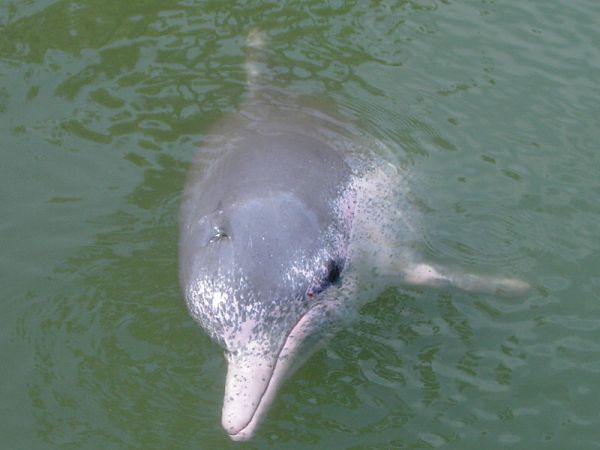
In the U.S., similar efforts on the part of animal rights organizations have failed to gain traction in courts, leaving the door open for both dolphins and orcas to be held in captivity and paraded for our entertainment. The stark realities of this life, held in small pools on the grounds of marine parks, can best be seen from overhead — as with this facility in Florida, a stone’s throw from animals’ vast ocean habitat.
It’s no wonder then, that India’s move to abolish captivity for dolphins is being looked upon, among animal rights supporters, as a big step in the right direction.
“This is a huge win for dolphins,” says Ric O’Barry of the Earth Island Institute’s Dolphin Project. “Not only has the Indian government spoken out against cruelty, they have contributed to an emerging and vital dialogue about the ways we think about dolphins – as thinking, feeling beings rather than pieces of property to make money off of.”
Read more…
Help Ban Coyote and Fox Penning in Virginia
Wikimedia Commons
BACKGROUND | SOURCE AWI
Dear Humanitarian,
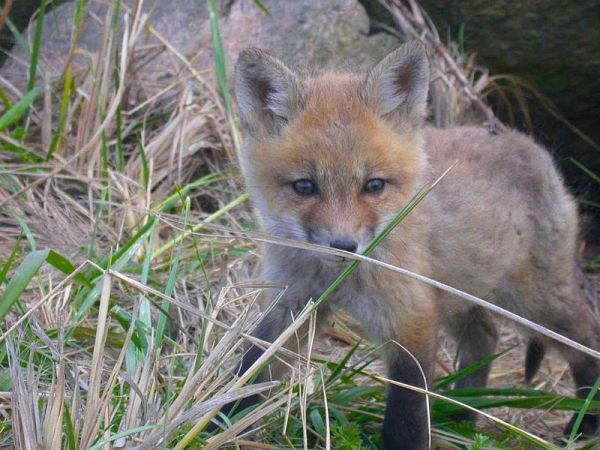
Penning, the practice of confining coyotes and foxes in fenced-off enclosures and allowing packs of dogs to chase and often maul them for “sport” and “entertainment”—with no opportunity for protection or escape—is a cruel and vicious practice that is unfortunately prevalent in Virginia and some other states. Every year, thousands of coyotes and foxes are forced into numerous known penning operations in the state, both legally and illegally.
Aside from the suffering and egregious inhumane treatment of these animals, penning also leads to the spread of diseases associated with the translocation of wild foxes to these enclosures. Tests often reveal evidence of canine distemper and past exposure to a variety of viral diseases, including canine parvovirus, canine coronavirus, canine herpesvirus, and canine parainfluenza virus, as well as over 20 species of parasites.
In 2012, the Virginia state legislature considered bills from the Senate and House of Delegates proposing to ban the cruel practice, but unfortunately the bills died in committee. Now the Virginia Department of Game and Inland Fisheries (VDGIF) is proposing to amend state regulations on penning.
However, the proposed regulations would not ban the practice outright, but merely establish standards that will allow much of the cruelty to continue unabated—and can even be waived at the discretion of the VDGIF director, should they be deemed too “onerous” for a penning facility operator. Although the regulations would thankfully prohibit the use of coyotes in penning facilities, they do not offer the same protection to foxes, which can still be run down and savagely torn apart by the dogs. Moreover, they do not mandate that operators obtain rabies vaccinations for dogs used in penning trials, thereby promoting the spread of disease.
WHAT YOU CAN DO
Please contact VDGIF today and request that it ban penning outright, or—at minimum—put forth regulations that do not allow these minimal requirements to be waived for any operators.
WHOM TO CONTACT
If you live outside of Virginia: Please email your comments to regcomments@dgif.virginia.gov no later than May 31, 2013 by 5 p.m. EDT. Alternately, try dgifweb@dgif.virginia.gov.
If you are a Virginia resident: Please email your comments to regcomments@dgif.virginia.gov or submit them online at www.dgif.virginia.gov no later than May 31, 2013 by 5 p.m. EDT.
Alternatively, you can mail them to:
Virginia Department of Game and Inland Fisheries
Attn. Policy Analyst and Regulatory Coordinator
4016 West Broad Street
Richmond, Virginia 23230
There will also be a public meeting on the topic on Thursday, June 13, at 9:00 a.m. at 4000 West Broad Street in Richmond, Virginia.
SAMPLE LETTER | SOURCE AWI
The Virginia Department of Game and Inland Fisheries (VDGIF) is proposing to amend state regulations on penning.
However, the proposed regulations would not ban the practice outright, but merely establish standards that will allow much of the cruelty to continue unabated—and can even be waived at the discretion of the VDGIF director, should they be deemed too “onerous” for a penning facility operator.
Please ban penning outright, or—at minimum—put forth regulations that do not allow these minimal requirements to be waived for any operators.
Coyote and fox penning is barbaric and inhumane and parallels dog fighting. At least 3,600 fox have died in pens across Virginia in the last three years alone. In many cases, the wild canids are mauled to death by the dogs.
Penning facilities transmit diseases between wild canids and domestic animals, including rabies and parasites. Wild animals sold into these facilities are often transported from out of state without regulation or inspection.
Virginia lacks the resources to enforce the proposed regulations. There are too few conservation police officers to properly oversee that penning facilities follow the regulations.
By allowing for penning operators to waive out of minimal requirements, such as providing food and water to the foxes who live in these pens, the proposed regulation (4VAC15-290-160) effectively leaves penning operations unregulated.
Invasive surgery conducted on conscious greyhounds
Humane Research Australia (HRA)
UPDATE
From correspondence I received relative to this issue. I still believe it is imperative to express that NO animals should be used:
“I appreciate you checking with us before making up your mind. The research mentioned in the Humane Research association’s website was conducted prior to 2004, the University of Newcastle has not used dogs in research for more than 10 years.”
BACKGROUND | SOURCE HRA
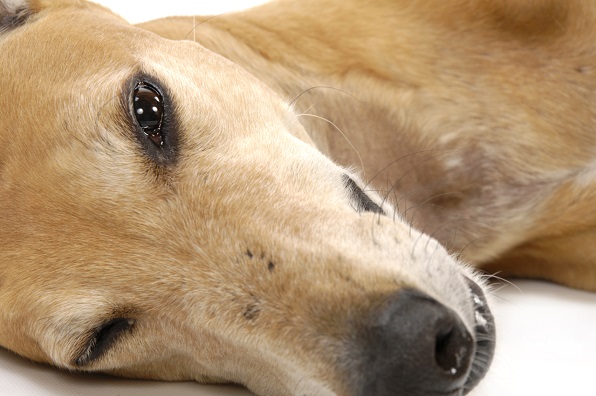
In a recent study(1) conducted by researchers at the University of Newcastle, greyhounds underwent invasive and distressing surgery without general anaesthetic or any form of sedative.
This experiment was conducted in an attempt to further explore the body’s stabilising mechanisms for maintaining blood pressure in relation to bronchial circulation in the lungs (baroreflex).
The first part of the procedure involved the twelve greyhounds having pulsed Doppler blood flow transducers (a medical device for measuring blood flow) surgically implanted on the right bronchial artery.
In order to achieve this, the dogs were placed under general anaesthesia and a surgical incision was made into the chest wall. The exposure of major organs (heart and lung) and veins illustrates the invasive nature of even this initial part of the study. The transducer wires were passed from the chest cavity through the back of the dogs’ bodies.
A second skin incision was then made along the groove between the shoulder and neck, in order to pass catheters into the aorta, so as to measure aortic and central venous pressures. A second catheter was positioned in the right upper chamber of the heart.
The dogs then underwent a 10 day period of recovery and laboratory training. While the authors stated that antibiotics were given during the recovery period, there was no mention of additional pain relief being given at any point after the initial end of operation period. .
After the 10 day post-op period, the dogs underwent another procedure. This time the experiment involved the deliberate decision to abstain from administering any form of general anaesthetic or sedative. This means that the dogs were fully awake and aware of the surgery being conducted on them.
First, “the dogs were placed on their sides and catheters and probes connected to the recording system”. The dogs were (supposedly) “trained to lie unsedated on their side on a padded table with the dog’s attendant at the head”. Under only local anaesthetic, the right femoral artery (thigh) was exposed, and a balloon catheter, with attached balloons, passed into the lower part of the heart. The balloons were then inflated and deflated repeatedly in a sustained manner to s(t)imulate appropriate states of blood pressure / blood flow. The authors stated that “the dogs appeared unaware of the balloon inflation/deflation process during experiments”, despite the lack of sedation or general anaesthesia.
Furthermore, in six of the dogs, the same process was conducted after they were given particular chemicals in order to induce dilation of blood vessels, and therefore slow the heart rate and lower blood pressure.
In one dog, a catheter was passed through the jugular vein in the neck into the heart, and again the induced change in blood pressure was measured after being raised and lowered through the process of inflation and deflation of the aortic balloon catheter. This invasive part of the study was again conducted using only under local anaesthesia.
The authors stated that the absence of anaesthesia was justified as “it was inappropriate to use anaesthetics and sedatives which selectively block or enhance autonomic activity”.
The authors do not state whether the dogs were euthanised after completion of the study. In the interests of cost efficiency they might be used again, but as Australia does not have retirement facilities for these animals the only other option is to kill them.
The experiment was supported by a Project Grant from the National Health and Medical Research Council of Australia (NHMRC).
A number of very similar experiments had been conducted in the past, making the replication of the procedure in this study highly questionable. A previous study, undertaken by the same researchers, had its results invalidated by the fact that the dogs became stressed due to unfamiliar staff and inadequate assessment of animal welfare concerns(3).
The experimental process and care of the dogs was approved by the Animal Care and Ethics Committee of the University of Newcastle.
Read more HERE, including references.
WHOM TO CONTACT
Please write to the National Health and Medical Research Council (NHMRC), asking them to stop funding animal experiments with your taxpayer dollars, and to instead fund research that is relevant to human health:
Prof. Warwick Anderson
Chief Executive Officer
NHMRC
GPO Box 1421
Canberra, ACT 2601
Email: nhmrc@nhmrc.gov.au
Lodge a complaint form at https://www.nhmrc.gov.au/about/contact-us/complaint-form
And please write to the following to express your disappointment at such useless research:
Kim Hughes
Animal Ethics Officer
The University of Newcastle
Email: kim.hughes@newcastle.edu.au
SAMPLE LETTER
To Whom It Concerns,
In a recent study conducted by researchers at the University of Newcastle, greyhounds underwent invasive and distressing surgery without general anaesthetic or any form of sedative (HRA). Allow me this opportunity to express my extreme opposition.
Of all the inherently cruel conditions humans inflict on animals, nothing is more destructive and immoral than vivisection, unparalleled in both its cruel intent and apathetic nature. To subject animals to unnatural medical conditions and practices for the purpose of theorizing potential human treatments is not only scientifically illegitimate but it is also fundamentally inhumane. As a means of fostering social validation, vivisectors consistently promote the idea that animals are responsible for producing lifesaving equipment and treatments and that those who are against vivisection are opposed to medical advancements. That illogic would be laughable if millions of animals were not tortured to support such. Indeed, to grant animals the power to cure and prevent disease while experimenting on those same animals is a contradiction in both practice and thought.
From a pragmatic standpoint, if we could adequately determine the effects of drugs and conditions using animals in general, then human trials would be completely unnecessary. Therefore, if we acknowledge that data from animal testing cannot be extrapolated to humans, as demonstrated by the need for human testing trials prior to a general administration of research, then why are animals used at all? If animals cannot be used to predict a human outcome in general, then how can they be used to predict safety? It’s a ridiculous premise, nothing but pathetic attempts to rationalize a morally deficient industry where you capitalize on the fear of people and exploitation of animals.
Allow me but another moment to correct your disclaimers that animals are treated well, absent suffering and pain. Tens of thousands of animals are deliberately denied pain relief while in obvious states of agony, including the greyhounds maliciously denied pain relief during open surgery; the theory of this practice being that introducing pain relief would compromise testing results. Despite claims that the dogs were attended to similar to humans, it is impossible to predict how an animal will respond to treatments based on human experience other than to admit that pain is apparent. As such, how can you honestly submit that introducing diseases to animals, subjecting them to pain, suffering, and agony, denying them companionship and comfort, and imprisoning them for life as done from a position of caring? Your claims are nothing but disingenuous rhetoric meant to deceive unknowing people: if you honestly cared about the well-being of animals, you would adamantly oppose vivisection.
Animal experimentation is unnecessary, unjustified, and unprincipled, its only function to financially benefit those who exploit animals. Animals have rights to live free from pain and suffering regardless of your objections to acknowledge such, and as long as you profit on the torture of animals, complicit in their abuse and death, I will continue campaigning on their behalf. As such, please discontinue funding ALL animal experiments with my taxpayer dollars, and to instead fund research that is relevant to human health and absent vivisection.
Thank you for taking the time to read this urgent appeal.
Read more…
I am an artist who has been building a book of my “Awareness” Paintings the past 6 years. I feel very deeply about the information that I have compiled regarding the ocean and the voice of the animals in each chapter of the book. I created this book to further share their voice I visually painted to allow more individuals to hear the ocean voice and make well informed choices in their lives. These choices can create a better life for the animals, their community, and the earth.
I am an advocate for improving the educational system to allow us as individuals to evolve with the changes that are occurring around the world. Today is the time for “PROTECTION” of what is still alive on this planet.
“EDUCATE to ACTIVATE” is the objective, so why not donate books to the school system and public libraries. If they are on the shelves then they can be shared immensely!
There are at least 60 art photos shared in the book including the individual paintings that have a strong story to expose in each chapter. The chapters speak about an animal and their background, then how this story was painted as a visual voice, finishing with the positive impacts that have happened the past 6 years that have impacted this species life.
This book not only educates with awareness of what is happening in the ocean and its inhabitants, but it also INSPIRES people that change does occur with perseverance when you can look back over a set amount of time.
Sharing this campaign via the Facebook, Twitter, Email links helps this campaign get noticed on Indiegogo and can push it further into the eye of more compassionate and inspire more individuals!
Schools are teaching the children so let’s help give them more tools, the world depends on them to “PROTECT”. I want this book to be in every school around the world!
From the Book:
To paint the stories of the ocean is to research these very issues, and in turn, be affected by them. Bob began questioning his diet of fish, chicken, eggs and milk. He felt hypocritical – on one hand, painting the stories of suffering animals and then, without introspection, eating them.
Since 2008, after completing his second awareness painting on the killings of whales, he chose to become vegetarian. And, about six months later, he became a vegan, learning how to remove all animal products, clothing, and entertainment from his life.
“My art brought me to a vegan lifestyle,” Bob acknowledges, giving due credit to his artwork for developing a more respectful relationship with all living things. “On a daily basis I learned more about the darkness, and what it took to bring in light via one’s actions,” Bob continues.
And in these moments, he came to view activists as informed individuals fighting for positive change; in turn, helping others to make informed decisions and break away from the chains of ignorance.
Changes came quickly as Bob started to dedicate his time to direct and positive action. In the summer of 2008 he became Director of International Campaigns at the Animal Rights Kollective (ARK II). Although he didn’t feel qualified, ARK II Directors believed in his dedication and supported him in ways he didn’t even think possible. For over 25 years, ARK II had been in Toronto and alongside his fellow activists, Bob began to lead marches, engage in public speaking, organize fundraisers and act as a media spokesperson.
During the same year, Bob met the founder of Sea Shepherd Conservation Society at TIFF – Toronto International Film Festival.
In 2009, destiny and willpower walked hand-in-hand, with Bob attending one of Rob Stewart’s fundraisers. Rob was the director of Sharkwater – the movie that changed Bob’s life.
Towards the end of the year, Bob helped organize a large fundraiser for Sea Shepherd, meeting Paul Watson for the second time.
By 2010 he left ARK II and became an independent activist for a few months. Shortly after, he was asked to be a Board Member for Oceanic Defense from California. Although short-lived, Bob moved on to found his own organization – “Ocean Activists United – International Grassroots Action” (OAU). His mandate: That every action is global action and must be given proper focus in order that positive change be made …
ENDORSEMENTS
“My sister and I are big Sea Shepherd supporters, and Bob Timmons has created a great reflection of SSCS in this book with their campaigns that contain interesting and factual, detailed, information, with his incredible hands-on research of positive actions for the ocean. My sis and I give our “green tea party” thumbs up for this book!”
~Shane and Sia Barbi, The Barbi Twins
“The effects of climate change, deforestation, species extinction and deoxygenation of the world’s ocean, to name a few 21st century threats, are not insular. What affects one species inevitably alters the path of another. We are all connected in this biosphere and all live on one planet. With marine animals assaulted, as they have never been before, with an end result – mass species decimation – the time is NOW to wake up and acknowledge that our fate is inexorably linked to those creatures that lack a voice on the world’s stage. Bob Timmons has recreated these threats in the form of visual art, a language understood via the world, and in a way that communicates this harm humans have done. With raw and often emotional text, this is a must-read for anyone who is passionate about survival, not just of the fittest, but also of the web of life, as a whole.”
~Cara Sands, Friends of the Dolphins
FROM THE AGE OF PROTECTION CHAPTER 3

Ocean Artist Bob Timmons
A seal pup at the minimum age requirement to be slaughtered, according to Canadian Law, is three weeks old. These babies, alone and defenseless while awaiting the return of their mothers from the deep depths of the icy-filled ocean, suddenly experience a loud bang. The pup feels a blasting hot piercing in the side and starts to move and cry for her mother. She struggles to escape the excruciating pain that has attacked her side when another loud bang occurs, and the baby seal pup feels a very hot poker-like feeling that practically immobilizes her. A fisherman has shot her from his ship. The pup still tries to escape to the water where she has last seen her mother disappear into a hole when she next hears the unfamiliar sound of footsteps crunching the icy snow… getting louder, closer, and louder still. The pup is terrified, crying loudly, screeching with pain and desperately wanting her mother to protect her from this unknown disturbance in the infancy of her new life. The footsteps get louder and are practically upon her as an object is pounded on her head and her body starts to shake and convulse, all the while the moans of pain and cries for her mother are heard throughout the once-quiet and no longer safe atmosphere of her home.
Then the object is pounded through her face; her intense fear is only matched by her agonizing pain: she has been hooked through her tender skin and is being dragged by the face toward the fisherman’s ship. The fisherman, who is hurrying to slaughter as many seal pups as time allows, decides to quickly finish his repertoire of death: the seal, still moaning and shaking, desperately crying out for her mother, terrified and dying, feels more slices and cuts into her body as she lays in shock, conscious, while her skin is torn off in sheets. The fisherman finishes his work and leaves the seal pup’s body on the ice as he quickly returns to his ship and leaves. The pup, excruciating pain and coursing spasms wracking her still conscious body, slowly dies, her flesh bare steaming with heat while exposed to the harsh cold of the eastern Canadian weather…
OBJECTIVE
The objective of this campaign is to get this book into schools and libraries for FREE! I will donate a paperback book, while quantities last, to schools of all levels and public libraries globally. The more books we can make, the better the outreach will be for this campaign.
On completion of this campaign we hope to have enough funds raised to buy soft paper back books. From there we will take:
50% will be distributed to schools/libraries around the world
The remaining 50% of the books will be sold having 25% of the profits going to a charity like “Sea Shepherd”, “The Dolphin Project”, “Refuge RR for Horses”, on a quarterly basis.
Below are the quotes I have received from a local Toronto Book Binding Business:
$1365 for 50 copies,
$2388 for 100 copies,
$3408 for 150 copies
ETC ETC ETC ETC
plus applicable taxes
I set my goal for $4000 due to this fundraising platform and will take 9% if I do not reach my goal and paypal and bank fees will take an additional 3% from the goal. Their will be taxes on the book, too, when I put in the order. So let’s make this happen for the children to have the knowledge for change “Educate to Activate”!
The more money raised means more books and more information shared in the schools and libraries. Leaving even more money to go to charities as well from the remaining 75% of paper back books.
PERKS
Ways to support this campaign are to first choose one of the perks!
$25 – First perk is a “PRE-ORDER” of the EBook that is being launched on WORLD OCEAN DAY – JUNE 8th, 2013!
$50 – Second perk is for the Ebook ONE WEEK EARLY before its RELEASE!
$100 – Third Perk is for anyone that feels this is a great opportunity to get Ocean Awareness into the schools and libraries and will receive an EARLY EBOOK Copy along with Six 8.5″x11″ of all of the Chapters showcased Art Pieces!
$150 – Adding a personal gift of a signed paperback book of the project with an early release of the Ebook. The paperback delivery will take some time to be delivered. This includes delivery as well.
–
$250 – Fourth Perk this Warrior will receive a Signed Paperback of the book and an Early Release of the Ebook ONE WEEK Before the OFFICIAL BOOK LAUNCH on WORLD OCEAN DAY – June 8th PLUS an EARTH WARRIOR Signed Certificate PLUS an 8.5″x11″ print of EACH Art Piece of the 6 Chapters making that 6 signed prints in Total.
Last but Not LEAST! Anyone can SHARE this campaign by using the above Indiegogo links for “Twitter“, “Facebook“, and “Email” so this campaign can receive the “INDIEGOGO GOGOFACTOR!!”
Read more…
Wikimedia Commons
1. Please click HERE to help protect wild horses and burros
2. Please click HERE to speak out about maltreatment at UCSF
3. Please click HERE to urge USDA to pull license of cruel roadside zoo
4. Please click HERE to help stop bullfighting
5. Please click HERE to end elephant tourism in Thailand
6. Please sign HERE to make donkey roping illegal
1. Background | IDA
The Senate recently confirmed Sally Jewell as the next Secretary of the Interior. This could be a positive change from her predecessor, Ken Salazar, who failed to deliver on his promise to reform the federal wild horse and burro program. Salazar, a rancher, defended other ranchers to the detriment of wild horses and burros.
During Salazar’s tenure, the Bureau of Land Management removed more than 35,000 wild horses from public lands. Jewell is known as an outdoor enthusiast and conservationist and IDA is hopeful that her appointment will be good news for wild horses and burros, but she needs to hear how important this issue is to you.
Jewell has already pledged to “pursue effective and ecologically sustainable policies” for management of America’s wild horses and burros. Please take a moment to urge her to keep that promise!
2. Background | IDA
The University of California at San Francisco (UCSF) has a long-standing and shameful record of animal neglect and mistreatment at its animal labs. Despite the $92,500 they were fined in 2005 by the U.S. Dept. of Agriculture to settle violations of the Animal Welfare Act, more than 100 additional violations of federal animal welfare laws and guidelines have recently been exposed.
These involved the agonizing fate of a female monkey who, apart from her multiple invasive brain surgeries in a Parkinson’s study, suffered further extreme distress due to painful complications from a piece of plastic acrylic left in her head for two years. Another monkey was subjected to multiple invasive brain surgeries and was deliberately deprived of food so that he would perform tasks while locked in a restraint chair. He lost 25 percent of his body weight. In another horrific incident, experimenters placed live newborn mice inside a freezer meant for dead animals.
UCSF’s animal abuse must not go ignored and they must be held accountable.
3. Background | PETA
Following a lawsuit brought by two local citizens—with the support of PETA and the Animal Legal Defense Fund—Jambbas Ranch, a squalid roadside zoo in North Carolina, has been found to be in violation of state cruelty-to-animals laws. The court found that Jambbas’ treatment of Ben, a bear Jambbas kept confined to a tiny, barren pen made of concrete and chain-link fencing, caused him to suffer in violation of North Carolina law. The court also noted that Jambbas even failed to meet Ben’s most basic veterinary, dietary, and environmental needs.
Fortunately, Ben has been given a chance at a new life at the Performing Animal Welfare Society sanctuary in California, where he is thriving in a vast natural habitat—one that is measured in acres, not feet and inches. He can now splash in his very own pool, rub his back on trees, and sleep soundly in a large straw nest or under oak trees.
But hundreds of animals are still languishing at Jambbas. In fact, inspectors routinely find animals in dire need of veterinary care at Jambbas—and sometimes even dead animals. And despite the cruel conditions that caused Ben to suffer in violation of state law, the U.S. Department of Agriculture (USDA) continues to renew Jambbas’ Animal Welfare Act (AWA) license year after year. Enough is enough. The USDA must take action. Now that Jambbas has been found to be in violation of cruelty laws, the USDA has no excuse. The AWA gives the agency clear authority to revoke a license when there are violations of cruelty laws, and it must act on that authority immediately.
Please take a moment now to join PETA in politely urging USDA officials to revoke Jambbas’ license immediately, before even more animals suffer.
4. Background | PETA
Bullfighting is shameful, violent animal abuse dressed up as “sport.” Yet, despite growing condemnation of this cruel tradition, the Spanish government is currently considering whether or not to recommend that bullfighting be protected as a national cultural pastime.
Such a move would be a huge step backward and could provide the legal basis for overruling existing bans on bullfighting in Catalonia and the Canary Islands. Bullfighting has been on the decline for years, with attendance decreasing and bullrings closing across the country as more and more people put animal welfare first. Seventy-six percent of Spaniards say that they have no interest in this barbaric ritual, and the industry survives only because of huge subsidies.
Spain is a country rich in history, architecture, cinema, art, and culture. We need to let authorities know that protecting bullfighting will damage Spain’s reputation and can only have a negative impact on the tourism industry, which is so important to the country’s economy.
Please write to Spain’s ambassador to the U.S. and ask him to oppose protection for bullfighting. The government’s decision is imminent, so take action today!
5. Background | Force Change
Target: Thai Ministry of Natural Resources and Environment
Goal: Protect the endangered Asian elephant by prohibiting the illegal smuggling of Burmese elephants into Thailand.
A recent film by the Ecologist Film Unit exposing the violent and illegal trade of endangered Asian elephants from Burma to Thailand raises the need to act now to save these animals from a life in brutal captivity and likely death. After viewing the film here please sign the petition below asking the Thai government to enforce the law on illegal elephant smuggling. At least 100 elephants, mostly calves, are taken from Burmese forests and traded illegally to supply Thai elephant tourist camps. The journey for the calves and their families is horrific. For every calf taken, approximately five elephants in its family group are shot. The calves then undergo a ritual known as the phajaan, where the calves are tied up, starved, and beaten until a fear of humans is deeply ingrained in them. It is estimated that only one in three elephants survives this torture. Those that do, are than smuggled into Thailand.
The elephants that reach Thailand are subjected to living in captivity, often having their pictures taken with tourists none the wiser to what they have endured. The Thai tourism industry is doing very well and fueling the demand for elephants. A baby elephant can fetch anywhere from $21,000 to $31,000. When traveling toThailand, it is not advised to boycott the camps, as this would lessen the monies available to care for the elephants, but to report suspicious operations. Action needs to be taken at the government level for true change to occur.
Traditionally, attention has been given to the African elephant sought after for its ivory tusks. However, the Asian elephant population is in critical danger. Already listed as endangered, it is estimated that there are 25,000 to 35,000 left in the wild, far fewer than those in Africa. Burma’s population is second only to India with approximately 5,000 elephants. If trade continues as it is, the population could be decimated within ten years.
By signing this petition you are urging the Thai government to tighten and enforce laws against illegal smuggling of elephants into Thailand.
6. Background | Change
Donkey roping is torture. Not only does it inflict serious damage to donkeys physically, but also causes mental trauma. Physical damage includes rope burns to the legs and neck, crushed tracheae, broken legs, and death. Donkeys often become difficult to handle and extremely fearful of people after being roped. This terrible practice needs to be stopped in Texas. The only way to do that is to show the support of the people to stop it!
Read more…
Backyard Butchering: Loving Animals to Death
Wikimedia Commons
Source Exposing the Big Game
By Jim Robertson
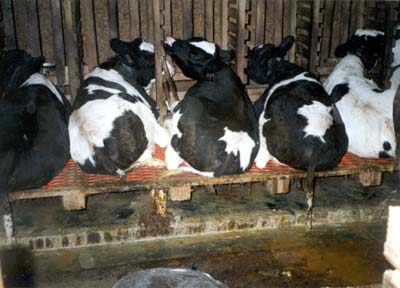
Yesterday I received the following comment to my post, All Meat is the Product of Cruelty and Exploitation… “How can you argue with those whose response is: ‘In the natural world animals kill other animals for food and in a most painful and cruel way and if I choose to raise my animals on my own property allowing them to live in a free and natural manner just as they would live in the wild that only differs in that they have shelter from the elements should they choose to use it and they are not kept in pens or tied but in large open barns and that at some point they will be killed as quickly and humanely as possible to be eaten by my family and the excess sold to others. I love animals but choose to eat them as well. I believe that how I treat them and kill them is better than they would live in the wild and their deaths much less horrible than being ripped apart alive as is the case in the wild’. What can you say to that?”
…to which I replied: First of all, it sounds like someone has been watching too many “nature” programs that revel in prolonged scenes of wildlife predation. Most cases of natural predation happen much faster; in many cases the prey are killed instantly.
In my book, Exposing the Big Game, I wrote about a wolf kill I witnessed in Yellowstone: “Suddenly they tore out after a young mule deer who had risked leaving the cover of the forest for the lure of an open meadow. The inexperienced doe didn’t stand a chance against the incredible, greyhound-like speed of the determined wolves. One quickly caught her by the hind leg, bringing her down, and a split second later the other had her by the throat. In less than a heartbeat, a living, breathing deer was reduced to a lifeless carcass.” Not a pretty sight, but much more the norm than the horrible scenarios depicted for entertainment on cable T.V. shows.
The hypothetical argument you spelled out (above) begins by raising the naturalist fallacy, which I covered in the post, Top Ten Retorts to Hunters’ Fallacies (just substitute hunter for animal farmer/rancher):
# 9) Animals kill other animals, so we can too.
That’s an example of what’s known as the naturalistic fallacy—the notion that any behavior that can be found in nature is morally justifiable. But wolves and other natural predators need to hunt to survive, humans don’t—for them it’s nothing more than a thrill kill. Human beings have moved beyond countless other behaviors such as cannibalism or infanticide, so why can’t some people tear themselves away from hunting?
A quote from author Robert Franklin Leslie adds to this:
“It is not important that a hawk takes a robin, that a bear robs a grouse nest. That is Nature’s own salient way even if we don’t understand it…Wilderness life has gone on that way since the beginning, and the prey has withstood the predation. But when man steps in…the very soul of Nature cringes for having endowed one of her creatures with intelligence disproportionate to responsibility.”
Backyard animal farming is nothing but the revival of Old World animal husbandry, from which modern-day factory farming is an unfortunate upshot. Both the factory farmer and the backyard butcher breed animals for the sole purpose of killing them when the time is ripe. They don’t raise the animals just because they love them and want to give them a good life, and raising them does nothing to eliminate any suffering that might go on in the wild between natural predator and prey (unless a person’s intent is to eliminate all natural relationships between wild animals, and there would be a lot of suffering on the predator’s part as the human strives to eliminate them).
Killing farmed animals “quickly and humanely” is easier said than done. At some point the animal knows that the human they trusted intends to hurt or kill them, as they probably would have seen it happen to one or more of their herd-mates. And the act of ending a healthy animal’s life so you can eat their flesh is cruel no matter how you slice it, especially since people do not have to eat meat to live a long, healthy life. And in fact, a lifetime of meat-eating is unhealthy for the human primate. Also from the Top Ten list mentioned above:
8) Humans are carnivores, look at our canine teeth.
Human teeth are designed primarily for chewing plant-based foods, like our primate cousins do. Humans “fangs” are teensy compared to those of gorillas, who are strict vegetarians and only show them to appear fierce. Also, our intestinal tract is long to allow for the slow digestion of high-fiber foods, while true carnivores have short intestines as needed to process meat and dispose of the resulting toxic wastes quickly.
7) Wild game (or free-range) meat is health food.
All animal flesh is rife with cholesterol throughout, and the protein in animal flesh is acidic, causing bone calcium losses as it is metabolized. According to the American Dietetic Association, a diet high in animal products has been linked to obesity, diabetes, colon and other cancers, osteoporosis, kidney stones, gallstones, diverticular disease, hypertension and coronary artery disease. New studies have found that another culprit in causing heart disease may be a little-studied chemical that is burped out by bacteria in the intestines after people eat meat.
Again, wolves and other predators need to eat meat to survive—modern humans do not. Natural predators don’t hate their prey, but they don’t pretend to love them either.
Forget the 4-H Club—you can’t really claim to “love” an animal you plan to someday kill, butcher and consume.
Backyard Butchering: Loving Animals to Death
Wikimedia Commons
Source Exposing the Big Game
By Jim Robertson
Yesterday I received the following comment to my post, All Meat is the Product of Cruelty and Exploitation… “How can you argue with those whose response is: ‘In the natural world animals kill other animals for food and in a most painful and cruel way and if I choose to raise my animals on my own property allowing them to live in a free and natural manner just as they would live in the wild that only differs in that they have shelter from the elements should they choose to use it and they are not kept in pens or tied but in large open barns and that at some point they will be killed as quickly and humanely as possible to be eaten by my family and the excess sold to others. I love animals but choose to eat them as well. I believe that how I treat them and kill them is better than they would live in the wild and their deaths much less horrible than being ripped apart alive as is the case in the wild’. What can you say to that?”
…to which I replied: First of all, it sounds like someone has been watching too many “nature” programs that revel in prolonged scenes of wildlife predation. Most cases of natural predation happen much faster; in many cases the prey are killed instantly.
In my book, Exposing the Big Game, I wrote about a wolf kill I witnessed in Yellowstone: “Suddenly they tore out after a young mule deer who had risked leaving the cover of the forest for the lure of an open meadow. The inexperienced doe didn’t stand a chance against the incredible, greyhound-like speed of the determined wolves. One quickly caught her by the hind leg, bringing her down, and a split second later the other had her by the throat. In less than a heartbeat, a living, breathing deer was reduced to a lifeless carcass.” Not a pretty sight, but much more the norm than the horrible scenarios depicted for entertainment on cable T.V. shows.
The hypothetical argument you spelled out (above) begins by raising the naturalist fallacy, which I covered in the post, Top Ten Retorts to Hunters’ Fallacies (just substitute hunter for animal farmer/rancher):
# 9) Animals kill other animals, so we can too.
That’s an example of what’s known as the naturalistic fallacy—the notion that any behavior that can be found in nature is morally justifiable. But wolves and other natural predators need to hunt to survive, humans don’t—for them it’s nothing more than a thrill kill. Human beings have moved beyond countless other behaviors such as cannibalism or infanticide, so why can’t some people tear themselves away from hunting?
A quote from author Robert Franklin Leslie adds to this:
“It is not important that a hawk takes a robin, that a bear robs a grouse nest. That is Nature’s own salient way even if we don’t understand it…Wilderness life has gone on that way since the beginning, and the prey has withstood the predation. But when man steps in…the very soul of Nature cringes for having endowed one of her creatures with intelligence disproportionate to responsibility.”
Backyard animal farming is nothing but the revival of Old World animal husbandry, from which modern-day factory farming is an unfortunate upshot. Both the factory farmer and the backyard butcher breed animals for the sole purpose of killing them when the time is ripe. They don’t raise the animals just because they love them and want to give them a good life, and raising them does nothing to eliminate any suffering that might go on in the wild between natural predator and prey (unless a person’s intent is to eliminate all natural relationships between wild animals, and there would be a lot of suffering on the predator’s part as the human strives to eliminate them).
Killing farmed animals “quickly and humanely” is easier said than done. At some point the animal knows that the human they trusted intends to hurt or kill them, as they probably would have seen it happen to one or more of their herd-mates. And the act of ending a healthy animal’s life so you can eat their flesh is cruel no matter how you slice it, especially since people do not have to eat meat to live a long, healthy life. And in fact, a lifetime of meat-eating is unhealthy for the human primate. Also from the Top Ten list mentioned above:
8) Humans are carnivores, look at our canine teeth.
Human teeth are designed primarily for chewing plant-based foods, like our primate cousins do. Humans “fangs” are teensy compared to those of gorillas, who are strict vegetarians and only show them to appear fierce. Also, our intestinal tract is long to allow for the slow digestion of high-fiber foods, while true carnivores have short intestines as needed to process meat and dispose of the resulting toxic wastes quickly.
7) Wild game (or free-range) meat is health food.
All animal flesh is rife with cholesterol throughout, and the protein in animal flesh is acidic, causing bone calcium losses as it is metabolized. According to the American Dietetic Association, a diet high in animal products has been linked to obesity, diabetes, colon and other cancers, osteoporosis, kidney stones, gallstones, diverticular disease, hypertension and coronary artery disease. New studies have found that another culprit in causing heart disease may be a little-studied chemical that is burped out by bacteria in the intestines after people eat meat.
Again, wolves and other predators need to eat meat to survive—modern humans do not. Natural predators don’t hate their prey, but they don’t pretend to love them either.
Forget the 4-H Club—you can’t really claim to “love” an animal you plan to someday kill, butcher and consume.
Horrific
Veganism Is The Future & Green Unity For Nature And Animal Liberation
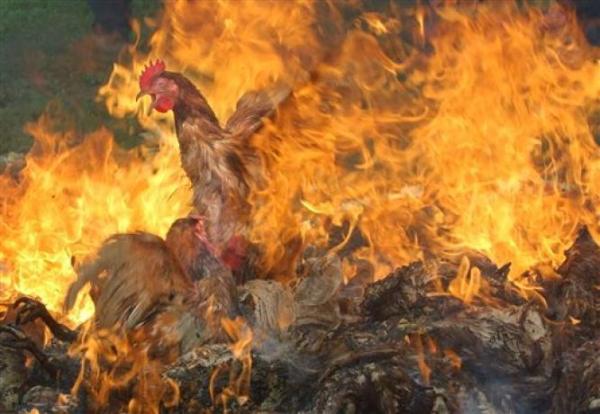
Chickens burned alive in China because of the bird flu ”outburst”… Absolutely outrageous! Please, do something!
These horrors happen because of greedy humans breeding and using these animals for ”profit” and because of those who buy animal products. If everyone ate an animal-products-free diet, and didn’t use animals for any other purpose, none of these horrors would happen. Signing petitions can sometimes make a difference, yes. But if you really want this to stop, you must change your eating habits and your way of living — you must stop using animals for any purpose — and also help us raise awareness. Please, go vegan!










 Our Compass