What is the difference between No Welfare, High Welfare, and Highest Welfare when they all require animals to die? Only human comfort, NONE protect the actual animals. The most humane, ethical, and honest Webster-defined "welfare" is NOT exploiting animals - not using, not wearing, not eating, not killing - animals. The only meaningful position is vegan, everything else is just how humans euphemize animals' required suffering and violent deaths: no human exploits animals because they honestly believe that NOT exploiting animals is UNethical or INhumane.
Want to do more than go vegan? Help others to do so! Click on the below for nominal, or no, fees to vegan literature that you can use to convince others that veganism is the only compassionate route to being an animal friend.
SourceNIH Record From New Vantage Ex-Director Zerhouni Surveys Value of NIH Research By Rich McManus
On the front page…
Former NIH director Dr. Elias Zerhouni gives remarks at June 4 SMRB meeting in Bldg. 1.
Nearly 5 years removed from his NIH directorship, Dr. Elias Zerhouni returned to campus June 4 to offer his views about how to value NIH research economically in an era of flat federal research budgets. His remarks at the end of a day-long meeting on that topic, conducted by the scientific review management board (SMRB), included vintage observations from the veteran of academia (Johns Hopkins), government (he was NIH director from 2002 to 2008) and industry (he is president of global research and development at French pharmaceutical firm Sanofi). For example, his comment that “it’s not very smart to go to the grocery store in an F-16 [fighter jet] when you can go on a bike,” both brought the house down and illustrated the occasional mismatch between drug costs and human benefit; he was especially critical of expensive cancer drugs, stacked one on top of another, that might buy a patient only a few months of time.Continued…
Admitting at the outset that measuring NIH’s value is a very difficult topic, he added, “I am not here for an academic discussion of how medical research should be valued…[that] has been said today, I am sure, by the speakers you invited. I shared, for example, in Congress that the $4 per year invested per person in the United States since the 1970s on cardiovascular research now results in $2.5 trillion of economic value every year. The problem with these kinds of statements is that you can easily make them, but you can’t easily prove them.”
Zerhouni was asked to discuss “Value of Federally Funded Biomedical Research in the Development of Medical Interventions and Treatments.” In a 20-minute address followed by questions, he argued that “the notion of value changes over time” and that narrowly defined metrics tend to be misleading. The most important criteria, he said, is whether dollars are assigned in a way that satisfies societal expectations.
Before giving his remarks, Zerhouni is greeted by NIH principal deputy director Dr. Lawrence Tabak and by NIDCR director Dr. Martha Somerman and (obscured) NIGMS acting director Dr. Judith Greenberg.
Photos: Ernie Branson
“The product of NIH should be knowledge, not products,” he said. “How do we achieve reduction in the burden of disease and reduction in the burden of health care costs? How do we transform knowledge into societal benefit?”
With the engineer’s cast of mind that distinguished his NIH leadership, Zerhouni said, “I have a simple matrix in my mind,” a series of pragmatic, measurable steps for “transforming ideas into knowledge.” He enumerated four steps in translation, T1 through T4.
“T1 is when you are truly on the edge of understanding some process or disease biology,” he explained. The criteria for valuing work at this stage “will be completely different” from how one values T4 research, which involves applying the fruits of basic research to the practice of public health. “This is getting mixed up in the public debate,” he said.
Zerhouni plumbed NIH history for examples of the interdependency of various translational steps in achieving an acknowledged public health success. It was the long-term Framingham Heart Study that picked up cholesterol as an important signal in cardiovascular morbidity and mortality, he recounted. That work led to Drs. Michael Brown and Joseph Goldstein’s Nobel Prize-winning studies that “changed the practice of medicine.
“How many times has NIH science done this?” Zerhouni asked, rhetorically. In stroke, there has been a 70 percent reduction (that’s T3, change in the practice of medicine) in recent decades. But what has been the value of NIH research when only 30 percent of patients with diabetes comply with their medications and 70 percent don’t, Zerhouni wondered? “And only 15 percent of patients with high blood pressure are compliant with their medication.”
He called implementation, or behavioral, research a worthy investment. “Look at a map of the United States,” he said. “Why are there all these pockets of disparity [in health outcomes] when the knowledge is the same everywhere?”
Zerhouni’s favorite example of NIH delivering on its promise to society is the Women’s Health Initiative’s finding, during his directorship, that hormone replacement therapy proved more harmful than helpful to women. “That’s value,” he declared, “and it’s important to quantify that value…This kind of impact is very valuable, and measurable. You can point to lives saved, quality of lives, number of years.”
Zerhouni also greets NIBIB director Dr. Roderic Pettigrew in Wilson Hall prior to his talk.
In any discussion of value, Zerhouni emphasized the need to personalize results. The goal, he said, is outcomes that relate directly to societal expectations. In a country where chronic diseases account for 80 percent of health care costs, he said, “federal investment needs to be tied to the societal needs of the day. Otherwise you risk academic isolation, or living in some theoretical realm…Patients measure, better than anybody, the value of research.”
Zerhouni said his personal view is that NIH should devote 60 percent of its budget to generate new knowledge. “I wouldn’t go below that, no matter what.”
He concluded with three lessons:
“Don’t damage young investigators. Give ’em a chance, and give it early. Don’t kill them with rigidity—4 years of this, then 6 years of that…They end up exhausted at the end of such combat.”
“We have moved away from studying human disease in humans,” he lamented. “We all drank the Kool-Aid on that one, me included.” With the ability to knock in or knock out any gene in a mouse—which “can’t sue us,” Zerhouni quipped—researchers have over-relied on animal data. “The problem is that it hasn’t worked, and it’s time we stopped dancing around the problem…We need to refocus and adapt new methodologies for use in humans to understand disease biology in humans.”
“Budget pressures are going to kill any inkling of innovation.” Zerhouni warned that there are 5 diseases that, if not solved within the next 5 years, will certainly bankrupt some societies.Zerhouni took half a dozen questions from SMRB members assembled in Wilson Hall and made a number of other observations:
Game approaches to compliance fascinate him. “We’ve got to be able to engage the patient beyond a visit every 3 months, coupled with a series of ‘thou shalt nots.’”
The power of social networks, or so-called “influencers,” has been underutilized in public health.
Statins are phenomenally over-prescribed; only 10 percent of the patients who take them realize any benefit. “So 90 percent of what we do with statins is not helpful,” Zerhouni said.
Any consideration of the value of research that does not take the customer into account is doomed, he warned. “You’ve lost the debate if you lose sight of the taxpayers and the patients.”
Want to do more than go vegan? Help others to do so! Click on the below for nominal, or no, fees to vegan literature that you can use to convince others that veganism is the only compassionate route to being an animal friend.
Animal fur may remain fashionable on catwalks, but lord mayors and other senior council figures in England have been happy to eschew haute couture by dropping its use or going faux.
A check in the wardrobes of civic leaders has revealed eight do not have robes with fur, five use clothing with synthethic fur, and other authorities are reviewing their practice.
Peta’s associate director Mimi Bekhechi said: “It’s important that public figures set a positive example, and by saying no to fur, these mayors have made it clear that animals deserve respect.
“Animals raised for fur suffer every day of their lives before they endure a painful and terrifying death.”
The office of the lord mayor of Plymouth, Vivien Pengelly, said she had two sets of robes. “The black and gold robes, which are used for major civic or ceremonial events do not have any fur. The red robes are due to be refurbished and will be embellished with a fake fur band”.
Officials in York said: “We are in possession of a number of older ceremonial robes worn by the sheriff of York and honorary aldermen, which do have some very old fur trim. However, the sheriff’s robe is due to go for refurbishment, and the fur trim will be replaced with a synthetic fur, as is our policy.
“In addition, last year we acquired a new ceremonial cap of maintenance which is worn by our sword bearer … This was a brand new commission and was made with synthetic fur. Any future purchases and refurbishment of old robes and ceremonial wear will continue in this way, as we support animal rights fully.”
In Hull, the lord mayor’s red robe is trimmed only with gold braid, Peta was told, but six older red robes worn rarely by other senior council members were trimmed by fur. “We are unable to replace these at the present time as we have no funds available, but if and when we do, will certainly consider using faux fur,” a council official said.
The survey came after the mayor of Wrexham, David Bithell, neither a “lord” nor in England, abandoned his gown with muskrat after being questioned by a Peta supporter.
Peta said most Britons opposed real fur. “So strong is our moral objection to cruelly killing animals for their skin that parliament passed an act banning fur-farming more than a decade ago. If council leaders wear fur-trimmed robes, it not only goes against British values but also diminishes the meaning of the ban.”
Some designers, such as Stella McCartney, Calvin Klein and Ralph Lauren, do not use fur but the British Fur Trade Association (BFTA) said 400 worldwide did. “Those who include fur, which is over 75% of all major fashion brands, do so because it enhances their business.” Such designers were “more than satisfied” by the welfare standards of the industry.
BFTA’s members trade more than £1bn worth of animal fur a year, including with China, Hong Kong, Russia, and other EU countries, while UK retail fur sales have increased by 30% year on year. Global sales for 2011-2012 totaled US $15.6bn (£10.2bn), according to the International Fur Trade Federation.
What you can do: don’t buy fur and always question faux fur as well.
Fur-Free Retailers, Designers, and Brands
Abercrombie & Fitch
Adolfo Dominguez
aerie (American Eagle Outfitters)
aerie f.i.t. (American Eagle Outfitters)
Aéropostale
Alber Nipon (Jones Apparel Group)
Alloy (Delia’s, Inc.)
Amanda Pearl
AK Anne Klein (Jones Apparel Group)
American Apparel
American Eagle Outfitters
Analog Outerwear (Burton Snowboards)
Ann Taylor
Anne Klein New York (Jones Apparel Group)
Anthropologie
Apple Bottoms by Nelly
Ashley Paige
Ashley Watson
Athleta (The Gap, Inc.)
Axcess (Liz Claiborne, Inc.)
Axis (Perry Ellis International, Inc.)
Axist (Perry Ellis International, Inc.)
Bahar Shahpar
Banana Republic (The Gap, Inc.)
Bandolino (Jones Apparel Group)
Bandolinoblu (Jones Apparel Group)
Baracuta
Bealls
Belstaff
Benetton
Benjamin Cho
Betsey Johnson
Billabong
Black Label (Polo by Ralph Lauren)
Blue Label (Polo by Ralph Lauren)
Bongo (Kenneth Cole)
Boston Proper
Burton Snowboards
C & C California (Perry Ellis International, Inc.)
Caché
Callaway Golf (Perry Ellis International, Inc.)
Calvin Klein
Calvin Klein Collection (Calvin Klein)
Calvin Klein Jeans (Calvin Klein)
Carhartt
Catherines
CCS (Delia’s, Inc.)
Champs Sports (Foot Locker, Inc.)
Chaps (Polo by Ralph Lauren)
Charlotte Ronson
Charlotte Russe
Cherry Berry
Chico’s
ck Calvin Klein (Calvin Klein)
Claiborne by John Bartlett (Liz Claiborne, Inc.)
Club Monaco (Polo by Ralph Lauren)
Coldwater Creek
Coldwater Creek’s Sport Catalog (Coldwater Creek)
Cole Haan (Nike)
Columbia Sportswear Company
Concepts by Claiborne (Liz Claiborne, Inc.)
Converse, Inc. (Nike)
Cri de Coeur
Cubavera
Daffy’s
Dana Buchman (Liz Claiborne, Inc.)
Del Forte Denim
Delia’s
DKNY Active (Liz Claiborne, Inc.)
DKNY Jeans (Liz Claiborne, Inc.)
DKNY Men (Liz Claiborne, Inc.)
Dockers (Levi’s)
Dollhouse
Donna Salyers’ Fabulous-Furs
Diesel (Black Gold, Denim, Diesel Kid, Diesel Lifestyle)
Dress Barn
Duckie Brown
Eastbay (Foot Locker, Inc.)
Easy Spirit (Jones Apparel Group)
Ecoganik
Ed Hardy
edc by esprit (Esprit)
Eddie Bauer
Edun
Eileen Fisher
Element (Billabong)
Ella Moss
Elliot Gant (Gant)
Energie (Jones Apparel Group)
Energie (Sixty SpA)
Enzo Angiolini (Jones Apparel Group)
Erika (Jones Apparel Group)
Esprit
Evan-Picone (Jones Apparel Group)
Express (Limited Brands)
G by Guess (Guess?, Inc.)
G.N.H. (Gant)
G-lish Fashions
Gant
Gary Harvey Eco
Girl Star (Perry Ellis International, Inc.)
GLO Jeans (Jones Apparel Group)
Gloria Vanderbilt (Jones Apparel Group)
Goody’s
GoLite (Timberland)
Gotcha (Perry Ellis International, Inc.)
Grand Slam (Perry Ellis International, Inc.)
Grane (Jones Apparel Group)
Guess?
H&M
Hard Tail
Helly Hansen
Henri Bendel (Limited Brands)
Hilfiger Denim (Tommy Hilfinger)
Hilfiger Sport (Tommy Hilfinger)
Hollister Co. (Abercrombie & Fitch)
Honolua Surf Co. (Billabong)
howies (Timberland)
HSN (Home Shopping Network)
Hurley International LLC (Nike)
Imitation by Imitation of Christ
iPath (Timberland)
Iron Fist
J. Crew
J. Jill (The Talbots, Inc.)
Jag (Perry Ellis International, Inc.)
Jantzen (Perry Ellis International, Inc.)
Jay McCarroll
Jeanstar (Jones Apparel Group)
JCPenney
Jimmy’Z (Aéropostale)
Joan & David (Jones Apparel Group)
John Bartlett
John Henry (Perry Ellis International, Inc.)
John Varvatos
Jones Apparel Group
Jones New York Collection (Jones Apparel Group)
Jones New York Dress (Jones Apparel Group)
Jones New York Signature (Jones Apparel Group)
Jones New York Sport (Jones Apparel Group)
Juicy Couture (Liz Claiborne, Inc.)
l.e.i. (Jones Apparel Group)
La Senza (Limited Brands)
Lacoste
Lady Foot Locker (Foot Locker, Inc.)
Lands’ End
Lane Bryant
Lara Miller
Lauren by Ralph Lauren (Polo by Ralph Lauren)
Lauren Conrad Collection
Leanne Marshall
Levi’s
Le Suit (Jones Apparel Group)
Lilla P
Limited Brands
Linda Loudermilk
Liz & Co. (Liz Claiborne, Inc.)
Liz Claiborne New York (Liz Claiborne, Inc.)
Loyale Clothing
Lucky Brand (Liz Claiborne, Inc.)
Mac & Jac (Liz Claiborne, Inc.)
Madewell (J.Crew)
Malan Breton MANGO SELLS FUR AGAIN | 2010
Manhattan (Perry Ellis International, Inc.)
Marmot
Marc Bouwer
Marciano (Guess?, Inc.)
Martin + Osa (American Eagle Outfitters)
Matt and Nat
Maurices (Dress Barn)
MCD (Perry Ellis International, Inc.)
Mexx (Liz Claiborne, Inc.)
Mion footwear (Timberland)
Miss Sixty
Mondo di Marco (Perry Ellis International, Inc.)
Montrail Footwear (Columbia Sportswear Company)
Mountain Hardwear (Columbia Sportswear Company)
Munsingwear (Perry Ellis International, Inc.)
Murphy & Nye
Nanette Lepore
Natural Issue (Perry Ellis International, Inc.)
NatureVsFuture
Nautica
New York & Company
Nicole Miller
Nicole Miller Ltd.
Nike
Nike Swim (Perry Ellis International, Inc.)
Nine West (Jones Apparel Group)
Nixon (Billabong)
Northcountry catalog (Coldwater Creek)
NSF Clothing
Oakley
Old Navy (The Gap, Inc.)
Olsen Haus
Organic by John Partrick
Original Penguin by Munsingwear (Perry Ellis International, Inc.)
Overstock.com
Pacific Trail (Columbia Sportswear Company)
Palais Royal
Palmers Surf (Billabong)
Pappagallo (Jones Apparel Group)
Patagonia
Paul Frank
Payless ShoeSource
Peebles
Perry Ellis America (Perry Ellis International, Inc.)
Perry Ellis International, Inc.
Perry Ellis Portfolio (Perry Ellis International, Inc.)
PGA Tour (Perry Ellis International, Inc.)
Piperlime (The Gap, Inc.)
Playlife (Benetton)
Polo by Ralph Lauren
Polo Jeans Co. (Polo by Ralph Lauren)
prAna
Pro Player (Perry Ellis International, Inc.)
Ralph Lauren (Polo by Ralph Lauren)
Ralph Lauren Purple Label (Polo by Ralph Lauren)
Raphael
Rebecca Beeson
Rebecca Taylor
Redsand (Perry Ellis International, Inc.)
RefrigiWare
Richlu
RL Childrenswear (Polo by Ralph Lauren)
RLX (Polo by Ralph Lauren)
Ro & Co.
RRL (Polo by Ralph Lauren)
Rugby (Polo by Ralph Lauren)
Rugger (Gant)
Ryann Ryann’s
Savane (Perry Ellis International, Inc.)
Scapegoat (prAna)
Sheila Frank
Signature by Levi Strauss & Co. (Levi’s)
Sisley (Benetton)
Sixty SpA
Sorel (Columbia Sportswear Company)
Spirit (Coldwater Creek)
Splendid
Stage
Stella McCartney
Steve Madden
Stewart + Brown
Suede
Sworn Virgins
Talbots
The Andira Rain Tee Collection
The Gap
The Havanera Co. (Perry Ellis International, Inc.)
The Limited
The North Face
Three Dots
Tigerlily (Billabong)
Timberland
Timberland PRO (Timberland)
Todd Oldham
Tommy Hilfiger
Topshop (mainly U.K.-based; one NYC store)
Tribeca (Kenneth Cole)
Tricots St. (Perry Ellis International, Inc.)
Trovata
True Religion
Umbro Ltd. (Nike)
Undercolors (Benetton)
Uniqlo
United Colors of Benetton (Benetton)
Unlisted (Kenneth Cole)
Urban Outfitters
Vans
Vaute Couture Victoria Bartlett/VPL
Victoria’s Secret (Limited Brands)
Von Zipper (Billabong)
Wet Seal
Weatherproof Garment Company
William Rast
Xcel (Billabong)
XCVI
Zappos.com
Zara
Indicates a company that has committed in writing to be fur-free through the international “Consumers for a Fur Free Society” program. We encourage companies on our list to take the next step and put their commitment in writing through this program, and proudly display the fur-free fox logo on their door.
Want to do more than go vegan? Help others to do so! Click on the below for nominal, or no, fees to vegan literature that you can use to convince others that veganism is the only compassionate route to being an animal friend.
On Tuesday, the San Diego City Council passed an ordinance to ban the sale of dogs, cats, and rabbits in city “pet” stores. Last September, the San Diego Animal Defense Team (ADT) gave the city council a petition with forty pages of signatures requesting this ordinance. ADT joined with In Defense of Animals, San Diego Humane Society, Animal Protection and Rescue League, and other organizations to garner attention and support for the ordinance. More than 75 animal-related businesses and animal advocacy groups signed on to support the ban.
Pet stores get animals from commercial breeding facilities, including puppy mills, where animals are imprisoned for life in cramped, filthy conditions and used as breeding machines until they can no longer reproduce. Three to four million animals are killed in American shelters every year because of the difficulty of securing enough good homes for them. Please adopt rather than buy animal companions to break this cycle of suffering, misery, and death.
Want to do more than go vegan? Help others to do so! Click on the below for nominal, or no, fees to vegan literature that you can use to convince others that veganism is the only compassionate route to being an animal friend.
The apartment building at 253 W. 15th St. in New York City is reportedly using glue traps for rodent control! PETA implored Page Apartments, the management company responsible for the building in question, to consider methods that are less cruel, don’t pose health risks, and are more cost-effective, but our pleas have gone unanswered. Your voice is needed!
Glue traps are some of the most vile products on the market, causing immense and prolonged suffering. Victims often rip themselves to pieces in their frantic struggles to escape the sticky mess. Exhausted and terrified, they succumb to shock, dehydration, asphyxiation, or blood loss—and death can take days. Furthermore, the Centers for Disease Control and Prevention (CDC) as well as Health Canada warn against using glue traps because of disease risks posed by the many pathogens in the waste of stressed rodents.
Please urge Page Apartments to join the countless entities that have sworn off glue traps. And please, forward this alert widely!
I have just learned that your management company is using glue traps, and I am respectfully requesting you stop utilizing them. In and of itself, killing the mice is inherently immoral, but using glue traps to do so compounds the vicious nature of such an extremely painful and fearfully agonizing experience for animals. Victims often rip themselves to pieces in their frantic struggles to escape the sticky mess. Exhausted and terrified, they succumb to dismemberment, shock, dehydration, asphyxiation, or blood loss—and death can take days.
This also proves medically dangerous to humans considering that, according to the CDC, glue traps create optimal conditions to spread disease. I would hope any company that shares a core principle of quality of life would be equally concerned with utilizing any disease-spreading forms of mice control.
Instead, please consider promoting and using humane traps to capture and release mice in an ethical and painless manner.
Thank you for your time and attention to this important appeal.
Want to do more than go vegan? Help others to do so! Click on the below for nominal, or no, fees to vegan literature that you can use to convince others that veganism is the only compassionate route to being an animal friend.
MK Yisrael Hasson (Kadima) recently submitted a bill seeking to eradicate the phenomenon of betting on animals in Israel, Hakol Chai – an organization to prevent animal suffering – announced on Monday evening.
The purpose of the bill is to end “immoral acts” to animals that often occur as a result of gambling, such as doping, irreversible physical injuries and even death, Hakol Chai explained.
If passed, the bill would make violators of the prohibition subject to a fine or up to one year in prison, the organization said.
While drafted by Hakol Chai in collaboration with Hasson, the bill has received support from eight Knesset members from across the political spectrum: Dov Lipman (Yesh Atid), Amram Mitzna (Hatnua), Dov Henin (Hadash), Eitan Cabel (Labor), David Azoulay (Shas), Tamar Zandberg (Meretz), Itzik Shmuli (Labor) and Hilik Bar (Labor).
“World experience shows that in countries that have tried to allow gambling, alongside regulations designed to protect animals, the efforts to limit the cruelty to them have been empty,” the bill’s explanatory note reads. “The stress of gambling that involves pushing the animals to the extreme and getting from them maximum gains supersedes all regulatory efforts. Suffering and cruelty are inherent to the industry.”
The animal gambling industry also generates a surplus in animals rendered unfit for competition, and these animals often end up abandoned or killed, the explanatory note adds.
Horses that participate in racing, for example, have a lifespan that is 75 percent shorter than thoroughbreds that do not compete, data from Hakol Chai explained. The reduced lifespan can be attributed to problems that result from stimulant and pain reliever use, the development of stomach ulcers, bleeds and other injuries.
Horse racing currently exists in Israel at only a very minimal level.
“What appears sometimes as a noble sport is actually an industry of evil and pain,” a statement from Hakol Chai said. “The law, if it passes, would prevent, among other things, the development of a horse-racing industry and would save horses from severe and unnecessary suffering. It is important for Israel to learn from other countries that now are searching for ways to minimize racing damage, instead of importing evils from them.”
Want to do more than go vegan? Help others to do so! Click on the below for nominal, or no, fees to vegan literature that you can use to convince others that veganism is the only compassionate route to being an animal friend.
Animal activists worldwide have their plates full with something other than yummy vegan food, and many may not even yet be aware that a serious issue is corrupting the animal rights movement. It has been building for quite some time, but activists have largely stayed quiet in the interest of working together in order to serve the greater cause of helping animals and out of fear of causing internal division within the movement. However, the issue has begun to reach a climactic state and the animals can no longer afford our peacekeeping silence. Activists must speak out and take a stand, or risk losing the very meaning of the movement and everything for which it stands.
This problem is the ever-increasing industry cooptation of the animal rights movement and one of its main tools of cooptation, animal welfare reformism. Like an insidious and disturbing contagion, nearly all of the big-name animal groups and the well-meaning activists who follow them have begun to take on reformist measures that focus on trying to reduce or eliminate some of the harsher cruelties of industrialized animal agriculture. For instance, groups have been working to pass a bill that will mandate that the egg industry use “enriched” cages for egg-laying chickens, protesting stores for their sale of pork that comes from pigs who are raised in gestation crates, and working to get fast food chains to develop more “humane” standards for raising and slaughtering animals. Some of the big-name groups are even going so far as to encourage and promote the use and consumption of animals and animal products, as long as they come from small or local “humane” farms, suggesting them as an ethical alternative to those that come from factory farms. For instance, they have undertaken campaigns to urge stores to sell cage-free eggs, created videos that promote small, “humane” farms, and partnered with “humane farming” groups to create an official stamp of approval on “Certified Humane Raised & Handled” meat. Yet worst of all, the industries profiting from exploiting animals have joined up with some of the very activists who speak out for animals themselves; in fact some of the animal advocacy organizations have become the industry.
Like Anti-Racism Activists Joining the KKK
The Humane Society of the United States (HSUS) is a big-name animal advocacy group that is held in high regard and respect amongst many animal activists. What they may not realize however is that HSUS’s Vice President of Outreach and Engagement, Joe Maxwell, is a pig farmer who raises and kills 50,000 pigs a year. Furthermore, HSUS’s President and CEO, Wayne Pacelle, campaigned last year to join the board of Tyson Foods, one of the largest slaughterers of animals in the world. John Mackey, the CEO of Whole Foods, one of the largest meat retailers, also sits on the Board of HSUS. Last year, HSUS partnered with the United Egg Producers to promote passage of the aforementioned egg bill that mandates using “enriched” cages. Bruce Friedrich, the Vice President of another well-respected animal organization, Farm Sanctuary, co-founded and sits on the board of the organization Farm Forward (created for the purpose of promoting “humane” farming) with Whole Foods CEO John Mackey and turkey farmer Frank Reese. In November of last year, the American Society for the Prevention of Cruelty to Animals (ASPCA), with funding facilitated by Farm Forward, awarded a $151,000 grant to Frank Reese’s turkey farm for the purposes of expansion. Farm Sanctuary’s upcoming Country Hoe Down this year, incidentally, is sponsored by the ASPCA. Though it could be said that conflicts of interest here are glaring, due to the deeply ingrained speciesism in our society, it can be difficult to see the outrage in actions like these, so an analogous human situation might help to put it into perspective: It would be as if anti-racism activists decided to partner with and join up with the KKK to encourage them to partake in “more humane” forms of racist and bigoted behavior, while at the same time purporting to be working towards complete elimination of white supremacy. Or if feminist activists joined forces with rapists and abusers to promote more “humane” rape while assuring their supporters that they in fact take a strong stance for women’s rights. Sounds repugnant, offensive, and nonsensical, doesn’t it? That’s the appropriate reaction.
What is Going on Here?!
Why are activists and organizations that are supposed to be advocating for the lives of animals working hand-in-hand with industry to promote the use, exploitation, and killing of animals? One part of it is that the movement is being purposefully co-opted by the animal exploitation industries. To understand this, we highly encourage you to read the essay The Invasion of the Movement Snatchers. The other part rests on the fallacy of belief in the welfare reform approach as an effective way to achieve eventual animal liberation, using step-by-step incremental measures to reform and control the conditions of exploitation. There are some organizations, such as HSUS and the ASPCA, that don’t place abolition of all animal exploitation as their end goal, and are simply concerned with the treatment of animals being used-that is, they want to end the cruel treatment of animals, but see nothing ultimately wrong with using and exploiting them. In these cases, we can only wonder why these organizations are even considered or treated as part of the animal rights movement in the first place. Most of the groups that are deemed animal rights groups though do claim that ending animal exploitation is their end goal, but contend that reformist measures are an acceptable and effective way to get there.
In many of the articles and commentaries we’ve seen on welfarism vs. abolitionism, the abolitionist position is greatly misrepresented or presented with weak straw-man arguments, and we have no doubt that in some cases this is quite deliberate. Reformist proponents present the abolitionist argument to be one of simply a difference in approach, where reform measures and campaigns are seen as simply ineffective ways of working to bring people to veganism. In other words, they present it as if abolitionists are absolutists who insist on their approach towards animal liberation and who assert that people working on reform campaigns are just wasting their time and should instead dedicate their energy and resources to advocating solely for veganism. If this was truly the abolitionist position, then what we were arguing over would be primarily strategy, and there would be no real issue or cause for concern here. However, this is not the abolitionist argument. Abolitionists are not just saying that reformism is unproductive and ineffective, but much more importantly, that it is counterproductive and harmful to both the animal rights movement and the animals themselves. It has set the movement back by years, created new forms of exploitation, and has doubled the workload of grassroots animal activists, making genuine animal advocacy work about twice as hard as it ever was before this wave of reformism took hold. Here’s why:
1. When You Focus on Factory Farming, Don’t be Surprised When the Problem is Seen as Being Solely Factory Farming
It is no secret that the conditions for animals on industrialized factory farms are horrible, and just about any vegan can recite a list of the numerous cruelties and horrors animals on factory farms endure. In fact, most ethical vegans became vegan in the first place after learning about this suffering. It would be reasonable to assume then that other people would become vegan solely by being made aware of these atrocities. Thus, animal activism work became almost completely focused on exposing this cruelty and educating the public about the suffering of animals on factory farms. In fact, until recently Voices for Animals did this ourselves when promoting veganism to the public. About ten or fifteen years ago, this focus on factory farming worked in bringing people to veganism because almost all meat and animal products came from factory farms and it was nearly impossible to get them anywhere else. So faced with no alternative, people who didn’t want to support factory farm suffering had little choice but to avoid meat and animal products completely.
Enter the reformist measures and campaigns which created a whole new market of meat and animal products, supposedly produced with slightly less suffering. Now it is possible for the public to buy free-range chicken or turkey, go to Whole Foods or the local food co-op and buy cage-free eggs, or buy pork from stores that use suppliers that don’t use gestation crates. At the same time, with the mass increase in public consciousness of the cruelty and destructive nature of factory farming that animal advocacy work helped to generate, we witnessed the sudden mass success of books like Michael Pollan’s The Omnivore’s Dilemma, which gave rise to the brand new trends of locavorism and the paleo diet, urban animal farming, and backyard butchering.
Now, when we go back to the animal advocacy groups who are still focusing on factory farming to move people towards veganism, guess what? Veganism is no longer the only option. People who want to keep consuming animals but don’t want to support the cruelty they endure now have an “alternative” choice. Yet, animal rights groups are using the same message to promote veganism, without realizing how the environment has changed. Activists should be aware that there are often hidden, implicit messages in the information we give to the public, which we may not even be consciously aware of, but they are still there. So if we are handing out pamphlets about veganism that focus on the conditions of factory farms, whether or not we intended it the message to the public is that factory farming is the problem, not exploiting and killing animals in itself. And remember there are now (non-coincidentally) alternatives to supporting factory farms if the public so chooses them.
2. Reformist Measures Make People More Secure with Animal Exploitation
Reformist measures and campaigns that focus on controlling or regulating conditions of animal exploitation while keeping animals firmly in place within that system of exploitation itself do absolutely nothing to fundamentally challenge the property status of animals in our society; in fact, it just further reinforces and strengthens that status. As long as animals are regarded and treated as property and objects to be owned, used, and discarded – instead of as unique individual sentient beings with their own thoughts, feelings, interests, needs, and experiences – animals will always be imprisoned, mistreated, and readily sacrificed in the name of profit and human desire. The property status of non-human animals in itself needs to be abolished in order to permanently end the systemic abuses of animals in our society. All that reformist measures do, in contrast, is ease the consciences of people who consume animals and animal products, allowing them to feel reassured that the animals being used are not being outright abused, instead of questioning why it is morally justifiable to deny animals their freedoms and lives in the first place.
Humans, by their very nature, tend to always follow the path of least resistance. When faced with the possibility of having to completely change their behavior and worldview, most people will try to find every excuse they can think of not to have to change. If there are options available to them that are presented (or can be construed) as acceptable alternatives to having to change, it’s easy to guess which option they are more likely to choose. A common example would be choosing to simply take a pill everyday or even have invasive surgery to treat disease rather than making healthy lifestyle changes. Similarly, when activists campaign for things like cage-free eggs, crate-free veal, gestation crate-free pork, or suggest in any way that one animal product is morally desirable over another animal product, this is exactly what they are doing -presenting to the public a seemingly acceptable moral alternative to veganism. The take-home message the public is receiving is that humane and ethical animal exploitation exists or is possible. Consequently, consumers are driven not only away from veganism, but back towards the very animal products that activists have spent years successfully decrying. A striking example is how for decades, animal activists’ hard-won taboo against buying and eating veal drove down and kept sales low, only to have sales suddenly shoot up 35% when supermarket chains began offering “certified humane”, “crate free” options.
Many activists argue that welfare measures are important because they draw attention to the issue and help raise public awareness about animals’ suffering, which in turn results in concerned individuals, upset and disturbed by the cruelty taking place, deciding to avoid the particularly cruel farms and companies that engage in excessively abusive practices. But think about it: these are people who already have a natural empathy for animals. Instead of stunting this empathy by encouraging others to take minimal actions in reducing harm like boycotting extremely abusive farms and companies (and by default buying from their competitors instead), we should instead direct all of our efforts towards fostering their empathy by urging these individuals to critically examine their own thinking and by helping them understand that if they genuinely care about animals and respect them as sentient beings capable of suffering, the only moral choice they can make is to not participate in their murder and exploitation.
As advocates for animals, we should always send the clear, undiluted, uncompromised message that veganism is an ethical imperative. Beware the soft bigotry of low expectations. By telling people the whole truth of the message, we show that we believe that they are capable of changing their thinking and behavior, instead of assuming that some people will never be motivated enough to change or will always eat meat and so the idea of veganism is just too extreme for them. Change can be frightening for most people however, and therefore it’s natural for people to look for any excuse not to change their behavior when experiencing a moral conflict between what they believe and how they act. At this point it is our role to be offering them the support and guidance needed to follow their heart and live their life in accordance with their values. Animal rights advocates should never, in any way, offer people an excuse not to change or give them an easy way out of meeting their ethical responsibility to animals by promoting or even suggesting a perceived moral alternative to veganism. If people are presented with the entire non-watered-down message of veganism but decide on their own to eat animals or animal products from “humane” farms, then that is their choice, but as animal activists we should never do or say anything to point them in that direction or even imply the idea that this is morally acceptable. As animal advocates, it is our role and position to hold the highest moral ground on behalf of the animals. We should be open and honest about the integrity of our message, speak it loud and clear, show that we have no hidden agenda, and refuse to compromise on these principles. After all, as animal activists, if we don’t hold to the resolute position that humans do not have the right to strip animals of their lives and freedoms, who will?
3. Instead of Turning People Towards Veganism, Reformist Measures Turn Vegans Away from Veganism
Quick question: Do you know any former vegans? Chance are, if you are an animal activist or vegan, you are now likely to know at least one person who was vegan but then one day suddenly decided to start buying milk and eggs from local, organic farms or that grass-fed beef was the way to go. In fact, there are some people who used to be vegan who are now raising and butchering animals themselves in their own backyards or on community farms. It leaves the rest of us scratching our heads, baffled at how it’s possible for someone to go from being a passionate, outspoken vegan activist who cares about animals to being someone who eats or even kills animals themselves.
It appears this unfortunate growth of ex-vegans is in no small part a direct consequence of the mistake of focusing our advocacy efforts almost exclusively on the treatment of animals in factory farms. Animal agriculture welfare measures and campaigns concentrate entirely on reforming factory farming and regulating the standards, practices, and conditions on factory farms. They do not address at all the underlying ethic of using, breeding, and killing animals for food. Therefore, once again the message that is coming through the loudest is “factory farming is the problem, not animal agriculture itself” (let alone any other forms of animal exploitation, such as animal experimentation and testing, forced use of animals in “entertainment”, and other such atrocities). Therefore, concerned individuals, including many vegans who misunderstand the real meaning of veganism, identify factory farming as being the sole ethical issue, and as a result, turn to alternatives to factory farming, finding the aforementioned perceived moral alternatives to veganism, which are oftentimes being presented to them by the animal activists and organizations that are supposed to be advocating for the abolition of animal exploitation. This is the hidden harm of reformist campaigns that center on factory farming: They give the impression, even to vegans themselves, that the moral issue is not one of using, exploiting, and killing animals, but with only the cruel treatment of animals, and by working on reformist measures and campaigns that make the treatment of animals within the industry less cruel and by supporting farms that treat animals more humanely, the problem is effectively solved. This is why welfare reformism is ultimately damaging to the animals in the long run and why it’s important to advocate solely for abolitionism. The message needs to be clear: Veganism is not just about the humane treatment of animals, but rather the just and non-exploitive treatment of animals.
4. Reformism Creates New Industries and Forms of Animal Exploitation
Probably the most important reason of all why reformist campaigns and measures are counterproductive and harmful to the animals is that as a result of animal organizations and activists working to reform the animal agriculture industry, indeed sometimes working hand-in-hand with the industry itself, entirely new animal agriculture industries and forms of exploitation have been created. Over the last decade or so, we have seen the explosion of what can be called the “humane animal products” industry, which includes everything from cage-free eggs to meat marked with the 5-Step Animal Welfare Rating System at Whole Foods. This has become a highly lucrative industry, made more profitable with the help of many of the big-name animal groups and their campaigns that promote these products and offer the industry free PR and advertising– even giving them awards and endorsements for these products – which in turn makes them look really attractive to the public.
The other major new form of animal exploitation that has been created within recent years (for which we have animal welfare reformism in part to thank) can be found in the form of urban animal farming and backyard butchering. Urban animal farming has burst out in all the major cities across the country, including here in Pittsburgh, where community farms that raise chickens and slaughter rabbits are popping up like wildflowers. Again, it’s important to point out that these operations were virtually nonexistent as little as 10 years ago, but started appearing and growing exponentially with the birth of the “compassionate omnivore” movement that was fueled in large part by the big-name animal groups. And as we’ve seen, this sent the message to the public that it is possible to consume animals humanely which the public in turn ate right up.
This is why the work of grassroots animal rights activists is harder today than ever before, because now we not only have to work to abolish factory farming but also this new “humane farming” industry. Welfare reform advocates might have a legitimate argument if these new “humane farms” were replacing factory farms. However, that is not even the case. The factory farms are all still here and thriving just as much as they were before, and in some cases, running even MORE “efficiently” and profitably (a selling point used by PETA in advocating for more “humane” methods of chicken slaughter). Add to that the whole new animal agriculture industry that has joined them and is growing at an alarming rate, making the entire animal agriculture industry bigger and more powerful than ever. This is what the welfare reform advocates call “helping animals in the here and now”? Make no mistake: Thanks to animal welfare reformism, there are now more animals being bred into existence solely to be exploited and killed for food today, who wouldn’t have even existed as little as 10 years ago.
Take a Stand for Animals: Stand for Abolitionism
It is time to for all genuine animal rights activists to take a stand against the industry cooptation and corruption occurring within the animal rights movement. It is time to speak out against the big-name groups that are making an unholy alliance with the industries that exploit animals, and call them out for the ultimate betrayal of the animals they are committing. It is time to point out, as we have here, the destructive and harmful consequences of welfare reform campaigns and insist that abolitionism be the qualifying factor for animal rights activism. It is time to remember what this movement is and what it stands for.
The earlier activists who started this movement in the 80s and 90s wouldn’t recognize the animal rights movement as it exists today. Back then the activists knew what they were fighting for and stuck by their principles. They made it known that they were a whole different animal movement from those advocating for animal welfare and drew a line in the sand to set themselves apart from them. They proclaimed loud and clear that animals have rights and not just the right to be treated humanely but the right not to be used by humans at all. In other words, they advocated for the abolition of all animal exploitation and nothing less. The idea of compromising on this defining principle of the movement would be out of the question. The idea of joining up with the industries that exploit animals, making concessions with them to pass minor welfare reforms that ultimately hurt the movement, and promoting other forms of animal exploitation as “more humane” would be considered traitorous. These earlier activists now point to the sad state of the animal rights movement as it exists today and call it a travesty.
We need to get back to the roots of this movement. We need to return to the founding principles of animal rights activism, to the basic tenet that animals are not the property of humans and humans do not have the right to exploit and kill them for their own uses. Holding steadfast to that position is in essence what it means to be an animal rights advocate. If we are willing to compromise on this fundamental precept, what is even left of our position? If we don’t value this principle enough to stand by it and refuse to make any exceptions or concessions to it, than how can we expect anybody else to value it? Why should anybody even listen to us at all?
It’s time to reclaim the animal rights movement by taking it back to its abolitionist origins. Being a genuine animal rights advocate means being loyal to the defining principle of abolitionism, and realizing that advocating anything less than that sends a mixed message to the public and further ingrains animal exploitation into our society. Advocating anything less than abolitionism sets the movement back and hurts the animals; a firm commitment to abolitionism and abolitionist work needs to be the foundation of animal rights advocacy.
This is not about moral purity; it’s about being the best advocates for animals we can be and refusing to give up on them by advocating for anything less than their inherent right to live wholly unexploited. It’s about having the courage to stand up for the animals and to speak out when the animals are being betrayed. So let’s start by recommitting ourselves to the animals by being abolitionist activists. Let’s speak out and sound the alarm about the corruption and industry cooptation taking place within our movement, threatening to destroy it, and identify it as a disgraceful betrayal of the animals that we will not accept. Speak out and refuse to believe the admonishment of the leaders of the big-name animal groups of “causing internal division within the movement,” recognizing it as a shameless excuse to shut down debate about this issue and to silence the needed questioning of their truly destructive actions. Let’s refuse to work with any of the corrupted groups that have partnered with the animal exploitation industries, and instead only choose to support those organizations whose work is in line with our values. By refusing to participate in the actions, fundraisers, or campaigns of corrupted groups, we send a message that they must change and return to the mission and principles on which they were founded. When an organization asks for your help in advocating for cage-free eggs or crate-free pork, don’t be afraid to tell them “no”, and more importantly tell them why. When advocating for veganism, make sure to tell people that it’s about more than ending factory farming, that it’s not just about the treatment of animals – it’s about their use. And when they bring up “humane” animal products, let them know that this is not an acceptable moral alternative. Let’s find ways to communicate the abolitionist message and work on abolitionist campaigns, together, without selling out on our principles and on the animals.
It’s very possible we can take back this movement to what it really stands for and achieve genuine change and justice for animals, but it will have to begin with animal rights advocates everywhere recognizing the problem and taking a stand.
For more information about Voices For Animals contact:
Voices for Animals of Western Pennsylvania
Post Office Box 2751
Pittsburgh, PA 15230
The National Marine Fisheries Service (NMFS) is attempting to override state and territorial laws that provide much-needed protections for sharks. California, Delaware, Hawaiʻi, Illinois, Maryland, Oregon, Washington state, American Samoa, Guam, and the Northern Mariana Islands all have enacted laws to ban trade in shark fins.
In a misguided effort, NMFS is implementing the Shark Conservation Act of 2010 to preempt these important state laws. Earthjustice lawyers are helping the conservation community to oppose NMFS, but we need your voice too.
The shark fin trade is a chief cause of the decline in shark populations worldwide. Shark populations around the globe have declined by as much as 90 percent from historic levels. Those declines have become even more rapid as demand for shark fins has increased. Decimating shark populations isn’t just bad for sharks; it’s bad for ocean ecosystems. As top predators, sharks are critical to maintaining healthy ecosystems such as coral reefs.
This is why Congress passed the Shark Conservation Act of 2010 in order to prevent shark finning and restore dwindling shark populations. Regulations by the states and territories to protect sharks are consistent with that intent and not in conflict with federal law.
Please tell NMFS not to undermine state and territorial laws that protect sharks by banning trade in shark fins.
Take Action Today: Make your voice heard! To send your letter, enter your information and click on the “Submit Comment” button.
Important Note on Privacy: This is an official government request for public comments. All information submitted with your comment (name, address, etc.) may be placed in the public record for this proceeding. Do NOT submit confidential or sensitive information. To comment anonymously, visit http://www.regulations.gov/#!submitComment;D=NOAA-NMFS-2012-0092-2066 and enter “N/A” as your name.
Want to do more than go vegan? Help others to do so! Click on the below for nominal, or no, fees to vegan literature that you can use to convince others that veganism is the only compassionate route to being an animal friend.
Our worst nightmare is now a reality. The U.S. Fish and Wildlife Service has formally proposed to remove all Endangered Species Act (ESA) protection for nearly all gray wolves across the United States.
If this proposal becomes final, delisting will prematurely turn wolf management over to the states, and we’ve already seen what can happen when rabid anti-wolf politics are allowed to trump science and core wildlife management principles.
More than 1,100 wolves have already been killed in the Northern Rockies since Congress took ESA protections away from them in 2011.
Please send an urgent message to Secretary of Interior Sally Jewell — demand that she provide oversight during the official review period and urge her to re-think the official proposal before it becomes final.
Want to do more than go vegan? Help others to do so! Click on the below for nominal, or no, fees to vegan literature that you can use to convince others that veganism is the only compassionate route to being an animal friend.
Editor’s Note:Although Temple Grandin is referenced as an expert in the “humane” treatment of animals, OC adamantly disagrees with such a distinction. No animal, human or non-human, can be characterized as treated humanely if killed violently, exploitatively. The only humane observance is veganism; if you think otherwise, then you have no problem with the deliberate, premature, and bloody murder of human animals as long as they get knocked in the head 50 times out of 100.
Ten billion animals are killed annually for food, just in the United States, and that figure does not include marine, testing, and fur victims. Ten billion. There are no humane standards; the Animal Welfare Act specifically EXCLUDES animals commodified for food. Think about that.
Please understand that the animals about whom you may care – cats and dogs – are no different than animals you eat. Please be vegan. We are more than thrilled to help in any manner necessary, you need only ask, or scroll to the end for links to information and free guides.
PETA
It’s been more than 20 years since I read about the “downed cow” in a PETA newsletter and became a vegetarian on the spot. Now, out of Texas comes another veggie-maker of a story.
A whistleblower at the JBS Swift slaughterhouse in Cactus, Texas, told PETA that he went to investigate after the slaughter line was stopped, and he was horrified to discover the cause: After having been hoisted by one of her hind legs and having three of her hooves hacked off, a conscious cow was thrashing and struggling so violently that workers were unable to continue to butcher her. A supervisor finally killed the cow by shooting her twice in the head with a handgun—a full 20 minutes after she should have been rendered unconscious with a captive-bolt gun.
PETA immediately filed a complaint with the USDA’s Food Safety and Inspection Service (FSIS), which responded by investigating the plant and initiating a “humane handling–related enforcement action.” Since then, the FSIS veterinarian at the plant has reportedly almost doubled the amount of time spent supervising the “stun and stick areas.”
Tragically, this is not an isolated incident. Because slaughter lines move so quickly and many workers are poorly trained, stunning with a captive-bolt gun (which fires a bolt into the animal’s brain) often fails to render animals unconscious. In fact, slaughter expert Temple Grandin advises slaughterhouses to strive for a failure rate of 5 percent (which adds up to millions of conscious cows who are slaughtered every year). One slaughterhouse worker told TheWashington Post that he frequently has to cut the legs off completely conscious cows. “They blink. They make noises,” he said. “They die piece by piece.”
From The Washington Post By Joby Warrick,Washington Post Staff Writer
In the blink of an eye: A secret video made by a worker at a meatpacking plant in Pasco, Wash., showed that this steer, which supposedly had been stunned, had blinking reflexes, indicating it was still conscious.
It takes 25 minutes to turn a live steer into steak at the modern slaughterhouse where Ramon Moreno works. For 20 years, his post was “second-legger,” a job that entails cutting hocks off carcasses as they whirl past at a rate of 309 an hour.
The cattle were supposed to be dead before they got to Moreno. But too often they weren’t.
“They blink. They make noises,” he said softly. “The head moves, the eyes are wide and looking around.” Still Moreno would cut. On bad days, he says, dozens of animals reached his station clearly alive and conscious. Some would survive as far as the tail cutter, the belly ripper, the hide puller. “They die,” said Moreno, “piece by piece.”
Records from 1997 and 1998 describe hogs (who) were walking and squealing after being stunned as many as four times.
Under a 23-year-old federal law, slaughtered cattle and hogs first must be “stunned” — rendered insensible to pain — with a blow to the head or an electric shock. But at overtaxed plants, the law is sometimes broken, with cruel consequences for animals as well as workers. Enforcement records, interviews, videos and worker affidavits describe repeated violations of the Humane Slaughter Act at dozens of slaughterhouses, ranging from the smallest, custom butcheries to modern, automated establishments such as the sprawling IBP Inc. plant here where Moreno works.
“In plants all over the United States, this happens on a daily basis,” said Lester Friedlander, a veterinarian and formerly chief government inspector at a Pennsylvania hamburger plant. “I’ve seen it happen. And I’ve talked to other veterinarians. They feel it’s out of control.”
The U.S. Department of Agriculture oversees the treatment of animals in meat plants, but enforcement of the law varies dramatically. While a few plants have been forced to halt production for a few hours because of alleged animal cruelty, such sanctions are rare.
For example, the government took no action against a Texas beef company that was cited 22 times in 1998 for violations that included chopping hooves off live cattle. In another case, agency supervisors failed to take action on multiple complaints of animal cruelty at a Florida beef plant and fired an animal health technician for reporting the problems. The dismissal letter sent to the technician, Tim Walker, said his disclosure had “irreparably damaged” the agency’s relations with the packing plant.
“I complained to everyone — I said, ‘Lookit, they’re skinning live cows in there,’ “ Walker said. “Always it was the same answer: ‘We know it’s true. But there’s nothing we can do about it.’ ”
In the past three years, a new meat inspection system that shifted responsibility to industry has made it harder to catch and report cruelty problems, some federal inspectors say. Under the new system, implemented in 1998, the agency no longer tracks the number of humane-slaughter violations its inspectors find each year.
Some inspectors are so frustrated they’re asking outsiders for help: The inspectors’ union joined with the Humane Farming Association last spring and urged Washington state authorities to crack down on alleged animal abuse at the IBP plant in Pasco. In a statement, IBP said problems described by workers in its Washington state plant “do not accurately represent the way we operate our plants. We take the issue of proper livestock handling very seriously.”
But the union complained that new government policies and faster production speeds at the plant had “significantly hampered our ability to ensure compliance.”
“Privatization of meat inspection has meant a quiet death to the already meager enforcement of the Humane Slaughter Act,” said Gail Eisnitz of the Humane Farming Association, a group that advocates better treatment of farm animals. “USDA isn’t simply relinquishing its humane-slaughter oversight to the meat industry, but is — without the knowledge and consent of Congress — abandoning this function altogether.”
The USDA’s Food Safety Inspection Service, which is responsible for meat inspection, says it has not relaxed its oversight. In January, the agency ordered a review of 100 slaughterhouses. An FSIS memo reminded its 7,600 inspectors they had an “obligation to ensure compliance” with humane-handling laws.
The review comes as pressure grows on both industry and regulators to improve conditions for the 155 million cattle, hogs, horses and sheep slaughtered each year. McDonald’s and Burger King have been subject to boycotts by animal rights groups protesting mistreatment of livestock.
‘They blink. They make noises. The head moves, the eyes are wide and looking around.’ Still Moreno would cut. On bad days, he says, dozens of animals reached his station clearly alive and conscious. Some would survive as far as the tail cutter, the belly ripper, the hide puller. ‘They die,’ said Moreno, ‘piece by piece.’
As a result, two years ago McDonald’s began requiring suppliers to abide by the American Meat Institute’s Good Management Practices for Animal Handling and Stunning. The company also began conducting annual audits of meat plants. Industry groups acknowledge that sloppy killing has tangible consequences for consumers as well as company profits. Fear and pain cause animals to produce hormones that damage meat and cost companies tens of millions of dollars a year in discarded product, according to industry estimates. Industry officials say they also recognize an ethical imperative to treat animals with compassion.
Clearly, not all plants have gotten the message.
A Post computer analysis of government records found 527 violations of humane-handling regulations from 1996 to 1997, the last years for which complete records were available. The offenses range from overcrowded stockyards to incidents in which live animals were cut, skinned or scalded. Through the Freedom of Information Act, The Post obtained documents from 28 plants that had high numbers of offenses or had drawn penalties for violating humane-handling laws. The Post also interviewed dozens of current and former federal meat inspectors and slaughterhouse workers. A reporter reviewed affidavits and secret video recordings made inside two plants.
Among the findings:
* One Texas plant, Supreme Beef Packers in Ladonia, had 22 violations in six months. During one inspection, federal officials found nine live cattle dangling from an overhead chain. But managers at the plant, which announced last fall it was ceasing operations, resisted USDA warnings, saying its practices were no different than others in the industry. “Other plants are not subject to such extensive scrutiny of their stunning activities,” the plant complained in a 1997 letter to the USDA.
* Government inspectors halted production for a day at the Calhoun Packing Co. beef plant in Palestine, Tex., after inspectors saw cattle being improperly stunned. “They were still conscious and had good reflexes,” B.V. Swamy, a veterinarian and senior USDA official at the plant, wrote. The shift supervisor “allowed the cattle to be hung anyway.” IBP, which owned the plant at the time, contested the findings but “took steps to resolve the situation,” including installing video equipment and increasing training, a spokesman said. IBP has since sold the plant.
* At the Farmers Livestock Cooperative processing plant in Hawaii, inspectors documented 14 humane-slaughter violations in as many months. Records from 1997 and 1998 describe hogs who were walking and squealing after being stunned as many as four times. In a memo to USDA, the company said it fired the stunner and increased monitoring of the slaughter process.
* At an Excel Corp. beef plant in Fort Morgan, Colo., production was halted for a day in 1998 after workers allegedly cut off the leg of a live cow whose limbs had become wedged in a piece of machinery. In imposing the sanction, U.S. inspectors cited a string of violations in the previous two years, including the cutting and skinning of live cattle. The company, responding to one such charge, contended that it was normal for animals to blink and arch their backs after being stunned, and such “muscular reaction” can occur up to six hours after death. “None of these reactions indicate the animal is still alive,” the company wrote to USDA.
* Hogs, unlike cattle, are dunked in tanks of hot water after they are stunned to soften the hides for skinning. As a result, a botched slaughter condemns some hogs to being scalded and drowned. Secret videotape from an Iowa pork plant [provided by the Humane Farming Association] shows hogs squealing and kicking as they are being lowered into the water. USDA documents and interviews with inspectors and plant workers attributed many of the problems to poor training, faulty or poorly maintained equipment or excessive production speeds.
Those problems were identified five years ago in an industry-wide audit by Temple Grandin, an assistant professor with Colorado State University’s animal sciences department. . . .
In the early 1990s, Grandin developed the first objective standards for treatment of animals in slaughterhouses, which were adopted by the American Meat Institute. Her initial, USDA-funded survey in 1996 was one of the first attempts to grade slaughter plants. One finding was a high failure rate among beef plants that use stunning devices known as “captive-bolt” guns. Of the plants surveyed, only 36 percent earned a rating of “acceptable” or better, meaning cattle were knocked unconscious with a single blow at least 95 percent of the time.
Grandin now conducts annual surveys as a consultant for the American Meat Institute and McDonald’s Corp. She maintains that the past four years have brought dramatic improvements. Based on the data collected by McDonald’s auditors, the portion of beef plants scoring “acceptable” or better climbed to 90 percent in 1999. Some workers and inspectors are skeptical of the McDonald’s numbers, and Grandin said the industry’s performance dropped slightly last year after auditors stopped giving notice of some inspections.
Grandin said high production speeds can trigger problems when people and equipment are pushed beyond their capacity. From a typical kill rate of 50 cattle an hour in the early 1900s, production speeds rose dramatically in the 1980s. They now approach 400 per hour in the newest plants. “It’s like the ‘I Love Lucy’ episode in the chocolate factory,” she said. “You can speed up a job and speed up a job, and after a while you get to a point where performance doesn’t simply decline — it crashes.”
When that happens, it’s not only animals that suffer. Improperly stunned animals contribute to worker injuries in an industry that already has the nation’s highest rate of job-related injuries and illnesses — about 27 percent a year. At some plants, “dead” animals have inflicted so many broken limbs and teeth that workers wear chest pads and hockey masks.
“The live cows cause a lot of injuries,” said Martin Fuentes, an IBP worker whose arm was kicked and shattered by a dying cow. “The line is never stopped simply because an animal is alive.”
A Brutal Harvest
At IBP’s Pasco complex, the making of the American hamburger starts in a noisy, blood-spattered chamber shielded from view by a stainless steel wall. Here, live cattle emerge from a narrow chute to be dispatched in a process known as “knocking” or “stunning.” On most days the chamber is manned by a pair of Mexican immigrants who speak little English and earn about $9 an hour for killing up to 2,050 head per shift.
The tool of choice is the captive-bolt gun, which fires a retractable metal rod into the steer’s forehead. An effective stunning requires a precision shot, which workers must deliver hundreds of times daily to balky, frightened animals that frequently weigh 1,000 pounds or more. Within 12 seconds of entering the chamber, the fallen steer is shackled to a moving chain to be bled and butchered by other workers in a fast-moving production line.
The hitch, IBP workers say, is that some “stunned” cattle wake up. “If you put a knife into the cow, it’s going to make a noise: It says, ‘Moo!’” said Moreno, the former second-legger, who began working in the stockyard last year. “They move the head and the eyes and the leg like the cow wants to walk.”
At some plants, ‘dead’ animals have inflicted so many broken limbs and teeth that workers wear chest pads and hockey masks.
After a blow to the head, an unconscious animal may kick or twitch by reflex. But a videotape, made secretly by IBP workers and reviewed by veterinarians for The Post, depicts cattle that clearly are alive and conscious after being stunned.
Some cattle, dangling by a leg from the plant’s overhead chain, twist and arch their backs as though trying to right themselves. Close-ups show blinking reflexes, an unmistakable sign of a conscious brain.
The video, parts of which were aired by Seattle television station KING last spring, shows injured cattle being trampled. In one graphic scene, workers give a steer electric shocks by jamming a battery-powered prod into its mouth.
More than 20 workers signed affidavits alleging that the violations shown on tape are commonplace and that supervisors are aware of them. The sworn statements and videos were prepared with help from the Humane Farming Association. Some workers had taken part in a 1999 strike over what they said were excessive plant production speeds.
“I’ve seen thousands and thousands of cows go through the slaughter process alive,” IBP veteran Fuentes, the worker who was injured while working on live cattle, said in an affidavit. “The cows can get seven minutes down the line and still be alive. I’ve been in the side-puller where they’re still alive. All the hide is stripped out down the neck there.”
IBP, the nation’s top beef processor, denounced as an “appalling aberration” the problems captured on the tape. It suggested the events may have been staged . . .
“Like many other people, we were very upset over the hidden camera video,” the company said. “We do not in any way condone some of the livestock handling that was shown.”
After the [Humane Farming Association] video surfaced, IBP increased worker training and installed cameras in the slaughter area. The company also questioned workers and offered a reward for information leading to identification of those responsible for the video. One worker said IBP pressured him to sign a statement denying that he had seen live cattle on the line.
“I knew that what I wrote wasn’t true,” said the worker, who did not want to be identified for fear of losing his job. “Cows still go alive every day. When cows go alive, it’s because they don’t give me time to kill them.”
Independent assessments of the workers’ claims have been inconclusive. Washington state officials launched a probe in May that included an unannounced plant inspection. The investigators say they were detained outside the facility for an hour while their identities were checked. They saw no acts of animal cruelty once permitted inside.
Grandin also inspected IBP’s plant, at the company’s request; that inspection was announced. Although she observed no live cattle being butchered, she concluded that the plant’s older-style equipment was “overloaded.” Grandin reviewed parts of the workers’ videotape and said there was no mistaking what she saw.
“There were fully alive beef on that rail,” Grandin said.
Inconsistent Enforcement
Preventing this kind of suffering is officially a top priority for the USDA’s Food Safety Inspection Service. By law, a humane-slaughter violation is among a handful of offenses that can result in an immediate halt in production — and cost a meatpacker hundreds or even thousands of dollars per idle minute. In reality, many inspectors describe humane slaughter as a blind spot: Inspectors’ regular duties rarely take them to the chambers where stunning occurs. Inconsistencies in enforcement, training and record-keeping hamper the agency’s ability to identify problems.
‘ I’ve seen thousands and thousands of cows go through the slaughter process alive,’ IBP veteran Fuentes, the worker who was injured while working on live cattle, said in an affidavit. ‘The cows can get seven minutes down the line and still be alive. I’ve been in the side-puller where they’re still alive. All the hide is stripped out down the neck there.’
The meat inspectors’ union, in its petition last spring to Washington state’s attorney general, contended that federal agents are “often prevented from carrying out” the mandate against animal cruelty. Among the obstacles inspectors face are “dramatic increases in production speeds, lack of support from supervisors in plants and district offices . . . new inspection policies which significantly reduce our enforcement authority, and little to no access to the areas of the plants where animals are killed,” stated the petition by the National Joint Council of Food Inspection Locals.
Barbara Masters, the agency’s director of slaughter operations, told meat industry executives in February she didn’t know if the number of violations was up or down, though she believed most plants were complying with the law. “We encourage the district offices to monitor trends,” she said. “The fact that we haven’t heard anything suggests there are no trends.” But some inspectors see little evidence the agency is interested in hearing about problems. Under the new inspection system, the USDA stopped tracking the number of violations and dropped all mentions of humane slaughter from its list of rotating tasks for inspectors.
The agency says it expects its watchdogs to enforce the law anyway. Many inspectors still do, though some occasionally wonder if it’s worth the trouble.
“It always ends up in argument: Instead of re-stunning the animal, you spend 20 minutes just talking about it,” said Colorado meat inspector Gary Dahl, sharing his private views. “Yes, the animal will be dead in a few minutes anyway. But why not let him die with dignity?”
“The industry’s self-inspections are meaningless. They’re designed to lull Americans into a false sense of security about what goes on inside slaughterhouses.”
Want to do more than go vegan? Help others to do so! Click on the below for nominal, or no, fees to vegan literature that you can use to convince others that veganism is the only compassionate route to being an animal friend.
We need your help to stop the killing of pigs by Southern Illinois University School of Medicine (SIU). Until this month, SIU used the same human-based training methods employed across the country by 85 percent of surveyed emergency medicine residency programs in the United States.
Last week, PCRM filed a complaint with the United States Department of Agriculture, explaining that SIU is violating the federal Animal Welfare Act by using live pigs to teach emergency medicine resident physicians. Please help this effort by calling and e-mailing SIU School of Medicine dean Kevin Dorsey, M.D., Ph.D., today. The training sessions are scheduled to take place this month.
In the emergency medicine residency program at SIU, residents make an incision of the eyelid to drain previously injected fluid, then make an incision between ribs to insert a tube into the chest cavity, then surgically open the chest, and finally make an incision in the throat and insert a breathing tube. The pigs are then killed. Nonanimal training methods are widely used by residency programs across the country, because nonanimal training is the best and most effective training available.
Here is Dr. Dorsey’s telephone number and some talking points when you call his office. Please be polite and encouraging.
Kevin Dorsey, M.D., Ph.D., Dean
Southern Illinois University School of Medicine
Phone: 217-545-3625
Talking points:
I am calling to ask Dr. Dorsey to please stop the use of pigs in the school’s emergency medicine residency program before it begins.
Since Southern Illinois exclusively employed nonanimal methods until this year, there is no justification for this new animal use since it is not the most effective training available.
Eighty-five percent of surveyed emergency medicine residency programs in the United States – including Johns Hopkins University, Duke University, and four major training programs in Illinois – do not use animals.
We need your help to expose the truth about cruelty in rodeos …
Rodeos are an American creation that have made their way to Australia. Some people try to justify rodeos as being an occasion for bush-dwellers to show off their skills. The truth though is that rodeos involve unnecessary cruelty to animals. It is for this reason that they are banned in the UK, several countries in Europe and even in the Australian Capital Territory.
Despite the ACT’s compassionate lead, rodeos still take place in all other Australian states and territories. At these events calves can be dragged by a rope around their necks, and stressed horses and bulls may slam into fences and gates. Broken bones and the deliberate provocation of animals add to the misery endured by animals at these events.
The tide has turned though against rodeos. Community pressure has already prompted major businesses like Kmart and Telstra to drop their support for rodeos, and thousands of Aussies have also pledged to never support these events.
The footage here is recent and it is all Australian. Despite claims by organisers that rodeos do not involve the suffering of animals – the reality couldn’t be more different. Watch the clip and make your own mind up.
Help support the campaign to ban rodeos in Australia by sharing the video. The more people who know the truth about animal suffering at rodeos, the more will be behind the push to get rid of them entirely.
What else you can do: never support a rodeo, or any other “event”, that uses animals for entertainment.
Click sharkonline.org for information regarding rodeo cruelty in the USA:
Urgent update – monkeys on China Southern Airlines flight are destined for Covance in the US.
A sympathetic member of staff at Guangzhou airport has tipped off the BUAV about a shipment of primates transported by China Southern Airlines to Chicago. The shipment of 72 crates, which contains hundreds of long-tailed macaques, is due to land today, 7/20, at Chicago O’Hare International Airport (ORD) at 10:00 (CDT). We have also learned that the final destination of the monkeys is the contract research organization, Covance.
A past BUAV investigation at a Covance facility in Germany uncovered the horrific suffering of thousands of monkeys subjected to a life of deprivation, fear, torment and toxic poisoning. The Covance facility specialised almost exclusively in primate toxicology for the international pharmaceutical and chemical industry.
BACKGROUND | SOURCE BUAV
A China Southern flight with monkeys on board is on its way to the USA tonight, 7/19.
The BUAV has been tipped off that a shipment of monkeys is currently on board a China Southern Airline flight from Guangzhou in China bound for Chicago in the USA. The flight number is CZ447 and is due to land in Chicago tomorrow, 7/20, at 10.00am.
Following pressure from the research industry, China Southern Airlines has only recently re-started shipping primates after a suspension last year. It is crucial that China Southern is made aware of the strength of public feeling on this issue. Please take action today!
Please contact China Southern Airlines and urge the airline to stop transporting primates.
WHOM TO CONTACT
Group
sunpeng@csair.com ; info@csair.nl ; info@csair.us
Individual
Chicago (USA):
Tel: +1-773-6018800
Fax: +1-773-6018866
MAIN EUROPE HUB (Holland):
Tel: +31-20-4123120
Fax: +31-20-4126054
Email: info@csair.nl
LOS ANGELES (USA)
Tel: +1-323-6538088
Fax: +1-323-6538066
Email: info@csair.us
SAMPLE COMMENT
To Whom It Concerns,
I am extremely disturbed to learn the cruelty inflicted on primates as imprisoned and exported by China Southern Airlines for research, the efficacy of which is unproven, demonstrably cost-prohibitive, and lethal, not only on non-human animals, but also on human animals. These experiments subject these sentient animals to enormous suffering and pain, and I respectfully request that you immediately cease your participation in such an unethical practice. Indeed I am requesting that you discontinue shipping primates for such a cruel industry; the current flight is from Guangzhou in China bound for Chicago in the USA. The flight number is CZ447 and is due to land in Chicago, July 20, at 10:00am.
Animals are sentient beings, capable of thought and emotion, including love and suffering. Animal experimentation is unnecessary, unjustified, and unprincipled, its only function to financially benefit those who exploit animals. Animals have rights to live free from pain and suffering regardless of objections to acknowledge such; I therefore hope this message finds you willing to examine and subsequently change your potential complicity in their abuse and death.
Thank you for your attention to this urgent appeal.
Please click here to ask your Senators and Representatives to oppose the King Amendment to the 2013 Farm Bill.
The revamped Farm Bill, including the highly controversial King Amendment, was approved by the House last Thursday. House-Senate negotiators are now working to resolve the differences between their bills. Please ask your Senators and Representatives to reject the King Amendment to the 2013 Farm Bill. The King Amendment, proposed by Representative Steve King of Iowa, claims to protect interstate commerce, but in reality it is designed to undermine animal welfare laws enacted by individual states. King states on his website that he is specifically targeting the California law which will only allow eggs to be sold from hens housed in less restrictive cages, as specified by the state, by 2014.
Ninety-five percent of egg-laying hens spend their entire short, miserable lives crammed into tiny cages with as many as ten hens per cage. Battery cages are stacked on top of one another and are packed into windowless sheds with thousands of hens per shed. Hens are so confined in battery cages that each bird has less than the size of a sheet of paper to herself. These hens never get to spread their wings, breathe fresh air, see the sunlight, nest, forage, or even turn around.
Hens should not be confined to battery cages. And according to the 10th Amendment to the Constitution, states should be able to ban the sale of agricultural products if they are not produced in a manner approved by that state. Please click here to ask your Senators and Representatives to oppose the King Amendment to the 2013 Farm Bill.
The Sumatran elephant is on the brink of extinction. Within a single generation they have lost half of their population. Their one big glimmer of hope is Aceh Province in the northwest.
Aceh’s verdant rainforest is one of the largest in Southeast Asia, and is the only place in the world where elephants, tigers, orangutans and rhinos all still live together. Up until now it has been a beacon of hope for wildlife diversity.
But, Indonesia’s Ministry of Forestry is close to accepting a proposal that would open Aceh’s pristine forest for mining, logging, and palm oil production.
This would not only be a disaster for the wildlife, but also the local people that depend on the forest. The loss of forest will push elephants into conflict with villagers and expose the area to flooding.
All hope for the Sumatran elephant could be lost if this plan goes ahead. But there is still time to stop it.
Please TAKE ACTION NOW – tell the Indonesian government to STOP THIS PLAN.
Send a letter to the Indonesian Government
Letter text
I am writing with great concern for Aceh’s forest, having heard about the proposal to pass a new spatial plan that ignores the environmental sensitivity of the Aceh landscape and would be disastrous for the Aceh community.
Your special and pristine forest is currently one of largest left in Southeast Asia. The only place in the world where elephants, tigers, orangutans and rhinos can all be found, it should be the pride of Indonesia and the world.
Aceh’s rural communities depend on this forest for their way of life, and it protects them from dangerous landslides and flooding that can – and do – wash away whole schools, rice fields and villages.
The clearance of this forest would be catastrophic for the people and wildlife of Aceh. Not only would the local communities be more exposed to natural disasters, but their lives and livelihoods would be threatened from an increase in conflict with the wildlife forced out of its natural habitat. The roads created would leave the remaining forests open to further exploitation, driving the critically endangered elephants, orangutans, rhinos and tigers to extinction.
I therefore respectfully urge that you reject the existing proposal and consider alternatives more favourable to both people and wildlife. Please protect Aceh’s forest – one of Indonesia’s greatest assets.
USDA: 4 million calves die yearly in US. Why do you still breastfeed? From another species?
...because least harm is always better than harm. You don't kill/consume/wear/use animals because you honestly believe that NOT killing/consuming/wearing/using animals is INhumane or UNethical.
Not abusing animals doesn't make human animals sick. Plant-based diets are superior.
Pretend abusing, harming, and killing is "humane"; people love to define others' suffering in manners that comforts the humans who cause the suffering.
If you're triggered by being a decent human, then you've been successfully indoctrinated.
Artist Jackson Thilenius
USDA: 4 million calves die yearly in US
A mother ... abused and violated, her babies stolen. Repeat. Repeat. Repeat. Repeat. Repeat. Repeat. Kill.
Veterinary neglect is common to all farms visited. Animals that suffer from innumerable health problems are not treated for reasons of economic profitability. / October, 2019. Castilla la Mancha.
...because older animals cost more to "maintain" and their flesh isn't as "profitable".
Not for the planet, not for health, but because humans have no right to use, steal from, and destroy their families and bodies.
We Animals Media
The only time they'll not be enslaved in these metal contraptions is when being forced to their slaughter.
Calves taken from their mothers and forcibly impregnated or killed so humans can take their biologically-intended milk instead.
Your updated anag death industry deception-euphemism: CAFOs use less land than "small farms" in terms of number of animals who exist on them.
1916: Mary the Elephant hung for being a non-human animal. 2023: trillions of animals are butchered yearly, globally, it's all related.
The death industry will have you believe that more room is UNhealthy.


 Indicates a company that has committed in writing to be fur-free through the international “Consumers for a Fur Free Society” program. We encourage companies on our list to take the next step and put their commitment in writing through this program, and proudly display the fur-free fox logo on their door.












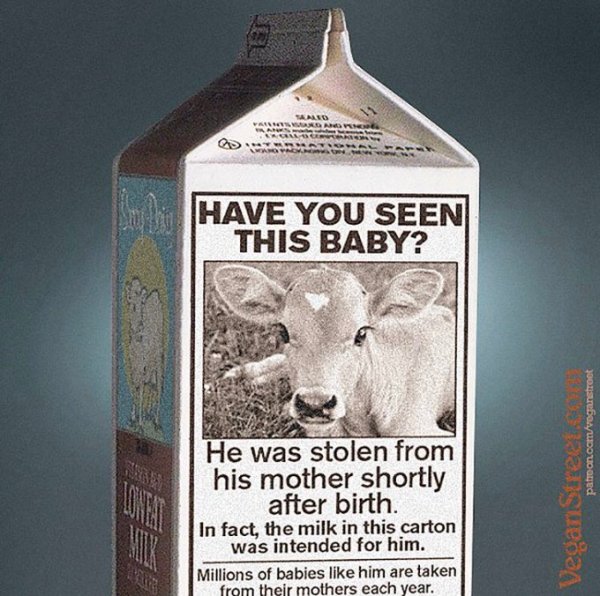


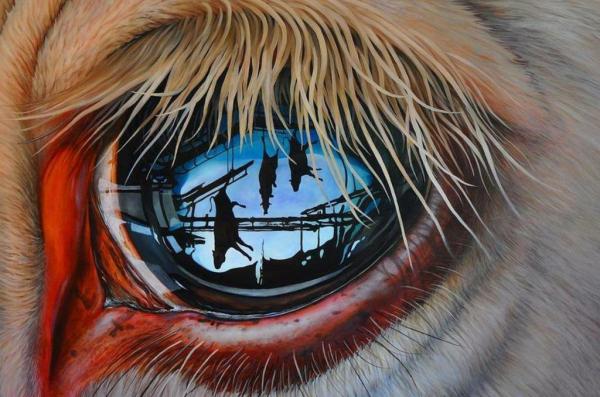


 Our Compass