HighestWelfare.Humane.Assured.GoodPractices.Vegetarian. Regenerative.Flexitarian.Lies...
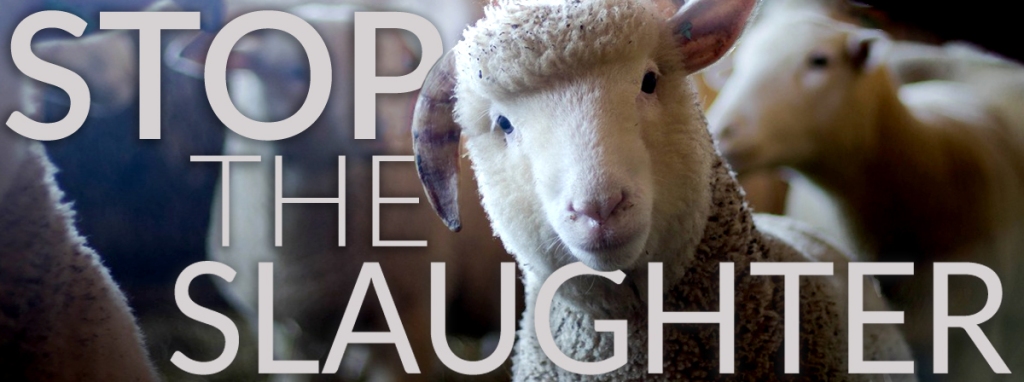
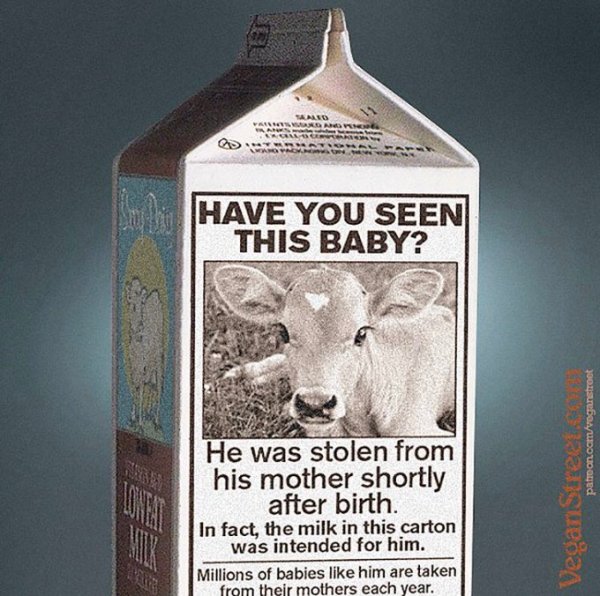
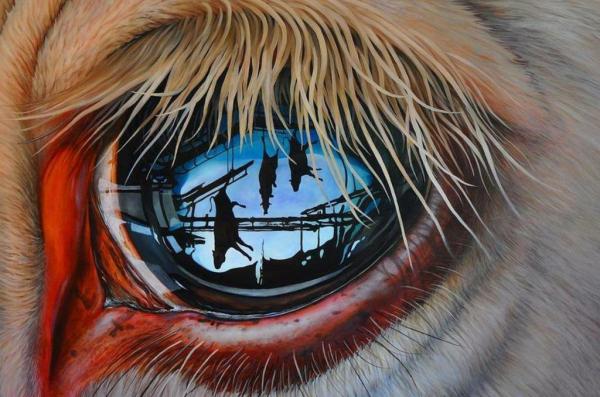
What is the difference between No Welfare, High Welfare, and Highest Welfare when they all require animals to die? Only human comfort, NONE protect the actual animals. The most humane, ethical, and honest Webster-defined "welfare" is NOT exploiting animals - not using, not wearing, not eating, not killing - animals. The only meaningful position is vegan, everything else is just how humans euphemize animals' required suffering and violent deaths: no human exploits animals because they honestly believe that NOT exploiting animals is UNethical or INhumane.
Indian City Becomes First Vegetarian City in the World

Wikimedia Commons
Source MFA Blog
By Sarah Von Alt
Worldcrunch reports a historic change in Palitana, an Indian city, which has become the first all-vegetarian city in the world.
Order a FREE vegan kit: http://www.peta.org/living/vegetarian-living/free-vegetarian-starter-kit.aspx
Take PETA’s Cruelty-Free Shopping Guide along with you next time you head to the store! The handy guide will help you find humane products at a glance. Order a FREE copy HERE
Want to do more than go vegan? Help others to do so! Click on the below for nominal, or no, fees to vegan literature that you can use to convince others that veganism is the only compassionate route to being an animal friend.
PETA: http://www.petacatalog.com/catalog/Literature-39-1.html
Action for Animals has a very low price : http://store.afa-online.org/home.php?cat=284
Have questions? Click HERE
Read more…
The humane animal farming myth
Source Peaceful Prairie Sanctuary
After years of exposés about the horrors of factory farming, many people want to believe that, as long as they buy “local”, “organic”, “family farmed”, “free-range” animal products, they are making a “humane” choice. These days, we hear all too often, “Well, not all farms are like that“, or, “I only buy eggs, milk, or meat from my local farmer where the animals are happy and well cared for“.
Nothing could be further from the truth. In reality, no matter how “humane” the farm may appear through human eyes, it remains a death camp for the animals who are bought, sold, kept, bred, used, and violently killed there. Those of us who rescue, provide sanctuary to, and advocate for the animals who are freed from the very farms that the public wants to believe are “humane”, know first hand how destructive the “humane” farming deception, and self-deception, can be.
As you read and view The Humane Animal Farming Myth, please understand that the cruelties and injustices discussed in its pages are inherent in ALL egg, dairy and flesh production.
From backyard operations, to factory farms:
• All male chicks are killed in the course of egg production, whether at the hatchery or on the farm, because they do not lay eggs.
• All females used for eggs, milk, or breeding are killed at a fraction of their natural lifespan when their “productivity” declines.
• All females used for eggs, milk or breeding have their reproductive systems violated, manipulated and exploited.
• All animals exploited for eggs, milk or flesh have been genetically manipulated to increase their “productivity”.
• All animals raised for flesh are barely adolescent when they are violently killed.
• All animals used for human purposes are denied a natural life.
No matter how friendly the farmer is, or how bucolic the farm may appear, to the animals whose lives are manipulated and destroyed there, there is no such thing as “humane” farming.
Order a FREE vegan kit: http://www.peta.org/living/vegetarian-living/free-vegetarian-starter-kit.aspx
Take PETA’s Cruelty-Free Shopping Guide along with you next time you head to the store! The handy guide will help you find humane products at a glance. Order a FREE copy HERE
Want to do more than go vegan? Help others to do so! Click on the below for nominal, or no, fees to vegan literature that you can use to convince others that veganism is the only compassionate route to being an animal friend.
PETA: http://www.petacatalog.com/catalog/Literature-39-1.html
Action for Animals has a very low price : http://store.afa-online.org/home.php?cat=284
Have questions? Click HERE
Read more…
60 WINNING short essays ~ Why I will Always be Vegan

Wikimedia Commons
Source Veganism: A Truth Whose Time Has Come
After seeing one too many posts from “ex-vegans”, this campaign was born in contrast to make a public statement. From the worldwide vegan giveaway event comes this compilation of 60 winning short essay selections from around the globe offering insight into the perceptions of a committed vegan. In 400 words or less, each entry explained why they will always be vegan and most won a giveaway gift being offered by the participating vegan businesses. ~ It was not an easy task to select winners from many hundreds of possible winners! At some point it boiled down to whether I had a prize offered in that region. I was given comic relief when – not one, not two, but three – self-proclaimed non-vegans sent in their essay on why they will always be vegan! Tee-hee…I kid you not! Here, in random order, is the compilation of short essay winners from around the globe:
One day in March 2007, when I was 13 years old, I decided to go vegan. Simply because I knew it was the right thing to do. Why should I participate in horrible violence towards other animals when there was absolutely no necessity to do so? It just didn’t make sense to me. So, overnight, I became a vegan and stopped participating in animal use for food, clothing, testing, entertainment and any other purpose. Seven-and-a-half years later, I am still vegan. And I can say with absolute certainty that I will always be vegan. Because it isn’t about me. ~ Veganism is the recognition that other animals are sentient individuals, just as we are, who deserve to live their lives free from enslavement and exploitation. They are the victims of our non-vegan choices. And when there are victims involved, a choice is not personal. It is not something as simple as choosing what music to listen to or what colour t-shirt to wear. Whether we want to believe it or not, the simple fact is when we purchase non-vegan products, we are actively participating in the harming and killing of others. ~ How could I ever go back to that? To deciding that the small, personal benefits I might get out of using animals is more important than their lives? I have seen the fear they feel when they are about to be killed. I have watched them struggle and fight for their lives. I used to disregard that suffering and push my feelings away.To do what everyone else was doing. But I refuse to do that anymore. Using nonhuman animals may be the norm, but that does not make it right. Those lives matter. They are not ours to use and do whatever we like with. I will always be vegan. It is who I am. It is not a diet. It is not a lifestyle. It is a stand for justice. ~ Emmy James, Waikato, New Zealand
“True human goodness, in all its purity and freedom, can come to the fore only when its recipient has no power. Mankind’s true moral test, its fundamental test (which is deeply buried from view), consists of its attitude towards those who are at its mercy: animals.” Milan Kundera – The Unbearable Lightness of Being ~~ Have you ever looked into the eyes of a sow? Do you truly think that we lack the means to communicate across species? She is not the “mere animal” you think you know. She senses and smells your presence. She can see your silhouette cast against the light. She advances, timidly, and seeks your eyes. Her orbs measure you, depose your shield of solid convictions and seek the empathic spark that is dormant within you. Indifference ceases where eyes meet: we are drawn to the deep moonlit wells of the other, burrowing deep in the psyche as we disturb the murky waters of ourselves. This introspection, this deep instinctive soul-searching is the galvanising spark that tears off the blindfold of our self-centred existence as we can lie to ourselves about the other, but we cannot do so without betraying the feral emotions that surge within us. It reminds us that, on this precious planet, we share our paths with other beings; beings gifted with the primeval urge to pursue an existence free from pain and humiliation. ~ To some veganism may just be a label, a passing fad, a radical extremist statement against sensible norms; to others, common earthlings like ourselves, it is the promise of social justice made to the eyes of the sow and to many others. It is an oath, a pledge to recognise that all eyes are a window to a sentient being but also mirrors reflecting back the suffering that we, as a society, inflict on the defenceless. I have looked into her eyes. I have not seen the raw mechanics of Descartes’ automata. I have not seen the acquiescent victim of the Dominion contract. I have seen dread, confusion and demoralization. I have seen questions asked of myself and of my people. And that is why I will always be vegan: to restore the light to those eyes, to restore the promise of life and to fulfil the one universal value we can build a new planet upon. That value is empathy. ~ Jan Claus Di Blasio, Rome, Italy
It’s been nearly 14 years since I had my vegan epiphany and vowed to never again partake of or participate in anything offered by the machine of violence that we call the animal industry. Since that time, my understanding of veganism has continued to grow and deepen, until it has become such an integral part of my ethics and my values that I can no longer imagine being able to separate from it, and still be able to look at myself in the mirror with a clear conscience. To no longer be vegan would mean to deny the most obvious truth I have ever learned, and to turn my back on every single animal who is counting on me and others like me to advocate for them in a world where they are seen as disposable objects rather than sentient individuals. To no longer be vegan would mean to pretend that I do not know what is really going on – on the farms, in the hatcheries, in the slaughterhouses, in the laboratories, in the oceans, and everywhere else on this planet where animals are treated as resources for us to exploit. To no longer be vegan would mean to deny my true nature as a person who can feel for the pain of others, and who aspires to live as peacefully as she can in this far from peaceful world. To no longer be vegan would mean to return to a world of darkness, for it would require me to close my eyes to the light of moral progress that illuminates the way forward to a better world for us all. But perhaps an even more saddening thought is that it would require me to extinguish the light of my own integrity, which is the source of my faith in myself, and which I count on to show me my own next steps on my way to a better self. ~ Angel Flinn, Hawaii
I will always live vegan because, ever since the moment my eyes were opened to the horrors and atrocities of the culture of animal exploitation pervasive throughout our current global community, I refuse to participate in, support or encourage the system of animal slavery, torture, rape, mutilation, deprivation and wholly unnecessary and unjustifiable death I see all around me. Humans do not kill and eat animals for necessity, though that is the myth to which many cling. Rather, humans slaughter billions of land and sea animals each year for habit, tradition, convenience and taste, none of which would hold up in court as worthy defenses were we to use these as justifications for having killed even one human animal. ~ The moment I realized the animal holocaust of which I had been a participant, a light turned on inside me that cannot be turned off. I immediately understood that since I would not knowingly support the terrorism, bullying, rape and murder of members of my own species, I also couldn’t justify condoning such behavior across species. As one person elegantly put it, when my heart spoke louder than my stomach, I changed forever. ~ Because it was the normal, accepted way of raising a child in the United States (today I know “normal” is just a setting on a washing machine), I was forced to consume products of animal exploitation and indoctrinated into an animal-product addicted culture before I was able to make my own choices. Once I knew the truth and learned I had other choices, I made the compassionate choice to live a vegan lifestyle. ~ A plant-based diet is far healthier for humans and the planet than one involving the raising and killing of non-human animals for food. As any of the millions of vegans – and non-vegans – around the world know, consuming products of animal exploitation is unnecessary, gluttonous and cruel, as well as wasteful and environmentally damaging. It comes as no surprise that a way of life linked to such internal maladies as cancer, heart disease, impotence and diabetes would also have adverse effects on our external environment. ~ I will always live vegan because I am no longer selfish enough to require that another sentient being should suffer and die for my convenience. I live for the day we no longer have to create humane societies but instead simply choose to live as one. ~ Keith Berger, Co-Founder, South Florida Vegan Support Group
Now that I am awake, I cannot go back to sleep. Awakened from a culturally induced slumber, I have made a pledge to myself – but more importantly have taken an oath for the animals. I am now their caregiver, witness and companion—and will never be able to justify their exploitation. This connection is now embedded deep within my being and there is no going back. I will stick with being a vegan because it is the tougher road to travel. It would be much easier to stay asleep, and blissfully unaware of what happens behind the walls of the slaughterhouses and testing facilities. Becoming a vegan connected the dots for me and I can no longer claim ignorance or indifference. Making the connection removes the veil and exposes the reality that society has gone to great lengths to conceal. As a vegan, I view the world through a lens of compassion and empathy. I can now see through the walls and will never again allow myself to be blindfolded or misled by the masses. For me, veganism is not a fad diet, social club or some kind of life-crisis, attention-seeking hipster ideal. It is a moral philosophy and lifestyle with a foundation of certain principles and tenets. Not all that dissimilar to other “isms” that denote a specific practice, system or philosophy. It is not temporary or just a phase; it will be a lifelong journey of progress and learning. Vegan for life—and for their lives. Sincerely, Clinton Vernieu, Brisbane, Australia
I will always be vegan:
* Because of the bear trapped in a tiny cage, continuously drained of the bile so prized by humans. The elephant whose family was shot so she could be used in a circus. The lobster who had been guarding her children when she was trapped and boiled alive. And the ground nestlings who were crushed when hay was harvested to feed “happy cows” during winter. ~~
* Because of Fasier; the Siberian tiger, mascot of a university. He lived at an accredited zoo that spearheads international conservation and educational programs. Fasier paced several steps to the end of his cage every day. Then he turned and paced back. ~~
* Because of Anthony, the beloved young goat in a small dairy herd. His legs shook with terror as he was carted off to die. His caretaker cried as the trusting Anthony bleated his bewilderment. ~~
* Because of the mouse who was force-fed laundry detergent until her organs finally failed and she died a miserable death. And the mother and baby macaque wrested away from each other, to study the effects of a human anti-anxiety drug.
* Because of the first male chick of the morning to tumble from the conveyor belt to the grinder below. His sisters will live in a backyard and be called “happy chickens” until they are slaughtered. ~~
* Because of Oscar, Lucas, and Petuna, who escaped the grisly fate of millions of pigs. They would have borne their torture in completely different ways, because they are different individuals, with their own personalities. ~~
* Because of the human child who died from dehydration and starvation because the water and land that once sustained her family are now used for cattle, to feed other humans. ~~
* Because of the calf who lived next to a sanctuary and daily tried to push through to freedom and companionship. Every day, the farmer carried him back to the reality of his life (and death) on a “humane farm.” ~~
* Because I have been told that the saddest sound in the world is a dairy cow calling to her stolen child. ~~ I have literally billions of compelling reasons to remain vegan all my life. I may falter at times, but exploiting animals deliberately? It’s unthinkable. ~ Susan Cho, Chicago, USA
Becoming vegan has been one of the biggest defining points of my life. We all search for them – these defining moments – through our relationships with others, through religion or spirituality, through enduring physical challenges on our bodies and in our environment. Every one of us is on a different path, but I think most of us want the same thing: to leave this world knowing that we lived a full life, and that we have grown into a better person during our time here. I’ve experienced two different religions and my fair share of relationships so far in my life, including motherhood. I have spent the first half of my life in one country and the second half in another. I have done quite a bit of travelling. I’ve got some life experience in my 54 years. As a result, I feel that every step of the journey has helped me discover my truest self in veganism. ~ Even as a vegetarian for 17 years, I knew deep down that I could do more, and that feeling stayed with me until I finally chose veganism seven years ago. Veganism offers a spiritual fulfilment that transcends any experience of oneness with the Divine that religion could offer. It is true compassion, true selflessness and brings an incomparable feeling of wholeness to know that I am choosing not to engage in violence against any sentient creature. I can look any animal (including human) straight in the eye and feel a connection to that being that I never felt before I was vegan. It’s almost indescribable, but it is a fullness of heart that other vegans will understand and recognise. It’s not “praying” for a better future. It is BEING a better future; right now. I get to be the best possible example of humanity in THIS life. ~ The rewards of veganism go deeper. I have discovered that my food choices have not diminished, but expanded. I am trying new things, I have learned to cook and love it! I now spend my Sundays volunteering at an animal shelter, and it is the best job I have ever had, because the feeling it gives me is better than money. Committing to veganism has made me FREE to explore life unfettered, causing the least harm possible to our planet. Veganism is a gift that I would never trade. It’s the secret to a happy life. ~ Lisa Bennett, Maidenhead, England
I will always be vegan because “it’s the Golden Rule thing to do.” This moral and ethical precept teaches us that we should behave toward others as we would have others behave toward us. Non-vegans conveniently take the word others to mean other humans. Vegans consider others to include ALL members of the animal kingdom, both humans and nonhumans alike. Generally, humans know that the non-human beings we call animals have characteristics, and rights, that are fundamentally similar to those of the human beings we call people. It therefore makes logical sense that the spirit of the Golden Rule should also apply to non-human beings. Non-vegans conveniently permit there to be a disconnect — a barrier — between human rights and animal rights. However, elemental logic suggests that there is no real conflict between these sets of rights. They are not mutually exclusive. In fact, they are mutually inclusive. Humans should be “for” both. I often use the term “animal wrongs” instead of animal rights. This makes it easier for people to see that they simply do not have the right to perpetrate “wrongs” — either directly or indirectly — against the other sentient beings known as animals. It is morally “right” for humans not only to stand up against wrongs, but also to take personal action to end them. Americans took such action during the civil rights movement in the 1960s; to eradicate the abomination of racism. Today, we should create a national/international “social justice movement” that focuses on eradicating the abomination of speciesism. It is speciesism that is THE underlying cause of all the exploitive injustice that the human species wreaks upon the non-human species. We’re at a point in our human evolution where we must recognize that fact, and DO SOMETHING about it. Consider this compelling quote by Henry Spira: “If you see something that’s wrong, you’ve got to do something about it.” Most vegans understand that the practice of speciesism permits abject cruelty against, and causes the undeserved death of, other sentient beings by human beings. Vegans know that speciesism is wrong. Vegans make a morally and ethically based “crossover.” They become “humaneitarians” — humans who live as humanely as they can — in the true spirit of the expanded application of the Golden Rule. Because I so wholeheartedly believe that the vegan lifestyle represents the “Golden Rule way to live,” I will always be a vegan. With peace, non-violence, liberty, and justice for ALL, Craig Cline; ardent animal advocacy activist, Salem, Oregon, USA
Winner:
My vegan lifestyle is in my soul…One way to explain my reason for being vegan is by telling the story of the cow. This is an analogy that I feel represents my reasons. A person once asked me about a picture of a black and white image. He asked me, what do I see? When I initially looked, all I saw was lots of black spots, In my eyes it was a picture of a black and white image. I could not see anything else. The person said to me to look deeper. I looked again and tried to focus on the image. They encouraged me to look again. It may have taken me a while but I finally saw the cow. I feel that I saw the cow only because they inspired me to keep looking and to stay focused. Had I been left alone to analyze the photo I am not sure I would have seen the “cow”. I will always be a vegan because once you have seen the truth just like the “cow” image, it’s impossible to not see the reality of animal cruelty. I believe as a vegan I feel the same way. The “cow” represents animal suffering, and once I made a shift in consciousness that animals suffer needlessly it is hard for me to ever go back. I see the injustice when the animal suffers, when we take their babies away. I see the softness of nature when the baby animal is searching for his/her parent; they cuddle, kiss, play and enjoy each other’s company just as humans. Or perhaps when a baby animal learns to walk it looks the exact same way human babies learn. It must be the way baby animal teeth grow in just as adorable as human babies teeth, they have the same innocent look. Honestly, they all ask why I am a vegan – it is very simple, I’ve seen the “cow”. I don’t see a black and white image anymore. I feel I have a responsibility to be a role model. I want to show the world that we are capable of living a cruelty-free lifestyle. We do not need to hurt animals for any purpose. This is why my soul will always be vegan. My wish is that one day all of humanity will see the “cow”.~ Helen Liakopoulos, Montreal, Canada
Buy the ebook and read the rest HERE
Order a FREE vegan kit: http://www.peta.org/living/vegetarian-living/free-vegetarian-starter-kit.aspx
Take PETA’s Cruelty-Free Shopping Guide along with you next time you head to the store! The handy guide will help you find humane products at a glance. Order a FREE copy HERE
Want to do more than go vegan? Help others to do so! Click on the below for nominal, or no, fees to vegan literature that you can use to convince others that veganism is the only compassionate route to being an animal friend.
PETA: http://www.petacatalog.com/catalog/Literature-39-1.html
Action for Animals has a very low price : http://store.afa-online.org/home.php?cat=284
Have questions? Click HERE
Supreme Court leaves California foie gras ban intact

Wikimedia Commons
Source Reuters
By Lawrence Hurley
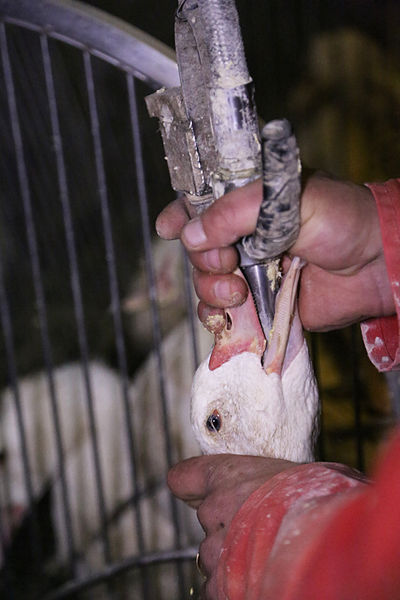
(Reuters) – In a victory for animal rights activists, the U.S. Supreme Court on Tuesday allowed California to continue to ban foie gras, a delicacy produced from the enlarged livers of ducks and geese that have been force-fed corn.
Rejecting a legal challenge to the state law, the court declined to hear an appeal filed by restaurants and producers of foie gras. In doing so, the high court left intact an August 2013 ruling by the 9th U.S. Circuit Court of Appeals upholding the law.
California enacted the law in 2004 but it did not go into effect until 2012.
Foie gras means “fatty liver” in French. The product is produced by force-feeding corn to ducks and geese to enlarge their livers, which are harvested to make gourmet dishes. Animal rights groups contend that the force-feeding process is painful, gruesome and inhumane.
The law specifically bans any product created by “force feeding a bird for the purpose of enlarging the bird’s liver beyond a normal size.”
Los Angeles-based Hot’s Restaurant Group, Canada’s Association des Eleveurs de Canards et d’Oies du Quebec and New York producer Hudson Valley Foie Gras challenged the ban in a lawsuit filed last year.
They argued that the law violates the U.S. Constitution’s Commerce Clause, which prohibits states from interfering with interstate commerce. But the 9th U.S. Circuit Court of Appeals rejected that argument, saying the state was within its rights to impose the ban.
Animal rights groups welcomed the Supreme Court’s action.
“The Supreme Court’s decision means that the people of California have the right to prohibit the sale of certain food items, solely because they are the product of animal cruelty,” Jonathan Lovvorn, chief counsel for the Humane Society of the United States, said in a statement.
“The holding in this case – that states have the right to cleanse their markets of cruel products – is a precedent of enormous consequence for millions of animals,” Lovvorn added.
John Burton, the former California state legislator who authored the law, added, “This effort was a long, hard fight. But it was worth fighting and worth winning.”
The case is Association des Eleveur v. Harris, U.S. Supreme Court, No. 13-1313.
(Reporting by Lawrence Hurley; Editing by Kevin Drawbaugh and Will Dunham)
Order a FREE vegan kit: http://www.peta.org/living/vegetarian-living/free-vegetarian-starter-kit.aspx
Take PETA’s Cruelty-Free Shopping Guide along with you next time you head to the store! The handy guide will help you find humane products at a glance. Order a FREE copy HERE
Want to do more than go vegan? Help others to do so! Click on the below for nominal, or no, fees to vegan literature that you can use to convince others that veganism is the only compassionate route to being an animal friend.
PETA: http://www.petacatalog.com/catalog/Literature-39-1.html
Action for Animals has a very low price : http://store.afa-online.org/home.php?cat=284
Have questions? Click HERE
Gary Yourofsky: Banned International Terrorist
Source Bite Size Vegan
What do you think you would have to do to be labeled an International Terrorist? What would it take? Assassinations? Bombings? How about freeing animals? How about giving living beings on death row a chance at life? How about liberation? Believe it or not those are the actions that led to Gary Yourofsky‘s classification as an international terrorist and his being banned from several countries. he tells you all about it in this interview.
Nobody could believe that I was in this place [prison] for letting animals free. For giving them a chance not to be killed. But that’s how messed up this world is. Man, look at all of the people throughout history that everybody admires collectively: Nelson Mandela, Rosa Parks, and Dr. King and Gandhi, all sentenced to prison. All radical lawbreakers. When you try to bring peace and justice to the oppressed, you are labeled a terrorist, you are imprisoned, or you are assassinated. Quite a world we live in.
Get a FREE eBook, exclusives, & ViV access! (And no SPAM – cause that ain’t vegan!) Enter your name and email address: Click HERE
Order a FREE vegan kit: http://www.peta.org/living/vegetarian-living/free-vegetarian-starter-kit.aspx
Take PETA’s Cruelty-Free Shopping Guide along with you next time you head to the store! The handy guide will help you find humane products at a glance. Order a FREE copy HERE
Want to do more than go vegan? Help others to do so! Click on the below for nominal, or no, fees to vegan literature that you can use to convince others that veganism is the only compassionate route to being an animal friend.
PETA: http://www.petacatalog.com/catalog/Literature-39-1.html
Action for Animals has a very low price : http://store.afa-online.org/home.php?cat=284
Have questions? Click HERE
Read more…
The Chicken Lady Speaks: Snow’s Story
Source Direct Action Everywhere
“Glenn Beck is just a sell-out who must maintain a heavy delusion to cope with, deeply knowing his own corruption.” – neilamadhava
OC: And please remember that there is nothing humane about free-range either; animals experience the same unending suffering, terror, and hideous death.
Order a FREE vegan kit: http://www.peta.org/living/vegetarian-living/free-vegetarian-starter-kit.aspx
Take PETA’s Cruelty-Free Shopping Guide along with you next time you head to the store! The handy guide will help you find humane products at a glance. Order a FREE copy HERE
Want to do more than go vegan? Help others to do so! Click on the below for nominal, or no, fees to vegan literature that you can use to convince others that veganism is the only compassionate route to being an animal friend.
PETA: http://www.petacatalog.com/catalog/Literature-39-1.html
Action for Animals has a very low price : http://store.afa-online.org/home.php?cat=284
Have questions? Click HERE
Read more…
Cruelty is Cruelty, Any Way You Slice It

Wikimedia Commons
Source Huffington Post
By Kathy Stevens
While generally not considered newsworthy, chickens have recently been in the spotlight. First, chickens made the news around the world as orthodox Jewish communities practiced the ritual of Kapparot — a Yom Kippur tradition of swinging a live chicken over “the sinner’s” head and then slaughtering it. Chicken brutality in Fresno, California also made headlines, when close to 1,000 chickens were bludgeoned to death by four teenagers who broke into a farm.
“What a bad week to be a chicken,” you might have thought.
Friends, it is always a bad week to be a chicken.
It is human nature to reel against heinous and purposeful cruelty. For instance, the story of a Brooklyn man who kicked a cat while being filmed recently went viral, as did the infamous Michael Vick dog fighting scandal. We Americans have little tolerance for deliberate cruelty, so the media attention received by the bludgeoned chickens is not surprising. But the elephant in the room in this story is this: our eating habits support cruelty that is every bit as savage and barbaric as bludgeoning animals with golf clubs.
One could certainly make an argument that those clubbed chickens met a fate no crueler than the one they were bound to face. Every year, 9 billion chickens suffer horrendously on factory farms so that we can eat them. “Broilers” are bred to grow so large and so fast that they can barely stand or move around — doing so causes tremendous pain. During their short, painful lives, these birds live in cramped warehouses and never see daylight. At the end of their 47-day life, they are sent to the slaughterhouse where, among other horrors, millions are boiled alive every year as they miss the neck slicer and are submerged, completely conscious, into a water bath meant to remove their feathers. Sounds just as painful as being clubbed to death to me.
Consider this:
300 million hens in the U.S. are kept in “battery cages,” tiny cages shared with up to 11 birds in which each bird gets less room than a standard 8.5×11 inch sheet of paper. Their beaks are seared off with a hot blade, without anesthetic, so that they cannot peck at each other in the confined space.
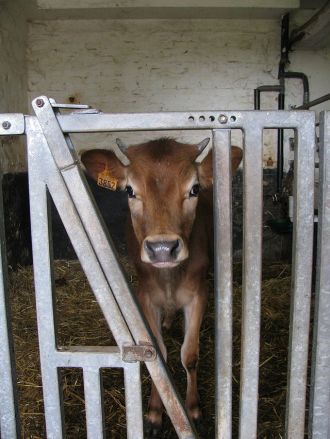
In the U.S. alone, over 8 million “dairy cows” live on factory farms. Dairy cows’ tails and horns are cut off without anesthesia. Female cows also often suffer from a painful condition called mastitis, an infection that causes cows’ udders to swell. On top of it all, cows are kept in a constant cycle of impregnation and birth in order to make milk, and suffer the emotional toll of losing their babies — male calves become veal and females become dairy cows — just moments after birth.
These are just two examples of the cruelty inflicted by our food choices. As we judge those who inflict intentional harm, I urge us to turn our judgement inward, too–to face the truth that that each of us, through the simple practice of eating, supports infinitely greater harm to an infinitely greater number of non-human animals than all of the animal cruelty stories that made their way into the news last week.
In just a few days, Catskill Animal Sanctuary will host its 13th Annual Shindig — a celebration of compassionate living. At Shindig, you can see farmed animals thriving as all animals should. At Shindig, you can taste delicious vegan food. At Shindig, the solution to farmed animal cruelty is clear: we must go vegan.
I believe we humans are compassionate. Many of us still don’t know the harm we are causing. Take the first step towards compassionate living and visit CASanctuary.org to learn more about transitioning to a vegan diet. Better yet, if you’re in the area, come to this year’s Shindig, visit us any weekend May-November for a tour, or stay at our beautiful Homestead, now open year round!
Whether an animal meets his end with the blow of a club or the slice of blade, causing death is a cruel act. Chose compassion instead today.
Order a FREE vegan kit: http://www.peta.org/living/vegetarian-living/free-vegetarian-starter-kit.aspx
Take PETA’s Cruelty-Free Shopping Guide along with you next time you head to the store! The handy guide will help you find humane products at a glance. Order a FREE copy HERE
Want to do more than go vegan? Help others to do so! Click on the below for nominal, or no, fees to vegan literature that you can use to convince others that veganism is the only compassionate route to being an animal friend.
PETA: http://www.petacatalog.com/catalog/Literature-39-1.html
Action for Animals has a very low price : http://store.afa-online.org/home.php?cat=284
Have questions? Click HERE
Read more…
Unity Film – Director Shaun Monson and UNITY
Dear Supporters of UNITY and EARTHLINGS,
I write today to share some exciting news and updates about the film UNITY, which I know everyone is eagerly anticipating. We are so grateful for your questions about release dates, locations and how you can help. The fantastic news is that YOU could actually make the difference on when you see it, and where!
After several amazing screenings we have been encouraged to widen the UNITY theatrical releases worldwide in Spring 2015 on Earth Day! This would bring UNITY a greater platform to become the movement, become the change, or more humbly the awareness this world needs most desperately. We really would like to achieve this goal, but to do so would require additional funding and we are hopeful you, our supporters, will help us!
Thus, I’m bringing this (gentle) request to you, the people that have believed in EARTHLINGS and UNITY so vocally over the years: Will you help us financially today to the effort to bring UNITY to the world? Click here to DONATE NOW!
Or: If you would like to learn more about larger investment opportunities in UNITY, please do not hesitate to reach out to us!
Participation great and small is how all worthwhile world movements are achieved; with UNITY we welcome both most gratefully.
Yours,
Emily Whitney
Community and Investor Relations
UNITY Film Partners, LLC
email: contact@unitythemovement.com
Unity Film on Social Media:
http://www.facebook.com/UnityFilmOffi…
http://www.twitter.com/UnityFilm
http://www.instagram.com/UnityFilm
http://www.pinterest.com/UnityFilm
http://unityfilm.tumblr.com
Website: http://www.unitythemovement.com
Order a FREE vegan kit: http://www.peta.org/living/vegetarian-living/free-vegetarian-starter-kit.aspx
Take PETA’s Cruelty-Free Shopping Guide along with you next time you head to the store! The handy guide will help you find humane products at a glance. Order a FREE copy HERE
Want to do more than go vegan? Help others to do so! Click on the below for nominal, or no, fees to vegan literature that you can use to convince others that veganism is the only compassionate route to being an animal friend.
PETA: http://www.petacatalog.com/catalog/Literature-39-1.html
Action for Animals has a very low price : http://store.afa-online.org/home.php?cat=284
Have questions? Click HERE
Read more…
Source Their Turn
By Donny Moss
Kaporos, the annual chicken-swinging ritual that takes place before Yom Kippur, doesn’t start until Tuesday night, but, already, an activist has been arrested, and hundreds of chickens stacked in crates on the street have died.
Wearing a Mercy For Animals t-shirt, an activist from New Jersey was arrested on Monday for allegedly stealing chickens from a “Kaporos Center” in Brooklyn. Authorities found the liberated chickens in his vehicle. Sadly, these animals, who had a brief taste of freedom in the back of a van, will most likely be used in the Kaporos ritual and then slaughtered.
In a separate incident, Brooklyn resident Rina Deych, a founding member of the advocacy group working to end the chicken-swinging ritual, made the grisly discovery of hundreds of dead chickens stacked in crates, and she took footage with the hope that authorities would charge the perpetrators with animal cruelty.
Ms. Deych suspects that the chickens, who are deprived of food and water for several days, died of dehydration: “We just witnessed hundreds, possibly thousands of chickens dead in crates in Brooklyn. We called the police, but they would not take our report. NYPD is supposed to respond to animal cruelty and neglect cases.”
Ms. Deych’s video documentation of dead and dying chickens:
Order a FREE vegan kit: http://www.peta.org/living/vegetarian-living/free-vegetarian-starter-kit.aspx
Take PETA’s Cruelty-Free Shopping Guide along with you next time you head to the store! The handy guide will help you find humane products at a glance. Order a FREE copy HERE
Want to do more than go vegan? Help others to do so! Click on the below for nominal, or no, fees to vegan literature that you can use to convince others that veganism is the only compassionate route to being an animal friend.
PETA: http://www.petacatalog.com/catalog/Literature-39-1.html
Action for Animals has a very low price : http://store.afa-online.org/home.php?cat=284
Have questions? Click HERE
Read more…
Source Bite Size Nugget
Ever wonder what vegans eat in a day? This past Monday evening I spent time with my friend and mentor, vegan activist Gary Yourofsky and the one and only Vegan Black Metal Chef to record the interview with Gary for the bite size vegan youtube channel. And we of course went out for some good vegan eatin’!
Come along with us to Ethos Vegan Kitchen in Orlando, Florida, for some delicious vegan dining and stay tuned for the upcoming interview series with Gary!
Featured Videos:
What I Eat In A Day As A Raw Vegan
Order a FREE vegan kit: http://www.peta.org/living/vegetarian-living/free-vegetarian-starter-kit.aspx
Take PETA’s Cruelty-Free Shopping Guide along with you next time you head to the store! The handy guide will help you find humane products at a glance. Order a FREE copy HERE
Want to do more than go vegan? Help others to do so! Click on the below for nominal, or no, fees to vegan literature that you can use to convince others that veganism is the only compassionate route to being an animal friend.
PETA: http://www.petacatalog.com/catalog/Literature-39-1.html
Action for Animals has a very low price : http://store.afa-online.org/home.php?cat=284
Have questions? Click HERE
Read more…
The walking dead
Source There’s an Elephant in the Room Blog

There’s an Elephant in the Room Blog
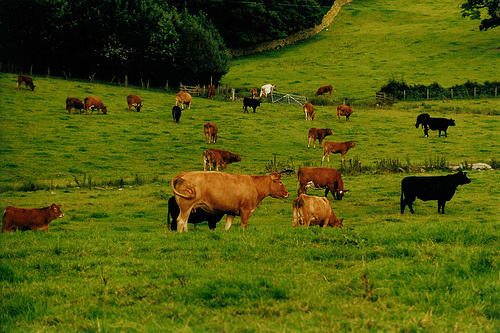
Every day I pass scenes like these. I used to smile foolishly at the sight, thinking an image like this was beautiful and that it was the essence of what country life represented.
Now I can scarcely bear to look at these gentle, innocent beings because I now realise that this bucolic scene masks a sinister reality. Each of these nonhuman individuals has been brought into this world as a commodity; they are viewed as resources to indulge a species that is hell bent on destruction; the destruction annually of uncounted billions of other sentient beings and the destruction of the planet we all share.
Their terrifying deaths are already planned, the time scales already scheduled when their mothers were forcibly impregnated. These are, in fact, the walking dead.
Their sweet beauty will end very soon in the gore and stench of a slaughterhouse, their screams and whimpers unheard behind closed doors, so that their predators will not be inconvenienced by the uncomfortable reality of their suffering. Their lives, that they value every bit as much as I value my own, torn from them on behalf of those of us who refuse to confront why we allow our taste buds to dictate our morals.
We can live and live well without causing harm. We have choices. The only way to reject this bloodbath is to be vegan – why wait another moment?
Get information here http://www.WhyVeganism.com http://vegankit.com/
Order a FREE vegan kit: http://www.peta.org/living/vegetarian-living/free-vegetarian-starter-kit.aspx
Take PETA’s Cruelty-Free Shopping Guide along with you next time you head to the store! The handy guide will help you find humane products at a glance. Order a FREE copy HERE
Want to do more than go vegan? Help others to do so! Click on the below for nominal, or no, fees to vegan literature that you can use to convince others that veganism is the only compassionate route to being an animal friend.
PETA: http://www.petacatalog.com/catalog/Literature-39-1.html
Action for Animals has a very low price : http://store.afa-online.org/home.php?cat=284
Have questions? Click HERE
Read more…
Plant-based Diet 101
Source Sunshine and Slaughter
By Jean of all Trades
I just finished reading a book by Luke Jones. You might recognize that name: I featured Luke in my vegan profile segment recently. Luke runs the site Hero Health Room, a blog about plant-based living, sustainability, mindfulness, and exercise.
Luke recently published a book called Plant-based Diet 101: The Ultimate Guide to Healthy, Sustainable Eating Habits. I just finished reading it, and I highly recommend it–especially if you’re new to (or considering) a plant-based diet or if you’re a vegan who isn’t eating as healthy as you think you should (after all, cola and cookies can be vegan, but they’re certainly not healthy).
The book is very digestible (pun intended) and covers health basics like what to eat, what to avoid, and whether supplements are necessary. Luke covers costs, health concerns, and even topics like how to eat in restaurants and deal with skeptical friends and family members.
Luke has a great, conversational writing style, which made reading the book feel like a trusted friend was helping me. It’s not preachy nor is it judgmental. Of course I’m a proponent of a plant-based lifestyle and I sometimes want to bash people over the head with my ideas. Luke doesn’t do that. It’s clear that he’s researched the topic well (and has loads of references and resources to support his findings), but he allows readers to make their own decisions. I like how Luke shares a plan for easing into a plant-based diet and sets readers up for success.
The main focus of the book is health and wellness but Luke also addresses the environmental and ethical angles of eating a whole-food, plant-based diet. It’s an excellent primer.
You can download the book from Luke’s site. It’s only $5, making this the most affordable investment in your health that I can think of.
Order a FREE vegan kit: http://www.peta.org/living/vegetarian-living/free-vegetarian-starter-kit.aspx
Take PETA’s Cruelty-Free Shopping Guide along with you next time you head to the store! The handy guide will help you find humane products at a glance. Order a FREE copy HERE
Want to do more than go vegan? Help others to do so! Click on the below for nominal, or no, fees to vegan literature that you can use to convince others that veganism is the only compassionate route to being an animal friend.
PETA: http://www.petacatalog.com/catalog/Literature-39-1.html
Action for Animals has a very low price : http://store.afa-online.org/home.php?cat=284
Have questions? Click HERE
Read more…
5 Worst Excuses People Make for Still Eating Meat

Vegan burger and fries | Wikimedia Commons
Source One Green Planet
By ThomasSTL
If we look in the history books, it (may make) sense why humans needed to kill animals for food to survive. Without transportation methods and phone lines and the Internet, humans hunted and gathered, being limited in their food choices. However, the world has come a long way. Foods that are native to certain countries can be shipped around the globe. Humans have created simpler solutions to eating, and the question isn’t “how will I eat?” but “what will I eat?” Plus, if you think about it, humans really aren’t suited to eat meat. We lack those animalistic instincts to hunt and kill with our bare hands. As Dr. Richard Leakey, a renowned anthropologist, said, “You can’t tear flesh by hand, you can’t tear hide by hand. Our anterior teeth are not suited for tearing flesh or hide. We don’t have large canine teeth, and we wouldn’t have been able to deal with food sources that require those large canines.” There, see? So stop making these 5 excuses!
1. Meat is too delicious to give up
Vegan-only restaurants have popped up and caught on fire, trending in New York City, San Francisco, Los Angeles, Portland, and other U.S. cities. Don’t think vegan food tastes good? Go take a took at some vegan menus and you’ll see mouth-watering creations that are fresh, healthy, delicious, and extremely satisfying. Come to Manhattan during lunchtime and ask that huge line of people snaking down the sidewalk why they’re willing to stand around for 20 minutes to get organic, vegan noms from the Cinnamon Snail food truck. Are they there because meat tastes too good? Quite the contrary. Try something new. The meal possibilities are endless with plant-based foods, and there are a lot more vegan chefs, recipes, cookbooks, and grocery items now than there were ten years ago.
2. I’m an athlete and need meat for strength
Of course athletes need strength, but who said meat is the only thing we can eat to bulk up? Clearly, the people who make this excuse have never heard of the great vegan athletes who push their body to the limit on plants. Scott Jurek is a fantastic ultramarathoner who is a proud vegetarian. The Washington Times named him one of the top runners of the decade. Ultrarunning Magazine named him Ultra-Runner of the Year — not once, but three times. As stated on his website, “In 2010, he set a new US all-surface record in the 24-Hour Run with 165.7 miles—6.5 marathons in one day—for which he was named USA Today’s Athlete of the Week.” The proof is in the peas; Jurek doesn’t need meat to set marathon records.
3. I would be unhealthy if I stopped eating meat
Yeah, if you decided to gorge on nothing but vegan cookies, chips, and processed foods, then sure, you’d be super unhealthy. Just remember our friend Jurek, who probably couldn’t run so fast and well if his vegan diet was unhealthy. The fact is that eating meat can put you at a higher risk for heart disease and high cholesterol levels. According to the Mayo Clinic, “a National Cancer Institute study of 500,000 people found that those who ate 4 ounces (113 grams) of red meat or more daily were 30 percent more likely to have died of any cause during a 10-year period than were those who consumed less. Sausage, luncheon meats and other processed meats also increased the risk.” Switching out that steak for tofu is definitely healthy.
4. I’m too lazy to care why I shouldn’t eat it
Ignorance isn’t bliss when that ignorance affects the rest of the planet. There are some people who open a package of processed hot dogs and state that they simply don’t care what’s in it. These are the people who never look at ingredients labels and could care less about how their actions affect the rest of us. Despite all the evidence and truth about animal cruelty in the meat industry, they don’t want to learn why they should give it up. They live by the “ignorance is bliss” mentality. However, living in the dark is dangerous in a modern society, so wake up and smell the cruelty and fat in that bacon.
5. I am an ethical meat eater
What’s with all this marketing jargon about free-range, cruelty-free, cage-free, grass-fed, and so on? How can any practice be cruelty-free when the end result is killing the animal for food? Plus, those labels can be misleading and are tricks to make meat-eaters more at peace with the fact that they’re stuffing dead carcass in their face. A marketing label does not necessarily match up with the practices and actions of making that food. A chicken and egg packing plant that labels itself as “cage free” only means that the animals aren’t kept in cages. It does not ensure their welfare and it does not mean they’re clucking happily on lush, green farmland. Sorry to break it to you, but your meat probably did not come from a little old farmer with overalls and a tractor.
5 Worst Excuses People Make for Still Eating Meat | One Green Planet.
Order a FREE vegan kit: http://www.peta.org/living/vegetarian-living/free-vegetarian-starter-kit.aspx
Take PETA’s Cruelty-Free Shopping Guide along with you next time you head to the store! The handy guide will help you find humane products at a glance. Order a FREE copy HERE
Want to do more than go vegan? Help others to do so! Click on the below for nominal, or no, fees to vegan literature that you can use to convince others that veganism is the only compassionate route to being an animal friend.
PETA: http://www.petacatalog.com/catalog/Literature-39-1.html
Action for Animals has a very low price : http://store.afa-online.org/home.php?cat=284
Have questions? Click HERE
Read more…
Eggs and dairy – telling the truth

Wikimedia Commons
Source There’s An Elephant in the Room Blog
I shall start by saying that I’ve been there, I’ve been deceived – I used to follow a vegetarian diet.
I chose my words there with care; vegetarianism is a diet and the significance of this will, I hope, become clear as you read on. Until I found out about veganism, I had a nagging but unexamined notion that my consumption of eggs and dairy had to be done in an ethical manner, so I always chose ‘organic’ and ‘free-range’. Looking back, it will always mystify me why I was able to recognise the moral significance of my victims to the extent that I realised the need to try to reduce their suffering, but I was somehow incapable of doing the tiny amount of research that it eventually took in this age of Google to realise that:
- contrary to what many believe, all ‘products’ derived from the bodies of sentient creatures result in unspeakable suffering and in their premature death;
- all dairy and egg production takes place as a result of brutal manipulation of the reproductive processes of sentient creatures;
- humans have no nutritional or other need to enslave other beings and consume their secretions;
- labels such as ‘free-range’ and ‘organic’ are marketing ploys to dupe consumers into believing their choices are ethical when in fact from the perspective of the innocent victim, they are meaningless;
- there is at least as much – if not more – suffering and death involved in the production of eggs and dairy as there is in the production of flesh ‘products’;
- it is an oxymoron to contend that humans may exploit other beings in a ‘humane’ manner.
The definition of vegetarianism promotes speciesism
The situation is not helped at all by the explanation of the word ‘vegetarian’ provided by the ‘Vegetarian Society‘. This definition is unfortunately the standard which the majority of suppliers of ‘vegetarian’ food seem to follow. This is particularly true of supermarket chill or freezer cabinets where packaging will frequently announce that ‘free range’ eggs have been used, or ‘organic’ milk.
In essence, this use simply enforces and legitimises the speciesism that allows consumers to continue to perpetuate unspeakable suffering and misery upon chickens, other egg ‘providers’, cows and goats. It deliberately disregards the violence that is the backbone of any ‘industry’ that commodifies sentient beings as human resources. It is particularly upsetting that these products are being sold to many who try so hard to be ethical consumers and who carefully avoid consuming the flesh of others.
I have frequently seen the contention that vegetarianism ‘is a step on the way to becoming vegan’. That may be the case, provided that the person knows about, and is transitioning to veganism. The progression is, however, by no means automatic. It’s like saying that London is on the way to New York. It is if you know about New York and are heading there, otherwise London may seem like a fine place to stop – and many do just that. They stop at vegetarianism, never realising the truth.
What veganism is – a reminder
This is the point at which it must be stressed that another element to the confusion is the perception of veganism as a diet. It is not a diet. At the risk of repeating myself, veganism is an ethical stance that rejects the use or consumption of all beings for food, clothing, entertainment, testing or any other purpose whatsoever. It is the most simple and easily understood ethic that it is possible to imagine. There are no complex rules or provisions to memorise. If a product or practice utilises or is derived from the body of another being, a vegan rejects consumption, use or participation. What vegans eat is a consequence of their ethical stance, not the main event.
Back to dairy and eggs
As a vegan advocate, I have deliberately chosen not to explore here the health and environmental implications of ending all nonhuman use. Why? Because I promote veganism for my nonhuman friends and kin who need my voice, not for what we as humans can get out of our ceasing to exploit them. Nevertheless, the same cursory use of Google will reveal the horrific truth to any serious enquirer.
Please see below a compilation of links that most eloquently illustrate why dairy and egg use is so insidious. The suffering and anguish of these sweet and gentle mothers and their innocent babies is not ‘opinion’, it is a fact. To continue to use the results of the brutal manipulation of the reproductive processes of these helpless and vulnerable victims of human self indulgence is not a ‘choice’ because choices do not create victims.
What’s wrong with eggs?
‘A sentient being’s body and its secretions are not things for us to eat, any more than a human being’s body and its secretions are things for us to eat. Consuming eggs (even from rescued chickens), or giving them away to people who would otherwise buy eggs from battery caged hens, does not “reduce suffering”, it legitimizes suffering, it demands suffering, It perpetuates suffering by condoning the very practice of violence we are struggling to end.
The hen may not know that her suffering body, her unfreedom, her isolation, and every misery in her life is inflicted intentionally, systematically, and solely for the sensory gratification of humans, but you do.
She may not know that the fertilized egg that brought her into existence was the result of confinement and rape, or that hens like her are the product of mass infanticide, but you do. She may not know that the cost of killing male infants, “spent” breeding parents and “spent” hens is built into the price of eggs, but you do. She may not know that, if we became vegan, the horrors that she and her kind are forced to endure would end, but you do.
Act on that knowledge. Become vegan and educate others about the violence and injustice inherent in all non-vegan choices. Rescue (don’t buy) chickens and other animals, respect their lives, and please remember to always give the eggs back to the birds: They are, after all, the only rightful owners.’
I have lost count of the number of posts that I have seen, seeking to justify the use of eggs in particular, where ‘backyard’ egg production is frequently promoted. The essential thing to stress is that all use of eggs, wherever they come from, perpetuates the false notion of eggs as human ‘food’, thus ensuring the continuation of the abhorrent practice that is all egg production, with the billions of completely unnecessary annual deaths that this entails.
- Peaceful Prairie: The Free Range Myth
- What’s Wrong with Backyard Eggs 1:
- What’s Wrong with Backyard Eggs 2
- A Hen’s Relationship with her Eggs
- Backyard Chicken Farming Leads to Abandoned Hens
- Cage-Free? Not free enough
- Backyard chickens: Expanding our understanding of ‘harm’
What’s wrong with dairy?
‘It is impossible to separate our use of animals as economic resources from our exploitation of their reproductive systems. After all, there would be no animal industries (whether on a small or a large scale), without ongoing breeding and birthing. When domesticated animals become mothers, their children belong to someone else, and not only are they nearly always separated from their young shortly after birth, but they have no power whatsoever over the future their child will be forced to endure. Although this is true for all animals living under the oppressive regime of human control (from ‘layer’ hens to ‘pet’ dogs), nowhere is it more apparent or more brutal than with cows being used for dairy production.’ ~ Angel Flinn
- Mother’s Milk
- Happy Cows: Behind the Myth
- The Humane Animal Farming Myth
- Milk comes from a Grieving Mother
- 10 Dairy Facts the Industry Doesn’t Want You to Know
Please become vegan and live true to the values that you already hold.
Your only regret will be that it took you so long.
Order a FREE vegan kit: http://www.peta.org/living/vegetarian-living/free-vegetarian-starter-kit.aspx
Take PETA’s Cruelty-Free Shopping Guide along with you next time you head to the store! The handy guide will help you find humane products at a glance. Order a FREE copy HERE
Want to do more than go vegan? Help others to do so! Click on the below for nominal, or no, fees to vegan literature that you can use to convince others that veganism is the only compassionate route to being an animal friend.
PETA: http://www.petacatalog.com/catalog/Literature-39-1.html
Action for Animals has a very low price : http://store.afa-online.org/home.php?cat=284
Have questions? Click HERE
Read more…
It’s Beyond Heartbreaking, but There’s no Mercy for Young Animals in the Meat, Dairy and Egg Industries

Wikimedia Commons, Chick Sexing
Source One Green Planet
By Ariel Garlow
Humans love and cherish their babies, they spoil them, endure the pain and frustration that may come with potty-training, and do their best to ensure that no harm is ever done to their precious offspring. The same can be said for our non-human babies (i.e. companion animals) who we afford the same care and compassion we would human children. And really, who doesn’t love a baby, be it human or animal!
However, when it comes to the infants in the world of animal agriculture, there is no special care or attention afforded. In fact, the treatment of the babies in this world is quite the opposite of the way we treat our own babies. When you look at the amount of love and devotion given to companion animals, and human babies it seems pretty crazy to consider that we (as a society) have formed an entire industry around the practice of not only harming, but killing those who’ve barely had the chance to walk?
Perhaps when our own profits, and business interests are involved, we are able to look past the helplessness of a newborn, and determine that it should not be given the same respect and right to live that other living creatures are given. As an animal lover, it can be hard to consider the harm done to these poor baby animals, but perhaps only by looking at this issue head on can we hope to make a change.
An Unnatural Life Span
Almost every breed of animal used for food becomes a victim of industry practices at a shockingly young age. This infographic from Colleen Patrick-Goudreau, shows the comparison between what can be considered a “natural” lifespan for many animals – like calves, turkeys, pigs, egg laying chickens and chickens used for meat – in contrast to the amount of time these animals are given under agricultural operations.
Sustainable Table and Animal Aid UK supply similar numbers. It cites that while a pig may live for six months within the meat industry, a chicken will live for only a fraction of that time – a few weeks – before being slaughtered. A “lucky” dairy cow may live up to four years, but over this time they are impregnated every year and have their calves taken away moments after birth. These animals have very little time to learn about the world in which we live, although what they do learn in that short time is not worth remembering.
While in general, the lives of farmed animals are spent all too quickly, two particular scenarios spring forward as the most merciless examples of the treatment infants experience in the agricultural industry…
Chick Culling
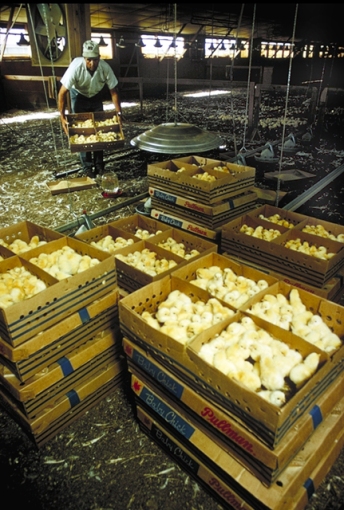
What goes into the making of an egg? You may have asked yourself about the lives of hens laying these eggs, but have you ever wondered where farms get a large supply of female chickens with such a slim supply of males? We can fool ourselves into thinking that maybe chickens just don’t breed males all that often, or perhaps male chicks go off and live their lives peacefully on some idyllic farmland. Yet nothing so fanciful coincides with the truth, which is that male chicks at only a few days old are “culled” or killed. Chicks are “sexed” by workers to sort out males from females, where the male half is sent to a painful and unfortunate end. The most common industry methods are carbon dioxide induced asphyxiation or maceration by high-speed grinding machines.
Sounds too cruel to be real, but sadly it is the truth. The killing of newly hatched male chicks is not just a factory farm reality, but a reality for all practices. Even backyard and small farm operations get their chicks from factory farm operationsthat sort out the males and sell only laying hens.
Veal Calves
The veal industry shares a strong connection to the dairy industry. Like in the case of male chicks in the egg-laying business, the male calves born into the dairy industry are considered a “waste” or useless byproduct of the industry into which they were born. The only way that dairy farmers can profit from male calves is to sell them for veal.
The earliest common slaughter age for veal calves stands around just a few days, while the absolute latest gives them approximately half a year to survive. During the short time they do live, calves are kept in veal crates, small enclosures that prevent the poor creature from moving at all. A common practice is to tether the neck of the calf to keep them from moving their heads. By keeping the calf immobile is considered a method to ensure the most tender meat possible.
Does Age Matter?
While the cruelty afforded to these young creatures is abhorrent, it begs the question: does it matter how early an animal dies for it to be considered an unnecessary and cruel act of slaughter or torture?
While some may cry out at the indignant nature of slaughtering infants and newborns, the fact remains: these animals will feel pain at any age, experience loss of life at any age, and be better suited for a life free of exploitation at any age. The idea of little baby cows and pigs being mercilessly beaten and thrown into piles of the deceased evokes a well of sympathy from those who cannot stand to see youth harmed, but it stands to reason that no less sympathy should be given to older animals.
Uncovering these facts is not done with the intention of valuing infant lives over all others, or to say that it is more of a tragedy when they are harmed. But rather, to make aware of the sort of conditions we would see if the animal agriculture industry were more open to sharing the details of the business. When we replace the cold barriers of the slaughterhouses and farms with glass walls and peer in, we happen to find that many victims of this practice will not live a year or more on this planet.
Order a FREE vegan kit: http://www.peta.org/living/vegetarian-living/free-vegetarian-starter-kit.aspx
Take PETA’s Cruelty-Free Shopping Guide along with you next time you head to the store! The handy guide will help you find humane products at a glance. Order a FREE copy HERE
Want to do more than go vegan? Help others to do so! Click on the below for nominal, or no, fees to vegan literature that you can use to convince others that veganism is the only compassionate route to being an animal friend.
PETA: http://www.petacatalog.com/catalog/Literature-39-1.html
Action for Animals has a very low price : http://store.afa-online.org/home.php?cat=284
Have questions? Click HERE
Read more…