HighestWelfare.Humane.Assured.GoodPractices.Vegetarian. Regenerative.Flexitarian.Lies...
What is the difference between No Welfare, High Welfare, and Highest Welfare when they all require animals to die? Only human comfort, NONE protect the actual animals. The most humane, ethical, and honest Webster-defined "welfare" is NOT exploiting animals - not using, not wearing, not eating, not killing - animals. The only meaningful position is vegan, everything else is just how humans euphemize animals' required suffering and violent deaths: no human exploits animals because they honestly believe that NOT exploiting animals is UNethical or INhumane.
A Plea To Feminists Who Are Vegetarian But Who Still Consume Dairy or Eggs
Source Animal Rights: The Abolitionist Approach
By Gary L. Francione
Dairy products represent a fundamental violation of the rights of nonhumans. Dairy is not morally distinguishable from meat.
Indeed, dairy represents a violation of rights that should be of great concern to feminists:
Cows are repeatedly and forcibly impregnated using a device called the “rape rack.”
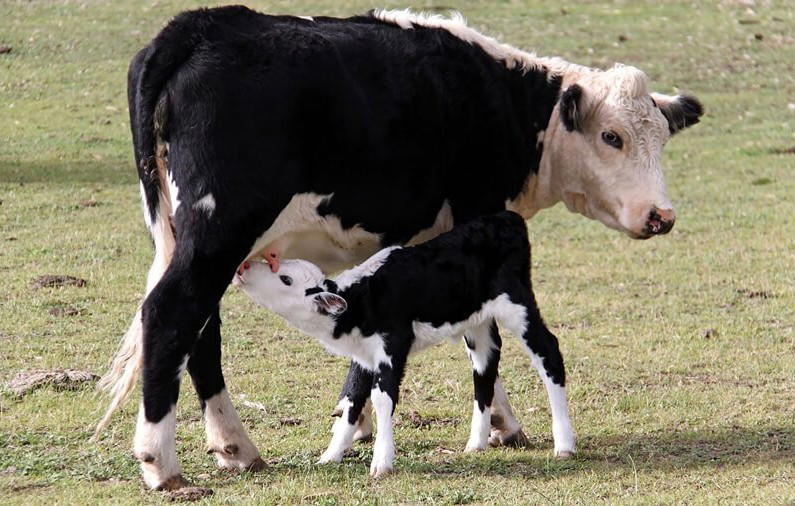
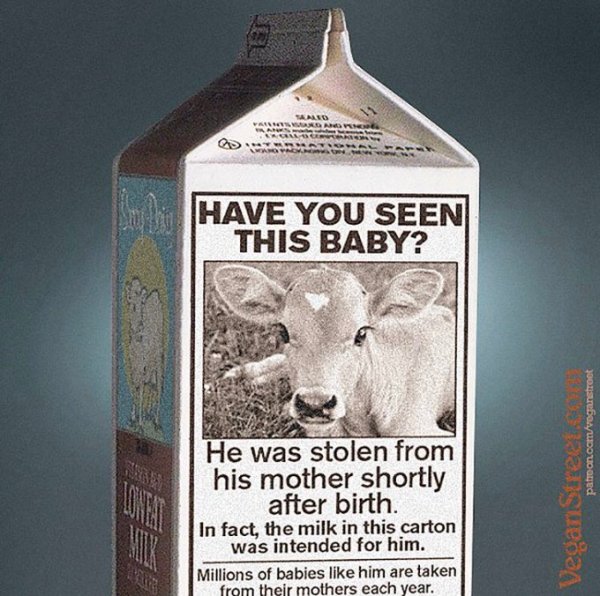
Their babies are taken from them immediately after birth (and a day or two or three later in “happy” farms) to stop the calves from taking milk. Male calves are sold for veal. Females become part of the dairy industry. Cows are wonderful mothers who grieve the loss of their babies. Anyone who has observed the separation of cows from their calves knows that it involves horrible, prolonged suffering on the part of mother and baby.
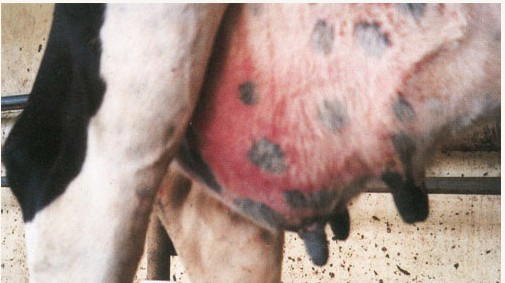
Cows routinely suffer mastitis (inflammation of the mammary gland and udder tissue), a very painful condition, from repeated contact with the milking machine.
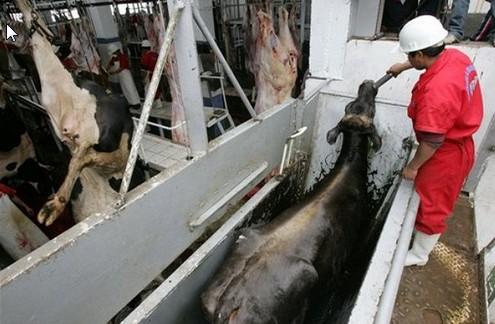
Dairy cows end up in the same slaughterhouses as their “meat” counterparts.
Dairy represents a commodification of the reproductive process of the cow and her relationship with her baby. It represents violence that should be of concern to us all, including, and particularly, those who claim to be feminists.
Eggs raise a similar concern in that hens, who are wonderful mothers, never get to see or to interact with their chicks.
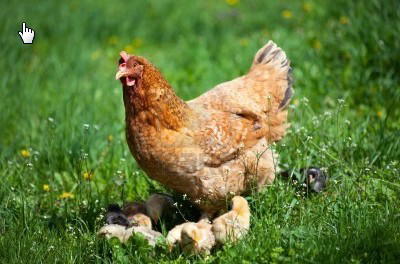
Breeders are confined in automated sheds where males and females mate although artificial insemination of poultry is also used. Eggs are collected and sent to hatcheries, where males, who cannot lay eggs and are not suitable for meat, are killed by being ground up, gassed, or suffocated as soon as they are sexed.
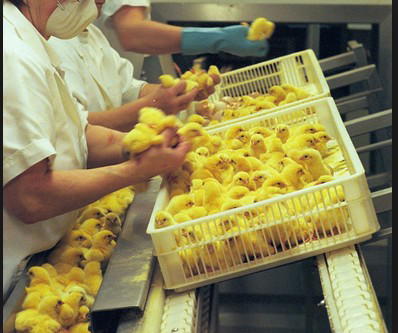
The females are sent at a day or two of age to grow-out farms where they are raised in cages or in a floored rearing facility. They never interact with their mothers.

Egg-laying hens spent no more than two years in the hell of a battery (conventional or “enriched”), or of a “cage-free” or “free-range” barn, until they are “spent” and slaughtered. They are periodically starved to maximize production. They are debeaked and declawed.
Again, the female’s reproductive system is commodified and manipulated, and her relationship with her chicks is destroyed.
If you are feminist vegetarian but you are still consuming dairy or eating eggs, you are drawing an arbitrary line between humans and nonhumans.
And this is precisely what speciesism is.
**********
If you are not vegan, please go vegan. Veganism is about nonviolence. First and foremost, it’s about nonviolence to other sentient beings. But it’s also about nonviolence to the earth and nonviolence to yourself.
If animals matter morally, veganism is not an option — it is a necessity. Anything that claims to be an animal rights movement must make clear that veganism is a moral imperative.
Embracing veganism as a moral imperative and advocating for veganism as a moral imperative are, along with caring for nonhuman refugees, the most important acts of activism that you can undertake.
The World is Vegan! If you want it.
Learn more about veganism at www.HowDoIGoVegan.com.
Gary L. Francione
Board of Governors Distinguished Professor, Rutgers University
©2016 Gary L. Francione
Stop ignoring the Be Fair, Be Vegan billboard

Please sign HERE
Source Change
Background
For the past three weeks, in the middle of Times Square, directly above the Good Morning America studios, and just a few blocks from the New York Times, there has been a billboard overhead that few could pretend not to notice. Amongst a barrage of self-promotion by corporate interests seeking personal gain, one message of hope stands proud and powerful in its uncompromising call to the viewer to right the wrongs of a public blinded by the prejudice of speciesism.
Be Fair, Be Vegan.
For decades now, we who refuse to ignore the plight of the other animals have endeavored in earnest to engage hearts and minds on behalf of innocent beings the world over.
We have accumulated a wide body of evidence to prove that this industry is completely unnecessary, disastrously cruel and immoral, and devastating to the health and wellbeing of our human population, our global society, and the very planet upon which we depend for our survival.
In spite of our sincere attempts to expose others to a reality that we know they would rightfully abhor and reject, we find ourselves not only dismissed and ignored (even by the very journalists one might expect to be champions of social justice) but more often than not, met with callous indifference by the media in general, serving to further illustrate how hardened people’s hearts are to the individuals we are fighting for: innocent, defenseless beings whose very selves have been claimed by us as resources to exploit; declared by their oppressors to be worth more as factories for the substances we are addicted to than as the main players in their own life stories.
We are animals too, and just like us, those who are not human are not inanimate objects to be bought and sold like produce by the pound, by the kilo, or (in the case of the fishes of the ocean) by the ton. Like us, each one of these individuals is an embodiment of life, and a vessel for feelings that we can only try to understand the depth of. Like us, they too deserve at least the hope of a future that will somehow deliver some kind of peace and safety in a world that is unimaginably cruel to them for no more reason than what it is that comes from their bodies: meat, milk, eggs, leather, wool, fur, down, honey, silk, and everything else we can possibly take from them.
Since its inception in 1944, the movement for nonviolence against the other species of this planet has been slowly but steadily growing: climbing from almost complete obscurity to take its well-deserved position as the most attainable hope the world has for real, life-affirming change.
United in solidarity for a common cause that we believe exposes the most widespread and socially-acceptable injustice in the world today, we now have the power of numbers, and our influence will continue to multiply exponentially.
We already have the solution to the biggest problems we face, from personal to planetary. There is but one thing we must do:
Be Fair.
Be Vegan.
Order a FREE vegan kit: http://www.peta.org/living/food/free-vegan-starter-kit/
Take PETA’s Cruelty-Free Shopping Guide along with you next time you head to the store! The handy guide will help you find humane products at a glance. Order a FREE copy HERE
Want to do more than go vegan? Help others to do so! Click on the below for nominal, or no, fees to vegan literature that you can use to convince others that veganism is the only compassionate route to being an animal friend.
PETA: http://www.petacatalog.com/catalog/Literature-39-1.html
Looking for merchandise? Action for Animals has a very good selection : http://store.afa-online.org/home.php?cat=284
Have questions? Click HERE
Read more…
Be Fair Be Vegan Billboard Campaign in Times Square NYC
Source Vegan Trove
By Trisha Roberts
Hi, Friends ~
I wanted to share with you a media advisory about a high-profile moving billboard and poster campaign. It will be the largest abolitionist vegan campaign of its kind in the United States and it starts Monday August 8th and runs till September 4th and it will be shown in in New York City, NY, in Times Square, Javits Center, and around the NYC city.
BeFairBeVegan (based in Colorado) is a non-profit organization on the cutting edge of social justice for animals.
So look out for this campaign. I’ve seen previews of the billboard, and I think it’s great, and the website is great as well. It has been created by Joanna Lucas who as some of you may know is an excellent writer and has done many blog posts about residents of Peaceful Prairie Sanctuary. So Joanna has been working very hard on creating the artwork for these excellent moving billboards which will be displayed around NYC and she’s created the website that goes with it. There will be a Facebook page and Twitter account that will accompany this campaign, so feel free to join it when it the campaign goes live at Monday 8th (that’s tomorrow) August at 5am Denver Colorado time, or 7am NYC time or 9pm if you live in Sydney on the east cost of Australia. So if you are in Times Square NYC tomorrow or Javits Centre, look up and see if you can take some photos and if you manage to, please feel free to send them to:
info (at ) VeganTrove (dot) com
and I’ll share them on the social media page (Be Fair Be Vegan on Facebook) associated with the campaign. I’ll post the link to the Facebook page in the information section of this podcast episode.
Here’s part of the media advisory composed by Angel Flinn from Gentle World. Angel Flinn and myself will be admins on the social media page just in case anyone has any questions about the campaign or questions about veganism.
“Be Fair Be Vegan is a campaign featuring moving billboards as well as static street posters, aimed at introducing viewers to the faces and feelings of the animals we use for food, clothing, research and entertainment.
For four weeks, these provocative slideshows will be displayed in two of the most high profile billboard locations in the country (Times Square and the Javits Center), accompanied by a series of street posters inviting passers-by to consider the circumstances of the victims of the animal industry while seeing them for who they are: sentient beings who value their lives.
The movement for the emancipation of nonhuman animals is now the biggest social justice movement since the abolition of slavery. Not only is the animal industry holding hostage the natural world and its inhabitants as well as sabotaging the health of our society, its practices are a violation of the most basic rights of the individuals it enslaves.
These billions upon billions of sentient beings are considered, by today’s ‘civilized’ society, to be nothing more than chattel property, and their owners are legally entitled to subject them to many forms of barbaric cruelty in the name of profit, convenience or pleasure.
As consumers, we have the power to take back control, and demand an end to the use of animals as commodities and resources. When we advocate for the widespread adoption of vegan values, we speak for the entire population of humanity’s victims – from wild animals who are hunted and exterminated to make way for the ravages of human excess, to domesticated animals who are bred and confined (whether in crates or pastures), and ultimately killed so that people can make use of the products of their misery.
The pandemic of violence in the world calls to us to re-evaluate our relationship with non-human animals – who are victims of the most extreme forms of our collective violence – and to recognize that they are no more meant to be our possessions than are people with different colored skin, women, children, or any other living beings. They too, are individuals, who value their lives, feel pain, fear death, and have a right to live free from oppression.
Angel Flinn, Media Coordinator
outreach (at) BeFairBeVegan (dot) com
So if you know anyone who might like to interview Joanna Lucas or Angel Flinn about this campaign, please get in touch with them at the contact details provided in this media release. I will put it details in the information section of this episode.
Let’s have good thoughts, that anyone who sees any of these prominent moving billboards and associated material with think about what they are participating in and seriously consider going vegan. Every billboard has a strong vegan message, and there is an associated vegan resource website where they can go to find out more about how to be vegan and more about veganism. So let’s support this Be Fair Be Vegan moving billboard campaign as much as possible and try and spread the word to media outlets, to bloggers and so forth, so that they might consider doing a piece on it. That’s how we can help spread the message far and wide. I’m certain there’s going to be some amazed people standing in Times Square and Javits Center tomorrow and for the next few weeks, who have never had the opportunity, which is a really precious opportunity, to think about veganism before and who have never had a clear message about sentient animals and their right not to be used as resources.
So this is a really wonderful opportunity for a lot of people, it’s a wonderful gift for them to have access to this most important message. So let’s do our best to spread this message far and wide about this campaign and this will reach other people who are not lucky enough to live in these particular cities to see these campaigns.
Thanks for listening. Till next time. Bye for now. 🙂
We shout from the mountains
the earth and the sea.
let us put the humane
in humanity!!!
Karen Lyons Kalmenson
Two Morality Tests…
Source YouTube, Kerry McCarpet
Are we the victims of social conditioning in more ways than we believe? How do we find out what we really think?
Order a FREE vegan kit: http://www.peta.org/living/food/free-vegan-starter-kit/
Take PETA’s Cruelty-Free Shopping Guide along with you next time you head to the store! The handy guide will help you find humane products at a glance. Order a FREE copy HERE
Want to do more than go vegan? Help others to do so! Click on the below for nominal, or no, fees to vegan literature that you can use to convince others that veganism is the only compassionate route to being an animal friend.
PETA: http://www.petacatalog.com/catalog/Literature-39-1.html
Looking for merchandise? Action for Animals has a very good selection : http://store.afa-online.org/home.php?cat=284
Have questions? Click HERE
Read more…
Awakening from Materialism: Vegans as Healers
Source The World Peace Diet
By Will Tuttle
Recent events highlight the injustice and violence of racism, sexism, heterosexism, and gross economic inequity, which cause tremendous suffering in our world, and even within many social justice movements, including the vegan movement. How can we get to the roots of these issues, and what role does the accepted materialism of our society play in this? How can each of us contribute most effectively to cultural healing?

Pig by visionary artist Madeleine Tuttle
To meaningfully address these questions, we are called first of all to break the great taboo and pull back the curtain of denial, and doing so, to clearly recognize that all of us are born into an industrialized herding culture that is organized at its core around reducing beings to things. Billions of other animals are seen and treated as mere commodities that have no other purpose than to be imprisoned, fed, impregnated, used, and killed by us through an obsolete and hauntingly unquestioned food system. We are trained from infancy by our culture’s relentless meal rituals not just to eat the flesh and secretions of these abused animals, but to eat and embody the attitudes of this herding culture as well.
Herderism and Materialism
It’s vital to make an effort to understand how and why these foods are harmful to us and others, and further, to understand how and why these attitudes are unhealthy and destructive as well—though our indoctrination to these foods and attitudes is most definitely profitable for the elites controlling the military-industrial-meat-medical-pharmaceutical-media-banking complex. Meals are the foundational indoctrinating ritual in every culture, and the pervasive violence of our society against animals used for food and other products not only destroys their freedom, peace, and well-being, but also harms and reduces ours as well, in ways that are typically invisible and unrecognized.
We are forced from infancy to adopt a set of mutually reinforcing mentalities in order to participate in this defining activity of our culture. These mentalities include disconnectedness, desensitization, denial, exclusivism, elitism, domination of the feminine, reduction and commodification of living beings, predatory competitiveness, gullibility, and materialism.
Being ritually compelled to adopt these attitudes and to live and function within a society that routinely imprisons, attacks, and consumes millions of animals daily wounds us all deeply on many levels. However, the wounding is hidden, and, like the violence, is mostly invisible because it is pervasive, all-encompassing, and normalized. Fortunately, each of us can make an effort to understand this, and we can each, with help from others, undertake a journey of healing, and free ourselves from both the behavior of eating, purchasing, and causing unnecessary abuse to others, and also from the underlying attitudes that cause this unnecessary suffering not just to other animals, but to each other and to ourselves.
The Two-Part Journey of Healing
This journey of healing and awakening is the vegan journey, and it is in many ways the greatest gift we can give to ourselves and to our world today. In fact, it’s becoming increasingly obvious that if we don’t, as a culture, take this healing journey to a more conscious and non-exploitive way of living, our industrialized violence will destroy the possibilities of a viable future for all of us.
It’s a two-part journey. The first part, freeing ourselves from the abusive behavior of purchasing and consuming animal-sourced foods, is relatively straightforward. The second part, freeing ourselves from the sticky web of interrelated attitudes injected into us by our herding culture, is more complex.
We have been herding animals now for about ten thousand years. It’s a practice that’s utterly obsolete, but it has insinuated its devastating tentacles not only into our planetary ecosystems and our culture, economy, and institutions, but also into our bodies, minds, feelings, and consciousness. Everything these tentacles touch, they damage, pervert, and destroy. Hamburgers, hot dogs, fish sticks, cheese, eggs, ham, tuna, chicken, yogurt, and ice cream are falsely portrayed as benevolent and required foods for us, when in fact they are completely malevolent and unnecessary. Animal agriculture and animal-sourced foods are destroying our health, our society, our ecosystems and other animals, and they also insidiously damage the landscape of our consciousness.
Being born into a herding culture, and into the exploitive structure of corporate capitalism that herderism has inevitably generated, injures us all from infancy. We all know in our bones that we are products of our communities and culture, and that the only reason any of us eats animal-sourced foods is because we are following orders that have been injected into us by our parents, families, and by every institution and tradition in our society. It is anything but a free choice.
With ten thousand years of practice in the attitudes required to herd animals, we have now unfortunately thoroughly incorporated the delusions of herderism into our worldview, to our detriment, and we have obediently passed these traditional delusions from generation to generation. In doing so, we have passed on herderism’s inexorably accompanying furies as well: war, slavery, exploitation of the feminine, the macho male role-model for boys, a wealthy elite class, racism and other forms of social injustice, poverty, disease, hunger, anxiety, competition, and disconnectedness from animals and from nature.
The sprawling and traumatizing delusion of herderism can be summed in one word: materialism. The defining educational practice of our culture is teaching us from infancy to harden our gaze, and to see certain beings as mere matter: as nothing more than physical objects, like sacks of cement. All of us, whatever our race, gender, orientation, or class happen to be, are ritually wounded by our cultural food program, compelled to mentally transform someones into somethings. We participate, buy, and eat cows, pigs, chickens, turkeys, geese, fishes, and other animals by their material weight. Their value is determined by the mass of the flesh on their physical bodies, and by the secretions and offspring they can produce for their owners. For us, they are mere material objects to be consumed. Our culture’s food rituals numb us into believing this patent falsehood.
After practicing this extreme form of materialistic and ritualized delusion for ten thousand years, generation upon generation, meal upon meal, bite upon bite, we have drifted farther than any culture ever has from the basic wisdom of connecting with and respecting life—both our own and others. We have become a thoroughly materialistic culture in the deep sense that materialism is, philosophically, the attitude and way of seeing and acting that reduces everything to matter. Not only are other animals reduced to being mere physical objects that are born and die, but we are taught to see ourselves and each other, and all life, this way as well. This delusion of materialism pervades our unjust economic system, as well as our reductionist science, religion, and education, and all our institutions. It devastates not just animals and ecosystems, but also our inherent wisdom, compassion, and well-being.
Veganism is the struggle to free ourselves from this delusion of materialism, and to see beings as beings, rather than as objects to be used. This awakening from materialism is a challenging endeavor, liberating our awareness and thus liberating animals and all of us by helping us regain our ability to see beings as subjects rather than objects. Opening our hearts and unblinding our eyes, we respectfully release other animals to once again celebrate their lives in the natural world as they are intended, and as they did for millions of years before we began to steal their freedom, and imprison and commodify them. This awakening also helps liberate us from our cages as well: the persistent and unrecognized cages of injustice and delusion. We can respectfully release other people from indoctrinated mental categories based on race, gender, and so forth, and this helps free us from the delusions underlying injustice. As we open our minds and question our culture’s narrative of abuse, we take the journey to overhaul not just our outer behavior, but also our underlying attitudes, assumptions, and way of being.
Veganism is nothing to be proud of because it is not so much an accomplishment as it is an ongoing process of questioning, and of recognition, realization, remembering, and of returning home to the ever-present wisdom and grace that have been taken from us. When we see beings, we naturally see beings, not things—and relate to them as such, with respect. Veganism is no big deal, really; it’s our natural vision, increasingly liberated from the hijacking influence of our culture’s toxic herderism. Yet it is an ongoing endeavor of enormous consequence also, because vegan living is a liberating adventure of questioning the official narratives both externally as well as the aspects that we have internalized.
Deep Veganism: The Antidote to Herderism and Materialism
Now we get to the real issues we face as vegans, which are connected to the wounds that we have all endured by being born and raised in a herding culture of materialism that treats beings as things and indoctrinates all of us into this mind-set. What gives veganism its power is that it’s solidly practical and behavioral, and as praxis, it also has a theoretical and internal dimension as well. As concrete behavior, it’s an effort to minimize the violence toward animals flowing from our actions, so we eat, wear, and use no foods, products, or services that depend on human abuse of other animals, including human animals. Internally, vegan living is a journey of healing as we work our way out of the toxic brambles of materialism and reductionism, and recognize the beauty of other expressions of life, and regain our natural human yearning to protect and care for what we value and appreciate.
As our heart and mind both open, we begin to see that, while the outer expression of veganism in our patterns of consuming is certainly important and helpful, there is much more to veganism than boycotting industries and products. We begin to see that vegan living is rejecting the delusion of materialism that is often internalized in our unconscious assumptions, and that it calls us to realize that all life is a manifestation of consciousness that is, essentially, infinite, benevolent, joyful, and eternal.
What this means in practice is that we take the journey to deep veganism, questioning and transforming not only the materialism of our outer actions, but also the philosophical materialism that has been injected into our consciousness by the herderism of our culture. As vegans we move to a plant-based way of eating and living for ethical reasons, to promote justice, compassion, freedom, and health for animals, for hungry people, for workers, for ecosystems and wildlife, and for future generations of all beings. We do this mindfully, and while our organic, whole-food plant-based way of eating and living benefits our health and happiness, it also helps and uplifts everyone.
As our awareness continues to expand, we realize that the only person we can change and liberate is ourself, and that the way to be an effective vegan advocate is to strive to ever more deeply understand ourselves and to uproot the materialist and reductionist tendencies that still remain in our consciousness, that bind us in dualism, and that generate our tendency to blame, judge, exclude, and criticize others, and to see others as the problem.
Deep veganism is an ongoing process of maturing emotionally and existentially beyond the indoctrinated and materialist view of trying to change other people, and recognizing that this manipulative effort is a form of violence that is based in the materialist delusion that we are essentially a separate self, an object that was born and will die, and that others are as well. This delusion propels us try to maneuver other people into changing. It also pushes us to try to find ways to effectively market this vegan message to others as if veganism is a mere commodity that we are packaging for consumption. With deep veganism, we realize that efforts to manipulate others to change in a way that we want them to, and arguing with or criticizing or blaming them, run contrary to the spirit of inclusiveness and respect that is the essence of vegan living. We realize that we’ve been vegan in our outer appearance, but internally we’re still trapped in the shallows of the materialist herder delusion of separateness, exclusiveness, and manipulativeness. Veganism is a call from our true nature to radical questioning of virtually all of the assumptions of our cultural programming. It is a call from our future and more evolved awareness to remember that there is no way to spread veganism, which is love, kindness, and respect, other than embodying love, kindness and respect for all animals including human animals. The path is the goal.
Farming Children

Cow by visionary artist Madeleine Tuttle
With deep veganism, we become more effective in our advocacy because we begin to understand herderism and that through well-meaning but injured parents, relatives, and authorities, we’ve all been wounded. This helps us deepen our compassion for everyone. We see more clearly that forcing infants and children to eat the flesh and secretions of abusedanimals is a pervasive and culturally approved form of child abuse on several levels. First of all, it causes us as children tremendous physical suffering in the form of sore throats, earaches, obesity, diabetes, constipation, and many other conditions. But the abuse we endure runs to much deeper levels than this.
When as children we realize what hot dogs and bacon actually are, a cold darkness enters our chest. Our natural sense of kindness toward other animals is crushed under the weight of the overwhelmingly pervasive, inescapable, relentless, and hypnotically ignored cultural practice of heartless killing and eating, and we are thrown forever out of the garden of kindness, innocence, self-esteem, and harmony. What we refer to in The World Peace Diet as Sophia, the inner sacred feminine dimension of consciousness that naturally yearns to love and protect life, is stomped on and repressed by the harsh and inexorable violence of herderism. We know, and we eat this profoundly disturbing knowing every day, that there is no compassion or justice for other animals. The devastating effects of this daily reality—that we are ritually compelled by those we trust implicitly to both eat and cause violence with every meal—cannot be overstated.
Our entire culture is, in many ways, modeled on a farm where we, as newborn infants, are treated like calves on a dairy, as exploitable commodities in a heartless economic system. Like the calves we are not allowed to bond with our mothers properly. We have foods and pharmaceutical injections forced on us that are not in our interest but are advantageous to our exploiters, and we enter a system of intense social and economic competition where we are seen as objects, and are taught to see ourselves and other people in the same way, as competitors, as different, and as instruments to be manipulated and used. We are forced to eat foods of embedded terror, despair, and anxiety. Our natural sense of kinship with other animals (and ultimately with each other) is fractured as we dine on their misery.
Our capacity for sensitivity and intuition is repressed as we undergo the emotional numbing that herderism requires, and our sense of celebrating our lives in an essentially benevolent and loving atmosphere is compromised if not completely shattered. With deep veganism, we grow to understand how all of us have been psychologically wounded by being born into this herding culture’s violent and materialistic way of living, and through this understanding, we reawaken our compassion not just for animals but also for other wounded people. As this happens, our tendency toward prejudice, blame, criticism, and trying to change others dissolves into a deeper yearning to show them love and respect, and to help them take the journey of healing that we are in the process of taking. A new sense of respect informs our advocacy efforts, and while we are still keenly aware of the misery and abuse inflicted by animal agriculture and the actions of indoctrinated and wounded people, we are grateful for the opportunity that we have daily to learn more, grow, and contribute our unique gifts to bring healing to our world.
We can realize that, because we are all wounded by our culture’s herderism and pervasive materialistic assumptions, we can cultivate a sense of solidarity with other people and a sense of compassion and understanding for them, even though they may be acting in ways with which we disagree. We see that the perpetrators are also victims. Hurt people hurt others. We all need healing and healing comes from love. Disrespect cannot heal disrespect; only respect and love can heal. The most effective contribution I can make is the effort to heal my consciousness, so that I am ever more authentically living the truth of veganism, which is kindness and understanding for all beings, including other human beings and myself.
Effective Advocacy as Self Awareness and Self-Liberation
The movement to liberate animals is the movement to liberate ourselves. This is the liberation movement that goes to the essential root of all our many problems, injustices, and crises, which is herderism, the mentality of materialism. It requires us to question the old dualistic way we have engaged in social campaigns—that we are right and they are wrong—and to honor the deeper truth that we share similar wounds and in healing them in ourselves, we help others to heal them in themselves.
It seems that a vegan movement is developing that is based increasingly on this understanding. As we take responsibility for changing the one being we each can change, we create a new foundation for embodying vegan values of respect for all. As more of us question the official story of materialism and strive to embody deep veganism, we are creating an unstoppable movement that will positively transform our world. Undertaking the challenging inner work to more fully embody the presence of loving understanding, we will attract and motivate others to take the same journey.
What is this inner work? Essentially, it is the practice of cultivating mindfulness and inner listening. Just as we’ve been relentlessly programmed by our culture, we’re called to be relentless in our effort to free ourselves from this conditioning. A regular and unrelenting inner practice of meditative openness, and of questioning the inner stories, concepts, and ongoing internal dialogue can liberate consciousness to glimpse its true nature. Through cultivating receptive awareness and inner stillness, we can realize that our consciousness is essentially free, pure, and vast, like the clear and unencumbered sky. Through this, we can see more clearly the clouds of conditioned thought and habit as they appear, and that we are not these clouds; we are the space of awareness in which they arise and to which they return. We see that we are not things nor are others ever things. We can discover directly the deeper truth that we are all manifestations of eternal consciousness, and the blinding spell of materialism and herderism begins to dissolve. Our relationship with ourself, and with other expressions of life is transformed. The roots of speciesism, racism, and other delusions are recognized as the programming of herderism’s materialist delusion, and as they dissolve we naturally see with new eyes and new hearts.
Veganism is far more than working for the rights of other animals. It calls us to a complete social transformation through transforming our attitudes, assumptions, and relationships at the deepest level. It’s the adventure of a lifetime to awaken our awareness and ever more deeply live the truth of our interconnectedness with all life. We can transform ourselves, and this transforms our advocacy efforts so that, in Walt Whitman’s words, “I and mine do not convince by arguments. We convince by our presence.” It’s not so much what we say; it’s how we say it and how congruent we are in manifesting the message we are conveying.
As individuals and as a movement, as we increase our capacity to embody veganism as kindness and respect for other human animals, our movement will become itself the change we’d like to see in the world, dramatically increasing our effectiveness. We will plant seeds of positive change in others with every word, intonation, and gesture, and, awakened from the dualistic materialism of herderism, others will change without our trying to change them. The heart of the vegan movement is education, and authentic education is self-discovery that takes place in a context of trust and respect. As vegans, our main effort is to embody veganism, connect with our intuitive wisdom, and let that guide our actions and interactions. From this can flow a profusion of campaigns, films, restaurants, books, blogs, websites, products, sanctuaries, music, art, and grassroots educational efforts that all embody the vegan message. As we let go of being attached to the fruits of our actions, we free others and ourselves. Not trying to change others, but to respect and understand, we become the space of authentic change and instigate it by sharing our experience, example, and insights. Ironically, this is what helps create lasting and empowering change in others. It also frees us as advocates from burnout, anger, and despair.
As vegans, we are most effective in our advocacy as we recognize this and inspire others through respectfully sharing our stories and perspectives, and healing herderism’s materialism within our consciousness and within our way of communicating and relating. As love, joy, and gratitude increasingly inform our thoughts, words, and actions, we naturally plant seeds of veganism wherever we go. The vegan (r)evolution of kindness, inclusion, and healing calls us to take the ongoing inner steps to deepen our veganism. Through this effort, we will become the people who can co-create the fundamental social and personal transformation that our positive future is calling from us.

Dolphin by visionary artist Madeleine Tuttle
Buckminster Fuller emphasized that the way to a positive future is not through fighting against an abusive and inefficient system or situation. Rather, it is to build an alternative that reflects the harmony, freedom, and integrity that we envision, and that naturally renders the existing system obsolete. Veganism is not merely a critique of a violent and outmoded system; it is living an inner and outer alternative that is nutritious, delicious, sustainable, healing, liberating, and positively transformational on every level. Each of us can contribute to it with our unique abilities and insights, and help heal the foundation of our relationships with the Earth, with other animals, and with each other.
The vegan wave is building and is irresistible because it is our true nature calling. May our words and example instigate the benevolent revolution that liberates animals and all of us from the herding delusion of materialism, healing our hearts so that we discover our purpose and celebrate our lives as we are intended to on this bountiful and beautiful Earth.
Find the best of you
And you will be
Happier too.
Karen Lyons Kalmenson
(For information about Dr. Tuttle’s online training in effective vegan advocacy.)
TEDx University Of Stirling: THINK – Kerry McCarthy – Veganism
Source YouTube TEDx University of Stirling
Order a FREE vegan kit: http://www.peta.org/living/food/free-vegan-starter-kit/
Take PETA’s Cruelty-Free Shopping Guide along with you next time you head to the store! The handy guide will help you find humane products at a glance. Order a FREE copy HERE
Want to do more than go vegan? Help others to do so! Click on the below for nominal, or no, fees to vegan literature that you can use to convince others that veganism is the only compassionate route to being an animal friend.
PETA: http://www.petacatalog.com/catalog/Literature-39-1.html
Looking for merchandise? Action for Animals has a very good selection : http://store.afa-online.org/home.php?cat=284
Have questions? Click HERE
Read more…
Vegan: Everyday Stories
Source YouTube: Northwest Veg
Vegan Everyday Stories: Trailer
Vegan: Everyday Stories
Take the next step at: http://VeganMovie.org/next-steps
Support this movie with a tax-deductible donation at: http://VeganMovie.org/donate
Vegan: Everyday Stories is a feature-length documentary that explores the lives of four remarkably different people who share a common thread – they’re all vegan. The movie traces the personal journeys of an ultramarathon runner who has overcome addiction to compete in one hundred mile races, a cattle rancher’s wife who creates the first cattle ranch turned farmed animal sanctuary in Texas, a food truck owner cooking up knee-buckling plant-based foods, and an 8-year-old girl who convinces her family of six to go vegan.
VEGAN 2016 – The Film [PART 1]
Source YouTube Plant-Based News
Many thanks to Robbie Lockie for adapting the intro. You can find his other work here: http://www.peopleof.london/
Also to Eating You Alive, where I got several of the high quality clips from: https://www.youtube.com/channel/UCjT_…
Also to Vegan Geezer and London Vegan Actions for much of the protest footage:
https://www.youtube.com/user/VeganGeezer
https://www.youtube.com/user/veganact…
Also to everyone else, who made this video possible!
**************
PLANT BASED NEWS LINKS
Support my work on Patreon:
https://www.patreon.com/plantbasednews
• FACEBOOK: PLANT BASED NEWS https://www.facebook.com/plantbasednews
• YOUTUBE: PLANT BASED NEWS https://www.youtube.com/plantbasednews
• TWITTER: @plantbasednews https://twitter.com/plantbasednews
• INSTAGRAM: @plantbasednews https://instagram.com/plantbasednews
Order a FREE vegan kit: http://www.peta.org/living/food/free-vegan-starter-kit/
Take PETA’s Cruelty-Free Shopping Guide along with you next time you head to the store! The handy guide will help you find humane products at a glance. Order a FREE copy HERE
Want to do more than go vegan? Help others to do so! Click on the below for nominal, or no, fees to vegan literature that you can use to convince others that veganism is the only compassionate route to being an animal friend.
PETA: http://www.petacatalog.com/catalog/Literature-39-1.html
Looking for merchandise? Action for Animals has a very good selection : http://store.afa-online.org/home.php?cat=284
Have questions? Click HERE
Read more…
Why doctors don’t recommend veganism: Dr Michael Greger
Source YouTube
By Dr. Michael Greger & Plant-Based News – Guy Cassidy
Order a FREE vegan kit: http://www.peta.org/living/food/free-vegan-starter-kit/
Take PETA’s Cruelty-Free Shopping Guide along with you next time you head to the store! The handy guide will help you find humane products at a glance. Order a FREE copy HERE
Want to do more than go vegan? Help others to do so! Click on the below for nominal, or no, fees to vegan literature that you can use to convince others that veganism is the only compassionate route to being an animal friend.
PETA: http://www.petacatalog.com/catalog/Literature-39-1.html
Looking for merchandise? Action for Animals has a very good selection : http://store.afa-online.org/home.php?cat=284
Have questions? Click HERE
Read more…
A Vegan’s Guide to Tackling Naysayers

Wikimedia Commons
Source Ecorazzi
By Dr. Frances McCormack
One of the skills required of an advocate for veganism is adaptability. Since no two advocacy conversations will ever be the same, it’s almost impossible to predict the trajectory of any such discussion. Although there are some good templates and guidelines (Francione’s and Charlton’s example of engaging moral concern and following it up with rational argument, demonstrated in its fullest form in Eat Like You Care, for instance), the details of these kinds of encounters will be determined by so many factors both in and out of the advocate’s control. We advocate in different spheres, online and off, and to people with whom we have varying levels of familiarity; the only constant is our message and, depending on nuances of our delivery and the attitude of the listener, sometimes things go wrong.
Now, I’m not talking about catastrophic results; in several years of advocacy, I’ve only had one discussion about veganism that turned sour, and I wrote about it here; interestingly, that was not an advocacy encounter that we sought out, and it was one in which our interlocutors had already, it seemed, planned the conversation as an intellectual contest (“you win,” they conceded to my bewilderment; I hadn’t realised it was a competition). But while such results (unfriendings, defensiveness, etc.) are extremely rare in my experience, I will not pretend that they won’t happen. If people can get into heated discussions over sports teams and toothpaste-tube lids (or their absence), then they can, and will, get into heated discussions over moral issues.
If you advocate, you have to be prepared that things won’t always turn out the way you planned and, dispiriting as this may be, it should not deter you. Let’s take a look at some of the things that could go wrong, and how you might address them.
The Unreceptive Listener
The person to whom you’re talking may not care about animals. They’ll usually signal this to you quite early on, either explicitly (by stating that they don’t care about animals) or implicitly (by not demonstrating any kind of empathy towards animals). These discussions are not necessarily fruitless; the moral principles of veganism can still be clear to those who think logically and can identify with the ideas of justice and fairness that underpin veganism. In this case, framing your argument in terms of the avoidance of causing unnecessary suffering may be useful; I also recommend asking questions of your interlocutor to draw out more information about their own moral system in order to give you a foundation on which to build your responses. At other times, however, you may find you’re your interlocutor is either devoid of empathy towards animals or cannot be convinced that moral principles of fairness can apply to nonhumans. If you are advocating offline and you feel there’s little point in continuing the discussion, you’re probably right: you won’t always be able to turn someone who is morally indifferent about animals into someone who recognises their moral worth, and there are plenty of people who do care and to whom you may be better spending your time advocating. In this case, withdraw from the discussion politely, and leave your interlocutor with something to think about. If you’re advocating online, though, there may be a benefit in continuing the discussion for a short while at least (if your interlocutor is willing) as there may be people reading silently who will take on board what you say.
The Perpetual Fault-Finder
You’ll invariably meet someone (if you advocate frequently enough) who has nothing but objections to make to your rational argument about why animals are not ours to use. Answers to the most common of these objections are found in Eat Like You Care, but be prepared to play several rounds of “Defensive Omnivore Bingo”. Some of these objections arise from genuine concern, curiosity, or even misconceptions, so always give your interlocutor the benefit of your intellectual generosity and answer questions that you may have heard a thousand times before (“where do you get your protein?”or “won’t cows’ udders explode if they aren’t milked?”) with courtesy and a genuine will to help. You will, however, occasionally encounter some questions that are too frivolous to be sincere (“why did God make animals out of meat if he didn’t intend us to eat them?”*). Such questions are usually asked with a self-satisfied and smug grin, and although you may find yourself clenching your teeth and losing patience, calmly bring the topic back to the central moral points that you wanted to make. Again, it’s useful to continue fruitless discussions longer online than you would in person for the benefit of any silent readers. Try to avoid resorting to the same kind of mockery that you feel your interlocutor is using; humour is okay, but always err on the side of magnanimity with those to whom you are speaking.
The Offended
You will occasionally meet people who react in a very negative way to the vegan message. Some of these will be people who consider themselves animal lovers but who are trying to reinterpret that perception of themselves in light of this new information. Again, always err on the side of patience and kindness. There may come a time, however, when it becomes counterproductive to continue the discussion with that person at that particular point in time if the conversation turns circular or becomes too heated, but ending a discussion about veganism does not necessarily mean that you can’t resume again at a later date. Always try to end on a positive note, pointing out any areas of common ground. If, however, you are feeling in any way threatened during a conversation about veganism (or anything else!), do trust your instincts and withdraw as soon as you can; your safety is important.
Our Own Worst Adversaries
Sometimes things can go wrong in vegan advocacy because we just can’t let the topic go. I’ve seen advocates online who make their point clearly, who present the moral message unequivocally, but who then feel that they have to have the last word and who keep the conversation going to the detriment of their own time and energy levels. Always question your own intention in continuing a discussion that seems to be going nowhere, and remember the value of a planted seed. There are millions of people out there who care about animals and who are ripe for conversations about veganism; focussing on winning the argument detracts from the real purpose of advocacy, which is to attempt to persuade people to align their behaviour towards animals with moral principles that they already hold.
Most of your advocacy encounters will take the form of interesting and enjoyable conversations. These conversations are important because the more of us there are talking about veganism as a moral imperative, the more we chip away at the societal attitudes to animals that keep people exploiting. Think of the conversations that don’t go so well as a planted seed for the listener and as an opportunity to practise, reflect, and hone your skills, and you won’t go too far wrong.
—————————————————–
* The most bizarre objection to veganism ever heard by my partner when he once had such frivolous objections volleyed at him was “if humans weren’t supposed to eat meat, they wouldn’t have needed to invent [yes, invent!] fire to cook it.” I, on the other hand, once heard “in a vegan world we’d never have the chance to meet cows. If we didn’t meet cows, we’d never learn to care about them.”
Order a FREE vegan kit: http://www.peta.org/living/food/free-vegan-starter-kit/
Take PETA’s Cruelty-Free Shopping Guide along with you next time you head to the store! The handy guide will help you find humane products at a glance. Order a FREE copy HERE
Want to do more than go vegan? Help others to do so! Click on the below for nominal, or no, fees to vegan literature that you can use to convince others that veganism is the only compassionate route to being an animal friend.
PETA: http://www.petacatalog.com/catalog/Literature-39-1.html
Looking for merchandise? Action for Animals has a very good selection : http://store.afa-online.org/home.php?cat=284
Have questions? Click HERE
Read more…
Which Will We Choose?

Wikimedia Commons
Source Gentle World
By
We human beings are a complex, multi-faceted species. The consciousness that motivates us is a dichotomy in which a battle rages between the violent, angry, unreasonable, selfish, jealous, greedy, cruel part of our nature and the gentle, compassionate, kind, reasonable, just, empathetic, generous part. Whichever part we choose to nurture is revealed, moment to moment, in our behavior, which molds our individual and collective character, and ultimately determines our destiny.
The state of the world in which we live indicates that so far, our collective violent nature is winning the human race. From a very early age, we are fed heaping portions of it. Our history is fraught with violence, our books are violent, our entertainment is violent, our sports are violent, our heroes are violent; even our gods are violent. But the most insidious influence is the violence we ingest in our food, in the form of the bodies and things that come from the bodies of other species. When we eat these foods, as we do throughout our lives, including our formative years, we consume all the violence that brought them to our plates along with the misery of its victims. By the time we become “adulterated,” we are contaminated on a cellular level, so that we accept and even expect it as the norm.
From the beginning of recorded history, we human beings have been killing, exploiting, abusing and in general, perpetrating one or another form of violence upon every species in our power, including our own. Violence is so much a part of our human history, that it feels safe to assume that this behavior is inherent in our species, and it may well be. We teach our children, by example, that anger, which is its trigger, is a natural, acceptable response to those who disagree with us. For our governments and even our religions, violence is the “go to” solution of choice for many problems, including that of violence itself. It is so ingrained in our culture and psyche that few of us take the phrase “peace on earth” any more seriously than we do “have a nice day.”
How can we oust such a powerful force from our very nature to become the gentle selves we know we can be? How can we even acknowledge, lest we be perceived as weak, that there is a part of us that cringes at even the thought of violence and is shocked and sickened at the sight of it? Is there any hope at all for a peaceful resolution of the opposing forces in our nature, which are driving us mad? If so, the answer must be the pillars of sanity we call reason and compassion.
Veganism is reason and compassion in action. It is a spiritual, yet practical giant step toward that end, available to all who are willing to take it. It is a force for justice and sanity that empowers our gentle nature to lead us out of the ocean of violence in which we are drowning, to the safety of its shores. By eliminating animal products not only from our diets, but from our lives, we actually lose our appetite for violent behavior, with each day that goes by. And miraculously, as we do, we evolve ourselves to a gentler species. Our minds are brighter. Our hearts are warmer. Our health is more vibrant. Our integrity increases. Our self-esteem soars. By simply living a gentler way, a new perception emerges, from which nothing ever looks the same again.
Count Leo Tolstoy said, “As long as there are slaughterhouses, there will be battlefields,” and those we consider some of the greatest minds agree. Voltaire, Shaw, Emerson, Thoreau, Alcott, Franklin, da Vinci, Gandhi, The Buddha, Einstein, Schweitzer, Socrates, Plato, Plutarch, Cicero, Pythagoras and many others have written that in order for human beings to create real peace on earth, we must first stop feeding ourselves and our children products of violence. Isaac Bashevis Singer, the great Yiddish story teller, believed that our heartlessness and utter mercilessness toward our fellow earthlings for our own gratification is reason enough for the pandemic guilt, depression, anxiety, disease, and never-ending wars that plague our species.
Whichever part of us wins this age old struggle between our violent and gentle natures will determine the destiny of the human race.
Which will we choose?
Order a FREE vegan kit: http://www.peta.org/living/food/free-vegan-starter-kit/
Take PETA’s Cruelty-Free Shopping Guide along with you next time you head to the store! The handy guide will help you find humane products at a glance. Order a FREE copy HERE
Want to do more than go vegan? Help others to do so! Click on the below for nominal, or no, fees to vegan literature that you can use to convince others that veganism is the only compassionate route to being an animal friend.
PETA: http://www.petacatalog.com/catalog/Literature-39-1.html
Looking for merchandise? Action for Animals has a very good selection : http://store.afa-online.org/home.php?cat=284
Have questions? Click HERE
Read more…
Art by Beth Levine
Source Art By Beth Levine
Hello Friends and Family,
Many of you know that I have been working on making greeting cards out of some of my Vegan/Animal Rights art work.
And now they are ready for sale.
I’ve attached an order form. The order form has a photo of five different pieces of art work. Each piece of art work will be on the front of a greeting card.
If you’re interested in purchasing any number of sets (a set consists of 10 cards and 10 envelopes; 2 cards of each images), there are two ways to order. One is to fill out the form in the below and respond to this email. The other is to print out the attached PDF form and snail mail it to me at the address below or scan it and email it back to me at either of the email addresses below.
Cards are sold in clear topped boxes, but if cards are shipped, ribbons will replace boxes to keep shipping costs down.
If we’re able to arrange hand-delivery, then there are no shipping costs.
10% of profits will be donated to an animal rights organization.
Please send this email to anyone who you think might be interested.
If you have any questions, please call me at 301-807-2347.
Best regards,
Beth
Earthling Ed on YouTube – Amazing
Source Earthling Ed, YouTube
The Earthlings Experience Leicester Square 3.6.16 – how do the public respond to the footage? Should we be showing this footage to children? A parent responds.
http://www.londonveganactions.com/
https://www.facebook.com/londonvegana…
https://www.facebook.com/theearthling…
If you’re watching, thank you for your support and for your time. Namaste! ☯
& thank you to Luna for her continuous help with my channel.
earthlingedward@gmail.com | IG @earthlinged | twitter @earthlingedward
Veganism isn’t just a diet, it’s a united global movement bound together by kindness, we are all capable of compassion.
So wake up & go vegan.
http://vegankit.com/
http://www.veganuary.com/
http://www.veganuary.com/starter-kit/
DOCUMENTARIES TO WATCH NOW • FORKS OVER KNIVES + COWSPIRACY + EARTHLINGS!
FORKS OVER KNIVES [FULL MOVIE ON NETFLIX]:
https://www.youtube.com/watch?v=O7iju…
COWSPIRACY [FULL MOVIE ON NETFLIX] & EYE-OPENING FACTS:
https://www.youtube.com/watch?v=nV04z…
http://www.cowspiracy.com/facts/
EARTHLINGS [FULL MOVIE]:
https://www.youtube.com/watch?v=uEliP…
MERCY FOR ANIMALS – FROM FARM TO FRIDGE:
https://www.youtube.com/watch?v=icOD7…
GARY YOUROFSKY – THE MOST IMPORTANT SPEECH YOU WILL EVER HEAR:
https://www.youtube.com/watch?v=U5hGQ…
101 REASONS TO GO VEGAN:
https://www.youtube.com/watch?v=W4HJc…
DR. MICHAEL GREGER – NUTRITION FACTS
http://nutritionfacts.org/
https://www.youtube.com/user/Nutritio…
MUSIC FEATURED:
https://soundcloud.com/freehiphopbeat…
https://www.youtube.com/watch?v=VZa3I…
As vegans we are always called bullies for pointing out that murdering and exploiting animals is wrong and unnecessary, but how does this make any sense? Social justice movements have always been criticised and if we look through history we see countless other examples of activists who were ridiculed and violently opposed but who are now praised as pioneers of equality.
WHY ARE VEGANS SO ANGRY?:
https://www.youtube.com/watch?v=i2xKr…
Are human rights more important than animal rights? How should one approach being an activist if your concern is primarily for human rights? Vegan Speak & I chat about this topic.
VEGAN SPEAK:
https://www.youtube.com/watch?v=efQHn…
30 DAYS, 30 EXCUSES: GO VEGAN? HUMAN ISSUES ARE MORE IMPORTANT:
https://www.youtube.com/watch?v=Hd_Fu…
The Matrix as Metaphor for Animal Advocacy

Wikimedia Commons
Source Free From Harm
By Robert Grillo
The following is excerpted from my (Robert Grillo’s) book, Farm to Fable: The Fictions of Our Animal-Consuming Culture, due out Summer, 2016.
It appears that most children are born with an innate empathy for animals. They learn prejudice and discrimination based on race, sex, and species from the adult world. For example, when I was a child, I recall being taken to petting zoos on school field trips where we were given strict guidelines for how to interact compassionately with the animals. But then, later that evening, we would be served the same animals we were told to respect when alive. What seemed like baffling hypocrisy to me then is a testament to how powerful cultural and social forces lead us to turn against our hearts and minds, especially when it comes to the animals we eat. And even more startling is how widespread and consistent this phenomenon is in all of the animal-eating cultures of the world. The question I have grappled with for years now is: how can this conditioning work so well on so many of us for so long?
This question is central to the film, The Matrix. While most narratives from popular culture are carefully crafted around what we want to see, hear, and believe, The Matrix asks us to question what we’ve been taught, to separate what is illusion from what is real, what is oppression from what is freedom. And The Matrix is all the more important because of its notoriety as a cult classic. In the film, Morpheus explains to Neo that the Matrix is a simulated reality based on what the world was like in 1999, into which harvested humans are pacified and trapped as slaves by the sentient machines of their own creation. Morpheus and his followers make up a rebel group who hack into the Matrix and “unplug” enslaved humans and recruit them as rebels. Morpheus becomes convinced that Neo is “The One” prophesied to end the war between humans and machines. In one defining moment, he offers Neo a choice to take the red pill or the blue pill, explaining that taking the red pill will reveal the truth about reality. When Neo chooses the red pill, Morpheus then explains what the Matrix means:
Morpheus: The Matrix is everywhere. It is all around us. Even now, in this very room. You can see it when you look out your window or when you turn on your television. You can feel it when you go to work . . . when you go to church . . . when you pay your taxes. It is the world that has been pulled over your eyes to blind you from the truth.
Neo: What truth?
Morpheus: That you are a slave, Neo. Like everyone else you were born into bondage, into a prison that you cannot taste or see or touch. A prison for your mind. (1)
Read More HERE
What Does Abortion Have to Do with Animal Agriculture?
Source In Defense of Animals USA
By Dr. Will Tuttle Ph.D.
Where do you stand on abortion? How about animal agriculture? These two hot topics are not as separate as they may seem. Read this eye-opening guest blog by international speaker and “The World Peace Diet” author Dr. Will Tuttle Ph.D.
One of the most persistent ethical and social dilemmas in our culture is the abortion issue, yet rarely do we make the critical connections between our culture’s routine exploitation and abuse of other animals and our ongoing struggle with abortion. It is an aspect of what I refer to in The World Peace Diet as the boomerang effect: the abuse we inflict on animals inevitably returns to haunt and harm us, but we typically fail to trace the consequences of our actions to their source.
Animal agriculture is not merely humans exploiting other animals; it is and always has been, more specifically and accurately, male humans exploiting female animals. The two defining practices of animal agriculture are killing them and routinely sexually abusing the females: impregnating them against their will and stealing their babies. Violence begets violence, and our relentless and deliberate killing and raping of millions of other animals daily has profound consequences not just for the unfortunate beings who are the victims of our actions, but also for us as perpetrators.
 We are all born into a culture that forces us from infancy to participate in mealtime rituals that require us to pay for and eat products that require viciously violating the sacred and celebratory forces of sexuality, birth, and the nurturing caring of motherhood. What are the consequences of this systematic and unrecognized abuse? Given the ever-increasing devastation caused by our attitudes, actions, and technologies on our world and each other, we are called more than ever to understand these typically hidden connections.
For example, take the dairy industry. Our infants and children are routinely forced to drink milk intended for baby cows, and to eat products made from this milk. Cow milk is naturally toxic to humans for many obvious reasons, because we are not calves who will put on 600 pounds in the first year of our life. Besides acidifying and inflammatory casein and other milk proteins, high fat content, carcinogenic IGF-1 growth factor, and pesticide and other toxic residues that concentrate in dairy products, there are bovine hormones.
From the perspective of our human abortion issue, the naturally occurring estrogen in cow milk is a fundamental driving factor. Cow estrogen and human estrogen are molecularly identical, and when we as children consume dairy products, especially cheese, ice cream, and other high-fat products (because hormones ride in fat), we consume unnaturally high levels of estrogen, and it is well-established that this bovine estrogen pushes us as young girls into early sexual maturity. It is certainly not healthy for us as boys to have all this unnatural estrogen flowing through our systems either, and the consequences could be worse and more complex than just the “man boobs” that some boys get. However, for us as girls, we find that we are inhabiting a body that is fully sexually mature, complete with sexual drives and the capacity to give birth, at an age when we are still too young mentally and emotionally to deal with all that this requires of us.
The average age of menarche, of first menstruation, instead of being seventeen as it was in the mid-nineteenth century, is now 12.5 years. This was made startlingly clear in Japan after World War II, where in the space of just one or two generations after dairy products were introduced there, the average age of menarche went from 15.2 to 12.5. According to researcher Kerrie Saunders, “Both African villages and the Chinese have retained many of their dietary traditions of eating plant-based foods, and they both average an onset of female puberty at seventeen years of age.” The unnaturally early menarche in our culture causes untold anguish, with unnecessary teen pregnancies, abortion dilemmas and debates, and unnatural physical, psychological, and social stress that is simply a result of pushing our girls into sexual maturity too early, just as we do to the young cow slaves on the dairy.
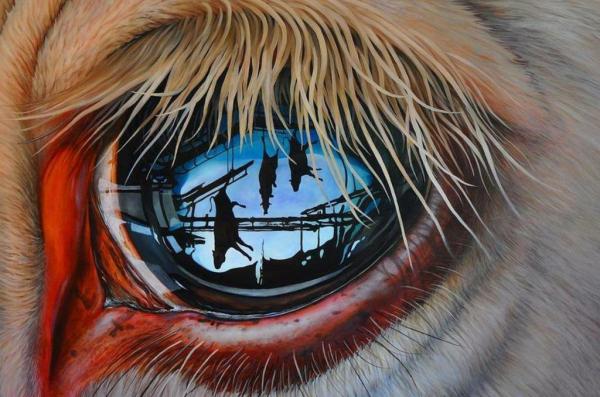
In addition to surreptitiously generating the high levels of abortions in our society by forcing our young girls into unnaturally early sexual maturity, the dairy industry also engages in violent abortion procedures as part of its routine operation. On any dairy operation, organic or not, newborn calves are immediately stolen from their mothers, causing terrible grief, anxiety, and despair to both. I have heard the desperate wails of cows for their calves that pierce the night unremittingly for hours at a time. These mothers are immediately re-impregnated against their will on what the industry calls the “rape rack” and after nine months, she delivers another calf, who like the first will be immediately stolen from her. This happens an average of four times, with three of the calves being killed either immediately as useless, or after a few months for veal, or after two years if used for beef. One will be kept as a slave to replace her mother on the dairy. At this point the mother cow is physically exhausted, having endured the unnatural trauma of being pregnant and lactating simultaneously for four pregnancies, and even though she’s only about five to six years old and would live naturally about 25 years, she is sent off to slaughter to be used for cheap hamburger.
However, the dairy industry isn’t through with her. It is common practice to impregnate her one last time, and send her to slaughter when she is about eight months pregnant or so, for the extra profit that her unborn fetus can bring at the slaughter-plant. So after hanging her upside down and slitting her throat so that she dies by the slow and painful death of being bled out, workers cut her open and perform a late-term abortion, stabbing her unborn calf because of the extra profit this calf brings to the industry in three ways. First, the skin of unborn calves can be used to make fine leather that fetches a higher price. Second, the stomachs of these unborn calves have already started to produce rennin, the hormone substance that we don’t have that breaks down the main protein in cow milk, casein, and this rennin is used by the cheese industry to coagulate milk to make cheese. Third, the pharmaceutical industry wants to use the “fetal bovine serum” that is in the calf’s heart and circulatory system for their vaccines, and so workers insert a long needle into the beating heart of the calf to extract this substance, before slitting his or her throat.

Madeleine Tuttle
Why don’t we hear any protests against the grisly abortions happening around the clock at slaughter plants because of our continued appetite for dairy products? Why no outcry against the violence of forcing our girls into early menarche, considering the pain and trauma this causes them and their families and our society? As we sow, we reap. How can we expect that we are worthy as a culture to be free of abortion and its devastating effects when we force millions of sentient beings into abortions against their will?
The abortion issue is, at is roots, the byproduct of a society that does not honor the sacred feminine aspects of life. At is living core, our herding culture is organized around enslaving and killing animals at an industrial scale, and thus all of us are injected from infancy with participatory attitudes that reduce our natural intelligence and sense of respect for life. Animal agriculture requires men to view females as mere breeders, reducing them to objects to be used as baby-making machines, for the profit and pleasure of their exploiters. Thus we find ourselves in a competitive and disconnected society that reduces our sensitivity and compassion for animals and for each other. This reduces the sacred feminine wisdom in all of us that is the foundation of the nurturing, strong, and loving family life that would protect and nurture our children, youth, and all of us so that abortion would be a non-issue. Destroying the families of other animals on a massive scale, dishonoring their sacred mother-child bond, and reducing them to lone units of production in a heartless economic system, we find our families and bonding similarly broken down and ourselves similarly reduced, saddled with the abortion issue that arises inevitably from this and from our culture’s lack of supportive attitudes toward women and our loss of nurturing family networks.
As women, even as we eat milk products, instigating the exploitation and death of other female animals, we may be viewed simultaneously by men as meat, mere objects to be used. Ironically, just as cows are forced to have unnaturally large and swollen mammary glands to over-produce milk for the dairy industry, the resulting foods produce unnaturally large mammary glands in the women who consume them—a feature that is prized in our herding culture and further reinforces women’s status as mere objects for men. The interconnected dairy and meat industries perpetuate the patriarchal herding mentality that sees both animals and women as “meat,” to be milked and eaten in one case and used sexually in the other.

Madeleine Tuttle
The deep structure of our animal-enslaving culture is to train us all from infancy to view other beings as things to be used, and from this, the abortion issue inevitably arises. There is only one lasting solution to the abortion issue and that is to question the violence on our plates and as individuals to go vegan and strive to embody vegan values of justice, kindness, and respect for all animals, both human and nonhuman, and to share these ideas with others through our example and efforts.
Evolving to a vegan culture is the way to heal and dissolve the roots of our many struggles with war, violence, and injustice. All animal agriculture requires imprisoning and sexually abusing other animals, and their interests and suffering are to them as significant as ours are to us. This is the unyielding dilemma that we can no longer ignore. Our future, if we are to have one, will be vegan.
Download your vegan starter guide!
Will Tuttle, Ph.D., author of the acclaimed bestseller, “The World Peace Diet,” is a recipient of the Courage of Conscience Award. He is the creator of several wellness and advocacy training programs, and co-founder of Veganpalooza, the largest online vegan event in history. A vegan since 1980 and former Zen monk, he has created eight CD albums of uplifting original piano music. The co-founder of Circle of Compassion, he is a frequent radio, television, and online presenter and writer. With his spouse Madeleine, a Swiss visionary artist, he presents over 100 lectures, workshops, and concerts annually throughout North America and Europe. Dr. Will Tuttle can be reached through his website at: http://worldpeacediet.com.
Artwork by Madeleine Tuttle













 Our Compass