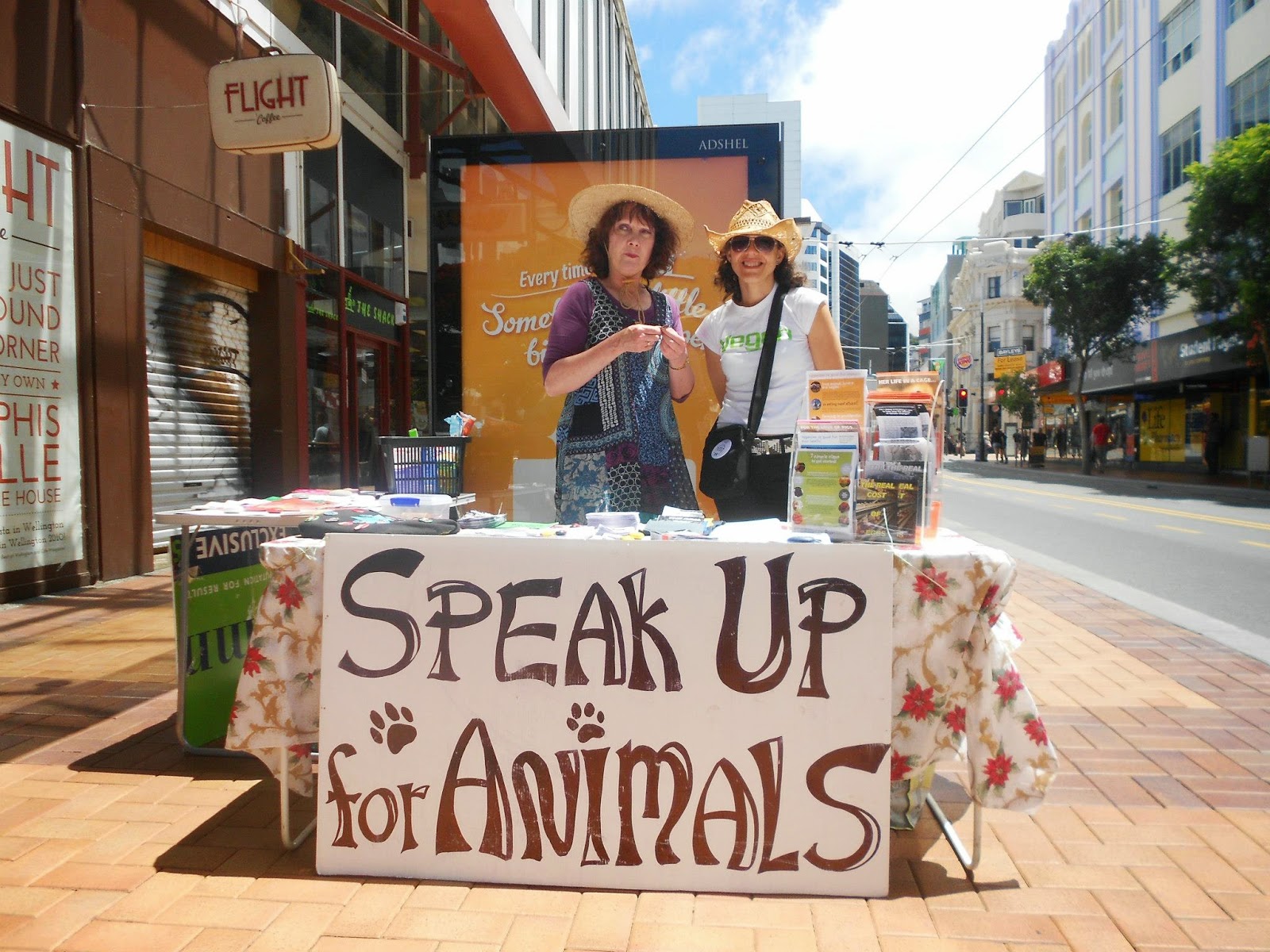
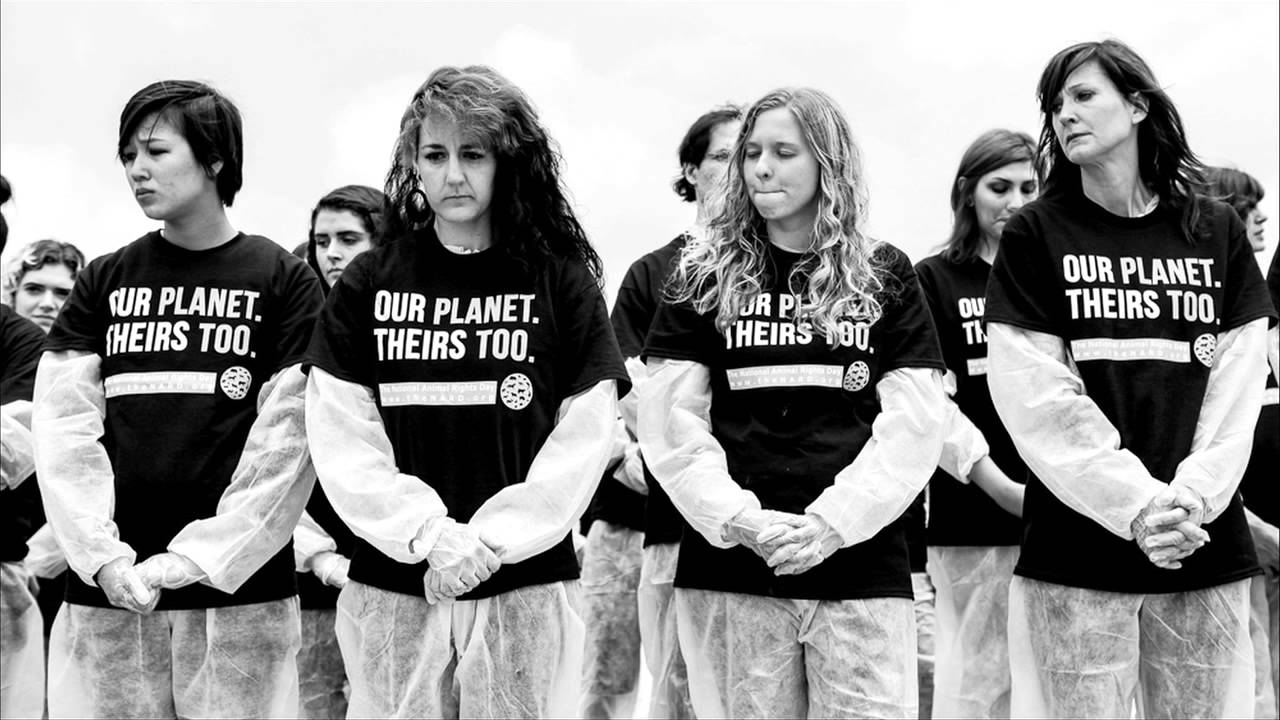
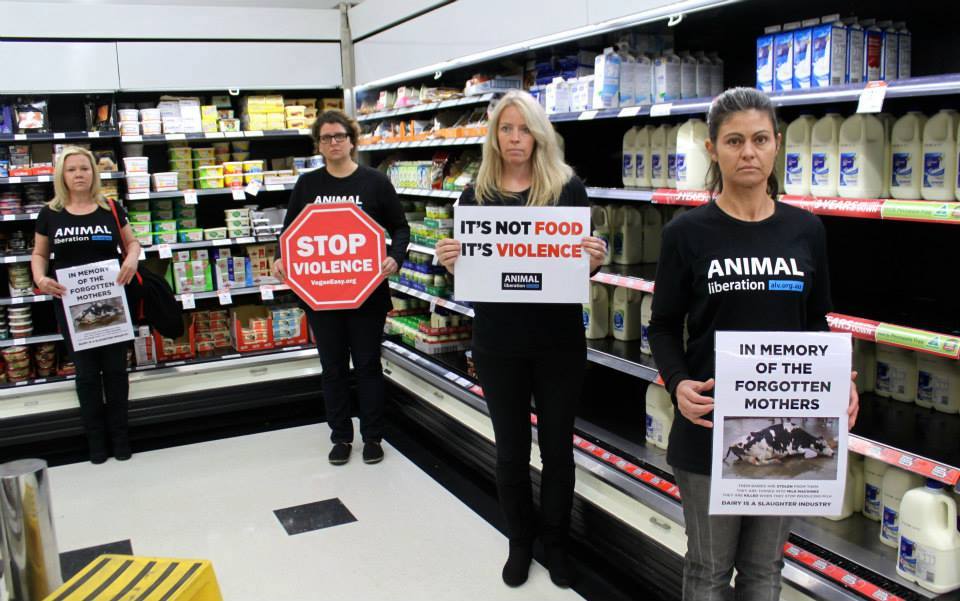
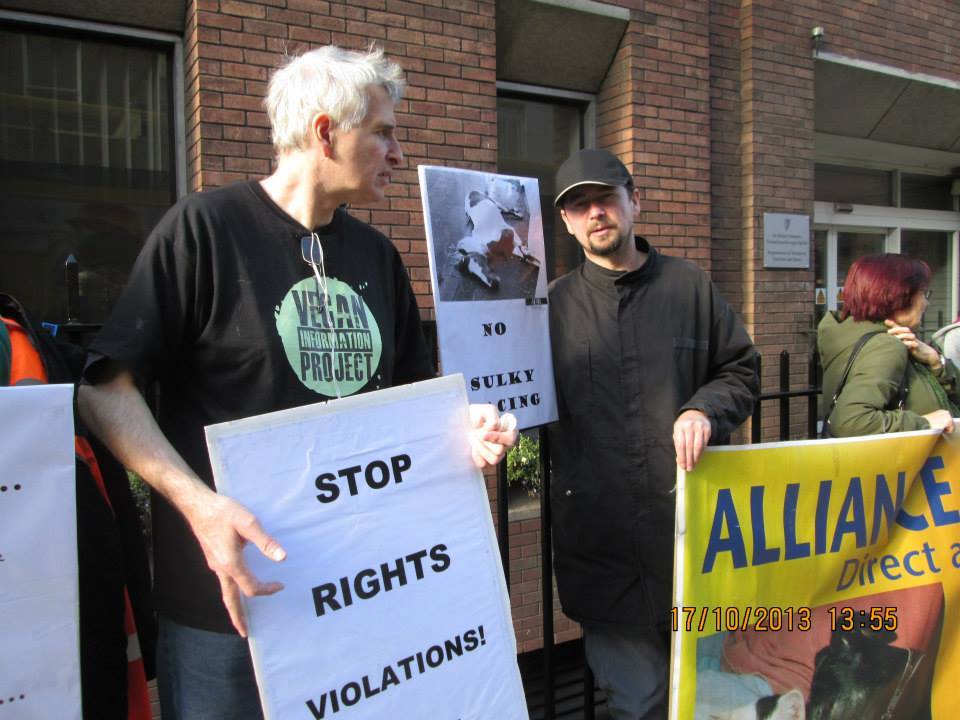
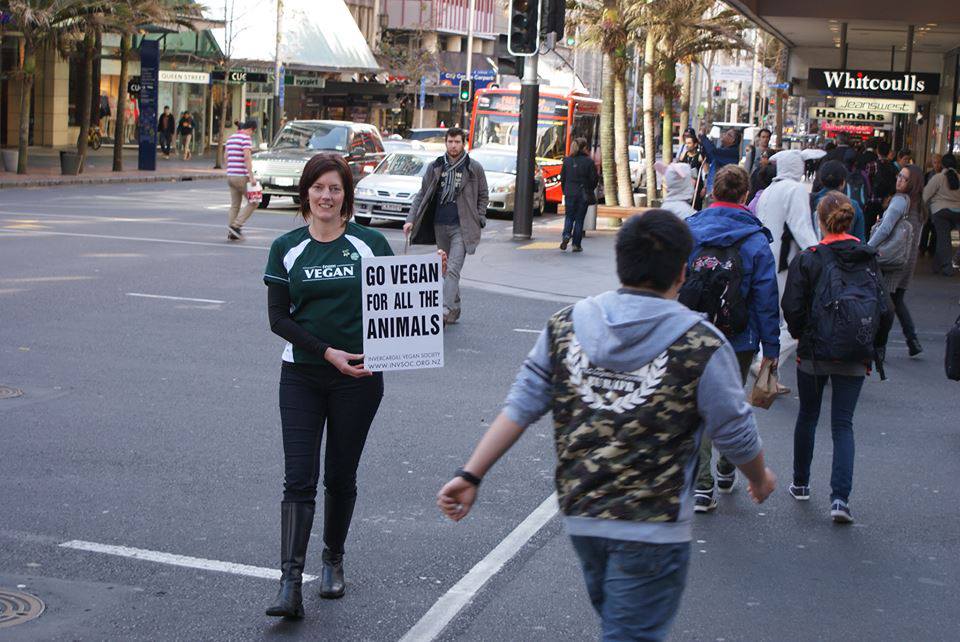
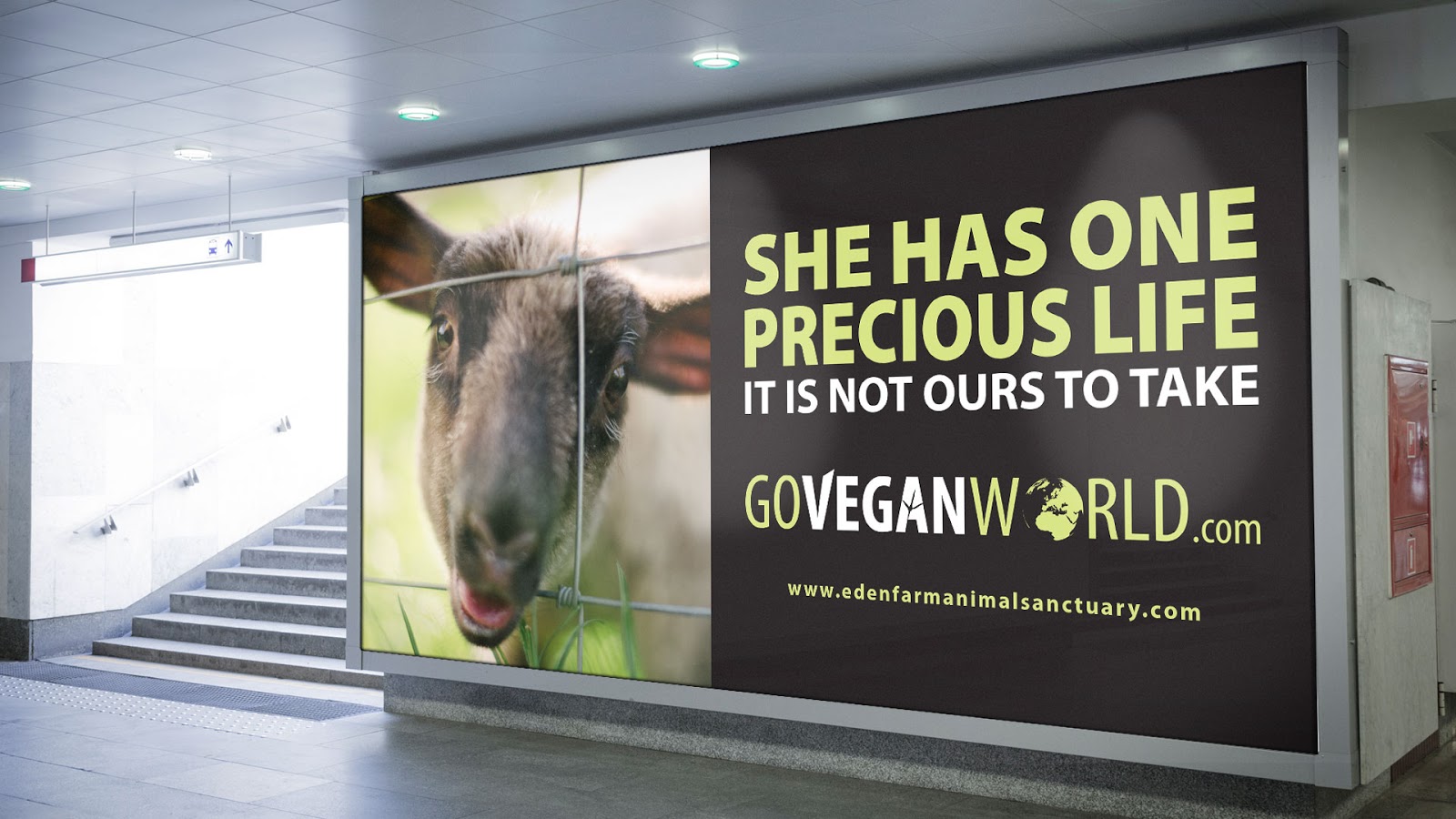
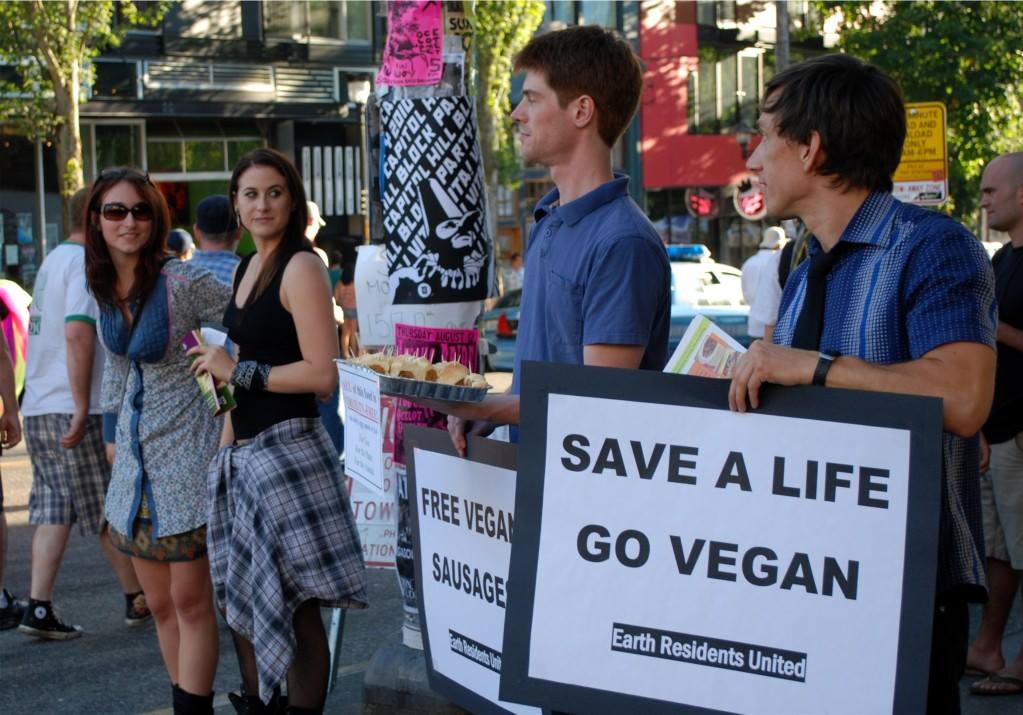
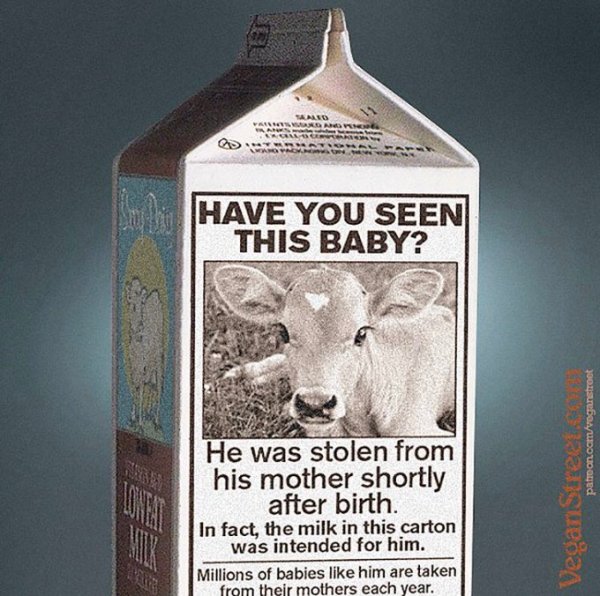
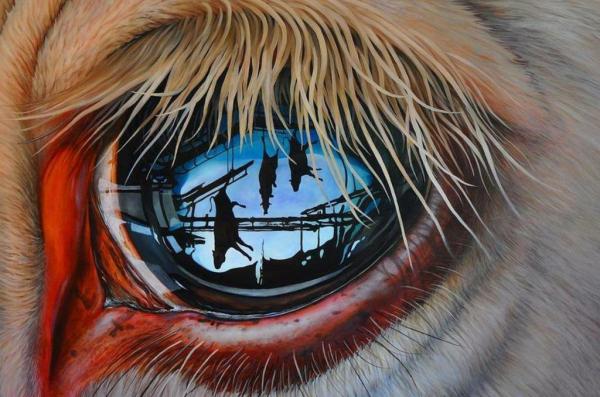
What is the difference between No Welfare, High Welfare, and Highest Welfare when they all require animals to die? Only human comfort, NONE protect the actual animals. The most humane, ethical, and honest Webster-defined "welfare" is NOT exploiting animals - not using, not wearing, not eating, not killing - animals. The only meaningful position is vegan, everything else is just how humans euphemize animals' required suffering and violent deaths: no human exploits animals because they honestly believe that NOT exploiting animals is UNethical or INhumane.
3. “Now the rotten CEOs are gone.” Movie speak for “The rotten CEOs are totally not gone.”
4. The unseen sister being roasted in the speech in the first minute of this film couldn’t possibly have a fundamental role in the plot.
5. How in the hell did super-pigs just go unnoticed in Chile all this time?
6. Hey, it’s the guy from Breaking Bad. What’s his name? This dude frequently plays roles that scream, “Something sinister is going down!” Dead giveaway.
7. I’m going to hate Jake Gyllenhaal’s character, Dr. Johnny Wilcox. I just know it.
8. You know how super-pigs could leave even less of an impact on the environment? Don’t raise them for food AT ALL.
9. Now I remember that actor played Gus on Breaking Bad.
10. Googled it. His name is Giancarlo Esposito. He played one of Malcom X’s assassins in the biopic. Seriously, so many sinister roles.
11. And here comes Okja! The CGI in this movie is next level.
12. If we can make imaginary animals look like this, why in the world is it legal to use live animals in movies and television?
13. It’s as if Hungry Hungry Hippos came to life and helped you with grabbing snacks.
14. Wagging her tail, begging for food, creating memories with her human. Okja is like a giant dog.
15. I guess pigs do all that stuff, too, when given the chance. So, OK, she’s like a giant … pig. Let’s carry on.
16. Everyone, please go vegan.
17. I’m glad she didn’t take a selfie with that tiny fish.
18. You think dogs make great cuddle pillows? Have you met Okja?
19. Just like pigs in real life, Okja is a remarkable problem solver.
20. Oh, my God—totally hugged my dog after watching Mija and Okja hug.
21. Currently trying to have my companion animals answer to “Okja.”
22. Booze stash under the floorboards—new life goal.
23. All the times I’ve talked about this movie, I’ve been totally pronouncing “Okja” wrong.
24. Dr. Wilcox, that’s too much mustache for any one man to handle.
25. Dr. Wilcox is getting a little too fresh with Okja for my comfort.
26. To make an exceptional healthy pig, he “just let her run around.” Animals thrive when they live as nature intended and not on some filthy, crowded farm. Go figure.
29. “Plans for her in America”—you mean “slaughter and eat your best friend.”
30. Girls don’t like boys. Girls like pigs and moneeeeeey.
31. Her favorite food is chicken stew? I’m going to be bummed if she doesn’t come out of this experience a vegan.
32. It’s no one’s “fate” to have their throat slit before being dismembered and packaged.
33. Oh my pants, that calendar of Okja butts.
34. “No photos.” Yeah, because like all meat industry companies, if the public saw how Mirando treats animals, its business would tank.
35. Anyone notice that dank-looking roof garden when Mija was chasing the semi-truck through Seoul? More life goals.
36. This is, like, the nicest hijacking in the history of hijackings.
37. I bet a lot of people working for the meat industry—which is notorious for treating employees like garbage—feel just like this disgruntled driver.
38. A giant animal running amok in a store, and of course, someone is taking a selfie …. But why the hell is she dressed like a pig?
39. The musical score for this “animal rights activists versus soldiers from Mirando” scene is straight fire.
40. Netflix helped make a vegan movie. Real life is getting wild in 2017.
41. Both of the trucks used to transport Okja are Hyundais. Wonder if that company just has the whole “transporting oddly large animals” market covered.
42. Villains slipping on marbles on the floor … classic.
43. Woah—Okja poops on command?
44. How many people smashed that “Like” button on Facebook after watching this movie?
47. Totally called the whole B.S. story on super-pigs being “discovered” in Chile.
48. Speaking of B.S., using that “local farmers” crap is exactly what the meat industry tries to do in real life. It survives on propaganda.
49. So does Jay understand Korean sometimes or what?
50. Oh, actor from TheWalking Dead, you’re out here lying.
51. LOL, “pig-napping.”
52. Calling it right now—the disgruntled Mirando driver being interviewed has the best lines in the movie.
53. Dear Lucy Mirando, there’s nothing more narcissistic than the human supremacy responsible for killing billions of animals every year.
54. I bet Mirando is a reference to Monsanto. Off to Google I go!
55. Yup. Search “Monsanto” and “Agent Orange.”
56. Oh, Lucy, you can’t love someone you choose to eat.
57. Director Bong Joon-ho sneaking in some symbolism with Okja staring out the transport truck, looking at all those gravestones. I see you, Bong.
58. The tiny cages they’re keeping the sick and crippled pigs in actually look biggerthan the ones actual pigs are kept in.
59. Go vegan!
60. Are they keeping the sick and injured pigs around for experimenting? In real life, they would have already bashed their heads in and thrown them out like trash.
61. I feel sick to my stomach after that rape scene, knowing that countless animals are forced to breed just like this all around the world.
62. I’m going to dress like Jay for a while. Looking dapper 100.
63. Dr. Wilcox is like the stepdad no child deserves.
64. “It’s just a movie.” Bruh, 110 million pigs are killed for food every year.
65. Why is everyone acting like talking to an animal homie over the phone is weird? Are Mija and I the only people who do this?
66. Like Dr. Wilcox, I wonder how many self-proclaimed “animal lovers” who work at circuses or roadside zoos actually just hate themselves?
67. Did you know Jake Gyllenhaal’s character was based on a few terrible people, including a TV personality who was also a pedophile? That reeaaaally shines through during his interactions with Okja.
68. Honestly, his interactions with Okja are what every meat-eater looks like when they fetishize bacon.
69. I mean, I could totally still tell it was Jay, even with the glasses. I’m sure Mija could, too.
70. “For me, it was like every time he was on screen, I wished he weren’t”—a colleague on the character of Dr. Wilcox.
71. God, he humps the air! Just low-key humping in the face of all those innocent bystanders.
72. Whoa, there’s an actual result on YouTube if you search “Mirando is” … ahem … you know.
73. Black Chalk, aka “Blackwater.”
74. There’s so much pain in Okja’s bloodshot eyes. I’m not crying—you’re crying.
75. Just like all animals, Okja feels pain and wants to live free from harm and the fear of death.
76. This farm looks like a concentration camp for super-pigs.
77. Floors flooded with blood, carcasses hanging from the ceiling, yet, somehow, real-life farms are still more disgusting and disturbing.
78. All this death and suffering, when people could just eat plants!
79. Hats off to Tilda Swinton for embodying the heartless, sociopathic nature of the meat industry.
80. Lives ARE NOT property. Throughout history, we’ve proven this time and again.
81. I feel like, in real life, a meat industry CEO would have taken the golden pig AND killed Okja just for fun.
82. Would have probably killed and eaten Mija, too.
83. OH, MY GOD, those other pigs saved their baby! Okja will be a surrogate mother. OK, this time I am crying.
84. This movie is going to have people crying in the meat aisles of grocery stores.
85. Told you.
86. Imagine how all mother pigs must feel when their babies are torn away from them.
87. I’d hate to spoil this moment with my cynicism, but really, they saved two pigs out of thousands. Everyone, please go vegan.
88. Oh snap, extra scenes after the credits! Marvel changed the game.
89. Jay was jailed long enough to grow a beard. A beard! For simply wanting to save lives through nonviolence.
Take PETA’s Cruelty-Free Shopping Guide along with you next time you head to the store! The handy guide will help you find humane products at a glance. Order a FREE copyHERE
Want to do more than go vegan? Help others to do so! Click on the below for nominal, or no, fees to vegan literature that you can use to convince others that veganism is the only compassionate route to being an animal friend.
The most obvious and non-controversial characteristic of animal agriculture is that it is a system in which humans exploit animals for food. The vast majority of us go along with the internalized cultural narratives that justify this exploitation. We don’t realize that we are also being abused and exploited by the same system that is exploiting the cows, chickens, fishes, and pigs.
There’s basically one primary reason any of us eats animal-sourced foods: we do this because we’re following orders that were injected into us from infancy by well-intentioned people we trusted completely. This indoctrination is literally eaten in the most potent and pervasive of all social rituals, our daily meals. It’s important to understand that when we go to shops and restaurants and purchase animal foods, we are not only sustaining a system of exploitation of animals, we are also unwittingly fueling our own exploitation on many levels, and in feeding these foods to our children, we’re fueling their exploitation as well.
Let’s take cows as a profoundly relevant example. Cows are clearly designed to thrive on grass, but they are fed richer and more complex grains such as soy, corn, oats, wheat, and alfalfa in order to boost milk production in dairies and increase weight gain in beef operations. This causes cows digestive distress and leads ironically to the proliferation of the E. coli bacterial strains that are deadly to human consumers of undercooked hamburgers. However cow exploiters don’t stop with grains. Agricultural scientists discovered long ago that if cow feed is “enriched” with fish meal as well as the rendered flesh and offal of chickens, pigs, cows, dogs, cats, and other animals, this is even better than grain at promoting milk production and weight gain, and thus increased profits for the industries involved.
In sum, cows are fed foods that are not in their interest, but that are to the advantage of their exploiters. With us, if we are eating animal foods, it is precisely the same situation. Like cows, we are created and have evolved to thrive on the food for which we are designed, which in our case is whole grains, fruits, vegetables, legumes, nuts, and seeds. Like cows, we can certainly eat other foods, such as animal flesh and mammary secretions designed for other species, and as in the case of cows, this harms our health on many levels, but the significant point is that it increases the profits of our exploiters, and so it continues. The animal exploiters have stolen the sovereignty of cows, and so the cows are powerless to eat anything but what the exploiters provide them. With both cows and humans it is remarkably similar. Exploiters provide the foods that they want the exploitees to consume to maximize their profits and power, and the exploitees dutifully comply. They encourage each other by their shared example, and additionally in our case, we ironically police each other to ensure compliance.
The World Peace Diet
The benefits to the exploiters in these situations are vast. The disempowerment and harm to the exploitees are equally vast. Let’s have a brief look at the consequences of this exploitation on five levels of our health.
First, our physical health. Being compelled from infancy to eat animal-based foods, we are more likely to develop cancer, heart disease, diabetes, obesity, auto-immune diseases, dementia, and the other chronic diseases which fuel hundreds of billions of dollars of profits annually for the pharmaceutical-medical complex, and the banks and financial institutions in the background. This system, and the governmental, academic, media, and corporate complex that is tied in with it, requires a steady flood of reliably sick people. Feeding the population a diet based on animal foods that concentrate toxins accomplishes this. Most of the wealth generated concentrates in the hands of a powerful elite, while most of us endure economic injustices such as exorbitant medical costs that ravage our economy and well-being. Eating animal foods, we become unwitting cash cows for an aggressive medical-pharmaceutical complex.
Second, our environmental health. Animal agriculture is well recognized to be the single most environmentally devastating human activity, destroying forests, oceans, aquifers, soil quality, climate stability, and propelling the mass extinction of species through rampant habitat destruction. Here again, we are being exploited when we purchase and eat animal-based foods. Because animal-based foods require much more petroleum, land, fertilizer, pesticides, and water, we are paying powerful and polluting petroleum, chemical, and agribusiness corporations and financial institutions to not only devastate the precious air, water, soil, and life quality for ourselves and our children, but we are also funding their legendary political power to infiltrate and dominate our governmental, educational, legal, and media institutions. As a result, these corporations are even subsidized with billions of our tax dollars annually to damage the health of our ecosystems, which further erodes our physical health, increasing our disease rates and the profits to the medical complex and the bankers lurking in the background.
Third, our cultural health. Because animal agriculture is profoundly wasteful of oil, water, land, and food, we have chronic food shortages in our world, even though we grow more than enough food to feed everyone, if we ate plant-based food directly rather than feeding it to livestock. Food shortages are well recognized to be the primary driving force behind much of the conflict in our world, and together with this inevitable conflict, is the direct cause of refugees, social breakdown, and many forms of human trafficking. The very first word for war going back ten thousand years is the ancient word “gavyaa” meaning literally “the desire for more cows.” Economic injustice, war, hunger, domination of women, and the arising of a privileged ruling elite are all linked to the ancient invention of animal herding around which we still organize our society. Thus, instead of using our economic surplus to revitalize our ecosystems, rebuild our infrastructure, and assure adequate housing, food, education, healthcare, and opportunity for all, we use it primarily for subsidizing the wealthy military and medical complexes. We sacrifice our children in wars that benefit a ruling class that uses the media and other institutions to propagate narratives that justify and promote an agenda of violence. Eating animal foods, we are fueling continued harm to our cultural health as well as the ongoing exploitation of our children and of ourselves.
Fourth, our psychological health. When, as children, we are compelled to sit at the table and eat animal foods that are harmful to our physical health, we are also being compelled to eat attitudes and beliefs that injure our psychological health. With every meal, we are being colonized psychologically in order to be malleable to the military-industrial-meat-medical-media complex. There are many dimensions to this, but to keep it brief, we’ll just look at a few, for example, the attitude of disconnectedness and desensitization that is imposed on us by being required as children to relentlessly eat animal foods. It’s well understood in systems theory that intelligence is the capacity for any system to make relevant connections and respond to feedback. Eating animal foods reduces this capacity and numbs our feelings both individually and collectively. We learn to stay shallow and avoid looking, listening, and feeling deeply. We avoid making the dreaded connection between what we are eating and what it took to get it on our plate. We are indoctrinated in daily meal rituals to repress our natural empathy and caring for others and this reduction of our cognitive and affective intelligence makes it comparatively easy for us to become gullible and uncritical consumers of narratives and products that reduce, harm, and enslave others and us. Our minds and bodies are also colonized by the poisonous attitude that beings are not beings but are rather mere commodities: material objects that we buy and sell by the pound. Upon reflection, this is shockingly debasing to others and to ourselves, but we both propel and consume this highly exploitive attitude with every meal, sowing seeds of our own exploitation. Finally, we are compelled to eat dairy, eggs, and meat products that require rampant abuse of animal mothers, their forced insemination and stealing of their babies and the destruction of their sacred mother-child bonds. We become easily exploited psychologically by causing and eating this trauma, repressing our feminine capacity, and feeding this to our trusting children. We eat products that are the embodiment of misery, fear, despair, insomnia, frustration, and chronic pain. The pharmaceutical industry’s most immense profits come from people buying drugs for precisely these conditions: despair, trauma, insomnia, depression, and chronic pain.
Fifth, and finally, our spiritual health. This may be the most severe exploitation of all. Every meal corrodes our basic connection with our true nature as eternal expressions of consciousness. By being required to repeatedly and ritually reduce other magnificent expressions of life to mere physical matter devoid of subjectivity and purpose, we sever our connection with the beauty, abundance, and enchantment of the living, interconnected web of life that is celebrating on this Earth. We have unwittingly become, in significant ways, an abusive scourge on this Earth that destroys and consumes as our life-purpose, both individually and collectively.
The World Peace Diet
Our innate spiritual wisdom and our purpose have been paved over and repressed, and as we become sick and addicted, our exploitation increases dramatically. A false purpose and set of narratives has been forced on us by the herding culture into which we are born: that we are here to exploit the garden and consume it. Other animals and ecosystems pay a steep price for our inability to free ourselves from being exploited, as do our children and we ourselves, ultimately.
The animal agriculture roots of our multi-dimensional exploitation have been invisible and unrecognized for too long. Now we can finally see and fully understand the dynamics involved. Being compelled from infancy to eat animal foods has created us to be a severely wounded population with drastically reduced capacities intellectually, emotionally, morally, and spiritually to fulfill our potential and create contexts that nurture justice, cooperation, creativity, freedom, joy, radiant health, and sustainability. Fortunately, this is beginning to change, and the momentum of our healing and awakening is increasing.
We can see two raging infernos on this planet. One is burning and destroying ecosystems, animals, societies, sanity, health, and our children’s future. The other is benevolent and is illuminating and incinerating the obsolete delusions perpetuated by our unquestioned exploitation of animals, and is revealing a new path to a doorway that leads to a positive future.
We will be free when we free others, and there is nothing physically holding us back from the evolution of respect, freedom, and harmony that is beckoning us. Whenever we eat animals foods of any kind—free-range, grass-fed, wild-caught, factory-farmed—it is all the same and cut from the same cloth: exploitation. Our exploitation ends when we awaken from the cultural program of exploiting other living beings and co-create a more aware plant-based way of eating and living, and understand the reasons behind this. Exploiting animals, we exploit and delude ourselves; freeing animals, we free ourselves.
Take PETA’s Cruelty-Free Shopping Guide along with you next time you head to the store! The handy guide will help you find humane products at a glance. Order a FREE copyHERE
Want to do more than go vegan? Help others to do so! Click on the below for nominal, or no, fees to vegan literature that you can use to convince others that veganism is the only compassionate route to being an animal friend.
Sue Coe one has long been the single most recognizable artist dealing with animal liberation politics and one of the few to draw explicit connections between animal oppression and capitalism. In work that has spanned decades, she has forced readers to consider the horrors of animal subjugation and inspired many activists to re-think the role of class struggle in the movement. Her most recent collection of art supports a movement call to action: The Animals’ Vegan Manifesto. The works are inspired by graphic novels of the 1930’s and are in the tradition of Goya, Kollwitz, and Groszand. Dedicated to animals liberated from slaughterhouses, the 115 black-and-white woodcut illustrations span an enormous range of ideas, contexts and interpretations. As is often the case with Sue’s work, many images are troubling and provocative.
In an email conversation which spanned many weeks, Animal LiberationCurrent’s editor Michael John Addario spoke with Sue about the Manifesto, the possibilities for animal liberation struggle and her activist work as an artist and educator.
*All images are from The Animals’ Vegan Manifesto; ALC questions are in bold.
This is now your 7th book. It is a fantastic collection of work.
I would, of course, like to start with the ideas that went into it. It comes out at a particularly alarming period in American politics, published this past January on the eve of the inauguration of Donald Trump. Animal liberation has not yet established itself as a viable politic within the left, a left that now finds itself under both a continuing and renewed siege. There are serious questions as to where or even whether there may be an opening for animal liberation struggles to coalesce into a viable political bloc. In light of this, releasing a work of this kind becomes especially urgent.
What was the creative process like over this recent period – were you anticipating some of these questions?
I have always understood that this time period is the fifth and final stage of capitalism, which, in its death throes, will become particularly dangerous to all life. Animals as a class of beings are facing extinction. What’s alarming is Clinton would not have lifted a finger for animals either, it would have been business as usual. Animals and those humans who speak for them are in the same struggle as any other social justice movement in history. In the US we have a president who calls women fat pigs and dogs, migrant workers rapists and drug dealers, calls lawyers and judges un-American, blames African Americans for police violence, journalists are called liars, military force was used to remove American Indians from their sacred land – again — and he wants to ban Muslims. This is month one, month two he will go after senior citizens. He and his cohorts, have a blanket condemnation and loathing for anyone not a white billionaire.
He has accidentally unified us. The forces of oppression create the resistance and animal rights activists are everywhere, existing within all his target groups. It may spell different radical strategies, other than corporate welfare. Animal exploitation has always been incorporated into the politics of the right, in the form of the meat industrial complex and big pharma, now animal rights will be joined to the Left.
The book is based around a manifesto, but the actual statement is very concise – in fact quite understated – for a manifesto. Can you expand a bit on the meaning of the statement? What are you hoping to achieve with it?
Hah! I wrote so many different manifesto versions! None worked. I have reams of scrapped ideas. At the suggestion of an animal rights lawyer friend, I went back to the Massachusetts Bay Colony for the language of the first welfare laws. I tried to adapt the sophisticated language of the communist manifesto, then the American Constitution. Nothing worked. It would have been a pastiche. In my mind the entire time was Orwell’s Animal Farm manifesto and the Beasts of England song: that the old boar taught the farmed animals to sing. He told them they were all going to die and they had to resist.
Orwell organically unified the Left with animal rights and much as I tried, I couldn’t improve on what he wrote. Orwell didn’t manipulate animals like glove puppets. His critique of the Left goes much deeper than that. There is a scene where the liberated farmed animals walk into the kitchen of the farm house and see hanging body parts of animals, they carry them outside for a burial. Then the scene of the donkey, written with great poignancy, desperately running after the knackers truck containing the worn-out cart horse who was told he was going to the hospital. The donkey in Animal Farm was the knowledge. Donkeys live long lives, so he saw what happened to generations of farmed animals. In my book there is a donkey, and the animals win. They stayed equal in the struggle, no one became more equal. They achieved a world of non-violence. In the end, I tried to get as close to what I think an animal would say to us. It’s so simple!
My intent is for the ‘reader’ — the book is all images that are meant to be read — to go vegan. To see that animals have their own agency, sense of justice (they escape slaughterhouses all the time) and speak for those who cannot.
Readers will find some familiar themes in this collection. You have been uncompromising in dealing with the visual depictions of mass animal slaughter in a very direct ways. The topic is horrific and overwhelming, but you do not hide the visceral impact of that reality, or make any particular attempt to gloss over it with the use of stylistic or conceptual artistic devices.
At the same time, the footage of slaughterhouses, rendering plants, undercover cruelty investigations – and graphic images generally – are becoming not just ubiquitous, but the subject of increasing criticism. The criticism is directed at the potential desensitizing impact of this imagery on activists and questions whether it has genuine use-value as an organizing tool.
Do you feel a sense of conflict about this? As an artist, do you have a sense your own impact on readers – and have you detected any change in reader’s reaction over time?
My work is essentially reportage, going places where a camera is not allowed and recording what I see. Most of my work history has been working for newspapers and magazines covering stories or recreating events. When Biggie Smalls was shot, I recreated the scene, as close as possible for a publication. Same with any event deemed as news. Along with covering the AIDS pandemic and HIV within the prison system, night court, sweat shops etc., making that work for mass media publications.
There was zero interest from the media in covering animal exploitation, so I went feral, and did that work on my own and got it published myself. Eventually, “non-commissioned” animal work became my full time job. I may go back to other subjects – and certainly am going to address Trump regime – but the animal work is my mission.
If people are bored or turned off by images of, say, refugees being washed up onto beaches, then too bad.
It’s incredibly hard to gain access to slaughterhouses or any of these concealed industries. There are volunteers right now, rescuing animals or picking up bodies on beaches, they are on the front lines. This is not about ratings or treating the viewer gently, it’s about the victims, and the massive injustice perpetrated, it must be relentlessly covered until it stops. Animal activists know what is going on. My images are to help support them. Other people think they can choose to be indifferent and the filter of art is a useful veil to present the reality. It opens up a chance to have a dialogue where the viewer asks questions and is more open to the challenge of change.
Factory Farm
I know my work does work as an activist tool. Am continuously adjusting my approach, fine tuning, based on what works and what doesn’t work. Something I consider to be ‘good art’ may not be activist art. Activist art may not be good art. It’s always been a balance of form and content throughout history of art.
When I see undercover videos of chickens being ground up alive, my first thought is of the victims, then person who took the risk to get that footage, second reaction is of rage, which I channel, into making myself work harder.
If I was in a slaughterhouse, it’s not as devastating. Am used to being in slaughterhouses, and can turn off that part of my brain, to do the drawings. If live footage of animal abuse lands in my email, am I not prepared, I find it unbearable; but then again, it’s not about me and my emotional reactions, it’s about the little chick being ground up or a calf being punched and kicked. Here I am typing, not particularly upset, and its 11.41 AM EST– which is lunch break in slaughterhouses. The animals will be waiting in pens outside. An animal inside, may be still alive in a restraining pen, which is a steel box.
Since I started writing this, hundreds of thousands of animals have been slaughtered. All of us should be aware of the illusion of safety given to some, whilst so many, are not safe. I think the real question is how that footage is being used, is it being shown to raise money for a single issue campaign? Is it being used to raise money for vet treatment of an individual? Or is it being used to promote the abolition of all animal use? The strategic danger of course, is to criminalize individual slaughterhouse staff as the ‘other’ or the anomaly, with the message that there can be a humane way to murder others. The latter message is quite sinister and leads us down the path to fully automated slaughterhouses with no staff, and cameras in an endless loop recording the silence of animals being tipped into gas chambers.
There is a particular work that depicts a pig dressed in striped pyjamas that recalls the garb prisoners were forced to wear in places like Auschwitz. You have used this kind of imagery only on occasion, but it is placed somewhat conspicuously near the beginning of this book and includes text that explicitly references Nazism as a normalized experience for animals. Some artists that focus on animal liberation, such as Jo Frederickson, use these kinds of images a great deal, but many other artists consciously avoid invoking them.
There is a considerable intellectual tension regarding the use of terms such as “holocaust”, “slavery”, “genocide” and others when interpreting the politics of animal liberation or articulating the character of the violence done to them.
There is a lot at work here: properly interpreting actual politics, the sensitivity of potentially erasing the histories of certain ethnic groups, the fear of somehow diminishing the uniquely human political experience. It also speaks to the very ability to articulate certain possibilities for social change. But at the same time there is also a critical semantic weakness, in that even these kinds of terms somehow fail to adequately grasp the political dimensions of animal’s oppression, the industrial scale of atrocities, the intimacy of human involvement in them and the intersections with other systems of oppression.
How do you navigate these sensibilities and interpret these kinds of “semantics of oppression” as they relate to other species?
I have a German book, somewhere, published in the 1930’s and republished, translated into English, with an introduction by Goring. The book is promoting the modernization of slaughterhouses, making them more efficient. The Germans were proud of their hygienic and efficient slaughterhouses and the British meat industry was impressed and wanted to keep up. The introduction explains that Hitler youth were put to work, collecting the tails and manes and hooves of animals for use in industry, making them more efficient. What was formerly discarded as waste was being used. At the same time, the German Government was deciding that animals owned by Jewish farmers were ‘unclean’ and were not to be rendered.
The mechanization of death, was well underway, before the human Holocaust. Napoleon, for example, created the first mobile slaughterhouses to feed the troops, and then large municipal slaughterhouses.
In image making, everything is like something else, if art was only about original concepts, the canvas would be blank or abstract splatters and not be accessible.
Animal Farm Fascism
I would employ the imagery of animals dressed in work camp pajamas, very, very sparingly and carefully, and in context. Fascism is not German – the comment next to the image makes clear our day to day complicity. The slaughterhouse is our house. If we reject speciesism then we will not be the silent. If we accept and normalize breeding other persons just to murder them, then we are capable of any atrocity. How many times have we heard of violent crime, being described thusly: “they behaved like animals”? We know what happens next.
The history of revolutionary art, anti-fascist soviet art for example, depicts the Enemy as sharks, wolves, snakes, predators to be annihilated. If we, as animal activists refer to farmed animals being raped to extract semen or force semen into cows or pigs or turkeys, is that appropriate terminology, when women and girls are raped? It’s certainly a concept people can extend to understanding the animals plight. It gets the message across. Every depiction of animal exploitation is seen through the lens of a human-centric experience. Our range of communication in describing the slaughter of all animals, ourselves included, is so limited. Which is the problem. The human mind just cannot conceive of it. I don’t have a clear answer to your question, except to veer on the side of not re-victimizing others to make a point. But am not the art police either.
Some of your works have distinct elements of surrealism to them, even displaying a kind of psychedelia. Although a bit complicated, surrealism has a long association with radical politics going back to Breton and Peret. But like other “movements” in art, it becomes superseded by others and its influence and meanings change over time. It doesn’t seem an accident that your images seem to engage with and continue this tradition. Can you tell us a bit of what you were thinking here and how you reinterpret the surrealist tradition for a modern political artist in the context of animal liberation?
Insects and Flowers
I have never looked at the Surrealism movement. Now you have made me interested in investigating it! When the printing press was invented in the time of the Reformation, the most popular broadsides apart from the Bible were World Upside Down woodcuts. These images portrayed a world where the power relationships were reversed. It shows us that the artisans and peasants had a keen and insightful view of both class struggle and animal lives. These broadsides continued to be popular into the 19th century in all European counties. They would depict men in harness dragging carriages of horses, men, breast feeding babies, fishes holding a rod and hook, fishing for humans, stags hunting humans, trees with their roots to the sky, churches loosened from gravity falling off the earth, pigs roasting humans on a spit. They were the “alternative facts” of the day and allowed the peasant some freedom of speech to take on injustices without being punished by the state or the church. Grandville, the French caricaturist, continued this tradition into the 19th century with his little drawings of animals in human clothes, depicting humans in zoos being gawked at by animal crowds and insects in gentlemen’s attire. He died in poverty in an institution (the fate of most artists) and his wife made hair curlers out of his drawings. But his illustrated books remain. Have always thought his small drawings were more interesting than most ‘important’ French painters.
I’d like to return to the idea of “agency”. Interspecies communication, the notion of animals as social & cultural agents — and the idea of certain groups of non-human species having a kind of political agency — is just beginning to gain political salience. It appears to be guided by some elements of European and Australian Critical Animal Studies – meaning it is getting academic treatment ahead of activist practice. This stands in sharp contrast to much of the activist community, where other species are tacitly viewed as a kind of undifferentiated, monolithic “other’, whatever values are superimposed on them.
You have highlighted the important insight that a genuine understanding of animal agency can tell us a great deal not only about other animals, but about ourselves as human beings – socially and culturally. This speaks to where we ultimately need to orient some of our political efforts. There are several images in the Manifestothat deal very consciously with this. They can be interpreted in various ways by readers, but can you give us some hints as to what at least inspired them?
Humans are not intelligent enough to understand other species. Possibly generations of dogs have made the most effort in understanding us, but it’s been thousands of years of labor on their part, as we are not fast learners. Am sure they would prefer to abandon the quest if the conditions were right. Remember the playing card test Leaky gave to his prospective primate researchers? He was interviewing applicants for the study of orangutans, chimpanzees and gorillas. He put the cards down on the table and then took them away and asked each applicant what they remembered. The applicants that remembered that cards were stained and bent and torn and described the condition of each card, as well as the symbols on the card, were Goodall, Birute and Fossey. Did their gender effect their recall? Possibly. They were not compelled to name the King of Hearts, Seven of Clubs to prove their memory. He hired them. Animals as perceived by humans, fall into ‘biological Thatcherism’ (Midgley) or a kind of reductive Darwinism where each action is presumed to be genetically linked to survival. Or even worse: as clocks, mechanisms with no agency whatsoever. Animals study and observe us all of the time. Their day-to-day survival is based on knowing and predicting of our actions. Most of us are oblivious to animals, as anything other than property. Our observations of our own species are distorted by the impulse for power and control.
Uncaged
Part of animal agency, I think, is their very bodies are evolving as a resistance to our rule: jumper viruses that can leap to different species; BSE in cow brains does not fall within a category of a life form as a prion, becomes lethal to us; avian influenza contains the genes from ‘factory farmed’ hogs – it’s a type of rebellion/agency on a cellular level. As birds are such a diverse species, the virus can never fully take hold with them. Farmed animals being fed antibiotics, which function as a growth hormone is making our species increasingly vulnerable to infectious diseases like antibiotic resistant TB. Nature abhors a stand. We survived because of species variety which diminishes every day. Our crimes against other animal persons, exacerbated by the economic system of capitalism, are inconceivable. They are only partially glimpsed and then helped by the genes of non-humans. In our skin, we detect day and night by fruit fly eye genes, the fly is a part of us. We are less important in the scheme of things, than a fly or a worm or bee. Blake pointed that out, hundreds of years ago, without the power of an electron microscope.
There is almost no light pollution where I live, so was sitting outside one night looking at the stars and heard a coyote yipping quite close to me, which is not unusual. Could see him or her in the starlight. What was unusual, was also sitting close to the coyote was a large bear, also singing but in bark sounds. They appeared to be sitting side by side looking up at the night sky and singing together. They could have been old friends, or learning different sounds from each other, don’t know.
There seems to be a large and increasing number of artists engaging with the ideas of animal rights and liberation, but fewer who would describe themselves as actively engaged in animal liberation struggle. It stands as both a commentary on the state of the animal liberation movement and a testament to your own intellect that you are one of the few – perhaps only – such artist that is politically committed to socialism and openly declare these commitments in your art.
Can you tell us a bit about how you were “radicalized”? What are some of the key interconnections that you see between these movements?
Animals are oppressed as a class. Early connections were made by the first Labour Party, between pit ponies and miners and child labor. All were small enough to work in narrow tunnels, and then small enough to dig trenches and fight in WW1, killing other working class people from different countries. 99% of all horses and donkeys were taken from field labour to war labour. Connections were made between the Suffragettes and animals and the working classes and vivisected animals. The poor realized the bodies of their loved ones were going to be dug up for research by medical students and protected graves by fencing. They identified with animals used in research. The working poor were treated like animals.
It would be unusual of someone from my generation and background to not be on the Left. At University one would be hard pressed to find a professor who was not a Marxist, and anyone from the working class would identify with the Labour Party. I came of age when for the first time, sons and daughters of the working, lower middle class gained entry into Universities. It was a brief window of the government providing grants for education that was a 100% paid for. Resistance and forming and joining Unions was the norm. Then along came the Thatcher revolution of monetarism, from the Chicago School, Friedman, Pinochet, Regan et al, and ruthless union busting. Monetarism morphed into neoliberalism and the degradation of all life in the name of profit and ‘growth’ – the state of the world today.
It would be irrational to assume that an animal’s right to live unmolested by our species can be protected within the economic system of capitalism. Animals are destroyed by the trillions – for profit. Corporations have legal personhood and the absolute right to make profit at the expense of anyone else. The most successful mental colonization of the human mind is that this can never be questioned or changed – it is sacrosanct. If capitalism is ever threatened, then freedom is expendable. The age of enlightenment cannot be vanquished quite so conveniently: we do have science, we do have art and we are capable of turning this around. Galileo was tortured to say humans were at the center of the universe, but the truth was out. We do have alternatives, and as much as capitalism depends on wars and destruction for profit they are incapable of stopping the tide of extending rights to all beings. It’s as inevitable as climate change. The capitalist class only has as much power as we allow them. The crime is economics and the time for change is very soon.
Yes, there are an increasing number of cultural workers representing animal liberation. It’s difficult to evaluate how many globally, or how this awareness is linked to other social justice movements, without being anecdotal. The increasing numbers of vegans in populations would suggest to me that people are making the social justice connections, rather than solely focusing on ‘humane treatment’ of farmed animals as property and indirectly enabling the meat industry to continue.
All of us feel such a great tearing disappointment when people who are aware and engaged with the political struggle of resistance, yet continue to be oblivious and exploit animals by eating their bodies. The sore temptation, in reaction, is to embrace identity politics, to exist within the comfort of our own kind. This is an understandable reaction to the isolation of struggling in a hostile world, where the majority have a forced indifference to animal suffering.
Yet as a humility lesson we have all been guilty of this at some point in our lives – not being able to walk in another’s shoes, or hooves or paws or fins or feathers. Animals do not have the luxury to disengage from our species. There is no safe place for them. Out of the discomfort can come a greater awareness of how to become a more effective voice for animals, how better to link all the social justice movements. It’s called the struggle because it’s very hard.
My own strategy, despite all these words, is to use culture to communicate. Art can reach across maps, without the desire for power and control over others. It works both ways, I look at art and can be changed.
Let’s talk about that change. The animal liberation movement – to the extent we can discern it – has arguably had the worst social record for the ways in which it has operated under the de facto primacy of liberal individualism. We are failing at both questions of solidarity and questions of political orientation.
Animals themselves are a no more than a literal commodity; and their subjection is such that they have actually played a fundamental historic role in capital accumulation. But just as liberating labour from the commodity form is the basis of liberation for workers under capitalism, the case of animal liberation presents a massive concurrent problem of liberating real lives from the commodity form. The fundamental class struggle between capital and labour – and definitions of “socail” ownership – need to be moved to the centre of animal liberation strategy.
The best examples of political art are where the reader is challenged on multiple levels where there are contradictory layers of understanding. Where there are not necessarily clear answers, but more questions. You have captured some of the contradictions of capital accumulated on the backs of animals and illstrated some of the class privileges it confers.
I’d like to take a closer look at a couple of works of yours that require a higher degree of responsibility on the part of the reader. These images speak to the kinds of politics that must necessarily emerge for revolution to be viable.
This would normally be an unfair question for the artist, but by reader here I am meaning activist: you must have at least some hopes for – if not high expectations of – readers here?
The images you reference describe the wealthier nations feeding food grain to farmed animals who in turn are consumed by humans, who have sufficient access to calories without resorting to murdering others. The ‘others’ in these images are the poor who are starved by a western diet and the non-humans who are murdered. Humans thrive on starch based diets, potatoes, corn, rice, sorghum. We know a plant based diet can feed 7.5 billion people, its water and land efficient, does the least harm. To invest in and subsidize animal agriculture is criminal on many levels.
No one has yet examined the over-production of animals as products – the mountains of cheese and oceans of milk that are thrown into landfill, the billions of male chicks thrown away like garbage. The monetary value of surplus, the profit of, say, buying pharmaceuticals to put into animal feed, make this insanity viable for capitalism. Capitalism never collapses by producing less, it collapses under the weight of surplus, and like a balloon it cannot stop itself from expanding.
Feed Some Starve Others
Art propagates ideas. The idea in those images is to point out that a ‘western diet’, which heavily subsidizes animal agriculture, starves the world, is my answer to, “why don’t you care about humans, as much as animals?”. Art doesn’t have a right or wrong answer and it can always be misread. The viewer decides what has meaning for them, what could be useful for them. I know from experience, ‘my’ art, has created thousands of vegans, and younger artists will come along and create millions more. Within the realm of art as a tool to propagate ideas, the work must achieve a level of technique to convince the viewer to look at the sincerity of the content, and it can be both sincere and contradictory too. I trust the craft of culture to deliver a message of positive change, whether it’s Brecht, or Goya, or Charlie Parker.
Labor produces all wealth, that wealth belongs to the laborer. But certainly the animal body has been critical to wealth accumulation. Animal bodies have created empires of wealth for the human species, their bodies have been stolen for thousands of years, now on an industrial scale, to which most humans are seemingly indifferent. We have a learned passivity in the face of injustice. It becomes almost hot-wired, not to step too far into another’s shoes or hooves.
Animal activists have given their efforts and sometimes their freedom and very lives to save animals, but have been removed from having much voice in the strategies to defeat animal exploitation. What should have been a clear message of non-violence by going vegan has been compromised by the dominant voice of the ‘humane economy’. This is business marketing absorbing niche markets created by activism and then expanding them by promoting individual consumer choice untethered from social justice, which is profitable to corporations. For animal activists to stress consumer choice, to combat the control corporations wield, is feeble. It’s not even consumer choice, as manifested by a boycott of all animal products, but creating diversionary niche markets of “happy meat”. These strategies are not accidental. At this stage, forty years on, they are not even naïve – but a deliberate undermining of the philosophy of animal rights, which the meat industrial complex has fully embraced. We have become the product to be manipulated. How to have community solidarity, with such self (animal)-defeating and confused strategies, is a challenge to be understood and met.
Meat Starves Children
Most animals born into this world will be murdered by human hands. Those hands will be from all cultures and creeds. There is a sickening universality to speciesism. But that is not an excuse to throw the baby out with the bathwater: to suggest a poverty-stricken person in Bangladesh killing a fish to get enough calories for their families to survive is somehow the moral equivalent of billion dollar corporations, JBS, or Tyson, or Shuanghui and their investors, and their consumers, of the industrial scale violence – that is not a strategy that will change anything.
The modern animal rights movement came of age simultaneously with the deliberate crushing of organized labor. Unions funded the Labour Party – no unions, no Labour Party. Labour was forced to rely on the compassion of the middle classes. In the US the unions invested worker’s pension funds, in stocks that directly exploited other workers. They became invested in the continuance of their own exploitation. What should have been an organic thread of solidarity and future progress, withered on the vine. Most, but not all, modern animal philosophers of note, were educated by a concept of a liberal progressive society that could provide health care and education, a living wage, which was essentially ‘humane’. They were a product of their time, which underestimated the powers behind Thatcher and Regan and Pinochet, etc. If the enemy did not appear costumed as a Nazi, corporations could become more benign, we could ‘meet people where they are at’. This was at best, naive, I don’t want to suggest a worst motive, because I have no access to individual motives, we can only analyze the results. These progressive expectations, which were formed from the 1930’s, did not keep pace with sheer force of the revolution of the right. There is uneven development, as there always is.
Since we started this interview the Labour Party in the UK has made massive gains, based on the clear strategy of rejecting New Labour. Funnily, one of the most three ‘googled’ questions ‘is Corbyn a vegan?’. He certainly has been involved with animal activism since the beginning of his political career. The Tories have been forced to create allegiances with crude reactionary forces, which will be their undoing, to remain in power. For the first time in decades there is a mass realization that “socialism” will provide the resistance to corporate murder. In the US, Trump and his regime is floundering, thus becoming increasingly viscous and irrational, despite their controlling all three branches of Government. This is certainly not capitalism’s last gasp, and there is certainly the real threat of authoritarianism- but it’s not inevitable. It’s up to all of us to prevent that happening, whilst we still can.
The rise of the Right is often explained as some kind of aberrant pendulum, that could swing back all by itself, not an outcome of global monopoly capitalism that must keep expanding to survive and will stick that pendulum on the right, by force. Global corporations constantly and relentlessly fund the crushing of socialist ideas and solutions in every area of human society, education, science, the arts, whilst simultaneously killing off all life. Yet for all their power, they cannot defeat class struggle, they cannot change reality, and make the earth flat, only adapt their illusion of reality, to exert fear and more profit for themselves. We are entering another time, of both the worst, and the best. We have one more chance to align the abolition of all animal use, with the struggle to defeat the crime of capitalism. I say one more chance, because climate science appears to suggest time ran out the day before yesterday. But grassroots animal activists are so accustomed to being on the outside, dreaming the impossible, whilst practically rescuing animals, we are very well equipped to continue on under the worst circumstances.
The notion of pre-figurative politics is one that is absent from this collection and maybe much of your art in general. The pre-figurative – or roughly the notion of practicing the kind of politics we envision as an inspiration for organizing outward – is a common left tendency (even fetishized in various sects on the left!). We both understand that the liberation of animals requires an unprecedented cooperative struggle directed at institutional change. This includes ways we have not yet come to grips with or even yet imagined.
Is this an idea you have entertained, or am I simply failing in my own responsibility reading your work? Have you ever put out a such challenge to the movement? To say that the conversation on animal liberation needs to include a detailed vision what kind of future we want – and how we actually create that future, rather than the kinds of wishful thinking that dominates so much of contemporary “animal justice” discourse?
There are the really the difficult political questions at stake here and they have no easy answers. It is also hard not to phrase them as pseudo-questions: how do we get out of this mess? Where do you we go from here?
We don’t know exactly where the railroad track switches are, to stop this train hurtling over the cliff. Even if we believe we have located the right switch, we may not achieve the desired result. Activism gives meaning to the life of the activist. Animal activists especially, are so sensitive to all the data of species extinction, the suffering of all animals, we drown in despair and frustration, grasp at straws, yet we will continue on, because we don’t have a choice. Animals as a class, cannot give us a pat on the back, put their snoots and beaks in our ears and whisper that this or that strategy of industry collusion for bigger cages, and welfare standards for happy meat, which enables animal exploiters to continue on for yet another murderous decade. Our unique contradiction as animal activists is that the most oppressed are not leading their own resistance. Refugee animals, the named few who are saved, do speak to us, but they are monetized, hijacked as ambassadors, ‘for the good of the others’ – their voice is fragmented, made individual by our power and control and they are still property. The survivors, have been shifted over to different, more benign owners. The struggle for animal liberation is not any harder than any other social justice movement, but it does have more gaping openings for a lack of critical thinking.
My task as an artist is to show the crimes of capitalism and the disintegration of the bourgeois world, make a visual record. I would be inept at ‘tractor art’. It is too comforting for the viewer to think there is a happy ending before fully digesting the fact that we are living within – and as a species are responsible for – an extinction event. As a movement we are still in an early educational stage. But my work is not directed at the movement. It is directed at the mass of people who are willfully ignorant of exploiting animals.
There is an impetus, and even need, to create works such as you describe, but art cannot do other people’s work for them. It cannot provide happy endings and faux victories. Crudely, I define those works as ‘art therapy’ – not art for change. It’s necessary for activists to have their labor shown in art, to not be made more invisible. But it has to be done in such a way that demands the viewer actively participate in the struggle, not assume someone else is doing it for them.
The Communist Manifesto and Capital did not have Part 2 – after the end of capitalism, what next? It was impossible for Marx to write such a thing, with any conviction. Any utopian ideal, as a replacement system to capitalism, has its origins within religions not science.
William Blake used his work to posit alternative realities that exist alongside us. He truly believed Angels were sitting in trees speaking to him. He believed in the French Revolution too. The German Expressionist Beckmann who was in the trenches in WW1 said “my art gets to eat here”. Goya wrote in his secret sketch books of Inquisition torture, “I saw this”.
Who could describe politics better than Yeats? “The falcon can no longer hear the falconer, the center cannot hold…”
As I am artist, am biased of course, but the enormity of the crime against other animals, against the poor, can only be described by art. When Yeats was asked to do a ‘war poem’ by the Government, he asked what could he possibly say to a politician?
Art functions on a level that maybe only animals understand, because their lives are the art.
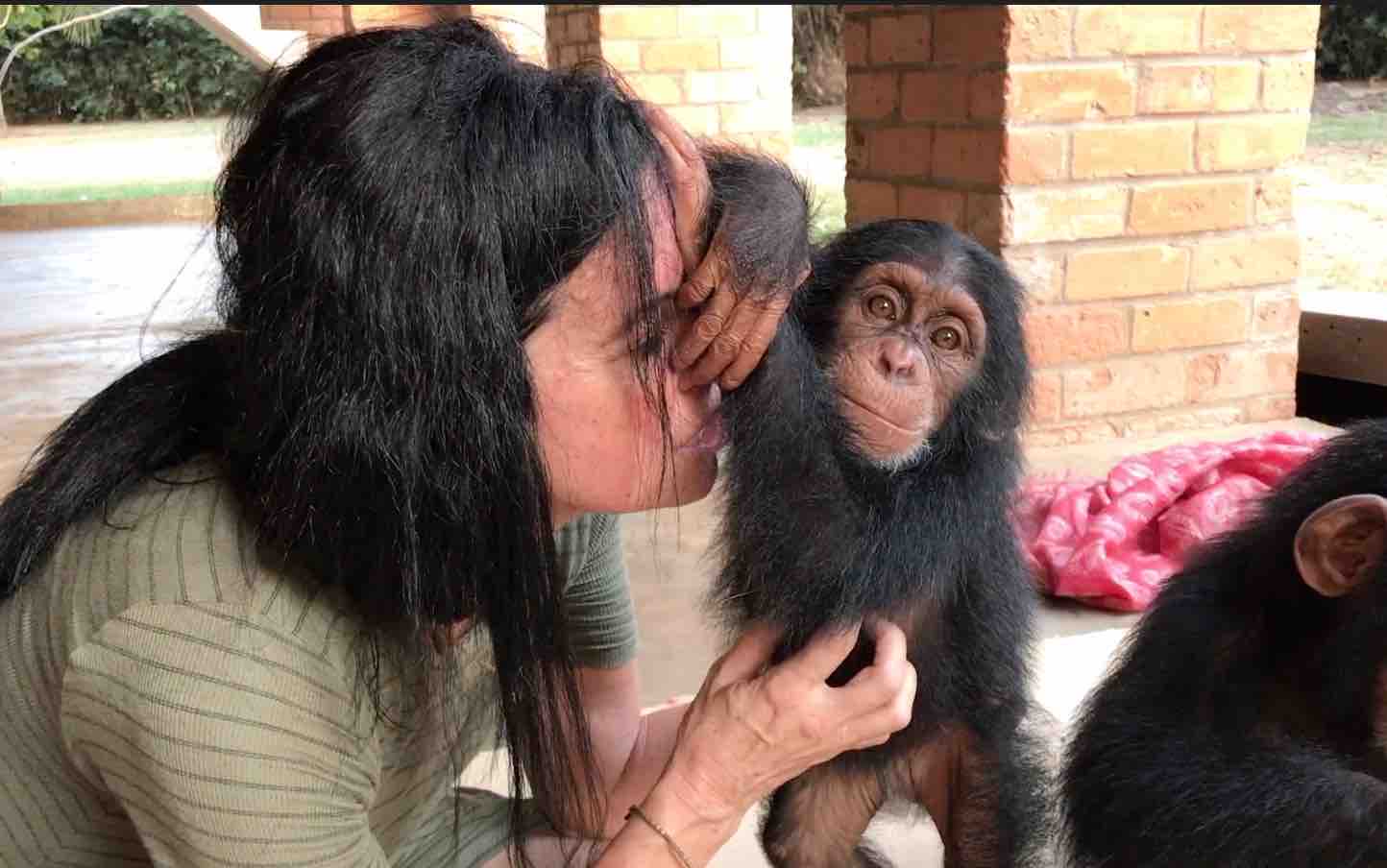
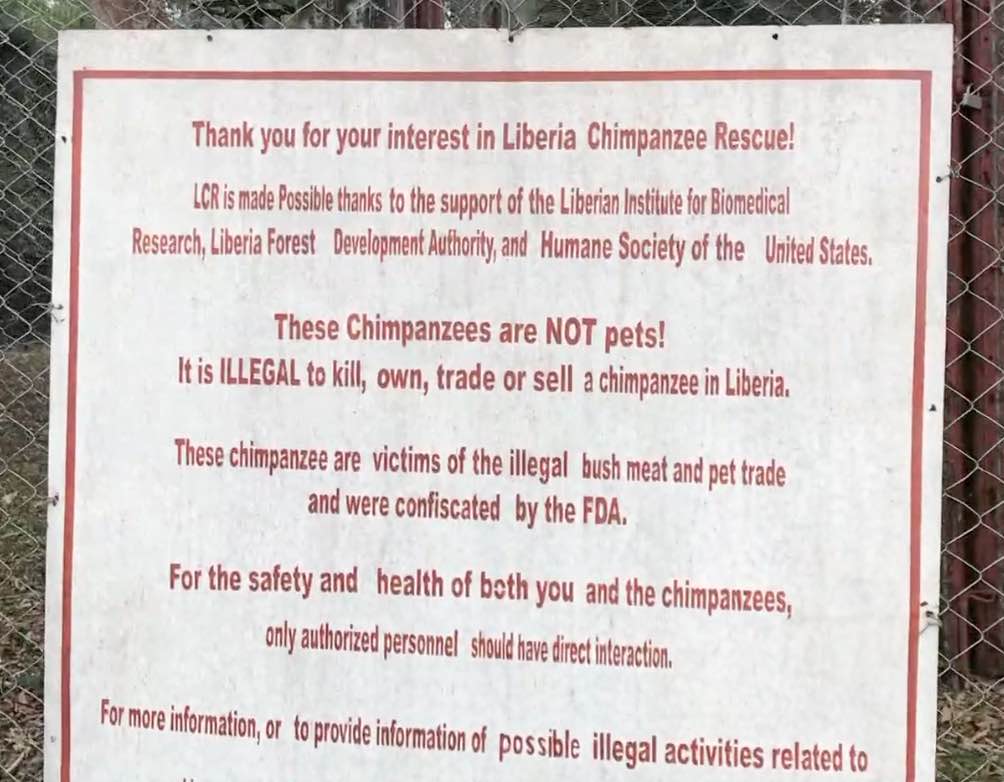
By the time orphaned chimps arrive at Liberia Chimp Rescue & Protection’s (LCRP) new sanctuary, they have experienced more tragedy than most humans will experience in a lifetime. That’s because they watched poachers kill their mothers for bushmeat before kidnapping them and hauling them out of their forest home in an attempt to sell them as exotic pets.
“Most of the orphans are inconsolable when they arrive,” Jenny Desmond, who, along with her husband Jim, created LCRP. “You can see the heartbreak in their eyes.”
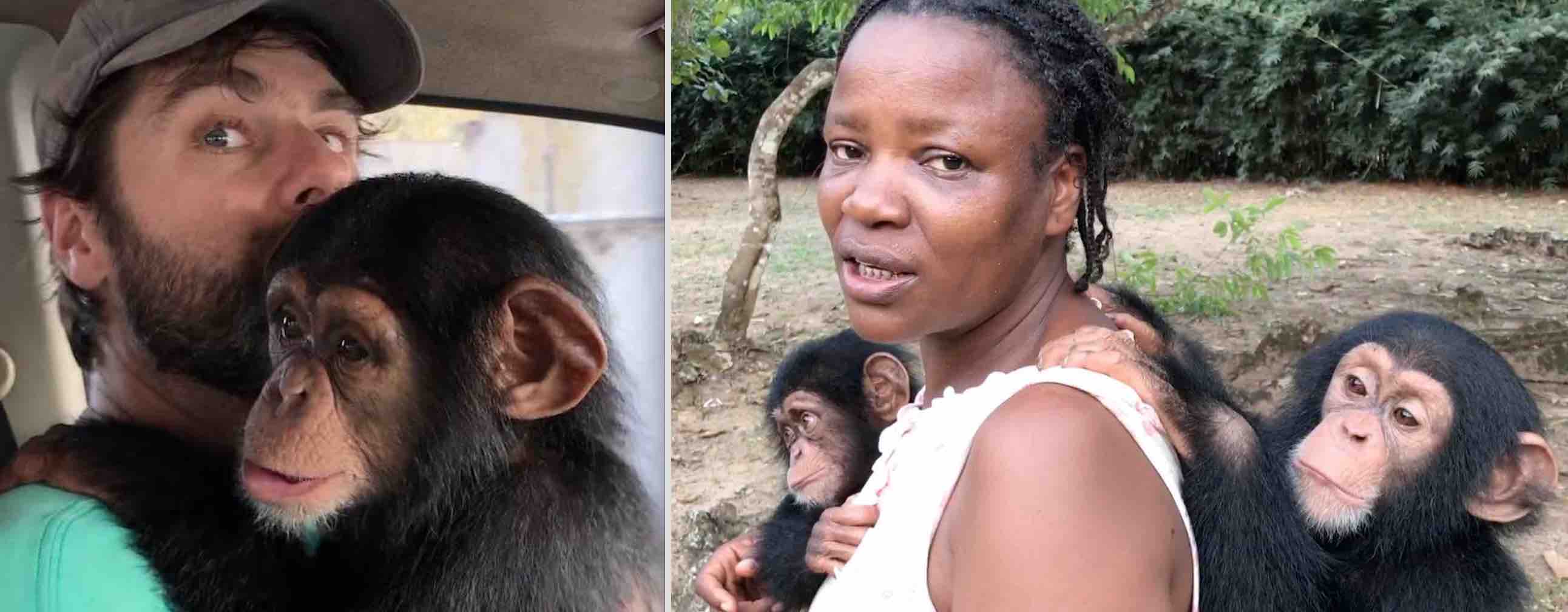
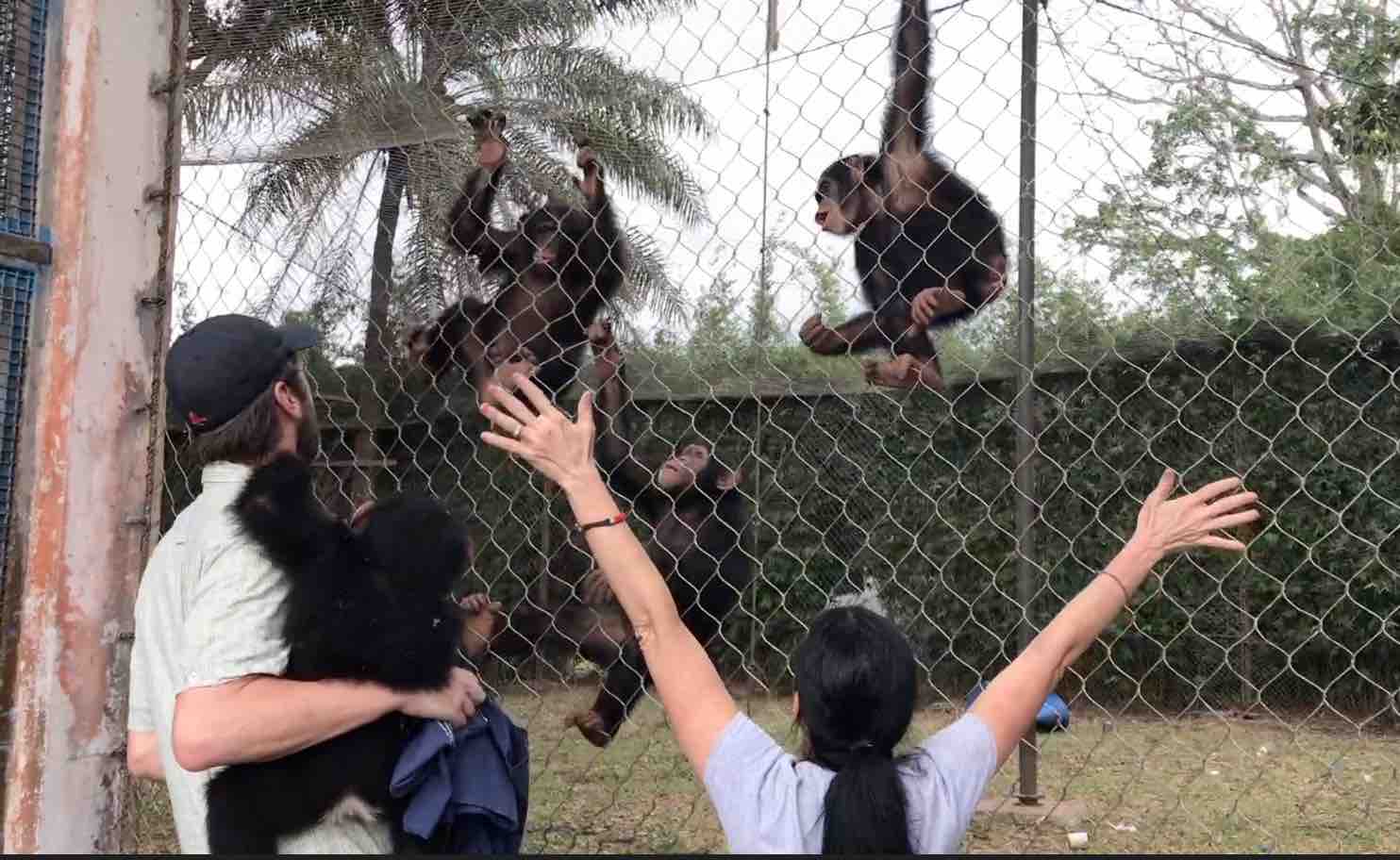
When government authorities deliver baby chimps to LCRP after confiscating them from poachers, Jenny and Jim swing into action right away, assigning a human caregiver to be the baby’s surrogate mother. With the support and guidance from the Desmonds, who have spent their careers working at sanctuaries, the caregivers spend the next days, weeks and months helping the chimps recover by bottle feeding them, playing with them, introducing them to other orphans, sleeping next to them and ultimately integrating them into a chimp group. In time, most of the chimps recover from their trauma and find happiness at the sanctuary.
“These babies should be in the forest, but, because poachers killed their mothers and families, they have to be raised by humans,” said Jenny Desmond. “We are their surrogate mothers – day and night. At about age five, wild chimpanzees start sleeping separately from their mothers, so we use this, along with their needs and personalities, to determine when they’re ready to fully integrate into our older nursery group and spend their days and nights with other chimps.”
The Desmonds hope that they can one day return some of these chimps to their natural habitat in the Liberian forests, which have an estimated 7,000 wild chimps remaining. Re-introduction, however, is a complicated, long-term process. In the meantime, they are creating as natural a life as possible for the chimps in a sanctuary setting.
The Desmonds arrived in Liberia in 2015 to take care of another population of chimps — the 66 who were abandoned on deserted islands by the New York Blood Center. Within weeks of their arrival, however, the FDA (Forestry Development Authority) knocked on their front door and dropped off two infants. In just over a year, that number has grown to 16. The Desmonds have outgrown their space and plan to move to a more remote location in the forest where the babies can, along with their human caregivers and other chimps, can live in a semi-wild environment with minimal human contact.
“Chimps are wild animals, not pets,” said Desmond. “Ideally, the only people who should be interacting with them are their surrogate mothers who provide them with the parenting and TLC that they need to survive during their first several years of life.”
The Desmonds are working with government authorities and other NGOs to protect chimpanzees, a critically endangered species, in their forest home. Combatting Liberia’s illegal bushmeat and exotic pet trades means far fewer baby chimps will be orphaned and need sanctuary. They hope that ecotourism – trekking to see habituated chimps in the forest – can eventually be a source of income for those who are now poaching chimps and selling their meat. “Chimps are a valuable renewable resource for Liberians, as mountain gorillas are for Rwandans, but that means protecting them instead of killing them,” said Desmond.
Between protecting wild chimps in the forest and raising orphaned chimps at the sanctuary, the Desmonds have a lot of work to do – in a difficult setting. Thankfully, they have a team of dedicated caregivers at LCRP who genuinely love the chimps and their jobs.
Take PETA’s Cruelty-Free Shopping Guide along with you next time you head to the store! The handy guide will help you find humane products at a glance. Order a FREE copyHERE
Want to do more than go vegan? Help others to do so! Click on the below for nominal, or no, fees to vegan literature that you can use to convince others that veganism is the only compassionate route to being an animal friend.
When his father died in 2011, Jay Wilde took responsibility of running the family farm. For years he has been concerned about the welfare of his cows and the environmental impact of beef farming. Today he’s doing something about it.
Filmed and edited by Elise Wicker
To donate to Hillside Animal Sanctuary, please click HERE
Take PETA’s Cruelty-Free Shopping Guide along with you next time you head to the store! The handy guide will help you find humane products at a glance. Order a FREE copyHERE
Want to do more than go vegan? Help others to do so! Click on the below for nominal, or no, fees to vegan literature that you can use to convince others that veganism is the only compassionate route to being an animal friend.
Vegans often blame one another for the fact that society resists going vegan at the speed of enlightenment that we seek and that billions of animals desperately need. The question of how to get people to care about chickens, cows and other farmed animals, let alone enough to quit eating them, is an ever-present source of hope and despair among those of us who advocate on behalf of these animals.
There is a spectrum of viewpoints, tactics, strategies and insights on how to create a world in which one day no animals will ever again be dragged into a slaughterhouse and made to endure the indignities and miseries we inflict on them for “food.”
UPC
Matt Ball, the founder of Vegan Outreach, who was formerly with Farm Sanctuary, posted a video on YouTube on May 27, 2017. Titled “Want to save animals’ lives without going veg? Eat beef, not chicken,” the video, which he narrates, makes four main points: that radical vegan activists alienate the mainstream; that the vegan movement is a failure; that pitting chickens and cows against each other avoids alienating people while helping the largest number of animals; that enlisting the support of a chef (Anthony Bourdain), who compares vegan activists to “dangerous fundamentalists like Hezbollah” (an Islamist militant political party in Lebanon), is appropriate.
Points one and two suggest that the reason most people are not vegan, or are even anti-vegan according to Matt, is that radical vegan activists have alienated society with their (our) insufferable militancy. Forget that vegan advocacy has many faces and voices, and that animal rights vegan advocacy seldom involves screaming and rudeness as a public strategy. How much accusatory yelling have you heard – or done – at the ever-growing number of increasingly popular vegan festivals in the United States and elsewhere?
Matt accepts and repeats, as if it were true, Anthony Bourdain’s claim that vegans have disturbing similarities with dangerous fundamentalist groups like Hezbollah, because of how, in Matt’s words, “many of us act.” This statement takes the actions of a small group of radical, nonviolent vegan activists and attributes their actions to many vegans although there is no evidence to support the claim that most vegans are perceived by the general population as dangerous or even antagonistic. Popular media suggests the opposite – that because of well-known vegan celebrities in sports, music and Hollywood, being vegan now has the reputation of being cool, and vegans are not seen as “fanatics,” as Matt claims.
If most people still consume animal products, there are many reasons having little or nothing to do with how our vegan message is being conveyed. Many people still don’t care enough, know or even think about farmed animals and vegan food as part of their daily routine. Put it this way: McDonald’s is everywhere on the landscape; we’re still barely visible. This is not to say that how we frame and deliver our message doesn’t count. It does. But to blame society’s moral and dietary inertia, ignorance and capriciousness on radical vegan advocates, to impugn vegan activists for “driving people away” and acting like “absolute fanatics” for our cri de Coeur on behalf of mother cows and their suffering calves, as depicted in the video, seems a stretch.
Let us please keep in mind that the animal advocacy movement is barely fifty years old and that vegan advocacy per se didn’t really get started until the 1980s. And a factor in the mix has always been our movement’s anxiety about alienating the public and fear of “going too far.” It could be argued that the desire not to offend people, a certain diffidence on our part, has contributed to society’s overall sense that our issues are not urgent.
Matt claims that “80% of those who go vegan go back to eating animals. Half go back because they can’t stand the pressure to maintain a pure diet.” Whether or not “80%” is accurate, the implication that the pressure to return to meat eating comes mainly from the annoyance or “militancy” of other vegans ignores that the more likely source comes from family, friends and coworkers who pressure vegans to eat the familiar food and fall back into the familiar patterns. If as Matt says, only a tiny portion of the population is vegan, who is the more likely source of the pressure to eat animals: vegans or meat eaters? He stresses in the video that society is saturated with meat-eating messaging.
He goes on to say that by not eating chickens, animal eaters can have a profound impact on the number of beings who suffer. The number of beings who suffer would be greatly reduced. While I agree with this statement, the only action I encourage is to stop eating all animals and eat veggies instead. Some argue that this is the more difficult path, but I believe it is the easier path with a greater chance of bringing lasting effect. The message that no cruelty is okay is easy to understand and to feel good about. Who is going to feel good when, after being convinced that eating animals is cruel, they are then told to continue being cruel, just do less of it?
As much as the “stop eating chickens” message appeals from the standpoint of eliminating the largest number of land animals from food production, I question whether this approach will ultimately benefit animals. The world thus envisioned is a world where a smaller number of different animals will likely suffer in slaughterhouses and where the majority of people will, with our blessing, switch to eating other animals – more cows, pigs, sheep and goats, more turkeys, ducks and quails, more aquatic animals, more ostriches and emus, more factory-farmed insects. To the extent that the call to “make A suffer instead of B,” kill cows, not chickens, reaches consumers, it is not likely to reduce the number of chickens being consumed.
For us to agree that the vegan message has failed and that therefore we should promote abstention from chicken consumption only – doesn’t this amount to conceding that we are no longer a movement for all animals, but have opted instead to be marketing strategists for non-chicken products? How can we help people to conceive and to care how many more small animals suffer and die for food compared to large animals – 20 or more chickens for every cow, for example – while maintaining the integrity of our message?
(Back in the 1980s, U.S. activists focused almost exclusively on “veal” ban campaigns with the result that for years, people felt they had done enough by quitting veal. Instead of a step, it became a stop that did nothing to reduce or eliminate the number of “veal” calves being born, since the root cause of the calves’ existence was and is the public’s consumption of their milk, which activists are now boldly addressing with encouraging results.)
Why give up on vegan? Why denigrate ourselves? Why abase ourselves before an animal-abusing chef sneering at “veggens”? Especially with the signs that veganism is making headway. There are signs in food stores and restaurants. An article states that in Britain, the number of vegans rose 360% in the last 10 years and another articlesays that the number of vegans in the United States, which in 2009 was 1 percent, rose to 2.5 percent in 2012. Top Trends in Prepared Foods in 2017observes that 6% of U.S. consumers now claim to be vegan, up from 1% in 2014. The health insurance company Kaiser Permanente advises cardiac patients to adopt a plant-based diet, and the July-August 2017 issue of Harvard Magazine has an article about the rise of vegan culture. Very significantly, the American Medical Association has just passed a resolution calling on hospitals to serve plant-based meals and to eliminate all processed meats. See: AMA Comes Out Against Serving Processed Meats in Hospitals!
To encourage the suffering of any animal is a betrayal and surrender of my responsibility. I refuse to negotiate with cruelty. I refuse to say “eat this animal instead of that one.”
KAREN DAVIS is the founder and president of United Poultry Concerns. Join us at the Animal Rights National Conference August 3-6! We look forward to seeing you.
Take PETA’s Cruelty-Free Shopping Guide along with you next time you head to the store! The handy guide will help you find humane products at a glance. Order a FREE copyHERE
Want to do more than go vegan? Help others to do so! Click on the below for nominal, or no, fees to vegan literature that you can use to convince others that veganism is the only compassionate route to being an animal friend.
culture vultures like to say
don’t eat this meat
but that meat is okay.
we say here
to eat any flesh is
wrong,
if you want to be
in our humane chorus
come and sing
along.
the tune is simple
words sincere.
animal cruelties of any
kind will not be
tolerated
here!!!!
Moby & The Void Pacific Choir – In This Cold Place Official video by Steve Cutts.
The new album, More Fast Songs About The Apocalypse, by Moby & The void Pacific Choir is available now as a free download in partnership with wetransfer: http://moby.la/mfsataYo
Moby says, “working on ‘In This Cold Place’ and ‘Are You Lost In the World Like Me?’ with Steve Cutts has been a creative highlight for me. He’s such a great animator and activist, and I’m so happy he agreed to make these two videos.”
Last week, Moby & The Void Pacific Choir released More Fast Songs About The Apocalypse, the follow-up to 2016’s These Systems Are Failing. The album is available now on all digital and streaming platforms as well as on WeTransfer via a name-your-own-price model with all proceeds going to a charity of the fan’s choosing. Download More Fast Songs About The Apocalypse http://moby.la/mfsataYo.
The album is also available to purchase in both standard CD and special pink vinyl editions. Order either format http://moby.la/mvpcmfsataYo
Take PETA’s Cruelty-Free Shopping Guide along with you next time you head to the store! The handy guide will help you find humane products at a glance. Order a FREE copyHERE
Want to do more than go vegan? Help others to do so! Click on the below for nominal, or no, fees to vegan literature that you can use to convince others that veganism is the only compassionate route to being an animal friend.
for granted this world we cannot take lives will be lost there is peace to make minds to change changes in tune. the world is not forever. but forever is ruined.
This song is dedicated to those who show love to all animals irrespective of species and was written to put an end to animal suffering. The songwriter – David Finney – was in the pop music industry for 10 years, the market research industry for 20 years before later establishing The Energy of Conversation, an enterprise dedicated to learning and improvement. David was a meat eater for over 40 years before becoming vegetarian and is now Vegan and campaigner for Animal Rights. davidfinney@theenergyofconversation.co.uk
Take PETA’s Cruelty-Free Shopping Guide along with you next time you head to the store! The handy guide will help you find humane products at a glance. Order a FREE copyHERE
Want to do more than go vegan? Help others to do so! Click on the below for nominal, or no, fees to vegan literature that you can use to convince others that veganism is the only compassionate route to being an animal friend.
The words Vegan Batman Light may sound like something out of sci fi, but it’s 100 percent real — and 100 percent radical.
Basically, the light is a giant projector that displays powerful vegan messages on building surfaces (a la the bat signal). The idea was dreamed up by activist Connie Spence last year, and she’s been shining the light of truth in cities across the country ever since.
Spence came up with the concept after the election when an artist shone an anti-Trump message on a hotel in Atlanta. Because it was only light, it wasn’t considered vandalism, and therefore wasn’t illegal. “In that moment I knew I had to figure out what this equipment was and how to do the same all over walls in Los Angeles [where she lived at the time].”
After a lot of technical trial and error, she got the equipment together and did her first light in mid-December of 2016.
“The first time it was done on the pig slaughterhouse in L.A. and boy was that moment eventful,” says Spence. “The light could be seen over their courtyard fence inside the slaughterhouse. The police that come each night walked up and said ‘WOW, that is a game changer and lets everyone know how serious you guys are.’ I have now been doing the light three to five times a week since.”
In Los Angeles, she’s shone the light on the Staples Center, over freeways, on slaughterhouses, in Hollywood, and on the 3rd Street Promenade; she’s brought it to the Vegas Strip and Downtown Vegas (over the famous Heart Attack Grill); and she’s displayed messaging on the Diamondbacks stadium in Phoenix. She continues to travel and bring the light to new locations. She’s had countless interactions with curious people, many of which have been caught on video and are posted to Facebook.
Currently, Spence is raising funds via Go Fund Me to start new chapters of the Vegan Batman Light. She wants as many people as possible to get involved in bringing the concept to cities across the globe. “This recipe of activism works,” she says, in part because she talks TO people not AT them. “I learn their name, shake their hand, ask them how they feel, ask them if they’ve been to a slaughterhouse, ask them why they haven’t contemplated animals being abused before this moment. I learn about them and their defenses and I pivot to any excuse or justification they have. I spend a lot of time remembering stats and practice rebuttals to make sure that I know how to handle every objection. And on top of it all, I try to stay calm, but direct and always try to maintain peace.”
She’s done it over 50 times and dealt with more than 30 police interactions, yet she’s only been shut down once.
So what does she recommend as far as effective activism? “Talk to every person and imagine they are your child. You really have to talk to people and unwire them and to do this, be as patient with their knee-jerk defense mechanisms as you would be to an 11-year-old child. This is how I prevent myself from surrendering to arguments and you will find even with the worst initial reactions, I almost always get people to come full circle and understand veganism.”
Also, she says, use simple language. “Your audience is always speciesist and you will rarely win someone over when you use language like ‘rape,’ ‘holocaust,’ ‘slavery’ or ‘enslavement.’ I do not need to have my audience turn away from my message because they think I’m downgrading an experience they went through or feel strongly about. This isn’t an ego war on words and so you will NEVER catch me using that language, ever. Also, I never push pamphlets at anyone. I’ve never seen my collateral on the ground. I only give out my cheat sheets and Go Vegan Pamphlets when the person is ‘sold’ on the philosophy and motivated to go on a Vegan Journey. I have never seen any of my cheat sheets on the ground or trash.”
Take PETA’s Cruelty-Free Shopping Guide along with you next time you head to the store! The handy guide will help you find humane products at a glance. Order a FREE copyHERE
Want to do more than go vegan? Help others to do so! Click on the below for nominal, or no, fees to vegan literature that you can use to convince others that veganism is the only compassionate route to being an animal friend.
In her book “Beasts of Burden,” Sunaura Taylor discusses the intersectionality of disability and animality.ILLUSTRATION BY BETH HOECKEL; SOURCE PHOTOGRAPH BY ERIK McGREGOR
In 2004, when she was twenty-three, Sunaura Taylor Googled “arthrogryposis,” the name of a condition she has had since birth. Its Greek roots mean “hooked joints”; the arms and legs of many people who have it are shorter than usual because their joints are permanently flexed. Taylor was curious about whether animals had it, too. In the journal of the Canadian Cooperative Wildlife Centre, she found a report called “Congenital Limb Deformity in a Red Fox.” It described a young fox with arthrogryposis. He had “marked flexure of the carpal and tarsal joints of all four limbs”—that is, hooked legs. He walked on the backs of his paws, which were heavily callused. In a surprised tone, the report noted that he was muscular, even a little fat: his stomach contained “the remains of two rodents and bones from a larger mammal mixed with partially digested apple, suggesting that the limb deformity did not preclude successful hunting and foraging.” All this had been discovered after he had been shot by someone walking in the woods, who noticed that he “had an abnormal gait and appeared sick.”
Taylor was taken aback by this story. The fox, she thought, had been living a perfectly good life before someone had shot it. Perhaps that someone—the report named only “a resident of Cape Breton, Nova Scotia”—had been afraid of it; maybe he’d seen it as a weird, stumbling creature and imagined the shooting as an act of mercy. Taylor’s hands are small, and she has trouble lifting them; she uses a motorized wheelchair to get around. Once, her libertarian grandmother had told her that, were it not for the help of others, Taylor would “die in the woods.” When she read about the fox, she was coming into political consciousness as a disabled person. She had been learning about what disabilities scholars call the “better-off-dead narrative”—the idea, pervasive in movies and books, that life with a disability is inherently and irredeemably tragic. In the fox, she saw herself.
Since the age of thirteen, Taylor has been a painter. A painting from 2009, “Arthrogryposis Animals,” is a self-portrait in which she stands, nude, next to two pigs and a calf; all four have crooked limbs. In another, “Self-Portrait Marching with Chickens,” she is walking in a field; the chickens around her, weighed down by their disproportionately large upper bodies, are disabled, too. The paintings are unsettling, absurd, and provocative. Without explaining themselves, they lay claim to a territory that disabled people usually try to avoid: the space where disability and animality meet.
Earlier this year, Taylor, who is now thirty-five, published a book called “Beasts of Burden: Animal and Disability Liberation.” It makes explicit the ideas in her art. When she was small, Taylor writes, other children told her that she walked like a monkey and ate like a dog; by this, they meant that her disability made her like an animal and, therefore, less than human. In “Beasts of Burden,” she argues that they had everything backward. Human beings are already animals; age, disease, and accident mean that all able-bodiedness is a temporary state. Even able-bodied people can “die in the woods” alone—they, too, are dependent upon society. Disabled people should be proud to associate themselves with animals, Taylor argues, because the same ideology, ableism, oppresses both groups. If you’re cognitively or physically disabled, it’s ableism that tells you that you’re worth less than a more capable person; similarly, if you’re an animal, it’s ableism that makes eating you permissible, since you can’t do what humans do.
Taylor has been a vegetarian and animal-rights advocate since the age of six; earlier this month, we met for lunch at a vegetarian restaurant near N.Y.U., where she is now a graduate student in American studies. She has short brown hair, a broad smile, and a strong chin, and wore vaguely hippie clothes: a plain T-shirt, patterned trousers, rubber boots. Taylor is adept at using her mouth for everyday tasks, such as retrieving items from her handbag. (She paints by holding the brush in her mouth.) “I feel animal in my embodiment,” she writes, “and this feeling is one of connection, not shame.” She continues, “When I rummage through my purse with my face, sometimes getting spit on my cell phone or accidentally ingesting something unpleasant . . . I think of animals—pigs who root with their noses, birds who build nests with their beaks.”
“As I’ve gotten older, my understanding of disability has become very politicized,” she said, over faux-chicken salad, “but when I was a little kid, I had a simpler origin story that made sense of being disabled.” She was born in 1982, in Tucson, Arizona. Her father was a Ph.D. student in pharmacology, and they lived in a low-income neighborhood near the airport. “I came out the way I am, and other kids in the neighborhood started coming out similarly,” she said. “In the end, we traced it back to Hughes Aircraft, which had been burying toxic waste—mostly really mundane stuff, like airplane degreasers—in unlined pits in the ground since the Korean War.” (The airport is now a Superfund site.) “In my kid brain, I thought, This is my story, I should do something with it.” The family moved to Athens, Georgia, where her mother, an artist, “unschooled” Sunaura and her siblings—essentially, the children directed themselves, creating their own puppet shows, story cycles, and research projects. (Taylor’s sister Astra is a filmmaker and activist; they have another sister, Tara, and a brother, Alexander.) “I guess ‘liberation’ was a theme from the beginning,” Taylor said.
When she was twelve, Taylor’s other grandmother—“the Buddhist, Canadian one, not the atheist libertarian one”—took her to visit a New Age healer. “We were at a kind of hippie festival, and there was this woman who said she could cure people,” Taylor recalled. “There were tons of people there, and she came up to me, and—all of a sudden—I got so angry.” Remembering the scene, Taylor’s eyes widened. Her initial origin story, she explained—“that my body was bad”—suddenly felt false.
A few years later, she went on her first disability-rights march: a two-week, two-hundred-and-fifty-person trek from Philadelphia to Washington, D.C., organized by the organization adapt. The marchers, most of whom were disabled, brought along a generator to recharge their wheelchairs at night. At first, Taylor said, it was “horrifying” to be around so many other disabled people at once. Then, one night, she was struggling to eat—there wasn’t a table—when a woman came up and said, “You can ask for help here. This isn’t a place where we value independence.” Taylor now tells two stories about her life. In one, sociopolitical story, she is a victim. Her disability is the work of “networks of power”—polluting corporations, lax regulators—that must be protested. In another, more personal story, her life is hers to define. She identifies as “crip”—a term used to capture the liberatory, countercultural aspects of life with disability. (It’s parallel to the word “queer.”) “Crip culture has made me comfortable both with the creative potential of disability and with the fact that there’s pain, there’s suffering,” she said.
Growing up, in Georgia, Taylor would often see “chicken trucks” on the highway: large, flatbed vehicles stacked with live chickens in cages. When one of these trucks sidled up to the Taylor family on the road, Sunaura and her siblings would hold their breaths, appalled, until it passed. “I was always an annoying, righteous vegetarian,” she said, laughing. “Even on that adapt march, I remember thinking, Ugh—these people want disability rights, but they’re eating meat.” In 2006, she convinced a worker at a poultry plant to let her take a photograph of a chicken truck; she spent a year making an eight-by-ten-foot painting of the truck, containing portraits of a hundred individual chickens. (After completing it, she became vegan.) She painted a watercolor in the style of a Greek frieze, “Sunnys in Chicken Cages,” in which she appears with the chickens behind bars.
Taylor began to read about the connections between animal rights and disability. She discovered that many factory-farmed animals are disabled in one way or another. In some cases, they’ve been injured through confinement; in others, their unusually shaped bodies make their lives harder. (She wondered if, in some sense, their man-made disabilities made killing them and eating them feel easier.) It seemed to her that there was an analogy between those factory farms and the environments in which many disabled people live. In “Beasts of Burden,” she writes that both farms and cities are built environments designed “to reward certain embodiments over others.” In a city, human-designed structures—curbs, stairs, doorknobs—make some kinds of bodies more difficult to have. In a similar way, Taylor argues, we build systems—of breeding, farming, slaughter, and thought—that diminish animals, then imagine their diminishment to be natural and inevitable.
Reading “Beasts of Burden,” I wondered if the book might be a case of intersectionality run amok: Did animal rights and disability rights really need to be linked? In fact, Taylor’s book responds to how other thinkers have already linked them. Taylor points out that, in the past, colonial subjects were often described as both disabled and animal-like: they were seen as shambling, hunched, and bestial, and, therefore, as “lower” on the chain of being. This authorized their exploitation. The book is also an extended argument with the philosopher Peter Singer, who bases his case for animal rights in part on the fact that some animals are more cognitively capable than the intellectually disabled people to whom we already extend our empathy. If we value the lives of infants or the mentally deficient, Singer asks, shouldn’t we value the lives of animals, too? Taylor objects to the utilitarian essence of Singer’s argument. She thinks that it’s not up to us to decide how much to value any life. “Philosophers try to make systems of argumentation, where they say a life is valuable because of ‘A,’ ‘B,’ or ‘C,’ ” she told me, while we gathered our things, “but we don’t have to worry about whether other organisms on this planet have dignity. I guess I’m saying life is sacred, but not in a way that has a religious implication.” Instead, she uses the academic, politicized language of intersectional critique: Judith Butler meets St. Francis of Assisi.
Outside, we made our way downtown to Taylor’s student apartment, a few blocks away from Washington Square Park. She lives there with David Wallace, her long-term partner, a video and installation artist who is about to begin his training in nursing, and their daughter, Leonora, whom they call Badger. At the door, I met Taylor’s service dog, Bailey. He’s a rescue, and Taylor’s best guess is that he’s part dachshund, part Lhasa Apso—in any case, he is small, black, and long, with lovely eyebrows. In “Beasts of Burden,” Taylor describes how, a few years ago, Bailey developed slipped-disk disease: wiener-shaped dogs, having been bred to have long backs, often develop spinal problems. For a while, she and David carried Bailey around in a sling. He’s recovered, but he’s still slower and more delicate than other dogs. At the end of her book, Taylor writes that there is “something appropriate—beautiful actually—about being a gimped-up, dependent, inefficient, incapable human supporting and being supported by my inefficient, dependent, and gimped-up dog.”
On this day, Bailey was lithe and frisky. The apartment was small, a jumble of books, art, and toys. Above the coat rack hung a portrait of Taylor, painted by Wallace: she looked contemplative, her gaze serious. Leonora was at the table, eating broccoli. She slid out of her high chair and sat down to play beneath a mobile, made by Wallace, of paper animals: a horse, an elephant, an alligator, a dolphin, a starfish—and a dancer, arms reaching out, mixed in with all the rest.
the differently abled are regarded with fear
people who say ” i don’t want this happening here”
but ability to love matters much more
than how fast one runs
or their tennis score.
Take PETA’s Cruelty-Free Shopping Guide along with you next time you head to the store! The handy guide will help you find humane products at a glance. Order a FREE copyHERE
Want to do more than go vegan? Help others to do so! Click on the below for nominal, or no, fees to vegan literature that you can use to convince others that veganism is the only compassionate route to being an animal friend.
Take PETA’s Cruelty-Free Shopping Guide along with you next time you head to the store! The handy guide will help you find humane products at a glance. Order a FREE copyHERE
Want to do more than go vegan? Help others to do so! Click on the below for nominal, or no, fees to vegan literature that you can use to convince others that veganism is the only compassionate route to being an animal friend.
“Norm” is a short film about two roommates debating over the morality of rape, in a society where raping women is legal and socially accepted. #itsnotaboutrape
Written and Directed by Miguel Endara
Starring Lucas Jesse Hicks, Michael Anthony Giannelli, and Michael Ford
Director of Photography – Gerry Martinez
Art Director – Natalia Ramos
Produced by Miguel Endara and Lily Vidal
Edited by Miguel Endara
Sound Recordist – Tom Salyer
Sound Design – Joel Hernandez
Hair and Make-up – Alexis Renny
Music by Royal Deluxe – “I’m Gonna Do My Thing”
Spanish subtitles provided by Mauricio Gálvez.
Danish subtitles provided by David Koch Gregersen.
Polish subtitles provided by Anonymous.
Hebrew subtitles provided by Giora Meyerowitz.
Russian subtitles provided by Grecha Moo.
Swedish subtitles provided by Aladoran.
English subtitles provided by Vidara Films.
Vegan subtitles (English US) provided by Vidara Films.
Take PETA’s Cruelty-Free Shopping Guide along with you next time you head to the store! The handy guide will help you find humane products at a glance. Order a FREE copyHERE
Want to do more than go vegan? Help others to do so! Click on the below for nominal, or no, fees to vegan literature that you can use to convince others that veganism is the only compassionate route to being an animal friend.
no i do not but yes you do my body is mine it does not belong to you. my soul and spirit are not for the taking what is this horror that you are making yes you hurt me perhaps i will heal but for the rest of my life, this rape will be all too real.
I recently saw two criticisms of my blog on Facebook. What, only two? To be honest there’s never any shortage of criticism. The human obsession with using and consuming inappropriate substances and causing death and destruction to vulnerable innocents in order to facilitate the behaviour is very deeply entrenched. Shooting the messenger is almost a reflex for some.
Implied criticism
The first criticism was that vegans should not call themselves vegans because this implied criticism of people who are not vegan. Now that’s a bizarre notion. It could lend itself to all sorts of ridiculous parallels which ends up as being that we should not define ourselves in any way because it implies criticism of those who do not define themselves in that way.
The idea that being vegan is an overt criticism of people who are not vegan is particularly puzzling, given that veganism is defined by living in a manner that minimises the harm we cause to others. Most humans that I have met in sixty years on this planet have no problem at all with the notion that we should not do harm to others; on the contrary most people are quick to condemn anyone who thinks that causing harm is even remotely acceptable.
Almost everyone says they care about animals; says they’re against cruelty; says they believe it’s right to stand up for those who are oppressed and powerless. Being vegan is simply living in a way that reflects the words we all say. And if we feel criticised by encountering someone who, by calling themselves vegan, reminds us of the conflict between our words and our actions, then I have to suggest that this says more about the uneasy state of our own conscience than it does about the vegan.
Holier than thou
The second critical comment claimed that I had a ‘holier than thou’ attitude, especially towards those who wish to take their time and make gradual or partial dietary adjustments rather than adopting the ethical stance that is veganism, but I’ve seen it used as a general criticism too. Again, this comment is by no means original.
‘Holier than thou’ doesn’t offend me, but tells me more about the accuser than perhaps they want to tell. In the case of my lack of delight about proposed dietary changes, the first thing that it makes me realise is that the writer has no understanding of what veganism actually is. They apparently think it’s a diet and like all diets, these are all about the dieter. A diet is a regime of restrictions undertaken for the benefit of the dieter; to lose weight, to alleviate the effects of allergy or intolerance, for the observance of a cultural or religious tradition etc.
I can’t blame the casual observer for thinking of veganism as a diet or a menu choice. There’s so much misinformation going about and so many ‘advocates’ who adopt the view that their nonvegan contemporaries are in some way incapable of understanding a truthful message about veganism and its desperate urgency when viewed from a victim’s perspective.
Are vegans ‘holier than thou’? As always, I can’t speak for everyone, however the experience of facing up to the violence and bloodshed that our species embraces as the norm is a deeply humbling one. When it happened to me, a very real sense of profound shame weighed me down for many months. I have never forgotten, and never want to forget, the awareness of the horror for which I was personally responsible.
That horror is not an abstract notion for me. When I was learning exactly what I had supported, I forced myself to watch the consequences of my consumer choices. Because of me, beautiful, gentle, innocent individuals with families and friends, who valued their lives and wanted to be left in peace to live them, had faced nightmares that I had never before been capable of imagining. I no longer need to imagine them. Now I know exactly what they faced for me. I have heard the screams gurgling through blood that spurts out of gaping throats; I have seen despair in the defeated eyes of the doomed; I have seen the saws getting to work before the spark of life has gone.
The many ways of saying ‘go away’
Taking a step back, it seems that what these accusations of being ‘critical’ or ‘holier than thou’ are really saying is, ‘I want you to just shut up and go away because you’re making me uncomfortable’, but in the interests of fairness and to see if I can learn any lessons, I’ve really thought about them, and all I can say is this.
When I became vegan, I realised that I had betrayed every value that I always believed to define me. In doing so I discovered that I was not the mother or the sister, the friend or indeed the person that I had fondly imagined myself to be. Never was I so aware of being unworthy. That I should think of myself as ‘holier than thou’, in some way morally superior, is so far from the mark that words fail me, and I would be very surprised to find that I’m the only vegan who feels this way.
In becoming vegan, each of us faces demons that we have spent a lifetime ignoring. Living in a world where the majority of our contemporaries are as we once were, serves as a constant reminder of our own failings and we are each our own most merciless critic. All we can do is ask others to stop making the mistakes we made ourselves, and as advocates we do it every day and in every way we can devise.
The shame of my previous behaviour will never leave me and to be completely blunt, I’m not even slightly interested in trying to score points off anyone who continues on the path that I walked before I was vegan. There can be no comfort in being ‘better’ than anyone else, or in trying to find someone whose behaviour is ‘worse’ than mine was so that I can point a finger of criticism at them. I don’t feel morally superior to anyone; how could I be anything but humble when we have all behaved so abominably? The only differences between us lie in recognising our mistakes and resolving not to repeat them.
Take PETA’s Cruelty-Free Shopping Guide along with you next time you head to the store! The handy guide will help you find humane products at a glance. Order a FREE copyHERE
Want to do more than go vegan? Help others to do so! Click on the below for nominal, or no, fees to vegan literature that you can use to convince others that veganism is the only compassionate route to being an animal friend.
or those who do not comprehend
or choose to disagree
name calling and or false attacks
makes for bad company.
where does one cross the line
from analytical
and into the realm of
hypocritical.
Vegans have heard ample arguments since time immemorial in favor of eating meat, such as:
The Nutritional Case (“But but but…PROTEIN!”);
The Financial Case (“Vegan substitutes are EXPENSIVE [and produce is BORING]!”); and
the simultaneously most selfish and most honest of all such arguments, The Flavor Case (“Bacon, though!”).
In February of this year, though, the Sierra Club really outdid itself by attempting to present a Moral Case for Meat Eating, the crux of which is that by consuming the bodies of other animals, we humans may be reminded that we, too, are animals, and that we are part of the Circle of Life.
I can’t argue with the need for the vast majority of humans— particularly those of us living in comparably wealthy “developed” nations— to recall our oneness with nonhuman animals and the planet as a whole. As we spent more and more time within the concrete walls of buildings, our eyes glued to various gadgets, most of us don’t take the time as often as we should to connect with the life forms surrounding us, including nonhumans and plants. We New Yorkers often work hard to convince ourselves that a quick jaunt through Central Park is enough of a “nature fix” to make us feel less isolated and depressed as we return from said jaunt to our offices (or living rooms, or coffee shops, or studios…). In truth, connecting with nature should be prioritized in our daily lives at least as much as learning new skills, exercising, keeping tabs on our loved ones, and other methods we commonly use to improve upon ourselves and stay happy and healthy.
Take PETA’s Cruelty-Free Shopping Guide along with you next time you head to the store! The handy guide will help you find humane products at a glance. Order a FREE copyHERE
Want to do more than go vegan? Help others to do so! Click on the below for nominal, or no, fees to vegan literature that you can use to convince others that veganism is the only compassionate route to being an animal friend.
USDA: 4 million calves die yearly in US. Why do you still breastfeed? From another species?
...because least harm is always better than harm. You don't kill/consume/wear/use animals because you honestly believe that NOT killing/consuming/wearing/using animals is INhumane or UNethical.
Not abusing animals doesn't make human animals sick. Plant-based diets are superior.
Pretend abusing, harming, and killing is "humane"; people love to define others' suffering in manners that comforts the humans who cause the suffering.
If you're triggered by being a decent human, then you've been successfully indoctrinated.
Artist Jackson Thilenius
USDA: 4 million calves die yearly in US
A mother ... abused and violated, her babies stolen. Repeat. Repeat. Repeat. Repeat. Repeat. Repeat. Kill.
Veterinary neglect is common to all farms visited. Animals that suffer from innumerable health problems are not treated for reasons of economic profitability. / October, 2019. Castilla la Mancha.
...because older animals cost more to "maintain" and their flesh isn't as "profitable".
Not for the planet, not for health, but because humans have no right to use, steal from, and destroy their families and bodies.
We Animals Media
The only time they'll not be enslaved in these metal contraptions is when being forced to their slaughter.
Calves taken from their mothers and forcibly impregnated or killed so humans can take their biologically-intended milk instead.
Your updated anag death industry deception-euphemism: CAFOs use less land than "small farms" in terms of number of animals who exist on them.
1916: Mary the Elephant hung for being a non-human animal. 2023: trillions of animals are butchered yearly, globally, it's all related.
The death industry will have you believe that more room is UNhealthy.