Skip to content

HighestWelfare.Humane.Assured.GoodPractices.Vegetarian. Regenerative.Flexitarian.Lies...

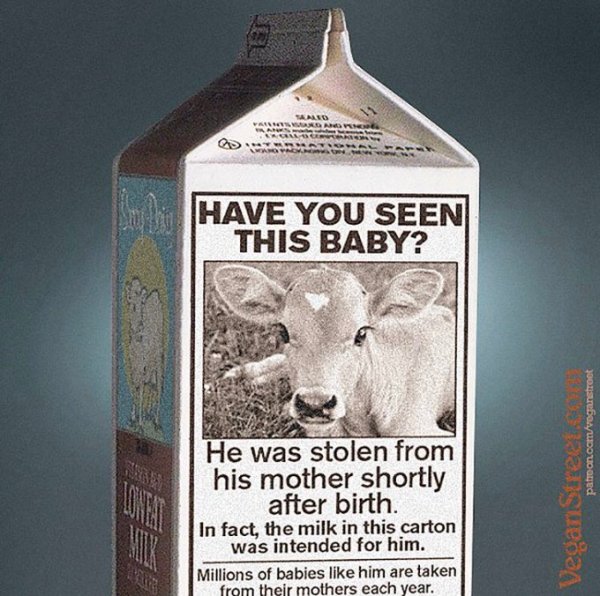
What is the difference between No Welfare, High Welfare, and Highest Welfare when they all require animals to die? Only human comfort, NONE protect the actual animals. The most humane, ethical, and honest Webster-defined "welfare" is NOT exploiting animals - not using, not wearing, not eating, not killing - animals. The only meaningful position is vegan, everything else is just how humans euphemize animals' required suffering and violent deaths: no human exploits animals because they honestly believe that NOT exploiting animals is UNethical or INhumane.

A Rebuttal to Matt Ball’s Vegan Bash

July 17, 2017
by

Source United Poultry Concerns
By Karen Davis, PhD, President, United Poultry Concerns

Vegans often blame one another for the fact that society resists going vegan at the speed of enlightenment that we seek and that billions of animals desperately need. The question of how to get people to care about chickens, cows and other farmed animals, let alone enough to quit eating them, is an ever-present source of hope and despair among those of us who advocate on behalf of these animals.

There is a spectrum of viewpoints, tactics, strategies and insights on how to create a world in which one day no animals will ever again be dragged into a slaughterhouse and made to endure the indignities and miseries we inflict on them for “food.”

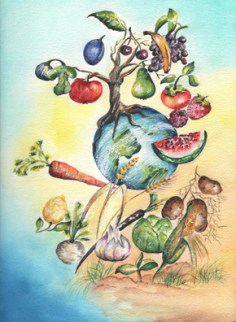
Drawing of a 17th century vegan

UPC

Matt Ball, the founder of Vegan Outreach, who was formerly with Farm Sanctuary, posted a video on YouTube on May 27, 2017. Titled “Want to save animals’ lives without going veg? Eat beef, not chicken,” the video, which he narrates, makes four main points: that radical vegan activists alienate the mainstream; that the vegan movement is a failure; that pitting chickens and cows against each other avoids alienating people while helping the largest number of animals; that enlisting the support of a chef (Anthony Bourdain), who compares vegan activists to “dangerous fundamentalists like Hezbollah” (an Islamist militant political party in Lebanon), is appropriate.

Points one and two suggest that the reason most people are not vegan, or are even anti-vegan according to Matt, is that radical vegan activists have alienated society with their (our) insufferable militancy. Forget that vegan advocacy has many faces and voices, and that animal rights vegan advocacy seldom involves screaming and rudeness as a public strategy. How much accusatory yelling have you heard – or done – at the ever-growing number of increasingly popular vegan festivals in the United States and elsewhere?

Matt accepts and repeats, as if it were true, Anthony Bourdain’s claim that vegans have disturbing similarities with dangerous fundamentalist groups like Hezbollah, because of how, in Matt’s words, “many of us act.” This statement takes the actions of a small group of radical, nonviolent vegan activists and attributes their actions to many vegans although there is no evidence to support the claim that most vegans are perceived by the general population as dangerous or even antagonistic. Popular media suggests the opposite – that because of well-known vegan celebrities in sports, music and Hollywood, being vegan now has the reputation of being cool, and vegans are not seen as “fanatics,” as Matt claims.

If most people still consume animal products, there are many reasons having little or nothing to do with how our vegan message is being conveyed. Many people still don’t care enough, know or even think about farmed animals and vegan food as part of their daily routine. Put it this way: McDonald’s is everywhere on the landscape; we’re still barely visible. This is not to say that how we frame and deliver our message doesn’t count. It does. But to blame society’s moral and dietary inertia, ignorance and capriciousness on radical vegan advocates, to impugn vegan activists for “driving people away” and acting like “absolute fanatics” for our cri de Coeur on behalf of mother cows and their suffering calves, as depicted in the video, seems a stretch.

Let us please keep in mind that the animal advocacy movement is barely fifty years old and that vegan advocacy per se didn’t really get started until the 1980s. And a factor in the mix has always been our movement’s anxiety about alienating the public and fear of “going too far.” It could be argued that the desire not to offend people, a certain diffidence on our part, has contributed to society’s overall sense that our issues are not urgent.

Matt claims that “80% of those who go vegan go back to eating animals. Half go back because they can’t stand the pressure to maintain a pure diet.” Whether or not “80%” is accurate, the implication that the pressure to return to meat eating comes mainly from the annoyance or “militancy” of other vegans ignores that the more likely source comes from family, friends and coworkers who pressure vegans to eat the familiar food and fall back into the familiar patterns. If as Matt says, only a tiny portion of the population is vegan, who is the more likely source of the pressure to eat animals: vegans or meat eaters? He stresses in the video that society is saturated with meat-eating messaging.

He goes on to say that by not eating chickens, animal eaters can have a profound impact on the number of beings who suffer. The number of beings who suffer would be greatly reduced. While I agree with this statement, the only action I encourage is to stop eating all animals and eat veggies instead. Some argue that this is the more difficult path, but I believe it is the easier path with a greater chance of bringing lasting effect. The message that no cruelty is okay is easy to understand and to feel good about. Who is going to feel good when, after being convinced that eating animals is cruel, they are then told to continue being cruel, just do less of it?

As much as the “stop eating chickens” message appeals from the standpoint of eliminating the largest number of land animals from food production, I question whether this approach will ultimately benefit animals. The world thus envisioned is a world where a smaller number of different animals will likely suffer in slaughterhouses and where the majority of people will, with our blessing, switch to eating other animals – more cows, pigs, sheep and goats, more turkeys, ducks and quails, more aquatic animals, more ostriches and emus, more factory-farmed insects. To the extent that the call to “make A suffer instead of B,” kill cows, not chickens, reaches consumers, it is not likely to reduce the number of chickens being consumed.

For us to agree that the vegan message has failed and that therefore we should promote abstention from chicken consumption only – doesn’t this amount to conceding that we are no longer a movement for all animals, but have opted instead to be marketing strategists for non-chicken products? How can we help people to conceive and to care how many more small animals suffer and die for food compared to large animals – 20 or more chickens for every cow, for example – while maintaining the integrity of our message?

(Back in the 1980s, U.S. activists focused almost exclusively on “veal” ban campaigns with the result that for years, people felt they had done enough by quitting veal. Instead of a step, it became a stop that did nothing to reduce or eliminate the number of “veal” calves being born, since the root cause of the calves’ existence was and is the public’s consumption of their milk, which activists are now boldly addressing with encouraging results.)

Why give up on vegan? Why denigrate ourselves? Why abase ourselves before an animal-abusing chef sneering at “veggens”? Especially with the signs that veganism is making headway. There are signs in food stores and restaurants. An article states that in Britain, the number of vegans rose 360% in the last 10 years and another article says that the number of vegans in the United States, which in 2009 was 1 percent, rose to 2.5 percent in 2012. Top Trends in Prepared Foods in 2017 observes that 6% of U.S. consumers now claim to be vegan, up from 1% in 2014. The health insurance company Kaiser Permanente advises cardiac patients to adopt a plant-based diet, and the July-August 2017 issue of Harvard Magazine has an article about the rise of vegan culture. Very significantly, the American Medical Association has just passed a resolution calling on hospitals to serve plant-based meals and to eliminate all processed meats. See: AMA Comes Out Against Serving Processed Meats in Hospitals!

To encourage the suffering of any animal is a betrayal and surrender of my responsibility. I refuse to negotiate with cruelty. I refuse to say “eat this animal instead of that one.”


KAREN DAVIS is the founder and president of United Poultry Concerns. Join us at the Animal Rights National Conference August 3-6! We look forward to seeing you.


Order a FREE vegan kit: http://www.peta.org/living/food/free-vegan-starter-kit/

Take PETA’s Cruelty-Free Shopping Guide along with you next time you head to the store! The handy guide will help you find humane products at a glance. Order a FREE copy HERE

Want to do more than go vegan? Help others to do so! Click on the below for nominal, or no, fees to vegan literature that you can use to convince others that veganism is the only compassionate route to being an animal friend.

PETA: http://www.petacatalog.com/catalog/Literature-39-1.html

Looking for merchandise? Action for Animals has a very good selection : http://store.afa-online.org/home.php?cat=284

Have questions? Click HERE


culture vultures like to say
don’t eat this meat
but that meat is okay.
we say here
to eat any flesh is
wrong,
if you want to be
in our humane chorus
come and sing
along.
the tune is simple
words sincere.
animal cruelties of any
kind will not be
tolerated
here!!!!

Karen Lyons Kalmenson


Moby & The Void Pacific Choir – In This Cold Place (Official Video)

July 10, 2017
by


Source YouTube, Moby

Moby & The Void Pacific Choir – In This Cold Place Official video by Steve Cutts.

The new album, More Fast Songs About The Apocalypse, by Moby & The void Pacific Choir is available now as a free download in partnership with wetransfer: http://moby.la/mfsataYo

Get all the official gifs from the video here: http://moby.la/giphyYo

Moby says, “working on ‘In This Cold Place’ and ‘Are You Lost In the World Like Me?’ with Steve Cutts has been a creative highlight for me. He’s such a great animator and activist, and I’m so happy he agreed to make these two videos.”

Last week, Moby & The Void Pacific Choir released More Fast Songs About The Apocalypse, the follow-up to 2016’s These Systems Are Failing. The album is available now on all digital and streaming platforms as well as on WeTransfer via a name-your-own-price model with all proceeds going to a charity of the fan’s choosing. Download More Fast Songs About The Apocalypse http://moby.la/mfsataYo.

The album is also available to purchase in both standard CD and special pink vinyl editions. Order either format http://moby.la/mvpcmfsataYo

Facebook: http://moby.la/facebookYo
Instagram: http://moby.la/instagramYo
Twitter: http://moby.la/twitterYo
Youtube: http://moby.la/subscribeytYo


Order a FREE vegan kit: http://www.peta.org/living/food/free-vegan-starter-kit/

Take PETA’s Cruelty-Free Shopping Guide along with you next time you head to the store! The handy guide will help you find humane products at a glance. Order a FREE copy HERE

Want to do more than go vegan? Help others to do so! Click on the below for nominal, or no, fees to vegan literature that you can use to convince others that veganism is the only compassionate route to being an animal friend.

PETA: http://www.petacatalog.com/catalog/Literature-39-1.html

Looking for merchandise? Action for Animals has a very good selection : http://store.afa-online.org/home.php?cat=284

Have questions? Click HERE


for granted this world
we cannot take
lives will be lost
there is
peace to make
minds to change
changes in tune.
the world is not
forever.
but forever is
ruined.

Karen Lyons Kalmenson


Red Red World

July 3, 2017
by


Source YouTube, Angela Lynch

This song is dedicated to those who show love to all animals irrespective of species and was written to put an end to animal suffering. The songwriter – David Finney – was in the pop music industry for 10 years, the market research industry for 20 years before later establishing The Energy of Conversation, an enterprise dedicated to learning and improvement. David was a meat eater for over 40 years before becoming vegetarian and is now Vegan and campaigner for Animal Rights. davidfinney@theenergyofconversation.co.uk


Order a FREE vegan kit: http://www.peta.org/living/food/free-vegan-starter-kit/

Take PETA’s Cruelty-Free Shopping Guide along with you next time you head to the store! The handy guide will help you find humane products at a glance. Order a FREE copy HERE

Want to do more than go vegan? Help others to do so! Click on the below for nominal, or no, fees to vegan literature that you can use to convince others that veganism is the only compassionate route to being an animal friend.

PETA: http://www.petacatalog.com/catalog/Literature-39-1.html

Looking for merchandise? Action for Animals has a very good selection : http://store.afa-online.org/home.php?cat=284

Have questions? Click HERE

Vegan Batman Light Changing Hearts and Minds Across the U.S.

June 26, 2017
by
vegan-batman-light-2-768x758

Latest Vegan News

Source Latest Vegan News
By Hannah Sentenac, Editor-in-Chief

The words Vegan Batman Light may sound like something out of sci fi, but it’s 100 percent real — and 100 percent radical.

Basically, the light is a giant projector that displays powerful vegan messages on building surfaces (a la the bat signal). The idea was dreamed up by activist Connie Spence last year, and she’s been shining the light of truth in cities across the country ever since.

Spence came up with the concept after the election when an artist shone an anti-Trump message on a hotel in Atlanta. Because it was only light, it wasn’t considered vandalism, and therefore wasn’t illegal. “In that moment I knew I had to figure out what this equipment was and how to do the same all over walls in Los Angeles [where she lived at the time].”

After a lot of technical trial and error, she got the equipment together and did her first light in mid-December of 2016.

“The first time it was done on the pig slaughterhouse in L.A. and boy was that moment eventful,” says Spence. “The light could be seen over their courtyard fence inside the slaughterhouse. The police that come each night walked up and said ‘WOW, that is a game changer and lets everyone know how serious you guys are.’  I have now been doing the light three to five times a week since.”

In Los Angeles, she’s shone the light on the Staples Center, over freeways, on slaughterhouses, in Hollywood, and on the 3rd Street Promenade; she’s brought it to the Vegas Strip and Downtown Vegas (over the famous Heart Attack Grill); and she’s displayed messaging on the Diamondbacks stadium in Phoenix. She continues to travel and bring the light to new locations. She’s had countless interactions with curious people, many of which have been caught on video and are posted to Facebook. 

Currently, Spence is raising funds via Go Fund Me to start new chapters of the Vegan Batman Light. She wants as many people as possible to get involved in bringing the concept to cities across the globe. “This recipe of activism works,” she says, in part because she talks TO people not AT them. “I learn their name, shake their hand, ask them how they feel, ask them if they’ve been to a slaughterhouse, ask them why they haven’t contemplated animals being abused before this moment. I learn about them and their defenses and I pivot to any excuse or justification they have. I spend a lot of time remembering stats and practice rebuttals to make sure that I know how to handle every objection. And on top of it all, I try to stay calm, but direct and always try to maintain peace.”

She’s done it over 50 times and dealt with more than 30 police interactions, yet she’s only been shut down once.

So what does she recommend as far as effective activism? “Talk to every person and imagine they are your child. You really have to talk to people and unwire them and to do this, be as patient with their knee-jerk defense mechanisms as you would be to an 11-year-old child. This is how I prevent myself from surrendering to arguments and you will find even with the worst initial reactions, I almost always get people to come full circle and understand veganism.”

Also, she says, use simple language. “Your audience is always speciesist and you will rarely win someone over when you use language like ‘rape,’ ‘holocaust,’ ‘slavery’ or ‘enslavement.’ I do not need to have my audience turn away from my message because they think I’m downgrading an experience they went through or feel strongly about. This isn’t an ego war on words and so you will NEVER catch me using that language, ever. Also, I never push pamphlets at anyone. I’ve never seen my collateral on the ground. I only give out my cheat sheets and Go Vegan Pamphlets when the person is ‘sold’ on the philosophy and motivated to go on a Vegan Journey. I have never seen any of my cheat sheets on the ground or trash.”

For more info on the Vegan Batman Light, check out Go Fund Me, Facebook, and Instagram.

Follow Latest Vegan News on Facebook, on Instagram and Twitter (@LatestVeganNews), and sign up to receive our daily headlines in your inbox here. 


Order a FREE vegan kit: http://www.peta.org/living/food/free-vegan-starter-kit/

Take PETA’s Cruelty-Free Shopping Guide along with you next time you head to the store! The handy guide will help you find humane products at a glance. Order a FREE copy HERE

Want to do more than go vegan? Help others to do so! Click on the below for nominal, or no, fees to vegan literature that you can use to convince others that veganism is the only compassionate route to being an animal friend.

PETA: http://www.petacatalog.com/catalog/Literature-39-1.html

Looking for merchandise? Action for Animals has a very good selection : http://store.afa-online.org/home.php?cat=284

Have questions? Click HERE


the heartlight,
bright
the truth shines
beckoning all
to bask in
the beauty
of compassion

Karen Lyons Kalmenson


Are Disability Rights and Animal Rights Connected?

June 19, 2017
by


Rothman-Are-Disability-and-Animal-Rights-Connected-690


In her book “Beasts of Burden,” Sunaura Taylor discusses the intersectionality of disability and animality.ILLUSTRATION BY BETH HOECKEL; SOURCE PHOTOGRAPH BY ERIK McGREGOR

Source The New Yorker  By Joshua Rothman

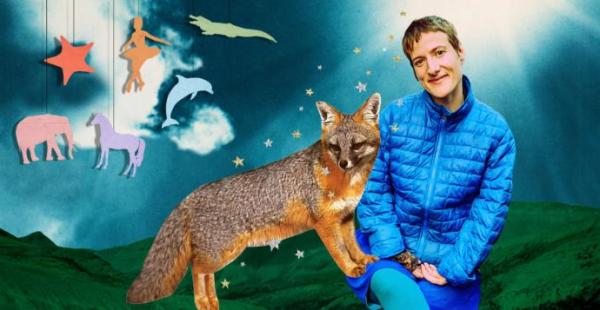
In 2004, when she was twenty-three, Sunaura Taylor Googled “arthrogryposis,” the name of a condition she has had since birth. Its Greek roots mean “hooked joints”; the arms and legs of many people who have it are shorter than usual because their joints are permanently flexed. Taylor was curious about whether animals had it, too. In the journal of the Canadian Cooperative Wildlife Centre, she found a report called “Congenital Limb Deformity in a Red Fox.” It described a young fox with arthrogryposis. He had “marked flexure of the carpal and tarsal joints of all four limbs”—that is, hooked legs. He walked on the backs of his paws, which were heavily callused. In a surprised tone, the report noted that he was muscular, even a little fat: his stomach contained “the remains of two rodents and bones from a larger mammal mixed with partially digested apple, suggesting that the limb deformity did not preclude successful hunting and foraging.” All this had been discovered after he had been shot by someone walking in the woods, who noticed that he “had an abnormal gait and appeared sick.”

Taylor was taken aback by this story. The fox, she thought, had been living a perfectly good life before someone had shot it. Perhaps that someone—the report named only “a resident of Cape Breton, Nova Scotia”—had been afraid of it; maybe he’d seen it as a weird, stumbling creature and imagined the shooting as an act of mercy. Taylor’s hands are small, and she has trouble lifting them; she uses a motorized wheelchair to get around. Once, her libertarian grandmother had told her that, were it not for the help of others, Taylor would “die in the woods.” When she read about the fox, she was coming into political consciousness as a disabled person. She had been learning about what disabilities scholars call the “better-off-dead narrative”—the idea, pervasive in movies and books, that life with a disability is inherently and irredeemably tragic. In the fox, she saw herself.

 Since the age of thirteen, Taylor has been a painter. A painting from 2009, “Arthrogryposis Animals,” is a self-portrait in which she stands, nude, next to two pigs and a calf; all four have crooked limbs. In another, “Self-Portrait Marching with Chickens,” she is walking in a field; the chickens around her, weighed down by their disproportionately large upper bodies, are disabled, too. The paintings are unsettling, absurd, and provocative. Without explaining themselves, they lay claim to a territory that disabled people usually try to avoid: the space where disability and animality meet.

Earlier this year, Taylor, who is now thirty-five, published a book called “Beasts of Burden: Animal and Disability Liberation.” It makes explicit the ideas in her art. When she was small, Taylor writes, other children told her that she walked like a monkey and ate like a dog; by this, they meant that her disability made her like an animal and, therefore, less than human. In “Beasts of Burden,” she argues that they had everything backward. Human beings are already animals; age, disease, and accident mean that all able-bodiedness is a temporary state. Even able-bodied people can “die in the woods” alone—they, too, are dependent upon society. Disabled people should be proud to associate themselves with animals, Taylor argues, because the same ideology, ableism, oppresses both groups. If you’re cognitively or physically disabled, it’s ableism that tells you that you’re worth less than a more capable person; similarly, if you’re an animal, it’s ableism that makes eating you permissible, since you can’t do what humans do.

Taylor has been a vegetarian and animal-rights advocate since the age of six; earlier this month, we met for lunch at a vegetarian restaurant near N.Y.U., where she is now a graduate student in American studies. She has short brown hair, a broad smile, and a strong chin, and wore vaguely hippie clothes: a plain T-shirt, patterned trousers, rubber boots. Taylor is adept at using her mouth for everyday tasks, such as retrieving items from her handbag. (She paints by holding the brush in her mouth.) “I feel animal in my embodiment,” she writes, “and this feeling is one of connection, not shame.” She continues, “When I rummage through my purse with my face, sometimes getting spit on my cell phone or accidentally ingesting something unpleasant . . . I think of animals—pigs who root with their noses, birds who build nests with their beaks.”

“As I’ve gotten older, my understanding of disability has become very politicized,” she said, over faux-chicken salad, “but when I was a little kid, I had a simpler origin story that made sense of being disabled.” She was born in 1982, in Tucson, Arizona. Her father was a Ph.D. student in pharmacology, and they lived in a low-income neighborhood near the airport. “I came out the way I am, and other kids in the neighborhood started coming out similarly,” she said. “In the end, we traced it back to Hughes Aircraft, which had been burying toxic waste—mostly really mundane stuff, like airplane degreasers—in unlined pits in the ground since the Korean War.” (The airport is now a Superfund site.) “In my kid brain, I thought, This is my story, I should do something with it.” The family moved to Athens, Georgia, where her mother, an artist, “unschooled” Sunaura and her siblings—essentially, the children directed themselves, creating their own puppet shows, story cycles, and research projects. (Taylor’s sister Astra is a filmmaker and activist; they have another sister, Tara, and a brother, Alexander.) “I guess ‘liberation’ was a theme from the beginning,” Taylor said.

When she was twelve, Taylor’s other grandmother—“the Buddhist, Canadian one, not the atheist libertarian one”—took her to visit a New Age healer. “We were at a kind of hippie festival, and there was this woman who said she could cure people,” Taylor recalled. “There were tons of people there, and she came up to me, and—all of a sudden—I got so angry.” Remembering the scene, Taylor’s eyes widened. Her initial origin story, she explained—“that my body was bad”—suddenly felt false.

A few years later, she went on her first disability-rights march: a two-week, two-hundred-and-fifty-person trek from Philadelphia to Washington, D.C., organized by the organization adapt. The marchers, most of whom were disabled, brought along a generator to recharge their wheelchairs at night. At first, Taylor said, it was “horrifying” to be around so many other disabled people at once. Then, one night, she was struggling to eat—there wasn’t a table—when a woman came up and said, “You can ask for help here. This isn’t a place where we value independence.” Taylor now tells two stories about her life. In one, sociopolitical story, she is a victim. Her disability is the work of “networks of power”—polluting corporations, lax regulators—that must be protested. In another, more personal story, her life is hers to define. She identifies as “crip”—a term used to capture the liberatory, countercultural aspects of life with disability. (It’s parallel to the word “queer.”) “Crip culture has made me comfortable both with the creative potential of disability and with the fact that there’s pain, there’s suffering,” she said.

Growing up, in Georgia, Taylor would often see “chicken trucks” on the highway: large, flatbed vehicles stacked with live chickens in cages. When one of these trucks sidled up to the Taylor family on the road, Sunaura and her siblings would hold their breaths, appalled, until it passed. “I was always an annoying, righteous vegetarian,” she said, laughing. “Even on that adapt march, I remember thinking, Ugh—these people want disability rights, but they’re eating meat.” In 2006, she convinced a worker at a poultry plant to let her take a photograph of a chicken truck; she spent a year making an eight-by-ten-foot painting of the truck, containing portraits of a hundred individual chickens. (After completing it, she became vegan.) She painted a watercolor in the style of a Greek frieze, “Sunnys in Chicken Cages,” in which she appears with the chickens behind bars.

Taylor began to read about the connections between animal rights and disability. She discovered that many factory-farmed animals are disabled in one way or another. In some cases, they’ve been injured through confinement; in others, their unusually shaped bodies make their lives harder. (She wondered if, in some sense, their man-made disabilities made killing them and eating them feel easier.) It seemed to her that there was an analogy between those factory farms and the environments in which many disabled people live. In “Beasts of Burden,” she writes that both farms and cities are built environments designed “to reward certain embodiments over others.” In a city, human-designed structures—curbs, stairs, doorknobs—make some kinds of bodies more difficult to have. In a similar way, Taylor argues, we build systems—of breeding, farming, slaughter, and thought—that diminish animals, then imagine their diminishment to be natural and inevitable.

Reading “Beasts of Burden,” I wondered if the book might be a case of intersectionality run amok: Did animal rights and disability rights really need to be linked? In fact, Taylor’s book responds to how other thinkers have already linked them. Taylor points out that, in the past, colonial subjects were often described as both disabled and animal-like: they were seen as shambling, hunched, and bestial, and, therefore, as “lower” on the chain of being. This authorized their exploitation. The book is also an extended argument with the philosopher Peter Singer, who bases his case for animal rights in part on the fact that some animals are more cognitively capable than the intellectually disabled people to whom we already extend our empathy. If we value the lives of infants or the mentally deficient, Singer asks, shouldn’t we value the lives of animals, too? Taylor objects to the utilitarian essence of Singer’s argument. She thinks that it’s not up to us to decide how much to value any life. “Philosophers try to make systems of argumentation, where they say a life is valuable because of ‘A,’ ‘B,’ or ‘C,’ ” she told me, while we gathered our things, “but we don’t have to worry about whether other organisms on this planet have dignity. I guess I’m saying life is sacred, but not in a way that has a religious implication.” Instead, she uses the academic, politicized language of intersectional critique: Judith Butler meets St. Francis of Assisi.

Outside, we made our way downtown to Taylor’s student apartment, a few blocks away from Washington Square Park. She lives there with David Wallace, her long-term partner, a video and installation artist who is about to begin his training in nursing, and their daughter, Leonora, whom they call Badger. At the door, I met Taylor’s service dog, Bailey. He’s a rescue, and Taylor’s best guess is that he’s part dachshund, part Lhasa Apso—in any case, he is small, black, and long, with lovely eyebrows. In “Beasts of Burden,” Taylor describes how, a few years ago, Bailey developed slipped-disk disease: wiener-shaped dogs, having been bred to have long backs, often develop spinal problems. For a while, she and David carried Bailey around in a sling. He’s recovered, but he’s still slower and more delicate than other dogs. At the end of her book, Taylor writes that there is “something appropriate—beautiful actually—about being a gimped-up, dependent, inefficient, incapable human supporting and being supported by my inefficient, dependent, and gimped-up dog.”

On this day, Bailey was lithe and frisky. The apartment was small, a jumble of books, art, and toys. Above the coat rack hung a portrait of Taylor, painted by Wallace: she looked contemplative, her gaze serious. Leonora was at the table, eating broccoli. She slid out of her high chair and sat down to play beneath a mobile, made by Wallace, of paper animals: a horse, an elephant, an alligator, a dolphin, a starfish—and a dancer, arms reaching out, mixed in with all the rest.


the differently abled are regarded with fear
people who say ” i don’t want this happening here”
but ability to love matters much more
than how fast one runs
or their tennis score.

Karen Lyons Kalmenson


vomeat magicjack

June 12, 2017
by


Source YouTube, Torak Law


Please be aware that this is a graphic video. It is highly distressing and violent; the animals have to endure this horror.


Order a FREE vegan kit: http://www.peta.org/living/food/free-vegan-starter-kit/

Take PETA’s Cruelty-Free Shopping Guide along with you next time you head to the store! The handy guide will help you find humane products at a glance. Order a FREE copy HERE

Want to do more than go vegan? Help others to do so! Click on the below for nominal, or no, fees to vegan literature that you can use to convince others that veganism is the only compassionate route to being an animal friend.

PETA: http://www.petacatalog.com/catalog/Literature-39-1.html

Looking for merchandise? Action for Animals has a very good selection : http://store.afa-online.org/home.php?cat=284

Have questions? Click HERE


the truth…raw, naked…horrific
bet that burger and/or those nuggets
no longer taste
terrific!

Karen Lyons Kalmenson


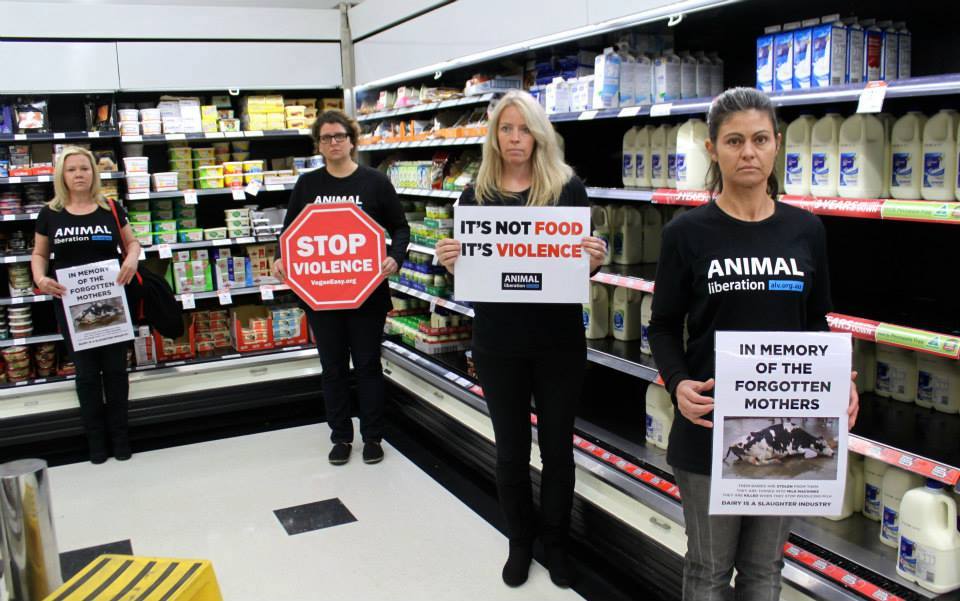
100 Vegan ‘Signs of the Times’ …from around the world

June 5, 2017
by

Source The Vegan Truth
Posted by


One of thousands of signs from the Animal Rights March in London 2016
From the Animal Rights March 2016 in London
Be Fair Be Vegan Campaign
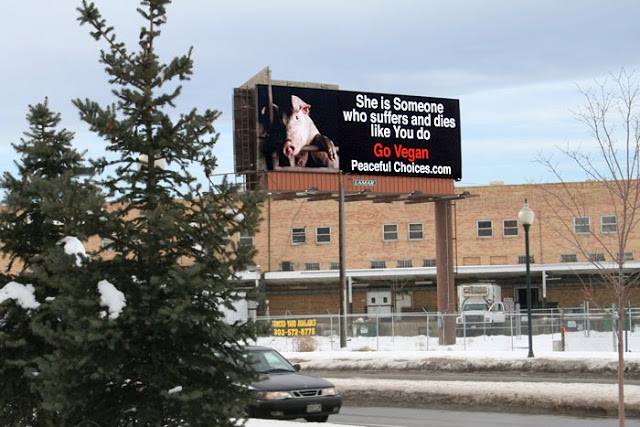
Be Fair; Be Vegan Billboard on Times Square, New York
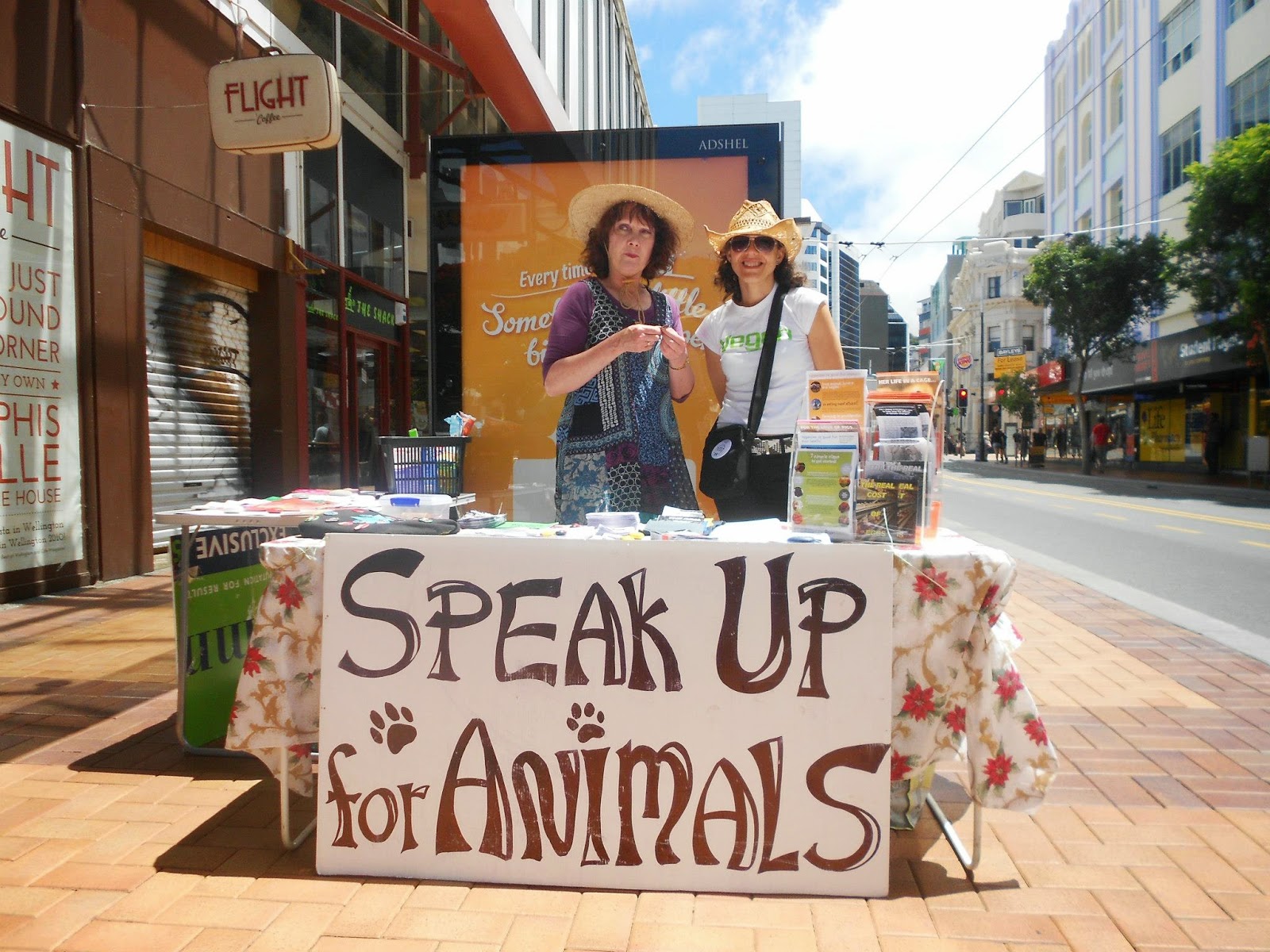
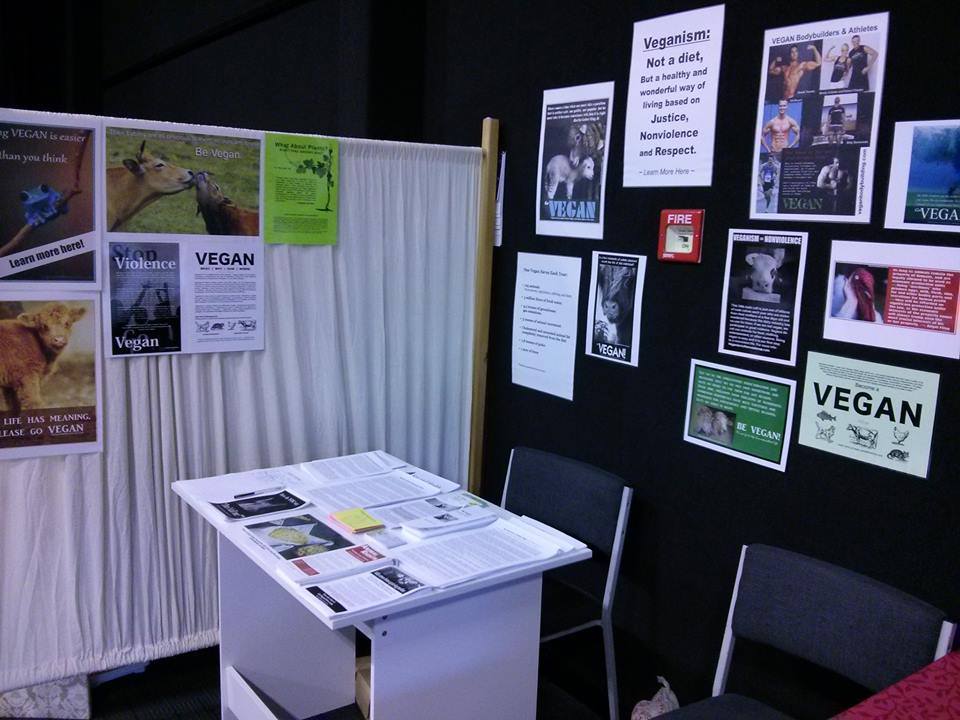
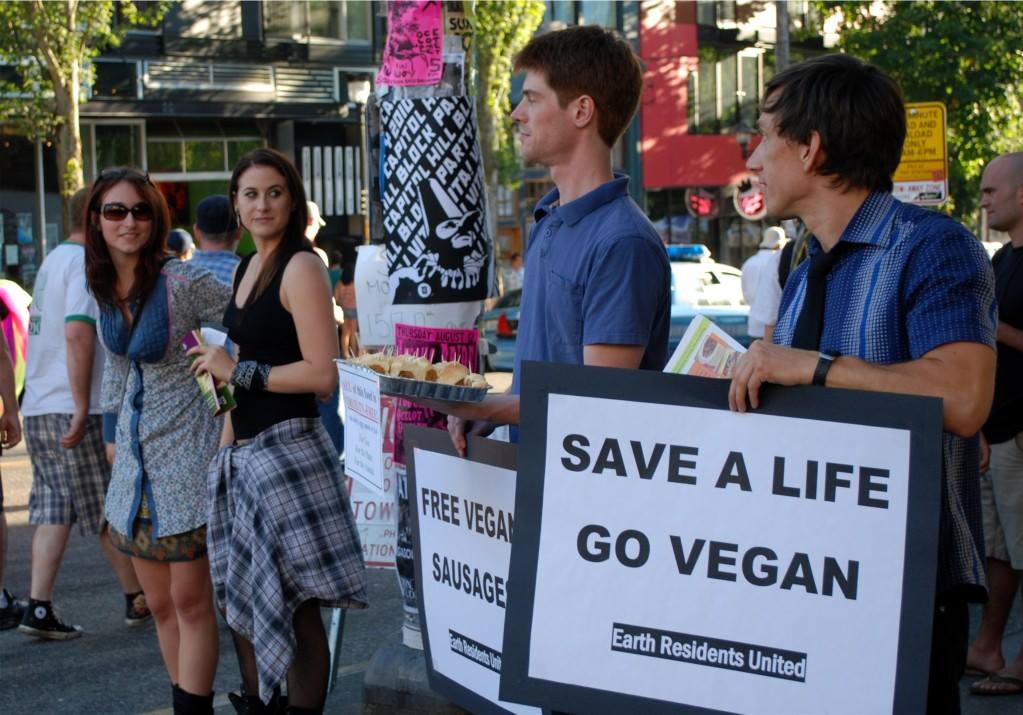
Matthew and Alyssa Sikora doing vegan education tabling.
Animal Rights protesters; Israeli Jews and Arabs together
300 Vegans for Independence/Vegan Shift.org
sign on a park bench
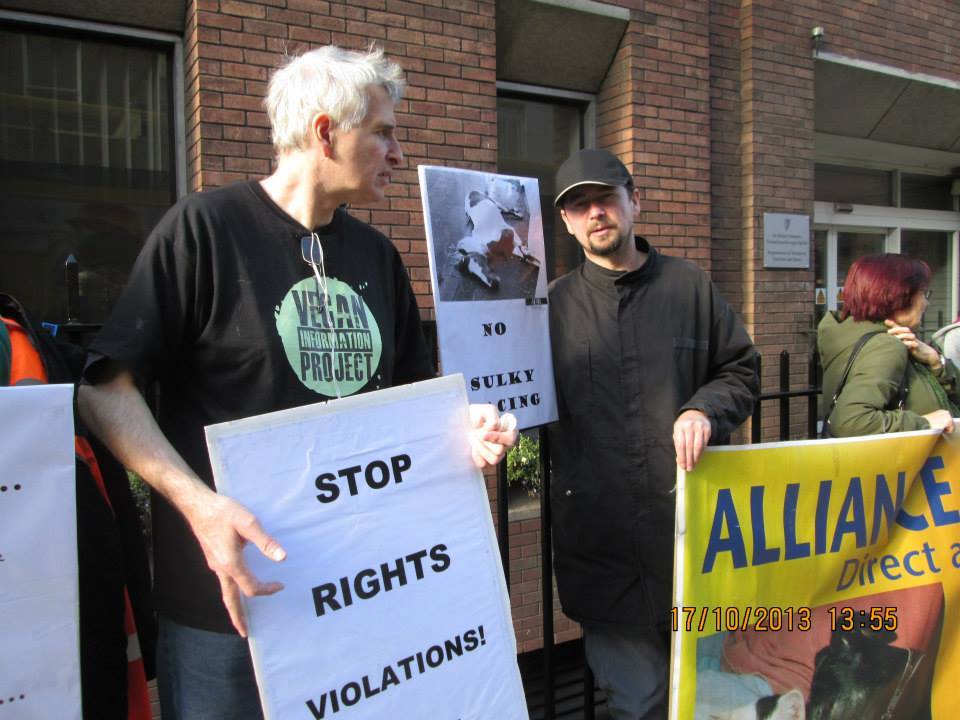
Vegan street education, Ireland ~ Vegan Information Project
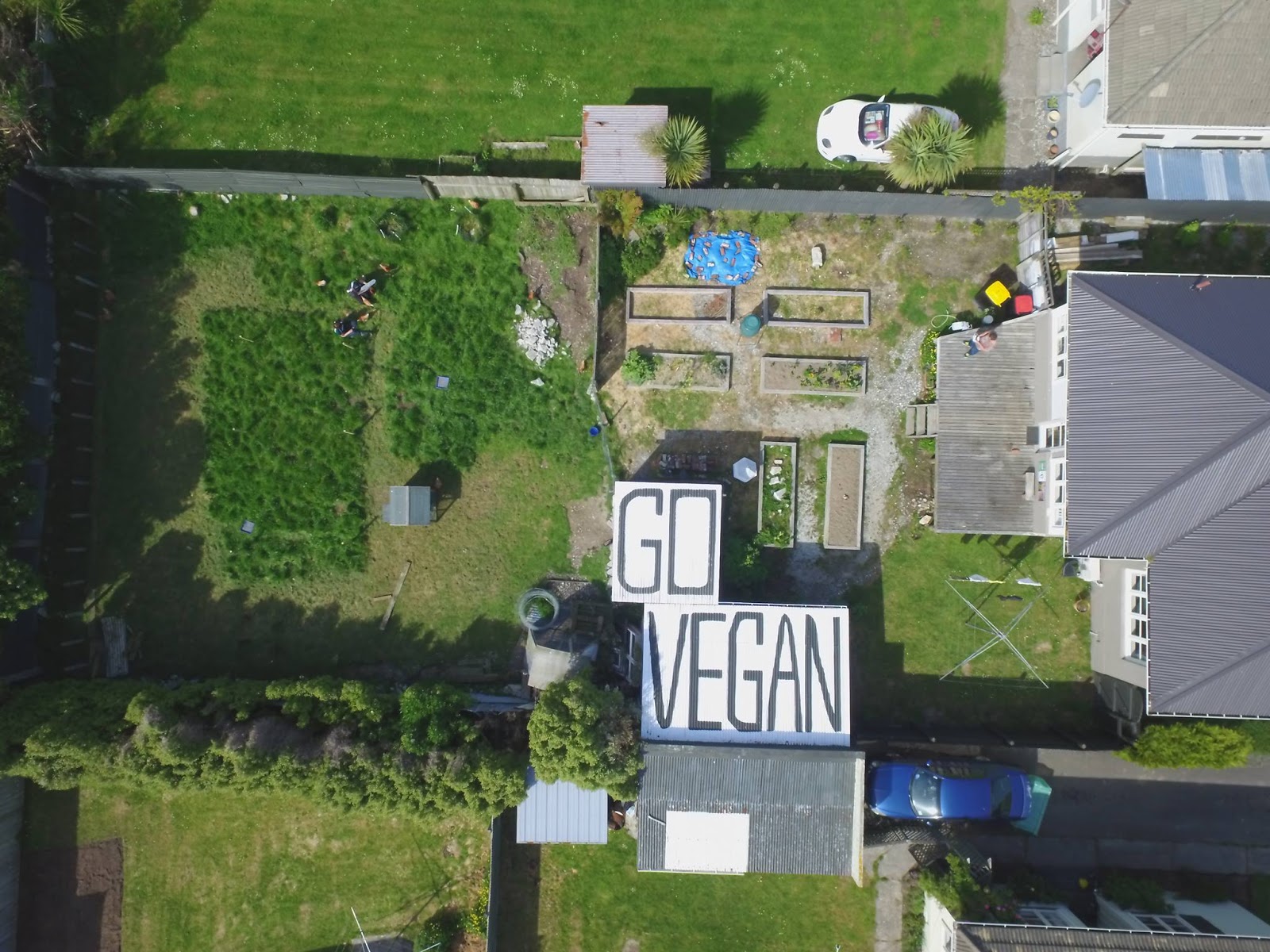
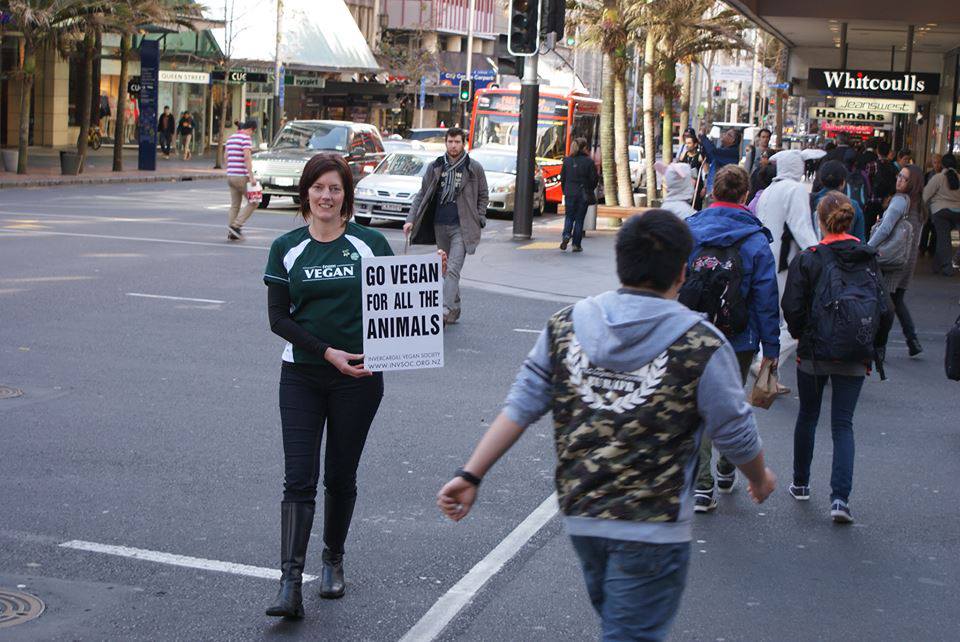
Roof sign from Invercargill Vegan Society, New Zealand
Animal Liberation, Victoria, Australia
Toronto Pig Save, Toronto, Canada
The words ‘go vegan’ in the flooring of a vegan shop
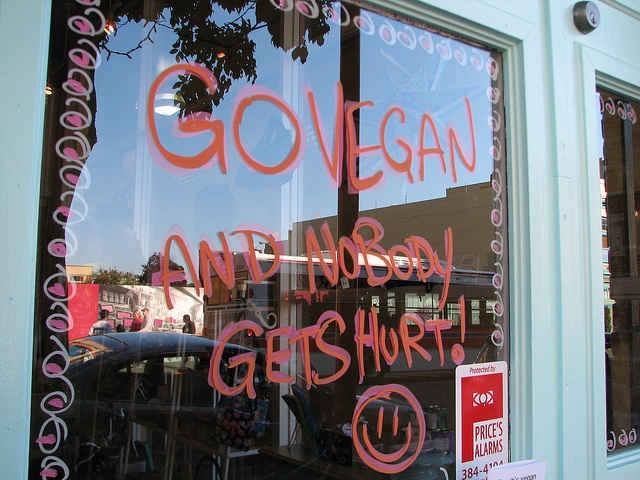
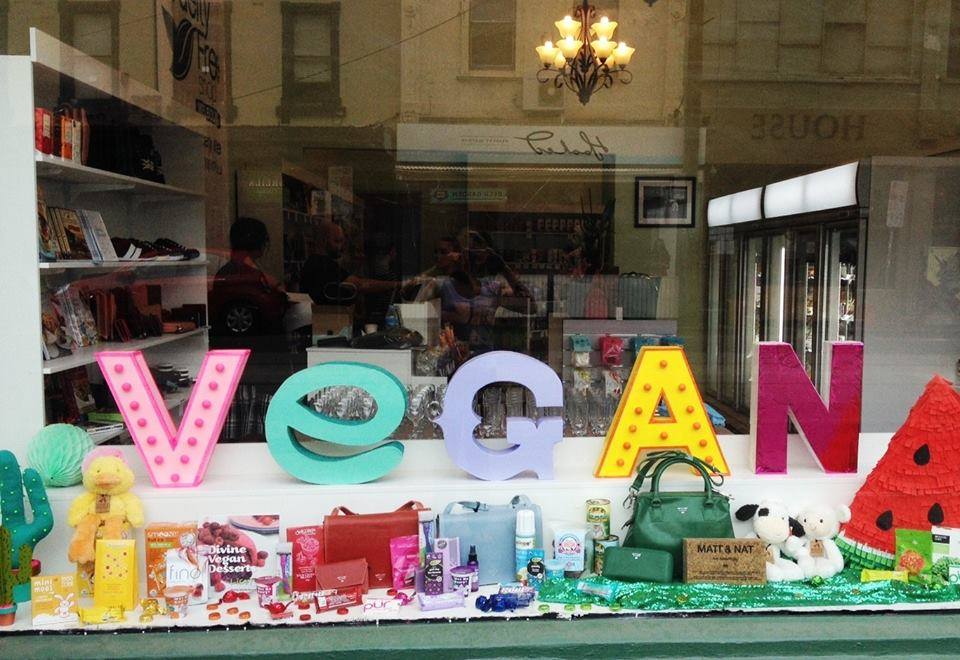
Cruelty-Free Shop, Australia – window display
Direct Action Everywhere street protest
Elizabeth Collins street stall, NZ vegan, New Zealand
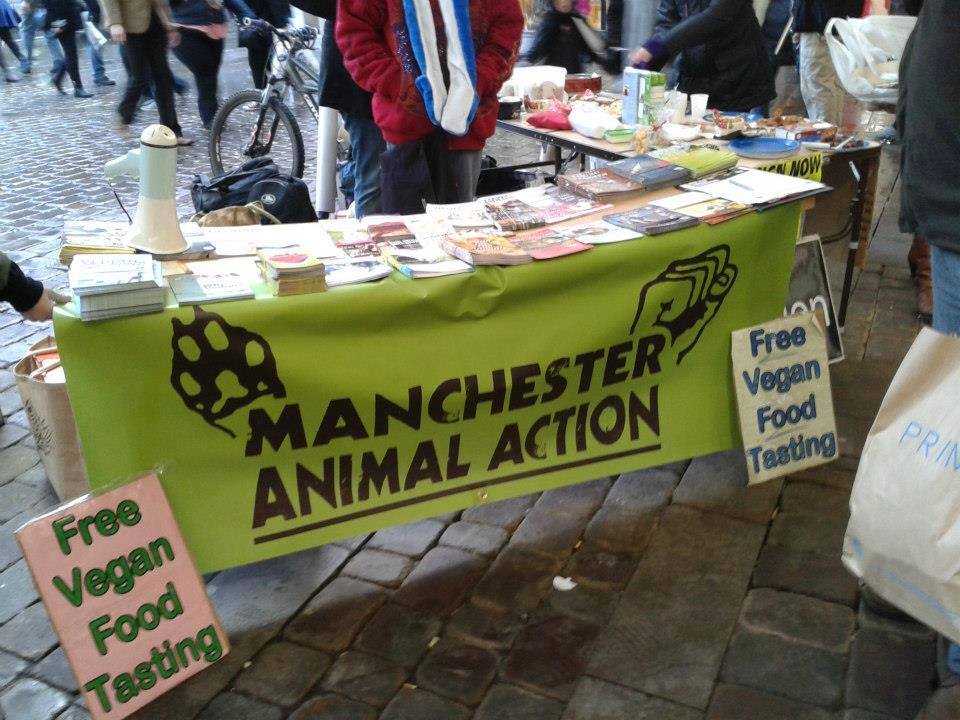
Manchester U.K. street activism
Asking for New Year’s Resolution from bridge/highway
Meaningful, at least, graffiti – or who knows, maybe they wanted it there.
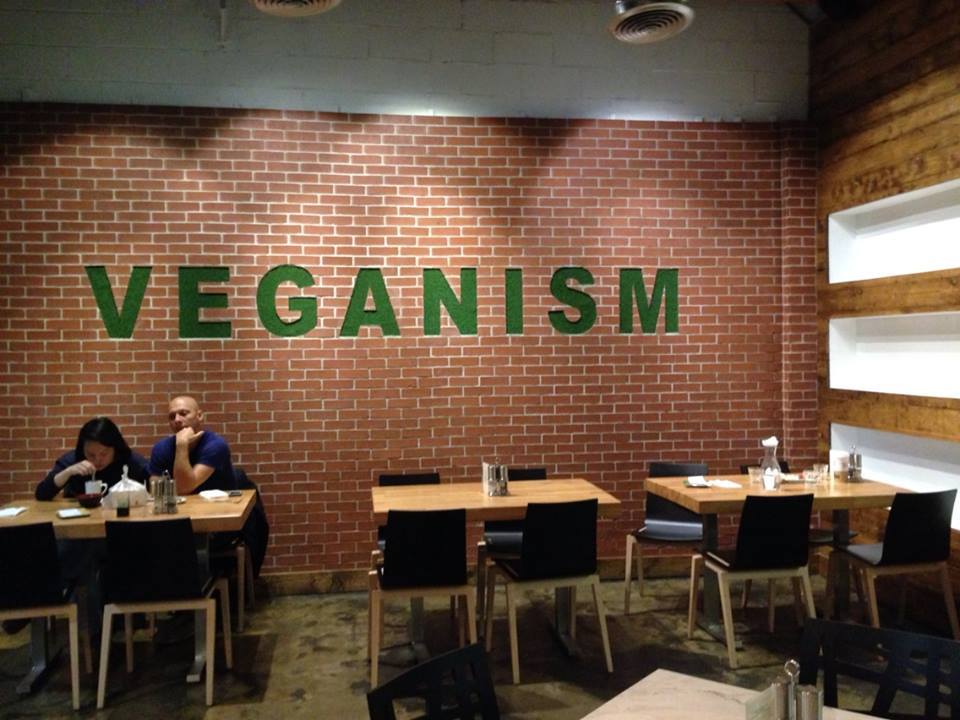
My vegan restaurant’s wall
Peaceful Prairie Sanctuary Campaign, USA
Shout it from the rooftop!
Street sign protest ~ Lisa Qualls – USA
English translation – No Racism, No Sexism, No Speciesism
Educational stall ~ Emmy James, Peaceful Abolitionist, New Zealand
From the top of a roof in Australia
Sign painted on car that was in a parade ~ Vegan Society of Peace, Texas, USA
Valentines’ Day Campaign
Melbourne, Australia street corner vegan education
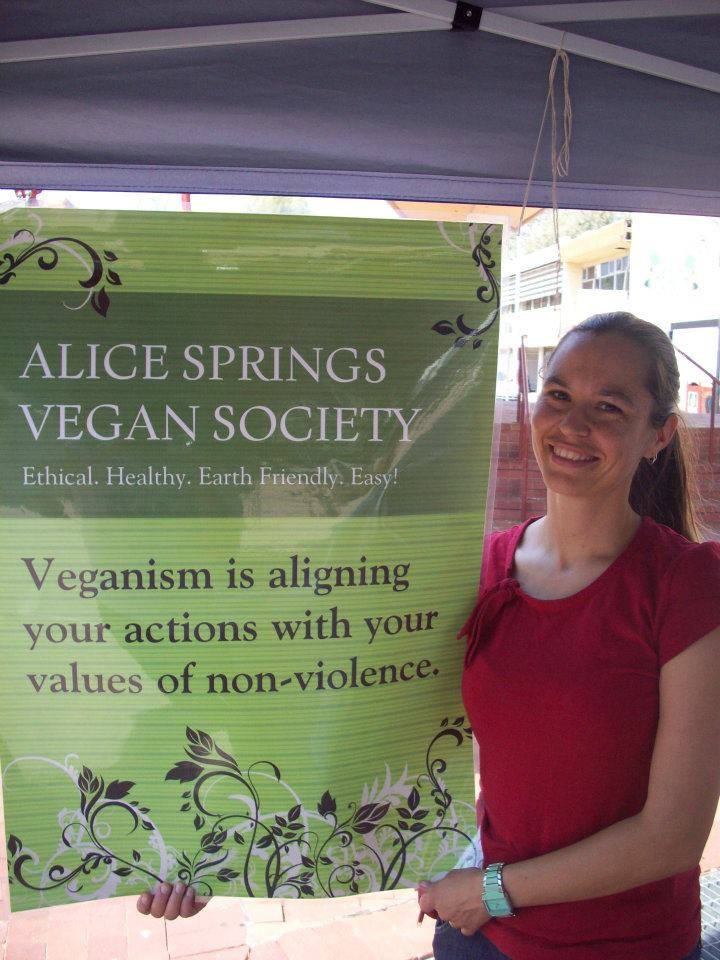
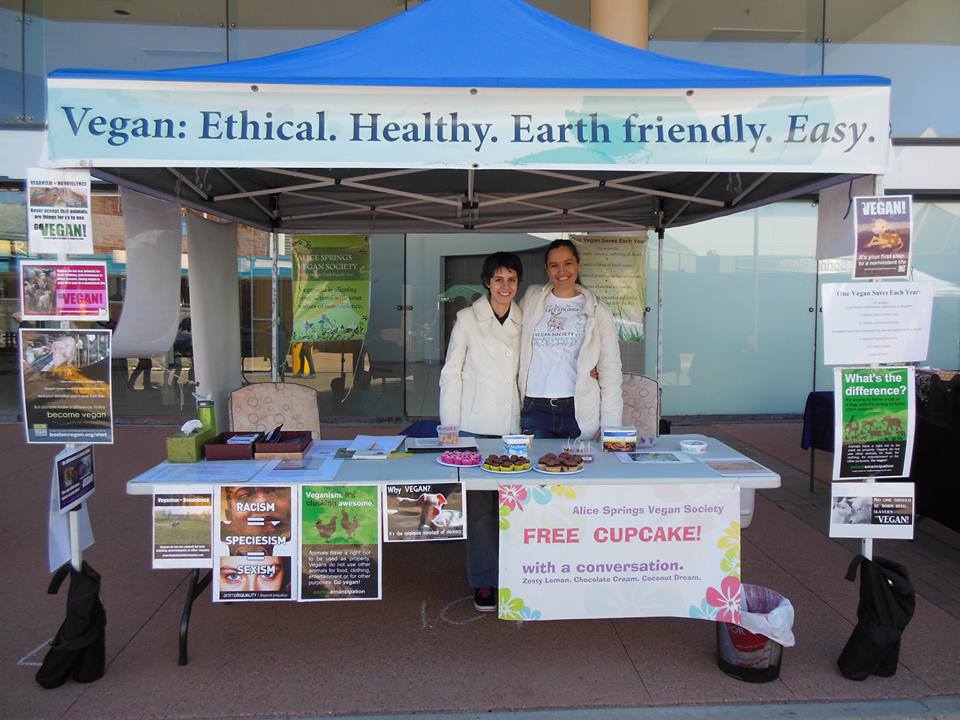
Alice Springs Vegan Society, Australia
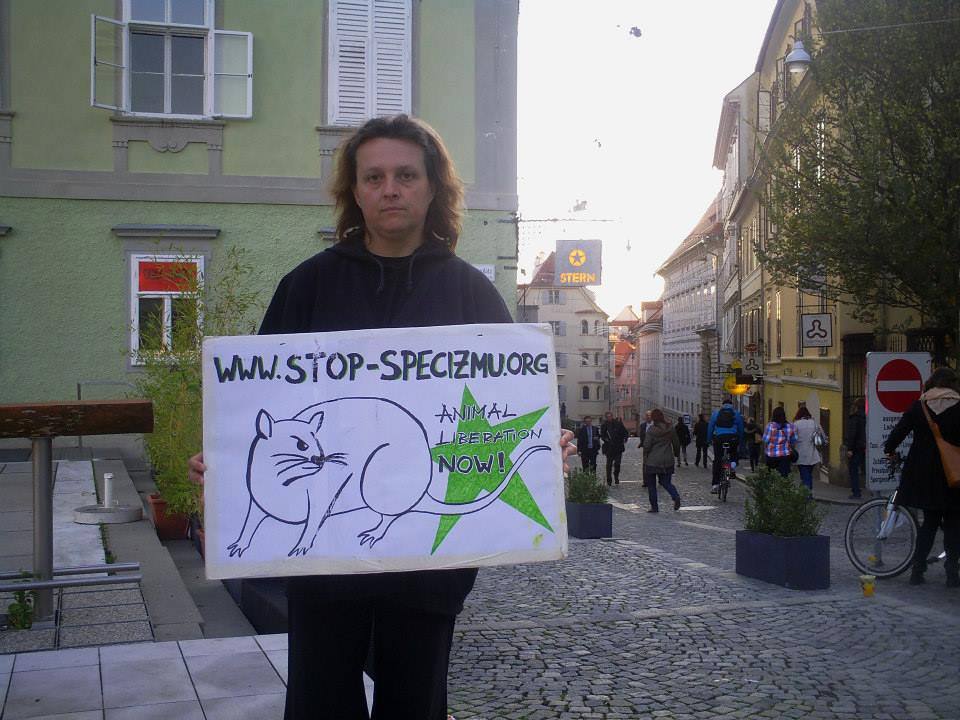
Stop Specisism ~ Stop Specizmu.org – Croatia
Professor Roger Yates, long term vegan, animal RIGHTS-based vegan advocate, Ireland
Jenny of Invercargill Vegan Society, New Zealand – taking it to the streets.
Sign on bus in British Columbia, Canada/ Peaceful Prairie Sanctuary campaign

Vegan Information Project – Ireland


Order a FREE vegan kit: http://www.peta.org/living/food/free-vegan-starter-kit/

Take PETA’s Cruelty-Free Shopping Guide along with you next time you head to the store! The handy guide will help you find humane products at a glance. Order a FREE copy HERE

Want to do more than go vegan? Help others to do so! Click on the below for nominal, or no, fees to vegan literature that you can use to convince others that veganism is the only compassionate route to being an animal friend.

PETA: http://www.petacatalog.com/catalog/Literature-39-1.html

Looking for merchandise? Action for Animals has a very good selection : http://store.afa-online.org/home.php?cat=284

Have questions? Click HERE


a picture speaks
what words cannot say
each image a story
a happy ending
some day

Karen Lyons Kalmenson


Norm – a short film

May 30, 2017
by


“Norm” is a short film about two roommates debating over the morality of rape, in a society where raping women is legal and socially accepted. #itsnotaboutrape

Written and Directed by Miguel Endara
Starring Lucas Jesse Hicks, Michael Anthony Giannelli, and Michael Ford
Director of Photography – Gerry Martinez
Art Director – Natalia Ramos
Produced by Miguel Endara and Lily Vidal
Edited by Miguel Endara
Sound Recordist – Tom Salyer
Sound Design – Joel Hernandez
Hair and Make-up – Alexis Renny
Music by Royal Deluxe – “I’m Gonna Do My Thing”

Spanish subtitles provided by Mauricio Gálvez.
Danish subtitles provided by David Koch Gregersen.
Polish subtitles provided by Anonymous.
Hebrew subtitles provided by Giora Meyerowitz.
Russian subtitles provided by Grecha Moo.
Swedish subtitles provided by Aladoran.
English subtitles provided by Vidara Films.
Vegan subtitles (English US) provided by Vidara Films.


Order a FREE vegan kit: http://www.peta.org/living/food/free-vegan-starter-kit/

Take PETA’s Cruelty-Free Shopping Guide along with you next time you head to the store! The handy guide will help you find humane products at a glance. Order a FREE copy HERE

Want to do more than go vegan? Help others to do so! Click on the below for nominal, or no, fees to vegan literature that you can use to convince others that veganism is the only compassionate route to being an animal friend.

PETA: http://www.petacatalog.com/catalog/Literature-39-1.html

Looking for merchandise? Action for Animals has a very good selection : http://store.afa-online.org/home.php?cat=284

Have questions? Click HERE


no…words from a rape victim…me

no i do not
but
yes you do
my body is mine
it does not belong
to you.
my soul and spirit
are not for the taking
what is this horror
that you are making
yes you hurt me
perhaps i will heal
but for the rest of my
life,
this rape will be
all too real.

Karen Lyons Kalmenson


On being critical and holier than thou

May 22, 2017
by
Cow_face,_Otago_Peninsula,_NZ

Wikimedia Commons

Source There’s an Elephant in the Room blog
About

I recently saw two criticisms of my blog on Facebook. What, only two? To be honest there’s never any shortage of criticism. The human obsession with using and consuming inappropriate substances and causing death and destruction to vulnerable innocents in order to facilitate the behaviour is very deeply entrenched. Shooting the messenger is almost a reflex for some.

Implied criticism

The first criticism was that vegans should not call themselves vegans because this implied criticism of people who are not vegan. Now that’s a bizarre notion. It could lend itself to all sorts of ridiculous parallels which ends up as being that we should not define ourselves in any way because it implies criticism of those who do not define themselves in that way.

The idea that being vegan is an overt criticism of people who are not vegan is particularly puzzling, given that veganism is defined by living in a manner that minimises the harm we cause to others. Most humans that I have met in sixty years on this planet have no problem at all with the notion that we should not do harm to others; on the contrary most people are quick to condemn anyone who thinks that causing harm is even remotely acceptable.

Almost everyone says they care about animals; says they’re against cruelty; says they believe it’s right to stand up for those who are oppressed and powerless. Being vegan is simply living in a way that reflects the words we all say.  And if we feel criticised by encountering someone who, by calling themselves vegan, reminds us of the conflict between our words and our actions, then I have to suggest that this says more about the uneasy state of our own conscience than it does about the vegan.

Holier than thou

The second critical comment claimed that I had a ‘holier than thou’ attitude, especially towards those who wish to take their time and make gradual or partial dietary adjustments rather than adopting the ethical stance that is veganism, but I’ve seen it used as a general criticism too. Again, this comment is by no means original.

‘Holier than thou’ doesn’t offend me, but tells me more about the accuser than perhaps they want to tell. In the case of my lack of delight about proposed dietary changes, the first thing that it makes me realise is that the writer has no understanding of what veganism actually is. They apparently think it’s a diet and like all diets, these are all about the dieter. A diet is a regime of restrictions undertaken for the benefit of the dieter; to lose weight, to alleviate the effects of allergy or intolerance, for the observance of a cultural or religious tradition etc.

I can’t blame the casual observer for thinking of veganism as a diet or a menu choice. There’s so much misinformation going about and so many ‘advocates’ who adopt the view that their nonvegan contemporaries are in some way incapable of understanding a truthful message about veganism and its desperate urgency when viewed from a victim’s perspective.

Are vegans ‘holier than thou’? As always, I can’t speak for everyone, however the experience of facing up to the violence and bloodshed that our species embraces as the norm is a deeply humbling one. When it happened to me, a very real sense of profound shame weighed me down for many months. I have never forgotten, and never want to forget, the awareness of the horror for which I was personally responsible.

That horror is not an abstract notion for me. When I was learning exactly what I had supported, I forced myself to watch the consequences of my consumer choices.  Because of me, beautiful, gentle, innocent individuals with families and friends, who valued their lives and wanted to be left in peace to live them, had faced nightmares that I had never before been capable of imagining. I no longer need to imagine them. Now I know exactly what they faced for me. I have heard the screams gurgling through blood that spurts out of gaping throats; I have seen despair in the defeated eyes of the doomed; I have seen the saws getting to work before the spark of life has gone.

The many ways of saying ‘go away’

Taking a step back, it seems that what these accusations of being ‘critical’ or ‘holier than thou’ are really saying is, ‘I want you to just shut up and go away because you’re making me uncomfortable’, but in the interests of fairness and to see if I can learn any lessons, I’ve really thought about them, and all I can say is this.

When I became vegan, I realised that I had betrayed every value that I always believed to define me. In doing so I discovered that I was not the mother or the sister, the friend or indeed the person that I had fondly imagined myself to be. Never was I so aware of being unworthy.  That I should think of myself as ‘holier than thou’, in some way morally superior, is so far from the mark that words fail me, and I would be very surprised to find that I’m the only vegan who feels this way.

In becoming vegan, each of us faces demons that we have spent a lifetime ignoring. Living in a world where the majority of our contemporaries are as we once were, serves as a constant reminder of our own failings and we are each our own most merciless critic. All we can do is ask others to stop making the mistakes we made ourselves, and as advocates we do it every day and in every way we can devise.

The shame of my previous behaviour will never leave me and to be completely blunt, I’m not even slightly interested in trying to score points off anyone who continues on the path that I walked before I was vegan. There can be no comfort in being ‘better’ than anyone else, or in trying to find someone whose behaviour is ‘worse’ than mine was so that I can point a finger of criticism at them. I don’t feel morally superior to anyone; how could I be anything but humble when we have all behaved so abominably? The only differences between us lie in recognising our mistakes and resolving not to repeat them.

Be vegan. Today.


Order a FREE vegan kit: http://www.peta.org/living/food/free-vegan-starter-kit/

Take PETA’s Cruelty-Free Shopping Guide along with you next time you head to the store! The handy guide will help you find humane products at a glance. Order a FREE copy HERE

Want to do more than go vegan? Help others to do so! Click on the below for nominal, or no, fees to vegan literature that you can use to convince others that veganism is the only compassionate route to being an animal friend.

PETA: http://www.petacatalog.com/catalog/Literature-39-1.html

Looking for merchandise? Action for Animals has a very good selection : http://store.afa-online.org/home.php?cat=284

Have questions? Click HERE


or those who do not comprehend
or choose to disagree
name calling and or false attacks
makes for bad company.
where does one cross the line
from analytical
and into the realm of
hypocritical.

Karen Lyons Kalmenson


Sierra Club’s Bogus Argument for Eating Animals

May 15, 2017
by
dana-ellen-dog-pig-face-600

artwork by Dana Ellen, 14″x18″, acrylic on canvas board, available at newdanaellen.com

Source Free From Harm
By Saryta Rodriguez


Vegans have heard ample arguments since time immemorial in favor of eating meat, such as:

  • The Nutritional Case (“But but but…PROTEIN!”);
  • The Financial Case (“Vegan substitutes are EXPENSIVE [and produce is BORING]!”); and
  • the simultaneously most selfish and most honest of all such arguments, The Flavor Case (“Bacon, though!”).

In February of this year, though, the Sierra Club really outdid itself by attempting to present a Moral Case for Meat Eating, the crux of which is that by consuming the bodies of other animals, we humans may be reminded that we, too, are animals, and that we are part of the Circle of Life.

I can’t argue with the need for the vast majority of humans— particularly those of us living in comparably wealthy “developed” nations— to recall our oneness with nonhuman animals and the planet as a whole. As we spent more and more time within the concrete walls of buildings, our eyes glued to various gadgets, most of us don’t take the time as often as we should to connect with the life forms surrounding us, including nonhumans and plants. We New Yorkers often work hard to convince ourselves that a quick jaunt through Central Park is enough of a “nature fix” to make us feel less isolated and depressed as we return from said jaunt to our offices (or living rooms, or coffee shops, or studios…). In truth, connecting with nature should be prioritized in our daily lives at least as much as learning new skills, exercising, keeping tabs on our loved ones, and other methods we commonly use to improve upon ourselves and stay happy and healthy.

Please read rest HERE


Order a FREE vegan kit: http://www.peta.org/living/food/free-vegan-starter-kit/

Take PETA’s Cruelty-Free Shopping Guide along with you next time you head to the store! The handy guide will help you find humane products at a glance. Order a FREE copy HERE

Want to do more than go vegan? Help others to do so! Click on the below for nominal, or no, fees to vegan literature that you can use to convince others that veganism is the only compassionate route to being an animal friend.

PETA: http://www.petacatalog.com/catalog/Literature-39-1.html

Looking for merchandise? Action for Animals has a very good selection : http://store.afa-online.org/home.php?cat=284

Have questions? Click HERE


words contort
words twist
but the heart
of the word
is never missed.
so in that spirit
we choose the way
of compassion and
kindness,
every day!

Karen Lyons Kalmenson


Waste: The Defining Metaphor of Our Herding Culture

May 8, 2017
by

Source The World Peace Diet
By Dr. Will Tuttle


compassionate-harvest

Compassionate Harvest by visionary artist Madeleine Tuttle

Question: What can we do about the problem of food waste in the world?

In the U.S., for example, according to the NRDC, about 40 percent of the food that is actually produced is thrown away and never eaten. This is 750 million pounds of food—about 240 pounds of food per person—wasted every year. While it’s heartening that some groups, such as Food Not Bombs, can capture a tiny percentage of this and share it with some hungry people, it’s tragic that we tolerate such waste in a world with millions of malnourished people. Underlying this food wastage is an even more serious problem: structural waste. Producing food uses 50 percent of all land and 80 percent of all fresh water, and this is due to the inherent inefficiencies of animal agriculture: we’re eating grain that’s first been digested and converted by animals. Compared to a vegan diet, the standard Western diet requires 11 times as much petroleum, 13 times as much water, and 18 times as much land.

Let’s look more deeply to explore some even more unrecognized wastage, and the driving forces behind our culture’s devastating and insidious orgy of waste.

We recently learned that every year in the U.K., over a million lambs die of hypothermia. Because of the popularity of lamb for Easter dinner, ewes are forcibly impregnated earlier than would be natural, so their babies are born early in the year, assuring that these lambs can be profitably fattened up in time for the Easter slaughter. The million or so baby lambs that shiver and freeze to death in the icy February winds of the British Isles are just a cost of doing business and are considered an acceptable level of waste by the industry, and by our society. Dying by freezing to death is excruciating, and similar suffering and death is inflicted on baby lambs (and virtually all other types of farmed animals) in many parts of our world, including North America and Europe.

We understand that this abuse and waste of millions of baby lambs is just a drop in the ocean we humans relentlessly inflict on literally trillions of animals annually, primarily through our desire to eat them. Millions of newborn male chicks are suffocated or macerated annually by egg producers as waste byproducts of an industry that exploits females, and a similar fate awaits millions of calves in the dairy industry. In the fishing industry, “bycatch” is the euphemism employed to refer to millions of tons of fishes, turtles, dolphins, whales, and seabirds trapped in nets or on hooks, and discarded, dead, back into the ocean as non-target species. Underweight juvenile pigs are killed and discarded as waste by industry. Ranchers, farmers, fishers, and their agents, such as the infamous USDA Wildlife Services agency, poison, trap, shoot, and destroy millions of wild animals yearly, including coyotes, mustangs, bears, bobcats, raccoons, rabbits, deer, otters, seals, dolphins, cormorants, swans, and many more.

This rampant destruction of animals who are seen as mere disposable waste or as throwaway impediments is devastating on many levels, and follows inexorably from the essential core of our culture. Although it is not discussed openly, we live today in an industrialized herding society. Our world is fundamentally organized around herding animals, confining and killing them in both large-scale and small-scale operations, and trapping and killing them in fishing operations. The consequences of this radiate into every dimension of our public and private lives.

Underlying all this, and all of animal agriculture, is the central practice and attitude of reducing beings to mere objects, and hard-heartedly viewing them as usable and wasteable commodities. Wastefulness is the invisible and defining characteristic of animal agriculture, and thus of our society today. Animal agriculture glorifies and revels in waste. It is based on disrespecting beings, and on killing, using, and throwing them away. Where is this “away?”

The embarrassingly gross inefficiencies of animal agriculture are deliberately obscured, dismissed, and denied in our herding culture, but it’s nevertheless becoming obvious that eating animal-sourced foods is devastatingly wasteful to our oceans, rainforests, rivers, aquifers, fossil fuel supplies, air quality, climate stability, wildlife, and ecosystems, as well as to our physical, emotional, and cultural health. For example, in the U.S., livestock produce 116,000 pounds of waste (feces and urine) every second, over 3.5 trillion pounds annually, polluting air, rivers, and oceans, destroying soil and climate health, and killing wildlife and people. Animal agriculture is an engine of waste. It wastes water, petroleum, land, and massive quantities of grain and legumes that could feed starving children, whose lives are similarly wasted by this practice that wastes the lives of the billions of birds and mammals, and trillions of fishes who are consumed by our voracious appetites.

This waste is a form of violence and it takes many interconnected forms: the waste of vital resources, the waste of starving people’s lives and the war, misery, and conflict this causes, the waste of the animals themselves who are eaten only to directly contribute to the wasteful disease epidemics of diabetes, cancer, heart disease, obesity, autoimmune disease, dementia, and other maladies that cause more massive wastage of money, drugs, lives, time, energy, and resources. Looking more deeply, we see that our abuse of animals not only wastes their precious lives and health, and their purposes. We reap what we sow, and we inevitably find our lives, our health, and our purposes tend to be wasted in many ways as well.

This orgy of waste is obvious everywhere, and yet it is eerily invisible. We are suffocating in our pollution, and this physical waste is the outer manifestation of a deeper inner pollution that propels us to waste the opportunity of our valuable human life in pursuits that lead to more bombs, prisons, hospitals, and asylums. The desperation of the masses of our brothers and sisters who are seen as expendable commodities mirrors the desperation of the freezing lambs, the crushed male chicks, and the terrorized coyotes and mustangs. All are mere waste in the ongoing economic engine driven by the mentality of animal agriculture—the mentality of disrespect—that wasted the West and will reduce our inner and outer landscape to an utter wasteland if we don’t wake up soon.

Vegan living is the essential antidote to this mentality of disrespect of others and oneself. I remember learning in the Zen meditation center about the importance of doing ones’ best to minimize waste, and to respect everything, especially food. We took just two vegan meals daily, and every grain of rice that we put into our bowls, we were obliged to eat. There was no “away” to throw that grain of rice. We made an effort to practice mindfulness in eating, walking, and sitting. When we needed some water, we learned to take only what we needed, and underlying everything was the idea that we are dependent on others and that they are worthy of our respect and gratitude. These others include streams, clouds, forests, fields, reefs, animals, humans, past and future generations and, ultimately, all living beings. We are interconnected with all life, and life is sacred. This can become clear to us when our minds become quiet through the practice of looking deeply and mindful awareness.

Like the abused animals we have been compelled to eat from infancy in this herding culture, we are all exploited. The same system that would waste their lives and opportunities would waste ours as well. Ironically and predictably, in this system, those of us who are the most extremely wasteful become the elite, with the highest status and wielding the most control. Thus the system churns on, relentlessly destructive and wasteful of everything it touches.

The greatest contribution we can make to our world today is to question the invisible mentality of waste that permeates our culture and attitudes, and move to a vegan way of living, both in our external actions, and in our inner attitudes. Going vegan is the single most potent way to dramatically reduce our environmental footprint and to treat the disease of wastefulness that defines the culture into which we were born. Every vegan is not only saving the lives of thousands of animals yearly, but also the lives of trees, forests, rivers, and oceans, and of hungry people and future generations.

It’s essential to understand and do our best to embody vegan values of respect for others and ourselves. Traveling and putting on lectures promoting vegan living, Madeleine and I have been to our fair share of vegan potlucks and meals over the years, and while they are delicious and inspiring, it is somewhat heartbreaking to see people take vegan food and then casually throw it away because they took too much. As vegans, we are called to demonstrate vegan living in every aspect of our lives as best we can, as respect and non-wastefulness of resources. This is the essence of the teaching, and brings freedom and joy into our lives, and empowers us to be an effective example for others.

How much more heartbreaking it is to see people taking nonvegan food and nonchalantly throwing it away, without respect for the being who gave her precious life for that so-called food. I have met vegans who are so dismayed by this that they ask if perhaps they should eat this flesh and cheese in order to respect the exploited animal, and the huge quantities of grain, water, petroleum, and toxic chemicals required in the production of this “food.” Just as it’s essential to see that nonvegan foods are not actually food at all, but violence, it’s essential to see that waste is not just waste. It’s an explicit and harmful form of violence.

Here is the liberating and inspiring paradox: by practicing respect and conservation, we don’t experience deprivation but rather a greater sense of appreciation and abundance, and a heightened sensitivity to the beauty and bounty of life around us. Vegan living is the path to abundance for everyone, where with awareness we can co-create harmonious and equitable relations and fulfill our purpose on this Earth. Thanks for caring, and for questioning the toxic mentality of waste injected into all of us by our obsolete herding culture. A more conscious world is yearning to be born. It’s up to each of us.


Order a FREE vegan kit: http://www.peta.org/living/food/free-vegan-starter-kit/

Take PETA’s Cruelty-Free Shopping Guide along with you next time you head to the store! The handy guide will help you find humane products at a glance. Order a FREE copy HERE

Want to do more than go vegan? Help others to do so! Click on the below for nominal, or no, fees to vegan literature that you can use to convince others that veganism is the only compassionate route to being an animal friend.

PETA: http://www.petacatalog.com/catalog/Literature-39-1.html

Looking for merchandise? Action for Animals has a very good selection : http://store.afa-online.org/home.php?cat=284

Have questions? Click HERE


our planet was an eden
ripe with promise, lush
life
meant to be savored
caring about our world
is more than today’s
latest flavor.
cherish the gift of
this precious blue orb
love and by this love
you will
be
absorbed.

Karen Lyons Kalmenson


Why do vegans allow vegetarianism to define veganism?

May 1, 2017
by

Source This is Hope
By Will Anderson

Shake hands, declare independence 

We must end our non-critical acceptance of vegetarianism’s influence and power over veganism. Though unintentional, vegetarianism will continue to harm and subvert veganism’s progress until vegans stand up to claim and control veganism’s definition and affirm that it is an entirely different belief system and way of life. It’s been this way so long that it may not be obvious, but it’s there for all to see.

By definition, vegetarianism allows the option of consuming animal products, which is a direct and open acceptance of the violence and endless harm it does. In the minds of its practitioners, vegetarianism is an intention to create good as an improvement in one’s health, a belief it will stop the suffering and killing caused from eating flesh, and perhaps to believe it is a temporary place for transition to veganism. Those assumptions don’t stand up to scrutiny. What vegetarianism does is transfer predation through eating flesh to predation through dairy and egg consumption. Cows and their calves, chickens and their chicks are still harmed and slaughtered at a young age in animal agriculture due to the demands of vegetarianism.

Veganism up to now has allowed itself to be associated with and defined as just one of many types of vegetarianism whose practitioners overwhelmingly consume dairy and/or eggs, honey—and sometimes outside of vegetarianism’s expectations—also eat fish and other animal-derived substances.

Lumping types of vegetarianisms together causes havoc with food labeling and consumer understanding of what is and is not effective to reduce suffering and end the killing of source animals. Vegetarianism causes unnecessary destruction to ecosystems that in turn impoverishes wildlife and people alike. Because we care to our core about these tragedies, we have a duty to turn this around and prevent them with veganism.

The Vegetarian Society, founded in 1847, is still home to the 1800’s development of the concept of vegetarianism and sees it this way: “A vegetarian is someone who lives on a diet of grains, pulses, legumes, nuts, seeds, vegetables, fruits, fungi, algae, yeast and/or some other non-animal-based foods (e.g. salt) with, or without, dairy products, honey and/or eggs [my emphasis]. A vegetarian does not eat foods that consist of, or have been produced with the aid of products consisting of or created from, any part of the body of a living or dead animal. This includes meat, poultry, fish, shellfish*, insects, by-products of slaughter or any food made with processing aids created from these.”

That the Vegetarian Society and many similar organizations believe stealing calves’ milk from the females’ udders, and eggs coming from an ovulating bird through her uterus do not come from “any part of the body of a living…animal” is preposterous. Their milk and eggs are biologically intimate and as necessary for cow and chicken existence as blood and muscle. The simple fact that the business of stealing calves’ milk and chickens’ eggs harms them to an early death should end this nonsense.

Being consistent, the Vegetarian Society offers their, “… Approved trade mark… [for]… products containing free-range eggs” in addition to vegetarian (and vegan) product certification.  One of their certification criteria, “Free from any ingredient resulting from slaughter,” ignores that the fact that their approved ingredients and certifications cause the slaughter of spent chickens, cows and their calves, and other species. This magical thinking dominates many vegetarian organizations. Those with certification programs actually make money from exploiting animals. The European Vegetarian Union also specializes in logos that certify products as being “vegetarian” (and “vegan”) using the same misleading, illogical standard that screams approval. Why, why, why would vegans enable them in any way?

The Vegan Standard

Veganism easily and powerfully stands on its own; so how did we inherit the junior status within the list of vegetarian choices? Since vegetarianism was historically (in the European context) first on the scene in the early 1800s before Donald Watson and others coined “veganism” in 1944, perhaps we have fallen into accepting veganism as secondary just as it was in its historical timeline. That is beginning to change, thankfully.  

In 2016, the Council of the Consumer Protection Ministers who represent German states proposed official definitions for vegan and vegetarian food labeling. Though not legally binding, the Council realized what vegans and vegetarians alike should remember: the German state ministers used “vegan” as the baseline definition and then described what is not vegan to define vegetarian.

The European Vegetarian Union translation of those definitions from German:

(1) Vegan are foods that are not products of animal origin… [full text is in the link]

(2) Vegetarian are foods which meet the requirements of paragraph 1 with the difference that in their production

  1. milk,
  2. colostrum,
  3. eggs (No. 5 of Annex I to Regulation (EC) No. 853/2004),
  4. honey (Annex I to Directive 2001/110/EC),
  5. beeswax,
  6. propolis or
  7. wool grease including lanolin derived from the wool of living sheep or their components or derivatives may be added or used.

Compare that translation to Vegan Germany’s:

(1) A food is vegan if it is not an animal product and if the following substances are not used and not added in any step of production or processing, if they are from animal origin:
– ingredients (including additives, carrier materials, flavourings, enzymes) or
– processing agents or
– items what are not additives, but that are used in the same way and with the same purpose as processing agents

(2) [vegetarian products – not relevant]

That’s right, not relevant. They have refused to define veganism by referencing vegetarianism. That’s how it is done.

The multitude of disastrous possibilities within vegetarianism’s fog of eggs, milk, and other transgressions is a problem for vegetarians to solve. Our first responsibility is to insist that vegans are not vegetarians by definition or reference. Vegans create that clarity by never again referencing veganism as a type of vegetarianism and ask vegetarians to respect that. Vegans own veganism.

For Whom the Bell Pepper Tolls

This is an essential but maybe scary change for some because it challenges friends and organizations that we love and support. Yes, relationships might be strained or even ended but not by us. People face social pressure when they are perceived “different,” and that’s always been part of the social environment during societal change. We are humbled and motivated by the power and immense importance of veganism to transform human behavior away from violence and towards justice for all life on Earth. Remember that the visionary founders of veganism—Donald Watson, Leslie Cross and othersؙ—stood up in 1944 out of necessity to differentiate veganism from vegetarianism.

Our responsibility is to make it easier for hundreds of millions of people to embrace veganism and create the global tipping point. We must not operate from a sense weakness out of fear that the vegetarian and vegan movements will be unavoidably jeopardized if we stand up for making veganism the primary concept that actually stops exploitation and ecological destruction as vegetarianism never will.

A social movement cannot function at its best and hope to succeed if it doesn’t know how to define itself so others can understand and be motivated by the vision it advocates. Let’s remove the word “vegetarian” from our speech and writing, from the names of our organizations, and not use that term to define veganism because they are nothing alike. In the end, it is not about us, but what we must do. END


to avoid animal products
is to maintain
a standard of living.
that is
wise, compassionate
and sane.

Karen Lyons Kalmenson


I (Robert Grillo) Visited A Small, Organic Dairy Farm to See If Animals Were Treated Better

April 24, 2017
by

Source Free From Harm
By Robert Grillo


lone_calf_650

This calf licked my hand and wanted to suckle. They should be as playful as puppies, but instead their spirits are already broken and there is a look of hopelessness in their eyes. (Photo: Robert Grillo)


While passing a small dairy farm on Sir Francis Drake Boulevard in the Point Reyes National Seashore in early October, I decided to pull over and have a closer look. I saw about 60 “heifers” in one large muddy, gated enclosure, up to their ankles in mud and manure. There was a lone calf, probably a male just born to one of the heifers, placed in a holding area where some of the cows were doting over him on the other side of the steel bars of a gate. To the right of them was a “milking parlor,” consisting of an old shed where two men were bringing cows in and out to be milked and hooking up their udders to milking machines. The cows perked up as I approached the fencing and stared meekly up into my eyes. And to the right of this was a section consisting of rows of small white plastic hutches, each with a single calf inside. When I pulled up, I saw a gruff yet handsome young man walking toward his tractor. I approached him to ask if I could have a look around the dairy farm. He asked me to wait a minute as he opened the valve to let the oil drain from his tractor. “You’re giving it an oil change,” I said. “Yes,” he said, “I’ll give that a chance to drain out while I show you around.”

All the while Ernest’s matter-of-fact, business-like demeanor showed no signs of acknowledging the emotional or physical suffering of the animals in his care.


Please read the rest HERE


exploitation is
whether or not
you “euphemise”
if you even fool yourself
we would be
surprised!!!

Karen Lyons Kalmenson


The Fearless Flock Rescue

April 17, 2017
by
33ac3142-fd03-11e6-beaa-06c48d981e2f.jpg

Woodstock Farm Sanctuary

Source Woodstock Farm Sanctuary

Sometimes we start a day at the Sanctuary thinking it’s going to be just another day. And then we get a call…

That happened one Friday morning a few weeks ago. A rooster fighting ring was getting busted and we knew we had to act to try and save lives. (Otherwise known as cock-fighting, rooster fighting is an illegal, violent mutilation of chickens in which trained roosters are forced to fight to the death for wagers and entertainment.) This was Woodstock Sanctuary’s first rooster fighting rescue. 

The crime scene was a horror show: malnourished chickens, in many cases deprived even of water, stashed in outdoor cages with no protection from the elements; the decomposing bodies of dead rats and raccoons, probably poisoned; and the stench of ammonia filling eyes and lungs. We found disturbing training instruments and fighting paraphernalia, like a fight “pit” where the male birds were forced to fight each other

We left the crime scene with 26 scared and traumatized chickens, all having suffered either outright abuse or neglect. 

63cc59e0-fd05-11e6-a9fd-06028f6061f3

Woodstock Farm Sanctuary

We rushed them back to the Sanctuary and went into emergency response mode immediately. Our team got to work triaging the birds and transforming an old building into an emergency medical facility. A tiny hen named Ashley was the sickest and went immediately to the avian vet. Other birds have signs of ongoing trauma and neglect. 

Karuna, a lovely little girl with a twisted beak, is being hand fed by our caregivers and getting special daily care. Karuna is a Sanskrit word that means “compassion” or “an active sympathy.”

But what really struck us was how beautiful they are! They are bright eyed and so alert. These beautiful birds spent their whole lives in fear and now that they found sanctuary, that fear is receding. So, we are calling them The Fearless Flock. 

They need you now though. It will cost us $18,300 for their initial care and medical treatment and to build a new coop for properly sheltering the increased bird population. They are still in our makeshift isolation coop but we need to move them quickly outside and we need to build the coop (with plumbing, electricity, heat, fencing, etc). 

Your support is urgently needed so we can provide them the care and shelter they need. They’ve only known people to be hateful. Because of you, they are learning that people can be kind. 

Donate HERE


there is no reason
to live in fear.
you have found love,
and love is here.
so heal so sweetly
live long and well…
you have found
a heaven on earth.
forever free
from
hell.

Karen Lyons Kalmenson
 

Vegan mockumentary Carnage

April 10, 2017
by


Please watch HERE (Sorry, the other videos were removed and this one only works in the UK.)

Comedy mockumentary – It’s 2067, the UK is vegan, but older generations are suffering the guilt of their carnivorous past. (((Simon Amstell))) asks us to forgive them for the horrors of what they swallowed.
With similarities to Charlie Brooker’s Black Mirror series for Netflix and Channel 4, the BBC previously brought the critically acclaimed Fear Itself and Adam Curtis’ HyperNormalisation.

This spoof piece of black humour parody is full of surreal moments, cookery, cooking – a cooking show – and food. It features vegetarian, vegan, animal welfare and animal rights issues. Learn-to-cook surrealism brought to you by Eris.

BBC Credits
Jeff Martin Freeman
Herself Joanna Lumley
Dorothy Eileen Atkins
Maude Lindsay Duncan
Volunteer: Joey Alex Lawther
Davina Gemma Jones
Dr Yasmine Vondenburg Linda Bassett
Freddy The Celebrity Chef Mawaan Rizwan
Troye John Macmillan
Herself Kirsty Wark
Music JME
Herself Lorraine Kelly
Herself Vanessa Feltz
Unit Manager Beth Ambrose
Production Manager Sarah Baxter
Executive Producer Victoria Jaye
Executive Producer Janet Lee
Editor Leigh Brzeski
Composer Jeremy Warmsley
Producer Daniel O’Connor
Director (((Simon Amstell)))
Writer (((Simon Amstell)))

Simon Amstell Carnage


Order a FREE vegan kit: http://www.peta.org/living/food/free-vegan-starter-kit/

Take PETA’s Cruelty-Free Shopping Guide along with you next time you head to the store! The handy guide will help you find humane products at a glance. Order a FREE copy HERE

Want to do more than go vegan? Help others to do so! Click on the below for nominal, or no, fees to vegan literature that you can use to convince others that veganism is the only compassionate route to being an animal friend.

PETA: http://www.petacatalog.com/catalog/Literature-39-1.html

Looking for merchandise? Action for Animals has a very good selection : http://store.afa-online.org/home.php?cat=284

Have questions? Click HERE


war looming in every corner
the globe a swirling mess
do we as a species really
have a future…
i am too afraid to guess.

yes peace is surely wished for
but wishing cannot make it so
we have to learn compassion
before the seeds of peace
can grow.

Karen Lyons Kalmenson