Skip to content

HighestWelfare.Humane.Assured.GoodPractices.Vegetarian. Regenerative.Flexitarian.Lies...

What is the difference between No Welfare, High Welfare, and Highest Welfare when they all require animals to die? Only human comfort, NONE protect the actual animals. The most humane, ethical, and honest Webster-defined "welfare" is NOT exploiting animals - not using, not wearing, not eating, not killing - animals. The only meaningful position is vegan, everything else is just how humans euphemize animals' required suffering and violent deaths: no human exploits animals because they honestly believe that NOT exploiting animals is UNethical or INhumane.

What the ban on slaughtering cats and dogs says about our legal system

December 31, 2018
by
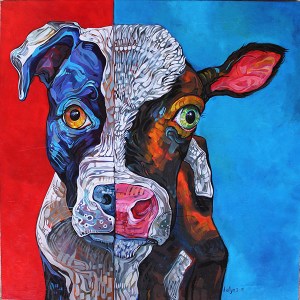
dana-ellyn-painting-dog-calf

Source Free From Harm.  Painting by Dana Ellyn. See more of her work at http://www.danaellyn.com/


Source Free From Harm
By Robert Grillo


Last week Trump signed into law the 2019 Farm Bill which included a provision for banning the slaughter of dogs and cats for meat in the U.S. Let’s put aside the fact that it is a cultural taboo to eat cats and dogs in the U.S. and therefore the market for dog and cat meat is essentially nonexistent. I would instead like to direct our attention at what this law reveals about our legal system which we should not overlook: it is an embarrassing reminder that laws can be illogical and can even institutionalize prejudice and oppression of some over others.

A ban on exploiting cats and dogs for food begs a bigger question:

If it’s wrong to exploit and kill puppies and kittens for palate pleasure and profit, then how is it justifiable that the very same Farm Bill allocates billions of our tax dollars to assist in the ruthless exploitation and slaughter of other species (namely chickens, turkeys, cows, and pigs) who are at least as sentient and capable of suffering as cats and dogs?

How can a law be considered just if it punishes billions of individuals just for being born the “wrong” species — a fact over which they have no control — and therefore dooms them to a terrible fate?

Read more HERE


Order a FREE vegan kit: http://www.peta.org/living/food/free-vegan-starter-kit/

Take PETA’s Cruelty-Free Shopping Guide along with you next time you head to the store! The handy guide will help you find humane products at a glance. Order a FREE copy HERE

Want to do more than go vegan? Help others to do so! Click below for nominal, or no, fees to vegan literature that you can use to convince others that veganism is the only compassionate route to being an animal friend.

PETA: http://www.petacatalog.com/catalog/Literature-39-1.html

Vegan Outreach: https://veganoutreach.org/order-form/

Have questions? Click HERE


with all our technosavvy ways…
it seems so many humans are
in a daze
wrapped in all their this that
and then…
we need kindness STAT
if not now,
when!!!!

Karen Lyons Kalmenson


A Man Walks Into a Restaurant

December 21, 2018
by

Originally posted June 26, 2013

Source Huffington Post
By Ari Solomon

 
This is a test.

A man walks into a restaurant.

Well, actually a man and his dog, a cute-as-hell black Labrador pup… one of those dogs you can’t help but stop to pet on the street or in a park. A young hostess approaches and tells the man that dogs are not allowed in the restaurant, not even on the patio. Then the dog licks her hand. “He’s soooo adorable,” she quickly melts, and tells the man that just this once he can keep the dog with him, as long as the puppy stays in his lap. The man smiles and she shows him to his table.

After a minute, a waiter approaches. He also notices the puppy, but tells the man the owner won’t mind; the restaurant is brand-new and different. “We’re a cutting-edge, eco-friendly establishment,” the waiter says proudly, explaining that the only food they serve is sustainable and humanely-raised. The man says that’s why he’s dining there; as an environmentalist, he loves the concept.

The waiter gives his customer a few minutes and then returns: “Have you decided?” The man, who has never even looked at the menu, smiles, “Yes, I’d like you to cook him,” he says, indicating his little dog.

The waiter laughs nervously: “We don’t serve dog in this restaurant. In fact, I’m pretty sure that’s illegal.” “No,” the customer happily corrects him, “it’s quite legal here, as it is in several other states. Besides, dog, particularly black dog, is considered especially delicious in some cultures. And,” the man adds, “it’s the most eco-friendly meat around.”

The waiter winces, confused, as the customer continues: “You’re all about sustainable food, right?” The waiter nods. The man explains that five million dogs and cats are euthanized in shelters every year, their meat just tossed away. A shelter is where he got this dog. “If you’re gonna go local and sustainable, eating shelter animals beats the hell out of raising animals on farms, killing them, and trucking their meat around. Just kill the dog humanely — you know, like how you say the other animals served here are killed.”

“It’s a dog,” the waiter stares at the man, “eating them is totally different and disgusting. Dogs are like family members, they’re smart, they’re affectionate, they’re like us.” The man quickly counters, “But pigs are smarter than dogs. In fact, they’re as aware and intelligent as a four-year-old child. Chickens display striking personality traits from being curious, to shy, to proud, and they form extremely complicated social structures. Cows also have individual personalities. They actually lick you, just like dogs do, to show affection. And I’m sure we can agree that with regards to things like fear and suffering, that dogs, pigs, chickens, and cows are certainly equals.”

“So considering all that,” the man asks, “what’s really the difference if I want to eat this dog?”

Your assignment: Answer the man’s question.


Order a FREE vegan kit: http://www.peta.org/living/food/free-vegan-starter-kit/

Take PETA’s Cruelty-Free Shopping Guide along with you next time you head to the store! The handy guide will help you find humane products at a glance. Order a FREE copy HERE

Want to do more than go vegan? Help others to do so! Click below for nominal, or no, fees to vegan literature that you can use to convince others that veganism is the only compassionate route to being an animal friend.

PETA: http://www.petacatalog.com/catalog/Literature-39-1.html

Vegan Outreach: https://veganoutreach.org/order-form/

Have questions? Click HERE


cultural choices to
discriminate
what we do or do
not eat on our plates
perhaps the culture
of kindness rule.
ALL animals are off
limits..
the most golden of rules!!!

Karen Lyons Kalmenson


Let us be Heroes – The True Cost of our Food Choices (2018) Full documentary

December 17, 2018
by


Source YouTube, Plant Based News, Let us be Heroes


We all want to be healthy. We all want to protect the planet and we all want to be kind. Yet today we are facing a health crisis, an environmental crisis and an ethical crisis affecting people and the economy. How much difference can one person make? Let us be Heroes explores the impact of our food and lifestyle choices on our health, our home planet and our values with athletes, digital, food and fashion entrepreneurs, a public speaker and an ocean warrior fighting to protect people, planet and animals.

We are the leaders of the world we want to live in. #letusbeheroes

A documentary by Rebecca Cappelli (Subtitles: EN, FR, ES, IT, DE, ZH, HI)

Featuring: Rime Arodaky – Owner & Designer, Maison Rime Arodaky

Rebecca Cappelli – Public Speaker & Filmmaker

Vikas Garg – Founder abillionveg.com

Peter Hammarstedt – Director of Campaigns, Sea Shepherd Global

Luke Tan – Strength Athlete, Author, and Entrepreneur

Emilie Tan – Ultra Endurance Runner

David Yeung – Founder Green Monday

For more, visit www.letusbeheroes.com

Facebook https://www.facebook.com/letusbeheroes/

To end the destruction of habitat and killing of wildlife in the world’s oceans, please donate and support https://seashepherd.org

Cinematography & Editing: Abhi Anchliya (IgniteChange)

Special thanks to Sea Shepherd Global, Dominion, Land of Hope and Glory, Jo-Anne McArthur/WeAnimals for sharing their footage, and Plant Based News for distribution


Order a FREE vegan kit: http://www.peta.org/living/food/free-vegan-starter-kit/

Take PETA’s Cruelty-Free Shopping Guide along with you next time you head to the store! The handy guide will help you find humane products at a glance. Order a FREE copy HERE

Want to do more than go vegan? Help others to do so! Click below for nominal, or no, fees to vegan literature that you can use to convince others that veganism is the only compassionate route to being an animal friend.

PETA: http://www.petacatalog.com/catalog/Literature-39-1.html

Vegan Outreach: https://veganoutreach.org/order-form/

Have questions? Click HERE


there is grace in kindness
compassion and caring
there is grace in loving,
reaching out and sharing
there is grace is all that
god has given
there is grace in being
by ones heart,
driven.

Karen Lyons Kalmenson


Cruelty-Free Mobile Apps – Find Products Not Tested on Animals

December 10, 2018
by

Source Ethical Elephant
By Vicky Ly


We all want quick and easy solutions to help us make better and informed consumer choices, and thankfully there are some helpful tools we can use that are available right at our fingertips – literally!

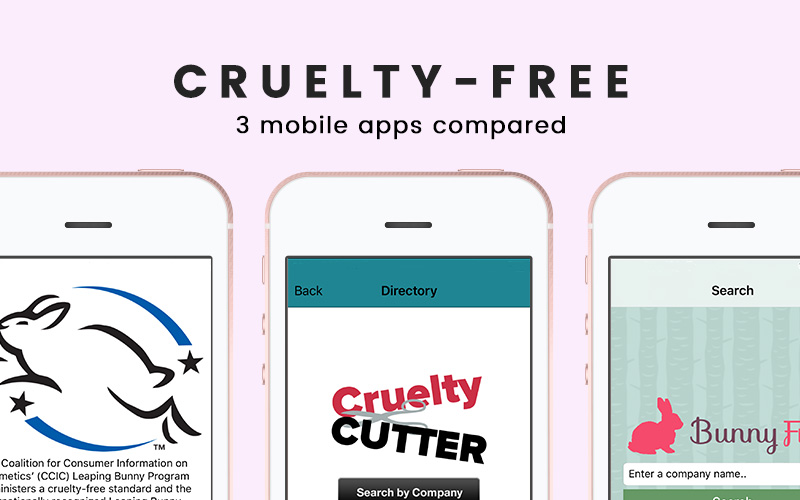
Currently there are 3 mobile apps available on the market to assist you in the wonderful world of cruelty-free shopping. Whether you’re looking for a new deodorant, dish detergent, or even furniture polish… these apps will help you out immensely, saving you time and energy!

In this post, I’m going to share with you my review and ratings of each app’s features!


CRUELTY-FREE BY LEAPING BUNNY

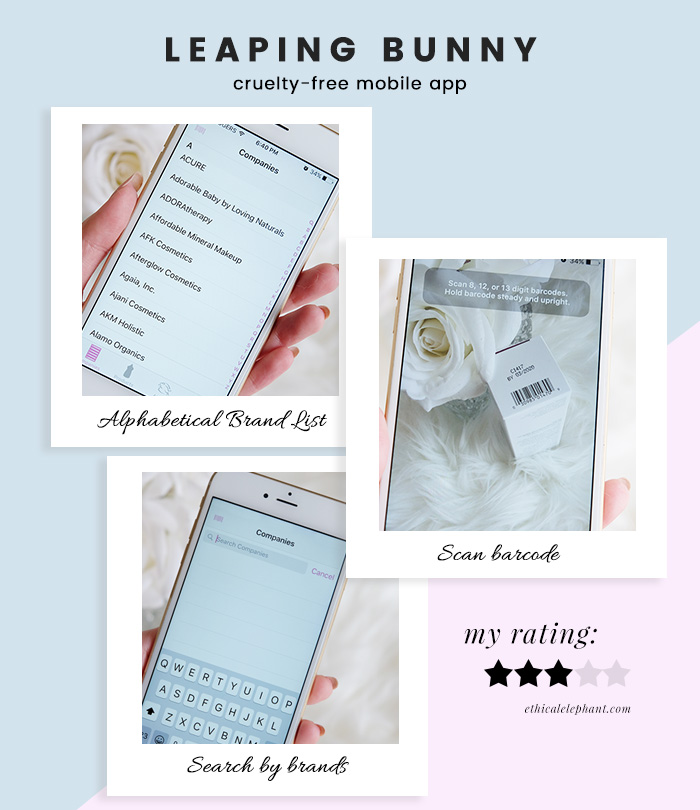
The Cruelty-Free app is very straight-forward to use and it’s available for FREE on both Androids and iPhones.

The Cruelty-Free app alphabetically lists over 200 U.S. and Canadian companies that are certified under the Leaping Bunny ProgramYou can also use the search bar at the top and type in a brand name.

There is another list available on this cruelty-free app where you can find cruelty-free brands within a product’s category like nail care, dish detergent, self-tanners, and more.

The Cruelty-Free app also lets users scan a product’s barcode to instantly know whether the brand is certified by Leaping Bunny.

 The Cruelty-Free app is perfect for someone who swears by the Leaping Bunny program since it only lists brands that are certified under their accreditation. This app doesn’t say which brands are not cruelty-free. It’s based on the assumption that if the brand is not listed, then it’s not considered cruelty-free by Leaping Bunny. The app also doesn’t let you filter to know which brands offer vegan products or tell you where we can buy from the brand. 


BUNNY FREE BY PETA

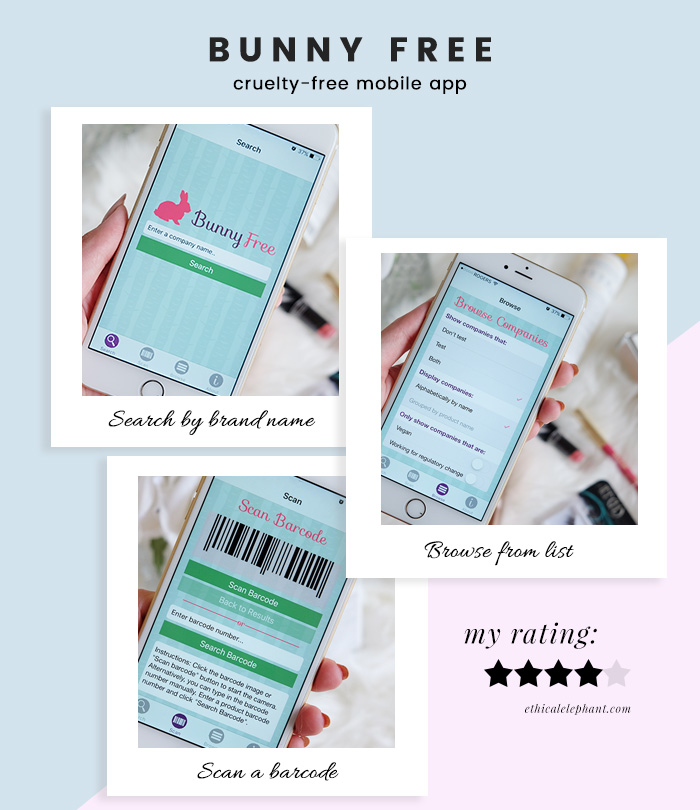
The Bunny Free app allows users to check to see if a company is cruelty-free using one of their three features; (1) Typing the company’s name in the search box (2) Scan a product’s barcode (3) Browse their alphabetically ordered brand list.  It also provides you with the company’s details like address, phone number, website, products and availability.

The app is FREE and is available for both Androids and iPhones. Bunny Free uses data from PETA’s cruelty-free shopping guide.

 Loving the simplicity of this app, it’s great for consumers who want to quickly find out about a company’s cruelty-free status. I especially love how this app tells you which brands are notcruelty-free and therefore should be avoided. There’s also a filter option to only show companies that are vegan!

The Bunny Free app doesn’t let you browse by product category. For example, if I was looking for a cruelty-free nail polish brand.. I’d have to go through the entire alphabetical list and click on each one to see if “Nail Polish” is listed under their Products description.


CRUELTY-CUTTER BY THE BEAGLE FREEDOM PROJECT

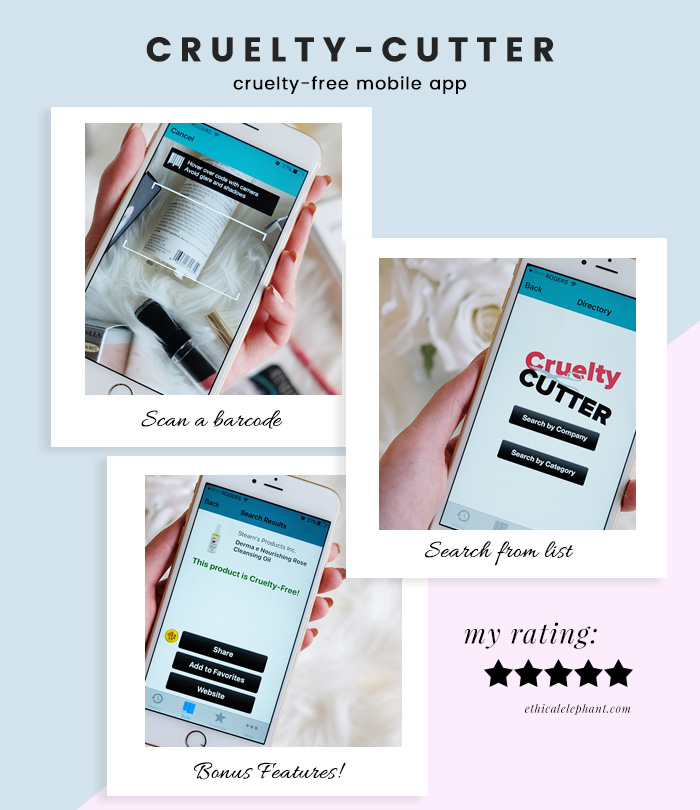
Cruelty-Cutter is my all-time favourite cruelty-free mobile app in which I had to write a separate blog post outlining the many cool features provided by the app and that you can click here to read.

In short, Cruelty-Cutter combines all the features available from both the Cruelty-Free and Bunny Free apps, and then some.

  • Scan a product
  • Search by company’s name
  • Cruelty-Free directory list by company’s name
  • Cruelty-Free directory list by category like nail care, dish detergent, self-tanners, and more.
  • Provides company’s information like direct link to website, Facebook, and Twitter accounts.

Some additional features:

  • Keeps a log in your ‘History’ of all the products you scanned
  • You can add a product that you’ve scanned to your list of‘Favourites’
  • Ability to
  • share your results with friends on social media with ease
  • Earn ‘Doggie Dollars’ when you take action which you can redeem them for deals on cruelty-free products

Cruelty-Cutter is available to download for a donation of $2.99 to the Beagle Freedom Project and available for iPhone and Android users.

Everything about this app is amazing!  Sometimes the data is questionable… this app includes companies that are not certified by either Leaping Bunny or PETA’s Cruelty-Free Programs.


So there you have it! Three great tools to help you shop cruelty-free because what you buy DOES make a difference!


Make ethical choices in what we buy, do, and watch. In a consumer-driven society our individual choices, used collectively for the good of animals and nature, can change the world faster than laws.― Marc Bekoff


Order a FREE vegan kit: http://www.peta.org/living/food/free-vegan-starter-kit/

Take PETA’s Cruelty-Free Shopping Guide along with you next time you head to the store! The handy guide will help you find humane products at a glance. Order a FREE copy HERE

Want to do more than go vegan? Help others to do so! Click below for nominal, or no, fees to vegan literature that you can use to convince others that veganism is the only compassionate route to being an animal friend.

PETA: http://www.petacatalog.com/catalog/Literature-39-1.html

Vegan Outreach: https://veganoutreach.org/order-form/

Have questions? Click HERE


most high tech i think is crap
but bless these kind and
wonderful apps!

Karen Lyons Kalmenson


Customers of the Hottest New Vegan Fast Food Chain Are Mostly Omnivores

December 3, 2018
by


Source Some Vegan Girl
By Hannah Sentenac, Editor-in-Chief


The future of food is vegan — and omnivores are driving the change.

Just ask the founders of Plant Power Fast Food, the world’s hottest new vegan fast food chain.

A vast majority of the company’s customers are meat eaters — and the concept is wildly successful.

With three locations (and more to come soon), Plant Power Fast Food currently has the fourth highest average per unit annual sales numbers of any restaurant chain in the fast food segment — trailing only giants Chik-fil-A, Panera and McDonalds.

“We estimate that between 80% and 90% of our customers are omnivores,” co-founder, co-CEO and Chief Marketing and Communications officer Jeff Harris tells Some Vegan Girl.

That’s a lot of meat eaters opting into plants.

“Our customer base comprises more non-vegans than vegans,” adds co-founder, co-CEO, and Chief Operations Officer Zach Vouga. “Part of that is because of how accessible our menu options are. Our traditional fast food analogues are so authentic that some guests don’t realize we’re a plant-based restaurant until their third or fourth visit, if at all.”

Harris says that while the data is anecdotal at the moment, they’ve approached lots of customers and asked them about their eating habits. Most of them are just traditional diners looking for something new, he says.

The idea behind Plant Power is to offer healthy, delicious, affordable options that appeal to everyone. Basically, the brand is building a bridge for people to easily transition into eating more plant-based foods. Prices range from $5.95 to $8.95 for entrees, so the options are extremely accessible.

Plant Power is also unique among other vegan chains in that it has drive-through/drive-up service and features a breakfast menu.

Mouthwatering menu choices include the Big Zac (named for co-founder Zach Vouga) with two ‘beefy’ style patties, special sauce, American ‘cheese’, lettuce, onions and pickles; the Buffalo ’66 Sandwich with crispy battered buffalo ‘chicken’ breast, ‘ranch’ dressing, lettuce and tomato; the ‘Fish’ Filet Sandwich with crispy breaded ‘fish’, American ‘cheese’, tartar sauce, lettuce and tomato; the Chicken’ and Waffle Sandwich with crispy breaded ‘chicken’ smothered in maple ‘aioli’, ‘bacon’, and two crispy waffles — plus non-dairy milkshakes, kombucha, soft serve “ice cream” and more.

Plant Power is an impressive testament to the growing popularity of plant-based eating.

The first location opened in 2016 in the Ocean Beach neighborhood of San Diego, California, followed by a second in Encinitas (San Diego) in 2017. A third location just opened in Redlands; a Long Beach location is opening soon, and more are slated for 2018 and 2019.

The first two locations have seen record sales. It’s all those omnivores!

“While we obviously have many die-hard fans in the vegan community, we designed our brand and our menu to be accessible to everyone,” says Harris. “We want people who have never considered a plant-based diet or thought about the impact of animal agriculture to walk into a Plant Power restaurant knowing that they’re welcome with love and that the food they’re about to eat isn’t going to hurt their health. Plant Power is for everybody.”

As far as why Plant Power is seeing so much success, the facts show that people are increasingly seeking “better” versions of their favorite foods for health, environmental, and ethical reasons.

“More and more people are gaining an awareness about the plight of our planet with regard to global warming, a scarcity of resources and higher levels of pollution,” adds co-founder co-CEO and President Mitch Wallis. “They’re starting to understand that there is a connection between our food choices and the effect that those choices have on our world.”

Recent Nielsen data shows that plant-based meat demand has increased by 6% in 2017 and 24% in 2018.

“Mitch, Zach and I see a future where the very paradigm of what we think of as fast-food is transformed,” Harris adds. We didn’t start this to open 10 or 20 restaurants. We have a much bigger vision that that.”

Long-term, the team would like to see hundreds or even thousands of locations all over the world.

A Big Zac in every hand? Yes, please.

Follow Some Vegan Girl on YouTube, Facebook, Instagram, and Twitter for all things plant-based and pop culture.culture.

Follow Some Vegan Girl on YouTubeFacebookInstagramand Twitter for all things plant-based and pop culture.


Order a FREE vegan kit: http://www.peta.org/living/food/free-vegan-starter-kit/

Take PETA’s Cruelty-Free Shopping Guide along with you next time you head to the store! The handy guide will help you find humane products at a glance. Order a FREE copy HERE

Want to do more than go vegan? Help others to do so! Click below for nominal, or no, fees to vegan literature that you can use to convince others that veganism is the only compassionate route to being an animal friend.

PETA: http://www.petacatalog.com/catalog/Literature-39-1.html

Vegan Outreach: https://veganoutreach.org/order-form/

Have questions? Click HERE


Ah, some news compassionate and sweet
People are learning that kind food
Tastes better than meat!

Karen Lyons Kalmenson


Dominion

November 26, 2018
by

Dominion trailer

Source Dominion Movement

Please watch full-length documentary for free HERE


Dominion is a feature-length documentary presenting an uncompromising, damning exploration of the various ways animals are used and abused by humans, particularly in the meat, dairy, egg, clothing and entertainment industries.

Dominion uses drones, hidden and handheld cameras to expose the dark underbelly of modern animal agriculture, questioning the morality and validity of humankind’s dominion over the animal kingdom. While mainly focusing on animals used for food, it also explores other ways animals are exploited and abused by humans, including clothing, entertainment and research, to convey both the terrifying scale of an empire built on secrecy – and the individual stories of its victims.

Focusing on the legal, industry-standard practices that occur all over the world, the film questions the morality and validity of humankind’s dominion over the animal kingdom, advocating not for minor improvements to their welfare but for a deeper conversation about our right to exploit those we deem inferior to ourselves.

Narrated by Joaquin Phoenix, Rooney Mara, Sia, Sadie Sink and Kat Von D, and co-produced by Earthlings creator Shaun Monson.

Filmed in Australia with a global message.

Watch the film at watch.dominionmovement.com.

Song: “Descent” by Lawless (feat. Dawn Golden)
itunes.apple.com/au/album/lawless-ep/id1082011103


Order a FREE vegan kit: http://www.peta.org/living/food/free-vegan-starter-kit/

Take PETA’s Cruelty-Free Shopping Guide along with you next time you head to the store! The handy guide will help you find humane products at a glance. Order a FREE copy HERE

Want to do more than go vegan? Help others to do so! Click below for nominal, or no, fees to vegan literature that you can use to convince others that veganism is the only compassionate route to being an animal friend.

PETA: http://www.petacatalog.com/catalog/Literature-39-1.html

Vegan Outreach: https://veganoutreach.org/order-form/

Have questions? Click HERE


As in the sand some bury their heads,
Innocents are tormented and dead
But for the cruel there is
No place to go.
We will share and
Let all the world
Know

Karen Lyons Kalmenson


Happy ThanksLiving

November 20, 2018
by


Please click HERE for Free From Harm’s vegan Thanksgiving.

Please click HERE for PETA’s vegan Thanksgiving.

Please click HERE for main dishes, HERE for side dishes, and HERE for desserts, for Live Kindly’s vegan Thanksgiving.


On this Thanksgiving, I am thankful for:

Life, not death
Empathy, not indifference
Acknowledgement, not self-imposed ignorance
Admission, not denial
Equality, not superiority
Animals, their wonder, their beauty, their uniqueness, their sentience, their worthiness, their innocence, and their inherent right to live free from exploitation, objectification, suffering, torture, murder
Hope, that one day all will embrace these truths

SL


Order a FREE vegan kit: http://www.peta.org/living/food/free-vegan-starter-kit/

Take PETA’s Cruelty-Free Shopping Guide along with you next time you head to the store! The handy guide will help you find humane products at a glance. Order a FREE copy HERE

Want to do more than go vegan? Help others to do so! Click below for nominal, or no, fees to vegan literature that you can use to convince others that veganism is the only compassionate route to being an animal friend.

PETA: http://www.petacatalog.com/catalog/Literature-39-1.html

Vegan Outreach: https://veganoutreach.org/order-form/

Have questions? Click HERE


we are grateful to be,
a part of earth and its
beautiful family.
we share this planet
with humans, too
we would be grateful
if they would share,
with kindness
this world in which
we all grew.
so thank you people
in advance
for moving forward and
taking
a humane stance.

signed,
the animals of the kingdom

Karen Lyons Kalmenson


’73 Cows’ documentary on former beef farmer wins Best Film at First Ottawa International Vegan Film Festival

November 19, 2018
by


Source LiveKindly
By Kat Smith


The short documentary film 73 Cows has won the “Best Overall Film Award” and the “Best Lifestyle Film” award out of the 29 movies screened at the first-ever Ottawa International Vegan Film Festival (OIVFF) on Sunday.

Directed by award-winning filmmaker Alex Lockwood, 73 Cows provides snippets from the journey of Jay Wilde, the “first farmer in the UK to trade beef farming for sustainable organic vegan farming,” as he and his wife Katja undergo the unheard-of transition.

The reason for the change? Wilde became “friends” with the cows, realizing that each has their own unique personality. Wilde said he could no longer cope with the ethical dilemma of continuing the family beef farming business. Instead of living with the guilt, Wilde makes the decision to give custody of his cows to a sanctuary and he and his family transition to organic farming instead.

The 15-minute documentary premiered at the Raindance Film Festival, received a nomination for “Best Local  Film” at the Birmingham Film Festival, and trended on video platform Vimeo upon upload.

“Having set out to make the film with no budget and a team of four, we’re absolutely delighted that ’73 Cows’ is being received in the way that it is,” said Lockwood in a statement where he thanked OIVFF for honoring him with the award. “A huge personal thanks to Jay and Katja (and the cows) is in order, as without them being as accommodating as they were, we wouldn’t have been able to make this film.”

The OIVFF jury had high praise for the film, stating: “73 Cows is a beautiful and moving film that traces Jay’s journey through the changes he never expected. It is an exquisite meditation about the bond between man and beast, and a profound portrait of a man awakening to the call of conscience, compassion, and courage.”

Other winners include “Promises,” a six-minute Danish documentary that follows vegan photographer Jo-Anne McArthur and director Jan Sorgenfrei as they investigate the industrial chicken industry, which won Best Animal Welfare Film. Eating You Alive won Best Health and Nutrition Film, and “Where Do We Go?,” a  short documentary where director Reza Mejlesi shows how pollution is affecting the natural ecosystems and human residents of Northern Iran.

The OIVFF was founded and directed by festival organizer Shawn Stratton with the mission of celebrating vegan ideals and inspiring people to adopt healthier, eco-friendly, and compassionate lifestyles.


Become a CLUBKINDLY member today!


Order a FREE vegan kit: http://www.peta.org/living/food/free-vegan-starter-kit/

Take PETA’s Cruelty-Free Shopping Guide along with you next time you head to the store! The handy guide will help you find humane products at a glance. Order a FREE copy HERE

Want to do more than go vegan? Help others to do so! Click below for nominal, or no, fees to vegan literature that you can use to convince others that veganism is the only compassionate route to being an animal friend.

PETA: http://www.petacatalog.com/catalog/Literature-39-1.html

Vegan Outreach: https://veganoutreach.org/order-form/

Have questions? Click HERE


if every human looked into their soul
a world of compassion would
make them whole.
the joy of reaching that
higher plane
putting the e in human
is to be
humane

Karen Lyons Kalmenson


Tackling the world’s most urgent problem: meat

November 12, 2018
by


Impossible Foods and Beyond Meat are joint winners of the Champions of the Earth Award, in the Science and Innovation category.

Source UN Environment


Since prehistoric times, humans have used animals as a rudimentary technology to transform plant biomass into highly valued, nutrient-dense foods, including meat and dairy products. These foods remain an important source of nutrition and one of the greatest sources of pleasure in the daily lives of billions of people around the world.

But our use of animals as a food-production technology has brought us to the verge of catastrophe. The destructive impact of animal agriculture on our environment far exceeds that of any other technology on Earth, according to these founders.    

The greenhouse gas footprint of animal agriculture rivals that that of every car, truck, bus, ship, airplane, and rocket ship combined, they said. There is no pathway to achieve the Paris climate objectives without a massive decrease in the scale of animal agriculture, they added.

The magnitude of the problem has prompted two entrepreneurs to take action. Ethan Brown founded Beyond Meat in 2009; Patrick O’Reilly Brown founded Impossible Foods in 2011. Both believe that plant-based meat is the future.

The Impossible Burger requires approximately 75 percent less water and 95 percent less land, generating about 87 percent lower greenhouse gas emissions than beef burgers.

The global community can eliminate the need for animals in the food system by shifting the protein at the centre of the plate to plant-based meat, say the founders. For their pioneering work towards reducing our dependence on animal-based foods, Ethan Brown and O’Reilly Brown have been selected 2018 Champions of the Earth in the category of science and innovation.

Ethan Brown, Founder and Chief Executive Officer, Beyond Meat

As a child, Ethan Brown became increasing interested in the question: what are the meaningful biological differences that justify which animals we eat, and which we don’t? The dilemma stuck.

It gnawed at him through University and into his work in the clean energy sector. By then, this dilemma had been joined by questions: what’s the most effective way to tackle greenhouse gas emissions – and aren’t livestock major contributors? Roughly 80 percent of agricultural land is used to make livestock feed or for grazing– is there a better way to produce protein? Are certain amounts and types of animal protein harmful for our health?

“These four things kept coming back to me: human health, climate change, natural resource, and animal welfare implications of using animals for meat.  And what fascinated me is that you can simultaneously tackle all these concerns by simply changing the protein source for meat from animals to plants. If we shift our thinking to focus on the composition of meat versus its animal origin, we have a huge canvas to work from,” says Brown.

Meat is just so inefficient…

Working with top scientists, their teams strip down the core components of meat and extract them from plants instead, using ingredients like peas, beetroot, coconut oil and potato starch.

“Meat is composed of amino acids, lipids, minerals and water. Animals use their digestive and muscular systems to convert vegetation and water into meat. We’re going straight to the plant, bypassing the animal, and building meat directly. We get better every year and are on a relentless march toward that perfect and indistinguishable build of meat from plants,” Brown says.  

All the buildings, roads and paved surfaces in the world occupy less than one percent of Earth’s land surface, while more than 45 percent of the land surface of Earth is used as land for grazing or growing feed crops for livestock.

“Corn, soy and wheat dominate agriculture in America. We can replace that. Take that same piece of land to grow protein directly from plants, and we can slash natural resources needed, using land more efficiently.”  

According to a research study conducted by the University of Michigan, a quarter-pound Beyond Burger requires 99 percent less water, 93 percent less land and generates 90 percent fewer greenhouse gas emissions, using 46 percent less energy to produce in the U.S. than its beef equivalent.

“What’s clear is that the way we produce meat today is not sustainable.  We are pushing limits on both natural resources and atmosphere,” says Brown. “We believe that by transitioning acreage currently dedicated to animal feed into protein crops that can be used directly for human consumption in the form of meat from plants, we can bring a step-change in efficiency, much needed innovation, and sustainable economic growth to rural economies here in the US and abroad.”

Dr. Patrick O. Brown, Founder and Chief Executive Officer, Impossible Foods

As Member of the National Academy of Medicine and Professor of biochemistry at Stanford University in 2009, O. Brown took a sabbatical. He wanted to assess which global problems are the most urgent and which he could help to solve.

Using animals for food makes up the vast majority of the land footprint of humanity. All the buildings, roads and paved surfaces in the world occupy less than one percent of Earth’s land surface, while more than 45 percent of the land surface of Earth is used as land for grazing or growing feed crops for livestock.

Unless we act quickly to reduce or eliminate the use of animals as technology in the food system, O. Brown reasoned, we are racing toward ecological disaster. Impossible Foods has an ambitious goal: to reduce humanity’s destructive impact on the global environment, replacing the use of animals as a food production technology and eliminate animals as a food-production technology by 2035.

“By far the most urgent problem to me was the use of animals as a food production technology – the most destructive technology on earth,” he says. O. Brown is no stranger to disrupting the status quo, already having transformed the scientific publishing system by founding the Public Library of Science (PLOS).

Making Meat Better

“If there’s one thing I’ve learned, it’s that big global problems are not someone else’s responsibility. This problem wasn’t going to be solved by pleading with consumers to eat beans and tofu instead of meat and fish. And it wouldn’t be enough just to find a better way to make meat; to succeed we would need to make the best meat in the world.”

The team made an important discovery: the “magic ingredient” heme – an iron-containing molecule that occurs naturally in every cell of every animal and plant. It is responsible for the unique flavours and aromas of meat.

O. Brown and his team found that by adding a plant gene to yeast cells, they could produce heme in unlimited quantities, with a tiny fraction of the environmental impact. The Impossible Burger requires approximately 75 percent less water and 95 percent less land, generating about 87 percent lower greenhouse gas emissions than beef burgers.

Based on all we’ve learned, there’s no question that the use of animals as a food-production technology will soon be obsoleteMaking meat directly from plants is not only far less destructive to the environment, but it will enable meat to be more delicious, healthy, diverse, and affordable. Create the best meat in the world, let consumer choice drive the change and the use of animals as food technology will soon be a fading memory.”


Order a FREE vegan kit: http://www.peta.org/living/food/free-vegan-starter-kit/

Take PETA’s Cruelty-Free Shopping Guide along with you next time you head to the store! The handy guide will help you find humane products at a glance. Order a FREE copy HERE

Want to do more than go vegan? Help others to do so! Click below for nominal, or no, fees to vegan literature that you can use to convince others that veganism is the only compassionate route to being an animal friend.

PETA: http://www.petacatalog.com/catalog/Literature-39-1.html

Vegan Outreach: https://veganoutreach.org/order-form/

Have questions? Click HERE


our earth and its inhabitants are a team
peace, good health for all
can be more than a dream.
if we understand each consequence
then we will all realize
that compassion
makes the ultimate
sense!!!

Karen Lyons Kalmenson


Instead of “Mmm…Bacon”: A Meat-Eaters Guide to Disarming Vegans with Honesty

November 5, 2018
by
1_Gl7AnJzKMvcvBPe_Sa54ew

Source Marla Rose VeganStreet.com

Source Medium
By Marla Rose


Meat defenders, you may have noticed that vegans are a little too quick to dismiss your objections to their objections these days. Because I’m in a generous mood, I’ll give you a little insider knowledge as to why: it’s because we have heard the same rationales, nonsensical platitudes and diversionary tactics over and over again, some of us for years. I know you think you’re super original but, yeah, we’ve heard it before. So instead of saying something that is going to make us roll our eyes, vent about you to our vegan friends and think you cannot create an original thought, why not try another strategy? Why not try honesty? I have provided some common tropes vegans hear again and again and how you can rephrase it to slip in under our radar. It won’t work but, still, give ’em a try!

• Instead of saying, “Mmm…bacon,” you could say, “My preoccupation with salt-cured pig flesh is bizarre, creepy and obsessive, and my need to proclaim it to the world borders on being a neurotic tic.”

• Instead of saying, “Plants feel pain,” you could say, “I may lack the most basic understanding of a central nervous system and its role in pain perception but I am going to go ahead and create a false equivalence to temporarily but futilely assuage my guilt. Now where was I?”

• Instead of saying, “What about the homeless/the hungry/gun violence, etc.?,” you could say, “I am going to randomly mention other Bad Things in the World I don’t personally do anything to fix in an attempt to make you feel like your advocacy is trivial despite the fact that 1) creating a more compassionate world has a positive ripple effect in building a less violent world and doesn’t take away from anything 2) many activists are inclusive with their outreach and support a variety of causes, and 3) I personally don’t do squat beyond troll vegans on social media.”

• Instead of saying, “What about lions?,” you could say, “I’m grasping at straws because I have an uncomfortable feeling in my chest region so I am going to align myself with lions even though I just ate a three-day-old hot dog from 7–11 and really don’t share many characteristics with lions other than I like to consume other animals’ flesh.”

• Instead of saying, “What about soy?,” you could say, “I am going to mention a legume as an approximate counterpart to the widespread destruction that consuming flesh causes, ignoring the fact that a large percentage of the soy grown in the world is grown to feed the animals people eat, and its supposedly feminizing qualities are a fiction repeated by special interests and believed by the gullible.”

• Instead of saying, “I have canine teeth for a reason,” say, “I like to reimagine my teeth as fangs in my spare time. How about you?”

• Instead of saying, “You know, Hitler was a vegetarian,” you could say, “I am more comfortable mining the logical fallacy of Reductio ad Hitlerum than honestly examining my own habits, despite the fact that Hitler was not a vegetarian and even if he were, nearly every other mass murderer ate meat so that kind of defeats my point. I’ll shut up now.”

• Instead of saying, “Ugh, vegans are just such extremists,” you could say, “Despite the fact that we are literally growing sentient beings in order to consume their secretions and flesh and this unnecessary custom is destroying ecosystems, wasting and polluting vast amounts of water and changing weather patterns to the point where Earth may not be habitable in the near future, I am going to go ahead and call vegans extremists.”

• Instead of saying, “At least I’m not a vegan nazi,” you could say, “Nazis tortured and killed many millions of innocent individuals just for being unlike them but despite this, I am going to be blatantly ahistorical and refer to vegans as nazis when they are trying to prevent other beings from being warehoused for consumable parts and helping extend the circle of compassion to include those who are very unlike us because blah, blah, blah, I literally don’t know what I’m talking about.”

Good luck!


Marla Rose is a Chicago-area writer and co-founder of VeganStreet.com, Vegan Street Media and Chicago VeganMania.


Order a FREE vegan kit: http://www.peta.org/living/food/free-vegan-starter-kit/

Take PETA’s Cruelty-Free Shopping Guide along with you next time you head to the store! The handy guide will help you find humane products at a glance. Order a FREE copy HERE

Want to do more than go vegan? Help others to do so! Click on the below for nominal, or no, fees to vegan literature that you can use to convince others that veganism is the only compassionate route to being an animal friend.

PETA: http://www.petacatalog.com/catalog/Literature-39-1.html

Looking for merchandise? Action for Animals has a very good selection : http://store.afa-online.org/home.php?cat=284

Have questions? Click HERE


the unknowing resort to platitude
one step before devolving to rude.
so we could either respond or
ignore.
the meaningless words of
those total denying bores.

Karen Lyons Kalmenson


Former ‘Slaughter-Free Dairy’ Farmer: No Such Thing As Humane Dairy

October 29, 2018
by
Andrea-Davis-goats-slaughter-free-dairy-1

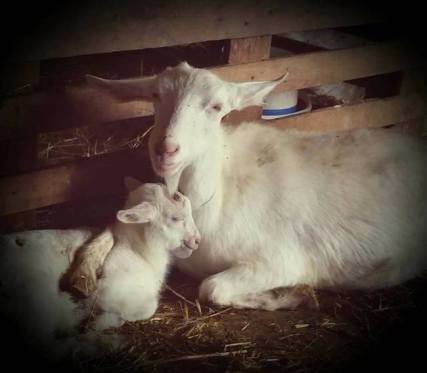
Andrea Davis: Goat mother and baby at Broken Shovels Farm Sanctuary. (Source Andrea Davis, Free from Harm)


Source Free from Harm
By


With more and more consumers ditching dairy after learning about the many cruel practices involved— including the slaughter of male calves as well as the killing of young mother cows once their milk production declines— a segment of the niche “humane” dairy sector is working to popularize the notion of “slaughter-free dairy.”

Perhaps the most well known “slaughter-free dairy” label currently operating is the UK-based Ahimsa Dairy, a Hare Krishna initiative in which male calves are not killed but are used for forced labor once they are old enough, and female cows are “retired” to pasture after years of being milked. Ahimsa Dairy has offered slaughter-free milk and cheese to customers in London since 2011, and the movement is slowly spreading in the US. The offshoot Gita Nagari Creamery, in Pennsylvania sells its slaughter-free milk for $10 a gallon, which includes a $2.50 cow “retirement fee” and $1.50 for “boy calf care.”

In addition to still being inherently exploitative, this and other models of slaughter-free dairy pose significant and unavoidable environmental, animal welfare, and scalability problems, which we’ve explored in depth previously here. Below, please find a first person perspective from former slaughter-free dairy farmer and cheesemaker turned vegan, Andrea Davis.

Andrea had a change of heart after recognizing that her work, like all dairy farming, depended on bringing more and more babies into the world, and breaking up families with lifelong bonds, all to satisfy a taste for mother’s milk stolen from other animals. She went vegan and in 2017, transitioned her farm into an animal sanctuary and vegan education center.  (Read the full story of her change of heart, here.) Andrea writes:

We still get asked, often, why we decided to ditch dairy when no one was being killed in order for us to produce it. Here is one of several reasons this was a choice I had to make.

As a mother myself, I could not overlook parallels I could clearly see between myself and animal parents. Because running a dairy meant needing animals to become mothers year after year, there was always a sad, painful separation of families at some point. Although mother goats on our farm raised their own newborn babies, we had to separate them after weaning and rehome the kids in order to ensure we weren’t eventually overrun with goats.

I often see dairy farmers defend the practice of removing babies from mothers...


Please read rest HERE


Order a FREE vegan kit: http://www.peta.org/living/food/free-vegan-starter-kit/

Take PETA’s Cruelty-Free Shopping Guide along with you next time you head to the store! The handy guide will help you find humane products at a glance. Order a FREE copy HERE

Want to do more than go vegan? Help others to do so! Click on the below for nominal, or no, fees to vegan literature that you can use to convince others that veganism is the only compassionate route to being an animal friend.

PETA: http://www.petacatalog.com/catalog/Literature-39-1.html

Looking for merchandise? Action for Animals has a very good selection : http://store.afa-online.org/home.php?cat=284

Have questions? Click HERE


people trying to justify
but to themselves, too
they lie.

Karen Lyons Kalmenson


3.4 Million “Live Inventory” – Chickens and Turkeys – Drowned or Starved to Death in North Carolina Storm

October 22, 2018
by
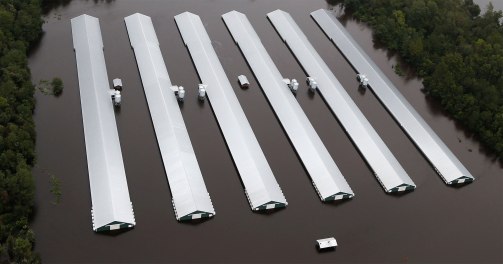
3.4_million_chickens_and_turkeys_killed

Chicken farm buildings inundated with floodwater from Hurricane Florence near Trenton, N.C., Sunday, Sept. 16, 2018. (AP Photo/Steve Helber)

Source Animals 24/7
By Karen Davis, PhD, President of United Poultry Concerns
Afterword by Merritt Clifton, Animals 24/7


A caring person’s reaction to learning that millions of chickens and turkeys and pigs drowned in North Carolina this month is the gut-wrench of sorrow and pity for these helpless souls and outrage at the companies that didn’t see fit to protect their captives from the hurricane they knew was coming.

But just as farmed animal businesses are indifferent when a fire burns and suffocates to death millions of chickens and other animals trapped in cages, crates, and confinement sheds, so they are indifferent when, instead of flames, the disaster occurs in the form of floods.

The North Carolina Department of Agriculture and Consumer Services reported last week that 3.4 million chickens and turkeys and 5,500 pigs died in Hurricane Florence. The company most cited was Sanderson Farms who told journalists that 1.7 million of its 20 million chickens drowned or starved to death in the sheds when the company couldn’t get food to them.

Pleased to report that none of its personnel appear to have died in the storm, Sanderson Farms noted, by contrast, that its “live inventories” were not so lucky, and that its focus now is on “replenishing our live production inventories.”

Companies like Sanderson needn’t worry. Between insurance payouts and the U.S. Department of Agriculture’s indemnification program, agribusinesses can comfortably repair and rebuild their flood-or-fire-damaged buildings and quickly restock millions of new individuals, the same as they always do whenever weather or diseases such as avian influenza devastate their “inventory.”

Does anyone think that companies permitted by the U.S. Department of Agriculture to suffocate millions of chickens and turkeys to death in rolling tides of fire-fighting foam as a means of mass extermination – does anyone think these companies care about the animals? An article in Poultry World on September 20th exemplifies what matters to them: North Carolina-based Butterball, the largest turkey producer in the U.S., assured everyone that the storm’s impact “would not lead to any pre-Thanksgiving turkey shortage.”

While businesses that “own” animals have an obligation to protect them against foreseeable disasters, the unfixable problem is that the entire life of the majority of animals in food production is so miserable that just about anything that ends their life sooner than later may be viewed as preferable to being “saved.” Saved for what? The experience of chickens and turkeys, in the words of veterinary scientist John Webster, is, he said, “in both magnitude and severity, the single most severe, systematic example of man’s inhumanity to another sentient animal.”

The only way out of “man’s inhumanity” for these animals is to be rescued or dead. “Rescue” must mean more than literally removing a certain number of animals from whatever human-engineered horror they are in – important as every rescue is. The rescue these animals need most from us is from the plate. If people don’t buy them, they won’t be born, and that will be good.


References in order of citation:

United Poultry Concerns, National Fire Protection Association Rejects Pleas for Farmed Animals in Second Round of Proposals, January 17, 2015.

Sanderson Farms, Sanderson Farms assesses damage from Florence. September 18, 2018.

Hurricane Florence claims 3.4 million US poultryPoultry World, September 20, 2018.

United Poultry Concerns, Avian Influenza (Bird Flu) – What You Need to Know, 007.

United Poultry Concerns, Government Approves Firefighting Foam to Exterminate Birds, 2006.

John Webster, A Cool Eye Towards Eden, Blackwell Science, 1994.


Afterword by Merritt Clifton
Among the grossest of ironies associated with the enormous loss of farmed animal life resulting from Hurricane Florence, and at least four previous hurricanes that have devastated North Carolina farm country since 1995, is media coverage using careless phrases such as “pig and poultry farmers are hard-hit,” “hen and hog farmers are devastated,” etc.

While the farmers are economically harmed to some extent, and a farmer is occasionally hit by flying debris or drowned when his pickup truck slides off the road, almost all of the hard hits and devastation––by more than a million-to-one ratio––are experienced by the animals involved, not the humans.

Disaster vs. daily routine
The major difference, when natural disaster such as a hurricane hits, is that suddenly the humans experience––for a few hours or days––some of the stress and terror felt by farmed animals as a matter of daily routine. For the animals, the stress and terror merely takes a different form.

The violence the animals absorb and witness throughout their brief lives in time of disaster gives way to terminal neglect, sometimes ended by “depopulation” before the neglected animals would otherwise die.

Ironically, as United Poultry Concerns founder Karen Davis has written about elsewhere, the “rolling tides of fire-fighting foam” now used in state-of-the-art poultry “depopulation” are both a killing method which is no longer legally used to kill dogs and cats in almost every state, and markedly less cruel than the former standard methods of manual strangulation or neck-breaking, asphyxiation with exhaust fumes, live burial, and even burning flocks alive, all of which are also still legal and still used to some extent by agribusiness.

“Depraved indifference”
In almost any other context, such “depopulation” might be prosecuted as “depraved indifference” to animal suffering, but down on the factory farm it is business as usual, done somewhere almost every day to clear barns of “spent” hens or diseased poultry, while unwanted male chicks hatched by the egg industry are macerated alive by the multi-millions and mixed into feed or fertilizer.

In context, even the biggest natural disasters ever to hit the U.S. have caused very little animal suffering compared to the routine operations they have temporarily disrupted.


Order a FREE vegan kit: http://www.peta.org/living/food/free-vegan-starter-kit/

Take PETA’s Cruelty-Free Shopping Guide along with you next time you head to the store! The handy guide will help you find humane products at a glance. Order a FREE copy HERE

Want to do more than go vegan? Help others to do so! Click on the below for nominal, or no, fees to vegan literature that you can use to convince others that veganism is the only compassionate route to being an animal friend.

PETA: http://www.petacatalog.com/catalog/Literature-39-1.html

Looking for merchandise? Action for Animals has a very good selection : http://store.afa-online.org/home.php?cat=284

Have questions? Click HERE


some people think what we do is futile,
that is old news…
but win or lose,
this is the battle we choose!

Karen Lyons Kalmenson


Costco’s Hidden Graveyard

October 15, 2018
by


Please sign petition HERE (scroll down past video)
Source Direct Action Everywhere


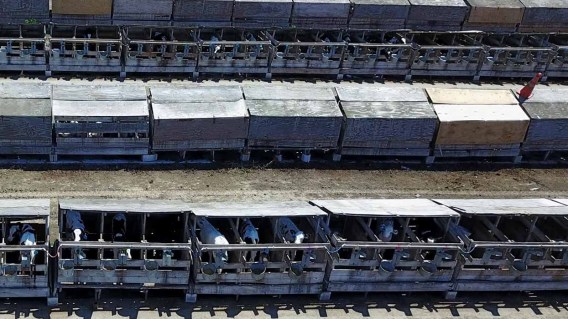
Picture a farm. You’re likely seeing rolling hills of green grass dotted with a few dozen cows. What most Americans don’t know is that the typical small family farm now breeds thousands of animals and confines them in horrendous living conditions. Drone footage of this Costco farm revealed over 20,000 hutches designed to imprison baby cows and separate them from their mothers. There are as many calves on this one farm as there are humans in the entire city.


Confinement

Calves were confined in hutches so small they could barely turn around. They live in these hutches their entire childhood, never let out to run or play.


drone-hutch-c

Source Direct Action Everywhere


Greed

The farm owners live nextdoor in a $1.7 million mansion with a pool, tennis court, and boat. Profiting off of the backs of baby animals they tear away from their mothers.


mansion

Source Direct Action Everywhere


Death

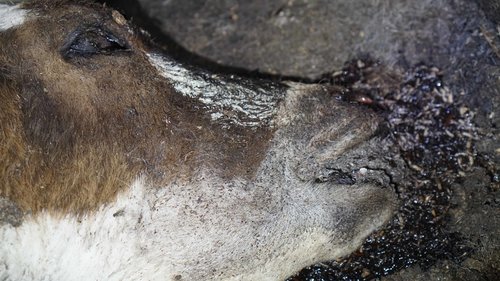
DxE investigators found a mass graveyard with bodies of cows piled on top of one another. This is the only place babies and mothers were seen together.


DSC06637

Source Direct Action Everywhere


Order a FREE vegan kit: http://www.peta.org/living/food/free-vegan-starter-kit/

Take PETA’s Cruelty-Free Shopping Guide along with you next time you head to the store! The handy guide will help you find humane products at a glance. Order a FREE copy HERE

Want to do more than go vegan? Help others to do so! Click on the below for nominal, or no, fees to vegan literature that you can use to convince others that veganism is the only compassionate route to being an animal friend.

PETA: http://www.petacatalog.com/catalog/Literature-39-1.html

Looking for merchandise? Action for Animals has a very good selection : http://store.afa-online.org/home.php?cat=284

Have questions? Click HERE


whoever accepts this insanity
has lost whatever is left
of their humanity

Karen Lyons Kalmenson


Heading in the direction of being vegan

October 8, 2018
by
sheep-3486269_960_720

Source There’s an Elephant in the Room blog


Source There’s an Elephant in the Room blog
About HERE


‘…or if we can’t be vegan we can at least head in that direction.’ I’ve seen so many variations on that theme as a comeback to the call to be vegan that appears in almost every piece I write. Today I saw it again. I’ve given the words a lot of thought and I have to conclude that when ‘heading in the direction of veganism’ is thought to be a possibility, it is a clear illustration that the speaker hasn’t really grasped what veganism is.

Please note that as always, this statement does not refer to new vegans who are currently transitioning, incorporating the ethic into their life. This transition period is generally very short (for many it can’t happen quickly enough), but can vary depending on circumstances.

Pragmatism or betrayal – it’s a matter of perspective

At this point I can almost hear the rasp of keyboards being dragged into position by the ‘every little helps’ and ‘can’t all be perfect’ brigade (some vegan, some not), ready with their ‘world won’t go vegan overnight’, and ‘we have to be realistic’ preludes to a blistering criticism of such ‘purist attitudes’. Yes, I’ve been around on social media a good while and I’ve seen and heard most of the put-downs. The phrases lack originality, probably because they have become overused stock items, plucked whole and unconsidered from the shelf of platitudes that we have all, at one time, been guilty of using without due examination.

Just to be clear, although born vegan as I think we all are, I was not raised vegan and am ashamed to say I spent most of my life that way. I woke up with a jolt in 2012.

That year, and for as many of my (then) 56 years as I could recall, I thought of myself as a reasonably intelligent person, ethically aware, honest and honourable. I wasn’t perfect (who is?) but I thought that I was trying. I often said that I thought of myself as an animal lover. I abhorred what I considered to be cruelty to any animals, and as well as sharing petitions and ranting about ‘cruelty‘ and the need for compassion to any that would listen, I donated to a number of organisations that claimed to look out for the interests of animals. In return, they sent me images in the post, many of which were so vile that I have been unable to forget them. I once even received a manicure kit (?) in a leather wallet if I  recall, inscribed with the logo of some ‘Humane Society’ or other. I detected no irony in this.

Of course, as an animal lover and a hater of ‘cruelty’ I shopped for the very best, most ‘humane’ labels (as endorsed by the XYPCA of course), spending as much as I could afford on the animal products that I had grown up to believe were essential for the health of my family.

The curse of compromise

So, without a trace of conscience (why would I have, what with the humane labels and donations and the back-patting of the ‘animal welfare‘ organisations whose staff were paying their mortgages with my cash?), I snoozed on in my ethical bubble. I didn’t eat ‘meat’ or at least, not often (doesn’t everyone say that?), but cheese… oh, how I loved the taste of cheese. And eggs. And I delighted in wearing wool. Angora – bliss! I loved leather; boots, shoes, jackets, bags, chairs. Touching it and breathing in the scent was so pleasurable. Now, as my gorge rises at the memory and I fight not to gag with disgust it is hard to believe the person I was, but that’s how I can write about this. I’m not pointing a superior finger and finding fault. I’m writing from bitter and heartbreaking experience. But moving on.

I made it clear to my conscientious consumer contemporaries that I was very much one of them. Saving the forest, planting trees, worrying about litter, sending (most of – well it’s not always convenient, is it?) my glass bottles for recycling, visiting second-hand shops for clothes and furniture.  I was ‘mostly’ vegetarian, except for the odd occasion (to be sociable, you understand – I mean, when someone goes to the bother of cooking something for you…). And prawns. Oh – and apart from the leather. And the sweets loaded with gelatin. And silk scarves (well so what? They were presents!). Oh yes, what a trooper I was!

Where was I heading?

So, since I was so ethical and conscientious, would you say I was ‘heading in the direction’ of being vegan? After all, many of the things that I was doing were the very things we see so many ‘pragmatic’, ‘realistic’ people suggesting that we could all do to ‘cut down on animal cruelty’ and ‘reduce suffering‘ because we ‘can’t be perfect’.

I’m sure some would say I was definitely ‘heading in the direction’ of veganism. But they’d be talking absolute rubbish. I was not moving at all, not heading in any direction, wallowing smug and satisfied in the absolution that I bought every so often with donations. I was not vegan. I remained completely committed to using other individuals for my own most trivial interests without even questioning why. I wasn’t even aware that there was such a thing as veganism; except of course what I’d heard about the stereotypical, undernourished, sandal-wearing hippy, choking down worthy muesli only one step removed from sawdust, while taking a break from hugging trees.

The loop of mistaken need and entitlement

And this brings me to the whole point of this and it’s a point I’ve made before. When we are not vegan, we are hurting, harming and killing innocent and defenceless individuals who value their lives and don’t want to die. There are no exceptions.

*** – whether we have one victim or billions is irrelevant. By not being vegan we are harming and killing others because we think it’s somehow acceptable to do so; maybe because we think we have to; maybe because we feel entitled, maybe because we consider our own interests are more important than those of our victims.  However we square our actions with our conscience – if we even have a conscience about them – we are killing other individuals when we have no need or right to do so. We can do it to fewer individuals, we can do it to fewer species; we can obsess about the environments or practices that facilitate our consumer choices; we can make judgements and protest about the degrees of brutality and violence that are completely inevitable elements of our demands, make different menu choices one or two days a week, but – Return to *** and keep reading the loop. It’s the way it is.

Breaking out of the loop

I say that I woke up in 2012. It was in 2012 that I stumbled across information that led me to understand what veganism is, and I broke out of the loop and became vegan. I was not heading that way. How could I be? I was stuck in the loop of self-congratulatory ‘conscientious’ consumerism. I was a killer. When I was a killer, I couldn’t gradually head in the direction of not being a killer, because it’s a binary thing. One is a killer or one is not a killer. And each of us is a killer until the final time that we take a life. It’s really that simple and it’s not on a sliding scale. And we can only make the switch from killer to non killer, non vegan to vegan, once we actually know what veganism is.

Once we know, we each have a personal choice to make, and no other can make that choice for us. We can choose to be vegan. Or we can choose not to bother. It is a personal thing, a decision driven by the values that we hold and the way in which we wish these to define us.

As a vegan advocate, all I can ever do is explain how veganism is the only way that allows us to live in a way that reflects the values that most of us like to claim are important. The issue that we must address is not how we treat our unnecessary victims but rather the fact that we have victims when it is unnecessary. Once we, as individuals, deal with that as consumers at the checkouts, everything; health, environment and everything else will flow directly from our changed behaviour.

Before we have even heard about veganism, we cannot be ‘heading in its direction’ because it’s binary and we are stuck in a loop. Once someone knows what veganism is, reallyknows that it is a rejection of harm to other individuals who value their lives and want to live, it is at best disingenuous to excuse continued harm and killing by claiming to be ‘heading in the direction’ of being vegan. I’ve heard it said that once you know what it is, the only honest reason not to be vegan is ‘because you don’t give a shit’.  There’s a lot of truth in that.

Be vegan.

*In case any readers wonder if it’s safe to click on any of the links in my essays, please note that I do not use images depicting violence and gore.


Order a FREE vegan kit: http://www.peta.org/living/food/free-vegan-starter-kit/

Take PETA’s Cruelty-Free Shopping Guide along with you next time you head to the store! The handy guide will help you find humane products at a glance. Order a FREE copy HERE

Want to do more than go vegan? Help others to do so! Click on the below for nominal, or no, fees to vegan literature that you can use to convince others that veganism is the only compassionate route to being an animal friend.

PETA: http://www.petacatalog.com/catalog/Literature-39-1.html

Looking for merchandise? Action for Animals has a very good selection : http://store.afa-online.org/home.php?cat=284

Have questions? Click HERE


be your own process evolution
or an epiphany, revolution
share the goodness
that you have learned
and perhaps a few more hearts
and minds
will turn.

Karen Lyons Kalmenson


Mindful Meats: My Neighborhood Slaughterhouse

October 1, 2018
by


Source free from HARM
By Hope Bohanec

“Mindful” Meats?

I live in ag country. When you drive around Sonoma County, especially getting out of any city just by a couple of miles, there are signs of animal agriculture everywhere. I often drive by dairy operations with signs posted that say “Real California Milk” and “Certified Organic Dairy,” as if appeasing the people driving by implying that “only good things are happening on this farm.” Yet if you look closer you may see rows and rows of white plastic calf hutches, like uniformed cartons of milk, each containing a tiny baby calf who was taken from her mother at birth, chained to the plastic hutch in all weather extremes–alone, frightened, and miserable. For each of these calves there is a grieving mother who will never know her baby, traumatized with each calf dragged from her after birth.

My Neighborhood Slaughterhouse

Most people have no clue what is truly going on inside animal agriculture, especially the slaughterhouse – that ominous place that ends all tomorrows for farmed animals. There is a slaughterhouse down the street from where I live in Petaluma on a major road just outside of downtown. For many years it was called Rancho Veal. Of course, veal has been exposed to be the poster-child of cruelty and most people now agree that confining a baby cow so tight that he can’t even turn around, then slaughtering him when he is just weeks old, is callous and cruel. But what people don’t realize is that most animals who are slaughtered for meat are just weeks or months old when they take their portentous journey to the abattoir.

Rancho Veal was recently acquired by Marin Sun Farms and received a fresh coat of bright white paint complete with their logo, looming two stories high, on the front of the building. On the west wall, facing the oncoming traffic heading to downtown, they added huge letters spelling out the name of a producer they’re in partnership with, “Mindful Meats.” When I first drove by this new sizable marketing endeavor, I had to pull over and take a moment for a figurative face-palm. Shaking my head, I pondered what I was seeing. It’s truly appalling and as a spiritual person, I am deeply disturbed.

Please read rest HERE


Order a FREE vegan kit: http://www.peta.org/living/food/free-vegan-starter-kit/

Take PETA’s Cruelty-Free Shopping Guide along with you next time you head to the store! The handy guide will help you find humane products at a glance. Order a FREE copy HERE

Want to do more than go vegan? Help others to do so! Click on the below for nominal, or no, fees to vegan literature that you can use to convince others that veganism is the only compassionate route to being an animal friend.

PETA: http://www.petacatalog.com/catalog/Literature-39-1.html

Looking for merchandise? Action for Animals has a very good selection : http://store.afa-online.org/home.php?cat=284

Have questions? Click HERE


to possibly consider any form of slaughter humane
is morally bankrupt
and frankly,
insane!

Karen Lyons Kalmenson