HighestWelfare.Humane.Assured.GoodPractices.Vegetarian. Regenerative.Flexitarian.Lies...
What is the difference between No Welfare, High Welfare, and Highest Welfare when they all require animals to die? Only human comfort, NONE protect the actual animals. The most humane, ethical, and honest Webster-defined "welfare" is NOT exploiting animals - not using, not wearing, not eating, not killing - animals. The only meaningful position is vegan, everything else is just how humans euphemize animals' required suffering and violent deaths: no human exploits animals because they honestly believe that NOT exploiting animals is UNethical or INhumane.
Your voice is urgently needed today! School children will lose healthier, plant-based lunch options unless Congress takes a stand.

From PCRM
What’s at Stake
Congress is on the verge of voting for a new Child Nutrition Act. HR 5504, the House version of the bill, which would allow more children to have access to healthful plant-based options, may be rejected for a much weaker, stripped-down Senate version.
Please urge Speaker Nancy Pelosi, Majority Leader Steny Hoyer, and Education and Labor Chairman George Miller to pass the superior House bill, H.R. 5504, and reject the Senate’s bill, S. 3307.
Find out more information about the history of this bill HERE.
Please send a Message to Congress Before it’s Too Late!
1) Complete the form HERE with your information.
2) Click the “Send Message” button and your message will automatically be sent to Key leaders, House Speaker Nancy Pelosi, Majority Leader Steny Hoyer, and Education & Labor Chairman George Miller.
Lost Your Home? No Excuse! (Yeah, I said it)

I have been in real estate for over 20 years and virtually all of that time I have specialized in REO, foreclosures and distressed sales for banks and individuals. I have been in untold THOUSANDS of properties ranging from the most modest of mobile homes to the most lavish multi-million dollar mansions, and they all share several common denominators. One is that you NEVER KNOW what you are going to come upon when you walk on that property and you ESPECIALLY never know what you will find when you walk INTO that property. Those of us who have done REOs for a while could write a book on the things we have seen!
Some surprising things you might find in these properties are:
- personal/family portraits and photographs/photo albums
- expensive clothing in perfect condition, hanging in closets or folded in drawers
- personal letters/diaries/journals/keepsakes
- money (rare coins, etc..)>>If you find this, don’t keep it. As sure as you do, someone will sue for it.
- children’s toys/crayons/unused coloring books/school text books/school pictures/report cards
So why do people leave things like this behind? (And believe me, this is just the tip of the iceberg…I will speak to the issue of “what” and “why” in a later article). Well, the answer is complicated and multi-layered, but one ‘quick’ answer is this…folks who are losing their home are typically in a state of chaos in their life. Often their marriage is struggling (or failing or failed), they have kids and careers to juggle, and on top of all that life is relentlessly throwing at them, they are losing their home. It is tough. Very tough. So, sometimes what you see in that home is a fairly accurate representation of the state of their lives. Chaotic. Scattered. Desperate. That’s the short answer.
Poll Workers and Female Candidates Killed in Afghan Elections

From Care2
By Natasha G.
Afghanistan held elections this Saturday, and the results were nothing short of disastrous.
Votes are still being counted, but the Free and Fair Elections Foundation of Afghanistan (Fefa) contended there were “serious concerns about the quality of elections.”
In Kabul Al Jazeera’s James Bays reports, “We’ve people who have been able to wash the ‘indelible’ ink off their fingers; we have voter registration cards – fake ones – which were definitely used, we are told, in some areas and we have been told of some polling stations where one candidate allowed only his supporters to go inside.”
The BBC reports that in eastern Wardak province, officials allegedly stuffed ballot boxes after the polls closed, and in Helmand province, 26 people were arrested for having fake identity cards.
Even before election day it was evident the notion of free elections was a myth when a number of female candidates and their campaign workers received death threats or were murdered by the Taliban.
Tanzania’s Proposed Serengeti Highway Threatens Greatest Wildlife Migration on Earth
From Forests.Org
Immediate, please sign and send message HERE
Action Alert: Tanzania’s Proposed Serengeti Highway Threatens Greatest Wildlife Migration on Earth
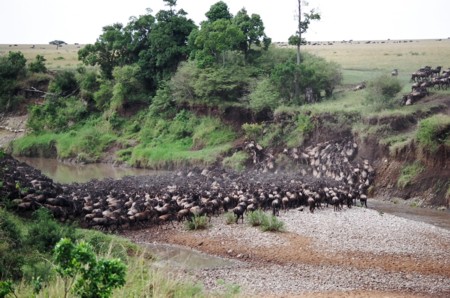
Serengeti National Park’s locally and globally significant ecosystem is driven by migration of wildebeest, elephant and zebra, and will be utterly devastated by the plan, as will be local livelihoods and well-being. There is a growing local and international support network protesting the project, and together we should be able to ensure it never commences.
BACKGROUND
The government of Tanzania has approved a major commercial highway across Serengeti National Park. The northern Serengeti – located near the Kenya border – is the most remote and pristine area in the Park’s entire ecosystem. “The road will cause an environmental disaster,” said 27 biodiversity experts this week in the science journal Nature. The planned road slashes across Serengeti’s most important annual migratory route taken by 1.3 million wildebeest – as well as important elephant and zebra migration areas – threatening the last great mass movements of animals on Earth.
The road’s expected 416 large trucks a day would physically block the migration, introduce invasive species, and lead to greater poaching – ultimately killing the migration altogether. Further there will be fragmentation of habitat, alteration of water and soil systems, and increased introduction of animal disease. When the wildebeest migration is blocked, more grass fires are expected, further diminishing the quality of grazing, and likely to make the ecosystem a source of atmospheric CO2.
The northern part of the Serengeti is untouched and should remain so. A safer alternative route proposed by local conservationist can bypass Serengeti altogether to the South and provide more economic benefit for the people of Tanzania. This route can preserve Tanzania’s greatest tourism asset and spare the devastation of Serengeti – a priceless World Heritage Site. With the help of the world community in support of local demands, Tanzania can find a way to preserve its inheritance, protect for all posterity a healthy and intact Serengeti ecosystem, while bringing advancement to its people.
Mississippi River Brimming with Dead Fish Near Gulf of Mexico
From Treehugger
By Brian Merchant
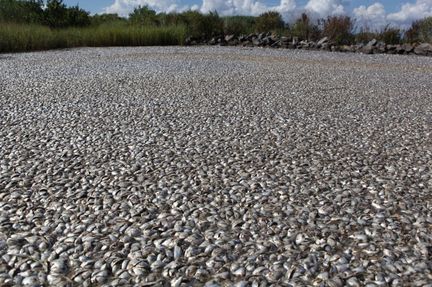
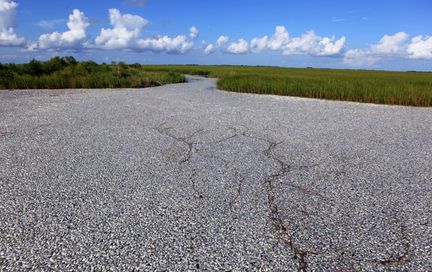
At first glance, you might not even notice the dead fish in the picture above — there are too many of them. But no, that’s not a gravely parking lot. It’s a section of the Mississippi River that has been clogged with thousands of dead fish in the wake of the BP Gulf spill. And while investigation as to the cause of the mass fish kill is still underway, there are fears that new toxins in the water from spilled oil or chemical dispersants have played a role.
According to the New Orleans Times-Picayune, the fish were found and photographed in a bayou on the west side of the Mississippi late last week, in the Plaquemines Parish of Louisiana. Plaquemines was one of the earliest areas to be impacted by the BP Gulf spill, and it was also one of the heaviest hit. Now, this happening with alarming frequency:
Bill Clinton goes vegan to reverse heart disease

From VegSource
Bill Clinton talks about going veg to reverse heart disease, so he can be healthy in the years ahead to see his potential grandchildren.
We also have this from ecorazzi.com:
“I’m trying to be one of those experimenters,” said Clinton. “Since 1986, several hundred people who have tried essentially a plant-based diet, not ingesting any cholesterol from any source, has seen their bodies start to heal themselves — break up the arterial blockage, break up the calcium deposits around the heart. 82 percent of the people who have done this have had this result, so I want to see if I can be one of them.”
EMERGENCY ACTION NEEDED: Horse protectors, after you call your congresspeople, send this message to Speaker Pelosi & call her as well!

Click HERE to send the message below to Nancy Pelosi, Speaker of the House, in Washington. She is the only person who can override the committee who does not want HR503 to pass to save American Horses.
- EMAIL HER NOW, PLEASE, FOR THE HORSES…WE HAVE 36 HOURS TO GET HER TO DO THIS.
If you live in the US, call her also, all you have to say is the following:
- “I want HR503 brought to the floor for a full vote before election day.”
CLICK HERE NOW AND SEND THIS EMAIL. CLICK HERE TO FIND HER TELEPHONE NUMBER:
http://www.speaker.gov/contact/
MESSAGE TO SEND
The Honorable Nancy Pelosi
Office of the Speaker of the House
H-232, The U.S. Capitol
Washington, D.C. 20515
Dear Madame Speaker:
I write to you in strong support of the Prevention of Equine Cruelty Act (H.R. 503), legislation to ban the slaughter of American horses for human consumption and prevent the export of live horses for the same purpose. With 183 bipartisan cosponsors in the House, 28 in the Senate, and tremendous public support, I urge you to allow this bill a vote in the House.
Equine slaughter is inhumane by nature. Horses have a fractious reaction to the stress induced by chutes, kill boxes, puntilla knives and captive bolt stun systems, causing these animals to suffer immensely and die an inhumane death. These animals are subjected to brutal transport conditions on their way to slaughter facilities. In addition, the consumption of horsemeat poses a serious public health threat as this meat contains substances banned for human consumption by the U.S. Food and Drug Administration.
Since 2005, Congress has repeatedly voted to shut down the cruel practice of horse slaughter and included appropriations language to defund the USDA inspection of horses and horsemeat as a stopgap measure until a permanent federal ban is passed. The last three horse slaughter plants on U.S. soil were closed by enforcement of state law in Texas and a recently enacted ban on horse slaughter in Illinois. As you know, California overwhelmingly banned horse slaughter over a decade ago, and the state legislature just passed a resolution in favor of passing the Prevention of Equine Cruelty Act.
Still, American horses continue to be sent over the border for human consumption. Since January of this year, approximately 53,850 horses have been transported across our nation’s borders into the cruelty of slaughter in Mexico and Canada. This number amounts to about 100,000 horses annually, 1,500 per week, or one every five minutes.
I, along with millions of Animal Lovers and Other Animal protection organizations such as the Animal Welfare Institute and the Humane Society of the United States, urge you to bring this bill to the House floor for a vote.
Thank you in advance for your consideration of this critical legislation.
Best regards,
Your Name_________________________________
Your Address_______________________________
END MESSAGE

Please visit Boxers Galore on YouTube for recordings of Firu’s recovery and homecoming …
From Examiner
By Penny Eims
Firu, the dog who was dragged behind his owner’s truck, has stirred deep emotions in those that have viewed his graphic photos. Seeing the severity of his injuries spurs an ache that can’t be soothed.
Samantha Hodge, Firu’s care provider, went to visit Firu Saturday afternoon. The battered dog was alert and aware of her presence. Hodge and her husband assisted Dr. Wallrich in the changing of Firu’s bedding and wound dressings.
Though the large dog is in extreme pain, he did nothing more than lick the lands of those that were tending to him when the pain was too much to bear…a testament to the demeanor of this grievously wounded dog.
There are many areas of Firu’s body that are deeply concerning to Dr. Wallrich, and Hodge. Areas that are infected, raw, incredibly painful. However, the doctor is optimistic that Firu will make a full recovery – with time, love and good care.
Hodge has been buried in emails from those that are concerned. Many people are asking who did this to Firu and what is happening to that individual. She is unaware of what will happen to that person – it is in the hands of the Charlotte-Mecklenburg, NC Police department.
Hodge is unsure of Firu’s breed. He may be a Boxer mix, he may be a Pit Bull, he may be an American Bulldog. She doesn’t care – she wants to see him healthy and well again.
Some people have inquired if Firu will be returned to his owners – she answers with a resounding no. Eventually, after Firu’s long road to recovery, the dog will be adopted – most likely to a very special family, carefully chosen by Hodge.
Dead Southwick’s Zoo Elephant Had Tuberculosis Please Act Today
Immediate, please submit the form found HERE
From IDA
BACKGOUND
In August, over 5,000 IDA members sent e-mails expressing concern over the death of Dondi, a 36-year-old Asian elephant who died suddenly at Southwick’s Zoo in Massachusetts. Now, an autopsy conducted on Dondi reportedly reveals that she had tuberculosis.
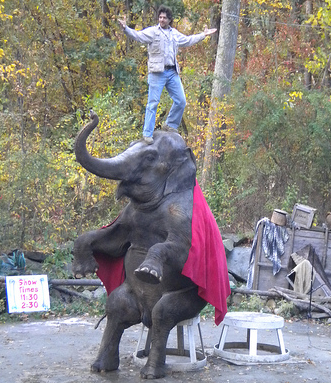
Dondi had been used to give children rides. Tuberculosis in elephants presents a serious public health concern as the animals can transmit the disease to humans as well as other elephants. USDA guidelines for the control of TB in elephants state: “Direct contact transmission may occur during activities such as touching or riding an elephant, being touched by an elephant, examining, medicating, bathing, and handling animals.”
IDA is calling on Southwick’s Zoo to immediately release Dondi’s necropsy report as a matter of public safety. We believe people have the right to know the truth about Dondi’s death and the impact that may have on public health. At age 36, Dondi should have been in the prime of her life. Elephants have a natural lifespan of 60-70 years.
Dondi was the second elephant held at the Southwick’s Zoo who had tuberculosis. Before her, Southwick’s used an elephant named Judy, who was not allowed to give rides due to known prior exposure to tuberculosis-positive elephants. After her death in 2007, she was found to have the disease.
IDA is calling on the zoo to end the use of elephants for shows and rides, because it is inhumane for the elephants and unsafe for the public. Dondi spent her winters performing and giving rides in Florida, and summers in the New England area, giving rides at events such as the Guilford Fair. She reportedly had been in contact with other elephants who are commonly used for rides in the New England area.

Please submit the form found HERE to send an e-mail to Southwick’s Zoo President Justine Brewer, urging the zoo to end the use of elephants for rides, performances and display.
URGENT: Breaking Miracle for the Horses, Letters MUST be sent to PELOSI by TUESDAY!

THIS IS THE BREAK THE HORSES HAVE BEEN WAITING FOR.
ACTION HAS TO BE TAKEN BY MILLIONS OF PEOPLE BY TUESDAY 9/21
They are trying to get PELOSI to bring HR503 to the FLOOR FOR A FULL VOTE.
THIS IS THE BREAK THE HORSES HAVE BEEN WAITING FOR
THIS IS IT. NO OTHER ALERTS, NOTES, ACTIONS MATTER….
Representative James Moran needs your help to get H.R. 503 to a vote in the House!
U.S. Representative James Moran is circulating the letter set out below to all members of the House of Representatives for their signature. Once signatures have been gathered, Rep. Moran and members of the House of Representatives will present the letter to Speaker of the House Nancy Pelosi. The letter calls on Speaker Pelosi to bring the Prevention of Equine Cruelty Act, H.R. 503, to a vote by the full House of Representatives immediately.
Equine Welfare Alliance and Animal Law Coalition urge you to call on your U.S. representative to sign this letter now!
Visit this site to find the name and contact information for your U.S. representative in Washington:
You can also call the U.S. Capitol switchboard at 202-224-3121 and ask for your U.S. representative.
The letter must be signed by Tuesday, Sept. 21, 2010. It is best to call or fax your representative. Tell your representative that you urge him or her to sign on as a co-sponsor and contact Rep. Moran and sign the letter calling on Speaker Pelosi to schedule a vote on the Prevention of Equine Cruelty Act, H.R. 503. Be sure to tell your representative that you live in his or her district and ask for a copy of the letter with your representative’s signature!
Go here to find out if your rep is already a co-sponsor and, if so, urge him or her to sign the letter! Please note, you will need to enter HR 503 in the middle column under Search and after selecting Bill Number, or see below for a complete list.
Search Bill Summary & Status
H.R. 503 will put an end to the slaughter of American horses. Only a federal law can stop this tragedy. As John Holland, founder and president of Equine Welfare Alliance, put it, “Horse slaughter is not a ‘necessary evil’, as the industry claims, it is simply evil. Now is our opportunity to resign this practice to the dust bin of American history.” Find a copy of the bill here:
A Tribute To Scarlett, The Bravest Mother

George Washington once said, “All I am I owe to my mother.” Those of us who can say that are lucky, and as we commemorate our own mothers this year we also celebrate all mothers – especially those who have risen above average and made a place in our hearts by their selflessness and courage.
When we think of courageous mothers, who can forget Scarlett? She was the New York stray cat who touched the hearts of people throughout the world by using five of her nine lives to save her kittens, one by one, from a burning garage in Brooklyn, NY, and badly scorching herself in the process …
From Scarlett the Cat, Facebook group
Scarlett was a former stray cat, probably born in June 1995, whose efforts to save her kittens from a fire, at serious harm to herself, attracted worldwide media attention and has been related in a number of non-fiction books.
On October 15, 2008, Scarlett died.
On March 30, 1996, Scarlett was in an abandoned garage allegedly used as a crack house in Brooklyn, New York (United States), with her five kittens when a fire started for undetermined reasons. The New York Fire Department responded to a call about the fire and quickly extinguished it. When the fire was under control, one of the firefighters on the scene, David Giannelli, noticed Scarlett carrying her kittens away from the garage, one by one. Scarlett herself had been severely burned in the process of pulling her kittens from the fire. Her eyes were blistered shut, her ears radically burned, her paws burned, and her coat seriously singed. The hair on her face was almost completely burned away. After saving the kittens, she was seen to touch each of her kittens with her nose to ensure they were all there and alive, as the blisters on her eyes kept her from being able to see them, and then collapsed unconscious.
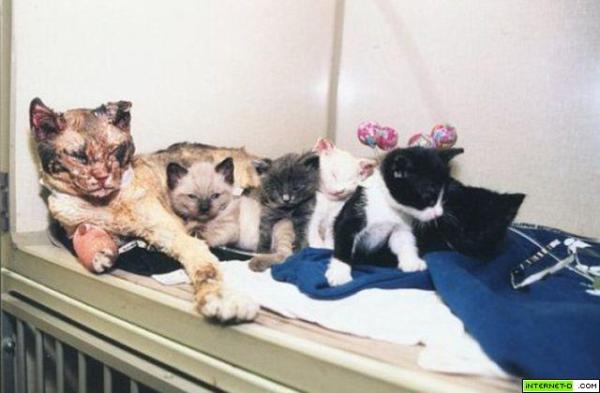
Gianelli took the intact family to the veterinary clinic of the North Shore Animal League, in Port Washington, New York, where Scarlett and her kittens were treated. The weakest of the kittens, a white one, died of a virus a month after the fire. However, after three months of treatment and recovery, during which time one of the staff of the League stated Scarlett was “spoiled rotten” and treated like a queen, Scarlett and her surviving kittens were well enough to be adopted.
The story of the brave cat was quickly known in the world, the veterinary hospital where Scarlett was taken care of, and her kittens received more than 7000 propostions asking to adopt these cats, these suggestions even from Japan, the Netherlands, South Africa …
“A Dream Come True!” The BLM Agrees to Support Madeleine Pickens’ Wild Horse Eco-Sanctuary
From Madeleine, Saving America’s Mustangs
We are SO excited to FINALLY announce the best news we have had to share with you in over 2 1/2 years!
OUR MUSTANGS ARE GETTING THEIR SANCTUARY AND HAVE THE BLM’S SUPPORT!!!
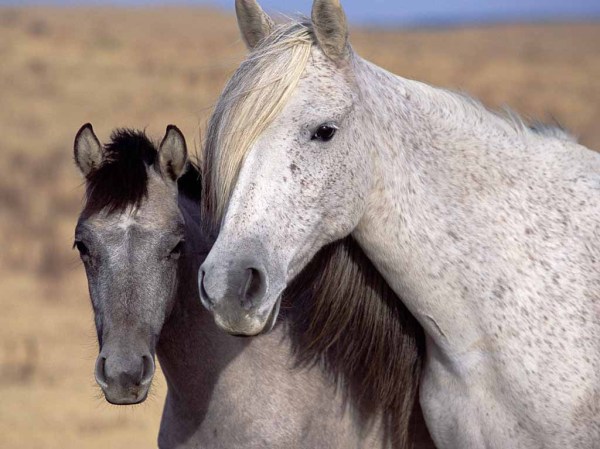
Over the past three days, I have been to meetings in Sacramento and again in Washington, DC. I’ve met with BLM Director, Bob Abbey, Deputy Director, Mike Pool, along with the Wild Horse and Burro team. The BLM has officially agreed to support going forward with the development of the wild horse Eco- sanctuary for the horses in holding! Also in DC, I met with Congressman, Jim Moran, who had already given his blessing, but is submitting legislation to members of Congress on behalf of these wild mustangs. We are so thankful to him and his staff for their efforts on the wild horse and burro issue. All the meetings were fabulous and we could not be happier about the news!
Vodpod videos no longer available.
Church Uses Caged Lion as Symbol for Satan, please protest
From Big Cat Rescue
- 1. Please visit HERE
- 2. Input your zipcode at the top of page following ANIMAL ACTION ALERT/Enter Your Zipcode (or at the bottom of the page)
- 3. Use the sample message provided, or feel free to modify
- 4. Select FIVE recipients, but the two who MUST be selected include Tom Vilsak at the top and Florida Wildlife Commissioners near the bottom, after which is Troy Gramling (pastor)
- 5. Input your details (name, address, etc.)
- 6. Select a prefix (Mr., Ms., Miss, etc.)
- 7. Send message (you must scroll to the bottom of the area where you input your information in order to see the green “send message” button)
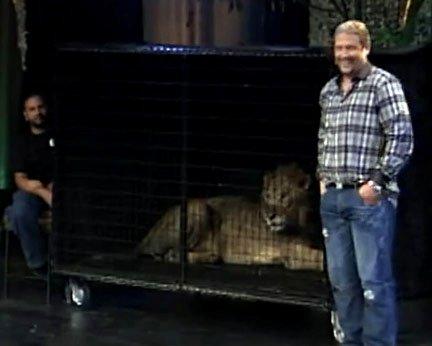
Lately, Florida has been in the news as a hotbed for religious controversy. Now, Pastor Troy Gramling at Flamingo Road Church in Cooper City, Florida may be adding to it. Last week, he rolled out his series of Sunday sermons called “Wild.”
His sermon featured a chained, adult male, 500 pound lion on the pulpit in a small transport cage. For the length of the sermon, the lion paced, moving and rocking the cage back and forth, as the pastor quoted scripture and referred to the lion as a symbol for the devil himself. Next week’s sermon promises to feature pythons representing original sin.
(If you are unable to see/play the video directly below, please visit HERE to view, or view the version in the VodPod collection in the upper right, thank you.)
There were no barricades between the transport cage and the congregation. There was only a man sitting next to the cage, a man with some interesting views about wildlife. Jeremy Possman, of Predators Unlimited, supplied this lion for the “show.” He is an alligator wrestler who admits that business has pretty much dried up in that area. So, he has turned to photo ops and traveling exhibits with wild animals.
He was quoted in an AP story saying, “If you do get bit, a lot of times that just means more business, because they’re going to come back to see if it’s going to happen again.” Obviously, NOT a person most people would choose to be responsible for the safety of an entire church congregation, possibly trapped in a room with a dangerous carnivore.
Plastic Pollution & The Great Pacific Garbage Patch
From ReUseIt
THE PROBLEM
- According to a document published in 2008 by William T. Fujioka (CEO of L.A. County), an estimated 6 billion plastic bags are consumed–just in that county–each year.
- Further in this document it is estimated that worldwide plastic bag consumption falls between 500 billion and 1 trillion bags annually. That breaks down to almost 1 million every minute.
- The average family accumulates 60 plastic bags in only four trips to the grocery store.
- In good circumstances, high-density polyethylene will take more than 20 years to degrade. In less ideal circumstances (land fills or as general refuse), a bag will take more than 1,000 years to degrade.
- The Environmental Protection Agency estimated 3,960,000 tons of plastic bags, sack and wraps were produced in 2008. Of those, 3,570,000 tons (90%) were discarded.
- This is almost triple the amount discarded the first year plastic bag numbers were tracked (1,230,000 tons in 1980).
- Estimates by the BBC and CNN claim that anywhere from .5% to 3% of all bags winds up recycled.
- A U.N. study from 2006 stated that every square mile of the ocean has about 46,000 pieces of floating plastic in it.
- The same study also stated that 10% of the plastic produced every year worldwide winds up in the ocean. 70% of which finds its way to the ocean floor, where it will likely never degrade.
- According to the Wall Street Journal, the U.S. goes through 100 billion plastic shopping bags annually at an estimated cost to retailers of $4 billion.
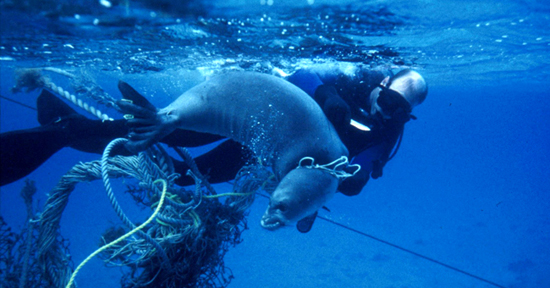
- The extremely slow decomposition rate of plastic bags leaves them to drift on the ocean for untold years. According to Algalita Marine Research Foundation, these plastic bags cause the death of many marine animals (fish, sea turtles, etc.), every year when animals mistake them for food.
- In the statistical breakdown of a 2008 cleanup by the Ocean Conservancy, numbers were kept on 43 different types of refuse. Cigarette butts were the most common. Plastic bags came in second.
- When plastics break down, they don’t biodegrade; they photodegrade. This means the materials break down to smaller fragments which readily soak up toxins. They then contaminate soil, waterways, and animals upon digestion.
- Windblown plastic bags are so prevalent in Africa that a cottage industry has sprung up to harvest them. These are then woven and sold as hats and (more durable) bags.
- Refuse plastic absorbs pre-existing organic pollutants, including Bisphenol A (BPA) and polychlorinated biphenyls(PCBs).
- The Agency for Toxic Substances & Disease Registry has this to say about PCBs: “Animals that ate food containing large amounts of PCBs over short periods of time had mild liver damage and some died. Animals that ate smaller amounts of PCBs in food over several weeks or months developed various kinds of health effects, including anemia; acne-like skin conditions; and liver, stomach, and thyroid gland injuries.”
- One study involving the Center for the Evaluation of Risks to Human Reproduction and a National Toxicology Program (NTP) Expert Panel has reported on effects of BPA on development. They found cause for “some concern” related to behavioral, neural, and prostate function effects on mammals. On the NTP concern scale, “some concern” rates 3 out of 5.
The Majestic Plastic Bag – A Mockumentary
Vodpod videos no longer available.
24 Common Plants Poisonous to Companion Animals

From Care2
By Melissa Breyer
We know that dogs and cats often have a penchant for eating strange things. Cats often gravitate toward plastic or wool, and many a dog will chew on whatever it can get its chops around. And then there are plants. Whether garden plants, houseplants, plants in the wild, or flowers from the florist–plants can provide a tasty and tempting diversion for animals, one that can be at odds with your pet’s health.
In order to prevent poisoning by cut flowers or house plants, avoid placing toxic ones in your home where pets may be able to access them. Or better yet, avoid buying flowers and plants that are known to be toxic. Outside is trickier, especially if your dog or cat has a wide range to roam.
For dogs, the animal science department at Cornell University suggests adding bran flakes to his food or switching her diet to one higher in vegetable fibers to deter cravings for vegetation. The only other thing to do is to watch your dog’s behavior when walking outside, and try to prevent them from munching on vegetation unless you know it is harmless. When you see symptoms such as vomiting, diarrhea, difficult breathing, abnormal urine, salivation, weakness, and any other abnormal condition, take your pet to the veterinarian because he may be poisoned.
You can use this list, which has been compiled using information provided by Cornell University and the ASPCA, as a guide to what plants and flowers to keep your eyes open for. The list is by no means exhaustive, there are a number of other toxic plants, but this covers the top offenders. (For a complete list, visit the ASPCA website.)
Aloe vera
Great for burns, toxic to cats and dogs. Who knew? If you keep an aloe plant on hand for burns, make sure to keep it out of reach for your pets.
• Symptoms: Vomiting, depression, diarrhea, anorexia, tremors, change in urine color.
Amaryllis
Pretty, common as a garden ornamental, and a very popular potted bulb for the holidays…and toxic to both cats and dogs. Be careful with the bulbs, they contain the most toxins.
• Symptoms: Vomiting, depression, diarrhea, abdominal pain, hypersalivation, anorexia, tremors.













 Our Compass