Please send automatic messages regarding palm oil and environmental destruction
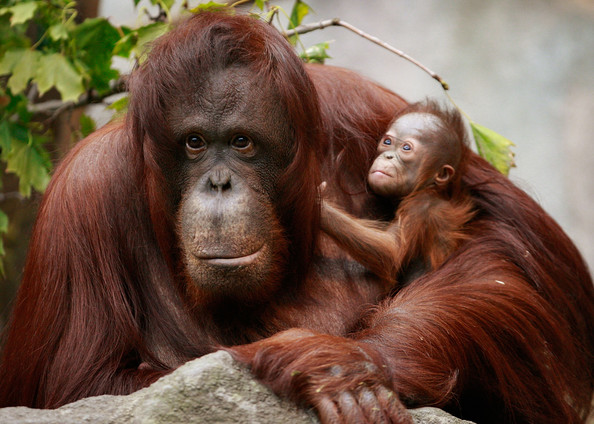
Image | Zimbio
EU ONLY – Please click on and sign:
EVERYONE – Please click on and sign the following:
- Cargill: Stop Destroying Rainforests, Communities, and Our Global Climate!
- Click on and see Below for ways you can reduce/eliminate your use of palm oil, thank you.
Background | From Call4 Org
We asked our supporters across Europe to write to their MEPs and ask them to ensure that the new EU regulation on ‘food information to consumers’ includes the mandatory labelling of palm oil on food packaging.
On Tuesday 19th April, the Clear Labels, Not Forests campaign moved a big step closer to success – the European Parliament’s Environment Committee voted YES to making the labelling of palm oil compulsory!
This is a fantastic result, but we need to keep up the pressure. The next step of the campaign, calling on the European Council to back the move, is absolutely crucial, as both Parliament and Council must agree in order for the amendment to be accepted.
Palm oil is the world’s most popular vegetable oil, primarily produced in Indonesia and Malaysia, and with rapid expansion now being seen in Africa. The development of oil palm plantations is often at the expense of tropical forests and carbon-rich peatlands, which has disastrous consequences for critically endangered species, including the orangutan, elephant, rhino and tiger, as well as local communities and indeed the global effort to reduce carbon emissions to prevent dangerous climate change.
Please click on the link below to write to your government’s Minister who is responsible for this decision in the European Council. This will help keep up the pressure and ensure that palm oil is clearly labelled on food packaging.
Message Text
I am deeply concerned about a frequently unlabelled ingredient, palm oil, which is found in close to half of all top-selling grocery brands in supermarkets across Europe. Palm oil is the world’s most popular vegetable oil, primarily produced in Indonesia and Malaysia, and with rapid expansion now being seen in Africa. The development of oil palm plantations is often at the expense of tropical forests and carbon-rich peatlands, which has disastrous consequences for critically endangered species, including the orangutan, elephant, rhino and tiger, as well as local communities and indeed the global effort to reduce carbon emissions to prevent dangerous climate change.
Currently, there is no mandatory requirement in the EU for food manufacturers to label palm oil or palm kernel oil on packaging. Palm oil is usually labelled as ‘vegetable oil’ and consumers are therefore unable to make informed decisions about the products they purchase not only on health grounds (due to its high saturated fat content) but also based on the palm oil industry’s well-documented negative environmental and social impacts.
The second reading of a new EU regulation on the “Provision of food information to consumers”, also known as the Sommer Report, is currently in progress. Amendment number 124, tabled by Glenis Willmott MEP and Nessa Childers MEP, calls for the mandatory labelling of palm oil. Mandatory labelling will enable consumers to make informed choices, and will help to drive demand for certified sustainable palm oil from European food retailers and manufacturers; alternative voluntary labelling schemes will not have the same impact.
The European Parliament voted on this issue on 19th April, and voted in support of labelling palm oil on food packaging.
Driven by consumer pressure many leading European supermarkets and food manufacturers have joined the Roundtable on Sustainable Palm Oil (RSPO) and have made commitments to purchase palm oil only from certified sustainable sources by 2015. In November 2010, all Dutch palm oil suppliers made the same pledge.
A voluntary labelling scheme would fail to provide the much needed impetus for the remaining companies to commit to buying only certified sustainable palm oil. To address the difficulty of labelling the frequently changing composition of vegetable oils, the phrase ‘vegetable oil (including palm oil)’ is a practical alternative.
I am writing to you in your capacity to influence this decision in the European Council, to ask you to support this provision.
I look forward to receiving your response on this issue.
Related | Save the Orangutan, Stop Palm Oil
What you can do | From Green, The Film:
Do not buy any wood products like out-door furniture, flooring, doors, window frames, beams and plywood made of Indonesian wood such as Merbau, Kempas, Bangkirai, Keruing, Meranti, Teak, etc. Consume as little paper as possible and never buy anything printed in China or South East Asia (most chances are the paper will be coming from Indonesia). When you do buy paper, try to avoid the brands which are all involved in the Indonesian paper industry: see below on PDF.
When buying your foods and cosmetics, avoid the brands that use Indonesian Palm Oil: see below on PDF.
Please report any errors so that the company name may be removed from the list.
Read more:
Deforestation is Made Possible By…
Green, The Film | Facts
Palm Oil | Key Players
See More:













 Our Compass
EL SER HUMANO ES TAN CRUEL Y EGOISTA , QUE ACABARA POR DESTRUIR TODO EL PLANETA Y TODO LO QUE CONTIENE : ANIMALES Y PLANTAS
LikeLike
Stop
LikeLike