Four actions: horses, chimpanzees, dolphins, wolves
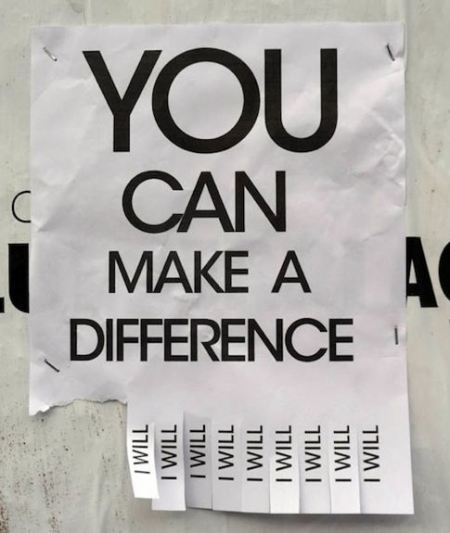
Please click on and sign the following, thank you (you will get multiple responses from Mirage):
1. Comments Needed to Oppose Triple B, Maverick Medicine Roundup
2. Tell CareerBuilder to Stop Exploiting Chimpanzees!
3. Tell The Mirage to Shut Its Dolphin Death Pool
4. Stop the Unimak Wolf Cull
1. BACKGROUND | From IDA
BLM to remove another 1,726 mustangs from northeastern Nevada. Please submit your comments by February 7
The Bureau of Land Management (BLM) is accepting public comments on a Preliminary Environmental Assessment (EA) on a plan to roundup 1,726 wild horses from the Triple B, Maverick Medicine and Antelope Valley BLM Herd Managment Areas and the Cherry Spring Wild Horse Territory, managed by the U.S. Forest Service. The roundup is scheduled for July 2011, in the heat of the desert summer.
The plan will leave behind as few as 472 wild horses in this vast, 1.7 million-acre public lands complex. Meanwhile, the BLM authorizes nine times that number of privately-held, farmed animals to graze the same area.
MESSAGE TEXT
I oppose the waste of tax dollars to roundup up 1,726 wild horses, or approximately 78 percent of the estimated population in the Triple B, Medicine Maverick and Antelope Valley BLM Herd Management Areas (HMAs) and the Cherry Springs Forest Service Wild Horse Territory.
The management approach detailed in the EA continues the unsustainable cycle of roundups, removals and stockpiling of horses in long term holding facilities.
It also perpetuates the unfair allocation of resources within the HMAs to privately-held, farmed animals rather than federally-protected wild horses or other wildlife species. The BLM has set an artificially low Appropriate Management Level (AML) of just 472-889 wild horses for this 1.7 million-acre range, yet authorizes up to nine times that number of farmed animals to graze the same area.
The EA states that horses must be removed to prevent undue or unnecessary degradation of the public lands” and to “restore a thriving natural ecological balance,” However, no threat to the “thriving natural balance” is greater than the extensive grazing of sheep and cattle authorized by BLM in this federally-designated wild horse area. Yet the proposed action includes only removing wild horses; no reduction in sheep and cattle grazing is proposed …
Read the rest and sign HERE
2. BACKGROUND | From PETA
PETA recently learned that CareerBuilder has plans to run a new commercial featuring chimpanzees during the 2011 Super Bowl, despite hearing from thousands of concerned consumers after the company aired ad campaigns in 2005 and 2006 that portrayed chimpanzees as misbehaving office workers. PETA was shocked to learn that CareerBuilder will release a new ad exploiting chimpanzees, especially since a 2008 study published in the journal Science revealed that using this endangered species for advertising seriously hinders conservation efforts by misleading the public into believing that the animals are not in jeopardy.
Chimpanzees used in the entertainment and advertising industries are typically very young animals who are prematurely removed from their mothers—often just days or weeks after birth. Trainers use physical abuse in order to ensure that chimpanzees know “who’s boss” and to force the animals to perform confusing, unnatural behaviors on cue. By the time chimpanzees reach approximately 8 years of age, they are too strong to be safely handled and are often discarded at unaccredited roadside zoos or otherwise warehoused in appalling conditions. PETA investigations have revealed that former “celebrity” apes were living in small cages littered with garbage and feces and were denied basic necessities, such as wholesome food and adequate veterinary care.
Since the original CareerBuilder ads featuring chimpanzees aired in 2005, the public has become significantly less tolerant of the use of chimpanzees in advertising. Ten of the top 15 advertising agencies in the U.S.—including BBDO, Y&R, McCann Erickson, Grey, Ogilvy & Mather, and JWT—now have policies in place that prohibit the use of chimpanzees in their ads. Earlier this year, Dodge, Pfizer, Heartland Payment Systems, and Europcar all pulled or modified ads that featured apes after learning about the ethical problems associated with exploiting these highly intelligent and sensitive animals.
Using the form HERE, please send a quick, polite note to CareerBuilder and urge the company to follow the lead of other companies by agreeing not to air its new commercial featuring chimpanzees.
MESSAGE TEXT
I was extremely disappointed to hear that CareerBuilder will be airing a new commercial that features chimpanzees. By now you know that chimpanzees who are used for advertising are torn away from their mothers as infants, trained through physical abuse, and discarded when they become too strong to be managed. There is no excuse for supporting this cruel industry, especially considering the many alternatives available to the use of live apes.
Please make the responsible and compassionate decision not to air this offensive commercial and agree never to exploit chimpanzees in future CareerBuilder ads and promotions. Thank you for your time.
RELATED | Save the Whales
Vodpod videos no longer available.
3. BACKGROUND | From Born Free
Whether caught wild or born captive, orcas and dolphins in captivity are sentenced to a life of confinement deprived of normal social and environmental interaction — but a 75 percent death rate, even among skeptics, should raise a huge red flag. At The Mirage hotel’s Siegfried & Roy’s Secret Garden and Dolphin Habitat, it’s business as usual: Three-quarters of the dolphins die prematurely!
In 2009, Born Free USA attempted to stop The Mirage from filling its tanks with more dolphins by appealing to the National Marine Fisheries Service (NMFS) to deny the import permit for two more dolphins from Dolphin Cove, an infamous captive facility in Bermuda.
Adding to the urgency of our plea, a dolphin named Sergeant Pepper died at The Mirage just two weeks after Born Free USA submitted comments opposing this permit. Despite The Mirage’s dismal record, the permit to import more dolphins was granted. Shockingly, the NMFS is not required to consider the welfare of the individual captive dolphins in its decision-making process.
Further, The Mirage is not required to prove that its display is educational nor that it contributes to conservation of the species in the wild. Public viewing of captive dolphins in concrete enclosures performing human-taught “tricks” that they would not otherwise perform in the wild projects a false picture of the animals’ natural lives. Forcing wild animals to live in environments that are incapable of accommodating their natural behavior is not conservation, educational or humane. The most important conservation message that people need to learn is how to value these animals without turning them into commodities for our entertainment.
Born Free USA has a long history of advocating against the use of marine mammals in captive displays and swim-with-dolphin programs. These highly intelligent and sensitive animals do not need to be kept hostage in the middle of the desert for the sole purpose of turning a profit for The Mirage hotel. (Learn Ten Fast Facts about Captive Orcas and Dolphins.)
Please join us in calling on The Mirage to close its captive dolphin exhibit by sending a polite message to the top executives of The Mirage.
MESSAGE TEXT
As a concerned citizen alarmed by your dolphin mortality rate, I implore you to discontinue your dolphin habitat and exhibition. Even among all of the negative data that surrounds the marine mammal entertainment industry, the dolphins’ dire plight at the Mirage is simply excessive. A 75 percent mortality rate simply cannot not be ignored.
Given this track record, it is hard to understand why the Mirage would continue to place wild animals at risk for such a seemingly frivolous purpose as public entertainment.
Whether wild caught or captive born, dolphins in captivity are sentenced to a life of confinement deprived of normal social and environmental interaction that they would otherwise enjoy. Clearly, barren swimming pools in the middle of the desert cannot meet the needs of these highly intelligent and active animals.
Displays of captive cetaceans for entertainment purposes represents a less-enlightened time when animals were viewed as objects for our amusement with no regard to their physical and psychological well-being.
In addition, there are many risks involved in allowing the public to interact physically with dolphins. Physical injuries to humans, such as lacerations and infections, have been well-documented in swim-with-dolphin interaction programs. Such accidents could become costly liabilities.
While I understand that profits are of primary concern, rest assured that tourists will respond to compassion and environmental awareness favorably, thereby justifying changes at the Mirage. There are many ways that the space designated for dolphin tanks could be utilized without exploiting animals — for example, a stage for human performances, a theater to showcase films, or other creative attractions.
Once again, I urge you to make the humane and responsible decision to discontinue your captive dolphin exhibit and replace it with a modern exhibit that does not exploit or endanger the lives of animals or people.
Please remember to CLICK TO FINISH after sending.
4. BACKGROUND | From DOW
Federal officials at the U.S. Fish and Wildlife Service have proposed killing half the wolves on Alaska’s Unimak Island – despite the lack of scientific evidence to justify such a terribly final sanction against wolves.
Help save the Unimak wolves. Urge the Alaska Regional Director of the U.S. Fish and Wildlife Service to prepare a full Environmental Impact Statement before making a decision to kill any of these amazing creatures.
MESSAGE TEXT
As a supporter of Defenders of Wildlife, I was extremely troubled to learn that the U.S. Fish and Wildlife Service (FWS) is considering conducting an unjustified wolf control program in order to protect caribou on Unimak Island — a unit of the Alaska Maritime National Wildlife Refuge (Refuge) and federally designated Wilderness.
The Draft Environmental Assessment (EA) for Unimak Island provides very little scientific data and does not demonstrate that such an action is necessary to protect the caribou from extirpation. The document also doesn’t show that action is necessary to meet the purposes of the Refuge including providing federal subsistence hunting opportunity. Further, the Draft EA does not consider a full scope of reasonable alternatives that might meet the purpose of the document.
The State of Alaska is relying less on sound scientific information and increasingly on anecdotal evidence to support their predator control programs. I am extremely disappointed that the FWS would even consider following the same path.
I urge you to prevent the spread of the State’s unjustified predator management programs onto federal lands and conduct a full Environmental Impact Statement to determine what type of management actions are necessary or appropriate on Unimak Island.
Thank you for considering my comments.
See More …
every petition signed
shows that we are not resigned
or rolling over and hiding in bed
while the rest of mankind
shoots living things dead
Karen Lyons Kalmenson






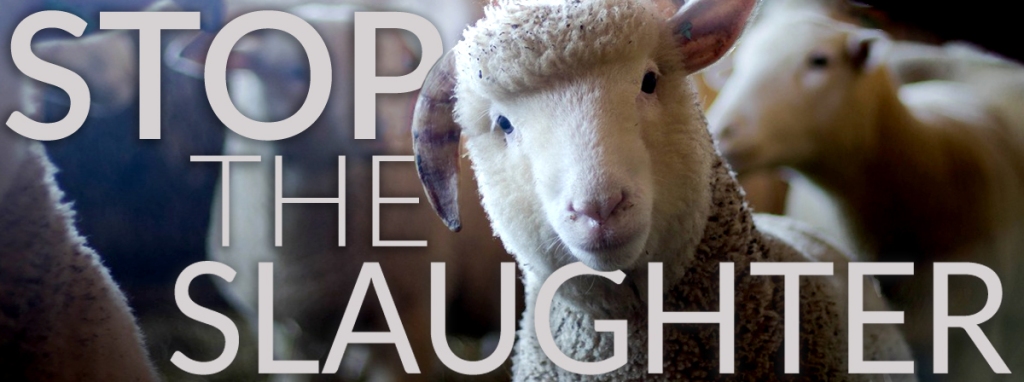



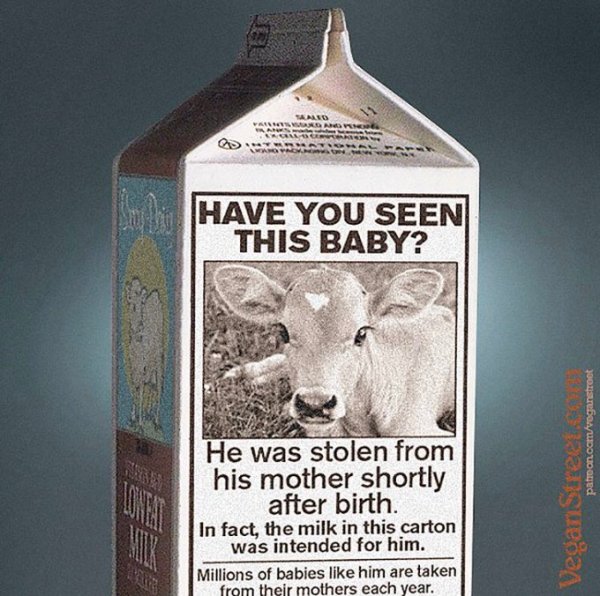


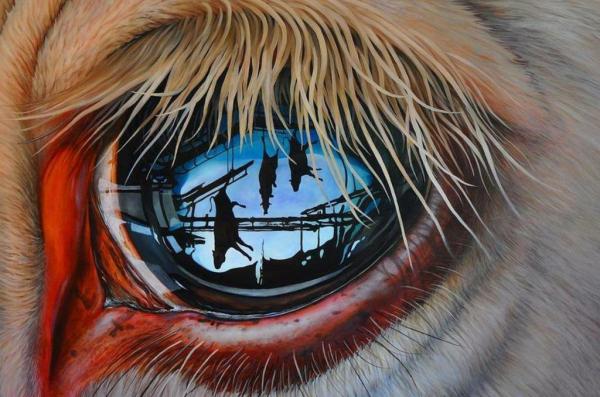


 Our Compass
every petition signed
shows that we are not
resigned
or rolling over
and hiding in bed
while the rest of mankind
shoots living things dead
LikeLike
We never give up Karen xox
Thank you very much Stacey ♥
LikeLike
Remarkable things here. I am very satisfied to see your post.
Thaqnk you a lott and I’m taking a look ahead to touch you.
Will you please drop me a e-mail?
LikeLike
Reblogged this on " OUR WORLD".
LikeLike