HighestWelfare.Humane.Assured.GoodPractices.Vegetarian. Regenerative.Flexitarian.Lies...
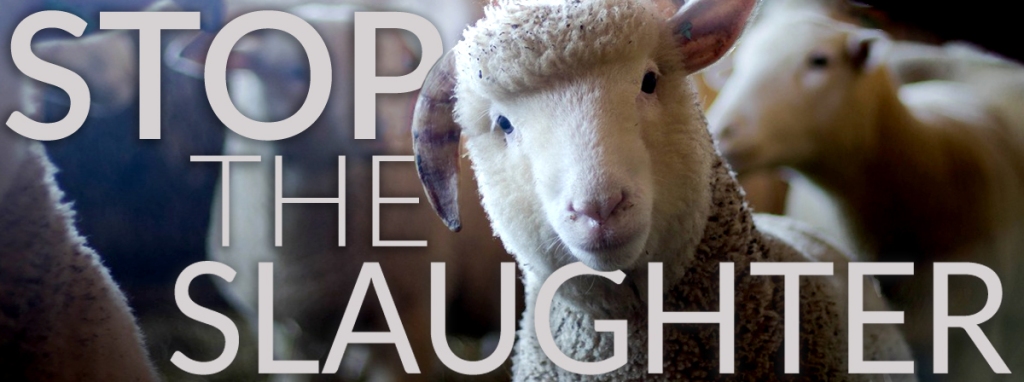
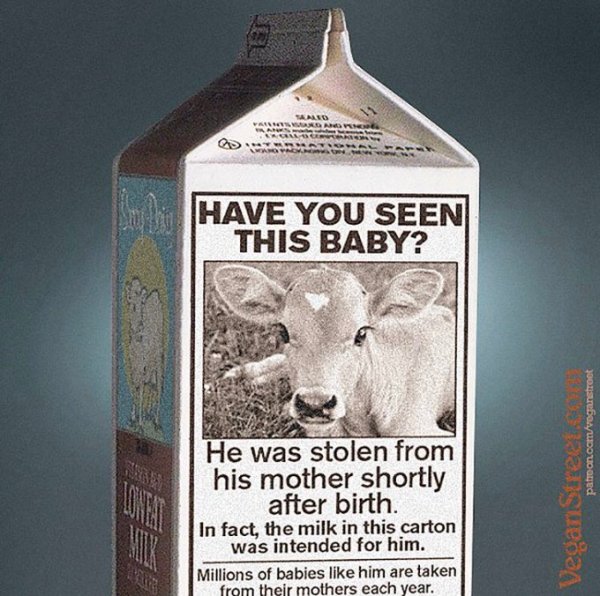
What is the difference between No Welfare, High Welfare, and Highest Welfare when they all require animals to die? Only human comfort, NONE protect the actual animals. The most humane, ethical, and honest Webster-defined "welfare" is NOT exploiting animals - not using, not wearing, not eating, not killing - animals. The only meaningful position is vegan, everything else is just how humans euphemize animals' required suffering and violent deaths: no human exploits animals because they honestly believe that NOT exploiting animals is UNethical or INhumane.
Free activist Liu Xiaobo

Amnesty International
Please click on and sign Free activist Liu Xiaobo
Background | Source: Amnesty International
2010 Nobel Peace Prize recipient Liu Xiaobo was charged with “inciting subversion of state power” and given an 11-year prison sentence on December 25, 2009 simply for co-authoring a proposal for political and legal reform in China. Chinese citizens are living in a straitjacket as the authorities imprison and ‘forcibly disappear’ those who speak out for political reform, democracy and human rights, critique corrupt officials or believe in the ‘wrong’ religion.’. Urge Chinese authorities to release Liu Xiaobo others imprisoned for dissent.
Download the printable versions: PDF | RTF
Message Text
I write out of concern for Liu Xiaobo, 2010 Nobel Peace Prize recipient, who was charged with “inciting subversion of state power” and given an 11-year prison sentence on December 25, 2009 for co-authoring a proposal for political and legal reform in China.
Liu Xiaobo co-authored “Charter 08,” a proposal for political and legal reform in China. The police took Liu Xiaobo from his home in Beijing on December 8, 2008, two days before the planned launch of Charter 08. Numerous signatories of the charter have been questioned and harassed by Chinese authorities since its launch but only Liu Xiaobo has been charged or tried.
I urge you to release Liu Xiaobo and others imprisoned for dissent immediately and unconditionally and ensure that he is not tortured or otherwise ill-treated while he remains in custody. Freedom of expression must be protected by the state in China, in line with Chinese constitutional guarantees and the International Covenant on Civil and Political Rights (ICCPR), which China has signed.
I thank you for your attention to these concerns and look forward to your reply.
Read more…
Urge Windsor, Ontario, to Halt Skunk Killing

PETA
Please send sample letter or your own words protesting the proposed killing of skunks in Windsor, Ontario, Canada. You’ll receive a couple “out-of-office” replies, but thus far all emails worked for me.
SOURCE: PETA
BACKGROUND
According to news sources, the city of Windsor, Ontario, is considering trapping and killing unwanted skunks who live in the city. The council has already allocated funds for this cruel plan, and now it’s just sorting out the details!
Killing skunks won’t work to control populations and will backfire. The spike in the food supply will prompt remaining animals and newcomers to breed at accelerated rates, meaning that the skunk population will increase! Lethal methods are also extremely cruel, tearing families apart and leaving young animals vulnerable to death by starvation or dehydration.
Please politely urge Windsor officials to toss their skunk-eradication program and stick with effective, humane wildlife control measures instead.
WHOM TO CONTACT
Please e-mail Windsor Mayor Eddie Francis and the Windsor City Council using this block of e-mail addresses (copy and paste this list into your “To” field):
mayoro@city.windsor.on.ca; ddilkens@city.windsor.on.ca; rjones@city.windsor.on.ca; fvalentinis@city.windsor.on.ca; ahalberstadt@city.windsor.on.ca; esleiman@city.windsor.on.ca; joagignac@city.windsor.on.ca; phatfield@city.windsor.on.ca; bmarra@city.windsor.on.ca; hpayne@city.windsor.on.ca; amaghnieh@city.windsor.on.ca
SAMPLE LETTER
Dear Honourable Francis and City Council Members:
I am writing regarding the city of Windsor, Ontario’s plan to consider trapping and killing unwanted skunks who live in the city. Although this idea is inherently cruel based on the premise alone, it is important to recognize it is based on erroneous information.
Please allow me to illustrate a few of these concerns. First, ecologically, populations will fluctuate according to conditions and naturally-occurring food sources; it is the interference of humans that causes imbalance. To blame and slaughter the skunks for human encroachment is both irresponsible and unjustified.
Second, killing the skunks artificially increases food supplies to the remaining skunks, the consequence of which is increased reproduction and an ensuing greater skunk population. In fact, studies have demonstrated that the continual cycle of seasonal killing is responsible for a rebound, or larger populations, in subsequent years.
Third, this type of mass killing using such a brutal type of slaughter in such a central and visible location would certainly adversely affect both visitation and tourism; it would be financially detrimental to continue with such a cruel and unnecessary killing, and although I do not currently reside in Windsor, I would be unwilling to consider it, or nearby, as a potential vacation destination if this cull continues.
Fourth, this type of cull would leave families torn apart, and young and weak animals would starve or die of dehydration.
Please instead examine alternative, non-lethal humane wildlife options such as fencing and making properties unattractive using food storage and other strategies, which, according to established protocols when using these methods, have all proven successful in curtailing animal populations.
I know your time is limited and I want to thank you each for your attention to this urgent matter.
NAME
Read more…
SHAC Email Alert: Genesis Lifts, Ltd., Dealing with HLS

Pharaoh Hound
SOURCE: FACEBOOK EVENT
BACKGROUND
Genesis Lifts, Ltd., have been caught out dealing with Huntingdon Life Sciences after SHAC were leaked details from HLS’ own HR department.
Please contact Genesis Lifts via email or phone today and ask them to act with compassion and ethics and stop being a party to animal torture inside HLS.
This is a small local firm and the more calls they get from people saying they will boycott their business whilst they support HLS, the better.
A sample letter is below, but it is more effective to send personalised messages if you have the time.
Please remember to keep all communication polite and informative.
WHOM TO CONTACT
Email Block
enquiries@genesislifts.co.uk, trevorsherwood@genesislifts.co.uk, lawrencebetts@genesislifts.co.uk
Individual
Genesis Lifts Ltd
Drayton Old Lodge Business Centre
146 Drayton High Road
Norwich
NR8 6AN
Tel: 01603 861631 (Office), 0870 760 2268 (24 Hours)
Fax: 07005 850036
Email: enquiries@genesislifts.co.uk
Directors:
Trevor Sherwood:
trevorsherwood@genesislifts.co.uk
mobile: +44 (0)7771 696 406
Lawrence Betts:
lawrencebetts@genesislifts.co.uk
mobile: +44 (0)7832 141 472
Read more…
Nine Shocking Fur Facts
Source: PETA
Related: Sign the pledge to go fur-free today!
Looking at a fur coat in a glossy magazine or a store window, you might not realize that animals were beaten, electrocuted, or even skinned alive for their skin. Are you ready to find out what really happens in the name of fashion? Here are nine shocking fur facts that will make you think twice about wearing the corpse of any animal:
Fur Fact 1: Electrocuting fur-bearing animals anally and genitally is an agonizing slaughter method used frequently to limit damage to fur. New York is the only state in which this inhumane method is illegal.
Vodpod videos no longer available.
Fur Fact 2: Eighty-five percent of the fur industry’s skins come from animals who were captive on fur factory farms, where they are crammed into severely crowded, filthy wire cages and later skinned alive.

Fur Fact 3: There are no penalties for people who abuse animals on fur farms in China, which is the world’s largest fur exporter, supplying more than half of the finished garments in the United States.
Vodpod videos no longer available.
Fur Fact 4: One billion rabbits are killed each year so that their fur can be used in clothing or for lures in fly-fishing or trim on craft items.

Fur Fact 5: In China, more than 2 million cats and hundreds of thousands of dogs are bludgeoned, hanged, bled to death, and often skinned alive for their fur.

Fur Fact 6: Fur farms harm the environment. One million pounds of feces are produced annually by U.S. mink farms alone. One dangerous component of this waste is nearly 1,000 tons of phosphorus, which pollutes nearby rivers and streams.

Fur Fact 7: Fur farms in the U.S. are the only sector of animal agriculture unregulated by the federal government.
Vodpod videos no longer available.
Fur Fact 8: After an animal has been slaughtered, his or her skin is treated with toxic chemicals to keep it from rotting and decomposing in the buyer’s closet.

Fur Fact 9: One-third of all fur sold in the U.S. comes from animals killed in steel-jaw traps, which are legal in 43 states. These traps slam shut on an animal’s limb, which causes excruciating pain and leaves the animal stuck and starving, sometimes for days. The conibear trap crushes an animal’s neck by applying 90 pounds of pressure per square inch, leaving the animal to suffer for another three to eight minutes while he or she slowly suffocates.

Surprised by these shocking fur facts? Sign the pledge to go fur-free today! And tell your friends about the cruelty of the fur industry by tweeting one of these shocking fur facts to them. Use “@PETA” and “#9shockingfurfacts.”
Read more…
Huffington Post | SWNS
Source: Huffington Post
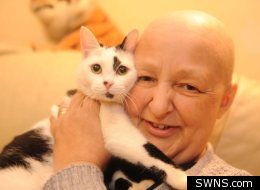
Call it a sixth sense, a special connection, or just plain mystery. But whatever gift cats and dogs have that allows them to detect health conditions in their owners sure has been saving a lot of lives.
Wendy Humphreys, a mother of two from Britain, found out first-hand how powerful that gift can be when her cat Fidge sniffed out a potentially fatal health condition that even doctors hadn’t detected, the Daily Mail reports.
Bewildered at first, Humphreys was compelled to visit a physician after the 10-month-old cat began jumping on her breast and continued to do so for weeks on end.
What doctors found astounded Humphreys: She had a malignant tumor in her breast about the size of a pea that could have metastasized if it hadn’t been discovered early. She is now scheduled to undergo chemotherapy and credits Fidge with saving her life, according to the paper.
Studies have shown that dogs, too, can pick up on illnesses and physical ailments by detecting acute changes in people’s smell. In a 2011 study, researchers in Japan conducted trials to see how well a dog could identify people with colorectal cancer. The dog had a 98 percent accuracy rate, NPR reported.
Sometimes, however, animals’ aptitude for detecting changes in humans defies scientific explanation. In 2006, a cat named Oscar confounded experts by “predicting” the deaths of a number of residents at a Rhode Island nursing home. Oscar would begin hanging around people days before they passed away, according to CBS News.
“Oscar is a normal cat with an extra-normal sense for death,” Dr. Joan M. Teno, professor of community health at Brown and associate medical director of Home & Hospice Care of Rhode Island, told the Boston Globe. “As a scientist, I want to offer a biological explanation for this,” she said. “But I can’t.”
Read more…
A BUAV investigation uncovers shocking conditions inside the monkey farms of Laos: send sample letter
Please send one of two sample letters provided below. An email block is provided for your convenience, but individual addresses are as well for further mailing options. One of the email addresses has failed for me, but I will keep it in in case it gets reactivated.
BACKGROUND | SOURCE: BUAV (Please note that British Union for the Abolition of Vivisection – BUAV – has become Cruelty Free International and previous BUAV-specific links may no longer load.)
The cruel trade in monkeys in South East Asia for the international research industry involves thousands of monkeys incarcerated in overcrowded and barren conditions in breeding farms across Laos.
The BUAV investigation uncovered shocking conditions that breach internationally recognised animal welfare guidelines. Some monkeys were found dead in their pens, while others were severely emaciated and suffering from severe hair loss and injuries.
The BUAV is calling for action by CITES (Convention on the International Trade in Endangered Species) and governments to address the largely unregulated trade in macaque within South-east Asia and take action over the serious animal welfare concerns that this investigation has uncovered.
The long-tailed macaque (M. fascicularis) is currently the most heavily-traded mammal listed on the CITES Appendices. There has been a rapid expansion of the international trade in long-tailed macaques in South East Asia since 2004 as the breeding and supply of the species for research purposes has developed into a large-scale business enterprise. The number of long-tailed macaques exported globally for research sharply rose from 119,373 (between 1999 and 2003) to 261,823 (between 2004 and 2008). The monkeys are exported to Vietnam and China, both countries are major suppliers of macaques to the laboratories of the UK, Europe and the USA.
BUAV Chief Executive, Michelle Thew, states: “Our investigation has uncovered a disturbing and unregulated trade in monkeys for research. CITES and governments must start to address the growing concerns that surround the cruelty and plundering of the macaque populations from their native forests in South East Asia to feed the international research industry.”
Please support our campaign:
Write letters to the Laos embassy in your country calling on the government of Laos to place an immediate ban on the capture, breeding and export of long-tailed macaques destined for the research industry. Click here for the contact details of Laos embassies around the world or see directly below.
WHOM TO CONTACT
Email block
phoumypm@yahoo.com , phbounthanh@yahoo.com , thongphanhr@yahoo.com , Kphandanouvong@yahoo.com , conbru@laotel.com
Individual
Mr. Phoumy Phoumanivong
Director General
Department of Forest Inspection (DOFI)
Ministry Of Agriculture and Forestry
That Dam Road, Vientiane, Lao PDR/ P.0.box 1888, Vientiane, Lao PDR
Fax: +856 21 216508
Email: phoumypm@yahoo.com
Mr. Bounthanh Philanchanh
Deputy Director of Wildlife Investigations Division
Department of Forestry Inspection (DOFI)
Ministry of Agriculture and Forestry
That Dam Road, Vientiane, Lao PDR/ P.0.box 1888, Vientiane, Lao PDR
Email: phbounthanh@yahoo.com
Mr. Khamphout Phandanouvong
Deputy Director General
Department of Forestry Inspection (DOFI)
Ministry of Agriculture and Forestry
That Dam Road, Vientiane, Lao PDR/ P.0.box 1888, Vientiane, Lao PDR
E-mail: thongphanhr@yahoo.com/ Kphandanouvong@yahoo.com
Mr. Bouaphanh Phanthavong
Director
Division of Forest Resource Conservation
Department of Forestry
Ministry of Agriculture and Forestry
That Dam Road, Vientiane, Lao PDR/ P.0.box 1888, Vientiane, Lao PDR
Vientiane, Lao PDR
Fax: (856-21) 217161
Email: conbru@laotel.com
SAMPLE LETTER ONE
Dear Director General Phoumanivong, Deputy Director Philanchanh, Deputy Director General Phandanouvong, and Director Phanthavong:
I was shocked to learn the cruelty inflicted on long-tailed and pig-tailed macaques as exported by Laos for research, the efficacy of which is questionable at best, and lethal at worst. These experiments subject the macaques to enormous suffering and pain; we must not allow for such exploitation to continue.
Furthermore, it has come to my attention that Indonesia is failing to comply with CITES regulations, and has clearly demonstrated a lack of conformity to CITES standards as established by CITES investigators. Because of the gross misrepresentation Laos has committed, I respectfully ask that Laos place an immediate ban on on the capture, breeding, and export of long-tailed and pig-tailed macaques, not just until such a time when commitment to regulations can be reestablished, but permanently.
Animals are sentient beings, capable of thought and emotion, including love and suffering. Prior to subjecting any animal to exploitation, I plead with your country to acknowledge this important condition that both humans and non-humans share. We must teach our children respect for, and empathy towards, animals, for our children are undeserving of this cruel legacy whereby animals are exploited and suffered for human greed and egotistical motive. Please immediately cease causing harm to the macaques, and implement animal research and testing alternatives, which have proven superior to unreliable animal models.
Thank you for your time.
NAME
SAMPLE LETTER TWO
Dear Director General Phoumanivong, Deputy Director Philanchanh, Deputy Director General Phandanouvong, and Director Phanthavong:
I am writing to express my concern about the conditions at monkey farms in Laos, as revealed by a recent BUAV investigation.
The monkeys were being held in overcrowded and barren concrete cages. In particular, at the Xaysavang Trading Export-Import Company in Bolikhamxay Province, monkeys were thin or severely emaciated with loss of fur. It appeared that they were starving to death. Many were lying dead in their pens.
I hope you are as shocked and appalled by this situation as I am. Keeping monkeys in such terrible conditions breaches international animal welfare guidelines. It is cruel and detrimental to the mental well-being and physical health of the monkeys.
I urge the Ministry of Agriculture and Forestry to carry out an urgent investigation and close down the monkey farms of Laos.
Sincerely,
Compassion in World Farming
UPDATE | 3/9/12
From Compassion in World Farming
Thank You
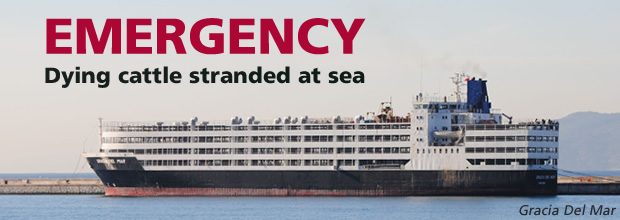
We have always known that Compassion’s supporters are amazing, and your response to the Gracia Del Mar disaster shows once again that when farm animals need urgent help, you are there to defend them.
We would like to thank everyone who took action on this issue. Within the first 40 hours of us alerting you to this situation over 40,000 emails were sent to Brazil, Egypt and the World Organisation for Animal Health (OIE) in Paris. This response is truly astounding.
A final update…
We’re now able to bring you an explanation for, and the final outcome of, this tragedy. Reports we have received suggest that when the Gracia Del Mar livestock ship passed the Algerian Coast, en route from Brazil to Egypt, it passed through a snow storm and extremely cold weather. Many of the cattle could not withstand this severe weather and this led to thousands of deaths.
The ship then tried to dock in a number of places along the Red Sea and was refused for several days, both at Egyptian ports and in other nations. We understand that all live cattle have now been transferred from the Gracia Del Mar and have been taken to land, although it is not clear which country the animals finally ended up in.
Around 3,000 animals, over half of those onboard the Gracia Del Mar when it left Brazil, are thought to have died in this catastrophe. While many of the exact details of this event remain unknown, one thing is clear: the long distance transport of animals must stop.
Compassion has campaigned for many years on this issue, and this latest tragedy provides yet more evidence that long distance live transport has no place in modern farming. Our campaign goes on, and with your help, we will continue to fight to make sure these tragic disasters become a thing of the past.
Thank you, once again, for your ongoing support and compassion.
Previous, please click HERE to also send sample letter if you have not already.
Please click on and sign Emergency situation – Livestock Ship Gracia Del Mar
Source: Compassion in World Farming
Background
Dying cattle are stranded at sea; more than 2750 are already dead. We must take urgent action now to end this welfare disaster.
The Gracia Del Mar set out from Brazil, bound for Egypt with thousands of cattle on board. It is currently in the Red Sea area, near Eritrea. The ship has had an engine failure which has led to a failure in the ventilation system.
Reports suggest that more than 2,750 cattle are already dead, and the situation is worsening with every hour that passes. The ship has attempted to dock at a number of ports, including its destination port in Egypt, but has been turned away due to the number of dead and dying cattle. Reports suggest conditions on board are desperate.
The Brazilian and Egyptian authorities must take urgent action today to end this major welfare disaster. Not only is it their responsibility to do so, but they have the resources to provide the support and veterinary expertise so urgently needed.
Please send the email below to the Brazilian and Egyptian Agriculture Ministers calling on them to fulfil their responsibilities. They need to get the ship docked, get treatment to any surviving animals and bring this disaster to a close.
Text
URGENT ACTION NEEDED REGARDING LIVESTOCK SHIP ON WHICH MANY CATTLE ARE DEAD OR DYING
I understand that Compassion in World Farming has received a report that 2750 cattle have died on board the livestock vessel Gracia Del Mar which is carrying the animals from Brazil to Egypt. It is reported that this ship is currently near Eritrea. It must dock urgently at the nearest available port. As the exporting and importing countries, I believe Brazil and Egypt are best placed to end this dreadful situation swiftly.
According to the report, animals are continuing to die on board the ship. I believe that this problem has arisen because one of the ship’s engines has broken down and this has led to ventilation failure resulting in much suffering and the death of many animals.
I urge Brazil and Egypt to take urgent action to help to bring this situation to an end. I would be grateful if Brazil and Egypt would liaise with the relevant authorities and try to persuade them to allow the ship to land so that the animals can be given veterinary care or, where necessary, humanely euthanized. Urgent action is necessary to prevent even more suffering in what has become a major animal welfare disaster.
OIE guidelines require you to take responsibility for this situation as the exporting and importing countries.
Read more…
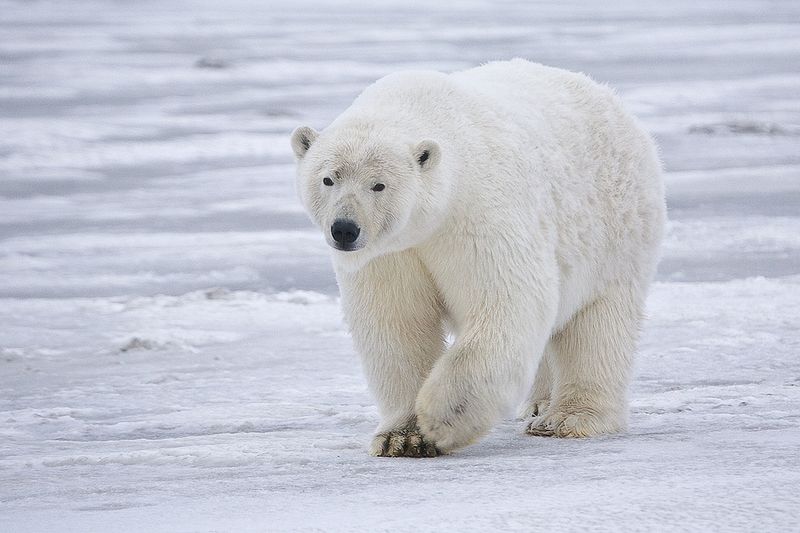
Rich Chinese thrill seekers paying £50,000 for ‘trip of a lifetime…’ to kill endangered polar bears
Alan Wilson, Wikimedia
Related, please click and sign HERE and HERE to rein in global warming and help save the polar bear in this manner.
Please also click on the petition to urge the Canadian government to prohibit killing polar bears for pure sport as well as commercial trade in polar bear products: http://www.thepetitionsite.com/takeaction/553/856/036/
Source: The Daily Mail
By Peter Simpson
China’s thrill-seeking nouveau riche are being offered a £50,000 trip of a lifetime – hunting down endangered polar bears, the Daily Mail can reveal.
The expensive price tag for the 10-day expedition across the polar ice pack in Canada includes the services of a taxidermist, who at the end of the hunt turns the trophy specimens into prized rugs for the “rookie” hunters’ living rooms.
‘The polar bear is the most extreme of natural enemies in North America,’ declares the Beijing-based I Love Hunting Club in its brochure.
‘Their weight can reach one ton, and they can grow to more than three meters in length. The huge male bear specimens are the most majestic, most beautiful of hunting prizes![sic]’ reads the advert in Chinese.
After flying first class and acclimatising at their five star hotel, the hunters – super rich Chinese business men and women – set out on dog sleds across the protected polar bear habitats in search of their controversial quarry.
With the help of expert trackers from local Inuit communities, they stalk their prey and dispatch the iconic animals with bullets from a high-powered rifle, for which they are given fast-track training.
As an extra souvenir, the hunters are also given a personalized photo album and DVD film of their “exotic shoot”.
Included in the cost are luxury facilities, hunting licenses issued by the Canadian Government, visas, an interpreter, “rifles and bullets” and the “highest standard of outdoor sports insurance”.
‘Each hunter is allowed to kill one male only. We then turn them into rugs.
‘Many Chinese buy expensive polar rugs smuggled into China. But these cost up to £40,000 pound each, so going to hunt for your own is attractive to my clients,’ said the hunting club’s owner, Scott Lupien, a professional hunter from California.
Mr Lupien says his club caters to two kinds of clients – experienced enthusiasts and novice tycoons seeking their first kill.
‘I also teach the Chinese about conservation. That is an important part of the trip. Hunting by quota helps endangered species,’ said Mr Lupien, who also offers hunting trips to South Africa, the US and South America.
‘If a male runs into a female with cubs, it attacks the cubs. Hunting males actually helps the young population survive,’ claimed fluent Chinese-speaker Mr Lupien, 43, who has been running his club in China for four years.
‘The animal rights guys know this but they don’t want to admit it. And if you believe the ice caps are melting as some claim, these bears are going to die anyway, so you may as well hunt them,’ he told the Daily Mail.
Mr Lupien’s website, 52safari.com, shows numerous videos of Chinese hunters shooting lions, zebra, gazelles, moose, black bears and mountain lions, among other species.
Scores of photos show the hunters posing with their kill.
The “only professional hunting club” in China was last night condemned by international animal rights groups and the public.
The UK Director of International Fund for Animal Welfare, Robbie Marsland, said putting a price tag on wildlife was the quickest way to drive species to extinction.
‘The IFAW opposes the cruel and unnecessary killing of these animals which are already under increased threat from habitat loss. We urge members of the [Chinese] public to avoid taking part in the needless slaughter of polar bears for trophies and instead encourage their protection for future generations,’ said Marsland.
Some Chinese media have tapped into the fledgling animal rights movement among China’s pet-owning urban middle classes and yesterday slammed Mr Lupien’s hunting club.
But trophy hunting appeals to the hundreds of Chinese tycoons keen to pit themselves armed against wild animals armed with a gun.
Canada is the only country to allow international, non-native trophy hunters to kill on its soil and approximately 500 polar bears are killed each year.
Read more…
Pink Slime For School Lunch: Government Buying 7 Million Pounds Of Ammonia-Treated Meat For Meals
Wikimedia
Source: Huffington Post
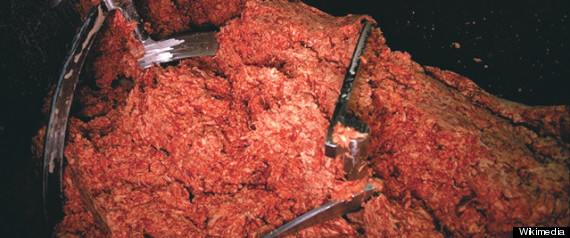
Pink slime — that ammonia-treated meat in a bright Pepto-bismol shade — may have been rejected by fast food joints like McDonald’s, Taco Bell and Burger King, but is being brought in by the tons for the nation’s school lunch program.
The U.S. Department of Agriculture is purchasing 7 million pounds of the “slime” for school lunches, The Daily reports. Officially termed “Lean Beef Trimmings,” the product is a ground-up combination of beef scraps, cow connective tissues and other beef trimmings that are treated with ammonium hydroxide to kill pathogens like salmonella and E. coli. It’s then blended into traditional meat products like ground beef and hamburger patties.
“We originally called it soylent pink,” microbiologist Carl Custer, who worked at the Food Safety Inspection Service for 35 years, told The Daily. “We looked at the product and we objected to it because it used connective tissues instead of muscle. It was simply not nutritionally equivalent [to ground beef]. My main objection was that it was not meat.”
Custer and microbiologist Gerald Zernstein concluded in a study that the trimmings are a “high risk product,” but Zernstein tells The Daily that “scientists in D.C. were pressured to approve this stuff with minimal safety approval” under President George H.W. Bush’s administration. The USDA asserts that its ground beef purchases “meet the highest standard for food safety.”
Controversy surrounding “pink slime” stems from various safety concerns, particularly dangers associated with ammonium hydroxide, which can both be harmful to eat and has potential to turn into ammonium nitrate — a common component in homemade bombs, according to MSNBC. It’s also used in household cleaners and fertilizers.
In 2009, The New York Times reported that despite the added ammonia, tests of Lean Beef Trimmings of schools across the country revealed dozens of instances of E. coli and salmonella pathogens.
Between 2005 and 2009, E. coli was found three times and salmonella 48 times, according to the Times, including two contaminated batches of 27,000 pounds of meat.
A public outcry against the “slime” is led perhaps most prominently by celebrity chef Jamie Oliver, who had also successfully waged war against flavored milk in Los Angeles schools and continues a crusade for healthier school lunches.
News of the USDA’s plan to bring 7 million pounds of “pink slime” to school cafeterias nationwide comes just weeks after the government announced new guidelines to ensure students are given healthier options for school meals. The new standards call for more whole grains and produce as well as less sodium and fat in school meals. While the measures mark a step forward from previous years, they still compromise amid push-back from Congress to keep pizza and french fries on the menu — counting both the tomato paste on pizza and the potatoes that make fries as vegetables.
Still, some schools — like several in California — have taken the matter into their own hands, and have found ways to profit from those efforts. Umpteen school districts have taken part in a decade-long initiative, supported by a philanthropic organization, that provides schools with equipments and chefs who teach cafeteria workers to cook from scratch and produce fresh meals.
A recent report by the Centers for Disease Control and Prevention revealed that more than a third of high school students were eating vegetables less than once a day — “considerably below” recommended levels of intake for a healthy lifestyle that supports weight management and could reduce risks for chronic diseases and some cancers.
Read more…
Please convince Egypt to allow ship to dock with thousands of dying animals: sample letter
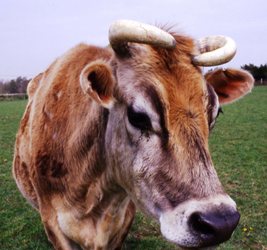
PETA
UPDATE
From Compassion in World Farming
Thank You
We have always known that Compassion’s supporters are amazing, and your response to the Gracia Del Mar disaster shows once again that when farm animals need urgent help, you are there to defend them.
We would like to thank everyone who took action on this issue. Within the first 40 hours of us alerting you to this situation over 40,000 emails were sent to Brazil, Egypt and the World Organisation for Animal Health (OIE) in Paris. This response is truly astounding.
A final update…
We’re now able to bring you an explanation for, and the final outcome of, this tragedy. Reports we have received suggest that when the Gracia Del Mar livestock ship passed the Algerian Coast, en route from Brazil to Egypt, it passed through a snow storm and extremely cold weather. Many of the cattle could not withstand this severe weather and this led to thousands of deaths.
The ship then tried to dock in a number of places along the Red Sea and was refused for several days, both at Egyptian ports and in other nations. We understand that all live cattle have now been transferred from the Gracia Del Mar and have been taken to land, although it is not clear which country the animals finally ended up in.
Around 3,000 animals, over half of those onboard the Gracia Del Mar when it left Brazil, are thought to have died in this catastrophe. While many of the exact details of this event remain unknown, one thing is clear: the long distance transport of animals must stop.
Compassion has campaigned for many years on this issue, and this latest tragedy provides yet more evidence that long distance live transport has no place in modern farming. Our campaign goes on, and with your help, we will continue to fight to make sure these tragic disasters become a thing of the past.
Thank you, once again, for your ongoing support and compassion.
BACKGROUND | SOURCE PETA
As you may be aware, the Gracia Del Mar (a South American–owned vessel recently retrofitted to carry live animals) is currently stranded in the Red Sea near Eritrea. An engine failure reportedly caused the ventilation and feeding systems to shut down just three days into their journey, leaving animals to starve, suffer, and die in the extreme heat.
It is rumored that more than 2,750 animals have died so far. The ship has been refused permission to dock in Port Said, Egypt (the animals’ intended destination for slaughter), because of the number of dead and dying cattle on board, and it has been left stranded after not being allowed to dock at several other destinations. Conditions on board are believed to be horrific, with no aid or relief available to the suffering animals.
Please join PETA in asking the Egyptian government to allow this ship to dock and provide immediate and appropriate care to these animals, who have already suffered so much at the hands of the live-export industry.
The Egyptian government has so far been ignoring calls from organizations around the world asking that the country help out in this situation.
PETITION
http://www.thepetitionsite.com/610/873/286/end-live-animal-export-for-slaughter/
WHOM TO CONTACT
The Honorable Mohamed Reda Ismail Abdel Hady
Egyptian Minister for Agriculture
info_malr@agr-egypt.gov.eg
Please write to your local Egyptian embassy and ask that the ambassador do everything in his or her power to intervene in behalf of these animals.
The following talking points can be rephrased in your e-mails:
- Animals used for live export suffer from the moment they leave the farm until their final agonizing slaughter.
- Both Brazil (where the animals’ journey began) and Egypt are required under the World Organization for Animal Health guidelines to take responsibility in ensuring that the animals are treated humanely in this situation.
- These cattle are being left to die a slow and painful death.
- The world is waiting for Egypt to do the right thing by immediately allowing this ship to dock.
- Egypt should allow the ship to dock and the cattle to receive appropriate care and humane euthanasia where necessary.
SAMPLE LETTER
Dear Honorable Mohamed Reda Ismail Abdel Hady,
It has come to my attention that your community officials have ignored a decidedly cruel and exploitative manner in response to the stranding of the Gracia Del Mar, in which thousands of animals are slowly, painfully dying due to heat and starvation. Thus far, Egypt has refused to allow the ship to dock. In efforts to curtail a dead population, you are challenging any security extended to animals as stipulated by the World Organization for Animal Health guidelines to take responsibility in ensuring that the animals are treated humanely in this situation.
Please allow me to elaborate. While all countries engage in animal production distinguishing animals as commodities rather than sentient beings, in response to international concerns relative to animal conditions and treatments, progressive governments are promoting greater visibility to preclude allegations of misconduct and brutality. Unfortunately, you are asking that the global audience apathetically regard this situation as a necessary and logical solution. Addressing animals as targets of abuse, however, is inherently inhumane and barbaric given that it substantiates the precept of animals as products, speciesism, rather than fundamentally equal and deserving of compassion and lives free from exploitation and suffering. To aspire to such an a principled and equitable foundation should be the goal of all societies, and you should thus refuse participation in any event that incurs such cruelty on animals.
Rather than choose complicity in the savage treatment of these animals, your communities can avoid any potential global boycotts by observing compassion instead, allowing the ship to dock, and providing decent care to the animals who already suffer unimaginably in the live-export business; this can be achieved by establishing and practicing humane animal welfare standards.
Thank you for your attention to this urgent issue.
NAME
Read more…
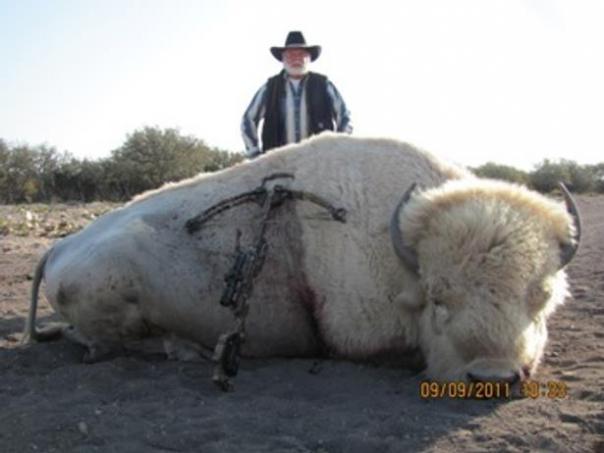
Blue Feather Spirit
Please click on and sign End the hunting of the Sacred White Buffalo at the Texas Hunt Lodge immediately
Background | Source Blue Feather Spirit
Native Americans have always had many legends that span over thousands of years. Yet despite the many legends, the most sacred one involves the birth of a White Buffalo calf. There are countless stories about the White Buffalo, with a slightly different tale being told for every tribe. But the message is clear in all of them; The Native Americans see the white buffalo calf as a sign to begin mending life’s sacred hoop, to connect with each another and with our Mother Earth whom we must stop destroying. The White Buffalo is a very sacred sign and symbol to the Native Americans.
Although the buffalo in the U.S. are no where near the great numbers that they used to be, when they were flourishing they used to number between 60 – 80 million head. Under those favorable conditions, the chances of such an unusual white buffalo appearing was about 1 in 10 million. But although there are only approximately around 125,000 buffalo today, the odds against one being born have increased dramatically. There has been a spurt of white buffaloes born over the past 50 years or so. Native Americans are taking this as a sign that something profound is happening to our planet as well as to humanity.
Understanding just how important the white buffalo is then, it becomes extremely hideous and despicable that a canned hunting outfit in Texas called the Texas Hunt Lodge is now offering the chance to kill these majestic and spiritually significant creatures. For $13,500, a person can go there and do exactly that. This practice must be stopped immediately before anymore are killed for the sake of a mere trophy to hang on their wall.
Please take a minute to sign the petition to stop the despicable practice of killing a white buffalo (bison) at the Texas Hunt Lodge for the fee of $13,500. These are canned hunts which means the animal has no chance for escape and is in an enclosed area that makes it extremely easy to kill them. They are also usually very used to the presence of humans so they do not have the fear of man as would a wild bison. The White Buffalo has a very spiritual significence to the Native American culture.
Read more…
Empty Cages Collective
UPDATE: 3/07/12
Thank you very much for your email regarding Lenox. We are happy to report that the NYC Department of Health & Mental Hygiene (DOHMH) authorized Animal Care & Control of NYC’s (AC&C) to release Lenox from our care recently. She has been placed with one of our New Hope partners. The group will provide the care Lenox needs until she is eventually placed into a loving and permanent home through their own adoption process.
About the New Hope Program
The New Hope program is AC&C’s proactive community initiative aimed at finding homes for New York City’s unwanted pet population. To accomplish this, AC&C establishes and cultivates mutually-beneficial and productive relationships with cat, dog and exotic animal placement organizations that assist and partner with AC&C in placing animals, many of which may require specialized medical care or behavior training. New Hope partners take ownership of AC&C animals and care for them in shelters, foster homes, boarding facilities, and/or their own private facilities prior to placing them in permanent homes through their own adoption processes. For more information about the New Hope program please go to http://nycacc.org/newhope.htm .
For more information about AC&C and the work we do, please visit our website at http://www.nycacc.org
Thank you again for contacting us.
Sincerely,
Richard Gentles
Please write to save Lennox; you may use the sample letter, but your own words is preferable.
BACKGROUND | SOURCE EMPTY CAGES COLLECTIVE
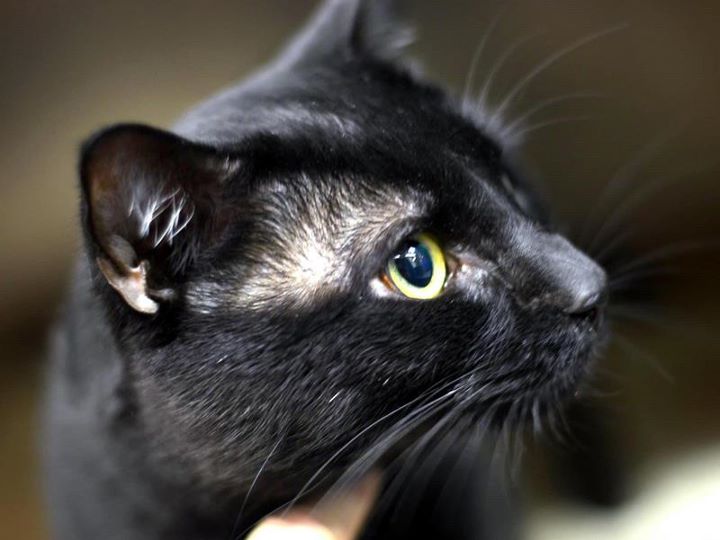
Lennox (A0924675 to NYCACC) is a nice cat. He, like many nice cats, enjoys being scratched, pet and rubbing up against a human friend. Lennox does not like being treated like a disposable object, instead of the individual sentient being he is.
Lennox was surrendered to NYC Animal Care & Control after he allegedly “attacked” someone. There is no information (or investigation) into what happened in the moments leading up to the supposed attack (was their mishandling? a stepped on tail? was the cat cornered by a stranger?)–yet Lennox is now scheduled to be killed by NYC Animal Care & Control and NYC Department of Health for no good reason. No rescue organization or adopter is currently permitted to save Lennox due to this archaic ruling by Department of Health and NYC Animal Care & Control.
Lennox was never neutered so its no surprise that he may have acted “aggressively” in a moment of stress or mishandling. North Shore Animal League America writes: “Neutering decreases aggressive behavior.” American Humane Association reports, “Neutering of male cats can prevent certain undesirable sexual behaviors, such as urine marking, male aggression…” So while its common knowledge that neutering reduces aggression and would be behaviorally beneficial for Lennox… DOH and NYC ACC plan on killing him instead of neutering him.
According to NYC Animal Care & Control own records Lennox is a “beginner cat”: a cat so friendly, outgoing and sweet that NYC ACC believes he would be a good match for a new cat guardian rather than an experienced cat guardian. Furthermore, according to NYC ACC’s own documents Lennox behavior includes: “”headbutting, sniffs, soft+relaxed, front of cage, NO AGGRESSION”. Yet NYC ACC is not advocating for Lennox. They are just passively accepting this unjust death sentence and willingly to act out this abuse against poor Lennox.
Lennox is scheduled to be killed any day now. Maybe even tomorrow.
Please write and email ASAP to save Lennox. Lennox can be killed at NYC ACC at anytime.
WHOM TO CONTACT
Email block
TFarley@health.nyc.gov , MMerlino@health.nyc.gov , ntorres3@health.nyc.gov , jbank@nycacc.or
Individual
Thomas Farley, M.D.
Commissioner, NYC Department of Health & Mental Hygiene
125 Worth Street, 3rd floor, New York, NY 10013
Tel: (212) 788-5261,
Fax: (212) 964-0472
TFarley@health.nyc.gov
Mario Merlino Assistant Commissioner,
Veterinary and Pest Control Services
MMerlino@health.nyc.gov
Norma S. Torres
Director, Veterinary Public Health Services
ntorres3@health.nyc.gov
Julie Bank
Executive Director,Animal Care and Control, Inc.
11 Park Place, 8th floor, New York, NY 10007
jbank@nycacc.or
SAMPLE LETTER
Dear Commissioner Farley, Assistant Commissioner Merlino, Director Torres, and Executive Director Bank:
I am writing to ask that you do not kill Lennox (A0924675 to NYCACC), a cat who has an received unfair and irresponsible label of being dangerous. There is no solid evidence linking Lennox to an injury, but which could be as the result of his tail being stepped on or other understandable occurrence. Lennox also has not been neutered, but once he is, his attitude will be considerably more gentle and proven less aggressive.
Lennox, like other cats, enjoys attention and is quite a lovely adoption to even a new cat guardian. I beg that you save his life, Lennox is deserving of a fair and just response, which can only be by preserving his life rather than destroying it.
Thank you for your attention to this urgent matter.
NAME
Read more…
High Levels of Resistant Bacteria on Meat (Again)
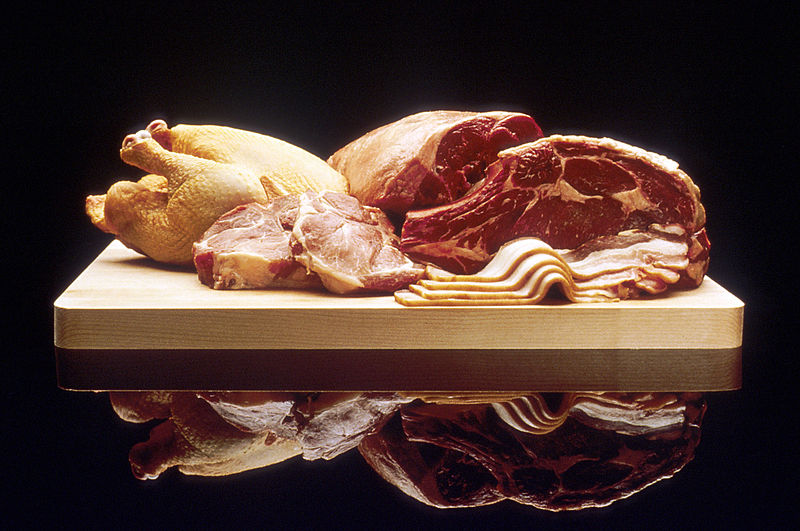
Wikimedia Commons: NIH
Source: Wired
By Maryn McKenna
A new report is out from the federal collaboration that monitors antibiotic resistance in animals, retail meat and people, and the news is not good.
The full title is the 2010 Retail Meat Report from the National Antimicrobial Resistance Monitoring System. This report is issued by the Food and Drug Administration; the humans one comes from the Centers for Disease Control and Prevention and the animals one from the US Department of Agriculture. It reports the results of testing on 5,280 meat samples collected in 2010 in California, Colorado, Connecticut, Georgia, Maryland, Minnesota, New Mexico, New York, Oregon, Tennessee, and Pennsylvania. (Those are sites of state labs participating in a federal surveillance network, FoodNet, plus one volunteer lab, Maryland.)
The report — which is broken down first by foodborne organism and then by meat type — notes a number of instances where either the percentage of bacteria that are antibiotic resistant, or the complexity of the resistance, is rising. Quoting from the report:
For Salmonella:
- Third-generation cephalosporin resistance rose in chicken breast (10–34.5%) and ground turkey (8.1–16.3%) isolates from 2002 to 2010.
- There were significant increases in ampicillin resistance among chicken breast (16.7–39.2%) and ground turkey isolates (16.2–48%).
- 43.3% of chicken breast isolates were resistant to ≥ 3 antimicrobial classes in 2010 compared to 33.7% in ground turkey.
- More than 29% of chicken breast isolates showed resistance to ≥ 5 classes in 2010.
For Campylobacter:
- Ciprofloxacin resistance in C. coli from chicken breast rose from 10% in 2002 to its highest peak of 29.1% in 2005.
- Since the fluoroquinolone ban in September 2005, ciprofloxacin resistance in C. coli has decreased to 13.5% in 2010, while resistance in C. jejuni significantly increased from 15.2–22.5% from 2002 to 2010.
- Gentamicin resistance in C. coli has increased to 12.8% in 2010, up from 0.7% in 2007 when it first appeared in NARMS retail meat.
For E. coli:
- Ceftriaxone resistance among E. coli isolates from chicken breast is consistently higher than any other retail meat tested.
- From 2002–2005, nalidixic acid resistance in E. coli from chicken breast increased from 2.8–6.6% and increased in ground turkey from 4.3–10.4%. Since the fluoroquinolone ban in September 2005, resistance has decreased to 3.6% in chicken breast and 2.7% in ground turkey.
- Gentamicin resistance is much higher in retail poultry isolates (> 20%) than ground beef and pork chop isolates.
- A highly statistically significant trend in ampicillin resistance was seen among ground turkey with 52.6% resistance in 2010, up from 31.3% in 2002.
Here are some tables from the report, with the really troubling results for 2010 called out in yellow.
If you read down the left-hand column and then across to 2010, what these tables tell you is that more than half of the ground turkey samples carried E. coli that were resistant to at least three different classes of antibiotics, meaning that, if those bacteria caused a foodborne infection in a person, none of those antibiotic classes would work to cure it. Almost 30 percent of chicken breast and ground turkey samples carried Salmonella bacteria that were resistant to five different classes of antibiotics. Almost 29 percent of ground-beef samples carried Salmonella strains that were resistant to six.


Not all the antibiotic-resistant trends in this report are negative. But overall? Honestly, they seem to just be getting worse.
Read more…
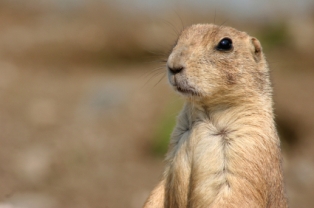
PETA
BACKGROUND | SOURCE: PETA
The city of Frederick, Colorado, passed an alarming ordinance requiring that private property owners remove prairie dogs from their land. This ordinance takes effect on March 5, and property owners who fail to comply within 30 days of an official notice could face $1,000 fines! Under the threat of short deadlines and stiff fines, some fearful property owners will no doubt resort to cruel measures in a desperate attempt to obey the law. Even worse, the city reportedly intends to spearhead the eradication effort by poisoning two large prairie dog colonies this week. Your voice is urgently needed today!
Please politely urge Frederick officials to take immediate steps to overturn this cruel ordinance. Remind them that effective, long-term wildlife control programs focus on habitat modification, exclusion, and repellents.
And please forward this message widely!
WHOM TO CONTACT
Email block
edoering@frederickco.gov , boardoftrustees@frederickco.gov , gbarbour@frederickco.gov
Individual
The Honorable Eric Doering
Mayor of Frederick
edoering@frederickco.gov
Board of Trustees
City of Frederick
boardoftrustees@frederickco.gov
Gary Barbour
Chief of Police
City of Frederick
gbarbour@frederickco.gov
SAMPLE LETTER
Dear Honorable Doering, Chief Barbour, and Board of Trustees:
Frederick, Colorado, is requiring the eradication of prairie dog colonies by property owners, and I am respectfully requesting that non-lethal options be mandated. Although these culls are inherently cruel based on the premise alone, it is important to recognize they are based on erroneous information.
Please allow me to illustrate a few of these concerns. First, ecologically, populations will fluctuate according to conditions and naturally-occurring food sources; it is the interference of humans that causes imbalance. To blame and slaughter the prairie dogs for human encroachment is both irresponsible and unjustified.
Second, killing colonies artificially increases food supplies to the remaining animals, the consequence of which is increased reproduction and an ensuing greater population. In fact, studies have demonstrated that the continual cycle of seasonal culls is responsible for a rebound, or larger populations, in subsequent years.
Third, this type of mass killing using such a brutal type of slaughter in such a central and visible location would certainly adversely affect both visitation and tourism. I would be unwilling to consider it, or nearby, as a potential vacation destination if this prairie dog cull continues.
Please instead examine alternative, non-lethal, effective, long-term wildlife control programs that focus on habitat modification, exclusion, and repellents, which, according to established protocols when using these methods, have all proven successful in curtailing populations.
I know your time is limited and I want to thank you each for your attention to this urgent matter.
Read more…
End Namibia’s Seal Hunt
Wikimedia Commons
Please click on and sign the following:
Source: Kelly Morehead
Background | From Change
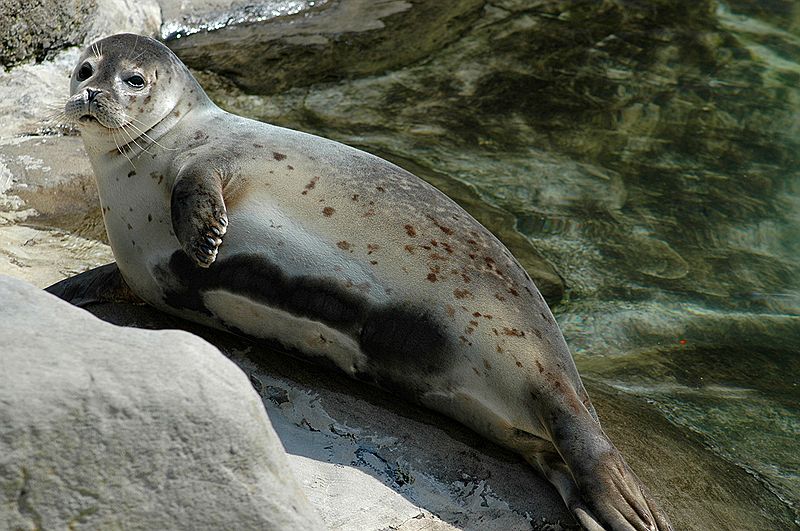
Cape fur seals, also known as South African fur seals, historically inhabited the islands off the coast of South Africa. But overhunting and harassment from humans have forced them from the islands and onto the mainland of Namibia and South Africa. Now, the Cape fur seals are threatened by a commercial hunt that grows larger every year.
Namibia is the only country in the Cape fur seal’s range in which commercial hunting is permitted. Sealing occurs on two mainland colonies, Cape Cross and Wolf/Atlas Bay, where 75 percent of the pups are born. From July 1 through Nov. 15, commercial hunters hire approximately 160 part-time workers to kill the seals, most pups between the ages of 7 and 11 months. Hunters club the pups on the head with large, ice-pick-like clubs, and then stab them in the heart. The much larger bulls are shot.
Despite a declining population of Cape fur seals and high mortality rates among the seal population, the hunting quota increases every year.
Cape fur seals are listed on Appendix II of the Convention on International Trade in Endangered Species of Wild Fauna and Flora (CITES). Species on Appendix II are not threatened with extinction, but their survival is dependent on conservation measures.
The hunt in Namibia is the second largest commercial seal hunt in the world, and it would not comply with most other nations’ laws protecting marine mammals. It is inhumane and unsustainable. Its high quotas are non-precautionary and violate modern basic principles of good wildlife management.
Vodpod videos no longer available.
Louise du Toit – Seals of Namibia










 Our Compass