HighestWelfare.Humane.Assured.GoodPractices.Vegetarian. Regenerative.Flexitarian.Lies...
What is the difference between No Welfare, High Welfare, and Highest Welfare when they all require animals to die? Only human comfort, NONE protect the actual animals. The most humane, ethical, and honest Webster-defined "welfare" is NOT exploiting animals - not using, not wearing, not eating, not killing - animals. The only meaningful position is vegan, everything else is just how humans euphemize animals' required suffering and violent deaths: no human exploits animals because they honestly believe that NOT exploiting animals is UNethical or INhumane.
Shut Down WSU Painful Dog Experiments Lab: “In Memory of Queenie” Cyber Action Week 6

BACKGROUND | SOURCE FACEBOOK
Welcome back everyone; we are now in Week- 6 of our “Shut Down WSU Painful Dog Experiments Lab – In Memory of Queenie Cyber Action Thursday”
Our targets this week are again a variety of Wayne State Universities Professors: the colleagues of the vivisector and his cohorts of which we are going to “shut down”, therefore I have used basically the same sample letter, with a couple of changes.
It seems that WSU has been also making some changes, as I pulled up pages I had bookmarked on their site for e-mail addresses – they can no longer be found, this I take as a very good sign.
However, I had a huge stash and we are sending them this week; I understand many of you had trouble sending the bigger blocks through your e-mail carrier so I have tried to break them down a bit….
For those who may be new to this event, I will first say thank you very much for joining us, and below I have inserted a link that explains the horrific and inexcusable torture these dogs are going through each day at WSU:
http://pcrm.org/search/?cid=3119
There is no time to waste as these dogs are suffering this very moment. We must persuade WSU to abandon the cruel and inhumane animal experiments and end this suffering….
(Please sign petition below, happy to say we passed the goal of 40,000 signatures 2nd petition posted last week):
http://www.thepetitionsite.com/1/charge-wayne-state-university-with-felony-animal-cruelty/
Thanks to all for participating, You’re doing a Fantastic job!! Now let’s blast em’ and shut this horrible lab down for good!
WHOM TO CONTACT
Copy/paste into your email TO:
aj0533@wayne.edu, ag7662@wayne.edu, bajjaly@wayne.edu, ee4525@wayne.edu, dcharbon@wayne.edu, aa4101@wayne.edu, es7746@wayne.edu, aa2500@wayne.edu, aa3401@wayne.edu, pecoskie@wayne.edu, hanley@wayne.edu,
dadamo@wayne.edu,jturrini@wayne.edu, ah1984@wayne.edu, ae9101@wayne.edu, e2586@wayne.edu, hossam@wayne.edu, dbach1@dmc.org, aj2269@wayne.edu, Deepak.Bhalla@wayne.edu, ae7647@wayne.edu, aa3663@wayne.edu, aa3663@wayne.edu, r.cha@wayne.edu, chen@wayne.edu,
Commissaris@wayne.edu, gconti@wayne.edu, corcoran@wayne.edu, ee0073@wayne.edu, sldavis@wayne.edu, dt7303@wayne.edu, ar7975@wayne.edu, ad6611@wayne.edu, adutta@wayne.edu, sfirestine@wayne.edu, pfrade@wayne.edu, cgarwood@wayne.edu, sgee@wayne.edu, ao3255@wayne.edu, av6457@wayne.edu, sgilkey@wayne.edu, ek2397@wayne.edu, agoldberg@wayne.edu, ab8372@wayne.edu, ai2775@wayne.edu, ab1181@wayne.edu, doreenh@wayne.edu
fhirata@wayne.edu, rhusband@wayne.edu, ljaber@wayne.edu, aa3509@wayne.edu, pkale@wayne.edu, kathykath@wayne.edu, ab1395@wayne.edu, aa1156@wayne.edu, ab4642@wayne.edu, dr4775@wayne.edu, akowluru@med.wayne.edu, ab6034@wayne.edu, karenkrisher@wayne.edu, klacey@wayne.edu, ladd@wayne.edu, rlouis@wayne.edu, RLL@wayne.edu, c.lysack@wayne.edu, en7488@wayne.edu, ad4553@wayne.edu, etmartin@wayne.edu, dmaser@askenviroair.com, mcginnity@wayne.edu
olivia.merkel@wayne.edu, miller929@aol.com, ak0631@wayne.edu, amosz@wayne.edu, amosz@wayne.edu,
h.normile@wayne.edu, mboconnell@wayne.edu, dq1462@wayne.edu, oupicky@wayne.edu, av6281@wayne.edu, dejue@wayne.edu, ad9049@wayne.edu, apattin2@wayne.edu, ds2688@wayne.edu, pitts@wayne.edu, pociask@wayne.edu, pokorski@wayne.edu, andrew.reeves@wayne.edu, ai6795@wayne.edu, reineke@wayne.edu, m.rybak@wayne.edu
salinitri@wayne.edu, preethy@wayne.edu, bl8952@wayne.edu, at7833@wayne.edu, martha.schiller@wayne.edu, dseparovic@wayne.edu, aa1446@wayne.edu, rls@wayne.edu, gbs@wayne.edu, msmythe@beaumont.edu, msriniva@wayne.edu, aj0555@wayne.edu, ac1563@wayne.edu,
tntaylor@wayne.edu, tracyma@udmercy.edu, vtlehr@med.wayne.edu, nancyv-m@wayne.edu, jessevivian@wayne.edu, wabeker@wayne.edu
ac6415@wayne.edu, aa4631@wayne.edu, billwatt@wayne.edu, av2238@wayne.edu, wilkraw@gmail.com, rwill@wayne.edu, eg5862@wayne.edu, wimmerm@oakwood.org, henryw@wayne.edu, aa1635@wayne.edu, zhengping.yi@wayne.edu, youngl@wayne.edu, asamra@med.wayne.edu, lcarlock@genetics.wayne.edu, gfeldman@med.wayne.edu, rfinley@wayne.edu, agow@med.wayne.edu, l.grossman@wayne.edu
hheng@med.wayne.edu, maik@genetics.wayne.edu,
jkamholz@genetics.wayne.edu, gkapato@med.wayne.edu, markku@genetics.wayne.edu, lancaster@wayne.edu, sland@med.wayne.edu, lili@med.wayne.edu, llipovich@med.wayne.edu, jloeb@med.wayne.edu, fluca@med.wayne.edu, fsong@med.wayne.edu, tainskym@karmanos.org, monica.uddin@wayne.edu, atrepani@med.wayne.edu, dwildman@genetics.wayne.edu, kzhang@med.wayne.edu, rzhang@med.wayne.edu
SAMPLE LETTER
To Whom It Concerns,
This letter is to inform you that Wayne State University and all who support them are directly responsible for allowing horrific dog heart failure experimentation to continue in the labs at the WSU. This includes the imprisonment, torture, maiming, and murdering of innocent shelter dogs.
If you are unaware of what’s happening at your school I have inserted a link which will explain as documented by one of your own:
http://pcrm.org/good-medicine/2012/winter2012/queenies-story
As the experiments proceeded, her restlessness and pain turned to such horrible depression she even began self-mutilation. As a supporter of this school, you, too, are responsible for this scientific fraud, especially since technologically-advanced alternatives are not only available, but also preferable. Please take a peek at the following article:
WSU is allowing former companion dogs purchased from Michigan Animal Shelters to be forced to run dozens of treadmill experiments with catheters protruding from their bodies and incisions leaking blood and other bodily fluids, causing pain and distress, with no anesthesia or compassion whatsoever, until they die!
This is not only totally unacceptable, but it is also a barbaric and completely inhumane act, which is being allowed to continue on the Wayne State University Campus. This cruelty has been continued at WSU for two decades while the number of people with poor heart health continues to rise.
This one laboratory is taking the good reputation WSU once had and is literally trashing it, and as you allow this to continue you are guilty as well.
We are far from the only ones who will no longer tolerate this abuse! PCRM has filed a legal complaint, you may view this here:
There are also many petitions circulating such as this, which you can see with over 40,000 signatures; it is ready for delivery to Alan Gilmore, President of WSU:
http://www.thepetitionsite.com/takeaction/272/228/294/
Please make an ethical decision. Let WSU know you will not be supporting these monstrous acts to continue within the same institution you have pride in.
Now, I urge you to see the truth of this matter, take charge, and stop these atrocities within your educational institution! Everyone involved by sponsoring and/or supporting WSU in any fashion is culpable! Until this is remedied, I will no longer patronize your establishment.
Sincerely,
NAME
Read more…
Newington Police Officer Fires Six Shots To Kill Dog, Please Send Letter Asking for Investigation

Wikimedia Commons | Not Boozer, killed dog
SOURCE | FACEBOOK
UPDATE
A well-respected, well-established business offered the Newington Police Department **FREE** training on how to handle and read dogs two weeks before Boozer was killed. The Newington Police deemed the training unnecessary and therefore declined it. Because of the pressure we’ve been putting on them, they brought in an investigator that is not part of NPD. So there is progress.
BACKGROUND | COURANT
A police officer shot and killed a pit bull dog Monday as it was charging him and a bystander, police said Wednesday.
Sgt. John Zematis said the bystander, a tree trimmer working in the area, had taken cover behind the officer as the dog charged at them with its mouth open. The officer fired one shot when the dog was 12 to 15 feet away. The dog was hit and dropped, but then got back up and charged again, he said.
“It’s an unfortunate incident, but the officer acted to protect himself and the witness,” he said.
A resident who lives on Main Street called police at about 2:30 p.m. to complain about a roaming dog. When the officer arrived, the dog was near the back yard of the house, where a tree trimmer working nearby tried to help him catch it.
Police said the dog snapped at them, then ran to the other side of the yard before turning and charging.
Zematis said the dog had no collar or tags, but the owner was eventually identified. He said no charges have been filed against the owner, who lives about a block from the scene.
A woman who said she is the daughter of the owner, but asked not to be identified, said the family has filed a complaint with the police asking for an investigation of the shooting. She said her mother, the owner, was devastated by the death of the dog, which she described as gentle.
“I’ve never seen him be aggressive,” she said.
Police did not identify the officer or the address of the house on Main Street.
WHOM TO CONTACT
Chief of Police Richard Mulhall
Telephone:
(860) 594-6201
Email:
rmulhall@newingtonct.gov
SAMPLE LETTER
Dear Chief Mulhall,
I have learned of a disturbing case of an officer-involved shooting of a dog on Monday, April 16, in Newington, and I am respectfully requesting that an investigation be initiated.
Please allow me to elaborate. My only focus is to protect the innocent, sentient animals that others regard as mere sacrificial, expendable beings, objectified and disposable. When animals are subjected to such brutality with no human accountability, our society inaccurately concludes that animals are not worthy of empathy, compassion, or rights. We become desensitized to the issue of animal abuse, and our children learn troubling lessons that are contrary to respect of and towards animals, which often evolves into a lack of empathy for humans. We must do everything in our power to allocate necessary resources to investigation, apprehension, and prosecution of animal cruelty cases. I understand that yours can be a challenging position, limited by vague and inadequate laws as well as insufficient funds; however, I believe we can make a difference or initiate change to better protect our animal friends. Please proceed with the intent of a full investigation and subsequent penalties if warranted.
Thank you for your time and attention to this urgent issue.
NAME
Read more…
East Anglian Pig Co. exposed!
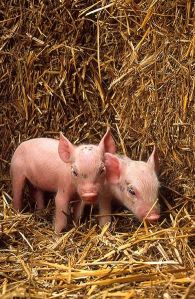
Scott Bauer | USDA
Background | Source Animal Equality
Animal Equality’s investigation spanned from December 2011 to January 2012. An undercover investigator worked at two different sites for a total of 29 days:
Little Thorns Weaner Unit (6 Dec 2011 – 16 Dec 2011)
This is a weaner unit, with approximately 8,000 to 10,000 pigs on site. At Little Thorns, the pigs were bred outdoors in six sheds for a period of 6 to 8 weeks, before being sent to the finishing units.
Didlington, The Piggery (20 Dec 2011 – 6 Jan 2012)
This is a breeding unit, with 3,000 pigs on site and over 700 female pigs. The pigs are raised outdoors, and fattened indoors. Over 300 pigs are sent to the slaughterhouse from this facility each week.
Animal Equality proves once again that, regardless of whether a farm is labeled as being ‘higher welfare’, ‘Quality Assured’ or monitored by the RSPCA, there exists pain, suffering and exploitation on a huge scale.
Warning: graphic
Vodpod videos no longer available.
PETA’s Vegan Shopping List
Guide To Cruelty-Free Eating: Vegan Outreach

BACKGROUND | SOURCE FACEBOOK EVENT
The palm oil companies in Indonesia are using slash and burn methods to destroy the rain forests in which the endangered Orangutan and Tiger lives along with other endangered species and plant life, too.
We ask you to please take action now and help the Indonesian government by asking the Australian authorities to now send aircraft to the hard hit areas to put the fire out now and save our endangered Orangutans.
WHOM TO CONTACT
Email address:
public-affairs-jakt@dfat.gov.au
Postal address:
Mr Greg Moriarty, Ambassador to Indonesia
Jalan H.R. Rasuna Said Kav C 15-16
Jakarta Selatan 12940
Indonesia
Fax:
+62 21 522 7101, 2550 5467
Telephone:
+62 21 2550 5555
SUBJECT
Forest fires in Indonesia / Palm oil companies
SAMPLE LETTER
Dear Sir/Madame,
The above link is an update on the critical forest fires in Indonesia that is destroying the land and the endangered Orangutans and other sub species.
We urge you to please take action now and help the overwhelmed Indonesian government to now extinguish these forest fires that are being started via the slash and burn methods of the palm oil manufacturers/producers.
You have the aircrafts that can do this, they do not. We urge you to please help, speak, and take action on behalf of the critically endangered Orangutans and our climate too.
Thank you.
Kind regards,
NAME
Read more…
Release orca Morgan back into the wild!

3DAYZ
PLEASE CLICK HERE FOR SAMPLE LETTER OR SEE BELOW
BACKGROUND | SOURCE 3DAYZ
Orca Morgan was found malnourished and dehydrated in the Wadden Sea, off the northwestern coast of the Netherlands on the 23rd of June, 2010. Although EU law states that captured orcas must be returned to the wild, the Dolfinarium at Harderwijk who ‘rescued’ her had no intention of releasing her. Morgan was sold to Loro Parque, Tenerife and now lives in a small unnatural environment away from her family.
A release plan, written by more than 40 expert and which ensured the safe return of Morgan to the wild and to her family, was ignored by the Dolfinarium. Instead the Dolfinarium turned to SeaWorld for help. An obvious choice, since the 5 orcas who are already in Loro Parque are owned by SeaWorld.
EU wildlife trade rules prohibit the use of orcas for commercial purposes, said the European Commission and Dietrich Jelden, the head of Germany’s Cites management authority at the Federal Agency for Nature Conservation. The only exemptions are for primarily scientific, captive breeding for conservation purposes or education reasons.
A spokesman at the Dutch Ministry of Economic Affairs, Agriculture and Innovation, which gave permission for the move, said: “We rely on the Spanish authorities that Loro Parque is not only commercial, but also has some aspects of scientific research and education.” As of February the 17th, 2012 Morgan performs in shows in Loro Parque…
But the real money will be made through breeding programs. When Morgan was caught in 2010, she was estimated to be about 2 years old. Females breed until the age of 40 and mothers calve about once every 5 years. This means Morgan will give birth to 6 or 7 calves, with each calve being worth millions when sold to other marine parks.
While legal battles continue, please keep the pressure on Loro Parque to release orca Morgan and send a protest mail today!
For background info and news about the legal battle, check www.orkacoalitie.nl (English/Dutch)
For more info about the Spanish campaign, please visit GAP (English) / PGS (Spanish)
WHOM TO CONTACT
Loro Parque, S.A.
Avenida Loro Parque s/n
38400 Puerto de la Cruz
Tenerife, Canary Islands – Spain
Phone: 00 34 922 37 38 41
Fax: 00 34 922 37 50 21
Email: relacionespublicas@loroparque.com, personal@loroparque.com, social@loroparque.com, loroparque@loroparque.com, protest@3dayz.com
Tweet: @LoroParque
Facebook: facebook.com/LoroParque
SAMPLE LETTER
Dear Loro Parque,
After reading about her on 3dayz.com, I am deeply concerned about the continued housing and display of orca Morgan at Loro Parque, Tenerife. I completely support reuniting her with her family in the wild according to the release plan of the experts of the Free Morgan Group. This will be in the best interest of orca Morgan for some (but not all) of the following reasons:
– although she’s been held captive for about 2 years now, she still makes a good candidate to be released back into the wild;
– sound recordings and DNA analysis suggests that Morgan belongs to a Norwegian population of orcas;
– EU wildlife trade rules prohibit the use of orcas for commercial purposes. Spanish authorities acknowledged Loro Parque as a zoo and it’s agreed among the European Cites experts that every zoo must be considered a commercial facility, in which research or education in most circumstances has either no or only secondary priority;
– in a similar case to that of orca Morgan, orca Springer was released successfully back into the wild. At the same time, Morgan’s case is nothing like the case of orca Keiko (Free Willy), who died shortly after being released, since Keiko had lived more than 20 years in captivity;
– marine parks will never meet the requirements needed to house orcas, dolphins or other marine mammals accordingly. Orcas, dolphins and other marine mammals can therefore never display their natural behaviour which is a serious violation of their welfare and rights.
To read what experts say about Morgan’s captivity in Loro Parque, please read their testimonials at http://www.freemorgan.com/why-morgan-should-be-free
Sincerely,
[YOUR NAME]
Read more…
Goat’s Legs Removed In Video, Coast Guard Won’t Verify Video Involves Their Personnel (GRAPHIC VIDEO)

Simon Eugster
Please sign and send protest HERE
Second Petition HERE
Third Petition HERE
Background | Source Huffington Post
RICHMOND, Va. (AP) — The Coast Guard is defending its practice of using live animals in its combat medical training after an activist group released a video on Wednesday of a goat’s legs being removed with tree trimmers during what it said was training for agency personnel.
Live anesthetized goats have been used in Coast Guard training to treat combat wounds, but the agency could not verify if the video involved its personnel. The courses do involve “live tissue training using live animals,” Lt. Cmdr. Jamie C. Frederick, spokesman for the Atlantic Area, wrote in an email.
Frederick was responding after People for the Ethical Treatment of Animals called on the Pentagon to stop the practice. A congressman also has introduced legislation that would phase out the use of animals by the military for such training.
PETA said the undercover video it released from a whistleblower did show military instructors contracted by the Coast Guard cutting off an anesthetized goat’s legs in Virginia Beach. The faces of the participants are blurred and they are not in uniform.
“Animals used in trauma training are supported and monitored by well-trained, experienced veterinary staff to ensure that appropriate anesthesia and analgesia prevent them from experiencing pain or distress,” Frederick wrote.
In the video, the goat is still while its legs are cut. Later it makes noise and moves, followed by one of the men calling for another “bump” of anesthesia.
Other branches of the military use similar training on goats and pigs and have defended it as a way to replicate wartime injuries and prepare medics and front-line troops for treating catastrophic injuries in the field of battle.
The Pentagon declined to respond to an AP request for comment on the video.
“Effective combat trauma training and treatment results in lowering the fatality rate of U.S. troops deployed in combat situations,” Frederick wrote.
He said the training has also proved invaluable in noncombat situations, such as when Coast Guard members were the first to respond to Haiti’s devastating 2010 earthquake.
PETA and other animal rights groups, as well as some medical professionals, say the practice is cruel and unnecessary. They promote the use of human simulation models over animals.
“Learning how to apply a tourniquet on a severed goat’s leg does not help prepare medical providers to treat an anatomically different human being wounded on the battlefield,” according to Dr. Michael P. Murphy, an associate professor of surgery at Indiana University School of Medicine and a lieutenant colonel in the U.S. Army Reserves who served two tours of duty in Iraq. He was among the medical professionals who signed PETA’s letter to Defense Secretary Leon Panetta seeking an end to the practice.
The group also asks U.S. Department of Agriculture to investigate “apparent serious violations of the Animal Welfare Act.”
U.S. Rep. Bob Filner, a California Democrat, has introduced legislation that would phase out such use of animals by the military. He said he’s faced fierce opposition from the Department of Defense.
“With these animals, they can break their limbs, or they want to simulate broken bones or a gunshot wound, and it’s not clear if they’re anesthetized or not,” he said. “You’re torturing animals when you don’t have to.”
___
Online:
People for the Ethical Treatment of Animals: http://www.peta.org/
Tier 1 Group: http://www.t1g.com/
WATCH the alleged leaked video (WARNING — GRAPHIC FOOTAGE, NOT SUITABLE FOR ALL AGES):
Vodpod videos no longer available.

Wikimedia Commons
BACKGROUND | FROM FACEBOOK
Welcome back everyone and welcome all who may be joining us for the first time this week!
Week 5 is here, and our targets this week are a variety of Wayne State Universities Professors…..the colleagues of the vivisector and his cohorts of which we are going to “shut down”
So let’s make this an especially good week by making sure we share this widely.
For those who may be new to this event, I have inserted a link below which explains the horrific and inexcusable torture these dogs are going through each day at WSU
http://pcrm.org/search/?cid=3119
There is no time to waste as these dogs are suffering this very moment. We must persuade WSU to abandon the Cruel and inhumane animal experiments and end this suffering….
(Please sign petitions below)
http://www.thepetitionsite.com/1/charge-wayne-state-university-with-felony-animal-cruelty/
http://www.thepetitionsite.com/takeaction/272/228/294/
Thanks to all for participating!!
WHOM TO CONTACT | PLEASE COPY/PASTE INTO YOUR EMAIL TO:
ad5565@wayne.edu, dora.apel@wayne.edu, cj8807@wayne.edu, eg2916@wayne.edu, pdelaura@wayne.edu, aa3597@wayne.edu, ai4589@wayne.edu, av4486@wayne.edu, ac2540@wayne.edu, aa8888@wayne.edu, aa2540@wayne.edu, ex2503@wayne.edu, eg4472@wayne.edu, ab3792@wayne.edu, aj7332@wayne.edu, aa1708@wayne.edu, em6728@wayne.edu, eb9076@wayne.edu, aa4725@wayne.edu, aa4779@wayne.edu, ay2092@wayne.edu, af5343@wayne.edu, ad9087@wayne.edu, ad5276@wayne.edu, aa3462@wayne.edu, ak4496@wayne.edu, ex0360@wayne.edu, eg2919@wayne.edu, eg2921@wayne.edu, ae4711@wayne.edu, ak6640@wayne.edu, aa4212@wayne.edu
jbanderson@wayne.edu, cbaker@wayne.edu, aa5200@wayne.edu, jbyars@aol.com, ee4523@wayne.edu, eu2266@wayne.edu, janefitzgibbon@wayne.edu, mary.garrett@wayne.edu, ad8889@wayne.edu, ad3337@wayne.edu, kmaguire@wayne.edu, bryan.mccann@wayne.edu,
pmccormak@gmail.com, aa6545@wayne.edu, ANails@wayne.edu, m.a.najor@wayne.edu, jmnovak@wayne.edu, h.oshagan@wayne.edu, ac2367@wayne.edu, kpiperaiken@wayne.edu, dx1649@wayne.edu
ee5558@wayne.edu, matthew.seeger@wayne.edu, psopory@wayne.edu, rj_stevenson@hotmail.com, vulteef@wayne.edu, dx8298@wayne.edu, w.warters@wayne.edu, kelly.young@wayne.edu, ziegelmueller@wayne.edu,
ep4625@wayne.edu, ab7444@wayne.edu, ad8367@wayne.edu, an9403@wayne.edu, ariel.osterweis@wayne.edu, dv6978@wayne.edu, ad2016@wayne.edu, ai6498@wayne.edu, ay2360@wayne.edu, ar2852@wayne.edu, aa6490@wayne.edu
SAMPLE LETTER
To whom it concerns,
This letter is to inform you that WSU and all who support therein are directly responsible for allowing horrific dog heart failure experimentation to continue in the labs at the WSU, including the imprisonment, torture, maiming, and murdering of innocent shelter dogs.
If you are unaware of what’s happening at your school I have inserted a link which will explain as documented by one of your own http://pcrm.org/good-medicine/2012/winter2012/queenies-story
As the experiments proceeded, her restlessness and pain turned to such horrible depression she even began self-mutilation.
In turn, as a supporter of this school, you, too, are responsible for this scientific fraud, especially since technologically-advanced alternatives are available.
WSU is allowing former companion dogs purchased from Michigan Animal Shelters and are forced to run dozens of treadmill experiments with catheters protruding from their bodies and incisions leaking blood and other bodily fluids, causing pain and distress, with no anesthesia or compassion whatsoever, until they die!
This is not only totally unacceptable, but it is also a barbaric and completely inhumane act which is being allowed to continue on the Wayne State University Campus. This cruelty has been continued at WSU for two decades while the number of people with poor heart health continues to rise.
We are far from the only ones who will no longer tolerate this abuse! PCRM has filed a legal complaint, you may view this here; http://www.pcrm.org/pdfs/research/research/WayneStateUSDAComplaint101911Final.pdf
Please make an ethical decision. Let WSU know you will not support these monstrous acts to continue within the same institution in which you hold pride.
Now I urge you, to see the truth of this matter, take charge and stop these atrocities within your educational institution! Everyone involved by sponsoring and/or supporting WSU in any fashion is culpable and, therefore, I will no longer patronize your establishment.
Sincerely,
Read more…
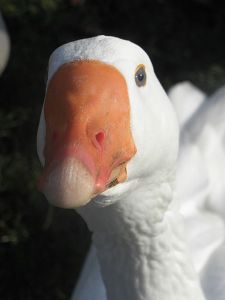
Rob Hille
Please click HERE to send automatic message protesting the construction of a new foie gras producing facility in China
Background | Source HSI
The production of pâté de foie gras involves force-feeding ducks and geese by thrusting a long pipe down the birds’ throats and pumping an unnatural quantity of food directly into their stomachs.
Plans have been revealed for an industrial-sized foie gras production facility, to house millions of geese, in China.
Rightly, this terrible practice of force feeding is widely condemned around the world and is prohibited it in much of Europe including the United Kingdom, Germany, Denmark, Italy and Poland, as well as Argentina, Israel and in the U.S. state of California.
Please, act now: Sign our petition HERE to the Chinese Premier – Ask him to stop plans for this cruel foie gras production facility
Vodpod videos no longer available.
Live Baby Chicks Used as Packing Peanuts
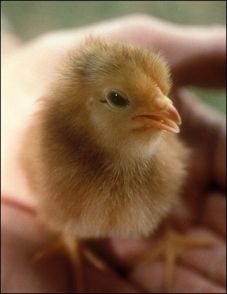
PETA
BACKGROUND | SOURCE PETA
Ideal Poultry Breeding Farms, a company that sells and ships live birds, uses live baby chicks as packing material! According to complainants and Ideal Poultry’s own website, male chicks are included as filler in live shipments so that the birds who were ordered can be kept warm during transit. Sadly, many of these filler chicks reportedly arrive dead or die within hours of arrival. One caller who adopted several ailing filler chicks from a neighbor contacted PETA with a heartbreaking story: She tended, fed, and watered her chicks with a dropper throughout their first night, but she could only watch as each one slowly died.
We reached out to Janet Crouch, the owner of Ideal Poultry, but our concerns were brushed off with the response that male chicks are used for warmth and to take up extra space in the box. … Adding males for warmth is an acceptable practice with backyard poultry hatcheries.”
Your voice is needed! Please contact Crouch and let her know that live animals are not disposable and that using them as shipping material is inhumane! Please urge her to stop shipping live animals or, at the very least, to use heating packs in place of live chicks.
WHOM TO CONTACT
Janet Crouch
Ideal Poultry Breeding Farms, Inc.
800-243-3257, ext. 5562
254-697-2393 (fax)
janet.crouch@idealpoultry.com
You can also email help@idealpoultry.com or sales@idealpoultry.com
If emails get returned, send a message via PETA’s electronic mail system HERE
Click HERE for free faxing from your computer. No fax machine, credit card, or registering required.
SAMPLE LETTER
Dear Ms. Crouch,
I am shocked to learn Ideal Poultry Breeding Farms ships live baby chicks as packing material and I am respectfully requesting you discontinue this business; one, they may not survive shipping and two, the recipient may abuse, neglect, or even kill the baby chicks, especially those people inexperienced in the care of baby chicks.
Please allow me to elaborate. Animals are sentient beings, capable of thought and emotion, including love and suffering. I ask you to acknowledge this important condition that both humans and non-humans share. Animals are undeserving of this cruel legacy whereby they are exploited and suffered for human greed and egotistical motive, which only fosters the dangerous premise of acceptable suffering against all animals, human and non-human.
Please consider my request, immediately cease causing harm to these inquisitive and intelligent animals by discontinuing your participation in the breeding and shipping business. Many other companies have already made the decision to stop the transportation of animals for such unethical practices, and I hope you, too, make the similar decision. Animals have rights to live free from pain and suffering regardless of objections to acknowledge such; I therefore hope this message finds you willing to examine and subsequently change your potential complicity in their abuse and potential death.
Thank you for taking the time to read this importance request.
NAME
Read more…
Urge Royal Caribbean to Drop Foie Gras
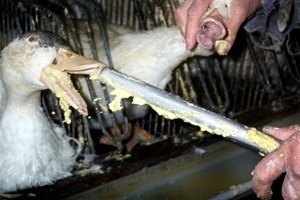
PETA
BACKGROUND
Because of the extreme cruelty involved in the production of foie gras—the diseased and “fatty liver” of force-fed ducks and geese—many restaurants and grocery stores around the world have stopped serving and selling it. Yet Celebrity Cruises—which is owned by Royal Caribbean Cruises, the world’s second-largest cruise-line operator—continues to serve foie gras on some of its cruises.
Investigations of foie gras farms in the U.S. and overseas have documented countless sick, dead, and dying birds, including some animals who were found suffering from holes in their necks after pipes had been forced down their throats. One investigation in New York found ducks crammed into wire cages. Animals’ beaks were bloody, and their wings were twisted together. At another foie gras farm, in Europe, birds were found dangling by wires as blood spilled from their neck wounds onto live animals beneath them.
Foie gras production is so cruel that it has been condemned by the pope and is prohibited in 15 countries, including the Czech Republic, Denmark, Finland, Germany, Israel, Luxembourg, Norway, Poland, Sweden, Switzerland, and the U.K.
WHOM TO CONTACT
Richard Fain
CEO of Royal Caribbean
rfain@rccl.com
SAMPLE LETTER
Dear CEO Fain,
I am greatly disturbed to learn that on some cruise ships Royal Caribbean is serving foie gras, the production of which inflicts incredible suffering and cruelty upon sentient animals. As such, I respectfully request you take immediate steps to eliminate foie gras from your menus.
Foie gras, French for “fatty liver,” is made from the grotesquely enlarged livers of male ducks and geese. The birds are kept in tiny wire cages or packed into sheds. Pipes are repeatedly shoved down the birds’ throats, and up to 4 pounds of grain and fat are pumped into their stomachs two or three times every day. The pipes puncture many birds’ throats, sometimes causing the animals to bleed to death. This cruel procedure causes the birds’ livers to become diseased and swell to up to 10 times their normal size. Many birds become too sick to stand up. The birds who survive the force-feeding are killed, and their livers are sold for foie gras.
Globally, people have spoken out against the cruelty of foie gras. In 2004, California passed a law banning the sale and production of foie gras, effective this year; his Holiness Pope Benedict XVI denounced foie gras, the force-feeding as being in violation of Biblical principles; and foie gras production has been outlawed in the U.K., Germany, the Czech Republic, Finland, Luxembourg, Norway, Poland, Sweden, Switzerland, Denmark, and Israel.
As such, I respectfully request you please reconsider and make the compassionate and ethical decision to ban foie gras. You may be interested to know in addition to those people and places indicated above, many regional chefs and colleagues have recently removed foie gras from their menus, and I would love to inform my friends and acquaintances that Royal Caribbean has joined them by also rejecting this torture and eliminating foie gras. Until such a time, however, I maintain the only ethical decision is to promote a boycott of your ships and utilizing instead the ones that do not sell foie gras.
I look forward to a positive response, however, so that I may visit your establishment again.
Please feel free to watch the following video illustrating in disturbing detail the inherent cruelty of foie gras production:
http://www.youtube.com/watch?v=BAzrSl0ztsQ&feature=youtu.be
Thank you for your attention to this urgent issue.
NAME
Read more…
Shut Down WSU Painful Dog Experiments Lab; In Memory of Queenie, Cyber Action – Week 4
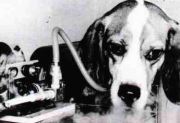
SOURCE: FACEBOOK EVENT
BACKGROUND
Welcome back everyone, to our weekly Cyber Action E-mail Blast where we are going to shut down Wayne State Universities’ Lab of
Torture “In Memory of Queenie.”
We are now in week 4 of this event and will be targeting Wayne States Alumni once again. Wayne State University has more than 230,000 alumni living throughout the United States and around the world. Here are a couple of statistics on WSU Alumni!
•About 75 percent of WSU alumni live in Michigan, providing a diverse, highly skilled talent pool for employers.
•About 30 percent of practicing physicians in Michigan and 43 percent of practicing physicians in the tri-county area received all or part of their medical training at Wayne State.
•75 percent of the Law School’s graduates live and work in Michigan; 18 percent of the judges on the Michigan Court of Appeals and six judges on the US District Courts are WSU Law alumni.
WSU Alumni have a yearly membership fee of $30 which comes to a total of $6,900,000 according to the number of Alumni living at this time!
As you can see the WSU Alumni have around the world support and not only fund, but are supporting animal torture at WSU. Our weekly Cyber Action event is dedicated to Queenie, a companion animal (Dalmation mix) who was turned in to a shelter in Gratiot Co. MI as a stray, only to be sold shortly thereafter to a sadistic vivisector from WSU.
This is where Queenie died a miserable, torturous death that no being should have to endure! I have inserted a link with facts of this case as obtained by PCRM if you are not already familiar with this case http://pcrm.org/good-medicine/2012/winter2012/queenies-story.
WSU must be persuaded to abandon the cruel and inhumane animal experiments from which they gain millions of dollars annually.
Therefore, it is time to apply systematic and sustained pressure on them, their benefactors, their sponsors and the WSU community worldwide.….
Thank you for your participation!
WHOM TO CONTACT
m.rigby@wayne.edu, aw9863@wayne.edu, ab2746@wayne.edu, michelle.martin@wayne.edu, sarah.freeman@wayne.edu, m.cousin@wayne.edu , cscheidel@wayne.edu, klkoehler@wayne.edu, aa9929@wayne.edu, aa2191@wayne.edu, c.j.parrish@wayne.edu, LJR@chem.wayne.edu, woodyard@wayne.edu, ay1414@wayne.edu, ab1165@wayne.edu, ab0070@wayne.edu, ab1146@wayne.edu, ab2297@wayne.edu, ad5015@wayne.edu, MIKIDIWAY@wideopenwest.com, dr3340@wayne.edu, au8223@wayne.edu, aa0955@wayne.edu, w.h.volz@wayne.edu, k.feathers@wayne.edu, aa1104@wayne.edu, aa6460@wayne.edu, ag7246@wayne.edu, ivan.avrutsky@wayne.edu, jku@wayne.edu, apandya@indigo.eng.wayne.edu, jpotoff@eng.wayne.edu, aa0057@wayne.edu, wolfson@wayne.edu, ak1354@wayne.edu, vdallas@wayne.edu, aa5782@wayne.edu, aa1708@wayne.edu, ab8898@wayne.edu, bb4184@wayne.edu, aa2846@wayne.edu, mcintyre@wayne.edu, lrydstedt@med.wayne.edu, tstemmle@med.wayne.edu, ssundaram@pet.wayne.edu, rthomas@med.wayne.edu, etisdale@med.wayne.edu, ad6056@wayne.edu, jhudson@med.wayne.edu, dwildman@med.wayne.edu, jwithey@med.wayne.edu, zyang@med.wayne.edu, aa1565@wayne.edu, aa2347@wayne.edu, aw9799@wayne.edu, oupicky@wayne.edu, av6281@wayne.edu, hsandlin@wayne.edu, shawnal@wayne.edu, dt4578@wayne.edu, dw6163@wayne.edu
SAMPLE LETTER
To Whom It Concerns,
This letter is to inform you that the WSU Alumni are directly responsible for allowing horrific dog heart failure experimentation to continue in the labs at Wayne State University. These experiments include the imprisonment, torture, maiming, and murdering of innocent shelter dogs.
Since technologically-advanced alternatives are available, as a supporter of this school, you, too, are responsible for this scientific fraud.This is unacceptable.
These useless and inhumane experiments have been continuing for 20 years at WSU, while the human heart disease rates are only increasing. Unlike humans, heart failure in dogs and many other animals is irreversible.
WSU is allowing former companion dogs purchased from Michigan Animal Shelters to be forced to run dozens of treadmill experiments with catheters protruding from their bodies and incisions leaking blood and other bodily fluids, causing pain and distress–with no anesthesia or compassion whatsoever–until they die!
I am sure that you are aware of these extremely painful and unethical experiments on dogs at WSU. However, let me add a quote from a well-respected cardiologist: “Felony animal cruelty charges should be brought against Wayne State, and the use of dogs in painful heart experiments should be halted immediately,” says John J. Pippin, M.D., F.A.C.C., a cardiologist and director of academic affairs for PCRM.
I urge you now, to see the truth of this matter, to take charge and to stop these atrocities within your educational institution! Everyone who is involved by sponsoring and/or supporting WSU in any way is culpable and therefore I will no longer be patronizing your establishment.
Please make an ethical decision. Consider withdrawing your support for WSU.
Sincerely,
Read more…

Pet Pardons News: Jeffrey Nally Jr. was sentenced on Wednesday to 10-45 years in prison for torturing and killing at least 29 dogs he collected from Craigslist and “free to a good home ads.”
April 7, 2019: Please see update HERE
Source: Pet Pardons News
Convicted serial dog killer, Jeffrey Nally, of New Cumberland West Virginia was sentenced by Judge Fred Fox II on Wednesday to 10-45 years behind bars. While animal advocates would rather have seen him spend life in prison, the truth is that this sentence is substantial considering that animal abuse cases seldom carry this kind of weight. From that standpoint, the outcome is a victory.
It is true, though, that this was no run-of-the mill animal abuse case. This was a brutal series of intentional mutilations, torture, and execution of innocent puppies. Nally was accused of mutilating and killing 29 puppies (who) he received through classified ads, and Craigslist “free to good home” ads.
Nally’s house was raided by a SWAT team in March of 2011 when his girlfriend’s mother called authorities. His then girlfriend, Jessica Sellers, alleged that Nally had been holding her captive in his home and terrorizing her by torturing and murdering the animals in front of her.
Police found 29 dog carcasses on Nally’s property. They also found guns, which Nally was prohibited from possessing due to a 2010 domestic battery conviction, and collected other items including blood and hair covered tools and what appeared to be a beagle’s pelt and eyes in a jar.
During an evidence suppression hearing, Nally’s court-appointed attorney, James Carey, had argued to keep the pelt and the eyes out of evidence, citing a lack of scientific proof the items are what police claimed them to be. He also stated that he believed some of the crime scene photographs were staged.
Nally, age 20, was facing 29 counts of felony animal cruelty, one count of domestic battery, one count of kidnapping and one count of unlawful possession of a firearm. Although he had passed on a plea deal offered to him last January, he took the plea offer he was offered this week.
Hancock County Prosecutor James W. Davis said that there had been an overwhelming outpouring of concern in the form of letters and e-mails from around the world relating to this case.
Nally pled guilty to nine charges of felony animal abuse and unlawful possession of a firearm. He will receive one to five years on each count of cruelty, and one year on the firearm charge to be served concurrently.
Nally has already spent a year behind bars while his case was continued in Hancock County Court. He will have to serve a minimum of five years before he can apply for an early release. In exchange for pleading guilty to the nine charges of felony cruelty, the sexual assault, kidnapping charge and other 20 cruelty charges were dropped.
Nally has shown no remorse for his actions, but Davis said that he has changed during the past year. “I wouldn’t call it remorse, but he has accepted that what he did was wrong,” said Davis. “Of course, people like this, sociopaths, they are mostly only concerned with how circumstances are affecting them.”
Restrictions on Nally ever having a pet and other requirements will be addressed further down the road at the time of his eventual release. “Not just having any pet,” Davis said. “I don’t want him to be around any animals, ever. Definitely not under the same roof.”
Davis said that a few dogs had escaped the house of horrors and have been adopted. “They are having great lives.” He said.
Part of the plea deal is the condition that Nally submit to a polygraph test and debrief authorities on Seller’s involvement in the cruelty charges. Sellers reportedly told investigators Nally said the only way she was leaving his 1855 Orchard Road home was “in a body bag,” and that on the day of his arrest he forced her to hold a puppy as he bored into the puppy’s head with an electric drill. However, she testified during a February pretrial motions hearing that she had left the house without Nally’s supervision on several occasions during her approximately three-month “captivity” there.
“Ms. Sellers was a problematic witness,” Davis said, “because there is some question as to her level of involvement. There is some evidence that she obtained the animals for him. My dogs, they won’t hold still to have their nails clipped…these dogs he tortured…to do what he did, somebody had to hold them still. A dog is not going to hold still while a drill is bored into her skull.”
Davis was audibly distressed while discussing details of the case, and became overwhelmed and unable to continue when it was remarked that the case had greatly disturbed him.
Following Wednesday’s hearing, Davis had noted the contributions of other people and groups involved with the investigation, including West Virginia State Police Cpl. Larry Roberts, Hancock County sheriff’s Sgt. Scott Swan and county Animal Control Officer Nicole Busick. He praised the work of forensic experts Drs. Beth Wictum of UC Davis and Melinda Merck – the latter of whom helped federal prosecutors build a case against Michael Vick – and thanked the Animal Legal Defense Fund for its pledge of financial support for the prosecution of the case.
Scott Heiser, of the Animal Legal Defense Fund, said there is still work to be done. He referred to Nally as a narcissistic psychopath, and said that he believes that Nally cannot be rehabilitated. He does not think that Nally will be released in as little as five years.
“He is a clear and manifest threat to society,” Heiser said.
The Animal Legal Defense Fund is a non-profit that helps provide funds and support to prosecutors around the country for the best possible outcome in criminal cases of animal abuse. They provided the funds for the forensic scientists to build the case against Nally.
Heiser recommends that once Nally is transferred to the WV Division of Corrections, risk-scored, placed in one of WV’s several prisons and his projected release date set that then would be a good time to start a petition campaign urging the Parole Board to recognize Nally’s immense danger to society and ask that they deny him any concessions (e.g., no work release) and deny his release after serving the five-year minimum.
About the author: Ariel Wulff is an author, artist and animal advocate. She has worked in animal rescue for more than 24 years, authoring the book Born Without a Tail, a memoir of her experiences with rescued animals. She writes a column as the Cleveland Pets Examiner, and is the National Animal Books Examiner. She also maintains a personal blog about dogs: Up on the Woof, and uses her yelodoggie art to spread the joy of living with dogs.
Read more…
Stop Puppy Mills in North Carolina

Wikimedia Commons
SOURCE: ESA
Contact Speaker Thom Tillis and Senator Pro Tem Phil Burger and tell them to get rid of puppy mills in NC.
BACKGROUND
Laila’s Story
The youngest member of the Kreem family has been working to support the NC chapter of HSUS and the North Carolina Voters for Animal Welfare to bring awareness to the upcoming bill to be presented in NC that will call for Commercial Breeders to be monitored to assure that the dogs are kept in sanitary conditions and that they are receiving appropriate veterinary care. This law will weed out the quality breeders from the mass breeders who have hundreds of dogs suffering on their property for the sole pupose of breeding the life out of them.
Laila has been traveling to events across NC, to share the rack cards created by the NC voters for Animal Welfare, telling citizens how to contact their local reps to request commercial breeder legislation. Some of you have met Laila, some have not. She’s a little firecracker that survived the most horrid conditions and hopefully will put a face with the suffering that is going on in Puppy Mills in NC. We’ve been everywhere from ladies groups, to churches, to pet friendly businesses to our first visit to spring mala at a yoga studio! If you belong to, or come across any groups that we can have about 10 minutes to share this info or be a guest and just hang out at an event to share legislation information, please let me know, we’d love to add more places to her calendar!
We’d like to unite NC rescues to stand for this cause and would love the opportunity to share this information with your supporters. There’s no competition for funding or face time, the only agenda is to urge voters to contact District Representatives and Senators. If you have an event, or know another group with an event coming up, we’d love to join you and share this information. If I can’t attend myself, I have a strong group of supporters/handlers that are always willing to step up to bring Laila and share this information.
If you have businesses in your area that are geared toward companion animals who would be willing to keep her cards in their business, we’d be glad to send to them. We’ve distributed about 4,000 so far and are more than happy to keep sharing.
Here’s Laila’s story and her mission for those who aren’t familiar with it:
Vodpod videos no longer available.
Hundreds of Dogs Rescued from N.C. Puppy Mill
Dogs housed in unsanitary conditions, lacking medical care …
The Humane Society of the United States’ Animal Rescue Team was called in by Caldwell County Animal Control to assist in the rescue of approximately 300 dogs from a Hudson, North Carolina property. The dogs were being housed in unsanitary conditions and lacked proper socialization and medical care. The owner has surrendered all of the dogs to Caldwell County Animal Control.
Read more from HSUS press release
Puppy Mill Awareness isn’t one day, it’s EVERY day …
Read more and get flyers here.
Inside View of a North Carolina Puppy Mill
(Source: Article by Donna Doe on PuppyMillRescue)
As a rescuer pretending to be a breeder, going inside a large multi breed puppy mill was an emotional roller coaster from sadness to disgust and horror. Having to keep an emotionless face and not react to what I saw and learned was the hardest part.
It is difficult to get inside a puppy mill and if you should find one contact PuppymillRescue. Please do not attempt to go in to see for yourself, as it may ruin the hard efforts of those who have already gained access.
When I arrived, there was an eerie silence and a strong acid smell engulfed the entire yard. The miller talked about the dogs as we headed to one of several buildings. The dogs heard us approaching and they began to bark and whine.
As I stepped inside a building a stronger putrid smell took my breath. My eyes started watering and with the dim lighting it took a couple of minutes to see the dogs. The barking was deafening.
There were small dogs, Poms, Dachshunds, Chihuahuas, and Pugs, crowded in rows of small wooden boxes that were too high for them to see over. Their world was only wooden sides. Dogs were circling and stepping on each other as they frantically jumped up trying to see over the top, some begged for attention, and some were motionless. Some cowed in fear.
On the other side were mostly larger breeds crowded in small inside boxes that opened into small outdoor runs.
One little pregnant Chi was being trampled and the miller said the pups would be born in the next few days.
When the miller’s back was turned, I was able to give a few a kind touches. When inquiring about a particular dog, the miller’s hand would move in circles just above the dog’s heads. This created more panic as they tried to escape from the hand. The miller grabbed the dogs by the hair or which ever body part could be caught as they were handed to me for inspection. When held the dogs remained motionless in fear. There were toothless dogs and some with only a few rotten teeth.
The miller explained how she stuck her finger inside their mouth to remove loose teeth and as it was easy, there was no reason to pay a vet to do this.
We entered another building much the same as the one before. I will forever be haunted by a Boston Terrier mom with one tiny pup in a small wooden box. The mother was frantically jumping for attention, but she was stepping on the pup. The miller kept screaming at her to stop and said that the other pups were trampled to death by the mother dog. I walked a little further down the rows of dogs hoping that if I moved away the dog might stop jumping and the miller would stop screaming at her. The screaming continued and as I turned,
I saw the miller pick up a long wooden board (2×4) and it rose above the miller’s head.
The miller noticed me watching and as the board swung down the miller’s arm moved slightly to the side and the sound of a hard hit against the top of the box echoed throughout the building. Feeling horror and anger, had the dog been hit my cover would have been blown as I could not have remained indifferent. Realizing that the board was there for a purpose, I have no doubts that it had been used on this dog. The pup’s cries were pitiful and I walked over and saw this mother dog with eyes tightly closed flattened on the floor against the back of the box trembling in terror. She did not look at me or make a sound. She did not move again while we were in that building.
As we were leaving the building, I noticed a tiny female min pin in a small wire cage placed away from the other dogs. A rear leg was at a weird angle. The miller said the dog hurt her leg, but she was fine. I asked if a vet had checked her leg and the response was no. This tiny girl trembled in silence. When the miller walked away, I reached thru the wire and softy touched her. This girl tugged at my heart.
The miller showed me Shih Tzu, Yorkie, and mixed puppies, all sizes and ages. The miller would bring out arm loads of pups from an area I had not seen. They were covered with dried feces and fleas. As the miller held them, they never wiggled or moved, but remained motionless in fear.
Around the buildings were many dog pens with small and large breeds. Their enclosures were mud with several inches of standing water and feces everywhere. The larger dogs only had metal barrels for protection from the cold and rain.
Around the buildings w ere many dog pens with small and large breeds. Their enclosures were mud with several inches of standing water and feces everywhere. The larger dogs only had metal barrels for protection from the cold and rain.
The other buildings in this mill were the same or worse conditions, but housed different breeds. There were numerous dogs with eye injuries, large cherry eyes, infected eyes, and skin infections, which were obvious at a glance.
The dogs rescued from this mill have had no teeth, no lower jaws, broken jaws, broken bones and were matted with feces hardened hair. One little Pom was so badly matted on his rear end that he could not go to the bathroom. Some dogs have Heartworms, intestinal worms, and some with medical problems that required surgery. All were filthy with fleas. We now know that some lived with constant pain and without vet care. Millers do their own medical care, if any, in order to save money. This was explained by the miller.
WHOM TO CONTACT
Thom.Tillis@ncleg.net; Phil.Berger@ncleg.net
SAMPLE LETTERS
Sample Letter One
Dear Speaker Tillis and Senator Pro Tem Burger,
Please end all puppy mill operations in North Carolina. They are institutions of animal abuse.
Thank you for your consideration of this important message.
Sample Letter Two
Dear Speaker Tillis and Senator Pro Tem Burger,
We are a puppy mill state and our current cruelty laws are not sufficient to protect the dogs in these facilities. Dogs in unscrupulous commercial dog breeding facilities (puppy mills) must suffer for an extended period of time before law enforcement can step in. Our cruelty laws also do not address consumer fraud and taxation. NC leadership needs to support a responsible bill to regulate dog breeders in NC and make them accountable to the animals and the community.
Thank you for your consideration of this important message..
Sample Letter Three
Dear Speaker Tillis and Senator Pro Tem Burger,
Puppy mills are horrendous places of animal cruelty. More and more people are becoming aware of these despicable operations. Those who make money from the lives of dogs like this should be treated as the criminals they are. Please do the right thing and prosecute all puppy mill operations.
Thank you for your consideration of this important message.
Ban South Korean dog and cat meat trade

Wikimedia Commons
SOURCE: ESA
Please send a sample letter (three samples below) urging the ban of the dog and cat meat trade, thank you.
BACKGROUND
Every year, two million South Korean dogs and cats, the majority of whom are homeless, are captured by butchers and sold in open markets. They await the most gruesome fate—dogs are slowly and agonizingly torn apart, electrocuted, strangled, or beaten to death while cats are bludgeoned and boiled alive for human consumption. The cruelty and suffering is one of unimaginable horror.
South Korean’s Animal Protection Law, which was passed in 1991, considers dogs to be “domestic pets,” but the shadowy and illicit world of the dog and cat industry flourishes because of the shameful indifference of the South Korean government.
While the majority of South Koreans are dog and cat lovers, myths and lies surrounding the alleged medicinal properties of the meat persists among a very small minority of the population.
South Koreans have only eaten dogs when poverty has been widespread, as was the case during World War II. Yet even during those punishing times, dogs were treated as companion animals.
Source: IDA website. Read more there.
Local Group Demonstrates Against South Korea’s Consumption of Dogs And Cats
The San Francisco-based animal rights organization In Defense of Animals wants South Koreans to stop eating animals–at least the adorable ones, anyway.
The group is staging a protest in front of San Francisco’s South Korean consulate this Tuesday, where it will be delivering a petition with over 15,000 signatures urging the South Korean government to do more to stop the consumption of dogs and cats inside of its borders.
This week’s event is part of the “International Day of Action for South Korean Dogs and Cats” the organization is simultaneously holding in dozens of cities all over the world.
“While it’s now technically illegal to eat dogs and cats in South Korea, the government has not been good about enforcing the laws, thus allowing the tradition to continue in parts of the country, [In Defense of Animals Campaign Manager Robin] Dorman says. So killing dogs and cats is illegal, but the processing and sale of the animals is not, she added. “The law is deliberately obscure,” Dorman says.” (SF Weekly)
Source: Huffington Post. Read more there.
From All Creatures: Animals In Print The On-Line Newsletter 26 May 2010 Issue
Today, in violation of the Korean Animals Protection Act, two million dogs are raised or trapped for human consumption. Approximately 30% of these dogs are or were family pets, sharing their lives with humans they loved and trusted.
Many people have the impression that dog consumption is a traditional Korean food, this is anything but true. Up until the last 600 years Koreans were mostly Buddhist and living under the Koryo dynasty. The people were encouraged to eat a meat free diets.
When this dynasty came to an end a new country was formed, Korea. Though taking its name from the now defunct dynasty a new belief system and lifestyle began. In the last few hundred years there was a few people that did eat dog though it is was never a cultural habit.
About 50 years ago poverty was severe in South Korea. At this time the extremely impoverished people, did begin to consume dogs. This was not a normal eating habit.
Twenty-five years ago a new trend began to take shape the dog meat industry began to flourish. How did this happen?
Certainly not because of hunger, but due to a false belief system that by consuming the meat of a TORTURED DOG a man may increase his sexual virility. This caused dog flesh to became especially popular and a status symbol among the wealthy. Believing the adrenaline in the tissues of the tortured, slain canine would somehow exert profound effects upon their manhood their demand for this meat grew.
This belief has provided great financial opportunities for dog meat dealers. With millions of dollars to be made, illegal dog farms abound. The government looks the other way while these innocent, trusting creatures are brutalized.
Dogs are usually raised on illegal, rural dog farms, but any dog is actually fair game. Stray and abandoned dogs don’t last long in Korea. The dogs are kept in squalor, they are crammed in wire cages too small for even one dog to be comfortable. The situation is unbearable for these trusting animals. They become dehydrated from lack of proper food and water. They are forced to live in their own wastes and have no protection from extreme weather.
These dogs are exceptionally vulnerable to diseases, especially distemper and are quickly sold to markets or consumers before they appear ill. Because of this, the usual age of slaughter is between eighth months and a one year.
When the dogs are of age they are transported to large open markets. The Hyundai, with its spaciousness, is a favorite vehicle of transportation, accommodating the large cages crammed with dogs. The dogs can be seen piled on top of one another as they travel toward their doom.
They usually go to one of the three largest market places, The Chilsung Market in Taegu City, the Gupo Market in Pusan City, and the Moran Market in Sungnam City. Dogs are also sold in other smaller market places throughout Korea. They can also be found behind restaurants, alive and crammed into small cages, waiting their turn to be tortured and slaughtered.
In the larger markets the dogs are transferred from the vehicles to large cages that can hold up to 800 terrified and confused animals. Most of the dogs in the market place closely resemble each other as they are descendants of generations of interbreeding. Through all of this many of the dogs, once family pets, remain docile and hopeful, wagging their tales when approached by humans.
The market place is a cramped area filled with dogs. Cars are parked in random fashion and people can be seen walking about selecting their dog.
Once a person makes his selection the dog is dragged by a noose around its neck from its cage and purposely tortured until it is allowed to die.
The dog, chosen for sale and slaughter, may be hung, beaten with pipes or hammers and strangled repeatedly. During this atrocity, the dogs my be heard yelping, screaming and howling in agony as they struggle against their captors.
When the dog is assumed dead, it is shocked with an “electric stick”. Remember, difficult as this is to read, this form of violent killing, according to the Koreans, is necessary to both tenderize the flesh and improve its aphrodisiacal properties. The more the dog suffers, the more flavorful and beneficial the meat is thought to be, the more adrenaline. The Korean consumer demands this form of slaughter less the meats affect are nil.
The dog is then taken inside a building where it is placed inside a vat of boiling water. Finally it is removed and butchered according to the buyers discretion.
There, now, is the tragic story of a dogs’ plight in Korea, but what about the cats?
The cat fares no better in South Korea. They are not considered good pets and the few people that do attempt to have a cat in their home find it difficult. There is virtually no cat food or kitty litter to be had. There are very few vets that treat cats. Cats are thought to be a filthy, dangerous to a Korean’s health, and a threat to their well being.
Cats are best served by Koreans as an elixir usually called Liquid Cat or “cat juice.”
To accommodate the customers, the dealer will place cats in a large sack and in what seems to be the tradition, beat them to death. This is done either with a blunt object or just slamming the sack upon the ground, preferably a concrete surface.
The cats, some still alive, are then placed in large pots of boiling water, dates, ginger and chestnuts are added and the final liquefied results are believed to cure rheumatism and neuralgia.
Source: Animals’ Voice, Volume 7, Number 2 Laura Moretti
Source: Jon Bearscove
Source: Kyenan Kum
Source: anonymous Korean citizens.
WHOM TO CONTACT
Send email to government officials and ambassadors by copying and pasting the below addresses into your TO:
consular_usa@mofat.go.kr; kcgboston@mofat.go.kr; chicago@mofat.go.kr; consulatehi@mofat.go.kr; Con-hu@mofat.go.kr; consul-la@mofat.go.kr; info@koreanconsulate.org; consularsf@mofat.go.kr; seattle0404@mofat.go.kr; koreaconsulate@gmail.com; kconsul@guam.net; canada@mofat.go.kr; toronto@mofat.go.kr; vancon@mofat.go.kr; mail@koreaemb.at; czech@mofat.go.kr; korembdk@mofat.go.kr; korembfi@mofat.go.kr; koremb-fr@mofat.go.kr; gremb@mofat.go.kr; korcom@t-online.hu; israel@mofat.go.kr; consul-it@mofat.go.kr; kornor@mofat.go.kr; embpt@mofat.go.kr; koremb.sweden@mofat.go.kr; swiss@mofat.go.kr; turkey@mofat.go.kr; koreanembinuk@mofat.go.kr; korea@un.int; webmaster@koreanembassy.cn; postmaster@koreanculture.jp; economic@koreanembassy.org.nz; koembth@gmail.com; embcoreamx@mofat.go.kr; ecuador@mofat.go.kr; argentina@mofat.go.kr; emb-br@mofat.go.kr; koremb-ge@mofat.go.kr; Embajadadecoreaenchile@gmail.com; peru@mofat.go.kr; koemur@gmail.com; consyd@mofat.go.kr; india_visa@mofat.go.kr; mumbai@mofat.go.kr; korem-my@mofat.go.kr; philippines@mofat.go.kr; info@koreaembassy.org.sg; taipei@mofat.go.kr; korembfj@mofat.go.kr; koremb_in@mofat.go.kr; pakistan@mofat.go.kr; EmbassySeoulPA@state.gov
SAMPLE LETTERS
Sample Letter One
Dear Government Officials and Ambassadors:
Stop this barbaric exploitation and abuse of animals! The cruelty inflicted on dogs and cats in your country is not going unnoticed throughout the world.
Thank you for taking the time to read this urgent message.
Sample Letter Two
Dear Government Officials and Ambassadors:
As an official with the power to make a difference, please use your authority to support an amendment to strengthen South Korea’s Animal Protection Law to ban the torture, killing, sale and consumption of dogs and cats.
Please enforce the South Korean Animal Protection Law to prevent animal cruelty. Provide severe penalties for violations and ensure that mistreated animals can be legally seized. Ban the torture, killing, sale and consumption of dogs and cats.
Thank you for taking the time to read this urgent message.
Sample Letter Three
Dear Government Officials and Ambassadors:
I am appalled and shocked to learn about the rampant cruelties inflicted upon animals that have been documented in South Korea’s live food markets. The dogs and cats are raised in the most hideous and cruel environments, only to be beaten and slaughtered by the millions.
There is no appropriate animal protection legislation to prevent the prevailing animal cruelty currently taking place in South Korea. As someone who believes strongly that animals should not be treated in this way, I have the following requests:
1. I urge the South Korean Government to strengthen the South Korean Animal Protection Law to prevent animal cruelty and to introduce basic animal protection regulations. It must also provide penalties for violations and ensure that mistreated animals can be legally seized from abusers and given immediate refuge.
2. I request that the South Korean Government create an enforceable law to ban the torture, killing, sale, and consumption of dogs and cats.
Thank you for taking the time to read this urgent message.
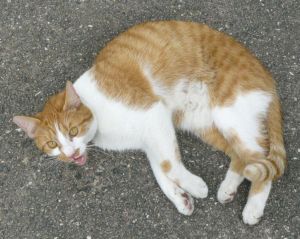
Wikimedia Commons
Source: Animal Alliance NYC
The Archdiocese of New York agreed to work with the NYC Feral Cat Initiative (NYCFCI) of the Mayor’s Alliance for NYC’s Animals to restore daily care and feeding to the colony of eight feral cats living at the historic St. James Church in lower Manhattan. During a sixty-day trial period, a suitable feeding station and shelters for the cats will be placed and a litter box will be added to the regimen of care. There will be an onsite meeting with the church pastor and caretakers this week to work out a routine acceptable to all. The NYCFCI has submitted a proposal for consideration outlining guidelines for ongoing care for the colony to be reconsidered and adopted after the sixty-day trial period.
The agreement was reached at a March 27 meeting attended by Mayor’s Alliance for NYC’s Animals President Jane Hoffman, Monsignor Kevin Nelan of the Archdiocese of New York, Father Lino Gonsalves of St. James Church, and NYCFCI Community Outreach Coordinator Mike Phillips. A dynamic and vigorous discussion of the virtues of Trap-Neuter-Return (TNR) was a part of the meeting, as well as the importance of continued daily feeding in order to assure continued stability of any feral colony.
Fortunately, the TNR project at St. James was already completed and discussions began from that strong position. Chinatown is known to be one of the most rodent-infested areas of New York City, as well as having large numbers of unneutered feral cats roaming the area. After explanation of the merit of keeping a neutered and vaccinated colony in place, there was agreement that removal of the cats was not in anyone’s best interest.
Kudos to TNR volunteer Elizabeth Eller for the energy she devoted to the project starting in 2009. Her completion of TNR on the eight cats lent much more weight to arguments defending the current presence of the colony. The colony has not grown in three years since two litters of kittens were trapped, tamed, and adopted at the beginning of the project. In contrast, a colony being fed without TNR cannot be defended with such effectiveness. Thank you, Elizabeth, on behalf of the colony. May they enjoy continued care and acceptance thanks to your very timely hard work!
The need for education in responsible pet ownership (the human component of feral cat management) was also discussed to prevent additional cats from being abandoned to the streets and starting new feral colonies.
The church is setting a fine example of leadership by example with this compassionate and humane consideration for these cats abandoned to the street through no fault of their own. Please express your thanks to the Archdiocese of New York for their willingness to meet and their agreement to the sixty-day trial period. Though not completely resolved, we are confident this will be a win-win for the cats and St. James Church.
Subscribe to the NYC Feral Cat Initiative mailing list and/or follow us on Facebook and Twitter for further updates on the story.
Thank the Archdiocese of New York!
Thank the Archdiocese of New York by contacting Joseph Zwilling, Communications Director, at communications@archny.org or (212) 371-1011 x2997.
Read more…










 Our Compass