HighestWelfare.Humane.Assured.GoodPractices.Vegetarian. Regenerative.Flexitarian.Lies...
What is the difference between No Welfare, High Welfare, and Highest Welfare when they all require animals to die? Only human comfort, NONE protect the actual animals. The most humane, ethical, and honest Webster-defined "welfare" is NOT exploiting animals - not using, not wearing, not eating, not killing - animals. The only meaningful position is vegan, everything else is just how humans euphemize animals' required suffering and violent deaths: no human exploits animals because they honestly believe that NOT exploiting animals is UNethical or INhumane.
Protect People who Protect Animals – Stop Ag-Gag
Wikimedia Commons
1. Please click HERE to sign petition for PA
2. Please click HERE to sign petition for TN
3. Please click HERE to stop ag-gag
1. Background | Source Causes
Billions of animals in factory farms are forced to live in cruel and inhumane conditions. From chickens who are squeezed into tiny cages to the inhumane slaughter of cows, the transport of horses across the borders to be slaughtered for human consumption, animals are treated cruelly and politicians (with their corporate supporters) are trying to keep this practice a secret.
Corporate backers of factory farms are trying to silence and criminalize brave individuals that expose the cruelties that animals face in farms across the US. Not only does this go against our free speech but we as consumers and animal lovers have a right to know how these creatures are treated. We need to join together to stop these “Ag-Gag” bills. Please sign the petition today and forward it to friends.Below is an excerpt from the Pennsylvania House Bill 683.
This bill will allow factory farms to act in secrecy and criminalize those that try to stop them.
From Pennsylvania House Bill 683:
Offense defined – A person commits the offense of interfering with agricultural operations if the person:
- Without consent from the owner of an agricultural operation or the owner’s agent:
- (i) records an image of, or sound from, the agricultural operation by leaving a recording device on the agricultural operation; or
- (ii) uploads, downloads, transfers or otherwise sends recorded images of, or sound from, the agricultural operations over the Internet in any medium.
- Also: (iii) while employed at, and while present on, the agricultural operation, records an image of, or sound from, the agricultural operation
2. Background | Source PETA
We urgently need your help to stop Tennessee Senate Bill (S.B.) 1248, which has passed through the legislature and is awaiting the signature of the governor, who has just 10 days to make a decision. If signed into law the bill could subject whistleblowers to criminal prosecution for their efforts to expose cruelty to animals on factory farms and in slaughterhouses. The bill would require those who document abuse to report it within 48 hours, stopping undercover investigators from documenting a pattern of routine cruelty that has helped authorities across the country enforce the law. It is a desperate attempt by agriculture industry giants to prevent consumers from learning the truth about the miserable lives and gruesome deaths of animals killed for food.
A 2007 PETA investigation at a Tyson chicken slaughterhouse in Tennessee that supplied KFC found that workers violently threw birds and yanked them out of shackles with such force that their legs were broken. Other past undercover investigations have resulted in criminal convictions after revealing systematic abuse, including footage collected at Aviagen Turkeys, Inc., in West Virginia that documented workers beating, stomping on, and maliciously killing birds. These abuses continued even after being brought to a supervisor’s and the management’s attention. Over the course of two months, the investigator collected meticulous evidence showing that these abuses were routine—and not just isolated incidents—helping officials obtain 23 indictments for cruelty to animals against three former employees, all of whom were convicted and one of whom was jailed.
S.B. 1248 is designed to shroud industries that exploit animals for profit in secrecy and to shield criminals from accountability under the law. Because of the help of compassionate citizens, similar bills have died in Florida, Minnesota, New York, New Hampshire, Wyoming, Arkansas, Illinois, California, and New Mexico, and one was recently declared unconstitutional and gutted in Indiana.
Even if you don’t live in Tennessee, we still need your help. The meat from slaughtered animals crosses state lines, and the government needs to hear from consumers across the country who care about the way animals killed for food are treated. Please urge Tennessee Gov. Bill Haslam to veto S.B. 1248 right away!
3. Background | Source ALDF
Animal abuse, food safety violations, and illegal working conditions are rampant on factory farms. In 2011, the corporate agriculture lobby attempted to pass ag gag laws which would have made it illegal to photograph or videotape at agricultural facilities, or to possess or distribute such evidence. In the 2011-2012 legislative session, 10 states introduced ag gag bills, including Illinois, Indiana, Iowa, Minnesota, Missouri, Nebraska, New York, Tennessee, Pennsylvania, and Utah. In 2013, Arkansas, Indiana, Nebraska, New Hampshire, and Wyoming introduced ag gag legislation, and many other state legislatures are poised to do the same. Ag gag bills are already on the books in Kansas, Montana, North Dakota, Iowa, Utah, and Missouri.
The goal of ag gag laws is insidious: to silence whistleblowers and eliminate access to critical evidence of farmed animal and other abuses. What’s more, restrictions or prohibitions on these records would decrease the opportunities for food safety violations to be discovered, thereby increasing the risk that consumers could be exposed to and contract illnesses from the consumption of unsafe food products and produce from jurisdictions that pass ag gag legislation.
Factory farms, like other industries, are already fully protected from illegal activities that could detrimentally impact them by trespass, fraud, and other existing criminal and civil laws – despite corporate agriculture’s claims to the contrary. Ag gag bills were designed to place restraints on free speech by making it a crime to take photos or video on a factory farm without the written permission of the owner. Under the guise of property rights, ag gag bills are intended to prevent consumers from ever seeing the horrors of animal abuse, contaminated crops, illegal working conditions, and risky food safety practices—the sort that result in massive food safety recalls and all too frequently lead to outbreaks of food-borne illness—that are common practice behind factory farm gates.
ALDF and a broad range of stakeholders have raised concerns about the potentially devastating impacts of these and newer ag gag legislation efforts. Ag gag is a grave concern for everyone from journalists to whistleblowers to animals to mothers concerned about the safety of their children’s food.

Wikimedia Commons
Please click HERE to sign petition
If you do not live in the UK, use postcodes SE1 9QQ or SW1X 7RN
Background | Source 38 Degrees
The government has announced plans to start culling badgers. There’s been a big debate among 38 Degrees members about these culls. Some of us believe killing badgers would be wrong under any circumstances. Some of us believe that if the science really proved that shooting badgers could make a real dent in the cow TB problem, it would be a tragic necessity.
But 87% of us agree on this: the government’s current plans to shoot England’s badgers simply don’t stack up. The government’s own scientific advisers warn that it won’t solve the problem of TB in cattle, and could even make it worse.
Government scientists say that if a cull isn’t carried out “in a co-ordinated, sustained and simultaneous manner according to the minimum criteria, then this could result in a smaller benefit or even a detrimental effect.”
Can you take 30 seconds now to add your name to the petition?
Read more…

Innocence Project
UPDATE
Breaking News: Execution Stayed in Mississippi
Please click HERE to sign and send letter
Background | Source Innocence Project
Willie Manning is on death row in Mississippi, awaiting execution for the abduction and murder of two college students in 1992. He was convicted on circumstantial evidence, including the testimony of a jailhouse informant who had previously given a statement implicating another person. No physical evidence has ever linked Willie to the crime, and he has always maintained his innocence. He has been seeking DNA testing of crime scene evidence for years.
Incredibly, the Mississippi Supreme Court ruled in a 5-4 decision that there is “overwhelming evidence of guilt,” so no DNA testing is needed. His execution has been set for May 7th. Eighteen men have been exonerated by DNA testing after being sentenced to death, including Kennedy Brewer of Mississippi. We are asking the Governor to stay the execution and order the DNA testing that will definitively prove Willie Manning’s guilt or innocence. Join us in calling on Mississippi Governor Phil Bryant to stay Willie’s execution and order DNA testing!
Wikimedia Commons
Please click and sign HERE
Source : Force Change
By Jennifer Hartmann
Target: Government of Nepal
Goal: End mass sacrifice of animals at Nepalese temple
Every five years, the Gadhimai Jatra festival takes place in Nepal where half a million animals are brutally slain in honor of the Hindu goddess of power. Because all 500,000 animals must be slaughtered in the first two days of the festival, the participant butchers spend 48 hours massacring thousands of water buffalo, pigs, goats, chickens, and even pigeons and mice.
By the end, their disease-filled slaughterhouses are strewn with the blood and headless bodies of thousands of animals that, prior to their painful deaths, scrambled to escape the massive blades that decapitated them. The next ritual is scheduled to take place in 2014, but with help from the government of Nepal, it is possible to stop this mass slaughter before it is allowed to begin again.
While animals are killed for slaughter every day in countries around the world, this particular tradition is uniquely appalling due to the inhumane methods employed by participants of the ritual in such short periods of time. In one event, the throats of sacrifice animals are slit with knives, leaving them to die a slow, agonizing death while priests sprinkle their blood over religious idols and symbols.
In another, more than 20,000 water buffalo are penned in a yard where men wielding swords attack them until they are all maimed to death. While many animal sacrifices end quickly, these animals are hacked at the neck and legs multiple times before they even fall to ground. The largest animals are mutilated over two dozen times by machete before they are given the mercy to die.
Maneka Gandhi, an Indian politician and activist, is outspoken in her disapproval of the tradition. She has explained that many villagers refuse to end the slaughter for fear that they will dishonor the goddess of power, called Gadhimai. In addition, Gandhi explained that the festival is an incredibly profitable enterprise for priests, moneylenders, and animal sellers, who have incentive only to continue the inhumane practice out of greed.
Sadly, this despicable crime is allowed to continue in order to honor the tradition and religion of the Hindu people, even though profitable business remains the driving force behind it. Despite the fact that many Nepali residents are opposed to the violence of the Gadhimai festival, there has yet to be governmental interference to end this mass carnage once and for all. Urge the government of Nepal to illegalize the world’s largest mass sacrifice of animals.
Help Us Ban Dolphin Captivity in India
Karen Lyons Kalmenson
BACKGROUND
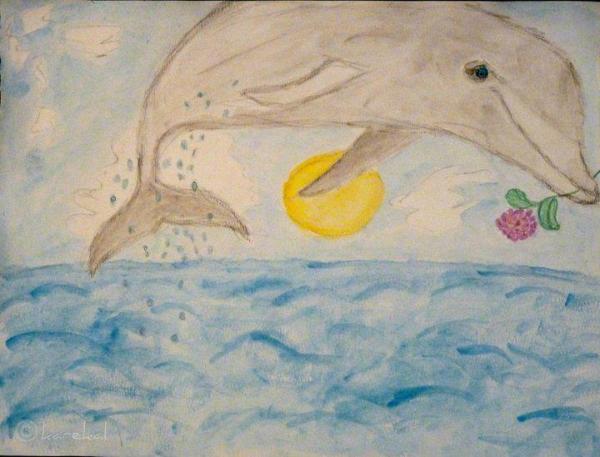
We need you to become a part of the campaign to enact a total ban on dolphin captivity for the whole nation of India!
The Indian Minister of Environment and Forests, Shrimati Jayanthi Natarajan, is currently considering a ban on dolphin captivity in India. She will be making her decision in the coming weeks, and if a ban is enacted, it will save the lives thousands of dolphins from lifetimes of pain and suffering. See our blog for the whole story.
We need you to write letters, draw pictures, send dolphin origami, or do anything else that is positive and creative, as a way of saying “Thank You” to Minister Natarajan for considering the ban and encouraging her to enact it into India’s legislation.
WHOM TO CONTACT
A list of embassies can be found here.
If you cannot physically mail, please email: mosefgoi@nic.in
SAMPLE LETTER
To Whom It Concerns:
I am writing you to express my sincerest gratitude that the Indian Minister of Environment and Forests, Shrimati Jayanthi Natarajan, is considering a nationwide prohibition on dolphin captivity.
It is known that dolphins suffer in captivity. They are extremely intelligent, self-aware beings with emotions, feelings, and close relationships to one another and their ocean home. Removing dolphins from the sea and putting them into small tanks or sea pens is removing a huge part of whom they are as dolphins, and forcing them to endure a life of misery.
India is a culture of compassion. In a world where animals are treated so poorly, India represents a beacon of hope. By enacting a total ban on captivity, not only will thousands of dolphins over the years be spared a life of torture and misery, but people will also be encouraged to think about whom dolphins truly are – as beings who deserve our respect.
As Mahatma Ghandi famously said, “You can judge a society by the way it treats its animals.” The Minister has the chance to show the world how compassionate and kind India truly is by denying dolphin-exploiting industries to become established within their borders. I hope she makes the right choice.
Yours truly,
Wikimedia Commons
Next, all-vegan meals!
Source NYC Department of Education
Vegetable wraps, black beans, falafel and vegetarian chili on the menu at the first public school in a major American city to serve an all-vegetarian menu
Schools Chancellor Dennis M. Walcott today congratulated PS 244, the Active Learning Elementary School, in Flushing for being the first New York City public school to serve an all-vegetarian menu. It is believed to be one of the first public schools in America to do so.
The menu includes healthy recipes such as roasted chickpeas, braised black beans with plantains, tofu vegetable wrap with cucumber salad, vegetarian chili served with brown rice, falafel, and roasted tofu with Asian sesame sauce. The school, which opened in 2008, began offering a vegetarian lunch three times a week and then increased it to four times a week. This year it became the first NYC public school to have a vegetarian menu for all meals.
Today’s lunch included black beans and cheddar quesadilla served with salsa and red roasted potatoes.
“I am proud of the students and staff for trailblazing this extraordinary path,” Chancellor Walcott said. “Our school meals program has evolved under the Bloomberg Administration to offer dishes that meet our nutritional standards. I want to thank the Office of SchoolFood and the New York Coalition for Healthy School Food for working collaboratively to create vegetarian meals.”
“We created PS 244 based on a principle of a healthy lifestyle and academic achievement,” Principal Robert Groff, one of the school’s founders, said. “We discovered early on that our kids were gravitating toward our vegetarian offerings, and we kept expanding the program to meet the demand. The vegetarian menu fits right in with our mission and we are thrilled that our students in Pre-Kindergarten all the way up to Grade 3 understand the importance of healthy and nutritious meals.”
“Our breakfast and lunch program offers nutritious and delicious meals for all students,” Deputy Chancellor Kathleen Grimm said. “For students at PS 244, we worked together to create a menu that meets our nutritional standards and at the same time offers delicious meals.”
“Since 2004, we have made improvements to breakfast and lunch that offer meals low in sodium and calories,” said Eric Goldstein, CEO of School Support Services. “Our Office of SchoolFood staff worked with the New York Coalition for Healthy School Food and PS 244 to come up with healthy vegetarian meals.”
The New York Coalition for Healthy School Food has partnered with PS244 and the Office of SchoolFood since 2009. At the time, the Coalition introduced its Cool School Food Program, which includes the development and introduction of plant-based entrée recipes. In 2012, the partnership created a vegetarian lunch menu that is healthy, low in cholesterol and saturated fat, and high in fiber.
Amie Hamlin, Executive Director of New York Coalition for Healthy School Food, said, “Plant-based, nutrient-dense options help students do better in school, and reduce global warming.
We are thrilled that our Cool School Food program, the DOE Office of SchoolFood and PS244 are responsible for the first public school I know of that offers a vegetarian menu. We are sure that with time and the understanding of the powerful impact of whole foods plant-based nutrition on disease prevention and learning, that PS244 will be the first of many schools to adopt a vegetarian menu.”
Kinship Circle
Please click HERE to protest
Source Kinship Circle
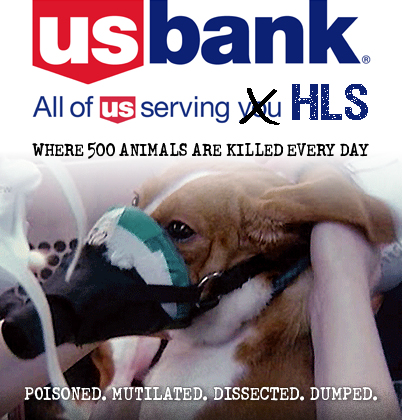
Huntingdon Life Sciences faced financial ruin. But US Bank’s $120 million loan kept them open to poison dogs, cats, monkeys and more animals in tests for pesticides, sweeteners, diet pills… So today animals still collapsed, frothing at the mouth. Dogs who didn’t get enough anesthesia “whimpered and moved” while cut apart.
US Bank is currently Huntingdon’s top debt-relief source. Though made aware of 7 investigations that reveal habitual animal abuse and fraudulent science, the bank approved this mega loan. Apparently US Bancorp doesn’t see animal cruelty as reason to blacklist a company, as it does with illegal gun sellers, gambling websites, etc. Like hundreds of other firms that dumped HLS, US Bank has access to footage and documents about techs who punch beagle puppies, dissect live animals, falsify data, and botch experiments so badly that animals seize and die on the spot.
Stop Huntingdon Animal Cruelty UK launched a global campaign in 1999, with unified U.S. action a few years later. Anti-HLS efforts target the lab’s infrastructure: Financiers, customers and suppliers are strongly urged to dump HLS in ongoing letter/phone/email campaigns and live protests. Any company with ties to HLS is exposed to evidence of animal abuse. While HLS has teetered on the edge of shutdown, straddled with a $100 million debt, some financier always seems to bail them out. Ask US Bank to end its association with HLS and terminate the current loan agreement.
Please note that some of the addresses will be returned as invalid.
Read more…

PETA
Please click HERE to sign and send petition
Background | Source PETA
Donkey basketball games are loud, chaotic, and utterly bizarre events in which docile animals are pulled, shoved, screamed at, whipped, and forced to carry riders who are too heavy for them. Used again and again, the donkeys are lugged from place to place for months on end in small, poorly ventilated vehicles—with no consideration for their welfare, safety, or happiness. Equines who are continually subjected to such stressors can develop unpredictable temperaments, putting riders and bystanders at risk. There has been a record of injuries associated with donkey basketball games, including a case in which an injured participant successfully sued a school for more than $110,000 in damages. Sadly, Morning Sun Elementary School in Morning Sun, Iowa, has scheduled a donkey basketball game for May 5. Your voice is needed!
Please urge school administrators to cancel this cruel and dangerous event and to replace it with a safer, humane alternative. And please forward this alert widely!
Please keep all correspondence polite, as anything less will hurt our efforts.
Personalized letters always work best. Feel free to send the sample letter provided, but keep in mind that your letter will carry more weight if you write your own customized message and subject line.
Read more…
Some good news
Wikimedia Commons
1. Harvard to Close Primate Facility after Pressure | Source PCRM
Following two years of pressure from PCRM and other groups, Harvard University announced today that it will close its primate experimentation facility where numerous monkeys have died and been seriously injured in recent years. This move is a step in the right direction—away from cruel and scientifically misguided research—and PCRM’s members played a big role by sending Harvard more than 30,000 e-mails last summer. With your help, we did it!
The closure will affect the 2,000 monkeys currently at the New England Primate Research Center in Southborough, Mass. PCRM will call on Harvard and the National Institutes of Health (NIH) to retire those animals to sanctuaries rather than send them to other research facilities.
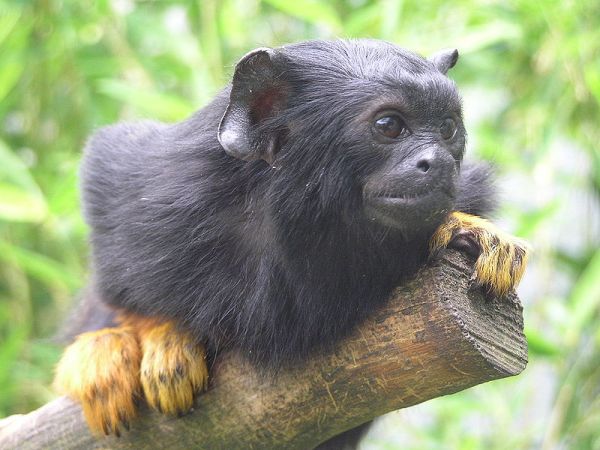
In September 2011, PCRM issued its report Animal Welfare Act Violations at Ivy League Universities, which detailed how a primate (later revealed to be a highly endangered cotton-top tamarin) was found dead in a cage at the Harvard facility after going through a machine that uses near-boiling water and caustic chemicals to wash cages.
Following PCRM’s report, other accounts of animal deaths and mistreatment continued to surface, including:
• A marmoset was found to have died after escaping, being captured, and then undergoing an imaging procedure. PCRM’s sources from within the primate center claimed that the marmoset was traumatized during his capture and that he was hyperventilating and distressed when he was forced into the constricting imaging tube.
• A cotton-top tamarin died of dehydration as a result of not having a water bottle in his cage.
• A primate died after being overdosed with anesthetics.
PCRM took this evidence of animal cruelty to the United States Department of Agriculture and NIH’s Office of Laboratory Animal Welfare and called on the agencies to investigate Harvard.
PCRM also charged Harvard with violating the federal Endangered Species Act by negligently harming and killing cotton-top tamarins in a complaint filed with the U.S. Fish & Wildlife Service in July 2012. Harvard responded by claiming that it would relocate its nearly 170 tamarins—critically endangered monkeys native to Colombia—to “other institutions, such as wildlife preserves or sanctuaries.” The complaint is still pending.
PCRM is still urging Harvard to retire its tamarins, and now we are pushing the school and NIH to do the same with all 2,000 primates. As we move forward, you will hear more from us.
Thank you for your continued support.
2. Israel: a bill to ban the imports of fatty goose and duck liver | Source AR News
A bill to ban the import and sale of fatty gooe and duck liver (“foie-gras”) was introduced yesterday (April 22nd, 2013) in the Israeli Knesset. The bill was introduced by 23 Knesset members (fifth of the 120 members), from almost all parties, led by Knesset Member.
The bill, if enacted, will be a complementary step to the decision of the Israeli Supreme Court 10 years ago to ban on the force-feeding of geese and ducks in Israel. In the 1990’s, when the Israeli campaign against force-feeding of geese and ducks started, Israel was one of the world’s leading producers of fatty liver. The precedential Court Decision led to the closing of the industry and still underpins campaigns against other common cruel practices. In drafting and promoting the current bill, Anonymous for Animal Right and Let the Animals Live hope to stop the imports of fatty liver to Israel and to set the principle that cruelty is unacceptable – whether done locally or abroad, by oneself or by one’s money.
“Foie gras” is the pathologically-greasy and swollen liver of geese and ducks. To bring the liver to this diseased state, the industry force-feeds the bird with growing quantities of high-calorie gruel – up to one third of the bird’s weight per day. The gruel is forced down the bird’s esophagus using a tube, which is connected to an air-pressure-operated machine, or a similar technique. The sick ducks have difficulty breathing and walking. Their slaughter time is chosen so that not too many of them would die before being taken to the slaughterhouse.
Force-feeding of geese and ducks is already banned also in Italy, the UK, Poland, The Czech Republic, Luxemburg, Denmark, Finland, Norway, Sweden, Switzerland, Austria, Germany, Australia, Argentine and California.
California also bans the sale of the fatty liver which is the objective of this form of animal-abuse.
Please thank MK Rabbi Dov Lipman on his initiative:
Email: dlipman@knesset.gov.il
Facebook: https://www.facebook.com/dov.lipman?fref=ts
Mailing address: MK Dov Lipman, the Knesset, Jerusalem , Israel
3. The Norwegian Labour Party adds fur ban to the party manifesto | Source Norwegian Animal Protection Alliance
Victory! The Norwegian Labour Party adds fur ban to the party manifesto
The Labour Party Congress has today (21st April 2013) voted to add a ban on fur farming to the party manifesto.
This addition to the manifesto follows the resolution to put an end to fur farming, as decided at the 2011 Party Congress.
While this stance is not new for the party, the inclusion of a fur ban into the manifesto commits the party to this work for the next four years.
This inclusion in the manifesto is an important signal in Norwegian politics, in particular to the right-wing partys like the Conservative Party.
The Norwegian Animal Protection Alliance has been working towards this point for the past 10 years. Through intense lobbying including letters, flyers and phone calls targeting many hundreds of local politicians the active work of the Labour Party towards a Norwegian ban on fur farming has today been secured.
The Norwegian Labour Party are currently in Goverment, together with the Socialist Left Party and the Centre Party. The Labour and Socialist Left Parties wish to ban fur farming, however the Centre Party wish to keep fur farming in Norway. This strong signal from the Party Congress this weekend should provide incentive for negotiations regarding this issue between the Government parties.
This is an important milestone, and it is wonderful news for animal welfare in Norway. Our work will now focus on the Conservative Party in the future, however this will require a very different campaigning strategy, says information manager to the Norwegian Animal Protection Alliance, Live Kleveland.
4. Vietnam Airlines to stops shipping primates | Source PETA
As you know, for more than two years, PETA has been asking Vietnam Airlines to stop shipping primates to misery and death in laboratories. Monkeys shipped to laboratories are crammed into small wooden crates, then stuffed into the cargo holds of airplanes, often under the feet of unsuspecting passengers. Some of these monkeys are ripped from their homes in the wild, others are bred on squalid monkey factory farms. When they reach their final destination, they are confined to tiny cages and tormented in cruel experiments.
Now, after hearing from more than 100,000 compassionate supporters like you, Vietnam Airlines has informed PETA that, starting today, it will no longer ship primates to laboratories.
But our work is not over. PETA will continue to strengthen our efforts against the remaining few airlines engaged in this cruel practice so that fewer primates will suffer and die in laboratories and more monkeys will be left where they belong: in the wild.
We need your help. Please take a moment to urge Philippine Airlines to join Vietnam Airlines and nearly every other major airline in the world by refusing to transport primates to laboratories.
BACKGROUND
The bullfighting lobby has submitted to the Spanish Congress of Deputies a Popular Legislative Initiative full of irregularities seeking to shield bullfighting in Spain declaring it a National Cultural Heritage.
This would not only include the shielding of regular bullfighting in bullrings, but also the celebration of acts as cruel as the Toro de la Vega in Tordesillas, where a bull is killed with spears by people on horseback and foot, or the Toro de Jubilo, where, for pure fun, a bull’s horns are set on fire and the animal is subsequently executed.
Bullfighting in Spain currently receives about 600 million in public subsidies. Should this law be passed, it would still get more. This is totally unjustified, if we consider that, according to the latest poll made by Ipsos MORI in April of 2013, only 13% of Spaniards strongly support this activity, and that Spanish people have other priorities they wish to direct their taxes to.
But even more disturbing is the fact that this law includes programs to ensure new generations of bullfighting fans, children whose nature leads them to instinctively feel empathy and compassion towards animals, shall be denatured and taught to stick harpoons (banderillas), spears (pikes), and swords in the tender backs of calves at bullfighting schools as something we should aspire to. They will be taught that those who torture an animal to death for 20 minutes for pure entertainment are heroes.
All this, ignoring recent studies presented by leading international psychiatrists such as Dr. JP Richier in France, which demonstrate how harmful this is for the moral and psychological development of children, and the construction of a less violent society.
WHOM TO CONTACT
We ask and we welcome you to write to the Spanish embassy in your country, making sure that you send us a copy of your email to info@latorturanoescultura.com, so that we can keep track of the emails sent, asking them not to approve this law.
Here I leave a list of embassies and consulates of Spain in the world, where you can find the email address to which to write:
(The United States embassy in Washington DC is emb.washington@maec.es)
Please share this action on Social Networks with the hashtag #LoveSpainHateBullfights
You can use this message: “Please contact the Spanish Embassy today and ask them not to protect cruelty #LoveSpainHateBullfights http://tinyurl.com/bpu8a8j”
SAMPLE LETTER
Estimado Embajador,
Hemos sido informados de que el Gobierno Español está considerando legislación, con el fin de proteger y promover las corridas de toros y para reconocerlas como patrimonio cultural. Además, entendemos que tal legislación permitiría la utilización de fondos públicos para apoyar a la industria. Lo que es más, estos fondos también podrían ser usados para introducir a los niños a las corridas de toros.
Respetuosamente aunque con gran preocupación me dirijo a usted pues está demostrado que las corridas de toros causan un gran sufrimiento a los toros y desensibilizan a las personas, especialmente a los niños, ante la violencia.
Quisiera solicitar que comunique mi petición a su gobierno para que considere cuidadosamente las opiniones de la mayoría de sus propios ciudadanos, que no apoyan las corridas de toros y no quieren que sus fondos públicos sean utilizados para un pasatiempo tan controvertido y anacrónico.
Su gobierno tiene una oportunidad real de hacer una diferencia positiva por los animales en su país, enviando un claro mensaje a la ciudadanía española y a la comunidad internacional en general de que España ya no tolerará la crueldad hacia los animales bajo el pretexto del entretenimiento o la cultura; y para mostrarles a otros, incluidas las personas jóvenes, que debemos proteger, en lugar de maltratar, a los animales.
Le instamos a que tome una posición compasiva en contra de las corridas de toros. Al oponerse a la legislación propuesta, acordando no declararlas patrimonio cultural y por lo tanto evitando el uso de fondos públicos, usted ganará el apoyo de ciudadanos alrededor del mundo.
Atentamente,
TRANSLATION
Dear Ambassador,
We have been informed that the Spanish government is considering legislation in order to protect and promote bullfighting and to recognize them as cultural heritage. Furthermore, we understand that this legislation would allow the use of public funds to support the industry. What’s more, these funds could also be used to introduce children to the bullfights.
Respectfully though with great concern I am writing it is shown that bullfighting cause great suffering to the bull and desensitize people, especially children, to violence.
I would ask that communicate my request to your government to carefully consider the views of the majority of its own citizens, who do not support bullfighting and do not want their funds are used for a hobby so controversial and anachronistic.
His government has a real opportunity to make a positive difference for the animals in their country, sending a clear message to Spanish citizens and the international community at large that Spain no longer tolerate animal cruelty under the guise of entertainment or culture, and to show others, including young people, we should protect rather than abuse, animals.
We urge you to take a compassionate stand against bullfighting. In opposing the proposed legislation, agreeing not to declare cultural heritage and thus avoiding the use of public funds, you will gain the support of citizens around the world.
Sincerely,
PETITION
US citizens, please click HERE to sign petition
UK residents take action here.
Live outside U.S. or U.K., sign this version.
BACKGROUND | SOURCE HSI
Right now, the Spanish government is considering a law to protect and promote bullfighting, an outdated spectacle that causes the slow and tortuous death of a beautiful bull.
The majority of Spanish citizens don’t support bullfighting. Nor do they want their taxes spent protecting it.
Join us in opposing the proposed new law by sending a message to the Spanish government today!
Spain has so many treasures to cherish, but by supporting and protecting the killing of bulls for entertainment, Spain’s government risks leaving a terrible legacy for future generations.
The torment and death of animals for amusement, or for cultural reasons, can never be acceptable. It is cruel and outdated, and has no place in a modern society.
Write now: Ask the Spanish government to do the right thing.
Let them know that by taking a compassionate stance against this cruel pastime, they would surely win the hearts of citizens around the world.
Thanks for all you do for animals.
Film review: The Ghosts In Our Machine
Source rabble.ca
By Humberto DaSilva
The film “The Ghosts in Our Machine,” directed by Liz Marshall, is a view of the animal rights issue through the lens of Toronto photographer Jo-Anne McArthur. The film posits that animals are not an insentient resource to be mechanistically processed, but a separate nation. Humanity is making imperial war on this nation, and Jo-Anne McArthur is a combat photographer.
McArthur makes an international career of documenting the inhuman misery that capitalism visits upon animals. She has worked with numerous animal rights campaigns documenting the horror that are the lives of billions of animals treated as system throughput rather than sentient beings. Her photographs are haunting both to herself and the viewer. Her lens gives meaning to lives lived only to gain protein mass, fur or some other commodity traded and consumed by human beings.
In the scenes where McArthur infiltrates a fox fur farm, the banality of the evil that is fur is immediately apparent. The foxes are caged, exposed and miserable. As a European animal rights activist enumerates the number of foxes that are raised and killed in this single operation, it becomes apparent that billions of animals are born, live and die in conditions tantamount to life long torture.
Despite “advanced” animal protection legislation, most animal cruelty is concentrated in the developed world. For that reason industries exploiting animals fear the right photograph more than property damage or animal liberation direct action.
It will be people who will eventually end animal abuse. This will only happen when the suffering of animals is unavoidably evident. Insurance will cover property damage and stock loss, but the idea that there is no more god given right to exploit other species than to exploit other races is the biggest threat to the status quo.
An eventual acceptance of basic animal rights will occur like the end of slavery, or universal suffrage. It will take a critical mass of awareness. McArthur is clear in her purpose. She is not there to liberate individual animals. That would not change the system that is geared to exploit them. She is there to add to the critical mass of awareness needed to render the concept of animal rights as normal as that of human rights.
McArthur is personally haunted by the life of one chimpanzee, Ron, whose image is truly poignant. Despite a life of enduring medical experimentation, Ron forgave humanity for the horrors of his existence. The picture of Ron is heartbreakingly anthropomorphic. If we can abuse a creature separated from ourselves by so few degrees of evolution, what hope does a rat or mink have.
But McArthur’s photographs show us the animals we don’t want to see: the beagles bred for torture, the highly intelligent marine mammals imprisoned in water circuses, and the trailers full of pigs trucked to slaughter in a Toronto urban slaughterhouse. These are all animals who we don’t want to view outside their normal context. Everyone loves images of majestic wildlife, or cute cats. What nobody wants to see is billions of animals being processed into product. The machinery of modern life is greased with the suffering of sentient creatures, but it’s best if no one questions what makes the machine run so smoothly.
Recent legislative gambits may actually render McArthur’s craft illegal. The factory farming industry has sponsored many bills to make photographing slaughterhouses a crime. The success of photographers like McArthur in advancing animal rights can be measured directly by the efforts of animal exploitation industries to have their profession criminalized.
The farm sanctuary sequences in Ghosts in Our Machine show one of the last contexts within which human beings form actual connection with farm animals. Most real farms are protein factories wherein animals are commodities and no regard is given to their sentience. The tranquility of farm sanctuary is a welcome counterpoint to the film’s merciless displays of industrial and scientific cruelty.
The difference between the life of an animal in a sanctuary and an animal in the machine, is the difference between heaven and hell. Piglets at the sanctuary are things of beauty enjoying happiness. The fact that their mother was the subject of torture by cattle prod seems an incongruity, rather than the brutal norm.
The film moves slowly and deliberately. It is richly shot, and has a lingering ambient and atmospheric soundtrack by Bob Wiseman. The film’s atmosphere does not reflect the noise and pain of the lives of the animals caught in the machine. What it does reflect is the inner tranquility of McArthur, who, though haunted by what she has seen, is at peace for knowing she is doing whatever she can to ameliorate the existence of billions of creatures.
Upon meeting with a Newsweek editor she whispers: “I’m trying to save the world” in a way that is self-consciously exaggerated. This is pure insight. The secret to tranquility is a life spent in good humour, pursuing a higher purpose.
After a creature is consumed in the machine, a McArthur photograph is usually the only thing documenting its miserable existence. There are cultures that believe that a photograph steals the spirit of its subject. McArthur’s photographs actually accomplish the opposite. They are often the only haunting trace of an entire existence; ghostly representations of billions of lives lived in horror.
Humberto DaSilva is a union activist whose ‘Not Rex Murphy’ video commentaries are featured on rabble.
Read more…
Please take action on three petitions

Wikimedia Commons
1. Please click HERE to help horses and burros
2. Please click HERE to help wolves
3. Please click HERE to help dolphins (need to sign up for account)
1. Background | Source IDA
The Senate recently confirmed Sally Jewell as the next Secretary of the Interior. This could be a positive change from her predecessor, Ken Salazar, who failed to deliver on his promise to reform the federal wild horse and burro program. Salazar, a rancher, defended other ranchers to the detriment of wild horses and burros.
During Salazar’s tenure, the Bureau of Land Management removed more than 35,000 wild horses from public lands. Jewell is known as an outdoor enthusiast and conservationist and IDA is hopeful that her appointment will be good news for wild horses and burros, but she needs to hear how important this issue is to you.
Jewell has already pledged to “pursue effective and ecologically sustainable policies” for management of America’s wild horses and burros. Please take a moment to urge her to keep that promise!
2. Background | Source EarthJustice
Help ensure continued protections for wolves across the lower-48 states! You can make a difference by writing to Obama administration officials to urge them not to drop federal protections for wolves across much of the United States.
In the next 2-3 months, the U.S. Fish and Wildlife Service may remove federal Endangered Species Act protections for gray wolves across nearly the entire lower-48 states. This would be a disastrous setback for gray wolf recovery in the United States.
The recovery of gray wolves is an American success story, from their reintroduction in the northern Rocky Mountains to their comeback in the western Great Lakes states. But there are few, if any, gray wolves in the vast majority of their former range. If the U.S. Fish and Wildlife Service removes gray wolf federal protections, wolves in the Pacific Northwest, California, the southern Rocky Mountains, and the Northeast will face even more difficult odds than they do already.
It is critical that the administration not proceed with a blanket national delisting of the gray wolf, when wolves are still missing across so much of the U.S. landscape.
Urge President Obama, Secretary of Interior Sally Jewell, and U.S. Fish and Wildlife Service Director Dan Ashe to maintain protections for gray wolves in the lower-48 states.
3. Background |Source Oceana
According to your Department of the Interior, seismic airgun testing for oil and gas in the Atlantic will injure or kill 138,500 dolphins and whales, including endangered North Atlantic right whales.
Seismic airguns and offshore drilling threaten commercial and recreational fisheries as well as ocean-based tourism and coastal recreation from Delaware to Florida. 730,000 jobs in this region depend on a healthy ocean. Seismic airgun testing is the first step toward expanding deepwater drilling, the same practice that caused the well-known Deepwater Horizon oil spill disaster.
Offshore drilling is dirty and dangerous, and seismic airguns are an insult to ocean economies and ecosystems. With respect, we call on your administration to reject seismic airgun testing in the Atlantic.
Read more…
California Bill to Thwart Animal Investigations Killed

Wikimedia Commons
Source ABC
After weeks of opposition from animal welfare advocates, labor groups and First Amendment experts, a California assembly member withdrew a bill that would limit undercover abuse investigations before it could advance past its first step.
California now joins Arkansas and Wyoming in declining in recent weeks to advance bills that seek to punish the documenter of farm animal abuse rather than the abuse itself.
In Tennessee, however, lawmakers on Wednesday were close to approving a bill similar to the one in California.
The California bill introduced by Jim Patterson, R-Fresno, originally would have required anyone collecting evidence of abuse to turn it over to law enforcement within 48 hours or be guilty of an infraction, which advocates say does not allow enough time to show a pattern of illegal activity under federal humane handling and food safety laws. In an effort to ease criticism, he amended the bill last week to increase reporting time to 120-hours.
It was supposed to have been voted on Wednesday by the California State Assembly Committee on Agriculture. Patterson killed his bill less than three hours before hearings were scheduled to begin as it became clear he would not have the votes to get it out of the committee.
“Sanity prevailed in Sacramento today,” said Jennifer Fearing, state director of the Humane Society of the United States, which had organized more than 50 groups in opposition of the bill.
Patterson, a freshman Assembly member, said he had hoped his bill would prevent animal abuse by requiring witnesses to promptly report it to authorities. He sponsored it for the California Cattlemen’s Association.
“My intention with this bill was and remains the prevention of animal cruelty,” Patterson said.
The bill cannot be brought back this year, though Patterson and the cattlemen want to hold a hearing later in the session to allow for more discussion.
“Animal welfare has always been and remains a top priority for beef cattle producers across the state of California,” CCA President Tim Koopmann said. “We appreciate Assemblymember Patterson’s willingness to push this bill forward despite opposition.”
In addition to Tennessee, other bills are gaining support in North Carolina and Indiana.
“California lawmakers rightfully saw through this attempt to suppress whistleblowers, but it’s troubling that Tennessee lawmakers were fooled by the same effort,” said Paul Shapiro, senior vice president at HSUS. “These bills are not an attempt to prevent animal cruelty, but to prevent Americans simply from finding out about cruelty in the first place.”
The California bill was one of a handful across the nation that are a pushback by the meat and poultry industries that have suffered financial losses in recent years after undercover videos revealed horrific abuse in egg plants and slaughterhouses.
A 2008 HSUS undercover video in California cows struggling to stand as they were prodded to slaughter by forklifts and led to the largest meat recall in U.S. history. In Vermont, an HSUS video of veal calves skinned alive and tossed like sacks of potatoes ended with the plant’s closure and criminal convictions.
Some bills being considered make it illegal to take photographs at a farming operation. Others make it a crime for someone such as an animal welfare advocate to lie on an application to get a job at a plant.
Read the rest HERE
Read more…
First “Ag-Gag” Prosecution: This Utah Woman Filmed a Slaughterhouse from the Public Street

HSUS, Green is the New Red
Concerned about Ag-Gag laws? Click HERE to sign petition
Update, 4/30,13 : Amy Meyer’s Ag-Gag Charges Have Been Dropped!
Source, 4/29/13: Green is the New Red
By Will Potter
Amy Meyer wanted to see the slaughterhouse for herself. She had heard that anyone passing by could view the animals, so she drove to Dale Smith Meatpacking Company in Draper City, Utah, and from the side of the road she could see through the barbed-wire fence. Piles of horns littered the property. Cows struggled with workers who tried to lead them into a building. And one scene in particular made her stop.
“A live cow who appeared to be sick or injured being carried away from the building in a tractor,” Meyer told me, “as though she were nothing more than rubble.”
As she witnessed this, Meyer did what most of us would in the age of smart phones and YouTube: she recorded.
When the slaughterhouse manager came outside and told her to stop, she replied that she was on the public easement and had the right to film. When police arrived, she said told them the same thing. According to the police report, the manager said she was trespassing and crossed over the barbed-wire fence, but the officer noted “there was no damage to the fence in my observation.”
Meyer was allowed to leave. She later found out she was being prosecuted under the state’s new “ag-gag” law.
This is the first prosecution in the country under one of these laws, which are designed to silence undercover investigators who expose animal welfare abuses on factory farms. The legislation is a direct response to a series of shocking investigations by groups like the Humane Society, Mercy for Animals, and Compassion Over Killing that have led to plant closures, public outrage, and criminal charges against workers.
Even the most sweeping ag-gag bills, such as the American Legislative Exchange Council model legislation, don’t explicitly target filming from a roadside. But Nebraska, North Carolina, Pennsylvania, Tennessee, and Vermont are all considering bills similar to the Utah law right now.
Pennsylvania’s bill criminalizes anyone who “records an image of, or sound from, the agricultural operation” or who “uploads, downloads, transfers or otherwise sends” the footage using the Internet.
North Carolina’s bill doesn’t specifically mention factory farms or slaughterhouses: it is called the “Commerce Protection Act,” and it includes investigations of any industry. It was introduced on the same day a fifth employee of Butterball pleaded guilty to animal cruelty after an undercover investigation showed workers beating turkeys.
Tennessee’s bill has already passed and is awaiting signature from the governor. In response to calls for a veto from the Humane Society and Carrie Underwood, one state representative compared undercover investigations to rape and sex-trafficking.
California’s ag-gag bill recently failed, after a massive public backlash. One newspaper editorial said “the cattlemen have committed the worst PR gaffe since New Coke.” The bill was a response to an undercover investigation by the Humane Society that showed “downer” cows, too sick to move, being pushed by tractors (much like what Amy Meyer recorded in Utah). It led to the largest meat recall in U.S. history.
The public backlash against these bills, including recent editorials by the New York Times and Washington Post, has relied on hypothetical examples of how they could be used. The AFL-CIO and Teamsters say they could put workers at risk. The ASPCA says they could shut down lawful investigations by animal protection groups. The National Press Photographers Association says they could wrap up journalists.
The first ag-gag prosecution should be a warning that these aren’t hypothetical concerns. These bills have one purpose: keep consumers in the dark. Rather than respond to video footage of animal cruelty with across-the-board reforms, the industry is trying to turn off the cameras.
It’s telling that the owner of the slaughterhouse Amy Meyer filmed happens to be Darrell H. Smith, the town mayor. (Mayor Smith, the meatpacking company, and the local prosecutor did not return phone calls for comment). If that’s shocking to you, it shouldn’t be. In Iowa, for example, the nation’s first ag-gag law was sponsored by Rep. Annette Sweeney, who is the former director of the Iowa Angus Association.
In Utah, the bill’s sponsor, Rep. John Mathis, called undercover investigators “animal rights terrorists” and said video recordings of animal abuse are “propaganda.” In his opening remarks at a legislative hearing on the ag-gag bill, Mathis said: “It’s fun to see my good ag friends in this committee… all my good friends are here.” Ag-gag supporters couldn’t be any more transparent in their financial motivations for censorship.
It was prescient that, as the Utah bill was being considered, the Utah Sentencing Commission warned that it could be used against anyone who merely takes a photograph of a farm or slaughterhouse. At the time, Rep. Greg Hughes of Draper replied: “Who would really pursue that in terms of prosecution?” Now, the first ag-gag prosecution is for precisely that, in his own district.
Most people won’t ever find themselves in the position of Amy Meyer, of course. Few of us actively seek out information about how our food is produced. (Do you know the location of a factory farm, if you wanted to?) The animal products just arrive at the supermarket, without investigation or thought.
With ag-gag bills, the industry is trying to keep it that way. These bills are not just about animal activists from national organizations going undercover. They are about people like Amy Meyer, who have seen how animals are being treated, and who want you to see what they have seen.
Most importantly, ag-gag bills are about you — the millions of Americans who might see this footage, be sickened by it, and demand a change.
Will Potter is the author of Green Is the New Red: An Insider’s Account of a Social Movement Under Siege (City Lights, 2011).
Two bears and a dog who are in horrible conditions

Animals Are Worth Saving
UPDATE
These animals have been rescued, no action is required: https://www.facebook.com/media/set/?set=a.374313689273215.78050.132594796778440&type=3
BACKGROUND | SOURCE
Translation: The prosecutor’s office will check in a private zoo “BIOS”, which on the eve of the children found the remains of animals. Those animals that are still alive, kept in appalling conditions. Two exhausted bears crammed into a small cage. They almost do not feed. Private zoo director Sergey Starkov, agreeing to an interview at the last moment he gave it up. No comments have not yet provided the experts and the regional department of veterinary medicine.
SAMPLE LETTER
Subject: Two bears and a dog who are contained in horrible conditions.To Whom It Concerns,
Last week in Tomsk (Russia) volunteers for animal rights discovered a private zoo where they found two bears and a dog who were contained in horrible conditions. Attached please fine the link to the web-page with photos : http://gorod.tomsk.ru/bios/
Two bears are contained in one small cage without food and water, while the dog is deprived of regular supply of food at all. The owner of the zoo, Sergey Starkov, has had numerous problems with neighbours after their complaints to the police about the bad smell coming from Starkov’s premises.
However, according to the local laws, Starkov has an official license for keeping animal at his premises. Recently, neighbours discovered that during the last winter the dog has been kept in the same cage with the goat; when the goat died of famine, the dog had to eat the remains to stay alive.These animals become crazy because of their suffering.
I ask you, please, to intervene in this dire situation for these animals.
http://www.tv2.tomsk.ru/video-chas-pick/prokuratura-proverit-chastnyi-tomskii-zoopark
Thank you for your attention to this urgent appeal.










 Our Compass