HighestWelfare.Humane.Assured.GoodPractices.Vegetarian. Regenerative.Flexitarian.Lies...
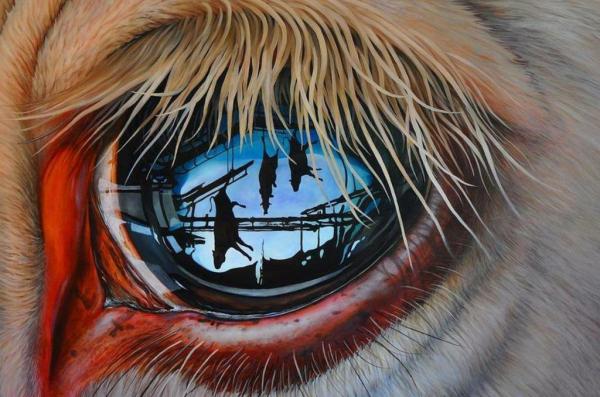
What is the difference between No Welfare, High Welfare, and Highest Welfare when they all require animals to die? Only human comfort, NONE protect the actual animals. The most humane, ethical, and honest Webster-defined "welfare" is NOT exploiting animals - not using, not wearing, not eating, not killing - animals. The only meaningful position is vegan, everything else is just how humans euphemize animals' required suffering and violent deaths: no human exploits animals because they honestly believe that NOT exploiting animals is UNethical or INhumane.

Wikimedia Commons
Source Examiner.com
By Pam D’addio
A South Carolina man has been sentenced to 10 years in prison for the killing of two dogs and the attempted killing of another. His sentence is reflective of tightening animal abuse laws nationwide.
Bobby Joe McConnell, 47, pled guilty to the incident that occurred on July 2, 2012.
Fishermen on the International Paper canal in Georgetown found and rescued one dog, a Labrador Retriever, who had been bound with duct tape and thrown into the water. Later named Dara by the Saint Frances Animal Center, the dog was struggling to survive with her mouth and legs bound and was rescued just in time. Unfortunately, two other dogs were soon found who did not survive the same abuse and had drowned.
The three dogs belonged to McConnell’s mother-in-law and daughter. McConnell pled guilty to two counts of ill treatment to animals, telling Judge Hyman, “I have said I was guilty since day one.”
The good news in this sad story is that the nation is progressing each year toward stronger laws and penalties for animal cruelty. The Animal Legal Defense Fund releases an annual report on the animal protection laws of every state based on their relative strength and comprehensiveness. The report states that 75% of all states have improved their laws in the past year with 25% of all states having improved 2-10% and 55% of all states having improved 11-50%. Mississippi showed the most improvement with 78% tightening of its animal cruelty laws.
The 2012 report lists the states with the toughest laws and penalties as:
- Illinois
- Maine
- California
- Michigan
- Oregon
The 2012 report lists the weakest animal cruelty laws and penalties in:
- New Mexico
- South Dakota
- Iowa
- North Dakota
- Kentucky
McConnell’s attorney, Ronald Hazard, argued that McConnell is a “good man” who was high on alcohol and drugs the day of the killings but Judge Hyman handed down the maximum sentence for the two dogs, which is 5 years each, consecutively, and a $10,000 fine, of which half will be given to the organization caring for Dara, the Saint Frances Animal Center. Judge Hyman said McConnell’s actions were “the product of an evil heart” and added,
“I can imagine those dogs flopping around trying to swim. I do not know what those animals did to make you think that was appropriate. What would you do to a person who offended you?”
**(Research now shows the incredible link between animal abuse and violence perpetrated on humans. To read more about that link and the progression to human violence, click here.)
Since most animal abusers have received from only months to up to 2 years behind bars, this case shows the improvement in the system to protect innocent animals. Thousands of abuse cases, from that of Michael Vick to this story, are moving the protection of animals into the spotlight and evolving the laws and penalties. We have a long way to go but we are headed in the right direction!
Follow DOG RESCUE EXAMINER on Facebook, and click here and here for dozens of dog rescue-related articles. SUBSCRIBE free above so you won’t miss future articles.
RESCUE, ADOPT, TAG/MICROCHIP, SPAY/NEUTER, AND LOVE YOUR PETS FOR LIFE!
For additional information on pet adoption and care, click HERE
Read more…

Change
Please click HERE to sign petition
The first goal was 1000 signatures; that was reached and the new goal is 1500 signatures, thank you.
Background | Source Change
Colonel and 3 other dogs were locked in a garage for 7 months in a Kansas City, MO home. Colonel was starved to the point where he could not be saved and the three other dogs were seldom fed. Despite repeated calls to KCMO Animal Control, no action was taken until it was too late to save Colonel. Please see his story at https://www.facebook.com/photo.php?v=586352783531&set=vb.214957495214097&type=2&theater and https://www.facebook.com/JusticeForColonel. It is up to the Jackson County Prosecutor to file charges against all parties involved in the abuse, and up to the city and county officials to enact AND enforce laws protecting our pets. Let’s not allow Colonel to die in vain – please sign this petition demanding Colonel’s killers be held accountable. We will forward this petition to the prosecutor as well as city and county officials requesting more be done to safeguard animals from abuse and neglect.
Read more…
Wikimedia Commons
Source IDA
1. Please click here to take action now
2. Please click here to take action for wolves now
1. Help Grizzly Bears Survive in Yellowstone National Park!
While grizzlies in Yellowstone National Park (YNP) have been snoozing, the U.S. Fish and Wildlife Services (USFWS) has been busy developing what they consider a recovery plan for the bear population.
Far from recovered, the species still survives under the protective cover of the Endangered Species Act (ESA), but may be delisted as early as 2014. YNP is one of only five pockets in North America where the bears can still be found, but the threats they and other animals face in the world’s first established national park are increasing. Increased human-caused mortality and commercial development, including oil and gas drilling, mining, logging and road building destroy bear habitat. Scientists agree that once the habitat is gone, so will be YNP’s grizzlies.
Unfortunately, the recovery plan for Yellowstone’s grizzlies is highly inadequate, as it does not address the most pressing threats that could push the park’s bears back to the brink of extinction. Please click here to take action now.
2. Please Take Action Now to Prevent Extension of Wolf Slaughter
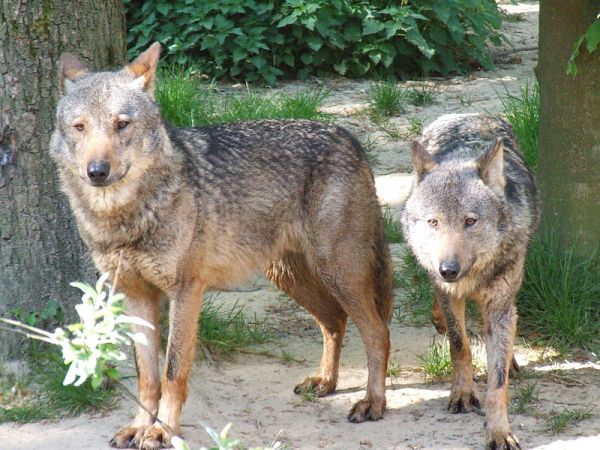
The brutal history of wolf slaughter is repeating itself in Montana where the state wildlife agency, Montana Fish, Wildlife and Parks (FWP) has proposed to extend the hunting and trapping season from a previous five-months to a nearly seven-month long season for 2013-14.
While an official minimum of 225 wolves in Montana were killed by hunters and trappers during a five-month long persecution season last year, FWP now wants to extend the killing season to nearly seven months of torture and terror for wolves and their families, and increase the number of wolves one individual can legally kill from three to five wolves.
An extended hunting/trapping season will likely kill pregnant females, who give birth in April; several hundred wolves will be killed to meet FWP’s objective to reduce Montana’s wolf population down to 400-500 individuals; Hunters and trappers can shoot wolves drawn to baited traps but not captured (this is a clear violation of Montana’s own policy of prohibiting baiting); Electronic calls would be allowed to lure wolves in front of guns awaiting to kill them.
FWP is accepting comments nationwide on or before June 24, 5 p.m. Please click here to take action for wolves now.
Read more…
Duck Killers Reward Raised To $15,000
The Inquisitr
Source The Inquisitr
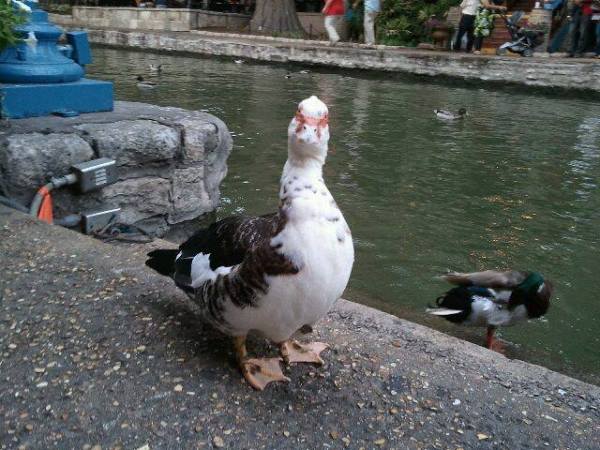
The River Walk duck killers reward has been raised to $15,000. Two men are believed to be responsible for the death and torture of George, the beloved San Antonio, Texas, duck.
George was well known to patrons of the River Walk area. He like to walk around and greet visitors who shopped and dined in the area. Last week he was hanging out around the Original Mexican Restaurant.
As reported by WOAI, two men approached George the duck and began to kick and beat him. He was then strangled and thrown into the river. The city of San Antonio is mourning the loss of the River Walk’s unofficial mascot, and they want to find the men responsible for his death.
Surveillance cameras captured footage of two men carrying George’s lifeless body. The two suspects met with four other men before carelessly tossing the body into the river.
Unfortunately, the footage is not clear enough for authorities to identify the suspects. They are counting on help from anyone who may recognize the men. Several organizations have come together in support of the investigation. Animal Care Services, Crime Stoppers, the Humane Society, and Habitat Action Network Defense have all donated time and money to the investigation into George’s violent death.
The duck killers reward has been raised to $15,000. Authorities are asking anyone with information to please contact local law enforcement or crime stoppers.
As reported by KENS5, a local artist has created a watercolor portrait of George the duck. Ginette Callaway painted the portrait, which includes the words “In memory of George who loved everyone and was murdered. RIP.” Any proceeds from the sale of the painting will be contributed to the reward fund.
The painting, which is available on ebay, has received 30 bids. The current bid is over $200. A Facebook group has also been started to offer updates, support, and information on the investigation into George’s death.
The duck killers reward has increased to $15,000, highlighting how much he was respected and loved by everyone.
[Images via Wikimedia and Facebook]
Report cruelty to animals HERE
Read more…
Wikimedia Commons
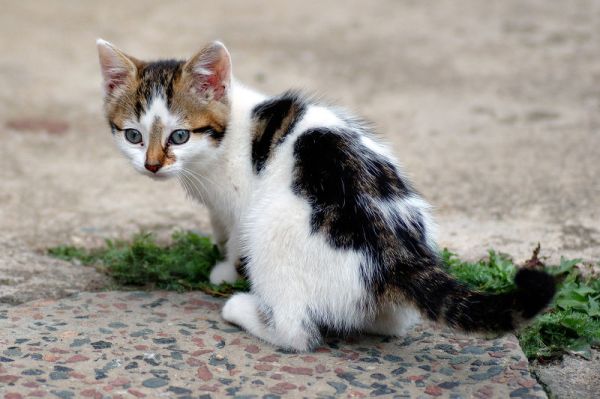
Please take a moment to write to officials at the National Institutes of Health and ask them to end cruel brain experiments on cats at the University of Wisconsin–Madison.
Following an extensive PETA campaign, Washington University in St. Louis (WUSTL) confirmed that it has ended the use of cats in painful and crude intubation training drills and is joining the hundreds of other facilities across the country that teach people to save babies’ lives by exclusively using sophisticated lifelike simulators.
The change in WUSTL’s program comes just six weeks after PETA released undercover video footage of cats having hard tubes forced down their throats in the school’s Pediatric Advanced Life Support (PALS) course, offered in conjunction with St. Louis Children’s Hospital. WUSTL was the last facility in the country that PETA knows of that was still using animals for the PALS course.
Following PETA’s recent exposé, TV icon and Missouri native Bob Barker wrote to WUSTL to offer to purchase $75,000 in simulation equipment if the school would end the cruel use of cats. PETA also filed a complaint with the Missouri attorney general alleging that misleading claims that the school made on its website in defense of the course violated consumer-protection laws.
PETA’s campaign to urge WUSTL to end its use of cats began in 2008 and has included protests, pleas from medical experts, ad campaigns, and tens of thousands of e-mails and phone calls from PETA supporters.
WUSTL joins Texas Tech University Health Sciences Center, Naval Medical Center San Diego, Naval Medical Center Portsmouth, Primary Children’s Medical Center, the University of Michigan, Heartland Regional Medical Center, and many other facilities that PETA has convinced to use modern simulators for intubation training instead of animals.
While this is a great accomplishment for these cats, there are still thousands of others locked in laboratories around the country. Please take a moment to write to officials at the National Institutes of Health and ask them to end cruel brain experiments on cats at the University of Wisconsin–Madison.
Video about toddler who won’t eat animals
This video was translated into English so this beautiful and inspiring video could be spread. Original language is Portuguese and Luiz Antonio is Brazilian.
Please, let’s respect ourselves, the planet, animals and Nature.
Please, go vegan. Do this big favor to yourself and to our Earth. We all owe it big time…
Also, if you would like to know more about our physiology as herbivores you might find this video interesting. It gathers a lot of the studies I’ve read and it’s very extensive and solid.
Are humans designed to eat meat?
Why Vegan – Boycott Cruelty!
Read more…
$1,000 Reward Offered for Information Leading to Arrest and Conviction of Puppy Mutilator
Animal League Defense Fund
Source ALDF
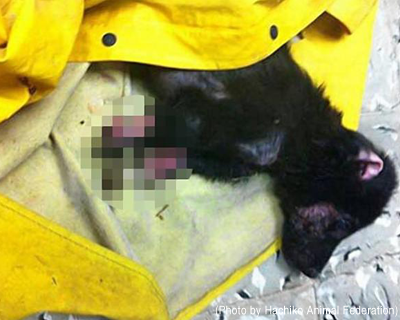
San Juan, Puerto Rico — The national nonprofit Animal Legal Defense Fund (ALDF) is offering a $1,000 reward for any information leading to the arrest and conviction of the perpetrator(s) who savagely mutilated a puppy by chopping all four legs off. The black puppy was found alive in a parking lot with infected and rotting bones and was euthanized last Sunday.
According to media reports, a local animal rescue group called Rabito Kontento had seen the puppy, who they named “Ocean,” playing happily on the beach with his mother last Friday. Ocean was found mutilated on Sunday near a resort in the northern coastal town of Hatillo. The rescue group’s spokesperson, Mariel Rojas has said “Nobody has seen anything; nobody has said anything.”
Aggravated animal abuse is a second-degree felony in Puerto Rico. The penalty for felony aggravated animal abuse is a minimum of eight and maximum of 15 years in prison, under section 16-70 of the cruelty code. Puerto Rico now has some of the strongest anti-cruelty statutes that exist after sweeping legislation was passed in 2008 based on ALDF’s Model Animal Protection Laws. That legislative victory came after some alarming animal cruelty cases in Puerto Rico prompted international petitions threatening to boycott the country unless it strengthened its animal cruelty laws. For example, in 2007 a private animal control company was accused of hurling companion animals from a bridge.
“Our hearts break for Ocean, and all the other animals like him who suffer from the sadistic cruelty of abusers” says Stephen Wells, ALDF executive director. “We call on anyone with knowledge of this horrific act to come forward for the safety of other animals. Abusers frequently repeat violent crimes against helpless animals, and often go on to victimize people as well.”
If you have information relating to the identity of the person or persons who mutilated this puppy, please contact the Animal Legal Defense Fund at 707-795-2533, x1010.
More Information
- Additional photos of Ocean’s injuries taken by rescuer, Mariel Rojas of the nonprofit Rabito Kontento (click to enlarge)
- Additional reward being offered by The Hachiko Animal Federation
 |
 |
 |
Report cruelty to animals HERE
Karen Lyons Kalmenson
Please click HERE to send letter
Background | Source Animal Welfare Institute
Dear Humanitarian,
Iceland, which already kills minke whales for profit, is poised to resume hunting endangered fin whales as well. Please join us in asking President Obama to impose trade sanctions on Icelandic whaling companies.
Since Iceland resumed commercial whaling in 2003—in defiance of an international ban—its whalers have killed 496 minke whales and 280 endangered fin whales, and exported over 2,800 metric tons of whale products to Japan. Although Iceland did not hunt fin whales in 2011 and 2012, Kristján Loftsson—head of the Hvalur whaling company and chairman of the board of HB Grandi, one of Iceland’s largest fishing companies—has announced plans to kill as many as 184 fin whales this summer, starting in early June. The hunt will produce thousands of tons of whale meat and blubber. Most will be shipped to Japan, where AWI recently found whale meat on sale as dog treats.
A powerful U.S. law called the “Pelly Amendment to the Fisherman’s Protective Act” authorizes the president to prohibit the importation of products from countries that allow fishing operations that are determined by the secretary of commerce to diminish the effectiveness of an international fishery conservation program. The International Whaling Commission (IWC) treaty is such a program.
In response to a 2010 petition from AWI and other groups, the secretary of commerce certified to the president that Iceland was indeed undermining the IWC treaty by its continued whaling. President Obama responded in September 2011 by rebuking Iceland, saying that its “actions threaten the conservation status of an endangered species and undermine multilateral efforts to ensure greater worldwide protection for whales. At that time, the president issued a series of directives to cabinet secretaries and heads of government agencies to take steps aimed at compelling Iceland to cease its commercial whaling activities.
What You Can Do:
With fin whaling about to resume, the president’s previous efforts have clearly not had the desired effect. Please write to President Obama and urge him to take a tougher stance by issuing trade sanctions against Icelandic Whaling Companies until Iceland abandons its commercial whaling program. Send your letter by filling out the form HERE.
You eat babies

Appetite for Justice
Source Appetite for Justice by Food Empowerment Project
By Lauren
To commemorate my 25th year of being a vegan, I have decided to share some stories from various investigations I have done of factory farms, auctions, and slaughterhouses. Though these investigations were conducted with the organization I started and ran, Viva!USA, they are a powerful part of my life and hopefully will help many understand why veganism is a key part to Food Empowerment Project’s goal of a more just food system.
I debated on the title for this blog and, well, you can let me know what you think. It does make me flash back to my early vegan days when I was in high school – a time when, I acknowledge, I could have done a better job of encouraging people to listen to what I had to say.
But at the same time, the above title is the truth.
People in the US who consume chickens are, well, eating babies.*
Chickens slaughtered for food are chicks, really. They are less than two months old when they are killed. These absolutely gentle and fragile birds are mere babies.
It has always been easy to find farms where chickens are being raised for “meat.” There are so many of them. It is heartbreaking.
The first farm I investigated was in Georgia. It was a Tyson facility. When I opened the door to the shed, I was hit with a wave of humidity and the intense smell of ammonia. It burned my nose and my chest. My lungs burned for a couple of days.
You see, chickens are killed after seven weeks. And workers do not go in and clean the sheds every time they send these chicks to slaughter; they just put more in. So the ammonia buildup is tremendous.
I eventually sought to do investigations of Foster Farms, which are mostly in California. If the name doesn’t sound familiar, the ads probably are: they tend to feature two puppet chickens who talk about wanting to be “Foster Farm” chickens. Yup, just as bad as the “Happy Cow” commercials.
Inside the sheds (like all chicken farms), something seems very strange. After a while you realize it is the chickens themselves: their bodies seem abnormally large compared to their heads and their tiny little chirps.
And that’s just it. They are babies. They are bred to grow very large, very fast. Not only can’t their voices keep up, but neither can their legs. And eventually, the lungs and hearts of these birds can’t keep up either; many die before they are even sent to slaughter.
Leaving one of the sheds, it was my legs that gave way. Watching these babies struggling to stand wasn’t even the main thing that made me fall down. And I do mean fall down … when leaving one of the sheds, I collapsed. I was overwhelmed. Overwhelmed with the number of birds. The reality of how many are killed. I could take 100 and would anyone even notice?
With every investigation I did, my goal was to create a campaign — something to focus on. And with chickens, I was overwhelmed with the magnitude of the lives being taken.
Every farm had dozens of sheds, and each shed had approximately 20,000 chickens inside.
At the time, 23 million chickens were slaughtered every day for food. Today it is just under 24 million.
With a number so large, how do I make every individual matter? How do I get people to understand a bird who most have absolutely no personal association with. Not like cows who many pass along the highway. Not like ducks who they see on the ponds. Not like pigs who are the focus of movies. How do we get people to see that chickens too are feeling, precious beings?
This is something I still struggle with.
I hope the more we can get people to learn about chickens as individuals, the more they will empathize with them. Like how both hens and roosters will protect chicks, whether or not they are their offspring; how roosters will let off different warning calls to protect flocks; how chickens mourn, get happy, angry and, yes, have emotions. As with all animals, just getting to know them is key. But why must we get to know their personalities before we have empathy for them?
Oh, to get people to hold one of these absolutely gentle birds, their bones so fragile, and realize that we have the power to protect them! That we need to defend the most vulnerable – like babies. They don’t need much from us to take care of them. They simply need us to stop eating them.
*Most animals raised and killed for food are killed when they are young.
This blog was written in honor of International Respect for Chickens Day.
Viva Vegan Basics
Actions for Indonesian animals

Caters News Agency
BACKGROUND | SOURCE OIPA (International Organization for Animal Protection)
Since 2009 in the streets of Jakarta, capital of Indonesia, started the horrible practice of the “Dancing monkeys” or “Topeng Monyet”. These poor animals are forced by their owners to dress up in doll costumes, dance, ride scooters and bikes, and even smoke to make money entertaining tourists.
Behind this shame, there is an extended organization: some “bosses” started to buy and collect the monkeys for renting them to others who would use them to make money on the streets; making them dance, ride bikes, smoke, and other awful mistreatments. Some monkeys die during the first weeks of terrible training. Owners cut their teeth to protect themselves from bites.
In the country there is a huge capture of monkeys from the wild and monkey trade in local animals’ markets. In fact, people catch monkeys and sell them on the streets or markets openly. This is possible because of the long-tailed macaques and pig-tailed macaques’ status in Appendix II of the CITES Convention, so they are not necessarily threatened with extinction.
Indonesia has not yet a real Animal Welfare Law, but the Article 302 of the Indonesian Criminal Code contains a small part concerning the protection for animals, but it hasn’t been updated since 1930.
Representatives of the organization Jakarta Animal Aid Network fought hard to stop these abuses and after many meetings with the government, petitions and demonstrations, the past governor in Jakarta has stated that the monkeys should be confiscated. Since the beginning of 2012, JAAD finally started to confiscate and rescue the monkeys, but the new governor is not in his position yet, so for the moment, they can’t do confiscations and save monkeys.
By the way, JAAN does an incredible work in rescuing and rehabilitating dancing monkeys. They already have tens of monkeys rescued with the assistance of the local authorities, and these monkeys are now in their care.
After the rescue, the monkey can literally ‘take off his clothes’ and start a new life. The first thing that JAAD does is to treat and cure the monkeys, for example, from painful tooth infections.
Once monkeys are healthy, they can be socialized with other monkeys in the specially designed socialization cage where they can enjoy again what monkeys do: grooming, playing, sleeping, eating, and even swimming. Right now, JAAN cares for 36 rescued dancing macaques in their rescue center.
Unfortunately, animal abuses are not limited to masked monkeys. In fact, despite dog fighting that clearly contravenes Article 302 of the Indonesian Criminal Code, this terrible phenomenon is highly widespread, especially in the Yogyakarta special region and other major cities including Bali, Jakarta, Bandung, Surabaya, and Manado. This illegal activity is conducted under the pretext of agility sports, organizing tournaments from regional and even national levels where pitbulls and jirung (Indonesian dog, pitbulls mixed with other breeds) fight against each other.
To stop animal cruelty, on July 16, 2012, in Jakarta, the local animal organizations Animal Friends Jogja (AFJ) OIPA member league, Jakarta Animal Aid Network (JAAD), and Bali Animal Welfare Association (BAWA) conducted a resolution drafting workshop, based on Article 302 of the Indonesia Criminal Code. There were fifty participants, including members of the police, authorities, and various governmental departments.
The OIPA member league Tasikoki Wildlife Rescue and Education Centre does a great work concerning the illegal trade of wildlife in North Sulawesi. In fact, they work on the investigations of animal traders, reporting information to the forestry police and organizing the confiscations in cooperation with them. Once the animals being rescued, the staff of the centre takes care of them and the physical and mental rehabilitation begins, in order for them to be released.
OIPA supports the local organizations for animal protection in their fight against animal abuse in Indonesia and hope that they will get good results.
WHOM TO CONTACT
Email Block
edukom@menlh.go.id; pusdata@dephut.go.id; pusinfo@dephut.go.id; dki@jakarta.go.id
Individual
Ministry of Environment
Dr. Balthasar Kambuaya
edukom@menlh.go.id
Ministry of Forestry
pusdata@dephut.go.id
pusinfo@dephut.go.id
Province of Jakarta
dki@jakarta.go.id
SAMPLE LETTER
To Whom It Concerns,
I am shocked to know that in the streets of Indonesian cities monkeys are forced by their owners to dress in doll costumes, dance, ride scooters and bikes, and even smoke to make money entertaining tourists.
Please, ban immediately the capture of monkeys from the wild and the monkey trade in local markets.
I also ask you to stop the awful dog fighting, an atrocious phenomenon widespread in your country.
I ask you to additionally create an Indonesian Animal Protection Law or strengthen the current article 302 of the Criminal Code to make illegal ALL activities that involve the abuse of animals.
Please, put an end to this cruelty; save the reputation of Indonesia in the eyes of the world as a country that has compassion for animals.
Kindest regards,
Read more…
Stand By Animals In China
Please sign petition HERE. Please note that you will receive a confirmation email that you must click in order to confirm your signature. Also, please note that many languages are represented on the petition.
Source Stand By Animals In China
Tens of millions of animals are slaughtered and butchered in China each year. Animal fur is in high demand, and the Chinese deliver. What does not get exported outside of China usually ends up on a dinner plate. The sad fact is that the animals suffer horrendous torture. They are captured on the streets, and packed by the dozens into small cages, without ability to move. They are then tossed like inanimate objects from the trucks, onto the ground, hitting each other and the steel cages. These cages are later stacked, and the real nightmare begins. The animal is brutally pulled out of the cage, and tied to prevent resistance. She is lightly stunned by a blow on the head, but still alive. If the animal is not heavy, the worker holds her by her hind legs, waves her in the air and then bashes her head against the ground.
Once the animal is subdued, a new and incomprehensible stage in this ongoing nightmare begins. The worker cuts a tiny incision in the animal’s rear, and then methodically peels away the skin. This skinning process takes about a minute, during which the worker actively keeps the animal alive, as it is believed that it is easier to skin the animal while he is still warm and blood flows through his veins. The nightmare does not end here.
The final stage in this unbelievable horror is when the animal is tossed aside, and slowly, amidst a heap of his dying friends, he perishes as he is no longer able to withstand the pain. In other cases, when the animal’s fur is not needed (mostly with cats), the animals are put in a sack, and are then cooked alive in a barrel of boiling water.
This process is extremely hard to digest, but we believe it is not propelled by cruelty, but rather by ignorance and lack of awareness to animal needs. The workers do not think to kill the animal before they begin, and are not aware of the animal’s suffering.
We find it important to emphasize that these cases do not occur all over China, and usually take place in areas with low awareness. There are many animal lovers in China who raise pets and treat them like family. There are even organizations operating in China for years now, working towards eradicating this custom. Yet, we believe it is only a drop in the ocean. These are the cases we are exposed to through the media, but we are most worried about the cases that we are not exposed to and are not brought to our attention.
We find it important to support the organizations operating in China, but it is crucial to apply international pressure on the authorities in China, because we believe a real change will only be followed by legislation. The authorities in China must legislate suitable rules, designed to protect animals and provide them a life of respect and security, in life and in death. These kind of customs occur in other countries as well, and there is no doubt that cases os animal abuse take place all over the world. But due to China’s dimensions, this custom is far more drastic and severe. We address the Chinese nation, since we believe that only a true change beginning in a country as large as China, could lead to a true change in the entire world. Our commitment is to provide enlightenment.
It is our moral obligation to these animals. If we shut our eyes this will not go away!
Read more…
The beat burns. The vortex swirling, reverberating, unpredictable, and free. Weightless, head spinning, I travel with the piercing, pounding, poetry as it pulses through my bloodstream. I let go of everything around me, travel to another plane of existence. I succumb to pure emotion…mind, body, soul…
I like the way you make me feel.
“I always believed that Hip Hop was a revolutionary movement against injustice and abuse,” says Croatian Hip Hop artist, IFEEL. “It’s only natural that now it speaks up for abused and neglected animals.”
“I constantly remind myself why I do it. The faces and stories of abused animals keep me energized and motivated. That is why I visit animal sanctuaries and watch gruesome videos that are really hard to watch. It fuels my passion to do what I do.”
I do it for the calf in box 44
He can only stand up and fall on the floor
I do it for the dog skinned alive for fur
Rabbit in a bag – scared – waitin’ to be served
Little pigs whose cries will never be heard
The album ANIMAL IN ME was unleashed in November 2012. When IFEEL decided to rap from the abused animals’ point of view, he knew that his music would reach a limited audience. “But,” IFEEL says, “I believe in the importance of the message in my music and cannot imagine rapping about anything else.”
“My weapon is music and I use my music to expose animal abuse.” The music video, Ja sam Rea (I am Rea) was filmed at a local dog sanctuary, Udruga Pobjede. “I recorded that song and shot the video to spark a dog revolution in Croatia, which we did.”
IFEEL actively collaborates with a local animal rights organization in Zagreb, Animal Friends Croatia, to inspire compassion towards animals. “In addition to demonstrations against animal abuse, I enjoy participating in projects where we get the message out in a new and unpredictable way,” IFEEL says. “We need to shake things up with new ideas and fresh, positive energy.”
I wanna see the stars shine
I wanna feel the sunshine
I wanna taste the air and the breeze and the grass
And the trees
And whatever else I may see
On June 1, 2013, IFEEL will begin a four-city tour in Winterthur, Wien, Klagenfurt, and Zagreb as part of Veganmania. “While in those cities, I will also be visiting local animal sanctuaries where I will meet the animals and volunteers,” IFEEL says. “I hope to inspire more people to visit animal sanctuaries and help out.”
Good morning sunshine
Open your eyes and smile
No more pain
No more lies
No more fear
No more cries
No more tears in the crowded cage
No more evil drunken rage
When asked to participate in the Anti-Fur Society Animal Rights Conference, IFEEL knew he had to do something special for the Generals, who war against greed and ignorance. “We went deep into the woods and shot a special video message for all the activists at the conference.”
Also in the video performance, IFEEL included an acapella version of his song, Thank You, “a thank you message from the animals to all people who help them and fight for their dignity.”
“Getting the message out through music and videos is my direct activism,” IFEEL adds. “It’s what I love and what I know I do well.”
And in the words of IFEEL…My love for you will never end
Click here for the FREE album download: ANIMAL IN ME
- Website: www.musicifeel.com
- Facebook: www.facebook.com/ifeel.sixthsense
- Twitter: twitter.com/ifeelanimals
- YouTube: www.youtube.com/user/MusicIFEEL
- Pinterest: pinterest.com/musicifeel/ifeel
IFEEL music supports the work of animal rights activists and is open to creative collaborations on projects that spark compassion towards animals and vibe with the energy of his music. Press contact: management@musicifeel.com
Read more…
God Wants Pope Francis To Be The First Vegan Pope
God Wants Pope Francis To Be The First Vegan Pope
By Arthur Poletti
With God’s guidance, will Pope Francis be motivated, like no other Pope before him, to go against the status quo, taking a firm stand against all odds, criticisms, and adversaries?
The following letter titled *God Wants Pope Francis To Be The First Vegan Pope And Powerful Voice For The Voiceless* was recently mailed from the United States to Pope Francis at five different addresses that The Pope receives mail in Italy.http://www.all-creatures.org/letters/20130406-ap.html
The same letter to Pope Francis with a cover letter was also mailed to many Catholic religious leaders in the United States, including Francis Cardinal George.“IF” The Pope reads the letter that was mailed to him, and more importantly, watches the 3 superb, fascinating, and heart-wrenching videos that are recommended, THEN FOR SURE, *THE ODDS WILL BE HEAVILY IN FAVOR* OF POPE FRANCIS BECOMING THE FIRST VEGAN POPE!!Together, the three amazing videos reviewed below SHOULD CONVINCE His Holiness Pope Francis and most mature, compassionate, rational, open minded religious leaders to become a VEGAN!!Will THE RELIGIOUS LEADER Of An Estimated 1.2 BILLION ROMAN CATHOLICS BECOME A POWERFUL VOICE FOR THE VOICELESS?
Reference: http://www.bbc.co.uk/news/world-21443313
Here are previews of each video that Pope Francis needs to watch!!
(1) EARTHLINGS is now a free feature length documentary about humanity’s absolute dependence on animals (for pets, food, clothing, entertainment, and scientific research) but also illustrates our complete disrespect for these so-called “non-human providers.” The film is narrated by Academy Award nominee and Vegan Joaquin Phoenix (GLADIATOR) and features music by the critically acclaimed platinum artist Moby.Earthlings is by far the most comprehensive documentary ever produced revealing the correlation between nature, animals, and human economic interests. There are many worthy animal rights films available, but none are better than this masterpiece. Earthlings cries to be seen. Highly recommended!Watch Earthlings: http://www.youtube.com/watch?v=uEliPlTqkEk
(2) *Best Speech You Will Ever Hear* by vegan Gary Yourofsky is also, one of the most important speeches anyone will ever hear. A magnificent speech that is delivered with real passion and eloquence, and is very convincing. The free 70 minute youtube video is now also posted with subtitles in many languages in over 30 countries. After 2,388 lectures to more than 60,000 people at 178 schools in 30 states and 5 Israeli cities, there is no doubt that Gary’s presentation is one of the most informative, passionate, and terrifically rewarding speeches ever conducted about ethical veganism!Watch: http://www.all-creatures.org/articles/video-flv-bestvideo.html
(3) VEGAN Father Frank Mann
Father Mann’s bold and emotional explanation of why he became a vegan is sincere, convincing, and inspiring. Father Mann speaks from his heart and his soul, and may have set an example and a precedent for many religious leaders throughout the world to seriously consider and hopefully emulate.
Watch: http://freefromharm.org/videos/educational-inspiring-talks/father-manns-journey-to-embracing-a-vegan-vision-of-Christianity/
Contact
Arthur Poletti
aapolet@aol.com
708-246-4872
708-738-1944
Read more…
Amirim, Israel: The world’s first vegan village
Viewer discretion is advised.
Source haOlam.de
Interview with Dr. Ohn-Bar, one of the inhabitants
Haolam: Dr. Ohn-Bar, thank you very much for agreeing to participate in this interview. You were born a daughter of a vegan mother. You live in the vegan village of Amirim, Israel. Together with your husband, you run a guesthouse in Amirim which attracts eco- tourists from all over the world including Germany. How many inhabitants does your village have? Is it a municipality in itself or a kibbutz?
Dr. Ohn-Bar: Amirim is a vegetarian village, not a kibbutz. There are about 160 families here, around 600 people, including children. Just to let you know – as you can see in our website – I am a therapist, with a PhD in natural health sciences and a masters degree in educational psychology, rehab. counseling , psycho-physiology and biofeedback. I am a mother of five, and a grandmother of four – all of us are vegans.
My grandfather started with vegetarian living at the age 9, in Russia – as he did not want to have a graveyard in his stomach. He immigrated with his family to the United States, where he met my grandmother, and they decided to raise a vegetarian-Zionist family, so my mother was born vegetarian and spoke Hebrew at home. She picked up English only when she played with the kids in Cleveland, Ohio. She met my father at the Juilliard School of Music in New York, and then they made “aliya” – came to Israel, where I was born, the only vegetarian girl in their kibbutz, which was near Jerusalem. My parents had 7 children, and we are all vegetarians. My four granddaughters are fifth generation vegetarian. Thus it began from a humanistic aspect (not wanting to take part in killing animals), my parents added the health aspects (preventing illness through a healthy life style), and my children added the ecological aspects of vegan life (not taking part in the pollution of the meat industry, etc).
Haolam: Tell us a bit about the history of Amirim and its founders. When was it founded and why in this particular place?
Dr. Ohn-Bar: Amirim was founded by a small group of vegetarians who wanted to raise their families in a healthy lifestyle. They looked for a place, and found this mountain, which some new immigrants from North-Africa had just abandoned due to difficulties in settling here. So they started, in spite of the difficult conditions — rocks, no water, winds, but what a beautiful view to Lake Kinneret (the Sea of Galilee), and they pitched their tents, and started growing gardens, and then more people came, and built their homes, and the place grew nicely.
We came in 1976 from Jerusalem, as a young couple with a baby (Ofek, who is now 37, and he is the one who created our website). Please Google Amirim to see more details of the place s history. You can find more information at www.amirim.com
Haolam: Veganism, as I understand it, is a way of life that opposes any use of animal products such as meat, leather, milk, honey or soap. There are a variety of reasons why people go vegan: compassion for animals, health benefits of a plant-based diet, sustainable management of resources such as crops and – specially important in the Middle East, of course: water. Nearly half of the water being used in the US goes to raising animals for food. What was the main reason motivating the settlers who founded Amirim?
Dr. Ohn-Bar: As I wrote before – all the reasons are good. It began with love for animals and caring about their right to live. And then the health reasons began to be in focus, and people who had healed themselves from deadly diseases through a vegetarian diet, looked for a place to raise their children this way, and joined the village, and in later years, with the rising awareness of global warming and pollution from the meat industry, now more and more people all over the world are becoming vegan.
Haolam: Tel Aviv features a number of superb vegan restaurants. Do you think it s fair to say that Israel is a forerunner for animal rights in the Middle East?
Dr. Ohn-Bar: I don t know for sure, but it seems that Israel has more active people in the ecological and environmental movements, trying to keep the earth clean and educating people about sustainable management of natural resources. We still have a long way to go, as far as air and water pollution is concerned, but I think not many people care about these issues in Jordan, Egypt, Syria or Saudia Arabia, etc.
Haolam: A number of Jewish personalities have dedicated their lives to the defense of animal rights. When reading about their motivations a recurring theme seems to be their own experiences or those of their parents during the Holocaust. Among those was short story novelist and Nobel Laureate Isaac Bashevis Singer who in his short story “The Letter Writer” has the protagonist say: “In relation to animals, all people are Nazis; for the animals, it is an eternal Treblinka.” For us Germans this sentence is hard to swallow as it could be misconstrued to equate animals with the Jews when indeed it focuses on the suffering experienced by the animals. However the experience of being treated as subhuman by the Nazis lead some victims of the Shoah to cultivate a sort of “x ray vision” as far as cruelty against animals is concerned. Where others just see a sirloin steak they hear the death cries of animals. Where others do not wish to think about the cruelty carefully concealed in the killing factories where society gets on with its business of “meat production” they have developed a sense of awareness and compassion for those classified as “below human”. Do you believe that some of Amirim’s founders have been motivated in any way by what happened to the Jews in Germany and Europe?
Dr. Ohn-Bar: My kids get upset when anyone uses animals for fur, shoes, bags, etc, and are against any abuse of animals. Without thinking of the Holocaust, they would not kill a fly or even a scorpion. My grandfather taught us how to put a cup over an unwanted insect in the home, putting a piece of paper under the cup, so we can take it outside, without hurting it, because every creature has a right to live. And this is how we raised our family. Whenever we see chickens in their crowded cruel cages, or on a truck, half dead bodies one on top of each other, going to the slaughter house, we say – here is the concentration camp. The association is there, all the time..
By the way, I belong to a theater group “The Secrets of Sound”, which has a main goal: to memorialize the Holocaust. We are a movement theater – no words are used, so there is no need for translation. We performed in Latvia and Romania, in international theater festivals, in “Yad Vashem” and in many memorial services for the Holocaust throughout the country. We perform in front of students and youth groups who go to Poland. People are very touched by our show, not one eye remains dry. We will be happy to perform in Germany if you invite us. Please visit https://sites.google.com/site/secretsofsound/ where you can see some of the audience responses and some video excerpts.
Haolam: Let s talk about Judaism. The Torah has formulated some rules for the protection of animals. On the other hand the Torah also established the idea that humans were created in the image of God whereas – scientifically speaking – other animals were not. In his 2001 book Judaism and Vegetarianism Richard H. Schwartz (emeritus, College of Staten Island) argues that vegetarianism was the diet best fitted to basic Jewish values. A number of publications by Jewish writers is available on Amazon such as Vegetarian Judaism: A guide for Everyone or The Jewish Vegetarian Year Cookbook”. What role has the Jewish religion played as a motivator for the founders of Amirim? If you are religious at all what do you believe the Torah has to say on meat eating?
Dr. Ohn-Bar: Amirim is a non-religious community in general, but there are some religious families here, who of course are also vegetarians. I think that if you kill animals, you are inhuman, no matter what the Torah said. People wrote the Torah, not God, and people have weaknesses and addictions, and they decide about rules which they find suitable for them. In the beginning, according to the Bible’s Adam and Eve in the Garden of Eden, did not eat meat – only fruits and vegetables, seeds, wheat, etc. Only later in the Bible, when human beings became corrupted, they began eating meat. The famous great Rabbi Kook said, that if people would stop killing animals, and live as vegetarians, they wouldn’t kill each other, and perhaps there would be no more wars in the world. He advocated a vegetarian life as a way to achieve peace.
And if you go to the prophet Isaiah (Yishayahu), his vision of the “last days” (acharit hayamim) was, that a wolf would sit peacefully next to a lamb, and a tiger would sit with a lamb, so vegetarian living is something to wish for, even among animals.
Haolam: In western society, vegans and vegetarians are often laughed at and looked down upon by society as “extreme” or “radical”. How has the Israeli public welcomed your village when it was first founded? Have there been developments since then?
Dr. Ohn-Bar: Yes, I guess people always looked at different life styles as “weird”. When i was a little girl the kids in my class would laugh at me for eating lettuce, and made fun of me, as if I was a rabbit, but I just laughed with them, and was always proud to be different, and special, and I have not eaten any meat throughout my entire life (60 years now). I did not care what other people think, and in Amirim, you will find that people believe very strongly that this is the way we should all live, and try to educate others about it, influencing them tol change their life style.
As a therapist I see too many people become victims of their own habits, bad nutrition, smoking, etc. and when they see our ways and learn more – they become vegans and feel better, not only physically but also emotionally and mentally. There are so many proofs that the vegan way is the healthiest way of life, we do not look at it as radical or extreme, as you say, but closer to nature.
Haolam: Amirim is beautifully located high up in the hills of Galilee overlooking the Kineret. For vegans the benefits of spending a holiday in Amirim are obvious: no hassle finding a health food store to get something to eat, no “green salad without the dressing” for lack of vegan options at the restaurant but rather an opportunity to discover vegan cooking the Israeli way and the freedom to choose from the menu without a care in the world. Non- vegans might benefit from spending their summer holidays in Amirim, to try out a new way of life or to make the transition for good. What tourist attractions other than vegan food does Amirim and the area have to offer?
Dr. Ohn-Bar: In addition to the great food, we have health spas, and health treatments, as well as workshops and lectures Also, in the summer we have musical concerts in nature, and guided tours in the natural trails around Amirim, and in the natural forests.. Please look at www.amirim.com to see all the attractions in the area.
Haolam: Do you get a lot of tourists from Germany?
Dr. Ohn-Bar: Yes, many young tourists from Germany come to stay here, and also from other countries. Our website has almost all the languages, and people now are looking for more ecological tourism.
Haolam: What types of accommodation does Amirim have to offer? Are there guesthouses ranging from economic to luxury? Is there a camp site for those who wish to spend the nights in their tent?
Dr. Ohn-Bar: No, there is no camping here, but there are many camping sites in the area around Amirim, in the forests of the Galilee. You can see our guesthouses at our website. There are different kinds of rooms, for couples and for families, to suit any budget.
Haolam: How does one get to Amirim? Is it recommended to hire a car at Tel Aviv airport? Is there a bus connection?
Dr. Ohn-Bar: As you can see on our website, you can rent a car and drive to Amirim, or you can go by train from the airport to Akko and take a bus from there. It is very easy to get here, and we have all the instructions on the first page.
Haolam: What is the best time of the year to travel there in terms of the weather?
Dr. Ohn-Bar: It is beautiful and green all year round. Even in the winter we have many sunny days, but when it is a little foggy or rainy, you can still drive around and see the Galilee, or spend some time in the hot tub, get a massage, sit in one of the restaurants or watch movies (we have a great collection of 2000 DVD s).
Haolam: Dr. Ohn-Bar, thank you so much for responding to our questions.
Ohn-Bar guesthouse: http://www.amirim.com
Video: Meet your Meat http://www.youtube.com/watch?v=UFNFvOyTJd8
The interview has been conducted by Cheerful Coyote
News in RealTime in our Facebook-Group
Click HERE to learn how to go vegan, including tips, recipes, and reasons
Order a FREE vegan kit: http://www.peta.org/living/food/free-vegan-starter-kit/
Take PETA’s Cruelty-Free Shopping Guide along with you next time you head to the store! The handy guide will help you find humane products at a glance. Order a FREE copy HERE
Searching for Cruelty-Free Cosmetics, Personal-Care Products, Vegan Products, or more?
Click HERE to search.
Want to do more than go vegan? Help others to do so! Click below for nominal, or no, fees to vegan literature that you can use to convince others that veganism is the only compassionate route to being an animal friend.
PETA: http://www.petacatalog.com/catalog/Literature-39-1.html
Vegan Outreach: https://veganoutreach.org/order-form/
Have questions? Click HERE
Two vital actions, one for US friends
Wikimedia Commons
1. Please click HERE to sign and send automatic message opposing dangerous King amendment
Background | Source WSPA
I want to make you aware of a very dangerous amendment that was proposed late last week in the House of Representatives that could put the protection of animals in the United States in jeopardy.
The King Amendment, proposed by Iowa state Rep. Steve King, would take away a state’s right to pass laws governing the production or manufacturing of any agricultural product, including food and animals raised for food, that is involved in interstate commerce. This broad definition could have a negative impact on a wide range of animal welfare issues from securing better living conditions for farm animals to the banning of the shark finning trade – issues you’ve supported and helped us work on to improve! And, it could also have a harmful effect on food safety requirements and standards – a major concern for most consumers.
Please contact your local representative and ask them to 1) oppose the King amendment and 2) work with their fellow representatives to remove the amendment from the 2012 House Bill. Visit our Action Alert page and send a letter directly to your representative today.
2. Please click HERE to leave below sample message to protect sharks
Sample Comment
Please support listing ALL species of the scalloped hammerhead under the ESA. Doing so would end directed harvest of scalloped hammerhead sharks in all U.S. fisheries; help reduce the number of sharks caught as bycatch in fisheries targeting other species; provide the additional protection of a critical habitat designation in US waters for scalloped hammerheads; and prohibit the importation, sale, and trade of scalloped hammerhead sharks, their parts and/or products, which would help protect this species in other countries and provide the incentive to improve tools and techniques available to accurately identify shark products.
Background | Source Animal Welfare Institute
The Animal Welfare Institute (AWI) needs your help to win protections for scalloped hammerhead sharks under the Endangered Species Act.
Every year, tens of millions of sharks die a slow, painful, death because of shark finning, with the scalloped hammerhead one of the most overfished due to demand for the shark fin trade. They are also often the victims of bycatch by other fisheries, and are usually not released because of the value of their fins.
On April 5, 2013, the National Marine Fisheries Service (NMFS) proposed to list four Distinct Population Segments (DPS) of scalloped hammerhead sharks (Sphyrna lewini) as “threatened” or “endangered” under the Endangered Species Act (ESA). The listing proposal cites threats from overfishing and inadequate management of foreign fisheries, including illegal, unreported and unregulated (IUU) fishing as contributing to the sharks’ precarious situation.
AWI submitted comments to NMFS in January 2012 recommending that all scalloped hammerhead sharks be listed. While we applaud the agency’s intent to list four DPS, we are again calling for protections for all scalloped hammerhead populations and urge you to do the same.
Please visit the NMFS comment page by the June 4, 2013, deadline and ask it to list all species of scalloped hammerhead sharks.
Read more…













 Our Compass