HighestWelfare.Humane.Assured.GoodPractices.Vegetarian. Regenerative.Flexitarian.Lies...
What is the difference between No Welfare, High Welfare, and Highest Welfare when they all require animals to die? Only human comfort, NONE protect the actual animals. The most humane, ethical, and honest Webster-defined "welfare" is NOT exploiting animals - not using, not wearing, not eating, not killing - animals. The only meaningful position is vegan, everything else is just how humans euphemize animals' required suffering and violent deaths: no human exploits animals because they honestly believe that NOT exploiting animals is UNethical or INhumane.

Wikimedia Commons
Take action here to keep the slaughterhouse doors closed to horses!
Use this form to send an email to the members of the committees currently considering passage of the Safeguard American Food Exports Act. Send a letter to respectfully demand a full hearing on the bill pending in each chamber.
This bill is an excellent safeguard to protect people from the dangers of eating horsemeat, and a way to assure that the law protects horses. Let’s keep our laws strong in protecting horses from cruel and inhumane practices.
Petition Text
I am writing today in support of the Safeguard American Food Exports (SAFE) Act (H.R. 1094/S. 541). Horse slaughter for human consumption has been outlawed in the United States for many years, and the SAFE Act aims to protect the food supply in the United States from the dangers that consumption of horse meat poses. Racehorses are often treated with drugs that would harm a human if consumed, according to the Federal Food, Drug, and Cosmetic Act.
Consuming horse meat likely poses a serious threat to human health, and the public should be protected from these unsafe products. As a constituent, I am writing today to respectfully demand a full hearing on the bill pending in each chamber.
Please support the SAFE Act (H.R. 1094/S. 541) to protect human health and horses.
Sincerely,
Read more…
Wikimedia Commons
BACKGROUND
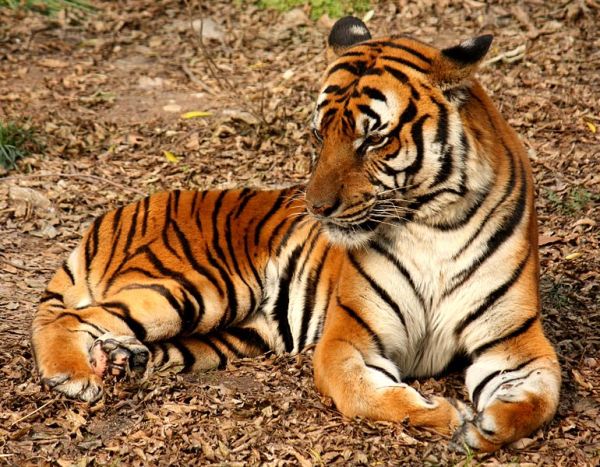
In October 2011, sheriff’s deputies armed with assault rifles opened fire on dozens of “mature, very big, aggressive” lions, tigers, cheetahs, and other animals in Zanesville, Ohio, after the owner—who opened cage doors and left fences unsecured before killing himself—allowed the animals to escape. The tragedy in Zanesville is far from an isolated incident. Incidents involving big cats in the United States have resulted in more than 235 human injuries and the deaths of more than 85 cats and more than 20 people. According to news reports, in June 2013, an Indiana woman shot and killed a leopard who was roaming in her backyard. Fortunately, U.S. Rep. Buck McKeon, R-Calif., has reintroduced the Big Cats and Public Safety Protection Act (H.R. 1998), a bill that would mean unparalleled improvements for big cats who are kept as “pets” in the United States.
Today, there are no federal regulations mandating minimum standards of care for the thousands of big cats in private hands who—having grown from cute cubs into unruly, inherently dangerous predators—are confined to tiny, barren backyard cages and left to languish or for those who are sold on the black market for their skins, bones, and other body parts. The Big Cats and Public Safety Protection Act would put an end to this by banning private individuals from owning and breeding large cats. Violators would be subject to steep fines, jail time, and confiscation of animals.
WHOM TO CONTACT
For the animals’ sake, take a moment now to contact your U.S. representative and urge him or her to co-sponsor H.R. 1998! You can find your representative’s phone number here. Please follow up your call with a brief e-mail (you can find your representative’s e-mail address here). Feel free to use the form letter below, but personalized comments are always preferred. Don’t forget to share this urgent alert with your friends and family!
SAMPLE LETTER
Subject: Please Co-Sponsor H.R. 1998, the Big Cats and Public Safety Protection Act
As a constituent, I am writing to ask you to co-sponsor H.R. 1998—the Big Cats and Public Safety Protection Act. This important legislation would prohibit private individuals from owning and breeding dangerous big cats, such as lions and tigers. Not only would this help ensure the physical and psychological health and well-being of thousands of captive big cats currently languishing in cramped, barren backyard cages in the U.S., it would also subject violators—including irresponsible big-cat owners who currently threaten public safety by allowing public contact or by failing to supply secure enclosures for these dangerous wild animals—to steep fines, jail time, and confiscation of animals.
Incidents involving big cats in the United States have injured more than 235 humans and have resulted in the deaths of more than 85 cats and more than 20 people. As you probably know, in 2011, sheriff’s deputies armed with assault rifles opened fire on dozens of “mature, very big, aggressive” lions, tigers, cheetahs, and other animals in Zanesville, Ohio, after the owner—who opened the animals’ cage doors and left fences unsecured before killing himself—allowed the animals to escape. According to news reports, in June 2013, an Indiana woman shot and killed a leopard who was roaming in her backyard. Many other big cats are sold on the black market—the global illicit wildlife trade is worth an estimated $20 billion per year—for their bones and other body parts.
Thank you for considering this urgent appeal.
Speak Out and Protect Gray Wolves!

Wikimedia Commons
BACKGROUND | SOURCE BORN FREE USA
Dear Friend:
The Fish and Wildlife Service (FWS) has launched an attack on the endangered gray wolf that threatens to decimate its slowly recovering populations. FWS has published a proposal to remove gray wolves from the list of endangered species, and we must speak out against this travesty.
Thousands of these majestic animals once roamed across the United States, but exploitative bounty programs, poisons, trapping and aerial shooting nearly eliminated the gray wolf from the lower 48 states over the past century.
Gray wolves were placed on the list of species protected under the Endangered Species Act in 1973, but their recovery is far from over and their survival is still precarious. The gray wolf has already been delisted in the Great Lakes Region, and Born Free USA is part of a major lawsuit to restore protection. If delisted, states could open trophy hunting seasons that encourage the most inhumane methods of hunting, including steel-jawed traps, baiting, and attacking wolves with packs of dogs.
We have an opportunity to fight this proposal, but we must act quickly before wolves are again made vulnerable because we have only 3 months to weigh in. The short-sighted proposal is driven by a disregard for this iconic species, and all compassionate Americans should submit a comment in opposition of this decision.
WHOM TO CONTACT
The short-sighted proposal is driven by a disregard for this iconic species, and all compassionate Americans should submit a comment in opposition of this decision. Only your comment is required, no name, address, or email is necessary.
SAMPLE COMMENT
FWS has published a proposal to remove gray wolves from the list of endangered species. Thousands of these majestic animals once roamed across the United States, but exploitative bounty programs, poisons, trapping and aerial shooting nearly eliminated the gray wolf from the lower 48 states over the past century.
Gray wolves were placed on the list of species protected under the Endangered Species Act in 1973, but their recovery is far from over and their survival is still precarious. The gray wolf has already been delisted in the Great Lakes Region. If delisted, states could open trophy hunting seasons that encourage the most inhumane methods of hunting, including steel-jawed traps, baiting, and attacking wolves with packs of dogs.
I vehemently oppose this proposal and encourage compassionate decision-makers to please keep wolves listed on the Endangered Species Act.
Thank you for considering this urgent appeal.
Read more…
What we always knew: fish feel pain
Please leave fish off your forks. Click here to learn how to go vegan, or order PETA’s free vegetarian/vegan starter kit for great tips and recipes to help you make the transition to a fish-free vegan diet.
Source: PETA
In her book Do Fish Feel Pain? biologist Victoria Braithwaite says that “there is as much evidence that fish feel pain and suffer as there is for birds and mammals.”
Fish don’t audibly scream when they’re impaled on hooks or grimace when the hooks are ripped from their mouths, but their behavior offers evidence of their suffering—if we are willing to look. For example, when Braithwaite and her colleagues exposed fish to irritating chemicals, the animals behaved as any of us might: They lost their appetite, their gills beat faster, and they rubbed the affected area against the side of the tank.
Neurobiologists have long recognized that fish have nervous systems that comprehend and respond to pain. Fish (like “higher vertebrates”) have neurotransmitters such as endorphins that relieve suffering—the only reason for their nervous systems to produce these painkillers is to alleviate pain. Researchers have created a detailed map of more than 20 pain receptors, or “nociceptors,” in fish’s mouths and heads—including those very areas where an angler’s barbed hook would penetrate a fish’s flesh. As Dr. Stephanie Yue wrote in her position paper on fish and pain, “Pain is an evolutionary adaptation that helps individuals survive . . . . [A] trait like pain perception is not likely to suddenly disappear for one particular taxonomic class.”
Even though fish don’t have the same brain structures that humans do—fish do not have a neocortex, for example—Dr. Ian Duncan reminds us that we “have to look at behaviour and physiology,” not just anatomy. “It’s possible for a brain to evolve in different ways,” he says. “That’s what is happening in the fish line. It’s evolved in some other ways in [other] parts of the brain to receive pain.”
Numerous studies in recent years have demonstrated that fish feel and react to pain. For example, when rainbow trout had painful acetic acid or bee venom injected into their sensitive lips, they stopped eating, they rocked back and forth on the tank floor, and they rubbed their lips against the tank walls. Fish who were injected with a harmless saline solution didn’t display this abnormal behavior.
Trout are “neophobic,” meaning that they actively avoid new objects. But those who were injected with acetic acid showed little response to a brightly colored Lego tower that was placed in their tank, suggesting that their attention was focused instead on the pain that they were experiencing. In contrast, trout injected with saline—as well as those who were given painkillers following the painful acid injection—displayed the usual degree of caution regarding the new object. Similar results have been demonstrated in human patients suffering from painful medical conditions: Medical professionals have long known that pain interferes with patients’ normal cognitive abilities.
A study in the journal Applied Animal Behaviour Science found that fish who are exposed to painful heat later show signs of fear and wariness—illustrating that fish both experience pain and can remember it.
A study by scientists at Queen’s University Belfast proved that fish learn to avoid pain, just like other animals. Rebecca Dunlop, one of the researchers, said, “This paper shows that pain avoidance in fish doesn’t seem to be a reflex response, rather one that is learned, remembered and is changed according to different circumstances. Therefore, if fish can perceive pain, then angling cannot continue to be considered a noncruel sport.”
Similarly, researchers at the University of Guelph in Canada concluded that fish feel fear when they’re chased and that their behavior is more than simply a reflex. The “fish are frightened and … they prefer not being frightened,” said Dr. Duncan, who headed the study.
Other studies have shown that fish communicate distress when nets are dipped into their tanks or they are otherwise threatened. Researcher William Tavolga, for example, found that fish grunt when they receive an electric shock. In addition, the fish begin to grunt as soon as they see the electrode, in anticipation of the painful experience to follow.
In an interview with the Australian Broadcasting Corporation’s Counterpoint program, Dr. Culum Brown of Macquarie University explained that the stress that fish experience when they are pulled from the water into an environment in which they cannot breathe is “exactly the same as a person drowning.”
And Dr. Lynne Sneddon, who led a groundbreaking two-year study by scientists at Edinburgh University and the Roslin Institute in the U.K. proving that fish do feel pain, stated, “Really, it’s kind of a moral question. Is your angling more important than the pain to the fish?”
Anglers may not want to think about it, but fishing is nothing more than a cruel blood sport. When fish are impaled on an angler’s hook and yanked out of the water, it’s not a game to them. They are scared and in pain and fighting for their lives. Michael Stoskopf, professor of Aquatics, Wildlife, and Zoologic Medicine and of Molecular and Environmental Toxicology at North Carolina University, said, “It would be an unjustified error to assume that fish do not perceive pain in these situations merely because their responses do not match those traditionally seen in mammals subjected to chronic pain.”
Dr. Michael Fox, D.V.M., Ph.D., put it this way: “Even though fish don’t scream [audibly to humans] when they are in pain and anguish, their behavior should be evidence enough of their suffering when they are hooked or netted. They struggle, endeavoring to escape and, by so doing, demonstrate they have a will to survive.”
Please leave fish off your forks. Click here to learn how to go vegan, or order PETA’s free vegetarian/vegan starter kit for great tips and recipes to help you make the transition to a fish-free vegan diet.
PDF to print and give out: What About Fish
Read more…
Stop the Deer Slaughter
Source IDA
Express your outrage by adding your name to IDA’s petition here to the National Park Service to end the slaughter.
Young. Old. Pregnant. Near tame. Lured by the sweet scent of crisp apples and earthy oats in the hushed midnight air…then murdered where they stood.

Karen Lyons Kalmenson
The National Park Service is slaughtering innocent urban deer on your tax dollar and mine. But you can help stop the madness by doing two simple things now:
Here’s how the National Park’s midnight horror unfolded:
Just this past March, IDA petitioned the National Park Service to drop its plans to “bait and kill” over 100 beloved and gentle white-tailed deer, whose ancestors have lived in Washington, DC’s, Rock Creek Park for over a century! We also launched a legal battle.
But the judge ruled it wasn’t up to the court. In a shocking countermove (despite a passionate public protest outside Rock Creek Park) the National Park Service moved into the park in the dead of night. They shot nearly two dozen tame and pregnant deer!
Please take action by signing HERE.

Wikimedia Commons
Source PEBloggers
By Sandra Stokley
If you read my blog on a regular basis, you’re familiar with my dog Skippy: “the best dog in the universe.”
Skippy’s no longer with us, but when he was alive, he had a curious habit. Whenever an ambulance or fire truck passed nearby with siren wailing, Skippy would throw his head back and let out the most blood-curdling howl.
I mention this, because it’s an example of how sensitive our furry friends are to sounds. Which brings me to the 4th of July.
In the city I live in, fireworks are illegal. But there are always some knuckleheads in my neighborhood who start setting off firecrackers early in the day and continue into the night when the beer is flowing freely. I’ve already heard some really loud ones.
The loud noises panic animals and they will jump over or dig down under fences in a frantic effort to escape the noises. Cats are even more high strung and can get into even more trouble.
According to a news release, 306 dead animals were picked up by animal control officers throughout Riverside County on July 5, 2012.
Over at our house, we don’t have that problem. We gather the critters (two dogs and a cat) in the bedroom, close the door, put on “Yankee Doodle Dandy” with James Cagney (a holiday tradition) and we’re set.
If you’re planning to be out for the night, just make sure to confine your dogs and cats. Click here to see some tips from the folks at the Riverside County Department of Animal Services.
And be sure to have a fabulous 4th.
Wikimedia Commons
BACKGROUND | SOURCE PETA
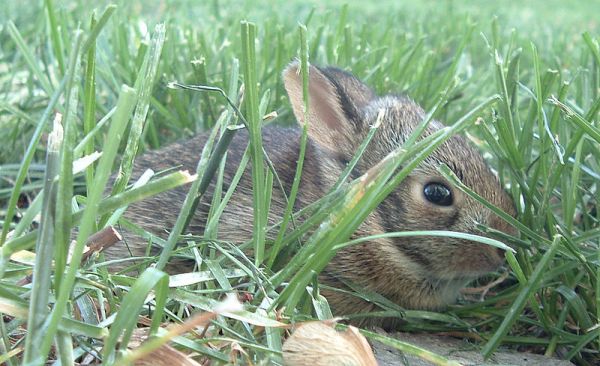
On July 12 and 13, the Cottage Grove Riding Club plans to hold an “Animal Scramble” at its annual rodeo. During this event, rabbits and roosters will be released into an arena and frantically pursued by children trying to catch them. Being chased and subjected to rough handling, crowds, and loud noises is a terrifying and dangerous ordeal for these fragile beings, who cannot defend themselves or escape. Making matters worse, the victimized animals will be sent home with participants! Sadly, every year, countless animals are won as “prizes,” and as the novelty wears off, many become targets of deliberate cruelty or are bounced around from home to home, relegated to lonely rooms and backyards and ignored. Others are abandoned outdoors to “fend” for themselves, only to die from starvation, dehydration, stress, or injuries sustained in attacks by larger animals.
WHOM TO CONTACT
Kelli Fisher, President
Cottage Grove Riding Club
541-767-2472
Please click here to send an e-mail.
SAMPLE COMMENT
Dear President Fisher,
On July 12 and 13, the Cottage Grove Riding Club plans to hold an “Animal Scramble” at its annual rodeo, an exceedingly cruel event in which rabbits and roosters are released into an arena, only to be frantically pursued by children scrambling about wildly in an attempt to catch them.
Being chased and subjected to rough handling, crowds, and loud noises is a terrifying and dangerous ordeal for these fragile and gentle beings, who cannot defend themselves or escape. Making matters worse, the victimized animals will be sent home with participants! Sadly, every year, countless animals are won as “prizes,” and as the novelty wears off, many become targets of deliberate cruelty or are bounced around from home to home, relegated to lonely rooms and backyards and ignored. Others are abandoned outdoors to “fend” for themselves, only to die from starvation, dehydration, stress, or injuries sustained in attacks by larger animals.
Please take the time to recognize these are sentient beings, capable of thought, love, pain, and suffering. These animals do not deserve the cruel fate of a “scramble”. Thank you for taking the time to consider this urgent appeal.
‘Blackfish’ Trailer
Source PETA
Remember Tilikum? You may know him as the “killer whale” at SeaWorld who’s responsible for the death of three trainers. And that’s fair enough.
But you should also know him as the orca who was torn away from his family as a baby and who’s since gone mad from the confinement and neglect that he’s experienced after more than 20 years of imprisonment at SeaWorld and other marine parks.
In theaters this July, the critically acclaimed film Blackfish pieces together Tilikum’s emotional and gut-wrenching story by compiling shocking, never-before-seen footage as well as heartbreaking interviews with people who know the orca better than anyone—his trainers.
Want to see it in theaters? Check the release dates, and if you’re lucky enough to have the film opening in a city near you this summer, be sure to share the release date and the trailer with your friends.
See what SeaWorld doesn’t want you to know.
OC: You can protest this by NEVER visiting any establishment that uses, which is synonymous with abuses, animals for entertainment. Go vegan, stop this madness.

Wikimedia Commons: NOAA agent counting confiscated shark fins.
Please act now to send a message to NMFS and share this action broadly!
Source: Sea Turtle Restoration Project
In recent months, California, Oregon, Washington, Hawaii, and six other states and territories in the US have banned the possession and sale of shark fins thanks to your support and a growing coalition of ocean advocates. In fact, California’s ban goes into effect today! But now, under the guise of improving protection for sharks, the National Marine Fisheries Service (NMFS) has proposed a rule that could actually overturn these hard-won state shark fin bans.
In the next week, thousands of people like you must take action to safeguard sharks and defend state shark fin bans. Please act now to send a message to NMFS and share this action broadly!
The Federal Government is Attacking Shark Fin Bans!
The killing of shark for their fin has been on the rise for years. In 2010, the United States Congress passed the Shark Conservation Act (SCA), which bans US fishers from bringing shark fins that are not “naturally attached” to a shark to port. However, this law just shifted shark finning overseas and imports of shark fin rose dramatically. In response, individual states took action to completely ban the possession, sale and trade of all shark fins. Now NMFS wants to strike down these bans to enable more shark killing by US fishermen. Please act by July 8th to fight this terrible rollback of shark protections!
Sharks Are Going Extinct
Sharks are part of a healthy ocean ecosystem, and the billion-dollar shark fin market has driven many of their populations to the brink of extinction. Shark populations have declined 95-99% in areas of the Northeast Atlantic and Gulf of Mexico. Healthy shark populations are critical to marine ecosystems that support a wide array of wildlife species and nourish human communities as well.
Take action today! Complete these two actions to ensure sharks have a fighting chance:
1) Click here to send a message to NMFS to allow strong shark fin ban laws in US states to be enforced. Be sure to share the need for action with your friends and networks!
2) Write a personal letter to NMFS to remove wording that would preempt shark fin trade bans in individual states from the Shark Conservation Act. Use our action alert as a template, and submit your letter to Regulations.Gov (select Comment Now on the right).
Sample Letter
I am writing to demand that NMFS to remove any and all provisions in the federal Shark Conservation Act that would preempt or interfere with shark fin laws being implemented in individual States and Territories (RIN:0648-BB54). These state and territorial laws are more protective of sharks and exercise each state’s right to ban the possession, sale, or trade of all shark fins in their jurisdictions.
Each year, up to 100 million sharks are slaughtered across the world’s oceans, many to satisfy increasing demand for luxury shark fin soup. This has led to the brutal practice of shark finning, where sharks are targeted only for their fins, which are removed and the carcasses dumped at sea. This wasteful, unsustainable practice has led to scientists’ growing concern for the long-term viability of shark populations around the world, and to the enactment of legislation in many countries to protect sharks.
The United States Shark Conservation Act of 2010 bans the removal of shark fins at sea by US fishermen, but did little to halt the flood of shark fin imports. Ten US States have gone further by enacting legislation to ban the possession, transport or sale of shark fins within their jurisdiction. These States recognize that reducing demand and availability of shark fins is an integral part of the overall strategy aimed at protecting these species.
State laws banning the sale and transport of shark fins are NOT fishery laws, and therefore do not conflict with fishing in federal waters. They have been passed overwhelmingly with bipartisan support and reflect the will of the People within each state. Laws prohibiting the possession, sale and transport of shark fins complement the Shark Protection Act and help to reduce market demand for an unsustainable product derived from an act of animal cruelty.
Sincerely,
Thank you! Together we can fight to save the world’s sharks.
DNA Evidence Clears Missouri Man in Rape Conviction

The Innocence Project
Source: The Innocence Project
A Missouri man was freed from prison after a Jackson County judge ordered his release based on DNA testing that pointed toward his innocence and identified two real perpetrators who are now in custody.
Robert Nelson was convicted of a 1983 home invasion and rape and sentenced to 70 years. Through the efforts of the Midwest Innocence Project, DNA testing was finally conducted on semen and hair evidence that was preserved since December 1983. Nelson began seeking post-conviction DNA testing in 2001, after the Missouri DNA access statute was passed. After determining the evidence was still available, he filed his first request in court without an attorney but it was denied. The Kansas City Star reports:
“If we had not found this mistake that occurred,” Jackson County Prosecutor Jean Peters Baker said, “it’s likely he (Nelson) would have served out the rest of his sentence, and the real perpetrators would not have been identified.
“This is a day that justice is being served.”
According to Midwest Innocence Project legal Director Laura O’Sullivan, both sides had a common interest in finding the truth. Just prior to testing, prosecutors working through cold cases sought testing to find the person they incorrectly presumed to be Nelson’s accomplice.
Nelson, now 49, was 20 years old when authorities accused him of being one of two intruders involved in the home invasion and rape. Police showed the victim a photo array and a videotaped lineup and played for her an audio recording of Nelson’s voice before she finally identified him as one of the perpetrators.
Since Wednesday’s release, Nelson has been trying to catch up on technology while staying with a relative. He credits the support of his family for getting him through his years behind bars.
“I’m going to enjoy the moment,” he said. “Then I’m going to find a job and start getting my life back together.”
Both of his parents died while he was incarcerated. He said he harbors some anger over what happened to him.
“But right now the joy is overwhelming the anger,” he said.
Read the full article.
Wikimedia Commons
BACKGROUND
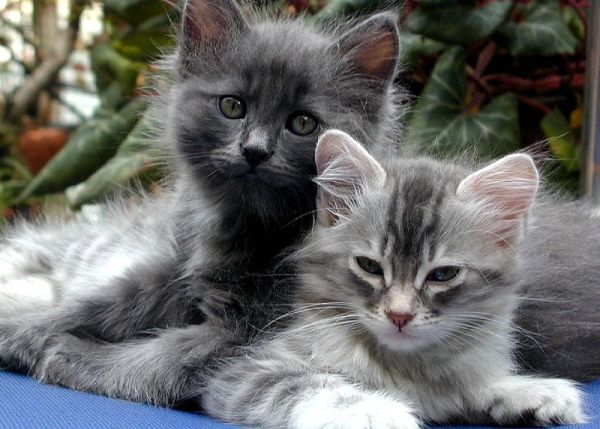
Reportedly, Hunt Pacific Management Corporation—a commercial real-estate company that owns multiple apartment complexes across several states—requires tenants to declaw their cats. PETA has contacted the company several times, but to no avail. We need your help!
Outlawed in 22 countries, declawing is a cruel and permanently crippling surgery involving amputation of the last joint of every toe, including bones and cartilage! Persistent pain, loss of balance, nerve damage, bone chips requiring additional surgery, gangrene, and skin disorders are associated physical complications—and nails can later grow back painfully and unseen, within the paw. Declawed cats often become reclusive, depressed, and insecure and begin eliminating outside the litterbox. Psychologically changed, these animals are then bounced around from home to home or wind up at animal shelters.
Please politely urge Hunt Pacific Management Corporation to join the numerous property management companies that do not require declawing. And please, forward this alert widely!
WHOM TO CONTACT
Polite comments can be sent to:
Daniel Weber, President and CEO
Hunt Pacific Management Corporation
dweber@huntpacific.com
SAMPLE LETTER
Dear President and CEO Weber,
I am writing to ask that you please discontinue your requirement for tenants to declaw cats homed in any of your properties. This is a cruel, archaic procedure that causes suffering and pain, undesirable patterns and behaviour, and has been recognized as such internationally. Declawing is illegal or restricted in over 21 countries, including the United Kingdom and Canada. Cities such as San Francisco, West Hollywood, Los Angeles, Santa Monica, Beverly Hills, Berkeley, and Norfolk, Virginia, ban declawing. The Humane Society of the U.S. and ASPCA oppose declawing. The Royal College of Veterinary Surgeons rejects the operation, describing it as “mutilation”.
Overwhelming evidence demonstrates declawing causes severe behavioral problems that often lead guardians to abandon their animals in overcrowded shelters; 33% of declawed cats begin post-procedure, according to a study in the Journal of the American Veterinary Medicine Association (JAVMA). National shelter surveys reveal that 70-80% of cats surrendered for behaviour issues are declawed. Declawed felines enter shelters with behavioral issues such as biting or not using the litter box, claims shelter director William Lombardi of Gloucester County, New Jersey. For the estimated 70% of declawed cats who are euthanized, the surgery is a death sentence.
Moreover, declawing generates suffering and permanent disability. The invasive procedure involes amputation of the last joint of every toe, including bones and cartilage. Persistent pain, loss of balance, nerve damage, bone chips requiring additional surgery, gangrene, and skin disorders are associated physical complications—and nails can later grow back painfully and unseen, within the paw. Declawed cats often become reclusive, depressed, and insecure and begin eliminating outside the litterbox. Psychologically changed, these animals are then bounced around from home to home or wind up at animal shelters. Veterinary experts recognize laser or scalpel declawing as among the most painful surgeries routinely performed.
Please reconsider this cruel policy and ban the declawing requirement for tenants’ cats in your properties.
Thank you for taking the time to consider this urgent appeal.
Palm oilers,
In cruelty and profit
You revel.
To those of us
In the kind world,
You are tools of
The devil.
Karen Lyons Kalmenson


Photo credit: Ecologist Film Unit (Ulet Ifansasti) and/or Elephant Family: http://www.elephantfamily.org/
_____________________________
[NOTE: This piece got thousands of hits on the day the story about RAJU (note the “u”) was first published in the international media (7/8/2014) — and still gets more daily.
BUT THIS IS NOT ABOUT RAJU! It’s about Raja, because many are apparently looking for stories about RAJU (note the different spelling; with a “u” not an “a” at the end) the 50 year old captive elephant who supposedly cried after finally being rescued after a life of torture, abuse and imprisonment. That particular punishingly sad story for 50 years, but with an uplifting ending, can be found here:
http://www.huffingtonpost.com/2014/07/07/raju-elephant-cries-rescue_n_5564543.html
But this is a different, yet equally sad elephant story about similarly-named RAJA]
___________________________________
This is such a tragic, heartbreaking and maddening story. Weeks ago, the Ecologist Film Unit, accompanied by the NGO Elephant Family, was documenting the “environmental genocide”…
View original post 566 more words
The Meat Industry
Source: News for Animal Welfare
It is heartbreaking to watch, yet the importance of uncovering these practices and using them to educate others is a pivotal step in order to create change.
Please share this video!
Go vegan HERE

Wikimedia Commons
SOURCE PROJECT R&R
The National Institutes of Health (NIH) issued a heavily anticipated decision today (6/28) to retire nearly 90% of its chimpanzees. However, NEAVS believes its decision to keep a “reserve” population of up to 50 for “future potential research” is unscientific and unnecessary.
“Though we praise NIH’s decision to retire most of its chimpanzees, the decision to keep a reserve population flies in the face of scientific evidence establishing how chimpanzees have not been, are not, and would not be needed,” says New England Anti-Vivisection Society (NEAVS) President Theodora Capaldo, EdD.
After lengthy study and testimony from scientists and government officials, the nation’s highest scientific body, the Institute of Medicine, declared in 2011 that chimpanzees are not necessary in current medical research; that “the present trajectory of scientific research indicates a decreasing need for the use of chimpanzees”; and acknowledged “past use fails to predict future necessity.”
“More and more researchers are acknowledging the limitations and dangers of the animal model, in particular the waste of lives, time, and dollars using chimpanzees has been,” says Capaldo. “Pointing to a minuscule number of advances in areas for which they are no longer needed – stemming from such a vast amount of resources and chimpanzee suffering – and using this as justification for claiming there may someday be a future need for chimpanzees, is an argument without scientific merit.”
NIH’s decision, which will retire hundreds of chimpanzees, is a milestone in NEAVS’ Project R&R: Release and Restitution for Chimpanzees in U.S. Laboratories, a campaign to end all use of chimpanzees in U.S. research begun in 2004. Today, we celebrate with the chimpanzees and all the other animal protection organizations, sanctuaries, and individuals who helped make this possible. Soon hundreds more chimpanzees will live the rest of their lives without threat of invasive research.
NEAVS is now committed to making certain none of the chimpanzees held in reserve will ever be used in invasive research and that all privately owned chimpanzees still in labs are also retired.
NEAVS WANTS TO THANK EVERY SINGLE ONE OF OUR SUPPORTERS AND DONORS FOR HELPING TO ACCOMPLISH THIS PRECEDENT-SETTING VICTORY FOR NOT ONLY CHIMPANZEES, BUT FOR ALL ANIMALS IN LABS.
Please watch for our eALERTS and updates on our website over the next several weeks and months for more specific information about this exciting news and for how you can help.
ACTION ALERT
Protect All Chimpanzees Under the Endangered Species Act | Source IDA
BACKGROUND
Last week, the U.S. Fish and Wildlife Service announced a proposal to extend protection to captive chimpanzees under the Endangered Species Act. Presently, captive chimpanzees in the U.S. are exempt from this protection, but the new proposal would end that distinction.
The proposal would extend protection to chimpanzees in biomedical research as well as those in zoos. With its prohibition on the sale of chimpanzees across state lines, and ban on international commerce, it will likely also impact the sale of chimpanzees as pets and for use in entertainment.
We believe that all chimpanzees deserve to be protected. Since the start of the 20th century, more than one million chimpanzees have disappeared from the wild. Today, with less than 300,000 remaining, they continue to face challenges from disappearing habitat and the cruel bush meat trade.
Adoption of the proposal by FWS would mean that institutions conducting medical research would have to obtain permits before they could conduct invasive chimpanzee experiments, and any proposed experiment would have to provide proof that it contributes to the survival of chimps in the wild.
WHOM TO CONTACT
The public has the opportunity to comment on the proposed ruling by clicking here and submitting your comments in support of listing captive chimpanzees as endangered.
Feel free to submit your own comments in support of protecting captive chimpanzees, or cut and paste the below message into the Comment field.
Please remember that only the comment field is required; you do not have to provide your name, email, or address if you do not wish.
SAMPLE COMMENT
Thank you for allowing the public to comment on the proposed regulation to extend the Endangered Species Act to cover captive chimpanzees as well as those in the wild. Chimpanzees are disappearing and in danger of extinction. Exempting captive chimpanzees is unsupportable. Please end the split-listing of chimpanzees and extend protection to all chimpanzees.
India Bans Cosmetics Tests on Animals

Wikimedia Commons
Source HSI
Please click HERE to ban the import and sale of animal-tested cosmetics in India
Source PETA
We have very exciting news to share! Today, in a landmark victory for animals in laboratories, India has announced that it will implement a ban on using animals to test cosmetics!
After an extensive campaign by People for the Ethical Treatment of Animals (PETA) India—which included appeals from high-profile politicians and multinational retailers such as LUSH and The Body Shop as well as lengthy discussions with PETA India’s scientists—the drug controller general of India announced today that testing cosmetics and their ingredients on animals will not be permitted in India. The announcement was made during a meeting of the Bureau of Indian Standards’ Cosmetics Sectional Committee, of which PETA India’s science policy adviser, Dr. Chaitanya Koduri, is a member. Earlier in the week, Dr. Koduri had held a private meeting with India’s drug controller general urging him to implement the ban.
This announcement comes on the heels of recently enacted bans on cosmetics testing on animals in the European Union and in Israel.
This victory marks an important milestone in the fight to end animal testing worldwide, and PETA is working hard to urge other countries—including the U.S.—to follow in the footsteps of the EU, Israel, and India by adopting a ban on animal tests for cosmetics as well as personal-care and household products. There are still millions of animals suffering in laboratories around the world who need your help! Although more than 1,300 companies have banned cruel tests on animals in favor of reliable and modern non-animal tests, some companies still subject animals to painful tests in which substances are dripped into their eyes, smeared onto their abraded skin, sprayed in their faces, or forced down their throats.
We urge you to support the compassionate, cruelty-free companies that have pledged never to harm any animals for their products by using PETA’s brand-new global Cruelty-Free Shopping Guide every time you shop! Order a free copy or use PETA’s Beauty Without Bunnies online database to find wonderful cruelty-free products for all your needs.
Thanks for your continued support and compassion for animals in laboratories!










 Our Compass