HighestWelfare.Humane.Assured.GoodPractices.Vegetarian. Regenerative.Flexitarian.Lies...
What is the difference between No Welfare, High Welfare, and Highest Welfare when they all require animals to die? Only human comfort, NONE protect the actual animals. The most humane, ethical, and honest Webster-defined "welfare" is NOT exploiting animals - not using, not wearing, not eating, not killing - animals. The only meaningful position is vegan, everything else is just how humans euphemize animals' required suffering and violent deaths: no human exploits animals because they honestly believe that NOT exploiting animals is UNethical or INhumane.

Please click on and sign the following message petitions to help wolves, birds, and elephants, thank you.
1. Please Oppose Baucus-Tester Bill S. 3864
2. Urge FCC officials to help prevent needless bird deaths
3. Don’t Let Salazar Sell Out Our Wolves and the Endangered Species Act
4. Please protect elephants Lucky and Queenie (Boo) at San Antonio Zoo
5. Please protect Sri Lanka’s elephants
1. BACKGROUND | From IDA
The United States Senate is considering S. 3864, introduced by Montana Senators Max Baucus and Jon Tester, which would eliminate vital protections for endangered gray wolves in the Greater Yellowstone and Northern Rocky Mountain regions. If this bill is passed and signed into law, the Endangered Species Act would be significantly compromised, gray wolves in Idaho and Montana would be delisted, and permits to slaughter more than 1,000 animals would be issued, thereby destroying the potential for any recovery of the species.
S. 3864 is due to be voted on (without public hearings or comments) any day. If passed, it would effectively end the recovery process of the gray wolf population of the Greater Yellowstone and the Northern Rockies area.
MESSAGE TEXT
Please Oppose Baucus-Tester Bill S. 3864
Dear [Decision Maker],
As your constituent, I am writing to express my opposition to S. 3864, the Baucus-Tester bill to remove Endangered Species protections for wolves in the Greater Yellowstone and Northern Rockies region. I urge you to oppose this bill.
This bill would degrade the scientific principles in the Endangered Species Act that are intended to protect imperiled species such as the Northern Rocky Mountain gray wolf population who are not yet self-sustaining.
Please oppose S. 3864 in order to help wolves and other species recover from extermination programs of the past. Thank you for consideration.
2. BACKGROUND | From IDA
Attracted by the steady glow of lights, millions of birds are killed during their annual night migrations as they collide with communications towers and related structures. But many of the deaths could be prevented.
After years of urging by Defenders and our conservation partners, the Federal Communications Commission is finally undertaking an environmental review of its tower registration program — and the agency needs to hear from you.
Take action now: Urge FCC officials to help prevent needless bird deaths and conduct a thorough review of communications structures.
MESSAGE TEXT
As a supporter of Defenders of Wildlife and someone who cares about migratory birds, I am delighted to see that the Federal Communications Commission (FCC) is finally conducting an environmental review of its tower registration program.
I strongly urge you to conduct an environmental impact statement rather than an environmental assessment of the impacts of communication towers on birds. I also urge you to conduct this review before more towers are constructed as part of the broadband expansion.
As you know, according to the Fish & Wildlife Service, each year at least 5 million birds are killed by communications towers and related structures across the United States.
Around 230 species of birds — over one-quarter of all avian species found in the U.S. — have been documented as being killed by towers. Many of these species are in decline. Several species are suffering mortality equivalent to several percent of their estimated total population size.
The FCC has not only the legal authority to regulate these antenna structures, but also the legal obligation to do so. Federal laws — including the National Environmental Policy Act, the Endangered Species Act, and the Migratory Bird Treaty Act — require the FCC to adopt measures to prevent, or at least minimize, bird fatalities caused by FCC registered antenna structures.
As FCC moves forward with the environmental review of its tower program, please consult with the U.S. Fish and Wildlife Service and prepare a Memorandum of Understanding that outlines how the FCC will meet its obligations under the Migratory Bird Treaty Act in order reduce bird deaths from antennas and structures regulated by the FCC.
Thank you for your consideration.
RELATED | How I Became An Elephant: Trailer
Vodpod videos no longer available.
3. BACKGROUND | From Change.org
(This has been published previously under a specific IDA action, but this is IDA’s Change action so is a different medium.)
Recent reports suggest that President Obama’s Interior Secretary, Ken Salazar, is prepared to agree to, and is actively promoting, legislative language that would eliminate Endangered Species Act (ESA) protections for all gray wolves in the Northern Rockies, including those in Montana, Idaho, Wyoming and portions of Washington, Oregon and Utah.
Not only would wolves lose protections, they would also be put beyond the reach of the ESA forever unless the Secretary, at his sole discretion, chooses to restore them to the list of threatened or endangered species. Even worse, under the language, there would be no ability for the American public to petition for these protections in the future… regardless of how egregious state wolf management plans become.
The proposal is arbitrary and strikes a blow at the very foundation of the Endangered Species Act. Hundreds of wolves — maybe more than a thousand — could be killed. And you and I could lose America’s most effective tool for protecting imperiled wildlife.
We don’t have much time to stop Secretary Salazar’s plan. Please urge your senators to reject Interior Secretary Salazar’s backroom deal to remove protections for wolves and harm the ESA.
MESSAGE TEXT
Dear Secretary Salazar,
As a supporter of Defenders of Wildlife and someone who cares about wolves, I strongly urge you to reject any legislative proposal by the Secretary of the Interior to eliminate life-saving protections for wolves.
Recent reports suggest that Secretary Salazar is prepared to agree to, and is actively promoting, legislative language that would eliminate Endangered Species Act protections for all gray wolves in the Northern Rockies, including those in Montana, Idaho, Wyoming and portions of Washington, Oregon and Utah.
Not only would wolves be delisted, they would also be put beyond the reach of the ESA forever unless the Secretary, at his sole discretion, chooses to restore them to the list of threatened or endangered species.
Even worse, under the language, there would be no ability for the American public to petition for these protections in the future… regardless of how egregious state wolf management plans become.
This proposal is anti-science, anti-wolf and anti-democratic. I strongly urge you to do everything in your power to oppose it.
Thank you for considering my comments.
[Your name]
4. BACKGOUND | From IDA
After the elephant Queenie was sent to the San Antonio Zoo in April to join the unfortunate Lucky – amid great controversy and opposition from thousands of pro-elephant advocates around the country – IDA pledged to closely monitor their situation.
We recently received alarming videotaped footage of dangerous aggression between Queenie and Lucky, and filed a complaint with the USDA, demanding they be removed from this unsafe situation caused by the very small size of their enclosure. (Note that the zoo now calls Queenie “Boo,” so IDA uses that name in the complaint.)
Backed by one of the world’s leading elephant scientists, ElephantVoices co-director Dr. Joyce Poole, who has been studying elephant behavior in Africa and Asia for more than 30 years, the complaint warned of dire consequences should Lucky and Queenie continue to be held in the zoo’s outdated exhibit. In behavioral observations provided to the USDA, Dr. Poole observed aggressive behavior by Boo toward Lucky:
“Lucky is being terrorized by Boo [Queenie]. This kind of persistent bullying is not seen in the wild, because elephants have other activities with which to occupy themselves, and because they can remove themselves from conflict, if need be. In my opinion, the primary cause of this undesirable situation is that the elephants have too little space.”
The zoo, and not the elephants, is to blame for this predicament. Lucky and Queenie are victims of an outdated system that allows zoos to keep two elephants weighing more than four tons each in a space smaller than many backyards. In such restricted conditions, an elephant is going to get hurt.
IDA strongly urges the USDA to act immediately to avert a tragedy at the San Antonio Zoo. We’re calling for the removal of the elephants and their transfer to a natural-habitat sanctuary where they would have room to move and could choose their companions. Until that can take place, IDA is asking the USDA to require constant monitoring of the elephants by the zoo.
The San Antonio Zoo acquired Queenie following a settlement facilitated by the USDA with abusive circus handler Will Davenport, who was facing charges for multiple violations of the Animal Welfare Act. IDA opposed the move, which forced Queenie and Lucky to coexist in a less than half-acre exhibit that is too small even for one elephant. Unfortunately, our prediction that the integration of these elephants would be highly problematic, and even dangerous, has become a sad reality.
MESSAGE TEXT
I am extremely alarmed that the elephants at the San Antonio Zoo, Lucky and Boo (formerly known as Queenie), are suffering because of problems with aggression. The very small size of their enclosure has created an unsafe situation that seriously threatens these elephants. In fact, Lucky injured herself when trying to flee a stressful encounter with Boo.
I am asking that you take immediate action to protect both Lucky and Boo. Since the captive conditions they live in cannot be changed, they should be removed from the zoo and sent to a natural-habitat sanctuary, where they would have adequate space to form healthy social relationships with elephants of their choosing. Until action can be taken, I urge you to order the zoo to provide constant monitoring of these elephants.
5. BACKGROUND | From IDA
Parakrama was known to be one of the biggest bull elephants in Sri Lanka, with gleaming tusks that were five feet long. He was called a “National Treasure.” Unfortunately, he caused havoc in villages that were closing in on his range, resulting in a woman’s death. So the Department of Wildlife Conservation captured Parakrama, with the intention of trucking him to a safer location. While being transported, the bottom of the truck gave way under the huge elephant, trapping Parakrama and pinning his chest against the floorboards, where the magnificent tusker died of suffocation.
In the wild
This appalling story gives a glimpse into the problems wild elephants face in Sri Lanka. More than 50 people and 228 elephants, an estimated 5% of the remaining wild population, were killed last year as a consequence of human/elephant conflict, caused by ever-shrinking habitat. Sri Lanka’s elephants are blocked by electric fences that cause them to starve, and they are often translocated away from conflict areas, only to cause even more damage in the new, unfamiliar environment, or they may try to return to their old territory. These are not the long-term solutions that the elephants need if they are to survive.
In captivity
Captive elephants in Sri Lanka have no government protections, allowing them to be held in substandard conditions, including at zoos and in tourism-supported facilities such as the Pinnawela Elephant Orphanage. The orphanage was originally established to care for calves orphaned in the wild, but has become an uncontrolled breeding ground without thought for the future of the elephants. Elephant calves from Pinnawela are often abducted from their mothers and given to temples, individuals or sent to zoos in Sri Lanka where they spend their lives in chains, repetitively swaying from side to side, often malnourished and alone.
Very alarming is the Sri Lankan government’s practice of exporting elephant calves to foreign zoos. Since 2002, babies have been sent to zoos in China, Japan, Croatia, and the Republic of Korea; New Zealand may be next. U.S. zoos are also looking to Pinnawela as a source of elephants for their newly expanded elephant exhibits, including the National Zoo in Washington, DC.
For more information about Parakrama and the plight of elephants in Sri Lanka, read Death of a Tusker and Looking for Raja and Losing Parakrama, and visit ElephantVoices to learn more and see photos of elephants at the Dehiwala Zoo.
MESSAGE TEXT
In the wild, elephants are suffering and dying because of escalating conflict, which claims the lives of humans and elephants alike. Long-term solutions and not the current interventions that only worsen the situation and result in the deaths of elephants like Parakrama and “the Brigadeer” must be found in order to insure the survival of elephants in Sri Lanka. I urge you to work with your country’s conservationists, scientists and veterinarians, as well as various government ministries to find lasting solutions that will end the cycle of death and violence between humans and elephants.
In captivity, lack of humane legislation allows elephants to be kept in substandard conditions where they spend a lonely lifetime in chains and misery. Elephants are intelligent, emotional, and highly social beings who suffer greatly from this treatment. I am also extremely alarmed that the Sri Lankan government separates captive-held calves from their mothers to export them to foreign zoos. I ask that you end this cruel practice now. These elephants should be treasured, cared for and protected in their homeland, rather than be treated as a source of elephants to fill foreign zoo exhibits.
People around the globe care deeply about elephants and will be closely watching Sri Lanka and its elephants. Many will base their tourism decisions on your actions. I urge you to protect Sri Lanka’s elephants by putting their well-being before profit and politics, and ending the export of elephant calves to foreign zoos. These animals are national and cultural treasures and they should be treated with respect.
Revelations behind killing of 19 dogs in Georgia
From The Examiner
By Penny Eims
Burke County, GA – The man responsible for the death of 19 dogs found in Burke County earlier this month is revealing more about the grotesque incident.
According to an article shared yesterday in the Swainsboro True Citizen News, the man, Charles Frank Strother, claims that Wadley police had given him permission to shoot the dogs.
In his statement, he claims that he had to shoot the dogs because they had become vicious. He alleges that a protective mother started fighting with other dogs, and that they “got the taste of blood” and that it rendered them “no good”. The dogs have been determined to be all of the same breed – Labrador/Chow mixes.
Police had actually responded to Strother’s residence after receiving reports of gun shots fired. Strothers apparently asked the responding officer to shoot the dogs and he was told that police were not permitted to kill the animals, but that he could “take whatever action was necessary”.
Man responsible for execution of 19 dogs turns himself in
Vodpod videos no longer available.
Wife Says Wadley Police Gaver Her Husband Permission To Kill Several Dogs
Vodpod videos no longer available.
Shockingly, Strothers only faces charges for illegally dumping the 19 dog bodies, and a tarp. He faces no animal cruelty charges. Burke County police have stated that they have no jurisdiction over the man because the killings occurred in nearby Jefferson County.
Please ask the the University of Utrecht to retire monkeys to sanctuary: one petition, one sample message
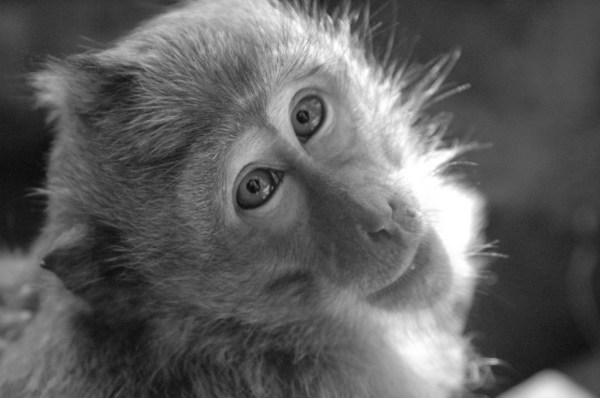
Please click on the following to sign one petition and send one sample message:
1. Ask University to Release Monkeys to Sanctuary
2. Please send Sample Message to associated email addresses
BACKGROUND | From Loredana & Carin Z.
The University of Utrecht, Holland, has recently announced an end to their primate research program and are now deciding what to do with the remaining five long-tailed macaque monkeys. They have stated that they’re currently considering one of three options:
1) Killing them and putting their brains into a database.
2) Giving the monkeys to Nijmegen University for the similar types of experiments.
3) Handing them over to one of the sanctuaries that have already agreed to take them.
The emails listed below are for the Governors of the University of Utrecht. These people are ultimately responsible for deciding the fate of the monkeys and they have the power to ensure that the animals are released to a sanctuary, and not killed or sent to other laboratories. Please email them and ask them to free the mokeys, and then share this email with everyone you know and ask them to do the same!
Original Dutch campaign alert can be found by clicking HERE.
Related from BUAV| Trading In Cruelty
Vodpod videos no longer available.
WHERE TO SEND YOUR MESSAGES (copy & paste as a group | all emails valid for me)
J.C.Stoof@uu.nl , A.W.Hekking@uu.nl , C.Krapels@uu.nl , Y.vanRooy@uu.nl , L.V.Martinezsobrino@uu.nl , H.M.Amman@uu.nl , e.b.a.neslo@uu.nl
SAMPLE MESSAGE
To Whom It Concerns,
I am writing to you concerning the five monkeys who have been unwilling participants in experiments at the University of Utrecht. It is my understanding that, since you have determined to conclude the primate testing program, you are deliberating as to the fate of the five living monkeys.
It is extremely disturbing to discover, therefore, that your university has seriously been considering to either kill the animals or relinquish them to another laboratory! Neither of these alternatives is satisfactory or humane; as such, I respectfully urge you to consider the reputation of your university by ensuring that the animals involved in these experiments now be ‘retired’ to a sanctuary where they are able to enjoy whatever remains of their natural lives in security and absent exploitation and pain.
I look forward to your obligatory decision to no longer inflict suffering on these animals, but rather extend respect and justice by granting their fundamental right to not be exploited.
Yours faithfully,
Please Urge President Obama to Sign the Truth in Fur Labeling Act

UPDATE | December 20 : President Obama signs Fur Labeling Law
Please send message to President Obama urging him to sign the Truth in Fur Labeling Act into law; a sample message is provided below, thank you.
From Huffington Post
By Michael Markarian
The U.S. Senate on Tuesday gave final approval to H.R. 2480, the Truth in Fur Labeling Act, to provide a much-needed upgrade to the nearly 60-year-old federal fur labeling law. The House previously passed the bill in July, and it now goes to President Obama for his signature.
The HSUS and HSLF have been advocating for years that a new national policy was needed to ensure accuracy and consistency in the labeling of fur-trimmed apparel, after our investigations found dozens of major designers and retailers selling unlabeled jackets trimmed with animal fur, some of it falsely advertised as “faux fur.” We stuck with it every step of the way, and are pleased to be one step closer to enacting this bipartisan law to protect consumers and animals.
Since the 1950s, any fur garment sold in the U.S. has had to include a label indicating the species of animal used and the country of origin, but there’s a gaping loophole in the current law that excludes fur-trimmed garments if the value of the fur is $150 or less. At recent pelt prices, that means a jacket could have fur on its collar or cuffs from 30 rabbits ($5 each), nine chinchillas ($16 each), three foxes ($50 each), or three raccoon dogs ($45 each), and be sold without a label indicating the fur species. The Federal Trade Commission estimates that one in every eight fur garments doesn’t require labeling.
U.S. Senate Passes Truth in Fur Labeling Act
Vodpod videos no longer available.
Imagine if one in every eight medicine bottles or food packages didn’t have a label, especially if you avoid certain foods or medicines because of allergies, ethical or religious reasons. Consumers making well-informed decisions based on complete information is a cornerstone of a functioning market economy. Shoppers who may have allergies to fur, ethical objections to fur, or concern about the use of certain species cannot make informed purchasing choices due to this gap in the current law.
With the technological advances in synthetic fur, and the dyeing of animal fur colors like pink and green to make it look fake, even the most careful and knowledgeable shoppers and department store clerks often can’t tell the difference simply by visually inspecting the material. Especially when consumers purchase designer jackets over the Internet, they have no choice but to trust the retailer’s statements about those garments. The only way to address this widespread deception in the marketplace is to attach a label to the individual garment.
The Truth in Fur Labeling Act will finally address these problems, and will require proper disclosure in the marketplace. Fur-trimmed jackets, parkas, sweaters, vests, hats and the like will finally meet the same federal standard as other fur garments, and provide the same important product information that’s already required seven times out of eight. The bill includes an exemption for hunters and trappers who sell home-made fur items at county fairs and flea markets, but will have a major impact at department stores, online sellers, and places where the confusion and deception over fur trim has been most acute. The legislation also directs the FTC to initiate rulemaking to review and update the Fur Products Name Guide to ensure that the species names used on labels are providing consistent and accurate information to consumers.
U.S. Tax Dollars Fund Child Sex Slavery in Afghanistan, Attack on Freedom of Expression

Please click on and sign the following two petition messages:
1. Tell the UN to Stop Child Trafficking via Bacha Bazi in Afghanistan
1. BACKGROUND | From Change.org , By Amanda Kloer
The now infamous Wikileaks recently released a cable from Afghanistan revealing U.S. government contractor DynCorp threw a party for Afghan security recruits featuring trafficked boys as the entertainment. Bacha bazi is the Afghan tradition of “boy play” where young boys are dressed up in women’s clothing, forced to dance for leering men, and then sold for sex to the highest bidder. Apparently this is the sort of “entertainment” funded by your tax dollars when DynCorp is in charge of security in Afghanistan.
DynCorp is a government contractor which has been providing training for Afghan security and police forces for several years. Though the company is about as transparent as a lead-coated rock, most reports claim over 95% of their budget comes from U.S. taxpayers. That’s the same budget that DynCorp used to pay for a party in Kunduz Province for some Afghan police trainees. The entertainment for the evening was bacha bazi boys, whose pimps were paid so the boys would sing and dance for the recruits and then be raped by them afterward. That’s your tax dollars at work — fighting terrorism and extremism in Afghnistan by trafficking little boys for sex with cops-in-training.
In fact, the evidence linking DynCorp to bacha bazi was so damning, Afghan Minister of the Interior Hanif Atmar tried to quash the story. Upon hearing a journalist was investigating DynCorp and the U.S. government’s funding of the sex trafficking of young boys in Afghanistan, Atmar warned any publication of the story would “endanger lives,” and requested the U.S. suppress the story. Atmar admitted he had arrested eleven Afghans nationals as “facilitators” of the bacha bazi party. But he was only charging them with “purchasing a service from a child,” which is illegal under Sharia law and the civil code. And in this case “services” is not used as a euphemism for sex; so far, no one is being held accountable for the young boys whose rapes were paid for by the U.S. taxpayers.
As if this story couldn’t get any more outrageous, Atmar went on to say that if news of the incident got out, he was “worried about the image of foreign mentors”. In other words, why should something as piddling as the humiliation, objectification, sale, and rape of some children tarnish the good name of DynCorp and all the work (read: money) they’re doing in Afghanistan? After all, bacha bazi is growing in popularity in Afghanistan, especially in areas like Kunduz. Why shouldn’t U.S. government contractors be able to win local favor by pimping young boys?
Of course, this isn’t the first time DynCorp has used U.S. tax dollars to support sex trafficking. In Bosnia in 1999, Kathryn Bolkovac was fired from the company after blowing the whistle on DynCorp’s staffers pimping out girls as young as 12 from Eastern European countries. DynCorp settled a lawsuit involving Bolkovac, and her story was recently featured in The Whistleblower, where she was portrayed by Rachel Weiss. It’s a happy ending for one DynCorp whistle blower, but will there be a Bolkovac in Afghanistan?
It’s time American taxpayers demanded a zero tolerance policy on our money being used to support child sex trafficking overseas. Tell the UN Mission to Afghanistan the time has come to crack down on those who buy and sell boys in bacha bazi, whether they’re Afghans or U.S. government contractors, security personnel or citizens. No one should be able to traffic children so sex and get away with it, and that includes repeat offender DynCorp. We have a right to demand our tax dollars go to fight trafficking, not support it. And we have a right to demand the U.S. government and their contractors be held accountable for exploiting the boys of Afghanistan.
MESSAGE TEXT
I am writing to voice my extreme concern about the practice of bacha bazi in Afghanistan. Bacha bazi is a form of child sex trafficking which must stop immediately.
The bacha bazi tradition, which literally means “boy play” has deep roots in Afghan culture. For centuries, wealthy men have been buying orphans or boys from poor families, dressing them in women’s clothing, and paying them to sing and dance for entertainment. After the bacha party, the boy is auctioned off to the highest bidder or shared by several men for sex. When the Taliban came to power in Afghanistan, they banned the practice, and it remains illegal today. But since the Taliban was ousted, the tradition has been revived and is growing.
Bacha bazi boys are usually teens, but many are as young as 11. Most of them come from very poor families or are orphans from the war. Boys are lured off the street or bought from family members by businessmen. Then, they are usually kept in a house with other boys, trained sing, dance, and play musical instruments. They are also introduced to the commercial sex industry, ususally by being raped by the men who train them or sold for sex out of the backseat of cars.
Perhaps the most disturbing aspect of bacha bazi is how quickly the practice is being revived in Afghanistan and how little police and security forces are doing to stop it. In fact, uniformed Afghan police officers have even been witnessed procuring young boys in broad daylight. And according to a recent report from UNICEF, many of the men who participate in bacha bazi work for the Afghan government, including those who publicly denounce the practice. But even the Afghan authorities who aren’t actively participating in bacha bazi are refusing to broach the taboo subject or arrest and prosecute those who commit bacha bazi.
The UN should make cracking down on those who trafficking children via bacha bazi a priority. Men who traffick boys for sex or buy sex with boys should be prosecuted and given appropriate sentences.
Related, zipcode-based policy | Officials issue national strategy to fight child sex crimes
Vodpod videos no longer available.
Together we’re really sending what I believe is an important message: that the US government and our nation’s Department of Justice have never been more committed to protecting our children and to bringing offenders to justice ……….
Eric Holder, US Attorney General, August 2010
New Study: Increased Milk Intake Does NOT Protect Against Osteoporosis (But Does Promote Ovarian & Prostate Cancers)

From VegSource
By Jeff Nelson, Founder VegSource.com
You hear it all the time: drink milk to get enough calcium to protect yourself from osteoporsis!
But is it true?
Numerous definitive studies provide the answer: No, milk does not protect against osteoporosis — in fact, it may be a cause.
Despite the dairy industry-funded ads featuring famous people wearing milk moustaches and implying that milk will protect you from bone fractures, it’s long been known that countries with the highest rates of osteoporosis, such as the United States, England, and Sweden — consume the most milk. China and Japan, where people eat less animal protein and little or no dairy food — have low rates of osteoporosis.
Flying in the face of the usual corporate “milk-for-strong-bones!” propaganda is the latest study on the subject. A recent meta-analysis (2010 Oct 14 – Epub) of cohort studies of over 500,000 men and women found no relationship between milk intake and hip fracture rate.
And don’t look to organizations like the American Dietetic Association for reliable nutritional advice either; major funding for the ADA comes from their “corporate partner,” the National Dairy Council. In fact, the ADA, which positions itself as the source of healthy nutrition information, receives millions from companies like Coca-Cola, Pepsi, Unilever, General Mills, Mars, ConAgra, and the National Cattlemen’s Association, among many others, to do their work in developing nutritional advice.
You probably haven’t heard about this study, despite the fact it highlights results from over a half million people. But this is an example of what happens when “health experts” in the mainstream media appear on shows which rely on financial support (advertising) from food companies, especially the dairy food industry.
In this new study, researchers were looking at the relationship between calcium intake from milk and hip fracture rates (the chief indicator used for studying osteoporosis). The researchers concluded, in October of 2010:
“In the meta-analysis of cohort studies, there was no overall association between milk intake and hip fracture in women but more data are needed in men.” (abstract)
Related | Behind the Mustache
Vodpod videos no longer available.
In other words, there is no evidence milk plays any role in preventing osteoporosis.
Perhaps interesting is the fact that this study — showing milk plays no role in osteoporosis — appears in the journal for the American Society for Bone and Mineral Research, which is supported by the National Dairy Council. (See here)
These results are consistent with other meta-analyses carried out over the years, examining milk intake and bone health. For example a 2004 meta-analysis was carried out on 39,563 men and women from six prospective cohort studies followed for 152,000 person years. The conclusion:
“A low intake of calcium (less than 1 glass of milk daily) was not associated with a significantly increased risk of any fracture, osteoporotic fracture or hip fracture. There was no difference in risk ratio between men and women… No significant relationship was observed by age for low milk intake and hip fracture risk. We conclude that a self-reported low intake of milk is not associated with any marked increase in fracture risk and that the use of this risk indicator is of little or no value in case-finding strategies.” (full text)
Another meta-analysis from 2005 included over 170,000 women and over 68,000 men and looked at calcium intake in relation to osteoporosis. The conclusion:
“Pooled results from prospective cohort studies suggest that calcium intake is not significantly associated with hip fracture risk in women or men. Pooled results from randomized controlled trials show no reduction in hip fracture risk with calcium supplementation, and an increased risk is possible. For any nonvertebral fractures, there was a neutral effect in the randomized trials.” (full text)
Here’s a 2004 study looking at bone health in kids and young adults, concluding:
“Scant evidence supports nutrition guidelines focused specifically on increasing milk or other dairy product intake for promoting child and adolescent bone mineralization.” (study)
Better known in the medical research is the fact that there is a significant cross-cultural association between consumption of animal protein (including milk) and hip fracture rates.
In plain language, protein from animal foods — including milk — causes osteoporosis. The mechanism for this is now well-known.
An older study (1991) found a significant cross-cultural association between animal protein and hip fracture rates. (pdf file of study)
In a joint WHO/FAO Expert Consultation, the experts had the following to say in regards to the calcium paradox:
“The paradox (that hip fracture rates are higher in developed countries where calcium intake is higher than in developing countries where calcium intake is lower) clearly calls for an explanation. To date, the accumulated data indicate that the adverse effect of protein, in particular animal (but not vegetable) protein, might outweigh the positive effect of calcium intake on calcium balance.” (WHO/FAO report)
Plain speak: Milk appears to do more harm than good.
WHO/FAO released more recent information in regards to animal protein and bone health, showing clearly that the more animal protein consumed, the higher osteoporosis rates. Conversely, those populations experiencing the best bone health, have both the lowest animal protein intake, and the highest vegetable protein intake. And those with the least osteoporosis also consume the least calcium in general, see this WHO/FAO report.
A table from this report illustrates the varying levels of animal protein consumption by region (which has increased significantly in many areas since this report):

On another note, we recently highlighted results of the EPIC Study in an article on vegsource.com that indicates milk causes prostate cancer. From the study:
“High intake of dairy protein and calcium from dairy products and high serum concentration of IGF-I were associated with an increased risk of prostate cancer.” (abstract)
US Friends, Take a Stand For Girls: Fight Child Marriage

Please click on and sign:
International Protecting Girls by Preventing Child Marriage Act (H.R. 2103/S.983)
From CARE
BACKGROUND
Breaking News: The U.S. Senate just passed the Child Marriage Act! Now, it is up to the House of Representatives.
Child marriage is forced marriage. Sixty million girls around the world ages 17 and younger – many as young as 10 – are forced into marriage.
The consequences of this pervasive human rights violation are grim and, often, deadly.
Child brides have a diminished chance of completing their education, resulting in limited opportunities and income-earning potential later in life. These girls also are twice as likely to be beaten or threatened with violence by their husbands compared to girls who marry later in life. In addition, child marriage is usually accompanied by early child bearing, placing young girls at risk for complications during and after childbirth. In fact, complications associated with pregnancy and childbirth is a leading cause of death for girls ages 15-19 worldwide. In sum both a violation and a barrier to progress on a range of development issues.
You can take action to help end this practice this week. The good news is the Senate has already passed the legislation, but before the bill becomes law, we need the House of Representatives to do the same before Congress adjourns this year.
Time is running out! Please stand with us to tell the House of Representatives that the cost of child marriage it too high to ignore and they must act now.
Related | Escaping Forced Marriage
Vodpod videos no longer available.
MESSAGE TEXT
You have an opportunity now to take action now to prevent child marriage. Now more than ever we need your support. The Senate just has unanimously passed the bipartisan International Protecting Girls by Preventing Child Marriage Act. I now urge you to call on your leadership and ask them bring this legislation to a vote in the House or Representatives so that this bill can be passed before Congress adjourns for the year. This legislation would make a positive difference in millions of girls’ lives. The cost of child marriage is too high to ignore.
The legislation will recognize child marriage as a human rights violation, scale up successful approaches to prevent child marriage and integrate child marriage prevention approaches throughout U.S. foreign assistance; therefore, making our efforts to combat child marriage more successful and effective.
More than 60 million girls ages 17 and younger–many as young as 10–are forced into marriage in developing countries. These child brides are twice as likely to be beaten or threatened with violence by their husbands compared to girls who marry later in life. In addition, child marriage is usually accompanied by early child bearing, placing young girls are risk for complications during and after childbirth. In fact, complications associated with pregnancy and childbirth is a leading cause of death for girls ages 15-19 worldwide.
You have the chance to help girls around the world avoid early marriage by calling on your leadership to vote and help pass this legislation today. Time is running out for million of girls around the world. Please stand with me today to help pass H.R. 2103/S.987 and help bring an end to this heartbreaking violation of girls’ human rights.
The sickening moment diplomat’s son battered labrador puppy 20 times
From The Daily Mail
By James Tozer
A diplomat’s son who viciously kicked and punched his puppy because he was ‘having a bad day’ after being turned down for a job has narrowly avoided being locked up for the horrific attack.
Mohammed Abou-Sabaa, whose father is a prominent Tunisian official, was caught on CCTV raining down more than 20 blows on his labrador, Poppy, as she cowered in terror.
In a final, sickening, attack, the 21-year-old student was filmed kicking the blameless pet down a flight of steps outside his luxury city centre flat.
But despite his behaviour being branded ‘despicable’ by RSPCA inspectors, magistrates agreed to let him walk free from court, imposing a suspended prison sentence and banning him from keeping animals for four years.
They told him they were letting him off because he was in full-time education – however it emerged yesterday he is likely to face disciplinary action from the authorities at Manchester University over his conviction for animal cruelty.
Brazen Abou-Sabaa punched and kicked the dog outside the entrance to his building, stopping when a fellow resident went indoors before resuming the unprovoked assault.
When he appeared in court, shocked magistrates asked for the gruelling six-minute video footage to be stopped because they couldn’t bear to sit through it all.
It shows the uncomprehending, mild-mannered pet cowering while Abou-Sabaa beats it ferociously, stopping only to mop his brow.
At one stage he yanks the puppy up by its neck then slaps it to the ground, also standing on the terrified dog with his full weight.
Finally he uses his knee to launch her down a stairwell.
The First Video, Caught on CCTV: The sickening moment diplomat’s son battered a non-human animal – a labrador puppy – 20 times because he was ‘having a bad day’
Vodpod videos no longer available.
If the above is illegal and socially unacceptable, what is the below?
Caught on video: The sickening lives hellishly endured by non-human animals because of … ???
Vodpod videos no longer available.
An investigation was launched after the appalled caretaker saw the attack on CCTV and contacted the RSPCA.
Poppy was seized by RSPCA inspectors and has made a full physical recovery from the attack in July.
Abou-Sabaa told investigators he had been having a bad day after learning he had failed with a job application and was training the dog.
But David McCormick, prosecuting for the RSPCA, told Manchester magistrates it was a sustained and brutal attack – a ‘wanton and deliberate act of cruelty.’
‘The defendant was seen wiping sweat from his brow and only stopped the assault when people entered the building and then carried on when they had gone,’ he added.
John Hera, defending, said Abou-Sabba had acted out of character. ‘Something clicked inside him and there was lots of anger. He is full of remorse.’
Abou-Sabaa, from Manchester, pleaded guilty to causing unnecessary suffering to Poppy.
Magistrates decided not to jail him immediately because of his age, his guilty plea, and because he was in full-time education.
Jane Dyson, chairwoman of the bench, said: ‘This is simply a terrible demonstration of cruelty to a vulnerable puppy. None of us have seen anything like it – you have just avoided prison.’
He was instead given a six-week sentence, suspended for two years, and ordered to do 250 hours of unpaid work.
He was also banned from keeping animals for four years and told to pay £1,000 costs.
Afterwards RSPCA inspector Paul Heaton said: ‘It was a despicable act. I was incensed when I saw the video – it just went on and on.
‘He said he had applied for a job apparently and had not got it and he was having a bad day.
Victory: NASA Grounds Plans to Irradiate Monkeys

From The Houston Press
By Richard Connelly
PETA Says NASA Ending Monkey Experiments
PETA is proclaiming victory in their ongoing battle to stop radiation experiments on monkeys that had been planned by NASA:
“Well, folks, you did it. After scores of protests and more than 100,000 letters, phone calls, and e-mails from PETA supporters–including some high-profile allies, such as Sir Paul McCartney, Bob Barker, Alicia Silverstone, members of Congress, and even a former NASA astronaut and engineer–the space agency has quietly called off plans to conduct cruel radiation experiments on monkeys.”
We haven’t gotten confirmation from NASA. The experiments caused at least one NASA employee to quit in protest, and we profiled April Evans and her fight in October.
The experiments, planned for the Brookhaven Institute in New York, were intended to, in PETA’s language, have monkeys be “isolated in cages and subjected to years of behavioral experiments to measure the damage caused by the radiation. Such damage likely would have included brain damage, cataracts, cancerous tumors, loss of motor control, and early death.”
Former NASA engineer speaks out against primate experiments
Vodpod videos no longer available.
NASA has defended the experiments as necessary; for the cover story linked above they referred questions to Brookhaven and McLean Hospital, both of which referred questions to NASA.
URGENT: New Jersey Bear Hunt, Calls needed to Governor Christie

- Please call NJ Governor Christie: 609.292.6000
- Ask for the bear hunt to stop
I just heard on the news that NJ Gov. Christie MAY CUT SHORT the bear hunt, taking the advice of wildlife specialists. YOUR CALLS ARE CRITICAL.
The activists who have been on the front lines in New Jersey have been holding the banner for the bears and deserve our utmost respect and appreciation. They have seen the dead bears – small and large – dragged out to be weighed and there was nothing they could do but bear witness to this slaughter.
Please stand up and be counted and make that short call: 609.292.6000
International calls are welcome also — don’t forget the correct codes.
Let them know that this is an atrocity that is being shown around the world. Just note the time difference. NJ is about 5-6 hours behind most of Europe depending on where you are — 3 hours ahead of the US west coast. New Jersey is on Eastern Standard time. The office is open from about 8am to 6PM taking calls.
Remind the woman who answers the phone that this makes NJ look evil and barbaric to the world.
Is this what he wants if he plans a run for president in 2012?
NJ DEP Accused of Cooking Numbers for Bear Hunt
Vodpod videos no longer available.
RELATED | New Jersey Hunt Kills Record Amount of Bears
Speaking of bad news bear, New Jersey’s potentially annual bear hunt, which began on December 6th, has broken the record for bears killed in a single day. After the first day of the hunt, 264 bears had been killed and as of day 2, that number has climbed to 341 – already more than the total from the last hunt, which killed 297 bears over 6-days in 2005. To make matters worse, the need to cull the bear population is now in question.
The New Jersey Division of Fish and Wildlife estimated that the state bear population has risen to 3,400 bears, and that the only way to deal with the population and to protect the people was to open a hunt. Their goal was to cull the population by 300-400 bears, but after two days, it is now estimated that 700+ bears could be killed.
Somewhat troubling is that one of the first bears to be killed was shot just one hour after the hunt opened – by an 11-year old child. The child killed a 3 ½ year old female bear, and, along with his dad and uncle, brought the 200 pound bear to a taxidermist to stuff. (yuk)
More troubling is that some hunters are keen to kill the bears because they are tired of seeing them in their yards. Hunter Daniel Smith said of his target, “I’m tired of seeing him on my front steps,” and nicknamed him “’Carpet,’ because I’m hoping that’s what he’s going to be.”
Urgent: Critical situation in Ohio as mass euthanasia is scheduled for suffering dogs
Dog stuck in wires | Photo: Appalachian Ohio SPCA
UPDATE as of DECEMBER 9 | AM:
Alyssa Milano’s Urgent Quest to Save Suffering Dogs
UPDATE as of DECEMBER 8 | PM:
State Asked To Investigate Complaints At Harrison Co. Dog Pound
UPDATE as of DECEMBER 8 | PM:
BCI Investigating Harrison County Dog Pound
From The Examiner | Dog News
By Penny Eims
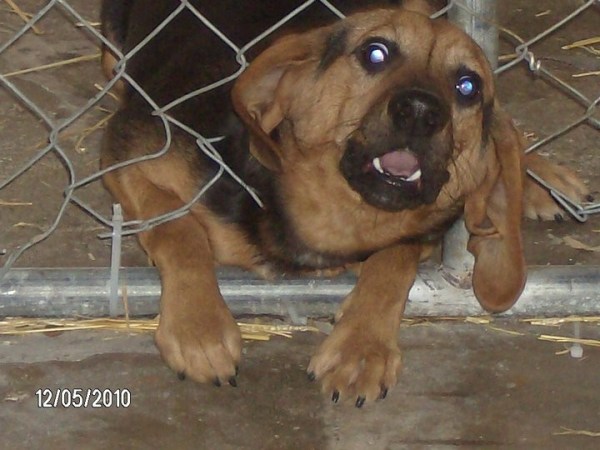
Harrison County, OH – The pictures taken just yesterday don’t lie…frigid temperatures have left dogs suffering in deplorable conditions at the Harrison County Dog Pound in Cadiz, OH. The photos reveal water bowls frozen over, frozen feces, and dogs with their bodies stuck in wire doors.
The tax-payer funded dog pound is a colossal mess and it’s only getting worse. A statement was released just this morning that the shelter intends to euthanize all dogs at the facility in 72 hours. In the meantime, the dogs continue to suffer.
Languishing in filthy kennel runs that are not protected from the harsh elements. The facility has no exterior walls…nothing to protect those housed here from facing the bitter cold. Adding to the misery are the unsanitary conditions that lead to an increase in disease.
- See More Pictures Here
Rescuers attempting to pulls dogs from the facility have reported that there are dogs already suffering from the dreaded Parvo virus. Statements have been released that there are dogs with bloody diarrhea – dogs suffering without medical treatment.
Imagine the horror of dying from a dreadful disease while lying on feces in below-freezing temperatures. Imagine the fear and depression that a dog experiences at a “normal” animal shelter and then compound those feelings with the abject misery caused by conditions that no living creature should have to endure. This is not acceptable.
And at the tax-payers’ expense? This is wrong on every level. There is no excuse for conditions such as this anywhere in our nation. The United States of America is not a third-world country.
Five Environmental Crises To Care About

From Care2
Posted by Samantha, selected from Planet Green
By Mickey Z., Planet Green
Imagine for a minute if corporate-sponsored mouthpieces like Limbaugh and O’Reilly were correct on either of these points:
- Global warming is a hoax
- Humans are not responsible for climate change
Well, guess what? It wouldn’t change the green movement’s primary mission. Because while some waste valuable time debating deniers, every 24 hours:
- 13 million tons of toxic chemicals are released across the globe
- Over 100 plant or animal species go extinct
- 200,000 acres of rainforest are destroyed
- 45,000 humans die of starvation
And that’s just the tip of the melting iceberg…
Climate change, of course, connects to many of the pressing green issues but our eco-system would be in peril even if the deniers are right. We’d still have 80 percent of the world’s forests gone. We’d still have 90 percent of the large fish in the ocean gone. In other words, we’d still have an urgent need to dismantle industrial civilization and work towards a greener future.
5 Eco-problems (of Many) Al Gore May Never Make a Movie About (But Should)
Imagine tomorrow that global warming were reversed, slaughterhouses shuttered and closed, pesticides banned, and the auto industry no longer received corporate welfare. Even as we celebrated, the reality would remain: radiation is forever. The half-life of DDT in the environment is 15 years — which is bad enough — but the half-life of uranium-235 is 704 million years; and for uranium-238, it’s about 4.47 billion years.
Note to Al Gore: Stop supporting nuclear power.
Take Action: Learn why nuclear power is not and can never be clean energy.
Related | A River of Waste: The Hazardous Truth About Factory Farms
Vodpod videos no longer available.
For just a snapshot of what this insane institution can do to the environment, we’ll turn to PETA:
- Each day, factory farms produce billions of pounds of manure, which ends up in lakes, rivers, and drinking water.
- Of all the agricultural land in the U.S., 80% is used to raise animals for food and grow the grain to feed them — that’s almost half the total land mass of the lower 48 states.
- Chickens, pigs, cattle, and other animals raised for food are the primary consumers of water in the U.S.; for example, it takes more than 2,400 gallons of water to produce 1 pound of cow flesh, whereas it takes about 180 gallons of water to make 1 pound of whole wheat flour.
Note to Al Gore: Why were burgers and hot dogs sold at the Live Earth concerts?
Take Action: Go vegan.
Deforestation, put simply, is the permanent destruction of indigenous forests and woodlands. Greenpeace tells us that an area of natural forest the size of a football field is being chopped down every two seconds. The Nature Conservancy adds that over 32 million acres of the planet’s natural forests are lost each year due to logging, much of it illegal. Other reasons (sic) for deforestation cattle grazing, agriculture, mining, oil extraction, population expansion, dams, pipelines and other infrastructure projects.
Note to Al Gore: Without trees, we’re doomed.
Take Action: Recognize the connection between what we eat and why trees are clear cut.
4. Overfishing
“Populations of top predators, a key indicator of ecosystem health, are disappearing at a frightening rate,” explains Greenpeace, “and 90 percent of the large fish … have been fished out since large scale industrial fishing began in the 1950s.” The connection between human survival and the oceans has never felt more vital.
Note to Al Gore: You shouldn’t have served endangered Chilean Sea Bass at your daughter’s wedding.
Take Action: Transition away from fish in your diet.
Please Ask the University of Massachusetts Medical School to End the Use of Pigs in ATLS Courses

PLEASE CLICK ON AND SIGN: Ask the University of Massachusetts Medical School to End the Use of Pigs in ATLS Courses
- You may use the letter provided in the form above, write your own, use the sample below, or send a modified version.
FROM PCRM
BACKGROUND
Yesterday, four alumni of the University of Massachusetts Medical School (UMMS) filed a federal animal welfare complaint charging their alma mater with violating the Animal Welfare Act by using live pigs in a trauma training course.
Advanced Trauma Life Support (ATLS) courses teach procedures designed to treat acute trauma injuries. The American College of Surgeons, which oversees ATLS courses, has approved the use of human patient simulators such as the TraumaMan System to teach these courses, yet UMMS continues to use live pigs. In these courses, numerous invasive procedures are practiced on anesthetized pigs. At the end of each course, the pigs are killed.
So far, UMMS chief of trauma surgery Timothy Emhoff, M.D., has refused to replace the use of live pigs. Please help us by calling or e-mailing UMMS dean of medicine Terence Flotte, M.D., today and urging him to end this cruel and unnecessary practice. Send an automatic e-mail.
Terence Flotte, M.D.
Dean, School of Medicine
Provost and Executive Deputy Chancellor, UMMS
5 Lake Ave., N.
Worcester, MA 01655
E-mail: Terry.Flotte@umassmed.edu
Phone: 508-856-8000
UMMS is among only five percent of U.S. institutions using animals for these courses. Furthermore, UMMS already has a state-of-the-art simulation center that could easily provide nonanimal training methods for ATLS courses
To read the federal complaint click here (or see below).
Thank you for all of your help.
Animal Aid: This will make you rethink animal experiments!
Vodpod videos no longer available.
Fur is RED not GREEN: Poisonous Fashion

Related, please click on and Tell Nordstrom to Stop Selling Fur
From Four Paws
Fur is not only animal cruelty but can also be dangerous for humans: A study commissioned by FOUR PAWS reveals that fur fashion is contaminated with poisonous chemicals.
Is fur a “natural“ product?
The cruel keeping conditions for fur-bearing animals are ignored by the fur industry, or described as appropriate. Fur from animals is often advertised as a particularly “ecological and valuable product”. FOUR PAWS has investigated a range of fur products and determined that these claims are not truthful.
Children’s clothing particularly poisonous
FOUR PAWS and EcoAid had a number of different fur products such as collars and scarves checked for poisonous traces by an independent specialist laboratory. The detailed “Poison Report” shows the alarming results: a majority of the mink, fox and raccoon dog furs are contaminated with dangerous chemicals such as formaldehyde, NPE, polycyclic aromatic hydrocarbons (PAH) or chlorinated paraffins. Legal restrictions and industrial standards are frequently exceeded. Children’s clothing turned out to be particularly poisonous.
Download reports | Reports are also below
Fur Footage | Cruelty around the world, no place is immune from speciesism.
Vodpod videos no longer available. Vodpod videos no longer available.
Vodpod videos no longer available. Vodpod videos no longer available.
Please protest poisoned dogs in Izmir, Turkey

From Facebook
By Avril Simms
Please protest the newest case of deliberate poisoning of dogs in Izmir, Turkey; not that it makes any difference, but many were not strays but rather companion animals.
WHERE TO SEND YOUR LETTERS:
izmir@izmir.gov.tr , izmir@icisleri.gov.tr , bimer@basbakanlik.gov.tr
SAMPLE LETTER | please modify & shorten:
To Whom It May Concern,
I am gravely disturbed to learn of the deliberate poisoning of stray animals in Turkey. This is not an isolated incidence and factually represents an indefensible, ongoing campaign conducted by the community in direct opposition to established protocols and law to address the growing population of homeless animals. Indeed, although Animal Welfare Law 5199 explicitly stipulates that killing or injuring any homeless animal is illegal and will be answered with strict penalties, given the transparent nature of these killings and the lack of official intervention and termination, it is obvious that municipal approval has been extended to support such. As such, I am demanding immediate intervention to protect these animals and criminalize the people responsible for such blatant cruelty.
It is impossible to contemplate supporting any country, via tourism or commerce, that excuses such blatant animal cruelty; as a direct consequence, the global community, refusing to defend this maliciousness, will condemn any further exploitation through personal boycotts. Ours is not an ambiguous request; you should understand that further killing will prove not only socially unacceptable but also financially irresponsible. As such, please provide immediate relief for these innocent animals and instead be a representation of animal compassion and strive to foster an ideal whereby animals are respected and empathized by your citizens. Allocate resources to construct shelters; implement sterilization and vaccination programs to prevent homeless populations and colony disease outbreaks; accept local and international advice and assistance; implement laws addressing current legal vulnerabilities; and enforce existing laws establishing animal cruelty as criminal.
I hope this letter finds you willing to scrutinize both your own involvement in the intentional exploitation of animals and your desire to therefore protect, rather than harm, them. Thank you for your attention to this urgent issue.
NAME
ADDRESS
Related | Do you still find it outrageous?
Vodpod videos no longer available.
BACKGROUND
Animal activists struggle to solve Turkey’s street dog problem
By Ipek Emeksix, Istanbul
Sunday, November 21, 2010
A policy of “neutering and returning” stray dogs to their original neighborhoods is the answer to dealing with the large numbers of roaming animals in Istanbul, according to the founder of an animal rights society.
“Neuter and Return is the most efficient, cost-effective and humane method of surplus dog control,” said Robert Smith, an English businessman who founded the Society for the Protection of Stray Animals, or SHKD, in 1998 after becoming outraged at the way Eyüp Municipality was allegedly abusing stray animals.
“The policy of Eyüp had been to either poison dogs [usually with strychnine] or to collect and dump them in the Hasdal rubbish dump. This policy was ineffective and cruel, as strychnine causes a slow and agonizing death,” Smith told the Hürriyet Daily News & Economic Review late last week.
Emotionally affected at what he saw, Smith formed the SHKD to draw attention to the plight of stray dogs and to inculcate a more benevolent attitude toward the dogs in Turkey.
Smith and his team, initially composed of two catching teams, six veterinarians and 20 personnel at the time, began focusing on neutering and returning dogs to their habitat.
Undertaking all the expenses of the shelter, Smith constructed kennels for the dogs to stay and prepared intensive-care units and surgery rooms where veterinarians could spay and neuter dogs.
One year after founding the SHKD, animal rights activists protested the continued policies of Eyüp Mayor Ahmet Genç.
Although the SHKD was not involved in the protest, he said the team’s shelters in Hasdal were destroyed with bulldozers soon afterwards, leading Smith to suspect the municipality could have been involved.













 Our Compass