US friends, have ten minutes? Please take action on five quick issues, thank you.
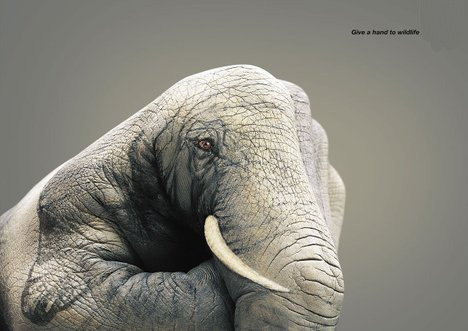
Please click on and sign the following message petitions to help wolves, birds, and elephants, thank you.
1. Please Oppose Baucus-Tester Bill S. 3864
2. Urge FCC officials to help prevent needless bird deaths
3. Don’t Let Salazar Sell Out Our Wolves and the Endangered Species Act
4. Please protect elephants Lucky and Queenie (Boo) at San Antonio Zoo
5. Please protect Sri Lanka’s elephants
1. BACKGROUND | From IDA
The United States Senate is considering S. 3864, introduced by Montana Senators Max Baucus and Jon Tester, which would eliminate vital protections for endangered gray wolves in the Greater Yellowstone and Northern Rocky Mountain regions. If this bill is passed and signed into law, the Endangered Species Act would be significantly compromised, gray wolves in Idaho and Montana would be delisted, and permits to slaughter more than 1,000 animals would be issued, thereby destroying the potential for any recovery of the species.
S. 3864 is due to be voted on (without public hearings or comments) any day. If passed, it would effectively end the recovery process of the gray wolf population of the Greater Yellowstone and the Northern Rockies area.
MESSAGE TEXT
Please Oppose Baucus-Tester Bill S. 3864
Dear [Decision Maker],
As your constituent, I am writing to express my opposition to S. 3864, the Baucus-Tester bill to remove Endangered Species protections for wolves in the Greater Yellowstone and Northern Rockies region. I urge you to oppose this bill.
This bill would degrade the scientific principles in the Endangered Species Act that are intended to protect imperiled species such as the Northern Rocky Mountain gray wolf population who are not yet self-sustaining.
Please oppose S. 3864 in order to help wolves and other species recover from extermination programs of the past. Thank you for consideration.
2. BACKGROUND | From IDA
Attracted by the steady glow of lights, millions of birds are killed during their annual night migrations as they collide with communications towers and related structures. But many of the deaths could be prevented.
After years of urging by Defenders and our conservation partners, the Federal Communications Commission is finally undertaking an environmental review of its tower registration program — and the agency needs to hear from you.
Take action now: Urge FCC officials to help prevent needless bird deaths and conduct a thorough review of communications structures.
MESSAGE TEXT
As a supporter of Defenders of Wildlife and someone who cares about migratory birds, I am delighted to see that the Federal Communications Commission (FCC) is finally conducting an environmental review of its tower registration program.
I strongly urge you to conduct an environmental impact statement rather than an environmental assessment of the impacts of communication towers on birds. I also urge you to conduct this review before more towers are constructed as part of the broadband expansion.
As you know, according to the Fish & Wildlife Service, each year at least 5 million birds are killed by communications towers and related structures across the United States.
Around 230 species of birds — over one-quarter of all avian species found in the U.S. — have been documented as being killed by towers. Many of these species are in decline. Several species are suffering mortality equivalent to several percent of their estimated total population size.
The FCC has not only the legal authority to regulate these antenna structures, but also the legal obligation to do so. Federal laws — including the National Environmental Policy Act, the Endangered Species Act, and the Migratory Bird Treaty Act — require the FCC to adopt measures to prevent, or at least minimize, bird fatalities caused by FCC registered antenna structures.
As FCC moves forward with the environmental review of its tower program, please consult with the U.S. Fish and Wildlife Service and prepare a Memorandum of Understanding that outlines how the FCC will meet its obligations under the Migratory Bird Treaty Act in order reduce bird deaths from antennas and structures regulated by the FCC.
Thank you for your consideration.
RELATED | How I Became An Elephant: Trailer
Vodpod videos no longer available.
3. BACKGROUND | From Change.org
(This has been published previously under a specific IDA action, but this is IDA’s Change action so is a different medium.)
Recent reports suggest that President Obama’s Interior Secretary, Ken Salazar, is prepared to agree to, and is actively promoting, legislative language that would eliminate Endangered Species Act (ESA) protections for all gray wolves in the Northern Rockies, including those in Montana, Idaho, Wyoming and portions of Washington, Oregon and Utah.
Not only would wolves lose protections, they would also be put beyond the reach of the ESA forever unless the Secretary, at his sole discretion, chooses to restore them to the list of threatened or endangered species. Even worse, under the language, there would be no ability for the American public to petition for these protections in the future… regardless of how egregious state wolf management plans become.
The proposal is arbitrary and strikes a blow at the very foundation of the Endangered Species Act. Hundreds of wolves — maybe more than a thousand — could be killed. And you and I could lose America’s most effective tool for protecting imperiled wildlife.
We don’t have much time to stop Secretary Salazar’s plan. Please urge your senators to reject Interior Secretary Salazar’s backroom deal to remove protections for wolves and harm the ESA.
MESSAGE TEXT
Dear Secretary Salazar,
As a supporter of Defenders of Wildlife and someone who cares about wolves, I strongly urge you to reject any legislative proposal by the Secretary of the Interior to eliminate life-saving protections for wolves.
Recent reports suggest that Secretary Salazar is prepared to agree to, and is actively promoting, legislative language that would eliminate Endangered Species Act protections for all gray wolves in the Northern Rockies, including those in Montana, Idaho, Wyoming and portions of Washington, Oregon and Utah.
Not only would wolves be delisted, they would also be put beyond the reach of the ESA forever unless the Secretary, at his sole discretion, chooses to restore them to the list of threatened or endangered species.
Even worse, under the language, there would be no ability for the American public to petition for these protections in the future… regardless of how egregious state wolf management plans become.
This proposal is anti-science, anti-wolf and anti-democratic. I strongly urge you to do everything in your power to oppose it.
Thank you for considering my comments.
[Your name]
4. BACKGOUND | From IDA
After the elephant Queenie was sent to the San Antonio Zoo in April to join the unfortunate Lucky – amid great controversy and opposition from thousands of pro-elephant advocates around the country – IDA pledged to closely monitor their situation.
We recently received alarming videotaped footage of dangerous aggression between Queenie and Lucky, and filed a complaint with the USDA, demanding they be removed from this unsafe situation caused by the very small size of their enclosure. (Note that the zoo now calls Queenie “Boo,” so IDA uses that name in the complaint.)
Backed by one of the world’s leading elephant scientists, ElephantVoices co-director Dr. Joyce Poole, who has been studying elephant behavior in Africa and Asia for more than 30 years, the complaint warned of dire consequences should Lucky and Queenie continue to be held in the zoo’s outdated exhibit. In behavioral observations provided to the USDA, Dr. Poole observed aggressive behavior by Boo toward Lucky:
“Lucky is being terrorized by Boo [Queenie]. This kind of persistent bullying is not seen in the wild, because elephants have other activities with which to occupy themselves, and because they can remove themselves from conflict, if need be. In my opinion, the primary cause of this undesirable situation is that the elephants have too little space.”
The zoo, and not the elephants, is to blame for this predicament. Lucky and Queenie are victims of an outdated system that allows zoos to keep two elephants weighing more than four tons each in a space smaller than many backyards. In such restricted conditions, an elephant is going to get hurt.
IDA strongly urges the USDA to act immediately to avert a tragedy at the San Antonio Zoo. We’re calling for the removal of the elephants and their transfer to a natural-habitat sanctuary where they would have room to move and could choose their companions. Until that can take place, IDA is asking the USDA to require constant monitoring of the elephants by the zoo.
The San Antonio Zoo acquired Queenie following a settlement facilitated by the USDA with abusive circus handler Will Davenport, who was facing charges for multiple violations of the Animal Welfare Act. IDA opposed the move, which forced Queenie and Lucky to coexist in a less than half-acre exhibit that is too small even for one elephant. Unfortunately, our prediction that the integration of these elephants would be highly problematic, and even dangerous, has become a sad reality.
MESSAGE TEXT
I am extremely alarmed that the elephants at the San Antonio Zoo, Lucky and Boo (formerly known as Queenie), are suffering because of problems with aggression. The very small size of their enclosure has created an unsafe situation that seriously threatens these elephants. In fact, Lucky injured herself when trying to flee a stressful encounter with Boo.
I am asking that you take immediate action to protect both Lucky and Boo. Since the captive conditions they live in cannot be changed, they should be removed from the zoo and sent to a natural-habitat sanctuary, where they would have adequate space to form healthy social relationships with elephants of their choosing. Until action can be taken, I urge you to order the zoo to provide constant monitoring of these elephants.
5. BACKGROUND | From IDA
Parakrama was known to be one of the biggest bull elephants in Sri Lanka, with gleaming tusks that were five feet long. He was called a “National Treasure.” Unfortunately, he caused havoc in villages that were closing in on his range, resulting in a woman’s death. So the Department of Wildlife Conservation captured Parakrama, with the intention of trucking him to a safer location. While being transported, the bottom of the truck gave way under the huge elephant, trapping Parakrama and pinning his chest against the floorboards, where the magnificent tusker died of suffocation.
In the wild
This appalling story gives a glimpse into the problems wild elephants face in Sri Lanka. More than 50 people and 228 elephants, an estimated 5% of the remaining wild population, were killed last year as a consequence of human/elephant conflict, caused by ever-shrinking habitat. Sri Lanka’s elephants are blocked by electric fences that cause them to starve, and they are often translocated away from conflict areas, only to cause even more damage in the new, unfamiliar environment, or they may try to return to their old territory. These are not the long-term solutions that the elephants need if they are to survive.
In captivity
Captive elephants in Sri Lanka have no government protections, allowing them to be held in substandard conditions, including at zoos and in tourism-supported facilities such as the Pinnawela Elephant Orphanage. The orphanage was originally established to care for calves orphaned in the wild, but has become an uncontrolled breeding ground without thought for the future of the elephants. Elephant calves from Pinnawela are often abducted from their mothers and given to temples, individuals or sent to zoos in Sri Lanka where they spend their lives in chains, repetitively swaying from side to side, often malnourished and alone.
Very alarming is the Sri Lankan government’s practice of exporting elephant calves to foreign zoos. Since 2002, babies have been sent to zoos in China, Japan, Croatia, and the Republic of Korea; New Zealand may be next. U.S. zoos are also looking to Pinnawela as a source of elephants for their newly expanded elephant exhibits, including the National Zoo in Washington, DC.
For more information about Parakrama and the plight of elephants in Sri Lanka, read Death of a Tusker and Looking for Raja and Losing Parakrama, and visit ElephantVoices to learn more and see photos of elephants at the Dehiwala Zoo.
MESSAGE TEXT
In the wild, elephants are suffering and dying because of escalating conflict, which claims the lives of humans and elephants alike. Long-term solutions and not the current interventions that only worsen the situation and result in the deaths of elephants like Parakrama and “the Brigadeer” must be found in order to insure the survival of elephants in Sri Lanka. I urge you to work with your country’s conservationists, scientists and veterinarians, as well as various government ministries to find lasting solutions that will end the cycle of death and violence between humans and elephants.
In captivity, lack of humane legislation allows elephants to be kept in substandard conditions where they spend a lonely lifetime in chains and misery. Elephants are intelligent, emotional, and highly social beings who suffer greatly from this treatment. I am also extremely alarmed that the Sri Lankan government separates captive-held calves from their mothers to export them to foreign zoos. I ask that you end this cruel practice now. These elephants should be treasured, cared for and protected in their homeland, rather than be treated as a source of elephants to fill foreign zoo exhibits.
People around the globe care deeply about elephants and will be closely watching Sri Lanka and its elephants. Many will base their tourism decisions on your actions. I urge you to protect Sri Lanka’s elephants by putting their well-being before profit and politics, and ending the export of elephant calves to foreign zoos. These animals are national and cultural treasures and they should be treated with respect.