HighestWelfare.Humane.Assured.GoodPractices.Vegetarian. Regenerative.Flexitarian.Lies...
What is the difference between No Welfare, High Welfare, and Highest Welfare when they all require animals to die? Only human comfort, NONE protect the actual animals. The most humane, ethical, and honest Webster-defined "welfare" is NOT exploiting animals - not using, not wearing, not eating, not killing - animals. The only meaningful position is vegan, everything else is just how humans euphemize animals' required suffering and violent deaths: no human exploits animals because they honestly believe that NOT exploiting animals is UNethical or INhumane.

PLEASE CLICK ON AND SIGN Save Elephants: End Illegal Ivory Imports
BACKGROUND
The U.S. is one of the largest retail markets for imported ivory, and therefore a major driver of elephant poaching in Africa. This is possible because of loopholes in Endangered Species Act protections.
Today, elephants are being slaughtered in record numbers. And reports say that ivory trade has dramatically escalated since 2005 — this correlation is no coincidence.
It’s shameful that the U.S. would support the slaughter of African elephants and allow an illegal ivory trade to flourish under the radar.
Please remember to sign the petition HERE.
See More from IFAW’s Save the World’s Remaining Elephants
Don’t Bring Back Bloodshed …
Vodpod videos no longer available.
And while the good, decent, and honest people of this world attempt to behave responsibly and extend assistance and respect, sociopathic serial killers do all they can to ensure they will be able to continually murder; someone please illuminate the reason why gun-toting killing addicts get a pass?
From International Hunting Consultants
South Africa Elephant Hunt | Kruger National Park
This is an eight day South African elephant hunt. Hunting takes place in reserves bordering Kruger National Park. Hunters can take one bull elephant no larger than thirty pounds per side. *These hunts are subject to availability.
Hunt includes: Eight days of fully guided hunting, Accommodation, Full Catering, One elephant bull no larger than 30 pound per side, Transportation to and from hunting area (once you arrive)
While the .375 is the legal minimum caliber, there will be no room for error in your shot placement if it is your weapon of choice. Hunt this “big fellow” with the largest rifle you can shoot well; 40 and even 50 caliber rifles with 400 to 500 grain solid bullets would definitely be a good choice. A fifty-yard shot might be considered a long shot on the elephant as most are taken at between 20 and 30 yards.
Read more…
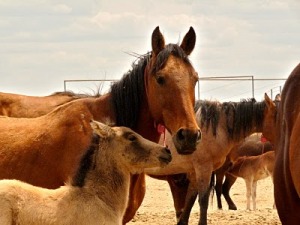
Designate the American Mustang as an Endangered Species
SUMMARY
The purpose of this petition is to bring awareness to the fact that the American Mustang is being subjected to conditions that would put any other species on the Endangered Species List, and to request action be taken immediately to put the American Mustang on The Endangered Species List.
PETITION TEXT
Greetings,
The purpose of this petition is to bring awareness to the fact that the American Mustang is being subjected to conditions that would put any other species on the Endangered Species List.Below is a quote from the U.S. Fish and Wildlife Service, regarding the Endangered Species Act.
“Under the ESA, species may be listed as either endangered or threatened.
‘Endangered’ means a species is in danger of extinction throughout all or a significant portion of its range.
‘Threatened’ means a species is likely to become endangered within the foreseeable future.
All species of plants and animals, except pest insects, are eligible for listing as endangered or threatened. For the purposes of the ESA, Congress defined species to include subspecies, varieties, and, for vertebrates, distinct population segments. As of March 2008, the FWS has listed 1,925 species worldwide as endangered or threatened, of which 1,351 occur in the U.S.
How are Species Listed? Section 4 of the ESA requires species to be listed as endangered or threatened solely on the basis of their biological status and threats to their existence. When evaluating a species for listing, the FWS considers five factors:
1) damage to, or destruction of, a species’ habitat;
2) over-utilization of the species for commercial, recreational, scientific, or educational purposes;
3) disease or predation;
4) inadequacy of existing protection; and
5) other natural or man-made factors that affect the continued existence of the species. When one or more of these factors imperils the survival of a species, the FWS takes action to protect it.
To ensure the accuracy of the data, the FWS decides all listings using sound science and peer review.”
It does not take a great stretch of the imagination to come to the conclusion that the United States is currently subjecting the American Mustang to many, if not all of the conditions above.
By signing this petition you put your name down as an American citizen, in protest of the current treatment of the American Mustang, and petition the U.S. government to cease and desist in any activity that continues to threaten these animals. In addition, we petitioners request with extreme vehemence, that the U.S. government take action to put the American Mustang on the Endangered Species List.
[Your name]
Vodpod videos no longer available.

Photo / Bay of Plenty Times
From New Zealand Herald
By Genevieve Helliwell
Animal welfare officers are horrifed at the actions of an unknown person who threw a sack of newborn puppies into an estuary at Welcome Bay, the latest in a string of horrific animal abuse incidents in Tauranga.
A bag holding at least six American pit bull staffordshire-cross puppies drowned after they were thrown into the estuary, near James Cook Dr.
Sonia Landers from Tauranga SPCA found the bag of dead puppies and their distraught mother dog at 7am on Saturday.
The mother dog was howling.
Tauranga SPCA was notified of the case on early Saturday morning after a Welcome Bay resident saw the dog’s attempt to save her puppies the night before.
Tauranga SPCA animal welfare inspector Jason Blair said the resident, who lived about a block from the estuary, heard howling about 1am on Saturday.
After the howling continued for about two hours, the resident became distressed by the noise, so went down to investigate, Mr Blair said.
“They witnessed the [mother] dog carrying a red reusable New World shopping bag, as well as puppies, get out of the water and take them up the bank.
“They saw the dog pace back and forward between the shore, with the bag of puppies in her mouth,” Mr Blair said.
Between the time of the incident and 7am, someone managed to put a rope around the mother dog’s neck and contain her until the SPCA arrived the following morning, Mr Blair said.
Mrs Landers said when she got to the scene, the mother dog was “severely distressed”, very skinny and “moderately malnourished”.
Mrs Landers said anyone who was capable of throwing the puppies into the water “deserved to be locked up behind bars”.
“I really want to find the person responsible so they can be brought to justice.”
All mothers agonize and grieve for their stolen children … and they for their mothers.
Vodpod videos no longer available. Vodpod videos no longer available.
Tauranga SPCA knows where the dog and puppies have come from but have been unable to find the offender at this stage.
Mr Blair said the Tauranga SPCA needed the help of the public to find the person who dumped the bag of puppies in the estuary.
“We’re searching for someone who was out some time after darkness on Friday night who was walking around the Welcome Bay Road area, near Waitaha Rd, with a red carry bag.
“Anyone that saw anything, please come forward.
“We just want to find out what happened,” Mr Blair said.
The incident follows a series of animal abuse incidents in the Western Bay, including an 8-week-old puppy that had its ears hacked off, a dogue de bordeaux dog being killed in an arson attack and a 3-month-old kitten being killed outside a Tauranga family’s home and left on the owner’s doorstep.
When the Bay of Plenty Times visited the Tauranga SPCA yesterday afternoon, the mother dog, which the SPCA has named Faith, was sitting motionless in her kennel.
Mrs Landers said Faith had been howling since the incident almost a week ago and had only stopped making noises in the past 12 hours.
Tauranga clinical psychologist Hans Laven said animal abuse cases were distressing, especially if the act was intentional.
“If it was a deliberate act by an adult to cause the deliberate suffering of an animal, then it’s a real worry. . . although it’s not definite they will cause more violence on other humans, these people just have a much higher chance than the average person,” Mr Laven said.
However he said incidents like this were “hard to generalise” without knowing the full facts.
Mr Laven said the act, if intentional, was concerning, but was influenced by the “definition of abuse”.
Read more…
CRACK: Sterilizing Drug Addicts Since 1997

Care2 Editor’s Note: A controversial non-profit offers financial incentives to drug addicts to be sterilized. This article originally appeared on Campus Progress.
Children Requiring a Caring Kommunity (CRACK), a non-profit based in California, will give $200 cash to any drug-addicted man or woman willing to undergo sterilization. And they offer a more lucrative option for women: they will pay clients $200/year to take long-term birth control like Depo-Prevara or Norplant.
Barbara Harris, the founder of CRACK, established the organization after having adopted four children born to drug-addicted parents—something she claims her critics should try before they oppose her organization. Her mission: “Save our welfare system and the world from the exorbitant cost to the taxpayer for each drug-addicted birth” by offering “effective preventive measures to reduce the tragedy of numerous drug-affected pregnancies.”
Since its inception in 1997 in Orange County, California CRACK (also known by the more innocuous name, Project Prevention) has spread to several other U.S. cities including New York and Seattle. Its website announces “Project Prevention Goes Global!” and adds that they are currently exploring and seeking other interested countries for possible expansion. Though the original plan was to extend their entire program to its UK, the British Medical Association (BMA) has opposed the use of sterilization as part of CRACK’s program there.
Yearly, millions of children—many of who test positive for substance dependence—are born to drug-addicted mothers and are funneled into a bloated foster-care system, subject to both neglect and abuse.
The organization offers a solution that smacks of eugenics. In the 1930s Margaret Sanger, birth control advocate and early eugenicist, was interested in birth control’s usage possibility for population control. While Sanger believed that birth control was a tool for all women, she was also a product of her time—a time when eugenics was popular—and she thought birth control should be used to reduce the population of “feeble-minded” people and the mentally ill. In the same spirit, CRACK is offering money to a highly vulnerable, economically depressed population it deems undesirable for reproduction.
RELATED | Barbara Harris, CRACK
CRACK’s website includes numerous letters from substance-exposed children who support her program, apparently trying to prevent people like themselves from being born. Harris recounts that when she first became involved with the issue of protecting substance-exposed children, she sought the punishment of addicts who had children. “I started calling district attorneys’ offices and police departments, asking whether there was anything I could do as a concerned citizen, perhaps make a citizens’ arrest. I got nowhere. I was told there was nothing I could do,” she told People magazine.
When asked about the controversy surrounding her organization, she seems genuinely confused. “I really don’t understand controversy or people who oppose what we do,” Harris says. “I think a lot of people should realize they’re never going to be good parents, and never have children.”
CRACK’s methodology for attracting clients has come under fire from activists and concerned communities. Their strategy targets low-income neighborhoods and includes messages such as the provocative: “Don’t Let Getting Pregnant Get in the Way of your Drug Habit.” As the program has grown, CRACK is increasingly getting referrals from publicly funded institutions such as prisons, probation centers, drug treatment centers and even hospitals. According to a recent Salon article, “Addicts who are directed to CRACK by public employees now account for a quarter of the program’s participants.” CRACK’s increasing reliance on referrals from public agencies could have wide implications for the American public.
Advocacy groups such as Campaign for Tobacco Free Kids have also questioned CRACK’s exclusive focus on those addicted to illegal drugs. When it comes to the damage tobacco and second-hand smoke can have on children,“[S]moking during pregnancy creates a more serious risk of spontaneous abortion and a greater threat to the survival and health of newborns and children than using cocaine during pregnancy. It is also a much more pervasive problem.”
Michael Vick Banned from Dog Ownership – Ask an Attorney

Please click on and send First Strike and You’re Out!
Related: Obama Praises Eagles Owner for Giving Vick Second Chance After Animal Cruelty
If you want to send a message to Obama telling him how you feel about that, please click HERE.
From Animal Legal Defense Fund
NFL quarterback Michael Vick, who served 18 months in prison after a felony conviction in 2007 for his widely publicized involvement in dogfighting—including shooting, electrocuting, and hanging dogs who did not perform well in the ring—recently stated publicly that he wants to own a dog and believes it would be good for his rehabilitation process. His federal sentence included a three-year ban on the possession of a dog.
In this Q&A session, attorney Scott Heiser, director of the Animal Legal Defense Fund’s Criminal Justice Program, answers some questions and provides some clarification relating to the current debate about whether Michael Vick should be allowed to own a pet dog.
Q: When are judges allowed to impose an animal ownership ban on convicted abusers?
A: Many states require a trial judge to expressly impose a ban on possessing animals (PDF | below as well) as part of a sentence for animal cruelty or fighting. For example, in Virginia, the home state of Mr. Vick’s criminal enterprise “Bad Newz Kennels,” as part of a dogfighting sentence the court is now required to ban an offender from possessing or owning companion animals or fighting birds. It is significant to note that in March 2008, in the wake of the Vick case, the Virginia Legislative Assembly chose to amend the law to make an animal possession ban amandatory rather than discretionary part of a trial judge’s dogfighting sentence.See, Va. Code Ann. § 3.2-6571(D) (2010) (as amended March 2008, cc. 543).
Divesting all state trial judges of the authority to balance the risks a dogfighter presents to the community in deciding to impose a post-conviction possession ban is a substantial change in the law. It is a sound policy choice predicated on the common sense notion that those who exploit vulnerable victims should not be allowed further access to the offender’s preferred pool of victims.
Q: Is there such a thing as a lifetime ban for convicted abusers?
A: Court ordered long-term or lifetime possession bans are hard (if not impossible) to enforce—it is a jurisdictional issue. This area of the law can prove a bit confusing. However, as a general rule, a trial judge only has jurisdiction over a sentenced defendant during the life of the case, and in most mid- to low-level felonies that is between three to ten years. Once the clock has run out, the court no longer has the authority to haul an offender back in on a probation violation—it loses jurisdiction. This begs the question: how is it that one can be subject to a long-term or lifetime ban on anything? The answer is simple: make the possession of the item (or the regulation of undesired conduct) a new criminal offense.
Think “ex-con in possession of a firearm.” It is the prior felony conviction that provides the foundation for a new criminal offense when a felon acquires a gun. Moreover, it is this new criminal offense that allows the duration of the gun possession ban to outlast the duration of trial courts jurisdiction to supervise the offender in the underlying felony case. The same is true for those states with long-term animal possession bans. For example, in Oregon, a first conviction for dogfighting triggers application of Or. Rev. Stat. 167.332 and a 15-year ban on possessing animals. Any convicted dogfighter who is caught in possession of a domestic animal during that timeframe commits a new criminal offense. This de facto possession ban is a product of the underlying dogfighting conviction and applies by operation of law in cases where the sentencing court’s maximum jurisdictional duration in the dogfighting case is only six years after conviction.See, Or. Rev. Stat. 137.010(4), 167.332 and 167.365.
Related | This is Who We Are
Vodpod videos no longer available.
Some trial courts have imposed a lifetime animal possession ban, but the enforceability of these orders, while highly suspect, is a direct function of the court’s jurisdictional authority to hold a person in contempt for violating an order contained in a criminal judgment that has otherwise lapsed—it gets a bit complicated here. Nevertheless, a few states have enacted ostensible permanent post-conviction animal possession bans for repeat offenders. See, Wash. Rev. Stat. § 16.52.200(3)(permanent ban authorized for repeat offenders); NY Ag. & Mkts. Law § 374(5)(c) (court may impose possession ban “for a period of time which the court deems reasonable”); 510 Ill. Comp. Stat. 70/3.04(c) (same). The State of Maine, as part of its battery of civil remedies enacted to supplement its animal cruelty code, includes an option for the court to impose a permanent ban, which would be enforceable by contempt. ME Rev. Stat, title 7, § 4016(1)(C). Contrast these examples with Pennsylvania, where the post-conviction possession ban on animals is expressly limited to the statutory maximum term of imprisonment applicable to the underlying offense.
Mr. Vick’s federal sentence contains a three-year possession ban. Should it have been permanent? We at ALDF certainly think so, but we have to recognize the jurisdictional limits inherent in our justice system. However, under no circumstances should anyone who has engaged in criminal conduct similar to that of Mr. Vick’s enjoy a premature waiver of an animal possession ban. It is just not worth the risk.
Q: Do courts impose other kinds of bans on convicted felons who have already “served their time”?
A: In addition to firearms and animal possession bans, other examples of where a defendant’s conduct can be regulated long after the term of probation or post-prison supervision has expired include the denial of driving privileges for habitual traffic offenders and the requirement that sex offenders register their addresses with local law enforcement. However, in these cases, as with firearms cases (and in some states, animals), there is generally a separate statutory provision requiring offender compliance that outlives the lifespan of the judgment entered on the underlying offense. These statutes are the cleanest path to create easily enforceable long-term (or lifetime) requirements that offenders abstain from conduct or otherwise comply with an apparent judicial edict, avoiding all issues related to the viability of the court’s order over time.
Q: What are the legal rationales for ownership bans for convicted abusers like Michael Vick?
A: Animal abusers pose a very real risk to the community. The seminal study on this issue dates back to work started in 1975 and sustained over more than 20-years (i.e., 1975-1996). In what has proven to be one of the key findings from this long-term study, the Massachusetts SPCA and Northeastern University concluded that those who abuse animals are five times more likely to abuse humans. It is no great leap in logic to draw the conclusion that if an animal abuser is five times more likely to escalate to human victims, then such an offender posses an even greater risk of re-victimizing the same silent population he has already preyed upon. In Mr. Vick’s case, such an obvious conclusion is even more compelling when one considers that Mr. Vick engaged in a sustained six-year criminal enterprise dedicated to profiting from gambling on the outcome of dogfights while using the most cruel and barbaric methods imaginable to manage his “kennel” and maximize his profits. The ongoing nature of his conduct remains serious cause for concern and understandably contributes to the enduring distrust of his repeated public assertions of remorse and reformation. Some additional yet basic risk factors one should consider in assessing Mr. Vick’s case and the continuing threat convicted abusers present to society include:
- The vulnerability of his victims;
- The large number of his victims;
- The number of victimizing incidents;
- The severity of the injury and methods used to kill;
- The duration of the abuse;
- The degree of pre-planning or premeditation;
- The existence of other criminal conduct at the scene of the animal abuse (e.g., drugs, gun law violations, gambling);
- The fact that this offender served as an instigator of criminal acts involving multiple other perpetrators; and
- The offender’s history of positive interactions with the victim animal(s) prior to the abuse.
In light of these factors, it is difficult to discern how Mr. Vick’s supporters could reasonably believe that he should be allowed to exercise control over another dog. The Animal Legal Defense Fund strongly disagrees with that view and recommends the longest possible ban on ownership be maintained. Whether his supporters are truly concerned about animal welfare or just too invested in Mr. Vick’s “comeback” to give a damn about the fate of the next dog who comes under Mr. Vick’s control—you will have to decide for yourself.
Read more…
Hungry Dolphins Forced to Perform in the Philippines
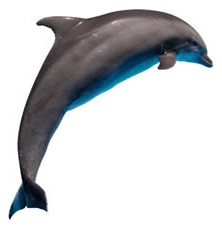
Please click on and sign: Hungry Dolphins Forced to Perform in the Philippines
Targeting: Salvador S. Salacup (Fisheries/ Agribusiness and Marketing and DA Spokesperson), Antonio A. Fleta (Undersecretary, Department of Agriculture), and Hon. Proceso Alcala (Secretary, Department of Agriculture)
Started by: Carin Zellerman
BACKGROUND
The Araneta Center in Cubao is celebrating the holidays by displaying captive dolphins in a small heavily-chlorinated pool in a parking area near the venue. The traveling dolphin show’s organizers, Indofil Sea Wonders Co Ltd, are allegedly keeping the dolphins hungry before the show so that they may perform better. Environmental organizations and conservationists including the Earth Island Institute, Marine Wildlife Watch of the Philippines, Dolphins Love Freedom Network, Philippine Animal Welfare Society, and Bangon Kalikasan Movement have protested against this show. Despite protests, the government decided to issue permits earlier in December. Activists held a demonstration on the opening day calling for the closure of the dolphin show.
http://www.gmanews.tv/story/209125/wildlife-activists-hold-xmas-protest-vs-dolphin-show-in-qc
The show will go on until Jan. 02, 2011. Please ask the government to permanently ban dolphin shows in the Philippines. Also, please take a minute to contact Araneta Center asking them to stop sponsoring traveling dolphin shows:
http://www.aranetacenter.net/2008/08contactUs.php
[Disclaimer: the rights to the petition picture belong to Helene O’ Barry]
Related | Gawkers Dolphin Wall Mural
Vodpod videos no longer available.
Harvey Nichols Advertises Dogs as Accessories
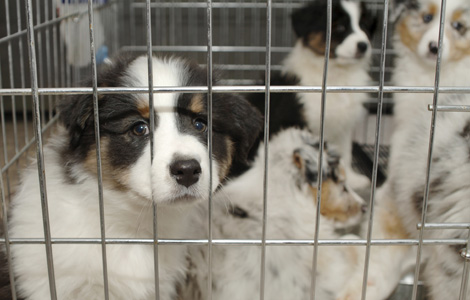
Please click on and sign Tell Harvey Nichols: Dogs Aren’t Accessories
From Change
By Stephanie Feldstein
Harvey Nichols’ latest Christmas commercial, The Fashionista’s Must Have Accessory (below via YouTube), has been raising hackles since it hit the web last week.
It starts with a woman modeling shoes in front of a mirror, with a black and white long-haired Chihuahua beside her. She asks, “Do you have any other colors?” and the salesperson replaces her dog. Then we see puppies with price tags, a woman comparing two dogs as if they’re handbags, dogs in cases, dogs being wrapped, etc.
The commercial ends with the slogan: “Harvey Nichols, Not Just for Christmas,” a riff off the well-known slogan, “A Dog is for Life, Not Just for Christmas,” used by Dogs Trust, the largest dog welfare charity in the U.K.
Harvey Nichols posted that “Although Dogs Trust was not involved with this video, we fully support the charity’s famous slogan.” A press release assured people that the video is a satire and Harvey Nichols does not sell animals or condone animals as accessories.
Dogs Trust was unimpressed.
Beverly Cuddy, Editor and Publisher of Dogs Today magazine, posted a response on her blog from Dogs Trust Chief Executive, Clarissa Baldwin, who said the organization is disappointed and concerned by the ad. “There will be some who view this advert at face value and see nothing wrong with purchasing a puppy on a whim as a gift. Wrapping up dogs with bows and gift tags for humour’s sake is in poor taste.”
Related | Everyday Dogs: When you buy, they die
Vodpod videos no longer available.
A Harvey Nichols Christmas
After all, the “not just for Christmas” slogan wasn’t created to be cute; there’s a serious problem with dogs being bought as presents and then dumped after the seasonal novelty wears off.
Styleite wasn’t amused by the ad either, citing that March tends to be the busiest time of the year for animal shelters, as Christmas puppies are faced with the harsh reality that it’s no longer Christmas and they’re no longer tiny puppies.
Some people find the satire funny. Some find the reaction of animal advocates even funnier. But when you’ve worked in a shelter where the kennels not only fill up after the holidays, but people actually do turn in pets because they “got too big” or because the house was redecorated and the fur no longer matched (true story), it’s not so hilarious anymore.
The joke is further lost when, for instance, French Bulldogs make their way onto fashion industry Holiday Gift Guides, complete with a “Buy It Now” button pointing to a site where any sketchy, unregulated breeder can sell their living wares.
Abandoned cat found “miracle on 110th Street”

Troy police released this photo of a sealed box in which a woman and her dog found a trapped kitten Thursday in an alley in Troy. Police are seeking information about the incident. (Courtesy Troy Police Department)
From Fox23
Reported by Talia Kaplan
Email taliakaplan@fox23news.com
A woman from Lansingburgh helped rescue a kitten left out in the trash. Police are calling it a holiday miracle. They say the incident is considered animal cruelty and that is something they take very seriously. In some ways police say it is the same as those crimes involving other helpless victims like children or the elderly.
The abandoned cat was left out in a cardboard box in an alley between 109th/110th Streets, Third and Fourth Avenue, to be collected as trash. Luckily, he was found by a good samaritan when she was walking her dog Phoebe.
Melissa Lombardo said she heard some noises and thanks to Phoebe’s sniffing she discovered the kitten. “I was shocked and sad. I felt bad for the cat. It was obviously scared. It was crying,” Lombardo said.
Lombardo called police right away who then brought the cat to the Troy Veterinary Hospital where he was appropriately named “Jack in the Box.”
“Considering what he has been through he came in a really good condition and he’s doing really good now,” Dr. Laura Engel, A vet at The Troy Veterinary Hospital, said.
Even though veterinarians expect “Jack in the Box” to make a full recovery police said things could have panned out a lot differently.
“The future of this cat absent the resident actually taking the time and finding the cat in the garbage, was either exposure if it would have taken a day or two for the trash to be picked up it wouldn’t have survived that long in the cold weather or the most unfortunate result would have been through the refuse collection process it would have been subject to some sort of distress trash compacting that would have been done by refuse collectors,” Captain John Cooney, Troy Police Department, said.
If you know anything about this particular incident of animal cruelty you are encouraged to call Troy Police at (518) 270-4430.
Vodpod videos no longer available.
Troy Police are taking this very seriously and will be conducting a thorough criminal investigation.
“It’s just a horrible crime, it’s cruel and inhumane. Every step that we can take including a door to door canvassing of the neighborhood and probably a search of the garbage in the pile will be done in order to get some resolution to the crime that occurred here. It’s certainly a criminal investigation. The Cruelty Animal Statue which covers this type of incident is a misdemeanor but, this is going to get a little extra look. The box the cat was found in has been secured as evidence and it’s been checked for trace evidence. We’ll go as far as fingerprints, DNA evidence on the box,” Captain Cooney said.
Captain Cooney said he is thrilled, especially this time of year to see such a positive outcome. “I guess there are a lot of ways we can call this the miracle on 110th Street,” Captain Cooney said.
Melissa said she is thrilled too. “We were definitely at the right place at the right time. Phoebe is excited to be a hero,” Lombardo said.
Phoebe, “the hero,” is a foster dog and desperately needs a forever home.
Lombardo said, Phoebe, like “Jack in the Box”, was found abandoned, alone, and scared. She was also underweight and had open sores on her legs. Lombardo said Phoebe has really come a long way in a short amount of time.
Lombardo actually volunteers with, Rottie Empire Rescue, and said the rescue has taken great care of her, gotten her to the vet and will soon have her spayed.
The rescue is always in need of donations and for more information visit: http://www.rottieempirerescue.com/Rottie_Empire_Rescue/Welcome.html
Police said if you have a pet you just can’t take care of, all you have to do is contact animal control and turn it over to them. They accept all animals.
If you know anything about this particular incident of animal cruelty you are encouraged to call Troy Police at (518) 270-4430.
The veterinary hospital is seeking a home for the cat. For more information call (518) 279-4668.
Loopholes Allow Cockfighting to Thrive

From The Texas Tribune
By Brandi Grissom
One by one, Domanick Muñoz pulled bloody and battered bodies out of a pile of feathers, claws and beaks. Roosters that were still gasping for life he put out of their misery, plunging a syringe of drugs into their gouged and lacerated bellies. Those that were already dead animal cruelty officers with Dallas Animal Services gingerly placed into large, black plastic garbage bags.
Nearby, Dallas Police Sgt. Alfred Nuñez surveyed abandoned cars, empty beer bottles, boxes of razor blades, syringes, liquor bottles, marijuana and dozens of cages and makeshift coops with roosters inside. “This is one huge mess,” Nuñez said over the cacophony of crowing birds.
Minutes before, the Dallas police had busted a cockfighting ring in this working-class neighborhood in southeast Dallas. The fight organizers and dozens of spectators quickly scattered into the surrounding woods, leaving behind plenty of evidence. Dozens of birds were dead or dying. Others were juiced up on drugs, ready to fight to the death inside a dirt-floored pit for onlookers wagering which bird would kill the other first. Also left behind: a list of bettors and the box of money collected for admission.
It is not the biggest cockfighting ring these Dallas law enforcement officers have seen — Muñoz said this was a “medium-sized” ring compared to others he had been to. And it is far from the biggest one in Texas, where the blood sport thrives despite the fact it has been illegal for decades. After a year-and-half-long investigation, the Humane Society of the United States says it has uncovered nearly two dozen active cockfighting rings throughout the state. And that is probably just a fraction of the real total, said John Goodwin, manager of animal fighting issues at the Humane Society. “It’s certainly heartbreaking to see all these birds just completely injured and suffering greatly,” he said. “The fact is it’s just extremely cruel.”
While it is a felony in Texas to make roosters fight, it is not illegal to raise fighting game cocks, to attend a cockfight or to possess paraphernalia such as the razor blades, called gaffs, that owners strap to the birds’ legs to enhance their fighting prowess. The Humane Society says these loopholes in the law make it even more difficult to crack down on cockfighting. In 2009, a bill that would have criminalized such activity made it through both the Texas House and Senate. It was scuttled, though, in a last-minute parliamentary move by then-state Rep. Terri Hodge, D-Dallas, who resigned after pleading guilty this year to charges stemming from an unrelated federal public corruption investigation. Hodge said in public hearings she had concerns about how the bill was written. With Hodge out of the picture, animal rights activists are hopeful they will be able to pass similar legislation in the upcoming session.
Undercover Cockfighting Video
Vodpod videos no longer available.
Opponents of these efforts say cockfighting opponents go too far and that some of the measures would also affect those who raise roosters as show birds. It is impossible to know the difference between a show bird and a fighting bird, said longtime chicken farmer Richard Barnes of Weimar in Central Texas. “I mean a chicken’s a chicken,” he said. Besides, humans have been pitting roosters against one another for centuries, and passing new laws won’t make them stop. “I don’t care if it’s a show chicken, a laying chicken or any other kind of chicken: cocks will fight each other,” he said.
Making chickens fight has long been a lucrative and popular sport. It’s illegal in all 50 states and a felony in 39 states. The last state to ban cockfighting was Louisiana in 2007. Despite the fact that cockfighting could mean six months to two years in jail and up to $10,000 in fines for first and second offenses (a third offense could mean up to 10 years in prison and a $10,000 fine), animal rights activists say the brutal games take place nearly every weekend during the cockfighting season in out-of-the-way spots all across Texas. The Humane Society’s undercover informants found cockfighting pits near Dallas, Houston, San Antonio and in rural East Texas. Their investigation found drugs, prostitution, gambling, hundreds of trained roosters strutting around with deadly gaffs attached to their legs — even parents who attended the fights with their children.
A Humane Society informant who asked not to be identified because he continues to work undercover discovered an ongoing cockfighting ring in Angelina County just outside of Lufkin in East Texas. This one, he said, is invitation-only. And it happens on a property right next door to a local sheriff’s department employee. The Humane Society provided The Texas Tribune with undercover video shot at two separate fights at the ring. The fight organizer can be heard telling the spectators that they need to keep quiet about the location. “Don’t nobody tell nobody else about this place,” he says before informing them that the next fight will happen on Jan. 16 and the entrance fee will be $200 for three gamecocks. The video then shows two men each dropping a rooster into the dirt-floored ring. Red and black feathers flare on the birds’ necks as they fly toward one another, violently grappling. One of the bird handlers yells, “Kill him! Kill him!” Soon, one bird collapses to the ground, flails up once more and then flops over.
Inside a Dallas Cockfighting Bust
Vodpod videos no longer available.
At this cockfighting ring, the informant said, the handlers attach thin needles to the birds’ legs that allow them to fight longer and bleed to death more slowly. Some fights last an hour. The video ends with footage of rooster carcasses piled in a truck bed.
In many cases, the Humane Society works with local law enforcement to shutdown cockfighting operations. Footage from one of their informants led to the raid in southeast Dallas last week. Four Humane Society staffers joined police and animal cruelty officers as they converged on the wooded site where a ramshackle brick structure with a dirt floor served as a pit for the fights. Muñoz, a senior Dallas animal cruelty officer, found about 100 birds, including 30 that were dead or hurt. The bust netted just a handful of arrests that day, none of them the fight organizers. Nuñez, the lead officer on the scene, said the bust likely would not stop the operation. “They might move from this location maybe,” he said.
Three quick actions for wolves, polar bears, seals

Please click on and sign the following three actions, thank you:
1. Stop the Idaho Aerial Slaughter Plan
3. Help Stop the “Sickening” Sable Island Seal Slaughter Plan
1. BACKGROUND | From Defenders of Wildlife
Wildlife Services, an agency of the U.S. Department of Agriculture, has a brutal plan for Idaho’s wolves: The federal wildlife killers are once again seeking authority to kill more wolves in Central Idaho using aerial gunning.
This terrible aerial gunning plan could kill hundreds of wolves in the area — all to help state officials artificially boost elk populations.
Take action now: Speak out against Wildlife Services’ terrible aerial wolf-slaughter plan for Central Idaho.
MESSAGE TEXT
I am writing today to speak out against Wildlife Services’ plans to drastically expand the types of lethal methods used to kill wolves in Idaho — even as they remain federally protected under the Endangered Species Act.
The latest plan outlined in Wildlife Services’ Draft Environmental Assessment Gray Wolf Damage Management in Idaho would allow Wildlife Services to use aerial gunning to kill wolves in order to unnecessarily and artificially boost elk populations.
As of late August 2010, the Rocky Mountain Elk Foundation estimated an elk population of more than 101,000 in Idaho — while fewer than 900 wolves roam the wilds of the state.
In 23 of the 29 elk management zones in Idaho, elk populations are at or above population targets. Many of those areas currently experiencing declines contain few or no wolves. And some areas that do contain high wolf populations are even experiencing high elk populations.
In addition, the Clearwater National Forest — one of the areas targeted by Wildlife Services’ aerial gunning plan — was experiencing steep declines in elk numbers by 1988, long before wolves returned to the area.
I was pleased to see that the current Wildlife Services plan was revised to exclude the brutal practices of gassing wolf pups in their dens and sterilizing alpha pairs.
However, I am dismayed that the federal program’s first response to wildlife conflicts continues to put a priority on killing predators instead of pursuing non-lethal alternatives that are proven to be more effective at reducing conflicts.
The wolf-killing methods outlined in the Environmental Assessment are inappropriate and conflict with Wildlife Services’ mission to “create a balance that allows people and wildlife to coexist peacefully.”
I don’t want my tax dollars to be used to kill native wildlife under this misguided and archaic scheme. Wildlife Services should instead reduce wildlife conflicts and encourage peaceful coexistence with predators by using and promoting nonlethal tools and best management practices to preemptively reduce livestock loss.
Thank you for considering my comments on this important matter.
Related | The Life of a Baby Harp Seal
Vodpod videos no longer available.
2. BACKGROUND | From Animal Rescue Site, DoW
Polar bears are some of the hardiest creatures on the face of the planet…and they could disappear within our lifetimes.
Climate change and habitat loss are threatening to send these Arctic survivors to the brink of extinction in America, yet plans persist for destructive oil and gas drilling in vital polar bear habitat.
Help save polar bears and their homes. Urge President Obama to protect essential polar bear habitat in the Arctic National Wildlife Refuge and in the Chukchi Sea off Alaska’s coasts. Unless we act now, America’s wild polar bears could disappear forever.
MESSAGE TEXT
Dear Decision-maker,
As someone who cares about protecting our wildlife for future generations, I strongly urge you to do everything in your power to protect America’s remaining polar bears.
Scientists say that climate change and habitat loss could force these mighty Arctic survivors to extinction in the wild within our lifetimes.
Already, we are seeing the sad fate that awaits America’s polar bears. Sea ice — which these sea bears need to hunt and survive — is melting, causing polar bears to swim ever further distances to find the food they need to survive.
Yet some in Congress are pushing for destructive oil and gas drilling in key polar bear habitat. The noise and disruptions caused by drilling in the Arctic Refuge — the most important onshore denning habitat for these beloved bears — could cause polar bear mothers to abandon their cubs to die. And offshore drilling in the Chukchi Sea — another important habitat for polar bears — risks a cataclysmic oil spill from which these bears may be unable to recover.
For these reasons, I urge you to protect crucial polar bear habitat by opposing any new drilling in the Arctic National Wildlife Refuge or in the Chukchi Sea.
I want my children and grandchildren to know a world where America’s polar bears live free in the wild…and I hope you’ll provide the leadership needed to make that a reality by protecting the homes of these amazing sea bears. Thank you for considering my comments.
3. BACKGROUND | From Animal Rescue Site, IFAW
A recent report brought to light a proposal prepared for the Government of Canada that would see 220,000 grey seals killed and incinerated in their protected Sable Island nursery.
To reach the proposed number of 220,000 seals, the cull and disposal program would run at birthing time each year for about five years and cost Canadian taxpayers an estimated $35 million.
Please urge the Canadian government to categorically reject this outrageous proposal.
Sign our petition today to ensure that Sable Island’s grey seal population is spared this sickening slaughter, and that the island remains a protected habitat for seals.
MESSAGE TEXT
To: Gail Shea, Canadian Federal Fisheries Minister
Dear Madam Minister,
A report prepared recently for the Government proposed that 220,000 grey seals be shot and incinerated in their protected Sable Island nursery.
This horrific proposal includes shooting pups with silencer-equipped rifles, loading them onto dump trucks with a specially modified grabber machine, and transporting them to incinerators — all at a taxpayer cost of $35 million.
Of course, this disgusting grey seal massacre will not help the recovery of depleted cod stocks.
Culling of marine mammals has never been shown to benefit any commercial fish stock. According to your own scientists, the current state of cod stocks is the result of the long-term effects of overfishing — not grey seals. In addition, the DFO National Workshop on the Impacts of Seals on Fish Populations in Eastern Canada concluded that there is no analysis to suggest that fewer grey seals would have a positive effect on fish stock recovery.
I demand that your Department reject this outrageous and scientifically unjustified plan.
Signed,
Puppy Mills in the Land of Aloha

Related, please click on and sign Demand Charges Against Texas Puppy Mill Operators
From Honolulu Weekly
By Laura Clagstone
Prompted by a tip from a former employee who detailed the squalid conditions of the dogs at Bradley Hawaiian Puppies in Waimanalo, Last Chance for Animals (LCA), a mainland animal rights group, sent an agent to Hawaii to work undercover and surreptitiously film the “puppy mill” earlier this year.
The video clearly shows animals lying in their own filth, suffering from untreated medical conditions and living in an area with a major rat infestation. When confronted with the findings of LCA’s investigation, Dave Becker, the owner of Bradley Hawaiian Puppies, expressed his concern by asking, “What’s the big deal?”
“Heartbreaking” seems a descriptive understatement when observing the filmed inhumane treatment suffered by these pets. The term “puppy mills” is applied to operations involving animals commercially bred for profit. Many of these dog-breeding facilities put profits above the well-being of the puppies and other animals normally kept as household pets. These puppy mills, or puppy farms, often subject their animals to dangerously substandard conditions or use them as feed for other animals.
Some of those cute, irresistible pups for sale in pet shops–on seemingly legitimate websites and at swapmeets–are the offspring of dogs maintained by greedy, large-scale breeders in extremely brutal and barbaric conditions. These animals are often forced to live their entire lives in small cages, with little concern for their health or safety and devoid of the comforts of human companionship.
The puppies are bred continuously until their fertility wanes, causing some callous breeders to kill the puppies rather than sell or donate them to animal-friendly homes. Inbreeding is common in local puppy mills, often producing dogs suffering from disabling congenital abnormalities or serious medical problems.
Puppy Mill In Paradise Inside an Oahu puppy mill | Last Chance for Animals
Vodpod videos no longer available.
Although large-scale breeders can be difficult to locate in rural areas such as Waianae, the North Shore, Waimanalo and Kahaluu, a well-known case a few years ago involved more than 70 dogs kept in deplorable conditions in a Hawaii Kai condo in Honolulu.
Ironically, millions of puppies and kittens are bred and sold for profit at the same time millions of adoptable dogs and cats go homeless.
“It is important that the cruelty in puppy mills be brought to the attention of the masses and be stopped,” said popular local dog trainer Cesar Millan at a recent rally, “It is our goal to discourage pet store and Internet sales of puppies and kittens and to encourage adoption from rescue organizations and animal shelters instead.”
Pamela Burns, president of the Hawaiian Humane Society, explains that the HHS is handicapped by legal restrictions that make it impossible for her organization to investigate a suspected abuse situation without a valid search warrant containing evidence to persuade a judge to sign the required papers.
“So in the Waimanalo case, the video we had was several weeks old, and [the owner] did let us on the property, but by the time we got there, he had already cleared away any evidence of abuse or maltreatment and taken the dogs to the vet,” Burns explains. No fines or penalties resulted from the investigation.
By current Hawaii law, a single household can house up to 10 dogs. State laws, however, place no such restrictions on the number of dogs a farmer is allowed to keep. This means farmers can operate as large-scale breeders and, until recent legislation, have not been subject to any state laws governing their standards of care.
After viewing the LCA video, state Sen. Clayton Hee, a farmer, horse owner, and known legislative champion of animal rights, introduced an animal confinement bill at the 2010 session requiring the regulation of puppy mills throughout the state. “This bill will ensure the well-being of animals bred for profit,” says Sen. Hee.
The end-of-session victory for Hee’s bill will give teeth to the enforcement of overcrowding and neglect in large-scale animal operations in Hawaii. It requires humane housing standards for pets, the first step in preventing puppy mills and mass breeding operations. “Effective Jan. 1, we will have a new law that veterinary care must be given to relieve suffering,” says Burns.
Currently, 13 states have bills in the pipeline to outlaw puppy mills. A growing number of local animal lovers are signing petitions and supporting animal rights organizations that fight puppy mills and other forms of animal abuse. “The most important step of all is to adopt your pets from animal shelters or purchase them from reputable breeders,” says Burns.
If you suspect animal abuse, call the Hawaiian Humane Society at 356-2250, around the clock.
Read more…
Action needed: deer cull planned, sample message to send.

From Facebook | Loredana, Julie
BACKGROUND
I have just read in my local newspaper that there is a deer cull happening RIGHT NOW in Ancaster:
Dundas Valley closed over hunting issue
For those that don’t know, Ancaster is town just outside Hamilton, Ontario. There is an extensive Conservation Park with forests filled with beautiful wildlife including deer. I grew up here and have been hiking through this park since I was a child. These deer have never been hunted! I am always amazed at how tame the deer are. They are so accustomed to people that they have very little fear and hardly ever even run away! They have no chance!
The local “authorities” have brought in the natives from the Six Nations Haudenosaunee Confederacy who are going to be hunting down the deer with cross-bow from now until December 31st.
I am absolutely beside myself! I am on my way to the conservation office now and then to the woods afterwards.
I have provided you with the article that I read in this morning’s newspaper and the email addressing and phone numbers of the conservation authority who made this decision to kill. If you have the time please please email (SAMPLE LETTER below), or call to let them know how you feel about the slaughter that is going on against these innocent animals who I have enjoyed my whole life! Thanks.
A Veterinarian’s Perspective on Bowhunting
Vodpod videos no longer available.
Wounded doe from bowhunting found in women’s property
Vodpod videos no longer available.
WHOM TO CONTACT
By Post:
Hamilton Conservation Authority
P.O. Box 81067
838 Mineral Springs Road
Ancaster, ON
L9G 4X1
By Phone: 905-525-2181 or 905-648-4427 | Business hours: 8:30 a.m. – 4:30 p.m.
By Fax: 905-648-4622
Main Office Phone Number: 905-525-2181 or 905-648-4427
WHERE TO SEND YOUR EMAILS | Copy/paste as a group, enter into your TO field, select return/enter. I have received FOUR invalids as of now but will keep them in due to host differences: nmcdougall@conservationhamilton.ca, robgray@conservationhamilton.ca, workshop@conservationhamilton.ca, abekendam@conservationhamilton.ca
nature@conservationhamilton.ca
aallan@conservationhamilton.ca
tradesrh@conservationhamilton.ca
gbalt@conservationhamilton.ca
acbell@conservationhamilton.ca
jbell@conservationhamilton.ca
abekendam@conservationhamilton.ca
ebereste@conservationhamilton.ca
tradesrh@conservationhamilton.ca
hbreton@conservationhamilton.ca
lburnsid@conservationhamilton.ca
jbutcher@conservationhamilton.ca
lcostie@conservationhamilton.ca
gcowsill@conservationhamilton.ca
celwell@conservationhamilton.ca
sfaulken@conservationhamilton.ca
sgauden@conservationhamilton.ca
robgray@conservationhamilton.ca
matthall@conservationhamilton.ca
nature@conservationhamilton.ca
rharvey@conservationhamilton.ca
thorvat@conservationhamilton.ca
workshop@conservationhamilton.ca
njamieso@conservationhamilton.ca
ljenning@conservationhamilton.ca
dkenny@conservationhamilton.ca
ekimbell@conservationhamilton.ca
clavende@conservationhamilton.ca
kleach@conservationhamilton.ca
tleong@conservationhamilton.ca
jlove@conservationhamilton.ca
bmackenz@conservationhamilton.ca
dmallory@conservationhamilton.ca
tmartel@conservationhamilton.ca
dmcconne@conservationhamilton.ca
nmcdougall@conservationhamilton.ca
kmenyes@conservationhamilton.ca
smiazga@conservationhamilton.ca
cmmurray@conservationhamilton.ca
anizhara@conservationhamilton.ca
soneal@conservationhamilton.ca
porvidas@conservationhamilton.ca
jovery@conservationhamilton.ca
ppaetkau@conservationhamilton.ca
iparon@conservationhamilton.ca
vpazzi@conservationhamilton.ca
pragaz@conservationhamilton.ca
srichard@conservationhamilton.ca
fsalib@conservationhamilton.ca
nwatts@conservationhamilton.ca
swinning@conservationhamilton.ca
kwithers@conservationhamilton.ca
rwoodwor@conservationhamilton.ca
SAMPLE LETTER | Please modify and shorten
To Whom It Concerns,
I am shocked to learn of the Dundas Valley deer slaughter as precipitated by an “overpopulation and ceremonial” assertion and respectfully request this cease immediately. Please allow me to elaborate. Ecologically, deer populations will fluctuate according to conditions and naturally-occurring food sources; it is the interference of humans that causes “imbalance” as defined by those with inhumane motives. To blame and slaughter the deer for human encroachment is both irresponsible and unjustified. Second, killing deer artificially increases food supplies to the remaining deer, the consequence of which is increased reproduction and an ensuing larger herd populations in subsequent years. In fact, studies have demonstrated that this rebound effect is the direct result of the continual cycle of seasonal hunting.
Third, it is my understanding that these victims will be potentially used as part of “ceremonies”. While I would never embrace such an egotistical belief that my opinions take precedent over established and sacred customs, any “tradition”, however, that is built on a foundation of animal cruelty, exploitation, and suffering, and which inflicts pain and fear on innocent, sentient animals, is neither justified, nor an expression of historical or cultural pride. There can be no honor amongst those who condemn animals to such depraved actions substantiating my disturbance that such animal cruelty is perpetuated by the inaccurate conviction that this particular ritual demands bloody slaughter.
The intention to cause the deliberate suffering and death of living beings is not factually justified. It is also not morally justified: animals are sentient creatures, capable of love, fear, pain, and suffering. As humans do, animals experience these emotions and have the desire to live free from exploitation and mass slaughter. The fact that you disregard and devalue the deer lives does not mean the deer value their lives any less; in fact, they value living as much as you and I, and to capriciously decide to brutally, unjustly, and violently kill them is undeniably cruel and socially risky.
As intelligent people capable of sound conclusions, you should recognize the importance of life over the lies and exaggerations of unscrupulous or misinformed people. Additionally, aside from negatively affecting community members, this type of mass killing would certainly adversely affect both visitation and tourism; it would be financially detrimental to continue with such a cruel and unnecessary killing. In fact, I am aware of public relation disaster as the result of such a hasty, barbaric demonstration of animal cruelty as has been illustrated during a similar deer cull.
Please watch the following videos; is this the type of activity with which you want to be associated?
http://www.youtube.com/watch?v=BbF8xPWRxg4
http://www.youtube.com/watch?v=vgA1iD0dhvg&feature=related
I ask that you reconsider your participation in this cruel plan and instead adopt non-lethal alternatives, which have been proven successful.
Non-Violent Human-Deer Conflict Resolution | http://www.all-creatures.org/hope/DOE/index.htm
I know your time is limited and I want to thank you for your attention to this urgent matter.
NAME
Poacher taunts authorities with letter, picture

BTK | Dennis Rader Correspondence, 2005
From CNN
By Christabelle Fombu
The Idaho Department of Fish and Game has launched an investigation into a taunting letter, apparently written by a poacher.
The man who called himself ‘Poacher X’ sent in a picture of a deer that he said he killed — and promised to do more hunting.
“Here is a picture of the nice buck I poached up in northern Idaho this year,” he wrote on the back of the photograph, “& I plan to do all my Idaho hunting like this from now on. & I’ll send a picture of my nice pronghorn next. Also my turkey.”
Chris Wright with the fish and game department told CNN affiliate KBOI that it was the first time in his 15-year law enforcement career he had seen “somebody turn themselves in, in this manner, calling themselves ‘Poacher X.'”
The return address on the letter said only ‘Poacher X’ with a postmark from Everett, Washington.
His agency suspects ‘Poacher X’ is angry at the out-of-state fees for hunting licenses and tags that run between $300 to $500, Wright told the television station.
The department only catches 1 percent of poachers in the state, the station said.
Early this month, the agency was investigating a poaching incident in which a group of teens shot five deers, killing four.
And in October, the agency asked for help from the public in identifying those responsible for illegally killing a moose and a bull.
‘Poacher X’ Taunts Wildlife Officials
Vodpod videos no longer available.
History of Serial Killers Taunting Police
October 2002
A tarot card bearing a taunting message was found near the scene of one of the sniper attacks that have terrorized the Washington, D.C., area. As police try to determine whether the card is a message from the killer, or merely a prank, they may be thinking of past serial killers who have jeered at police — often in clues that led to their eventual capture.
Here is a look at some of the cases:
The Unabomber: Over the course of 18 years, Theodore Kaczynski carried out bombings that left three people dead and 29 injured. Investigators dubbed the killer the Unabomber because the original targets were associated with universities and airlines. He was caught when he released the ultimate taunt — a 35,000-word “manifesto,” which he demanded newspapers print. When they did, his brother recognized his writing style and turned him in. Kaczynski was sentenced in 1998 to four life terms.
Son of Sam: David Berkowitz was caught in 1977 after a yearlong crime spree in New York during which he killed six people and wounded seven. A note he left at a crime scene read, in part: “I am a monster. I am the ‘Son of Sam.'” Berkowitz sent several more notes, one to a reporter. Putting together the clues, the police eventually caught him. He is now serving a 364-year prison sentence.
The Zodiac Killer 1: There have been two Zodiac Killers. The first was confirmed to have killed five young people in the San Francisco area in the 1960s and 1970s, but he claimed a total of 37 victims. He was never caught, even though he sent a total of 21 letters to local newspapers, revealing details about the murders only the killer could know, enclosing in some envelopes swatches of cloth snipped from one of his victims, and signing off “Zodiac.”
Hockey Player Offers $100K to Move Elephant to a Sanctuary | Let’s help: Three actions to take
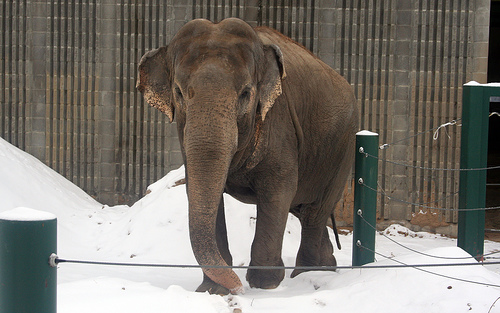
1. Please click on and sign: Free Lucy the Elephant from Lifelong Imprisonment
2. Please click on and sign: Ask Edmonton to Let Lucy Pack Her Trunk!
3. Please also send a letter via post or email, there are TWO SAMPLE LETTERS below from which to choose
From Change
By Annie Hartnett
Everyone knows that no one fights harder than a hockey player. So I cheered when I learned that former NHL player Georges Laraque is fighting for the freedom of Lucy, the solitary elephant kept in Edmonton’s Valley Zoo. Laraque has offered the city of Edmonton $100,000 if Lucy is released to a sanctuary in a warmer climate.
It’s 1°F in Edmonton right now, where Georges Laraque and Lucy the elephant both live. Hockey players might not mind the cold, but Asian elephants certainly do. Lucy doesn’t have a climate controlled habitat at the Valley Zoo, and the poor pachyderm has been forced to live in a completely unsuitable environment. She’s also housed by her lonesome, even though elephants are highly sociable creatures.
Given her living conditions, it’s not surprising that Lucy is in poor health. The 35-year-old elephant suffers from upper respiratory issues, arthritis, and a chronic foot ailment.
Laraque writes in a public letter to the mayor of Edmonton:
“Lucy’s serious health problems and the signs of mental distress that she has long exhibited are reason enough to send her to a sanctuary in a warmer climate, but I hope that my proposal creates even more incentive.”
But the Valley Zoo has cited Lucy’s health problems as a reason not to move her, claiming that transporting the elephant would only exacerbate her respiratory issues.
Lucy’s situation has been an ongoing controversy, with animal rights activists lobbying for years to remove the ailing elephant from the zoo. Earlier this year, PETA and Canadian animal rights group Zoocheck filed a court case on behalf of Lucy, but the lawsuit was struck down.
Other celebrities, such as Bob Barker and William Shatner, have spoken out in the past on behalf of Lucy. But Georges Laraque’s proposal might hold more weight, as he is a resident of Edmonton and he played for the Oilers, the city’s hockey team, for years.
Hopefully Edmonton will pay attention to their hockey hometown hero and do what is best for Lucy.
Sign the petition (and the one HERE as well) to demand that Lucy be sent to an elephant sanctuary in a warmer climate.
Behaviour indicative of boredom, psychological stress
Vodpod videos no longer available.
WHERE TO SEND YOUR MESSAGES | I’ve had one returned but will keep it in: ron.hayter@edmonton.ca
Individual links:
linda.sloan@edmonton.ca
ron.hayter@edmonton.ca
kim.krushell@edmonton.ca
ed.gibbons@edmonton.ca
tony.caterina@edmonton.ca
jane.batty@edmonton.ca
ben.henderson@edmonton.ca
bryan.anderson@edmonton.ca
don.iveson@edmonton.ca
amarjeet.sohi@edmonton.ca
stephen.mandel@edmonton.ca
Or Copy/Paste as a Group:
karen.leibovici@edmonton.ca ,
linda.sloan@edmonton.ca ,
ron.hayter@edmonton.ca ,
kim.krushell@edmonton.ca ,
ed.gibbons@edmonton.ca ,
tony.caterina@edmonton.ca ,
jane.batty@edmonton.ca ,
ben.henderson@edmonton.ca ,
bryan.anderson@edmonton.ca ,
don.iveson@edmonton.ca ,
amarjeet.sohi@edmonton.ca ,
stephen.mandel@edmonton.ca ,
Mayor & Members of Council
City of Edmonton
1 Sir Winston Churchill Square
Edmonton, Alberta, CANADA T5J 2R7
SAMPLE MESSAGE ONE | From IDA
Honorable Mayor and Council Members,
I urge you to please take action to save the life of Lucy, the solitary elephant at the Valley Zoo, by sending her to a natural habitat sanctuary without delay.
Science tells us that elephants are highly social animals who should never be kept alone. For this reason, Canadian and international zoo guidelines specify that elephants be kept in social groups. No matter how good the intentions of Lucy’s keepers, they are no substitute for the companionship of other elephants.
Given the inhospitable weather that forces Lucy indoors for several months of the year, lack of space and the inadequate conditions for elephants at the Valley Zoo, it would be wrong to bring in other elephants. What Lucy needs right now is the relief and rehabilitation that can be found at an elephant sanctuary, where her physical and social needs will be better met. Elephant sanctuaries have helped many elephants like Lucy, who suffers from captivity-caused arthritis, foot disease and abnormal repetitive behaviors, by providing year-round access to vast natural habitats and the companionship of other elephants.
Please listen to the pleas of concerned and compassionate people from your own country and around the world. I urge you to order an independent assessment of Lucy’s health, then send her to a sanctuary where she can live a life much closer to what nature intended for her, and close the elephant exhibit at Valley Zoo.
Sincerely,
SAMPLE MESSAGE TWO
Honorable Mayor and Council Members,
I ask that you take immediate action to save the life of Lucy by relinquishing her an accredited sanctuary, namely PAWS Wildlife Sanctuary. Lucy’s health is badly compromised due to her current surroundings; it is negligent and irresponsible to exploit the cause of her failing health, the Edmonton Valley Zoo environment, as reason to continue imprisoning her there regardless of meaningful intentions.
Please allow me to briefly illustrate personal observations: elephants are marvelously intelligent and loving creatures, forming enduring bonds and relationships; elephants also experience profound depression in sufferable conditions, separated from others and necessary companionship. It is grossly unjust that our society finds animal abuse tolerable in cases such as Lucky’s. While we as a collective understandably react shockingly at the cruelty inflicted on our companion animal friends, as a majority we embrace apathy regarding animals imprisoned for entertainment purposes.
Circuses, zoos, roadside attractions, and animal exhibits are all defined as a socially acceptable form of entertainment but that are all realistically a brutal indication of animal exploitation and imprisonment. Animals are objectified, cruelly treated, forced to behave in unnatural manners, exposed to pain and inadequate care and environments, and made to parade in front on humans for the sole purpose of human greed. There is no enchantment or magic for animals, and even zoos that perpetrate and foster an ideal of preservation are too often engaged in the savage acquisition of stolen animals, a brutal, bloody industry that hides under the chaotic surface of zoo entrepreneurship.
Financial greed at the cost of responsibility and compassion is inexcusable, and the implications about humans who enable animal abuse are disturbing: we cannot allow our children to inherit a cruel and indifferent society where animals are freely objectified. Indeed, if we do nothing, we are teaching our children troubling lessons and encouraging intolerance.
I know your time is limited, and I thank you for your attention and consideration.
NAME | COUNTRY

From Facebook
By Shelley Bright
BRIEF
On October 22, 2008, an elite dog training & boarding facility ‘High Caliber K-9’ in Youngstown, Ohio, was raided following a report that a person was unable to retrieve her companion dog. Numerous dogs were found dead due to neglect and starvation. Steve Croley, owner & trainer of High Caliber, was arrested, charged, and convicted on just 4 misdemeanor infractions for starving 19 dogs, 8 of whom died. NITRO’S LAW is a legacy and testament in honor of a family’s Rottweiler who was starved to death at this man’s hands. Ohio House Bill 70 “NITRO’S LAW” passed the House but has been shelved in the Senate for nearly a year with time now running out.
Nitro’s Law, HB 70, dies on December 31st after sitting for almost 1 year with no progress, because of the OHIO SENATE. HELP us to demand better for these hero dog victims and all companion animals of Ohio & contact Chairman Tim Grendell (Phone: 614-644-7718 | Email: SD18@senate.state.oh.us) and PLEASE drop a line to Senator Seitz (SD08@senate.state.oh.us) – ALL CONTACT DETAILS BELOW – who will vote NO on NITRO’S LAW because he doesn’t support FELONY LAWS for animal abusers because of ‘prison overcrowding’:
I am inclined not to support HB 70 because of prison overcrowding and the attendant fact that we will only make that problem worse by creating more felony offenses. – Senator William J. Seitz.
Please send two emails, one to the entire committee, one to Senator Seitz; please also contact Chairman Grendell via phone. There are sample messages provided below, but please modify as you feel appropriate. Do this for Nitro and all other animal victims who deserve the consideration of our “lawmakers”.
Please visit Nitro Foundation for complete details, information, resources, and contacts for questions. You will find additional footage, court information, and photos. There is also a Nitro Facebook Group as well.
Click on each to enlarge | Warning, these are graphic






BACKGROUND
Nitro lived the typical suburbia New York life with his doting family and littermate, Bella. A family that cooked scrambled eggs for breakfast for them, labored with love on sewing holiday costumes, including them as members of their family in celebrations, vacations, and the many activities of life; a life any dog would be fortunate to live. It was obvious from the beginning, Nitro was the classic, determined Rottie with a high working drive and High Caliber K9 came highly recommended through Nitro’s breeder as a positive outlet and focus for him to be the best dog he could be.
Steven S. Croley, the owner of High Caliber K9 appeared to be the charismatic, gifted dog whisperer and Nitro’s family did all the necessary tasks ensuring his background was genuine and without blemish, including an 8 hour drive to be guests of Croley at his facility with impressive results. For 2.5 years a successful working relationship and bond soon developed with Croley and naturally a friendship quickly followed including social engagements and outings with all the makings of a trusted alliance.
When a family member’s critical medical emergency developed, Nitro’s family found themselves in a dilemma of commuting for long periods of time to New Jersey putting a strain on the pets in their home. Nitro being highly protective soon proved this to be increasingly stressful on him.
Croley’s facility and program of a summer dog camp seemed to be the perfect solution. Not only would he be safe with someone they thought they knew and trusted but Nitro could also work on his training in a secure and safe environment.
Nitro was a very reserved dog and not inclined to trust easily and naturally any lingering doubts they might have had regarding Croley had dissolved long ago, since Nitro thrived in Croley’s presence and openly adored his attention. This combined with their successful 2.5-year history with Croley only reinforced he was trustworthy. They would never have thought in a million years they could and would be so utterly and devastatingly wrong.
I AM NITRO’s LAW
Vodpod videos no longer available.
It is still unclear exactly what led Croley down such a self-absorbed path of destruction to take the lives of these innocent dogs in such depraved and unspeakable suffering. Even more difficult to comprehend is that their suffering was not out of sight and out of mind. Croley lived on the same property of the kennels and training area of the perfectly manicured lawn being his own backyard. The backdoor and windows of his residence faced the dog kennels in plain view. Alleged drug use is believed to be the motivating factor in robbing these dogs of the basic necessities of food for life and the substantial monies paid by the dog’s families was not used to feed their dogs, but instead was used to feed Croley’s drug addiction.
A further crime and travesty of justice occurred after these original crimes were committed. Croley was originally charged on 19 counts of animal cruelty for starving 19 dogs, 8 of which perished with only misdemeanor provisions for punishment regardless of the severity of the crime. To top off the beginning of this gross injustice, due to the dire circumstances of the distressed remaining live dogs seen from outside of the property, humane agents made the decision to enter the property without securing a search warrant. Because of this, the Youngstown Prosecutor cited a legal technicality and threw out 15 of those original 19 charges. Croley was granted a plea agreement to plead no contest to only 4 counts of misdemeanor animal cruelty. Nitro’s life would not be one of them, his charge and count was dropped. Croley was sentenced to 4 months credited with 13 days already served in county jail after decimating countless lives.
Ohio continues to rank at the bottom on animal protection legislation. The degradation of our Nation as a whole by the state of Ohio continues into the 21st century and only through legislation that allows for prosecution of animal cruelty with stronger penalties imposed on those found guilty, will Ohio be on the road to becoming a just and compassionate State.
This is NITRO’S LAW.
WHOM TO CONTACT:
Chairman Tim Grendell | he is able to decide whether Nitro’s Law HB70 will advance, tell him you want Nitro’s Law to go to the Senate Floor now:
Phone (614) 644-7718
EMAIL ADDRESSES, COPY/PASTE AS A GROUP:
SD18@senate.state.oh.us,
SD16@senate.state.oh.us,
SD12@senate.state.oh.us,
SD20@senate.state.oh.us,
SD03@senate.state.oh.us,
SD08@senate.state.oh.us,
SD33@maild.sen.state.oh.us,
SD21@maild.sen.state.oh.us,
SD25@maild.sen.state.oh.us
EMAIL SUBJECT LINE:
Holiday Greetings!
EMAIL BODY:
Chairman Grendell,
Why has the Judiciary Committee been sitting on HB70 for nearly a year? I don’t understand the hesitation of the Judiciary Committee to move this bill and pass it into law. I have read that some Senators want to let this bill die. But this doesn’t make sense. Are there Senators who think it is okay to torture, starve, and abuse animals? Are there Senators who think that people should be allowed to torture and even kill dogs just because they want to?
Surely you are aware that people who will abuse, torture, or kill animals will eventually direct their deviant behaviors towards other humans. Surely you are aware that most serial murderers began by torturing and killing animals.
Decent people do not want abusers to get away with their abuse. They want penalties that fit the crime. Violence is violence no matter the target of the violence. NITRO’S Law will hold people accountable for their cruelty and violence. The people support the passage of this bill.
You should be aware of this: thousands of people all over the nation are watching to see what the Ohio Senate will do. If you continue to sit on this bill, you will be turning your back on decency and you will be remembered for that. Please do the right thing. Get this bill passed!
Sincerely,
NAME | STATE | COUNTRY
WHOM TO CONTACT:
Senator Seitz, email: SD08@senate.state.oh.us
EMAIL SUBJECT LINE:
Holiday Greetings!
EMAIL BODY:
Senator Seitz,
I am curious to know what kind of mind comes up with the idea that prison overcrowding is a good reason not to enact laws against cruelty and violence? I am referring specifically to your remark, “I am inclined not to support HB70 because of prison overcrowding and the attendant fact that we will only make that problem worse by creating more felony offenses.” Well, Mr. Seitz, that’s not a very good idea! Are you suggesting we just eliminate a few more felonies to make certain that prisons aren’t “overcrowded”? Are you asserting that prison population is certainly a higher priority for you than protecting society from people who like to inflict pain, and even death, on the defenseless?
Maybe you are unaware that studies have proven a close link between violence towards animals and violence towards people. Maybe you are unaware that most serial killers began by torturing and killing animals. Certainly, you must be unaware that when any kind of cruelty and violence is tolerated by a society, it demoralizes the whole of society. Or maybe you just don’t care?
Mr. Seitz, I don’t care how crowded the prisons are. As a citizen, I have the right to demand that your priority be the safety of society, not the economic bottom line of maintaining prisons. As a lawmaker, you have the responsibility to enact laws to protect people from violent perpetrators. Violence is violence no matter the target, and cruelty is cruelty.
The people want HB70 enacted into law. If you kill this bill, you are turning your back on decency for the sake of economics, and you will be remembered for having done so.
Mr. Seitz, please do the right thing.
Sincerely,
NAME | STATE | COUNTRY













 Our Compass