HighestWelfare.Humane.Assured.GoodPractices.Vegetarian. Regenerative.Flexitarian.Lies...
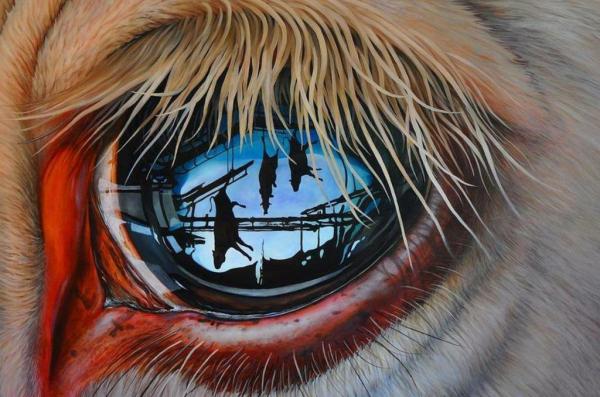
What is the difference between No Welfare, High Welfare, and Highest Welfare when they all require animals to die? Only human comfort, NONE protect the actual animals. The most humane, ethical, and honest Webster-defined "welfare" is NOT exploiting animals - not using, not wearing, not eating, not killing - animals. The only meaningful position is vegan, everything else is just how humans euphemize animals' required suffering and violent deaths: no human exploits animals because they honestly believe that NOT exploiting animals is UNethical or INhumane.
Hawaii Man Freed After 20 Years in Prison

PHOTO | Wikimedia Commons
A Hawaii judge tossed out the conviction of a Maui man last week, more than 20 years after he was convicted of a crime he said he didn’t commit. Hawaii Innocence Project client Alvin Jardine was set free while prosecutors decide whether to retry him.
After two trials ended in hung juries, Jardine was convicted at a third trial of a rape and burglary based in part on an eyewitness identification and sentenced to 35 years in prison.
Jardine maintained his innocence throughout his trials and claimed to be home at the time of the attack. He also gave up the possibility of parole by refusing to enter sex-abuse treatment that would have required him to admit guilt, according to the Star Advertiser.
All evidence from the case had been destroyed with the exception of a tablecloth that was covering a chair that the perpetrator used during and after the attack. DNA testing obtained by the Hawaii Innocence Project suggested that DNA evidence came from an unknown perpetrator and excluded Jardine.
Based on the new DNA test results, a Maui Circuit Judge overturned Jardine’s convictions on Friday and ordered a new trial.
“He was overwhelmed with emotion,” said Honolulu attorney and Hawaii Innocence Project member Brook Hart, who represented Jardine. “He was in disbelief that after all this time, after spending almost his entire adult life in jail, that the justice system finally worked properly to free him.”
If the judge hadn’t agreed with Hart’s assertion of his client’s innocence, the Hawaii Innocence Project was ready to argue the reliability of the victim’s identification. But the judge ruled the original evidence was insufficient and that the new DNA tests would have likely resulted in a not guilty verdict.
The new trial is scheduled for June 27. Prosecutors have not announced whether they will retry Jardine.
Click to Read the full article.
RELATED | Conviction: The Incredible True Story of Betty Anne Waters, Trailer
DVD available February 1
Vodpod videos no longer available.
Utah Bill Declares Open Season on Feral Animals
Note: Please remember that when people refer to “humane killing” they are referring to what benefits them, to what makes THEM feel better, to what grants them approval. When an animal, human and non-, is exploited by being deliberately killed for the purpose of convenience/goal/pleasure/enjoyment/ritual/practice (versus to end suffering), it is never done with the killed victim in mind. Never. A hostage who is murdered is not treated compassionately because he is given five minutes in the sun before being executed, or because his death is “instantaneous”. The taking of life is unethical: there is no such thing as compassionate exploitation except to those who define it with impunity. sr
Please click on and sign Say No To The Killing of Feral Animals
Utah residents, please also sign Protect Utah’s Cats from Cruelty, Oppose H.B. 210
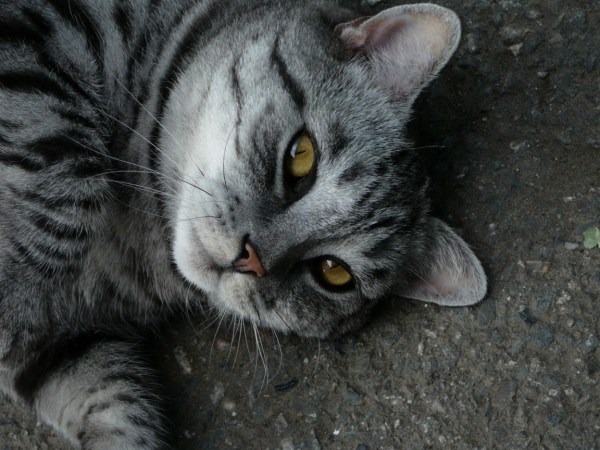
If you live in Utah, you might want to keep a shorter leash on your pet. A new bill (H.B. 210) sponsored by Republican Representative Curt Oda (R-Clearfield) would legalize “the humane shooting or killing of an animal if the person doing the shooting or killing has a reasonable belief that the animal is a feral animal.”
There’s a bunch of problems with the proposed bill, and animal advocates are speaking out against it as “cruel and archaic.” The Humane Society of Utah and Best Friends Animal Society (located in Kanab, Utah) are both strongly opposed to the bill. The groups are hoping people will contact Utah representatives to express their opposition, too.
Gene Baierschmidt, Executive Director of the Humane Society of Utah believes that the bill will be a huge mistake and will only, “open the door for a lot of abuse to take place.”
Under a proposed bill, a loose animal doesn’t have to be aggressive, sick or even feral for a person to legally shoot it; whether the animal is feral or not will be left up to the untrained person with the gun in his hand.
The bill will also allow people to legally kill rodents and other “pests” such as pigeons. Clubbing, decapitating and shooting the animal with a bow and arrow will also be allowed. That’s right, those methods are considered to be “humane” according to Oda.
Animal Advocacy Alliance in Utah doesn’t think shooting — not to mention clubbing, decapitating and bow hunting — is ever humane and that feral animals were protected in the animal cruelty laws for a reason.
While advocates agree the feral animal issue is a problem in Utah, they also believe there are better ways to approach it other than declaring warfare on any loose animal deemed to be feral.
Utah bill would permit shooting feral animals
Vodpod videos no longer available.
One alternative is through trap, neuter and return programs. No More Homeless Pets in Utah is especially pro-TNR and has fixed thousands of feral cats through programs such as The Big Fix.
While Oda argues that letting the public shoot feral animals is the quickest and cheapest way to deal with the animals, No More Homeless Pets in Utah maintains that TNR is not only effective, but also saves money in the long run.
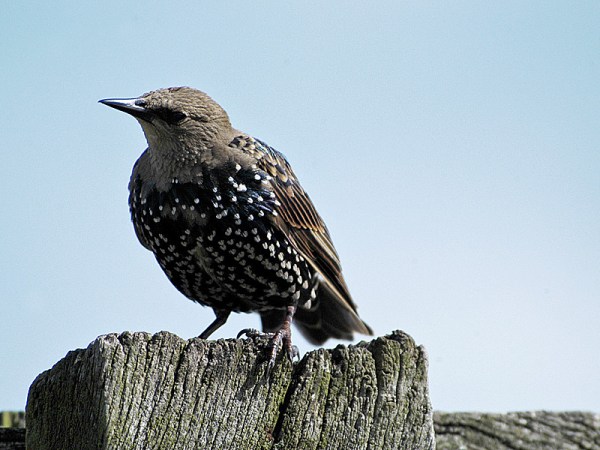
Photo | Wikimedia Commons
Related, please click on and sign Pull Bayer’s Bee-Killing Pesticide. Now.
From Huffington Post
By Travis Walter Donovan
When hundreds of dead birds were found Monday in Yankton, South Dakota, many residents were puzzled, thinking it was the latest in a string of similar mysterious mass animal deaths around the world. But this is one instance of the many where a clear cause has been identified, as the U.S. government claims responsibility for killing the more than 200 starlings.
It was initially believed that cold weather may have caused the bird deaths, but then Yankton police received a call from the USDA, attesting that they had poisoned the birds at a feedlot 10 miles away, KTIV reports. Apparently, some 5,000 of the birds were defecating in the feed meal, posing a threat to the animals and farm workers, when the USDA decided killing them would be the best action to take.
A bait laced with the poison DRC-1339 was used, though officials were surprised the birds made it so far before dying. They assure that the poisoned dead birds do not pose a risk to nearby animals or humans.
While the mystery of dead birds falling from the sky in South Dakota was quickly solved, similar mass animal deaths around the world remain enigmatic. 200 dead cows were recently found on a farm in Wisconsin, with a disease or pneumonia suspected as the culprit. Prior to that, mass bird deaths ranging from dozens to thousands were reported in Arkansas, Alabama, Louisiana,Kentucky, California, Italy and Sweden. Mass fish death had been report in Arkansas, Maryland, Chicago, New Zealand and Brazil, and 40,000 crabs washed ashore beaches in England.

Please email, fax, and/or call your grievances about the Shih Tzu who was left out in the sub-freezing temperatures to die, details, contacts, and sample messages following article. The information, including the email address, has been verified.
BACKGROUND
Vermilion, Ohio – A Lorain County woman was arrested after a dog was found dead in her backyard in the sub-freezing temperatures.
Vermilion police say it appears the white Shih Tzu froze to death.
“It’s a pretty quick death from these elements if the dog doesn’t have the common sense enough to go into shelter or seek shelter from the weather. A dog like this can pass in hours,” Gregory Willey, with the Friendship Animal Protective League, told Fox 8 News.
Sandy Hayslett, 38, is now facing a charge of cruelty to companion animals.
“The law states that you have to care for your animals,” said Vermilion Patrolman Scott Holmes. “If you’re going to keep them outside, you have to provide adequate shelter, adequate food, water.”
Police say Hayslett agreed to surrender a second dog, an English bulldog/boxer mix, to the Frienship Animal Protective League.
Fox 8 went to Hayslett’s home to ask about her decision to keep the pets outside, but she was in no mood to talk.
She shouted from behind a closed door, “Go away.”
Investigators say Hayslett told them the dogs belonged to her ex-boyfriend and that she had been trying to find them a new home.
The FAPL, which will now put the surviving dog up for adoption, says there was an easy and humane solution that the owner could have taken advantage of.
“If you can’t keep the dogs, or if you’re determined not to have the dogs inside, that’s why humane societies like ours exist. The dogs should simply be surrendered over to a humane society for their case and placed into a home that’s appropriate for them,” Willey said.
Hayslett was released on a personal bond of $750 and scheduled to appear in court on Thursday.
If convicted, she could face up to 90 days in jail.
Copyright © 2011, WJW-TV
Vodpod videos no longer available.
WHOM TO CONTACT
Email: vermilionprosecutor@hotmail.com
Telephone: 1-440-204-2430
Fax: 1-440-204-2431
Attn: Judge Zack Dolyk, Municipal Court, and District Attorney O’Bryon
SAMPLE MESSAGE ONE
Dear Honorable Dolyk and Prosecutor O’Bryon,
I have learned of an extremely disturbing and malicious case of animal cruelty in which Sandy Hayslett allegedly with deliberation caused the suffering and death of a Shih Tzu dog. This alleged incident occurred on or around January 22 in Vermilion.
I am writing today to respectfully request that you sentence Ms. Hayslett to the maximum penalty as allowable; although this sentence, as I understand it, is wholly inadequate, I hope you will demonstrate that such crimes against animals is inexcusable.
Thank you for taking the time to read this important message.
NAME
ADDRESS
SAMPLE MESSAGE TWO
Dear Honorable Dolyk and Prosecutor O’Bryon,
I have learned of an extremely disturbing and malicious case of animal cruelty in which Sandy Hayslett allegedly with deliberation caused the suffering and death of a Shih Tzu dog. This alleged incident occurred on or around January 22 in Vermilion.
Please allow me to elaborate. Our global communities share laws, moral and written, and when one person demonstrates such a gross lack of respect for both, our societies must react with concern for the innocent and potential victims, who include both non-human and human animals. It is our obligation to protect them from both manufactured and intrinsic cruelty, and although the distinction is often difficult to identify, the effect is not, and our priority is the innocent, in this case the dog. Nobody possesses such heightened intuitive ability to determine the thoughts of another, but past behaviours are potentially indicative of future actions, and Ms. Hayslett’s callous disregard, so easily adopted as demonstrated by her indifferent attitude, needs to be regarded rather than dismissed.
Please respect the victims by penalizing the guilty and demonstrate your commitment to justice, responsibility, and integrity, attributes unquestionably necessary in an law enforcement setting: rejecting cruelty by maintaining an unyielding position towards it would be a model for all community members and would serve to characterize this type of behaviour as both impermissible and punishable.
Thank you for your attention to this urgent issue.
NAME
ADDRESS

Please click on and sign the following two messages (the second, from ALDF, was published in December, but please sign if you have not already):
1. Ask Kern County District Attorney to Pursue Maximum Sentence for Lacey’s Abuser
2. Terrier Survives Horrific Alleged Abuse, Felony Charged
BACKGROUND
Targeting: Edward R. Jagels (Kern County District Attorney)
Started by: Renee Evans
Lacey is a 7-pound mixed breed whose former owner, Robert Gonzales, has been arrested for abusing her. He allegedly tied her up to a tree in the yard of his Bakersfield home, beat her across the face with a golf club and sprayed bleach into her eyes.
As if that wasn’t enough, Gonzales left her there without care or veterinary treatment for days. Finally, someone saw Lacey and called authorities.
Lacey has since gone through surgery and is now healing comfortably in a foster home. She will never have to face her abuser again.
Gonzales has prior convictions, including possession of a controlled substance and illegal weapon. He also has a domestic violence restraining order against him from an ex-girlfriend.
With his record, it’s only a matter of time before Gonzales strikes again. He deserves the maximum allowable penalty, and Lacey deserves justice.
Sign the petition HERE to ask the District Attorney to pursue the maximum sentence for Gonzales.
Animal abuse is no small matter, and Gonzales must know he will not get away with it.
RELATED | Who We Are, ALDF
Vodpod videos no longer available.
MESSAGE TEXT
I urge you to prosecute Robert Gonzales for the maximum allowable sentence for his appalling crimes against Lacey.
Lacey, a tiny 7-pound dog, was tied to a tree, beat across the face with a golf club and had bleach sprayed into her eyes. She did nothing to deserve such cruelty.
Lacey was then left for days without veterinary care. It was only after someone saw the miserable dog still tied to the tree that Lacey was finally removed from the situation and given proper care.
Robert Gonzales, Lacey’s former owner, has been arrested for this crime. Not only has he lashed out on Lacey, but he also has a domestic abuse restraining order against him from a former girlfriend. He also has other convictions.
With his criminal past coupled with the recent abuse to Lacey, Robert deserves the maximum allowable sentence for animal cruelty. No animal should have to endure the kind of suffering Lacey has.
Please pursue the maximum penalty against Robert Gonzales. Thank you.
Please remember to sign and send ALDF’s message as well if you have not already; click HERE.
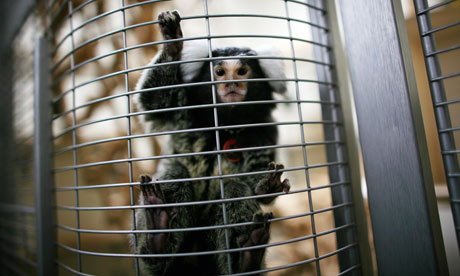
PHOTO | Guardian, Robertson
Please write to Air Canada urging it to stop transporting primates; you may use one of the two sample messages below. Air Canada is citing legal bindings as directing their decision, the second message below addresses that position.
BACKGROUND
The British Union for the Abolition of Vivisection (BUAV), STOP UBC Animal Research and Animal Alliance of Canada are calling on Air Canada to stop transporting primates destined for the research industry. The call comes following a tip-off to the BUAV from a concerned member of staff at Toronto Airport that monkeys from breeding farms in China are flown into Toronto Airport. They are held at the airport overnight, for up to 15 hours or more, before sent on another Air Canada flight to Montreal and their final destination – the research laboratory. The most recent shipment of 48 monkeys arrived in Toronto on Saturday, January 23.
In recent years, an increasing number of airlines have taken the decision to dissociate themselves from the cruelty and suffering that are intrinsic to the trade in primates. These include British Airways, United Airlines, Virgin Atlantic, Northwest Airlines, Qantas Airways, South African Airways, Delta Airlines, Eva Air and China Airlines. Air Canada is one of only a small number of passenger airlines that continues to be involved in this grim business.
We are calling upon Canadian citizens, Air Canada passengers and concerned individuals and airline passengers from around the world to contact Air Canada to show the strength of public feeling on this issue.
WHERE TO SEND YOUR MESSAGES
Postal:
President and CEO
Air Canada
Air Canada Centre
P.O Box 14,000
Dorval QC
Canada H4Y 1H4
Emails:
aircanada_customercare_en@mailca.custhelp.com
SAMPLE MESSAGE ONE | Courtesy BUAV
To Whom It Concerns,
Each year tens of thousands of nonhuman primates are transported around the world for the international research industry, destined to be used in experiments in which they will suffer and most likely die.
I support the BUAV’s campaign against the international trade in primates for research.
These highly intelligent and sensitive animals are packed in small crates, and travel as cargo on extremely long journeys where they may have to endure inadequate ventilation, noise and extreme temperature fluctuations.
Many airlines have made the decision to dissociate themselves from the cruelty and suffering of the international trade in primates by refusing to transport primates destined for the research industry.
I urge you to join this growing number of airlines.
NAME | ADDRESS
SAMPLE MESSAGE TWO
To Whom It Concerns,
I am extremely disturbed to learn the cruelty inflicted on primates as exported by Air Canada for research, the efficacy of which is unproven, demonstrably cost-prohibitive, and lethal, not only on non-human animals, but also on human animals. These experiments subject these sentient animals to enormous suffering and pain, and I respectfully request that you immediately cease your participation in such an unethical practice.
Although you may cite legal dictate as motive for your actions, please remember that our histories share formerly-legalized gross injustices against others, practices which have long been determined to be immoral and unjust. Indeed, many other international companies that are mandated to observe similar protocols have already made the decision to stop the transportation of animals due to such unethical grounds, and I hope you, too, make the similar decision.
NAME | ADDRESS
RELATED | National Anti-Vivisection Society
Vodpod videos no longer available.
URGENT: Shiloh needs a home!
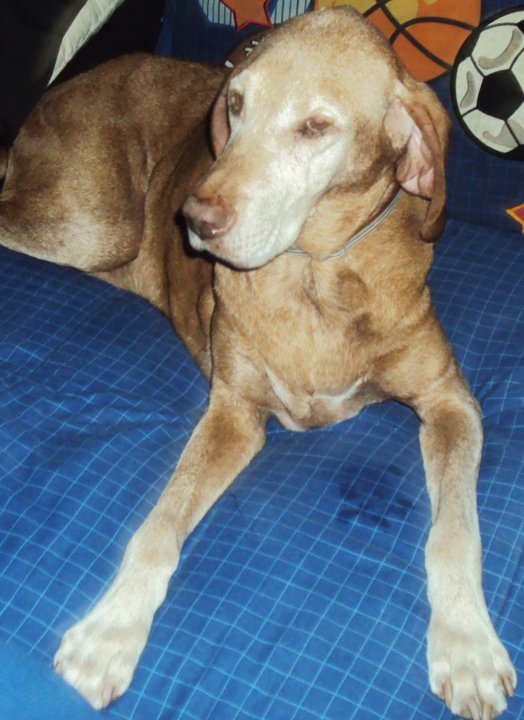
WHO: Shiloh, a 14 year-old male Viszla Mix
LOCATION: Central New Jersey, transport provided
CONTACT: Jody Sidote on Facebook
If you do not have a Facebook account, please comment at the end of this alert or send a message to Our Compass
From Jody:
I attended the “Blessing of the death row animals” in Manhattan in October. Shiloh was in the lobby in line to be surrendered… he was terrified, shaking, and looked bewildered at all the noise and confusion around him. I approached the woman with him and asked her why she was there; her father was sent to a nursing home and Shiloh was his dog. She wasn’t able to have him. She had taken him to the vet to put him down and was refused since the vet said there was no physical reasoning to do so.
Shiloh is a 14 year-old male Viszla Mix, loves kids and cats but prefers to be the only dog; he does get along with dogs who are not dominant in nature though. He is housebroken, mellow, and sleeps most of the day. He loves leisurely walks, and to play. He gets tired easily. He has some stiffness in joints due to his age, but he gets along just fine and can use steps. He deserves to live out the rest of his days with dignity, and craves love and attention. He is gentle, and very well behaved. I adore this old man, he has no health issues whatsoever since he has been witrh me. Shiloh is such a sweet soul.
Click on each to enlarge …



Read more…
Please Tell Stein Mart to STOP Selling Fur

“Size 38” Nicholas Poitou, Artist, 2003 Grand Prize Winner, Design Against Fur
UPDATE | January 25, HSUS: Great news! Because of you, Stein Mart plans to stop selling animal fur items, and become fur-free. Thank you for your calls and emails to Stein Mart, and for spreading the word to your friends, family, and social networks.
Information from HSUS
Stein Mart was recently found selling a mislabeled fur-trimmed sweater that lab testing determined to be raccoon dog. Raccoon dogs have been well documented to be skinned alive for fur in China and are the most commonly falsely advertised and mislabeled type of fur sold in the U.S.
Stein Mart continues to sell animal fur even as other companies reject the cruelty. We are calling on Stein Mart to protect animals from cruelty and protect consumers from deception by dropping fur. Raccoons, rabbits, foxes, mink, and raccoon dogs are just some of the millions of animals who are killed by this pitiless industry every year. With so many warm, fashionable alternatives available, there is simply no reason to wear animal fur and no reason for Stein Mart to sell it!
Fur Farming Exposed | From AnimalMedia
Vodpod videos no longer available.
WHOM TO CONTACT
- Online contact form HERE (form accepts all characters in sample below)
- comments@steinmart.com
- e-customerservice@steinmart.com
- Please call Stein Mart toll-free: 1-888-783-4662 and politely ask them to stop partaking in the cruel, unnecessary fur trade.
SAMPLE MESSAGE TO SEND
To Whom It Concerns,
With so many warm and fashionable alternatives available, there’s no reason to wear animal fur and no reason for Stein Mart to sell it!
I am shocked and saddened that Stein Mart would sell animal fur and fur trim. The horrendous animal cruelty inherent in the fur trade is well-documented. This is an industry that Stein Mart should want no part of.
Animals are subjected to misery, pain, and agony for the fur industry; they are given no comforts, suffer from psychological stress, and killed via excruciating methods of death including anal electrocution, gassing, and being skinned alive.
Please watch this brief, informative video depicting the appalling conditions animals are forced to endure and then please ask yourself how anyone can be a participant in such barbarism:
http://www.youtube.com/watch?v=LEp636HYaPA&feature=player_embedded
I strongly urge Stein Mart to become fur-free. I am sure you will do the right thing and choose compassion in your fashions, and I will be happy to resume being a loyal customer at such a time.
NAME | ADDRESS
Anthony Marr: My Gratitudes | #3: to the Wilderness Committee
Vodpod videos no longer available.
Gratitude #3: to the Wilderness Committee
Bloody Superstition and New Cosmology by Shawn Blore
1997-04-24 The Georgia Straight, Vancouver, BC, Canada
Pessimist give the world’s tigers 5 years. Realists, 10.
They’re the kind of numbers that make you want to quietly despair, to give up, to flip the channel and think about something more pleasant. Melrose Place maybe, or Roseanne. Anthony Marr, however, whether from a sense of conceit, ignorance, or a staggering sense of confidence, saw nothing impossible in the task of bringing the tiger back from the brink…… To highlight the extent of Vancouver’s tiger trade, Marr kicked off a media blitz in January 1996. Local journalists were invited on an endangered species tour through Chinatown’s apothecaries. The tour began in the low-ceilinged warren that serves as Western Canada Wilderness Committee’s headquarters. Marr upended his briefcase, spilling out 15-20 boxes of Chinese patent medicines: tiger plasters, tiger pills, tiger-based medicaments for rheumatism, tired blood, soft bones, and sexual impotence, all of them purchased in shops in Vancouver’s Chinatown. Pointing to the ingredients lists on the diverse packages, Marr picked out the symbols, words, and phrases that in Latin, English and Chinese spelled out “tiger bone”.
The next part of the tour was a trip along Pender, Main and Keefer Streets, with Marr indicating here and there the shops and apothecaries dealing in tiger medicinals and inviting journalists to go in and check the shelves for themselves. Six shops out of ten stocked a variety of boxes, cartons and bottles labeled with some variation of the word ‘Os Tigris’ – tiger bone.
The media loved it. Marr made it on to TV news both locally and nationally, and stories appeared in city magazines and community papers. He used his pulpit to heap scorn upon Canadian wildlife regulations. “Canada’s wildlife laws could use an aphrodisiac,” Marr said, “because right now, they’re totally impotent.” He was equally hard-hitting in his presentations to Chinese community groups and at Eastside Vancouver high schools. Traditional Chinese medicine’s use of parts of animals like tigers and rhinos, Marr said, and the cutting of many urban trees for that matter, were based on nothing but pure superstition. That superstition was destroying a magnificent species. The fact that the practice was tolerated by the Chinese-Canadian community only blackened their reputation in mainstream Canadian society.
Environmentalists heaved a sigh of relief. Here was someone tackling a problem they had long known about but dared not touch. “It’s great that it’s a Chinese person doing the work he’s doing,” said Nathalie Chalifour, World Wildlife Fund Canada’s tiger expert, “because when it’s a person like me doing it, well, I’m white; I’m more likely to be accused to being racist, which is really unfortunate, but it does happen.”
Vancouver’s Chinese media were as quick to jump on the story as their English counterparts. Marr’s campaign was covered by both the Ming Pao and the Sing Tao newspapers, and he appeared on several Chinese language radio programs. According to Ming Pao columnist and CJVB radio host Gabriel Yiu, the Chinese community’s reaction to Marr’s campaign was mixed. His straight talk on superstition did offend some, but there was also those who took pride in the fact that a Chinese Canadian was working on environmental concerns. “For a long period of time when people are talking about monster homes, tree cutting, killing wild animals for some of their body parts,” Yiu said, “people do have the impression that the Chinese community is the cause of that. I think the work Anthony did set a very good example that we do have people in the Chinese community who are concerned about these issues.”
According to Vancouver city councilor Don Lee, Marr’s effectiveness was limited. “I don’t know Anthony Marr that well. The Chinese Community doesn’t know him well at all,” Lee said. “We don’t know where he comes from. We don’t know why he’s doing all this.” As it turns out, those are two of the most interesting questions that could be asked about Anthony Marr…”

Most of my friends are Caucasian. Back in 1995, I had TV buddies of common interest, namely wildlife. Once a week or so, we got together to watch National Geographic over beer or tea (mine was tea). I loved these buddies of mine and these get-togethers, but there was often one thing that made me feel uncomfortable. Whenever an endangered species was touched upon and the Chinese use of animal parts in their traditional medicine was named as a cause of their endangerment, I would find myself on needles and pins due to my Chinese lineage, and became keenly aware that everyone else in the room was doing their best to try not glancing at me. Finally, when again it happened, I said, “Look at me. Tell me what you are thinking.”
Ron, the most loud-mouthed of the bunch, cleared his throat and said, “I think it sucks. But we’re honkies. We can’t say a single word without being accused of racism.”
Now I feel all eyes on me like lasers. I swallowed, hard, then said, “Alright, I’ll do it.” That was in the summer of 1995.
By November, I had checked out each and every one of the 33 traditional Chinese apothecaries for traditional Chinese medicine (TCM) containing endangered species ingredients. To my astonishment, I found highly packaged “patent medicines” galore, listing ingredients such as tiger bone, tiger penis, rhino horn, bear bile…, prominently displayed on shelves in all of the stores. I made a list of them, placing stars next to their names in terms of TV potential.
In the same period, I checked out Canadian law, and found a huge loophole that made it look like a joke. International law had it that no two nations could trade in any item containing endangered species part. And Canadian customs did check shipping containers from the Orient. But the Canadian government plainly stated that customs had enough man power to check only 2% of all the shipping containers, meaning that 98% of all illegal shipments simply slip right through, and the 2% discovered were simply confiscated, with a light monetary fine attached. The 98% that slipped through would enter Chinatown and be displayed for sale with impunity.
The reason for this is that there was no Canadian law governing the sale of these internationally illegal products once they have made their way into the country. It’s like the Canadian government yelling to the smugglers, saying, “Hey, if you are smart enough to smuggle the stuff through customs, we’d allow you to sell it openly.”
I thought hard as to how to Chinatown of these products, and concluded on two alternatives. One was to go into Chinatown and speak to the store owners to voluntarily destroy them, and to the Chinese people in Vancouver to not buy them. The other was to use media to blow the situation out to the public consciousness, which could press the Canadian government to create a law to ban the sale of such items anywhere within the country, such that the merchants would have no choice but to abide. The former looked to me like a pipe dream, and I settle for the latter.
By November, I was ready for action. At that point, I was just an unknown individual, and it was the subject matter that made the campaign so successful. I sent out media releases about my findings, and asked specific TV stations to come to Chinatown to document me openly purchasing endangered species products off the shelf. And no one turned me down.

[Anthony Marr in Vancouver Chinatown, 1995]
In one of these operations, I would have the TV camera parked across the street, but with the camera pointed down the street as if doing a tourism shoot. They would put a mic on me and I would walk right into the store, go straight to the shelf where the endangered species products were displayed, pick out a few samples, pay for them at the counter, and walk straight back out towards the TV camera, with the products in my hands, which I would show the camera close-up. By the time I had done all three of Vancouver’s main TV stations, Chinatown had gone abuzz, and the TV-coverage had gone national. Activists from Victoria BC, Toronto, and Ottawa, Ontario, wrote me and asked me to do the same with their own Chinatowns.
I spent $100 to go to Victoria by ferry, but I did not have a deep enough pocket to fly across the continent at will. In December, I took my campaign to a few local groups, asking for their support. The one that came through, big time, was the 28,000-members-strong Western Canada Wilderness Committee, headed by founder Paul George, executive director Adrian Carr, and campaign director Joe Foy, all of whom I have seen on TV before. They sat opposite me across their conference room table, and pelted me with questions. After two hours of intense interrogation, over coffee, not only did they offer to support the campaign, but hire me on as their animal-issue campaign director. The pay was low ($25,000), no lower than what Paul, Adrian and Joe were paid, and I leapt to the opportunity.

To make a not-too-long story short, came March 1966, I received a personal letter from the then attorney general Sergio Marchi pre-informing me of the imminent passing of a new law acronymed WAPPRIITA, short for “Wild Animal and Plant Protection and Regulation of International and Interprovincial Trade Act”. In April, it became law. By 1997, it was fully enforced.

I stayed with WCWC until 1999, when I started my own organization Heal Our Planet Earth (HOPE), during which period I spearheaded WCWC’s Bear Referendum anti-hunting campaign, later hailed as “the highest-profile wildlife protection campaign of the year in Canada” by the Global-and-Mail, Canada’s pre-eminent national Newspaper, as well as went to India in 1997, 1998, and 1999 to work with the villagers living around the Kanha and Bandhavgarh tiger reserves, as well as to reform educational outreach and undercover operations in urban India including New Delhi, Calcutta, and Jaipur. But these are other stories.

[Anthony Marr (center) speaking on tiger conservation in India]
Meanwhile the campaign rolled on, as outlined by the following media excerpts:
Animal parts for sale, and it’s legal
1995-12-02-6 The Vancouver Sun by Nicholas Read
“The Chinese awareness is really not there,” Marr says. “Maybe the only person you saw in Chinatown today who knows or cares about the plight of the tiger was me.”

[Anthony Marr takes this opportunity to thank Evelyn Roth of Point Roberts WA, for donating this one of a kind inflatable tiger to WCWC for its education effort. Evelyn made this “big cub” Barabacha herself, with some help from Anthony Marr]
Tiger, tiger, put it right
1996-01-08-1 Times Colonist “Victoria” by Malcolm Curtis
“If major endangered species of the world – bear, elephant, tiger, rhino – become extinct as a result of Chinese demand for their body parts, I would consider that a very serious crime against nature,” Marr said in an interview.

[Paul George as a young man]
Tiger, tiger, burning…out?
1997-02-13-4 The Vancouver Sun by Anthony Marr
If we commit to Gaia our heart and soul, our children may just see a new world emerge, one more compassionate than ever before, perhaps one destined for the stars.

[Back row from left: Joe Foy, Paul George, Adriane Carr; and, 4th, 3rd and 2nd from right, Andrea Reimer, Sue Fox and Anthony Marr]
In aid of the vanishing Bengal Tiger
1997-03-19 The Hindu Delhi, India
Finally, the BET’R Campaign to save bears, elephants, tigers and rhinos has entered India as well…

[Anthony Marr serving as keynote speaker at the 1999 Tiger Conference at the Bandhavgarh tiger reserve, Madhya Pradesh, India]
Save tigers rather than saving feelings
1997-05-08 The Georgia Straight Vancouver by Roland Goetz
According to the article (Bloody Superstition – April 14), Garry Grigg of the Canadian Wildlife Service says, ‘We don’t want to be too heavy. We have got too many new Canadians here, and it takes a while to assimilate. We’re dealing with something that is thousands of years old.’
‘My question is, would we allow other cultural practices, such as incest, clitoral mutilation, bestiality, or polygamy, to be imported into Canada…?
‘…to save some feelings, we (may be allowing) a magnificent species to be destroyed.’

[Adriane Carr]
Korea Leads Illegal Trade in Bear Parts
London – ENS | 1997-05-15
In a report released this week, an international coalition of wildlife organisations, including the London-based World Society for the Protection of Animals (WSPA), expose South Korea92s leading role in the illegal trade in bear parts. The report , “Killed for Korea” concludes that “South Korea and Korean people abroad represent the bear92s worst enemy after habitat loss.”
Undercover film recently taken by animal campaigners shows Korean-sponsored bear poaching and gallbladder smuggling on an international scale as well as the killing of endangered bears for South Korean restaurant-goers.
The bears are desired for bear paw soup, a highly prized delicacy in South Korea. Diners will pay in excess of US$1,000 for a bowl of bear paw soup.
WSPA, together with the Korean Federation for the Environment Movement (KFEM), Humane Society of the US/Humane Society International (HSUS/HSI) and the Global Survival Network (GSN), is lobbying the US government to sanction South Korea over the illegal trade in bear parts. The organisations, with a total membership of over four million people worldwide, are considering an international boycott campaign of Korean goods, if their current approaches to Korean authorities are unsuccessful.
Andrew Dickson, WSPA chief executive, said, “Consumption of bear parts is a national disgrace for South Korea. We are trying to persuade the Korean authorities to stop this illegal trade which is pushing Asian bears towards extinction.”
WSPA92s campaign is being backed by the Korean Federation for the Environment Movement (KFEM). Kwon Heanyol, spokesperson for KFEM said, “This outdated practice is a slur on our national reputation. It makes us look cruel and barbaric. Herbal, synthetic and Western alternatives exist for bear gallbladder. Why can’t all Koreans use these instead of continuing to torture and slaughter bears?”
Anthony Marr, organizer of Bears, Elephants, Tigers, Rhinos (BETR), a conservation group based in Vancouver, British Columbia, confirms that South Korea is the world’s leading consumer of bear parts.
Marr says, “South Koreans sometimes import black bears on the pretext of using them for zoo exhibits, then they have them killed in front of restaurant customers to prove authenticity and freshness.”
Marr says he has read reports of caged bears lowered live onto hot coals to have their paws cooked. This procedure is supposed to guarantee freshness, authenticity and entertainment for the customer.
Marr has a video showing a 1989 restaurant menu from the posh Hilton hotel in Seoul offering “bear palm soup. Price – current.”
Bear paws are considered a delicacy, not a medicinal, but bear gall bladders are prized for their medicinal effect.
The powdered bile taken from the bear galls has a whole range of uses, primarily for digestive healing and intestinal illnesses including parasites and bacterial infections. The powdered bile is used as an anti-spasmodic, a pain-killer, tranquilizer, an anti-allergenic, and a cough remedy. It is also considered to be a general purpose body tuning tonic. Bear bile is even said to restore a liver damaged by overdrinking.
Unlike tiger bones and rhino horns which have no real medicinal value, bear galls do contain ursodeoxycolic acid which does have a medicinal effect. This acid was patented as a synthetic in Japan in the 1930s. Today, 150 tons are used annually worldwide.
There are seven species of bears in the world, excluding the panda and koala, which are not considered to be true bears. Three bear species are endangered, particularly the Asiatic black bear, which used to be the main source of galls. The Asiatic black bear is now almost completely wiped out in China and Korea.
To meet the demand from Korea and other Asian countries, poachers have been taking bears from Russia and North America. Marr says poaching is “huge” in North America. Poachers have been caught in British Columbia recently, but provincial laws have no teeth, as the indigenous bears are not yet listed as endangered.
The penalty is very light when poachers are caught in B.C. Marr says, “Someone recently caught with 90 galls, which would easily sell for US $250,000 in Korea, was fined $3,500, not even the price of one gall in Korea. For every batch of poached bear parts discovered by law enforcement officers, 49 get away. Customs officials estimate they can check only 2-3% of what goes out of Canada.”
Marr estimates that between 20,000 and 40,000 bears are poached in Canada yearly. Legal trophy hunting kills 22,000 more.
In London, the WSPA is offering broadcast quality undercover footage showing the killing of endangered bears for South Korean diners and the farming of bears in China, some of which are destined for the Korean market
(From the Environment News Service)

[Joe Foy]
Animal activist targets Chinatown
1997-07-08 The Ottawa Citizen Ottawa, Ontario, by Finbar O’Reilly
One Ottawa professor of traditional Chinese medicine, who asked not to be identified, said she abides by Canada’s laws banning the sale of tiger and bear parts, but that doesn’t mean she agrees with them.
“How come you have to protect the tiger, but not the cow?” she asked. “I am a doctor. I want to treat people. If you care more about human than animal (sic), then why not use animal parts for safety?”
Mr. Marr, who plans a visit to the Chinatowns of both Toronto and Ottawa (to demonstrate that the new law) is not being properly enforced.

[Anthony Marr speaking at the 1997 Save the Tiger Walk, Vancouver BC]
Tiger goods on shelf
1997-07-11 The Toronto Sun by Tom Godfrey
“Toronto has become a hotbed for the sale of animal parts, including penises,” said Anthony Marr.
Marr said within an hour he was able to buy processed medicines containing or claiming to contain tiger bone, seal penis, deer penis.

[WCWC’s 1996 Bear Referendum campaign, spearheaded by Anthony Marr]
The trade in seal and tiger parts
1997-07-15 The Globe and Mail, National, by Michael Valpy
This is a Canadian story. Anthony Marr, a Chinese Canadian who lives in Vancouver, is sitting in a Toronto hotel restaurant waiting for a television crew.
When the crew arrives, he will take its members to Toronto’s Chinese community’s downtown commercial district on Spadina Avenue. Here they will wire him with a microphone and film him buying illegal tiger bone pills and legal, regrettably, seal penis pills…
Mr. Marr says he has been embarrassed by all these practices.

Gilmore students join efforts to “Save-the-Tiger”
1997-10-01-3 News Leader Burnaby, BC
“Unless a huge conservation effort ignites now, the tiger will be extinct in the wild by the year 2004,” said Anthony Marr, who gives the slideshows to the schools. Some adults say, “How many tiger are there in Canada? Why should we be bothered? Go ask the kids.”

[Adriane Carr running for BC Green Party leadership]
Care for the cats
1997-10-04-6 The Peace Arch News Surrey, BC, by Tracy Holmes
Save the tiger.
That was the message students of Peace Arch Elementary received at a presentation by Anthony Marr.
Under the watchful eyes of a 50-foot inflatable tiger, the kids learned the only 4,000 tigers remain in the wild, and that some subspecies totaled less than the number of students in the gym.
But, “I do not believe the tiger is doomed,” Anthony Marr told the kids. ‘The reason I believe this is because nobody has ever asked kids like you to help out. If we can get kids around the world to say, ‘I want to save the tiger’, I believe the tiger will be saved.”
He also asked them to come to the Save-the-Tiger Walk at Stanley Park Oct. 18.

[Adriane Carr winning the BC Green Party leader race]
Students take tiger by the tail
1997-10-08-3 The Vancouver Courier by Gudrun Will
High school environmental club rallies behind animal activist.
An auditorium full of Kitsilano high school students roared in appreciation…
“Inspiring youth,” Marr believes, “is the only hope to save the rapidly diminished species.”

[WCWC’s Save the Tiger Walk in Vancouver, 1997]
Halloween fun, Tiger Walk set
1997-10-16 The Westender Vancouver
The WCWC has organized Save-the-Tiger Walk ’97
Walking for wildlife
1997-10-19-7 The Province Vancouver
Hundreds of concerned people took part in the ‘Save-the-Tiger Walk’ in Vancouver’s Stanley Park yesterday. They were walking to raise money to protect the dwindling number of tigers left in the wild.

1,000 people walk to save 4,000 tigers
1997-10-19-7 Ming Pao Daily News (Chinese), global
WCWC’s Save-the-Tiger Walk attracted over 1,000 children and their teachers and parents, and raised $20,000.
Service to remember animals
1997-10-29-3 The Comox Valley Echo by Diane Radmore
Animal lovers of all kinds are invited to come hear guest speakers and attend an outdoor gathering called In Remembrance of the Animals at noon Saturday, November 1, at the Sid Williams Foundation in downtown Courtenay.
Anthony Marr, initiator of the worldwide BET’R Campaign, will also be in attendance.
Vigil for lost wildlife
1997-10-31-5 The Comox Valley Record by Diane Radmore
Local activists to speak at downtown rally tomorrow.
Since last year’s referendum on bear hunting in BC campaign, Marr has been to India on behalf of the dwindling tiger population and was a guest speaker at last week’s International Fund for Animal Welfare Conference concerning the East Coast seal hunt.

1997 New Internationalist magazine
Biodiversity Threat:
The traffic in endangered species for their skins, organs, horns or as exotic pets is putting some of the world’s most vulnerable wildlife in dire peril.

[New Internationalist cover photo of article]
Bad Medicine | By Ross Crockford
Tells the story of a man who has stepped on toes from Campbell River to Hong Kong to stop a pernicious trade.
Anthony Marr knows what it feels like to be endangered. Last summer the Vancouver environmentalist was touring small towns in British Columbia, gathering signatures to force a referendum outlawing the hunting of bears in this Canadian province. Often the reception he got was downright hostile. Many people in the countryside claimed he was trying to destroy their livelihood and their heritage. ‘In Campbell River,’ recalls Marr, ‘a hunter pointed at me and said: “I saw you on TV this morning. The price on your head just went up $10,000.”’
Pretty frightening, but Marr has heard similar threats before, and often made in defence of a culture that is much, much older. Marr’s referendum drive was part of a larger, ongoing campaign (acronymed as BET’R) he has been running since November 1995 to stop the worldwide slaughter of bears, elephants, tigers and rhinos – big-game animals whose body parts are frequently used in traditional Chinese medicine. Marr is convinced that as Asia prospers and trade becomes further deregulated the demand for these animal parts will skyrocket.
Fortunately he’s in a position to do something about it. Since he was born in China and raised in Hong Kong, Marr figures he’s entitled to criticize things he grew up with that strike him as mere superstition. One is the belief that consuming part of a powerful animal gives strength to a corresponding part of your body. ‘When I was a kid my parents would give me things like bear gall and tiger bone as if it was aspirin,’ says Marr, who’s now 52. ‘Endangered species wasn’t part of my vocabulary at all.’
Consequently Marr spends much of his time speaking at Vancouver schools with large numbers of Chinese students, many of whom are hearing about the problem for the first time. He also speaks on Chinese-language radio talk shows. Sometimes listeners accuse him of defaming the Chinese reputation. Marr replies that, on the contrary, he is trying to save it: if we drive a species to extinction, he says, we can never regain respect in the eyes of the world.
‘A white person saying these kinds of things might be called a racist,’ says Marr. ‘But when a Chinese person is pointing the finger at Chinese culture, it’s more like self-examination.’
If public education is the long-term ‘yin’ of the BET’R campaign, the aggressive ‘yang’ is law enforcement. Until recently it was common to find rhino-hide and tiger-bone pills on the shelves of apothecaries in Vancouver’s Chinatown, and many did a brisk trade in gall bladders taken from bears poached in British Columbia and smuggled by individuals to Asia to sell for as much as $18,000 apiece. After a report by the Washington DC-based Investigative Network revealed the extent of the problem (one dealer offered a discount for 50 galls or more), law officers raided six businesses and seized 191 bear galls. Citing cases like this, Marr persuaded the Canadian Government to proclaim a Wildlife Trade Act, with penalties for traffickers of up to $150,000 in fines and five years in prison.
‘Chinese people are very pragmatic,’ says Marr. ‘They do things to produce results. They will abide by the law if the law comes down on them. Besides, if I work on the law I can affect all of the stores instead of just one of them.’
Not content to stop there, Marr then began the drive for a referendum to outlaw all bear hunting in British Columbia. Though the North American black-bear population is considered ‘healthy’ and the grizzly is classified as ‘threatened’, Marr argues that instituting such a ban when both species are endangered will be too late.
Hunters replied with death threats and racial insults, and obstructed and photographed people who wanted to sign Marr’s petition. In the end his volunteers managed to collect over 90,000 signatures – half of what was needed to force a referendum, but enough to argue convincingly that many wanted bear hunting stopped. Marr called on the provincial government to set aside more wildlife reserves, increase the penalties for poaching and ban the spring hunt, when most poaching occurs.
Now Marr is taking his BET’R campaign around the world. He plans to speak in several North American cities with large Chinese communities and after that in several Chinese-speaking capitals of the Pacific Rim. ‘There have been many articles crying for help, saying that what is needed is a person of Chinese extraction to tackle this problem,’ he says. ‘So here I am.’
Marr knows there will be some risk; organized crime is directly involved in the six-billion-dollar annual trade in endangered species, and it’s certain those involved will threaten him if they they think he’s jeopardizing their business. But after tangling with British Columbia’s hunters, he should be ready.
Ross Crockford is a freelance journalist working out of Vancouver. | ©Copyright: New Internationalist 1997
The next Year of the Tiger may see no more wild tigers
1998-01-31 Sing Tao Daily (Chinese), global
Anthony Marr calls upon all Chinese, Japanese and Korean people around the world to stop using tiger bone, bear gall and rhino horn medicines.
Tigers may be extinct within one decade
1998-01-31 Ming Pao Daily (Chinese), global
Anthony Marr speaks out from the Year of the Tiger booth at Aberdeen Centre.
WCWC’s Bear Man returns to QB
1998-02-24-2 The News Parksville – Qualicum Beach, BC
Anthony Marr will be in Qualicum Beach next Tuesday, presenting slides of his two recent trips to India.
Marr has stirred up a media storm…
Marr will be ‘Champions of the Tiger’ in Omni-Film’s Champions of the Wild series on Discovery Channel this fall.
Saving the Tiger theme for slideshow
1998-02-24-2 Comox Valley Echo
Please come out to witness the beauty of these magnificent animals and celebrate the ray of hope that Anthony brings us.
“Champion of the Tiger” visits
1998-02- The Free Press Nanaimo, BC
The ‘Champion of the Tiger’ will share his story with Nanaimo…
The slideshow starts at 7:30 p.m. at the Maffeo-Sutton auditorium on March 5…
Tigers in danger
1998-02-27-5 The Comox Valley Record
WCWC hopes all to celebrate the Chinese Year of the Tiger with Anthony Marr…
The Year of the Tiger – so, why are they killing them?
1998-03 Technocracy Digest by Bette Hiebert
For money, of course…
Anthony Marr… is on his way to challenge the East Asian destroyers in their lairs, to confront these people who are making millions killing these beautiful cats…
Mr. Marr believes that if we commit to the Earth our heart and soul, our children may see a new world more compassionate than ever before. We hope he is right, but as long as there is the almighty dollar, there will be no compassion, and our children will see nothing but barren earth…
RCMP cracks down on trade in endangered animal parts
1998-04-29 Ottawa Citizen Ottawa, Ontario by Michael Den Tandt
Toronto – The RCMP (Royal Canadian Mounted Police) and the Ontario Ministry of Natural Resources have taken a bite out of this city’s lucrative trade in endangered animal parts, a move conservationists say is long overdue…
Asked whether (Viagra) may take some pressure off endangered species, Mr. Marr said, “If it doesn’t harm the environment, or any species, and it helps someone’s quality of life, then it’s a private manner.”
He added, “I’ve seen one or two people on TV – and they really vouch for it. Including their wives.”
Tiger volunteers paint mural to save species
1998-06-07-7 The Vancouver Courier by Gudrun Will
On a scalding Wednesday afternoon, underwear clad painters dab tropical sunset colours on the front wall of downtown Davie Street hangout DV8. The artists are creating a tiger mural in preparation for a silent art auction to help save the species.
Organizer Tracy Zuber, a tiny 29-year-old in black sports bra and plaid shorts, is a self-professed tiger fanatic. Images of the wild animal cover her apartment walls. “They’re the personification of beauty, power and grace. They’re a figurehead of primal life power,” said Zuber.
Her preferred felines, however, are also a rapidly dwindling species; little more than 4,000 are left in the wild, and two are killed per day. Zuber was inspired to raise funds to slow down the tiger’s beeline to extinction while participating in the Save-the-Tiger Walk last fall with her daughter Fija. The Year of the Tiger seemed an appropriate time to make an effort, she says…
… conservationist Anthony Marr will present a slideshow that night…
Champions return to Discovery
1998-09 The Vancouver Sun
“It took the tiger 10 million years to evolve to its present state of magnificence,” says Anthony Marr, “but less than one century to fall to the brink of extinction. This, sadly, is the way of humans.”
The Chinese-born Canadian is featured in the Bengal Tiger of India episode of the award-winning TV documentary series Champions of the Wild, now in its second season on Discovery Channel…
Each episode highlights the efforts of a particular conservationist, from Clark Lungren’s work in the Nazinga Game Reserve, airing October 5, to Marr’s multi-faceted campaign to protect the tiger on October 12…
Champions of the Wild was produced by Omni Film Productions, in association with the National Film Board, BC Film, and the Discovery Channel, with the participation of Telefilm and the Cable Production Fund.
Species run for their lives
1998-10-11-7 The Province Vancouver by Jonathan McDonald
Premier – Champions of the Wild – Mondays at 6 and 10 p.m. on Discovery Channel.
…this 13-part series is only partly about the animals who are running for their lives. It’s mainly about the people – Canadians by and large – who are doing whatever they can to reverse increasingly hopeless situations.
“It’s vital,” says Anthony Marr, a Vancouverite who heads the Tigers Forever campaign and is the subject of Bengal Tigers of India which premiers Monday night on Discovery Channel. “The tiger is an icon of wildlife conservation. It is one of the world’s most admired and also most endangered animals. If it falls extinct, the whole global conservation effort will lose steam, and the world will lose an immeasurable amount of beauty.”
Marr is not kidding. Seeing the Bengal tiger sleep, prowl and hunt is wondrous. Seeing the work of poachers – tiger skins and medicines – is no less than horrifying and offensive. And seeing Marr sit down in an Indian village to tell the children about the beauty of the tiger – an animal, he urges, that deserves to be on Earth – is the perfect reflection of Canadians’ work around the globe.
“They’re extremely dedicated,” says Chris Bruyere, Champion’s producer… “Often, these are people who don’t believe there’s such a thing as fighting a losing battle.”
Chinese campaigner saving 4,000 remaining wild tigers
1998-10-11-7 Ming Pao Daily News (Chinese), global
The WCWC set up booth at the Vancouver Public Library Saturday to publicize tiger conservation, and will lead the Save-the-Tiger Walk at Stanley Park next Saturday…
Anthony Marr says that of the original 8 subspecies of tigers, only 5 remain, totaling no more than 4 or 5 thousand, of whom two die daily to poaching and other causes. At this rate, there will be no tigers left to celebrate the next Year of the Tiger.
100 walk to save 4,000 tigers
1998-10-18-7 Ming Pao Daily News (Chinese), global
Last year’s Save-the-Tiger Walk brought out 2,000 people and raised almost $20,000 for tiger conservation. Unfortunately, this year’s Walk picked the worse possible time weather-wise. Only 100 people showed up to brave the heavy rain and high winds.
Animal Parts illegally sold here: activist
1998-11-07 Toronto Sun by Michael Clement
A west-coast wildlife activist alleges he purchased three bottles containing parts of endangered species, being sold illegally in a store in Toronto’s Chinatown yesterday…
Marr asked reporters to accompany him to the Po Chi Tong Chinese pharmacy on Dundas St. W. yesterday where he purchased the three bottles. The bottles of pills purportedly contained bear gall bladder secretion, possibly from the endangered Asiatic Black bear, secretions from the musk gland of the endangered Musk Deer, and tiger bone, possibly from the endangered Bengal or Siberian Tiger, Marr said.
“Internationally, endangered species are totally forbidden to be traded, alive or dead, in whole or part,” he said, adding that in June 1996 Ottawa enacted laws “forbidding the sale of anything containing endangered species parts.”
‘The point of this exercise is to prove that the law is not being effectively enforced.”
Kids in the tiger’s grasp
1998-11-26-4 Nelson Daily News by Bob Hall
Anthony Marr is touring area schools this week promoting the Save-the-Tiger campaign. With the help of the Nelson Youth Environmental group who put on a play of Dr. Seuss’s The Lorax followed by Marr’s slideshow… Wednesday morning, Marr talked to Hume Elementary School students in front of a 12-foot high, 50-foot long inflatable tiger prop. To bring further attention to the issue there will be a Save-the-Tiger Walk-a-thon this Saturday at Lakeside Park starting at 11 a.m. For more information contact the Nelson Eco-Centre.
Action needed now: Texas to outlaw pitbulls

IMAGE | W.A.R.
Texas attorney Cynthia Stevens Kent is pushing to have all dog breeds and mixes of breeds that fall under the term “pit bull” outlawed in Texas. The possession of a “pit bull” type dog would result in a third degree felony.
The first proposal would ban all “pit bull” type dogs in Texas, making it a felony to “own” one. This is, in a nutshell, a proposal to kill every single pit bull in Texas.
An alternative proposal would allow local governments to ban or restrict “pit bulls” or other “breeds” in their jurisdiction.
ACTION NEEDED:
Contact the individuals below and express your strong opposition to both of these pieces of proposed legislation. The proposed pit bull holocaust in Texas must be stopped. You may use the SAMPLE MESSAGES provided, courtesy of Carin Zellerman.
Please keep in mind that contacts coming from Texas have the most impact, click HERE for a resource to find TX zip codes by county.
Jane Velez-Mitchell, of CNN’s Issues with Jane Velez-Mitchell did a spot regarding this topic. Please contact CNN HERE with positive feedback for Jane and her animal-related exposes. It is vital to support Jane so she will get the opportunity to continue her investigations into animal cruelty and crimes against animals.
Issues with Jane Velez-Mitchell | Should pit bulls be banned?
Vodpod videos no longer available.
WHOM TO CONTACT:
- Governor Rick Perry HERE
- Texas State Senator Eltife HERE
- Cynthia Kent: ckent@tyler.net
SAMPLE MESSAGE ONE| For Senator Eltife and Governor Perry:
Dear Senator Eltife,
OR
Dear Governor Perry,
I was appalled to learn that Attorney Cynthia Kent has proposed an introduction of a bill in the 2011 legislative session that would ban pit bulls from the state. Study after study has proven that breed bans, or breed discriminatory legislation, simply do not work to reduce bites or attacks. Every national humane organization opposes breed specific legislation, of all types, not just bans, because these policies discriminate against dogs, and are ineffective and expensive to enforce. There is not one major animal or health organization including the American Veterinary Medical Association, the National Animal Control Association, and the Centers for Disease Control, among many others, that supports breed discriminatory laws as a way to reduce bites or attacks.
It is also well-established that people cannot look at a dog and determine the breed. More than two dozen breeds have been mistaken for pit bull breeds, not to mention the hundreds, if not thousands, of mixed-breed dogs said to be “pit bulls” based on speculative identifications. Severe injuries or death from dog bites are exceedingly rare, and “pit bulls”, assuming they are correctly identified, are involved in only a fraction of such incidents. It is the owner’s negligent or criminal actions that are responsible for any potential attack, not the dog’s breed or appearance. BSL penalizes responsible dog owners and means the death of dogs who are not in any way dangerous.
Breed bans simply do not work to keep communities safe. Such legislation is very costly to enforce and negative for a community and state and will only result in creating a climate where dogs are viewed as enemies rather than family members requiring proper care, management, and love. I sincerely hope that you will reject Kent’s proposal to introduce such a pit bull ban.
Thank you for taking the time to read this important message.
NAME
SAMPLE MESSAGE TWO | For Ms. Kent:
Dear Ms. Kent,
I was appalled to learn that you have proposed an introduction of a bill in the 2011 legislative session that would ban pit bulls from the state. Study after study has proven that breed bans, or breed discriminatory legislation, simply don’t work to reduce bites or attacks. Every national humane organization opposes breed specific legislation, of all types, not just bans, because these policies discriminate against dogs, and are ineffective and expensive to enforce. There is not one major animal or health organization including the American Veterinary Medical Association, the National Animal Control Association, and the Centers for Disease Control, among many others, that supports breed discriminatory laws as a way to reduce bites or attacks.
It is also well-established that people cannot look at a dog and determine the breed. More than two dozen breeds have been mistaken for pit bull breeds, not to mention the hundreds, if not thousands, of mixed-breed dogs said to be “pit bulls” based on speculative identifications. Severe injuries or death from dog bites are exceedingly rare, and “pit bulls”, assuming they are correctly identified, are involved in only a fraction of such incidents. It is the owner’s negligent or criminal actions that are responsible for any potential attack, not the dog’s breed or appearance. BSL penalizes responsible dog owners and means the death of dogs who are not in any way dangerous.
Breed bans simply do not work to keep communities safe. Such legislation is very costly to enforce and negative for a community and state and will only result in creating a climate where dogs are viewed as enemies rather than family members requiring proper care, management, and love. I sincerely hope that you will reconsider and stop this proposal to introduce such a pit bull ban.
Thank you for taking the time to read this important message.
NAME
Visit the WAR Facebook page HERE
For more information contact Win Animal Rights at: winanimalrights@optonline.net
Call: 646.267.9934 or visit the WAR website HERE
Read the proposal here:
Related, BSL – Breed Specific Legislation – Is your dog safe?
Vodpod videos no longer available.
I hope they’re all vegan …
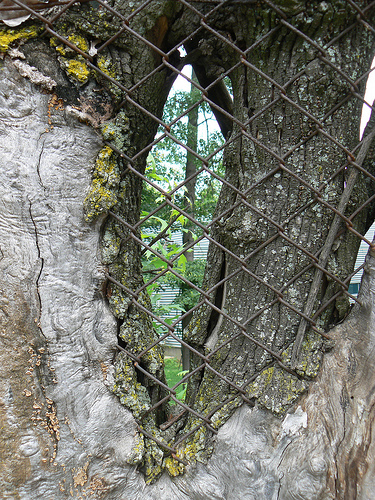
Photo | Creative Commons SteadyJohn
“Great to see you! How were the holidays? Yeah, fabulous, great to hear, me, too! Did you have a tree? Yeah, what was that? Really? Well did you go artificial or DID YOU KILL ONE?!?”
Accusatory verbal darts, ouch: the righteousness of the green saviors, those soldiers of pine … who eat turkeys and pigs, nog and cheese.
I like trees, too, who does not? And, no, I don’t “kill” trees for the holidays. Indeed, we all need to practice responsibly and respectfully to protect, and preservation should be our principle concern and effort.
But what of preserving integrity as well and practicing ethically? What of the other life, those who are born and bred to be dead, what of their lives? The commitment and reverence we witness and experience on behalf of nature’s gifts needs redirection towards all. Next time people chain themselves to trees, I hope they metaphorically chain themselves to non-human animals, too, for their lives, so cruelly crafted and exploited in accordance with financial burden and stats, deserve our protection. Just as the trees do. sr
From The NewsTribune
By Stacia Glenn
Residents share concerns about future of trees along Ruston Way
Some think the leafy trees along Tacoma’s Ruston Way obstruct businesses and block views of the water. Others argue that the trees are the view.
And so it went tonight during a community meeting meant to give Metro Parks an idea of what residents want to do about the 279 London planes, Norway maples and red maples that were planted more than two decades ago between the street and the sidewalk, in a strip as narrow as 4 feet in some places.
Although 98 percent of the trees are healthy, park district staff members say some have restricted root space and are tearing up sidewalks, becoming so top-heavy that they topple in storms and creating hazards for joggers.
“No matter what plan we pick, things are going to change,” said Metro Parks urban forester Kathy Sutalo.
About 50 people gathered at Slavonian Hall to ask questions, share suggestions and scribble notes about their likes and dislikes regarding the trees.
Several expressed concern about cutting down healthy trees and lobbied instead for them to be pruned. One man liked the idea of creating a citizen advisory board to cobble together a master plan.
Let’s please express concern about killing other beings, too … And just not do it.
Todd Steel, vice president for the Old Town Business Association, said some business owners had resorted to cutting down trees or lopping limbs that blocked passersby from seeing their establishment.
He said he is not opposed to keeping most of the trees along Ruston Way but wants to thin the number of trees around businesses.
“These trees have really overwhelmed the waterfront,” Steel said, suggesting that at least a few trees be removed “so we can all still enjoy our views.”
Those who walk the tree-lined waterfront in the summer objected, saying they like the shade and aesthetics.
Prince the Dog and Scrub the Cat Return Home After 5 Years
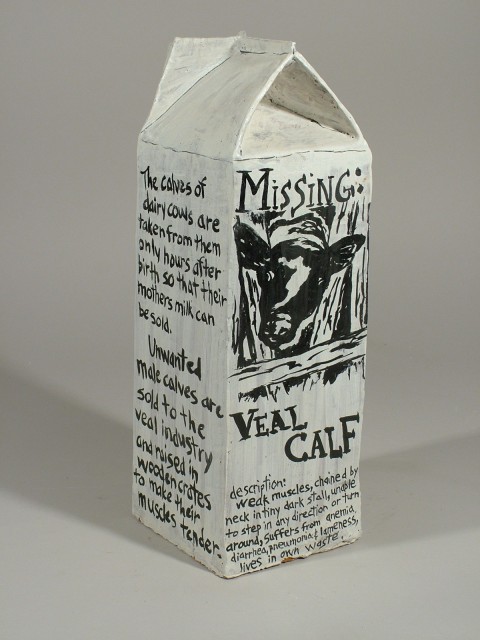
Photo | Veal Carton by PETA2
From Huffington Post
By Joanna Zelman
If you move four times in five years, it’s hard enough for the mail to find you, let alone a dog. But that’s just what one smart Shih Tzu did this past week.
According to NBC News, Myrna Carillo lost her beloved dog Prince over five years ago in California. Since then, she has married, had two boys… and moved four times. And yet, somehow Prince showed up on her doorstep last week. Myrna immediately recognized the furry dog, and more impressively, the dog recognized her. Prince is already bonding with Myrna’s sons, and is reacquainting himself with his rediscovered family.
This isn’t the first pet miracle. Last year a cat returned home after going missing during Hurricane Katrina five years ago (story below). And an Australian dog returned home after a nine year disappearance. As for Prince — while his house may have changed four times in his absence, there seems to be no place like home.
Vodpod videos no longer available.
Jennifer Noble’s Cat, Scrub, Returns Home 5 Years After Hurricane Katrina
From Huffington Post
Biloxi, Mississippi — Five years after wandering away in Hurricane Katrina’s aftermath, a gray and white cat named Scrub has been reunited with his Mississippi family.
The Humane Society of South Mississippi says Scrub was identified by an implanted microchip. The 7-year-old cat was brought to the shelter by a Gulfport woman who’d fed him as a stray the past couple of months but worried about his safety during a cold snap.
Scrub’s owner, Jennifer Noble, tells The Sun Herald newspaper that she was skeptical at first when she received a call from the shelter. But by the end of the first night back, Scrub had snuggled in bed with one of her boys.
Say NO to Cruel Cosmetics

Photo | BiteBack.be
Please click on and sign Say NO to Cruel Cosmetics
The BUAV has launched a new campaign – No Cruel Cosmetics – with the support of Marks and Spencer, and Pussycat Doll Kimberley Wyatt amongst others.
After a long hard battle, the European Union was due to be free of all new animal tested cosmetics by 2013. But now officials in Europe are considering extending this deadline.
If they get their way it could mean another 10 years during which thousands more rabbits, guinea pigs, mice and rats could be injected, gassed or force-fed and killed worldwide for cosmetics products sold in the EU.
We are doing everything we can to make sure this doesn’t happen. Please help by signing our petition and sharing it with everyone you can.
Here’s the link again – www.nocruelcosmetics.org.
Click HERE to post to Facebook.
And HERE to share on Twitter.
RELATED | Choose Cruelty-Free
Vodpod videos no longer available.
Skinned alive: MFA’s fish investigation reveals horrors

Photo | Merseyside Animal Rights
Related, protect marine life, click on and sign Stop the Next Offshore Oil Disaster
From Mercy for Animals
A new Mercy For Animals undercover investigation provides a startling glimpse into “Catfish Corner,” a fish slaughter facility in Mesquite, Texas.
Behind the operation’s jaunty name lies a grisly reality. From the water to the cutting table, fish are tortured – suffocated, skinned and dismembered, all while conscious and feeling pain.
MFA’s hidden camera video reveals:
- Workers using pliers to pull the skin off of live fish
- Dozens of fish crammed into buckets and baskets, gasping for oxygen
- Skinned fish still moving and gasping on the cutting table
- Fish flailing and struggling to escape the workers’ knives
- Live fish sliced and split in half
- Workers tearing the heads off of live fish
Upon reviewing the undercover footage, animal behaviorist Dr. Jonathan Balcombe harshly condemned Catfish Corner, stating, “Treating [fish] like inanimate things is cruel and ethically abhorrent. Handling such as that shown in the footage is extremely cruel and heartless and should be outlawed immediately.”
Veterinarian Lee Schrader concurred, adding, “To subject fish to an obviously painful procedure such as the removal of their skin, while they are alive and responsive, is cruel, inhumane and without excuse.”
It is now widely accepted that fish feel pain. In fact, fish process pain in much the same way as mammals. The fish in the video exhibit pronounced aversive responses to their handling, such as violently flopping and attempting to move away, suggesting that they indeed feel pain and are suffering immensely.
Skinned Alive: Cruel Catfish Slaughter Exposed
Further, no measures were taken to stun or render the fish insensible to pain prior to skinning.
According to Dr. Schrader, the fact that the animals stopped struggling only after their heads were removed suggests that their movement was a deliberate response to pain.
MFA presented clear evidence of the routine skinning and dismemberment of live, suffering animals at this facility, yet the Dallas County District Attorney’s Office has declined to file cruelty-to-animal charges. Such inaction illustrates that stricter and stronger laws are urgently needed in Texas to prevent such egregious animal suffering.
Nationwide, not a single federal law exists to protect fish from abuse on aquaculture factory farms, during fishing events, or at slaughter – allowing widespread abuse to continue.
In the U.S. each year, approximately 8.4 billion fish are killed for food. According to the U.S. Department of Agriculture, more than 80% of farm-raised fish are catfish, with Texas as a leading producer.
Fortunately, as consumers we have the power to spare fish – and all other animals used in food production – unnecessary pain and suffering by adopting a compassionate vegan diet.
Abolish death penalty in Illinois | Everyone deserves justice

Image | ACS Law
Please click on and sign the following two messages:
1. Abolish the Death Penalty in Illinois
1. BACKGROUND | From Amnesty International
Illinois is a signature away from becoming the 16th state in the U.S. to abolish capital punishment. Both houses of the Illinois General Assembly have passed a repeal bill; now it is up to the Governor. Illinois’ death penalty is flawed, biased and wastes money. After a 10 year moratorium, it has become clear that these problems cannot be fixed. Urge Governor Quinn to sign the death penalty abolition bill. If you can, please also call the Governor’s office at 312-814-2121 and simply ask him to sign the bill.
MESSAGE TEXT
I am writing to urge you to sign the bill that repeals the death penalty in Illinois. As you know, Illinois has had a moratorium on executions for ten years, because of the biased and error-prone nature of its capital punishment system. It has become clear in the last decade that these problems cannot be fixed, and that retaining capital punishment is only wasting enormous amounts of taxpayer dollars.
I strongly urge you to do what is right, both morally and practically, and end Illinois’ experiment with the death penalty. There are better ways to fight crime and support families of victims. Capital punishment is an outdated practice that does nothing but divert resources from policies that can actually be effective.
When Governor Ryan established the moratorium and commuted all sentences on death row, he did so because more innocent people had been released from death row than had been executed. The only way to truly guarantee that an innocent man or woman won’t be executed is to do away with the death penalty.
Please sign the repeal bill, so Illinois can get out of the business of killing prisoners and devote its energies and resources to policies and programs that truly work to prevent crime and support victims’ families.
RELATED | Nightline: The Wrongful Execution of Cameron Todd Willingham
Vodpod videos no longer available.
2. BACKGROUND, TEXT | From The Innocence Project
I support DNA testing in every case where it can overturn a wrongful conviction or confirm guilt. Everyone deserves justice, and there is no reason to deny testing that could lead to the exoneration of an innocent person. Post-conviction DNA access benefits the wrongfully convicted and their families and it also helps crime victims, prosecutors, law enforcement officers and the public because it often identifies the true perpetrators of crimes.
The few states without DNA testing laws should immediately enact reforms that explicitly allow access to post-conviction testing.
All 50 states should have laws that ensure that DNA testing, when it has the possibility to overturn a wrongful conviction, is:
- available to every person convicted of a crime, regardless of whether he or she is currently incarcerated;
- available regardless of whether a convicted person confessed, pled guilty, or has exhausted his or her appeals; and
- not subject to an expiration or sunset date.
Click HERE to learn what more you can do.













 Our Compass