HighestWelfare.Humane.Assured.GoodPractices.Vegetarian. Regenerative.Flexitarian.Lies...
What is the difference between No Welfare, High Welfare, and Highest Welfare when they all require animals to die? Only human comfort, NONE protect the actual animals. The most humane, ethical, and honest Webster-defined "welfare" is NOT exploiting animals - not using, not wearing, not eating, not killing - animals. The only meaningful position is vegan, everything else is just how humans euphemize animals' required suffering and violent deaths: no human exploits animals because they honestly believe that NOT exploiting animals is UNethical or INhumane.

Andrey
BACKGROUND | SOURCE SERBIAN ANIMAL’S VOICE
Bulgaria: 30/03/12 – Mass Killing of Stray Dogs to Start Immediately. EU Money for Stray Dogs Programm Is Going Elsewhere ! – Please Send E Mails Now.
Please send your protest letters to Bulgarian government.
Bulgaria is stealing money from EU for stray dogs program and they are killing them. The EU money is going into their pockets.
WHOM TO CONTACT
Email Block:
ceo@bfsa.bg, damyan.iliev@nvms.government.bg, jfandakova@sofia.bg, primeminister@government.bg, GIS@government.bg, slavi.binev@europarl.europa.eu, filizhakaeva.hyusmenova@europarl.europa.eu, stanimir.ilchev@europarl.europa.eu, ilianamalinova.iotova@europarl.europa.eu, iliana.ivanova@europarl.europa.eu, ivailo.kalfin@europarl.europa.eu, metin.kazak@europarl.europa.eu, evgeni.kirilov@europarl.europa.eu, andrey.kovatchev@europarl.europa.eu, svetoslavristov.malinov@europarl.europa.eu, mariya.nedelcheva@europarl.europa.eu, Nadezhda.Neynsky@europarl.europa.eu, vladkotodorov.panayotov@europarl.europa.eu, antonyia.parvanova@europarl.europa.eu, dimitar.stoyanov@europarl.europa.eu, emilstefanov.stoyanov@europarl.europa.eu, vladimir.urutchev@europarl.europa.eu, kristian.vigenin@europarl.europa.eu,
Contact Sofia municipality via webform: http://www.sofia.bg/en/display.asp?ime=contact
SAMPLE LETTER COURTESY RUTH EISENBUD
Dear Government Officials of Bulgaria,
Word of your intention to conduct a mass slaughter of dogs has spread throughout the world. If you go through with this massacre Bulgaria will be known as a nation that does not understand compassion. Many will be reluctant to visit such a nation, as they would think of the loving dogs in their families and choose instead to visit a nation which is more dog friendly.
One such nation is India…where it is illegal to kill a healthy or curable dog for any reason. In large part this is due to the compassion of the Indian religions of Jainism and Hinduism, which recognize that both animals and humans cherish their lives. ALL who live are entitled to respect and the right to live.
The ignorance of your decision is rooted in a religious tradition that grants man dominion over the animals and with it the right to slaughter them for human need and convenience. All three of these cruel religions are represented in Bulgaria: St Nedelya Church, Banya Bashi Mosque, and Sofia Synagogue. Therefore, rather that finding a way to help the homeless dogs of Bulgaria, you have instead chosen to dispose of them according to the dictates of heartless religious doctrine.
Do you want Bulgaria to be viewed as a modern, compassionate nation or one that is backward and cruel? I hope you will have the wisdom to deflect the animosity you have created. Please allow the dedicated animal activists in your country to save the precious lies you so callously dismiss.
Your Name and Nationality
Read more…
Rüdiger Wölk
Please click and sign HERE
Source: Force Change
Target: U.S. Department of Homeland Security
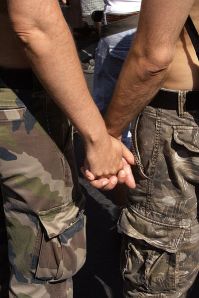
Goal: Support the U.S. Department of Homeland Security’s proposal to change its policies and eradicate discrimination against same-sex couples at the U.S. border.
The U.S. Department of Homeland Security announced a proposal to adjust its current policy on the way families are processed through customs at the U.S. border. The way the policy stands now, heterosexual couples and same-sex couples are processed in different ways. Same-sex partners and spouses are not recognized as members of a family.
Currently, heterosexual couples are processed together, and can enjoy a “dual customs screening.” However, same-sex couples have not been subject to the same treatment, and are processed separately regardless of relationship or marital status. Recognizing this as an inequity, U.S. Customs and Border Protection (CBP) would like to revise the current regulations and expand the definition of the term “members of a family residing in one household” in order to more effectively and accurately “reflect relationships between members of the public who are traveling together as a family.” As an added benefit, Customs and Border Protection says that the change will streamline bureaucracy and “reduce the amount of paperwork.”
This small change is one that will count in the eyes of gay and lesbian couples, who have not been treated fairly—like second-class citizens.
The CBP is currently looking for public feedback regarding this proposed policy change, making it important to garner support for the cause. Sign above and show your support for this movement towards equality.
Read more…

Wikimedia Commons
BACKGROUND BY MARC BEKOFF
Wolves remain in the crosshairs and the teeth of leghold traps in the Northern Rockies (see and). Let me say upfront that I apologize for posting this brief alert, but it’s essential that people who don’t know about what’s happening learn about the barbaric treatment of wolves, and also for the skeptics to see it up close and personal if they can stand it.
You can read about the story of a trapped and tortured wolf in a short essay in Earth Island Journal. It contains graphic language and pictures. A man who calls himself Pinching, who did the dirty deed, claimed the wolf will “make me a good wall hanger.” Another person commented, “That’s a dandy! Keep at it.” This story and the posted comments say a lot about the enormous variation in human attitudes toward other animals and remains a topic of interest to those who study this aspect of human behavior.
I hope this story will get people who are indifferent to, or ignorant of, what’s really happening to take action to stop such heinous behavior. No living being deserves to be treated this way.
The teaser image of “Pinching” and the wolf he trapped is here.
WHOM TO CONTACT
Idaho tourism bureau:
http://www.visitidaho.org/contact/
Montana tourism bureau:
http://visitmt.com/feedback/
SAMPLE LETTER
To Whom It Concerns,
It has come to my attention that, in efforts to curtail population, wolves are being drastically hunted and barbarically slaughtered.
This disregard of your most vulnerable group of beings is unacceptable, and until this barbarism is appropriately addressed including a mandatory ban of such, I will boycott. Indeed, I and others will collectively voice condemnation of your state resulting in the sacrifice of vital tourism and commerce profits.
Please use your influence to act responsibly and ethically and choose to protect, rather than sanction harm, to wolves.
I know your time is limited and I thank you for your attention.
Read more…

Wikimedia Commons
Find your representative using the links below and send the appropriate sample letter whether your representative is already a sponsor, to encourage him/her to be a cosponsor, or if your representative is the bill’s author, Buck McKeon. Thank you.
BACKGROUND | SOURCE PETA
Recently, in Zanesville, Ohio, sheriff’s deputies armed with assault rifles opened fire on dozens of “mature, very big, aggressive” lions, tigers, cheetahs, and other animals after the owner—who opened the animals’ cage doors and left fences unsecured before killing himself—allowed the animals to escape. The tragedy in Zanesville is far from an isolated incident. Since 1990, incidents involving big cats have resulted in more than 235 human injuries and the deaths of more than 85 cats and more than 20 people. Fortunately, U.S. Rep. Buck McKeon, R-Calif., has introduced House Resolution (H.R.) 4122, the Big Cats and Public Safety Protection Act, a new bill that would mean unparalleled improvements for large cats who are kept as “pets” in the United States.
Recognizing that “the private ownership of and commerce in prohibited wildlife species has a substantial and detrimental effect on the health and general welfare of the American people and on the species themselves,” this bill seeks to ban private individuals from owning and breeding large cats. Today, there are no federal regulations mandating minimum standards of care for the approximately 20,000 big cats who—having grown from cute cubs into unruly, inherently dangerous predators—are confined to tiny, barren backyard cages and left to languish or for those who are sold on the black market for their bones and other body parts.
Appallingly, even in states that already have laws governing the ownership of captive wild animals, animal abusers are able to evade prosecution through loopholes that the Big Cats and Public Safety Protection Act would close. This bill would not affect accredited zoos or legitimate large cat sanctuaries but rather would address irresponsible private owners of large cats and seek to minimize threats to public safety and animal health. Violators would be subject to steep fines, jail time, and confiscation of animals.
This bill would also prohibit notorious traveling circuses like Ringling Bros. and Barnum & Bailey Circus from whipping and prodding lions and tigers in order to make them hop on their hind legs and from confining large cats to cages that are barely bigger than their own bodies as they are hauled across the country in poorly ventilated semi-trucks.
For the animals’ sake, take a moment now to contact your federal representative and urge him or her to co-sponsor H.R. 4122!
LOCATING YOUR REPRESENTATIVE’S POSITION
You can find your representative’s phone number here.
If your representative is already a sponsor of this bill (find out here), please take a moment to thank him or her for making the compassionate decision to support this landmark legislation. If not, let your representative know that you are a constituent and ask him or her to sign on as a co-sponsor of H.R. 4122, the Big Cats and Public Safety Protection Act.
WHOM TO CONTACT
Please follow up your call with a brief e-mail (you can find your representative’s e-mail address here). Feel free to use the form letter below, but personalized comments are always preferred. Don’t forget to share this urgent alert with your friends and family!
SAMPLE LETTERS
1. Use this sample letter if your legislator is not yet a co-sponsor
Subject: Please Co-Sponsor H.R. 4122, the Big Cats and Public Safety Protection Act
I am writing to ask you to co-sponsor H.R. 4122—the Big Cats and Public Safety Protection Act—which was introduced by Rep. Buck McKeon, R-Calif., on March 1, 2012. This important legislation would prohibit private individuals from owning and breeding dangerous large cats such as lions and tigers. Not only would this help ensure the physical and psychological health and well-being of the approximately 20,000 captive large cats currently languishing in cramped, barren backyard cages in the U.S., it would also subject violators—including irresponsible large cat owners who currently threaten public safety by allowing public contact or failing to provide secure enclosures for dangerous, captive wild animals—to steep fines, jail time, and confiscation of animals.
Since 1990, incidents involving large cats have injured more than 235 humans and have resulted in the deaths of more than 85 cats and more than 20 people. Many people who buy cute cubs dump them at unaccredited roadside zoos that cannot adequately care for the cats once they mature into large, inherently dangerous predators. Such careless and irresponsible behavior frequently ends in tragedy. As you may know, recently, in Zanesville, Ohio, sheriff’s deputies armed with assault rifles opened fire on dozens of “mature, very big, aggressive” lions, tigers, cheetahs, and other animals after the owner—who opened the animals’ cage doors and left fences unsecured before killing himself—allowed the animals to escape. Many other big cats are sold on the black market—the global illicit trade wildlife is worth an estimated $20 billion per year—for their bones and other body parts.
Today, there are no federal regulations mandating minimum standards of care for large cats owned by private individuals. And even in states that already have laws governing the ownership of captive wild animals, animal abusers are able to evade prosecution through loopholes that the Big Cats and Public Safety Protection Act would close. Recognizing that “the private ownership of and commerce in prohibited wildlife species has a substantial and detrimental effect on the health and general welfare of the American people and on the species themselves,” this legislation would ban only private individuals from owning and breeding big cats, grandfathering in current owners as long as they register their large cats with the U.S. Department of Agriculture. This bill would have no impact on accredited zoos or legitimate large cat sanctuaries but rather would subject irresponsible private owners—who threaten public safety and animal welfare—to steep fines, jail time, and confiscation of animals.I support H.R. 4122, and as your constituent, I strongly urge you to sign on as a co-sponsor of this important bill.
Thank you for your attention to this serious issue.
2. Use this sample letter if your legislator is Buck McKeon
Subject: Thank You for Sponsoring H.R. 4122, the Big Cats and Public Safety Protection Act
I am writing to thank you for sponsoring H.R. 4122—the Big Cats and Public Safety Protection Act. If it passes, this important legislation will help ensure the physical and psychological health and well-being of captive large cats who are currently languishing in deplorable conditions under the substandard care of private individuals as well as those who are frequently sold on the black market for their bones and other body parts.
I support H.R. 4122 and thank you for taking a stand for these animals by sponsoring this important bill.
3. Use this sample letter if your legislator is already a co-sponsor
Subject: Thank You for Co-Sponsoring H.R. 4122, the Big Cats and Public Safety Protection Act\
I am writing to thank you for co-sponsoring H.R. 4122— the Big Cats and Public Safety Protection Act. If it passes, this important legislation will help ensure the physical and psychological health and well-being of captive large cats who are currently languishing in deplorable conditions under the substandard care of private individuals as well as those who are frequently sold on the black market for their bones and other body parts.
Recognizing that “the private ownership of and commerce in prohibited wildlife species has a substantial and detrimental effect on the health and general welfare of the American people and on the species themselves,” this legislation would ban only private individuals from owning and breeding big cats, grandfathering in current owners as long as they register their large cats with the U.S. Department of Agriculture. This bill would have no impact on accredited zoos or legitimate large cat sanctuaries but rather would subject irresponsible private owners—who threaten public safety and animal welfare—to steep fines, jail time, and confiscation of animals.
I support H.R. 4122 and thank you for taking a stand for these animals by co-sponsoring this important legislation.
Court suspends shipment of monkeys to US lab
PETA
High Court decision follows petition by animal rights group; previous ruling farm to export animals for experimentation.
Source: The Jerusalem Post
By Joanna Paraszczuk
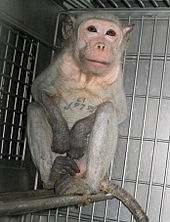
The High Court of Justice on Tuesday issued an interim injunction that suspended the shipment of 90 long-tailed macaque monkeys from a breeding farm in Israel to a US laboratory.
The decision came following a petition against the exports by animal rights group Let The Animals Live (Ten Lehayot Lihiyot) and is the latest stage in a long legal battle over the monkeys’ shipment to the US.
Immediately following the petition last week, the High Court issued a temporary injunction pending a further decision on advancing the petition to a panel hearing. Following that decision, on Tuesday morning Supreme Court Justice Hanan Melcer issued an an interim injunction to replace the temporary order, and said the petition will be heard by a panel of justices after the Passover holiday.
Melcer also ordered Attorney-General Yehuda Weinstein to file a legal opinion to the court regarding the matter of exporting monkeys for experiments.
Let the Animals Live spokeswoman Eti Altman welcomed the court ruling regarding the interim injunction as well as its decision to hear the petition after the Passover holiday.
“I hope that Passover, the holiday of freedom, will have a double meaning and that we will all hear and see these monkeys released into their natural habitat,” Altman said.
In its response to the court’s decision, Let the Animals Live said that the trade in primates was “illegal and contrary to Israeli policy.” Said Altman, “We find it hard to believe that the outrageous conduct of the [Israel] Nature and Parks Authority [INPA] continues in this regard.”
The organization petitioned the High Court in the wake of a Central District Court ruling a week ago, which allowed the Mazor Farm monkey breeding farm near Petah Tikva to export 90 female macaques to the US for experimentation. Mazor Farm petitioned the district court after the INPA delayed its export permit for the monkeys.
Animal rights groups had slammed the Central District Court’s ruling, in which Judge Ilan S. Shilo held that the INPA must permit the macaques to be exported to Shin Nippon Biomedical Laboratories (SNBL) in the US.
According to its website, SNBL is a preclinical contract research organization that specializes in nonhuman primate and small animal research. Israeli and international animal rights groups, including PETA, allege that SNBL has a record of cruelty to the animals in its laboratories, which SNBL denies.
In their petition, Let The Animals Live argued that exporting the macaques violated the Environmental Protection Ministry’s policy because the animals would be used in experiments that did not have the medical aim of of saving human lives or reducing suffering in humans.
The petition also contends that the export would be illegal because 70 of the 90 monkeys were not bred in captivity but captured in the wild. Let The Animals Live claims that fact contravenes Mazor Farm’s license, which permits it to sell only those primates whose ancestors were born in captivity.
On Monday, the INPA and Mazor Farm filed their responses to the petition.
Mazor Farm asked the court to reject the petition, citing the District Court ruling. The permits for the export were granted in January, its lawyers argued, adding that the real reason for the petition was to bring about the closure of Mazor Farm.
Mazor Farm also said the monkeys would be used for “biomedical research aimed at life-saving or preventing suffering in humans,” and noted that SNBL was bound by international regulations.
Let the Animals Live on Tuesday accused the INPA of failing to enclose in its response to the court a letter from Environmental Protection Minister Gilad Erdan, which stated his position on the matter.
In his letter dated Monday, a copy of which Let Animals Live gave to The Jerusalem Post, Erdan said Mazor Farm had not complied with Israel’s policy on trading primates.
Erdan said in the letter that he was considering revoking the INPA’s ability to to issue permits for primate trade for the purpose of experimentation.
“I believe Israel must end its trade in primates, for example the trade carried out by Mazor Farm,” he said.
Erdan said the particular trade in question was “ethically and possibly also legally flawed.”
Sharon Udasin contributed to this report.
Read more…

BACKGROUND
The U.S. Department of Agriculture (USDA) is responsible for adopting and implementing new regulations to protect animals, yet even though the United States Animal Health Association (USAHA)—one of the foremost organizations in the country aiming to prevent, control, and eliminate disease—recommended increased precautions regarding elephants with tuberculosis (TB) in 2010, the USDA has failed to adopt them. As a direct result, TB-positive elephants are currently crisscrossing the country and being forced to perform in circuses despite their fragile health and the very real risks of transmission to humans and other elephants.
The Elephant Tuberculosis Subcommittee of the USAHA is charged with developing and recommending science-based resolutions and regulations regarding TB in elephants. In 2010, it released updated guidelines on disease management and animal care. Its report divides elephants into four groups depending on their history with the disease and, for each, proposes treatments, travel restrictions, and, among other things, how frequently animals should be tested. The subcommittee also advocates that “minimizing or eliminating contact with the public” be considered where transmission is possible.
According to a November 2010 USAHA resolution, the USDA expressed its intent to adopt the updated standards—yet, to date, no action in this direction has been taken, presumably because of intense pressure from those like Ringling that profit off of the exploitation of animals.
State governments and other enforcement officials look to the USDA to make decisions about these matters, and it is now up to the public to urge the USDA to adopt the recommendations for the control of TB in elephants without delay. As explained in a 2011 Centers for Disease Control and Prevention report, direct contact with a TB-positive elephant is not necessary for transmission of the disease to humans. Indeed, tuberculosis carried by an elephant was recently linked to an outbreak in Tennessee among nine humans, some of whom had had no direct contact with the elephant.
But instead of removing TB-positive elephants from the road as the USAHA recommends, Ringling and other circuses keep them on the road and force them to undergo treatment while traveling and performing, putting others at risk. The effectiveness of this treatment, which can be physically exhausting and last well over nine months, is unknown. And for elephants who are already kept chained inside filthy, poorly ventilated boxcars for an average of more than 26 straight hours—and up to 100 hours at a time—it can be unfathomably brutal.
The circus will continue these cruel and dangerous practices until forced to do otherwise by the USDA. Please take a moment now to urge the USDA to do the most compassionate thing and to protect public health by adopting the USAHA’s updated 2010 elephant TB guidelines without further delay. Feel free to use the sample letter below, but personalization ensures that your communication will be read. Public comments are highly regarded, and officials listen to them when making decisions, so please forward this alert to anyone who cares about animal welfare or public health!
WHOM TO CONTACT
Chester A. Gipson, D.V.M.
Deputy Administrator
USDA-APHIS-Animal Care
chester.a.gipson@usda.gov
Gregory Parham, D.V.M.
Administrator
USDA-APHIS
gregory.l.parham@usda.gov
Tom Vilsack
Secretary of Agriculture
USDA
tom.vilsack@usda.gov
SAMPLE LETTER
Dear Deputy Administrator Gipson, Administrator Parham, and Secretary Vilsack:
I am writing to urge the U.S. Department of Agriculture (USDA) to adopt the United States Animal Health Association’s (USAHA) 2010 Guidelines for the Control of Tuberculosis in Elephants without further delay to protect both animal and human health.
When the USAHA recommended increased precautions regarding elephants with tuberculosis (TB), I imagined that they would be quickly adopted by the USDA as it is your agency’s responsibility to implement new regulations in the best interest of animals. Indeed, according to a November 2010 USAHA resolution, the USDA expressed its intent to adopt the updated standards. Yet more than a year has passed, and the USDA has taken no action, even as numerous elephants known to carry a form of TB that is highly transmissible to humans are currently crisscrossing the country and performing with circuses.
I am extremely concerned that the USDA is underwriting the abuse of animals afflicted with this potentially fatal disease, accepting the known risk of transmission from elephants to humans even without direct contact, and endangering the health of both the public and other animals.
As experts have recognized, stress influences both susceptibility to TB and its severity once infection is established. Thus, keeping elephants in cramped, filthy transport vehicles with poor ventilation for often days at a time while chained, as circuses routinely do, can increase the risk of TB transmission astronomically.
I strongly urge the USDA to immediately adopt the 2010 recommendations made by the USAHA Elephant Tuberculosis Subcommittee. It is crucial for the health of both humans and animals to restrict the travel of and quarantine animals who have been exposed to and/or tested reactive for TB. The time has come for the USDA to take proactive steps to prevent the spread of TB and to protect the welfare of elephants suffering from the disease.
Thank you for your attention to this serious issue. May I please hear back from you that you are adopting these regulations soon?
NAME
Read more…
Please take action on four quick issues, thank you
NWF
Please click on and sign the following:
1. End Canada’s commercial seal hunt
2. End the military’s use of animals in combat trauma training courses
3. Don’t Let the ‘Gracia Del Mar’ Tragedy Happen Again
4. Protect Vital Habitat for Mule Deer
1. From IFAW
People around the world continue to say ‘no’ to seal products, but the Canadian government stubbornly continues trying to sell these cruel products. They are fighting the EU ban at the WTO and trying to overturn the ban in Russia. The bans must be defended!
Tell Canada that the seal hunt must end and that you will defend your right to say ‘no’ to cruelty. I’ve included this letter for your Canadian Embassy – please feel free to personalize it by adding your own language.
2. From PCRM
In our continuing effort to educate Congress about the impressive advances being made by the developers of nonanimal, human-based military medical training, last week we put on a show on Capitol Hill. We needed a lot of heavy plastic sheeting to catch all of the fake blood.
Please keep in mind that these are not images of real humans.
The impressive devices—including a replica of an injured soldier with his legs blown off—were accompanied by a statement from Congressman Bob Filner, D-Calif., ranking member of the House Veterans’ Affairs Committee and lead sponsor of the BEST Practices Act, which would end the military’s use of animals in combat trauma training courses. Rep. Filner made it clear that the time is now to replace the use of goats and pigs—more than 6,000 every year—in these courses.
“If you care about the troops, this is the most effective way of training,” explained Rep. Filner. Now is the time for your Member of Congress to sign on as a co-sponsor of the BEST Practices Act. Please contact your U.S. Representative today!
3. From PETA
Recently, a ship named the Gracia Del Mar left Brazil en route to Egypt carrying around 5,600 cattle on board as part of the shameful live-export trade. Off the coast of Algeria, a snowstorm hit, and many of the animals succumbed to the freezing conditions. In spite of this, and even though the ship reportedly suffered damaged ventilation and food systems, the Gracia Del Mar continued its journey to Egypt.
Upon arriving at its destination, the ship was refused permission to dock by Egyptian authorities because of the estimated 3,000 dead cattle on board. The surviving animals were forced to endure several more days at sea. It is reported that the remaining cattle have now been transported to land, but their fate after this harrowing journey will ultimately be slaughter.
The World Organisation for Animal Health (OIE) is supposed to act promptly in such desperate situations, but according to news reports, they failed to do so. Please e-mail the OIE today and demand that shameful incidents like this never be allowed to happen again.
4. From NWF
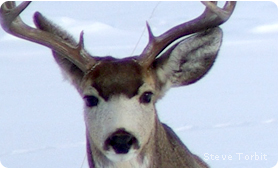
Crucial mule deer habitat in northwestern Colorado’s Piceance Basin is currently being considered for dangerous oil shale and tar sands development.
Mule deer populations are already declining across much of the West, and without protection for their remaining important habitat, their numbers may continue to fall.
Right now, the Bureau of Land Management (BLM) is calling for public input on their draft plan for oil shale and tar sands development. This plan has the potential to open 2 million acres of public lands for oil shale and tar sands development in northwestern Colorado, southwestern Wyoming, and northeastern Utah.
Edit and send the message urging the BLM to safeguard important wildlife habitat on our public lands before gambling on dangerous energy development.
Urge Lakeland Animal Welfare Society to Serve a Compassionate Charity Dinner: Sample Letter
Wikimedia Commons
BACKGROUND | SOURCE UPC
Urge Lakeland Animal Welfare Society to Serve a Compassionate Charity Dinner
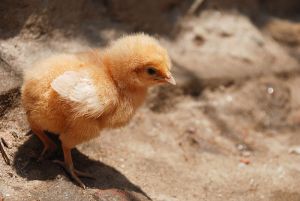
Lakeland Animal Welfare Society, a nonprofit animal shelter in southeastern Wisconsin, is holding its annual Second Chances Charity Dinner on May 4, 2012, at the Abbey Resort and Fontana Spa. The “delicious seated dinner” includes three entrees to choose from: Grilled Vegetable Tower (vegan), Prime Rib, and Grilled Marinated Chicken Breast.
Please send a polite message to this shelter urging them to replace the slaughtered animal entrees with all-vegetarian entrees consistent with compassionate consideration for all animals including chickens and cows. If you have a great – mouthwateringly delicious! – vegan recipe for gatherings of 100 or more people, send it along. Thank you for speaking out. Our letter is below but we urge you to write your own letter in your own words.
Dear Ms. Perry:
I am writing to you on behalf of United Poultry Concerns to urge you please to eliminate your May 4th fundraiser options of slaughtered animals in favor of compassionate meal choices consistent with the representation of the Lakeland Animal Welfare Society as an organization that cares for abused animals and that seeks to enrich the lives of both animals and people throughout your community.
Chickens and cows are animals. They are fully sentient individuals. They are mistreated by our society every bit as much as dogs and cats, and they feel pain and fear just as much. We are very concerned that your organization would use one group of suffering and abused animals as bait to raise money for another group of suffering and abused animals. Even though our own work focuses on the plight of chickens, turkeys and other domestic fowl, we would not dream of hosting a fundraising dinner made of slaughtered pigs, or raffle a snakeskin handbag in order to raise money to help chickens.
In addition, many animal shelters are dealing with the tide of neglected and unwanted chickens and ducklings due to the recent trend of backyard chicken-keeping and the thoughtless attitude of many that baby chicks and ducklings are disposable Easter toys. Surely the Lakeland Animal Welfare Society extends its good work and goodwill to include these animals as worthy of protective care and public education. Surely chickens and cows deserve Second Chances Charity no less than dogs and cats, don’t you agree?
I have enclosed information that I hope will be of interest to you and persuade you to offer good meals to your donors that are charitable and compassionate to all animals.
Thank you very much for your attention. We look forward to your response.
Sincerely,
Karen Davis, PhD, President
United Poultry Concerns
PO Box 150
Machipongo, VA 23405
757-678-7875
Karen@UPC-online.org
www.UPC-online.org
Recipes: http://www.UPC-online.org/recipes
WHOM TO CONTACT
Kristen Perry, Executive Director
Lakeland Animal Welfare Society, Inc.
PO Box 1000
Elkhorn, WI 53121
Phone: 262-723-1000
Email: kperry@lakelandanimalshelter.org
Email: adopt@lakelandanimalshelter.org
Website: http://www.facebook.com/LakelandAnimalShelter
SAMPLE LETTER
Dear Executive Director Perry,
I have just learned that Lakeland Animal Welfare is sponsoring a fundraising event and is offering the option of dead animals to raise money for other animals. I am therefore respectfully requesting that menu changes be made in order to reflect compassion and ethics with respect to animals.
Please allow me this opportunity to elaborate. Our society considers other beings disposable, to be used as commodities and discarded in accordance with egotistical human-focused goals and benefits. It is within this rigid definition of human acceptability absent accountability that humans embrace speciesism, the prejudicial regard of other species as undeserving of either rights or freedom from exploitation. Speciesism is immoral and dangerous, a precept built upon a foundation of arrogance, greed, and inequality, promoted with solicitous validations meant to foster approval. However, regardless of euphemistic descriptions meant to disguise exploitation, this practice is indeed unethical, the animals being intentionally subjected to pain and then killed. Although you may find the lives of these animals as immaterial and therefore expendable, you should understand they value their own lives and possess the capacity to experience trauma, fear, and suffering, the same as cats and dogs.
This reckless destruction is unnecessary, unjustified, and unprincipled, its only function to benefit those who exploit animals for profit. Animals have rights to live free from pain and suffering regardless of objections to acknowledge such; it is important to accept that what is, indeed, valuable is the life itself and the capability to experience emotion and suffering. Please observe this basic moral principle and act with compassion rather than react with cruelty and serve only vegan items on your fundraising menu.
I know your time is limited and I thank you for your attention to this matter.
NAME
Read more…
Wikimedia Commons
It’s a shocking image (see video below): a California gray whale dragging 50 feet of netting filled with dead sea animals for nearly a week.
The gray whale, dubbed “Bart,” was spotted Friday off the coast of Dana Point Harbor, Calif., tangled in a huge fishing net, NBC reports.
With permission from the National Marine Fisheries Services, Dave Anderson, who works with DolphinSafari.com, attached a buoy to the whale Friday evening to monitor it overnight as a rescue team was assembled.
Anderson said that the team found a “whole ecosystem” inside the netting, including a sea lion, a 5-foot leopard shark, two angel sharks and various spider crabs, fish and rays, according to the Los Angeles Times.
As they followed the whale out to sea, volunteers spent seven hours Saturday carefully cutting the nylon netting without hurting the mammal. With nighttime and a storm approaching, the rescue team was fighting against time.
“This whale was doing everything it could just to breathe,” Anderson told the Orange County Register. “But there was no way to feed itself.”
Suddently, a line snapped, and the buoys disappeared.
“Those buoys just went under the water all of a sudden,” Anderson told NBC. “And when they went under the water, I mean, it was like a scene from ‘Jaws.'”
The whale was free, and volunteers were thrilled.
“All the staff was really emotional at the end of the rescue because usually the whale does not make it in this type of situation,” Dana Friedman, a local volunteer, told the Laguna Beach Independent. “It is hard for me to find the words to express how I feel right now.”
Anderson added to the Independent, “This was a snapshot into what is going on in the oceans all over the world. Unfortunately, thousands of marine animals die every day from similar circumstances.”
Vodpod videos no longer available.
Ask Arthur Galan to go fur free: petition & sample letter

Change
BACKGROUND
For Australian fashion designer Arthur Galan to use fur knowing what a ‘bloody’ truly evil trade it is, is simply unconscionable. Mr Galan clearly has no empathy for animals who are violently killed so he can profit from their fur. There is no such thing as humane fur and Mr Galan must know this. For this high-profile designer who has 19 stores across Australia to continue using fur when the treatment of animals is now more important to the public than it ever has been, is very worrying. We must not allow Mr Galan to hide his head in the sand and pretend the fur he uses doesn’t come from animals who are tortured and skinned alive. We must ensure Mr Galan holds his head in shame.
PETITION
Please click and sign HERE
WHOM TO CONTACT
Please fill in webform HERE
SAMPLE LETTER
To Whom It Concerns,
I am shocked to discover that Arthur Galan and associated brands supports the fur industry. Due to the savage business of fur, any products derived from the suffering and killing of animals should be rejected, and I am respectfully requesting that until Arthur Galan discontinues profiting off the exploitation of animals, consumers sever ties with them.
Please watch the undercover footage of the industry promoted: animals are forced to endure deplorable conditions including living in cramped, feces-crusted cages; suffering from sickness and disease; lacking an enriching environment; and being subjected to substandard diets and severe psychological trauma. They are then butchered via anal electrocution, gassing, skinning alive, and forced trauma.
Regrettably, as long as you unnecessarily and selfishly capitalize on the mutilation, torture, and death of animals, I will not financially support you or your associated brands. Furthermore, I will share this information with family, friends, colleagues, and members of online communities. Arthur Galan, why not act on principle and become a company that promotes compassion fashion? You can create very stylish clothing and accessories using synthetic materials.
Please make both the ethical and responsible decision to discontinue your commercial support of fur immediately: join an increasing body of compassionate businesses and designers who are listening to a concerned and attentive consumer population who refuse to be complicit in the inherently malicious industry of fur farming. I hope this letter finds you willing to scrutinize your own involvement and desire to protect, rather than harm, animals.
Thank you for taking the time to read this important message.
NAME
Read more…
Dog Saves Girl From Sex Offender Attack
Vodpod videos no longer available.
Source : Huffington Post
By Hilary Tuttle
On National Puppy Day it seems all too appropriate that one Florida shelter dog is being lauded for her heroic efforts as woman’s best friend.
When a 17-year-old girl left St. Petersburg’s Friends of Strays animal shelter to walk a dog, she never imagined her volunteer work would lead her to be the one in need. But as Fox News reported, when she walked on a path behind the building with Mabeline, a Rhodesian Ridgeback mix, that’s exactly what happened.
According to local television station WTSP, registered sexual predator Michael Bacon chased the girl, grabbing her hair and pinning her to the ground. The 38-pound dog began barking, scaring the attacker off enough that the volunteer was able to flee, People reported.
The brave puppy has since been adopted by Mary Callahan, who did not know about her new pet’s valiant actions until notified by WTSP.
“I looked at my dog and I thought, ‘You are a hero,'” Callahan told the broadcaster.
Bacon has been arrested, according to the South Florida Sun-Sentinel, and hopefully Mabeline will be rewarded with her own slice of bacon.
Read more…
UN honours heroes and survivors of transatlantic slave trade

UN News Centre
Source: UN News Centre
The United Nations is hosting a series of events, beginning today, to pay tribute to the men and women who bravely fought against the transatlantic slave trade and those who continue to stand up against modern forms of slavery.
“The transatlantic slave trade was a tragedy because of slavery’s fundamental barbarism and immense scope, and because of its organized, systematic nature,” Secretary-General Ban Ki-moon said in his message to mark the Day, which falls on Sunday.
The General Assembly in 2007 designated 25 March as the International Day of Remembrance of the Victims of Slavery and the Transatlantic Slave Trade to honour the 28 million estimated Africans who were violently removed and cast into slavery, mainly in colonies in North America, South America and the West Indies.
“One set of human beings – the traders, owners and others who participated in and profited from this evil enterprise – elevated themselves above another, assaulting their victims’ very essence,” Mr. Ban said in his remarks.
He noted that this year’s theme – “Honouring the Heroes, Resisters and Survivors” – recognizes those who stood up against slavery when the trade was at its height, and those who stand up now to protect against its manifestations today.
The Day also serves as an opportunity to teach about the causes and consequences of racism, racial discrimination, xenophobia and related intolerance.
“New laws, institutions and mindsets have given us better tools for the struggle against these ills,” noted Mr. Ban. “Yet we must also recognize that bias has increased in many parts of the world.
“We see discriminatory practices gaining political, moral and even legal recognition, including through the platforms of some political parties and organizations and the dissemination through modern communication technologies of ideas based on the notion of racial superiority.” He stressed that the UN remains firmly committed to countering such hateful acts and trends.
This year’s commemoration features several events in New York. These include a special meeting of the General Assembly on 26 March; an exhibition that includes images of heroes and activists, original documents, historical illustrated newspapers and artifacts; an evening of cultural and culinary specialties of Africa; and a global student video conference.
In addition, plans are under way to erect a permanent memorial at UN Headquarters to remind the world that millions of Africans were violently removed from their homelands, abused and robbed of their dignity over the course of four centuries during the transatlantic slave trade.
Read more…
PETA
BACKGROUND
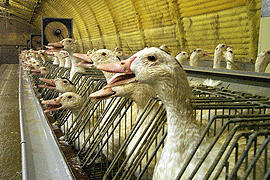
Because of the extreme cruelty involved in the production of foie gras, the diseased and fatty liver of force-fed ducks and geese—many restaurants, grocery chains, and other businesses around the world have stopped serving and selling the vile product. PETA has shared shocking undercover video footage of foie gras farms with Wendy’s, who has started selling foie gras in Japan in an effort to re-enter the market, but the company refuses to end its sales. Please write to Wendy’s and urge the company to stop serving foie gras.
Investigations of foie gras farms in the U.S. and overseas have documented countless sick, dead, and dying birds, including some animals who were found suffering from holes in their necks after pipes had been forced down their throats. One investigation in New York found ducks crammed into wire cages. Animals’ beaks were bloody, and their wings were twisted together. At another foie gras farm, in Europe, birds were found dangling by wires as blood spilled from their neck wounds onto live animals beneath them.
Foie gras production is so cruel that it has been condemned by the pope and is prohibited in 15 countries.
Please take a moment to write to Wendy’s President and Vice President of New Product Marketing and politely urge them to stop selling foie gras in Japan.
WHOM TO CONTACT
Emil Brolick, President, CEO, and Director of Wendy’s
emil.brolick@wendys.com
Liz Geraghty, Vice President, New Product Marketing of Wendy’s
liz_geraghty@wendys.com
SAMPLE LETTER
Dear President Brolick and Vice President Geraghty,
I am greatly disturbed to learn that Wendy’s in Japan is selling foie gras, the production of which inflicts incredible suffering and cruelty upon sentient animals. As such, I respectfully request you take immediate steps to eliminate foie gras from your product list.
Foie gras, French for “fatty liver,” is made from the grotesquely enlarged livers of male ducks and geese. The birds are kept in tiny wire cages or packed into sheds. Pipes are repeatedly shoved down the birds’ throats, and up to 4 pounds of grain and fat are pumped into their stomachs two or three times every day. The pipes puncture many birds’ throats, sometimes causing the animals to bleed to death. This cruel procedure causes the birds’ livers to become diseased and swell to up to 10 times their normal size. Many birds become too sick to stand up. The birds who survive the force-feeding are killed, and their livers are sold for foie gras.
Globally, people have spoken out against the cruelty of foie gras. In 2004, California passed a law banning the sale and production of foie gras, effective this year; his Holiness Pope Benedict XVI denounced foie gras, the force-feeding as being in violation of Biblical principles; and foie gras production has been outlawed in the U.K., Germany, the Czech Republic, Finland, Luxembourg, Norway, Poland, Sweden, Switzerland, Denmark, and Israel.
As such, I respectfully request you please reconsider and make the compassionate and ethical decision to ban foie gras. You may be interested to know in addition to those people and places indicated above, many regional chefs and colleagues have recently removed foie gras from their menus, and I would love to inform my friends and acquaintances that Wendy’s has joined them by also rejecting this torture and eliminating foie gras. Until such a time, however, I maintain the only ethical decision is to promote a boycott of your establishment and visiting instead the ones that do not sell foie gras.
I look forward to a positive response, however, so that I may visit your establishment again.
Please feel free to watch the following video illustrating in disturbing detail the inherent cruelty of foie gras production:
http://www.youtube.com/watch?v=BAzrSl0ztsQ&feature=youtu.be
Thank you for your attention to this urgent issue.
NAME
Read more…
Exlbris
BACKGROUND
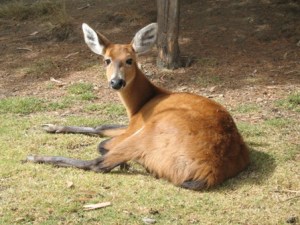
Montgomery County, Maryland, is reportedly considering expanding the use of bowhunting in an attempt to reduce deer populations. Your voice is needed!
Bowhunting is among the cruelest forms of hunting. Bowhunters often spend hours following bloody tracks before finding wounded deer. Many are not found, and their deaths are slow and painful. It can take weeks for them to succumb to their injuries. Families are then torn apart, and young and weak animals starve or die of dehydration.
Please urge Montgomery County officials to halt all bowhunting—and then forward this alert widely! If deer control is insisted upon, please share these tips.
WHOM TO CONTACT | COPY/PASTE INTO YOUR TO:
ocemail@montgomerycountymd.gov;
councilmember.andrews@montgomerycountymd.gov;
councilmember.berliner@montgomerycountymd.gov;
councilmember.elrich@montgomerycountymd.gov;
councilmember.ervin@montgomerycountymd.gov;
councilmember.floreen@montgomerycountymd.gov;
councilmember.rice@montgomerycountymd.gov;
councilmember.riemer@montgomerycountymd.gov;
councilmember.leventhal@montgomerycountymd.gov;
councilmember.navarro@montgomerycountymd.gov;
county.council@montgomerycountymd.gov
SAMPLE LETTER
Dear Honorable Leggett and Montgomery County Council,
It has come to my attention that Montgomery County, Maryland, is reportedly considering allowing bowhunters to kill deer in an attempt to reduce deer populations. Although this hunt are would be inherently cruel based on the premise alone, it is important to recognize it is based on erroneous information.
Please allow me to illustrate a few of these concerns. First, ecologically, populations will fluctuate according to conditions and naturally-occurring food sources; it is the interference of humans that causes imbalance. To blame and slaughter the deer for human encroachment is both irresponsible and unjustified.
Second, killing deer artificially increases food supplies to the remaining deer, the consequence of which is increased reproduction and an ensuing greater deer population. In fact, studies have demonstrated that the continual cycle of seasonal hunting is responsible for a rebound, or larger herd populations, in subsequent years.
Third, this type of mass killing using such a brutal type of slaughter in such a central and visible location would certainly adversely affect both visitation and tourism; it would be financially detrimental to continue with such a cruel and unnecessary killing, and although I do not currently reside in Montgomery County, I would be unwilling to consider it, or nearby, as a potential vacation destination if this deer cull continues.
Fourth, bowhunters often spend hours following bloody tracks before finding wounded deer, if they look at all. Many deer are not found, and their deaths are slow and painful. It can take weeks for them to succumb to their injuries. Families are then torn apart, and young and weak animals starve or die of dehydration.
Please instead examine alternative, non-lethal options such as fencing, fertility control, and relocation according to established protocols, which, when using these methods appropriately, have all proven successful in curtailing deer populations. Please see these tips.
I know your time is limited and I want to thank you for your attention to this urgent matter.
NAME
Read more…
Please boycott mulesing/wool: send sample letter

Mick Lobb
BACKGROUND
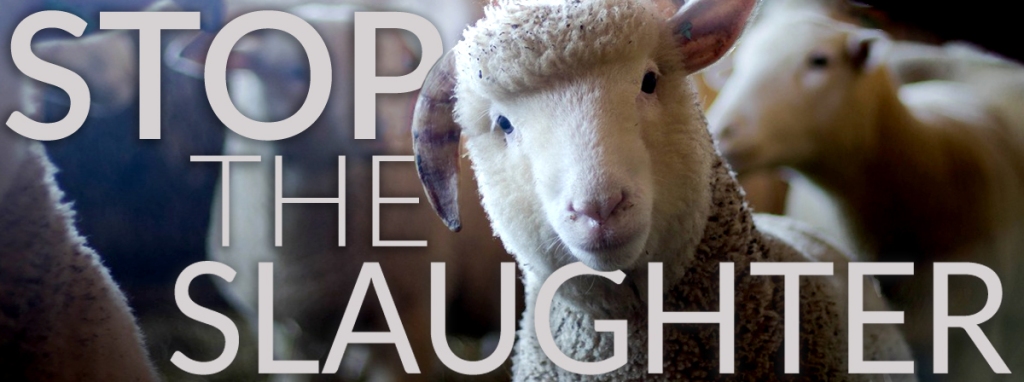
You have probably been following PETA Asia-Pacific’s campaign against mulesing. If so, you know that the Australian wool industry promised to phase out mulesing by 2010 but then reneged on that agreement. Seeing that the industry had no intention of doing the right thing, PETA Asia and its affiliates have been talking to manufacturers and retailers around the world asking them to boycott mulesed wool, which virtually all comes from Australia. Please join PETA in speaking up for lambs by sending an e-mail to Uniqlo, now the fourth largest retailer in the world, asking them to stop purchasing Australian wool from mulesed flocks.
To make sure your letter has a good chance of being read, follow these tips:
- Put “Please boycott mulesing” in the subject line of your e-mails.
- Be brief! Sometimes one short, pithy paragraph is enough – try to stay under half a page.
- Make sure you include your name and address in your letter. Anonymous letters are usually disregarded.
For more tips on writing effective letters, please see PETA U.S.’ letter-writing guide.
The following talking points can be rephrased in your e-mail to get you started:
- Mulesing is an extremely painful and totally unnecessary procedure performed on Australian sheep in which farmers force sheep onto their backs, restrain their legs between metal bars and cut huge chunks of skin and flesh from their backsides – often without administering any painkillers.
- More humane methods exist for preventing flystrike and are used by many Australian farmers.
- The Australian wool industry will not listen to appeals that they ensure animal welfare – only lost sales will move them.
- Many major international retailers – including H&M, Abercrombie & Fitch, Perry Ellis, HUGO BOSS, Liz Claiborne, Next, Adidas, Gap Inc., Talbots, Giordano and Korean retail giant Kukdong Corporation – have pledged to move away from mulesed wool or implemented an outright ban on wool from mulesed lambs.
More information is available at PETAAsiaPacific.com/Issues-NotToWear.asp#Wool.
Thank you in advance for your action for animals.
WHOM TO CONTACT
Please note that one email was undeliverable, but I will keep it in in case it gets reactivated:
Delivery to the following recipients was aborted after 1 second(s): * r_g_frgcsr@fastretailing.com
Mr Yukihiro Nitta
Managing Director
Fast Retailing
fr_g_frgcsr@fastretailing.com
Mr Tadashi Yanai
President
Fast Retailing
tyanai@uniqlo.co.jp
SAMPLE LETTER
Dear Managing Director Nitta and President Yanai,
I am writing to ask that you please stop purchasing Australian wool from mulesed flocks and, favorably, that you ban wool altogether in favor of stylish and profitable synthetics. Nevertheless, as a procedure, mulesing causes extreme pain, and is characterized by sheep being forcefully restrained and huge chunks of skin and flesh cut from their backsides. Animal welfare standards are often ignored in favor of profit: the Australian wool industry ignores appeals that mulesing be banned and only lost sales will affect their actions. Your decision to ban mulesed wool would equal that of corporate giants H&M, Abercrombie & Fitch, Perry Ellis, HUGO BOSS, Liz Claiborne, Next, Adidas, Gap Inc., Talbots, Giordano and Korean Kukdong Corporation who have pledged to move away from mulesed wool or have implemented an outright ban on wool from mulesed lambs.
Your decision to ban wool will have a positive, ethical, and profitable impact on your company. Thank you for taking the time to read this urgent message.
NAME
Read more…













 Our Compass