HighestWelfare.Humane.Assured.GoodPractices.Vegetarian. Regenerative.Flexitarian.Lies...
What is the difference between No Welfare, High Welfare, and Highest Welfare when they all require animals to die? Only human comfort, NONE protect the actual animals. The most humane, ethical, and honest Webster-defined "welfare" is NOT exploiting animals - not using, not wearing, not eating, not killing - animals. The only meaningful position is vegan, everything else is just how humans euphemize animals' required suffering and violent deaths: no human exploits animals because they honestly believe that NOT exploiting animals is UNethical or INhumane.
The endangered vulture

Karen Lyons Kalmenson
Source Wikimedia
Vulture is the name given to two groups of convergently evolved, usually scavenging birds of prey: the New World vultures, including the Californian and Andean Condors; and the Old World vultures, including the birds that are seen scavenging on carcasses of dead animals on African plains. Research has shown that some traditional Old World Vultures (including the Bearded Vulture) are not closely related to the others, which is why the vultures are to be subdivided into three taxa rather than two. New World vultures are found in North and South America; Old World vultures are found in Europe, Africa and Asia, meaning that between the two groups, vultures are found on every continent except Australia and Antarctica.
A particular characteristic of many vultures is a bald head, devoid of normal feathers. This helps to keep the head clean when feeding. Research has shown that the bare skin may play an important role in thermoregulation.[1]
A group of vultures is called a wake, committee, venue, kettle, or volt. The term kettle refers to vultures in flight, while committee, volt, and venue refer to vultures resting in trees. Wake is reserved for a group of vultures that are feeding.[2][3] The word Geier (taken from the German language) does not have a precise meaning in ornithology; it is occasionally used to refer to a vulture in English, as in some poetry.
Vultures are classified into two groups: Old World vultures and New World vultures. The similarities between the two different groups are due to convergent evolution.
The New World vultures and condors found in warm and temperate areas of the Americas are not closely related to the similar Accipitridae, but belong in the family Cathartidae, which was once considered to be related to the storks. However, recent DNA evidence suggests that they should be included among the Accipitriformes, along with other birds of prey.[citation needed] However, they are still not closely related to the other vultures, and their similarities are due to convergent evolution. Several species have a good sense of smell, unusual for raptors, and are able to smell dead animals from great heights, up to a mile away.
There are seven species.
Vultures seldom attack healthy animals, but may kill the wounded or sick. When a carcass has too thick a hide for its beak to open, it waits for a larger scavenger to eat first.[4] Vast numbers have been seen upon battlefields. They gorge themselves when prey is abundant, until their crop bulges, and sit, sleepy or half torpid, to digest their food. They do not carry food to their young in their claws, but disgorge it from the crop. These birds are of great value as scavengers, especially in hot regions. Vulture stomach acid is exceptionally corrosive, allowing them to safely digest putrid carcasses infected with Botulinum toxin, hog cholera, and anthrax bacteria that would be lethal to other scavengers.[5] New World vultures often vomit when threatened or approached. Contrary to some accounts, they don’t ‘projectile vomit’ on their attacker as a deliberate defense, but it does lighten their stomach load to make take-off easier, and the vomited meal residue may distract a predator, allowing the bird to escape.[6] New World vultures also urinate straight down their legs; the uric acid kills bacteria accumulated from walking through carcasses, and also acts as evaporative cooling.
The vultures in south Asia, mainly in India and Nepal, have declined dramatically in just the last 10–15 years.[dated info] It has been proposed that this may be due to residues of the veterinary drug Diclofenac in animal carcasses.[8] The government of India has taken very late cognizance of this fact and has banned the drug for animals.[9] However, it may take decades for vultures to come back to their earlier population level. The same problem is also seen in Nepal where government has taken some late steps to conserve remaining vultures.
Order a FREE vegan kit: http://www.peta.org/living/vegetarian-living/free-vegetarian-starter-kit.aspx
Take PETA’s Cruelty-Free Shopping Guide along with you next time you head to the store! The handy guide will help you find humane products at a glance. Order a FREE copy HERE
Want to do more than go vegan? Help others to do so! Click on the below for nominal, or no, fees to vegan literature that you can use to convince others that veganism is the only compassionate route to being an animal friend.
PETA: http://www.petacatalog.com/catalog/Literature-39-1.html
Action for Animals has a very low price : http://store.afa-online.org/home.php?cat=284
Have questions? Click HERE
Please OPPOSE the Bipartisan Sportsmen’s Bills
Wikimedia Commons
Please click HERE to take action
Background Source IDA
Last week, we asked some of you to contact your U.S. Senators to ask that they oppose the Bipartisan Sportsmen’s Bills. This week, we need every U.S. citizen to call and send a letter to both of your US Senators to help protect wildlife and public lands from those who enjoy killing wild animals including hunters, anglers, and trappers.
Two bills, the Bipartisan Sportsmen’s Act of 2014 (S. 1996) and the Sportsmen’s Act (S. 1335), are currently pending in the Senate, while the latter has already passed the House.
WE MUST DEFEAT S. 1996!
The goal of this package of bills, collectively called SHARE (Sportsmen’s Heritage and Recreation Act), is to further “sportsmen’s” interests. The bills have provisions that, if passed, would open more federal land to hunting, fishing, and trapping, allow the importation of polar bear “trophies” from Canada, interfere with the Toxic Substances Control Act and allow hunting in National Parks.
For more information on what these bills would do to wild animals and our public lands, please see our previous alert here.
Order a FREE vegan kit: http://www.peta.org/living/vegetarian-living/free-vegetarian-starter-kit.aspx
Take PETA’s Cruelty-Free Shopping Guide along with you next time you head to the store! The handy guide will help you find humane products at a glance. Order a FREE copy HERE
Want to do more than go vegan? Help others to do so! Click on the below for nominal, or no, fees to vegan literature that you can use to convince others that veganism is the only compassionate route to being an animal friend.
PETA: http://www.petacatalog.com/catalog/Literature-39-1.html
Action for Animals has a very low price : http://store.afa-online.org/home.php?cat=284
Have questions? Click HERE
Read more…
VIDEO: The real price of a fur coat – foxes kept in filthy cages for seven months before being skinned
Source The Daily Record
With his noble face and thick glossy fur, the Arctic fox may look appealing. But a glance inside his tiny wire cage reveals he is lying in its own filth.
He is held with hundreds of other animals including silver and red foxes. Some have eye infections and others are so obese they can barely move.
And it’s all in the name of fashion. Once animals reach the right size they are electrocuted, their pelts are stripped off and sold to luxury fashion labels for up to £165 each.
Customers include Burberry, Marc Jacobs, Fendi, and Gucci. The fur will adorn the shoulders of supermodels such as Cara Delevingne in catwalk shows then end up in the wardrobes of the world’s wealthiest people.
But as fur enjoys a high-fashion comeback, secret film footage from Finnish fur farms reveals the suffering behind the trend. Images and video were captured at three farms supplying pelts to Saga Furs, based near the capital Helsinki.
Offering “the world’s largest assortment of farmed European fur”, his skins are seen in recent films including the Great Gatsby. But the reality is a world away from the luxury portrayed.
In the video, shot in November by an animal rights team, the animals are listless and cramped in tiny cages with fur, excrement and food-pulp embedded in the mesh.
One team member, who asked not to be named, said: “The smell is a mixture of pure excrement, urine, and the animals themselves. The howling and barking makes it seem a place of horror and no escape.
“When you look into the eyes of the animals you get a feeling of the life behind them. It’s heartbreaking.”
Thomas Pietsch of Four Paws, the animal welfare charity that passed on the footage, said: “The images show fur farms in Finland certified by Saga . They show horrific conditions.
‘The animals don’t have space to move. They have eye infections and some have no tails, which could be a sign of cannibalism.
“Foxes are born in a cage, spend seven months there then are killed. This is all they know for their entire lives.”
The Saga Furs website say they operate under “strict standards of quality” and “animal welfare is especially important”.
But Mr Pietsch says: “A fox in nature will run as much as 12km a day, which gives an idea of how much these animals suffer.
“The animals always get food as a pulped mix. Basic behavioural needs are ignored because as carnivores, foxes have a strong motivation to bite their food. Here they can only lick. No animal should be kept for fur. It’s a fashion product no one needs and easy to replace.”
Fur has undergone a fashion revival despite a successful campaign in the 1990s led by Peta (People for the Ethical Treatment of Animals) and fronted by supermodels who said “I’d Rather Go Naked Than Wear Fur”.
Now fur products are seen on top names including Cara Delevingne, Jourdan Dunn, and Kate Moss and a study by blog fashionista.com found 70% of designers used fur in last autumn’s shows.
Saga Furs confirmed a Fendi coat Cara wore in Milan last year was one of theirs. The value of the global fur market in 2011-12 was put at £9 billion, an increase of 44% in 10 years.
A Peta spokesman said: “Killing animals for fur is even more repulsive now than it was then, given that everyone has seen the exposés. Gassing, beating, or electrocuting animals and then ripping the skin off their backs will never be in fashion.
“A recent poll found 95% of Britons would never wear real fur, which is why firms like H&M, Zara, Topshop, New Look, All Saints have strict no-fur policies. Selfridges and House of Fraser also refuse to stock fur.”
Saga Furs told the Mirror they operate under Council of Europe recommendations covering “basic requirements for the health and welfare”, which include “adequate freedom of movement, physical comfort and adequate opportunity for grooming, eating, drinking, territorial marking, climbing and swimming”.
It also states “protection against injury, infestation and disease” are requirements . Thomas Pietsch of Four Paws insists these are “very basic requirements that are not being met”.
A Saga spokeswoman said vets had checked one farm identifiable in the video “and everything is as it should be”. She suggested the state of the animals and their cages was because they were moulting or were in a “hospital” section.
She added: “There are blue foxes and Finn raccoons in the footage, animals which the farm in question has not had for ages. The probable conclusion is that the video spread is a mixture of unidentifiable material and therefore strongly misleading.
“We will investigate before coming to any conclusions.”
The Mirror approached Fendi, Alexander McQueen, Marc Jacobs and Gucci, but they did not reply.
A spokeswoman for Burberry said: “Fur accounts for less than 1% of our product offering. As a luxury brand there are occasions where the use of natural hides will be considered important to the design and aesthetics of a product.
“We source natural hides very carefully from suppliers that are governed by high animal welfare standards in line with our ethical trading policy.”
But Four Paws say there is no such thing as ethical fur.
Mr Pietsch said: “I hope people see these pictures and decide not to buy fur. There is no ‘good’ fur farming like some brands claim. If you buy fur it is always cruel.”
Karen Lyons Kalmenson
Order a FREE vegan kit: http://www.peta.org/living/vegetarian-living/free-vegetarian-starter-kit.aspx
Take PETA’s Cruelty-Free Shopping Guide along with you next time you head to the store! The handy guide will help you find humane products at a glance. Order a FREE copy HERE
Want to do more than go vegan? Help others to do so! Click on the below for nominal, or no, fees to vegan literature that you can use to convince others that veganism is the only compassionate route to being an animal friend.
PETA: http://www.petacatalog.com/catalog/Literature-39-1.html
Action for Animals has a very low price : http://store.afa-online.org/home.php?cat=284
Have questions? Click HERE
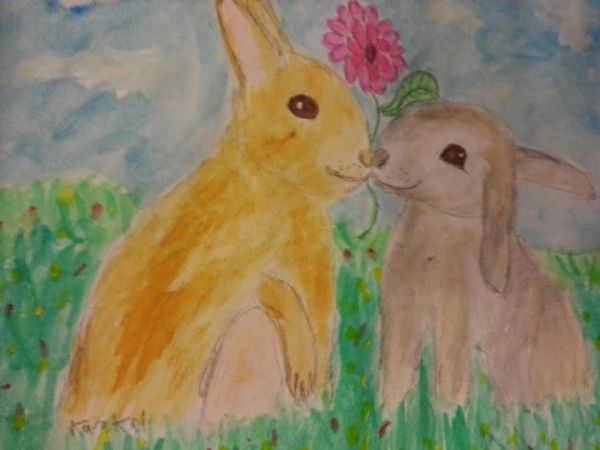
US Friends: Tell Congress To Say YES to Humane Cosmetics
Karen Lyons Kalmenson
Please click HERE to sign and send letter
Background, AAVS
On March 5th, the Humane Cosmetics Act (H.R. 4148), legislation that would prohibit the use of animals in the testing of cosmetics and their component ingredients, was introduced to Congress by Representative Jim Moran (D-VA). If passed, the bill will also phase out the sale of cosmetic products containing animal tested ingredients.
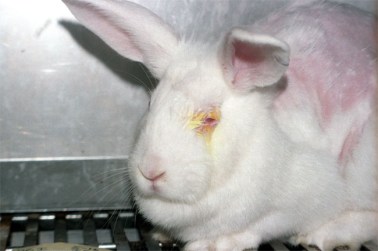
Animal tests have been used to evaluate the safety of cosmetic products and ingredients since the Food and Drug Administration (FDA) began regulating cosmetics. Such animal test protocols include placing chemical substances in animals’ eyes or on their skin to assess damage, and measuring the toxicity of a chemical by forcing animals to ingest or inhale it. These tests are often painful and usually result in the animals being killed at the end of the experiment. Fortunately, the FDA does not require animal testing for cosmetics.
There are many reliable non-animal alternative test methods available, including cell and tissue cultures and sophisticated computer and mathematical models. Companies can also formulate products using the thousands of ingredients already determined to be safe. They also can use a combination of methods to ensure safety, such as employing in vitro tests and/or conducting clinical studies on humans.
In 2004, the European Union (EU) passed a law phasing out the use of animals to test cosmetic products and ingredients, as well as the sale of products containing ingredients subjected to new animal tests. Israel and India passed similar laws in 2007 and 2013 respectively. Even China has recently announced plans to phase out mandatory animal testing of some cosmetic products. If passed, H.R. 4148 would put the U.S. in line with other countries that have taken action to ban the cruel and unnecessary practice of using animals to test cosmetic products like shampoo, lotion, and lipstick.
WHAT YOU CAN DO!
Please contact your U.S. Representative and urge him/her to cosponsor the Humane Cosmetics Act (H.R. 4148). Tell him/her that using animals to test items like shampoo and lipstick is cruel and unnecessary.
Order a FREE vegan kit: http://www.peta.org/living/vegetarian-living/free-vegetarian-starter-kit.aspx
Take PETA’s Cruelty-Free Shopping Guide along with you next time you head to the store! The handy guide will help you find humane products at a glance. Order a FREE copy HERE
Want to do more than go vegan? Help others to do so! Click on the below for nominal, or no, fees to vegan literature that you can use to convince others that veganism is the only compassionate route to being an animal friend.
PETA: http://www.petacatalog.com/catalog/Literature-39-1.html
Action for Animals has a very low price : http://store.afa-online.org/home.php?cat=284
Have questions? Click HERE
Protect Whales and Enforce Sanctions On Iceland

Karen Lyons Kalmenson
Please click HERE to sign and send letter
Background, Source WSPA
The U.S. Department of the Interior officially certified on February 6, 2014 that under the Pelly Amendment to the Fisherman’s Protective Act of 1967, Iceland’s ongoing international trade in whale meat and products diminishes the effectiveness of the Convention on International Trade in Endangered Species of Wild Fauna and Flora (CITES).
Please urge President Obama to protect whales and enforce sanctions on Iceland!
Or send letter online by clicking HERE
Sample Comment
The U.S. Department of the Interior officially certified on February 6, 2014 that under the Pelly Amendment to the Fisherman’s Protective Act of 1967, Iceland’s ongoing international trade in whale meat and products diminishes the effectiveness of the Convention on International Trade in Endangered Species of Wild Fauna and Flora (CITES).
It is now up to you within 60 days of the certification to help whales and end this inhumane, unnecessary, and unsustainable practice of whale slaughter. We are calling on you to impose economic sanctions against Iceland due to its continued whaling activities in defiance of a ban on international commercial trade of whale productions.
All available evidence tells us there is no way to hunt and kill whales at sea without causing acute suffering. Please help to end the slaughter of whales and stem the tide of trade in endangered wildlife!
Order a FREE vegan kit: http://www.peta.org/living/vegetarian-living/free-vegetarian-starter-kit.aspx
Take PETA’s Cruelty-Free Shopping Guide along with you next time you head to the store! The handy guide will help you find humane products at a glance. Order a FREE copy HERE
Want to do more than go vegan? Help others to do so! Click on the below for nominal, or no, fees to vegan literature that you can use to convince others that veganism is the only compassionate route to being an animal friend.
PETA: http://www.petacatalog.com/catalog/Literature-39-1.html
Action for Animals has a very low price : http://store.afa-online.org/home.php?cat=284
Have questions? Click HERE
Read more…
Hovercraft Deer Rescue
Source Kindness Blog
Who knew a hovercraft could turn ordinary humans into superheroes?
That’s what happened when a father and son duo found out about two deer stuck on the frozen Albert Lea Lake in Minnesota. They quickly jumped in their hovercrafts and found the two stranded animals looking helpless, still trying to get a foothold on the slippery ice.
Order a FREE vegan kit: http://www.peta.org/living/vegetarian-living/free-vegetarian-starter-kit.aspx
Take PETA’s Cruelty-Free Shopping Guide along with you next time you head to the store! The handy guide will help you find humane products at a glance. Order a FREE copy HERE
Want to do more than go vegan? Help others to do so! Click on the below for nominal, or no, fees to vegan literature that you can use to convince others that veganism is the only compassionate route to being an animal friend.
PETA: http://www.petacatalog.com/catalog/Literature-39-1.html
Action for Animals has a very low price : http://store.afa-online.org/home.php?cat=284
Have questions? Click HERE
Read more…
Wikimedia Commons
Source Veganism is Nonviolence
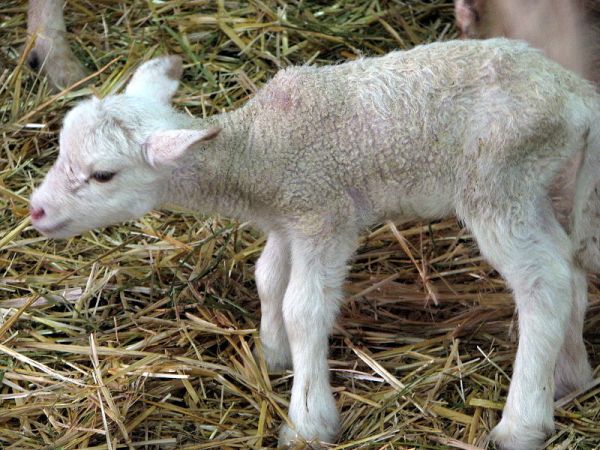
As the title “Why Vegans Criticise Vegans for Promoting Veganism” suggests, it would appear we advocates are confused and rendering ourselves ineffectual. If I didn’t know better I would think that there were agent provocateurs amongst us, but no, it’s really a simple matter of speciesism…. and in some cases career advancement.
On various social media sites there appears to be much confusion amongst those who claim to be vegan over what veganism and being vegan entails. The most obvious confusion amongst those who claim to be vegan is the mistaken belief that veganism is a diet, and is a matter of personal choice. Conflation of vegetarianism and veganism is common. Advocates also seem to be under the impression that it’s morally acceptable to promote “humane” use and “humane” slaughter of animals and single issue campaigns (SICs) as part of vegan advocacy. It is interesting to note that amongst proponents of these ideas, there is a general intentional avoidance of the words “vegan” and “veganism”, and in the case of large animal organisations this is done so as not to challenge their predominantly non-vegan donor base. There is also increasingly an appropriation of the term “abolitionist“, just as the term “animal rights” was appropriated.
These are ongoing problems so I thought I would share some thoughts.
Claiming We are Vegan but Continuing to Use Animals.
There are some of us who claim to be vegan, and think we can be vegan and continue to use animals in our personal lives with the excuse that we treat them “nicely”. Where have I heard before that it’s morally justifiable to use animals as long as it is “humane”? Oh yes! Large animal organisations consistently promote this notion to the public. And because large animal organisations also conflate vegetarianism and veganism, there is a common misconception among advocates who support them that veganism is a diet. This leads some to believe that being vegan means as long as they aren’t eating animal products, then they can still use animals. But veganism is much more than a diet, it’s an ethical position which rejects using non-human animals for food (dairy, eggs, flesh, honey etc), clothing (wool, leather, fur, silk etc), entertainment (zoos, animal circuses, petting zoos etc), or other reasons.
We need to be clear. If we are vegan, we cannot pick and choose and redefine veganism based on our personal choice of how we like to exploit animals.
It is confused thinking to say:
Well I like horse-riding, so that’s OK because I treat my horse “nicely”.
or
I love honey and I buy it from a small farm where the bees are treated well, therefore that makes it OK.
or
Well my uncle keeps some backyard hens, and he “allows” them to live out their natural lives. He looks after them well and he thinks of them as “pets”. He finds good homes for the male chicks, so therefore I eat their eggs.
or
I have a rescued sheep in the back paddock. She produces a lot of wool and I have to shear her anyway, so I may as well collect the wool, spin it, and use it for clothing.
No. It doesn’t work like that.
First it assumes that animals’ lives, their body parts and secretions are ours to use. Second, no matter how “nicely” we may use animals, it doesn’t make it morally justifiable.
Claims that Single Issue Campaigns should be included in Vegan advocacy
I’m not sure why anyone thinks it is necessary or logical to focus on and promote the idea that one form of animal use as worse than another, or that one species is more important than another. Are we not vegans? Isn’t it morally consistent that if we reject animal exploitation, then we should reject it all equally? Doesn’t being vegan mean we recognise that all non-humans are equally morally important? Apparently, not according to some. So why are we doing this? First, let’s remember that 99% of our use of animals is for food (which is “unnecessary” since we can meet all our nutrition needs from plants [and non-animal sources]). That’s 180 million plus *land* non-humans who are tortured and murdered every day mostly for food and many more aquatic non-human animals suffer the same fate. Something to consider is that if we — the non-vegan public — care about what’s on our plate – something we sit down to 3 times a day – we will care about the small percentage of animals used for entertainment, clothing, animal experimentation, and other reasons.
Single Issue Campaigns: Illogical, Speciesist and Futile
Fur
Despite decades of SICs targeting those who wear fur (mostly women) and targeting business that sell fur, statistics show that fur sales have been increasing globally. According to the International Fur Trade Federation (IFTF), fur sales have been increasing year on year since 1998, reaching £10.3bn for last year alone. Unfortunately anyone who may have stopped wearing fur due to a fur campaign is most likely still eating and wearing animal products including “leather”, silk, wool etc and is still using animals in general. We need to understand that using leather, wool, silk etc are equally as bad as wearing fur and involve at least as much suffering and death. Leather is not just a by-product of the flesh industry. Cows and calves are not only killed for their flesh, they are killed specifically for their skin as well. Due to the fast pace of the “production” lines, cows and calves are often conscious at the “hide-ripping” machine. Why do so many people who stop wearing fur continue to eat, wear and use animals? Because large animal organisations and their supporters do not promote veganism, and instead make moral distinctions between different species and different forms of animal use.
One reason fur campaigns are so popular with large animal organisations is because animals used for fur are generally popular with the non-vegan public and viewed as “cute” and “exotic”. Asking the public not to wear fur from these animals is not much of a challenge to their personal behaviour, therefore fur is an easy target and a reliable source of donations. Think of all the hundreds of millions of dollars given by non-vegan donors over the years to large animal organisations which were spent on “vegan” celebrities and fur campaigns. How many unfortunate sexist and misogynist “I’d rather go naked than wear fur” soft porn ads have we been exposed to over the decades? Yet despite this, fur sales keep increasing! Imagine if all those millions of donors had been asked to go vegan and all those donations had been used to promote veganism only?
Live Export
Despite decades of live export campaigns, many “cruelty” investigations, including a feature on ABC’s 7.30 Report, and despite millions of dollars in donations to large welfarist organisation, Animals Australia, by its non-vegan donor base, Australia’s live “cattle” exports to Indonesia are expected to increase by more than 70 per cent in 2014.
Lynn White, campaign director of Animals Australia was asked by ABC’s Landline (16th June, 2013) “Does Animals Australia have a policy of opposing the rearing of livestock for human consumption?” Lynn White responded “No, we certainly don’t“. Why do some advocates who claim to be vegan vehemently defend Animals Australia, “Humane Society of the United States”, RSPCA and others when they have each stated publicly they have no interest in ending animal exploitation and moreover, promote and peddle animal products for industry? They clearly do not have veganism as their moral baseline.
Fox hunting
In a vegan society, there would be no legal fox hunting because nonhuman animals would be recognised as moral persons and not viewed as legal property. Hunting foxes would no longer be viewed as a form of entertainment. Fox fur (or any other nonhuman’s skin) would not be used in clothing, or any other apparel any more than a baby’s skin would be used for a purse. There would be no domesticated animals trapped in pastures, runs, or barns who need “protecting” from predators like foxes. How do we achieve a society where foxes and ALL animals are safe from being hunted and exploited? By promoting clear consistent veganism to the public.
Badger “culling”
In a non-vegan society, cows are viewed as mere economic commodities. Some badgers are vectors of bovine tuberculosis. They can pass on this disease to cows which means farmers lose profits since they “have to” kill infected cows. Therefore badgers are viewed as “pests” by farmers. In a vegan society, there would be no badger “culling” because there would be no animal agriculture and no cows to “protect” from bovine tuberculosis. In other words, if cows were not property and if there was no animal agriculture, there would be no need to murder badgers. There’s literally millions upon millions of “wild” animals tortured, murdered and displaced each year so farmers can “protect” their “livestock”. How do we achieve a society where cows and badgers, foxes, coyotes, wolves, kangaroos, wombats, mountain lions, lions – and any other non-human who might threaten farmer’s profits – are safe from being hunted and being exploited? By promoting clear consistent veganism to the public.
Shark “culling”
Recently there has been a single issue campaign on ending the Western Australian shark “cull”. If society were vegan, we would not be decimating shark’s food supply, and in turn sharks would not be in need of frequenting swimming beaches in search of fish. If society were vegan, China and other countries would not be looking to Western Australia and other countries to supply them with shark fins for their “delicacy”, shark fin soup. If society were vegan, there would be no “fisheries” that need to be protected from sharks. How do we achieve a society where sharks (and all other nonhuman animals) are safe from being hunted and exploited for their body parts and for other uses? By promoting clear consistent veganism to the public..
Single Issue Campaigns, Hunters, “Poachers” and “Wildlife”
Interfering with hunters and “poachers” is a complete waste of time and resources. There would be no hunting or “poaching” if society were vegan and there were no demand for animal body parts or skins from gorillas, elephants (“poachers” recently poisoned a water hole which killed 80 elephants ), sharks, rhinos, tigers, bears, etc. There also would be no hunting or “poaching” if society no longer viewed non-human animals as “things” and resources, and no longer viewed murdering and imprisoning non-humans as entertainment. In other words, there would be no hunting of whales, dolphins, foxes, tigers, ducks, lions, elephants, rhinos, marlin, deer, sharks, moose, tigers, bears, wolves, etc, and no need to protest hunting and “poaching” if society were vegan. The non-vegan public create demand for animal products and animal use and they are our target for change, not hunters or industry who are meeting that demand.
There would be no KFC, McDonalds, animal circuses, zoos, animal “research” laboratories, puppy mills, fur farms, whaling or dolphin industries, tiger hunts, “poaching”, factory farming, bear baiting, bear-bile farms, canned hunting, trophy hunting, aerial wolf hunting, “organic” farms, gestation crates, live export, battery egg farms, “free range” farms, fur-seal industry, etc, if the public were vegan.
We are exploiting more animals in more horrific ways than ever before, despite two hundered-plus years of welfare and despite thousands and thousands of single issue campaigns. What does this tell us about single issue campaigns and welfare? That they’re not working. What does it tell us about large animal / “vegan” organisations that promote them and which do not have veganism as their moral baseline? That they’re confusing the public and are worse than useless. When are those who claim to be vegan going to understand this?
Promoting Anything Remotely Pro-Animal Instead of Veganism
Why do we promote anything remotely pro-animal instead of promoting veganism? Here’s a few questions we might like to consider.
Is it that we refuse to read anything that counters what we are already committed to? Is it because we support large animal organisations and therefore cannot bear anyone criticising them? Is it because we have been told by large animal organisations that this is the way it must be done and we are so used to not thinking for ourselves, we just do as we are told? Is it because we have been told we need to be pragmatic? Is it because we refuse to budge from our belief that political systems, capitalism or religion are responsible for animal exploitation (even though speciesism existed long before any of these religions or systems)? Is it because we are always told that the “enemy” is out there, instead of us looking at ourselves and what we are participating in? Is it because most of us can’t concentrate on anything longer than a tweet and are incapable of reading animal rights theory or a vegan blog which might challenge our current beliefs? Is it simply that we do not like being told that we might be wrong?
Vegan Education is Boring?
I heard someone once say once that promoting veganism only is boring. When did veganism become all about us? Is it all about our comfort zone, our advocacy social circles and whether or not we are entertained? What would we do on Saturday if we couldn’t hang out with our friends at our local KFC protest? What would we do if we couldn’t go down to the docks with our friends and visit the “Farley Mowat” or sit round with our vegan friends and watch “Whale Wars” and remember the time we met Captain Paul Watson? Do we enjoy yelling at hunters and trying to sabotage them? Is it exciting to don balaclavas and go out with fellow advocates at night and release hundreds of thousands of animals who, by the way, will probably starve to death and eventually be replaced. Do we feel like heroes entering factory farms and “exposing cruelty“? Why be bored when we can be rewarded for writing books about factory farms but neglect to mention that veganism is the way to abolish animal use. Why be bored when we can show a little skin, be sexy, get some notoriety, travel the world, create big expensive animal events for the purpose of peddling books and revitalising one’s career, or be a CEO of a large animal organisation and get a six figure salary and talk about “humane” use and puppy mills all the time? It’s exciting “going naked” for the animals. It’s exciting dressing in animal costumes and making people giggle, or throwing red paint onto women wearing fur coats and abusing them. (Interestingly we don’t see advocates hassling bikie gang members who wear leather jackets, do we? So there’s an element of misogyny in fur campaigns which usually targets women.) All of this on the backs of animals and not one mention of veganism.
If non-humans could tell us to just STOP because we are worse than useless, they would have done so quite some time ago.
Large Animal Organisations and Their Avoidance of Veganism
Large animal organisations have different (commercial) reasons for avoiding promoting veganism. One reason is because single issue campaigns are a never-ending source of donations. If they promoted veganism this would challenge their non-vegan donors and effect their organisation’s financial bottom line. It’s much better to mollycoddle non-vegan donors than to ask them to go vegan. Donors give over their money, eat “happy animal products”, and sleep easy at night knowing animals were used and murdered “humanely”. It’s consoling to know that we – the non-vegan public – are not the problem. Instead we are told “Factory farming is the problem! Industry is the problem! Slaughterhouses are the problem! Large animal experimentation labs are the problem!” They tell us “Feel good, non-vegan public! Give us your money and we will help animals. We have it all under control.” Large animal organisation are the industry’s monitor for animal “abuse”. They make sure that “non-abusive” murder can continue in our slaughterhouses!
One of many examples of moral confusion caused by large animal organisations was the criticism of Olympic skater Johnny Weir, who wore fur during his performances. Welfarist organisations – “Friends of Animals” and PETA (People for the Ethical Treatment of Animals) – criticised Mr. Weir’s fur use and ignored the fact that he wore leather and wool and ate animal products. Some members of the non-vegan public pointed out this moral inconsistency to large animal organisations, a sad indictment of the speciesism and lack of internal consistency of these organisations.
Suffice to say using single issue campaigns in advocacy is like trying to stomp out thousands of burning embers, while the raging forest fire of speciesism goes unabated.
We have to ask ourselves the question: If we claim to be vegan, why aren’t we promoting veganism? Why are we promoting anything remotely pro-animal and calling it “animal rights”? Why are we promoting anything other than veganism and treating the word “vegan” as if were a dirty word? I’ve already addressed a few reasons why large animal organisations do this, but the answer as to why those of us who claim we are vegan do not promote veganism may be quite simple.
Here’s a few thoughts.
Is it that many of us are afraid of a little social rejection because we’re being clear? Is it because many of us deep down do not believe that non-humans are our moral equals, which in turn effects our message? Is it because many of us deep down are speciesist and pessimistic and we cannot recognise it in ourselves? Is it because we want a “quick fix” because it makes us feel better? We talk about “compassion”, “mercy”, “loving animals”, “being kind”, and forget about justice and nonviolence. It fact, for many of us, we haven’t internalised the ethical position at all. In my experience some of the most vehement defenders of animal welfare “reform”/”humane” use, vegetarianism, and single issue campaigns have been those who claim to be vegan.
Veganism isn’t something we should simply *hope* people catch on to, because more often than not they don’t. The non-vegan public often default to welfare, or they fetishise certain species. Why? Because those of us who claim to be vegan do. Many advocates are promoting “humane” use and “happy animal products”, and they are fetishising certain species and making moral distinctions between different kinds of animal use. All the while those who are supposed to be our target audience are eating, wearing and using animals *every single day*. We tell them fur is bad, so they stop wearing fur or curse others for wearing fur and continue on eating, wearing and using animals. We tell them using ivory is bad so they make sure nothing contains ivory while they chew on their cheese-burger and wear their leather shoes and woollen coat to a zoo.
I don’t think I’ve ever encountered a single issue campaign which has a strong vegan message. Single issue campaigns are inherently problematic and speciesist. Why are we highlighting one form of use? Yes it’s good if people understand what is wrong with dairy, eggs, honey, etc, because most of our use of animals is for food. Explaining what is wrong with these products on occasion is good, but veganism is the umbrella which covers all forms of animal use. Since 99% of animals used are used for food, focusing on one species like whales, even though they are used for food, is an easy target. Most people don’t eat whales. Most people don’t eat dolphins. Most people “love” whales and dolphins. Even most governments “love” whales because the “whale watching” industry pays a lot of taxes to government. That’s why the Australian government has an interest in “protecting” whales. It’s not that they think whales deserve moral consideration. No. “Protecting” whales means profit. The Australian government lets the speciesist organisation “Sea Shepherd” – do their job for them. For those who are not familiar, Sea Shepherd has stated they are an environmental organisation, not a vegan organisation and Captain Watson has stated publicly that whales suffer more than chickens. Despite this, surprisingly, vegans give millions and millions of dollars in donations to Sea Shepherd each year so crew members can play pirate on the high seas. But that’s another topic for another time.
It is an unfortunate fact that many of us who claim to be vegan are speciesist. Most of us have come to advocacy by way of large speciesist animal organisations that promote “humane” use of animals. As I mentioned earlier, there were members claiming to be vegan on LiveVegan recently and defending their own private use of animals. Many of these same vegans (usually those who support large animal organisations) criticise promoting veganism as “extreme”, or criticise promoting veganism only as “absolutist” or “purist”. On a regular basis I hear vegans criticising vegans for promoting veganism only. Included in those who criticise vegans for promoting veganism only is Jon Camp the director of “Vegan” Outreach. In fact on Twitter recently, the director of “Vegan” Outreach criticised me for not promoting “humane” use of animals and only promoting veganism.
When you consider it all, is it any wonder vegans are confused?
Finally, here’s a good gauge of whether an activity is speciesist and non-vegan. Consider the activity while replacing non-human with human and it will give us some indication.
If you’re vegan, please promote veganism only, and if you’re not vegan, please go vegan. It will one of the best decisions you will make in your life. It’s easier than you think. Please start here and here .
For further information: Here are some excellent blog posts by Gentle World a vegan intentional community
What’s wrong with wool?
Cage Free Eggs: Not free enough
What’s wrong with Leather?
Why vegans don’t use silk
Mother’s Milk
Why vegans don’t eat honey
And an excellent post by UVE archives “What’s wrong with vegetarianism?“
Discussion on LiveVegan about the moral compartmentalisation concerning the murder of Maurius the Giraffe
Read more…
Stop Air France From Shipping Monkeys to Their Deaths

Karen Lyons Kalmenson
BACKGROUND | SOURCE PETA
Air France is one of the largest traffickers of primates in the world. The airline claims to be “making the sky the best place on Earth” – so why does it continue to ship terrified monkeys to laboratories to face imprisonment and torture?
Almost every other major airline in the world has shown compassion by refusing to transport monkeys for animal testing – including Aer Lingus, Air China, American, British Airways, Cathay Pacific, Delta, Lufthansa, Qantas and United. Air France even cancelled an individual shipment of primates after a public outcry led by PETA US and its supporters. Now we must convince the airline to end this barbarism once and for all.
Many of the monkeys Air France flies to laboratories have been snatched from the wild and torn away from their families. Crammed into tiny wooden crates in the cargo holds of passenger flights, they endure a dark and terrifying journey. After landing, the animals are transported to facilities such as Shin Nippon Biomedical Laboratories and Covance in the US, where they face horrors such as mutilation, poisoning, food deprivation, infection with painful diseases and psychological torment.
Please send an e-mail asking Air France to stop giving primates a one-way ticket to experimentation and death. Tell officials that you won’t be flying with the airline until it ends this cruel practice!
WHOM TO CONTACT
Use these e-mail addresses to contact officials at Air France (for some e-mail programs, you may need to replace the semicolons with commas):
joscimeca@airfrance.fr; contact.en.us@airfrance.fr; jcspinetta@airfrance.fr; fadieudonne@airfrance.fr; mail.customerservice.ptp@airfrance.fr; hehourcade@airfrance.fr; jugyanni@airfrance.fr; tobaker-ext@airfrance.fr; stbocquet@airfrance.fr
SUBJECT (Feel free to use your own words for better reception.)
Please Stop Transporting Primates to Laboratories
SAMPLE LETTER
I was dismayed to learn that Air France continues to ship monkeys to laboratories, despite the fact that nearly every other major airline in the world has stopped this cruel practice.
Primates in laboratories are routinely mutilated, poisoned, deprived of food and water, forcibly immobilised in restraint devices, infected with painful and deadly diseases, and psychologically tormented. Additionally, primates suffer during the long and gruelling transport in the cargo holds of planes and in the backs of trucks. For these reasons, other airlines – including Air China, American, Delta, and United – refuse to transport primates for use in experiments. It is shameful that Air France lags behind and continues to support this ethically reprehensible practice.
I won’t be flying with Air France until the company decides to join leading airlines by adopting and adhering to a formal policy prohibiting the transport of primates to laboratories. Please ensure that your company plays no role in the suffering of these highly intelligent and sensitive animals!
Thank you for your attention to this urgent appeal.
Order a FREE vegan kit: http://www.peta.org/living/vegetarian-living/free-vegetarian-starter-kit.aspx
Take PETA’s Cruelty-Free Shopping Guide along with you next time you head to the store! The handy guide will help you find humane products at a glance. Order a FREE copy HERE
Want to do more than go vegan? Help others to do so! Click on the below for nominal, or no, fees to vegan literature that you can use to convince others that veganism is the only compassionate route to being an animal friend.
PETA: http://www.petacatalog.com/catalog/Literature-39-1.html
Action for Animals has a very low price : http://store.afa-online.org/home.php?cat=284
Have questions? Click HERE
Wikimedia Commons
Source National Geographic
By Mel White
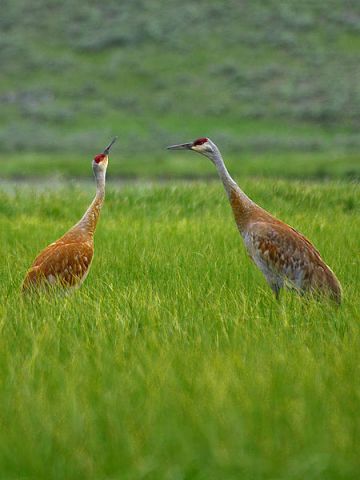
Vast numbers of European birds and other wildlife will be spared from illegal slaughter, thanks to a two-year moratorium on all hunting enacted by the government of Albania.
The Balkan country, which lies along a major migratory flyway, encompasses wetlands and other habitats that provide crucial refueling stops for millions of migrating birds. But poor law enforcement, a surge in gun ownership, and an influx of foreign hunters had made Albania essentially a year-round shooting range. Targets were not just game species but also eagles, cranes, shorebirds, and even small songbirds.
“Albania was a death trap for migrating birds,” said Gabriel Schwaderer, executive director of the conservation organization EuroNatur.
It wasn’t just birds that suffered, according to Schwaderer. To study the critically endangered Balkan lynx, EuroNatur set up automatic cameras in mountainous areas, documenting all passing animals. Mammals such as roe deer and chamois that should have been recorded in significant numbers were rarely spotted. “This shows that game animals are in very, very low densities,” Schwaderer said.
The new law, approved on January 30, suspends all hunting licenses and use of hunting areas for two years. The government will use this hiatus to study ways to reform conservation regulations and control what had become almost complete lawlessness. Hunters in Albania have long been unafraid to shoot anything that came within range—even in national parks, where wealthy hunters, the majority of them from Italy, bribed poorly paid rangers to serve as guides.
Election, Exposure Prompt Action
While many Albanians, including a substantial number of hunters, realized that the situation had to change, the government showed no interest in strengthening conservation laws, or even in enforcing the regulations that were in place. But elections last June brought a new party to power, with government ministers more sympathetic to conservation.
Spase Shumka, a board member of the environmental group Protection and Preservation of Natural Environment in Albania, said an article by writer Jonathan Franzen that appeared in the July 2013 issue of National Geographic (“Last Song for Migrating Birds“) “very much had an effect” on the debate over hunting.
“The National Geographic story served as a main reference,” Shumka said. “People distributed the article in the ministries, and it was received very positively. It fit in very well with the transitional government period.”
Shumka said he and others in Albania “are optimistic that things will change positively because, for the first time, in this law we have effective integration of enforcement.”
Before, responsibility for regulating hunting fell solely on the Ministry of Environment, which had little power. “People who were caught illegally hunting or camping or cutting wood in a protected area would be fined, but only one in a hundred would actually pay the fine,” Shumka said. “Now the laws will be enforced in cooperation with the state police, which is very important. It’s the only authority which has power.”
In addition, the law implementing the hunting moratorium requires the cooperation of the Ministry of Finance. “This will mean additional funding for the Inspectorate of Environment,” Shumka said.
“It’s really an impressive and groundbreaking decision that Albania took,” Schwaderer said. “I can imagine that some of the hotel owners are not so happy, because probably they will have fewer visitors, especially hunters from Italy. But on the other side, they have a great opportunity, because only if they stop this crime will they receive bird-watchers and other visitors interested in ecotourism.”
Order a FREE vegan kit: http://www.peta.org/living/vegetarian-living/free-vegetarian-starter-kit.aspx
Take PETA’s Cruelty-Free Shopping Guide along with you next time you head to the store! The handy guide will help you find humane products at a glance. Order a FREE copy HERE
Want to do more than go vegan? Help others to do so! Click on the below for nominal, or no, fees to vegan literature that you can use to convince others that veganism is the only compassionate route to being an animal friend.
PETA: http://www.petacatalog.com/catalog/Literature-39-1.html
Action for Animals has a very low price : http://store.afa-online.org/home.php?cat=284
Have questions? Click HERE
Read more…
There’s Ivory in Paradise
BACKGROUND
Hawaii legislature considers banning all ivory sales!
Did you know Hawaii is the second largest seller of ivory in the U.S.? Let’s make Hawaii a true paradise, where all ivory sales are outlawed!
Take a moment to read THIS LETTER from WildlifeDirect. Then send your own (using the sample below) to the following emails:
WHOM TO CONTACT
EDBtestimony@capitol.hawaii.gov ; reptsuji@capitol.hawaii.gov ; repward@capitol.hawaii.gov ; reprhoads@capitol.hawaii.gov
SAMPLE LETTER
Dear Sir/Madam,
RE: PLEASE SUPPORT EW HB2183 and SB2024 to prohibit any person to import, sell, offer for sell or possess with intent to sell any ivory product in Hawaii.
I am writing to you to ask for help. There is a global crisis surrounding the illegal ivory trade. The elephant, a keystone species vital to Africa, is on the verge of extinction. Terrorist organizations are profiting from the ivory trade, using the funds from the ivory to cover the expenses of their operations. Rangers risk their lives fighting poachers. We need to crush the demand for ivory and the illegal trade of ivory if we are to secure the future of elephants, creating a safe and stable future for African communities.
I request that Hawaii, as the 2nd largest retailer of ivory in the USA, agrees to ban the ivory trade. Hawaii can play a key role in the survival of elephants and ending the bloody massacre of elephant families for the ivory trade by setting a bold and courageous example to the rest of the developed world. This letter is to ask you to please Support HB2183 and SB2024.
Thank you for your attention to this urgent appeal.
Sincerely,
[YOUR NAME & COUNTRY OF RESIDENCE HERE]
Order a FREE vegan kit: http://www.peta.org/living/vegetarian-living/free-vegetarian-starter-kit.aspx
Take PETA’s Cruelty-Free Shopping Guide along with you next time you head to the store! The handy guide will help you find humane products at a glance. Order a FREE copy HERE
Want to do more than go vegan? Help others to do so! Click on the below for nominal, or no, fees to vegan literature that you can use to convince others that veganism is the only compassionate route to being an animal friend.
PETA: http://www.petacatalog.com/catalog/Literature-39-1.html
Action for Animals has a very low price : http://store.afa-online.org/home.php?cat=284
Have questions? Click HERE

Karen Lyons Kalmenson
Read more…
Speak Out Against Idaho’s Dangerous Ag-Gag Bill Now
OC Statement: OC is opposed to all farming, factory and small and individual. OC makes no distinction amongst them. Any animal exploited and made to endure endless suffering at the hands of mankind deserves freedom and equality.
Please sign petition HERE
Farmed animals in Idaho desperately need your help!
In 2012, Mercy For Animals exposed horrific cruelty to animals at Bettencourt Dairies, Idaho’s largest dairy factory farm. During the investigation, MFA documented workers sexually abusing animals, and viciously beating, kicking, and jumping on cows in order to deliberately inflict pain. The investigation led to criminal cruelty charges against workers and a manager at the facility.
In direct response to this investigation, pro-factory farm legislators in Idaho have introduced an “ag-gag” bill designed to keep this kind of blatant animal abuse hidden from public view.
Introduced as Senate Bill 1337, this ag-gag bill has already passed through the Idaho Senate, and is now pending in the House of Representatives. From there, it will go to the governor’s desk to be signed into law. If enacted, SB 1337 would make it a crime to take photos or video at a factory farm without the owner’s permission.
We must put a stop to this dangerous legislation.
SB 1337 is a pathetic attempt by pro-factory farm legislators to stifle undercover investigations and allow criminal animal abuse to continue, undetected, at factory farms and slaughterhouses across the state. And instead of fostering greater transparency in food production, Idaho’s ag-gag bill would allow factory farmers to ignore important food safety, environmental, and worker safety laws.
Idaho’s lawmakers should be working to prevent and prosecute cruelty to animals, not making it harder to expose. Americans have the right to know where their food comes from and how animals on factory farms are treated. SB 1337 directly interferes with these rights.
Please contact Idaho Governor Butch Otter and urge him to veto this dangerous bill.
Thank you for taking action to help animals in Idaho.
Order a FREE vegan kit: http://www.peta.org/living/vegetarian-living/free-vegetarian-starter-kit.aspx
Take PETA’s Cruelty-Free Shopping Guide along with you next time you head to the store! The handy guide will help you find humane products at a glance. Order a FREE copy HERE
Want to do more than go vegan? Help others to do so! Click on the below for nominal, or no, fees to vegan literature that you can use to convince others that veganism is the only compassionate route to being an animal friend.
PETA: http://www.petacatalog.com/catalog/Literature-39-1.html
Action for Animals has a very low price : http://store.afa-online.org/home.php?cat=284
Have questions? Click HERE
Read more…

Wikimedia Commons
Now they just need to end it on ALL OTHER animals. OC
TRENTON, N.J. (AP) — Drugmaker Merck & Co. is joining two dozen other pharmaceutical companies and contract laboratories in committing to not use chimpanzees for research.
The growing trend could mean roughly 1,000 chimps in the U.S. used for research or warehoused for many years in laboratory cages could be “retired” to sanctuaries by around 2020.
That’s according to Kathleen Conlee of the Humane Society of the United States, which seven years ago began urging companies to phase out all chimp research.
The trend is driven by improved technology, animal alternatives and pressure from animal rights groups, the National Institutes of Health and Congress.
Last June, reacting to an Institute of Medicine study Congress had requested that concluded nearly all chimp research is unnecessary, the NIH announced it would retire and send about 90 percent of government-owned research chimps to the Chimp Haven sanctuary in Keithville, La. It’s now home to about 160 chimps, with nearly 60 more to arrive soon.
After several years, the NIH plans to decide whether the remaining chimps in government labs can also be moved to sanctuaries. Roughly 450 other chimps are owned by private labs that do research under contract for drugmakers and other companies.
“It’s been a long road in trying to end the use of chimpanzees in research, and we’re now at a turning point,” Conlee told The Associated Press Thursday. “We’re going to keep on (advocating) until the chimpanzees in laboratories are all in sanctuaries.”
Merck spokeswoman Caroline Lappetito said the company, based in Whitehouse Station, N.J., decided late last year to stop research on chimpanzees and switch to alternative types of testing.
“The science has advanced, and we don’t really need it,” Lappetito said.
Merck, the world’s third-biggest drugmaker, is the largest to make the switch.
Companies that develop medicines and consumer products such as cosmetics have long used animals to test safety and effectiveness. In the case of experimental medicines, drugmakers must test on animals before the Food and Drug Administration will let them do the human testing needed for approval of a new therapy.
Nearly all animal experiments in the U.S. involve mice, rats and guinea pigs, although some are done on dogs and great apes, almost always chimpanzees.
But animal research, particularly on primates and pet species such as dogs and rabbits, has long drawn criticism from animal rights groups, including protests outside laboratories and at annual shareholder meetings. Besides calling the practice inhumane, activists often have alleged — and sometimes proven — that animals were being abused.
Many companies previously said it was necessary to test potential medicines and vaccines on nonhuman primates because they needed an animal in which the anatomy and disease course were very similar to that in humans.
That thinking changed as technology allowed researchers to do initial testing via computer simulations, in bacteria or cells, and in animals as small as fish. Many drugmakers also found ways to do testing on far fewer animals and to limit the discomfort of experiments by using painkillers and tranquilizers. And many of the companies pledging not to use chimps in the future never did so.
British drugmaker GlaxoSmithKline PLC was one of the first to stop research in chimps, back in 2008.
“Research we did on nonhuman primates was kept to a minimum” even before that, said spokeswoman Melinda Stubee.
Because chimpanzees used for commercial medical research generally are confined in the labs of contract testing companies, Conlee said the Humane Society is trying to convince them that there’s no longer enough demand to continue warehousing chimpanzees for potential future work. She hopes they’ll pay to support those chimpanzees in one of five U.S. accredited sanctuaries for former research chimps.
Order a FREE vegan kit: http://www.peta.org/living/vegetarian-living/free-vegetarian-starter-kit.aspx
Take PETA’s Cruelty-Free Shopping Guide along with you next time you head to the store! The handy guide will help you find humane products at a glance. Order a FREE copy HERE
Want to do more than go vegan? Help others to do so! Click on the below for nominal, or no, fees to vegan literature that you can use to convince others that veganism is the only compassionate route to being an animal friend.
PETA: http://www.petacatalog.com/catalog/Literature-39-1.html
Action for Animals has a very low price : http://store.afa-online.org/home.php?cat=284
Have questions? Click HERE
Read more…
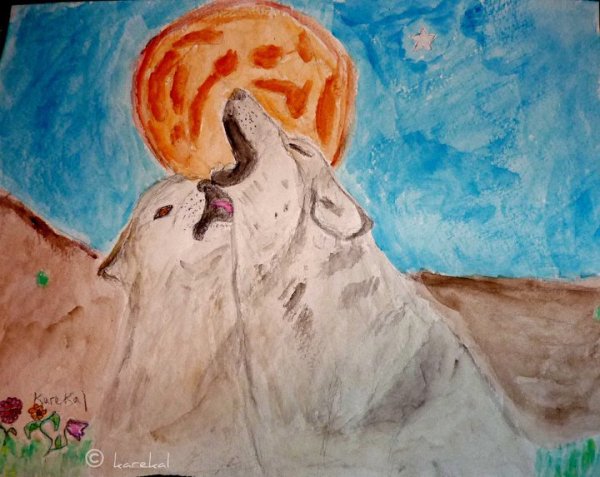
Wolves Need You Once Again
Karen Lyons Kalmenson
Please click HERE to take action
From the very start, the Obama administration’s proposal to remove federal protections for wolves across most of the lower 48 has been based on politics, not science. The nation’s top scientists have said so and the American people have said so — and now we have to say so again.
In just six states where wolves have been federally delisted, two years of aggressive state hunting and trapping seasons have killed more than 2,600 wolves, or half the total population in the lower 48 known to exist in 2013. Can you imagine what would happen if the wolves’ safety net were removed in all states?
Let’s demand that wolves get the protections a recovering species needs. Scientists have identified hundreds of thousands of square miles of suitable wolf habitat that still exists in places where wolves once lived and could live again with the help of federal protections — including the Pacific Northwest, California, the southern Rockies and the Northeast.
Take action now to sound the drum. Tell the Fish and Wildlife Service to rescind its plan to strip protections from wolves, and instead help wolves recover across more of their former home.
Order a FREE vegan kit: http://www.peta.org/living/vegetarian-living/free-vegetarian-starter-kit.aspx
Take PETA’s Cruelty-Free Shopping Guide along with you next time you head to the store! The handy guide will help you find humane products at a glance. Order a FREE copy HERE
Want to do more than go vegan? Help others to do so! Click on the below for nominal, or no, fees to vegan literature that you can use to convince others that veganism is the only compassionate route to being an animal friend.
PETA: http://www.petacatalog.com/catalog/Literature-39-1.html
Action for Animals has a very low price : http://store.afa-online.org/home.php?cat=284
Have questions? Click HERE
Read more…
Act Now to Stop Cruel Cosmetics Tests on Animals in the U.S.
PETA
Please click HERE to take action (US only)
In 2013, we celebrated a historic milestone in the fight to end animal testing when the final provisions of the European Union’s marketing ban on cosmetics tested on animals went into effect. We cheered as Israel enacted a similar ban and were thrilled when PETA India’s work to persuade India to end tests on animals for cosmetics was successful.
But as we’ve celebrated this wonderful international progress in the fight to eliminate cruel product tests on animals, we’ve also been keeping a watchful eye on proposed changes to cosmetics regulations in the U.S. Instead of keeping pace with the international community, the U.S. is at risk of backsliding into requiring archaic product testing methods in which animals are poisoned and killed for cosmetics. Although the U.S. does not require tests on animals for cosmetics, some environmental and industry groups and decision-makers in the U.S. have been working to change that by pushing for regulations that would result in an increase in cruel tests on animals.
We need your help to urge the cosmetics industry, federal regulators, and Congress to put a stop to this. Americans should have the same level of cutting–edge science used in the EU, Israel, and India to evaluate the safety of our cosmetics products, and we also deserve to have our laws reflect our ethical stance that animals should never be forced to suffer and die in cosmetics tests.
Please take a moment to let decision-makers know that no cosmetics product or ingredient justifies inflicting suffering on animals and that America must never allow cruel product tests on animals.
Order a FREE vegan kit: http://www.peta.org/living/vegetarian-living/free-vegetarian-starter-kit.aspx
Take PETA’s Cruelty-Free Shopping Guide along with you next time you head to the store! The handy guide will help you find humane products at a glance. Order a FREE copy HERE
Want to do more than go vegan? Help others to do so! Click on the below for nominal, or no, fees to vegan literature that you can use to convince others that veganism is the only compassionate route to being an animal friend.
PETA: http://www.petacatalog.com/catalog/Literature-39-1.html
Action for Animals has a very low price : http://store.afa-online.org/home.php?cat=284
Have questions? Click HERE
Read more…
EXPOSED – USDA’s Secret War on Wildlife
An agency within the USDA called Wildlife Services—a misnamed entity if there ever was one—has been having their way for almost a century, killing over 100,000 native predators and millions of birds each year, as well as maiming, poisoning, and brutalizing countless pets. They have also seriously harmed more than a few humans. And they apparently think they are going to continue getting away with it.
But in our new documentary, EXPOSED: USDA’s Secret War on Wildlife, whistle-blowers go on the record showing Wildlife Services for what it really is—an unaccountable, out-of-control, wildlife killing machine that acts at the bidding of corporate agriculture and the hunting lobby, all with taxpayer dollars.
Our call for reforming this rogue agency is getting serious attention. A teaser of EXPOSED was just featured on CNN Headline News and is slated for an upcoming special segment. We’re also working to get a CBS “60 Minutes” exposé.
In January 2014 we’ll kick off a nationwide film screening tour. Whistleblower Rex Shaddox will attend some of our screenings, including one planned for members of Congress at the Capital building in D.C. We hope to have other speakers tour with us if we can raise enough funds.
- Meet the whistle-blowers
- Read rave reviews of EXPOSED from noted experts
- Donate in support of our work to screen EXPOSED across the nation
- Contact us to organize or host a screening in your area
Your Tax Dollars at Work
The following pictures show animals injured or killed as the result of Wildlife Services’ methods. WARNING: These pictures are very graphic and may not be suitable for children.
- Victims of M-44 sodium cyanide devices
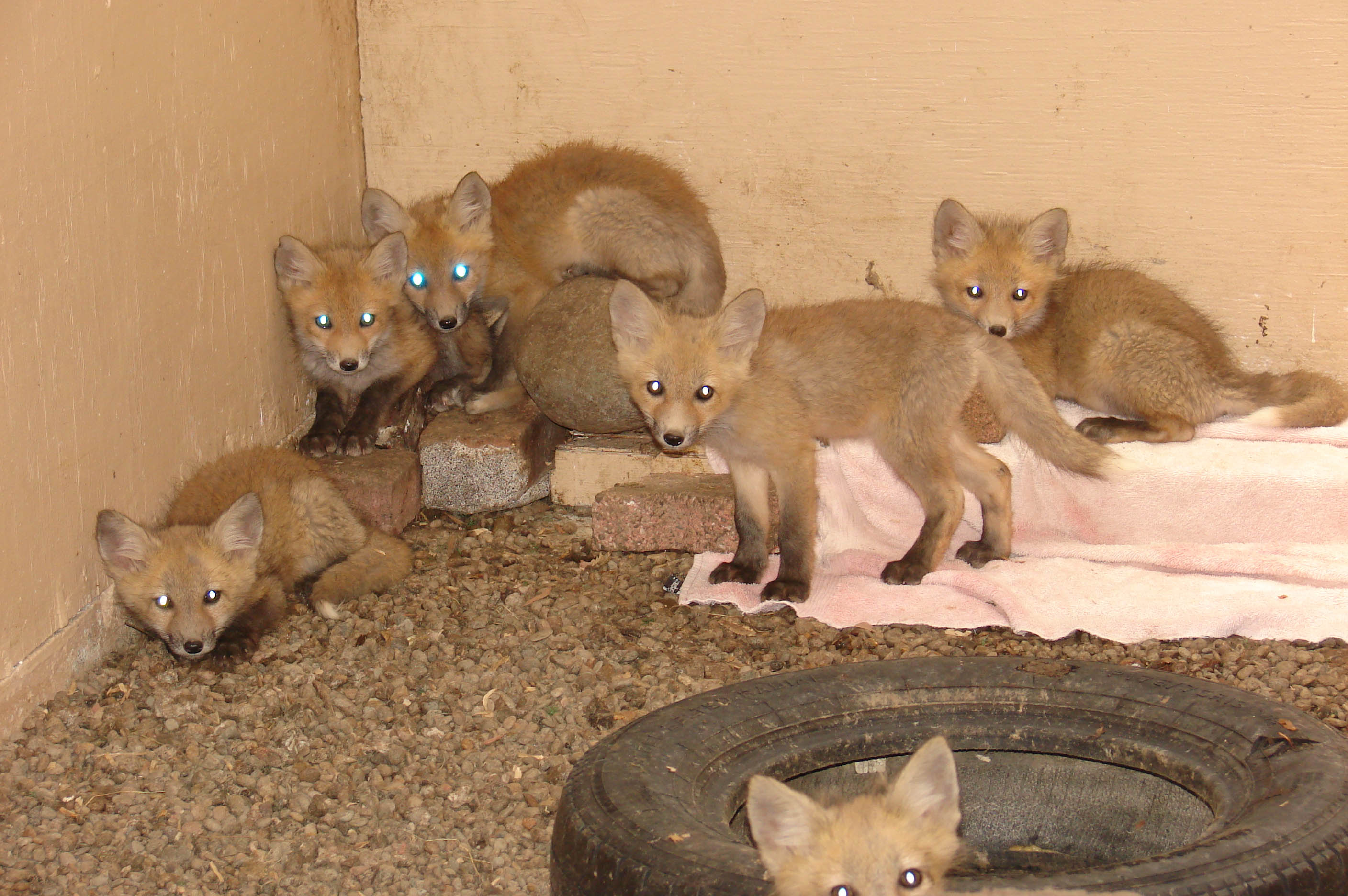
- Nine fox kits orphaned by USDA’s Wildlife Services – Photo | Story
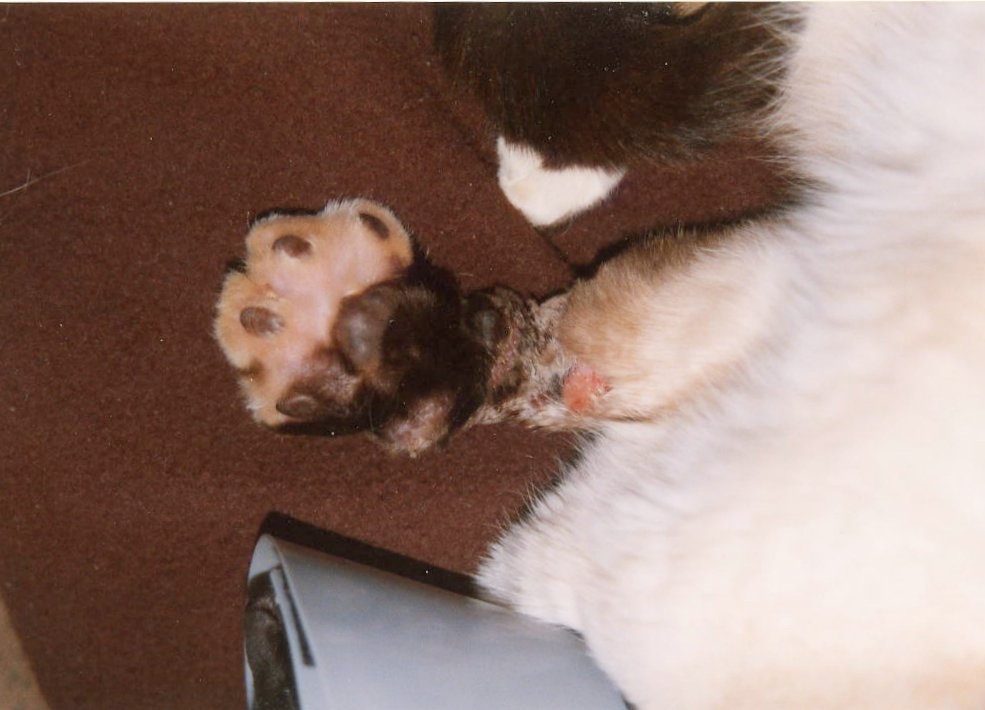
- Domestic cat injured in leg hold trap set by Wildlife Services. Leg was later amputated.
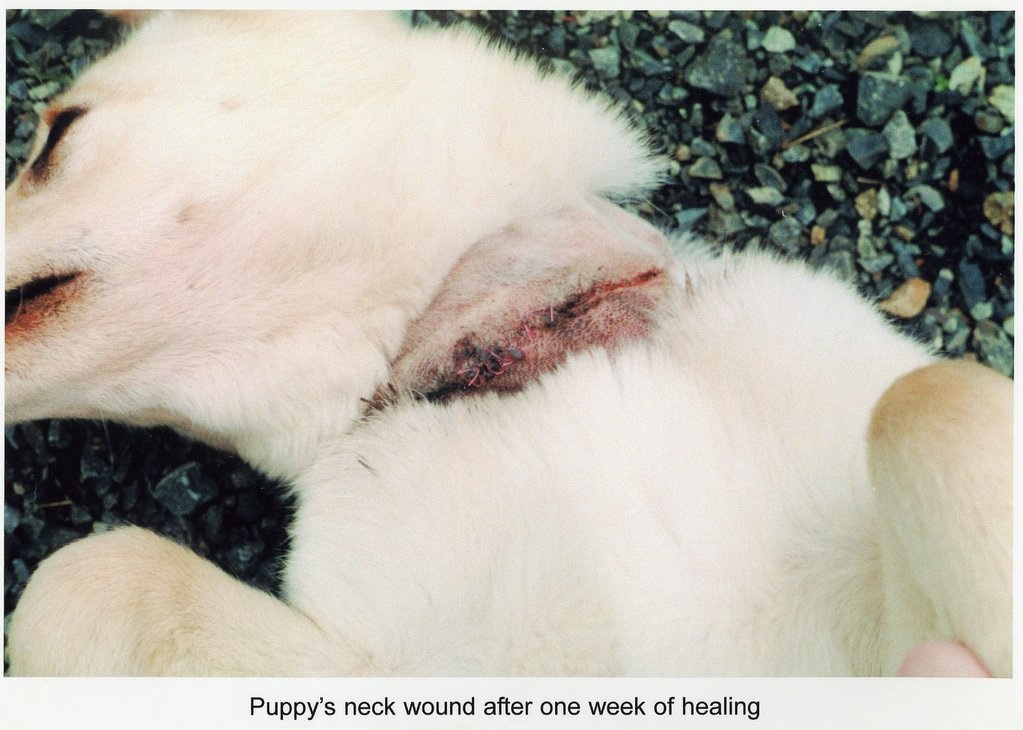
- Young puppy suffers after being caught in Wildlife Services’ necksnare. The puppy was discovered by area residents and the photo was taken after one week of healing.
- Coyote caught in Wildlife Services necksnare
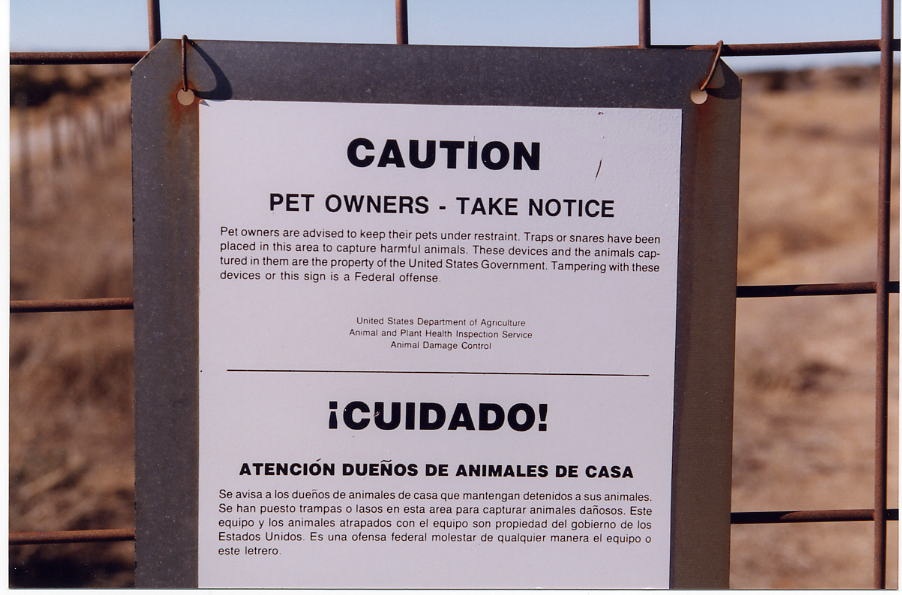
- Warning signs required to be posted by Wildlife Services. Often the signs are not posted or are missing.
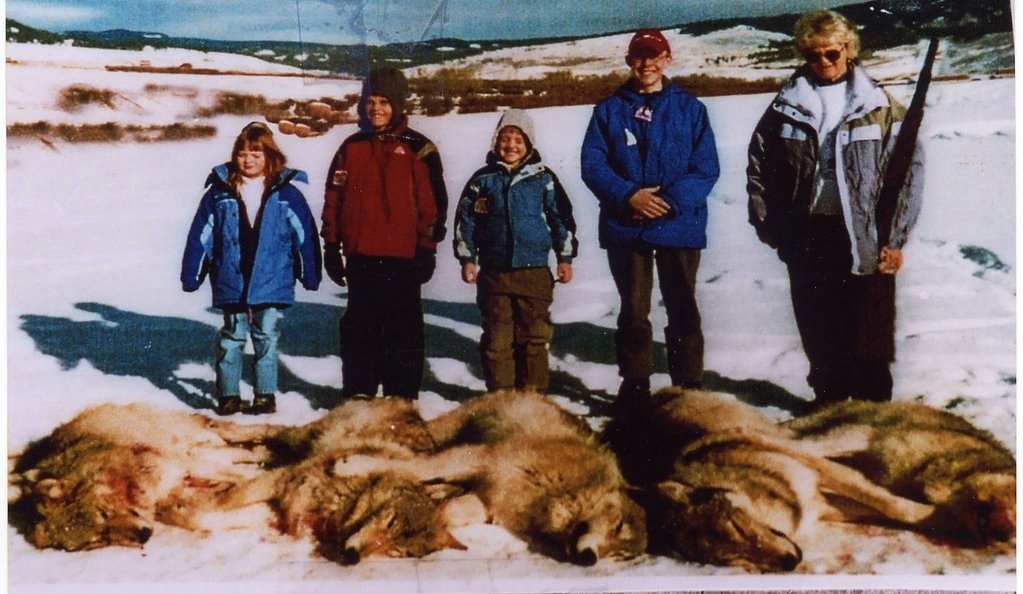
- School children in Montana pose with wolves that Wildlife Services killed with aerial gunning in 2004. Seven wolves were killed in this incident.
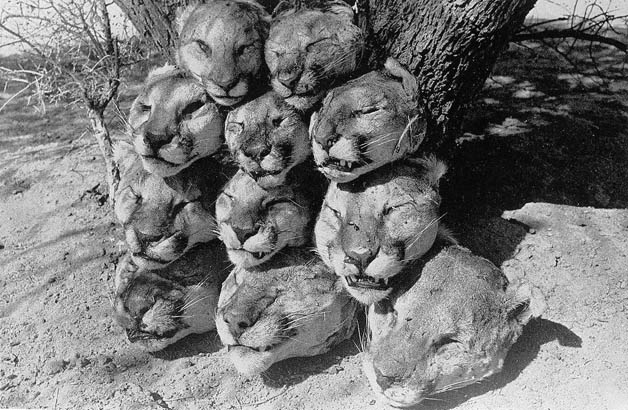
- Cougars killed by Wildlife Services. This infamous photo of the severed heads of 11 mountain lions was taken by an outraged employee of the Arizona Game and Fish Department. These animals were among 24 lions killed by the federal agency Animal Damage Control (now called Wildlife Services) in the Galiuro mountains of Arizona, a wilderness area North of Willcox. All were killed on federal lands on the Coronado National Forest over a six-month period from December 1988-May 1989. While it is uncertain whether any of these cougars ever preyed on livestock, the ostensible purpose of the killings was to protect cattle that were grazing on public lands. This type of indiscriminate lethal predator control continues in almost all of the states where mountain lions occur. California is an exception in that only specific mountain lions documented to have killed livestock or threatened people are subject to lethal control by wildlife agencies. Also, in California, no sport hunting of mountain lions is allowed.
Order a FREE vegan kit: http://www.peta.org/living/vegetarian-living/free-vegetarian-starter-kit.aspx
Take PETA’s Cruelty-Free Shopping Guide along with you next time you head to the store! The handy guide will help you find humane products at a glance. Order a FREE copy HERE
Want to do more than go vegan? Help others to do so! Click on the below for nominal, or no, fees to vegan literature that you can use to convince others that veganism is the only compassionate route to being an animal friend.
PETA: http://www.petacatalog.com/catalog/Literature-39-1.html
Action for Animals has a very low price : http://store.afa-online.org/home.php?cat=284
Have questions? Click HERE
Read more…













 Our Compass