HighestWelfare.Humane.Assured.GoodPractices.Vegetarian. Regenerative.Flexitarian.Lies...
What is the difference between No Welfare, High Welfare, and Highest Welfare when they all require animals to die? Only human comfort, NONE protect the actual animals. The most humane, ethical, and honest Webster-defined "welfare" is NOT exploiting animals - not using, not wearing, not eating, not killing - animals. The only meaningful position is vegan, everything else is just how humans euphemize animals' required suffering and violent deaths: no human exploits animals because they honestly believe that NOT exploiting animals is UNethical or INhumane.
Pool Repairman Saves Squirrel With CPR

Wikimedia Commons
Source The Daily Caller
Arizona pool repairman Rick Gruber saved a squirrel from drowning and gave him CPR, KFOR News reports.
“I just gently pushed on his rib cage then squeezed his sides, thinking at some point I’m gonna find his lungs,” Gruber said.
Gruber squeezed its sides with it resting on a plastic pipe until the squirrel started breathing and moved around after a minute or two. He moved it to a kneepad to rest and taped (him) resting.
“I know you probably feel like crap. You were just dead,” Gruber said after (he) opened (his) eyes.
The round tailed ground squirrel eventually coughed up some water and scampered off after (he) recovered.
Order a FREE vegan kit: http://www.peta.org/living/vegetarian-living/free-vegetarian-starter-kit.aspx
Take PETA’s Cruelty-Free Shopping Guide along with you next time you head to the store! The handy guide will help you find humane products at a glance. Order a FREE copy HERE
Want to do more than go vegan? Help others to do so! Click on the below for nominal, or no, fees to vegan literature that you can use to convince others that veganism is the only compassionate route to being an animal friend.
PETA: http://www.petacatalog.com/catalog/Literature-39-1.html
Action for Animals has a very low price : http://store.afa-online.org/home.php?cat=284
Have questions? Click HERE
Read more…

Wikimedia Commons
Source Care2
By Jessica Ramos
Primarily feasting on meats, eggs and vegetables, many people on “cavemen diets,” including the Paleo Diet, claim that they are eating like the ancients. While the image of a caveman hunter eating the flesh off of an animal’s bone is embedded in many of our minds, it isn’t quite accurate. The truth is that our ancestors were mostly vegetarian, feasting on fruits, veggies and grains.
New research from Egypt confirms the latter, showing that ancient societies that were mostly vegetarian existed and thrived — although their view of what it meant to “go veg” must’ve been completely different from our own modern one.
Eat More Like an Ancient Egyptian
As reported in Inside Science, the carbon atoms of ancient Egyptian mummies reveal that ancient Egyptians loved their fruits, veggies and (really loved) grains.
French scientists surveyed 45 ancient Egyptian mummies. Instead of focusing on the common hair-collagen-protein trifecta, these scientists examined the mummies’ teeth and bones. The scientists also purposefully studied mummies from different points in history. That way, they could determine the diets from an extended span of time versus an isolated period.
Publishing their findings in the Journal of Archaeological Science, the French scientists determined that the ancient Egyptians were mainly vegetarians. Like other ancient societies, their diets were largely made up of wheat and barley.
And then their research got really interesting.
Still Veg Despite All the Fish in the Nile
The ancient Egyptians walked their vegetarian talk. The research showed that the ancients actually kept going veg up. While the researchers hypothesized that there would be changes to the diet over time, they were wrong. They even kept up a vegetarian diet when the region “became increasingly arid between 3500 B.C. and 600 A.D.” They were able to maintain their vegetarian thanks to their advanced irrigation systems.
We know that the ancient Egyptians revered and used the Nile, and that’s where things get fishy. Apart from common-sense, the ancients told us that they knew how to fish from their fishing hieroglyphs, texts, paintings, sculptures and reliefs. Yet, the assumption that they were hooked on fish might be inaccurate; overall, the mummy isotopes don’t reveal a significant amount of fish consumption. On top of that, we also know that some fish species weren’t eaten due to religious motives.
The Ancient Egyptians Weren‘t the Only Vegetarians
Believe it or not, while vegetarianism feels so politicized today, it wasn’t always this way. Each society had their own reasons for going and staying (mostly) vegetarian. However, even some of the ancients had to tackle the ethics of eating animals. Vegetarianism was also woven into many of the world’s religions; Christianity, Judaism and Islam are included — Jesus himself could’ve been mostly vegetarian.
Let’s take a quick go-around the ancient world where vegetarian diets were highly adopted and practiced:
Paleolithic hunters (ironically, enough) were “almost exclusively” vegetarian; although, they would rely on meat more in the neolithic period.
No fat shaming for ancient gladiators; they needed to be fat to survive. Those big and intimidating gladiators were also mostly vegetarian who loved their carbs.
In China, a mostly vegetarian diet was the norm in northern and southern dynasties. The Qing Dynasty actually had three types of vegetarians: “assorted vegetarian diet, meat-modelled vegetarian diet and purely vegetarian diet.”
The ancient civilizations of the Americas also relied on a mostly vegetarian diet. While animal flesh complemented their diets, it wasn’t the center of their diets. The Maya had maize (corn was called “ishin,” and it literally means “center”), the (pre-) Inca civilizations had the potato. A variety of vegetables and delicious fruits rounded out the other staples.
The ancients gave us invaluable lessons in how to coexist with our environment; they weren’t being trendy by going green or veg or being sustainable; they just were.
One of the most valuable ancient gems of wisdom is: Let food be thy medicine and medicine be thy food. It seems like many ancient societies adopted a mostly vegetarian diet, so there must be something to it. While we can debate whether going vegetarian can heal the body forever, even a mostly vegetarian diet can definitely help heal our planet and the animals that we share it with today.
Order a FREE vegan kit: http://www.peta.org/living/vegetarian-living/free-vegetarian-starter-kit.aspx
Take PETA’s Cruelty-Free Shopping Guide along with you next time you head to the store! The handy guide will help you find humane products at a glance. Order a FREE copy HERE
Want to do more than go vegan? Help others to do so! Click on the below for nominal, or no, fees to vegan literature that you can use to convince others that veganism is the only compassionate route to being an animal friend.
PETA: http://www.petacatalog.com/catalog/Literature-39-1.html
Action for Animals has a very low price : http://store.afa-online.org/home.php?cat=284
Have questions? Click HERE
Read more…
Sunder en Route to His New Home
Source Animal Rahat
Written By Animal Rahat
We are overjoyed to report that the much abused young elephant Sunder was placed on a truck by a team of experts who had traveled to Kolhapur to work with the Maharashtra Forest Department and is now being driven carefully and slowly to his new home as per the order of the Supreme Court of India. The transition was not easy.This progress was made after a great deal of struggle, including dealing with sabotage by screaming men, near rioting, tires which were punctured with nails by those who wanted to keep Sunder in Kolhapur to endure a life of abuse and a mahout (elephant handler) who shouted the wrong commands in order to agitate Sunder. Even now, a motorcycle gang is following the truck, despite police protection. The police and Maharashtra Forest Department officials as well as the experts who traveled to Kolhapur to assist with Sunder’s move are travelling with Sunder.
We are hoping for the best on this journey, which will take several days. Please hope along with us, and thanks for all your calls, letters, e-mails and good wishes.
Here are a couple pictures of Sunder on his way.
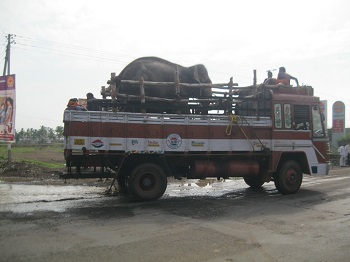
Animal Rahat

Animal Rahat
Cross posted from petaindia.com
Order a FREE vegan kit: http://www.peta.org/living/vegetarian-living/free-vegetarian-starter-kit.aspx
Take PETA’s Cruelty-Free Shopping Guide along with you next time you head to the store! The handy guide will help you find humane products at a glance. Order a FREE copy HERE
Want to do more than go vegan? Help others to do so! Click on the below for nominal, or no, fees to vegan literature that you can use to convince others that veganism is the only compassionate route to being an animal friend.
PETA: http://www.petacatalog.com/catalog/Literature-39-1.html
Action for Animals has a very low price : http://store.afa-online.org/home.php?cat=284
Have questions? Click HERE
Read more…
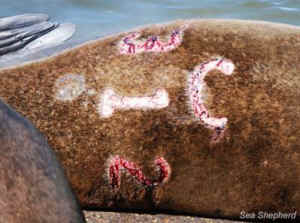
This blood stained brand still looks painful even 4 days later
Photo: Sea Shepherd
Source all-creatures.org
By Kathleen Stachowski, Other Nations
Now I know what you’re thinking – it’s not healthy to live in a state of perpetual, seething anger. And you’re right. That’s why I routinely alternate my seething anger with abject despair. Let’s take a gander at just a few episodes in that wildly-profitable, long-running series, “It’s a Speciesist Life.” But beware: you might end up seeing what others of us can’t un-see, and that changes everything.
If you aren’t angry, it’s possible that you aren’t concerned about speciesism. If you are concerned about speciesism but you’re not angry, you probably aren’t paying attention. Because lordy, speciesism is everywhere and so thoroughly normalized that it’s invisible in plain sight. Once you’ve seen it, though, you can’t un-see it, and then you’re screwed. Because how do you fight an injustice that’s been marketed to us –insidiously, with happy, smiling animals – since birth?
Hot-iron branding of sea lions: This ongoing scheme is so outrageous it almost defies belief. In this episode, we learn that sea lions are being captured, tormented, and frequently killed at the Columbia River’s Bonneville Dam for –sit down for this one – eating fish.
Yes, the hapless pescatarians consume less than 4% of salmon at the dam “while commercial, sport, and tribal fisheries are allowed to take up to 17% of the same endangered salmon and the dam itself claims approximately 17% of adult salmon,” according to Sea Shepherd’s Dam Guardians. In video documentation from Sea Lion Defense Brigade, one unfortunate marine mammal is branded four times; the skin actually flames when the fourth iron is pressed into tender flesh. See also Dam Guardians myths vs. facts.
“Rockchuck” Derby: How eager are they to kill marmots? So eager that their website features a countdown timer. The five-day derby starts May 14th and offers two registration categories: adults and kids 14 and under. Rules? You bet–chucks may not be weighted, wet, or frozen (heaviest chuck wins!), and each hunter is responsible for disposing of his/her own chuck. (Post-weigh-in status: garbage.) Last year’s derby registered 300 hunters (it was a memorial fundraiser that year) who descended on Bliss, Idaho to blast away at yellow-bellied marmots–social animals who live in colonies, communicate with a variety of vocalizations and whistles, and serve as a food source for other animals and birds of prey. It’s doubtful, though, that any of this would matter to the derby killers in Bliss, where ignorance is, um…you know.
Avi-FoamGuard: Now let’s bypass anger and move directly to despair…for our own species as well as others. Avi-FoamGuard, approved for use in 2006, is a “foam depopulation system” that’s “100% effective in depopulating infected poultry houses.” Because factory farms are crowded, filthy places filled with stressed, damaged, and suffering “production units,” they’re also breeding grounds for contagious diseases like avian influenza. But humans–using our large brains and amazing creative capacity to do speciesism’s nefarious work–have developed a way to mass exterminate chickens by covering (hence suffocating) them with a firefighting foam that blocks their tracheas…eventually. “Crews can depopulate a large commercial broiler house in less than an hour using our proven technology”; it’s so easy to use that it represents “an enormous savings in cost and time” (product webpage). If that spin makes you dizzy to the point of nausea, get a dose of reality (also sickening) at United Poultry Concern’s article (from winter 2006/2007), “Government approves firefighting foam to exterminate birds.”
Then there are “peepers,” or poultry blinders. It’s not enough to debeak chickens and turkeys and cut off turkeys’ toes without pain relief; impairing their vision can also be part of that package of misery! To be clear: debeaking and toe chopping occur in factory farms, where birds are so cruelly confined, crowded, and stressed that they peck and stab each other raw, sometimes to death. Blinders, which wouldn’t be cost-effective in industrial settings, seem to be the domain of backyard chicken enthusiasts and “game bird” breeders who want to prevent feather and egg pecking (see photos). The blinders sit on the beak to block forward vision, thus preventing the wearer from zeroing in on the target to be pecked.
The super-cruel model uses a pin that, inserted in one nostril, pierces the septum and exits the other nostril to secure the device in place. Pinless models, probably marketed as “humane,” feature two short prongs that are inserted in each nostril. Many variables are responsible for pecking–diet, temperature, artificial lighting (to induce egg-laying), crowding, co-confinement of differing breeds–but one thing’s certain: sentient beings expected to provide eggs, meat, and sport are ultimately commodities whose stress behaviors have to be managed. If they weren’t brought into existence for exploitation by humans–well, problem solved.
Scapegoating ravens in Idaho: Idaho is a lousy place to be a raven right now, especially if you’re one of the targeted 4000 who will consume poisoned chicken egg bait. Ravens must die because sage-grouse (an imperiled ground-dwelling bird dependent on sagebrush ecosystems) must not. Sage-grouse habitat has largely been degraded by human impacts, making them candidates for Endangered Species Act listing; according to Defenders of Wildlife, “remaining sagebrush habitat is fragmented and degraded by oil and gas drilling, livestock grazing, mining, unnatural fire, invasive weeds, off-road vehicles, roads, fences, pipelines and utility corridors.” Still, a biologist for ID Department of Fish and Game asserts that “we can’t directly say that (sage grouse population decline) is from ravens, because we don’t have that information.” So you see, it makes perfect, speciesist sense to kill ravens–whose diet includes sage-grouse eggs–since ESA listing for sage-grouse would inconvenience humans and impede our enterprise.
On a daily basis similar episodes from “It’s a Speciesist Life” bombard us in newspapers, in emails, and on computer screens: a proposed sharpshooter deer cull at a “nature preserve” in Bloomington, Indiana (Facebook); beavers killed in underwater body-gripping traps at Lee Metcalf National “Wildlife Refuge” here in Montana–lethally removed for “water level management”; dead trophy animals splattered across Facebook news feeds and newspaper pages–this one picked up by our local paper the other morning; five million piglets killed by porcine epidemic diarrhea virus because BACON! and so much more.
Who sees the speciesism in charity hog roasts that help humans with medical expenses? In fly fishing retreats for wounded veterans and breast cancer survivors? Who dares criticize these endeavors to help our own? (Well…I do.)
Once we’ve seen and can’t un-see speciesism, how do we handle our anger when its source is omnipresent? Perhaps the answer lies in the words of the Peace Pilgrim, who advises us to channel the “tremendous energy that comes with anger”: ”Do not suppress it: that would hurt you inside. Do not express it: this would not only hurt you inside, it would cause ripples in your surroundings. What you do is transform it. You somehow use that tremendous energy constructively on a task that needs to be done…”
You somehow use it. Ripples (or deluges) of anger aren’t constructive and won’t vanquish speciesism. Individually and collectively, it’s up to us to transform anger and use that positive energy to change hearts, minds, and laws–to cause ripples…waves…tsunamis of compassion and justice for our sentient nonhuman sisters and brothers.
Order a FREE vegan kit: http://www.peta.org/living/vegetarian-living/free-vegetarian-starter-kit.aspx
Take PETA’s Cruelty-Free Shopping Guide along with you next time you head to the store! The handy guide will help you find humane products at a glance. Order a FREE copy HERE
Want to do more than go vegan? Help others to do so! Click on the below for nominal, or no, fees to vegan literature that you can use to convince others that veganism is the only compassionate route to being an animal friend.
PETA: http://www.petacatalog.com/catalog/Literature-39-1.html
Action for Animals has a very low price : http://store.afa-online.org/home.php?cat=284
Have questions? Click HERE
Source Care2
By Alicia Graef
This week Animal Place shared the story of one heartbroken little goat named Mr. G who had seemingly given up on life when his rescuers realized the problem was that he was overcome with grief over the loss of his best friend, a burro named Jellybean.
The two had lived together for years but were split up and taken in by two different sanctuaries after being confiscated from a neglectful situation. Mr. G was taken in by Animal Place’s Rescue Ranch in Grass Valley, Calif.
According to Animal Place, Mr. G was inconsolable, refusing to eat and spending his days lying in the corner of his stall with his head down. No treats were enough to entice him to eat or move. After health problems were ruled out, it became obvious to his rescuers that he was mourning the loss of his best friend. They decided a reunion was in order and a volunteer took a 14 hour roundtrip to get Jellybean. They describe the reunion:
When Jellybean entered Mr. G‘s stall, he could not believe his eyes. In fact, he did a double-take! It was only when he smelled Jellybean‘s unique scent that Mr. G realized the truth – his dearest friend had returned!
Mr. G erupted from his prone position, snorting and inhaling Jellybean‘s presence. He rushed after her into their outdoor pasture. The magical moment came when Mr. G began eating from Jellybean‘s bowl!
Source Free From Harm
By Free From Harm Staff Writers
In her new TED Talk, animal law attorney Lesli Bisgould delivers a terrific overview of the problems with our legal system in protecting animals from the institutions that exploit them with impunity. She begins her talk with what we all tend to agree on, that harming animals unnecessarily is wrong, particularly in cases of individual animal victims and individual human perpetrators. And then she eloquently shifts our attention to how our legal system excludes billions of animals from legal protection from the same acts when there is an economic interest that relies on animals as resources. In such cases, she shows how the mere presence of a human interest, no matter how trivial, is immediately perceived as a justification for “necessary” harm, even though the same acts perpetrated against our companions would be considered criminal. It’s a contradiction big enough to drive a mac truck through, and who can possibly deny it? –
See more at: http://freefromharm.org/animals-and-the-law/lesli-bisgoulds-ted-talk-animal-law-101/#sthash.iqfLrKMW.dpuf
Order a FREE vegan kit: http://www.peta.org/living/vegetarian-living/free-vegetarian-starter-kit.aspx
Take PETA’s Cruelty-Free Shopping Guide along with you next time you head to the store! The handy guide will help you find humane products at a glance. Order a FREE copy HERE
Want to do more than go vegan? Help others to do so! Click on the below for nominal, or no, fees to vegan literature that you can use to convince others that veganism is the only compassionate route to being an animal friend.
PETA: http://www.petacatalog.com/catalog/Literature-39-1.html
Action for Animals has a very low price : http://store.afa-online.org/home.php?cat=284
Have questions? Click HERE

Wikimedia Commons
OC: Either way, these cattle are being exploited and tortured in the most horrendous ways. The live ones have been taken and “cared for”, but to what end? So they can be sent to slaughter? “Agriculture” animals are specifically exempted from the (basically meaningless) Animal Welfare Act, so why is this bastard pointed out rather than ALL who abuse and exploit animals? It will be interesting to see how the judge votes, but either way, this guy deserves a hefty penalty including jail time. Animals are the victims of twisted, evil people in any capacity they are exploited.
BACKGROUND | SOURCE NBC NEWS
A cattle owner has been arrested after deputies say they found 80-90 head of malnourished cattle on his property near Alico Road and Three Oaks Parkway.
Brian Freeman, 44, of Fort Myers was charged with causing death, pain and suffering to animals as well as confinement of animals without sufficient food or water.
Investigators say an unknown number of calves are dead, and they don’t know if any adult animals died as of now.
Investigations revealed one of the watering holes had very little water in it and the other watering hole had thick mud.
Deputies even found one bull that was on the brink of death. They were able to give (him) fluid and hopefully saved (his) life.
With the heat, a lack of water, the dead calves and the thin and malnourished look of the cattle, deputies say they had enough evidence to make an arrest.
The sheriff’s office took the cattle to their impound facility on Ortiz Avenue for care.
Lee County Sheriff Mike Scott told us about the rescue mission.
“The owner of any animal needs to taker care of the animal themselves or make sure they hired out the appropriate people to take care of the animal,” said Sheriff Scott.
Our cameras were there as crews rushed in to help the animals. They dug a hole for water, and eventually decided to take them off property.
“We are putting the inmates to work now caring for these cows, feeding and assisting and getting them hopefully back up to full strength,” said Scott.
A dozen cattle are dead. They were euthanized or died on the property.
“To torture animals in a pasture is unacceptable,” said Scott.
Thirty cattle are recovering with the Lee County Sheriff’s Office. A private rancher is caring for the other 50.
Freeman bonded out of the Lee County Jail just after midnight.
WHOM TO CONTACT
Click HERE for name, phone, fax, and address of judge overseeing the case
Click HERE for free faxing from your computer. No fax machine, credit card, or registering required. Please be certain to confirm you message by clicking on the link sent to your email address or else your fax will not be sent
SAMPLE LETTER
Re: Case No. 14-CF-016381
Dear Judge Steinbeck,
I have learned of an extremely disturbing and malicious case of animal cruelty in which “Brian Freeman, 44, of Fort Myers was charged with causing death, pain and suffering to animals as well as confinement of animals without sufficient food or water.” – NBC News
When I try to imagine what possible motive animal abusers entertain for subjecting their animal victims to such malicious, heinous acts of brutality, I fail, but I am thankful for a lack of cognitive understanding and rationalization. To engage in such malevolent behaviour absolutely suggests sociopathic and sadistic tendencies and demonstrates an incontrovertible lack of morality regarding other living beings and a gross disrespect for the law. In fact, a person who shows such a remarkable lack of compassion towards animals has, disturbingly enough, the ability to show such indifference towards humans. This link between animal and human abuse has been established, and if we excuse or ignore these animals’ violent treatment and death, we would be serving an injustice to both animals and society.
Please respect the victims by penalizing the guilty and demonstrate your commitment to justice, responsibility, and integrity, attributes unquestionably necessary in a law enforcement setting: rejecting cruelty by maintaining an unyielding position towards it would be a model for all community members and would serve to characterize this type of behaviour as both impermissible and punishable.
Thank you for your attention to this urgent issue.
Order a FREE vegan kit: http://www.peta.org/living/vegetarian-living/free-vegetarian-starter-kit.aspx
Take PETA’s Cruelty-Free Shopping Guide along with you next time you head to the store! The handy guide will help you find humane products at a glance. Order a FREE copy HERE
Want to do more than go vegan? Help others to do so! Click on the below for nominal, or no, fees to vegan literature that you can use to convince others that veganism is the only compassionate route to being an animal friend.
PETA: http://www.petacatalog.com/catalog/Literature-39-1.html
Action for Animals has a very low price : http://store.afa-online.org/home.php?cat=284
Have questions? Click HERE
Read more…
Published on May 19, 2014
The terrifying truth of “humane” farming. Animal rights activists in 41 cities and 12 countries suddenly appear inside Chipotle and other restaurants to say: We will not forget. It’s not food! It’s violence!
http://directactioneverywhere.com/nex…
Footage taken from investigations by Animal Liberation Victoria and United Poultry Concerns.
Background music: “Another Radio Song” by the amazing Okkervil River. http://www.amazon.com/Another-Radio-S…
Source Vegan Publishers
By Wayne Hsiung
When I went vegan 16 years ago, I had never heard of soy ice cream. The University of Chicago dining hall would usually have only one vegetarian option — typically some form of steamed vegetable — and I would have to hope it also happened to be vegan. Outside of the dining hall, my meal of choice was uncooked tofu (which I bought in bulk from Chinatown), lima beans, and soy sauce. It was a miserable way to eat.
Fast forward to 2014, and things could not be more different. Whole Foods, with its wide array of vegan offerings, is spreading all over the world. Celebrities and politicians, ranging from Jay-Z to Bill Clinton, play up the vegan lifestyle. And even the third largest public restaurant company in the world, Chipotle, offers a celebrated vegan option. In many ways, the vision established by the first vegan, Donald Watson, more than half a century ago has become a reality: veganism has a place in the world.
Yet the most reputable polling firms outside of our vegan echo chamber, e.g. the esteemed Gallup Poll, show that animal-free eating has not significantly increased in the US; indeed, it has dropped from a self-reported 6% of the population in 1999 to 5% in 2012. And while there was a mild slowdown in meat consumption due to the financial crisis of 2008, the most recent numbers show that the massive growth in slaughter, even in a country as saturated by dead animal flesh as the United States, continues unabated.
Why?
It’s not because growth is impossible. The incredible growth in the Israeli vegan community shows that rapid change can occur. It’s also not because of lack of awareness. Google searches for the term vegan have increased dramatically since 2004. And, as with many other niche diets (e.g. Atkins or gluten-free), vegan is now part of our cultural lingo.
So what is holding us back? Direct Action Everywhere has been exploring that question carefully for the past year, both in theory (check the strategy tag on our blog) and in practice (with our grassroots It’s not Food, It’s Violence campaign). And what we have concluded may surprise you. Because many of the things that we have been taught about animal advocacy, it turns out, are dead wrong. And what is needed now is not more options or more accommodation but, rather, a strong, confident, and inspirational social movement that can resist social erosion and corporate influence to create real and permanent change. In short, we need to start playing offense.
The Options Imbroglio
As an organizer for the It’s not Food, It’s Violence campaign, one of the first questions I get is, Why Chipotle? Our campaign, which has now inspired actions in 37 cities and 13 countries (see our most recent video compilation here), focuses on Chipotle as a metaphor for the broader problem of animal exploitation and species bigotry. And while Chipotle is now one of the largest and fastest growing animal killers in the world, it has also gone out of its way to market itself as friendly to vegan consumers — most notably, by adding another vegan option, sofritas, to its famously simple menu. Many, therefore, ask us, what’s the problem? Shouldn’t you be praising, rather than protesting, a vegan-friendly chain?
There are many implicit assumptions in this question, however, that don’t stand up to scrutiny. The first is that extra options will have some benefit for animals. But the past decade of data should give us pause. Vegan options have exploded in the US, yet veganism has not grown significantly. (In contrast, veganism did explode in Israel… and without the profusion of options we have in the US).
The distinguished Columbia psychologist and business school professor Sheena Iyengar shows us why: more options often don’t lead to more sales. Consumers exposed to new items are often paralyzed by the anxiety of choosing. Brands that streamline the choice process — notably, Apple (which offers only a single option for most product lines) — have seen spectacular success, as consumers increasingly flock towards simple solutions. Indeed, in Iyengar’s most famous study, consumers were ten times more likely to try a new product in the “low options” scenario than the “high options” scenario. People, it turns out, often don’t like to choose, particularly when it comes to a new product of which they have little knowledge. And the market, with its array of independent firms acting without coordination, often provides more choices than what the customers are ready or able to bear.
But, of course, some may argue that there are so few vegan options that it’s impossible for additional options to have negative consequences at this point in the market’s evolution. So let’s assume that options have significant benefits (despite the lack of evidence). Even accepting some benefit from ta third vegan option at Chipotle, would that benefit outweigh the costs of Chipotle’s massive pro-killing marketing machine? This is a corporation, after all, that financed the distribution of a documentary called “American Meat,” that attracts hundreds of thousands to its Cultivate festival to hear about how they can make the world better by eating animals, and that recently started putting out billboards with the message: MEAT MEAT MEAT. Should the simple act of adding a third vegan option to their menu somehow absolve them from responsibility for this heinous glorification of violence?
One of the puzzling things about supporters of Chipotle is that they appear to want to have their cake and eat it too. They want to believe that the vegan option has massive economic significance while ignoring the impact of the new “humane meat” options. But, as I pointed out in a recent discussion with HSUS’ s Paul Shaprio, this logic fails:
There seems to be a basic contradiction in your views, however, and one that favors Chipotle in all ways. For one, you say that the “humane” meat options are mostly irrelevant because they simply replace existing sales of meat at other stores. You say this despite the 100% growth in sales that the company has linked directly to the addition of a humane option, the 1000% growth the company has experienced over the past 5 years, the 100% profit premium that the company receives for its sales of dead animals, and, finally, the company’s express statement that it is supply constrained and must invest in new production in order to fuel its massive engine of violence.
On the other hand, when it comes to the vegan option, you suddenly contradict your prior view in the same paragraph and assert that the new vegan option (in contrast to new options for humane meat) has massive economic effects – indeed, that the new option is key to making veganism mainstream. You say this despite little evidence that the vegan option has made any splash at all (0.012 of the company’s total sales, and declining over the past few months), and the fact that Chipotle targets the exact demographic (wealthy and middle class folks in urban centers) who are most likely to live in places where there are already plenty of vegan options.
Paul, unfortunately, did not respond.
And that leads us to the final reason the “vegan option” dialogue is so misguided. There is no reason to believe that a massive multinational corporation will respond to protests by running home with its toys. Indeed, since sofritas is, even by the company’s acknowledgment, approximately 0.012 of total national sales, its primary value is to create a so-called “halo effect” around the company’s other products. Even if no one actually buys the product, customers will assume that a company that is serving such an “ethical” product must be doing good things across the board. The ethical flavor of the vegan option bleeds into the company’s brand. And, indeed, this is exactly what happened with Chipotle’s Gardein option in 2010, which they announced to a stream of positive press, even from animal rights groups, only to take it away once they achieved their marketing halo.
If Chipotle is not genuinely interested in spreading veganism and animal rights — which seems rather likely, since it is one of the most profitable animal killers in the world — and is simply using the vegan option to bolster its brand, then it is threats to its brand that will most persuade it, this time, to keep the vegan option on the table. And that is exactly what happened when, unlike with the Gardein fiasco of 2010, Chipotle decided to keep the sofritas option in 2014 in the face of our growing nationwide protests.
Chipotle, of course, is only one corporation, albeit a massive one, in a broader society. But the lessons we have learned from that campaign can be extended to our movement more generally. And one of the biggest lessons is this: additional options, on their own, are no solution.
Accommodating… Violence?
The debate over vegan options, however, touches on a more fundamental issue for our movement. For most of the past half century, the animal rights movement’s focus has been on creating a safe space for vegans. We, as vegans, want to be acknowledged, and accepted, or even just left alone. We want the bullying and ridicule of vegans to stop. “We’re people too!” we say. “We just love animals!”
And for sure, there is value in creating a safe space for those who choose not to support violent industries. After all, if no one feels safe, then how can they possibly maintain the lifestyle and identity? For more than 50 years, therefore, our mission has been to make sure vegans felt comfortable, to make them feel safe and accepted, to make them feel ok.
But while this is a wonderful and even vital strategy for retention, it is a terrible strategy for growth. If we hope to expand beyond the narrow segment of society that we currently have, we have to shift our objective away from making a safe space for vegans, and towards achieving liberation for animals. In short, we have to start playing offense.
I have blogged previously about why this is an effective strategy at the level of individual persuasion. The most effective litigators and campaigners are always confident and assertive — not defensive — in their views. But what is true of individual persuasion is even more important for a movement. And what the It’s not Food, It’s Violence campaign shows us is that our movement’s activists are ready to take a stronger stand. They are sick of apologizing, and begging, and deferring to oppressive behaviors and beliefs, and ready to say what we truly believe: that violence against animals is always wrong.
This is not just an emotional intuition, moreover. The historical data in support of this proposition is powerful. According to historian Paul Goodman, the antislavery movement grew by 45950% (not a typo) in half a decade after William Lloyd Garrison shifted the rhetoric of the movement away from reaction to assertion. The first four activists to hold a sit-in for Civil Rights, in 1960, triggered a massive movement of 70,000 more demonstrators by their defiance of social norms. And the bold and confident message of the Stonewall rioters in 1969 inspired an incredible 2500 gay rights groups, nationally, by 1971 (from the 50-60 that existed in 1969).
These are the signs of a truly growing social movement. These are the signs that we can expect to see of a truly successful animal rights movement. And these are the signs that we are beginning to see in countries such as Israel. And, in all of these cases, shifting the dialogue away from defense to offense triggered this incredible growth.
The Next Stage?
So what are the takeaway points for us, as activists? The first is that we have to move beyond simply creating an environment that accepts and tolerates vegans. We, after all, are not the ones who are being oppressed, and when a multinational corporation throws us a vegan bone, we should be skeptical of its true intentions.
The second is that a confident and assertive approach — playing offense rather than defense — is key to our movement’s growth. At both the level of individual persuasion, and movement effectiveness, it is absolutely vital that we maintain a strong and outwardly-facing posture, and not be content with defending ourselves from attack. Don’t be afraid to say what you believe, even if others feel annoyed, angered, or judged.
The third lesson is that our model for movement building has to change. If we are to grow beyond a few percentage points of the population, and start making true progress towards animal liberation, we have to see that vegans, and vegan consumer options, are not enough. What we need, if our movement is to grow, is more and stronger activists. This is, to a certain extent a battle for veganism’s soul. Is it a consumer fad that will forever be relegated to the margins of society? Or will it transform into a serious social movement for the most oppressed and denigrated class in history?
Only time will tell. But the path forward for veganism is a path that will be set by our own resolve. As Donald Watson himself said in the inaugural edition of the Vegan News, in response to criticisms that veganism was too much, and too soon, “Can time ever be ripe for any reform unless it is ripened by human determination?”
Some may question whether the world is ready for a shift towards a stronger version of veganism: animal liberation. But the world is never ready for a stronger message… until we make it ready. So let’s go out and do the hard work to make our world ready.
Wayne Hsiung is an attorney, founding organizer of Direct Action Everywhere, and coordinator for Animal Liberationists of Color. He was lead organizer of the Earthlings March that mobilized thousands of activists in 41 cities in 17 countries, has served as a law professor at Northwestern (where he co-authored research with renowned Harvard scholar Cass Sunstein), and has organized social justice campaigns since 1999. Wayne studied behavioral economics at MIT and the University of Chicago and blogs at The Liberationist about the science of social change. Despite two graduate degrees, he regularly finds himself outwitted by his four furry companions.
slowly the winds of change
will blow.
and hopefully soon,
everybody will know.
that animals are our
equals not here
for exploitation.
and when that day
comes there will
great shouts
of jubilation
♥♥♥
Karen Lyons Kalmenson
Wikimedia Commons
Source CanberraTimes.com.au
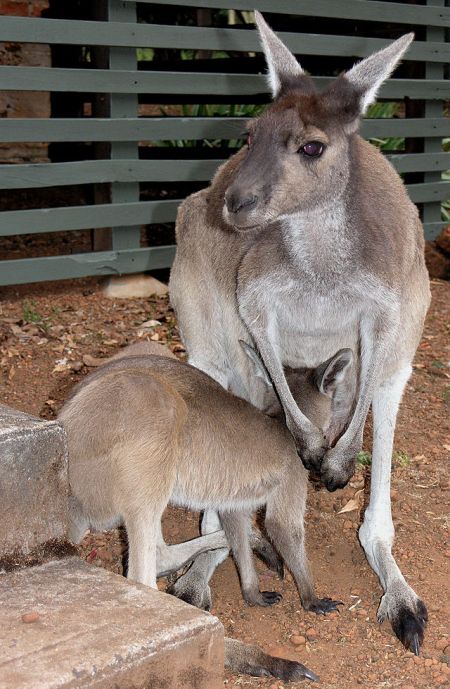
A Canberra animal rights group has announced they will challenge the ACT government’s planned kangaroo cull in the ACT Civil and Administrative Tribunal for the second year in a row.
Animal Liberation ACT spokesperson Carolyn Drew said on Tuesday night she was furious about the government’s plan to continue kangaroo culls across Canberra.
“Here we go again, with the government press release claiming that the slaughter will protect ecosystems and threatened species,” she said.
The organisation managed to delay the cull in 2013, after they applied to ACAT to stop the action.
The tribunal eventually allowed the cull to go ahead, at reduced numbers.
Animal Liberation ACT was among the protestors who said on Tuesday it was prepared to disrupt kangaroo shooters beginning the annual cull this week, as the trial of fertility control announced by Territories Minister Shane Rattenbury was put in doubt.
Mr Rattenbury wants to work with Alphadog animal rescue charity director Marcus Fillinger on the trial, which would involve tranquillising up to 500 kangaroos in a landlocked reserve off the Barton Highway, and administering a fertility control drug. But Mr Fillinger is insisting on a raft of scientific work to go with it, and a trial looks unlikely to be under way any time soon.
Mr Rattenbury announced the trial as a softener this week as the government begins its annual cull, with shooters targeting 1606 eastern grey kangaroos in eight reserves from Wednesday night to the end of July. The government will not release details of where the shooters will be each night, but the protesters don’t expect shooting to begin until the new moon.
Protesters would “get on to the parks, find the shooters, stand in front of them and tell them to put the weapons down,” Animal Liberation ACT spokeswoman Carolyn Drew said, conceding there was an element of risk, but saying they would be “lit up like Christmas trees so they know we’re there”.
Meantime, the man charged with the fertility control trial fears he is being set up to fail.
Mr Rattenbury got off to a bad start with Mr Fillinger this week, announcing the kangaroo cull and fertility trial without contacting him first, as he had promised. Mr Rattenbury apologised to Mr Fillinger for the oversight on Monday night, but the pair clearly have some way to go before they will be working together.
Mr Fillinger wants an independent scientific assessment of the trial, including an assessment of whether the kangaroo population in the Gungaderra Nature Reserve in Gungahlin even needs to be reduced, and if so, whether the animals should be relocated instead.
“If there have been no counts done how can you prove there’s been an increase?” he asked. “You’re tinkering with animals that might not need intervention. We need to be very, very clear about a methodical, scientific process with real data, with real history. He needs to go through independent process of establishing what should be at that site.”
Mr Fillinger said as far as he was aware there was no science to back the Gungaderra reserve as the right site for a fertility trial.
“I would be a fool to walk into something blindly,” he said. “We’re making sure that we’ve got enough checks and balances in place, we need to basically cover our butts that we’re not being set up … We’re looking to do this the right way, and we’re not going to be bullied into this to be the fall guy.”
Mr Rattenbury said yesterday Mr Fillinger had put forward the fertility proposal, which would seek to control kangaroo numbers on a scale never achieved in Australia, and he was taking them at face value on that and working to get it in place.
“It is a challenging conversation and there’s certainly some high emotions around it,” he said. “From my mind it’s about getting on with the job … No one in the government likes the fact that kangaroos need to be shot and we are endeavouring to find a non-lethal alternative. Marcus and his team have come forward with a proposal. We’ll see if we can make it work.”
Animal Liberation opposes the fertility trial. Ms Drew said the idea had been to find an alternative to shooting the kangaroos, but the government was shooting them anyway, at even higher numbers than last year.
Contrary to popular myth, kangaroos did not “breed like rabbits”, but each female had just one joey that lived to adulthood. Fertility control was not necessary and came with the danger of a local extinction, she said.
President of the Australian Society for Kangaroos Nikki Sutterby said there was no scientific evidence to support the cull.
“We stand in judgment of the Japanese because they have no science to support what they’re doing to the whales yet we are killing millions of kangaroos in Australia with absolutely no science to support it,” she said. Kangaroos had complex social relationships which were being torn apart by the annual cull, she said.
Order a FREE vegan kit: http://www.peta.org/living/vegetarian-living/free-vegetarian-starter-kit.aspx
Take PETA’s Cruelty-Free Shopping Guide along with you next time you head to the store! The handy guide will help you find humane products at a glance. Order a FREE copy HERE
Want to do more than go vegan? Help others to do so! Click on the below for nominal, or no, fees to vegan literature that you can use to convince others that veganism is the only compassionate route to being an animal friend.
PETA: http://www.petacatalog.com/catalog/Literature-39-1.html
Action for Animals has a very low price : http://store.afa-online.org/home.php?cat=284
Have questions? Click HERE
Don’t Take the Bait-Fish is Not a Health Food

Wikimedia Commons
Source PCRM
Have you heard any fishy health claims lately? Fish is touted as a health food all year long, but the hype always seems to increase during Lent, when the fish and fast-food industries ramp up their advertising campaigns. A new PCRM report reveals that when it comes to claims about fish’s health benefits, consumers are being reeled in by myths.
While fish might have a reputation for being a heart-healthy choice, the report shows that these claims are unfounded. High in both saturated fat and cholesterol, some types of fish and shellfish rival red meat for their ill effects on heart health.
A serving of shrimp actually contains more than double the cholesterol in a serving of steak. Fish is also frequently cited as a low-fat food, but PCRM dietitians reveal that more than 50 percent of the calories in Chinook salmon come from fat.
Fish oil, too, is often advertised for its health benefits and hailed as a cure for everything from heart disease to dementia. However, supplementing with fish oil may do more harm than good. A comprehensive Journal of the American Medical Association analysis involving 20 studies and more than 68,000 patients showed no link between fish oil and heart health.
Recent studies have also linked fish oil supplementation to an increased risk for diabetes and prostate cancer.
Additionally, the majority of fish and shellfish in our food supply contain dangerous amounts of toxins. Mercury, which is prevalent in fish, has been linked to serious health consequences, including increased risk for cancer, heart disease, diabetes, and overall mortality.
While consuming fish might be a popular choice at this time of year, consumers should stick to healthful plant-based diets and not take the bait.
Order a FREE vegan kit: http://www.peta.org/living/vegetarian-living/free-vegetarian-starter-kit.aspx
Take PETA’s Cruelty-Free Shopping Guide along with you next time you head to the store! The handy guide will help you find humane products at a glance. Order a FREE copy HERE
Want to do more than go vegan? Help others to do so! Click on the below for nominal, or no, fees to vegan literature that you can use to convince others that veganism is the only compassionate route to being an animal friend.
PETA: http://www.petacatalog.com/catalog/Literature-39-1.html
Action for Animals has a very low price : http://store.afa-online.org/home.php?cat=284
Have questions? Click HERE
Vegan Nugget #14: Is Honey Vegan? Healthy? Humane?
Source Bite Size Vegan
Vegan Nugget #14: Is Honey Vegan? Healthy? Humane?’
A question I get rather frequently is whether honey is considered vegan, and if not, why not?
This video goes into why honey is not vegan. From animal rights issues to the health implications of honey consumption to the environmental issues with beekeeping to the fact that honey is BEE VOMIT. (yes, that’s right)
Honey bees are treated terribly poorly in the honey industry. entire colonies are killed off when they don’t produce enough honey or when it makes “economic sense” to the beekeeper.
The queen bee has her wings ripped off so that she doesn’t fly away and the hive’s honey (food source for them and their babies) is stolen for human consumption.
Now you may be saying, “but honey’s good for you, right? isn’t it a ‘natural’ sweetener?” in reality, honey is so similar to high fructose corn syrup that adulterating honey with it is a serious problem. It is virtually impossible to tell pure honey from adulterated honey.
And then there is the fact that honey is literally bee vomit. each droplet of nectar is swallowed and regurgitated 50 times in the making of honey.
Nothing like gooey vomit to sweeten up your tea, drizzle on your morning cereal, or spread on your sweet roll!
Technical note: I ran out of time to cover the environmental detriments of honeybee cultivation. Please refer to this resource:
http://www.vegetus.org/honey/ecology.htm
Visit: http://www.bitesizevegan.com and subscribe to the RSS feed
Subscribe: http://www.youtube.com/subscription_c…
Donate: https://www.youcaring.com/bitesizevegan
Visit Gary Yourofsky’s kick-ass website: http://www.adaptt.org
See his full talk here:
Order a FREE vegan kit: http://www.peta.org/living/vegetarian-living/free-vegetarian-starter-kit.aspx
Take PETA’s Cruelty-Free Shopping Guide along with you next time you head to the store! The handy guide will help you find humane products at a glance. Order a FREE copy HERE
Want to do more than go vegan? Help others to do so! Click on the below for nominal, or no, fees to vegan literature that you can use to convince others that veganism is the only compassionate route to being an animal friend.
PETA: http://www.petacatalog.com/catalog/Literature-39-1.html
Action for Animals has a very low price : http://store.afa-online.org/home.php?cat=284
Have questions? Click HERE
Read more…
They Die Piece By Piece
OC Comment: I post this each year because I believe it is very important for people to understand the conditions of slaughterhouses – ALL slaughterhouses. People have this inane, incorrect notion that animals raised on small farms are treated humanely. Exploitation, however, is the opposite of humane, and no animal used could be treated humanely, even based on flimsy location. To that end, though, this is the second half of the equation, the DEATH part (although I’d argue that death is a lifetime of agony and suffering that these precious souls experience daily). How would any HUMAN ANIMAL enjoy a slaughterhouse and its untold miseries, even considering the beforehand location? I know none, and I know for me, this is really the “stuff of nightmares”, all of it, the breathing and the dying.
Veganism is the polar to the heat and the only manner of humane.
RELATED, Meet Your Meat Warning, Graphic
Editor’s Note: Although Temple Grandin is referenced as an expert in the “humane” treatment of animals, OC adamantly disagrees with such a distinction. No animal, human or non-human, can be characterized as treated humanely if killed violently, exploitatively. The only humane observance is veganism; if you think otherwise, then you have no problem with the deliberate, premature, and bloody murder of human animals as long as they get knocked in the head 50 times out of 100.
Ten billion animals are killed annually for food, just in the United States, and that figure does not include marine, testing, and fur victims. Ten billion. There are no humane standards; the Animal Welfare Act specifically EXCLUDES animals commodified for food. Think about that.
Please understand that the animals about whom you may care – cats and dogs – are no different than animals you eat. Please be vegan. We are more than thrilled to help in any manner necessary, you need only ask, or scroll to the end for links to information and free guides.
PETA
It’s been more than 20 years since I read about the “downed cow” in a PETA newsletter and became a vegetarian on the spot. Now, out of Texas comes another veggie-maker of a story.
A whistleblower at the JBS Swift slaughterhouse in Cactus, Texas, told PETA that he went to investigate after the slaughter line was stopped, and he was horrified to discover the cause: After having been hoisted by one of her hind legs and having three of her hooves hacked off, a conscious cow was thrashing and struggling so violently that workers were unable to continue to butcher her. A supervisor finally killed the cow by shooting her twice in the head with a handgun—a full 20 minutes after she should have been rendered unconscious with a captive-bolt gun.
PETA immediately filed a complaint with the USDA’s Food Safety and Inspection Service (FSIS), which responded by investigating the plant and initiating a “humane handling–related enforcement action.” Since then, the FSIS veterinarian at the plant has reportedly almost doubled the amount of time spent supervising the “stun and stick areas.”
Tragically, this is not an isolated incident. Because slaughter lines move so quickly and many workers are poorly trained, stunning with a captive-bolt gun (which fires a bolt into the animal’s brain) often fails to render animals unconscious. In fact, slaughter expert Temple Grandin advises slaughterhouses to strive for a failure rate of 5 percent (which adds up to millions of conscious cows who are slaughtered every year). One slaughterhouse worker told The Washington Post that he frequently has to cut the legs off completely conscious cows. “They blink. They make noises,” he said. “They die piece by piece.”
Feeling sick to your stomach yet? Take one vegetarian/vegan starter kit and call me in the morning.
From The Washington Post
By Joby Warrick, Washington Post Staff Writer
In the blink of an eye: A secret video made by a worker at a meatpacking plant in Pasco, Wash., showed that this steer, which supposedly had been stunned, had blinking reflexes, indicating it was still conscious.
It takes 25 minutes to turn a live steer into steak at the modern slaughterhouse where Ramon Moreno works. For 20 years, his post was “second-legger,” a job that entails cutting hocks off carcasses as they whirl past at a rate of 309 an hour.
The cattle were supposed to be dead before they got to Moreno. But too often they weren’t.
“They blink. They make noises,” he said softly. “The head moves, the eyes are wide and looking around.” Still Moreno would cut. On bad days, he says, dozens of animals reached his station clearly alive and conscious. Some would survive as far as the tail cutter, the belly ripper, the hide puller. “They die,” said Moreno, “piece by piece.”
Records from 1997 and 1998 describe hogs (who) were walking and squealing after being stunned as many as four times.
Under a 23-year-old federal law, slaughtered cattle and hogs first must be “stunned” — rendered insensible to pain — with a blow to the head or an electric shock. But at overtaxed plants, the law is sometimes broken, with cruel consequences for animals as well as workers. Enforcement records, interviews, videos and worker affidavits describe repeated violations of the Humane Slaughter Act at dozens of slaughterhouses, ranging from the smallest, custom butcheries to modern, automated establishments such as the sprawling IBP Inc. plant here where Moreno works.
“In plants all over the United States, this happens on a daily basis,” said Lester Friedlander, a veterinarian and formerly chief government inspector at a Pennsylvania hamburger plant. “I’ve seen it happen. And I’ve talked to other veterinarians. They feel it’s out of control.”
The U.S. Department of Agriculture oversees the treatment of animals in meat plants, but enforcement of the law varies dramatically. While a few plants have been forced to halt production for a few hours because of alleged animal cruelty, such sanctions are rare.
For example, the government took no action against a Texas beef company that was cited 22 times in 1998 for violations that included chopping hooves off live cattle. In another case, agency supervisors failed to take action on multiple complaints of animal cruelty at a Florida beef plant and fired an animal health technician for reporting the problems. The dismissal letter sent to the technician, Tim Walker, said his disclosure had “irreparably damaged” the agency’s relations with the packing plant.
“I complained to everyone — I said, ‘Lookit, they’re skinning live cows in there,’ “ Walker said. “Always it was the same answer: ‘We know it’s true. But there’s nothing we can do about it.’ ”
In the past three years, a new meat inspection system that shifted responsibility to industry has made it harder to catch and report cruelty problems, some federal inspectors say. Under the new system, implemented in 1998, the agency no longer tracks the number of humane-slaughter violations its inspectors find each year.
Some inspectors are so frustrated they’re asking outsiders for help: The inspectors’ union joined with the Humane Farming Association last spring and urged Washington state authorities to crack down on alleged animal abuse at the IBP plant in Pasco. In a statement, IBP said problems described by workers in its Washington state plant “do not accurately represent the way we operate our plants. We take the issue of proper livestock handling very seriously.”
But the union complained that new government policies and faster production speeds at the plant had “significantly hampered our ability to ensure compliance.”
“Privatization of meat inspection has meant a quiet death to the already meager enforcement of the Humane Slaughter Act,” said Gail Eisnitz of the Humane Farming Association, a group that advocates better treatment of farm animals. “USDA isn’t simply relinquishing its humane-slaughter oversight to the meat industry, but is — without the knowledge and consent of Congress — abandoning this function altogether.”
The USDA’s Food Safety Inspection Service, which is responsible for meat inspection, says it has not relaxed its oversight. In January, the agency ordered a review of 100 slaughterhouses. An FSIS memo reminded its 7,600 inspectors they had an “obligation to ensure compliance” with humane-handling laws.
The review comes as pressure grows on both industry and regulators to improve conditions for the 155 million cattle, hogs, horses and sheep slaughtered each year. McDonald’s and Burger King have been subject to boycotts by animal rights groups protesting mistreatment of livestock.
‘They blink. They make noises. The head moves, the eyes are wide and looking around.’ Still Moreno would cut. On bad days, he says, dozens of animals reached his station clearly alive and conscious. Some would survive as far as the tail cutter, the belly ripper, the hide puller. ‘They die,’ said Moreno, ‘piece by piece.’
As a result, two years ago McDonald’s began requiring suppliers to abide by the American Meat Institute’s Good Management Practices for Animal Handling and Stunning. The company also began conducting annual audits of meat plants. Industry groups acknowledge that sloppy killing has tangible consequences for consumers as well as company profits. Fear and pain cause animals to produce hormones that damage meat and cost companies tens of millions of dollars a year in discarded product, according to industry estimates. Industry officials say they also recognize an ethical imperative to treat animals with compassion.
Clearly, not all plants have gotten the message.
A Post computer analysis of government records found 527 violations of humane-handling regulations from 1996 to 1997, the last years for which complete records were available. The offenses range from overcrowded stockyards to incidents in which live animals were cut, skinned or scalded. Through the Freedom of Information Act, The Post obtained documents from 28 plants that had high numbers of offenses or had drawn penalties for violating humane-handling laws. The Post also interviewed dozens of current and former federal meat inspectors and slaughterhouse workers. A reporter reviewed affidavits and secret video recordings made inside two plants.
Among the findings:
* One Texas plant, Supreme Beef Packers in Ladonia, had 22 violations in six months. During one inspection, federal officials found nine live cattle dangling from an overhead chain. But managers at the plant, which announced last fall it was ceasing operations, resisted USDA warnings, saying its practices were no different than others in the industry. “Other plants are not subject to such extensive scrutiny of their stunning activities,” the plant complained in a 1997 letter to the USDA.
* Government inspectors halted production for a day at the Calhoun Packing Co. beef plant in Palestine, Tex., after inspectors saw cattle being improperly stunned. “They were still conscious and had good reflexes,” B.V. Swamy, a veterinarian and senior USDA official at the plant, wrote. The shift supervisor “allowed the cattle to be hung anyway.” IBP, which owned the plant at the time, contested the findings but “took steps to resolve the situation,” including installing video equipment and increasing training, a spokesman said. IBP has since sold the plant.
* At the Farmers Livestock Cooperative processing plant in Hawaii, inspectors documented 14 humane-slaughter violations in as many months. Records from 1997 and 1998 describe hogs who were walking and squealing after being stunned as many as four times. In a memo to USDA, the company said it fired the stunner and increased monitoring of the slaughter process.
* At an Excel Corp. beef plant in Fort Morgan, Colo., production was halted for a day in 1998 after workers allegedly cut off the leg of a live cow whose limbs had become wedged in a piece of machinery. In imposing the sanction, U.S. inspectors cited a string of violations in the previous two years, including the cutting and skinning of live cattle. The company, responding to one such charge, contended that it was normal for animals to blink and arch their backs after being stunned, and such “muscular reaction” can occur up to six hours after death. “None of these reactions indicate the animal is still alive,” the company wrote to USDA.
* Hogs, unlike cattle, are dunked in tanks of hot water after they are stunned to soften the hides for skinning. As a result, a botched slaughter condemns some hogs to being scalded and drowned. Secret videotape from an Iowa pork plant [provided by the Humane Farming Association] shows hogs squealing and kicking as they are being lowered into the water. USDA documents and interviews with inspectors and plant workers attributed many of the problems to poor training, faulty or poorly maintained equipment or excessive production speeds.
Those problems were identified five years ago in an industry-wide audit by Temple Grandin, an assistant professor with Colorado State University’s animal sciences department. . . .
In the early 1990s, Grandin developed the first objective standards for treatment of animals in slaughterhouses, which were adopted by the American Meat Institute. Her initial, USDA-funded survey in 1996 was one of the first attempts to grade slaughter plants. One finding was a high failure rate among beef plants that use stunning devices known as “captive-bolt” guns. Of the plants surveyed, only 36 percent earned a rating of “acceptable” or better, meaning cattle were knocked unconscious with a single blow at least 95 percent of the time.
Grandin now conducts annual surveys as a consultant for the American Meat Institute and McDonald’s Corp. She maintains that the past four years have brought dramatic improvements. Based on the data collected by McDonald’s auditors, the portion of beef plants scoring “acceptable” or better climbed to 90 percent in 1999. Some workers and inspectors are skeptical of the McDonald’s numbers, and Grandin said the industry’s performance dropped slightly last year after auditors stopped giving notice of some inspections.
Grandin said high production speeds can trigger problems when people and equipment are pushed beyond their capacity. From a typical kill rate of 50 cattle an hour in the early 1900s, production speeds rose dramatically in the 1980s. They now approach 400 per hour in the newest plants. “It’s like the ‘I Love Lucy’ episode in the chocolate factory,” she said. “You can speed up a job and speed up a job, and after a while you get to a point where performance doesn’t simply decline — it crashes.”
When that happens, it’s not only animals that suffer. Improperly stunned animals contribute to worker injuries in an industry that already has the nation’s highest rate of job-related injuries and illnesses — about 27 percent a year. At some plants, “dead” animals have inflicted so many broken limbs and teeth that workers wear chest pads and hockey masks.
“The live cows cause a lot of injuries,” said Martin Fuentes, an IBP worker whose arm was kicked and shattered by a dying cow. “The line is never stopped simply because an animal is alive.”
A Brutal Harvest
At IBP’s Pasco complex, the making of the American hamburger starts in a noisy, blood-spattered chamber shielded from view by a stainless steel wall. Here, live cattle emerge from a narrow chute to be dispatched in a process known as “knocking” or “stunning.” On most days the chamber is manned by a pair of Mexican immigrants who speak little English and earn about $9 an hour for killing up to 2,050 head per shift.
The tool of choice is the captive-bolt gun, which fires a retractable metal rod into the steer’s forehead. An effective stunning requires a precision shot, which workers must deliver hundreds of times daily to balky, frightened animals that frequently weigh 1,000 pounds or more. Within 12 seconds of entering the chamber, the fallen steer is shackled to a moving chain to be bled and butchered by other workers in a fast-moving production line.
The hitch, IBP workers say, is that some “stunned” cattle wake up. “If you put a knife into the cow, it’s going to make a noise: It says, ‘Moo!’” said Moreno, the former second-legger, who began working in the stockyard last year. “They move the head and the eyes and the leg like the cow wants to walk.”
At some plants, ‘dead’ animals have inflicted so many broken limbs and teeth that workers wear chest pads and hockey masks.
After a blow to the head, an unconscious animal may kick or twitch by reflex. But a videotape, made secretly by IBP workers and reviewed by veterinarians for The Post, depicts cattle that clearly are alive and conscious after being stunned.
Some cattle, dangling by a leg from the plant’s overhead chain, twist and arch their backs as though trying to right themselves. Close-ups show blinking reflexes, an unmistakable sign of a conscious brain.
The video, parts of which were aired by Seattle television station KING last spring, shows injured cattle being trampled. In one graphic scene, workers give a steer electric shocks by jamming a battery-powered prod into its mouth.
More than 20 workers signed affidavits alleging that the violations shown on tape are commonplace and that supervisors are aware of them. The sworn statements and videos were prepared with help from the Humane Farming Association. Some workers had taken part in a 1999 strike over what they said were excessive plant production speeds.
“I’ve seen thousands and thousands of cows go through the slaughter process alive,” IBP veteran Fuentes, the worker who was injured while working on live cattle, said in an affidavit. “The cows can get seven minutes down the line and still be alive. I’ve been in the side-puller where they’re still alive. All the hide is stripped out down the neck there.”
IBP, the nation’s top beef processor, denounced as an “appalling aberration” the problems captured on the tape. It suggested the events may have been staged . . .
“Like many other people, we were very upset over the hidden camera video,” the company said. “We do not in any way condone some of the livestock handling that was shown.”
After the [Humane Farming Association] video surfaced, IBP increased worker training and installed cameras in the slaughter area. The company also questioned workers and offered a reward for information leading to identification of those responsible for the video. One worker said IBP pressured him to sign a statement denying that he had seen live cattle on the line.
“I knew that what I wrote wasn’t true,” said the worker, who did not want to be identified for fear of losing his job. “Cows still go alive every day. When cows go alive, it’s because they don’t give me time to kill them.”
Independent assessments of the workers’ claims have been inconclusive. Washington state officials launched a probe in May that included an unannounced plant inspection. The investigators say they were detained outside the facility for an hour while their identities were checked. They saw no acts of animal cruelty once permitted inside.
Grandin also inspected IBP’s plant, at the company’s request; that inspection was announced. Although she observed no live cattle being butchered, she concluded that the plant’s older-style equipment was “overloaded.” Grandin reviewed parts of the workers’ videotape and said there was no mistaking what she saw.
“There were fully alive beef on that rail,” Grandin said.
Inconsistent Enforcement
Preventing this kind of suffering is officially a top priority for the USDA’s Food Safety Inspection Service. By law, a humane-slaughter violation is among a handful of offenses that can result in an immediate halt in production — and cost a meatpacker hundreds or even thousands of dollars per idle minute. In reality, many inspectors describe humane slaughter as a blind spot: Inspectors’ regular duties rarely take them to the chambers where stunning occurs. Inconsistencies in enforcement, training and record-keeping hamper the agency’s ability to identify problems.
‘ I’ve seen thousands and thousands of cows go through the slaughter process alive,’ IBP veteran Fuentes, the worker who was injured while working on live cattle, said in an affidavit. ‘The cows can get seven minutes down the line and still be alive. I’ve been in the side-puller where they’re still alive. All the hide is stripped out down the neck there.’
The meat inspectors’ union, in its petition last spring to Washington state’s attorney general, contended that federal agents are “often prevented from carrying out” the mandate against animal cruelty. Among the obstacles inspectors face are “dramatic increases in production speeds, lack of support from supervisors in plants and district offices . . . new inspection policies which significantly reduce our enforcement authority, and little to no access to the areas of the plants where animals are killed,” stated the petition by the National Joint Council of Food Inspection Locals.
Barbara Masters, the agency’s director of slaughter operations, told meat industry executives in February she didn’t know if the number of violations was up or down, though she believed most plants were complying with the law. “We encourage the district offices to monitor trends,” she said. “The fact that we haven’t heard anything suggests there are no trends.” But some inspectors see little evidence the agency is interested in hearing about problems. Under the new inspection system, the USDA stopped tracking the number of violations and dropped all mentions of humane slaughter from its list of rotating tasks for inspectors.
The agency says it expects its watchdogs to enforce the law anyway. Many inspectors still do, though some occasionally wonder if it’s worth the trouble.
“It always ends up in argument: Instead of re-stunning the animal, you spend 20 minutes just talking about it,” said Colorado meat inspector Gary Dahl, sharing his private views. “Yes, the animal will be dead in a few minutes anyway. But why not let him die with dignity?”
“The industry’s self-inspections are meaningless. They’re designed to lull Americans into a false sense of security about what goes on inside slaughterhouses.”
Order a FREE vegan kit: http://www.peta.org/living/vegetarian-living/free-vegetarian-starter-kit.aspx
Want to do more than go vegan? Help others to do so! Click on the below for nominal, or no, fees to vegan literature that you can use to convince others that veganism is the only compassionate route to being an animal friend.
Vegan Outreach has a suggested donation: http://www.veganoutreach.org/catalog/index.html
PETA: http://www.petacatalog.com/catalog/Literature-39-1.html
Action for Animals has a very low price : http://store.afa-online.org/home.php?cat=284
RELATED:
Wikimedia Commons
Source Fox News
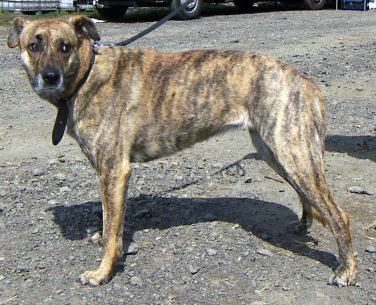
Many dog lovers like to enjoy a meal outside at a restaurant with their furry friends. But in California, residents may be surprised to know they are actually breaking the law by doing this.
A new bill currently moving through the state legislature seeks to remedy this, and allow Fido to move from the doghouse to the dinner table.
The California Assembly passed a bill last Thursday that would allow restaurants to open their outdoor dining areas to pet dogs if they so choose, unless a local ordinance prohibits it. Currently, the California Retail Food Code prohibits live animals at dining establishments.
The legislation does not mandate that restaurants permit dogs, but takes away the threat of citations or fines if the restaurant wants to do so and if certain conditions are met.
The conditions include keeping the eating area clean, making sure sidewalks comply with local ordinances and ensuring the dogs remain either on a leash or in a carrier.
The bill was sponsored by Assemblywoman Mariko Yamada, who said the legislation will address a dilemma for restaurant owners in the state. She said these owners want to accommodate customers who bring their pets.
“AB 1965 remedies this by allowing willing businesses to accommodate customers and their dogs while still providing local governments the option to determine if additional standards are necessary for their communities,” she said in a statement.
Yamada said she also hopes that the bill allows state public health officials to focus on more pressing issues than policing dogs at dining establishments.
Animal rights group Social Compassion in Legislation, which supported the bill, said they are thrilled to back the law because they have heard residents complain for years about the “outdated” policy prohibiting it.
“Many restaurants choose to take their chances and allow dogs on their patios, but it remains illegal,” the group’s president Judie Mancuso said in a statement. “We want to support these businesses and encourage more to open up to our canine family members.”
Dogs are already a common site at many outdoor eating establishments in the state. In fact, the Los Angeles County Department of Public Health in 2011 modified its policy to allow dogs after encouragement from the public. Santa Barbara County has also modified its policy to allow dogs.
The latest bill will now be taken up by the California state Senate.
Order a FREE vegan kit: http://www.peta.org/living/vegetarian-living/free-vegetarian-starter-kit.aspx
Take PETA’s Cruelty-Free Shopping Guide along with you next time you head to the store! The handy guide will help you find humane products at a glance. Order a FREE copy HERE
Want to do more than go vegan? Help others to do so! Click on the below for nominal, or no, fees to vegan literature that you can use to convince others that veganism is the only compassionate route to being an animal friend.
PETA: http://www.petacatalog.com/catalog/Literature-39-1.html
Action for Animals has a very low price : http://store.afa-online.org/home.php?cat=284
Have questions? Click HERE
Ohio bill would let protection orders cover pets

Wikimedia Commons
Source WTRF.com
COLUMBUS, Ohio (AP) – An Ohio bill would allow cats, dogs and other family pets to be included within the scope of protection orders obtained by victims of domestic violence or stalking.
A state Senate panel approved the proposal Tuesday. Under the measure, courts could issue orders that keep alleged offenders from threatening or interfering with the care of victims’ animals. Judges could also order the removal of pets from alleged abusers and bar them from having any contact with the animals.
Only those pets kept inside the home – not livestock or any wild animals – could be part of such orders.
Judges already can include animals in protection orders, though the bill would put the authority into law.
The measure has support from some animal rights organizations and domestic violence advocates.
Order a FREE vegan kit: http://www.peta.org/living/vegetarian-living/free-vegetarian-starter-kit.aspx
Take PETA’s Cruelty-Free Shopping Guide along with you next time you head to the store! The handy guide will help you find humane products at a glance. Order a FREE copy HERE
Want to do more than go vegan? Help others to do so! Click on the below for nominal, or no, fees to vegan literature that you can use to convince others that veganism is the only compassionate route to being an animal friend.
PETA: http://www.petacatalog.com/catalog/Literature-39-1.html
Action for Animals has a very low price : http://store.afa-online.org/home.php?cat=284
Have questions? Click HERE
Read more…
Stop the killing of 16,000 prairie dogs
relentless human control and sprawl
it will be the death of us all.
the land belongs to other species, too
who have as much right to live as
you do.
to slaughter we prairie dogs,
because you can….
such behaviors will be the end of all life,
including man.
so find a way to let us live on.
we need some acres to walk safely
upon.signed, prairie dogs and all species
Karen Lyons Kalmenson
Please take a moment to send a sample letter and sign a petition, thank you.

http://www.all-creatures.org/alert/alert-20140519-2.html
Tell U.S. Forest Service: DO NOT Poison 16,000 Prairie Dogs
Action Alert from All-Creatures.org
FROM
National Resources Defense Council (NRDC)
May 2014
ACTION
The U.S. Forest Service is considering a plan to poison as many as 16,000 prairie dogs in Wyoming’s Thunder Basin National Grassland. Prairie dogs are a keystone species and vital to the survival of many other animals. Tell the Forest Service to reject this heartless plan.

Image by Jim Robertson / Animals in the Wild
Sign an online petition here
And/Or better yet, make direct contact:
Thomas Whitford
District Ranger, Douglas Ranger district
Thunder Basin National Grassland
c/o US Forest Service
Rocky Mountain Region
740 Simms Street
Golden, CO 80401
(303) 275-5350 begin_of_the_skype_highlighting  (303) 275-5350 FREE end_of_the_skype_highlighting
INFORMATION / TALKING POINTS
In Wyoming, prairie dogs are slowly recovering from decades of hunting and disease, and Thunder Basin National Grassland contains some of their last…
View original post 313 more words













 Our Compass