HighestWelfare.Humane.Assured.GoodPractices.Vegetarian. Regenerative.Flexitarian.Lies...
What is the difference between No Welfare, High Welfare, and Highest Welfare when they all require animals to die? Only human comfort, NONE protect the actual animals. The most humane, ethical, and honest Webster-defined "welfare" is NOT exploiting animals - not using, not wearing, not eating, not killing - animals. The only meaningful position is vegan, everything else is just how humans euphemize animals' required suffering and violent deaths: no human exploits animals because they honestly believe that NOT exploiting animals is UNethical or INhumane.
DxE vs. Big Ag: Help us win the Right to Rescue in 2020
Source Direct Action Everywhere (DxE) Facebook
In 2019, we promised that we would spark a worldwide revolution for animal rights and we did. We executed our largest mass action yet, with over 600 people converging at a massive duck farm where we rescued 32 ducklings and continued our campaign for the #RightToRescue. Our actions inspired people around the world, leading to a coordinated, global lockdown for animal rights. From Toronto to Mexico City, Paris to Seoul, activists locked down at farms, slaughterhouses, and government buildings demanding protection for animals under the law. And in 2019, our movement won a major legislative victory for animals: the first statewide fur ban in the nation. DxE investigations showed the world the cruelty of fur farming, and our press team exposed the fur industry’s corruption when they paid people hundreds to thousands of dollars to speak in opposition of the California fur ban.
And our work is getting attention well beyond the animal rights movement. We had some of the most prominent journalists in the world — including Ezra Klein, Amy Goodman, and Glenn Greenwald — applaud our actions as heroic. DxE’s investigation at a Smithfield pig farm exposed the industry’s antibiotic-resistant diseases and was covered in-depth in The New York Times. This year, we had the first-ever victory for the legal #RightToRescue when one of DxE’s investigators facing criminal charges in Canada had the charges against her dropped and the ag industry responded in shock. Since then, we’ve gotten support for the #RightToRescue from Berkeley’s peace and justice commission and the full City Council will be voting on the resolution in December. While I am confident about these victories and what they mean for our movement, I know our work is just getting started.
In 2020, we are putting Big Ag on trial. I am facing 16 felony charges in 3 states for exposing criminal animal abuse at some of the most violent places on this planet. This year for the first time ever, DxE will have the opportunity to challenge animal abusing companies like Smithfield and Petaluma Poultry in front of a judge, jury, and the entire world. What’s our goal? To enshrine groundbreaking Right to Rescue legislation in the letter of the law. And you can help us make that dream a reality.
In the new year, I might be going to prison. I’m preparing myself for that possibility, and my only wish is to see DxE cultivate leaders who will continue mobilizing the masses to the frontlines, training dozens of people in doing more groundbreaking investigatory work, and sharing more stories in mainstream media about Open Rescue. But most importantly, I want to see DxE win against Big Ag. Our cases will be testing animal cruelty laws and forcing the industry to respond to the crimes they’ve committed against animals — and when the truth comes out in court, I believe we will win the #RightToRescue.
Sign HERE
Donate HERE
Order a FREE vegan kit: http://www.peta.org/living/food/free-vegan-starter-kit/
Take PETA’s Cruelty-Free Shopping Guide along with you next time you head to the store! The handy guide will help you find humane products at a glance. Order a FREE copy HERE
Searching for Cruelty-Free Cosmetics, Personal-Care Products, Vegan Products, or more?
Click HERE to search.
Click HERE to find out How to Wear Vegan!
Want to do more than go vegan? Help others to do so! Click below for nominal, or no, fees to vegan literature that you can use to convince others that veganism is the only compassionate route to being an animal friend:
PETA: https://www.petaliterature.com/
Vegan Outreach: https://veganoutreach.org/order-form/
Get your FREE Activist Kit from PETA, including stickers, leaflets, and guide HERE
Have questions? Click HERE
or all those who dare to care:
in love
in love we stand
in love we can
be grand
in love arm to arm
in love
hand in hand
in love for the better
the
greater good
in love we have power
and in love,
we should!
and thank you!
Earthling Ed E-Book
Source Earthling Ed
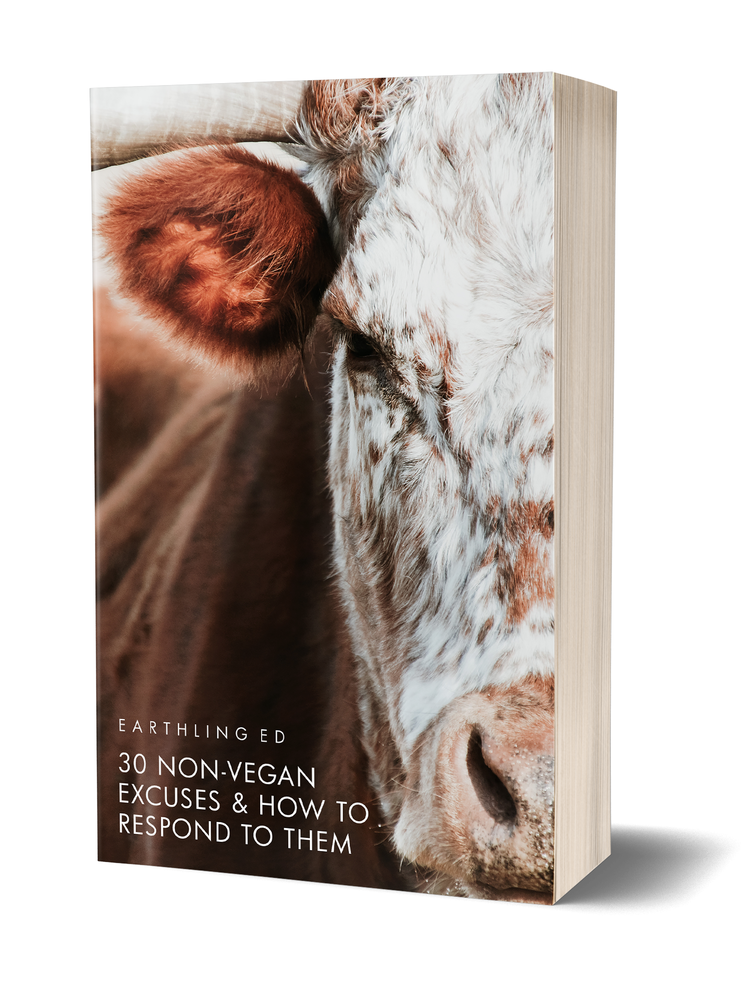
FREE E-Book 30 Non-Vegan Excuses & How to Respond to Them:
Over 50,000 + downloads & 122 pages designed to equip you with the knowledge and communication tips that you need to positively and confidently advocate for veganism.
“I made this e-book with the goal of creating a resource that vegans can use to help them learn how to debunk and argue against the most common excuses that people use to try and justify not going vegan and continuing to harm animals.
Knowledge is power – and there really is not one single argument against veganism whatsoever. So once you have the knowledge, which I hope this e-book provides, the power is in your hands and nothing is stopping you from planting seeds in the minds of your family, friends and anyone else you discuss veganism with.”
This e-book is entirely free to download, however if you’d like to donate towards the time it took to create, that would be hugely appreciated.”
Order This is Vegan Propaganda HERE
Donate HERE
See PDF HERE
Download Your FREE Vegan PDF HERE
Order a FREE vegan kit HERE
Dairy-Free Info HERE
Take the Dairy-Free Challenge HERE
Click HERE for more Dairy-Free
Fish alternatives can be found HERE
Learn about eggs HERE
Find bacon alternatives HERE and HERE
Take PETA’s Cruelty-Free Shopping Guide along with you next time you head to the store! The handy guide will help you find humane products at a glance. Order a FREE copy HERE
Searching for Cruelty-Free Cosmetics, Personal-Care Products, Vegan Products, or more?
Click HERE to search.
Free PDF of Vegan & Cruelty-Free Products/Companies HERE
Click HERE for clothing without suffering
Click below for nominal, or no, fees to vegan literature that you can use to convince others that veganism is the only humane:
PETA HERE
Vegan Outreach HERE
Get your FREE Anti-Speciesism Activist Kit from PETA HERE
Click HERE for Well-Fed World’s Free Climate Food Guide PDF
2020
2020 a clear vision
perhaps to make
the right decisions.
2020 a place to see
perhaps the goodness
in humanity
2020 a time to reflect
that the best has not
happened yet.
2020 clarity
love, peace for all
and harmony.
“I Feel So Badly For Those Turkeys Hauled on Freezing Nights”
… has so many churches and so many Christmas decorations and so many people that claim to be Christians, and yet so much unnecessary horrific animal cruelty and no complaint of it, or effort to do anything to stop it …
Source United Poultry Concerns (UPC)
The Letter to the Editor that follows this Introduction was written by Shane Zoglman and published Nov. 20, 2019, by The Dubois County Herald in Indiana, a mid-Western state with a large poultry and egg industry. In granting permission to UPC to share his letter with our readers, Shane added some information about his own evolution:
Howdy, sure, post away. For some history, back when I was a teenager, and didn’t have any good examples or guidance in the form of grownups, I worked for about 4 years on a chicken farm, that is, an egg farm, gathering eggs from the mega-sized houses, taking out the dead and crippled chickens and also taking out the old ones, loading them on semis and putting the new young birds in the cages.

Photo courtesy of Animals Angels.
I also did a few part-time jobs of working for a farm where I helped load turkeys into the semis. I have to say I didn’t think about the animals’ suffering, it just didn’t enter my mind. So I am someone who has seen both sides and has changed a lot over the years. The thing I do not understand is people that never wake up. I think a big help in my waking up to animal cruelty was stumbling onto the Shark Online YouTube channel years ago. I had been to a couple rodeos as a kid, but again, never was aware of the cruelty as I see it now after seeing their videos of rodeo cruelty.
– Shane Zoglman
The following is Shane’s letter in The Dubois County Herald, Nov. 20, 2019:
Protect turkeys in trucks from frigid temps
November 20, 2019
To the editor:
Well, it is wintertime in Dubois County again, and once again the turkey manufacturing industry has done nothing to alleviate the suffering of turkeys being trucked down the highways at night in open cages, going 60-mph with no protection from the horrific freezing cold.
The profiteers of the turkey manufacturing industry cannot be bothered to spend a few bucks to lessen the cruelty they inflict on their product. After all, a healthy profit margin is what life is all about, right?
After their freezing cold, 18-wheeled torture trip, many of the turkeys are thrown still alive into boiling hot water. Then they are sold and shipped to China, where most turkeys “manufactured” in America end up. It’s so great that China gets the food and people in Dubois County get the pollution, the stink and the humanity-degrading, low-paying jobs of inflicting cruelty on animals while a few rich people at the top get the money.
What does it say that Dubois County has so many churches and so many Christmas decorations and so many people that claim to be Christians and yet so much unnecessary horrific animal cruelty and no complaint of it, or effort to do anything to stop it?
You cannot look at humans in middle America and convince me that monsters do not exist. Happy Thanksgiving, everyone.
Shane Zoglman, Jasper
Order a FREE vegan kit: http://www.peta.org/living/food/free-vegan-starter-kit/
Take PETA’s Cruelty-Free Shopping Guide along with you next time you head to the store! The handy guide will help you find humane products at a glance. Order a FREE copy HERE
Searching for Cruelty-Free Cosmetics, Personal-Care Products, Vegan Products, or more?
Click HERE to search.
Click HERE to find out How to Wear Vegan!
Want to do more than go vegan? Help others to do so! Click below for nominal, or no, fees to vegan literature that you can use to convince others that veganism is the only compassionate route to being an animal friend:
PETA: https://www.petaliterature.com/
Vegan Outreach: https://veganoutreach.org/order-form/
Get your FREE Activist Kit from PETA, including stickers, leaflets, and guide HERE
Have questions? Click HERE
once upon a peaceful night
a dream was finally achieved
kindness ruled where cruelty
once reigned
and in compassion all
believed.
the animals in their own way
gleefully rejoiced
at last the world
had heard their
voice.
Dismantle Dairy
Source Surge Activism , Dismantle Dairy
Surge have launched a brand new campaign Dismantle Dairy, featuring 18 months of undercover footage obtained from inside UK dairy farms. Independent investigators placed hidden cameras in dairy farms around the UK, as well as obtaining HD footage during visits. The footage revealed widespread incidences of physical and emotional abuse of mothers and calves.
Surge found repeated incidences of punching, kicking, excessive tail twisting, swearing/shouting, beating with sticks, separation of calves from their mothers, force-feeding of calves and the disposal of calves. Investigators also recorded HD footage during visits, capturing harrowing scenes such as dead cows and calves left to rot outside for days.
However, rather than draw attention to individual farms and create the impression that these are isolated cases or “bad eggs”, the campaign seeks to expose the dairy industry as a whole, revealing how even standard practices such as separation at birth and removal of calves is abuse. Violence on dairy farms is ubiquitous and occurs in all farms, including those associated with high ranking officials within the industry.
This is not about one “bad farm”, or one “bad farmer”, Dismantle Dairy is about the foundations the dairy industry is built upon. Standard, legal dairy industry practice involves (but is not limited to):
– Artificially inseminating dairy cows.
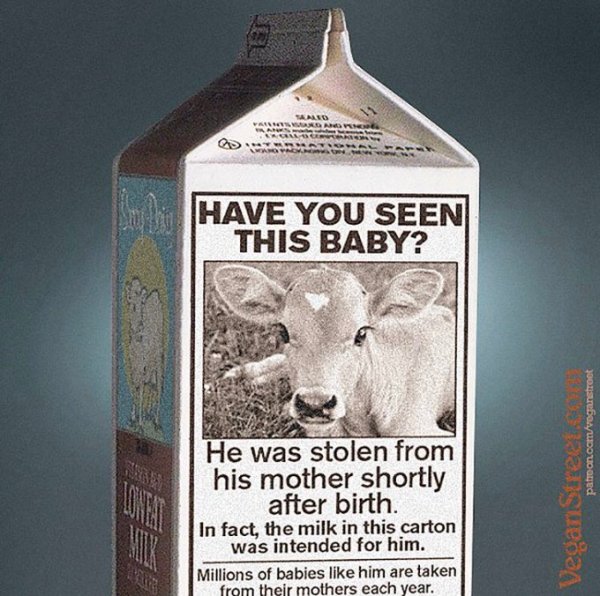
– Separating babies from their mothers (usually within 24 – 72 hours of birth).
– Killing ‘useless’ male calves soon after they are born (this is known as the “dirty secret” within the industry).
– Keeping newborn calves in solitary confinement pens.
– Sending dairy cows to slaughter when they can no longer produce milk for the farmer.
Prior to the campaign release, the authorities including the RSPCA and APHA have been notified of the farms and footage where necessary.
See more in the The Independent:
Cows sexually abused, hit and punched at company owned by NFU deputy president, footage shows
This particular farm is owned by Guy Smith, Deputy President of The National Farmers’ Union, the largest organisation representing farmers in the UK. What we found on the farm was so horrific, so brutal, that The Independent couldn’t show all of it in their press video; however, it is available to watch below:
Order a FREE vegan kit: http://www.peta.org/living/food/free-vegan-starter-kit/
Take PETA’s Cruelty-Free Shopping Guide along with you next time you head to the store! The handy guide will help you find humane products at a glance. Order a FREE copy HERE
Searching for Cruelty-Free Cosmetics, Personal-Care Products, Vegan Products, or more?
Click HERE to search.
Click HERE to find out How to Wear Vegan!
Want to do more than go vegan? Help others to do so! Click below for nominal, or no, fees to vegan literature that you can use to convince others that veganism is the only compassionate route to being an animal friend:
PETA: https://www.petaliterature.com/
Vegan Outreach: https://veganoutreach.org/order-form/
Get your FREE Activist Kit from PETA, including stickers, leaflets, and guide HERE
Have questions? Click HERE
Animal’s are here with us,
Not for us
So says the humane world
In resounding chorus
VEGAN 2019 – The Film
Source YouTube , Plant Based News
VEGAN 2019 – The Film is sponsored by abillionveg – where you can find reviews and recommendations for vegan-friendly food, restaurants and products near you:
Subtitles in English, Spanish, and Chinese.
Narrated by Helen Millar: https://www.helenmillar.co.uk/
Order a FREE vegan kit: http://www.peta.org/living/food/free-vegan-starter-kit/
Take PETA’s Cruelty-Free Shopping Guide along with you next time you head to the store! The handy guide will help you find humane products at a glance. Order a FREE copy HERE
Searching for Cruelty-Free Cosmetics, Personal-Care Products, Vegan Products, or more?
Click HERE to search.
Click HERE to find out How to Wear Vegan!
Want to do more than go vegan? Help others to do so! Click below for nominal, or no, fees to vegan literature that you can use to convince others that veganism is the only compassionate route to being an animal friend:
PETA: https://www.petaliterature.com/
Vegan Outreach: https://veganoutreach.org/order-form/
Get your FREE Activist Kit from PETA, including stickers, leaflets, and guide HERE
Have questions? Click HERE
how easy to see
the simplicity
of kindness
as we leave
all cruelties
behind us
Alex J. O’Connor: It’s Time To Go Vegan | Animal Rights Speech 2019
Source YouTube
By Cosmic Skeptic
About, from Cosmic Skeptic
Alex J. O’Connor is founder of the Cosmic Skeptic YouTube channel, podcast and blog, platforms dedicated to the publication of philosophical ideas and debates in an accessible format. He is currently reading for a degree in philosophy and theology at St John’s College, Oxford University, having lived in that city all his life.
Alex is an international public speaker and debater, having delivered addresses in multiple continents at conferences, universities and local drinking groups, as well as debated ethics, religion and politics with a number of high-profile opponents before college audiences, on radio talk shows and on national television.
Alex’s online videos have been viewed more than twenty million times, attracting nearly three hundred thousand people to subscribe to his regular content. He has produced videos with notable experts in respected fields, such as Peter Singer, Lawrence Krauss, and Richard Dawkins.
Alex is an outspoken atheist, vegan, and free speech advocate, regularly discussing these topics on his online platforms. He is an avid reader and book collector, a musician and a singer, and spends much of his free time playing poker or snooker and sampling exotic alcoholic beverages. He also, sometimes and rarely, works on his degree.
Order a FREE vegan kit: http://www.peta.org/living/food/free-vegan-starter-kit/
Take PETA’s Cruelty-Free Shopping Guide along with you next time you head to the store! The handy guide will help you find humane products at a glance. Order a FREE copy HERE
Searching for Cruelty-Free Cosmetics, Personal-Care Products, Vegan Products, or more?
Click HERE to search.
Click HERE to find out How to Wear Vegan!
Want to do more than go vegan? Help others to do so! Click below for nominal, or no, fees to vegan literature that you can use to convince others that veganism is the only compassionate route to being an animal friend:
PETA: https://www.petaliterature.com/
Vegan Outreach: https://veganoutreach.org/order-form/
Get your FREE Activist Kit from PETA, including stickers, leaflets, and guide HERE
Have questions? Click HERE
words spoken true
from his heart….
what can we do?
we can all start!
Vegan Pledge: Must-Watch Documentaries
Dominion trailer
Source PETA
Order a FREE vegan kit: http://www.peta.org/living/food/free-vegan-starter-kit/
Take PETA’s Cruelty-Free Shopping Guide along with you next time you head to the store! The handy guide will help you find humane products at a glance. Order a FREE copy HERE
Searching for Cruelty-Free Cosmetics, Personal-Care Products, Vegan Products, or more?
Click HERE to search.
Click HERE to find out How to Wear Vegan!
Want to do more than go vegan? Help others to do so! Click below for nominal, or no, fees to vegan literature that you can use to convince others that veganism is the only compassionate route to being an animal friend:
PETA: https://www.petaliterature.com/
Vegan Outreach: https://veganoutreach.org/order-form/
Get your FREE Activist Kit from PETA, including stickers, leaflets, and guide HERE
learning enlightenment is time well spent.
kindness grows where the heart is sent.
Best Turkey-Free Main Dishes for Your Holiday Feast
Source Free From Harm
By Ashley Capps
Nearly 46 million turkeys are killed for Thanksgiving every year in the U.S. alone. Most are raised on factory farms, where they endure unimaginable suffering. But even turkeys who spend their unnaturally brief lives on so-called “humane,” “pastured” turkey farms are subjected to the most horrific deaths most people cannot even bear to watch.
It doesn’t have to be this way — delicious plant-based alternatives abound. From frozen faux-turkeys that taste like the real thing, to mouth-watering, protein-packed grain roasts, to decadent, delectable vegetable spreads like Roasted Hasselback Butternut Squash (say that five times fast!)— there are tons of tantalizing Turkey Alternatives that can take center stage at any holiday table.
Whether you’re looking for store-bought, order-online, or make-your-own options, it’s easy and delicious to veganize your favorite holiday main dishes.
Click HERE to see!
Order a FREE vegan kit: http://www.peta.org/living/food/free-vegan-starter-kit/
Take PETA’s Cruelty-Free Shopping Guide along with you next time you head to the store! The handy guide will help you find humane products at a glance. Order a FREE copy HERE
Searching for Cruelty-Free Cosmetics, Personal-Care Products, Vegan Products, or more?
Click HERE to search.
Click HERE to find out How to Wear Vegan!
Want to do more than go vegan? Help others to do so! Click below for nominal, or no, fees to vegan literature that you can use to convince others that veganism is the only compassionate route to being an animal friend:
PETA: https://www.petaliterature.com/
Vegan Outreach: https://veganoutreach.org/order-form/
Get your FREE Activist Kit from PETA, including stickers, leaflets, and guide HERE
Have questions? Click HERE
Friends not food
DxE: The Right to Rescue
These orphaned chinchillas were destined to become fur coats… until a new mom entered their lives #RightToRescue
Please support and sign for the right to rescue animals from harm: https://righttorescue.com/
Learn more about Direct Action Everywhere: https://www.directactioneverywhere.com/
Join the 2020 Animal Liberation Conference: https://www.facebook.com/events/24117…
Follow DxE on social media
Facebook: https://www.facebook.com/directaction…
Instagram: https://www.instagram.com/directactio…
Twitter: https://twitter.com/DxEverywhere
Order a FREE vegan kit: http://www.peta.org/living/food/free-vegan-starter-kit/
Take PETA’s Cruelty-Free Shopping Guide along with you next time you head to the store! The handy guide will help you find humane products at a glance. Order a FREE copy HERE
Searching for Cruelty-Free Cosmetics, Personal-Care Products, Vegan Products, or more?
Click HERE to search.
Click HERE to find out How to Wear Vegan!
Want to do more than go vegan? Help others to do so! Click below for nominal, or no, fees to vegan literature that you can use to convince others that veganism is the only compassionate route to being an animal friend:
PETA: https://www.petaliterature.com/
Vegan Outreach: https://veganoutreach.org/order-form/
Get your FREE Activist Kit from PETA, including stickers, leaflets, and guide HERE
Have questions? Click HERE
Fur belongs on whom it was born not by the vain and frivolous worn
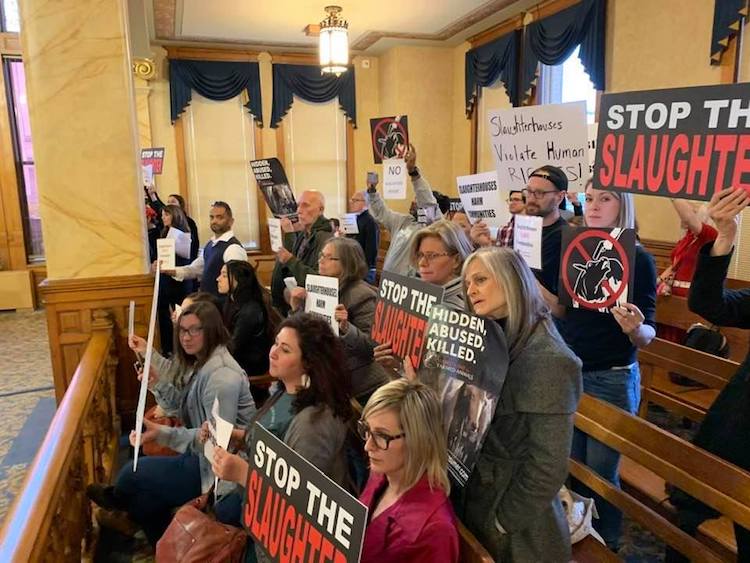
Activists fill Milwaukee City Hall to protest the Strauss slaughterhouse.
Photo: Robert Grillo, Free From Harm
Source Free From Harm
By
Two weeks after an incredible victory that captured the headlines and social media, I am still pinching myself to make sure what happened so rapidly and decisively is not but a dream I regret waking up from. The efforts of 50 activists and neighbors who shut down a 60-million dollar slaughterhouse in 12 days should serve as a huge inspiration to many. It demonstrates what is possible when a small yet determined group of regular people sets their minds to accomplish something that seems, on its face, impossible.
From the time one Milwaukee activist learned about the Straus slaughterhouse deal in a news story on October 8th, all signs from the media and politicians indicated it was a done deal with no hope in hell of being defeated. In the course of the next 48 hours, we would piece together the backroom maneuvers between the Mayor, aldermen and a huge meat industry player that would negatively impact the lives of an underserved community while shutting them out of the process. We learned that the Milwaukee Zoning & Neighborhoods & Development (ZND) Committee had already met on October 8th to approve the deal without a single member of the public present.
By October 12th, the newly formed Slaughter Free Milwaukee activist group discovered that the final vote to approve the deal was scheduled for a full up or down vote in just 3 short days (October 15th)! What happened between then and the morning of the 15th was pure magic. SFM organizers responded in crisis mode by creating a groundswell of resistance: building a Facebook presence, going out in the streets to talk to local residents, business owners, community activists and churches in the area of the proposed slaughterhouse, making signs and flyers, writing and distributing a press release, flooding alderman with phone calls and emails, showing up at City Hall to try to get their attention, and connecting with local reporters to tip them off about our planned City Hall protest.
Please read rest HERE
Order a FREE vegan kit: http://www.peta.org/living/food/free-vegan-starter-kit/
Take PETA’s Cruelty-Free Shopping Guide along with you next time you head to the store! The handy guide will help you find humane products at a glance. Order a FREE copy HERE
Searching for Cruelty-Free Cosmetics, Personal-Care Products, Vegan Products, or more?
Click HERE to search.
Click HERE to find out How to Wear Vegan!
Want to do more than go vegan? Help others to do so! Click below for nominal, or no, fees to vegan literature that you can use to convince others that veganism is the only compassionate route to being an animal friend:
PETA: https://www.petaliterature.com/
Vegan Outreach: https://veganoutreach.org/order-form/
Get your FREE Activist Kit from PETA, including stickers, leaflets, and guide HERE
when united by a force
driven by love and
kindness,
we can triumph over the
heartless
and
mindless.
thank you fine peeps!!!
English and Speciesism
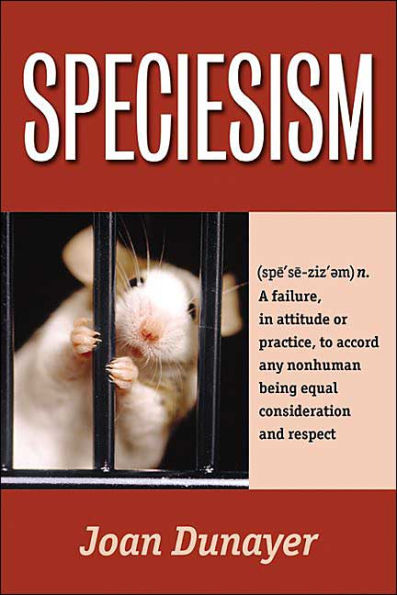
Originally posted January 2, 2011
English and Speciesism
By Joan Dunayer
Standard English usage perpetuates speciesism, which is the failure to accord nonhuman animals equal consideration and respect. Like racism or sexism, speciesism is a form of prejudice sustained in part by biased, misleading words. However, whereas racist slurs rightly elicit censure, people regularly use, and fail to notice, speciesist language. Unlike sexist language, speciesist language remains socially acceptable even to people who view themselves as progressive. Speciesism pervades our language, from scholarly jargon to street slang. Considered in relation to the plight of nonhuman beings, the words of feminist poet Adrienne Rich express a terrible absolute: “This is the oppressor’s language.”
Speciesist usage denigrates or discounts nonhuman animals. For example, terming nonhumans “it” erases their gender and groups them with inanimate things. Referring to them as “something” — rather than “someone” — obliterates their sentience and individuality. Pure speciesism leads people to call a brain-dead human “who” but a conscious pig “that” or “which.’
Current usage promotes a false dichotomy between humans and nonhumans. Separate lexicons suggest opposite behaviors and attributes. We eat, but other animals feed. A woman is pregnant or nurses her babies; a nonhuman mammal gestates or lactates. A dead human is a corpse, a dead nonhuman a carcass or meat.
Everyday speech denies human-nonhuman kinship. We aren’t animals, primates, or apes. When we do admit to being animals, we label other animals “lower” or “subhuman.” Dictionary definitions of man exaggerate human uniqueness and present characteristics typical of humans (such as verbal ability) as marks of superiority, especially superior intelligence.
Nonhuman-animal epithets insult humans by invoking contempt for other species: rat, worm, viper, goose. The very word animal conveys opprobrium. Human, in contrast, signifies everything worthy. Like the remark that a woman has “the mind of a man,” the comment that a nonhuman is “almost human” is assumed to be praise. Both condescend.
While boasting of “human kindness,” our species treats nonhumans with extreme injustice and cruelty. Directly or indirectly, most humans routinely participate in needless harm to other animals, especially their captivity and slaughter. Whereas true vegetarianism (veganism) promotes human health and longevity, consumption of animal-derived food correlates with life-threatening conditions such as heart disease, cancer, and hardening of the arteries. Still, our language suggests that humans must eat products from nonhuman bodies. As if we possessed a carnivore’s teeth and digestive tract, thoughtless cliché places us “at the top of the food chain.”
To speciesists, needless killing is murder only if the victim is human. In animal “farming” and numerous other forms of institutionalized speciesism, nonhuman animals literally are slaves: they’re held in servitude as property. But few people speak of nonhuman “enslavement.” Many who readily condemn human victimization as “heinous” or “evil” regard moralistic language as sensational or overly emotional when it is applied to atrocities against nonhumans. They prefer to couch nonhuman exploitation and murder in culinary, recreational, or other nonmoralistic terms. That way they avoid acknowledging immorality. Among others, Nazi vivisectors used the quantitative language of experimentation for human, as well as nonhuman, vivisection. Slaveholders have used the economic language of farming for nonhuman and human enslavement. Why is such morally detached language considered offensive and grotesque only with regard to the human victims?
The media rarely acknowledge nonhuman suffering. Only human misfortune garners strong words like tragic and terrible. When thousands of U.S. cattle, left in the blazing sun on parched land, die from heat and lack of water, reporters note the losses “suffered” by their enslavers.
Belittling words minimize nonhuman suffering and death. As expressed in a New York magazine caption, antivivisectionists “oppose testing on any creature—even a mouse.” The word even ranks a mouse below humans in sensitivity and importance. There’s no reason to believe that mice experience deprivation and pain less sharply than we do or value their lives less, but our language removes them from moral consideration. Who cares if millions of mice and rats are vivisected each year? They’re “only rodents.” What does it matter if billions of chickens live in misery until they die in pain and fear? They’re “just chickens.”
In speciesism’s fictitious world, nonhumans willingly participate in their own victimization. They “give” their lives in vivisection and the food industry.
Further belying victimization, the language of speciesist exploitation renders living animals mindless and lifeless. They’re “crops,” “stock,” hunting “trophies,” and vivisection “tools.”
Category labels born of exploitation imply that nonhuman beings exist for our use. Furbearer tags a nonhuman person a potential pelt. Circus animal suggests some natural category containing hoop-jumping tigers and dancing bears, nonhumans of a “circus” type. The verbal trick makes deprivation and coercion disappear.
Evil gathers euphemisms. Over millennia, speciesism has compiled a hefty volume. Wildlife management sanctions the bureaucratized killing of free-living nonhumans. Leather and pork serve as comfortable code for skin and flesh. Domestication softens captivity, subjugation, and forced breeding.
Positive words glamorize humans’ ruthless genetic manipulation of other species. Horses inbred for racing are “thoroughbreds.” However afflicted with disabilities, dogs inbred for human pleasure and use are “purebreds,” while the fittest mixed-breed dogs are “mongrels” and “mutts.”
With complimentary self-description, humans exonerate themselves of wrongdoing. Food-industry enslavement and slaughter cause suffering and death of colossal magnitude. Yet, consumers of flesh, eggs, and nonhuman milk count themselves among “animal lovers.”
Currently, misleading language legitimizes and conceals the institutionalized abuse of nonhuman animals. With honest, unbiased words, we can grant them the freedom and respect that are rightfully theirs.
From Wikipedia: Joan Dunayer is a writer, editor, and animal rights advocate. “A graduate of Princeton University, she has master’s degrees in English literature, English education, and psychology. Her articles and essays have appeared in magazines, journals, college textbooks, and anthologies.” A professional editor and writer for more than two decades, Dunayer has “taught writing to high school, college, and university students” and her “articles and essays have appeared in journals, magazines, and anthologies.” In addition to numerous articles, she has authored two books, Speciesism (2004) and Animal Equality (2001).
Download Your FREE Vegan PDF HERE
Order a FREE vegan kit HERE
Download Your FREE Dairy-Free PDF HERE
Take the Dairy-Free Challenge HERE
Click HERE for more Dairy-Free
Fish alternatives can be found HERE
Learn about eggs HERE
Find bacon alternatives HERE
Take PETA’s Cruelty-Free Shopping Guide along with you next time you head to the store! The handy guide will help you find humane products at a glance. Order a FREE copy HERE
Searching for Cruelty-Free Cosmetics, Personal-Care Products, Vegan Products, or more? Click HERE to search.
Free PDF of Vegan & Cruelty-Free Products/Companies HERE
Click HERE to find out How to Wear Vegan!
Want to do more than go vegan? Help others to do so! Click below for nominal, or no, fees to vegan literature that you can use to convince others that veganism is the only compassionate route to being an animal friend: PETA HERE
Vegan Outreach HERE
Get your FREE Activist Kit from PETA, including stickers, leaflets, and guide HERE
Have questions? Click HERE
words harm
words heal
words lie
words reveal
words were
invented by man
interpreted the best
and worst he/she
can
In Iowa, politicians protect the meat industry by making animal rights activists the criminals
This video includes graphic images some readers may find disturbing.
Source The Intercept
By Leighton Akio Woodhouse, David Zlutnick
The meat industry depends, more than anything else, on walls. The walls of farms and slaughterhouses prevent consumers from seeing what the production of their food really looks like. They prevent journalists and activists from exposing unethical, even criminal acts within. They enable corporations to paint happy, bucolic pictures of their operations that bear no resemblance to the reality of modern-day factory farming.
To get inside those walls, over the last two decades, dozens of activists have gone undercover, finding employment on factory farms and wearing concealed cameras, shooting hundreds of hours of footage over the course of months on the job. They have documented the routine acts of mistreatment and abuse of animals that are an inherent part of raising livestock for slaughter with maximum profit in mind.
The videos they have produced have made an enormous impact on the industry, grabbing headlines, pushing consumers away from meat, compelling retailers to pull products from shelves, and even causing government regulators to temporarily shutter some farms.
In response, the industry has pushed to criminalize undercover investigations, through legislation known informally as “ag-gag”. Ag-gag laws target activists in a variety of ways, from imposing criminal penalties on investigators for misrepresenting themselves on employment applications to outright banning the collection of footage on the premises of animal agriculture operations without the owners’ permission.
In Iowa, an ag-gag law passed in 2011 was struck down earlier this year by a federal judge. But thanks to the political power it wields in the state, the meat industry did not have to wait long to see the law resurrected. Just two months after the court’s decision, Iowa’s legislature passed a brand new ag-gag bill, and its newly elected governor, Kim Reynolds, signed it into law.
Our short documentary tells the story of one undercover investigator whose footage is at the center of Iowa’s ag-gag backlash.
Order a FREE vegan kit: http://www.peta.org/living/food/free-vegan-starter-kit/
Take PETA’s Cruelty-Free Shopping Guide along with you next time you head to the store! The handy guide will help you find humane products at a glance. Order a FREE copy HERE
Searching for Cruelty-Free Cosmetics, Personal-Care Products, Vegan Products, or more?
Click HERE to search.
Click HERE to find out How to Wear Vegan!
Want to do more than go vegan? Help others to do so! Click below for nominal, or no, fees to vegan literature that you can use to convince others that veganism is the only compassionate route to being an animal friend:
PETA: https://www.petaliterature.com/
Vegan Outreach: https://veganoutreach.org/order-form/
Get your FREE Activist Kit from PETA, including stickers, leaflets, and guide HERE
Have questions? Click HERE
the truth will be seen
the truth will be heard
to try to hide or deny
is self deception
and absurd!
Shutting Down Slaughterhouses in Chicago Gets Mainstream Attention
Source Free From Harm, Slaughter Free Chicago
By Free From Harm Staff Writers
WCIU Reporter Diana Guiterrez interviewed Robert Grillo of Free from Harm at City Hall about shutting down illegal slaughterhouses in Chicago. “Our aim is to make history in the city that once promoted itself as the slaughter capital of the world by going slaughter free. We have a legal path to reaching that goal, but it relies on city officials doing their job and enforcing existing laws. That’s why our attention is on them, the Mayor and the City Council.”
The interview was recorded on September 16th, one week prior to the anticipated meeting with top city officials from the Departments of Business Affairs and Consumer Protection, Zoning and Department of Public Health.
Diana Guiterrez then met Grillo again outside City Hall on September 23rd after this meeting to get a sense of what was discussed and what next steps would be. Watch the video below for details.
Please read the rest HERE
Order a FREE vegan kit: http://www.peta.org/living/food/free-vegan-starter-kit/
Take PETA’s Cruelty-Free Shopping Guide along with you next time you head to the store! The handy guide will help you find humane products at a glance. Order a FREE copy HERE
Searching for Cruelty-Free Cosmetics, Personal-Care Products, Vegan Products, or more?
Click HERE to search.
Click HERE to find out How to Wear Vegan!
Want to do more than go vegan? Help others to do so! Click below for nominal, or no, fees to vegan literature that you can use to convince others that veganism is the only compassionate route to being an animal friend:
PETA: https://www.petaliterature.com/
Vegan Outreach: https://veganoutreach.org/order-form/
Get your FREE Activist Kit from PETA, including stickers, leaflets, and guide HERE
Have questions? Click HERE
the simplicity of it all
gentle, not rude
animals are friends
they are not food!!!
These Four Countries Just Formed the Vegan World Alliance

Source VeganSymbols.com
Source LiveKindly
By Kat Smith
Four countries have united to form the Vegan World Alliance (VWA). The group aims to promote vegan values on a global scale.
The VWA consists of four activist groups: the Dutch Association for Veganism, the Vegan Society of Aotearoa New Zealand, the Vegan Society of Canada, and Vegan Australia.
One of its first initiatives is a standard for food labeled suitable for vegans. The organization notes that many countries have no legal definition of what vegan food is. A uniform certification would be used by all alliance members and would provide concrete rules for manufacturers to adhere to.
Why a Vegan World Alliance?
The VWA envisions a world where animals are valued as individuals whose exploitation is morally wrong across the board. It believes that animals should not be used for food, clothing, entertainment, or in other areas where their bodies are commodified.
The initiative would benefit more than just vegans. A growing body of research shows that the majority of people buying plant-based food aren’t vegan themselves. It’s 52 percent in the U.S., according to a survey from DuPont Nutrition and Health. Globally, that number jumps up to 65 percent.
“There is a seismic shift occurring in eating habits globally, creating a significant market opportunity,” said Greg Paul, marketing leader at DuPont Nutrition and Health. “Most important, our research reveals that for most consumers, this has moved beyond experimentation into a permanent change brought on by health, lifestyle and social factors.”
Health is a major motivator for consumers adopting “flexitarian” eating habits. Animal products like meat, dairy, and eggs have been linked to a number of health concerns ranging from heart disease to type-2 diabetes and inflammation.
The environment is another reason why more are choosing to eat less meat. The livestock industry is responsible for 14 to 18 percent of global greenhouse gas emissions (GHGs). It is the leading cause of deforestation, water and air pollution, and biodiversity loss worldwide.
The increased interest in vegan food is expected to drive the market to $6.5 billion by 2026, according to some estimates.
The VWA’s First Four Members
Research shows that interest in plant-based food is on the rise in all four countries in the alliance.
Canada’s food industry is readying for change. The government updated the nation’s food guide at the start of the year, emphasizing plant-based protein as part of a healthy diet and nearly scrapping dairy entirely. Previous years recommended four servings of dairy a day, but the updated guide cut the number down to a daily pint of milk.
The prairie provinces in the west — Alberta, Saskatchewan, and Manitoba — are now home to the Protein Industries Supercluster. Kicked off by the Protein Industries Canada, the supercluster is a nonprofit, industry-led organization that aims to make the country a leader in plant-based protein. Its focus will be on processing peas — the same ingredient that makes up the Beyond Burger — and improving technologies. The Canadian government has invested $153 million in the project, which was matched dollar for dollar by the private sector.
Plant-based food has also gone mainstream in Australia. A report from independent research agency Roy Morgan revealed earlier this year that 2.5 million Australians (12.1 percent of the population) eat food that is all “or almost all” vegetarian. Prior studies showed that red meat is the biggest concern due to its links to an increased risk of heart disease.
Another study revealed that vegan meat is on the rise in Australia. The industry currently generates $30 million in economic value each year. According to the report, it may be worth as much as $3 billion by 2030 if farmers, brands, and the government work to grow the plant-based meat market.
New Zealand is changing with the global market. The country is known for its dairy industry. Dairy cow populations outnumber people living in New Zealand, with 4.8 million cows to the human population’s 4.794 million. The conversation in New Zealand is centered around the environment. A report from the Ministry of Health last August suggested that the entire health sector should adapt plant-forward menus to cut carbon emissions. Agriculture accounts for 49 percent of New Zeland’s GHGs.
Both Australia and New Zealand are seeing more vegan food options in restaurants. Lord of the Fries, a vegan burger chain founded in Melbourne in 2004, now has 23 stores in Australia and four in New Zealand. Its future is looking bright; expansions into the UK and India are in the works.
A recent study from market researcher IRI Netherlands found that vegan food sales increased 51 percent from 2017. Two of the country’s biggest supermarkets — Albert Heijn and Jumbo — have increased plant-based offerings. Some home-grown brands, such as Vivera and The Vegetarian Butcher, are gaining international ground due to increased demand. Bolscher, a leading meat brand in the Netherlands, recently acknowledged that it “can’t see a future” in selling meat alone, so it’s launching a plant-based range.
The Dutch Parliament introduced legislation that requires the country to drastically reduce GHGs by 2050. The environmental council suggested a reduction in livestock herds and the encouragement of plant-based protein.
The newly formed VWA will first focus on building the framework necessary to bring its vision to life. Other efforts include sharing research, resources, and outreach programs, running joint campaigns, and facilitating cooperation between vegan organizations.
Order a FREE vegan kit: http://www.peta.org/living/food/free-vegan-starter-kit/
Take PETA’s Cruelty-Free Shopping Guide along with you next time you head to the store! The handy guide will help you find humane products at a glance. Order a FREE copy HERE
Searching for Cruelty-Free Cosmetics, Personal-Care Products, Vegan Products, or more?
Click HERE to search.
Click HERE to find out How to Wear Vegan!
Want to do more than go vegan? Help others to do so! Click below for nominal, or no, fees to vegan literature that you can use to convince others that veganism is the only compassionate route to being an animal friend:
PETA: https://www.petaliterature.com/
Vegan Outreach: https://veganoutreach.org/order-form/
Get your FREE Activist Kit from PETA, including stickers, leaflets, and guide HERE
Have questions? Click HERE
be kind
and find
the meaning of all
the joy in living
and giving
no amount is
too small
The Game Changers
Source The Game Changers
As demonstrated by the athletes and research featured in The Game Changers, switching to a diet centered around plants can yield significant performance advantages, providing optimal fuel, increasing blood flow, making muscles more efficient, and speeding recovery by lowering inflammation. These benefits can not only be experienced by athletes, but by anyone who wants to feel and perform better in any aspect of their lives…
Read more HERE
The most anticipated documentary of the year hits digital around the world on 10/1, and is available for iTunes pre-order in select countries, including the US, Canada, UK, Ireland, Australia, New Zealand and more.
Someone asked me, ‘How could you get as strong as an ox without eating any meat?’ And my answer was, ‘Have you ever seen an ox eat meat?’
– Patrik Baboumian, Germany’s strongest man
Order a FREE vegan kit: http://www.peta.org/living/food/free-vegan-starter-kit/
Take PETA’s Cruelty-Free Shopping Guide along with you next time you head to the store! The handy guide will help you find humane products at a glance. Order a FREE copy HERE
Searching for Cruelty-Free Cosmetics, Personal-Care Products, Vegan Products, or more?
Click HERE to search.
Click HERE to find out How to Wear Vegan!
Want to do more than go vegan? Help others to do so! Click below for nominal, or no, fees to vegan literature that you can use to convince others that veganism is the only compassionate route to being an animal friend:
PETA: https://www.petaliterature.com/
Vegan Outreach: https://veganoutreach.org/order-form/
Get your FREE Activist Kit from PETA, including stickers, leaflets, and guide HERE
food for more than thought,
food for action….
strength comes from
kindness and
spiritual
satisfaction!










 Our Compass