HighestWelfare.Humane.Assured.GoodPractices.Vegetarian. Regenerative.Flexitarian.Lies...
What is the difference between No Welfare, High Welfare, and Highest Welfare when they all require animals to die? Only human comfort, NONE protect the actual animals. The most humane, ethical, and honest Webster-defined "welfare" is NOT exploiting animals - not using, not wearing, not eating, not killing - animals. The only meaningful position is vegan, everything else is just how humans euphemize animals' required suffering and violent deaths: no human exploits animals because they honestly believe that NOT exploiting animals is UNethical or INhumane.
Please protest two serial killings …

IMAGE | Demon of the Fall, Mista B
Two hunting issues are to be protested. You may use a Sample Message from the ones available below so they receive a variety. One through five are from one letter from a previous campaign, use any but please modify to make sense; sample six is a quote and if you use it, please remember to source it including the name and title.
BACKGROUND ONE
By Avril
A new development in hunting circles has the obviously hard-up North Galway hunt touting for business on the website DONEDEAL.
Hunters are invited to hunt, terrify, and dismember foxes in Galway for the day and to celebrate St. Valentines day at a hunt ball with the hunters on Saturday night. They will have about 75 people out hunting that day. All monies will go to the North Galway hunt.
As taken from the site:
A special package is available to all hunting enthusiasts. The North Galway Hunt Ball and Days Hunting package is offered for Saturday the 12th of February. This is a one off special which includes Hunt Cap, Horse Hire and a Ticket to the Hunt Ball.
A great day hunting is promised followed by the infamous Hunt Ball which is being held in the Westwood House Hotel. A great line-up of entertainment is guaranteed and a night to remember, All welcome, please contact Brona on 087 9294776 for more details.
WHAT YOU CAN DO
Contact the hotel and the hunt, tell them you’ll boycott:
Hotel
The Westwood Hotel, Dangan, Newcastle, Galway, Ireland. Tel: +353 (0) 91 521442 Fax: +353 (0) 91 521400
Reservations: 1850 366 000
Email: resmanager@westwoodhousehotel.com
Subject: Cancel the Valentine’s Day Massacre
Select a Sample Letter
Hunt
Send a message via webform HERE
[Please note that when I use the webform I receive the message “The ad was removed from DoneDeal while you wrote the text for the email. Sorry about the confusion caused by this unfortunate timing.” I’m not certain what that means, but the ad is still there.]
Subject: Cancel the Valentine’s Day Massacre
Select a Sample Letter
Call Brona Mooney on 0879294776
Related hunt | The Forest Preserve District of Will County MASSACRED 400 DOES
Vodpod videos no longer available.
BACKGROUND TWO
By Dominique
The Cleveland Metropark Murder Squad is presently slaughtering deer in the Bedford reservation. They counted 60 deer in the Bedford reservation but are targeting 65. Whitehead Meats who have processed the corpses in past years said, “They come in nice and clean, heads cut off and fetuses removed; ya know they have to keep count of the fetuses.”
Not only do the park employees get a great perk by getting to kill the deer in a hailstorm of bullets, sometimes they get added enjoyment since they admit (Open Public Records report) that they have to shoot some twice because they don’t die immediately. Then, as an added bonus the park psychopaths get to decapitate and cut out fetuses. What do you suppose they do with them?
You can be sure to see blood-soaked snow all over the park each morning after a massacre. This is the 13rh year of genocide in the parks. They must not continue to get away with murder. We must expose their lies and their cruelty.
Please help expose them.
WHAT YOU CAN DO
Call or email the following park gestapo. UNnecessary to be polite. They never answer their phones so if you prefer leave a message and feel free to express yourself in any way you want.
John Mack–Head of Natural Resources
440-331-8569
Email: jjm@clevelandmetroparks.com
Subject: Stop slaughtering deer in the Bedford reservation
Sample Letter
Rick Tyler–park biostitute
440-943-5360
Email: rct@clevelandmetroparks.com
Subject: Stop slaughtering deer in the Bedford reservation
Sample Letter
Click on each to enlarge …
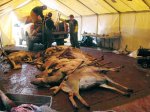
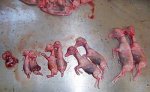

Animals are inherently sentient and possess the capacity for thought and emotion, including contentment, loneliness, fear, and agony. All animals, human and non-human, experience the desire to live free from exploitation and suffering and fear the manifestation of death. Humans have adopted dangerous constructs of speciesism, the prejudicial regard of non-human species, to validate the brutality inflicted upon them. Using this manufactured status of superiority, humans have sanctioned the use of animals as commodities, regarding them only as products to benefit our goals and needs. We embrace inequity to justify our treatment of animals, which is mere savagery concealed in socially-approved descriptions.
SAMPLE TWO
It is impossible for me to even contemplate the desire to kill. If you take a moment to invite the thought, imagine the need, consider the implications, you cannot escape the inevitable conclusion of depravity that initiates the process. Despite your promotion of validations used to cultivate societal approval, your actuality is slaughter, the calculated hunt and subsequent kill. Your black and white diplomatic banalities cannot conceal the red of the blood, the immobilizing, excruciating pain, the struggle to escape, the agony of incapacity, the fear of death, the evisceration of life. You recoil at gruesome descriptions, your tedious proposals absent the illustrations of deathly consequences you so easily sign with impunity and indifference. Regardless of culturally accepted monikers of preservation and conservation, however, and despite appeals using biased and emotionally-charged rhetoric, the reality includes the deliberate and vicious killing of sentient non-human animals.
SAMPLE THREE
Killing is inherently malicious, and sanctioning malice requires apathy towards brutality and a desire to create death. There is no deviation possible from this principle philosophy, and embedding viciousness in conciliatory verbiage and legalese only forgives words, not actions. When you approve hunting, you embrace malice and invite bloodshed into your communities. The images of people expressing joy and pride alongside intentionally killed beings is not only disturbing, it is also a facilitation of cruelty. You are not modeling your behaviour after compassion and tolerance but demonstrating brutal death as an acceptable response to innocent life. I envision you, debating occasionally, championing your party, accepting concessions, gesticulating and arguing, your Robert’s Rules a bible of procedure, the impropriety of sanctioned death hidden in cursory signatures representing the weapons that will cease the lives.
SAMPLE FOUR
I will not discuss ecology, balance, religion, or conservation: these are your embellished dictates meant to promote acceptance and reason, but which are fundamentally immoral, excluding compassion and any regard towards animals who don’t possess your capacity to observe or understand egotistical, speciesist tendencies. The criminalization of these animals based on your biased perceptions is a perversion of reason and logic. All human and non-human animal life is tangibly sacred and worthy of freedom from exploitation and suffering. Your discussion to needlessly and viciously kill is a personification of malevolence, and I ask that you instead extend a compassionate and equal gesture to observe and accept life rather than viciously extinguish it.
SAMPLE FIVE
Humans have adopted dangerous constructs of speciesism, the prejudicial regard of non-human species, to validate the brutality inflicted upon them. Using this manufactured status of superiority, humans have sanctioned the use of animals as commodities, regarding them only as products to benefit our goals and needs. We embrace inequity to justify our treatment of animals, yet euphemistic descriptions meant to facilitate morality cannot disguise the fundamentally unethical parameters with which we surround ourselves to distinguish our dominance. As dangerous as racism and sexism, speciesism further divides the chasm between species, which desensitizes us to cruelty and inevitably leads to human inequality and injustice.
This disregard of your most vulnerable group of beings is unacceptable, and until this barbarism is appropriately addressed including a mandatory ban of such, I will boycott. Indeed, allow me to emphasize that it would be financially detrimental for you to enable the harm done to these animals. I and others will collectively voice condemnation of you resulting in the sacrifice of vital tourism and commerce profits. Please act responsibly and with compassion and choose to protect, rather than sanction harm, to animals.
SAMPLE SIX
Why don’t I hunt? I could allude to the fruits of exhaustive research into the ecological and biological consequences of hunting, and to collective insights of biologists, ecologists, and naturalists who challenge the prevailing wildlife-management dogma. Yet, fundamentally, the answer can be expressed in simple moral terms:
Hunting is wrong, and should be acknowledged to be so not only by those who espouse the precepts of the animal-rights credo, but by those who hold a common sense of decency, respect, and justice.
When we have exposed the specious reasoning of the hunters’ apologists and stripped their sport of its counterfeit legitimacy, the naked brutality of hunting defines itself: killing for the fun of it.
Steve Ruggeri, Why I Don’t Hunt
Letter to the President: save the Rabbits!

IMAGE |Wang Jinhai & He Zhiliang, Guangdong Industry Technical College, China
By Loredana Versaci
Rabbits are among the most abused animals in the world. Eaten, tested, skinned…They are too kind for this world.
Therefore, I’m asking you to take action for them, whenever you can, in every way you can. When I discuss with horrible people wearing rabbits, they usually reply, “oh well, I eat them”. Trust me, I feel the impulse to skin them!
I am also asking to send a letter to the Chinese President. Below is a sample letter, naturally you can send your personal letter if you prefer, though.
RELATED | Have you ever heard a bunny scream? Boycott Donna Karan, Butcher
Vodpod videos no longer available.
WHERE TO SEND YOUR MESSAGES
Individual
Group
suggestion@mail.gov.cn , content@mail.gov.cn
Post
To the Honourable President of the People’s Republic of China
9 Xihuang-Chenggen Beijie
Beijing 100032
China
SAMPLE MESSAGE
Your Excellency:
On this occasion at the start of the Chinese New Year, permit me to bring the plight of rabbits and other species of animals on Chinese fur farms.
For the millions of individual rabbits and other animals suffering on Chinese fur farms, will this Year of the Rabbit prove any differently? Will it bring them happiness, freedom, good health, success, and all the things which we humans want for ourselves and our families?
These gentle animals spend nearly their entire lives crammed in filthy wire cages that are so small that the animals are often unable to move more than a few tiny steps. They are born and raised to die at the hands of workers who kill them using methods — such as neck-breaking, suffocation, poisoning, and electrocution — that keep the rabbits’ skin intact so that it can be sold. The skin of rabbits who do not die instantly is often ripped from their bodies while they are still conscious.
Recently, when I read that China had forbidden circus acts that exploit animals, I was delighted. Indeed, China has progressed enormously in various fields including the ethical treatment of animals, which means no use of them.
It is undeniable that cruelty towards helpless non-human sentient animals is vile, cowardly, and downright immoral. Stronger creatures such as humans ought to exercise clemency and gentleness towards weaker creatures. I am certain that such ideals are enshrined in the grandeur of China’s philosophic heritage by way of Buddhism, Confucianism, and Taoism.
Therefore, during this Year of the Rabbit, I hope that China will make even greater progress towards banning cruel and inhumane practices involving the torture and painful death of millions of defenseless animals.
Respectfully,
Name, Surname
Country
Please take three actions against two savage festivals in New Caledonia/Nlle Caledonie
By Isabella Poliakov Parfenoff
1. Please click on and sign Protest against savage Festivals in New Caledonia
2. Send Sample Message to Caledonia mayor, tourism targets
3. Send Sample Message to Coca Cola
BACKGROUND
Please join the Facebook event HERE for additional details.
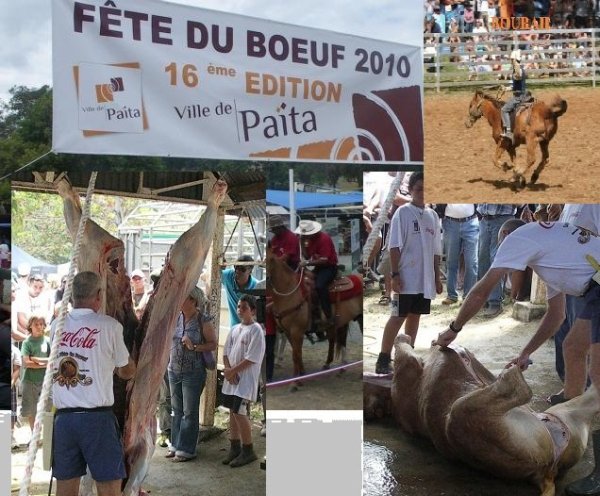
In New Caledonia (French: officially: Nouvelle-Calédonie ), there are two annual festivals held, both torturing and killing animals. One in PAITA “la Fête du Boeuf “, and two, in BOURAIL ” la Foire Agricole. These events engage in severe animal abuses in which bulls are chased and mutilated (such as live castration in Paita ), rodeos, and massacres. The purpose of this alert is to protest against this traditional savagery and to ask the rodeos and mutilation be cancelled definitely, as well as to alert the Tourism Office about these events that are damaging to the tourism industry.
2. SEND SAMPLE MESSAGE TO CALEDONIA MAYOR, TOURISM INDUSTRY
Where to send your message (one has been returned as “full mailbox” but I left it in below)
Hot links
info@nctps.com
info-par@nctps.com
info-syd@nctps.com
info-akl@nctps.com
info-tyo@nctps.com
Neukaledonien@eyes2market.com
nuova-caledonia@tiscali.it
info@new-caledonia.co.kr
info.aircalin@us-sales.com
secretariat.general@ville-paita.nc
c.hellouin@mairie-bourail.nc
As a group | Copy, paste into your TO:
info@nctps.com
info-par@nctps.com
info-syd@nctps.com
info-akl@nctps.com
info-tyo@nctps.com
Neukaledonien@eyes2market.com
nuova-caledonia@tiscali.it
info@new-caledonia.co.kr
info.aircalin@us-sales.com
secretariat.general@ville-paita.nc
c.hellouin@mairie-bourail.nc
Sample Message to Send
Madame, Monsieur,
Concernant les festivals de PAITA et BOURAIL en Nouvelle Calédonie:
“Rodéo, « jeux » équestres, abattage public des animaux, dépeçage « à l’ancienne », mutilations « à l’ancienne » également (donc sans étourdissement préalable), et suprême horreur, dégustation et concours du plus gros mangeur de testicules de veaux… Et tout cela sous les yeux des nombreux enfants présents et sous le regard « bienveillant » de leurs parents… sont des actes extrèmement choquants et inacceptables!
Vous n’êtes pas sans savoir que toutes ces pratiques sus-énoncées sont source de stress, de blessures graves, de grande douleur infligée et synonymes de cruauté et de barbarie envers les êtres sensibles que sont les chevaux et les bovins (à l’instar de tous les autres animaux), et que dans le monde entier des personnes telles que moi se soucient, se mobilisent, s’organisent afin que de tels actes de férocité institutionnalisés disparaissent afin de faire apparaître le Droit de Vivre sans souffrance pour les animaux. Le simple Droit, qui est un devoir pour tout être qui se dit humain.”.
Nous comprenons que vos traditions sont importantes mais elles peuvent être effectuées sans ces cruautés indignes d’un pays civilisé.
Je suis certaine que vous comprendrez l’image négative qu’elle véhicule au sein de la communauté internationale, à ce jour très choquée.
Salutations distinguées,
Name /Nom
Country/Pays
Translation
Mayor of Paita,
It is with horror, dismay and sadness that I learn that each year organizes and runs the feast of beef in your city, the feast which is not crop your country, but that is created for the sole purpose to satisfy an audience of tourists (or persons / families “established” that boast very often on the internet or in real life, yet belong to a “race” of colonial lords) in need of thrills and violent.
Rodeo, “Games” rides, public slaughter of animals, butchering “old” female “old” as well (ie without prior stunning), and supreme horror, tasting and eating contests the largest testicles of calves … And all this under the eyes of many children present and under the eyes “kind” of their parents …
Mr. Mayor, you are aware that all these practices outlined above are a source of stress, injuries, inflicted great pain and synonyms of cruelty and barbarity against sentient beings that are the horses and cattle ( like all other animals), and in the world people like me are concerned, mobilize, organize themselves so that such acts of ferocity institutionalized disappear to reveal the right to live without pain Animals. The simple law, which is a duty for every human being who said.
Mr. Mayor, I do not doubt for a moment of humanity that lives in you and that is why I would write to you today to request your high benevolence to make a choice … That to protect life , the sensitivity to honor the living creatures, the show, to celebrate the beauties and subtleties, smashed your culture rather than glorify the death, torture, traditions that persist in our unworthy century and a other ground than yours.
I place great hope in this application, an infinite hope for your attention … and a response from you.
And I beg you to believe, Mr. Mayor, the assurances of my high consideration.
NAME
3. SEND SAMPLE MESSAGE TO COCA-COLA
Click on each for internet webform, copy/paste below letter to use as message. Click on below screenshot for translation.

Sample letter to use:
To Whom It Concerns,
It has come to my attention that you are a major sponsor of the PAITA and BOURAIL Rodeos in NEW CALEDONIA /Nouvelle Caledonie.
It is important that you understand that rodeos are fundamentally inhumane and considered one of the most injurious events involving animals. It is a documented fact that rodeos subject animals to untold suffering, including severe injuries and death. Your sponsorship of such animal cruelty is disturbing, and as a customer, I am appalled to learn of your deliberate involvement in the exploitation of animals. As such, I respectfully request that you sever your relationship with the Rodeos in NEW CALEDONIA /Nouvelle Caledonie.
Until such a time when Coca-Cola no longer participates in such animal cruelty, I will be unable to be a loyal customer.
Murderer up for parole, please protest!

1. Please sign and send Urge The Kentucky Parole Board to Keep “Cat Killer” (Russell Swigart) Behind Bars!
2. Send letter (sample below) via mail, email not accepted
BACKGROUND
Targeting: Gov. Steve Beshear (KY)
Started by: Bridgett Wright
Russell Swigart is up for parole in February, after serving 2 years and 5 months of a 12-year prison sentence. He pled guilty in 2008, for 2nd degree Breaking & Entering and 2 counts of animal torture under Romeo’s Law for stabbing 2 pet cats to death. (10 yrs. for B&E and 2 yrs. for animal torture)
My name is Bridgett Wright and I am the victim in this case. Swigart broke into my Lakeside Park condo, after sending me threatening texts that he “wanted me dead.” He was armed with an 11 inch Buck Knife. I was out of town on a last minute business trip. When he saw I was not home, he took out his rage on two of the most important things in my life–Mr. Frank and Piggy. These were cats I adopted at birth & loved for nearly 8 years. Swigart then texted me saying,
“You should get home and clean up the mess. Piggy & Frank have seen better days. I just stabbed your cats to death. Piggy put up a good fight, but Frank went out like a b****.”
I called the police & alerted my family. Driving home, from 3 hours away, was torture in itself. The only information confirmed by police, was that my home had in fact been violated. I didn’t know for sure if they were dead until I arrived home. It was the worst night of my life. When he does get out of jail—I will live in fear of this man.
Russell Swigart has a long history of stalking/threatening women and torturing or killing their pets. There are at least 5 other known women with pets that he has victimized. Swigart is mentally unstable and a danger to society. He needs to be stopped before he kills a person. I desperately need the support of all animal lovers and concerned citizens to urge The Kentucky Parole Board to deny his parole and make him “SERVE OUT” the remaining 10 years of his sentence.
The Kenton County Prosecuter, Justin Sanders, who prosecuted this case was quoted in the Kentucky Enquirer saying,
“It is not unreasonable to believe that (Swigart) may even be a serial killer in the making,” on January 26, 2011.
- 1. Please sign the online petition
- 2. Send a polite letter – no emails – THIS WEEK (to arrive before Monday, February 14, 2011) to the Kentucky Parole Board encouraging that Russell Swigart’s parole be denied, and reminding authorities of the well-documented connection between abuse to animals and violence toward humans.
WHERE TO SEND YOUR LETTERS
Kentucky Parole Board
PO Box 2400
Frankfort, KY 40602-2400
Fax: 502-564-8995
Include Russell Swigart’s case number in your letter. DOC#233603
SAMPLE MESSAGE
RE: Russell Swigart | DOC#233603
Dear Parole Board Members,
I have learned of an extremely disturbing and malicious case of animal cruelty in which Russell Swigart, DOC#233603, with deliberation and malice caused the suffering and death of two cats, Mr. Frank and Piggy, who lived with Bridgett Wright. Mr. Swigart will soon be up for parole; he has served two years, five months of an original twelve-year prison sentence. I am writing today to respectfully request that you deny Mr. Swigart parole and that he fulfill the maximum penalty.
When I try to imagine what possible motive animal abusers entertain for subjecting their victims to such malicious, heinous acts of brutality, I fail, but I am thankful for a lack of cognitive understanding and rationalization. To engage in such malevolent behaviour absolutely suggests sociopathic and sadistic tendencies and demonstrates an incontrovertible lack of morality regarding other living beings and a gross disrespect for the law. In fact, a person who shows such a remarkable lack of compassion towards animals has, disturbingly enough, the ability to show such indifference towards humans. This link between animal and human abuse has been established, and if we excuse or ignore Mr. Swigart’s violent history, we would be serving an injustice to both animals and society.
Please respect the victims by penalizing the guilty and deny Mr. Swigart parole. Rejecting cruelty by maintaining an unyielding position towards it would be a model for all community members and would serve to characterize this type of behaviour as both impermissible and punishable.
Thank you for your attention to this urgent issue.
NAME
ADDRESS
RELATED:
- Cat killer up for parole
- Domestic Violence Victim Fights Parole for Serial Pet-Killer
- Victim Speaks Out Against Parole for Kentucky’s First Felony Animal Torturer
From ALDF | Sign the Expose Animal Abusers Petition Now!
Vodpod videos no longer available.
Demand Justice for Ugandan LGBT Activist David Kato

PHOTO | The Changing Attitude Blog
Please click on and sign Demand Justice for Ugandan LGBT Activist David Kato
From Amnesty International, USA
Last fall, Ugandan LGBT activist David Kato successfully sued a national newspaper that published the article “100 Top Ugandan Homos” with the caption “hang them.” On January 26, Kato was brutally murdered in his home, the latest tragic example of the constant threat so many LGBT people face in Ugandan.
The Obama administration must ensure that the Ugandan government works to end discrimination against LGBT people. And the US Government must—as we all must—demand justice for David Kato.
MESSAGE TEXT
I would like to express my deep concern at the recent murder of David Kato, LGBT activist and founding member of Sexual Minorities Uganda, and I call on you to urge the government of Uganda to ensure that David’s death is investigated in an impartial and credible manner. Any persons suspected of involvement in the murder must be brought to justice in a fair trial which complies with international standards.
David’s brutal murder is a solemn reminder that discrimination based on sexual orientation continues to pose a serious threat to the wellbeing of LGBT people in Uganda. Securing justice for this reprehensible act is an opportunity for the Ugandan government to send a clear message that discrimination against and acts of violence targeting the LGBT community will not be tolerated. I ask you to ensure the opportunity is not missed.
Specifically, I ask that you:
Urge Ugandan officials to conduct a thorough and impartial investigation of the murder of David Kato, and hold accountable those responsible.
Encourage the Ugandan government to take immediate action to end discrimination based on sexual orientation and gender identity. These efforts should include addressing hate speech and the publishing of personal information in tabloid newspapers.
Insist that all cases of violence committed on the basis of gender identity or sexual orientation in Uganda are promptly investigated and the perpetrators brought to justice in fair trials.
Vodpod videos no longer available.
Related, Vigil For Society’s Casualties
Read more…
I’m sure we’re all feeling the loss …

PHOTO | Foeke Noppert
Man Killed by Rooster at Cockfight | From CBS 47
Reported by Kathryn Herr
Details have been released on a bizarre death in Tulare County.
A 35-year-old man was killed while attending an illegal cockfight near Earlimart.
Investigators say Jose Luis Ochoa was cut by a razor attached to the rooster’s leg.
Lieutenant Rick Ko with the Fresno County Sheriff’s Department showed CBS47 some of the weapons used in cockfighting. They are tiny razors attached to the rooster’s leg that they use like knives during the fight. “We’ve seen people cut with minor cuts when they put on the knives … but nothing severe,” said Ko.
Vodpod videos no longer available.
Tulare sheriff’s deputies showed up to investigate the illegal activity and people scattered. At that time, one of the birds apparently jumped at Ochoa and the knife on its leg cut a major artery in the man’s calf. He died at a hospital in Delano.
Authorities believe this is the first time a human has died as a result of a cockfight.
Lieutenant Ko said, “It’s still against the law to participate in cockfighting, to be a spectator at a cockfight, and raise animals particularly for fighting with paraphernalia.”
The sheriff’s department says there are often a lot of other crimes associated with cockfighting, such as drugs, illegal gambling, and animal cruelty.
And in other news, TEN BILLION animals killed by man …
Vodpod videos no longer available.
See More …
Fur or Faux? The Labeling Problems Uncovered at Area Stores
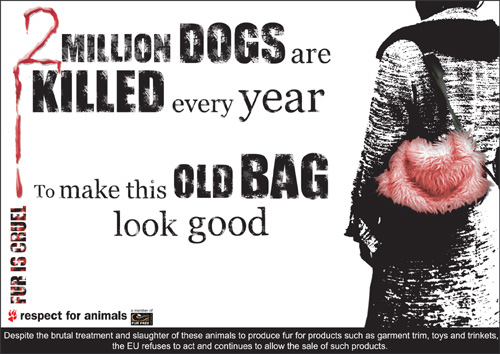
IMAGE | Ian Orange, Dewsbury College: Dewsbury, UK
From NBC New York
By Katy Tur
Care to wear faux? Well you could be wearing fur.
Fur or faux? It’s a question that may seem easy – just check the label right? Wrong.NBCNewYork went undercover inside some of New York‘s most popular bargain clothing stores to find out just how real fur is being sold. The results are anything but comforting, meaning you may not even know what you’re wearing.
Pierre Grzybowski is an investigator with the Humane Society of the United States. Taking out a map of the city, Grzybowski showed News 4 stores from the upper west side all the way down to Ground Zero, where he says real fur was masquerading as fake. “We are going to cut a swath down Manhattan and it’s going to be a swath of deception,” describes Grzybowski.
Popular retailers like Century 21, Loehmann’s, Burlington Coat Factory and Filene’s Basement were all allegedly in defiance of New York state law by selling real fur without properly telling customers what they’re buying.
We found a purple sweater with purple fur trim in Filene’s Basement, leading Grzybowski to exclaim that its purple “it’s got to be fake. But lets check the label – 100 percent acrylic. So, it’s got to be fake? Wrong. It’s real.”
In store after store, label after label on garment after garment there was no trace, according to the Humane Society of the United States of a proper or legal explanation as to what the trims were actually made of.
And to make matters worse, sales person after sales person told News 4 that the fur trims identified by the Humane Society of the U.S. as real, were anything but.
RELATED | Fur or Faux? The Labeling Problems Uncovered at Area Stores
Vodpod videos no longer available.
According to a sales person at Burlington Coat factory, the cheap price of the fur-trimmed cardigan, meant it couldn’t be real. “To say it’s real, actual fur? No,” the sales lady confidently explained.
It’s a problem Grzybowski says he’s run into time and time again, particularly at Burlington Coat Factory. A claim the retailer doesn’t deny.
“Either they can’t get labeling right or they don’t know how, but either way it’s a problem and ultimately it’s the law”, said Grzybowski.
Grzybowski says there are three easy ways to tell fur from faux.
1. Look at the tips of the hairs. If fur is un-sheared you can see that it tapers into a fine point like a cat’s hair, an eyelash or a sharpened pencil
2. Burn it. If it smells like burning human hair, it’s real fur.
3. See if the fur is attached to skin.
The most common misconception, price, has nothing to do with it – meaning, not surprisingly, that many wearing the real stuff had no clue.
“I would say I’m pretty confidant its real fur,” said one woman who declined to give her name. When Grzybowski tells her its real, she says she is disappointed arguing that she doesn’t believe in wearing real fur.
The real issue – if you are buying faux fur specifically – you are buying it for a reason. If you’re against fur, finding out you’re inadvertently wearing it is a big deal. Filenes, Century 21, and Burlington Coat Factory all thanked News 4 for bringing the garments to their attention. All three said they removed the items from their sales floor. Still after repeated attempts to get answers from Loehmann’s, no one returned our calls or emails. UPDATE: Once the story went to Air, Loehmann’s responded by saying it has removed “24 pieces of the garment” in question from its stores and has informed the vendor about the need for correct labeling. The full statements from the retailers are below.
Anthony Marr: My Gratitudes | #5 – To My Friends, Colleagues and Volunteers in India
Vodpod videos no longer available.
Gratitudes | #5 – To My Friends, Colleagues and Volunteers in India
My November 1995 Chinatown campaign (see Gratitude 3) had more benefits than one:
1. It forced the enactment of the WAPPRIITA law in April 1996, rendering the selling of anything containing endangered species ingredients illegal within Canada.
2. It secured me a place in the 28,000-paying-members-strong Western Canada Wilderness Committee (WCWC), which had all the campaigning tools I as an individual did not have.
3. It won me a $75,000 project grant from the Canadian International Development Agency (CIDA) in 1997 to go to India to help save the Bengal tiger from extinction. This in turn expanded into a 3-year program grant of $100,000 per annum to return to India three times more in 1998, 1999 and 2000. From 1997 and 2000, the Western Canada Wilderness Committee, a regional environmental organization, waged an outstanding wildlife preservation campaign of global scope.
4. The campaign also became the “Champion of the Bengal Tiger” episode (1999) of the award-winning 5-year TV documentary series “Champions of The Wild” aired on Discovery Channel, Animal Planet and Knowledge Network in 20 countries around the world.
When I first got started in Chinatown, I had no idea where I was headed. Fate led me along my path, and tested me at every turn. It was always by free will, but also as if predestined, and in retrospect, seemed meant-to-be.
My three expeditions in India were high points in my life, and remain vivid in my memory a dozen years hence. What I did in India is encapsulated in the Deep Rural India Expeditions and outlined in the following article written by me and published in the Vancouver Sun:

Anthony Marr with his trusted and beloved Indian colleague and friend Faiyaz Khudsar
A Passionate Journey to Save India’s Tigers
Vancouver Sun | 1999-05-14
by Anthony Marr

Vancouver, British Columbia, Canada, May 14, 1999 (ENS) – The tigress was sleeping on her side in the undergrowth deep within Kanha National Park in Madhya Pradesh, the self-appointed “tiger state” of India. She was scarcely visible in the dense foliage with her camouflage of brown and white patches and shadowy black stripes. Within tail-flicking distance behind her was a half-eaten carcass of a wild boar. The tigress was not going anywhere, short of angrily bolting in fear of being stepped on by the elephant on which I was ensconced, which was indeed getting a little too close.
She tolerated our intrusion for a while, but when the elephant ripped a branch off the tree in whose shade she was resting, she finally had enough, rolled on all fours, gave us a chilling glare and emitted a hissing snarl that could not be ignored. I snapped the last of a string of photos and instructed the mahout (elephant driver) to beat a prudent retreat.

It was January this year, during my third expedition to India’s Kanha and Bandhavgarh tiger reserves as Western Canada Wilderness Committee’s (WCWC) tiger conservation program director. The program, with WCWC working in partnership with the Indian conservation group Tiger Trust (TT), is funded by the Canadian International Development Agency at $100,000 per year over three years. WCWC also generates further tiger conservation funds from its own 25,000-strong membership, hundreds of donors, educational outreach slideshows and its annual Save-the-Tiger Walk.

Of the original 100,000 to 150,000 tigers worldwide, only 4,000 to 5,000 remain with only three of the original eight subspecies surviving. The Bali tiger was extinct as of the 1940s, the Caspian tiger died out in the 1970s and the Javan tiger in the 1980s. Of the remaining subspecies, the Indian Royal Bengal tiger has the best chance of survival because there are still about 2,500 remaining compared with 1,000 Indo-Chinese tigers, 300 Siberian tigers, 300 Sumatran tigers and 20 South China tigers.

Wild tigers are dying at the rate of about two each day worldwide due to the dual cause of direct killing and habitat loss. By the same token, about one a day dies in India. At these rates, no wild tiger will be left anywhere in the world within a decade, and the Indian tiger’s security is but that of the last carriage of a crashing train – unless tiger conservation projects everywhere succeed big time, and very quickly. This is what I’m betting on, starting with our Save-the-Tiger Campaign.

In 1973 when Project Tiger was launched, with founder Kailash Sankhala as the first director, tiger trophy-hunting was banned and about 25 tiger reserves were created. Meanwhile, however, consumer countries like Japan, Korea and China continue to demand for more tiger bone and penis to supply their traditional medicine markets, and India’s human and cattle populations continue to sky-rocket – 980 million and 500 million today respectively.

These are the dual causes of tiger decline – habitat loss and direct killing. Direct killing refers to poaching for medicinal bone and penis, but also poisoning by villagers in retaliation for the occasional loss of cattle as tiger prey. Habitat loss encompasses deforestation and overgrazing. Currently, the biological contents of a miniscule three percent of India’s land mass are given any degree of protection, but even these “protected” areas are being eroded by government-condoned mining and logging, and by local villagers in desperate need of firewood for cooking and heating. Especially hard to solve is the overpopulation problem of India’s cattle, caused by their being milk-producers, beasts of burden, and, most importantly, sacred cows.

For each of these problems there is long-term and short-term solutions. The long-term solution is to re-kindle citizen pride in the tiger as a national symbol throughout India and especially to motivate the villagers who live around tiger reserves to become tiger conservationists themselves.

This is easier said than done. While I was there, India was consumed by cricket fever. If Indian tiger conservation could capture but one percent of this enthusiasm, I could retire.

During my two-week stay in urban India, I gave our tiger conservation slideshow, seen by more than 30,000 students in British Columbia, to 3,000 students of ten Delhi and Jaipur schools. The show did generate the same degree of enthusiasm, resulting in ten “tiger clubs,” which I aim to link with environmental clubs in schools in Canada.

What does it take to turn villagers into tiger conservationists? Consider first the villagers. During my eight-week stay in rural India, our WCWC/TT team, made up of TT field worker Faiyaz Khudsar, Vancouver volunteer Anne Wittman and myself, held six-hour meetings with the leaders of about 120 villages of the 178 in Kanha’s Buffer Zone. The meetings included discussion, a slideshow and a two-hour safari in the park – a place most of them have never seen.

Their most common concerns are crop plundering by park ungulates especially the cheetal deer and the wild boar, loss of cattle to tiger, insufficient compensation for both, the lack of irrigation, and, last but not least, the lack of financial benefit from the park.

Underneath these external factors is the general undertone of abject poverty that limits the villagers’ mindset to the here and now at the expense of tomorrow into which the path of conservation extends. The key to overcoming these difficulties is actually quite simple: to let long-term conservation benefit them today.

One of the key components of this is to introduce alternative technologies, such as biogas plants and solar cookers, to replace wood as fuel. Bearing in mind that village women currently spend their daylight hours gathering fuel wood from far afield, then walking kilometers back to their villages or to townships to sell their 50 pound headloads for 15 rupees (55 cents) each, they would welcome alternatives that could allow them to stay at home and work on financially more rewarding and more eco-friendly cottage industries.

Our team trekked long distances through thick jungle in Kanha’s Buffer Zone to access remote villages with our demo solar oven on one of our backs. The demo cooker was designed and made in Canada, but units are modified in India so they can be constructed out of local materials. With nine months of solid sunshine a year, India is well suited to this technology. In a multi-village conference at Bandhavgarh where I was one of the speakers, we signed up 23 villages who wished to try out our solar cooker, and further, five villagers signed up to learn to make the cooker on a commercial basis.

To combat the cattle overpopulation and overgrazing problem, we bought a special hybrid Haryanna bull that local people had been hankering for – one whose offspring yield ten times the amount of milk as the usual breeds. We provided it on a trial basis to a village named Chichrunpur on the periphery of Kanha tiger reserve – one of the 22 villages translocated from the Core Area into the Buffer Zone during the creation of the park. The villagers agreed to stall-feed the new bull and his offspring with fodder that can be grown on part of the land or obtained commercially, while gradually retiring the existing low quality stock and neutering all their existing random-bred bulls. After a generation two, the bull will be rotated to another village and another installed in his place. Stall-feeding is important because it frees the land from free-range overgrazing, protects the higher-quality animals from tiger predation, and makes cattle dung readily available for biogas (methane) generation – another alternative fuel technology.

Regarding the tiger reserves, the general sentiment of the villagers is that they are little more than rich peoples’ playgrounds that provide little financial benefit to them save a few jobs in the park service, and worse, produce deer and wild boar that plunder half their crops without adequate compensation from the park authorities. In view of this, we recommended reforming the park system so that the reserves can at least compensate for themselves. Consider this: the world-renowned Kruger National Park of South Africa charges $25 US per visit, Uganda charges US$180 for one hour of Mountain gorilla viewing. Neighbouring Nepal’s Chitwan National Park grosses US$800,000 a year. Half goes to improve park services, including anti-poaching, and half goes to a benefit fund managed by the villages themselves, which helps to preserve the park as their benefactor.

In contrast, the Indian tiger reserves charge foreign tourists onlyUS$2.50 for a full day park visit. Indian visitors, mostly wealthy people from other states, pay just 25 cents. We advocate using Chitwan as a model by raising the park fee by a factor of ten for both foreign and out-of-state Indian tourists, while offering local villagers free park access on a limited basis. Half the increased revenue could go to park services which could generate more employment, and half could go to the villages to compensate for crop plundering and finance cottage industry enterprises such as manufacturing solar cookers. This gives the villagers a real control over their own destiny.

The park officials, villagers and tourists we have spoken with at both Kanha and Bandhavgarh by and large wholeheartedly embraced the proposal. We further pointed out that tigers are in fact their benefactors, since they keep the wild ungulate populations down by several thousand a year, and tigers are what tourists from around the world pay the park fee to see.

While at Bandhavgarh, we were dismayed to discovered that the tigress Sita, made world-famous by the cover article in the December 1997 issue of National Geographic, had disappeared. Her loss is most likely due to poaching. More than five other tigers out of a supposed population of only 45 have also vanished, all within the last six months. The entire park was in a state of subdued uproar, with fingers pointed in various directions.

Only yesterday I heard from Faiyaz Khudsar that 10 tiger skins and four tiger skeletons were recently seized in the Kanha District capital Balaghat. Some officials would deny it, but commercial poaching is alive and well at both tiger reserves. The proposed park reform should strengthen their anti-poaching measures.

During our visit, we maintained the medical clinic and free school we installed at the Tiger Trust Conservation Centre at Kanha in 1997. The school and clinic services three nearby villages. In the whole of Kanha’s Buffer Zone there are only four medical clinics including our own, all with similar effective ranges. Of the 178 Buffer Zone villages, no more than a dozen have access to any medical service.

For the rest, we introduce local medicinal plant cultivation and use by means of our demonstration medicinal plant garden. We intend to establish a mobile clinic to benefit more villages in due course.

From their perspective we are a foreign adjunct to the park system, and they likely would give some credit to the tiger reserves for any benefit they receive from us.

Finally, we can all learn something from India’s experience. Tiger trophy hunting was not banned until there were fewer than 2,000 tigers left, in spite of which the Indian tiger may still perish. Currently, most independent biologists agree that there may be as few as 4,000 Grizzly bears in British Columbia, regardless of how many more the pro-hunting BC government claims there are. If we do not ban the Grizzly bear hunt here in our own backyard immediately, our Grizzly bears may go the same way as the highly endangered Indian tiger, or worse, the extinct Bali, Caspian and Javan tigers.

(Anthony Marr is the tiger campaign director for the Western Canada Wilderness Committee. His next expedition to India will depart from Vancouver in October or November. Anyone interested in volunteering can contact the Wilderness Committee at 604-683-8220)
@ Environment News Service (ENS) 1999.

The following links and associated images will tell their own stories:
1997-2001 (AM’s educational outreach – numerous newspaper articles)
Urban India Educational Outreach

1997-2004 (AM at various international conferences)
1997, Fall (WC Wilderness Committee publication)
Canadians Must Save the Tiger: Tiger, Tiger Burning Dim

1999 (AM in Champions of the Wild – Bengal tiger) Part 1 & part 2:
Part 1
Part 2
1999 (India Travelogue India, honor-mentioning AM as an example)
Deep Rural India Expeditions: India Travelogue

1999-02 (Travel Talk India TT bureau)
Deep Rural India Expeditions: Save the Tiger campaign

1999-02-12 (Article in The Hindu National, India)
Deep Rural India Expeditions: Need to protect tigers stressed
Shocking truth of how monkeys are tortured for “entertainment” in Indonesia | Please take action

PHOTO | Jakarta Animal Aid
1. Please click on and sign Stop the Torture of Macaque Monkeys in Jakarta
2. Send a message (sample below) to Fauzi Bowo, Jakarta Governor, and to the Indonesian Embassy in your country.
From Mirror News
By Nick Owens
Fear and pain etched across his face, a little monkey cries out as he grabs helplessly at a metal chain biting into his neck.
As he lets out a high-pitched scream a gang of men force him to stand up straight, laughing as they tighten the chain.
It is just one of a series of shocking images of the hell the monkeys endure in the slums of Jakarta in Indonesia, where they are forced to walk upright and wear costumes… all in the name of entertainment.
A Sunday Mirror investigation discovered the monkeys are also made to wear masks, hats and glasses to catch the eye of passing tourists.
If a visitor stops, the monkey is ordered by its owner to walk on his hands, sit on toy rocking horses or ride bicycles in the hope the tourist will hand over some loose change.
Other creatures are forced to simply beg. On one Jakarta street a monkey was found wearing a doll’s head mask, her suckling infant clinging to her as she begged for money at the side of a busy road.
The disturbing images were passed to us by the Jakarta Animal Aid Network, which went undercover to expose the cruelty the monkeys endure.
Their torment starts deep in the forests of Sumatra where the macaques, an endangered species of monkey, live.
Teams of poachers use sickening methods to trap them. The most popular one is to shoot the mother and then prise the clinging baby off her.
Baby macaques are preferred as they have a longer life as performers. The poachers are paid £2 for each monkey by dealers, who sell them on to street “entertainers” in Jakarta for £5 each.
It’s here the torture really begins. The monkeys are hung upside down so they learn how to walk upright. Chains are then clamped around their necks and they have to stand up straight or be punished.
The monkeys are starved and only fed when they obey to make sure they learn quickly. The highly-social primates are forced to live inside cramped wooden crates and can’t interact with each other, leading them to become deeply disturbed.
After being “trained” they are taken to tourist spots to “work”. Our revelations will put pressure on the Indonesian authorities to take action. But the illegal animal trade is a multi-million-dollar business. Femke Den Haas of JAAN said: “It is pitiful to watch how these monkeys dragged from the wild are tortured and condemned to a life of hell.”
Sarah Kite, of the British Union for the Abolition of Vivisection, said: “Indonesia must act now.”
RELATED | BBC News Indonesia animal trade under pressure from campaigners
Click on each to enlarge | All photos courtesy of Jakarta Animal Aid Network


WHERE TO SEND YOUR MESSAGE
1. Click to locate the Indonesian Embassy in Your Country
Please note spelling differentiations: USA is Amerika Serikat, Canada is Kanada, France is Perancis, etc.
The USA embassy email is invalid, please send your message via the online webform HERE.
2. Fauzi Bow, Jakarta Governor: webform HERE
Please note, you must leave NO SPACES between your first and last name in order to submit the message. For example, JaneSmith or JohnSmith. Translations below.
Semua pesan yang Anda tulis disini kirim ke Database Bangfauzi.com. Semua pesan yang Anda tulis disini akan kami respon secepatnya. Terimakasih.
Translation: All messages that you have written here send to Database Bangfauzi.com. All the messages you write here will be our immediate response. Thank you.
Pesan
Translation: Message
Masukkan kode di samping in
Translation: Enter the code
Kirim
Translation: Send
If successful, you’ll receive Email Anda telah terkirim. Terima kasih telah menghubungi kami. Kami akan segera merespon email Anda.
Translation: Your email has been sent. Thank you for contacting us. We will promptly respond to your email.
SAMPLE MESSAGE | please modify and shorten
To Whom It Concerns,
I am shocked to learn of the cruelty inflicted on monkeys in Jakarta for Topeng Monyet, or dancing monkeys, as detailed in the Mirror, and I am writing to request that you cease this practice immediately. These juvenile monkeys, wild macaques, who are captured and stolen from their natural homes and families, are subjected to appalling routines in busy marketplaces and traffic to entertain humans, forced to wear ridiculous costumes, and made to endure dangerous environments while performing circus-like tricks. This practice is actually an illegal activity as established by Surat Keputusan; such a gross violation should be of paramount concern.
Regardless of euphemistic descriptions meant to disguise exploitation, this practice is indeed unethical, the animals being intentionally subjected to dangerous conditions in dirty, artificial, and polluted surroundings where risk of injury and fatality is high. Although you may find the lives of these monkeys as immaterial and therefore expendable, you should understand they value their own lives and possess the capacity to experience trauma, fear, and suffering.
This type of exploitation is unnecessary, unjustified, and unprincipled, its only function to egotistically benefit those who pursue profit at the expense of integrity. Animals have rights to live free from pain and suffering regardless of any objections to acknowledge such, and as long as Indonesia promotes the commodification of animals, complicit in their exploitation, I will boycott Indonesia and all associated exports. It is important to recognize that consumers and tourists are increasingly rejecting those locations that are complicit in the suffering and unnecessary treatment of animals by shifting their loyalties to those destinations that do not participate in the exploitation of animals.
Thank you for taking the time to consider this important message.
NAME, ADDRESS
One of the Most Important, Life-Saving Speeches You Will Ever Hear …

To Religious leaders of every faith,
I hope you will find time to listen to what many people are saying is one of the most magnificent, persuasive, convincing, and inspiring speeches they have ever heard.
An extremely impressive, urgently-needed, informative, powerful, heart-wrenching, and life-saving message that could not be more important because of the magnitude of the countless residual benefits that could be achieved for humans, animals, the earth, and the earth’s atmosphere.
I know you will agree that, because God is the supreme symbol of kindness and life and love for all creatures with a soul, we can be certain there are no factory farms or slaughterhouses in heaven.
The video below clearly and obviously proves for certain why there should be no factory farms or slaughterhouses on earth …
AS IT IS IN HEAVEN
Because real awareness and enlightenment can change anything …
IMAGINE:
…what might happen if religious leaders and followers like you throughout the world decide to go against the status quo and recommend that all members of their congregations listen attentively to the speech and seriously consider its profound merits.
A speech that strongly suggests to everyone, especially all religious leaders and followers, that supporting kindness and life for all creatures with a soul is supporting the will of God.
There can be no other conclusion!
I feel certain that God loves the following speech and hopes that a large number of religious leaders and followers like you will hear it and promote it.
You can help make that happen.
THE BEST THINGS IN LIFE ARE FREE.
The below video is one of those things.
Very Respectfully,
Arthur Poletti
The Best Speech You Will Ever Hear: Gary Yourofsky
Gary Yourofsky Facebook page HERE
Gary Yourofsky’s website: Animals Deserve Absolute Protection Today and Tomorrow (ADAPTT)
Amazon drought caused huge carbon emissions
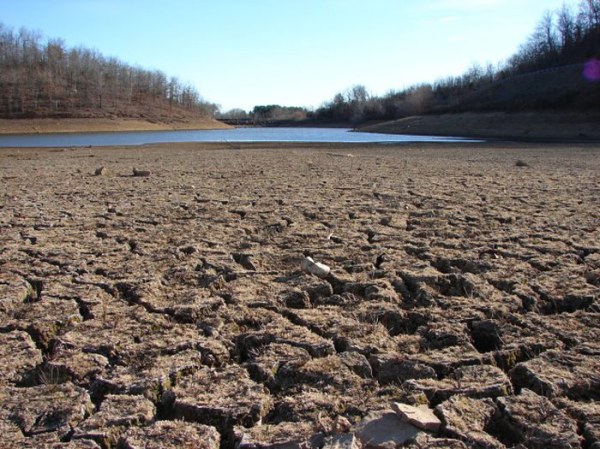
PHOTO | National Oceanic and Atmospheric Administration
In 2005, the Amazon suffered a huge drought caused by declining global humidity due to global warming plus the maxing of El Nino. Given El Nino’s 5-year cycle, I predicted that 2010 would see an even worse drought, then 2015, then 2020. By 2100, we may be left with the Amazon Desert, its millions of species extinct.
Anthony Marr
From Reuters
A widespread drought in the Amazon rain forest last year was worse than the “once-in-a-century” dry spell in 2005 and may have a bigger impact on global warming than the United States does in a year, British and Brazilian scientists said on Thursday.
More frequent severe droughts like those in 2005 and 2010 risk turning the world’s largest rain forest from a sponge that absorbs carbon emissions into a source of the gases, accelerating global warming, the report found.
Trees and other vegetation in the world’s forests soak up heat-trapping carbon dioxide as they grow, helping cool the planet, but release it when they die and rot.
“If events like this happen more often, the Amazon rain forest would reach a point where it shifts from being a valuable carbon sink slowing climate change to a major source of greenhouse gases that could speed it up,” said lead author Simon Lewis, an ecologist at the University of Leeds.
The study, published in the journal Science, found that last year’s drought caused rainfall shortages over a 1.16 million square-mile (3 million square km) expanse of the forest, compared with 734,000 square miles (1.9 million square km) in the 2005 drought.
It was also more intense, causing higher tree mortality and having three major epicenters, whereas the 2005 drought was mainly focused in the southwestern Amazon.
As a result, the study predicted the Amazon forest would not absorb its usual 1.5 billion metric tons of carbon dioxide from the atmosphere in both 2010 and 2011. In addition, the dead and dying trees would release 5 billion metric tons of the gas in the coming years, making a total impact of about 8 billion metric tons, according to the study.
In comparison, the United States emitted 5.4 billion metric tons of carbon dioxide from fossil fuel use in 2009.
The combined emissions caused by the two droughts were probably enough to have canceled out the carbon absorbed by the forest over the past 10 years, the study found.
Greater Weather Extremes
The widespread drought last year dried up major rivers in the Amazon and isolated thousands of people who depend on boat transportation, shocking climate scientists who had billed the 2005 drought as a once-in-a-century event.
The two intense dry spells fit predictions by some climate models that the forest will face greater weather extremes this century, with more intense droughts making it more vulnerable to fires, which in turn could damage its ability to recover.
Under the more extreme scenarios, large parts of the forest could turn into a savannah-like ecosystem by the middle of the century with much lower levels of animal and plant biodiversity. Although human-caused deforestation in Brazil has fallen sharply in recent years, scientists say the forest is still vulnerable.
A crucial question is whether the droughts are being driven by higher levels of greenhouse gases or are an anomaly, Lewis said. If they are driven by global warming, a vicious cycle of warmer temperatures and droughts could conceivably lead to a large-scale transformation of the forest over a period of decades.
“You could quite rapidly move to a much drier Amazon with less forest there,” Lewis told Reuters.
The research was a collaboration among scientists at the University of Leeds and the University of Sheffield in Britain and Brazil’s Amazon Environmental Research Institute.
Editing by Will Dunham
RELATED | Anthony Marr: The Optimal Way of Man
Vodpod videos no longer available.
Save the Hare Coursing Ban | End Snaring: Two actions

PHOTO | Ban Blood Sports
From LACS
1. Please click on and sign/send Save the Hare Coursing Ban
*See below for appropriate address details.
The League is deeply troubled to hear that on Monday 7 February 2011 the Northern Ireland Assembly could undo the historic decision made in June 2010 to ban hare coursing.
Amendments 8 and 10 to the Wildlife and Natural Environment Bill attempt to turn the clock back to cruelty. This regressive step for animal welfare would allow hare coursing clubs to apply for licenses, something which has not happened since 2003.
Please fill in your details HERE to display the names of your MLAs and then send them an email urging them to vote against amendments 8 and 10 to the Wildlife and Natural Environment Bill which attempt to bring back hare coursing.
*If you are uncertain of your MLAs, please click on Membership of the Northern Ireland Assembly and select based on constituency.
Example one: Martina Anderson represents Derry with the post code of BT48 0DY. In the form HERE, input your name, email address, use Derry as your address and BT48 0DY as the postcode. You are not required to enter a specific street address even though it is a mandatory field.
Example two: Maurice Morrow represents Dungannon with a postcode of BT71 6PL. In the form HERE, input your name, email address, use Dungannon as your address and BT71 6PL as the postcode. You are not required to enter a specific street address even though it is a mandatory field.
Related | Hare Coursing Cruelty
Vodpod videos no longer available.
2. Please click on and sign/send Petition to End Snaring
*Form accepted US postcode
Snares are cruel and indiscriminate. Polls have found that 78% of the public find this cruelty unacceptable.
Submit this petition to the Rt Hon Caroline Spelman MP, Secretary of State for the Environment, Food and Rural Affairs, to urge her to end this silent killer in the countryside.
We need you to help us keep the countryside cruelty free!
Urge UMMC to Stop Abusing Pigs in Student Labs
Please click on and sign/send: Urge the University of Mississippi Medical Center to Stop Abusing Pigs in Student Labs
From: Farm Sanctuary
Background
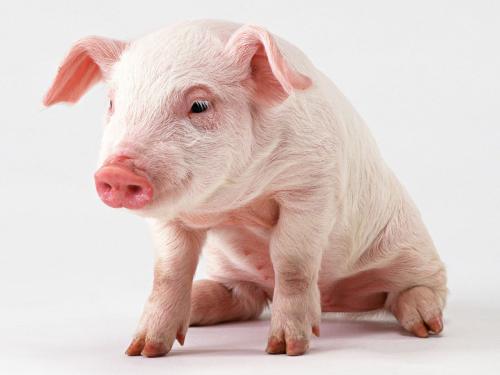
Farm Sanctuary has been supporting efforts to end the cruel use of farm animals in medical training – an outdated and unnecessary practice that only a handful of medical facilities have yet to discontinue. The University of Mississippi Medical Center (UMMC) is one of those remaining schools and continues to subject live pigs to abuse in their student labs.
Instead of being recognized as the living, feeling individuals that they are, the pigs used in UMMC’s medical student physiology labs are treated like inanimate pieces of medical training equipment. Students place catheters in the arteries and veins of these animals, block their arteries, and inject them with drugs. The pigs’ chest cavities are then opened and their hearts are massaged, before they are killed.
Just this month, these cruel lab sessions are scheduled to take place seven times and will result in the deaths of more than 30 pigs. We can stop this abuse. As of now, UMMC is one of only seven medical schools in the U.S. and Canada still using live animals for training, despite the fact that the school already has state-of-the-art simulation centers which could provide more humane non-animal training methods.
You Can Help
Using the form HERE, please send a quick message to UMMC School of Medicine Dean Dr. James Keeton urging him to extend compassion to animals and end the use of live pigs in the institution’s physiology labs now.
For maximum impact, please personalize your message with your own words, or use the alternative message below.
RELATED | Classroom Cut-ups: Lesson on Dissection
Vodpod videos no longer available.
Message Text
I am writing to ask that you immediately end the use of live pigs in the University of Mississippi Medical Center (UMMC) School of Medicine’s physiology labs. Subjecting live animals to the procedures you carry out in these classes is not only cruel, but it is also unnecessary and outdated. UMMC is one of only seven institutions still using live animals in medical training, and I urge you to join others who have made the switch to more humane methods.
Pigs are sensitive, social animals who should not be treated like pieces of medical training equipment. UMMC already has a state-of-the-art simulation center that can easily provide non-animal training methods, so there is no justification for the continued use of live animals. Please make the compassionate choice and end this cruel and unnecessary practice now.
Alternative Text
I am disturbed after discovering that live pigs are subjected to mutilating experiments for the University of Mississippi Medical Center (UMMC) School of Medicine’s physiology labs, a practice that inflicts immense suffering upon them. To expose them to this archaic method of training is alarming. In a recently-conducted survey, it has been determined that in greater than 95% of similar programs, the TraumaMan System has been utilized (PCRM). The TraumaMan System has been proven a superior model to the live animal “model”, and I fear any student not trained on the most advanced method will have a diminished learning experience. This should be concerning to any potential patient.
Additionally, since animals cannot be substituted for human beings, subjecting them to this exploitive process reflects a blatant disregard for life; how can we teach our future medical professionals ethics while enforcing a course that maims and kills live, sentient beings? This represents a conflict of interest as well as a contradiction in both morals and actions: if non-human animals are deemed similar enough to humans physiologically, then you must acknowledge that, as sentient beings, they should not be exploited and killed either. Any other conclusion would be considered a discord and would serve as a detriment to the learning process, especially in such a critical field of study.
It would be regrettable not being able to recommend your fine institution; however, because I value the most sophisticated and innovative learning techniques, it would be remiss of me to consider UMMC based on your reliance of such an obsolete method of study. As such, I respectfully ask that you please accept the superior method of study, the TraumaMan or other non-exploitive system, for your university and students, and make yours an institution of credibility and honor.
I know that your time is limited, and I want to thank you for your attention and consideration.
NAME|ADDRESS
Oprah’s FAIL
Vodpod videos no longer available.
My Letter to Oprah Winfrey
By Andrew Kirschner
Dear Oprah,
I watched your show on the vegan challenge yesterday. Thank you for deciding to help raise awareness about such an important issue. I wish you and your guests dedicated more time to discuss the benefits of a vegan lifestyle to the environment, human health, and animal welfare. Unfortunately, you and your guests made several terribly irresponsible and misleading statements that will negatively impact the movement. President John Adams once said, “Facts are stubborn things.” Please allow me to address a few that were absent from your show.
You stated that animals don’t suffer on factory farms. Have you ever seen undercover videos of the sordid and inhumane conditions on factory farms? Have you ever read testimonials of former employees of factory farms? The animals’ lives consist of confinement, pain, torture, disease, and suffering. Factory workers cut off animals’ beaks, feet, tails, and other body parts without anesthesia to keep them from harming each other when they go insane in confinement. Animals are beaten, deprived of sanitary living conditions, ventilation, light, and left to die painful deaths from disease as they wallow in their own feces. They’re force fed to maximize profit to the point that they’re unable to walk, kept in constant states of pregnancy, injected with antibiotics and growth hormones, and their most basic needs of nesting, interacting, roaming, and foraging are denied. Other animals are defeathered, skinned, and scalded alive — billions of them. That bolting process your reporter couldn’t watch often fails to render the animals unconscious and leaves them to die slow deaths.
Do you believe animals’ pain is less significant or important than yours or mine? They don’t have a different threshold for pain than we do. Have you ever stepped on a pig’s foot and heard him squeal? Isn’t it presumptuous to assume that animals feel less pain or fear? They don’t. They feel pain like you and me. How do we know animals feel pain? Scientists have studied them and reported evidence of twisting and turning, facial contortions, yelping, and moaning during painful situations. These animals have nervous systems that resemble our own. Scientists have found the same rise in blood pressure in painful and stressful situations, sweating, dilated pupils, and higher pulses. They have also found blood pressure lowers in stress-free situations. An ability to feel pain increases a species’ ability to survive since it teaches animals, like humans, how to avoid painful situations. The scientific evidence all points to the fact that animals experience pain sensations at least as acutely as humans. The argument that they feel less pain because they are animals and we are humans has no scientific basis. In fact, many of their senses are even more acute than our own — many of them have a greater ability to see, hear, feel, and smell than we do. They depend on these senses for survival in the wild.
Michael Pollan stated there is nothing wrong with eating animals. He contends they only have one bad day (the day they’re slaughtered). What was the purpose of having Pollan as the featured guest on the show? All he did was advocate for eating animals. He was smug, dismissive, and patronizing. If the show was about introducing people to a vegan lifestyle, why was the featured guest an ardent animal eater? I don’t eat animals or their byproducts because I don’t believe I have any more right to inhabit this earth than an animal and I don’t need to eat them to survive. I don’t believe I am any more important than a pig, cow, chicken, or any other animal. To think otherwise is to possess an ego that does not serve the best interests of the planet or its inhabitants no matter how inculcated the opposing view is in the human psyche. It’s unfortunate that Pollan failed to mention the impact of eating animals on the planet, human health, and the animals. I encourage you to read The Food Revolution by John Robbins to gain some insight into these issues or log onto meat.org to learn about what really happens inside the 20 factory farms that wouldn’t open their doors to you.
You stated that it’s “radical” to eat a plant-based diet. I would argue that it’s radical to eat inhumanely confined, tortured, and slaughtered animals when you don’t need to eat them to survive.
Refraining from that lifestyle isn’t radical; it’s humane and compassionate. I hope you will reconsider and retract your statement. If your goal was to attract people to living a vegan lifestyle, identifying it as “radical” isn’t the most inviting approach. You missed an opportunity to discuss how mainstream the vegan lifestyle has become and how easy it is now to access so many vegan food options.
Finally, if you fear pain, and you now know that animals feel pain and suffer the same way you do, and that factory farms inflict unimaginable pain on animals, will you continue to fund the inhumane confinement, torture, and brutal killing of animals when you don’t need to eat them to survive? Do you see any hypocrisy in criticizing animal abusers while you support an industry that abuses animals? You can avoid answering the question but you can’t avoid the responsibility that you bare. It is yours to own or to change. You owe it to animals to learn about the pain and suffering they endure on their way to your dinner plate. When you have the same respect and love for animals as you do for yourself, you will be ready to live out the full potential of human decency that exists within you.
I would like to be a guest on your show to set the record straight. Please consider allowing me to face a representative from the meat industry so we can discuss the morality of eating animals, and the impact on animal welfare, the environment, and human health. Let’s have an open, cordial, and honest dialogue. As part of the show, I would also like to go undercover to infiltrate one of the 20 factory farms that wouldn’t open their doors to you so we can expose the public to battery cages and gestation crates instead of the idyllic outdoor images that Cargill packaged. Give me an opportunity to be the voice for those 10 billion animals. Thank you very much.
On behalf of the billions of animals who live unimaginable lives of pain and suffering on factory farms, the countless millions of people who have died from eating them, and a devastated planet that has been crippled by animal agriculture,
Andrew Kirschner
You can join Andrew’s Facebook page HERE
Background HERE
Want to write Oprah, send her some FACTUAL information? Contact her HERE
Need more footage? Visit HERE
You think it’s humane, funny, necessary? Take a look …
Vodpod videos no longer available.
Polar bear swims for 9 days, 426 miles to find ice for refuge

IMAGE | Eco Educa
UPDATE | February 4: Victory for the Arctic Ocean! Shell announced that they’ve cancelled their plans to drill exploratory wells in the Arctic in 2011 due to lack of confidence that they would meet the standards to get the required permits. Thanks to you and tens of thousands of other supporters, we have been able to monitor the permitting process and hold policymakers accountable for upholding the law. Oceana
Related, US friends, please click on and sign Keep Shell out of the polar bear’s home
If you live outside the United States, please CLICK HERE.
Polar bear swims for 9 days, 426 miles to find ice for refuge | From Yahoo News
By Brett Michael Dykes
Regardless of the debate over the origins of climate change, there’s no disputing that the Earth has warmed considerably in recent years. And with this warming trend, the world’s polar ice is melting rapidly, displacing the creatures that have long made these regions their habitat.
Take, for example, the polar bear. As the Los Angeles Times‘ Kim Murphy reports, the warming conditions in Alaska sent one polar bear on an epic quest for an ice floe — in a tale that is by turns tragic and inspiring. According to the paper, the female bear — whom scientists at at the U.S. Geological Survey, U.S. Fish and Wildlife Service and the University of Wyoming were monitoring via a collar equipped with a GPS tracking device — spent nine days swimming across the Beaufort Sea in the Alaska region in a desperate hunt for a ice to settle on. At the outset, she was accompanied her cub, which sadly didn’t survive the 426-mile trek through the freezing waters; she also lost more than 100 pounds during the search.
“Our activity data suggests that she swam constantly for nine days, without any rest. Which is pretty incredible,” George M. Durner, a zoologist heading up a study of polar-bear migration, told Murphy. “We have observed other long-distance swimming events. I don’t believe any of them have been as long in time and distance as what we observed with her … How often does this happen? We’re trying to get a handle on that.”
A recent study found that arctic waters are the warmest they’ve been in centuries and environmental groups contend that officials in Alaska aren’t adequately protecting the state’s polar bears as their habitat rapidly disappears. Murphy notes that current Alaska Gov. Sean Parnell is seeking to suspend Endangered Species Act protections for polar bears in order to expedite oil and gas exploration in designated protected zones for the species. The Obama administration has designated 187,000 square miles in Alaska polar-bear protected zones, but Parnell and backers of expanded drilling in the region argue that rolling back the designation could bring in hundreds of millions of dollars of revenues for the state.
In a 2006 60 Minutes report, correspondent Scott Pelley said that scientists believe polar bears will be extinct by the end of the century if the current climate trends continue. Scientist Bob Corell told Pelley that he’d noted a steep decline recently in polar bear populations as polar ice has vanished, with today’s surviving bears much skinnier than their predecessors of previous generations.
RELATED | You Can’t Rewind an Oil Spill, from Earthjustice
Vodpod videos no longer available.
ACTION | From NRDC
Keep Shell out of the polar bear’s home
Shell is pressing ahead with a new plan to begin drilling this summer off the sensitive coastline of the Arctic National Wildlife Refuge — the favorite onshore denning area of Alaska’s polar bears. Tell Interior Secretary Salazar to reject Shell’s outdated oil spill response plan and deny the company’s application to drill.
Note: We’re sorry — Secretary Salazar’s webform accepts U.S. addresses only. If you have a non-U.S. address and wish to take action on this issue, please click here to send a message to President Obama.
Your message will be sent to:
Ken Salazar, Secretary of the Interior
Subject line:
Stop Shell from drilling in the Beaufort
Message Text:
Dear Secretary Salazar,
I call on you to take all necessary steps to stop the Shell oil company from drilling this summer in the Beaufort Sea, off the coast of the Arctic National Wildlife Refuge.
First, please reverse your approval of Shell’s woefully inadequate oil spill response plan, which was submitted and approved before the catastrophe in the Gulf of Mexico. The Deepwater Horizon spill made a mockery of oil industry claims that offshore drilling is being conducted in a safe and responsible fashion.
Shell has not proved its readiness to respond to a worst-case blowout under real-world conditions in the Arctic. Moreover, the oil industry still has no method for cleaning up spills in ice-filled waters. An uncontained spill could devastate the coastline of the Arctic Refuge, with disastrous impacts on polar bears, whales and other wildlife.
Second, please reject Shell’s latest application for a permit to begin drilling in the Beaufort this summer. Before any oil is drilled, you have an obligation to reveal the real risks to Arctic wilderness and prove that a major spill could ever be cleaned up.
Please say No to Shell and defend the treasured environments you have been charged with protecting.













 Our Compass