What Would You Do to Save the World?
 An open letter to Dr. James Hansen
By SL
What would you do to save the world?
It’s a common theatrical challenge, the gauntlet of fantastical storytelling by writers and artists, with superheros and common folk rescuing the world and saving the day. It’s a shared theme in both the portending scripts of visionaries as well as the historical doomsday prophesies warning of apocalypse. Indeed, given such a similar and yet unique challenge, what would you do to save the world? Would yours be considered frenetic actions defined with chaos and fear, or contemplative analysis, punctuated with introspection and calm deliverance? This is not a hypothetical challenge, borne out of the curious whims of a tedious woman; my question and its implication actually serves a greater interest, one of seemingly biased necessity for certain, but which subsequently provides tangential benefit for all while revealing its fundamental impartiality and need.
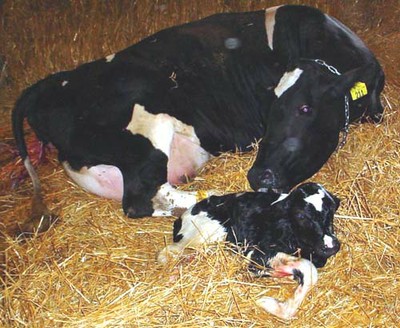
When I was quite young, I wanted to be a veterinarian, and determined to foster a child’s noble pursuit, my mother arranged to have me travel with the local vet who gladly accepted the assistance of an eager apprentice. We went to a farm, an idyllic setting to the curious wonder of a child, the heady scent of hay and manure, the ground squishing of mud, and the air heavy with humidity and the drone of cicada, and in a rather James Harriot manner, I witnessed a newborn calf with her mother, mother loving and protecting, child content and trusting, an indestructible bond borne of nature, strengthened by nurture, and cherished by me. It was miraculous, shiny new, an adrenaline moment defined with rapid heartbeat and wide eyes, a spot of hesitancy, and an utterance of magic following the nod of the vet, his smile knowing, his gesture encouraging, both given to a child on a summer Christmas morning.
It was a magnificent experience, this gift of life, before I learned the world was ugly and after I discovered that animals made it beautiful.
As human animals, we share this world with non-human animals, but the implication of a consenting relationship is belied by the depravity hidden under the chaotic soul of global life, defined by man, performed by man, given to man. But a definition is a character of wisdom, the fault of the manner to which it is given, and we agreeably disengage from those it disregards. But it does not matter your belief of their existence as human consequence as long as it is precluded by the fact of their sentient core, safe in the truth of freedom excepting the danger of the human lie, a lie facilitated by permissiveness through right, religion, and resource, a defined validation of human creation to excuse the global desecration. Solicitous psalms and appeasing utterances only sanctify excuses, however, and our discomfort begs for reconciliation, emotionally and logically, a cure of double proportion and renewed clarity: the emotion of compassion rests well within the logic of equity. This is an endeavor that satisfies each by assuring the continuance of all through healing a world sick with greed, indifference, and immorality, humans exposing sixty billion animals each year, the victims of viral humankind.
I am a vegan animal rights activist, uncompromising and determined, and I am writing today to share my fear of the impending environmental and climatic catastrophe, no longer the fictional manifestations of elaborate sci-fi films, novels, and prophets. In fact, far from flashy onscreen machinations and dusty tomes is the reality we fear but cannot avoid; this is where your world and my world converge, and our seemingly past diverging interests will be revealed in a current intersection, a geometric goal of global consequence. Indeed, the unstoppable seconds that will eventually culminate into a realistic portrait of ecological doom also provides an opportunity for environmental compensation, a chance to wage the most undoubtedly significant war of our shared existences. Confronting this challenge with less than exaggerated efforts will conclude with devastating consequences for all species: no action can be judged as overestimated or considered too radical. In fact, when we contemplate numbers, we marvel at the sheer number of humans who populate this planet, concerned with diminishing resources, environmental destruction, and climate ramifications; certainly human population increases are causative, but this focus disregards one of the greatest environmental challenges, a significant contributor to ecological ruination and which has the most substantially-negative impact on non-human populations: animal agriculture.
When I was first provided an opportunity to write you, I was admittedly overwhelmed. Every corner of the internet, from scholarly articles, organizational manifestos, scientific reports, and special-interest pleas is saturated with environmental information, a virtual ocean of data, facts, and opinion, to my drop of expertise. Indeed, confronted with such an assignment, I had to ask, who am I to write to someone of such status, experience, and intellect? Certainly you would be unimpressed with my ability to copy data and regurgitate statistics. As such, I instead determined to not offend your experience with endless lists of statistics and facts as I am confident you are well-versed in the various resources that conclude animal agriculture is a major contributor to environmental degradation and its relative impacts. This has been well-established by such governing bodies as the United Nations in its Livestock’s Long Shadow report and the Worldwatch Institute’s conclusion of the significance of reducing meat consumption as resulting in environmentally beneficial impacts. Additionally, even the chair of the UN’s Intergovernmental Panel on Climate Change, Rajendra Pachauri, is a vegetarian for these important reasons. Rather than expound on these issues, although unarguably significant but undoubtedly redundant, I decided to provide my viewpoint from the perspective of a vegan who made this lifestyle decision not for climate control, land preservation, or water safety, but for the non-human animals in a gesture of emotional empathy, an extension of logical acceptance.
Non-human animals possess sentience and have the capacity for thought; like humans, they experience emotions including love, fear, pain, and agony. Human animals have adopted a superior attitude, elevating ourselves above all other beings and rationalizing our treatment of them using this egotistical status. Speciesism, the discrimination of animals, is embedded in our societies, manifesting in our prejudicial reaction to, and treatment of them, extending no rights or considerations based on this inaccurately and immorally defined inequity. It is unjust for humans to mistakenly claim superiority based on biased judgments, using fundamentally-illogical constructs as comparable legitimacy: ludicrous assumptions include animals being incapable of building monuments, composing symphonies, or performing challenging mathematical equations. Further biased comparisons include their incapability to debate and philosophize.
Animals do not need to compose symphonies or debate ethics for survival, and the majority of humans lack the talent and superior intellect to perform these activities as well; indeed, potential does not equal conclusiveness, and animal comprehension encompasses abilities well beyond our own parameters: extraordinary scent perception, navigational skills, hypersensitive instinct, unquestionable species-specific thought processes, and exceptional eyesight are talents we, as humans, will never biologically or intellectually realize. Indeed, when we define animals based on human potential, we fail to acknowledge their inherent importance and value; rather than exposing differences, we need to confirm likenesses, including their ability to suffer, feel joy, loneliness, and pain. It is our moral obligation to evolve and embrace them as equal beings while renouncing speciesism and rejecting our complicity in their suffering and exploitation.
We need to question our motives when establishing differences: do our dissimilarities provide us moral forgiveness, or are we merely justifying our treatments in euphemistic assignments of absolution? Is compromising ethics an indulgence we grasp to satisfy any potential disquiet? From the moment we are born, we are indoctrinated with the credo of animals as products, objectifying them as means to our human-specific goals, desires, and benefits. Every level of society in every community, country, village, and settlement, from the most remote congregation to the most congested metropolis, animals serve as our slaves, for food, entertainment, ritual, testing, clothing, and targets. Finance, education, commerce, transportation, entertainment, organization, business, ritual, religion, commercialization, advertising: all include and promote animals as commodities. There is no place or person immune from such persuasion, the only exceptions pockets of people, groups of like-minded individuals, who have chosen to reject the complicity in the animals-as-products position as unprincipled, dangerous, and immoral, a refusal of minority interests that rule the majority mindset. Rather than embracing apathetic banalities to justify inequity, these people extend an expression of belief, the abolition of speciesism, and a common denominator of compassion, animals as having inherent rights to not be exploited, abused, or killed.
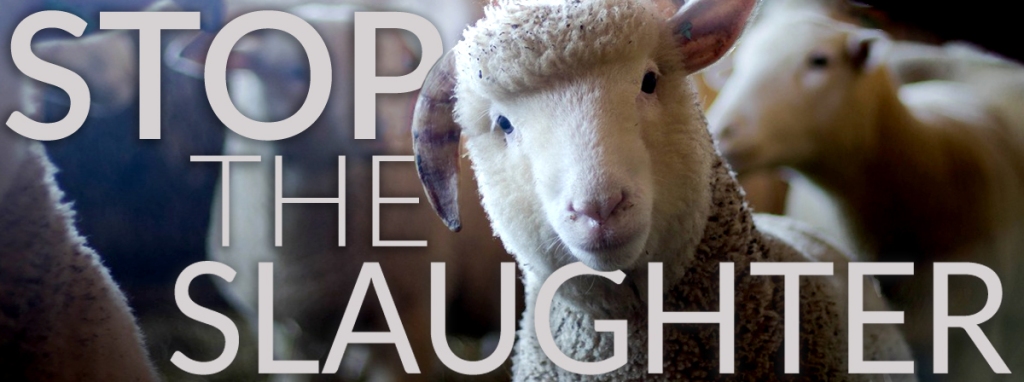
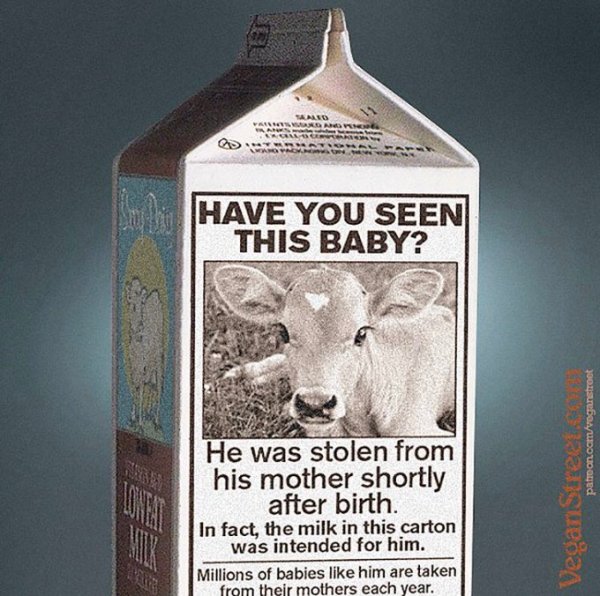
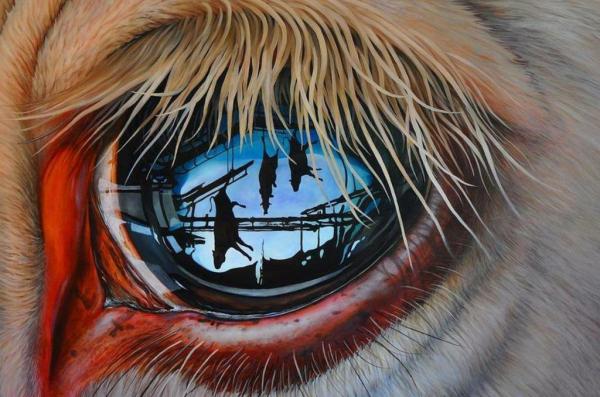
Sixty billion animals are exploited and killed yearly on this planet. Although not all slaughtered for food, they are all abused; subjected to excruciating pain, agony, and illness; treated with disdain and apathy; provided no comforts or consideration; forced into submission and separated from family; exploited, terrorized, and killed. It is no longer a sufficient exercise in moral obligation to extend consideration to pets or companion animals while blindly accepting the degradation of food or other animals. This planet is in peril, and wishing for worldwide peace and environmental harmony while deliberately sanctioning the mass slaughter of billions of animals is not only a living oxymoron but it is also a refusal of ethical living. Every person is responsible, every country a willing supporter, every continent a contributing element, and regardless of pervasive greed, be it personal or societal, of ego or denial, the conflict is ubiquitous and we cannot deny its existence or its imminent ability to destroy ours.
We are a worldwide contingent with a common concern but individual preferences and selfish endeavors preclude acting in a global manner; it is instead effortless and satisfying to extend our permission to our leaders to promote our future environmental interests. Sadly, however, the Copenhagen Summit demonstrated that our leaders are unable to effect any radical changes that would prove beneficial, and the task thereby falls to us, the people whom, individually, can make personal changes that can have substantially positive consequences. Animal agriculture needs to be abolished; there is no remedial action that can legitimately exclude this fundamentally significant and environmentally necessary posit. It is an imposing task, fearsome in its originality, challenging in its complexities and logistics; we are entering uncharted territory, a landscape fraught with obstacles and potential hazards, but when we remember the goal and for whom we work and for what we aspire, the seemingly monumental task will be a navigational endeavor. I don’t have the answers or the blueprint, but there are people, millions of us with billions of reasons, who need to reach out to other people, groups, organizations, and communities, to redirect our parallel goals into one fulcrum, extending our expressions of necessity and morality to the pioneers and revolutionaries with profound ideas and common interests.
While we may have fallen victim to our own complacency, we have done so willingly, descending into our insulated lifestyles, oblivious to divergences outside our boundaries. We are not incapable of change, however, and the wealthy must share this task with the impoverished, the strong with the weak, the significant with the seemingly-inconsequential, the majority with the minority, the selfish with the giving. Until equality is realized and accepted amongst all species, the foundation of which will serve to promote equality and compassion within our own species and a unity with others, environmental destruction and the consequential ramifications of poisoned water, polluted air, and potentially lethal climate disparities will never be conquered.
If we could turn back time, what would we do differently to save the world? It is a preposterous thought, fanciful wishing being an exercise in futility, a luxury we have neither the time nor the logic to employ, but we have the current opportunity to turn back the clock from 2015, 2020. What would we do differently NOW? It is inexcusable to pass this legacy to younger generations and hope for their success, absolving ourselves with self-serving justifications including the enormity of the issue, the potential economic consequences, the discomfort of altering the status quo.
The abstract horizon of an aftermath day will only be met with the darkness of death, a creeping scythe moving slowly but determinedly, even its shadow mourned by the memory of a gentle sun, the warmth of life executed by the indifference of its reaper. Ubiquitous destruction, however, requires only the fear of potential, not the reality of death: it yearns only for a thought, the seed of an idea, the germination of conviction, and the growth of a movement nourished with hope to starve its threat.
What would you do to save the world?
Together we can rewrite history today.














 Our Compass
FIRST thing I would do is ban politicians and religions. I have to think on it more from there……….
LikeLike