EU Bans Cloned (first gen) Farm Animals, but Approves Cloned Horses and Bulls
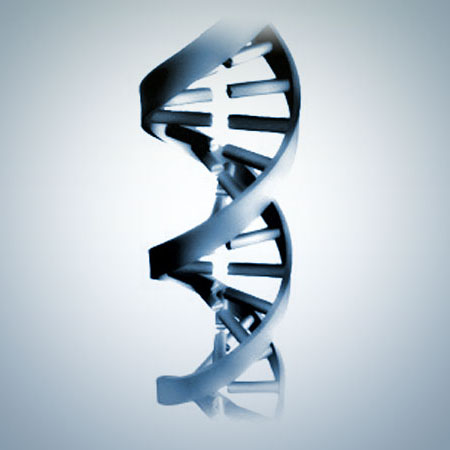
From Care2
By Sharon Seltzer
The European Union proposed a five-year ban on cloning farm animals and livestock, but the plan is not animal-friendly.
The ban gives the go-ahead for cloning all sorts of other animals including racehorses and fighting bulls.
The proposal was submitted by the EU’s executive commission on Tuesday and is expected to be approved in the next few months. It bans the cloning of first generation animals used for food and prohibits importing cloned livestock.
But the proposal does not protect animals and has advocates in an uproar because it specifically promotes cloning for many other purposes – including research.
In a story from The Wall Street Journal the EU health commissioner said,“Clones are for researchers, not butchers.”
Here is a list of cloning scenarios advocated by the EU:
- Saving a species from extinction
- Manufacturing pharmaceuticals
- Breeding performance animals such as racehorses or bulls for bull fights
The EU proposal also allows embryos and semen from cloned animals to be imported and the offspring of cloned animals to be used for their meat and milk.
The commission claims there are no animal health or public health concerns for consuming the offspring of clones.
Animal welfare groups pointed out that cloning is not an exact science and has a poor success rate.
Less than one out of every five animals cloned survives past the first few days of life.
And cloning is very expensive with costs coming in at $15,000 to $20,000 to breed one animal.
On May 19, the first cloned fighting bull was unveiled in northern Spain. The bull named Got, which means “glass” was identical to his father, a fighting bull named Vasito who died in March.
RELATED
Vodpod videos no longer available.
EU approves food from offspring of cloned animals
By William Surman
The European Commission has given the green light for member states to sell the offspring of cloned animals and their products into the food chain.
In a report published today (Tuesday) the Commission said a ban ‘would not be justified on grounds of protecting animal welfare, animal health or public health in so far as there are no welfare concerns for the offspring of clones’.
It added because food from the offspring of clones ‘cannot be distinguished from food from other animals’, a complete traceability system would be needed.
The move could now spark an about-turn from the UK Food Standards Agency (FSA) which currently prohibits the sale of food from the offspring of clones without a license.
Scottish farmer Steven Innes became embroiled in controversy this summer when it emerged he had sold meat from the offspring of a cloned animal into the food chain without a license.
Under the Commission’s proposals, Mr Innes would not be penalised. Indeed all farmers in the UK would be able to buy reproductive material from clones from outside the EU and sell their products into the food chain.
George Lyon, Liberal Democrat MEP for Scotland said: “It’s clear the UK Food Standards Agency is out of line with the rest of the member states in how it interprets the current rules and of course under these new rules, it still is out of line.
“So hopefully they will come to their senses and see that they do have to move on this issue.”
Meanwhile, the Commission has proposed a temporary five year suspension on the use of first generation animal cloning for food production in the EU based on ‘welfare grounds’.
RELATED
Clone Your Dog …
Encore! Couple spend $155,000 to clone dead dog
Edgar and Nina Otto say they had no idea how their four-legged clone would react to them. But last week, after waiting several months, the yellow Labrador puppy bounded off an airplane at Miami International Airport, right into their arms. Lancelot Encore is his name, or Lancy for short.
The puppy Lancy looks and acts just like Lancelot, their first Lab, who died a year ago, say the Ottos. That’s not surprising, because Lancy is Lancelot’s clone.
“We just got him because we wanted to have Lancelot more than just the 11½ years,” Nina Otto said.
The Ottos submitted the winning bid of $155,000 at an auction with a San Francisco biotech company that had Lancelot cloned in South Korea.
“Did I ever think that I was going to spend $150K on a dog? No,” Edgar Otto said, adding, “This is a really sweet dog, and … we’re very happy that we did it.”
Edgar Otto is the son of Edward Otto, a co-founder of NASCAR. So money was really not an issue for this family.
They got the idea five years ago and had a sample of Lancelot’s DNA extracted and banked when they heard that cloning was possible.
So far, the Ottos say Lancy is eerily similar to Lancelot. They say Lancy walks just like Lancelot and crosses his paws like him, too.
“I only was hoping to get the essence of Lancelot back,” Nina said. “I know I’ve gotten that. Anything else is icing on the cake.”
But is it the same dog?
“It’s as close as you can get,” Edgar said.
The Ottos have nine other dogs, as well as cats, birds and sheep, all living on a spectacular 12-acre spread in Boca Raton, Florida.
“This dog was immediately accepted by the nine dogs,” Edgar Otto said. “There was no baring of teeth, not ever a single growl. So, the pack accepted him.”
Four customers who also placed winning bids in an auction by BioArts International will have their dogs cloned, and those pets will be delivered in the coming months.
BioArts is collaborating with South Korea’s Sooam Biotech Research Foundation to produce the dog clones. Cloning dogs is considered difficult because of their complicated reproductive physiology, but the procedure has been perfected in South Korea, according to industry experts.
In Lancy’s case, his DNA was placed inside an egg from a South Korean dog and implanted in an Irish setter in South Korea. About two months later, 1.3-pound Lancy was born in a single litter birth.
BioArts says it’s an expensive process and the company is still analyzing whether pet cloning can be a viable, profitable business.
cloning, schmoning
science fiction
comes to mind
will cloning humans
not be too far behind
and who will be picked
to be cloned and repeated
a person of value
or an expletive deleted?Karen Lyons Kalmenson












 Our Compass
cloning, schmoning
science fiction
comes to mind
will cloning humans
not be too far behind
and who will be picked
to be cloned and repeated
a person of value
or an expletive deleted?
LikeLike
cloning humans villians and crooks what ever next what is this world coming too help
LikeLike