HighestWelfare.Humane.Assured.GoodPractices.Vegetarian. Regenerative.Flexitarian.Lies...
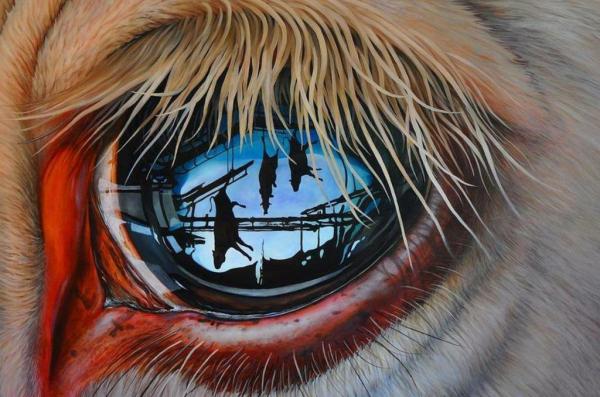
What is the difference between No Welfare, High Welfare, and Highest Welfare when they all require animals to die? Only human comfort, NONE protect the actual animals. The most humane, ethical, and honest Webster-defined "welfare" is NOT exploiting animals - not using, not wearing, not eating, not killing - animals. The only meaningful position is vegan, everything else is just how humans euphemize animals' required suffering and violent deaths: no human exploits animals because they honestly believe that NOT exploiting animals is UNethical or INhumane.
Idaho Wants to Make Wildlife Killing Contests an Annual Event: Please Send Letter to Oppose
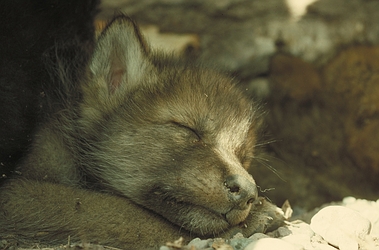
Wikimedia Commons
SOURCE PROJECT COYOTE
BACKGROUND
You may recall this past December Idaho held a highly controversial killing contest targeting both wolves and coyotes. This was the first time wolves were targeted in a predator killing contest since their reintroduction.
We have just learned the killing contest sponsor, a group called Idaho for Wildlife, is seeking to repeat this contest over several years, this time not only targeting wolves and coyotes — with prizes awarded for killing the most coyotes and the largest wolf– but also other predators, in a multi-year “predator derby” scheduled for the next five winters (with the next one scheduled for January 2-4, 2015).
This event would be damaging to the affected ecosystem, harmful to ecologically vital species, incompatible with scientific principles of wildlife management, and offensive to the concept of fair chase, ethical hunting.
Your comments are needed NOW. Urge the BLM to deny Idaho for Wildlife’s request for a special recreation permit that would allow contestants to kill predators on over 3 million acres of public lands in Idaho for the next five years.
The BLM is currently soliciting input from the public on the scope of what should be considered in an Environmental Assessment (EA). The issues identified for analysis in the EA include the impact on economic and social values, the impact on existing recreational uses, and the affect on wildlife habitat and threatened species in the targeted area. Please don’t miss this opportunity to voice your opposition (you do not have to be an Idaho resident to comment as this is federal BLM land- YOUR land!).
WHOM TO CONTACT
Please act now! More info. here. Comments are due no later than August 18th and can be emailed to:
Liz Townley
Outdoor Recreation Planner
blm_id_predatorhuntderby@blm.gov
or sent to:
Liz Townley
Outdoor Recreation Planner
BUREAU OF LAND MANAGEMENT
Salmon Field Office
1405 Hollipark Drive
Idaho Falls, Idaho 83467
Please cc Project Coyote as we are tracking letters sent (info@projectcoyote.org)
Please include in your subject line Re: DOI-BLM-ID-I000-2014-0002-EA
Please also include your full contact information so your letter is counted in the official record and address the three areas this scoping document covers:
1- the impact on economic and social values;
2- the impact on existing recreational uses;
3- the affect on wildlife habitat and threatened species in the targeted area.
SUBJECT
Re: DOI-BLM-ID-I000-2014-0002-EA
SAMPLE LETTER
Dear Planner Townley,
I am writing to voice my opposition to Idaho for Wildlife’s request for a special recreation permit that would allow contestants to kill predators on over 3 million acres of public lands in Idaho for the next five years. Please do not provide these permits. Allow me this opportunity to elaborate.
Killing contests have nothing in common with fair chase, ethical hunting. Technology, baiting, and “calling” place wildlife at an even greater and unfair disadvantage. Hunting in winter, when species can be easily tracked in snow and when most animals are working hard to survive contravenes the notion of fair chase. Killing predators, or any wild animal, as part of a ‘contest’ or ‘derby’ is ethically indefensible and ecologically reckless.
Bloodsport contests are conducted for profit, entertainment, prizes and, simply, for the “fun” of killing. No evidence exists showing that predator killing contests control problem animals or serve any beneficial management function. Coyote populations that are not exploited (that is hunted, trapped, or controlled by other means), form stable “extended family” social structures that naturally limit overall coyote populations through defense of territory and the suppression of breeding by subordinate female members of the family group.
The importance of wolves, coyotes and other predators in maintaining order, stability, and productivity in ecosystems has been well documented in peer- reviewed scientific literature. Coyotes provide myriad ecosystem services that benefit humans including their control of rodents and rabbits, which compete with domestic livestock for available forage. As apex predators wolves increase biodiversity and ecological integrity.
With fewer than 700 wolves in Idaho and poaching a common problem, allowing a killing contest of a species just off the endangered species list is reckless, indefensible and counter to sound science.
Economically, a live wolf is worth far more than a dead one. Wolf watching has brought in millions of dollars into Idaho and tourism is a major economic revenue source.
Wildlife killing contests perpetuate a culture of violence and send the message to children that life has little value and that an entire species of animals is disposable.
Wildlife killing contests put non-target animals, companion animals, and people at risk. Domestic dogs are sometimes mistaken for coyotes and wolves.
Although I do not currently reside in Idaho, I would be unwilling to visit should these revolting “contests” continue.
Thank you for your attention to this urgent issue.
Name, Address
Order a FREE vegan kit: http://www.peta.org/living/vegetarian-living/free-vegetarian-starter-kit.aspx
Take PETA’s Cruelty-Free Shopping Guide along with you next time you head to the store! The handy guide will help you find humane products at a glance. Order a FREE copy HERE
Want to do more than go vegan? Help others to do so! Click on the below for nominal, or no, fees to vegan literature that you can use to convince others that veganism is the only compassionate route to being an animal friend.
PETA: http://www.petacatalog.com/catalog/Literature-39-1.html
Action for Animals has a very low price : http://store.afa-online.org/home.php?cat=284
Have questions? Click HERE
Read more…
Animal Testing Part Three: The Human Cost of Animal Testing
Source Bite Size Vegan
Vegan Nugget #18: Animal Testing Part Three: The Human Cost of Animal Testing
The most perverse aspect of the animal testing debate
So we’ve looked into the scientific inefficacy of animal testing and how it has failed to produce any useful results for humanity. We’ve also taken a look into why it continues to be used even though it doesn’t work.
Today we’ll address yet another absurdity of animal testing: it not only doesn’t help but actually harms and, in many cases, kills humans. This is the most perverse aspect of the animal testing debate: it’s actually dangerous and fatal for humans, the very species the researchers claim to be doing all of this madness for…
Maybe you could give a shit about animals, and don’t really care as long as humanity is benefitting…well, animal testing is still something that you should be against!
The argument that animal testing is necessary for the sake of saving human lives is already ridiculous when one looks at the mountains of evidence of its absolute inefficacy. Add on the fact that drugs approved via animal testing have gone on to seriously harm, maim, and kill people, and any argument for the continuation of animal testing becomes all the more ludicrous.
Some RESOURCES:
Theriogenology (vol 69, p 2)
Regulatory Toxicology and Pharmacology (vol 64, p 345)
http://www.safermedicines.org/index.php
http://www.safermedicines.org/articles.php
http://www.safermedicines.org/quotes/cancer.shtml
Order a FREE vegan kit: http://www.peta.org/living/vegetarian-living/free-vegetarian-starter-kit.aspx
Take PETA’s Cruelty-Free Shopping Guide along with you next time you head to the store! The handy guide will help you find humane products at a glance. Order a FREE copy HERE
Want to do more than go vegan? Help others to do so! Click on the below for nominal, or no, fees to vegan literature that you can use to convince others that veganism is the only compassionate route to being an animal friend.
PETA: http://www.petacatalog.com/catalog/Literature-39-1.html
Action for Animals has a very low price : http://store.afa-online.org/home.php?cat=284
Have questions? Click HERE
Over a million pangolins slaughtered in the last decade
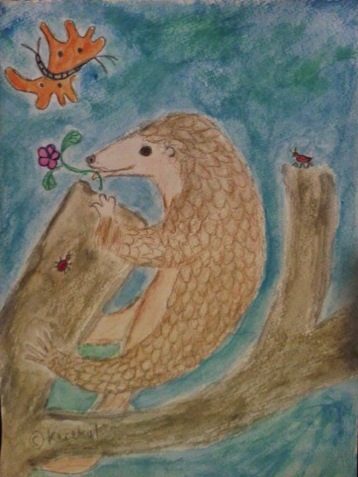
Karen Lyons Kalmenson
Source Focusing on Wildlife
All pangolins now threatened with extinction, and two considered Critically Endangered. One of the world’s most bizarre animal groups is now at risk of complete eradication, according to an update of the IUCN Red List. Pangolins, which look and behave similarly to (scaly) anteaters yet are unrelated, are being illegally consumed out of existence due to a thriving trade in East Asia. In fact, the new update lists all eight pangolin species as threatened by extinction for first time, with two—the Chinese and the Sunda pangolin—now considered Critically Endangered.
“In the 21st Century we really should not be eating species to extinction—there is simply no excuse for allowing this illegal trade to continue,” said Jonathan Baillie, Conservation Program Director at the Zoological Society of London (ZSL) and co-chair of the IUCN SSC Pangolin Specialist Group, which was established in 2012.
“All eight pangolin species are now listed as threatened with extinction, largely because they are being illegally traded to China and Vietnam,” Baillie added.
Found in Africa and Asia, the world’s eight pangolin species represent some 70 million years of unique evolution. In fact, these animals—which are the only mammals to sport proper scales—are so distinct they have their own Order: Pholidota. In addition to their tell-tale scales, pangolins have a long tongue for eating insects, impressive claws for digging into termite mounds, and an odorous anal gland for repealing predators. But, weirdly, pangolins are most closely related to carnivores.
Yet pangolins have for many years been the most-trafficked animal on the fact of the Earth. In fact, the Pangolin Specialist Group hosted by the ZSL estimates that more than a million pangolins have been stolen from the wild in the past ten years alone. In fact, the group estimates that the Sunda pangolin populations has fallen by up to 80 percent over the past 21 years.
Pangolin scales are used in traditional medicine while their meat is increasingly eaten as a mark of status in countries like China and Vietnam. However, like rhino horn, there is no evidence that pangolin scales have any curative properties. The trade has become so unsustainable that researchers now fear traders are moving from largely-depleted populations in Asia to source pangolins from Africa. The four species in Africa are already threatened by bushmeat hunting for local meat consumption.
Along with the clarion call about pangolins slipping closer to extinction, the Pangolin Specialist Group is also announcing a conservation action plan, dubbed “Scaling up pangolin conservation.”
“A vital first step is for the Chinese and Vietnamese governments to conduct an inventory of their pangolin scale stocks and make this publicly available to prove that wild-caught pangolins are no longer supplying the commercial trade,” said conservationist Dan Challender, a Co-Chair of Pangolin Specialist Group.
Most important, says the group, is reducing demand for this imperiled group.
The World’s Pangolin Species
Asian species
Indian pangolin (Manis crassicaudata), Endangered (previously Near Threatened)
Philippine pangolin (Manis culionensis), Endangered (previously Near Threatened)
Chinese pangolin (Manis pentadactyla), Critically Endangered (previously Endangered)
Sunda pangolin (Manis javanica), Critically Endangered (previously Endangered)
African species
Giant pangolin (Manis gigantea), Vulnerable (previously Least Concern)
Ground pangolin (Manis temminckii), Vulnerable (previously Least Concern)
Tree pangolin (Manis tricuspis), Vulnerable (previously Near Threatened)
Long-tailed pangolin (Manis tetradactyla), Vulnerable (previously Least Concern)
See More: Facebook African Pangolin Working Group
Order a FREE vegan kit: http://www.peta.org/living/vegetarian-living/free-vegetarian-starter-kit.aspx
Take PETA’s Cruelty-Free Shopping Guide along with you next time you head to the store! The handy guide will help you find humane products at a glance. Order a FREE copy HERE
Want to do more than go vegan? Help others to do so! Click on the below for nominal, or no, fees to vegan literature that you can use to convince others that veganism is the only compassionate route to being an animal friend.
PETA: http://www.petacatalog.com/catalog/Literature-39-1.html
Action for Animals has a very low price : http://store.afa-online.org/home.php?cat=284
Have questions? Click HERE
Read more…
Animal “personhood” rights?
This short documentary follows the lawyer Steven Wise’s effort to break down the legal wall that separates animals from humans.
Video Credit By Chris Hegedus and D.A. Pennebaker on Publish Date April 23, 2014.
Op-Docs
By CHRIS HEGEDUS and D. A. PENNEBAKER
How does a thing become a person? In December 2013, the lawyer Steven Wise showed the world how, with a little legal jujitsu, an animal can transition from a thing without rights to a person with legal protections. This Op-Doc video follows Mr. Wise on his path to filing the first-ever lawsuits in the United States demanding limited “personhood” rights for certain animals, on behalf of four captive chimpanzees in New York State.
Mr. Wise (who is also the subject of The New York Times Magazine’s cover story this Sunday) has spent more than 30 years developing his strategy for attaining animal personhood rights. After he started his career as a criminal defense lawyer, he was inspired by Peter Singer’s book “Animal Liberation” to dedicate himself to justice for animals. He helped pioneer the study of animal rights law in the 1980s. In 2000, he became the first person to teach the subject at Harvard Law School, as a visiting lecturer. Mr. Wise began developing his animal personhood strategy after struggling with ineffective welfare laws and regulations that fail to keep animals out of abusive environments. Unlike welfare statutes, legal personhood would give some animals irrevocable protections that recognize their critical needs to live in the wild and to not be owned or abused.
The current focus of Mr. Wise’s legal campaign includes chimpanzees, elephants, whales and dolphins — animals whose unusually high level of intelligence has been recognized by scientific research. The body of scientific work on chimpanzee cognition, in particular, is enormous, and scientific testimony is crucial to Mr. Wise’s legal arguments. His team, the Nonhuman Rights Project (NhRP), selected as its first plaintiffs four chimps living in New York: Tommy, Kiko, Hercules and Leo. He chose these animals in large part because New York’s common laws are favorable to habeas corpus lawsuits, and because there are great ape sanctuaries that could accommodate them.
This fall, the cases will be likely to go to New York’s intermediate appellate courts. If Mr. Wise wins, he will have successfully broken down the legal wall that separates animals from humans. His plaintiffs, the four chimps, will be deemed legal persons and relocated to outdoor sanctuaries around the United States. In many ways, the lawsuits have already won: They have brought animal personhood to the forefront of the conversation surrounding our society’s relationship with animals.
This Op-Doc is adapted from a feature-length documentary, “Unlocking the Cage,” which we are producing about Mr. Wise. We hope these works will inspire people to think differently about animals and why we should protect them.
________________
D. A. Pennebaker has directed more than 30 feature-length documentaries, including “Dont Look Back” and “Monterey Pop.” In 2012 he received an Academy Award for Lifetime Achievement. Chris Hegedus has directed films for nearly four decades. She won the 2002 D.G.A. award, and, with Mr. Pennebaker, received an Academy Award nomination for “The War Room.”
Op-Docs is a forum for short, opinionated documentaries, produced with creative latitude by independent filmmakers and artists. Learn more about Op-Docs and how to submit to the series.
Order a FREE vegan kit: http://www.peta.org/living/vegetarian-living/free-vegetarian-starter-kit.aspx
Take PETA’s Cruelty-Free Shopping Guide along with you next time you head to the store! The handy guide will help you find humane products at a glance. Order a FREE copy HERE
Want to do more than go vegan? Help others to do so! Click on the below for nominal, or no, fees to vegan literature that you can use to convince others that veganism is the only compassionate route to being an animal friend.
PETA: http://www.petacatalog.com/catalog/Literature-39-1.html
Action for Animals has a very low price : http://store.afa-online.org/home.php?cat=284
Have questions? Click HERE
Read more…

Care2: The wolves could soon enjoy a natural habitat and live in packs.
Source Care2
By Laura Simpson
The stars hang expectantly above the summer meadow on Gledic Mountain in Serbia, a place that is about to become the cradle of recovery for 25 wolves aching for freedom. The wolves are living in small household nooks, a basement and backyard pens which have been salvaged by their rescuer Dejan Gacic, a man who would lay down his life for any animal in need.
Dejan began as a dog rescuer. Working alongside his mother Svetlana, he saved nearly 300 dogs who had been in dire need on the streets of Serbia. The dogs were housed at a home-based sanctuary and at a second sanctuary on the grounds of his deceased grandfather’s home.
Daily care of the dogs was a team effort, but when Svetlana died quite unexpectedly during routine surgery, Dejan was suddenly alone in caring for the dogs. At the same time, local residents who had heard of his heroic efforts for the dogs began to ask if he might help with a wolf who had been in captivity for quite some time and the “owner” was about to release her to a canned hunt.
Dejan thought to himself, “What would my mother do?” and then he did the only thing he could. He leapt in with both feet. He purchased the wolf from the man for a single bottle of liquor.
“They usually call and tell me to come and take the wolf or it will be killed,” Dejan explains of the many times he has been granted permission to rescue a ‘defective’ wolf who simply won’t bring in a premium price when released from his cage and sent running into the woods to be chased by hunters. “I just have no strength to watch them suffer and I have no power to stop it. I never met a hunter who feels sorry for the wolves or for any other animals.”
Over the last three years, more than two dozen wolves have made their way into Dejan’s custody. And though he didn’t have a solid plan on what to do with them, Dejan couldn’t stand to see the wolves come to a terrible end. More times than he can count, he has simply hung his head and walked through a group of amused spectators who can’t fathom why on earth this man has arrived to save some “dumb” wolf.
“I’m going early in the morning at 4 am to see injured wolves,” Dejan told us recently. “I am going with my uncle and a vet will come with us. God knows what we will find there. I’m very worried. The last information I have from 2 hours ago is that both injured wolves are still alive and have a chance to survive.”
“Without you all these animals would be lost,” Dejan told the Harmony Fund last year after receiving his first round of emergency funding to feed both the dogs and the wolves. “To live a hundred lives would not be long enough to thank you. I wish that my mother was alive to see all this. My animals just had their first proper meals after a long, long time.”
Wolves Could Soon Be Roaming Mountain Sanctuary
Over the past year, the Harmony Fund has provided monthly supplies of food and veterinary care for all of the animals and relocated the dogs to a single location. After a series of inquiries and applications at the government level, they are now poised to begin getting the wolves out of their cages and into the mountain air by October.
Though it will not be possible to completely release the wolves, the animals will have a “soft” release in which they will be grouped in packs and set free on large, fenced enclosures. Land is already secured and the municipality is offering use of some of their heavy machinery. The charity would like to begin construction in late August and is scampering to pull together funds for all the materials to create the wolves’ new home. To get involved, click here.
Order a FREE vegan kit: http://www.peta.org/living/vegetarian-living/free-vegetarian-starter-kit.aspx
Take PETA’s Cruelty-Free Shopping Guide along with you next time you head to the store! The handy guide will help you find humane products at a glance. Order a FREE copy HERE
Want to do more than go vegan? Help others to do so! Click on the below for nominal, or no, fees to vegan literature that you can use to convince others that veganism is the only compassionate route to being an animal friend.
PETA: http://www.petacatalog.com/catalog/Literature-39-1.html
Action for Animals has a very low price : http://store.afa-online.org/home.php?cat=284
Have questions? Click HERE
Source Bite Size Vegan
Vegan Nugget #17: Animal Testing Part Two: Why the F*ck Are We Still Doing It?
For all of you who keep saying you can’t watch the videos because they’re too graphic, this video has “cuteness relief” throughout so you can learn about a serious topic without being traumatized. You’re welcome.
In the last nugget i introduced the topic of animal testing and talked about the scientific inefficacy of it.
We addressed how non-animal tests are generally more reliable, less costly, and always more humane. So…why the F**K are we still testing on animals?
Well here are the three main reasons:
1. Momentum, meaning familiarity or “it’s what we’ve always done”
2. Money
3. For companies to cover their asses
Watch the vid for more information!
Some RESOURCES:
ADAPTT.org
Video on the finding from the raid of UPenn’s head trauma lab
Infographic on taxpayer money funding animal testing
If you have a question for me, please contact her through www.BiteSizeVegan.com or a comment
Order a FREE vegan kit: http://www.peta.org/living/vegetarian-living/free-vegetarian-starter-kit.aspx
Take PETA’s Cruelty-Free Shopping Guide along with you next time you head to the store! The handy guide will help you find humane products at a glance. Order a FREE copy HERE
Want to do more than go vegan? Help others to do so! Click on the below for nominal, or no, fees to vegan literature that you can use to convince others that veganism is the only compassionate route to being an animal friend.
PETA: http://www.petacatalog.com/catalog/Literature-39-1.html
Action for Animals has a very low price : http://store.afa-online.org/home.php?cat=284
Have questions? Click HERE
Dr. Steven Best at Animal Rights Conference 2014
Published on Jul 16, 2014
Dr. Steven Best is introduced by Michael Webermann, Executive Director at Farm Animal Rights Movement. Dr. Best discusses the differences between the animal welfare and the animal rights movements.
Abuser in Dog Cruelty Case Sentenced to 17 Years
Wikimedia Commons, not victim
Source HSUS
Superior Judge José Montijo Román imposed a sentence of 17 years and three months in prison to Edwin Vélez Marrero, after being found guilty of animal cruelty in April.
Yolanda Alvarez, Puerto Rico director for The Humane Society of the United States said: “This sentence sends a clear message that our society and its legal system condemns violent behavior. We are hopeful that this decision will serve as a deterrent to all those who have contempt for life whether animal or human.”
Vélez Marrero is accused of using a wooden plank to torture a dog to the point of breaking all his vertebrae. He then placed the animal in a swamp with the intention to drown him. He was convicted of aggravated cruelty to animals, and was sentenced under Article seven of the Animal Welfare and Protection Act (Act 154-2008). The judge also applied Article 73 of the Puerto Rico Penal Code of 2012 on recidivism, as Vélez Marrero had previously been convicted for other crimes including murder, lascivious acts, aggravated burglary, attempted assault and weapons charges.
The dog was rescued by Officer Julio Cintron of the Puerto Rico Police Department, but had to be euthanized given the seriousness of his condition resulting from wounds inflicted by Vélez Marrero. Defensores de Animales was involved in bringing the defendant to justice.
Order a FREE vegan kit: http://www.peta.org/living/vegetarian-living/free-vegetarian-starter-kit.aspx
Take PETA’s Cruelty-Free Shopping Guide along with you next time you head to the store! The handy guide will help you find humane products at a glance. Order a FREE copy HERE
Want to do more than go vegan? Help others to do so! Click on the below for nominal, or no, fees to vegan literature that you can use to convince others that veganism is the only compassionate route to being an animal friend.
PETA: http://www.petacatalog.com/catalog/Literature-39-1.html
Action for Animals has a very low price : http://store.afa-online.org/home.php?cat=284
Have questions? Click HERE
Read more…
Source Bite Size Vegan
Vegan Nugget #16: Animal Testing Part One: Is It Effective & Does It Save Lives?
Most people can agree that animal testing (vivisection) is horrific. And most people can get behind banning animal testing of things like cosmetics.
However, when it comes to potentially live-saving medicine, the line of acceptable evil begins to blur for many people.
So is animal testing scientifically viable? Can research on animals save human lives? If so, then vivisection would only be opposable on moral and ethical grounds…not scientific ones.
As you will see, however, animal testing is NOT effective science and actually HARMS humans. Why does it continue? That will be addressed in a future nugget…stay tuned!
For more info visit http://www.adaptt.org
If you have a question for Bite Size Vegan, please contact her through www.BiteSizeVegan.com
The Vegan Nugget Playlist:http://www.youtube.com/watch?v=K0mmoNxQsEw&list=PLmIqdlomtuStUIWj3h-RzdXx8z6Ex5gyS&feature=share
Subscribe: http://www.youtube.com/subscription_center?add_user=BiteSizeVegan

Karen Lyons Kalmenson
Order a FREE vegan kit: http://www.peta.org/living/vegetarian-living/free-vegetarian-starter-kit.aspx
Take PETA’s Cruelty-Free Shopping Guide along with you next time you head to the store! The handy guide will help you find humane products at a glance. Order a FREE copy HERE
Want to do more than go vegan? Help others to do so! Click on the below for nominal, or no, fees to vegan literature that you can use to convince others that veganism is the only compassionate route to being an animal friend.
PETA: http://www.petacatalog.com/catalog/Literature-39-1.html
Action for Animals has a very low price : http://store.afa-online.org/home.php?cat=284
Have questions? Click HERE
Pharmaceutical Roulette

Wikimedia Commons
By Stacey Larson
We are physiologically complex beings, a mystery in so many ways. But when we fall ill, we applaud the availability and ease of drugs and rarely study the warnings and potential interactions. Indeed, even with ineffective experiences or negative reactions, we drop dollar after dollar satisfying our seemingly-insatiable appetite for drugs, spending billions of dollars per year supporting our medical addiction. Our culture celebrates drugs; we see glossy advertisements promising the prevention of cancer and diseases and flirty commercials offering sexual youth and practically run to our doctors faster than they can enable our addiction with promises scribbled on pads. We take these drugs in faith, awaiting results that provide physical well-being. Some are grateful: the antibiotic medically necessary to cure potentially-lethal infections will have few critics. Some are satisfied: the drugs meant to create lala interludes may produce happy customers. And then there are those who are unsatisfied: the medications meant to help or heal will result in disastrous and even fatal effects, their victims succumbing to detrimental conditions, paying with their well-being, longevity, or life.
In what can almost be considered an indifferent attitude towards these harmful and lethal effects, we ignore these stories, our momentary shock quickly evolving to moderate disinterest, not concerned with the messy details of medical errors and drug reactions. The story of the child dying unexpectedly from a drug reaction is met with horror and then quickly dissolves into relief over the well-being of our own children, with the mental note to never accept the bad drug. The story of the teenager who committed suicide after being prescribed a medication to prevent such is met with questions, some doubt, and little interest: maybe he didn’t take it or maybe she was too mentally ill. But whatever the news, whatever the article, whatever the gossip, we embrace our drugs with zeal and anticipation, the negative stories little more than casual talk with neighbors or the topic of special-interest groups we largely ignore.
Except this is not a minor problem or an isolated incident to be met with temporary feigned interest or apathetic attention. Pharmaceuticals breed adverse drug reactions (ADR) in the amount of two million “serious” separate occurrences per year, causing necessary hospital admissions as the result of potentially-fatal and even lethal effects, and, according to the FDA, making ADRs the “4th leading cause of death—ahead of pulmonary disease, diabetes, AIDS, pneumonia, accidents, and automobile deaths.” [1] We cannot pride ourselves on our attention to safety or pseudo compassionate approaches to healthcare with these statistics shadowing the pharmaceutical industry like ominous dark clouds.
Sadly, in yet another tale of greed, the pharmaceutical industry, worth tens of billions of dollars [2], is based largely on what I would consider guesswork, sloppy attention, and fraudulent data derived from testing on non-human species for the primary development of human species-based drugs. The premise itself is laughable in any other context: talk about a mouse being used as a human replacement and you are met with the shocked and indignant reactions of speciest banalities: you absolutely, positively, unequivocally cannot compare a mouse to a human! a mouse is not a person! my child is more important than a mouse! We’ve heard it, over and over, but as much as the majority collective whines about the indecency of comparing a non-human animal to a human animal, they will assert the validity of using them in place of humans for their drugs, held up like religion and worshiped like an idol. Indeed, we are witness to an epic contradiction, but we’ve discussed that…
The FDA, which regulates drugs, has established protocols regarding the testing, approval, and administration of new medications. This is a rather rigorous process taking years and consisting of preclinical trials, in which non-human animals are used as testing subjects, and clinical trials, of which are four human-testing phases [3]. In what is indicatively a game of trial and mostly error, according to Imre Szebik of the Biomedical Ethics Unit of McGill University, “less than 25 percent of those drugs that have been shown effective on animals gets approval from authorities,” [4] or to present it in total numbers, according to the FDA, “drug screening is an incredibly risky, laborious, and costly process—only 1 in every 5,000 to 10,000 compounds screened eventually becomes an approved drug.” [5] which leads me to the obvious question: what happened to the other 75%, and why don’t those figures coincide mathematically?
Indeed, if less than 25% of all drugs that even advance to the human phase testing level are considered “successful” following the human trials, why do you suppose the other 75% is considered unsuccessful? Because they proved harmful, ineffective, or inadequate when used in humans? Yes. This establishes the fact that animals are not accurate predictors of human drug effects and therefore, if you cannot adequately predict safety or efficacy issues, then using animals is ineffective in general. Indeed, if we could adequately determine the effects of drugs using animals, then human trials would be completely unnecessary. As such, if we acknowledge that data from animal testing cannot be extrapolated to humans, as demonstrated by the need for human testing trials prior to a general administration of drugs, then why are animals used at all? To determine a “general” idea relative to safety of them? If they cannot be used to predict a human outcome in general, then how can they be used to predict safety? They cannot, but like every other punned cash cow, the profiteers of such will shield their illogical and unethical practices under the auspices of moral pursuit, concealed within a euphemistic cloak of human solicitude. And it’s rarely questioned.
If it seems convoluted, it’s because it is convoluted, the details of fussy spreadsheets and tedious studies. A brief examination will reveal the chaotic nature of non-human animal testing, the results redundant and inconsistent, the effects hidden in obscure references and manuals. But, the essence of my mathematical challenge is the fact that only a fraction of drugs initially tested on animals actually receive subsequent FDA approval. Additionally, any confidence in animal testing providing legitimate results fails to acknowledge that, if credible, human testing would be inessential. Animal testing is therefore fundamentally erroneous, a landscape of quicksand upon which the foundation of your health is precariously posed, the potentiality of disaster always looming. Indeed, when a chunk of the population is consistently victimized by drugs deemed safe and effective as the result of animal testing, we as a population need to demand efficacy in the process, eliminating that which has proven not only false, but also debilitating and fatal: the reliance on the antiquated process of animal testing.
Animals are not the benefactors of human moral conscience or logic. They are also not valid testing subjects; indeed, as established, the actual test subjects are humans: your family, your friends, your neighbors, children, the elderly, society. In fact, the FDA maintains an electronic clearinghouse used to gather and disseminate information relative to negative drug reactions and interactions; this reference is referred to as the Adverse Event Reporting System (AERS) as part of the FDA’s MedWatch program. [6] Although unarguably an important resource, serving to assemble and distribute vital and even life-saving information, the necessity of its existence is disturbing. Browse through the site and you’ll be confronted with thousands of cases, the results of drugs and their subsequent negative impacts, not determined previously via animal testing. Because the scope of such is so irrefutably large, it should cause a protestation of substantial proportions including those outside the AR community, but while there are interested groups, a larger outcry is necessary but disturbingly silent.
In yet another example, a common administration of drugs, called off-label use, is nothing short of hazardous speculation using humans as unapproved testing subjects: not endorsed by the FDA, off-label drug use is a physician’s legal practice of prescribing a medication for an unintended use. [7] Indeed, the commonality of the practice is disturbing in both its ease and acceptance, especially considering that, in one medical specialty, pediatrics, according to Dr. Sydney Spiesel, Yale Medical School of Pediatrics, “somewhere between 50 percent and 75 percent of all medications used by pediatricians are, in fact, used off-label..” [8] Parents, your children are the testing subjects, prescribed alarmingly strong and potentially dangerous medications in the absence of known effects. If you embrace animal testing as a means to avoid any unanticipated and hazardous results, especially in children, your loyalty is misplaced. One not only has to object to animal testing in general, but also when drugs are used in manners outside their FDA-approved applications, rendering animal testing even more pointless.
Those who relentlessly, ignorantly, and selfishly uphold animal testing as legitimate will join the idiot parade of the greedy leading the blind. But, when something is broken, you fix it. This is not an arguable premise. When drugs prove harmful to such a large segment of people there is something fundamentally wrong with the testing process; we are not dogs or rats or sheep and it is therefore an accurate conclusion that animal testing is the element that needs improvement by abolition and replacement. I accept that doctors and scientists with long names and bookish resumes would scoff at my pretentiousness and arrogance, the little gal with no initials or scientific accolades. But I represent each one of those two million people who are also absent the scientific requisites and ivory tower admittance: we are all patients and potential patients who rely on drugs to improve our health or heal us, not make us ill or kill us, and these victims should be more than mere statistics, ignored after the nightly news and forgotten after the morning. Yes, we are complex beings, but that complexity should also pave our roads with intellectual contributions and reliable testing protocols, driving us to the 21st century where, in person we are, but in thought we are not.
Animal testing is fundamentally sadistic and cruel. But to those who regard specieism with selfish and arrogant attitude, you must – must – accept the inherent barbarity of using humans as testing subjects. It is with complacency that you fail to make this injurious and essentially inhumane connection, and when we fail to demand change, we are absolutely supporting the status quo of non-change. Why are there not more people demanding a movement so loud and brazen as to effect this ethical change? Where are you all? Yes, I am an animal rights activist, and yes, I may embrace bias as do all, but there is a lack of human concern that is infecting everyone, limiting our potential, masking our selfishness with financial and self success and camouflaging our apathy with personal concern; we have an opportunity to produce moral results, shaming our animal testing into history and disavowing our self-serving promotions. While mine is ethical endeavor, yours may be more practical, but with commitment comes comradeship. It is time to excuse marginal attempts and embrace reality: the need to change begins with you.
SRL
[1] “FDA, Preventable Adverse Drug Reactions: A Focus on Drug Interactions” http://www.fda.gov/Drugs/DevelopmentApprovalProcess/DevelopmentResources/DrugInteractionsLabeling/ucm110632.htm
[2] Annual Reports: Industry, Major Drug Manufacturers. http://www.annualreports.com/
[3] “The FDA’s Drug Review Process: Ensuring Drugs Are Safe and Effective” http://www.fda.gov/Drugs/ResourcesForYou/Consumers/ucm143534.htm
[4] “U.S. Response: Some Experts Express Caution on New FDA Measures”, June 4, 2002. David Ruppe, U.S. Response; Some Experts Express Caution on New FDA Measures, Harvard
[5] United States Department of Labor, Bureau of Labor Statistics: “Pharmaceutical and Medicine Manufacturing” http://www.bls.gov/oes/2011/may/naics4_325400.htm
[6] FDA, “Adverse Event Reporting System (FAERS)” http://www.fda.gov/Drugs/GuidanceComplianceRegulatoryInformation/Surveillance/AdverseDrugEffects/default.htm
[7] US Department of Health and Human Services, “Off-Label Drugs: What You Need to Know”, Carolyn M. Clancy, M.D. http://www.ahrq.gov/consumer/cc/cc042109.htm
[8] NPR podcast transcript, “Prozac Isn’t The Same In A Kid’s Body” http://www.npr.org/templates/transcript/transcript.php?storyId=95985619
Adverse event examples:
“7/1/2009 The FDA is notifying the public that the use of Chantix (varenicline) or Zyban (bupropion hydrochloride), two prescription medicines that are used as part of smoking cessation programs, has been associated with reports of changes in behavior such as hostility, agitation, depressed mood, and suicidal thoughts or actions. The FDA is requiring the manufacturers of these products, including generic versions of Zyban (bupropion), to add a new Boxed Warning to the product labeling to alert healthcare professionals to this important new safety information.”
http://www.fda.gov/Drugs/DrugSafety/PostmarketDrugSafetyInformationforPatientsandProviders/DrugSafetyInformationforHeathcareProfessionals/PublicHealthAdvisories/ucm169988.htm
“Public Health Advisory: Risk of Burns during MRI Scans from Transdermal Drug Patches with Metallic Backings
The FDA has been made aware of information about certain transdermal patches (medicated patches applied to the skin) that contain aluminum or other metals in the backing of the patches. Patches that contain metal can overheat during an MRI scan and cause skin burns in the immediate area of the patch.”
http://www.fda.gov/Drugs/DrugSafety/PostmarketDrugSafetyInformationforPatientsandProviders/DrugSafetyInformationforHeathcareProfessionals/PublicHealthAdvisories/ucm111313.htm
“Suicidal Thoughts and Behavior Antiepileptic Drugs
FDA is issuing this advisory to inform you of the results of our completed review of clinical trials to see if patients who took antiepileptic drugs had more episodes of suicidal thoughts or behaviors than those who did not take one of these drugs.
<span style=”text-decoration:underline; http://www.fda.gov/Drugs/DrugSafety/DrugSafetyPodcasts/ucm077078.htm
“Use of Codeine By Some Breastfeeding Mothers May Lead To Life-Threatening Side Effects In Nursing Babies
FDA has important new information about a very rare, but serious, side effect in nursing infants whose mothers are taking codeine. Differences in drug metabolism among mothers taking codeine may contribute to side effects in nursing infants.”
http://www.fda.gov/Drugs/DrugSafety/PostmarketDrugSafetyInformationforPatientsandProviders/DrugSafetyInformationforHeathcareProfessionals/PublicHealthAdvisories/ucm054717.htm
“Tegaserod maleate (marketed as Zelnorm)
FDA is issuing this public health advisory to inform patients and health care professionals that the sponsor of Zelnorm (tegaserod maleate), Novartis Pharmaceuticals Corporation, has agreed to stop selling Zelnorm. Zelnorm is being taken off the market because a new safety analysis has found a higher chance of heart attack, stroke, and worsening heart chest pain that can become a heart attack in patients treated with Zelnorm compared to those treated with a sugar pill they thought was Zelnorm.”
http://www.fda.gov/Drugs/DrugSafety/PostmarketDrugSafetyInformationforPatientsandProviders/DrugSafetyInformationforHeathcareProfessionals/PublicHealthAdvisories/ucm051284.htm
“The FDA is notifying you that the companies that manufacture and distribute pergolide have agreed to withdraw this drug from the market due to the potential for heart valve damage. Two new studies showed that patients with Parkinson’s disease who were treated with pergolide had an increased chance of serious damage to their heart valves when compared to patients who did not receive the drug.”
http://www.fda.gov/Drugs/DrugSafety/PostmarketDrugSafetyInformationforPatientsandProviders/DrugSafetyInformationforHeathcareProfessionals/PublicHealthAdvisories/ucm051285.htm
“Life-threatening Brain Infection in Patients with Systemic Lupus Erythematosus After Rituxan (Rituximab) Treatment
FDA has received reports of the death of two patients who were treated with Rituxan for systemic lupus erythematosus (SLE). Both patients developed a life-threatening viral infection of the brain. This infection is called progressive multifocal leukoencephalopathy (PML). PML is caused by the JC virus and is usually fatal. There are no known effective treatments for PML.”
http://www.fda.gov/Drugs/DrugSafety/PostmarketDrugSafetyInformationforPatientsandProviders/DrugSafetyInformationforHeathcareProfessionals/PublicHealthAdvisories/ucm124345.htm
“Six men remain in intensive care after being taken ill during a clinical drugs trial in north-west London. The healthy volunteers were testing an anti-inflammatory drug at a research unit based at Northwick Park Hospital when they suffered a reaction. Relatives are with the patients, who suffered multiple organ failure. Two men are said to be critically ill.”
http://news.bbc.co.uk/2/hi/uk_news/england/london/4807042.stm
Take PETA’s Cruelty-Free Shopping Guide along with you next time you head to the store! The handy guide will help you find humane products at a glance. Order a FREE copy HERE
Order a FREE vegan kit: http://www.peta.org/living/vegetarian-living/free-vegetarian-starter-kit.aspx
Want to do more than go vegan? Help others to do so! Click on the below for nominal, or no, fees to vegan literature that you can use to convince others that veganism is the only compassionate route to being an animal friend.
PETA: http://www.petacatalog.com/catalog/Literature-39-1.html
Action for Animals has a very low price : http://store.afa-online.org/home.php?cat=284
Have questions? Click HERE
Read more…
Sunder: Now and the Next Steps
Written by PETA
Congratulations to everyone who helped with the #FreeSunder campaign! It was an enormous effort with a wonderful result. Sunder is now at his new home, as per the order of the Supreme Court.
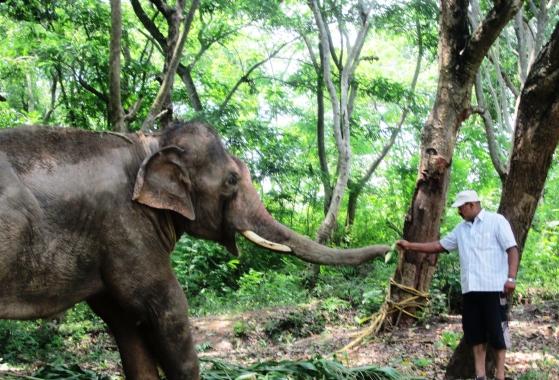
PETA
First, after getting off the truck, Sunder was given fruits. Along the road, he had become accustomed to and seemed to look forward to getting a treat at every stop!
Sunder has a terrible injury on his leg from being chained too tightly for a long time. It is no doubt painful to him. Bannerghatta Biological Park (BBP) veterinarians and handlers say that initially Sunder will need to be kept lightly restrained until the injury is brought under control and has healed and until he gets to know the other elephants and the caretakers. He needs to trust that unlike his previous “caretakers” and mahout (handler), they are not out to hurt or trick him. Since he is a large animal who has been very badly abused, precautions must be taken to ensure that he does not hurt himself or others. Right now, Sunder may find it difficult to trust anyone, but that will change.
Sunder’s planned transition is explained in this NDTV report.
Today, officials at the park gave PETA permission to build a temporary enclosure inside the resting area where all the elephants are kept at night for Sunder, where he can be managed during treatment and also protected from rain as useful for the treatment of his injury. His injury is, however, massive and is just above a joint that will be hard to heal, but the veterinarians are working on it. BBP has also given PETA permission to build a 1.25-acre sturdy enclosure that can be used for male elephants when in musth (a period of sexual urge that makes them aggressive), where they can be kept chain-free (the traditional method in India is to keep them in chains during this time). This enclosure can be used at other times, too, such as for the gentle introduction of any other rescued elephant to the park before he or she joins the herd.
Once he is thought to be psychologically and physically ready, Sunder will be transitioned to be with his new family, with whom he will be able to walk around freely.
He has already met a few of those family members and was quite excited to see them. His loneliness and desire for the company of other elephants over the years, after being taken from his mother, must have been overwhelming.
The first elephant Sunder met was Van Raj, a giant bull elephant. Dr Manilal Valliyate, PETA’s director of veterinary affairs, reports, “When Van Raj went near Sunder, he was a little scared, but when Van Raj touched him, that was the moment I saw a glow in Sunder’s eyes. He also touched Van Raj and found himself to be in the comfort of his first friend at the Elephant Care Centre!”
Sunder was first unloaded from the truck in the forest and then moved to the Elephant Care Centre. Dr Valliyate reports, “When two female elephants and Van Raj came to accompany Sunder to the Elephant Care Centre, it was such a wonderful sight to see Sunder surrounded by company of his own species. Maybe for the first time, he tried to strike a chord with the ladies near him. He touched and smelled them.”
Another new family member Sunder met was this baby elephant, Shiva:

Shiva excitedly greeted Sunder, but since Sunder may not have ever seen a baby elephant before, he was scared. With the enthusiasm Shiva showed in making Sunder a new friend, it seems likely that the two will become playmates and best buddies in time.
Other elephants in the park bathe in the pond and wander about on their own with their mahouts watchful but at a distance. Park officials have told PETA that the entire 49.5-hectare forested area for elephants will be fenced in to allow the herd of 13 elephants – which Sunder will join – to roam freely at all times except when they need medical treatment.

See more pictures HERE
Order a FREE vegan kit: http://www.peta.org/living/vegetarian-living/free-vegetarian-starter-kit.aspx
Take PETA’s Cruelty-Free Shopping Guide along with you next time you head to the store! The handy guide will help you find humane products at a glance. Order a FREE copy HERE
Want to do more than go vegan? Help others to do so! Click on the below for nominal, or no, fees to vegan literature that you can use to convince others that veganism is the only compassionate route to being an animal friend.
PETA: http://www.petacatalog.com/catalog/Literature-39-1.html
Action for Animals has a very low price : http://store.afa-online.org/home.php?cat=284
Have questions? Click HERE
Read more…
70% of Human Diseases Linked to Animal Agriculture
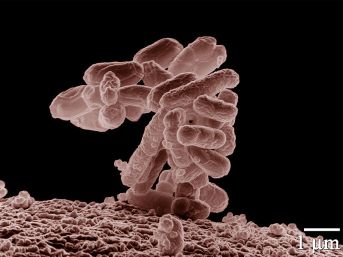
E coli, Wikimedia Commons
Source Veganomics
A report by the United Nations Food and Agriculture Organisation (FAO) links 70% of human diseases to animal agriculture.
The “World Agriculture – Changing Disease Landscapes” report published in December 2013 explains how population growth, agricultural expansion, and the rise of globe-spanning food supply chains have dramatically altered how diseases emerge, jump species boundaries, and spread.
The report says seventy percent of the new diseases that have emerged in humans over recent decades are of animal origin and, in part, directly related to the human quest for more animal-sourced food.
Its goes on to explain how developing countries face a staggering burden of human, zoonotic and livestock diseases creating a major impediment to development and food safety. Recurrent epidemics in livestock affect food security, livelihoods, and national and local economies in poor and rich countries alike.
In the push to produce more food, humans have carved out vast swaths of agricultural land in previously wild areas – putting themselves and their animals into contact with wildlife-borne diseases.
The FAO advocates a “One Health” approach – looking at the interplay between environmental factors, animal health, and human health, adding that “livestock health is the weakest link in our global health chain. Disease must be addressed at its source – particularly in animals.”.
Meanwhile farms in the US consume about 80 percent of the antibiotics supply. Such frequent use has come at a price: Antibiotic-resistant superbugs are on the rise, with more than 2 million people in the US now contract drug-resistant infections annually.
From a vegan perspective, all of these problems can be avoided if we consigned animal agriculture to history, thus negating the need to convert more land from wild to agricultural, freeing developing countries from a destructive economy, avoiding the risk of more diseases jumping species from the wild animalqs through livestock to humans, as well as addressing the rise in the meat-linked “Western” diseases of cancer, heart-disease, atherosclerosis, obesity…
The full report is available from the FAO.
Click HERE to go Dairy-Free
Order a FREE vegan kit: http://www.peta.org/living/food/free-vegan-starter-kit/
Take PETA’s Cruelty-Free Shopping Guide along with you next time you head to the store! The handy guide will help you find humane products at a glance. Order a FREE copy HERE
Searching for Cruelty-Free Cosmetics, Personal-Care Products, Vegan Products, or more?
Click HERE to search.
Click HERE to find out How to Wear Vegan!
Want to do more than go vegan? Help others to do so! Click below for nominal, or no, fees to vegan literature that you can use to convince others that veganism is the only compassionate route to being an animal friend:
PETA: https://www.petaliterature.com/
Vegan Outreach: https://veganoutreach.org/order-form/
Get your FREE Activist Kit from PETA, including stickers, leaflets, and guide HERE
Have questions? Click HERE
Breaking the Mother-Calf Bond: The Untold Story of Milk
Source Free From Harm
By Robert Grillo
I grew up, like almost everyone else I know, never questioning what my parents and friends’ parents fed us. And when I eventually went off on my own to college, it still never occurred to me to question the glaring ethical implications of a diet heavy in dairy products. And even after I became a vegetarian in my 30s which I attributed to my deepening connection with yoga, I still never thought to question or connect the lives of countless dairy cows and their young with my food choices.
Not until my mid-40s did I finally wake up to the many appalling facts behind dairy farming, most notably, the inherently cruel and forceful separation of a mother cow and her newborn — an unavoidable consequence of dairy farming in countries across the world. It is no wonder to me now why society hid and continues to hide this ugly truth behind caricatures of happy cows designed to protect children and even mature adults from the truth. This vortex of denial is not only a tragedy for the animals involved; it exposes a cognitive dissonance, an unhealthy disconnect from our most fundamental values of kindness, respect, justice and equal consideration that we hold very dear.
See more at: http://freefromharm.org/animal-cruelty-investigation/breaking-the-mother-calf-bond-the-untold-story-of-milk/
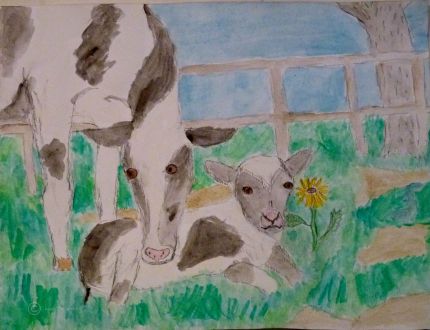
Karen Lyons Kalmenson
Order a FREE vegan kit: http://www.peta.org/living/vegetarian-living/free-vegetarian-starter-kit.aspx
Take PETA’s Cruelty-Free Shopping Guide along with you next time you head to the store! The handy guide will help you find humane products at a glance. Order a FREE copy HERE
Want to do more than go vegan? Help others to do so! Click on the below for nominal, or no, fees to vegan literature that you can use to convince others that veganism is the only compassionate route to being an animal friend.
PETA: http://www.petacatalog.com/catalog/Literature-39-1.html
Action for Animals has a very low price : http://store.afa-online.org/home.php?cat=284
Have questions? Click HERE
As Rhinos Die, CITES Hands Out Certificates

Karen Lyons Kalmenson
July 10, 2014,
Order a FREE vegan kit: http://www.peta.org/living/vegetarian-living/free-vegetarian-starter-kit.aspx
Take PETA’s Cruelty-Free Shopping Guide along with you next time you head to the store! The handy guide will help you find humane products at a glance. Order a FREE copy HERE
Want to do more than go vegan? Help others to do so! Click on the below for nominal, or no, fees to vegan literature that you can use to convince others that veganism is the only compassionate route to being an animal friend.
PETA: http://www.petacatalog.com/catalog/Literature-39-1.html
Action for Animals has a very low price : http://store.afa-online.org/home.php?cat=284
Have questions? Click HERE
Vegan Kindergarten
Published on Jul 10, 2014: A story by Israel’s Vegan News: Bar Sharon tells what motivated her to make her kindergarten vegan.
Source: GaryTV
See Gary Yourofsky’s full talk here:
Order a FREE vegan kit: http://www.peta.org/living/vegetarian-living/free-vegetarian-starter-kit.aspx
Take PETA’s Cruelty-Free Shopping Guide along with you next time you head to the store! The handy guide will help you find humane products at a glance. Order a FREE copy HERE
Want to do more than go vegan? Help others to do so! Click on the below for nominal, or no, fees to vegan literature that you can use to convince others that veganism is the only compassionate route to being an animal friend.
PETA: http://www.petacatalog.com/catalog/Literature-39-1.html
Action for Animals has a very low price : http://store.afa-online.org/home.php?cat=284
Have questions? Click HERE
Read more…













 Our Compass