HighestWelfare.Humane.Assured.GoodPractices.Vegetarian. Regenerative.Flexitarian.Lies...
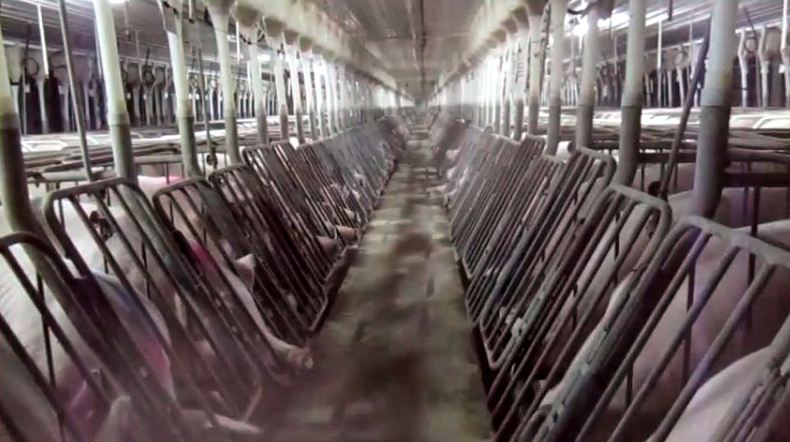
What is the difference between No Welfare, High Welfare, and Highest Welfare when they all require animals to die? Only human comfort, NONE protect the actual animals. The most humane, ethical, and honest Webster-defined "welfare" is NOT exploiting animals - not using, not wearing, not eating, not killing - animals. The only meaningful position is vegan, everything else is just how humans euphemize animals' required suffering and violent deaths: no human exploits animals because they honestly believe that NOT exploiting animals is UNethical or INhumane.
Shut down fur farm
OC: This is just one example of a deplorable fur farm; regardless of meaningless “law” all are deplorable places of wretched pain and needless suffering for ALL animals. It goes without saying, therefore, that ALL should be banned and illegalized.
BACKGROUND
The Montreal SPCA, acting on a tip, began an investigation into a fur farm north of the city in May of 2014. What they found was appalling.
Veterinarians accompanied the Montreal SPCA to the location. Immediately, several foxes were humanely euthanized due to the extent of their suffering and inability to recover.
The press release issued Thursday by the Montreal SPCA noted injuries and health issues including:
- Dehydration
- Emaciation
- Toe fractures
- Tail injuries
- Tooth fractures
- Ear and eye infections
- Internal bleeding, and
- Neurological issues.
On August 4, the Montreal SPCA and Humane Society International/Canada accompanied the Ministry of FFP to the site and seized 16 arctic foxes, as the owner of the farm did not have the appropriate permits for this particular species.
Since then, Montreal SPCA and HSI/Canada officials have urged the Minister of FFP, Laurent Lessard, to work with them in removing the remaining animals and enforce existing laws. As of today, August 13, they have received no response.
This is an outrage.
WHOM TO CONTACT
Contact info for Minister Lessard:
Ministère des Forêts, de la Faune et des Parcs
5700, 4e Avenue Ouest
Québec (Québec) G1H 6R1
Find your MNA
SAMPLE LETTERS
English
Dear Minister Laurent Lessard,
I am writing to demand that you and the Ministry of Forests, Fauna and Parks (Ministère de la Forêts, Faune, et Parcs – MFFP) take immediate action to support the Montreal SPCA and prosecute the heinous crimes against animals taking place in Quebec. Only a total and complete disbanding of the “operation” will be acceptable.
Multiple inspections in recent weeks have revealed that the foxes are in critical condition and suffer from serious health problems including dehydration, emaciation, toe fractures, tail injuries, tooth fractures, ear and eye infections, internal bleeding and neurological issues. Further, the condition of these foxes has been steadily deteriorating. Wildlife experts, veterinarians, the Montreal SPCA and Humane Society International/Canada have stressed the necessity of applying provincial legislation applicable to foxes and other wildlife in captivity in order to immediately seize these animals, yet government authorities are refusing to take action.
Take the time to look at the photos and videos (http://furbearerdefenders.com/blog/graphic-content-animals-must-be-removed-from-quebec-fur-farm-today) of these animals and try to find a way to explain it away. Your role as the Minister of Forests, Fauna and Parks includes enforcement of laws when necessary. There has never been a time that has required action more than this.
As a taxpayer and a voter, I expect to see immediate and public movement from yourself and your Ministry on this important matter.
Thank you for taking the time to read this immediate appeal; I look forward to a positive resolution.
Signed,
En Francais
Cher Ministre Laurent Lessard,
Je vous transmet ce message pour vous demander, de concert avec votre Ministère, le MFFP, que vous prenez des mesures immédiates pour soutenir la SPCA de Montréal dans ce dossier. L’état des renards et des visons examinés par des professionnels médicaux est déplorable et je n’arrive pas à comprendre pourquoi votre ministère ne suit pas l’avis de la SPCA de Montréal ainsi que plusieurs experts sur la faune.
Prenez le temps de regarder les photos et les vidéos de ces animaux et essayer de trouver une façon d’expliquer comment cette situation lamentable peut être acceptable. Votre rôle en tant que Ministre des Forêts, Faune et Parcs inclut l’application de la loi si nécessaire. Il n’y a jamais eu un moment qui a nécessité une action plus que maintenant.
Comme contribuable, je m’attends à voir un mouvement publique immédiat de votre part ainsi que de votre ministère sur cette question.
Signed,
Please forward any correspondence received to info@furbearerdefenders.com
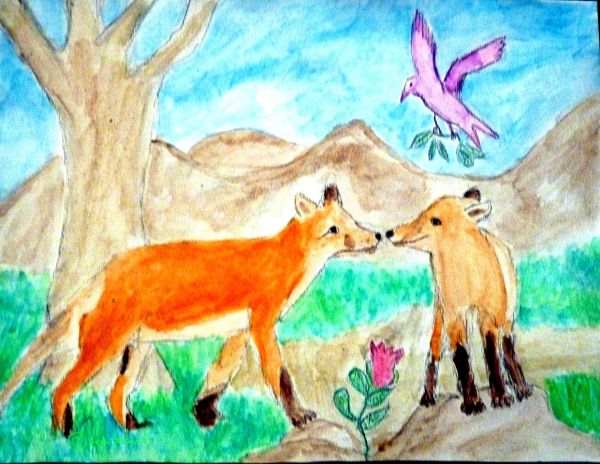
Karen Lyons Kalmenson
Order a FREE vegan kit: http://www.peta.org/living/vegetarian-living/free-vegetarian-starter-kit.aspx
Take PETA’s Cruelty-Free Shopping Guide along with you next time you head to the store! The handy guide will help you find humane products at a glance. Order a FREE copy HERE
Want to do more than go vegan? Help others to do so! Click on the below for nominal, or no, fees to vegan literature that you can use to convince others that veganism is the only compassionate route to being an animal friend.
PETA: http://www.petacatalog.com/catalog/Literature-39-1.html
Action for Animals has a very low price : http://store.afa-online.org/home.php?cat=284
Have questions? Click HERE
Could Veganism End World Hunger?
Wikimedia Commons
Source Gentle World: for the Vegan in Everyone
By Michael Chatham
Whenever someone in the animal rights community suggests the concept of complete animal liberation, and therefore an end to the exploitation of animals, a common criticism and counter-argument to this goal is: “Humans can’t give up eating animals (or animal products), because then everyone would starve!” Not only is the idea of giving up their favorite edibles anxiety-inducing and even threatening to resolute omnivores, but it seems perfectly rational to them that, given the plight of humans around the globe who are suffering from poverty and hunger, removing animals from the world’s food supply would only exacerbate the situation. However, nothing could be further from the truth. It is actually the production of animal-based foods that is one of the leading causes of world hunger.
It is estimated that a staggering 925 million humans around the world are suffering from the effects of hunger (mostly in the poor and underdeveloped countries of Asia and Africa), and out of that original number, 870 million are affected with malnutrition. Those original 925 million actually outnumber the combined populace living in the United States, Canada, and the European Union. Think about that for a moment. That means that there are enough hungry people on this planet to fill up almost two entire continents. Furthermore, it must be made clear that this is not just benign hunger; the type felt by a person in the rich, developed world when they’ve missed their lunch break. Every year, starvation claims the lives of over 2.5 million children under the age of five.
However, it has been proven that there is enough food on earth to feed every last man, woman, and child. Yet, if this is the case, why do people around the world continue to starve? The answer to that question lies in large part with the production of animal-based foods, such as meat, dairy, and eggs. Even though there are enough plant-based foods grown to feed the entire human population, the majority of crops (including those grown in countries where people are starving) are fed to livestock for affluent nations, and since the amount of animal-based food produced by the farming industry is much less than the amount of plant food put into it, there is a “diminished return on the investment,” the food supply dwindles, and humans end up going hungry.
Imagine, if you would, all the food (mostly grains) that a cow would eat in the course of 18 to 24 months (which is the average age of most cows when they are slaughtered for their meat). Now imagine if you were somehow able the pile all of that food up in front of you. This massive mountain of food is what has sustained this cow for all of these months; giving him energy, allowing cells to regenerate, bones and muscles to grow, his heart to beat and his lungs to breathe. Now imagine that a slaughterhouse worker came and killed that cow, carving his body up into cuts of meat and placing these cuts of meat into a separate pile. Which of these two piles do you think would feed more people: the pile of meat that used to be his body, or the pile of food that went into creating and nourishing it? This is the stark equation that makes the animal farming industry so illogical and unsustainable.
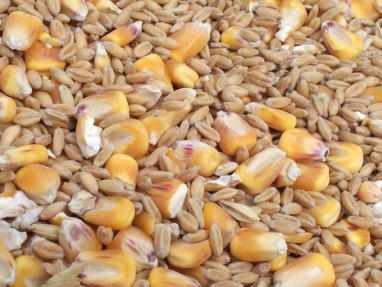
In 2011, 883 million tons of corn, and 260 million tons of soybeans were grown globally. However, on average, 40-50% of that corn, and 80% of those soybeans are fed to farmed animals, rather than being eaten directly by humans. In 2013, scientists from the Institute on the Environment and the University of Minnesota published a study examining agricultural resources (including meat, dairy, and egg production) and the dilemma of world hunger. The scientists reached the conclusion that if all food crops were fed directly to humans instead of animals, around 70% more food would be added to the world’s supply, which would be enough to feed 4 billion additional people. That sudden surplus alone would be enough food to feed over half the humans on earth, let alone the 925 million who face hunger every day.
Cows (and the other animals we eat) are poor converters when it comes to turning food into energy and muscle, which is why it takes anywhere from 13 to-20 pounds of grain fed to a cow to produce just 1 pound of muscle mass, i.e. beef. This means that 13-20 times as many people could be fed if those grains were simply eaten by humans. Likewise, it takes around seven pounds of grain to produce one pound of pork, and 4.5 pounds of grain to produce one pound of chicken. In a 2009 study, the Worldwatch Institute stated that “…meat consumption is an inefficient use of grain—the grain is used more efficiently when consumed directly by humans. Continued growth in meat output is dependent on feeding grain to animals, creating competition for grain between affluent meat-eaters and the world’s poor.”
The “diminished return on investment” scenario is further complicated when you consider the fact that cows (exploited for meat, dairy, and leather) as well as other grazing animals, were never biologically designed to eat the massive amounts of grain they are fed by the farming industry. They are ruminants, and evolved to eat grass. However, because the demand for animal products is so high in today’s society, and because farmers want to produce the most product as quickly as possible, animals are fed massive amounts of grain, such as corn. In the age of factory farming, it takes only 18-24 months for a cow to grow to the desired weight and be killed. This is thanks to a steady diet of grains (which humans could be eating) and growth hormones.
However, this is not to say that grass-fed beef is a viable alternative. Livestock grazing threatens native and endangered species through habitat destruction and displacement, and causes soil erosion, which in turn can transform fertile farmland into deserts (a process known as desertification). The Food and Agriculture Organization of the United Nations reports that around 70% of the Amazon rainforest has been cut and burned to be used as grazing land for cattle. Ultimately, whether used for grazing or growing feed crops, the use of land and other natural resources for meat, dairy, and egg production is horribly inefficient. Sadly, this does not stop farmers in both developed and developing nations (many of which suffer from widespread hunger and starvation) from using their resources to satisfy the the world’s growing appetite for animal products.
In Plato’s Republic, Socrates poses the question, “If we pursue our habit of eating animals, and if our neighbor follows a similar path, will we not have need to go to war against our neighbor to secure greater pasturage, because ours will not be enough to sustain us, and our neighbor will have a similar need to wage war on us for the same reason?” It seems this question that was asked so many centuries ago is becoming more and more of a reality in the modern world, as many political and economic experts are predicting that future wars will be fought over food, water, land, and other valuable natural resources critical to human survival. Moreover, with the human population of the world at 7 billion and growing, these natural resources are destined to become only more precious. It has come time to do something to solve the global crisis that is world hunger, and the most rational solution should be extremely clear. In order to ensure that every person on the planet has enough food to eat, and ultimately protect our own survival, humans must look deep within themselves and choose the path that is the most compassionate, healthy, and sustainable. That path is veganism.
Sources:
Farm Sanctuary
Food and Agriculture Organization
Humane Society International
JohnRobbins.info
International Vegetarian Union
Jess McNally, Stanford Magazine
People for the Ethical Treatment of Animals
United Nations World Food Programme
United States Environmental Protection Agency
VegNews
Further Reading…
Order a FREE vegan kit: http://www.peta.org/living/vegetarian-living/free-vegetarian-starter-kit.aspx
Take PETA’s Cruelty-Free Shopping Guide along with you next time you head to the store! The handy guide will help you find humane products at a glance. Order a FREE copy HERE
Want to do more than go vegan? Help others to do so! Click on the below for nominal, or no, fees to vegan literature that you can use to convince others that veganism is the only compassionate route to being an animal friend.
PETA: http://www.petacatalog.com/catalog/Literature-39-1.html
Action for Animals has a very low price : http://store.afa-online.org/home.php?cat=284
Have questions? Click HERE
Cat rescued from animal testing lab is given first taste of freedom
Source Mirror
Held in captivity his entire life, this is the moment Xander the cat is rescued from an animal testing laboratory
Imagine spending your life in the same windowless room?
That was the life of Xander the animal testing cat before he was rescued from a scientific research lab in New York six months ago.
The tear jerking video shows Xander (previously known as Jax) and a fellow former animal testing cat on the day they were first released from the windowless lab where they had been living in tiny cages.
The kitties were rescued by the Feline Freedom Project, part of charity called Beagle Freedom Project which is dedicated to legally rescuing dogs and cats from animal testing. The charity have previously posted adorable videos of rescued Beagles stepping onto grass for the first time.
According to the RSPCA, in 2010 152 cats were used in research in the UK, where as this number is closer to 20,000 in the USA.
Xander has gained quite a following and has over 3000 fans on his Facebook page ‘Xander the rescued lab cat’ where his owner posts regular pictures and updates about him.
His new (guardian) Rachel Gruen recently said on his Facebook fan page, “we are so very grateful for the opportunity to be a voice for the hundreds of thousands of laboratory animals around the world”.
Order a FREE vegan kit: http://www.peta.org/living/vegetarian-living/free-vegetarian-starter-kit.aspx
Take PETA’s Cruelty-Free Shopping Guide along with you next time you head to the store! The handy guide will help you find humane products at a glance. Order a FREE copy HERE
Want to do more than go vegan? Help others to do so! Click on the below for nominal, or no, fees to vegan literature that you can use to convince others that veganism is the only compassionate route to being an animal friend.
PETA: http://www.petacatalog.com/catalog/Literature-39-1.html
Action for Animals has a very low price : http://store.afa-online.org/home.php?cat=284
Have questions? Click HERE
Missed this year, but please read for the next …
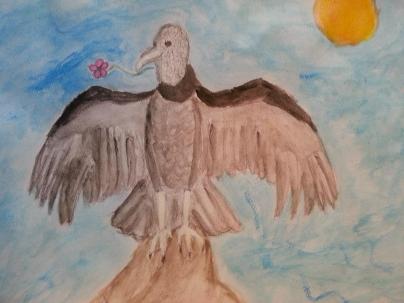
Karen Lyons Kalmenson
Source International Vulture Awareness Day
Vultures are an ecologically vital group of birds that face a range of threats in many areas that they occur. Populations of many species are under pressure and some species are facing extinction.
The International Vulture Awareness Day has grown from Vulture Awareness Days run by the Birds of Prey Programme in South Africa and the Hawk Conservancy Trust in England, who decided to work together and expand the initiative into an international event.
It is now recognised that a co-ordinated international day will publicise the conservation of vultures to a wider audience and highlight the important work being carried out by the world’s vulture conservationists.
On the first Saturday in September, the aim is for each participating organisation to carry out their own activities that highlight vulture conservation and awareness. This website, established in July 2009, provides a central place for all participants to outline these activities and see the extent of vulture conservation across the world
Additionally this webpage is a valuable resource for vulture workers to learn about the activities of their colleagues and to perhaps develop new collaborations or exchange information.
But you don’t have to be a zoo, bird park or conservation organisation to become involved. Our Awareness Day WikiSpace, with space for participation as well as important resources is open to everyone. Take a look at how you can become involved.
Organisations participating in 2014
Biodiversity and Wildlife Conservation Lab,Lucknow, India
(AWARE) Association for Water, Applied Education & Renewable Energy, Pakistan
Accipiter Enterprises, Educational Birds of Prey, United States
African Bird of Prey Sanctuary, South Africa
Albuquerque BioPark, United States
Alula Falconry, United Kingdom
Angkor Centre for Conservation of Biodiversity, United Kingdom
Animal Rescue Org, India
Arulagam, India
Asociation Trenca, Spain
Association “Les Amis des Oiseaux” (AAO) – BirdLife in Tunisia, Tunisia
Asters, Conservatoire d’Espaces Naturels de Haute-Savoie, France
Athens-Clarke County Recycling Division/ Bear Hollow Wildlife Trail/ Oconee Rivers Audubon Society, United States
Avian Conservation Center of Appalachia, United States
Awe Pono, United States
Bhaktapur Multiple Campus, Tribhuvan University, Nepal
BIOPARC de Doué la Fontaine, France
Bird Conservation Nepal, Nepal
Birdlife Polokwane, South Africa
BirdLife Zimbabwe, Zimbabwe
Birds of Prey Programme, Endangered Wildlife Trust, South Africa
Birds of Prey Protection Foundation Belgrade, Serbia
Birds of Pune, India
Birmingham Zoo, United States
Bombay Natural History Society, India
Brookgreen Gardens, United States
Buttonwood Park Zoo, United States
Caldwell Zoo, United States
Camp Bayou Outdoor Learning Center, United States
Cape Vultures Environmetal Association, Botswana
Carolina Raptor Center, United States
Carvalho’s Friends of a Feather, Inc., United States
Catalunya-La Pedrera Foundation, Spain
Central Florida Zoo & Botanical Gardens, United States
Channing.info, France
Cheyenne Mountain Zoo, United States
CMS Raptors MoU, United Arab Emirates
Colectivo Azálvaro, Spain
Dhandatopa Forest Range & NEWS (Odisha), India
Disney’s Animal Kingdom, United States
Eagle Encounters, South Africa
Eagle Heights Wildlife Park, United Kingdom
Eskom/Endangered Wildlife Trust Strategic partnership, South Africa
Falcon Temporis Fauconnerie, France
Faruk Yalçın Zoo, Turkey
Faszination Geier, Germany
Fondo para el Refugio de las Hoces del Riaza, Spain
Forest Department, Lalitpur, India
Friends of Blouberg, South Africa
Fuerteventura Oasis Park, Spain
Gauntlet birds of prey eagle and vulture park, United Kingdom
Geierschutzinitiative GESI, Germany
Graham Bessant, United Kingdom
Grand Parc du Puy du Fou – Académie de Fauconnerie, France
Green Guard Nature Organization, India
GREPOM BirdLife Morocco, Morocco
Grifon – Birds of Prey Conservation Centre, Croatia
Grizzly & Wolf Discovery Center, United States
Hamerton Zoo Park, United Kingdom
Hawk Mountain Sanctuary, United States
Himalayan Nature, Nepal
International Anti-Poaching Foundation/Stanley & Livingstone Private Game Reserve, Zimbabwe
International Union for Conservation of Nature, Bangladesh
Jharkhand Biodiversity Board, India
Jivdaya cheritable trust, India
Khandesh Nature Conservation Society, India
Knowsley Safari, United Kingdom
Lehigh Valley Zoo, United States
Little Rock Zoo, United States
LPO (Ligue pour la Protection des Oiseaux), France
MAHARASHTRA FOREST DEPARTMENT, India
Masters Of The Skies, United States
McGregor Museum, South Africa
Meadowside Nature Center, United States
Montecasino Bird Gardens, South Africa
NARREC, Namibia
National Zoological Gardens of South Africa, South Africa
Natur- und Tierpark Goldau, Switzerland
Nature Environment & Wildlife Society , Odisha, India
Nature Kenya, Kenya
NatureUganda, Uganda
Neo Human Foundation, India
North Carolina Zoological Park, United States
Nottingham Trent University, United Kingdom
OASYS (MiniHollywood), Spain
Oregon Coast Aquarium, United States
Oregon Zoo, United States
Ornithological Society “Naše ptice”, Bosnia and Herzegovina
Palmitos Park, Spain
Parco Natura Viva, Italy
Parque Biológico de Gaia, Portugal
Parque Ornitológico de Lourosa, Portugal
Parque Zoológico de Lagos, Portugal
Parque Zoologico Municipal de Córdoba, Spain
Peace Valley Nature Center, United States
Pembrokeshire Falconry, United Kingdom
Pradhikar, Bangladesh
PRADHIKAR(প্রাধিকার), Bangladesh
Pretoria Centre for Cerebral Palsy, South Africa
ProBartgeier, Switzerland
QUERCUS A.N.C.N.- Associação Nacional de Proteção da Natureza, Portugal
Raptor Education Foundation, United States
Raptors Are The Solution, United States
Regional Government of Extremadura, Spain
Riserva naturale del Lago di Cornino, Italy
Royal Zoological Society of Scotland, Edinburgh Zoo, United Kingdom
SAVE / RSPB, India
Save vulture community, India
Science Association, Shardanagar; Tal. Baramati; Dist. Pune, India
Selwo Aventura, Spain
Six Flags Discovery Kingdom, United States
Society for Conservation of Nature, India
Society for the Preservation of Wild Culture, Canada
Sulphur Creek Nature Center, United States
Swastishree, India
Tallahassee Museum, United States
Tampa’s Lowry Park Zoo, United States
Terra Natura Benidorm, Spain
The Center for Birds of Prey, United States
The Corbett Foundation, India
The Parahawking Project, Nepal
The Peregrine Fund’s World Center for Birds of Prey, United States
The Wildlife Center of Virginia, United States
The Wildlife Welfare Society, Pakistan
Thompson Park Zoo and Conservancy, United States
Timbavati Private Nature Reserve, South Africa
Toronto Zoo, Canada
Tracy Aviary, United States
Travis Audubon, United States
TreeHouse Wildlife Center, United States
Tunisia Wildlife Conservation Society (TWCS), Tunisia
UIZA-Italian Association of Zoos and Acquaria, Italy
University of KwaZulu-Natal, South Africa
University of Lucknow, India
UP State Biodiversity Board, India
Veterinarians for Animal Welfare Zimbabwe (VAWZ), Zimbabwe
Vulture Conservation Foundation (VCF), Switzerland
Vulture Conservation Foundation (VCF) – Acción por el mundo salvaje (AMUS), Spain
Vultures namibia, Namibia
Vultures Return in Bulgaria Project, Bulgaria
WildCare, United States
Wildlife ACT (Hluhluwe), South Africa
Woodland Park Zoo, United States
World Bird Sanctuary, United States
Zoo Aquarium de Madrid, Spain
Zoo de La Barben, France
Zoo Miami, United States
Zoo Outreach Organization, India
Zoo Praha / Prague Zoo, Czech Republic
Zoo Zlin, Czech Republic
Zoobotánico de Jerez, Spain
Zoological Society of London, United Kingdom
Order a FREE vegan kit: http://www.peta.org/living/vegetarian-living/free-vegetarian-starter-kit.aspx
Take PETA’s Cruelty-Free Shopping Guide along with you next time you head to the store! The handy guide will help you find humane products at a glance. Order a FREE copy HERE
Want to do more than go vegan? Help others to do so! Click on the below for nominal, or no, fees to vegan literature that you can use to convince others that veganism is the only compassionate route to being an animal friend.
PETA: http://www.petacatalog.com/catalog/Literature-39-1.html
Action for Animals has a very low price : http://store.afa-online.org/home.php?cat=284
Have questions? Click HERE
Read more…
Faith, Radicalism, and Saying What We Mean
Published on Aug 11, 2014: What did SHAC7 defendant Lauren Gazzola find harder than walking into prison?
Order a FREE vegan kit: http://www.peta.org/living/vegetarian-living/free-vegetarian-starter-kit.aspx
Take PETA’s Cruelty-Free Shopping Guide along with you next time you head to the store! The handy guide will help you find humane products at a glance. Order a FREE copy HERE
Want to do more than go vegan? Help others to do so! Click on the below for nominal, or no, fees to vegan literature that you can use to convince others that veganism is the only compassionate route to being an animal friend.
PETA: http://www.petacatalog.com/catalog/Literature-39-1.html
Action for Animals has a very low price : http://store.afa-online.org/home.php?cat=284
Have questions? Click HERE
Read more…
Proof That Barbaric Traditions like Hunting and Trapping Can Change: Indian court bans animal sacrifice

Wikimedia Commons
Source The Guardian
Rights activists hail Himachal Pradesh’s decision to outlaw ‘barbaric’ slaughter of animals in Hindu temples
A court in remote northern India has banned a long tradition of sacrificing animals for religious reasons, deeming the practice cruel and barbaric.
The high court in Himachal Pradesh has asked police and other officials to enforce its ban on the slaughter, mainly of goats in Hindu temples throughout the state.
“No person will sacrifice any animal in any place of worship. It includes adjoining lands and buildings,” the two-judge bench of the court ruled late on Monday.
“A startling revelation has been made … thousands of animals are sacrificed every year in the name of worship,” the court said.
“Sacrifice causes immense pain and suffering to innocent animals. They cannot be permitted to be sacrificed to appease a god or deity in a barbaric manner,” it said.
The court also questioned the reasons for animal sacrifices, saying such rituals “must change in the modern era”.
The court was ruling on a petition brought by animal rights activists, who applauded the move on Tuesday as long overdue.
“We welcome this ban on animal sacrifice as it will end centuries of cruelty to animals in the name of religion,” local activist Rajeshwar Negi told AFP.
But state lawmaker Maheshwar Singh defended the practice, saying: “This judgment is against the age-old beliefs and customs of many people.”
Goats and sometimes sheep are often sacrificed at the start of winter in temples across Himachal Pradesh with the aim of pleasing Hindu deities.
Animals are symbolically offered to the deity and later taken home by villagers and their guests for eating during the Himalayan state’s bitterly cold winter.
Some of the sacrifices at festivals, including those of “shaand” and “bhunda”, involve large numbers of animals killed using a knife at the entrance of the temples.
Order a FREE vegan kit: http://www.peta.org/living/vegetarian-living/free-vegetarian-starter-kit.aspx
Take PETA’s Cruelty-Free Shopping Guide along with you next time you head to the store! The handy guide will help you find humane products at a glance. Order a FREE copy HERE
Want to do more than go vegan? Help others to do so! Click on the below for nominal, or no, fees to vegan literature that you can use to convince others that veganism is the only compassionate route to being an animal friend.
PETA: http://www.petacatalog.com/catalog/Literature-39-1.html
Action for Animals has a very low price : http://store.afa-online.org/home.php?cat=284
Have questions? Click HERE
Animals can be ‘victims’ just like people, Oregon Supreme Court says
Wikimedia Commons
A good step, but would be a great step if it included animals exploited and sacrificed for profit, including animals killed for food and fur.
Source Oregon Live
By Aimee Green
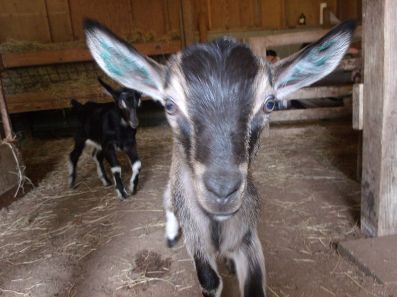
In two landmark rulings earlier this month, the Oregon Supreme Court said that animals — whether they be horses, goats, dogs or cats — shall be afforded some of the same basic protections as human beings.
The dual rulings are expected to make it easier for police to rush to the aid of ailing animals without first obtaining a warrant. They also could result in harsher criminal repercussions for those found guilty of abusing or neglecting animals.
“These are hugely helpful to the prosecution of animal-cruelty cases,” said Jacob Kamins, a Corvallis-based prosecutor assigned to pursuing such cases across Oregon.
Specifically, in State v. Arnold Nix, the supreme court ruled that a Umatilla County man who was convicted of starving 20 horses and goats on his property could be sentenced — not just on one count of second-degree animal neglect — but on 20 different counts, meaning each animal counted as a separate “victim.”
For defendants in general, that could result in longer jail or prison sentences, and make it more difficult for defendants to — years later — expunge such convictions off of their criminal records.
“To acknowledge that animals are victims of crime, that’s really common sense to us,” said Lora Dunn, staff attorney for the Animal Legal Defense Fund in Portland.
Nix, who was 68 at the time of his arrest in 2009, argued that the ordinary meaning of “victims” doesn’t include “non-humans,” and Oregon law defines animals as the property of their human owners.
In State vs. Linda Fessenden and Teresa Dicke, the supreme court found that a sheriff’s deputy was legally justified in 2010 in rushing onto a Douglas County pasture to get medical help for a horse that was so malnourished every one of its ribs was showing. The state’s high court ruled that the deputy, who thought the horse was in immediate danger of falling and dying, didn’t need a warrant to step onto private property and get the animal to a veterinarian.
As Nix had argued, Fessenden and Dicke also argued that state law defines animals as property — and police should first have to obtain a warrant before bursting onto private property to prevent harm to property.
The high court agreed that animals are still defined by law as “property.” But the court ruled that the deputy didn’t violate the constitutional search and seizure rights of its two owners because “exigent circumstance” existed — that is that swift action was required to prevent harm to people or to property.
The deputy estimated it would take four to eight hours to obtain the warrant, and by then, it might not be possible to save the horse.
“We get calls every day from law enforcement in Oregon and other states that say ‘I need help right now. These animals are on the brink of death’ — whether it’s a hoarding case with cats or dogs in a puppy mill or horses that are starving,” said Dunn of the Animal Legal Defense Fund.
“Absolutely, we recommend ‘Get a warrant if you can,’” Dunn said. “Because we don’t want to deal with these constitutional issues down the line.”
But sometimes, Dunn said, an animal’s life might be in jeopardy in the time it takes to get a warrant. Dunn said that’s why her organization is “thrilled” about the Fessenden/Dicke case.
In making its findings — some of the strongest favoring animal rights to date — the high court noted how Oregon law is evolving to reflect the sentiments of society in general.
Justice Martha Lee Walters, who wrote the Fessenden/Dicke opinion for the court, noted that household pets, such as dogs, and even a farm animal — the horse — “occupy a unique position in people’s hearts” and that’s reflected in the development of animal-welfare laws.
Walters referenced a legal fight by American attorneys trying to establish the right of a chimpanzee to sue its owner for poor living conditions, and even a zoo in India that won’t allow the exhibition of dolphins because of their advanced intelligence.
Walters also cited a 2013 study by the Animal Legal Defense Fund that ranked Oregon second and Washington seventh among states for their laws protecting animals. Among Oregon’s strengths, the study said, were laws that increase penalties if the harm to the animal happened in the presence of a child and the power of judges to require mental-health counseling.
“As we continue to learn more about the interrelated nature of all life, the day may come when humans perceive less separation between themselves and other living beings than the law now reflects,” Walters wrote. “However, we do not need a mirror to the past or a telescope to the future to recognize that the legal status of animals has changed and is changing still…”
Order a FREE vegan kit: http://www.peta.org/living/vegetarian-living/free-vegetarian-starter-kit.aspx
Take PETA’s Cruelty-Free Shopping Guide along with you next time you head to the store! The handy guide will help you find humane products at a glance. Order a FREE copy HERE
Want to do more than go vegan? Help others to do so! Click on the below for nominal, or no, fees to vegan literature that you can use to convince others that veganism is the only compassionate route to being an animal friend.
PETA: http://www.petacatalog.com/catalog/Literature-39-1.html
Action for Animals has a very low price : http://store.afa-online.org/home.php?cat=284
Have questions? Click HERE
Read more…
Role Reversals and the Death of A Thousand Cuts
Those Vegan Hedonists
Source Those Vegan Hedonists
By Kimberly
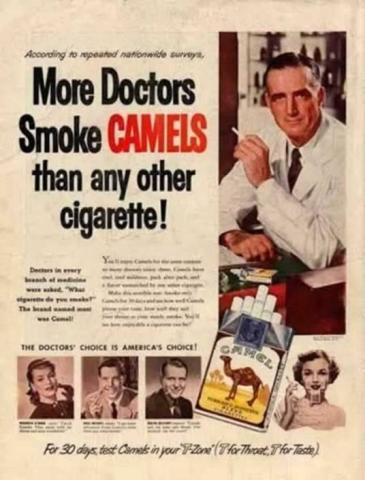
As a sheltered, suburban child, I remember many public “awareness” campaigns that were designed to scare me straight. Many of these campaigns had the intended effect. I never abused drugs, smoking cigarettes never stuck, and sex was a highly-plasticized, “safe” experience.
Paranoia can be a good thing. I’m glad I was warned about the awful things that can happen to those who aren’t careful, even if the result was an inhibited, easily terrified young person who seldom went out at night and who could count the times she was genuinely drunk on one hand. Because of paranoia (and sometimes it was outright unfounded paranoia, such as in the case of marijuana smoking) I ended up disease-free, addiction-free, and without any unwanted pregnancies.
Now I am getting to the age where my contemporaries are beginning to suffer aches, pains, excess weight, fatigue, constipation, and mental fogginess. One of my ex-boyfriends died of a particularly violent cancer at the age of thirty-seven. Another ex died of a mysterious aneurysm at age forty. The rest who survived the twenty year high school reunion have become portly or flabby and consistently haggard. When I enter a room full of people “my age”, I feel like the female Dorian Gray. This is true every time I am among people of my age group except when I gather with my vegan contemporaries. My vegan pals are my fellows in youth and vibrance. Their eyes are bright, their minds are sharp, and they almost always look younger than their years. They are living proof a plant based diet is not a panacea for every ailment, however, it can be extremely helpful in the avoidance of heart disease, diabetes, and cancers. Why? A plant-based diet lowers inflammation. Inflammation, as far as I understand it, tends to be the root of almost all human diseases.
I was born in 1973; you do the math. I went vegetarian at age seventeen and vegan at age thirty-seven. I have never felt better in my life, including my teens. I know from my experiences with birth control and addiction avoidance that an ounce of prevention is worth a pound of the cure. Yet the very people who taught me everything I know are now losing the battle against their own addictions.
My parents have made major strides in their diet of late, but they have a long way to go. They are Baby Boomers who were indoctrinated to believe the pinnacle of a healthy dinner features a chunk of grayish-red cadaver surrounded by a starch, usually white, and a cooked vegetable. Said plate is accompanied by a large glass of cow’s milk and followed by a creamy dessert where fruit is used mainly as a flavoring to give the sugar dose more dimensionality.
My parents came of age in the nineteen sixties. The sixties are an era marked by colossal ignorance of food’s impact upon human health. If you want to view the apex of disgusting, dismal, health destroying foodlike-substances, simply open any cookbook from the sixties. The funniest thing about my parent’s generation is their superstitious reverence of protein, a myth so well-perpetuated it persists today. Never mind that excessive protein consumption is a smoking gun on-switch for cancer. Similar beliefs proliferate around the calcium in bovine milk (hint, there isn’t any, it’s fortified artificially), olive oil, and almost every other not-so-superfood out there. People believe what they want to hear. No generation is more guilty of this than the Boomers, who paved the way for the success of “Eat All The Garbage You Want And Wait for Someone To Invent A Magic Pill” mentality.
Everybody wants something for nothing. The idea we can eat pounds of animal fat and be perfectly fine illustrates a mendacious thought process most of us have fallen for at some point in our lives. Health problems are always blamed on someone or something else: environmental triggers, allergies, genetics. If only “they” would come up with a Cure!
Buying a pink ribbon bumper magnet or the suffering the momentary pain of dumping ice water over one’s head is far easier than taking the time to restructure one’s diet. It feels good to think nothing can be done about a problem, because that means you don’t have to do anything. Diet fads would have no market if it weren’t for the mentally lazy. Permanently changing one’s diet for the better involves research, planning, and scrutiny. It involves overcoming addictive foods like sugar, meat, dairy, eggs, and salt. It may mean learning to cook or to use new ingredients. We’re talking actual work! Most people would rather buy a book that tells them to avoid eating bread and rice so they can go into ketosis and drop serious pounds for a few weeks. When the weight crawls back, worse than ever, oh well. It was a quick fix. When disease comes, it’s only because the magic pill has not arrived on schedule, despite countless millions of dollars donated to fundraising efforts for supposed research.
My parent’s generation is dropping like proverbial flies, and they are not dying peacefully. Every week brings news from a random colleague or relative who is suffering what I call the Death of A Thousand Cuts. The Death of A Thousand Cuts was originally a torture invented by the Chinese. Body parts were hacked off, little by little over the period of several days, until the poor victim expired of blood loss and trauma.
The modern Death of A Thousand Cuts, inflicted by doctors and high-tech hospitals, is just a little worse than its old Chinese torture counterpart. Modernity insists in trying to keep the sufferer alive as long as possible through the very expensive dying process.
1. The Death begins with the odd trip to a clueless doctor who has received a sum total of two hours of nutritional training in medical school and who is paid by drug representatives to push various medications regardless of the interest of the patient. The doctor finds an aberration. Sometimes it’s an ulcer or a hernia. Sometimes it’s a small tumor. Who knows. The one thing we’re sure of is it requires a pricey surgery and plentiful drugs!
2. The next phase of the Death is a recuperation period where the patient is fed a joke-diet of chicken broth, cheese, and Jello (the melted down hooves, connective tissue, and bones of slaughtered animals with corn syrup and artificial cherry flavoring) and expected to get “better” LOL. Because the human body is very resilient, the patient lives to see another day, though there is almost invariably at least two pills he or she must begin a regimen of. Those pills will have lots of fun side effects, for which other pills will be prescribed.
3. Since absolutely nothing has been done to address the patient’s baseline health, the client will find himself in the hospital again. What’s this? Oh, the tumor is back. Or the patient now has diabetes. Or there’s an infection in the lungs that lingers for weeks and never gets better.
4. More surgery is scheduled. This time, the stakes are higher. A body part gets cut off this time. Dialysis becomes necessary. A lung collapses. The patient suffers a staph infection.
5. Lather, rinse, repeat until the patient is in a nursing home, strapped to a MRSA clogged IV, sitting in his own filthy diaper waiting for an overworked nurse assistant while watching endless reruns of Everybody Loves Raymond. His pain is so bad, even constipation-causing opiates do nothing to alleviate it. He wishes for death, because anything would be better than languishing in a destroyed, maimed shell of a body, humiliated when people do visit his freak show of agony and depressed when they do not.
I’d gladly put a gun in my mouth first, however, it’s not like the Death of A Thousand Cuts is a surprise. They know it is coming. They watch all their friends die of it. They fool themselves into a magic pill/there’s nothing I can do paradigm. This is my parent’s generation and it SUCKS.
Remember those commercials, so often lampooned, that asked parents if they had talked to their children about… fill in the blank: smoking, drugs, stranger danger?
I imagine a public service announcement in the vegan future that goes like this:
Have you talked to your aging parents about the Death of A Thousand Cuts?
I had this conversation with my parents a couple of times.
Mom, dad, do you realize you don’t have to repeat your friend’s mistakes?
Do you realize you can change your tune before the symphony is over?
Do you understand that meat, dairy, and eggs are addictive and that your doctor-dealer is suffering from the same addiction and papering over the effects in order to sell you drugs?
Do you realize you are being manipulated into buying addictive foods so you can be siphoned into expensive medical “care” which only ends in one result?
My parents hated that I smoked for a few years because they watched my grandparents die painful deaths of smoking-related diseases. There was also the fact I used to come home reeking like an ashtray after a weekend with grandma. Because I am a little shitski, I have deliberately confronted them with the irony of their addiction to eating animals versus the addiction of their own parents to smoking cigarettes. I’m repeating history. I’m nagging them because I love them and because I care.
I like to think if I nag hard enough, one day they’ll listen.
Order a FREE vegan kit: http://www.peta.org/living/vegetarian-living/free-vegetarian-starter-kit.aspx
Take PETA’s Cruelty-Free Shopping Guide along with you next time you head to the store! The handy guide will help you find humane products at a glance. Order a FREE copy HERE
Want to do more than go vegan? Help others to do so! Click on the below for nominal, or no, fees to vegan literature that you can use to convince others that veganism is the only compassionate route to being an animal friend.
PETA: http://www.petacatalog.com/catalog/Literature-39-1.html
Action for Animals has a very low price : http://store.afa-online.org/home.php?cat=284
Have questions? Click HERE
Read more…
Even the Gorillas and Bears in Our Zoos Are Hooked on Prozac
OC: I am against zoos, no question. First, animals are enslaved, made to perform and strut for human entertainment, gleeful, sticky hands poking at fin and fur. Second, they are raped, made to reproduce under the guise of conservation, never establishing that funds and greed are the main desire. And third, now they are drugged, stifling their natural urges, made to parade in a halcion-induced stage of docility. Please defend animals by never using them as entertainment, be it in a zoo, and aquarium, or other such nonsensical human-endorced whimsy.
Source Stop Making Sense
By
Laurel Braitman, author of Animal Madness, featured excerpts from her book in Wired:
 ‘One of the first nonhumans to be given psychopharmaceuticals as a patient (and not as a test subject) was a western lowland gorilla named Willie B., who was famous in Atlanta, Georgia. He was captured in Congo as an infant in the 1960s and sent to Zoo Atlanta, where he lived for 39 years, 27 of them alone in an indoor cage with a tire swing and a television. According to Mel Richardson, who was working as a veterinarian at Zoo Atlanta at the time, Willie broke a glass window in his enclosure in the winter of 1970–71 and had to be transferred to a much smaller cage for six months while the glass was replaced with heavy metal bars.
“He weighed around 400 pounds, and the cage was way too small for him,” said Mel. “If he stood up and stretched each arm all the way out he could almost touch both sides of the cage at once.” The vet staff decided to medicate him so that the six months would be more bearable. They put Thorazine in the Coca-Cola he drank in the morning. According to Mel, Willie responded to the drug as many institutionalized humans do: He shuffled back and forth across his cage with dulled eyes. “It was a little like watching the men in One Flew over the Cuckoo’s Nest,” Mel said.
Dolphins, whales, sea lions, walruses, and other marine creatures in parks like SeaWorld have also been given psychotropic drugs for what their vets see as depression, anxiety, compulsive regurgitation, flank sucking, or other distressing behaviors. Two marine mammal veterinarians who have spent decades on staff or consulting for American animal-display facilities and the military’s marine mammal program told me that antidepressants and antipsychotics are commonly used but that “no one was going to talk to [me] about it.” Even they wouldn’t speak about the subject on the record.’
- Animal Madness: How Anxious Dogs, Compulsive Parrots, and Elephants in Recovery Help Us Understand Ourselves (Book)
- Fish swimming in water tainted with Prozac exhibit ‘antisocial, aggressive and even homicidal behaviour’
- Pets on Prozac: The dark side of animal emotions
- Effect of psychoactive drugs on animals
Order a FREE vegan kit: http://www.peta.org/living/vegetarian-living/free-vegetarian-starter-kit.aspx
Take PETA’s Cruelty-Free Shopping Guide along with you next time you head to the store! The handy guide will help you find humane products at a glance. Order a FREE copy HERE
Want to do more than go vegan? Help others to do so! Click on the below for nominal, or no, fees to vegan literature that you can use to convince others that veganism is the only compassionate route to being an animal friend.
PETA: http://www.petacatalog.com/catalog/Literature-39-1.html
Action for Animals has a very low price : http://store.afa-online.org/home.php?cat=284
Have questions? Click HERE
Source Free From Harm
By Free From Harm Staff Writers
Philip Wollen shakes the rafters of the auditorium with this 10-minute speech to the St James Ethics Centre and the Wheeler Centre debate in Australia on May 16, 2012. The larger debate consists of six speakers, three that make the case for getting animals off the menu and three that make the case against it. Wollen is a former VP of Citibank and Australian philanthropist who is known to keep out of the limelight. But he sure rose to the challenge for this debate to deliver a huge performance and a powerful message. Bravo!
Join Philip Wollen and the Kindness Trust on their Facebook page. Watch the full debate with all six speakers.
This is the transcript to the speech:
On behalf of St James Ethics Centre, the Wheeler Centre,
The Melbourne Food and Wine Festival, The Age
The City of Melbourne and the ABC
All of whom have worked together to make this event possible
I would like to welcome
Philip Wollen
((Applause))
King Lear, late at night on the cliffs asks the blind Earl of Gloucester “How do you see the world?”
And the blind man Gloucester replies “I see it feelingly”.
Shouldn’t we all?
Animals must be off the menu because tonight they are screaming in terror in the slaughterhouse, in crates, and cages. Vile ignoble gulags of despair.
I heard the screams of my dying father as his body was ravaged by the cancer that killed him. And I realised I had heard these screams before.
In the slaughterhouse, eyes stabbed out and tendons slashed, on the cattle ships to the Middle East and the dying mother whale as a Japanese harpoon explodes in her brain as she calls out to her calf.
Their cries were the cries of my father.
I discovered when we suffer, we suffer as equals.
And in their capacity to suffer, a dog is a pig is a bear. . . . . . is a boy.
Meat is the new asbestos – more murderous than tobacco.
CO2, Methane, and Nitrous Oxide from the livestock industry are killing our oceans with acidic, hypoxic Dead Zones.
90% of small fish are ground into pellets to feed livestock.
Vegetarian cows are now the world’s largest ocean predator.
The oceans are dying in our time. By 2048 all our fisheries will be dead. The lungs and the arteries of the earth.
Billions of bouncy little chicks are ground up alive simply because they are male.
Only 100 billion people have ever lived. 7 billion alive today. And we torture and kill 2 billion animals every week.
10,000 entire species are wiped out every year because of the actions of one species.
We are now facing the 6th mass extinction in cosmological history.
If any other organism did this a biologist would call it a virus.
It is a crime against humanity of unimaginable proportions.
The world has changed.
10 years ago Twitter was a bird sound, www was a stuck keyboard, Cloud was in the sky, 4 g was a parking place, Google was a baby burp, Skype was a typo and Al Kider was my plumber.
Victor Hugo said “there is nothing more powerful than an idea whose time has come”.
Read the rest on Free From Harm
HSUS betrays animals. Again.
Wikimedia Commons
Source Peaceful Prairie Sanctuary
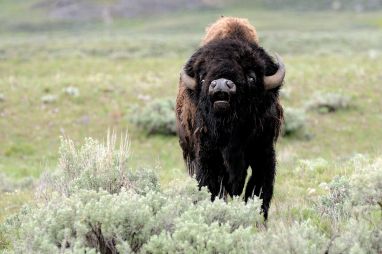
This is a vigil for the billions of individuals whose lives are shattered for the palate pleasure and amusement of consumers whose taste for animal suffering trumps justice and compassion. It is a protest, a rejection of, and a necessary remedy for, the mockery that animal welfare advocates, “conscientious” consumers, and “humane” farmers have made of the word ‘respect’. It is a direct response to “RESPECT YOUR DINNER”, an HSUS sponsored event where participants are invited to experience the superior taste and texture of “humanely” enslaved, and “respectfully” murdered animals.
As participants will be “Hoofin it” around Denver for four consecutive days, savoring the burned remains of a different animal each day—a bison, a pig, a lamb, a calf—we will stand in solidarity, in sympathy, in outrage, and in deep sorrow with the animals whose lives, hearts, minds, memories, languages, and unique identities will have been obliterated into the ugliness of meat.
Join us in opposing the elitist notion that other animals exist for human use. Join us in celebrating the mind, the heart, the mystery that each sentient being brings to the world. Joins us in restoring the true meaning, practice, and moral significance of word ‘Respect’.
Live vegan and educate others about the vegan imperative.
A Follow Up To Our Four Night Vigil
It is with heavy hearts and exhausted souls that we had to shine the light of truth on the HSUS sponsored “Hoofin It” event which, as egregious as it was, was only one of countless events and partnerships that HSUS has had with animal killers for years.
HSUS’ crimes against the animals have been hidden in plain sight for anyone to see.
Although our original 4 night Vigil series was intended to present the “hoofed animal menu” victim’s perspective during each night’s horrific event, the entire Vigil was also meant to expose a much larger, more pervasive trend that not only the HSUS has been engaging in, but most major animal “rights” organizations, as well as major sanctuaries.
Their insistence on using the language of “factory farming” rather than “Animal Farming”, and their focus on “humane” reforms — which imply that animals can be enslaved, raped, kidnapped and murdered “humanely” — is what opened the flood gates for events like the HSUS sponsored “Hoofin It” atrocity, and many others.
This was not the first of its kind and will not be the last of its kind — sponsored by, sanctioned by, and created by the animals’ advocates’ refusal to include all animals in their advocacy.
What we’ve seen is a swapping out of one group of victims for another, and organizations calling it “progress”.
What we’ve seen is that huge multinational corporations (Tyson, Goodtimes Burgers, Chipotle…) are now using the language that animal protection organizations have given them, to promote the sale and consumption of “non factory farmed” animals.
What we know is that, when confronted with the horrors of factory farming, the public’s default response is now to look for products of animal misery that are labeled “humane”– thereby increasing the demand for animal suffering and death — instead of understanding that the only way to end this massive injustice is to become vegan.
At Peaceful Prairie Sanctuary, we know the victims of all animal farming, and we know that our job as their advocates is to tell the public — and Vegans — the whole truth about the cruelty and injustice inherent in all animal farming/ use.
We call on all vegans to please realize that the consequences of opposing “factory farming” instead of “all animal farming” are devastating for the animals.
Promoting the feel-good lie that “humane” farming is, or can ever be, anything but an atrocity results only in increasing the demand for its blood products and, with it, in perpetuating the horror that the victims are forced to endure under the label “high welfare”.
Please tell the whole truth in your own advocacy, and call on all animal protection organizations and sanctuaries to do the same.
Live vegan and educate others about the vegan imperative.
Order a FREE vegan kit: http://www.peta.org/living/vegetarian-living/free-vegetarian-starter-kit.aspx
Take PETA’s Cruelty-Free Shopping Guide along with you next time you head to the store! The handy guide will help you find humane products at a glance. Order a FREE copy HERE
Want to do more than go vegan? Help others to do so! Click on the below for nominal, or no, fees to vegan literature that you can use to convince others that veganism is the only compassionate route to being an animal friend.
PETA: http://www.petacatalog.com/catalog/Literature-39-1.html
Action for Animals has a very low price : http://store.afa-online.org/home.php?cat=284
Have questions? Click HERE
The Sadness and the Power of Knowing…
 Source Vegan Feminist Agitator
By Marla Rose
It’s interesting to me that even after being vegan for nearly twenty years, a simple question can still create such an unintentionally fervent storm within: What is the hardest part about being vegan? I think the people asking this would expect vegans to say that it’s most difficult to eat out, that family meals are problematic, that Thanksgiving is a pain, and it’s true, sometimes different situations can present challenges but they are usually more of an annoyance than a true impediment.
I was reminded of this recently when we posted this same question on the Vegan Street Facebook page and of the hundreds of responses we received, again and again we heard that the hardest part of being vegan is knowing what is inflicted upon animals – by the year, by the day, by the minute, in real time as we sit at our computers or brush our teeth – and needing to continue carrying on with our lives despite knowing this. There is an emotional bluntness that can be hard to mute when we’re asked this question, yet we’ve learned that the truth is too real for most people to hear about so we dance around a candid depiction of our experience. We water it down with a message that is more palatable. We change the subject because speaking about this honestly to anyone who is not vegan will likely not be understood. We keep our composure when we feel like crying. (Or we try to do that, at least in public.) We move on. Despite this, for many of us, the hardest part of being vegan is in the knowing.
It’s knowing what we know and realizing that we have to carry on with our own lives even as these other innocent lives are filled with completely needless torment and suffering. It’s knowing that gentle calves are torn from their mothers and when this happens, more than 100,000 times each day, their mothers often bellow and mourn in ways we can’t even imagine, and the cycle continues until they no longer produce enough milk and it’s time for them to become cheap meat. It’s talking about this to someone who is eating a salad sprinkled with cheese, being able to see the destroyed mothers and babies in the cheese that is not visible to most others, and remain composed.
It’s knowing that newly hatched male layer chicks are destroyed because they are worthless to the industry. It’s knowing that their mothers continue their cycle of laying egg after egg until they are depleted and then they must also become cheap meat. It’s knowing the fate of their female chicks and seeing billboards for .99 breakfast biscuits on our way to work, advertised on the subway, on the fast food bags blowing out of the garbage cans as we walk past.
It’s the beaks, tails, horns, testicles and whatever else that’s inefficient cut off and tossed out; it’s the ear tags, notches, tattoos and branding. It’s the castration and it’s the rape, day in and day out. It’s the numbing ubiquity of their commodification. It’s the sheer, paralyzing immensity of the violence and the deeply embedded habits that make people blind to it. Knowing all this is how an innocent question becomes an unavoidably prickly one.
Still, we live our lives because there is no pressing pause on the world as it is, on things as they are, so we continue on as best we can, knowing what we know, seeing what we’ve seen, trying to change hearts and minds as we go. It’s painful and most of the time, even though I have dedicated my life to spreading the message of veganism, I shut the ugliness out of my mind because I don’t know how I could live effectively if I didn’t. There is no un-knowing it, though. It’s always there, just below the surface, at the ready. It can spring out like a jack-in-the-box when we hear someone make a bacon joke, if anyone boasts about their cage-free eggs, when our mother-in-law asks if she can take her grandson to McDonald’s but also when someone asks us for vegan recipes, for alternatives to zoos, if we can give them information about the dairy industry. No matter the context, this knowing is there, it is part of us.
The bright side to knowing is the empowerment that comes from also knowing that we are not contributing to the violence and offering the example of another way of living. When people are on the precipice of going vegan, I think often they fear what they think their lives may look like, living in a world that is so profoundly enmeshed in exploitation, of feeling the vulnerability that comes with being different. This fear of vulnerability can cause people on the edge to back up and close off. What they are not seeing, though, is that despite the pain that comes from knowing, there is a tremendous opportunity to transcend business as usual, and in this transcending, they will reap countless rewards. It is scary to expose ourselves to knowing, though, and it’s also scary be on the verge of breaking with the status quo. This is why I feel that knowing what we know is at once our greatest vulnerability and, ironically perhaps, also our greatest strength. As with so much in life, there is a price to pay with moving outside of one’s comfort zone, with knowing, with being vulnerable. When the alternative is sealing off our hearts, living in denial, and limiting our growth to make others comfortable, it is a price well worth paying and I am grateful to be able to pay it every day.
While I write this, cows are forcibly impregnated. Chickens are stressed as they are put through forced molting. Babies are pulled from their mothers. Aquatic life suffocates in massive nets that dredge the ocean. Animals are trucked to slaughterhouses. Bolts are shot into brains. Throats are slit. This is happening at this moment and there is no getting around that. The best we can do is help people awaken to it and empower them to take positive actions. Yes, it is lousy to know. The alternative, though? It is immeasurably worse.
Thank you for visiting my humble blog. Please visit my website for vegan recipes, tips, interviews, reviews, message gear and much more.
Order a FREE vegan kit: http://www.peta.org/living/vegetarian-living/free-vegetarian-starter-kit.aspx
Take PETA’s Cruelty-Free Shopping Guide along with you next time you head to the store! The handy guide will help you find humane products at a glance. Order a FREE copy HERE
Want to do more than go vegan? Help others to do so! Click on the below for nominal, or no, fees to vegan literature that you can use to convince others that veganism is the only compassionate route to being an animal friend.
PETA: http://www.petacatalog.com/catalog/Literature-39-1.html
Action for Animals has a very low price : http://store.afa-online.org/home.php?cat=284
Have questions? Click HERE
Read more…
Stop the blood sport of bear hunting
Karen Lyons Kalmenson
BACKGROUND | SOURCE COURIER-POST
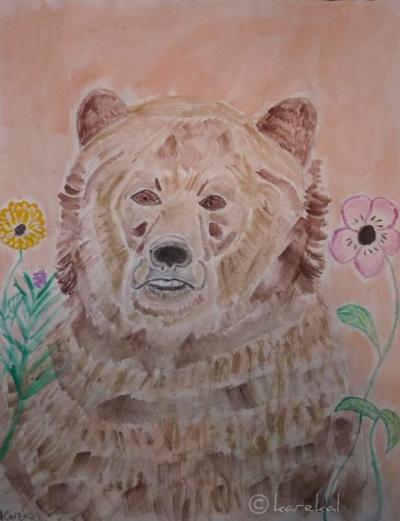
Those who respect wildlife get tired of seeing smiling “hunters” posing with a weapon in one hand and holding up the head of a majestic bear with the other. In death, the bear shows more dignity than its cowardly killer.
Lynn Rogers, Ph.D., the leading black bear biologist in North America, concluded that black bears are extremely timid and pose little risk to anyone. Attacks by a black bear are so rare as to be almost nonexistent. A person is about 180 times more likely to be killed by a bee than a black bear and 160,000 times more likely to die in a traffic accident.
The New Jersey Fish and Wildlife agency propagates game species for its hunter constituents. It runs a blood “sport” killing business under the fraudulent cover of “conservation.”
Killing a black bear is a cowardly act. It’s killing for nothing more than sick kicks and “trophy” bragging rights.
Most bears are already starting hibernation and are defenseless. “Hunters” are even allowed to use bait.
Killing a black bear mom leaves her cubs to die of starvation. Don’t worry, the agency encourages “hunters” to shoot cubs, too. It’s an obscene and senseless act, and a reflection of the worst of human nature. If bears could shoot back, there wouldn’t be a hunter in the woods.
Please politely ask Gov. Chris Christie to cancel the bear hunt that begins Dec. 8. Email constituent.relations@gov.state.nj.us; write Office of the Governor, P.O. Box 001, Trenton, NJ 08625; call (609) 292-6000; or fax (609) 292-5212.
SILVIE POMICTER
Voice Of The Animals
President/Humane Educator
Chinchilla, Pa.
WHOM TO CONTACT
Email: constituent.relations@gov.state.nj.us
Letter: Office of the Governor P.O. Box 001, Trenton, NJ 08625
Phone: (609) 292-6000
Fax: (609) 292-5212
*Click HERE for free faxing from your computer. No fax machine, credit card, or registering required. Just input the required fields and select “send free fax ow”. Please be certain to confirm you message by clicking on the link sent to your email address or else your fax will not be sent. This is a great, easy, and free way to contact people.
SAMPLE LETTER
Dear Governor Christie,
It has come to my attention that New Jersey is reportedly considering allowing bear hunts. Although this hunt would be inherently cruel based on the premise alone, it is important to recognize it is based on erroneous information.
Please allow me to illustrate a few of these concerns. First, ecologically, populations will fluctuate according to conditions and naturally-occurring food sources; it is the interference of humans that causes imbalance. To blame and slaughter the bears for human encroachment and greed is both irresponsible and unjustified.
Second, killing bears artificially increases food supplies to the remaining bears, the consequence of which is increased reproduction and an ensuing greater bear population. In fact, studies have demonstrated that the continual cycle of seasonal hunting is responsible for a rebound, or larger populations, in subsequent years.
Third, there is no conservation efforts in place here, only the intentional propagation of bears for sport hunter constituents, a decidedly low percentage of voters. This is blood-shed, disguised as necessary control, when you can instead examine alternative, non-lethal options according to established protocols, which, when using these methods appropriately, have all proven successful in curtailing populations. However, if the state did not intentionally and artificially raise populations, such control would be unnecessary.
Fourth, cruelty abounds and is considered appropriate in these hunts, leaving bear cub orphans, of whom hunters are instructed to kill, and baiting tactics, a cowardly response for desperate hunters.
Fifth, this type of mass killing using such a brutal type of slaughter in such a central and visible location would certainly adversely affect both visitation and tourism; it would be financially detrimental to continue with such a cruel and unnecessary killing, and although I do not currently reside in New Jersey, I would be unwilling to consider it as a potential vacation destination if this bear hunt continues.
I know your time is limited and I want to thank you for your attention to this urgent matter.
NAME
Order a FREE vegan kit: http://www.peta.org/living/vegetarian-living/free-vegetarian-starter-kit.aspx
Take PETA’s Cruelty-Free Shopping Guide along with you next time you head to the store! The handy guide will help you find humane products at a glance. Order a FREE copy HERE
Want to do more than go vegan? Help others to do so! Click on the below for nominal, or no, fees to vegan literature that you can use to convince others that veganism is the only compassionate route to being an animal friend.
PETA: http://www.petacatalog.com/catalog/Literature-39-1.html
Action for Animals has a very low price : http://store.afa-online.org/home.php?cat=284
Have questions? Click HERE
Read more…
Take the mystery out of “mystery meat”
OC: Humans will forever attempt a disconnect between life and meal; they refuse to welcome the reality of their bloodlust and cruel dining experiences. While not the most appropriate form to show animals as, these pictures seem to relate the meal with the animal part. Is it gruesome? Yes. Is it a reflection of the true non-human animal? Absolutely not. ANIMALS ARE NOT FOOD. But it may put a link between the distance of fiction and reality. Nevertheless, regardless of fancy art and credible pictures, the only humane is vegan to prevent such horrific visions and “mysteries”.
Source TakePart
Nobody likes to see how the sausage—or really, any kind of processed meat product—gets made. Recently a Chinese factory that supplies McDonald’s and other chains made headlines when a video revealing workers’ unhygienic handling of meat surfaced. It posed an important question that most people would rather not dwell on: What are we really eating?
That inspired Hong Kong–based artist Peter Augustus’ Mystery Meat, a series of photographs that replaces familiar cuts of meat in classic American foods with the animal parts they come from.
“It is not meant to be repulsive,” Augustus said in an email. Instead, he intended to highlight the disconnect Western societies have with the food they eat and to spur the debate around the fillers and hormones used in meat.
Originally from Dallas, the artist became fascinated with Hong Kong’s meat shops, where pig heads, intestines, and eyeballs openly hang on hooks.
“As a foreigner from a major city in the West, most of us seldom see anything that even closely represents what kind of animals we are eating when we purchase it,” Augustus said. “It is always prepackaged, nice and neat, showcased in an air-conditioned supermarket.”
After finding a friendly butcher to help him with the project (“She thought it was funny”), Augustus shot the photographs using lighting and background that bring to mind the typical American diner or cafeteria.
“I hope the viewer takes into account what the natural form of their food looks like,” he said.
Order a FREE vegan kit: http://www.peta.org/living/vegetarian-living/free-vegetarian-starter-kit.aspx
Take PETA’s Cruelty-Free Shopping Guide along with you next time you head to the store! The handy guide will help you find humane products at a glance. Order a FREE copy HERE
Want to do more than go vegan? Help others to do so! Click on the below for nominal, or no, fees to vegan literature that you can use to convince others that veganism is the only compassionate route to being an animal friend.
PETA: http://www.petacatalog.com/catalog/Literature-39-1.html
Action for Animals has a very low price : http://store.afa-online.org/home.php?cat=284
Have questions? Click HERE
Read more…
URGENT: Speak Out Against Proposed Bobcat Fur Farm
Wikimedia Commons
BACKGROUND | SOURCE PETA
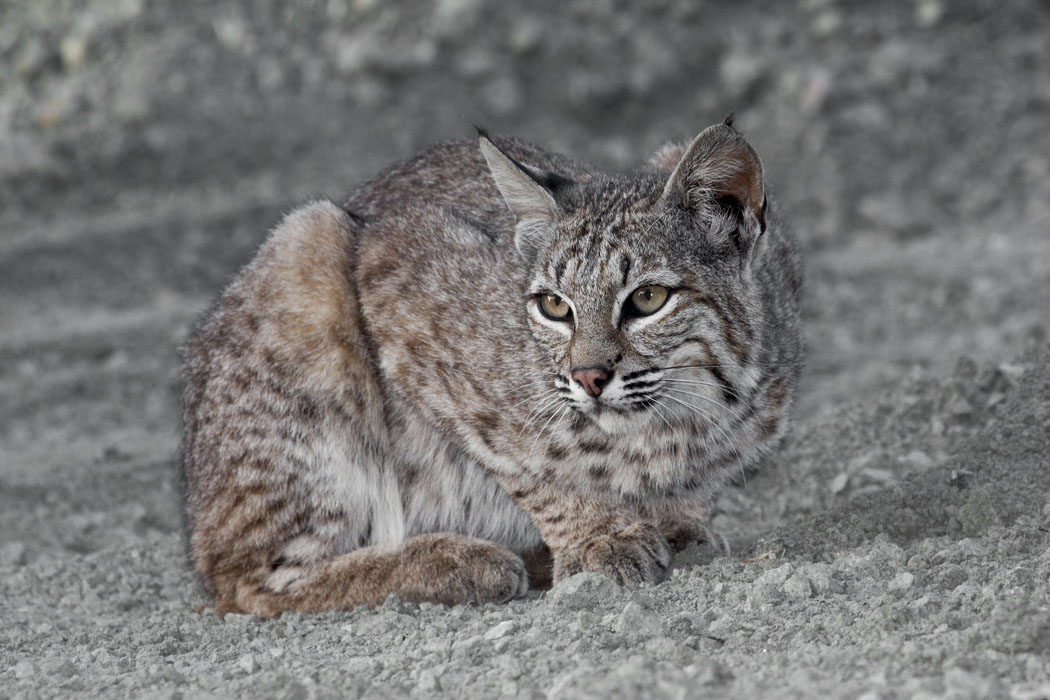
Montana Fish, Wildlife & Parks (FWP) is currently taking public comments on its Schultz Fur Farm Environmental Assessment, which recommends the permitting of a bobcat farm near Roy, Montana, where bobcats would be captive-bred and then sold to the cruel fur industry. Comments are due by August 29, so your voice is needed immediately!
In the wild, bobcats roam vast natural territories that can span 25 square miles, foraging for food, raising their young, and frolicking with family members. These animals are highly sensitive and elusive beings who avoid human contact at all cost. If Larry Schultz’s farm is permitted, bobcats would spend the majority of their short lives in small wire cages commonly seen in the unscrupulous fur industry. Intensive confinement prevents animals from being able to take more than a few steps in any direction or feel the earth beneath their feet. Many animals go insane under these conditions and will mutilate themselves and cannibalize their cagemates. Reportedly, bobcats have killed their young on Schultz’s fur farm in North Dakota.
Please urge the FWP to deny Schultz’s permit. Remind the agency that fur farms are cruel to animals and bad for the environment. And please forward this alert widely!
PETITION
Click HERE
WHOM TO CONTACT
Click HERE to submit your comments online
*Note: if mailbox is full, please try again later, thank you.
SAMPLE COMMENT
I’m writing with regard to the Montana Fish, Wildlife & Parks’ environmental assessment of the proposed Larry Schultz Fur Farm (d.b.a. Schultz Fur Farm), which would allow for captive bobcats in Fergus County to be sold to the commercial fur industry. I respectfully request that you deny this permit because of the cruelty and myriad environmental issues associated with such businesses.
In the wild, bobcats roam vast natural territories that can span 25 square miles, foraging for food, raising their young, and frolicking with family members. These animals are highly sensitive and elusive beings who avoid human contact at all cost. If Schultz’s farm is permitted, bobcats would spend the majority of their short lives in small wire cages commonly seen in the unscrupulous fur industry. Intensive confinement prevents animals from being able to take more than a few steps in any direction or feel the earth beneath their feet. Many animals go insane under these conditions and will mutilate themselves and cannibalize their cagemates. Reportedly, bobcats have killed their young on Schultz’s fur farm in North Dakota.
Fur farms also pose risks to the environment because of extensive water and air contamination that can lead to grave illnesses and death in humans, birds, fish, and other animals. Permitting such a farm would go against the FWP’s mission to provide “for the stewardship of the fish, wildlife, parks, and recreational resources of Montana, while contributing to the quality of life for present and future generations.”
Please deny a permit for the Schultz Fur Farm.
Order a FREE vegan kit: http://www.peta.org/living/vegetarian-living/free-vegetarian-starter-kit.aspx
Take PETA’s Cruelty-Free Shopping Guide along with you next time you head to the store! The handy guide will help you find humane products at a glance. Order a FREE copy HERE
Want to do more than go vegan? Help others to do so! Click on the below for nominal, or no, fees to vegan literature that you can use to convince others that veganism is the only compassionate route to being an animal friend.
PETA: http://www.petacatalog.com/catalog/Literature-39-1.html
Action for Animals has a very low price : http://store.afa-online.org/home.php?cat=284
Have questions? Click HERE













 Our Compass