HighestWelfare.Humane.Assured.GoodPractices.Vegetarian. Regenerative.Flexitarian.Lies...
What is the difference between No Welfare, High Welfare, and Highest Welfare when they all require animals to die? Only human comfort, NONE protect the actual animals. The most humane, ethical, and honest Webster-defined "welfare" is NOT exploiting animals - not using, not wearing, not eating, not killing - animals. The only meaningful position is vegan, everything else is just how humans euphemize animals' required suffering and violent deaths: no human exploits animals because they honestly believe that NOT exploiting animals is UNethical or INhumane.
THREE ACTIONS | Newest: Send letter to Mexican authorities regarding San Bernabe horses
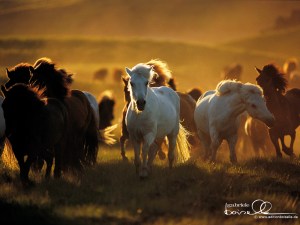
Please send a new message to Mexican equivalent of the USDA (United States Department of Agriculture) regarding the utter hell of the San Bernabe stockyard. Letter number two and the petition have been published recently on Our Compass but please participate if you have not yet done so, thank you. (Both letters are in Spanish and should be sent in Spanish, but English translations are for your information.)
1. Send Sample Letter #1 to the associated email addresses
2. Send Sample Letter #2 to different targets
3. Please click on and sign Close Mercado de San Bernabe: the shame of Mexico
BACKGROUND | FROM THE PERSIAN HORSE’S BLOG
There are no words to fully describe the horror to which the animals are subjected, at Mercado San Bernabe, located in Almoloya de Juárez, State of Mexico, MEXICO. The San Bernabe market is in violation of two federal and four state sanitary laws concerning animal health, ecological balance and environmental protection, which state the importance of dignified and respectful treatment of animals.
There is one man, the Governor of the State of Mexico, MEXICO, who has the power to enforce Federal and State Laws concerning Humane Treatment of Animals. Please send the following pre-written letter, which has been provided for your convenience in Spanish, to Governor Enrique Peña Nieto.
Related | Welfare groups speak out against Bernabe
Vodpod videos no longer available.
The first two addresses are to Secretary of Department of Ecology & Environment, Juan Rafael Elvira Quesada; the second is to Sagarpa, Department of Agriculture, Cattle, Rural Development, Fishing, and Feeding
Individual
Secretary of Department of Ecology & Environment, Juan Rafael Elvira Quesada:
c.secretario@semarnat.gob.mx
dgira@semarnat.gob.mx
Sagarpa, Department of Agriculture, Cattle, Rural Development, Fishing, and Feeding
As a Group
c.secretario@semarnat.gob.mx ,
dgira@semarnat.gob.mx ,
contacto@sagarpa.com.mx
LETTER #1 TO SEND
A quien correponda,
Por este medio, quiero expresar mi total rechazo a la manera cruel e indigna en que tratan a los animales en “El Mercado de San Bernabé, Almoloya de Juárez, Estado de México, es una vergüenza para México y es urgente resolver esta terrible situación, los ciudadanos de cada país en el mundo están reportando que no van a viajar a México hasta que las autoridades se pongan a trabajar y tomen cartas en el asunto, detengan este horror.
Urgente que se resuelva el asunto del Mercado de San Bernabé!!! la forma en que abusan y torturan a los animales no humanos es HORROROSA!!!, se tiene que poner orden ahí si es que desean los votos de los activistas de derechos animales y somos millones por si acaso les interesa saber, además contamos con todo el apoyo internacional, ahì les encargo, gracias.
En Almoloya de Juárez, Estado de México, se encuentra el Mercado llamado San Bernabé, donde se comercia principalmente, con caballos mulas y burros, en condiciones de crueldad y falta de higiene extremas, violando consistente y permanentemente, las leyes de protección animal y de sanidad. Las autoridades, teniendo plena facultad y pruebas para clausurar el sitio (a través de imágenes mostradas en múltiples medios), han hecho caso omiso a este reclamo.
Los animales en venta, en su mayoría, están visiblemente enfermos; son transportados en condiciones deplorables, y arrastrados sádicamente, sin importar que tengan fracturas expuestas, estén sangrando o tengan llagas. Cuando ya no pueden sostenerse en pie, son colgados con mecates para simular que aún tienen fuerza. Carecen de atención médica, agua y alimento y si mueren antes de llegar al rastro, son abiertos en el mismo sitio en que se encuentran, tirando sus vísceras al piso.
Les llaman “animales de desecho”, y se les mantiene con vida hasta el último momento, en una lenta y gran agonía, porque el kilo de carne viva cuesta casi el doble que el de la muerta.
Por lo aquí expuesto, exigimos a las autoridades competentes, la mejora inmediata de las condiciones existentes en este cruel lugar, utilicen rampas, denles a beber agua fresca y limpia, asegurense que se les de un trato humanitario y digno a estos bellos seres sintientes, después de todo es lo mínimo que todo ser humano pensante puede hacer.
Atentamente,
Name (Nombre)
Country (Pais)
ENGLISH TRANSLATION | LETTER #1
To whom corresponding, by this means, I would like to express my total opposition to the cruel and shameful way they treat the animals in the market of San Bernabé, Juárez, Mexico State, Almoloya is a shame for Mexico and is urgent to solve this terrible situation, citizens of every country in the world are reporting that they will not travel to Mexico until the authorities put to work and take letters on the matter”stop this horror.
Urgent to resolve the issue of the market of San Bernabé! the way in which abuse and torture of non-human animals is APPALLING!, is to get order there if they want the votes of animal rights activists and we are millions if you perhaps want to know, we also have full international support, ahì commissioned them, thanks.
In Almoloya de Juárez, State Mexico, lies the market called San Bernabé, where mainly traded with horses mules and donkeys, in extreme conditions of cruelty and lack of hygiene, consistent and permanently, to violate laws on animal protection and health. Authorities, taking evidence and full school to close down the site (through images shown in multiple media), have ignored this claim.
Animals for sale, are most visibly ill; they are transported in deplorable conditions, and dragged sadistically, regardless that they have exposed fractures are bleeding or have sores. When no longer can sustain is on foot, they are hung with mecates to simulate that they still have force. They lack food, water and medical care and if they die before reaching the trail, are open in the same place are, pulling their guts on the floor. They are called ‘animal waste’, and they were kept alive until the last moment, in a slow and great agony, because kilo of meat living costs almost double that of the dead.
By it herein, we demand that competent authorities, the immediate improvement of the conditions that exist in this cruel place, use ramps, give them to drink fresh clean water, make that is them humanitarian and dignified treatment to these beautiful sentient beings, after all it is the least that everything be human thinking can do. Sincerely, Name (name) Country (country)
WHOM TO CONTACT | LETTER #2
Individual
Governor of State of Mexico, Mexico | Enrique Pena Nieto
Email: ac@gem.gob.mx
Government offices of State of Mexico, Mexico
Email: gobierno.edomex@gmail.com
As a Group
ac@gem.gob.mx , gobierno.edomex@gmail.com
SUBJECT: Desgarradoras condiciones en el Mercado de San Bernabé.
Estimado Sr. Gobernador, Don Enrique Peña Nieto:
Respetuosamente solicitamos se cumplan los ordenamientos Federales y Estatales para asegurar un trato humano y digno a todos los animales en el Mercado de San Bernabé, ubicado en Almoloya de Juárez, Estado de México. La noticia y evidencia de cómo son tratados los animales en este Mercado ha trascendido a nivel INTERNACIONAL, la comunidad Internacional está en shock por la forma en que se torturan y maltratan a los animales es este mercado y sobre todo ha surgido una gran indignación porque se sigue haciendo impunemente.
Usted como Gobernador del estado de México y figura ascendente en la política de su país, es la persona con el poder de mejorar las condiciones existentes en este mercado, tenga compasión por favor y haga cumplirse las Leyes de protección y respeto a los animales, además de los ordenamientos sanitarios en este Mercado.
Nosotros, la comunidad internacional, quienes visitamos y hacemos negocios en México, urgentemente le pedimos atender este penoso asunto del increible maltrato y sufrimiento que soportan estos inocentes animales, dicho tratamiento a los seres vivos y sintientes no tienen cabida en la sociedad moderna, son simplemente inaceptables. Estaremos observando y supervisando las mejoras urgentes en el tratamiento a los animales en San Bernabé, el cual está bajo su mandato.
Gracias por su tiempo Sr. Gobernador.
Atentamente,
Nombre (Your Name)
país (Your Country)
ENGLISH TRANSLATION | LETTER #2
Dear Sir Enrique Peña Nieto:
Respectfully I hereby demand the enforcement of Mexican federal and state regulations to ensure the humane treatment of animals at the San Bernabe market located in Almoloya de Juarez.
News of how animals are treated at San Bernabe is now reaching countries outside Mexico and people are shocked to hear that this is allowed to continue. You, as the current Governor of Estado de Mexico, and a respected and rising political figure in Mexico are the person with the power to improve conditions at San Bernabe.
We, the citizens of the international community, who visit and do business with Mexico urgently ask you to address the cruelty of San Bernabe which has no place in today’s society. I will continue to follow the situation at San Bernabe and I will be waiting to see some urgently needed improvements to the treatment of animals at San Bernabe under your leadership!
Thank you, Governor.
Respectfully,
Your Name
Your Country
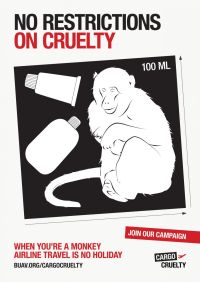
Please send message to airlines requesting they cease to ship animals for experimentation. BUAV has provided a sample letter and address details; the addresses are listed first as a group followed by individual details. (I have received three undeliverable addresses back but will keep them in.)
BACKGROUND | FROM BUAV
A BUAV investigation has obtained secret film and other evidence of monkeys shipped around the world by major passenger airlines. We can reveal shipments of monkeys transported by Air France to Covance in the USA and Centre de Primatologie in France and by Vietnam Airlines for Belgrave Services, a primate dealer in the UK. Other major passenger airlines to play a role in the brutal trade in primates for research include Air Canada which ships monkeys from countries such as China to laboratories in Canada and both China Southern Airlines and China Eastern Airlines, which fly monkeys to the USA.
Every year tens of thousands of primates are transported by air around the world for the international research industry. These monkeys originate from countries such as Mauritius, China, Vietnam, Cambodia, Laos, the Philippines, Indonesia, Tanzania and Barbados. Some are trapped in the wild while others are bred in captivity usually in large-scale facilities. They are ripped from their family groups, packed into small wooden crates and travel as cargo, predominantly on passenger air flights, on extremely long journeys to research laboratories around the world.
The BUAV has led the international campaign to end these shipments of misery. Over the years, our efforts have moved many airlines to dissociate themselves from this cruel trade. Airlines that do not transport primates include British Airways, United Airlines, Virgin Atlantic, Northwest Airlines, Qantas Airways, South African Airways, Delta Airlines, Eva Air, Qatar Airways and China Airlines. However, a small number of passenger airlines continue to be involved in this ugly business.
- View recent investigation footage of monkeys being loaded onto Air France flight
- Find out more about the suffering experienced by primates
- Find out which airlines still transport primates for research
- Download and share our Cargo Cruelty campaign postcard and poster
RELATED | Stop the Baby Trade: BUAV’s investigation into the primate trade
Vodpod videos no longer available.
SAMPLE LETTER:
To Whom It Concerns,
I am writing in support of the BUAV Cargo Cruelty campaign: http://www.buav.org/cargocruelty
I was shocked to learn that your airline is involved in the transportation of monkeys to laboratories. It is unacceptable that these sensitive animals, ripped from their families and homes, are then subjected to the stress of being packed into small crates and shipped as cargo on your airline to end up in laboratories where they will suffer in experiments.
I urge you to join the increasing number of airlines that have made the decision to stop their involvement in this cruelty. Until you do, I will not be flying with your airline.
Thank you for reading this important message.
NAME
AIRLINE ADDRESSES | GROUP:
acexecutive.hautedirectionac@aircanada.ca ,
aircanada_customercare_en@mailca.custhelp.com ,
info@cacargo.co.uk ,
customer-service.LHR@klmcargo.com ,
Europe.Mediarelations@aa.com ,
Customer.Relations@aa.com ,
LiveAnimals.Cargo@aa.com ,
contactus@aacargo.com ,
cto.uk@caribbean-airlines.com ,
saleslondon@chinaeastern.co.uk ,
csnib@csair.com ,
ecsupport@csair.com ,
cargoresuk@coair.com ,
corpcomm@coair.com ,
corpcomms@pal.com.ph ,
vna.uk@vietnamair.com.vn
AIRLINE ADDRESSES | INDIVIDUAL:
Air Canada
Radius Park, Hatton Cross, Feltham TW14 ONJ
AND/OR
Air Canada Centre, PO Box 14000, Dorval QC, Canada H4Y 1H4
Fax: +44 (0) 208 750 8495
Email: acexecutive.hautedirectionac@aircanada.ca and aircanada_customercare_en@mailca.custhelp.com
Air China
41 Grosvenor Gardens, London, SW1W
AND/OR
9th Floor, Blue Sky Mansion, 28 Tianzhu Road, Zone A, Tianzhu Airport Industrial Shunyi District, Beijing, China
Fax: +44 (0)20 8897 9037
Email: info@cacargo.co.uk
Air France
2a Plesman House, Cains Lane, Feltham TW14 9RH
Fax: +44 (0) 208 750 8495
Email: customer-service.LHR@klmcargo.com
AND/OR
45, rue de Paris, 95 747 Roissy CDG Cedex, Paris, France
Fax :+33 1 41 56 70 29
American Airlines
23-59 Staines Road, Trinity Square, Hounslow, TW3 3HE
AND/OR
4333 Amon Carter Boulevard, Fort Worth, TX 761, United States
Fax: +44 (0)20 8745 1469
Email:
Europe.Mediarelations@aa.com
Customer.Relations@aa.com
LiveAnimals.Cargo@aa.com
contactus@aacargo.com
Caribbean Airlines
Airline Centre, Building D, 28-39 Quadrant Business Centre, 135 Salusbury Road, Queens Park, London, NW6 3RJ
AND/OR
Iere House, Golden Grove Road, Piarco, Trinidad, West Indies
Fax: +44 (0)870 777 7172
Email: cto.uk@caribbean-airlines.com
China Eastern Airlines
37-39 George Street, London, W1U 3QD
AND/OR
2550 Hong Qiao Road, Shanghai, Shanghai Province 200335, China
Fax: +44 (0)20 8759 7584
Email:saleslondon@chinaeastern.co.uk
China Southern Airlines
Tan Wan’geng, President, Guangzhou Airport, Airport Road 278, Guangzhou 510406, Guang Dong Province, China
Email: csnib@csair.com and ecsupport@csair.com
Continental Airlines
Beulah Court, Albert Road, Horley, Surrey, RH6 7HP
AND/OR
Continental Centre, 1600 Smith Street, Houston, Texas 77002, United States
Fax: +44 (0)1293 567122
Email: cargoresuk@coair.com and corpcomm@coair.com
Philippine Airlines
Corporate Communications Department, 3F Mezzanine, PNB Financial Centre, President Diosdado Macapagal Avenue, CCP Complex, Pasay City, Philippines
Email: corpcomms@pal.com.ph
Vietnam Airlines
7 Lower Grosvenor Place, London SW1 0EN
AND/OR
200 Nguyen Son Street, Long Bien District, Hanoi, Vietnam
Fax: +44 (0) 20 3263 2064
Email: vna.uk@vietnamair.com.vn
Read more…
Please oppose puppy mills, elephant poaching
Image | Little Shadow
Please click on and sign the following campaign statements:
1. Help the Dogs: Dismantle the Puppy Mill Industry
2. Urge the EU to protect the world’s remaining elephants
1. Background | From Change
There is a puppy mill in your community. With an estimated 15,000 puppy mills in the U.S., there is one, on average, within 20 miles of every American household.
In these mass-production “factories” mother dogs suffer their entire lives, forced to produce litter after litter of puppies until their bodies can no longer produce, then they are disposed of in the cheapest way possible — often on the property, by drowning, shooting, beating or being buried alive.
Hundreds, sometimes thousands of dogs per mill live in overcrowded and unsanitary cages without sufficient food, water, grooming, veterinary care or socialization. Dogs are kept outside in small wire pens or in sheds with no temperature control, exposed to extreme heat and cold, and other harsh conditions, including high levels of ammonia that lead to coronary and respiratory ailments.
Puppy mills are an urgent, widespread problem. But you can help.
Pledge now to stand with heroes on-the-ground taking direct and compassionate action to end the suffering and save dogs from a torturous life. By standing with Animal Rescue Corp, you are helping give them a chance at safety, security, and love for the very first time.
Make a stand for the dogs, and pledge to do all you can to support rescue of suffering animals and to shut down puppy mills in your community. With your support, Animal Rescue Corps will continue to remove breeding mothers from their cramped wire cages and show them compassion and security for the first time.
Compassion in Action: Animal Rescue Corps
Vodpod videos no longer available.
2. Background | From IFAW
Join our campaign today and you can help free elephants from the threat of ivory poaching. For starters, how about signing our pledge below that urges the EU to protect the world’s remaining elephants by opposing any further international trade in ivory? Then, we’ll be in touch soon with more ways that you can get involved.
Petition Statement
I urge my government and the European Union to protect the world’s remaining elephants by opposing any further international trade in ivory and to take action to reduce poaching and illegal ivory trade.
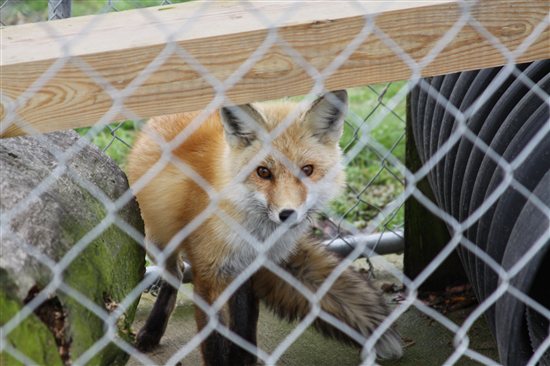
Image | PETA
Please contact the North Carolina Wildlife Resources Commission and politely request that the agency not reissue James Bass’ wildlife-captivity license and endangered-species permit, through which he exploits and neglects animals. You may use the Sample Letter below but please modify for variety.
Background | From PETA
Jambbas Ranch Tours—a substandard roadside menagerie in Fayetteville, North Carolina—has been cited numerous times by state and federal authorities for failing to comply with legal standards for humane care, adequate shelter, and sanitary conditions. The wild animals held captive at Jambbas—including a bear, a raccoon, a fox, and an alligator—are kept in tiny enclosures and are deprived of everything that is natural and important to them. The bear, raccoon, and fox show their stress, boredom, and frustration by pacing—a sign that they are going mad because of their conditions.
The North Carolina Wildlife Resources Commission is expected to make a decision soon on Jambbas owner James Bass’ applications to renew his wildlife-captivity license and endangered-species permit, which are needed to keep captive wild and exotic animals. The animals at Jambbas need your voice to make sure that these permits aren’t renewed!
Bass has been cited by the U.S. Department of Agriculture (USDA) at least 30 times in the past five years for offenses of the federal Animal Welfare Act, including failure to provide veterinary care to seriously ill and injured animals, failure to provide potable water, and failure to provide enclosures that are free of unsanitary and hazardous conditions. Violations of the Animal Welfare Act and the conditions documented by the USDA are direct evidence of Bass’ failure to adhere to state regulations governing proper care and sanitation. The USDA also recently announced that it is formally investigating Jambbas Ranch.
To see photos of the animals at Jambbas, click here. PETA has secured placement for the bear, named Ben; the fox; and the raccoon at wonderful sanctuaries.
The animals languishing at Jambbas still need your help. Please contact the North Carolina Wildlife Resources Commission and politely request that the agency not reissue James Bass’ wildlife-captivity license and endangered-species permit. Ask officials to instead allow the bear, fox, raccoon, and alligator held captive at Jambbas Ranch Tours to be placed with reputable facilities that are equipped to provide them with the suitable care and environment that they need and deserve. PETA has offered to relocate these animals to sanctuaries at no cost to the state or to Jambbas.
Related | Earthlings
Vodpod videos no longer available.
Individual:
Mr. Daron Barnes
Permits Supervisor
North Carolina Wildlife Resources Commission
1701 Mail Service Center
Raleigh, NC 27699
daron.barnes@ncwildlife.org
Mr. Gordon Myers
Executive Director
North Carolina Wildlife Resources Commission
1701 Mail Service Center
Raleigh, NC 27699
gordon.myers@ncwildlife.org
As a group:
gordon.myers@ncwildlife.org , daron.barnes@ncwildlife.org
Sample Letter
Dear Permits Supervisor Barnes and Executive Director Myers,
I am writing today regarding the sustained neglectful care of animals being held captive at the Jambbas Ranch Tours as run by Mr. James Bass. This Fayetville, North Carolina, roadside attraction has been cited numerous times by both state and federal authorities, and I am writing today to respectfully request North Carolina Wildlife Resources Commission vacate Mr. Bass’s wildlife-captivity license and not reissue his endangered-species permit.
As indicated, Mr. Bass has clearly established a neglectful pattern and lack of concern for the animals as demonstrated through at least 30 continuous Animal Welfare Act violations, violations of which include the inability to provide necessary veterinary care, lack of sanitary and hazardous-free conditions, lack of fresh water, etc. Additionally, the disturbing pattern of neglect is, in fact, currently being investigated by the USDA for potential sanctions.
PETA (People for the Ethical Treatment of Animals) has already secured safe homes for the bear, fox, and raccoon and is offering free placement of the remaining at-risk animals into enriching and safe environments via accredited sanctuaries. Please act responsibly and with compassion to ensure the subsequent PETA rescues by vacating Mr. Bass’s permits to enslave these animals.
Thank you for taking the time to read this important message.

Image | Stuff.co.nz
Please participate in the following two actions by sending Spanish letter and signing petition, thank you:
1. Send Sample Spanish Letter below regarding the hell of San Bernabe; for your information, there is an English Translation, but please send the letter in Spanish, thank you.
2. And if you have not already, please click on and sign Close Mercado de San Bernabe: the shame of Mexico
Background | From The Persian Horse’s Blog
There are no words to fully describe the horror to which the animals are subjected, at Mercado San Bernabe, located in Almoloya de Juárez, State of Mexico, MEXICO. The San Bernabe market is in violation of two federal and four state sanitary laws concerning animal health, ecological balance and environmental protection, which state the importance of dignified and respectful treatment of animals.
There is one man, the Governor of the State of Mexico, MEXICO, who has the power to enforce Federal and State Laws concerning Humane Treatment of Animals. Please send the following pre-written letter, which has been provided for your convenience in Spanish, to Governor Enrique Peña Nieto.
Related | Welfare groups speak out against Bernabe
Vodpod videos no longer available.
Please send emails to the following email addresses for Governor Enrique Pena Nieto’s review. Please send to both addresses.
Individual
Governor of State of Mexico, Mexico | Enrique Pena Nieto
Email: ac@gem.gob.mx
Government offices of State of Mexico, Mexico
Email: gobierno.edomex@gmail.com
Group
ac@gem.gob.mx , gobierno.edomex@gmail.com
SUBJECT: Desgarradoras condiciones en el Mercado de San Bernabé.
Estimado Sr. Gobernador, Don Enrique Peña Nieto:
Respetuosamente solicitamos se cumplan los ordenamientos Federales y Estatales para asegurar un trato humano y digno a todos los animales en el Mercado de San Bernabé, ubicado en Almoloya de Juárez, Estado de México. La noticia y evidencia de cómo son tratados los animales en este Mercado ha trascendido a nivel INTERNACIONAL, la comunidad Internacional está en shock por la forma en que se torturan y maltratan a los animales es este mercado y sobre todo ha surgido una gran indignación porque se sigue haciendo impunemente.
Usted como Gobernador del estado de México y figura ascendente en la política de su país, es la persona con el poder de mejorar las condiciones existentes en este mercado, tenga compasión por favor y haga cumplirse las Leyes de protección y respeto a los animales, además de los ordenamientos sanitarios en este Mercado.
Nosotros, la comunidad internacional, quienes visitamos y hacemos negocios en México, urgentemente le pedimos atender este penoso asunto del increible maltrato y sufrimiento que soportan estos inocentes animales, dicho tratamiento a los seres vivos y sintientes no tienen cabida en la sociedad moderna, son simplemente inaceptables. Estaremos observando y supervisando las mejoras urgentes en el tratamiento a los animales en San Bernabé, el cual está bajo su mandato.
Gracias por su tiempo Sr. Gobernador.
Atentamente,
Nombre (Your Name)
país (Your Country)
Letter in English, carta en Ingles (for your information only … please only send letter in Spanish)
Dear Sir Enrique Peña Nieto:
Respectfully I hereby demand the enforcement of Mexican federal and state regulations to ensure the humane treatment of animals at the San Bernabe market located in Almoloya de Juarez.
News of how animals are treated at San Bernabe is now reaching countries outside Mexico and people are shocked to hear that this is allowed to continue. You, as the current Governor of Estado de Mexico, and a respected and rising political figure in Mexico are the person with the power to improve conditions at San Bernabe.
We, the citizens of the international community, who visit and do business with Mexico urgently ask you to address the cruelty of San Bernabe which has no place in today’s society. I will continue to follow the situation at San Bernabe and I will be waiting to see some urgently needed improvements to the treatment of animals at San Bernabe under your leadership!
Thank you, Governor.
Respectfully,
Your Name
Your Country
Thank you.

Image | Young & Rubicam Brasil for Rain Forest Preservation
Please click on and sign the following:
1. Manufacturers: Disclose Animal Testing and Animal Ingredients in Consumer Products
2. Save The Rainforests in Brazil
3. Stop Bear Hunting in Nevada Before it Begins!
1. Background | From Change
Earlier this year, 250,000 gallons of beef fat leaking from an onshore storage tank literally clogged an important water-way in Texas, the Houston Ship Channel. The photograph nicely illustrates what occurs to human blood cells after eating a juicy porterhouse steak, a baked potato smothered in a quarter pound of melted butter followed by a slice of New York’s best cheese cake. Over time, such human diets promote diabetes, heart attacks, obesity and strokes.
Jacob Stern and Sons, an agricultural company, was held accountable for the spill. According to a company official, the spillage was due to an “employee error.”
Are you aware that slaughterhouse waste (in this case beef fat) is accumulated and then sold to manufacturers who add “oleochemicals” to various products like soap, lipstick, fabric softeners, dryer sheets, lubricants, pharmaceuticals, various cosmetics, and animal feed?
Unfortunately, many consumers have a very difficult time trying to understand product labeling. Manufacturers frequently choose to confuse and mislead consumers with unclear product labeling. Sign this petition and urge your elected politicians to stand with the consumer, not the manufacturer.
Send a message to your representatives urging them to pass laws which would:
- Help the consumer better understand product labeling,
- Disclose if products were produced through animal testing,
- Disclose if products contain animal ingredients
Related | Animal Testing Breaks Hearts
2. Background | From Blue Feather Spirit and Avaaz
The Amazon is in serious danger. The lower house of the Brazilian congress has approved a gutting of Brazil’s forest protection laws. Unless we act now vast tracts of our planet’s lungs could be opened up to clear cutting devastation.
The move has sparked widespread anger and protests across the country. And tension is rising — in the last few weeks several prominent environmental advocates have been murdered, purportedly by armed thugs hired by illegal loggers. The timing is critical, they’re trying to silence criticism just as the law is discussed in the Senate. But President Dilma can veto the changes, if we can persuade her to overcome political pressure and step onto the global stage as a leader.
79% of Brazilians support Dilma’s veto of the forest law changes, but their voices are being challenged by logger lobbies. It’s now up to all of us to raise the stakes and make Amazon protection a global issue. Let’s come together now in a giant call to stop the murders and illegal logging, and save the Amazon. Sign the petition — it’ll be delivered to Dilma when we reach 1,000,000 signers.
3. Background | From Blue Feather Spirit and Change
Last December the Nevada Wildlife Commission okayed the first bear hunt in Nevada history. The population of Nevada bears is 200-300. The commission is made up 100% of hunters. They think killing 20 bears is okay. The people of Nevada do not. The Commission received over 3000 emails against the hunt, 54 for it. They voted for it anyway, for their few hunting buddies. Many hunters have come forward with their dissatisfaction over the bear hunt.
Twenty bears is not worth the hunt. Poachers will come in and the number taken may reach 50% of our bears. NV is one of the poorest states and does not have the means for oversight.
There is no sound science for this hunt. Commissioner McBeath said it all after the unanimous vote,
It’s not for public safety. It’s not for revenue. It’s not for dealing with the nuisance bears. It’s because we can.
Please join us in saying, NO YOU CAN’T! For more background information see NoBearHuntNV.org
Read more…

1. Please click on and sign Close Mercado de San Bernabe: the shame of Mexico
2. Click Here to join Facebook protest group against Mercado de san Bernabe
Background | From Change, Persian Horse’s Blog
San Bernabe is the largest illegal unregulated livestock market in Mexico. It makes a mockery of humanity and is one of the most shameful examples of animal brutality and ill health in Mexico. The San Bernabe market has existed for over 60 years. Origin of horses at the San Bernabe market – Estado de Mexico, Chihuahua, Michoacan and the United States.
It is located at the 22.5 km northeast of the city of Toluca, on the Toluca-Atlacomulco road which belongs to the Municipality of Almoloya de Juárez, and in turn the Mayorazgo community of Leon, Estado de Mexico.
The institutions and authorities, federal and local governments, have full powers of inspection and surveillance, and therefore have the capacity to solve the problem, but remain passive and sluggish. The market is a place for animal trafficking, extreme dirt and dismal sanitary conditions, and tremendous cruelty to the animals being sold. The San Bernabe footage and photos have appeared on many news reports and national TV, so the authorities cannot feign ignorance.
Seen for sale on site are donkeys, horses, mules, dogs and wildlife, whose origins are uncertain and many are visibly sick, arrive and depart transported in sadistic and deplorable conditions with exposed fractures, bleeding open wounds and ulcers. Others are hung with ropes, when they no longer have the strength to stand upright. These suffering “animal waste” are kept alive just because a kilo of live meat costs twice that of a dead one. If an animal finally ends its agony and dies it is cut open right there and its vescera is extracted and thrown on the ground in the middle of the market.
There is no animal health control. Animals are sold directly for two purposes either privately as live animals (for work or food) or to a slaughterhouse (called the “rastro”). Obviously, the sale of live animals is done in less cruel way than that of animals that are sold to the rastro, since the horses going to the slaughterhouse are considered waste and therefore are treated in a very brutal manner, they are kicked, poked with electric barbs that are prohibited for horses. Bats and pipes are used to hit animals, they are tied with ropes. Animals suffer fractures or they fall dead, others arrive with broken limbs because the owners want to get some extra money by selling them and the animals are forced to walk down to the transport truck in these conditions. In the best case, the animals are transported sick, infected with tumors or open wounds, and later sold to the highest bidder. At worst, their corpses are left on the ground without being buried, with animal viscera strewn about in violation of standard NOM-024-ZOO-1995.
Related | Investigating horse slaughter exports
Vodpod videos no longer available.
Water troughs often don’t contain water, the pens are underutilized – some are overcrowded, others are empty. There is a shed that was scheduled to install a sacrifice room for broken or injured animals that cannot continue the trip. It is important to mention that it is a living sacrifice room and not a slaughterhouse, and has created problems of assessment with the authorities i.e. the Ministry of Agriculture, Livestock, Rural Development, Fisheries and Food (SAGARPA) because they do not accept the installation of a slaughterhouse, in the absence of the necessary infrastructure to do so.
Another problem is the presence of federal local police who sometimes, instead of asking for documentation and health guidance, ask for a financial share to allow access to trucks. Recently, it has become known that there is a dispute between groups to control the market of San Bernabe. Meanwhile, there is total anarchy in violation of animal protection laws, the state and official rules for the transportation of animals, and livestock markets.
Over the years, people of recognized knowledge, experts and advocacy groups for animal rights have talked with local, state and federal agencies, seeking to bring order to the problems of the San Bernabe market. However, the sanitary conditions and the treatment of the animals have not improved. Often laws and rules are not enforced, either because the authorities are unaware of their existence, or they simply ignore them. The Health Ministry has taken up the matter even though there are no laws in place of hygiene and public health. There are dead animals and scattered viscera in the trucks, along with live horses, since they are gutted and the carcasses are transported together with the live animals to the slaughterhouse. No water is available. There is no animal inspection by the SAGARPA, or monitoring of transport by the Federal Highway Police or the Ministry of Communications and Transport.
For several years the market has been controlled by a municipal councilor. The market is located on both sides of the road and while it also sells cars and clothes, most activity is in the trade in live animals. We know that this market has generated a lot of profit that is not quantified, including fees for land use, collection of bills for sale of animals in addition to other fees paid by those who provide service for the sellers of food, fruits, vegetables, shoes, clothing, etc.
The San Bernabe market is in violation of two federal and four state sanitary laws concerning animal health, ecological balance and environmental protection, which state the importance of dignified and respectful treatment of animals.
At San Bernabe, in many cases the cattle are slaughtered without any restriction. They are beaten with sticks, pipes, rods, or touches on the genitals causing them high levels of stress in breach of standard NOM-033-ZOO-1995. In addition, the market does not have appropriate landing ramps, so that the legs of the animals break constantly. Some animals are mixed in the pens, where cattle have injuries, trauma, fractures, wounds or worms. The most obvious abuse is called “scrap yards” where the animals are in poor condition and are sold to be taken directly to slaughterhouses.
A brief description of a horse slaughterhouse in Mexico:
“… The horse shakes its head frantically when the door killing box is closed and trapped within it. A worker buried in his back, around his neck, a small, sharp knife, seven, eight, nine times. She, with her eyes wide, frantically lowers and raises her head while the worker stabs her again and again. On the tenth stroke of the knife, she falls to the ground, bloodied and paralyzed, but still alive. She lays there for two minutes before being hoisted by her leg and lifted into the air, hung upside down to be bled slaughtered in the midst of terrible pain, fully conscious and terrified … “
What happens in San Bernabe is not a new topic, since the flea market has been operating for 60 years every Monday in the same place, and it is estimated that the site has sold over 10, 000 different animals of various species.
Since September 2007 Animal Protection Association of Mexico (APASDEM), has worked hard on a campaign to protect the animals sold at the San Bernabe Market.
En Almoloya de Juárez, Estado de México, se encuentra el Mercado llamado San Bernabé, donde se comercia principalmente, con caballos mulas y burros, en condiciones de crueldad y falta de higiene extremas, violando consistente y permanentemente, las leyes de protección animal y de sanidad. Las autoridades, teniendo plena facultad y pruebas para clausurar el sitio (a través de imágenes mostradas en múltiples medios), han hecho caso omiso a este reclamo.
Los animales en venta, en su mayoría, están visiblemente enfermos; son transportados en condiciones deplorables, y arrastrados sádicamente, sin importar que tengan fracturas expuestas, estén sangrando o tengan llagas. Cuando ya no pueden sostenerse en pie, son colgados con mecates para simular que aún tienen fuerza. Carecen de atención médica, agua y alimento y si mueren antes de llegar al rastro, son abiertos en el mismo sitio en que se encuentran, tirando sus vísceras al piso.
Les llaman “animales de desecho”, y se les mantiene con vida hasta el último momento, en una lenta y gran agonía, porque el kilo de carne viva cuesta casi el doble que el de la muerta.
Read more…

Please click on and sign the following:
1. Tax-funded food programs are making us sick!
2. Concord Mall in Elkhart Hosts Abusive Tiger Cub Display: Ask the mall and the government to end this kind of abuse
1. Background | From PCRM
Please take a minute to let your member of Congress know that you support cuts to agricultural subsidies that promote unhealthful food. We have provided text for you, but if you decide to write your own message, please be polite and encouraging. Here are some talking points:
- Approximately 60 percent of all deaths in the United States are from diseases linked to unhealthy diets, including heart disease, cancer, stroke, and high blood pressure.
- Costs to treat these diseases will soon soar into the trillions of dollars.
- The most healthful foods–fruits and vegetables–receive less than 1 percent of the subsidies.
- Please support cuts to agricultural subsidies that promote unhealthful food.
Related | Trailer: Food, Inc.
2. Background | From Big Cat Rescue
Concord Mall in Elkhart, Indiana is allowing a group that incessantly breeds and exhibits tiger cubs for profit to display their cubs at the mall from July 6 -10. The group, which exhibits throughout the Midwest under various names, is calling themselves Big Cat Rescue Entertainment while in Elkhart.
Big Cat Rescue Entertainment is NOT to be confused with Tampa, Florida-based Big Cat Rescue, the largest accredited sanctuary in the world dedicated entirely to abused and abandoned big cats. Oklahoma-based Big Cat Rescue Entertainment uses the almost identical name in order to dupe and confuse the public. In fact, Big Cat Rescue has filed a Federal intellectual property lawsuit to stop this group from using its name.
“Big Cat Rescue Entertainment is a group of unscrupulous breeders of big cats, especially tigers, who travel the country displaying tiger cubs at malls and offering the mall’s customers – for a fee of about $25 – the opportunity to pet the cubs and have a photo taken with them, “explained Carole Baskin, founder and CEO of Tampa’s Big Cat Rescue sanctuary and a nationally recognized expert on the plight of exotic cats. “These breeders often promote their “pay to play with cubs” scheme under the guise of providing consumers with education about the plight of exotic cats. But the truth is they are exhibiting the cubs only to make money.”
Without knowing the facts, seeing children pet cute tiger cubs seems adorable and innocent. But in reality these cubs endure a miserable existence while they are on display and then are destined, in most cases, to a life sentence in deplorable conditions or are killed as part of the billion-dollar illegal trade in tiger parts.
Big Cat Rescue contacted Concord Mall General Manager Robert Thatcher last week. Thatcher said he is “satisfied with the group that brings in the cubs” and has “done his own research” to determine if there is abuse. But if Thatcher had contacted the USDA, the governmental body that oversees exotic animal displays, he would have found that this Oklahoma group is currently under investigation for the deaths of 23 tiger cubs just last year. And the group has been investigated and fined for numerous violations over the years.
“We are deeply concerned that Concord Mall and its management company, Triyar, do not care about the safety of their patrons or about the abuse these tiny, defenseless animals are forced to endure,” said Baskin. “More and more malls across the country are banning these cub displays as they learn about the abuse to the animals. And research shows that mall patrons are disgusted by these exhibits and will not continue to shop at malls that host them. It is truly a shame that Concord Mall and its management company insist upon allowing animal abuse at their mall.”
Read more…

Image | Animal Liberation Australia
Please click on and sign the following, thank you:
2. Help stop university faculty from staging animal fights
3. Urge Geico to stop sponsoring cruel rodeos
4. End dog racing on Macau: nearly 400 dogs killed every year
1. Background | From BUAV
The European Union was due to be free of all new animal tested cosmetics by 2013. However officials are now considering extending this deadline. That’s despite massive public opposition to animal tested cosmetics and an existing ban on animal testing for cosmetics inside the EU. Join us in saying NO to cruel cosmetics in Europe.
Message Text
We, the undersigned, do not want new cosmetics that are tested on animals to be available in the EU.
Animal testing of cosmetics is cruel and unnecessary. We urge the European Parliament to adhere to the 2013 marketing ban deadline as set out in the 7th amendment to the Cosmetics Directive. Public opinion is against animal testing of cosmetics on ethical grounds, and there is no public appetite for new cosmetics that have been animal tested to be available in the EU after 2013. We urge the European Parliament to listen to the overwhelming majority of European citizens and vote against delaying this ban.
Related | Choose Cruelty-Free
Vodpod videos no longer available.
2. Background | From PETA
For more than a decade, faculty at the University of Wisconsin–Madison (UW-Madison) have spent millions of tax dollars on staging violent fights between animals in their laboratories for cruel aggression experiments. Experimenters lock large, aggressive mice and smaller, weaker mice together in cages that the animals can’t escape from and then watch as the weaker mice are beaten up and bitten repeatedly for as long as 10 minutes. The bouts are videotaped, and experimenters count the number of “attacks” per fight. The winners are then killed and have their brains cut out and dissected.
The federal agencies funding these inhumane and wasteful experiments require that recipients of public funds abide by all relevant state laws, yet it appears that UW-Madison violated this policy for years. Up until very recently, Wisconsin’s cruelty-to-animals law clearly stated that it is a felony for any person to “intentionally instigate, promote, aid, or abet” fights between animals—whether the animals be dogs or mice or whether the fights happen in a garage or a laboratory. PETA has co-filed a formal complaint with the district attorney in Madison urging him to prosecute the faculty and staff responsible for past violations of law.
Please join PETA’s effort to end the abuse of animals in UW-Madison’s laboratories by contacting officials with the National Science Foundation and urging them to immediately cut off funding for these cruel experiments and demand repayment of all tax money already wasted on these barbaric animal fights.
Putting your subject line and letter into your own words will help draw attention to your e-mail.
3. Background | From PETA
In an attempt to draw more customers through advertising, insurance agency GEICO recently started sponsoring the Professional Rodeo Cowboys Association (PRCA)—which sanctions more than 600 cruel events each year. PETA has urged GEICO to give careful consideration to the brutality involved in rodeos and cancel its sponsorship of the PRCA, but our request has been ignored.
Rodeos are violent events in which normally tame, docile animals are terrorized and provoked into behavior that makes them appear to be fierce and aggressive. This is done through the use of cruel electric prods, flank or bucking straps, and spurs—all of which burn, wound, and/or dig into the animals’ skin and sensitive tissue.
Please urge GEICO to make the humane and progressive decision to cancel its sponsorship of the PRCA.
4. Background | From Change
The peninsula of Macau is home to a single dog track called the Canidrome. At the Canidrome, nearly 400 greyhounds are put to death every year.
According to the Macau Daily Times, dogs race four times a week. If they finish outside the top three in five races in a row, they are destroyed. The head of Macau’s animal control department has stated that every greyhound arriving at the track is dead within three years. An average of thirty new dogs arrives each month from Australia.
In 2007, a draft animal cruelty law was presented to the public for comment and consideration, but the Macau legislature never took it up. In fact, there are no laws in place to prevent the wanton killing of these gentle dogs.
As long as greyhound racing continues, greyhounds will suffer. According to information provided by Greytexploitations, Macau’s 800 dogs spend most of their brief lives in cages stacked two high, and when they race, they are watched by a “pitifully small crowd …who pay an entrance fee of less than €1” to sit in the stands.
This senseless activity must end. Please join with GREY2K USA and animal protection groups around the world to call for an end to dog racing in Macau.
Sign our petition now and help us send a strong message to Macau’s leadership today.
For the greyhounds.
RESOURCES:
Companies that DO NOT TEST on animals
Online format | Determining whether a company or product is or is not tested on animals is easy! Simply click on and type in the name of the company or product in the search bar and press Search.
Or, click on a bunny for three other search forms:


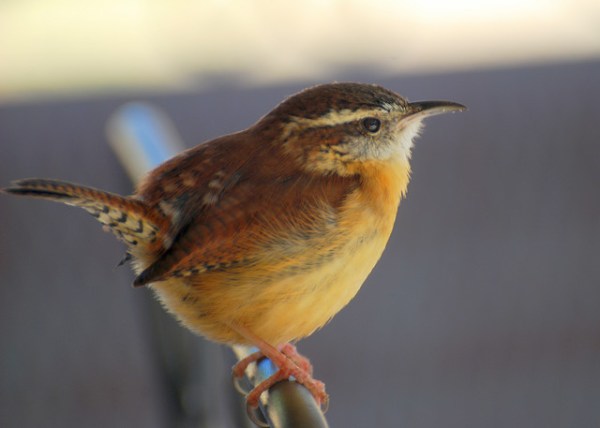
Image | Carolina Wren by Dypepper
Please politely urge South Carolina Electric & Gas Company officials to stop poisoning birds and to stick with humane and effective bird-control methods instead. You may use the Sample Letter but please modify for variety, thank you.
Background | From PETA
South Carolina Electric & Gas Company (SCE&G) reportedly uses Avitrol to kill pigeons and other birds at its McKeekin Station Plant. Avitrol is a notorious poison that causes disorientation, convulsions, and a slow, agonizing death. Pest-control companies tell clients that Avitrol only “scares birds away,” but this is patently untrue. And dogs, cats, and nontarget wildlife can also die after consuming the bodies of poisoned birds.
Furthermore, lethal methods don’t work to keep birds away. More animals come in from surrounding areas to use available resources, and a spike in the food supply results, prompting accelerated breeding among survivors and newcomers. In the end, populations actually increase! What results is a vicious killing cycle in which countless animals suffer and die needlessly.
Whom to contact, individual:
Stephen A. Byrne
Chief Operating Officer
South Carolina Electric & Gas Company
sbyrne@scana.com
Richard Salley
McKeekin Station Plant Manager
South Carolina Electric & Gas Company
rsalley@scana.com
803-217-4125
Whom to contact, as a group:
sbyrne@scana.com , rsalley@scana.com
Sample letter:
Dear Chief Operating Officer Byrne and Plant Manager Salley,
It is my understanding that South Carolina Electric and Gas Company (SCEG&C) currently utilizes the poison Avitrol to kill birds in the McKeekin Station Plant; as you know, Avitrol is a particularly nasty poison in that it causes untold suffering to its victims, who include both birds and indirect non-target species, such as cats and wildlife, who consume the birds. Such distinctive symptoms include convulsions, disorientation, pain, and obvious suffering in a lengthy pattern of death.
It is important to add that killing such a large segment of any population creates a void, in which an even larger population will develop due to an increase in food and space resources.
Please adopt a more responsible and humane approach to reducing wildlife interactions; it is negligent to utilize cruel methods that cause immense pain and a slow death when alternative non-lethal methods exist, and I plea with you to adopt a responsible solution that doesn’t cause such suffering.
I know your time is limited and I thank you for your attention to this urgent manner.
Sincerely,
NAME, STATE|COUNTRY
Birds on Wires | A must-see, birds inspire song
Vodpod videos no longer available.
Three actions: oppose animals in film and marine parks, and the construction of new pipelines
Please click and take action on the following:
1. Future productions: no more animals exploited
3. President Obama: ban new oil pipelines
1. Background | From In Defense of Animals
Recently released video footage shows shocking scenes of elephant abuse by the owner and a trainer at Have Trunk Will Travel, a company that hires out elephants for films, TV, print and rides. In the video, elephants are “trained” with electric shock devices and struck with steel bullhooks, and a baby elephant is cruelly hooked in the mouth.
One of the abuse victims shown in the video is Tai, who screams after being shocked with a powerful hand-held electric device. She appears in the recently released film Water for Elephants, in which she undergoes a vicious staged “beating.” The public was repeatedly and falsely assured by Have Trunk Will Travel that Tai was never mistreated, and the American Humane Association gave the film its “no animals were harmed” seal of approval and sponsored a promotion for the film. But the video (also below), revealed on TMZ’s website, shows otherwise (you can also vote on a poll asking whether an elephant should have been used in the movie).
Obtained by UK-based Animal Defenders International (ADI) and shot in 2005, the video shows extremely disturbing images including:
- Elephants repeatedly shocked with a hand-held electric device
- Elephants crying out after being struck, beaten and hooked on the legs and body with a bullhook, a pointed steel rod resembling a fireplace poker
- A baby elephant being hooked in the mouth during training
- An elephant who is jabbed and pinned with bullhooks as she is having her tusks sawn down
Have Trunk Will Travel has been at the center of controversy before. The company provided Tai for a notorious art show in Los Angeles for which she was fully body painted; animal control officials forced Have Trunk Will Travel to wash off the paint. And the Science Discovery Center in Santa Ana cancelled an event in which an elephant would be encased in a giant soap bubble, after receiving thousands of emails and phone calls when IDA exposed the stunt. While on loan to the Denver Zoo, one of the outfit’s elephants escaped and ran through a crowd, injuring her trainer and a baby.
It’s time to stop the use of elephants and other wild animals in films and other forms of entertainment. Please send a strong message to the Hollywood movers and shakers, asking them to use advanced computer-based technologies instead of live animals who endure a lifetime of suffering for a few moments of screen time.
See More:
Vodpod videos no longer available.
2. Background | From PETA
A Canadian expat has proposed an aquarium in Rawai, Phuket, in Thailand—a project that would sentence countless fish, sea lions, seals, and dolphins to lives spent swimming in circles in small tanks and pools that never could compare to the vast oceans that these animals call home.
Aquariums make claims of providing “education” and “conservation,” but they rarely succeed on either count. Marine parks present a distorted view of wildlife—the only thing that they teach people is that it is acceptable to keep wild animals in captivity far from their natural homes and subject them to boredom and loneliness.
Please write to Phuket Governor Tri Augkaradacha and ask that he not approve the proposed aquarium plans. The aquarium would just be one more addition to Thailand’s horrific animal attractions, which include camps where elephants are beaten into submission, cruel live animal performances, and decrepit zoos where animals are denied everything that is natural and important to them.
Feel free to use the provided text, but consider writing your own customized message and subject line.
3. Message Text | From Rainforest Action Network
America’s pipeline safeguards are broken.
In July 2009, federal inspectors with the Pipeline and Hazardous Materials Safety Administration (PHMSA) found evidence that an above-ground span of Exxon’s pipeline had become submerged under a creek and was piling up debris. Nearly 20 months later, in March of this year, Exxon reported that it was “evaluating control measures to keep future debris from accumulating over the pipeline.” Last weekend, in the same region cited in the inspection, the same pipeline ruptured during record flooding of the Yellowstone River.
Exxon’s spill in Montana is just the latest in a string of accidents as long as the industry is old. And while Big Oil says that it’s learning from its mistakes, even its newest pipelines can’t seem to contain the increasingly corrosive oil mined from Canada’s tar sands. We don’t need more pipelines. Most analysts actually expect a steady decline in U.S. demand for oil. What we do need is a system of regulations and penalties that keep our communities safe from the pipelines already in the ground.
Please establish an immediate moratorium on construction of new crude oil pipelines until the safety of our communities can be guaranteed. Please also ensure that the pending application of by TransCanada to construct the KeystoneXL pipeline is denied unless targeted safety guidelines for tar sands crude are established.
Read more…

Please write to Oregon Governor John Kitzhaber requesting he veto HB3636, which will prove deadly to many protected species. You may use one or more of the Sample Letters provided below; if you use Number Four, however, please remember to provide the source as it is a direct quote from the listed author. Please also note there is a 1000-word limit on the webform so you will need to modify and shorten the others.
Background | From Mountain Lion Foundation, Predator Defense
Last week, the Oregon legislature passed HB 3636 which is now awaiting the Governor’s signature. At first glance the bill didn’t look too onerous. It required that the Oregon Department of Fish and Wildlife provide an option on all hunting related applications for voluntary contributions in support of county predatory animal control programs. It even allowed the Department to recover some of the costs attributed to enacting this change. However, this is as far in straightforwardness that HB 3636 goes.
First, HB 3636’s authors used a savvy marketing technique and titled the new state fund used to collect and distribute these contributions the Wildlife Conservation Fund. Pretty name; it lulls the public into thinking the fund will be used to conserve wildlife. This couldn’t be further from the truth.
According to HB 3636’s language:
“Moneys in the fund are continuously appropriated to the State Department of Fish and Wildlife to be paid to counties as provided in section 1 of this 2011 act.”
In other words, Oregon’s new Wildlife Conservation Fund only funds wildlife eradication programs.
Second, and far worse, HB 3636 adds cougars, black bears, gray wolves, and that all-encompassing category “fur-bearing mammals” to the official list of predatory animals: a category which previously only included small rodents and crop-damaging birds.
If signed into law, HB 3636 will, under existing section code 610.105, overturn many of Measure 18’s wildlife protection provisions and allow anyone who thinks a cougar is on their property (even if the cougar hasn’t caused any harm or threatened anyone) to poison, trap, or kill said cougar.
In a last ditched effort to stop this miscarriage of justice, Oregon cougar advocates, including the Mountain Lion Foundation, are urging Oregon residents to contact Governor Kitzhaber and demand that he uphold Measure 18 and veto HB 3636.
View HB 3636 pdf text (as well as a selection of relevant predatory animal control laws) at the following: http://mountainlion.org/States/HB 3636 – Oregon’s New Predatory Animal Control Law.pdf
Related | IFAW’s Save Something Wild
Vodpod videos no longer available.
WHOM TO CONTACT
Governor John Kitzhaber
State Capitol, Room 160
900 Court St. N.E.
Salem, OR 97301-4047
Citizens’ Message Line: 503-378-4582
Fax: 503-378-6872
Webform: http://governor.oregon.gov/Gov/contact.shtml
Email: representative.citizen@state.or.us
SAMPLE LETTER ONE
SUBJECT: Please uphold Measure 18 and veto HB 3636
I am writing today to respectfully request you uphold Measure 18 and veto HB 3636; as you know, Measure 18 was enacted to protect wildlife, the provisions of which will be stripped via passage of HB 3636 causing untold suffering and death. Oregonians are largely opposed to such brutality inflicted on wildlife.
Animals are inherently sentient and possess the capacity for thought and emotion, including contentment, loneliness, fear, and agony. All animals, human and non-human, experience the desire to live free from exploitation and suffering and fear the manifestation of death.
Please decide to protect rather than harm these creatures by vetoing HB3636.
Thank you for taking the time to read this message.
SAMPLE LETTER TWO (needs to be shortened)
SUBJECT: Please uphold Measure 18 and veto HB 3636
Dear Governor Kitzhaber,
I am writing today to respectfully request you uphold Measure 18 and veto HB 3636; as you know, Measure 18 was enacted to protect wildlife, the provisions of which will be stripped via passage of HB 3636 causing untold suffering and death. Oregonians are largely opposed to such brutality inflicted on the wildlife.
Despite the promotion of validations used to cultivate social approval, the actuality is slaughter, the calculated hunt and subsequent kill. Congressional black and white diplomatic banalities cannot conceal the red of the blood, the immobilizing, excruciating pain, the struggle to escape, the agony of incapacity, the fear of death, the evisceration of life: you may recoil at gruesome descriptions the illustrations of deathly consequences so easily signed with impunity and indifference. Regardless of culturally accepted monikers of preservation and conservation, however, and despite appeals using biased and emotionally-charged rhetoric, the reality includes the deliberate and vicious killing of sentient non-human animals.
SAMPLE LETTER THREE (needs to be shortened)
SUBJECT: Please uphold Measure 18 and veto HB 3636
Dear Governor Kitzhaber,
I am writing today to respectfully request you uphold Measure 18 and veto HB 3636; as you know, Measure 18 was enacted to protect wildlife, the provisions of which will be stripped via passage of HB 3636 causing untold suffering and death. Oregonians are largely opposed to such brutality inflicted on the wildlife.
Humans have adopted dangerous constructs of speciesism, the prejudicial regard of non-human species, to validate the brutality inflicted upon them. Using this manufactured status of superiority, humans have sanctioned the use of animals as commodities, regarding them only as products to benefit our goals and needs. We embrace inequity to justify our treatment of animals, yet euphemistic descriptions meant to facilitate morality cannot disguise the fundamentally unethical parameters with which we surround ourselves to distinguish our self-serving dominance. As dangerous as racism and sexism, speciesism further divides the chasm between species, which desensitizes us to cruelty and inevitably leads to human inequality and injustice.
This disregard of the state’s most vulnerable group of beings is unacceptable, and until this barbarism is appropriately addressed including a mandatory ban of such, many may choose to boycott Oregon, resulting in the sacrifice of vital tourism and commerce profits. Please act responsibly and with compassion and choose to protect, rather than sanction harm, to animals.
SAMPLE LETTER FOUR
SUBJECT: Please uphold Measure 18 and veto HB 3636
“Why don’t I hunt? I could allude to the fruits of exhaustive research into the ecological and biological consequences of hunting, and to collective insights of biologists, ecologists, and naturalists who challenge the prevailing wildlife-management dogma. Yet, fundamentally, the answer can be expressed in simple moral terms:
Hunting is wrong, and should be acknowledged to be so not only by those who espouse the precepts of the animal-rights credo, but by those who hold a common sense of decency, respect, and justice.
When we have exposed the specious reasoning of the hunters’ apologists and stripped their sport of its counterfeit legitimacy, the naked brutality of hunting defines itself: killing for the fun of it.”
Steve Ruggeri, Why I Don’t Hunt
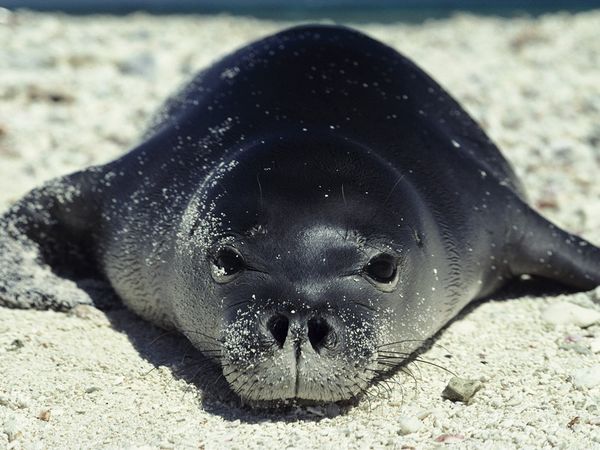
Photograph by Bill Curtsinger | National Geographic
Please click on and sign the following two actions:
1. International Community Demands Protection and Justice for the Danube Delta wild horses
2. Speak up to save Hawaiian monk seals
1. Background | From Change
The international community is outraged with the news of the bloody massacre of thousands of wild horses native of the Danube Delta in Romania. Corrupt local Tulcea officials have grossly overstepped their authority and waged a bloody war on these indigenous animals protected by international law. Tulcea has slaughtered over 1,000 of these wild horses with less than 500 of them remaining. Please join us in growing this petition which is addressed to local and international authorities with the power to take immediate measures to protect these horses. Thank you for lending your voice for justice for the wild horses of the Danube Delta!
Click on The Persian Horse’s Blog for pictures, videos, and additional information.
2. Background | From Change
Take action now to speak up for the world’s most endangered marine mammal—the Hawaiian monk seal. Poised to gain new habitat protections, the seal’s possibility of recovery just stepped up a notch. These protections will ensure that monk seals have habitat to thrive on, and will also protect our beaches for surfers, fishers, and all ocean-lovers.
Threatened by rising seas and disappearing food, Hawaiian monk seals are teetering on the brink of extinction. There are only about 1,000 seals left, and they need your help. Protecting habitat can reduce threats to monk seals because it ensures that coastal development will not harm monk seal habitat. Protecting the monk seals’ habitat also means these projects will not be allowed to interfere with beach access or degrade ocean quality.
While declining in their historical habitat in the Northwestern Hawaiian Islands, a string of low-lying atolls in the Pacific, Hawaiian monk seals are increasingly inhabiting and giving birth to healthy pups in the main Hawaiian Islands. This means that habitat protection on O`ahu, Kauai, Maui, Moloka`i, and other islands will make a big difference by providing a refuge for monk seals.
The federal government has proposed to protect 11,000 square miles of habitat for Hawaiian monk seals. Sign the petition to support the proposal to designate Hawaiian monk seal critical habitat.
For more information visit and like our Facebook Page: Save our Hawaiian monk seal
Related | Save the Hawaiian Monk Seal
Vodpod videos no longer available.

Please click on and sign the following two actions:
- Oppose the Death Penalty for Troy Davis
- Stop Wyndham Hotel staff from supporting child sex trafficking in Wyndham Hotels
1. Background | From Amnesty International – USA
Troy Davis has faced execution three times for a crime he may not have committed. In an unprecedented evidentiary hearing held in a federal district court in Savannah, Georgia in June, 2010, he was able to present evidence supporting his innocence claim. However, the standard for proving his innocence was “extraordinarily high”, especially given the lack of physical and scientific evidence in his case. The federal judge ruled that he did not meet the high standard, despite the fact that doubts about his guilt remain unresolved. It is more important than ever that we continue to let Georgia authorities know that we oppose any effort to execute Troy Davis. Sign the petition today!
Message Text
We, the UNDERSIGNED, call on Georgia authorities to take all steps necessary to ensure that Troy Anthony Davis does not face execution. Seven of the nine witnesses have changed their story and no physical evidence links Davis to the crime. No one should be executed, especially when there are so many doubts about guilt.
This case has generated widespread attention because so many people in Georgia and throughout the world are disturbed by the thought of a man being executed when so much doubt about his guilt remains unresolved. Nothing can undermine public faith in a criminal justice system faster than an execution when there are still serious doubts about guilt. Georgia cannot afford to make such a mistake, and we urge Georgia officials to do everything in their power to prevent such an injustice from taking place.
2. Background | From Change
From 2006 to 2011, members of the Crips gang in San Diego ran a child sex trafficking ring of at least 16 girls out of various area hotels. Two of the properties on which many instances of child sex trafficking took place were a Howard Johnson in Escondido, California, and a Travelodge in San Diego, California, both of which are owned by the Wyndham group.
At the Howard Johnson, hotel staff neglected to take any action to protect the long parade of children who were being ushered in to be raped, but the Travelodge staff actually assisted the pimps. Two members of the Travelodge staff allowed the gang members to use the hotel computer to post online ads advertising sex with minors. They also knowingly rented rooms for use in prostitution, charged higher room rates for rooms to be used for child sex trafficking and pocketed the difference, and warned the pimps if police were nearby.
That Wyndham hotel employees are actively participating in a child sex trafficking ring shows a desperate an immediate need for better child protection policies at Wyndham Hotels.
Wyndham does have a child protection policy, which specifically takes a stand against commercial sexual exploitation and requires staff training, which which obviously failed at these two properties. That’s likely because such a policy is unenforceable when no outside organization is involved. Wyndham needs a real child protection policy in place, and they need it now.
That’s why the Wyndham Hotel Group needs to sign the Code of Conduct for the Protection of Children from Sexual Exploitation in Travel and Tourism. Ask them to sign today.
Related | PSA: Stop Sex Trafficking
Vodpod videos no longer available.
See More:
The widget contains news and actions from multiple sources including Amnesty International, ACLU, Center For Missing and Exploited Children, New York Times, The Innocence Project, Human Rights Watch, and Polaris Human Trafficking. Please use the scroll bar on the right to view more; use the dropdown button on the top right to view the individual feeds. These are automatically, continuously updated.
Vodpod videos no longer available.
Human Trafficking Facts:
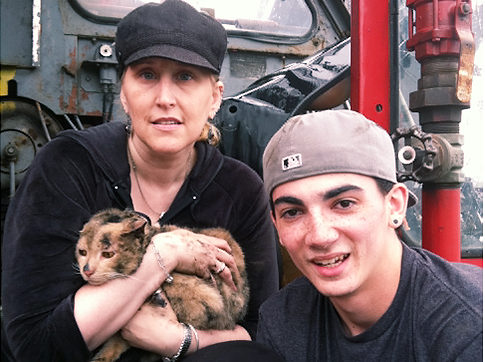
Heroes: Christine Berk (L) and unidentified officer from city ACC with Skipper| Photo courtesy Christine Berk
From NY Daily News
By Nicholas Rizzi and Bill Hutchinson Daily News Writers
A stranded cat was plucked from an East River barge Sunday, capping a two-day rescue by a group of animal lovers.
The oil-stained kitty, first spotted on the construction barge Friday, was found by a five-member search party, who shimmied across a floating plank and scaled a ladder.
“We really risked our lives for this cat,” said animal rights activist Christine Berk.
The seafaring feline was dubbed “Skipper” after being taken from the barge under the Manhattan side of the Williamsburg Bridge.
Choltilde Testa of the East Village, who first spotted the cat while on a bike ride, said she and boyfriend Robert Walker called 311, the FDNY and the NYPD, but could not get an immediate response. They returned Saturday and tried to use a ladder as a bridge from the shore to the barge but it was too precarious.
Testa pleaded for help on a website, and Berk and Joseph Newman, who owns an animal rescue farm in Pennsylvania, helped.
Joined by an Animal Care & Control officer, they boarded the barge and spent about five hours searching before cornering the cat.
“It was pretty rad,” Berk said.
The cat was taken to a shelter Sunday night, but Testa hopes to adopt him. “I rescued the cat,” Testa said.
Related Action: please click on and sign Expose Animal Abusers Petition Now!
Vodpod videos no longer available.













 Our Compass