Hundreds of Women And Children Raped While The U.N. Stood By
From Care2
By Amelia Thomson-DeVeaux
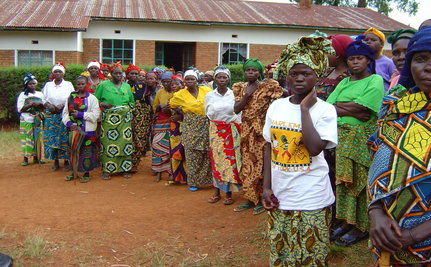
Earlier this week, the U.N. revealed that 240 women, girls and babies were raped in the Democratic Republic of Congo after rebel forces took over the town of Luvungi. This number is up from the 150 rapes previously reported, and is accompanied by the disturbing revelation that U.N. officials may have known that the rapes were taking place much earlier than they originally said.
As Ximena Ramirez pointed out in an earlier post, rape as a systematic tactic of war is nothing new for the DRC; earlier this year, a U.N. official referred to the country as the “rape capitol of the world.” But the idea that United Nations peacekeepers might be getting so inured to horrors like these that they don’t mobilize until hundreds of women and children are being raped is, to put it bluntly, terrifying.
Originally, U.N. peacekeepers claimed that they did not hear about the attacks until 10 days later, even though they have a base about twenty miles away. During the attacks, which took place over several days days at the end of July and beginning of August, women were raped by two to six men, often in front of their families. The peacekeepers said that they were unaware about the attacks until August 12, when the atrocities were brought to their attention by the International Medical Corps (although the IMC claims that they told the peacekeepers on the 6th, not the 12th).
Now an email circulated on July 30, the day the rapes started, shows that although the peacekeepers probably did not know the scope of the attacks, they knew something was happening. The email, sent from U.N. officials to several other aid groups, read, “The town of Mpofi, 52 kilometers from Walikale, has just fallen into the hands of the F.D.L.R. A woman was raped there.”
When asked about this email, a U.N. representative said, “At the time, there was one alleged rape and no reason to believe that this was happening on a mass-scale as later reported.” His defense was, essentially, that one rape was so commonplace that there was no need to act. They knew that rape was happening on a small scale, but they just didn’t care.
Laura Smith-Gary has a great post at Equal Writes, in which she dissects some of the ways that the U.N. has failed in its peacekeeping missions. She writes, “The disasters [U.N. peacekeepers] have overseen have been so horrific and their response so atrocious that it’s a wonder villagers throughout the world don’t flee at the sight of the blue helmets.”
This incredible lapse in judgment seems to be par for the course in the Congolese peacekeeping mission. A longtime U.N. official explained, “There is a kind of general state of incompetence, which is linked to apathy. If you realize you can’t deal with the situation, you may just decide to do nothing.”
Given the scope of the brutality in the DRC, it certainly seems like it would be easy just to despair of a solution. But one thing is for sure: we need better tactics than these peacekeeping missions, which seem to be, overall, devastatingly ineffective.
















 Our Compass
A lack of empathy towards a fellow being Borderline?????
Borderline Governments?????
I think so.
No Borderline syndrom when it comes down to cash.
LikeLike
Quote ‘One rape is so common place there is no need to act’!!!!
WTF???
Rape is rape, one, two, three or hundreds, they are all individual cases, and SHOULD be treated as such!!
What the hell are they playing at?????
LikeLike